
What remains of freedom when everything is governed by rules? A conversation with Jonathan Uliel Saldanha about ‘AXIOM CASINO’
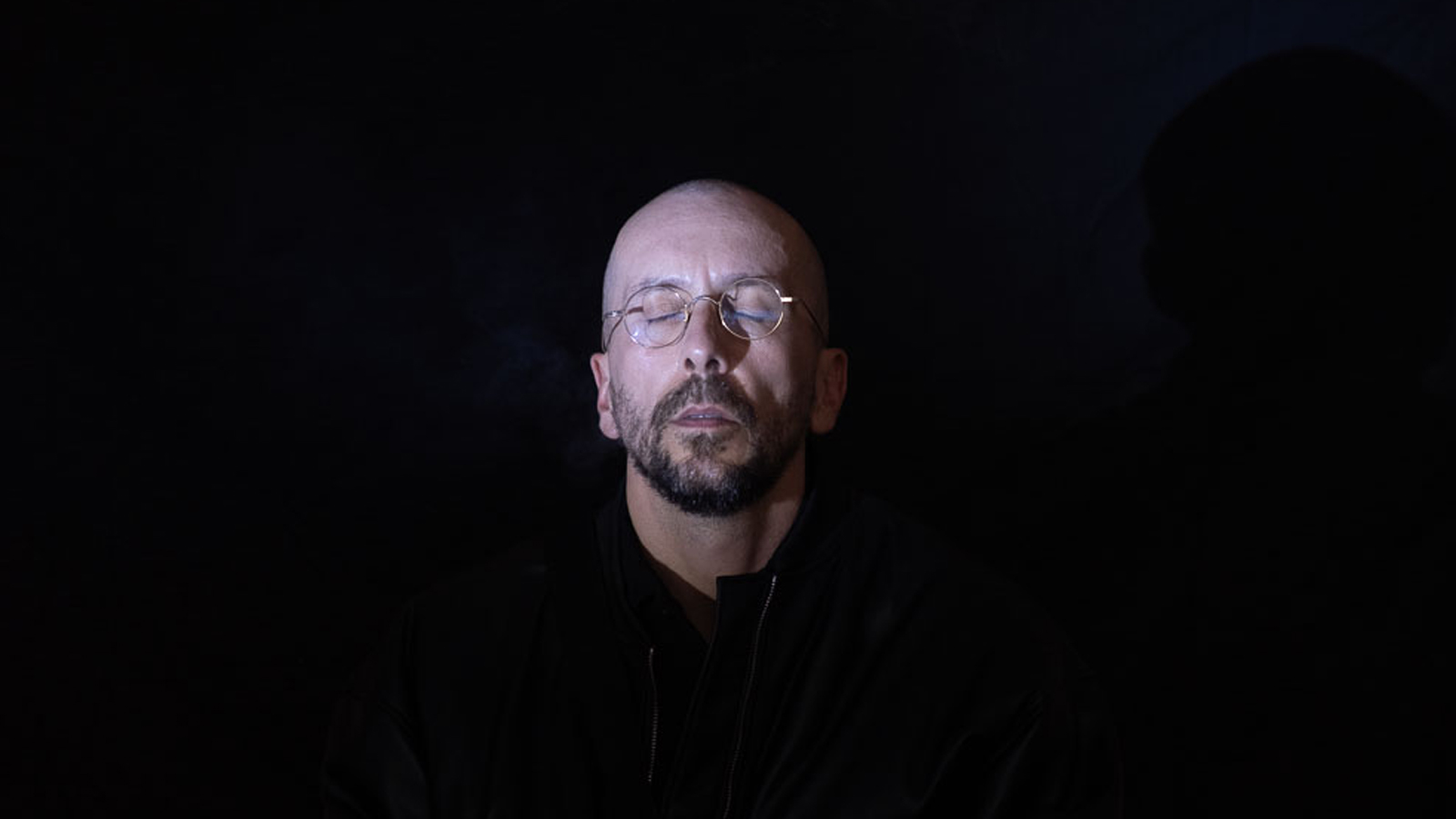
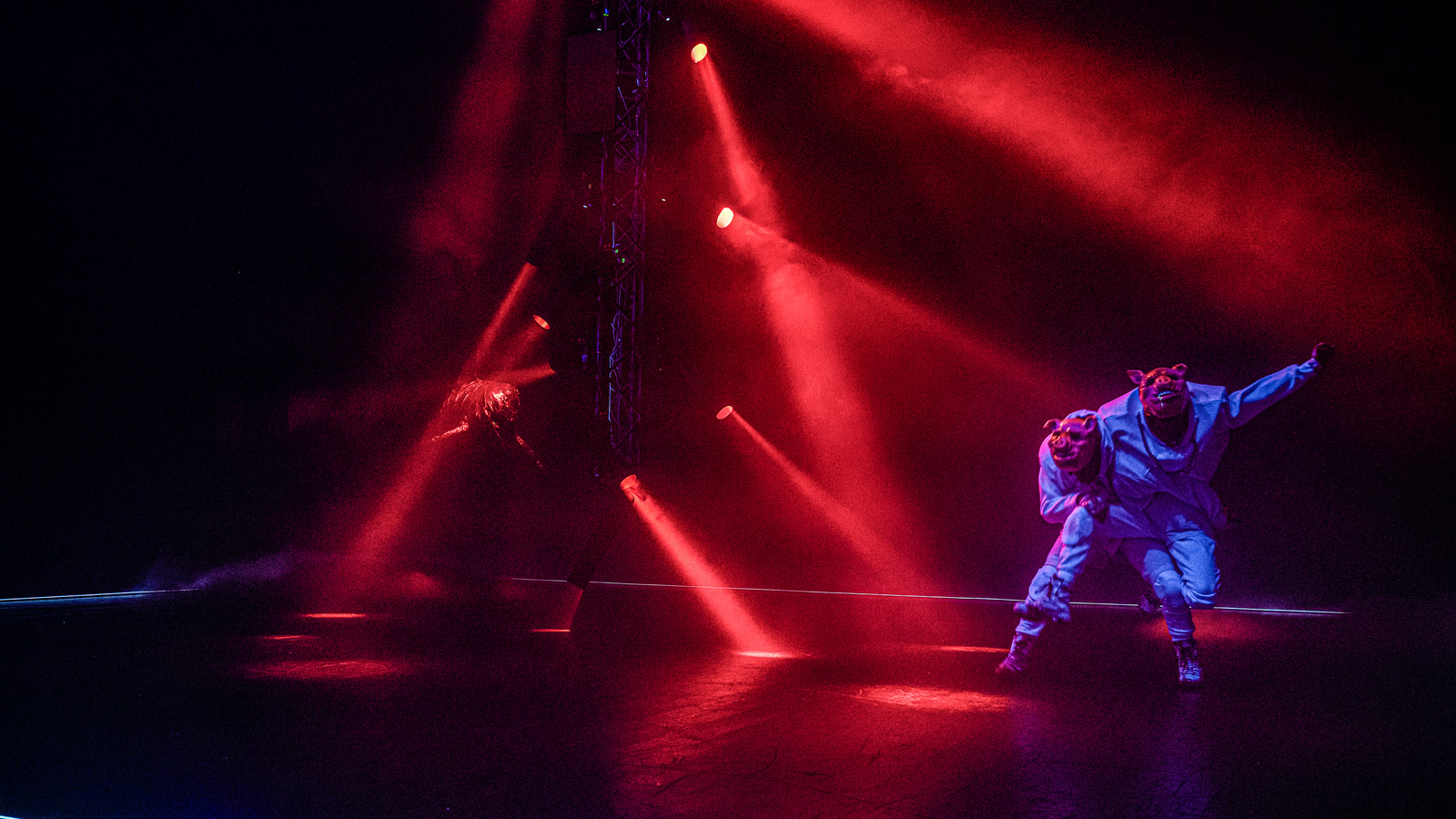
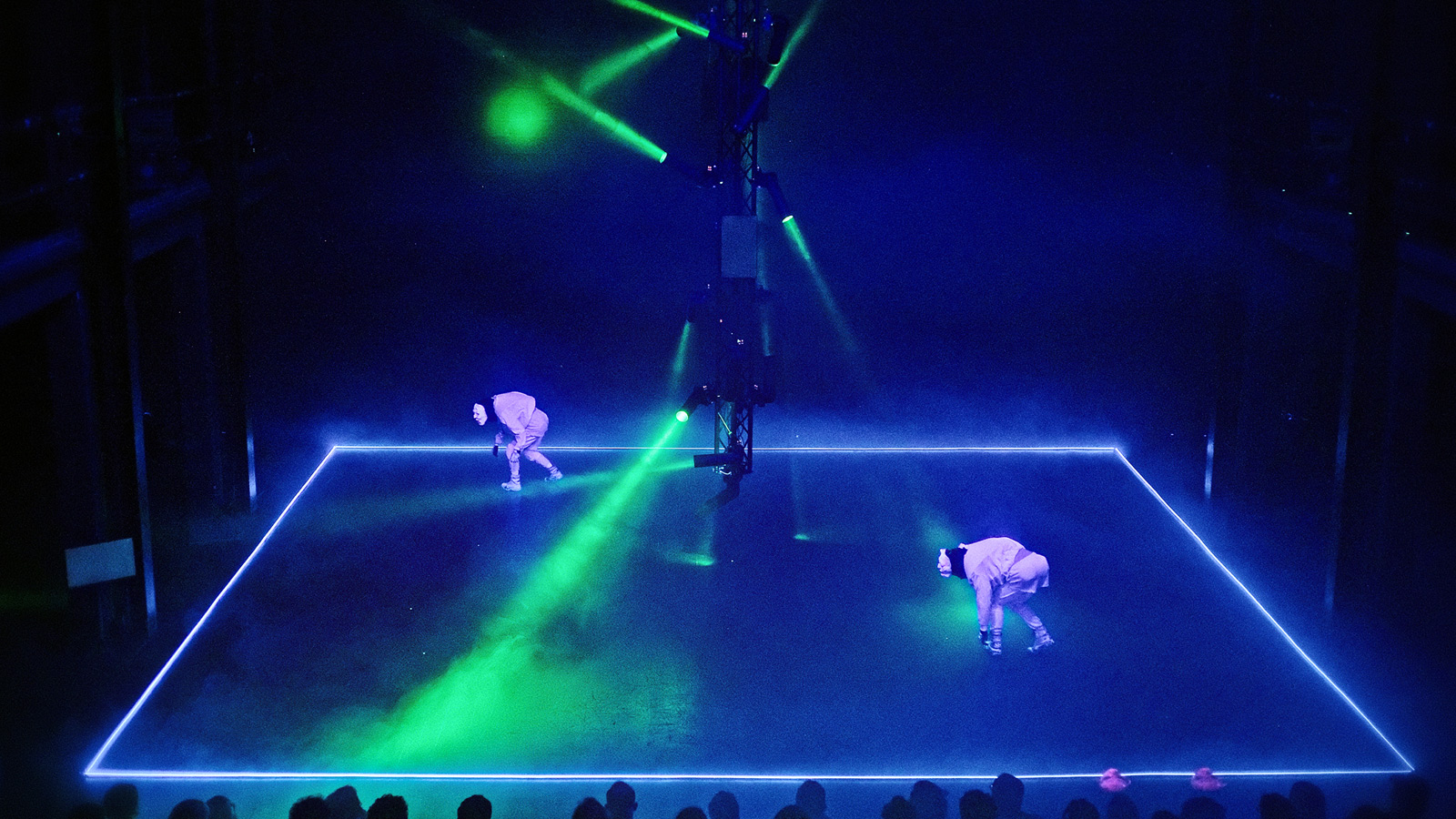
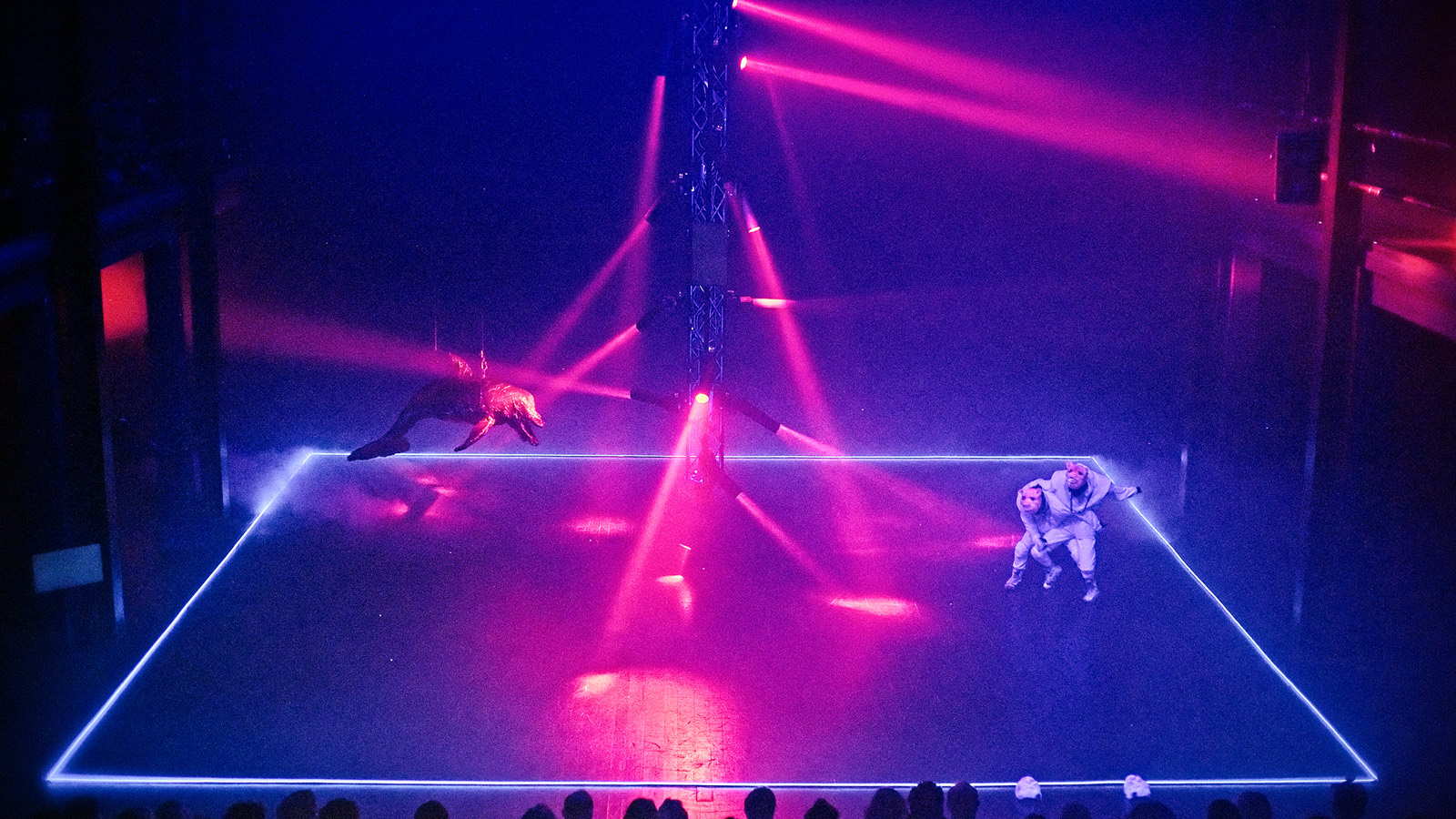
A tower stands at the centre of a square. It is from this tower that all the light in ‘AXIOM CASINO’ emanates from, determining what the audience can see at any given moment. Two figures circle it, knees bent and weight pitched towards the ground, wearing helmets whose faces keep changing as a synthetic voice lays down the rules of the place. Having used a similar tower in an earlier exhibition, Jonathan Uliel Saldanha began to explore the relationship between two humans and the structure, as well as the spatial constraints it imposes. The result is a piece its creator describes as a gaming machine set in a liminal space.
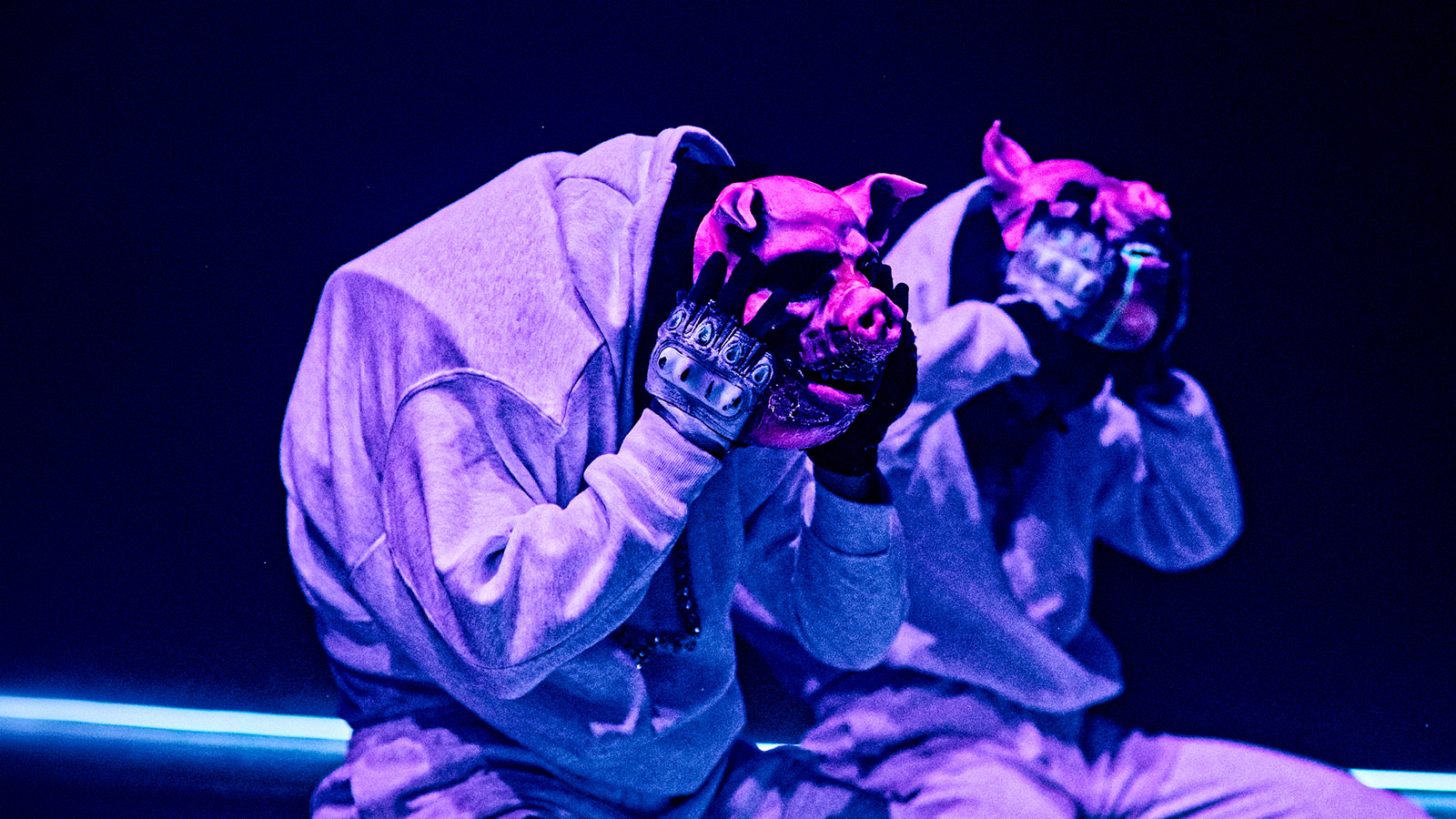
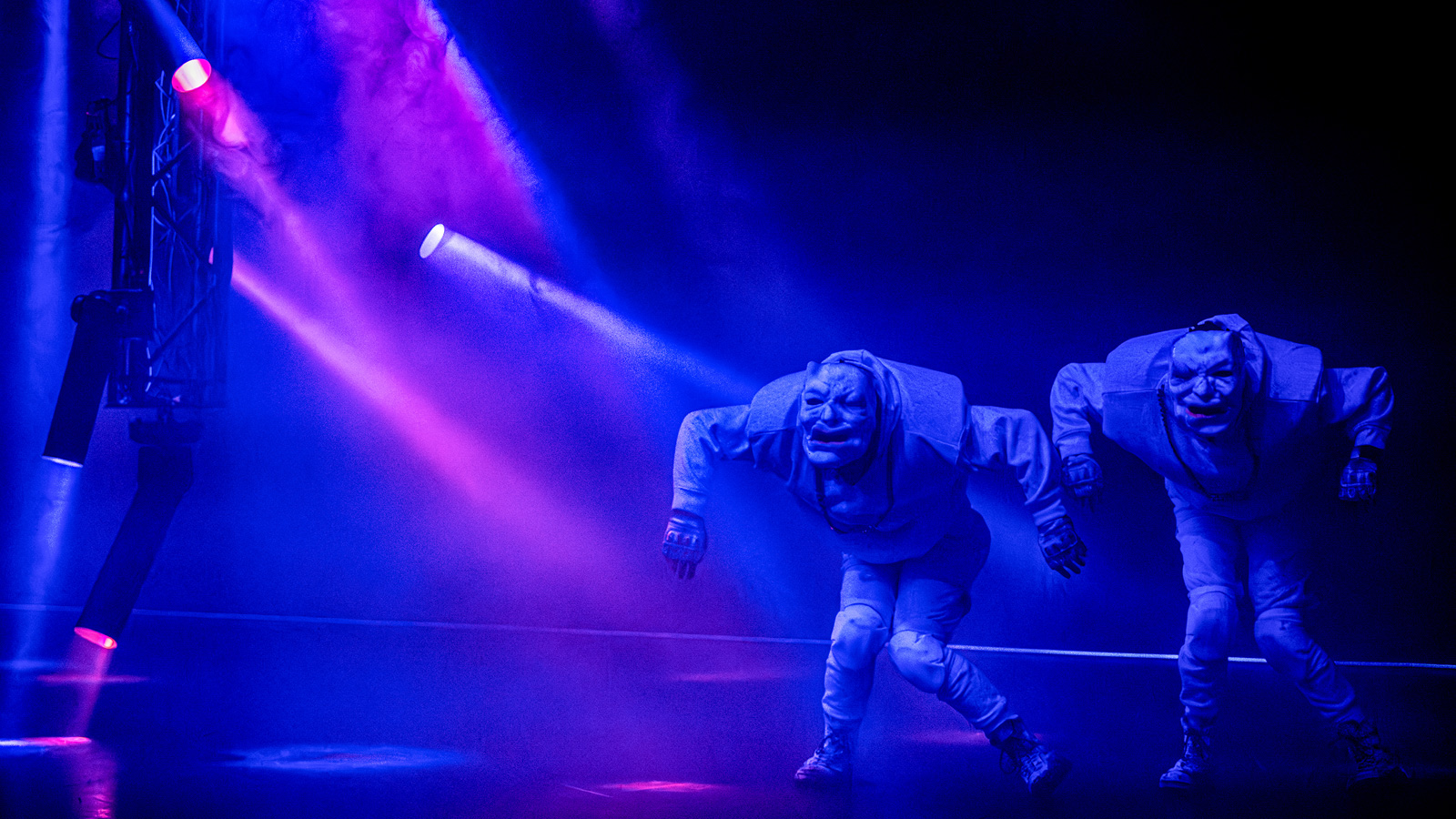
‘AXIOM CASINO’ premiered in Porto in April as part of ‘DDD – Festival Dias da Dança’, and comes to the stage at CAM on 23 and 24 October. Ana Isabel Castro and Deeogo Oliveira perform in a production directed and choreographed by Saldanha, who is also responsible for the dramaturgy, shared with Catarina Miranda and Gonçalo Guiomar, and the musical composition, shared with Gonçalo Penas and Guiomar. The production is by SOOPA.
A composer, visual artist and director, Saldanha founded the SOOPA collective and leads the projects HHY & The Macumbas and HHY & The Kampala Unit. The latter emerged from a residency at Nyege Nyege in Uganda in 2018, bringing together dub, techno, traditional drums and elements of trance. From 2020 to 2022, he was an associate artist at Teatro Municipal do Porto. From October 2024 to February 2025, Galeria Municipal do Porto hosted ‘Surface Disorder’, his first solo exhibition. He works across a range of media, but music is his primary driving force. His collaboration with the Nyege Nyege label and the musicians with whom he regularly exchanges ideas continues, with the piece taking shape ‘in the context of those performances and concerts’.
During that period, Saldanha was ‘particularly interested in human machines, the machines humans create to contain society, its ideas, its ideals.’ He found a model for staging them in the casino: a place where people try their luck according to rules established before they enter, and where everything hinges on the interplay of will, desire and, with luck, success. I wanted the stage machinery to be charged with these possibilities, and the characters who inhabit it to be imprisoned by it at the same time. ‘The casino is a space of potential, freedom and dreams, but it is also immediately a kind of prison.’
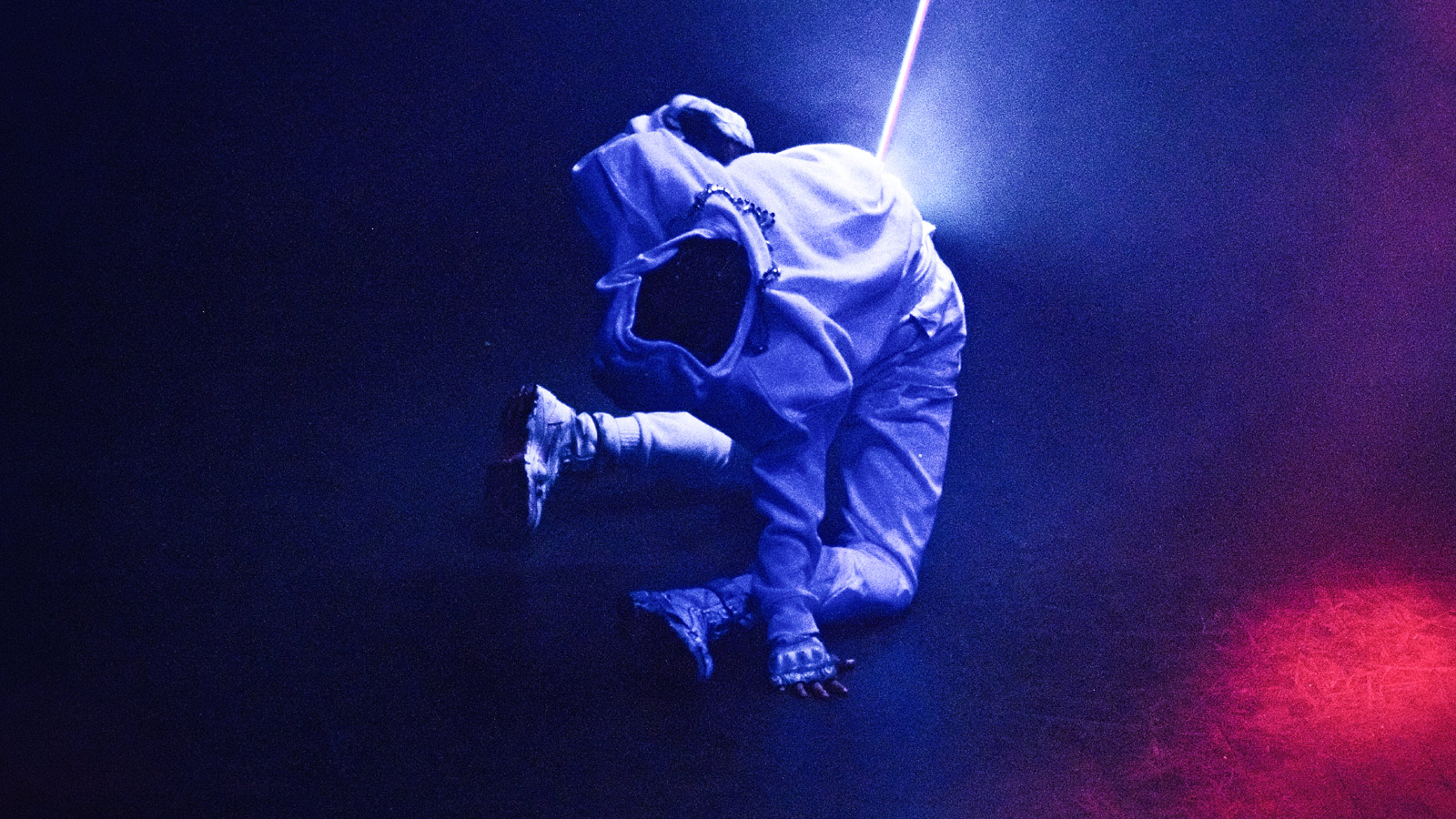
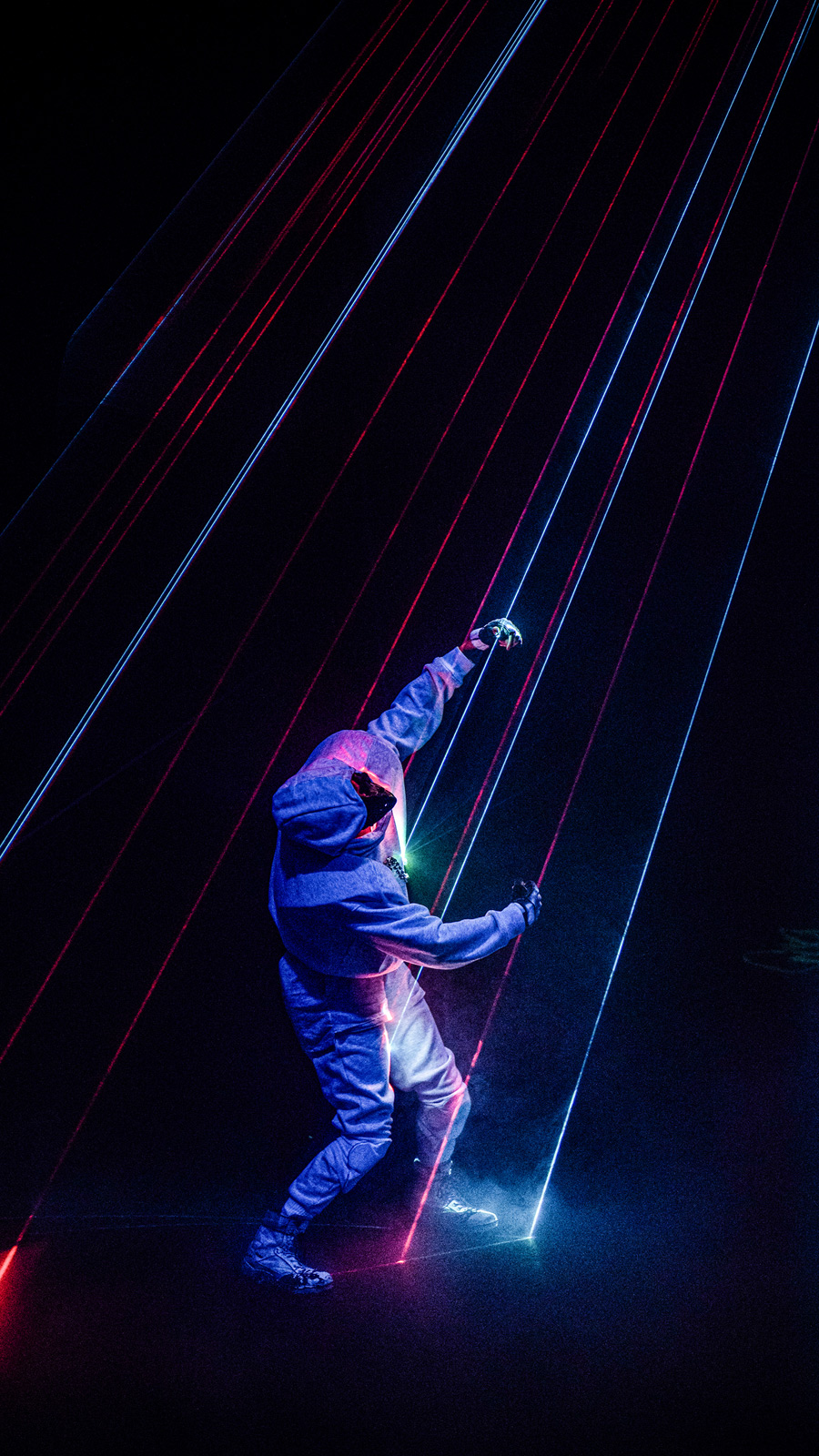
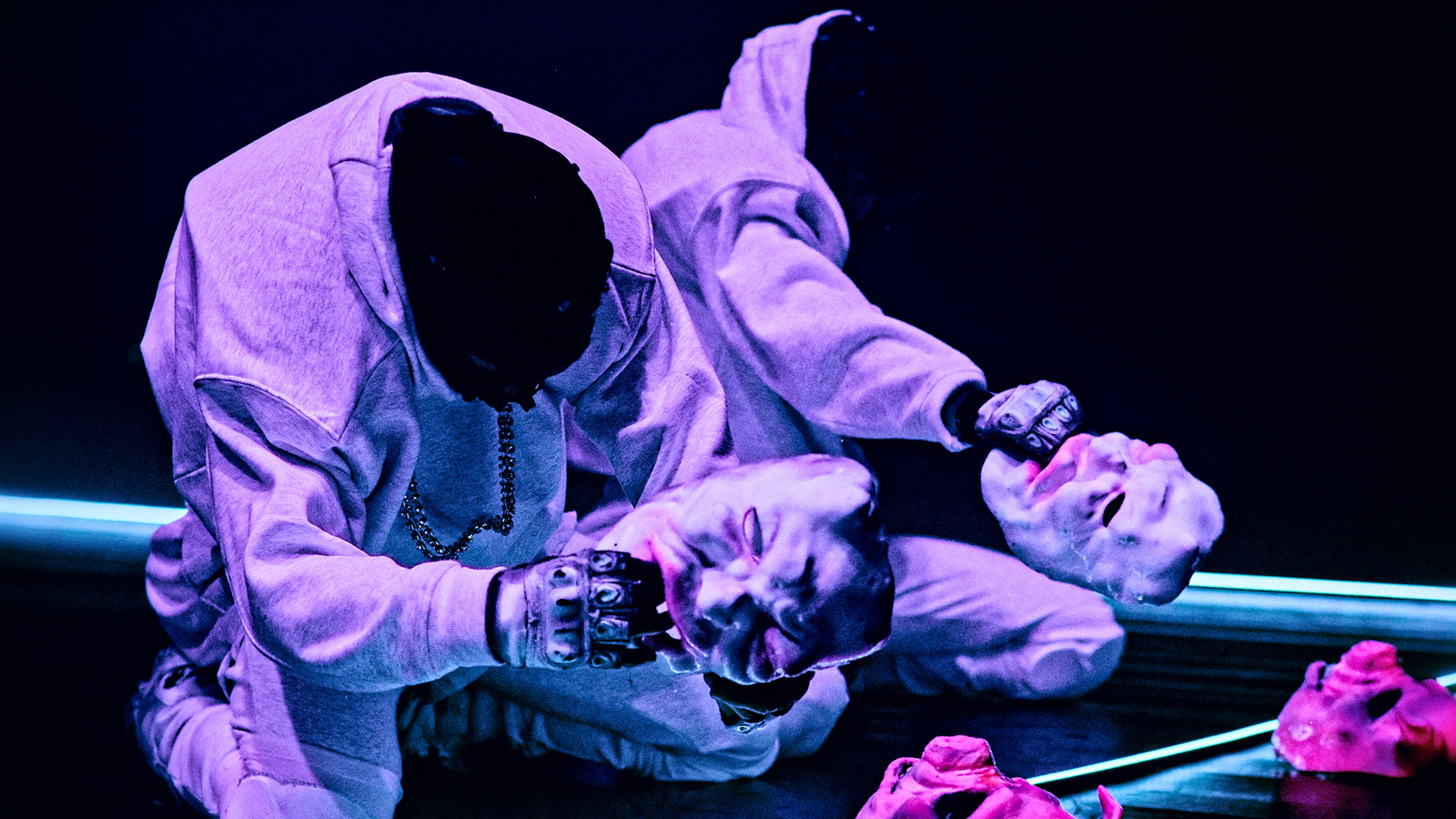
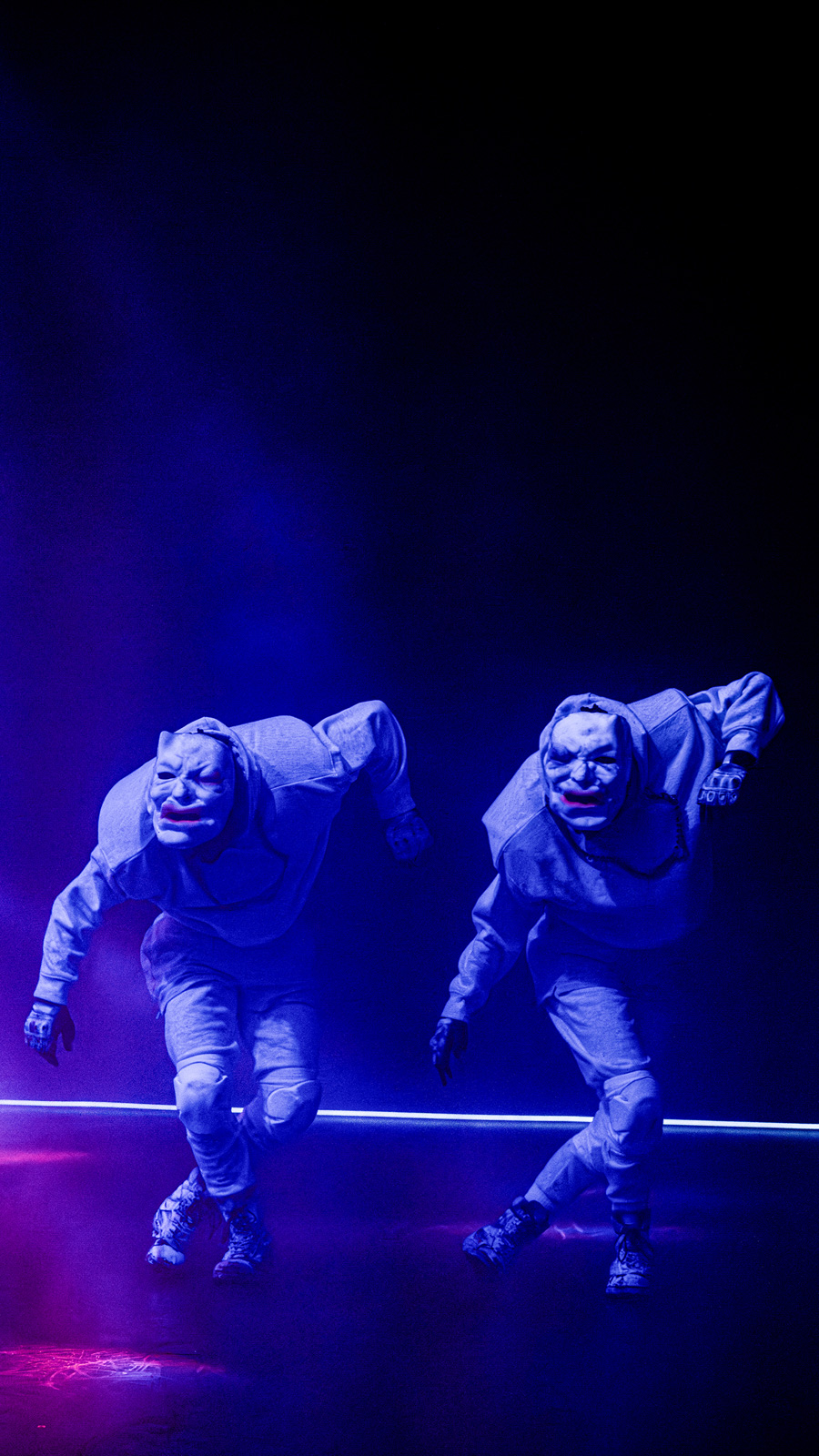
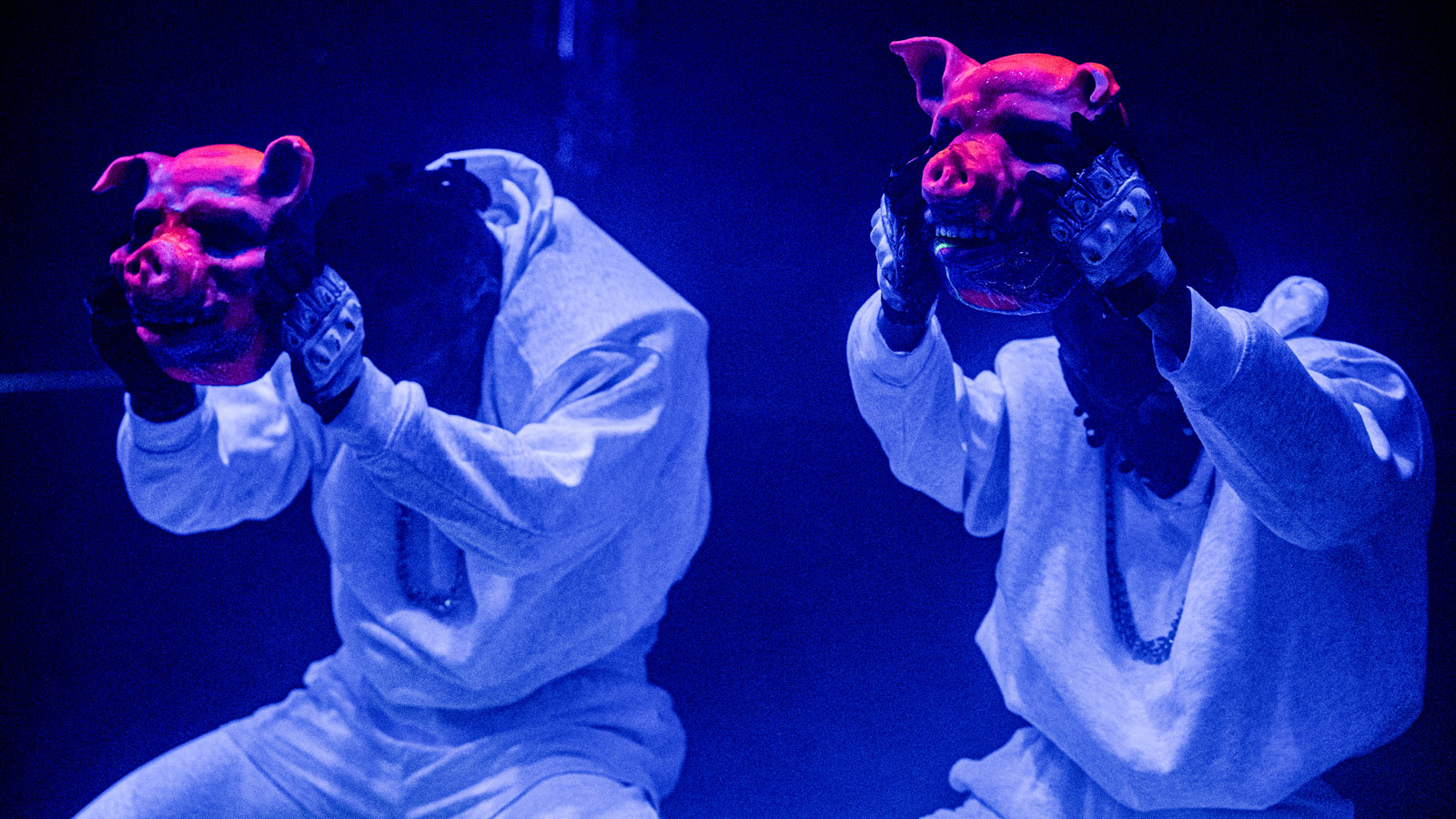
Starting from the tower, the work first took shape through dramaturgy and the definition of the rules; only afterwards were the performers invited to inhabit them. The agents always wear helmets with changing faces, carry a weight on their backs and always keep their knees bent, subject to a gravity that presses their bodies downwards. Once these rules were established, the team turned its attention to sound. Recordings of casino environments, mixed with other sounds, create an acoustic space that persists from beginning to end. Within it, voices, the clinking of coins and reward signals circulate. ‘Things kept calling to one another; ideas gathered and called forth other ideas, until the whole thing came into being of its own accord,’ the creator recalls.
The rules are managed on stage by an entity the team named ‘mother’. She formalises them, sets boundaries and proposes games that the two characters try to understand and overcome, in constant dialogue. Often, the games change in nature without the characters realising it, leaving them no choice but to adapt. Like figures in a computer game, the agents have no names, and it remains unclear whether they are avatars controlled by someone outside or possess agency of their own. They are twins, with identical faces, postures and repertoires of gestures. At first, they inhabit the space separately. Then the walls disappear and each becomes aware of the other’s existence, as in a video game where other characters cross your path; from this encounter, alliances become possible. There is also a moment of transition in which the figures undergo a mutation and change character.
In recent years, gambling addiction and the regulation of betting have featured prominently in public debate, particularly because digital platforms make access so easy. Asked whether this reality formed part of the world of ‘AXIOM CASINO’, Saldanha explains that he was drawn to the fundamental nature of gambling, to the way it operates within the human condition, rather than to casinos or gambling venues themselves. He was interested in what defines society and the very act of living alongside others, which entails a series of rules: some understood, others elusive; some intuited more or less viscerally, and others still ‘completely clear’, stated aloud and impossible to circumvent.
Above all, he wanted to understand how, from the very beginnings of human social organisation, rules are established that bring people together in the same space, and how those rules can change quickly, turning alliances into opposition. A space that seems controlled and clearly defined, like a square, can at some point acquire an invisible wall that divides those who inhabit it. In that space, it is not always clear whether one is winning or losing. Often, loss turns out to be a reward, and an apparent victory is no more than a transformation. Saldanha acknowledges that contemporary relationships directly inform the work, which he also sees as a product of its time, and says that ‘it would have been very difficult to make this work 20 years ago.’ Even so, he wanted to address these questions openly, without tying them to a particular world, such as gambling.
For Saldanha, the square that defines the casino is an exact image of what humans do to space when they draw a boundary around it and give it a closed architecture. The audience sees everything only because the tower allows them to do so. The agents have human faces, but they are masked, and their recognisable bodies are deformed by the system’s rules. At certain moments, however, the relationship between the two, or some of their movements, reveals something that escapes the square and the hierarchy it imposes. ‘Perhaps there is indeed a kind of fissure there from which something human emerges,’ he says, something that does not depend on language, rules or even the body. ‘It is not words that make it human, nor the body. Perhaps it is a gesture, or a choice, or a stumble, or a mistake’ that reminds us that these constrained bodies have agency.
Asked about the connection between this search and that of those trying to find humanity behind artificial intelligence tools, Saldanha replies that ‘we ourselves are these machines.’ We accept ideological discourses and rules imposed indirectly, without knowing whose interests a rule or a word serves when it acquires such force, and end up inhabiting this pressured world without questioning it. The human word is no exception, since today it ‘already has a meaning that is almost one of resonance, and not necessarily of agency.’
To bring these questions to the stage, Saldanha rejected a linear narrative. ‘If that were the intention, people might as well just read a text,’ the creator explains. Instead, he sought to build a sensory space with particular rules of light and sound, where the two entities could take on three dimensions. There is text and there are dialogues between the mother and the agents, but the lead in each scene shifts between light, sound and the body, in a play of intensities. The audience takes in these stimuli, watches radical changes unfold before them, and completes the dramaturgical elements at play with their own imagination. Saldanha sees particular force in this real-time experience, in everyday life bound to the screen and to an experience ‘completely mediated by corporations, by advertising objectives.’ Accustomed to moving from one series to a film and from a film to another series, spectators find here a space where several techniques work together, and where it is possible to escape the ‘highly limiting boxes’ that weigh on everyday life.
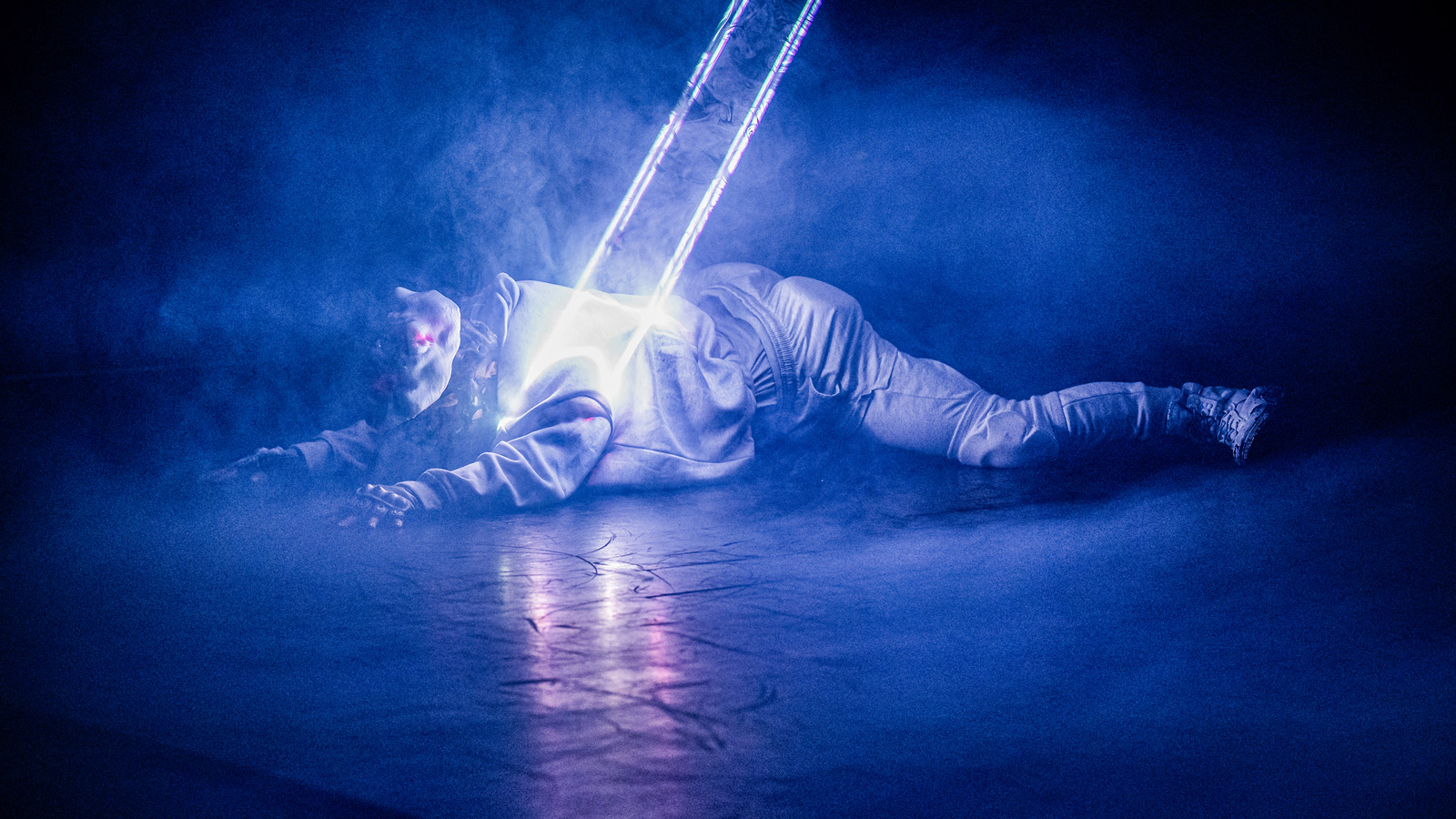
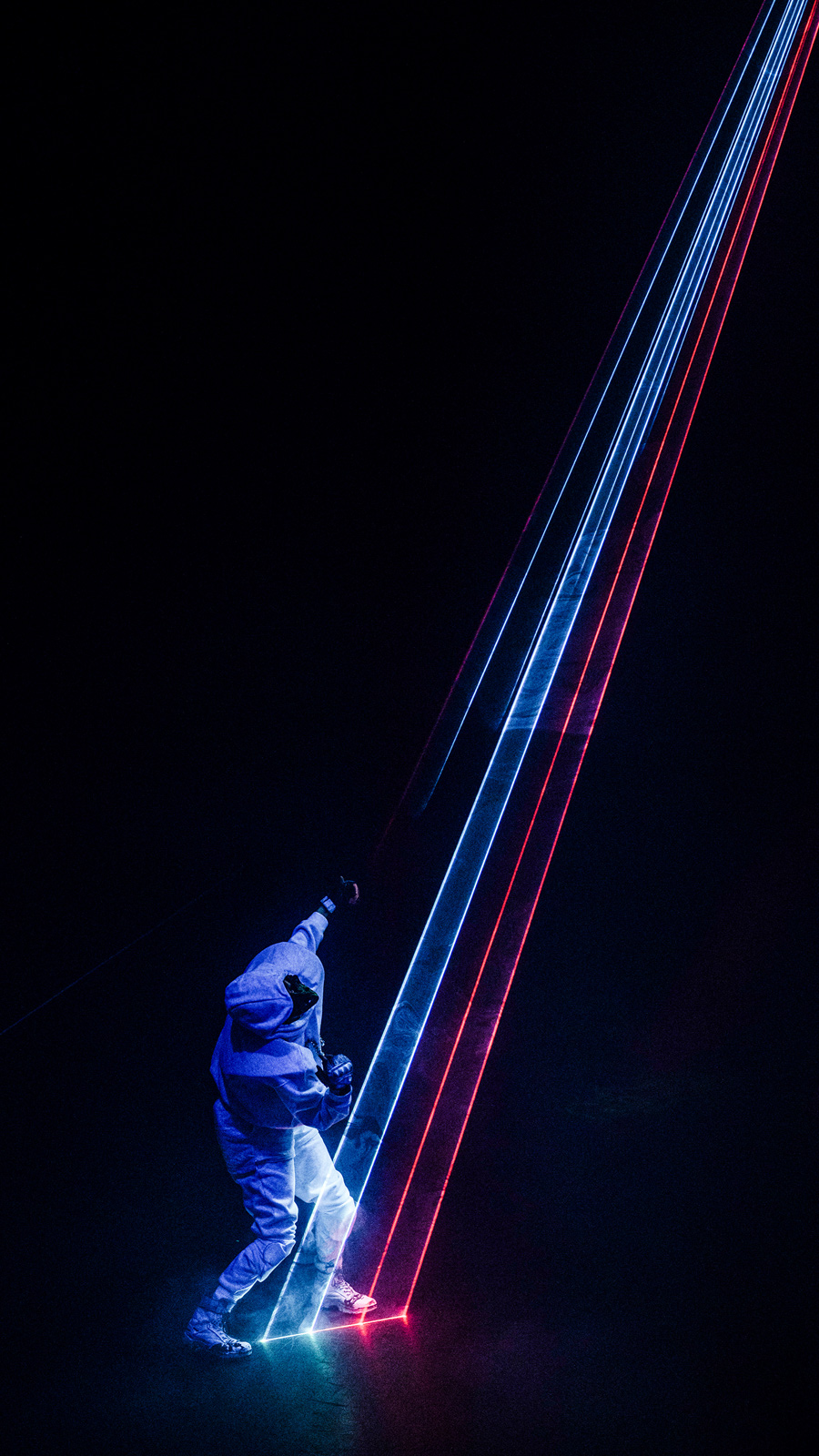
Saldanha links this convergence of disciplines to art’s origins, when it served ritual and brought people together around something. Music was accompanied by dance or the colour of clothing, and an image could be framed by a duration or a physical process. ‘Things weren’t kept in separate drawers.’ It seems natural to him, then, that interest should return to the transitions between one form and another, in experiences that engage the eyes, the body and the vibration of sound all at once.
Faced with the excess of stimuli he describes, the director sees art as a place where it is still possible to stop, contemplate and attend to one’s own silences; he describes it as ‘a wonderful space in which to devote ourselves to not understanding.’ Works need not be immediately clear, he argues, at a time when ‘everything nowadays is about quick understanding; it has to be efficient,’ a demand which, in his view, narrows the spectrum of human experience.
In music, the medium that moves him most, Saldanha recognises ‘an incredible, visceral power’ capable of reaching the body directly and setting it in motion before thought takes place. ‘We don’t start thinking when we listen to music,’ he observes, seeing in this immediacy music’s great strength, free from any limitations.
As for other forms, he argues, it is good to have time to think, to not understand, and to remain in doubt. Doubt compels us to think and prevents anyone from simply agreeing or disagreeing with an incessant flow of ideas. Instead, it opens up a grey area in which it is possible to operate, a space Saldanha describes as both liberated and inward, where each person exercises their own creativity and imagination. ‘And a space for the imagination is essential,’ he concludes.
After its premiere in Porto, the move to Lisbon brings the team together once again around the tower and the square. Saldanha speaks of this new presentation with the pleasure of someone who will once again be with the people who created the piece and spend another week working on the same questions. For him, each performance is a way of reopening the door to this world and inhabiting it once again. ‘For us, that is incredible, because we will once again be able to immerse ourselves in these possibilities and see how far they can go,’ he says, adding that any opportunity to reopen this world ‘will always be welcome’.
BANTUMEN at Gulbenkian
Explore the series


No results were found for your criteria.
You may also like
No results were found for your criteria.