
‘A Place at the Table’: Food, Relation, and Belonging
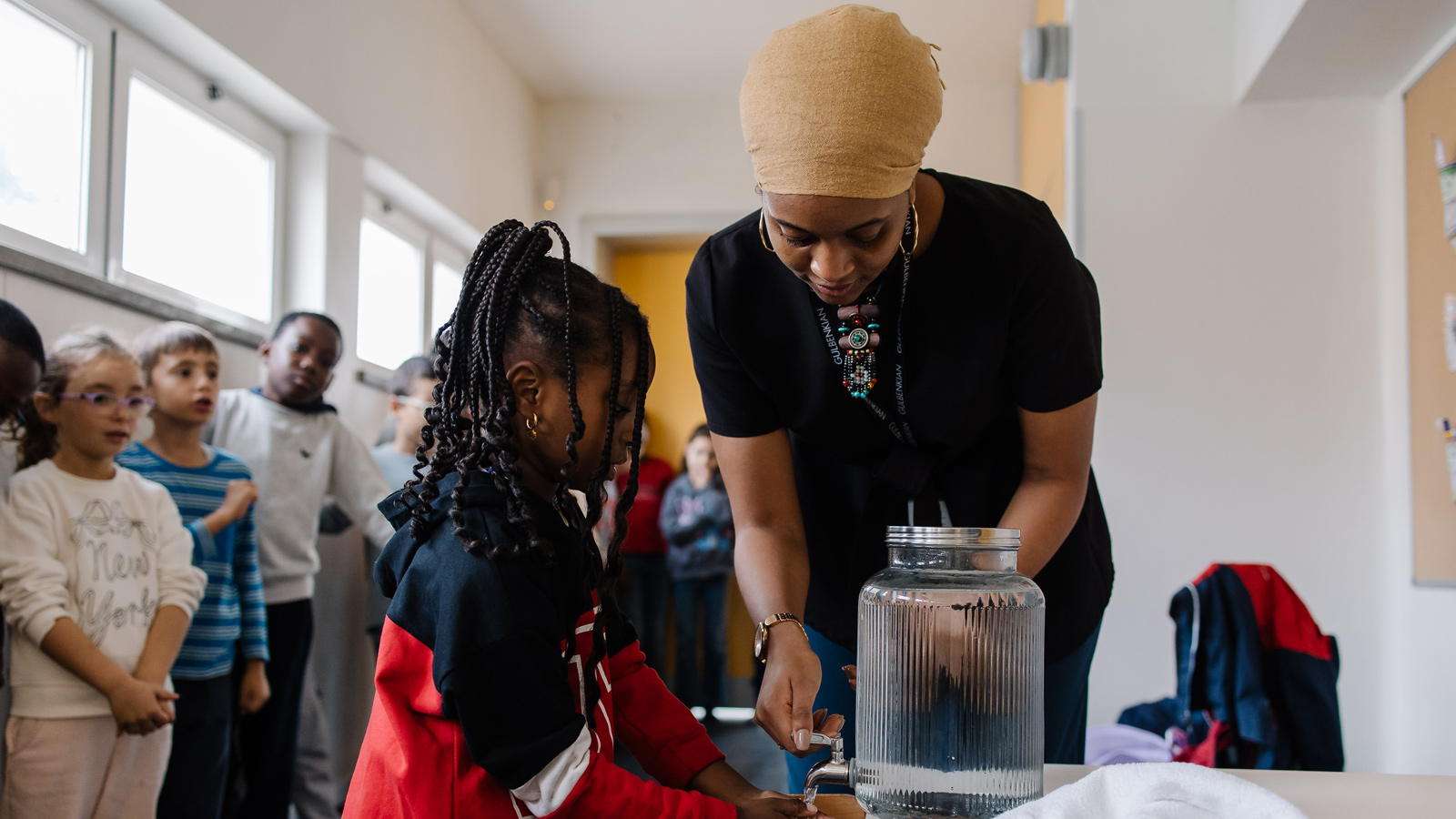
The students enter the classroom one by one, leaving their shoes outside and washing their hands. They arrive with a mix of curiosity, anticipation and mild confusion in their wide eyes.
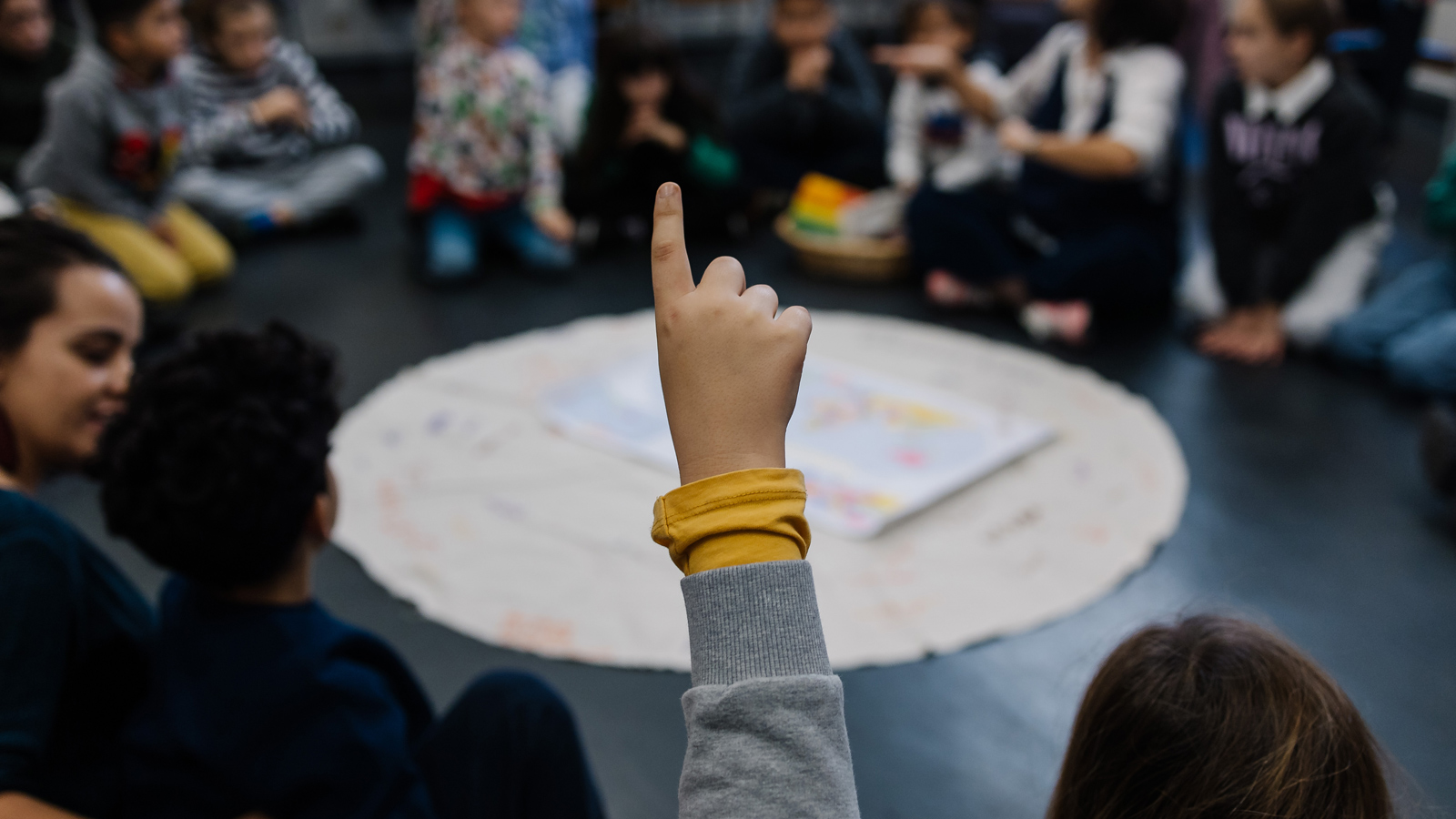
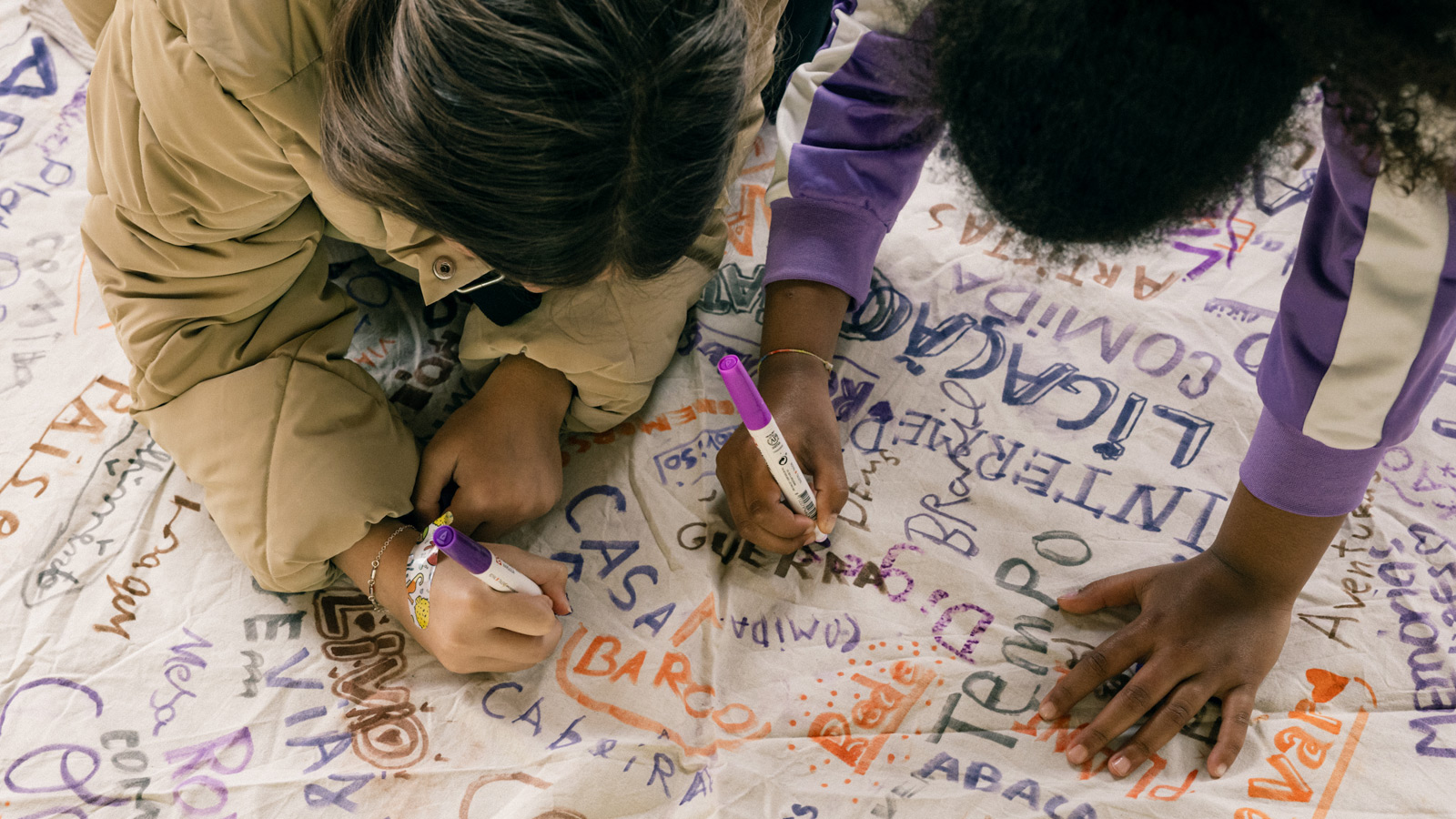
The room is darkened, the blinds drawn, soft music playing in the background. The usual desks have been pushed to the sides. In their place, a cloth has been laid out on the floor like a round communal table. Words are written on the fabric in different handwritings: ‘amor, batata, alimentação’ [love, potato, food]. On the cloth are a toaster, thin slices of bread, jam, a syrupy carrot preparation.
As the kids sit down around this makeshift table, they are offered a cup of mint infusion with plants from the school’s own garden. One boy says, ‘This is my favourite class.’
‘Lugar à Mesa’ [A Place at the Table] is the fourth edition of the project LUGAR [PLACE], in collaboration with Lisbon primary schools. Developed this year by the invited artists Francisca Paiva and the project Joy Food Experiences by Alice Artur and Joana Trindade Bento, together with the CAM’s mediation team, it uses food and the metaphor of the table as both material and method to explore memory, ecology, collectively and belonging.
Prompted by the ingredients on the cloth, which represent some of the artists’ favourite food memories, the children are invited to share theirs. Some hesitate, visibly puzzled. Some answer with their favourite food in the present tense – perhaps because they are more familiar with being asked about favourites than about memories, but also because, at this age, memory is still under construction.
Childhood is present-tense: not a past to be revisited, but an ongoing accumulation of sensations, tastes, routines and attachments. What they name today may one day become a cherished memory. In that sense, ‘Lugar à Mesa’ is not only asking children to remember through food, but helping compose memories they may one day return to.
Food is perhaps our most immediate form of relation: to those who cook for us, eat with us, and to the living ecosystems that sustain us. As Aurora Solá writes in Manifesto on the Future of Food, food is ‘the most evident vector of our connection to everything […] because food sits at the boundary of us and everything else.’ What better medium – and method – through which to explore the world around us, our place within it, and our relationship to human and non-human others?
The table is where relations are rehearsed and negotiated. Around it, we learn forms of care, exchange, attention, waiting, sharing, pleasure and restraint. We also learn something about position: who serves, who is served, who speaks, who listens, who arrives late to an already-set table – and who was never invited. The table teaches us, often before we are conscious of it, how to be with others.
Our place at the table can, in turn, say something about how we experience our place in the world: whether we feel welcomed or peripheral, able to contribute or expected to adapt to arrangements made by others. For children especially, many of these arrangements can feel already established: the rules inherited, the rituals pre-existing, the places assigned in advance.
What ‘Lugar à Mesa’ offers is not only an introduction to the web of relations that sustains life, but an embodied experience of being part of it: not arriving at an already-set table, but recognising oneself as part of its ongoing arrangement.
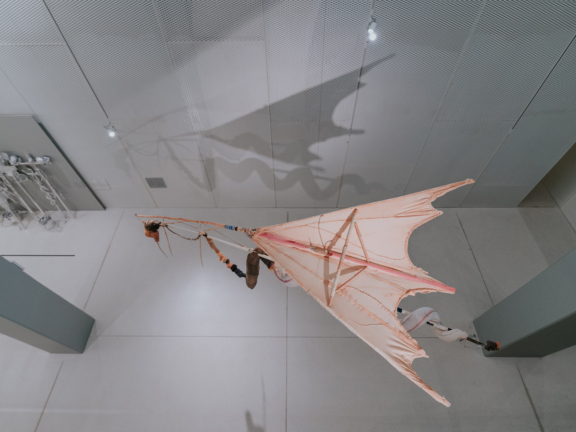
The project unfolds across sessions at school and at CAM. Upon arriving at the museum, the children exchange their shoes for slippers. It is a signal of being at home, home being central also to Carlos Bunga’s exhibition Inhabit the Contradiction, which started with the work ‘A Minha Primeira Casa Foi Uma Mulher, 1975’ [My First Home Was a Woman, 1975] (2018).
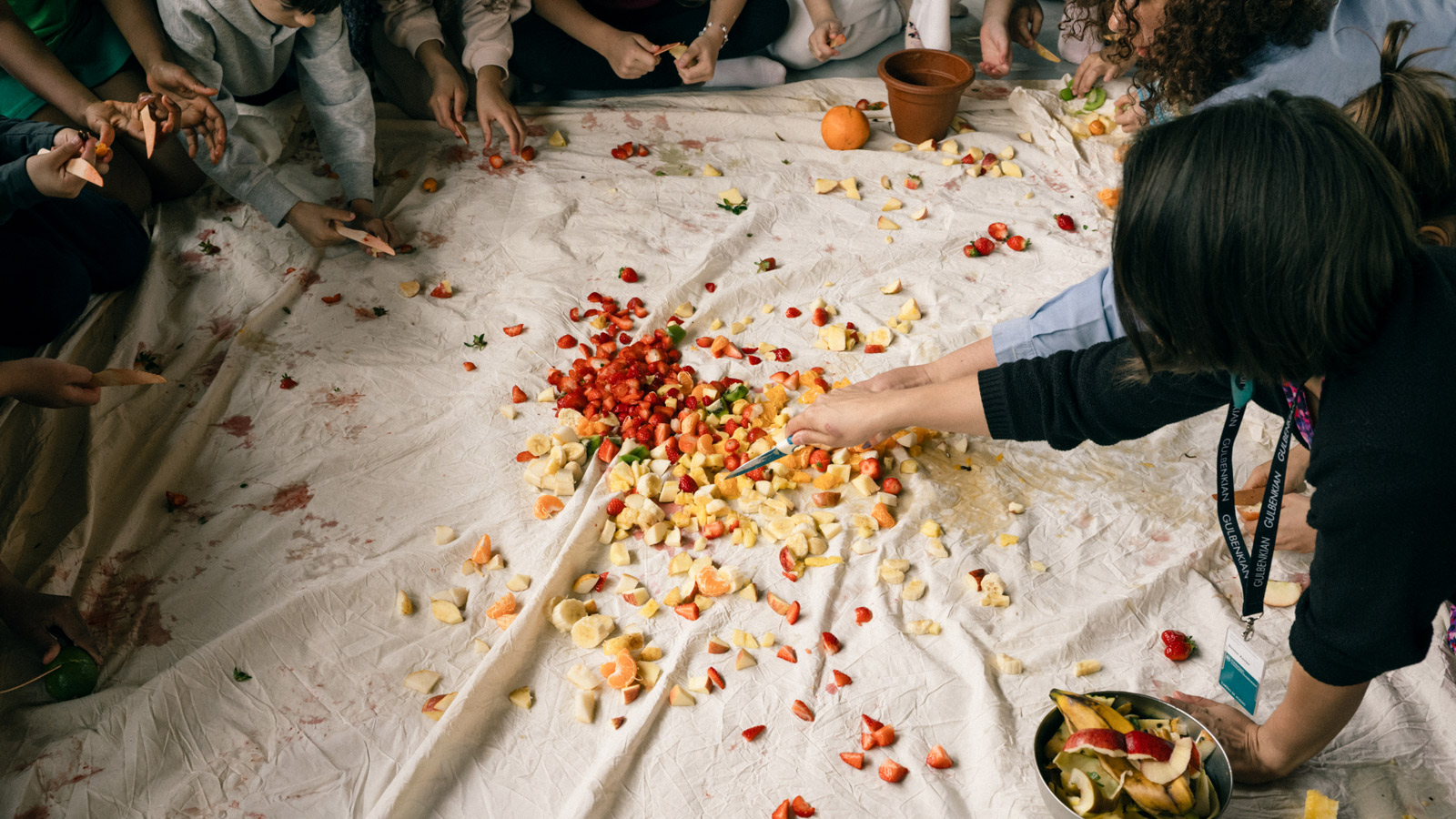
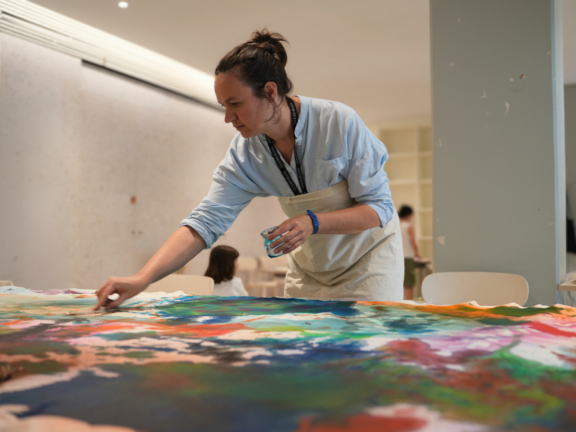
Each child holds a knot on a long-shared string, and together they enter the exhibition as a group: walking, crawling, hopping, sometimes lying down. Moving through Carlos Bunga’s ‘Bosque’ [Forest] (2025), they encounter objects familiar from home – a bed, chairs, picture frames – before painting a table setting onto a large piece of cloth using beetroot juice. Together, they carry the cloth-table to where they will eat together and where Alice tells the story of the earth: from seeds (pomegranate) in soil (cacao crumbs), to plants (nasturtium leaves), to fruits (sweet potato), which carry new seeds in turn.
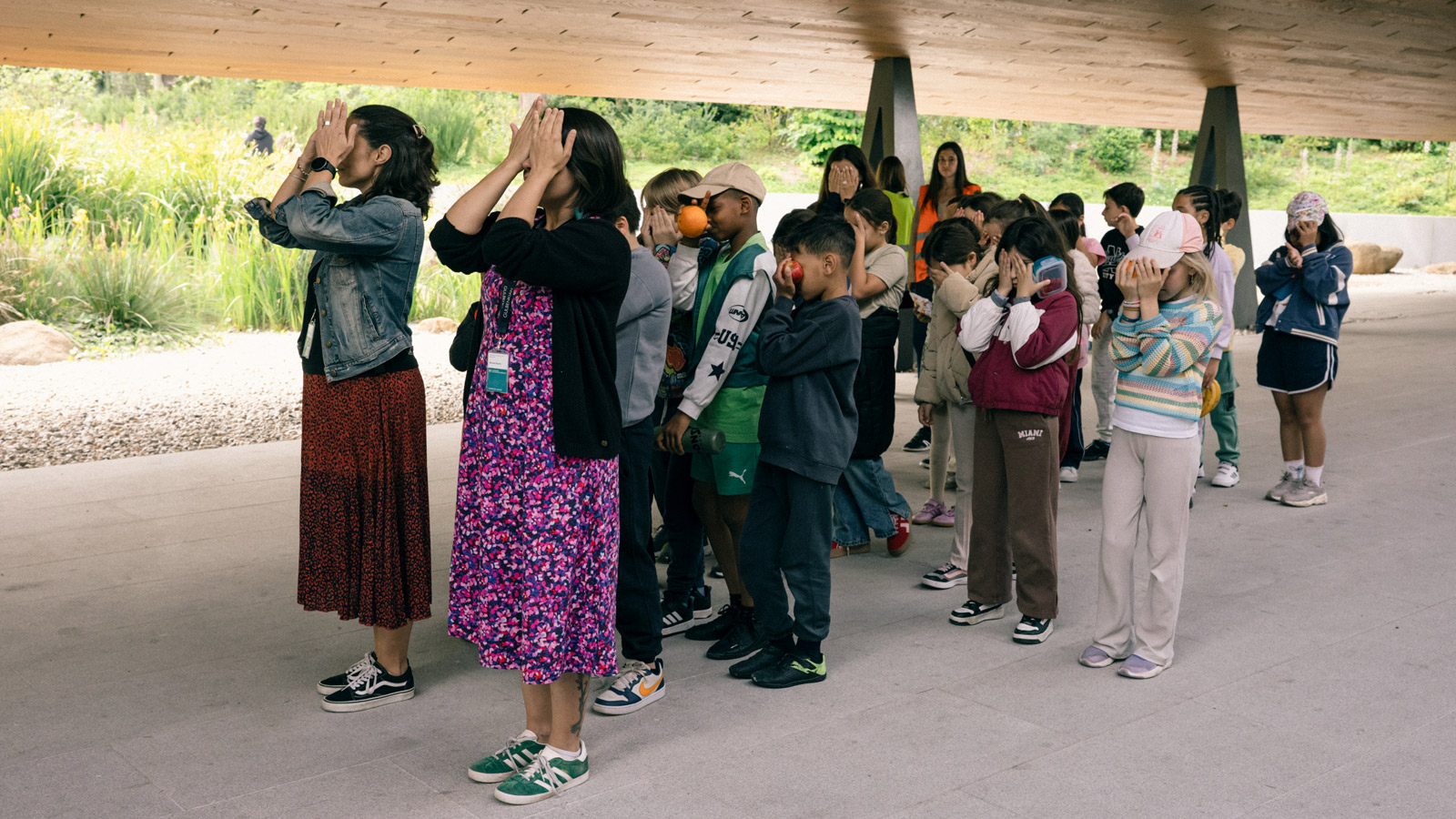
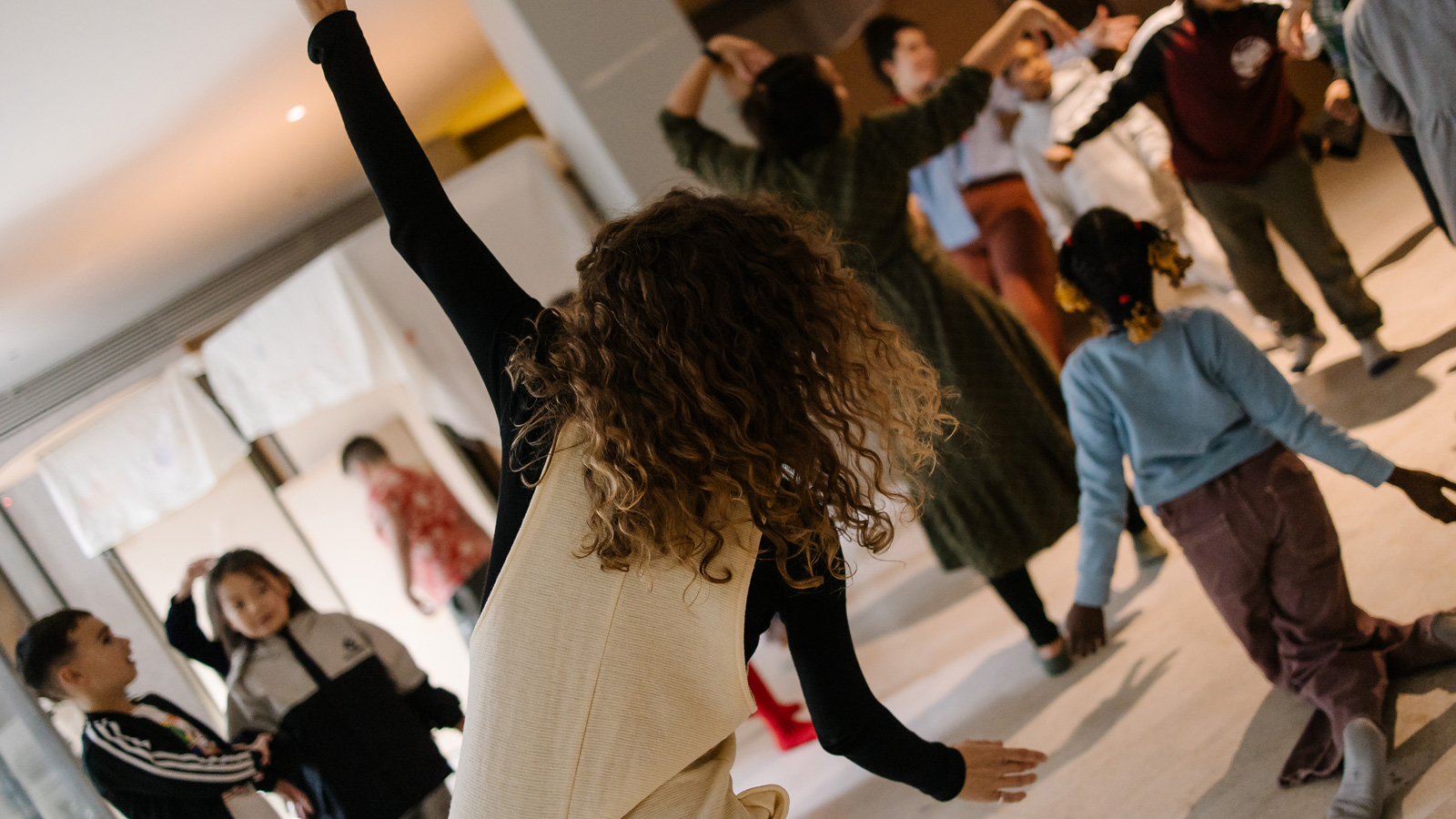
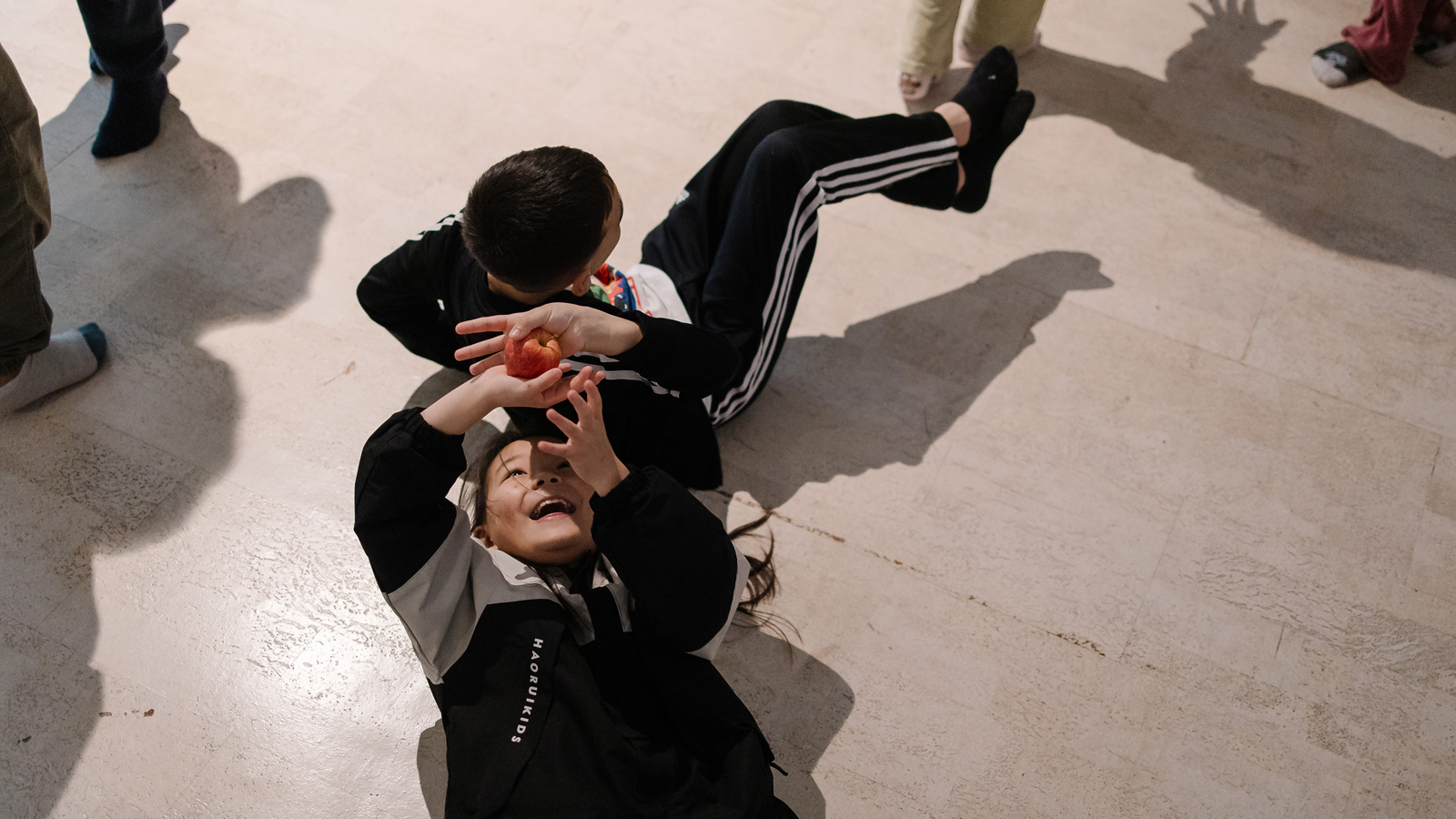
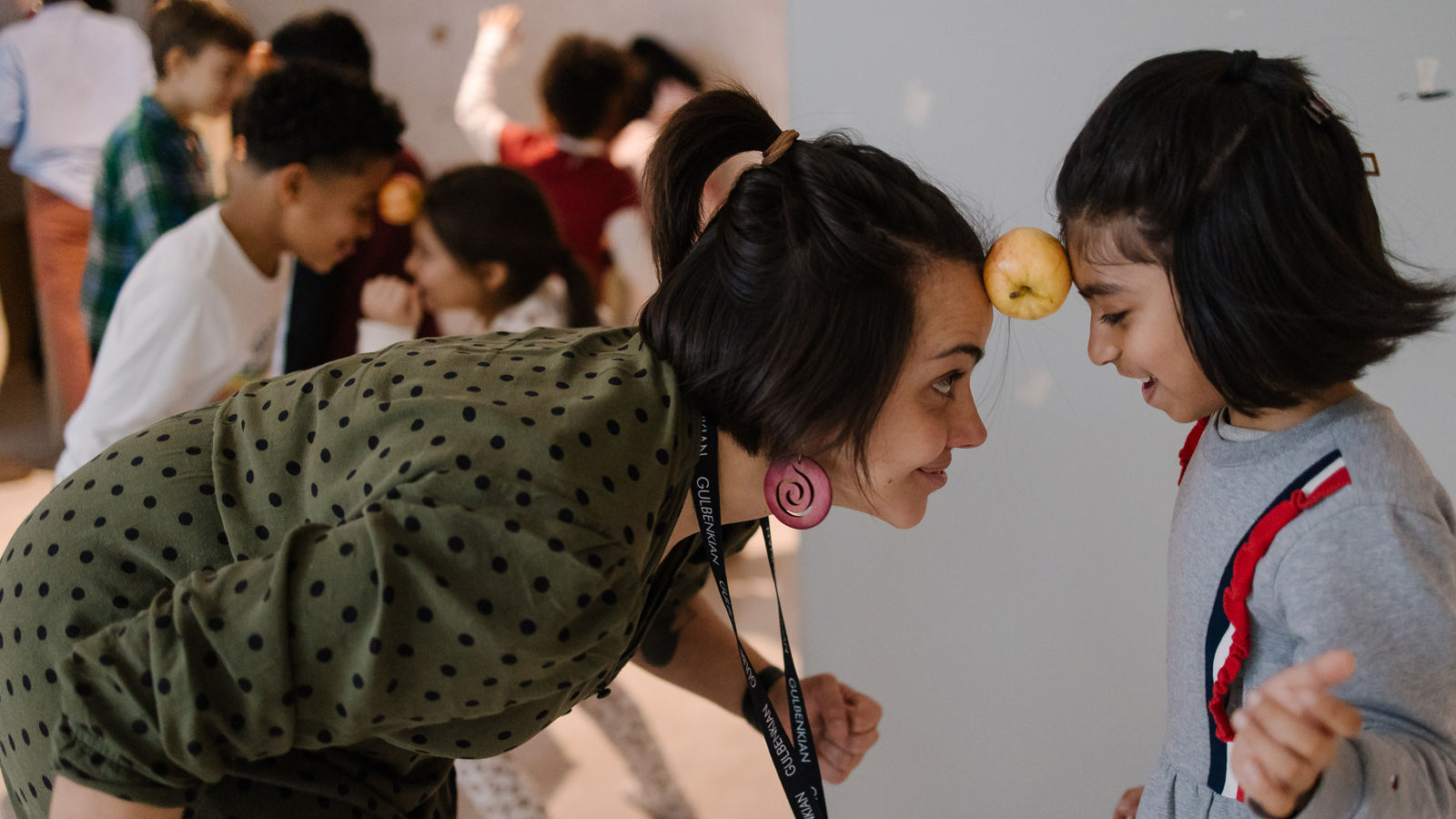
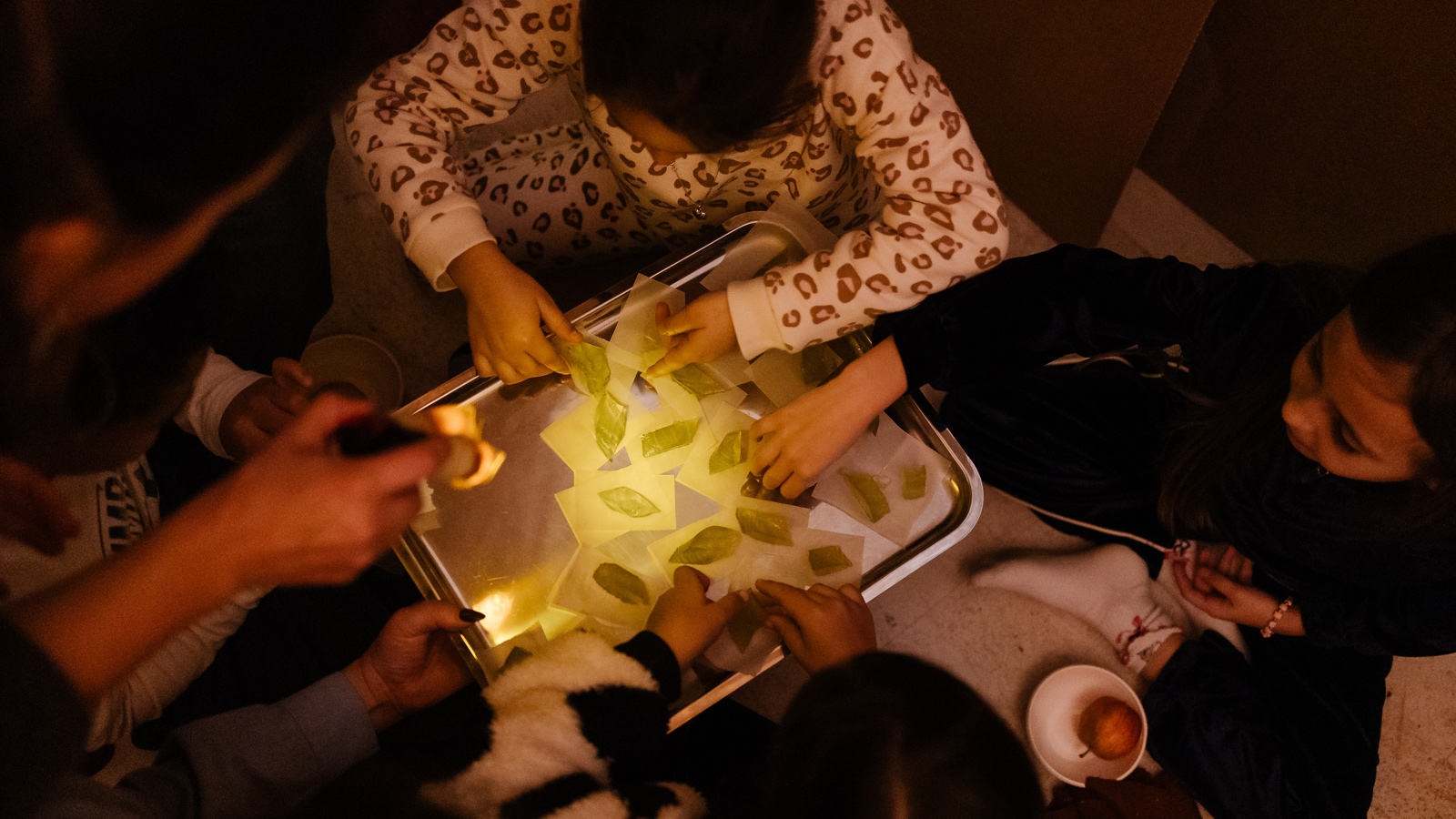
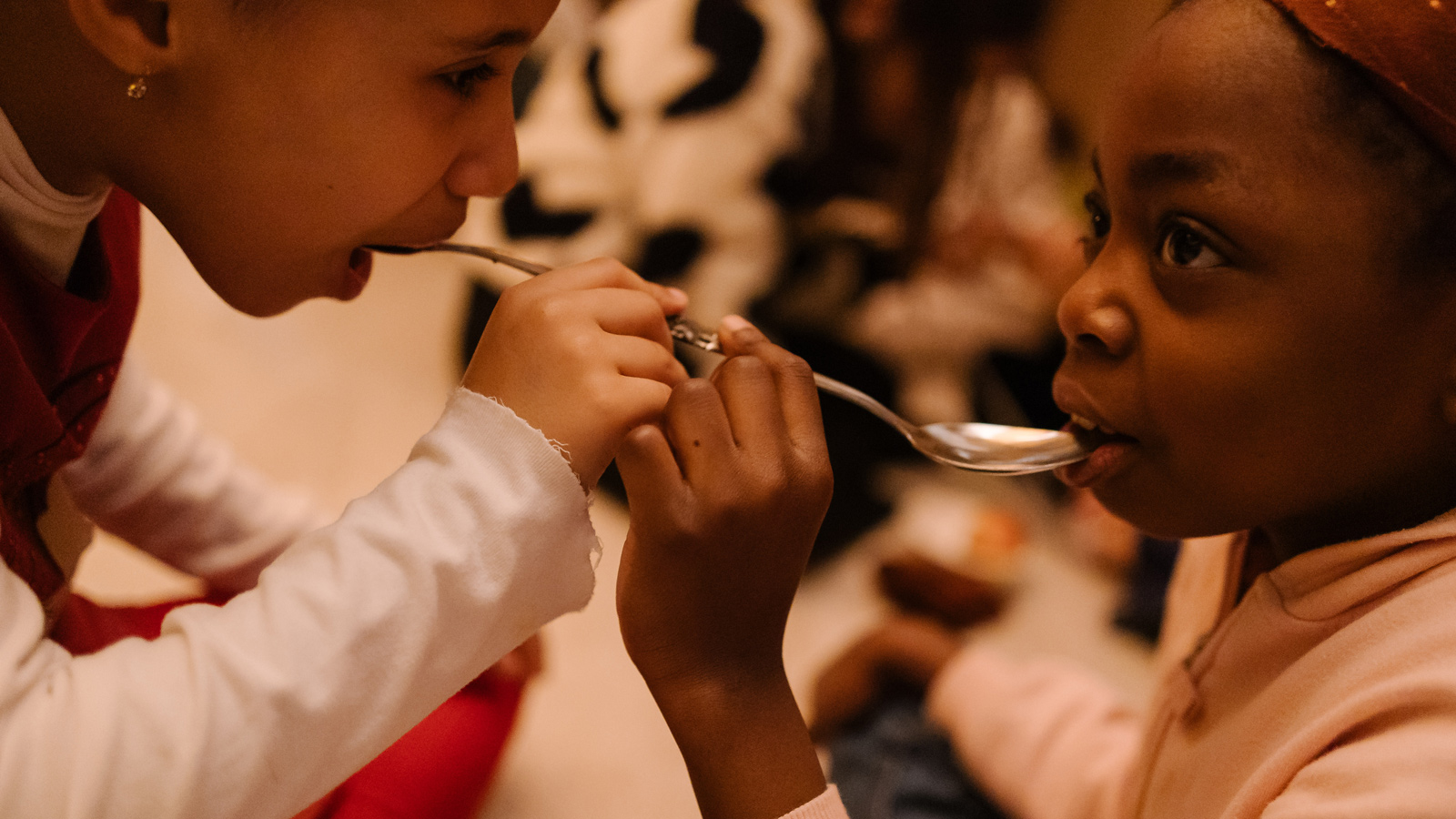
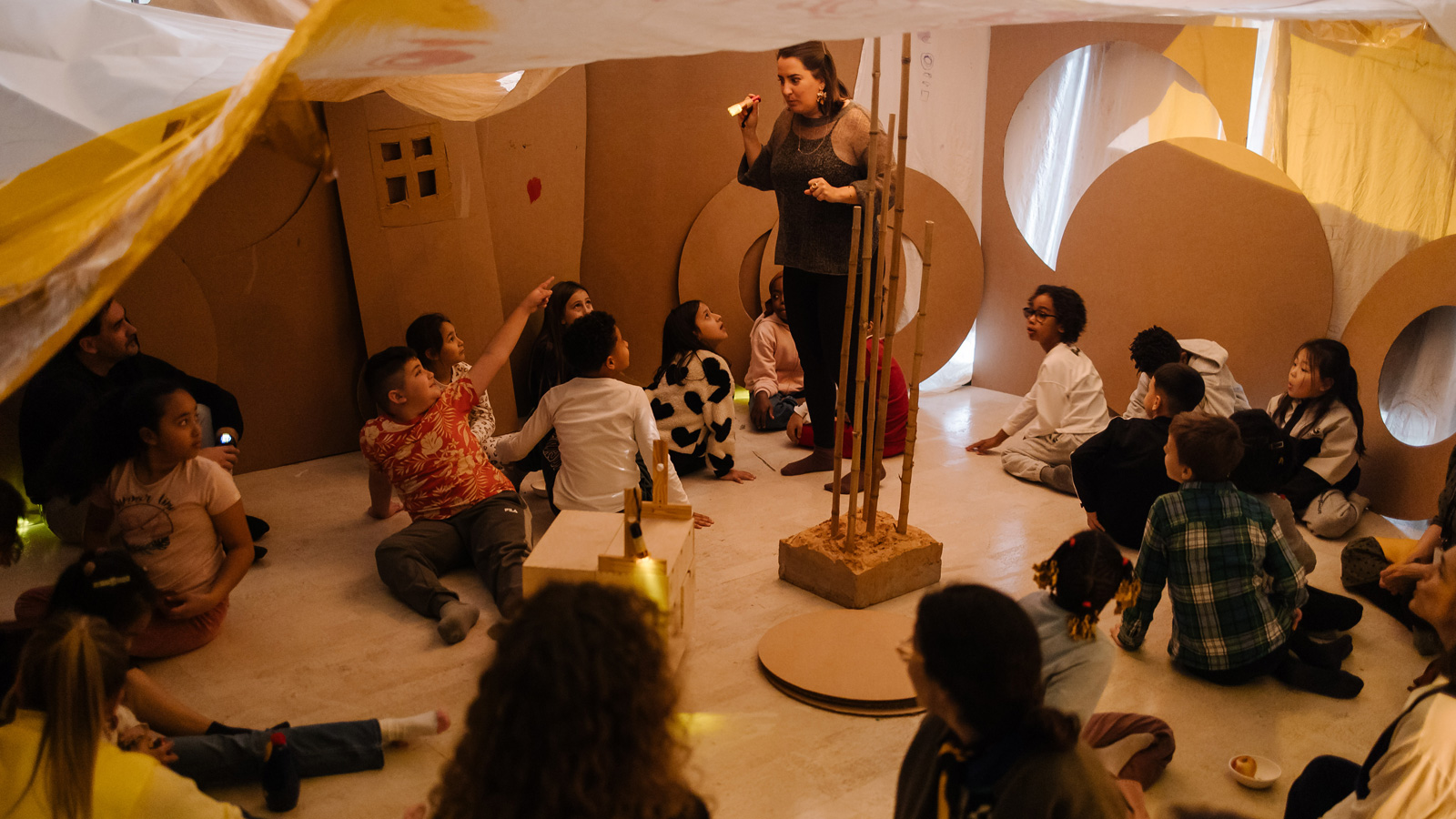
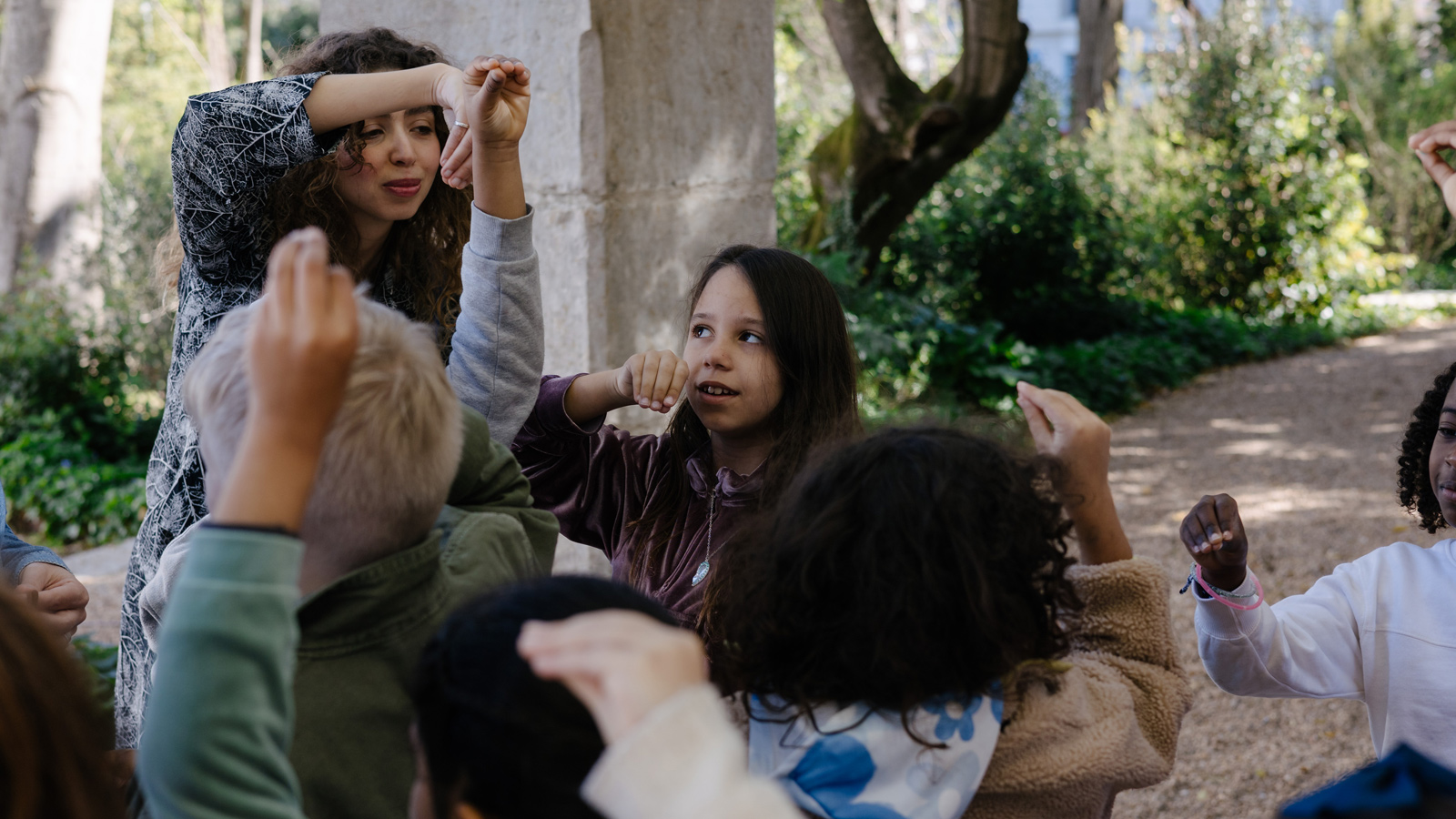
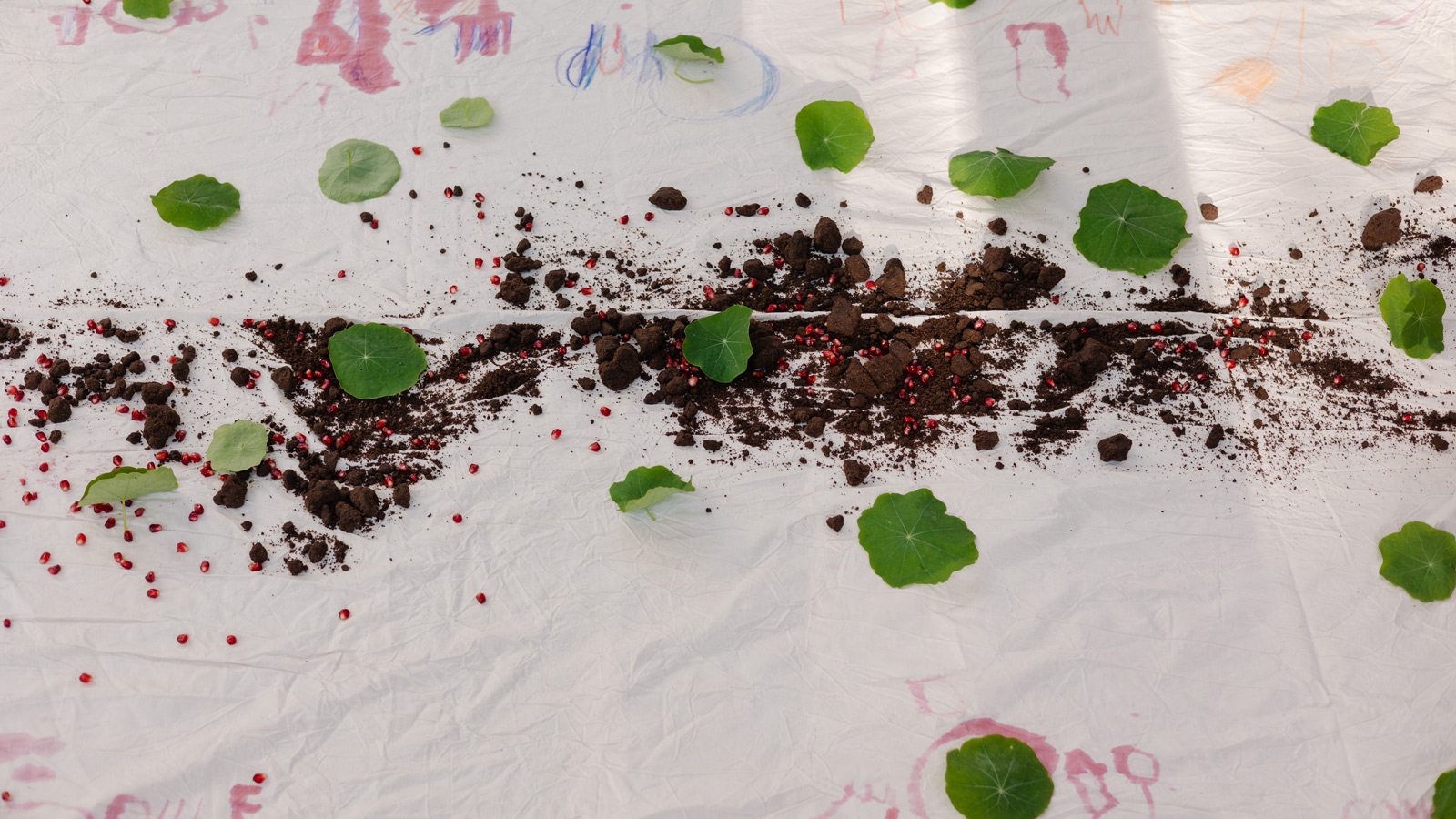
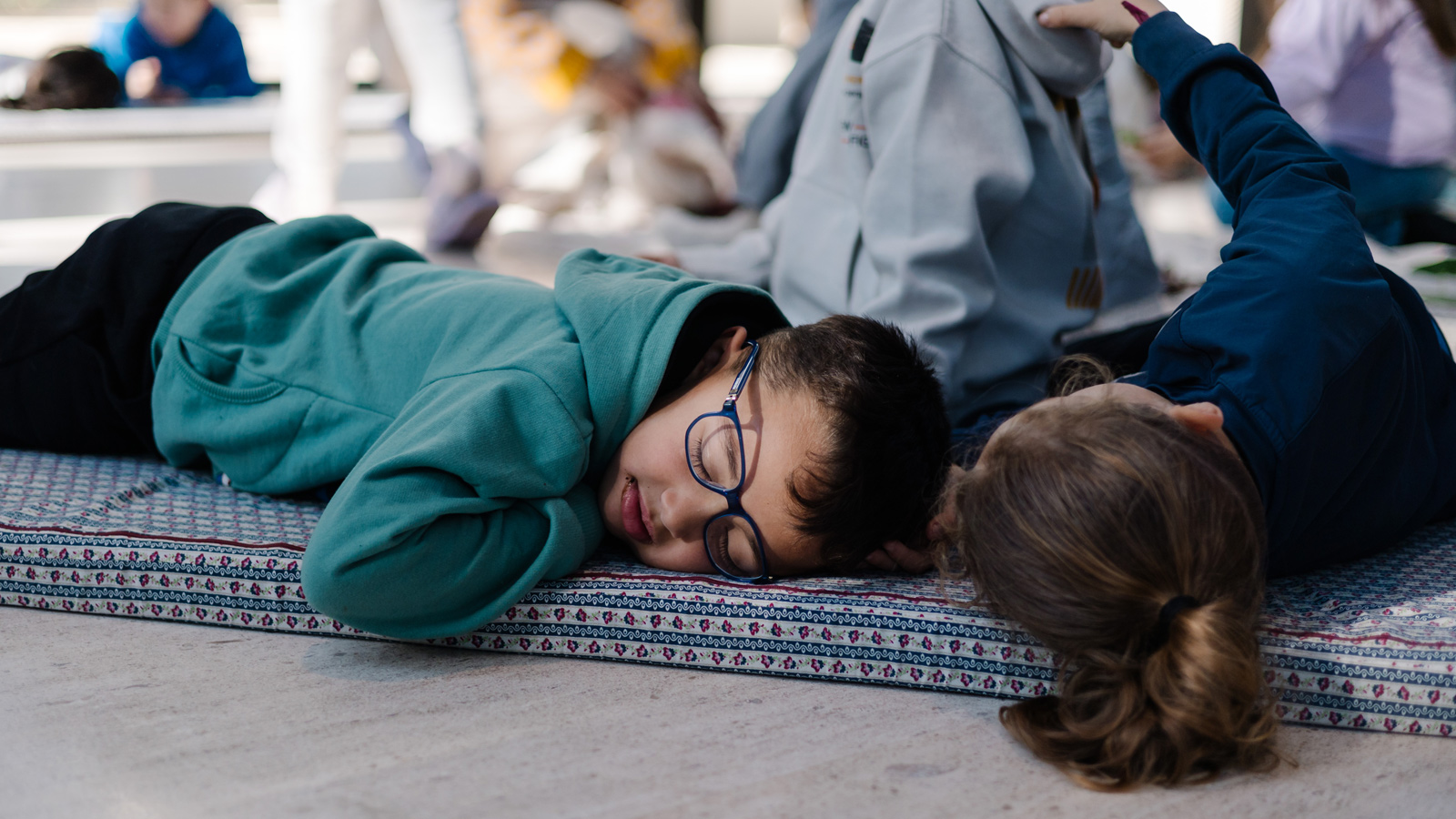
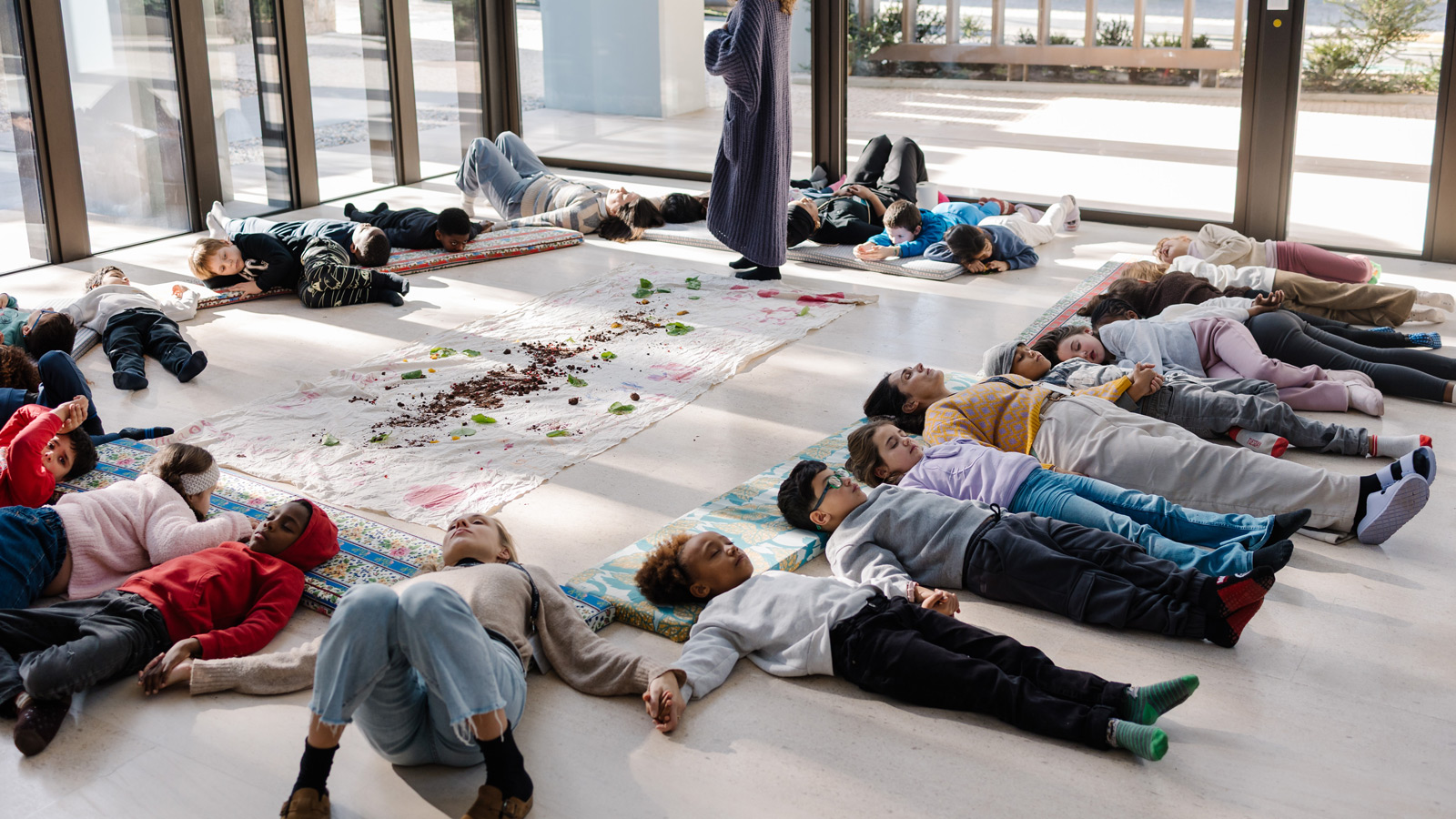
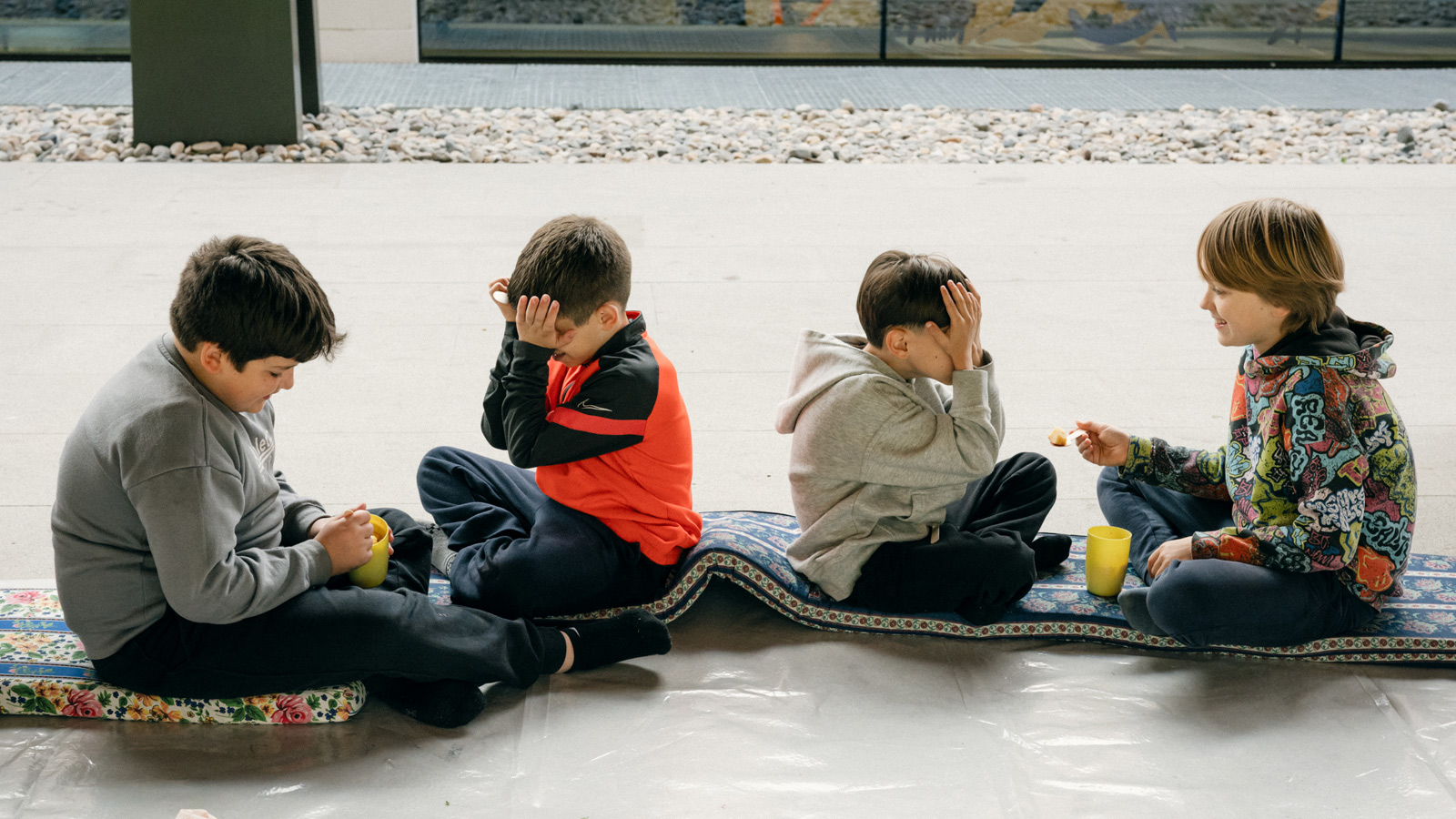
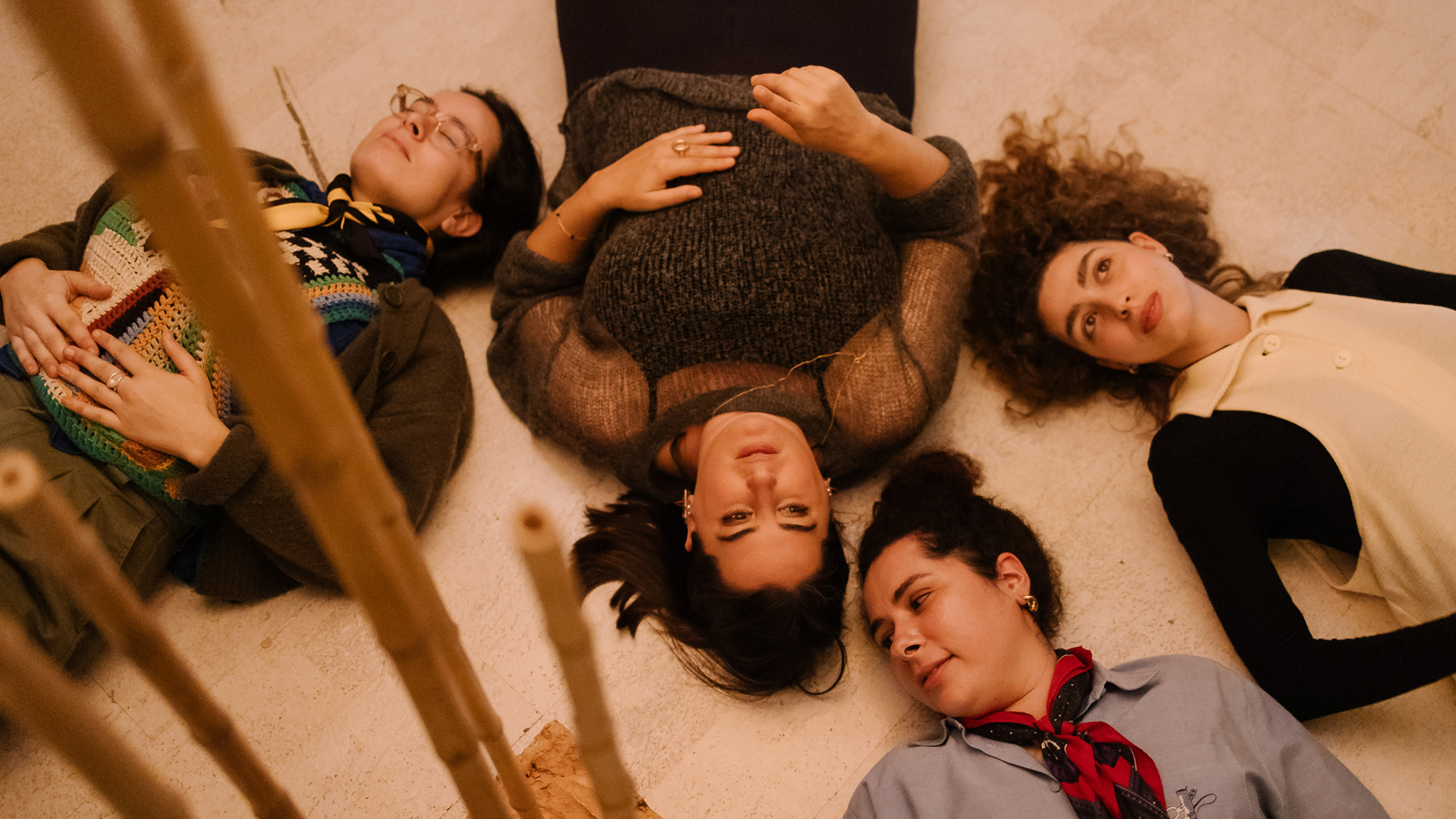
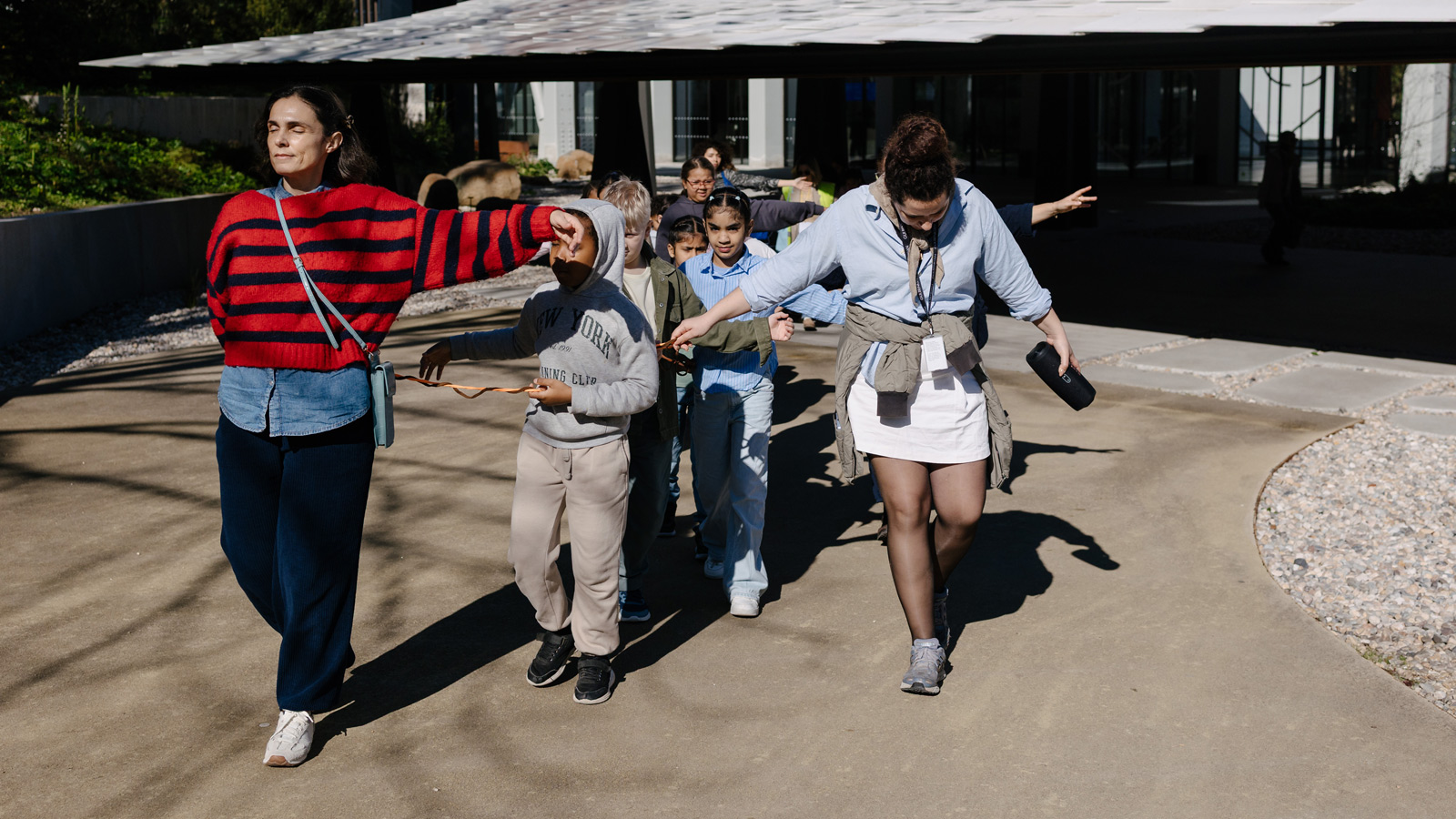
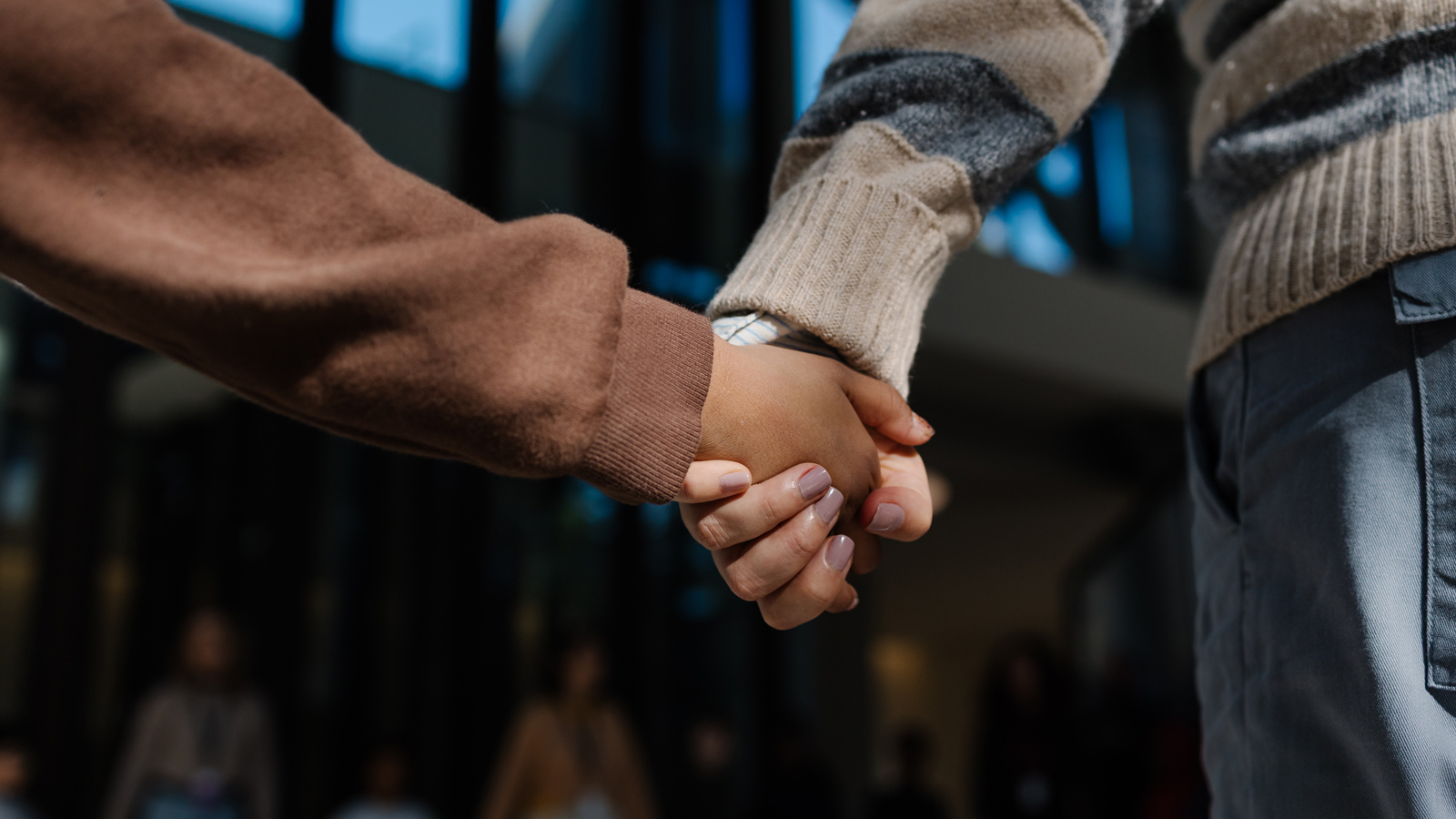
Each session led by the artists is followed by one with the museum’s mediation team – a space to reflect on, make sense of, and, why not, digest their impressions.
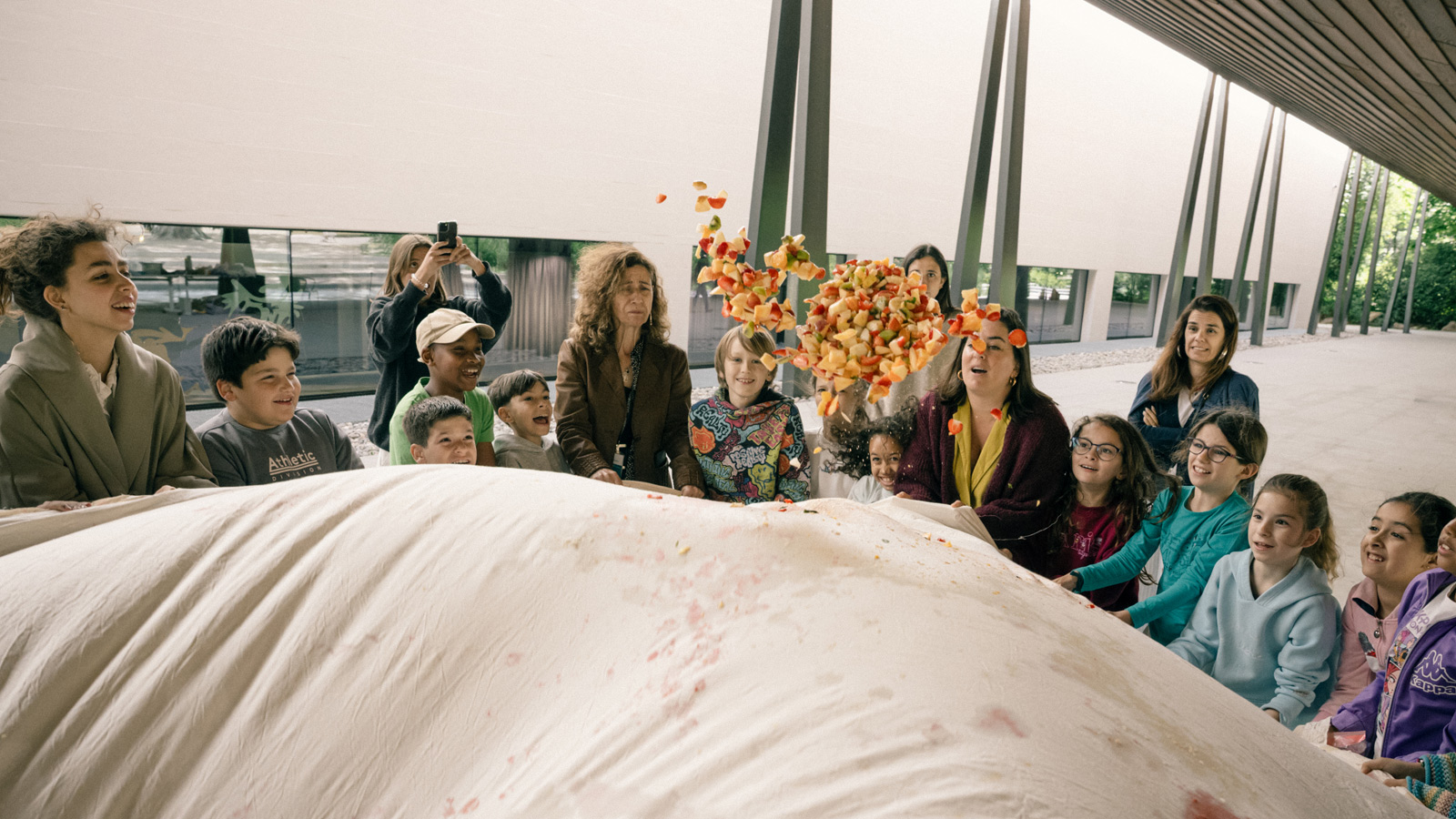
Throughout, the project repeatedly returns to the ‘mycelium’ concept and the image of interconnectedness. Whether or not the term ‘mycelium’ sticks, the felt sense of interdependence likely will: it is in how they build a web of memories by passing around a ball of wool as each kid names their food memory (or favourite food, for that matter); in how they feed one another blindfolded; in how they name the world’s problems – hunger among them; and in how they answer that hunger with a fruit salad made by lifting a cloth in unison – each piece insufficient alone, the fruit jumping and jumbling into something only possible together – a small, edible model of what sharing resources might look like.
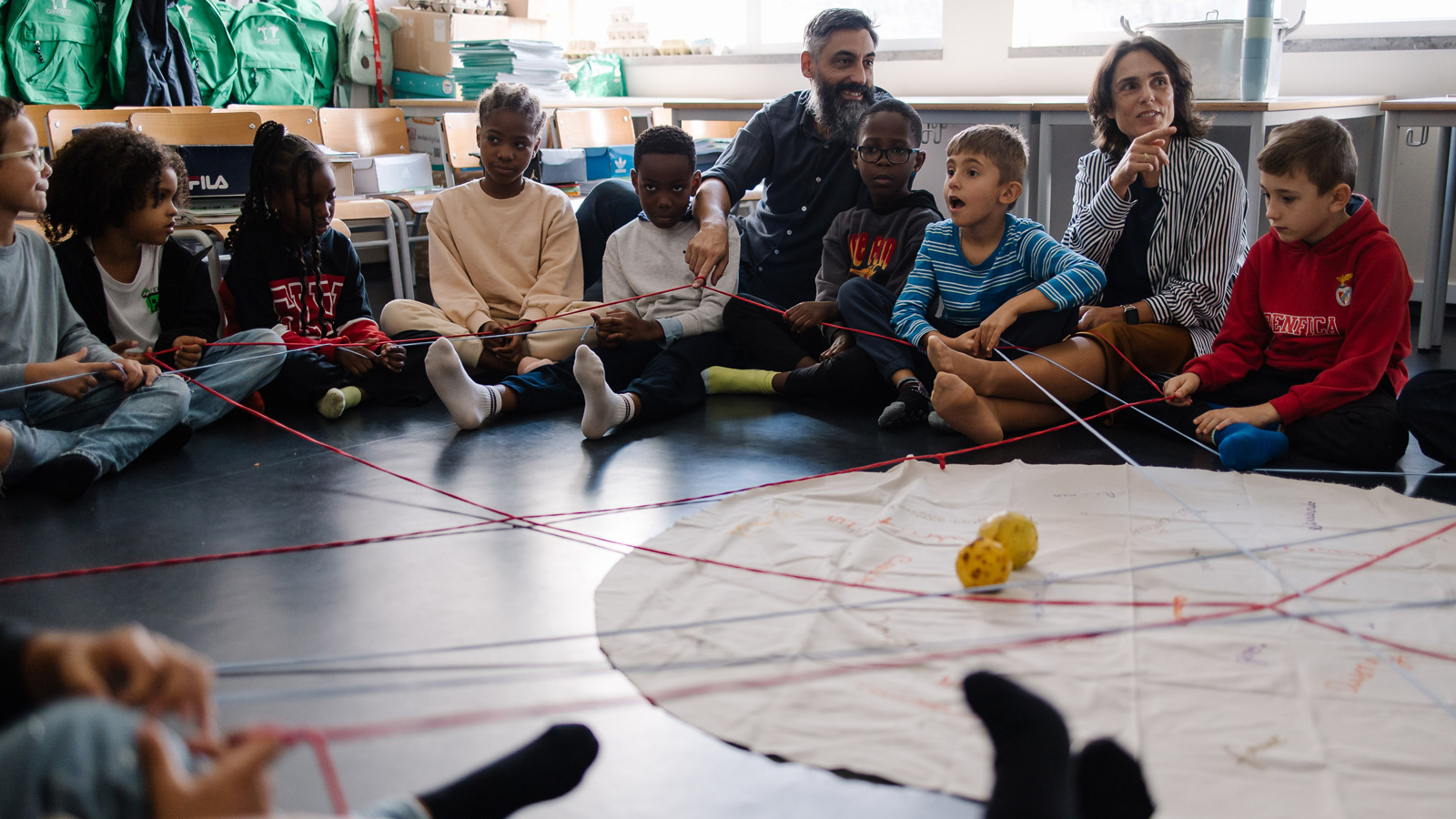
More than teaching children that everything is connected, ‘Lugar à Mesa’ invites them to feel themselves as active participants in those connections: capable of contributing to, affecting and being affected by these entanglements.
In a time when ecological, social and political entanglements can feel abstract and increasingly overwhelming, there is something hopeful and quietly radical in teaching children through toast with jam, mint tea, pomegranate seeds, shared fruit and, always, various threads and fabrics, mycelium-reminiscent wool, blindfolds, the cloth as table. And they are given tools to navigate it, including an amulet made of a dried apple ring which both feeds and protects.
At the end of each session, everyone is asked to write a word on the tablecloth of each class that synthesises the session for them. I’m allowed to participate. Every time, the first word that comes to my mind is ‘sharing’.
You may also like
No results were found for your criteria.