
‘WOW! This isn’t a visit… is it?’: everything that ‘isn’t supposed to be’
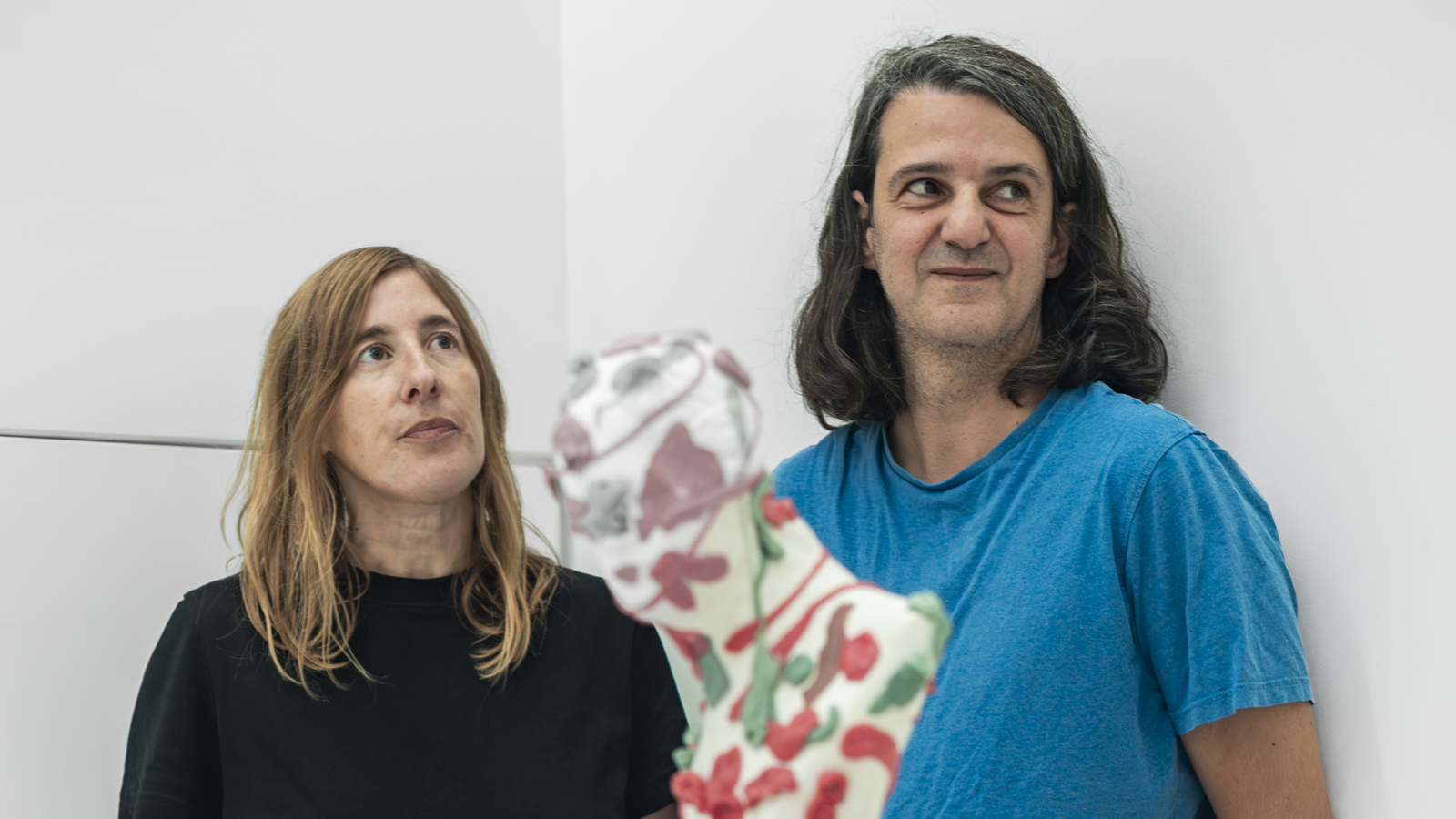
The title ‘WOW!’ stems from what the French writer Stendhal, on seeing the frescos in the Basilica of Santa Croce in Florence in the early nineteenth century, described as the physical sensation of ecstasy, an experience that came to be known as ‘Stendhal Syndrome,’ the physicality of the sublime. When we experience that moment of intensity, the body responds with a simple: ‘WOW!’ That scenario also applies to the world of modern and contemporary art, in the case of artists such as Erwin Wurm, Marcel Duchamp, Tino Sehgal, Andrea Fraser and René Magritte. The image used to advertise the event draws inspiration from the portraits of Picasso, with deconstructed faces painted onto a real face.
In this project, Sara & André question the limits of the systems of the art world, often as a subtle form of institutional criticism. With this approach, they invite children and families to ‘show that creativity can be found anywhere.’
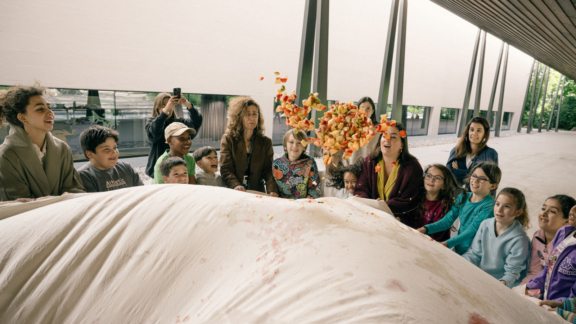
In this guided tour, the children themselves are the protagonists, taking initiative and exerting the power of decision-making to question behaviours regarded as normative, breaking down ‘the feeling of formality common to museums and their rules: buying the ticket, following the exhibition route, reading the wall panels, speaking in a low voice, to name but a few…’
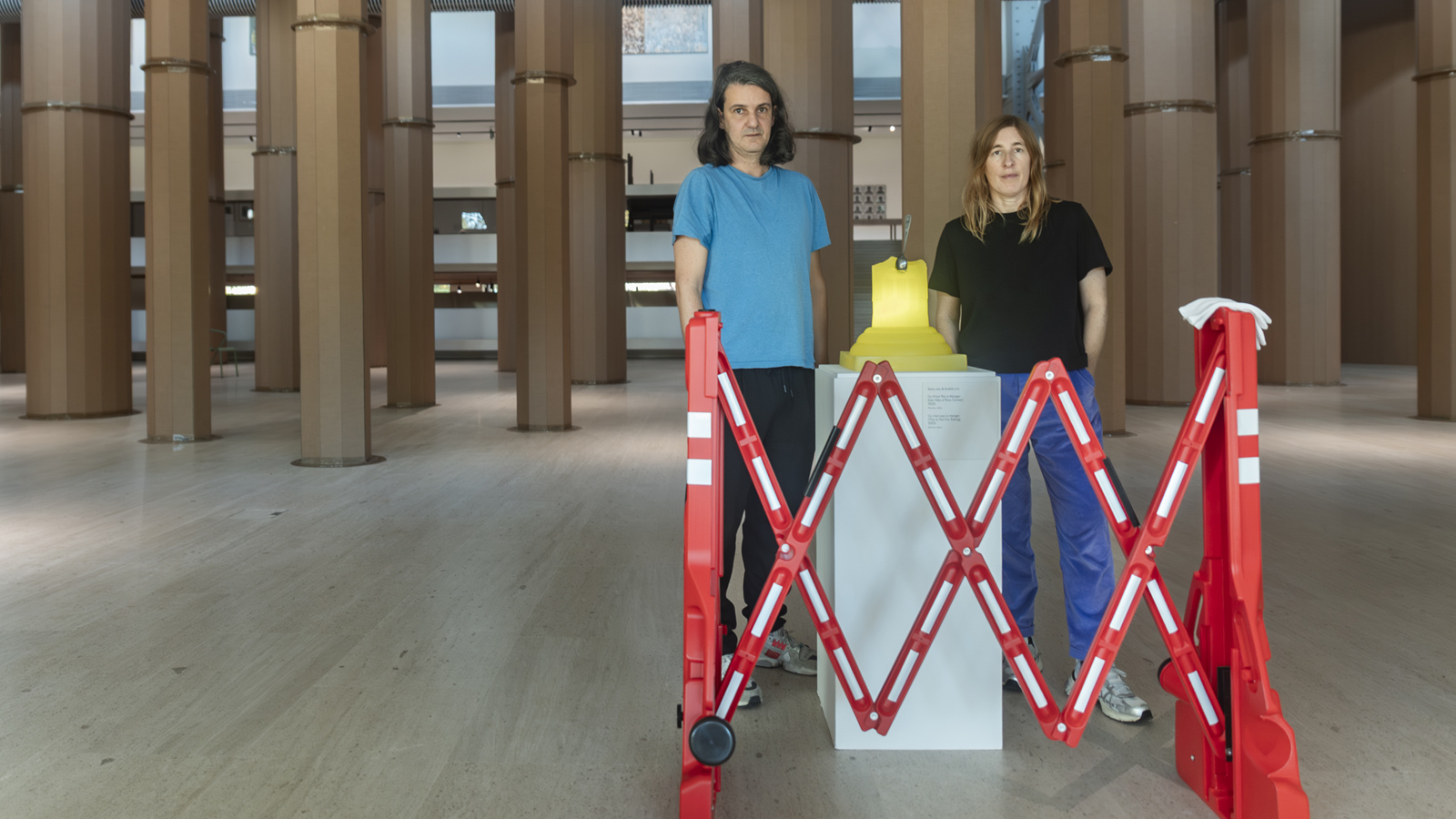
This is not the first time the artists have worked in theatre. Their collaboration with Plataforma 285 started with the show Errado, which sought to ‘praise mistakes, attempts, space for experimentation, without having to get it right or find concrete answers.’
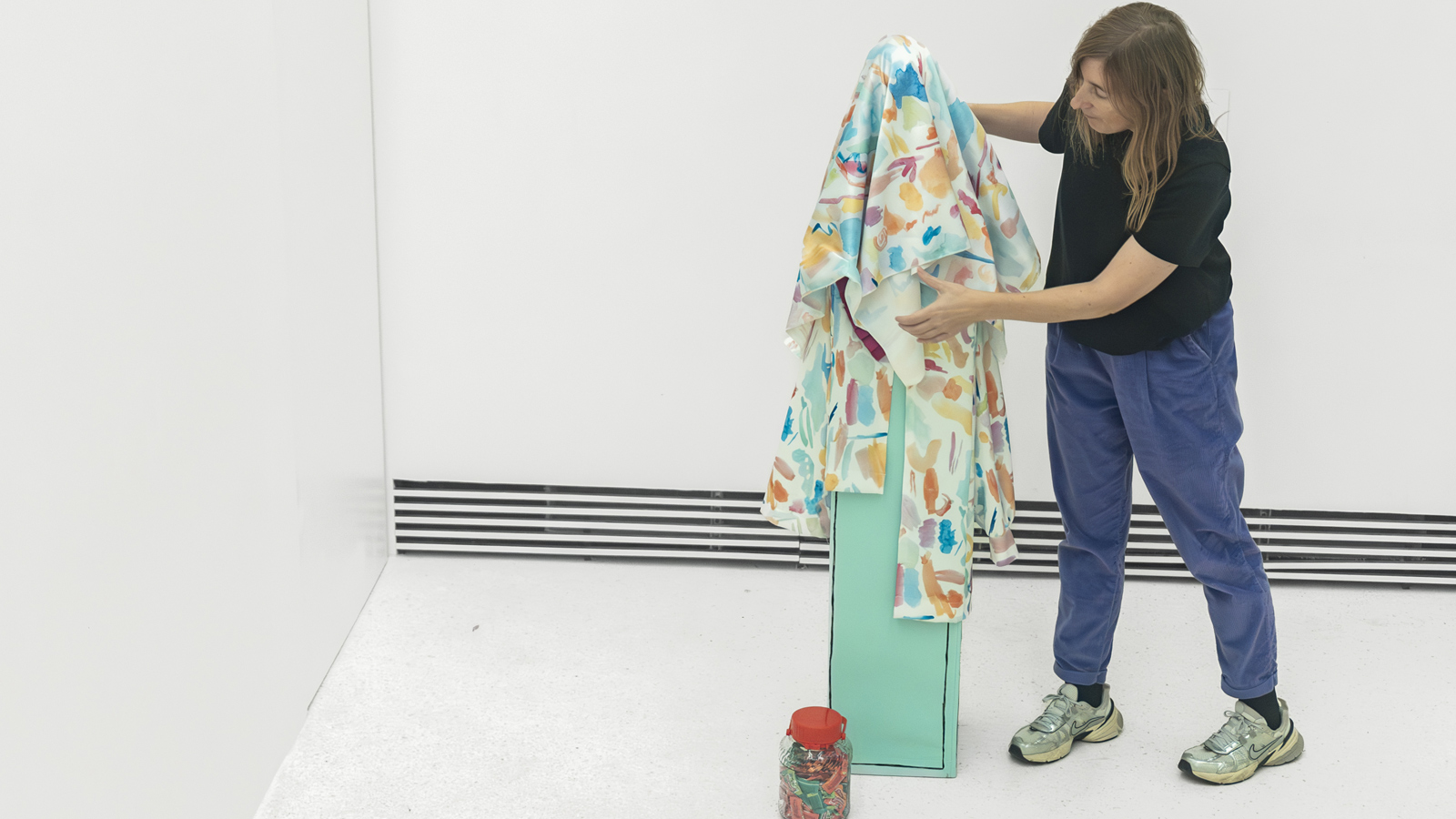
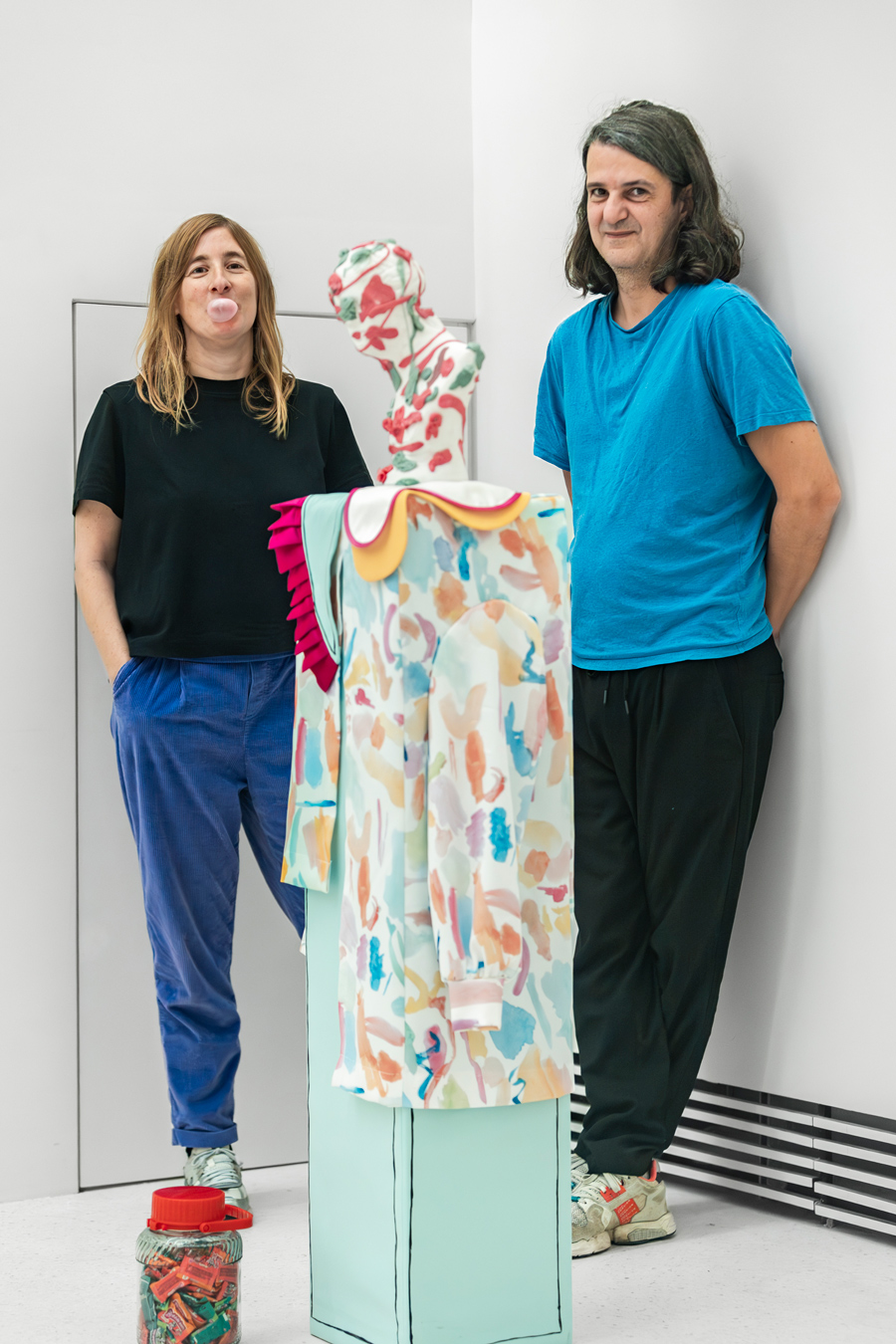
For this new creation at CAM, they joined costume designer Inês Ariana and musician George Silver to create clothes, objects and a sound landscape that act as an extension to the prompts given by the actors during the visit. Without revealing too much, the artists Sara & André speak in code: dressed plinths, iconoclasm applied to classical symbols, speculative exercises and chewing gum are just some of the small clues that herald surprises.
During the visit, with the support of the actors, the group is invited to deconstruct the traditional idea of ‘going to the museum.’ ‘The aim is to question or oppose all the conventions of being in a museum or at an exhibition’, the artists explain, ‘including the notion of beauty, or the value or legitimacy of the works on display.’ ‘Right from the start, the actors will say: “don’t look at anything!” And they ask visitors to concentrate on things that are not usually observed during a museum visit: power outlets, lights, signage, fire extinguishers… details that are a key part of the museum’s operation but which, usually, have no artistic interest.’
By observing these details, participants will quickly realise that the museological experience is formed of many other elements in addition to the works, and that all of them can be interpreted and admired. Based on this premise, an intimate relationship is built and the exercises on ‘correct’ behaviour in a museum become progressively more subversive.
The route passes through various CAM galleries, with particular focus on the exhibition ‘Carlos Bunga. Inhabit the Contradiction’, where the cardboard installation ‘Bosque’ [Forest] occupies and transforms the space in a neutral, transitory and changeable environment. This is largely how the visit unfolds, presenting possibilities for new ways of seeing, experiencing and inhabiting the museum.
The walking component immediately activates the body and the senses, creating a physical experience that awakens new sensibilities and, in this case, by occupying a ‘forbidden’ space, it also becomes an artistic and political gesture. As the artists explain: ‘We see it as a very calm space, very contemplative, but also flexible; it will allow anything. The fact that there are also works by other artists from the CAM Collection selected by Carlos Bunga allows us to take the staging possibilities even further.’
Appropriating a section of the text by curator Rui Mateus Amaral, the Carlos Bunga exhibition is described as a space of fluidity and freedom, where the body ‘enters and exits the scene,’ allowing each visitor to construct an open path that visits different memories, landscapes and sensations. This curatorial and artistic openness serves as an invitation for projects such as ‘WOW! This isn’t a visit… is it?’, which practise criticism, doubt and, above all, an alternative approach to the way we relate to the museum space and to contemporary art.
You may also like
No results were found for your criteria.