
Gustavo Ciríaco takes over the Engawa Space to build a participative and ‘gradual Carnival bloco’
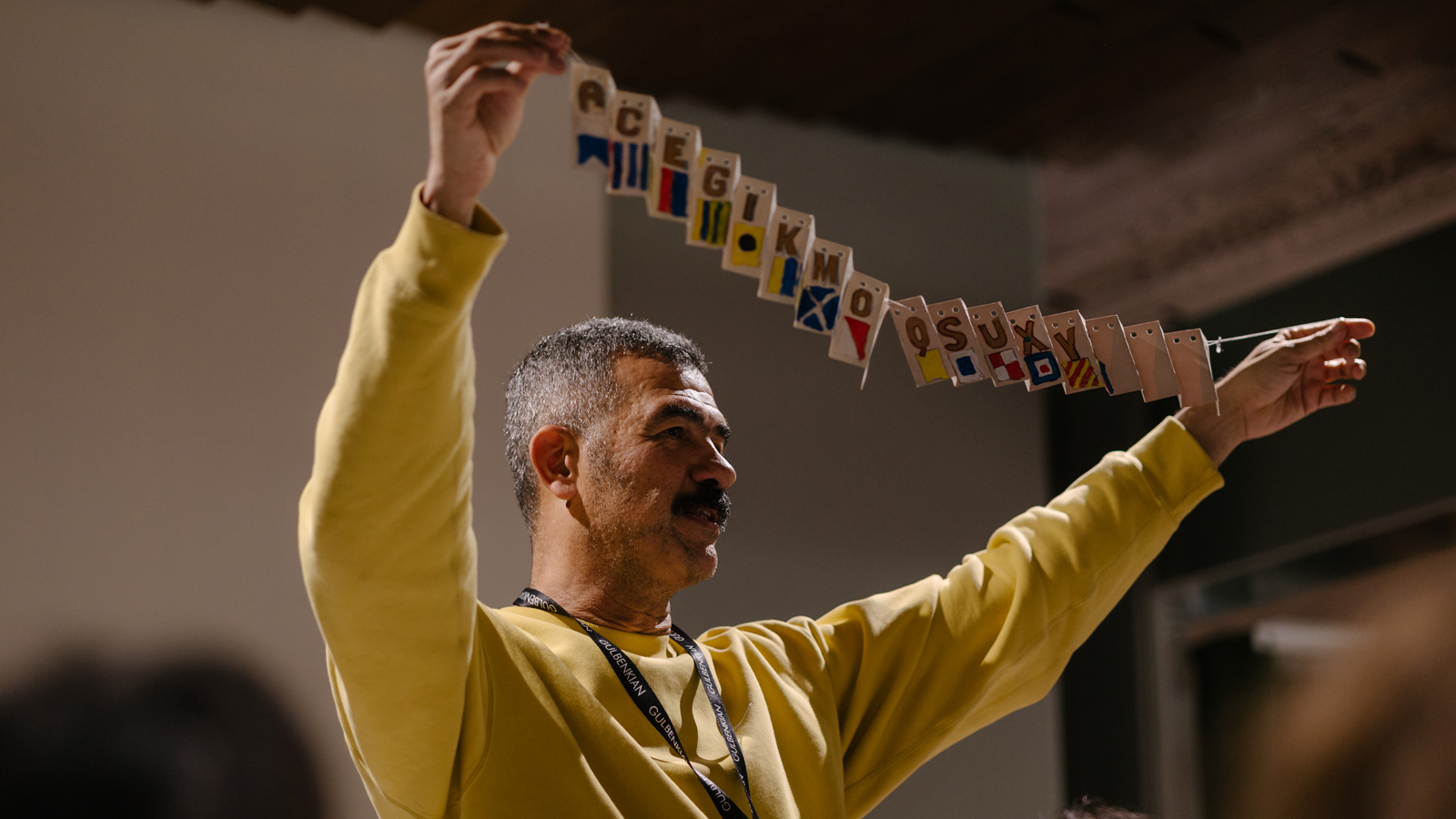
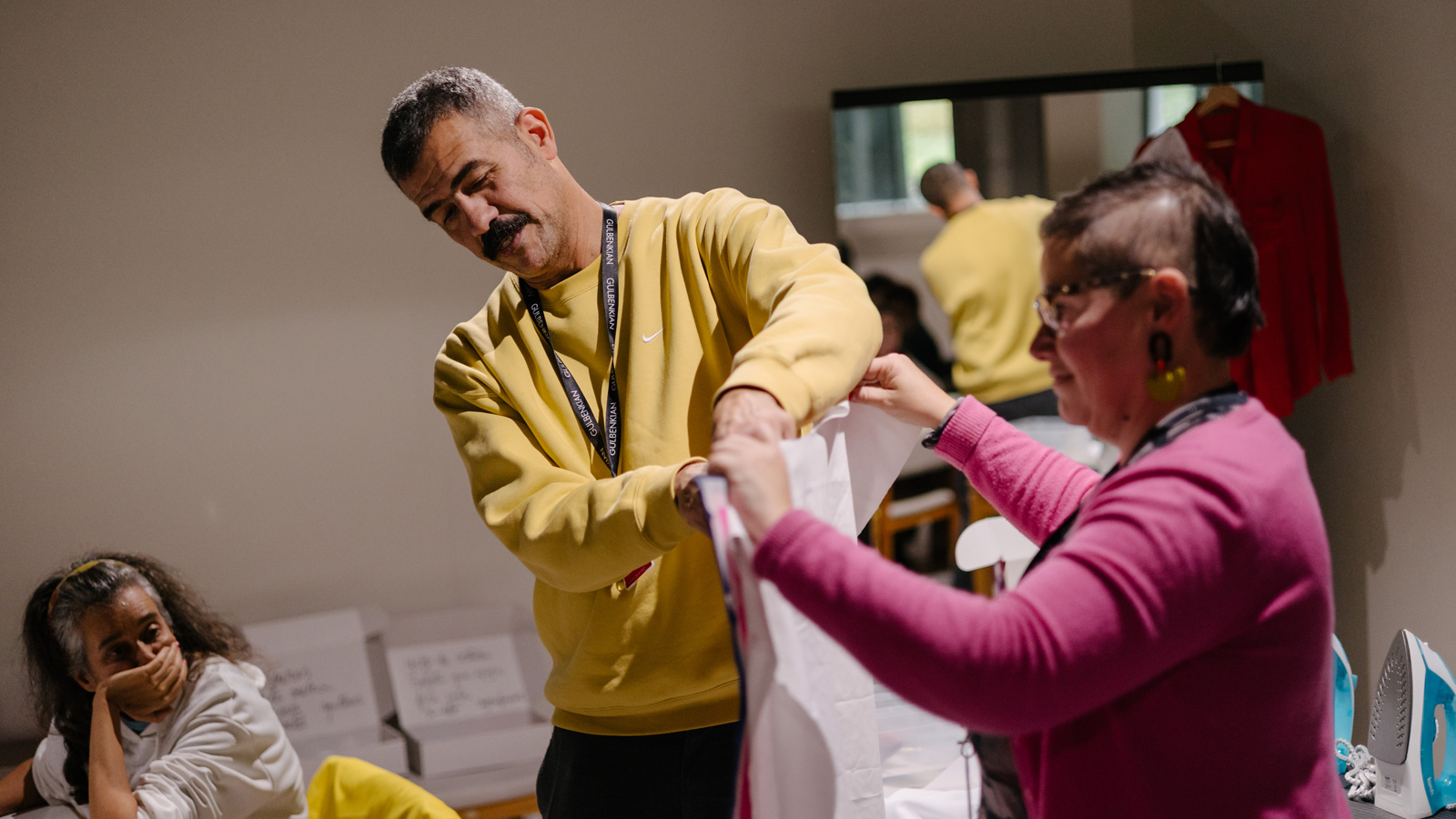
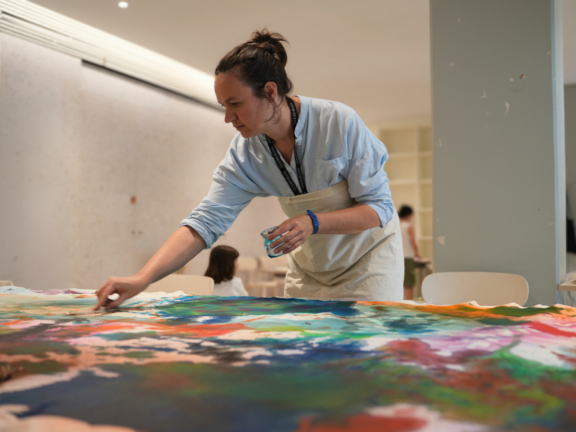
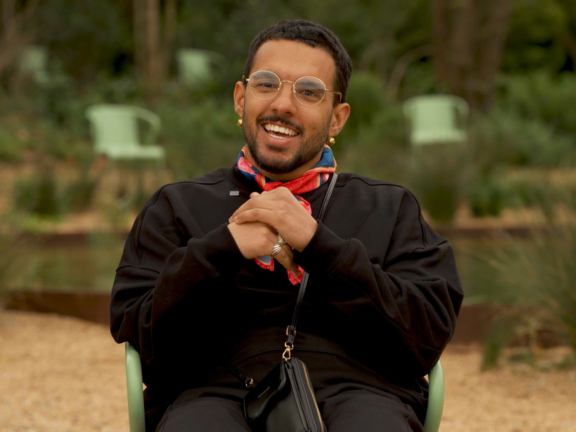
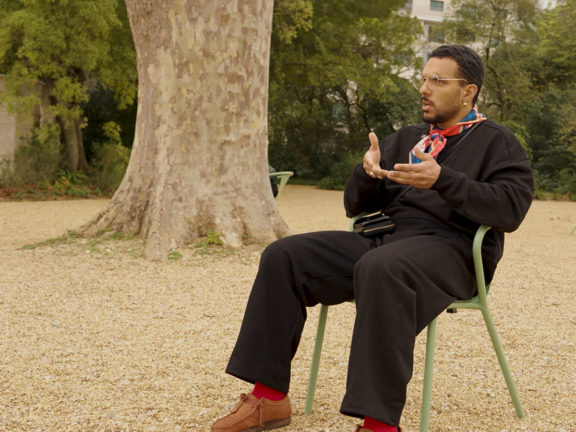
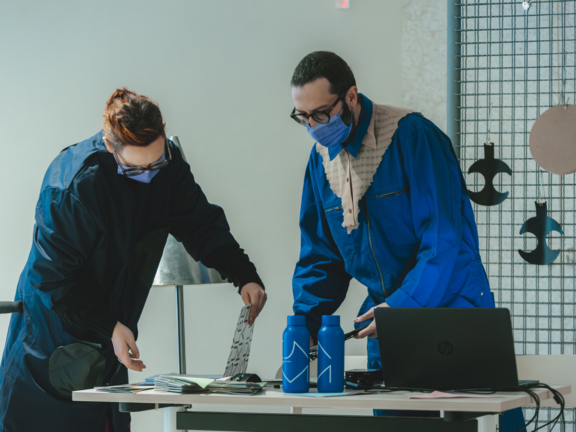
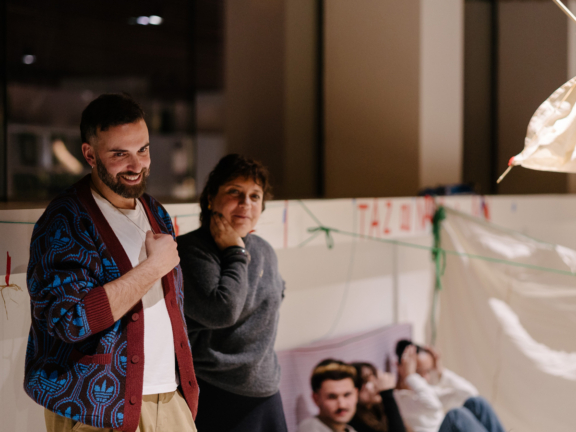
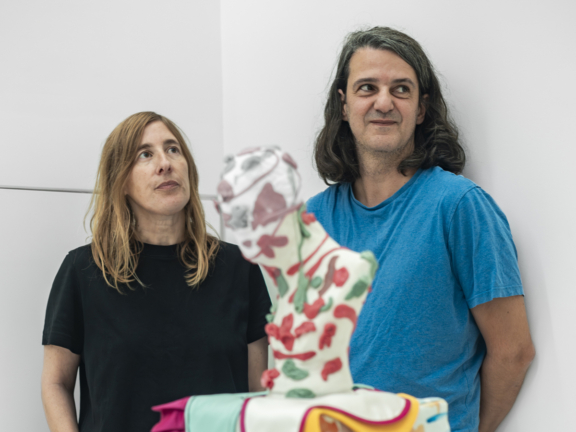
Using fabrics, sketches and cardboard structures, Gustavo Ciríaco, an artist trained in Political Science as well as dance and choreography, transformed CAM into a building site before its visitors’ eyes. Born in Rio de Janeiro in 1969, Ciríaco is a transdisciplinary artist and choreographer active in dance and the visual arts, developing site-specific works that explore relationships between space, geography, architecture and fiction.
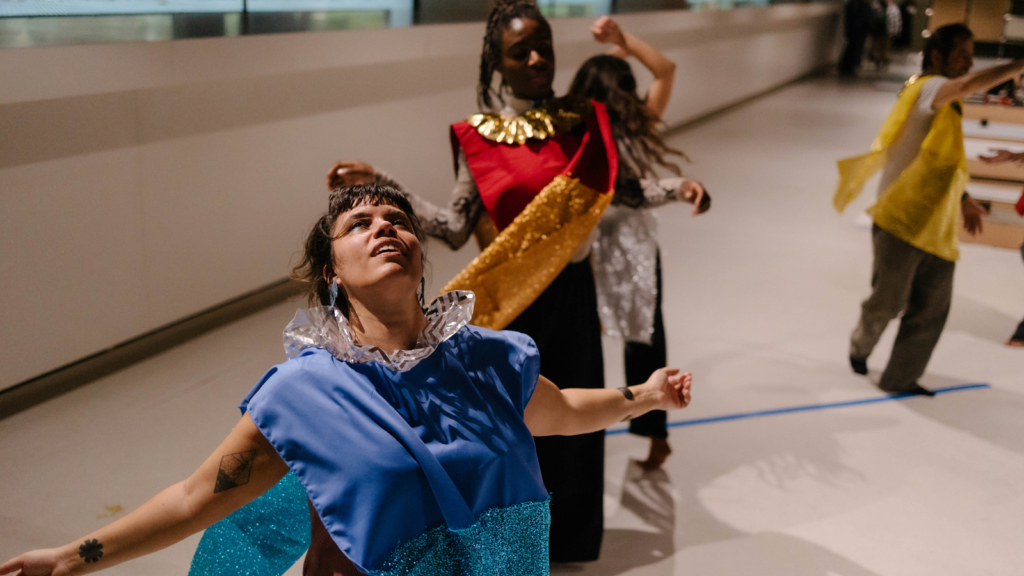
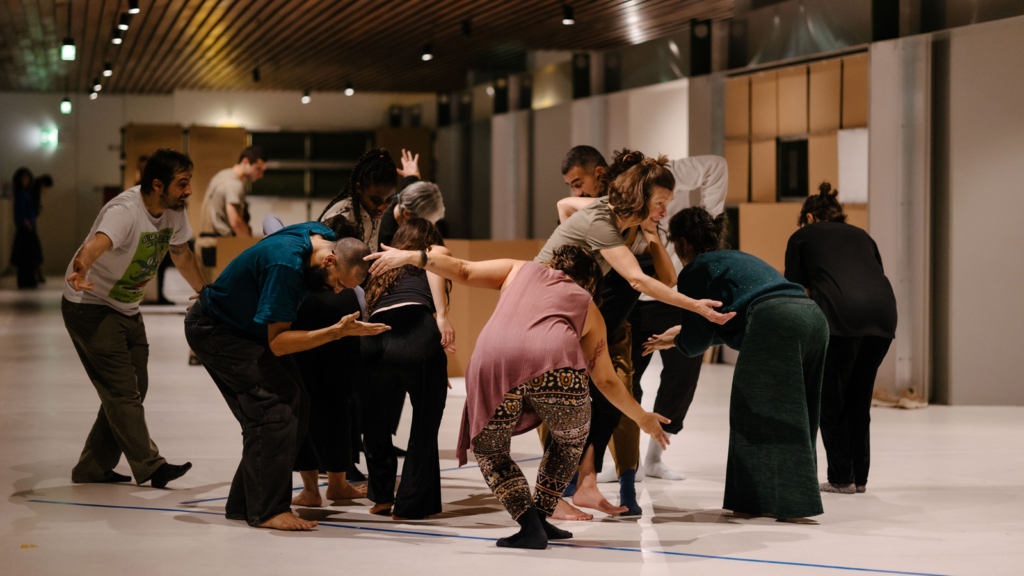
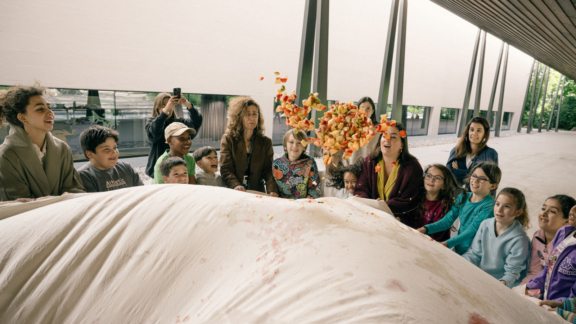
The project he is currently developing involves the construction of a ‘gradual Carnival bloco’, or street carnival group, a performative and celebratory structure that enters into direct dialogue with the artist’s family memory and with the concept of public space. Over the weeks, the space witnessed rehearsals, the building of objects, workshops and informal conversations, at a rhythm favouring presence and direct relationship over the silent preparation of a final result.
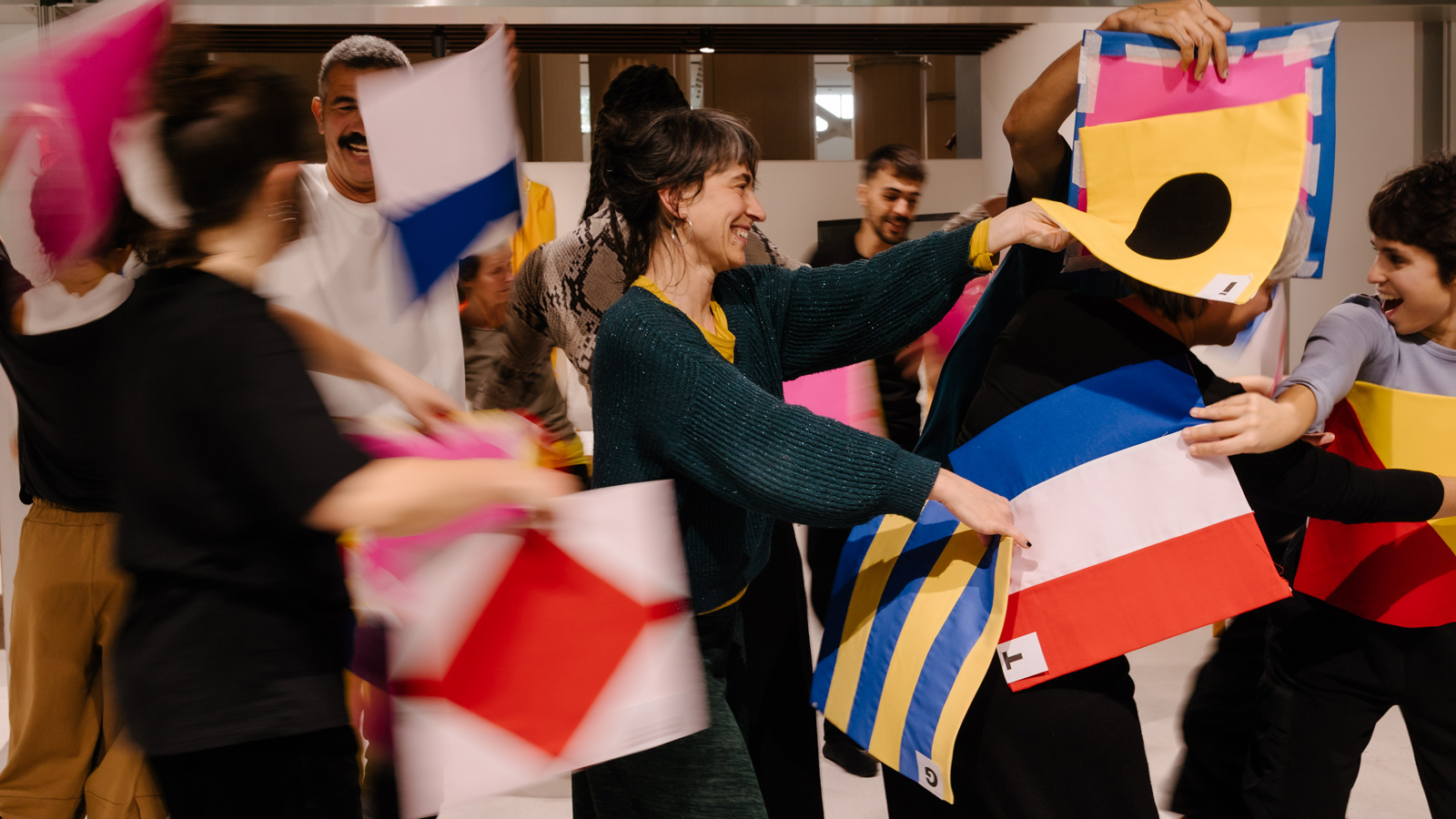
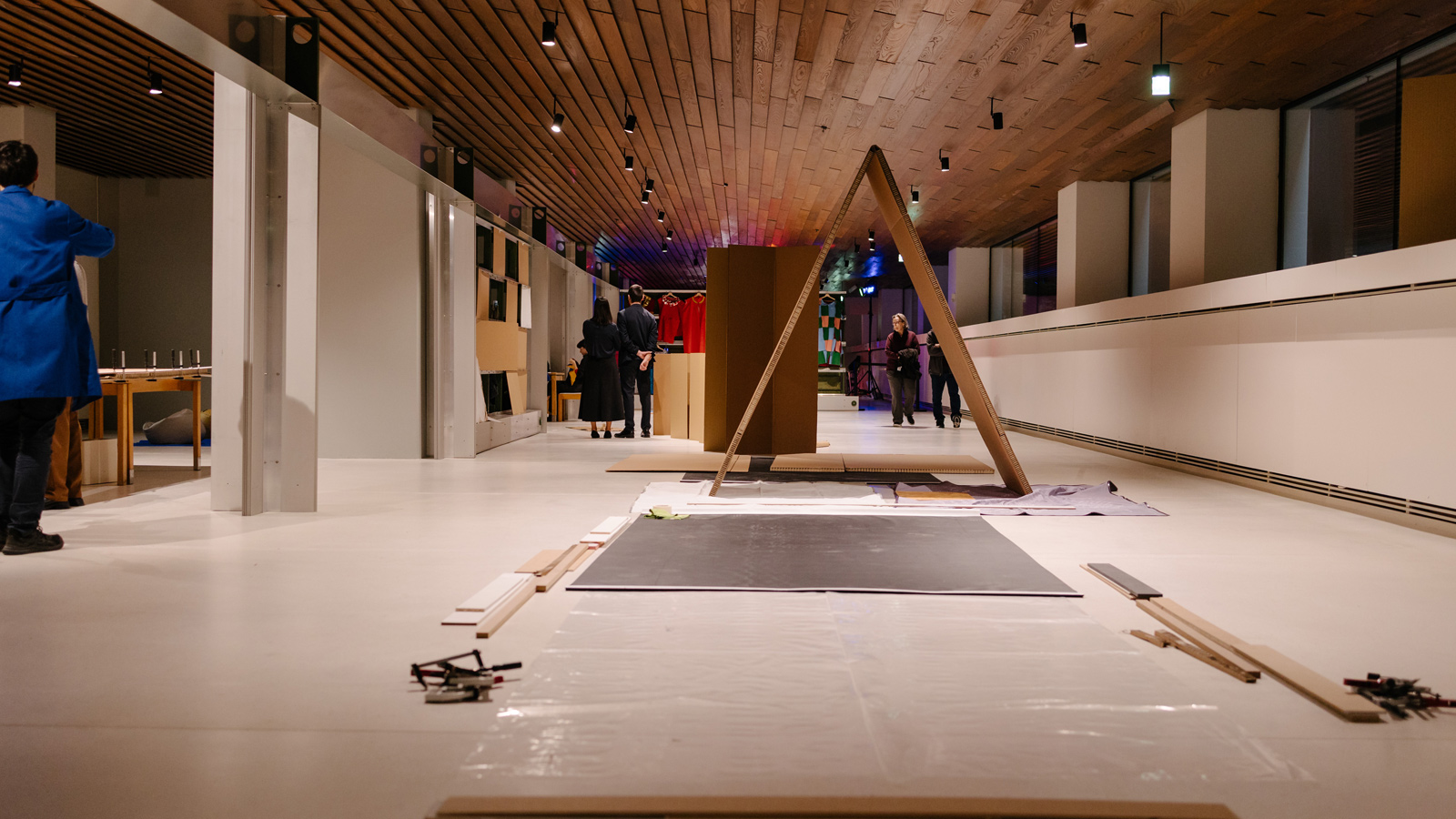
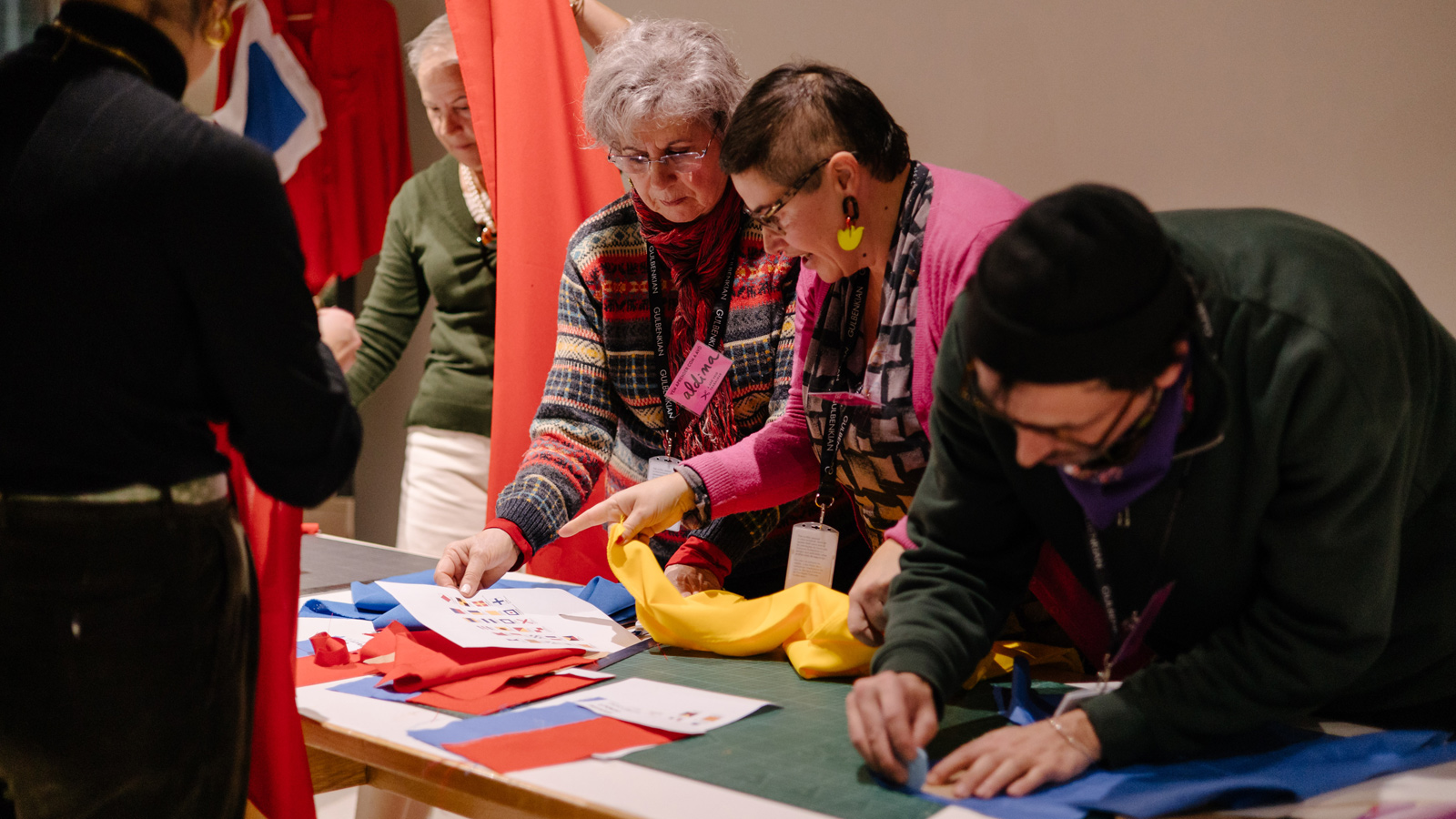
‘Caravanserá’ – the name given to the project – culminates in a Carnival parade, in the South Garden, although its reach will extend far beyond the time of the parade. The title refers to caravanserais, the age-old resting posts on the Silk Route that punctuated the deserts between the Middle East and Asia and functioned as safe havens for long-distance travellers.
That idea of temporary shelter and a pause in movement permeates the entire project, which is an intentionally prolonged process formed of successive layers that accumulate over time: sets constructed manually, costumes created collectively, music rehearsed in contact with the space and with the bodies that pass through it. ‘It’s important to me that the work is seen as it unfolds’, explains Ciríaco. ‘People enter, observe, ask questions, sometimes they take part, other times they continue on their way. All of this becomes an integral part of the work itself.’
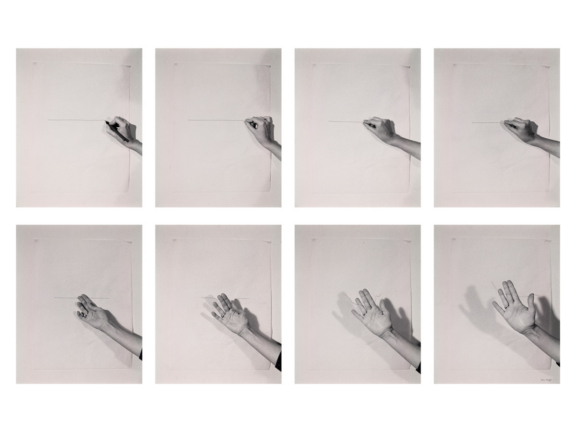
At the centre of the artistic residency is the work of the artist’s mother, the poet and visual artist Maria José de Figueiredo Ciríaco (1939–2020), whose presence is manifested through objects, videos and conceptual references throughout the space. Here, sculpture takes on a central role in the dialogue between mother and son, through its tactile, unstable dimension, open to transformation, inviting the visitor to interact and become an active part of the creative process.
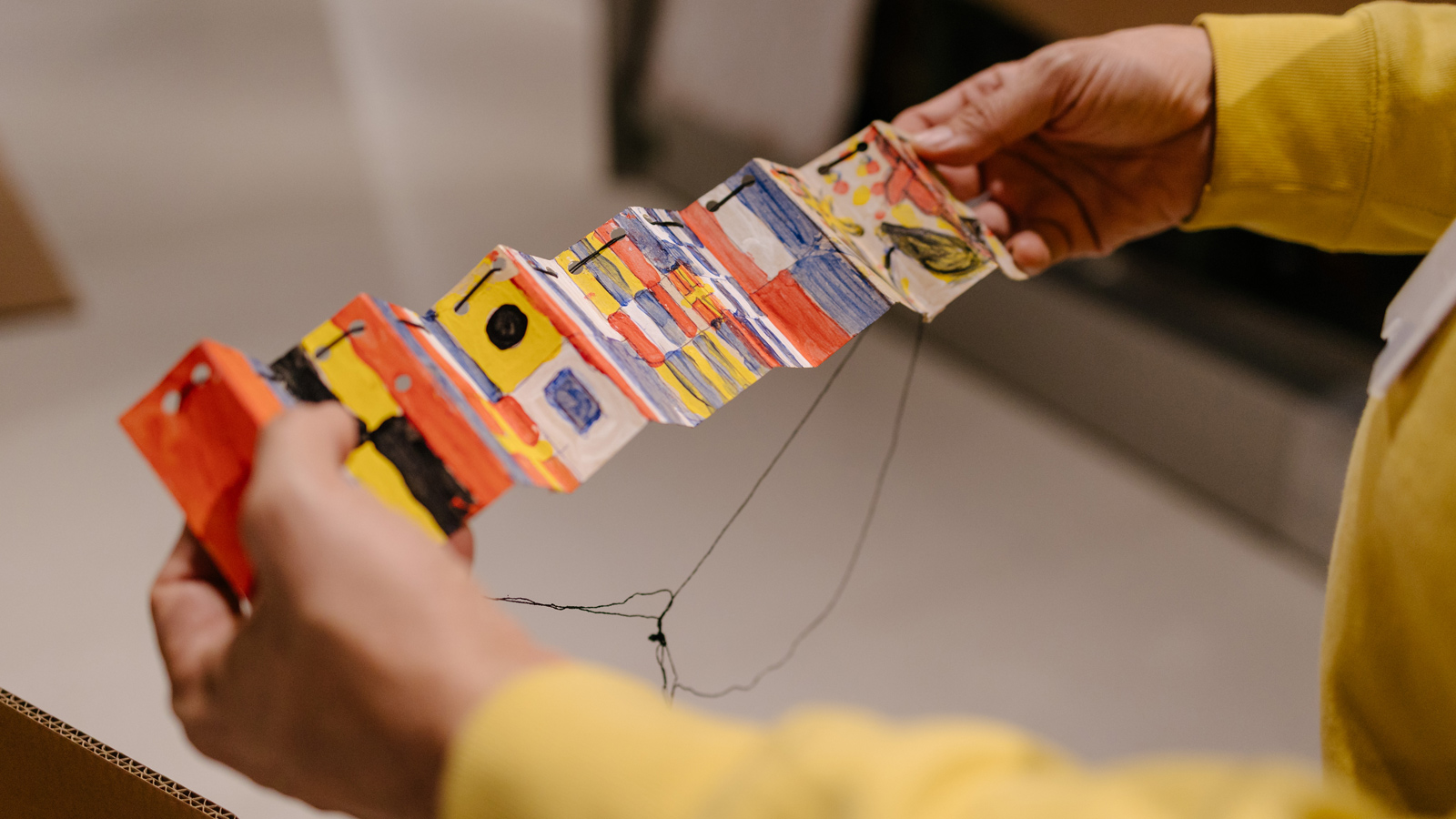
Maria José defined her work as ‘arte detergente’, an expression that, according to her son, reflects a kind of creation based on sharing and fearlessness with regard to what might emerge. ‘She always called her work ‘arte detergente’ [a play on the Portuguese words ‘de ter gente’, meaning to have people], an art involving people’, he recalls. ‘Her practice was closely linked to sociability, the simple gesture, the idea that art happens when it is shared.’
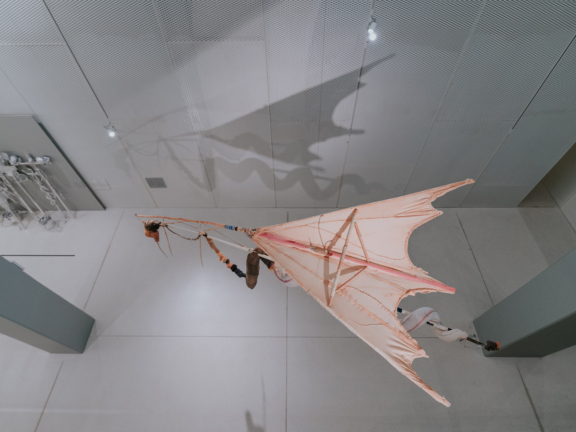
The recovered elements include what she called ‘porta-trovas’ [poetry-pouches], small sculptures in which the artist put poems to be opened by whoever received them, as well as ‘bons ecos’ [good echoes], bonecos or dolls made from newspaper, often showing articles that she herself selected. ‘She always chose auspicious stories,’ Gustavo tells us. ‘She said there was already enough bad news in the world.’ The logic behind the selection, transformation and return to the collective now structures a project that extends those gestures to the scale of the body, the space and the festival.
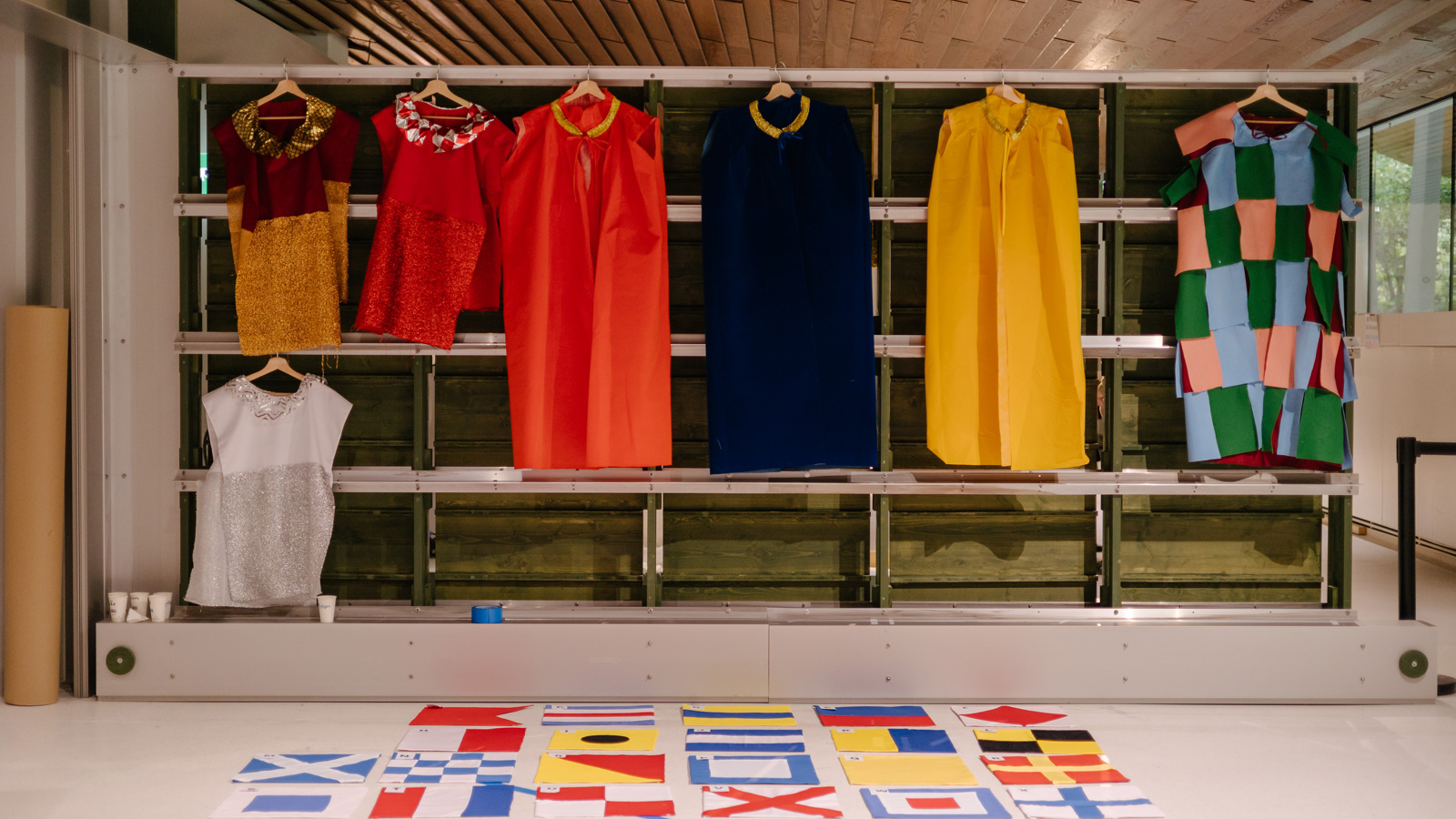
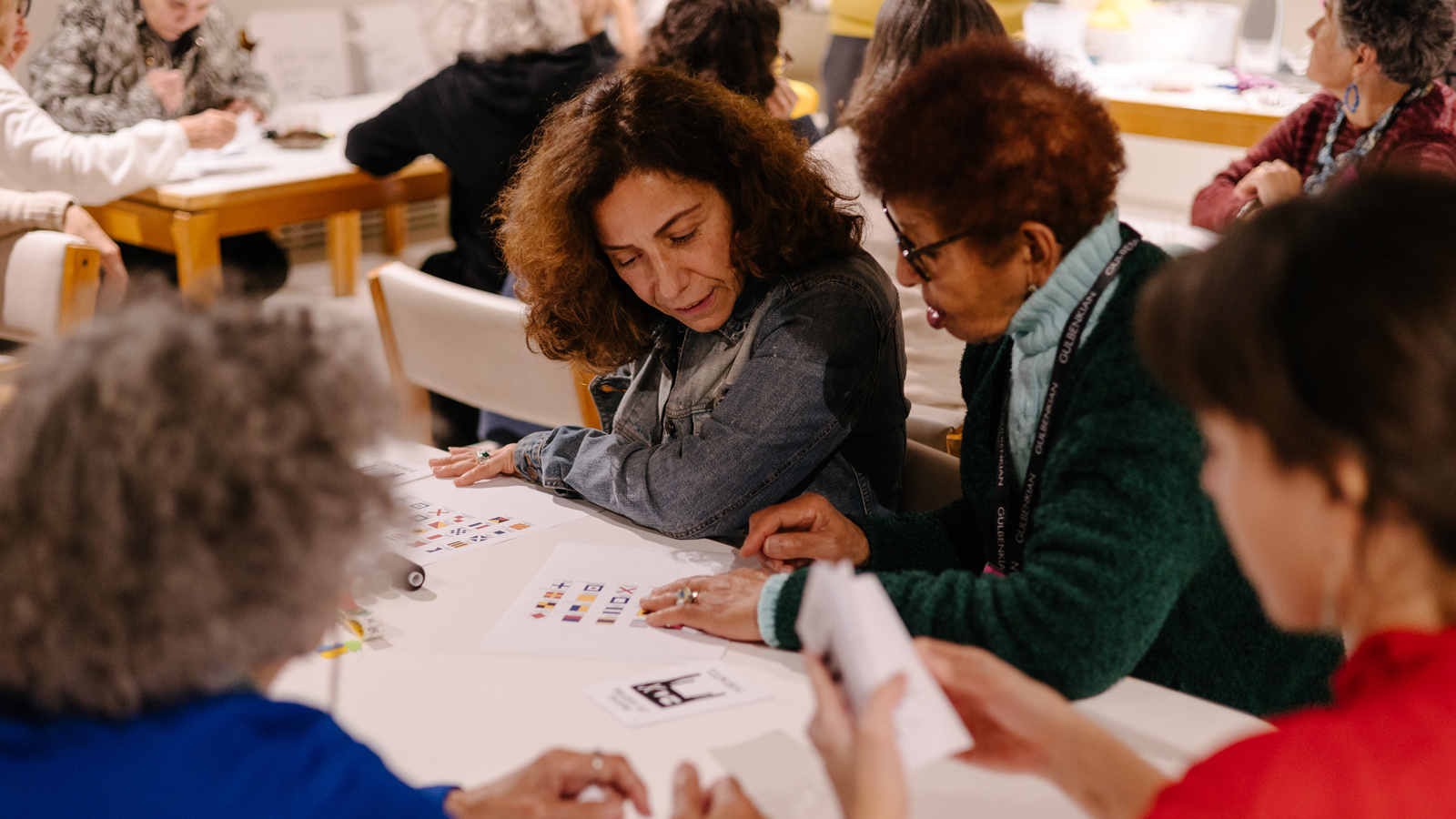
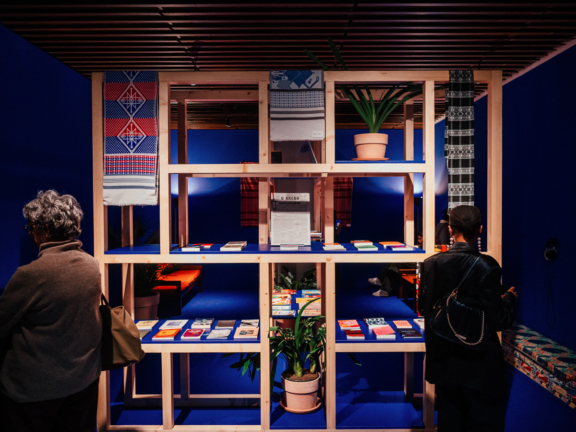
One of the most visible aspects of the residency is the collective sewing, developed in partnership with an intergenerational project involving grandmothers as conveyors of knowledge. In the studio, participants progress from the most basic techniques – threading the needles, tying the initial knot – to constructing the outfits that will be worn during the parade. The starting point is a system created by Maria José, in which different flags correspond to certain letters, allowing for words, poems or personal tributes to be codified. ‘It isn’t about reproducing a costume’, Gustavo stresses, ‘it’s a common base that everyone can take with them wherever they like.’
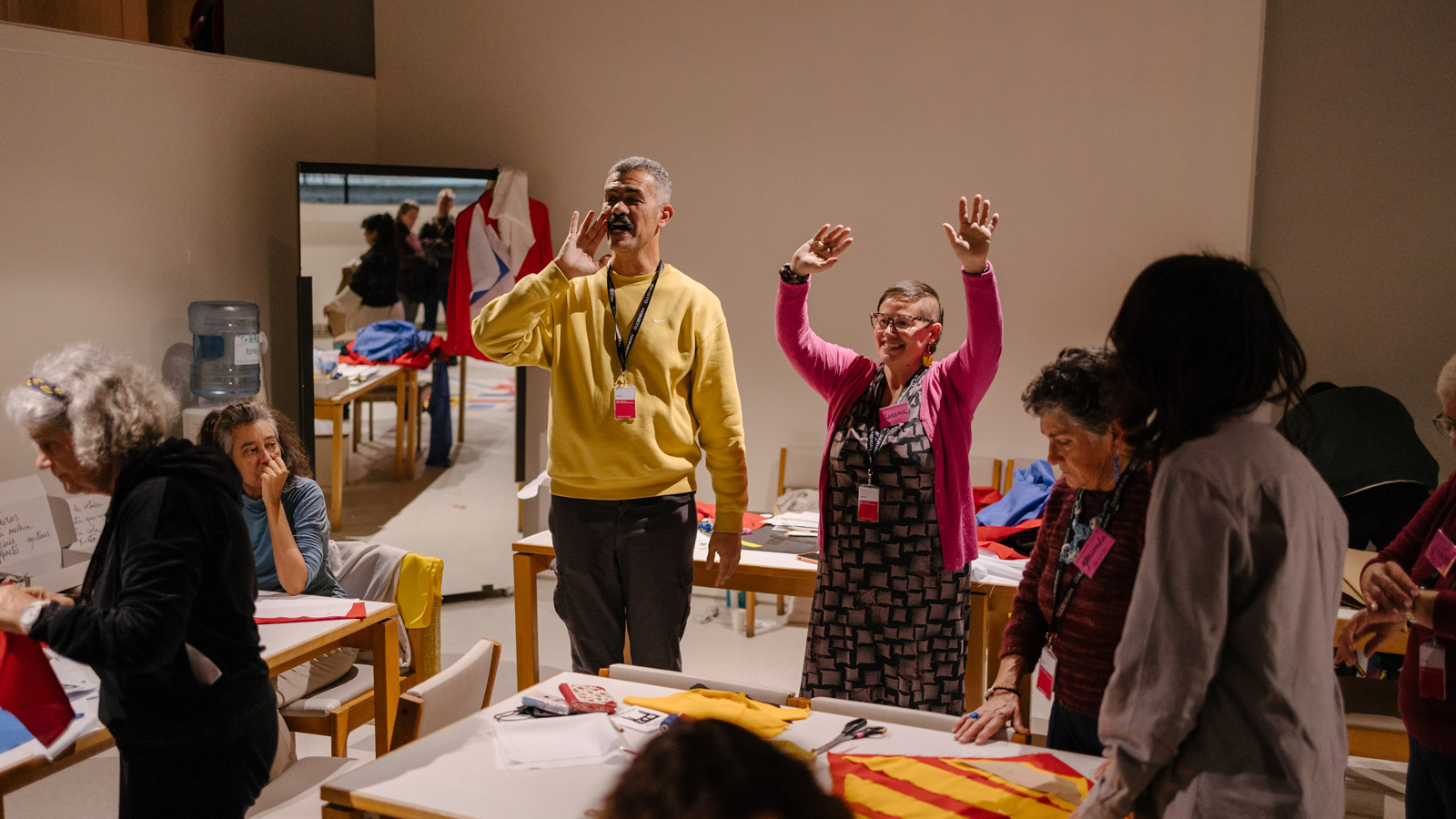
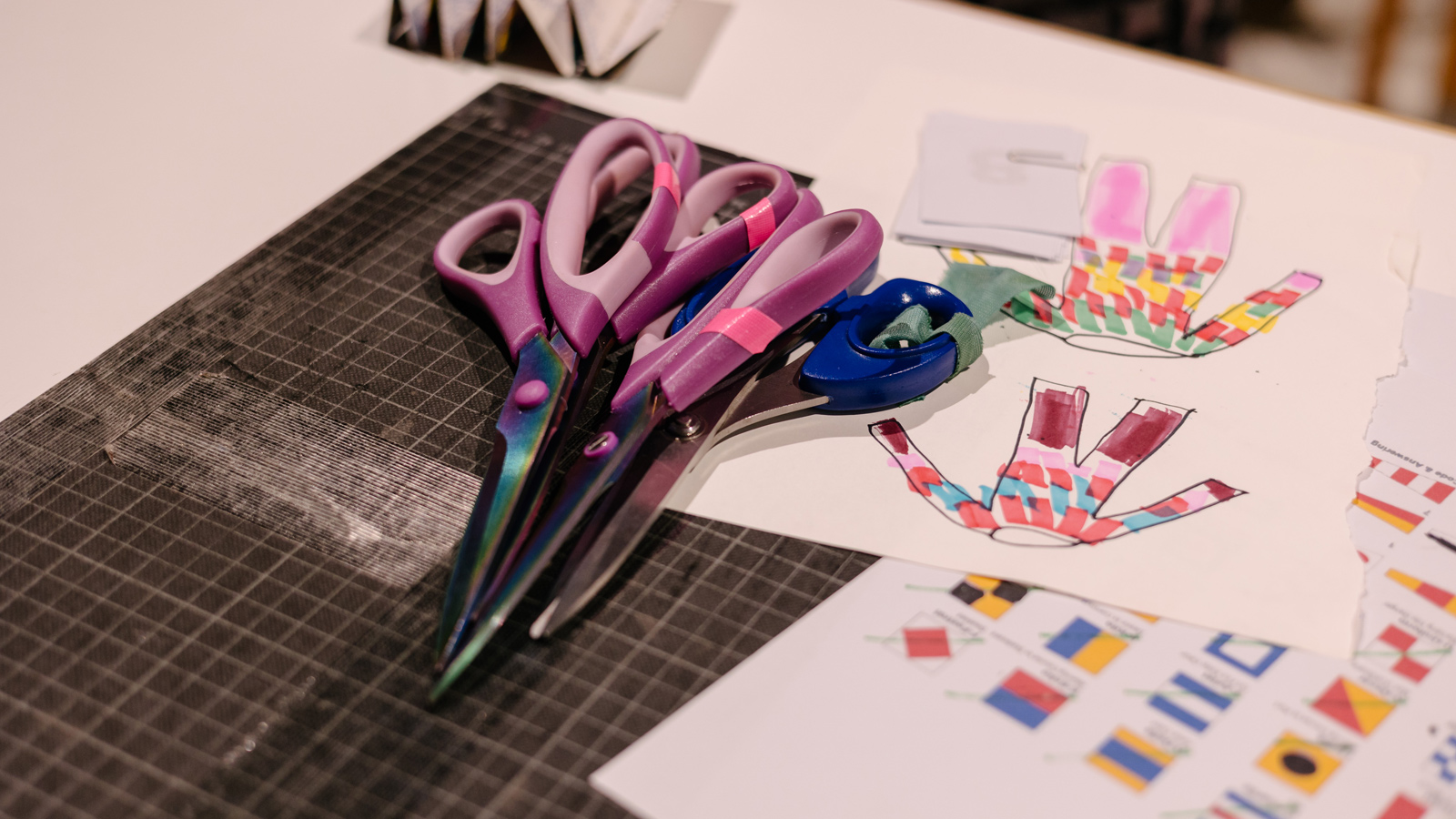
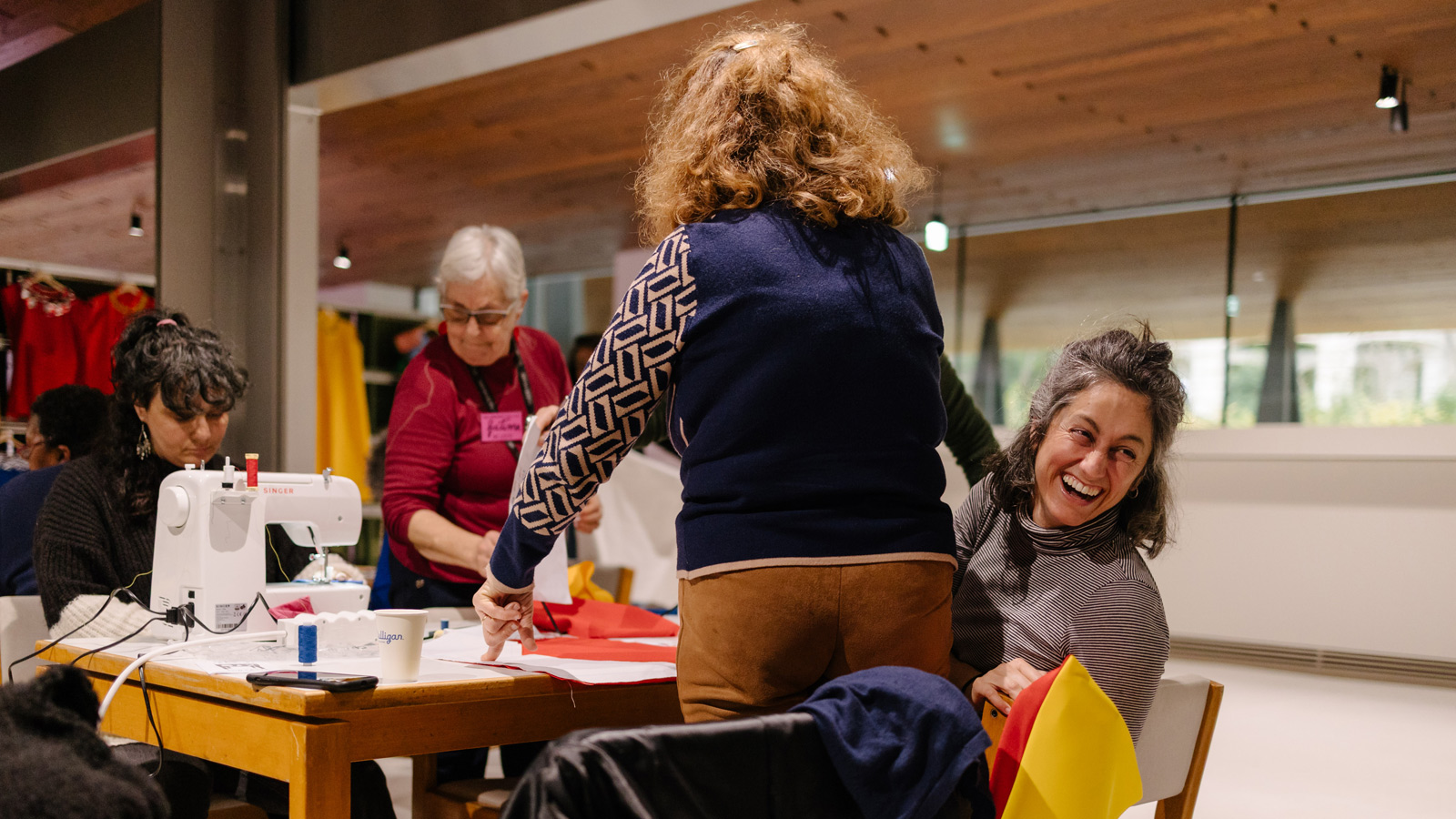
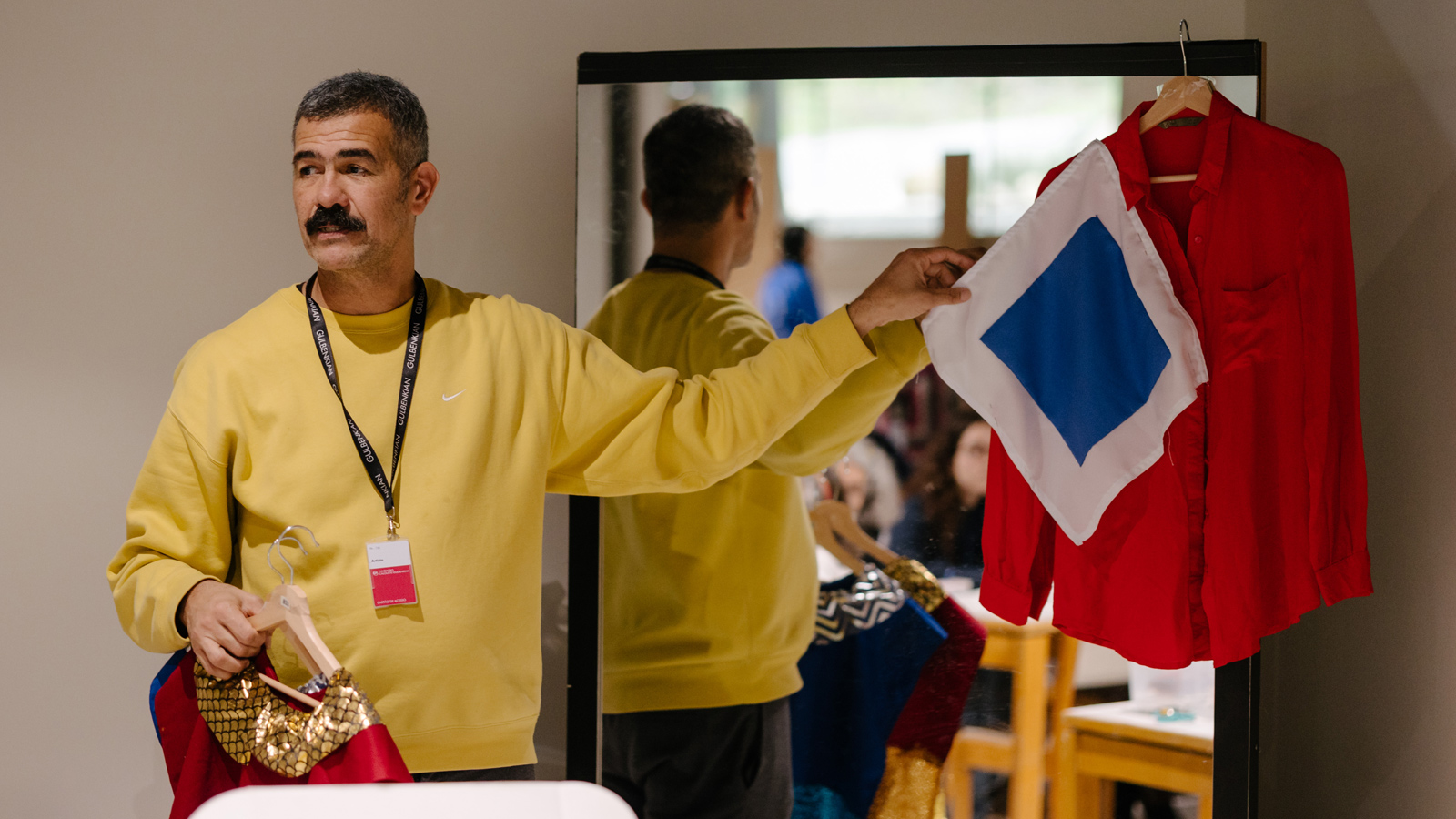
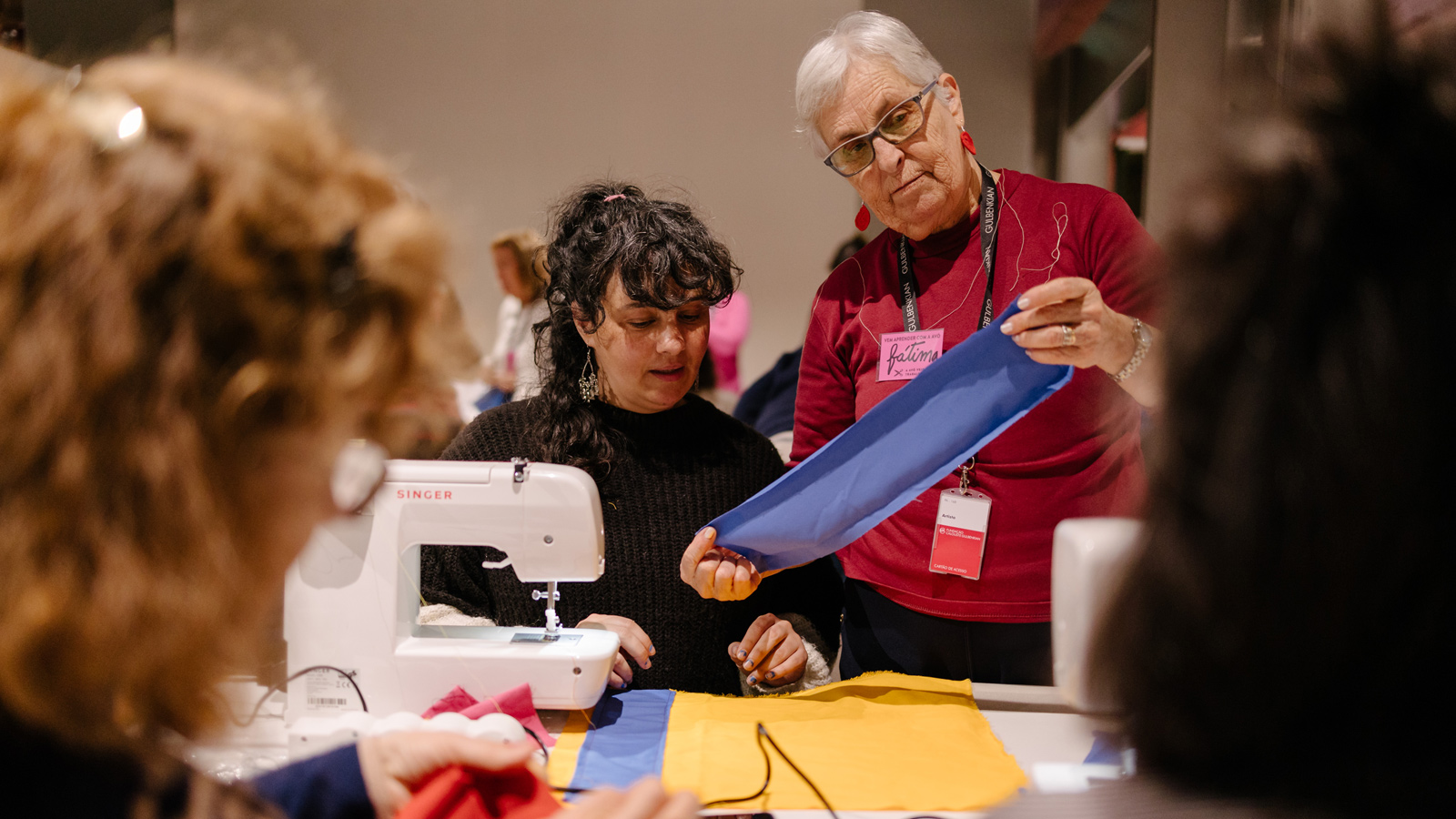
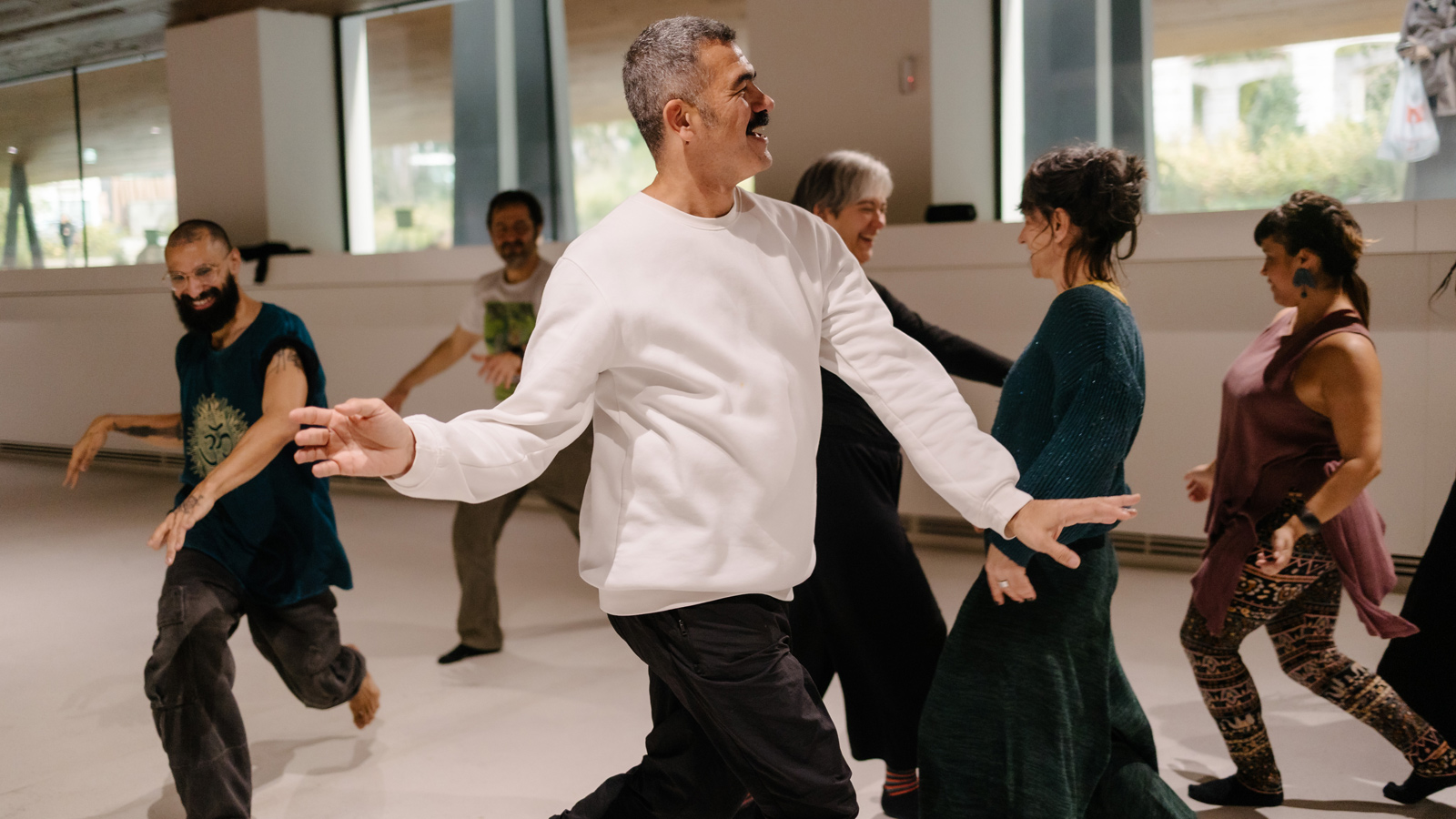
The pedagogical dimension of the project goes beyond manual work and also extends to the open workshops on dance, music, sewing and set design, where the artist invites everyone to take part. The body is activated both in sewing and in dance, in listening and paying attention to the other, and learning happens during the time of making and socialising, in a model that echoes Paulo Freire – a Brazilian teacher, author of ‘Pedagogia do Oprimido’ and point of reference for the artist – who encourages learning based on reality. ‘I’m interested in creating situations in which knowledge is constructed from shared experience,’ the artist explains. ‘No one turns up empty.’
Although he touches on themes such as migration, territory and urban transformation, Ciríaco rejects an openly political approach. In the project, that dimension emerges through the way people relate to the space and the objects. ‘I come from a political science background and I learned to look at the invisible contracts that regulate communal life,’ he says. ‘When someone interacts with an object and realises they need to adjust their body in order to continue, they’re already having a political experience. It isn’t a slogan, it’s something that happens.’
In a context usually associated with contemplation and containment of the body, ‘Caravanserá’ introduces sound, movement and direct contact. During the residency, the artist sings, rehearses, tries out routes and observes the reactions of passers-by. ‘When I start singing a march and someone smiles, that tells me a lot about how the ‘bloco’ will work on the street,’ he observes. The space transforms into a constantly activated territory, where the body reveals layers that normally remain latent.
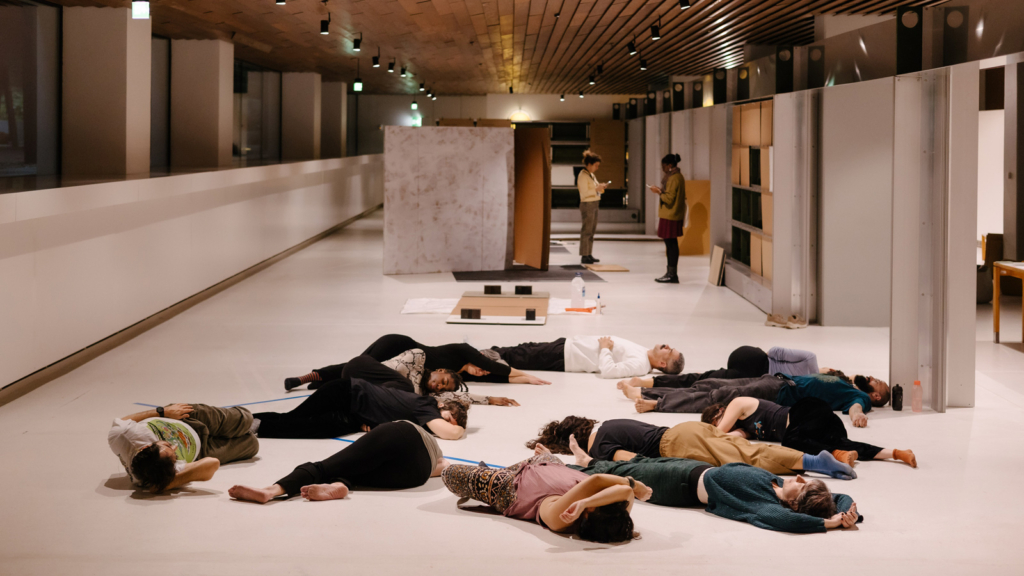
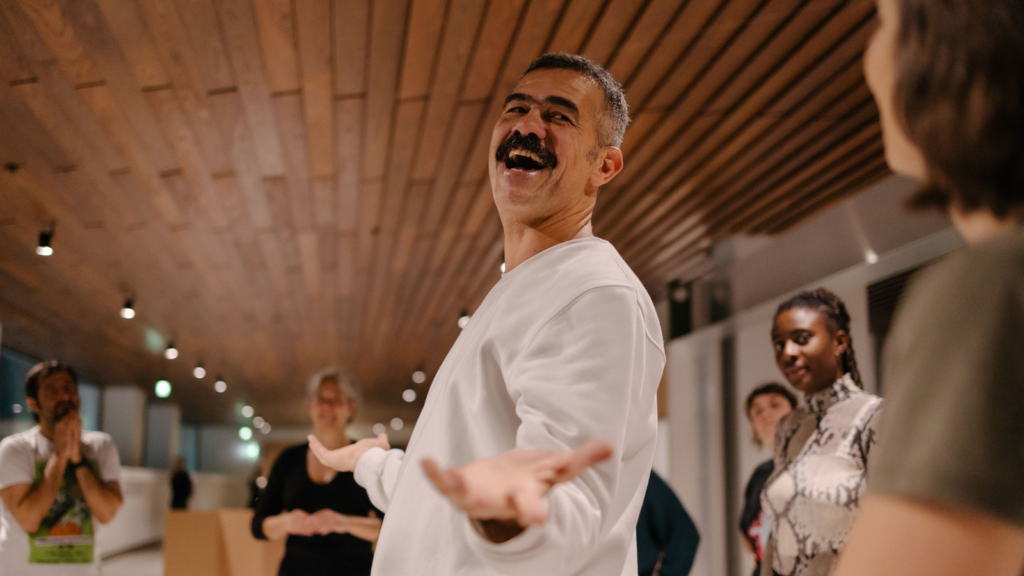
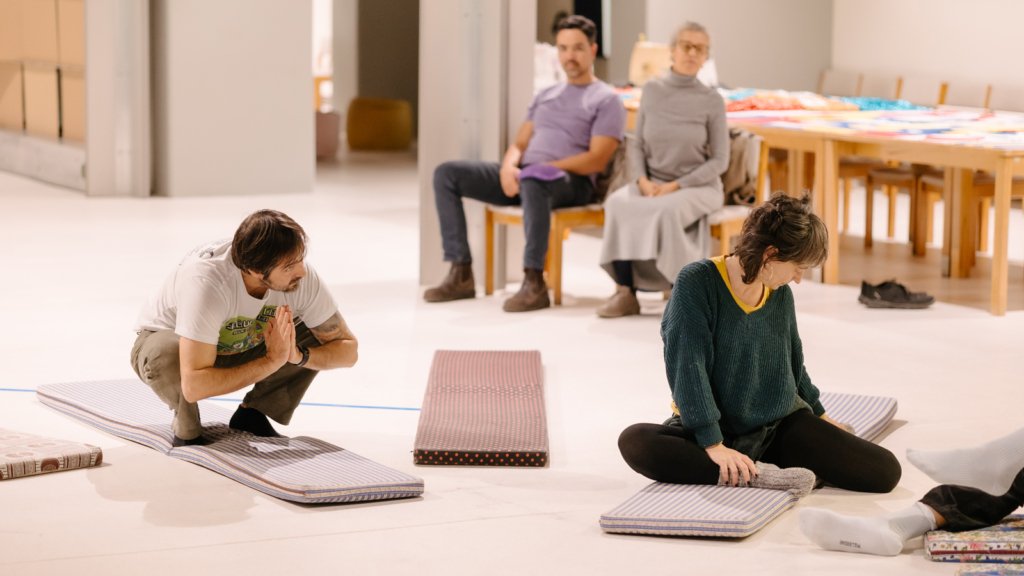
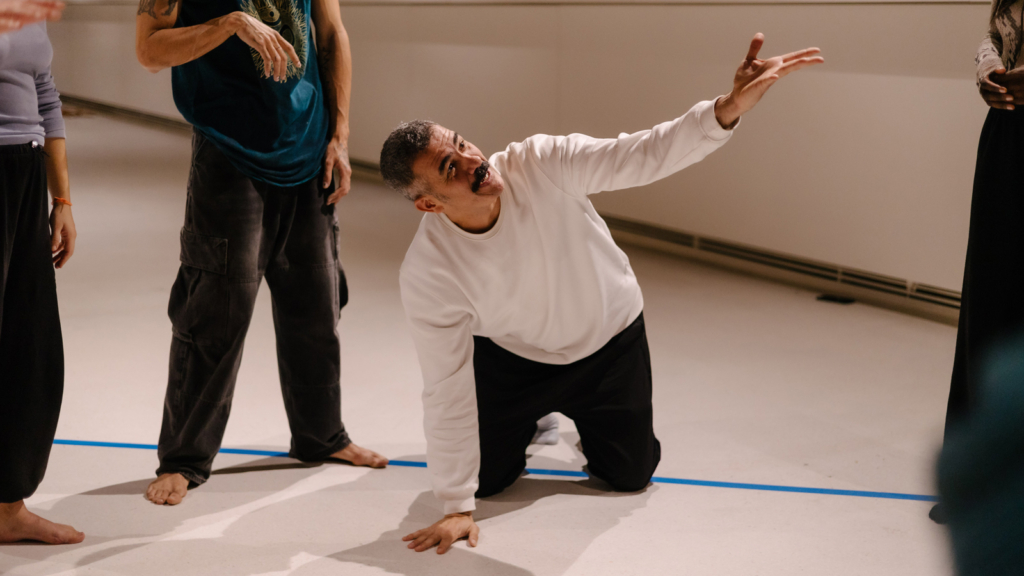
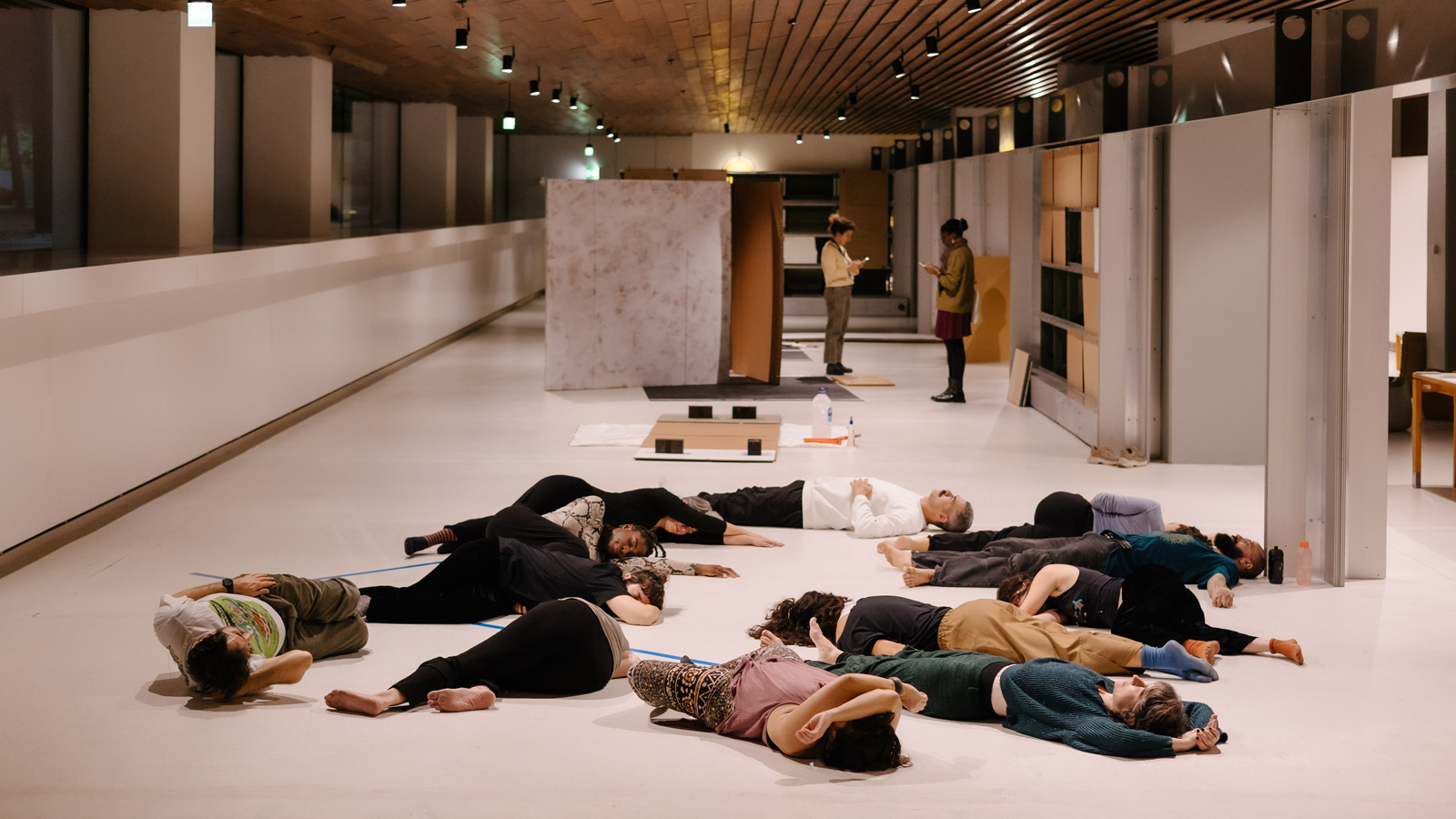
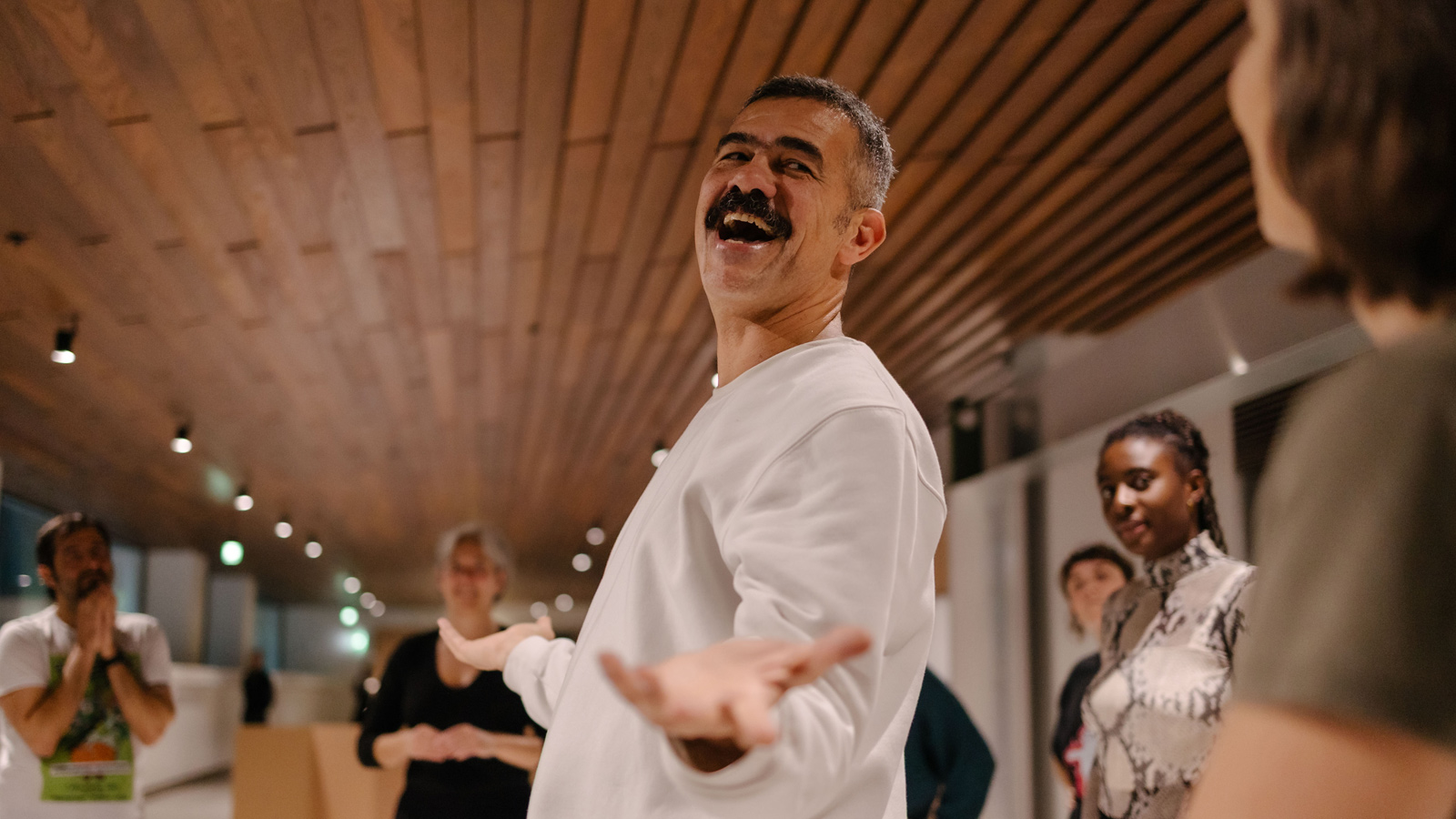
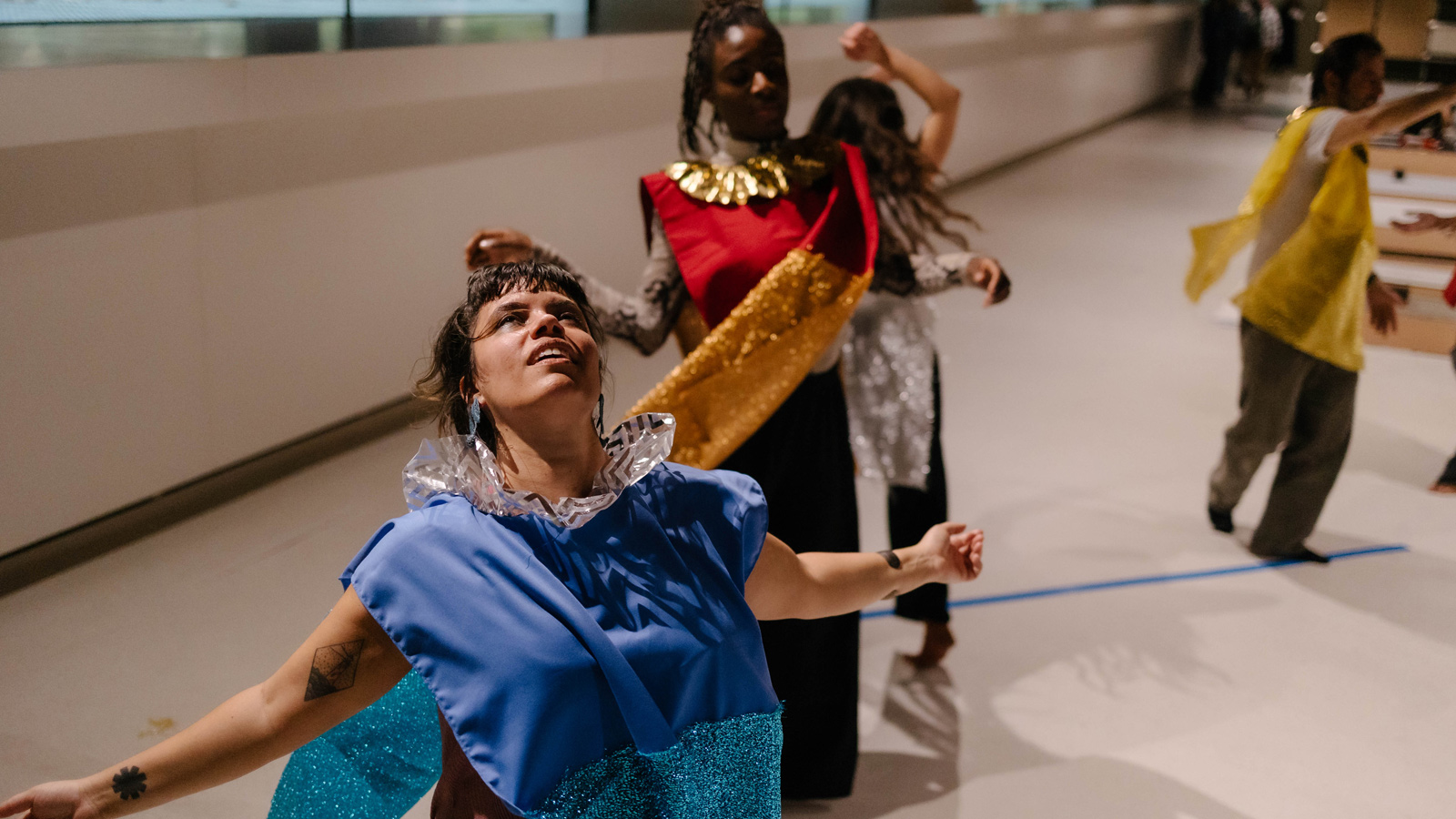
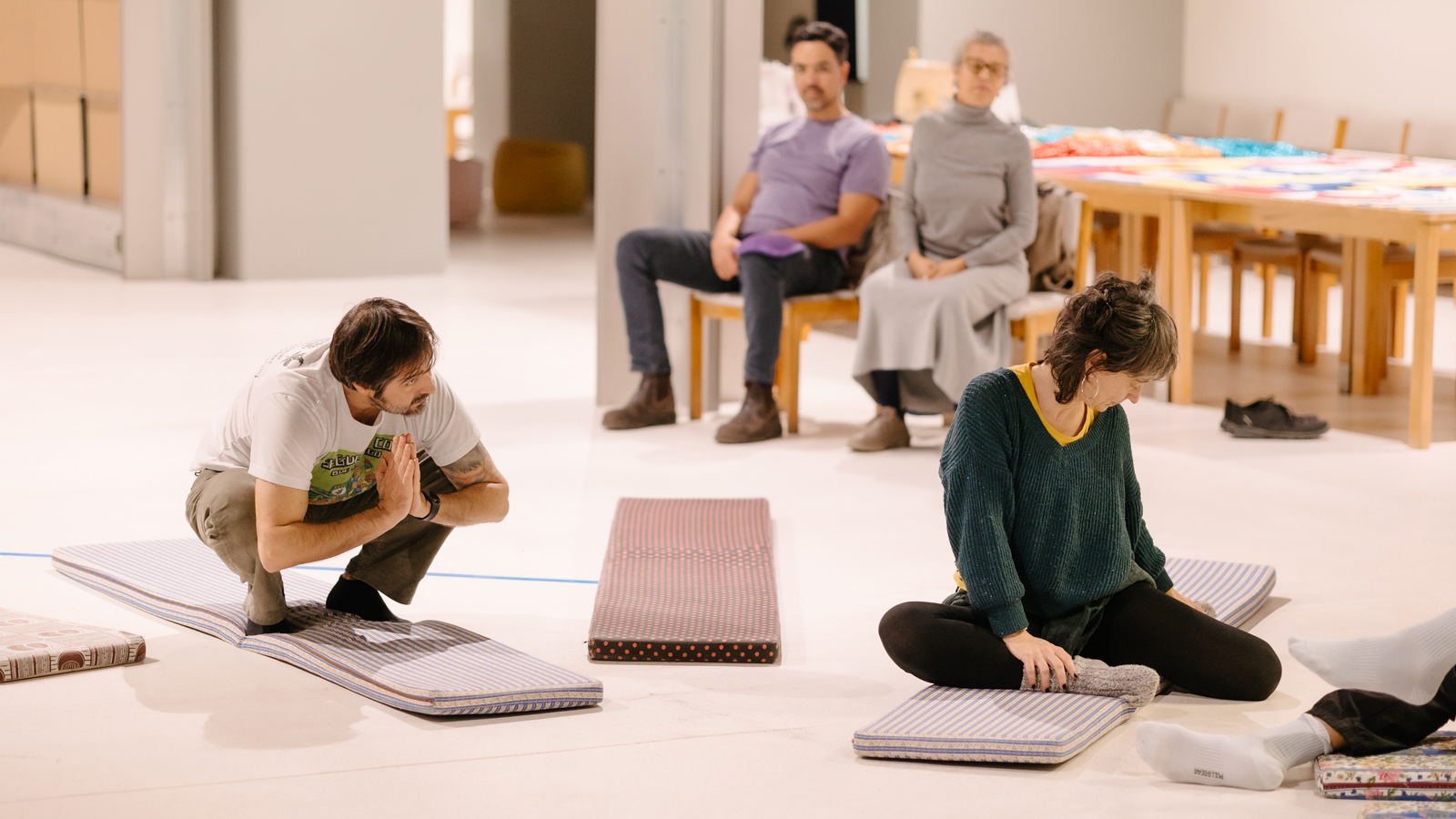
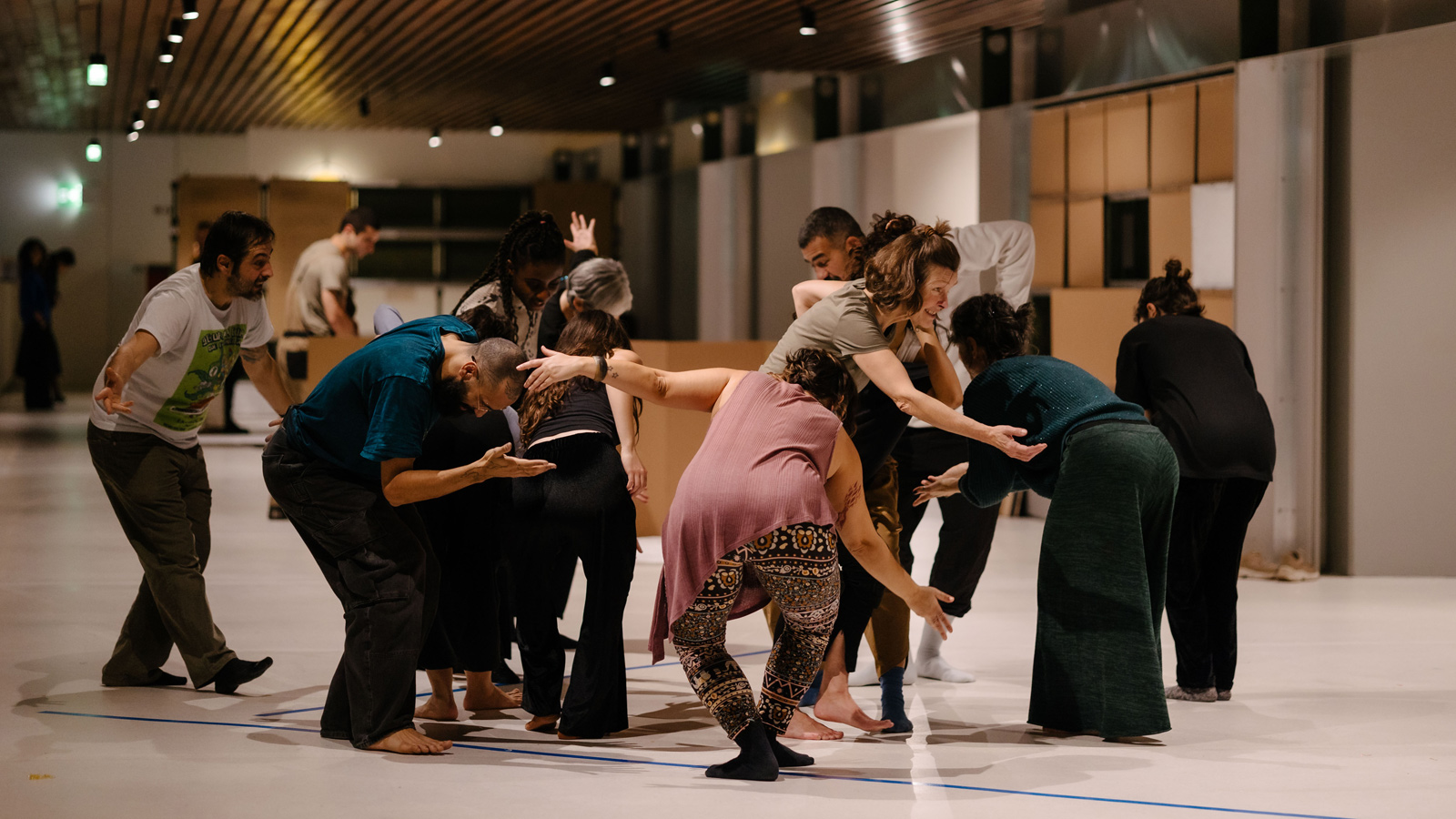
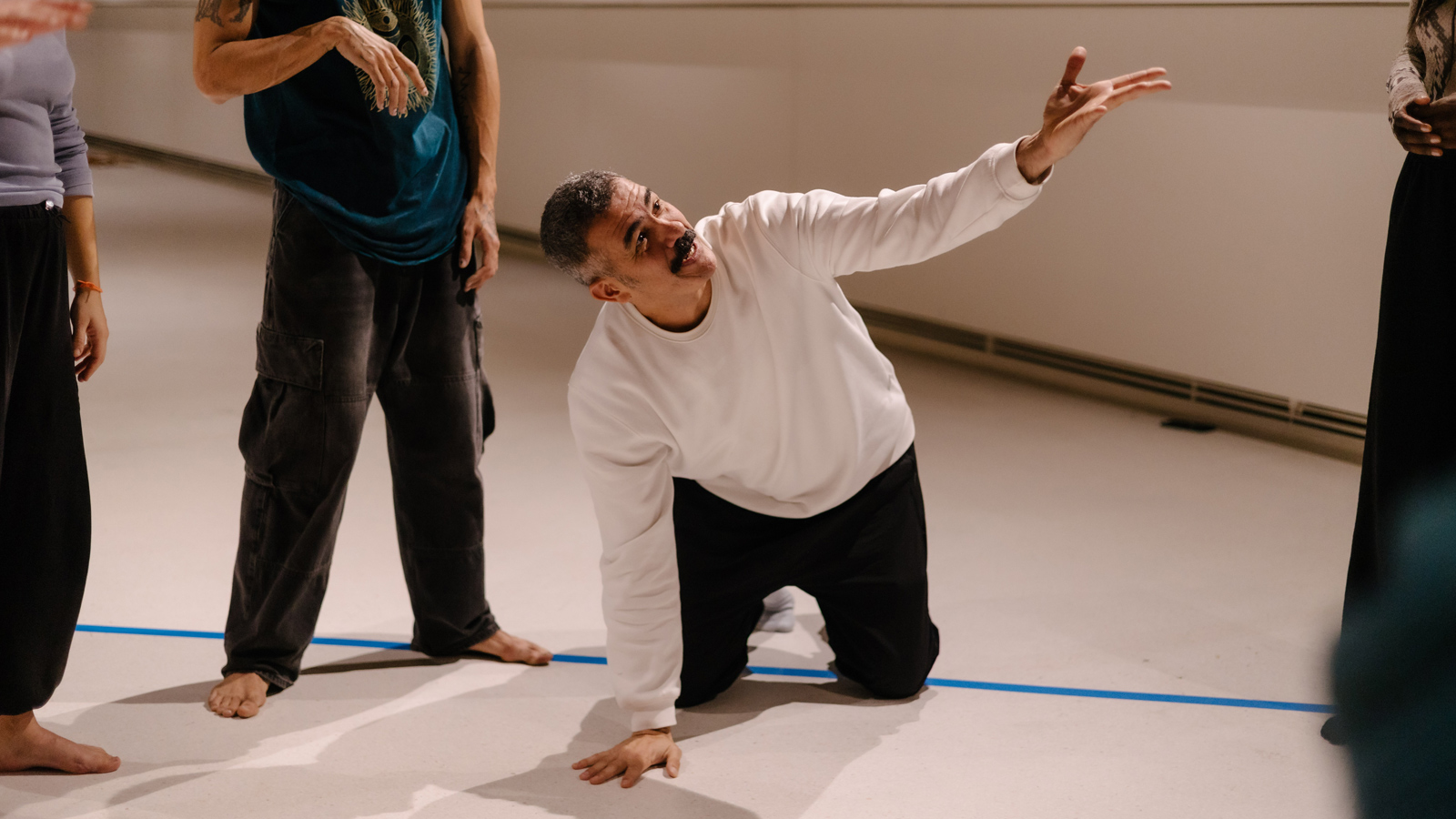
Daily contact with diverse audiences is part of the working method. People – whether curious, timid or distant – enter the space and decide, through their behaviour, how close they will get. ‘Each day I’m learning to notice when I should explain, when I should invite, when I should simply give them room,’ he says.
For the artist, the Carnival functions like a sophisticated social technology and ‘beyond the most formal structures, the ‘bloco’ is a constant negotiation’ in which ‘there are musicians, dancers, people who protect the sound, others who come and go. Everything happens in motion.’
In the ‘Caravanserá’ ‘bloco’, well-known marches mix with a samba-plot created from texts by Maria José, allowing anyone to join in and sing. The original composition is by Dado Amaral, with musical direction by Juninho Ibituruna, performed by musicians including Kito Siqueira (saxophone), Ygor Rajão (trumpet), Claire Haas (trombone) and Mayara Baptista (vocals). Participation in the event ‘depends more on being’ than any technical skill.
After the parade, the set design and videos will remain on display for two weeks in the Engawa Space, allowing for new interactions. The project will later move into other contexts, with adaptations for scale and territory, maintaining the core theme of collective activation.
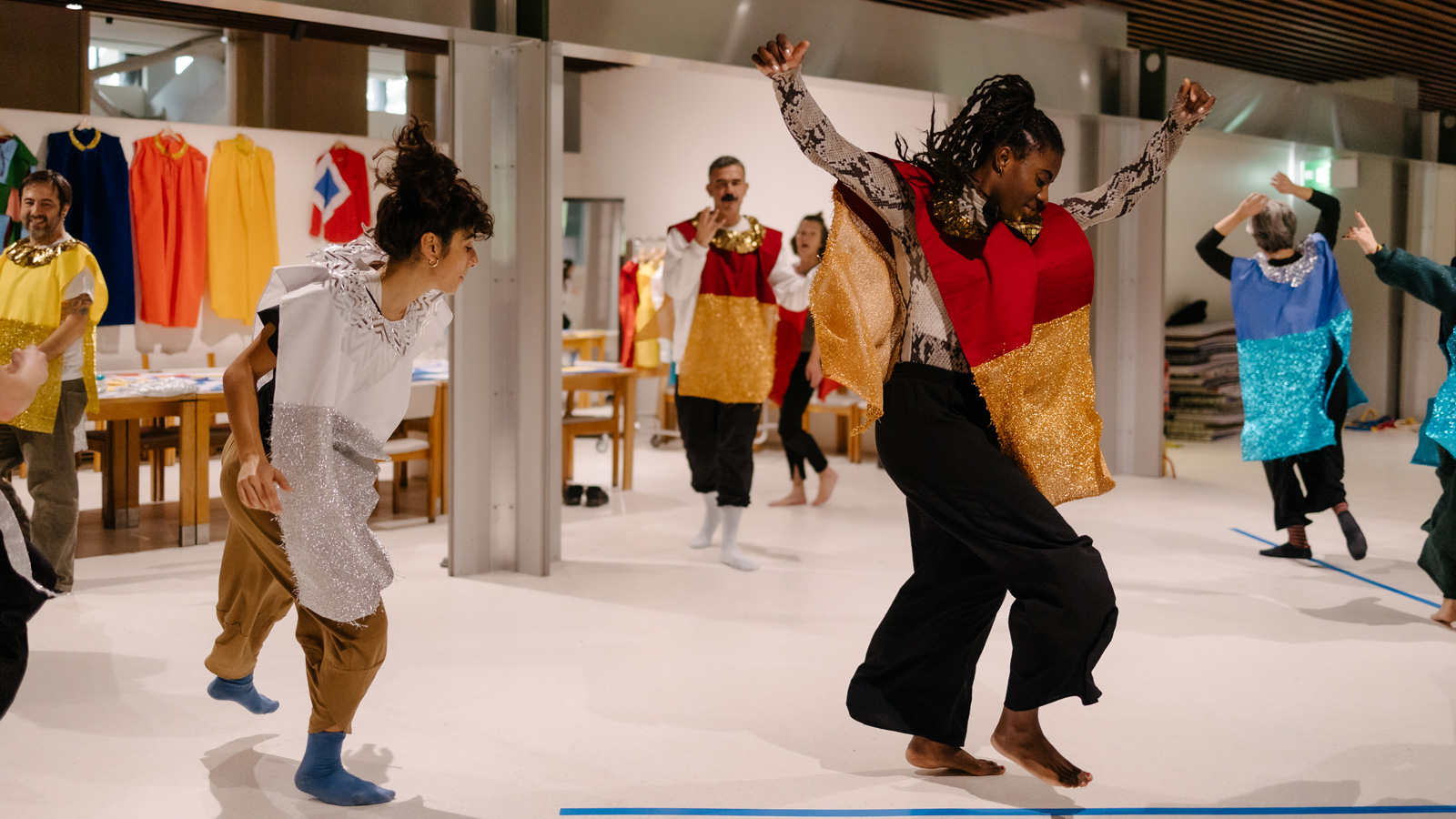
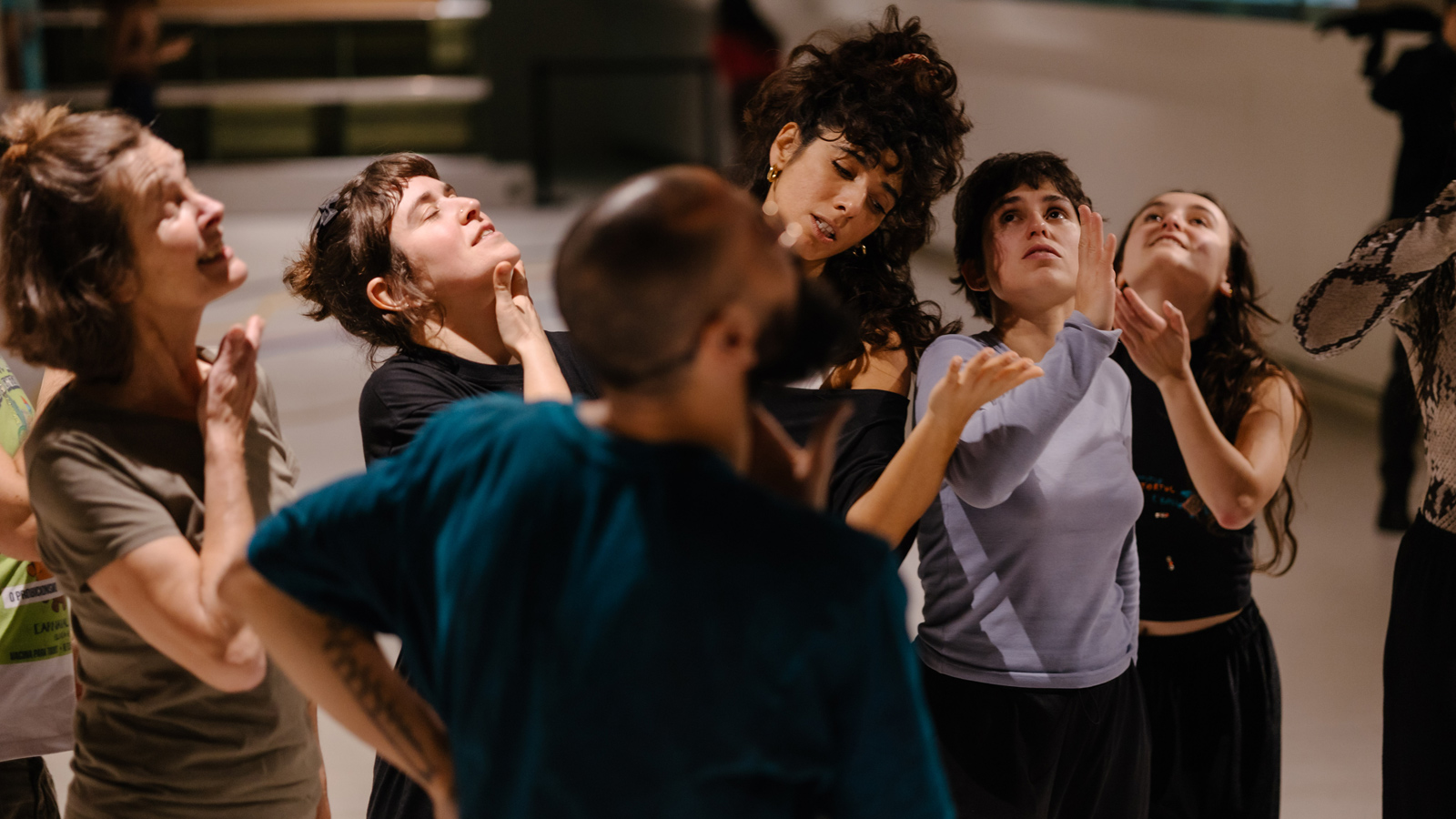
The team includes João Gonçalo Lopes, working on set design and the exhibition project, Romeu Delmar and Francisco Lopes as set assistants, and a group of performers comprising Abel Rojo, Emily da Silva, Esther Kasenda and Sara Zita Correia. The production is overseen by Luís Filipe Fernandes, Mariana Pimentel and Rita Maia, from And Lab, with administration and finance management by Missanga – Per Form Ativa.
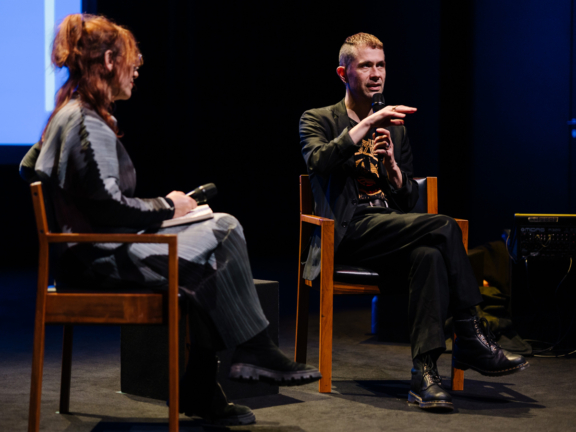
In parallel, the artist invited Antônio Frederico Lasalvia and Maša Tomšič to reflect on their artistic practice in commissioned texts that enter into dialogue with the project, alongside contributions from Chương-Đài Võ, Laura Erber and Ciríaco himself. The project was curated by Rita Fabiana, with concept and artistic direction by Gustavo Ciríaco, and also includes a conversation with guest artist Vera Mantero.
Asked what he would like to remain after everything has finished Ciríaco replies with the expression that has pervaded the whole project: ‘lucid joy’. A conscious, attentive joy, able to perceive the multiple layers of reality without foregoing action. ‘My mother used to say that a happy being is a playing, dancing, moving being,’ he recalls. ‘If anything remains, I hope it is that joyful tension, able to open up both gaze and gesture.’
BANTUMEN at Gulbenkian
Explore the series






No results were found for your criteria.
You may also like
No results were found for your criteria.