
‘Belas Artes’: Bruno Zhu’s exhibition that turns CAM into a question with no definitive answer
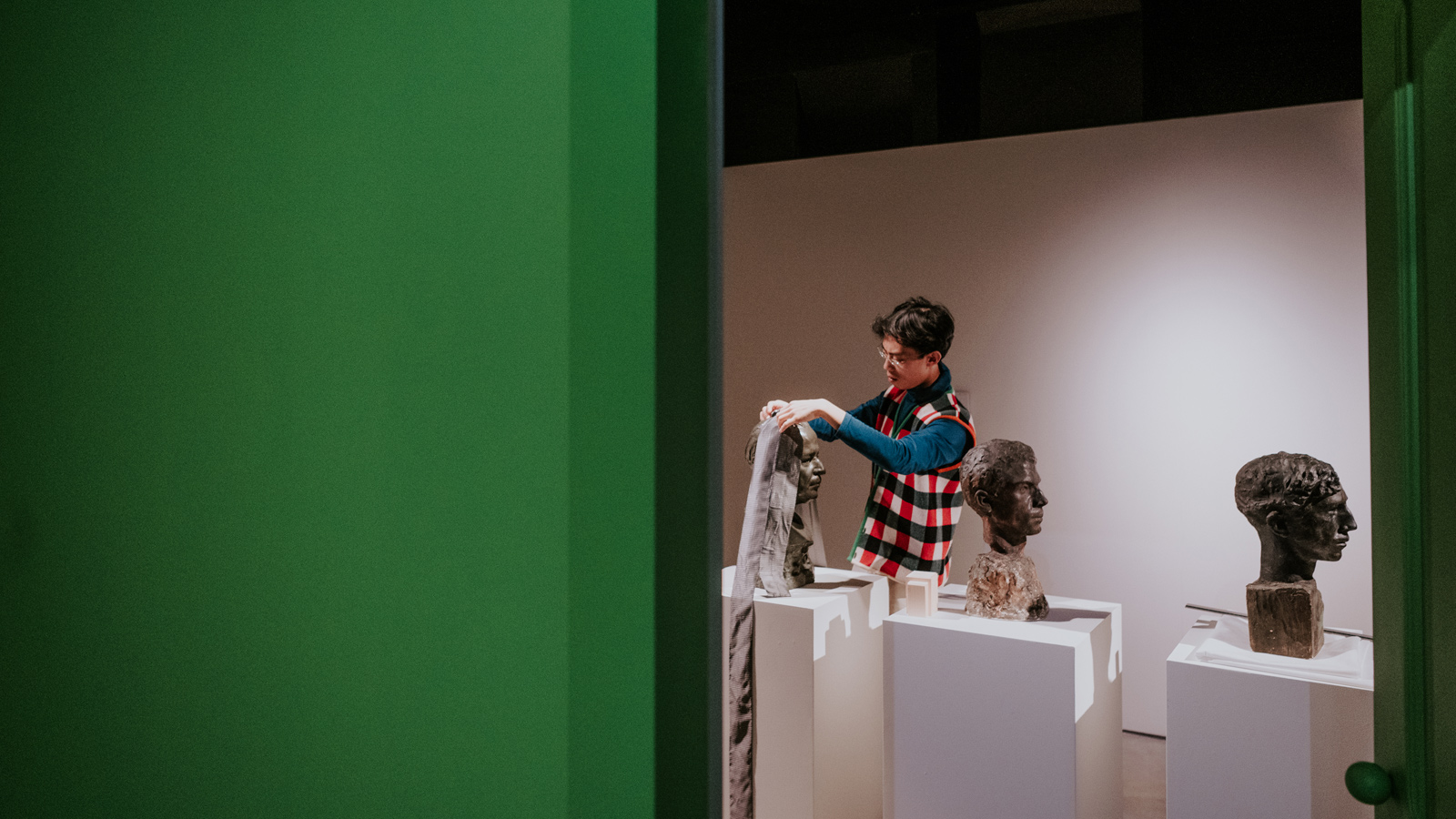
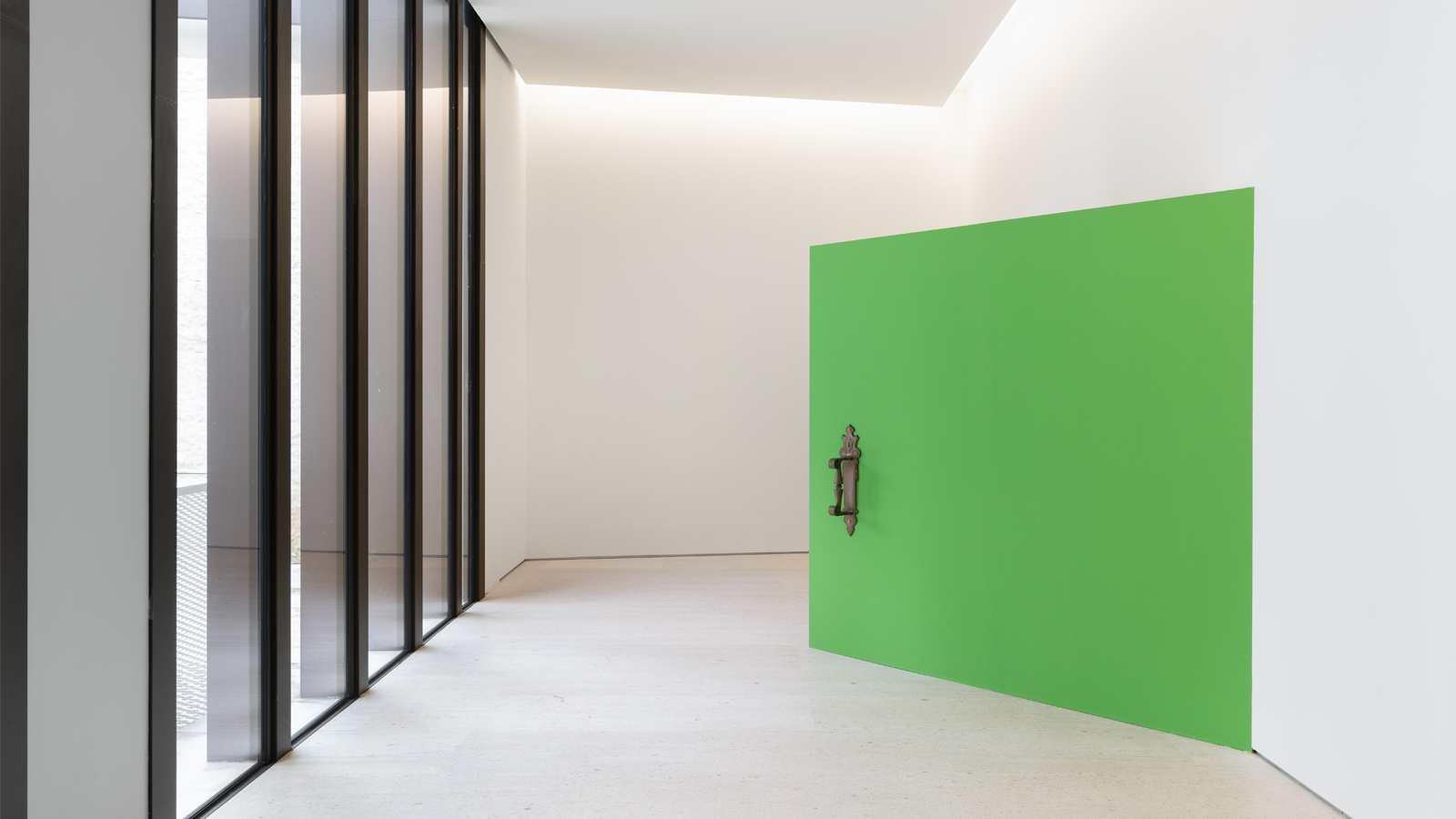
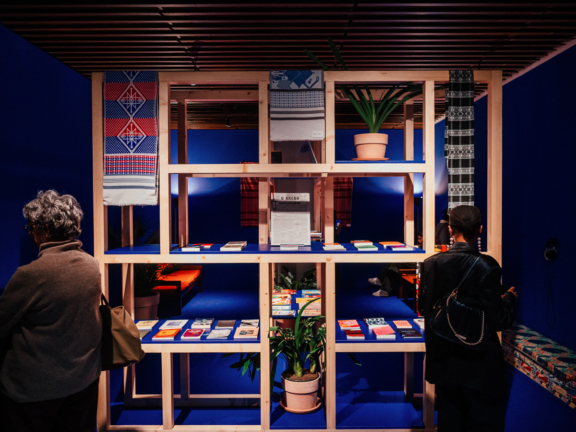
The exhibition ‘Belas Artes’ originates from a project conceived in London in 2024, when Bruno Zhu was invited to present a solo show at Chisenhale Gallery. ‘I designed a scenography that can be adapted to any place and any context by means of an instruction manual’, the artist explains. The scenography, made up of four rooms with distinct rules, was designed to be reproducible: anyone interested can acquire the reproduction rights.
When the invitation from CAM arrived, what immediately appealed to him was the possibility of inhabiting this structure with objects from the museum’s collection. ‘When CAM gave me permission to inhabit the scenography with objects from its collection, I essentially had free rein – full access to the modern art collection here.’
The result is an exhibition largely composed of works from early twentieth-century Portuguese modernism, but subjected to rules that subvert their usual interpretation.
‘You’ll be entering a space in which the canonised object of modern art is perverted, subverted, almost violated by the directives I set out.’
— Bruno Zhu
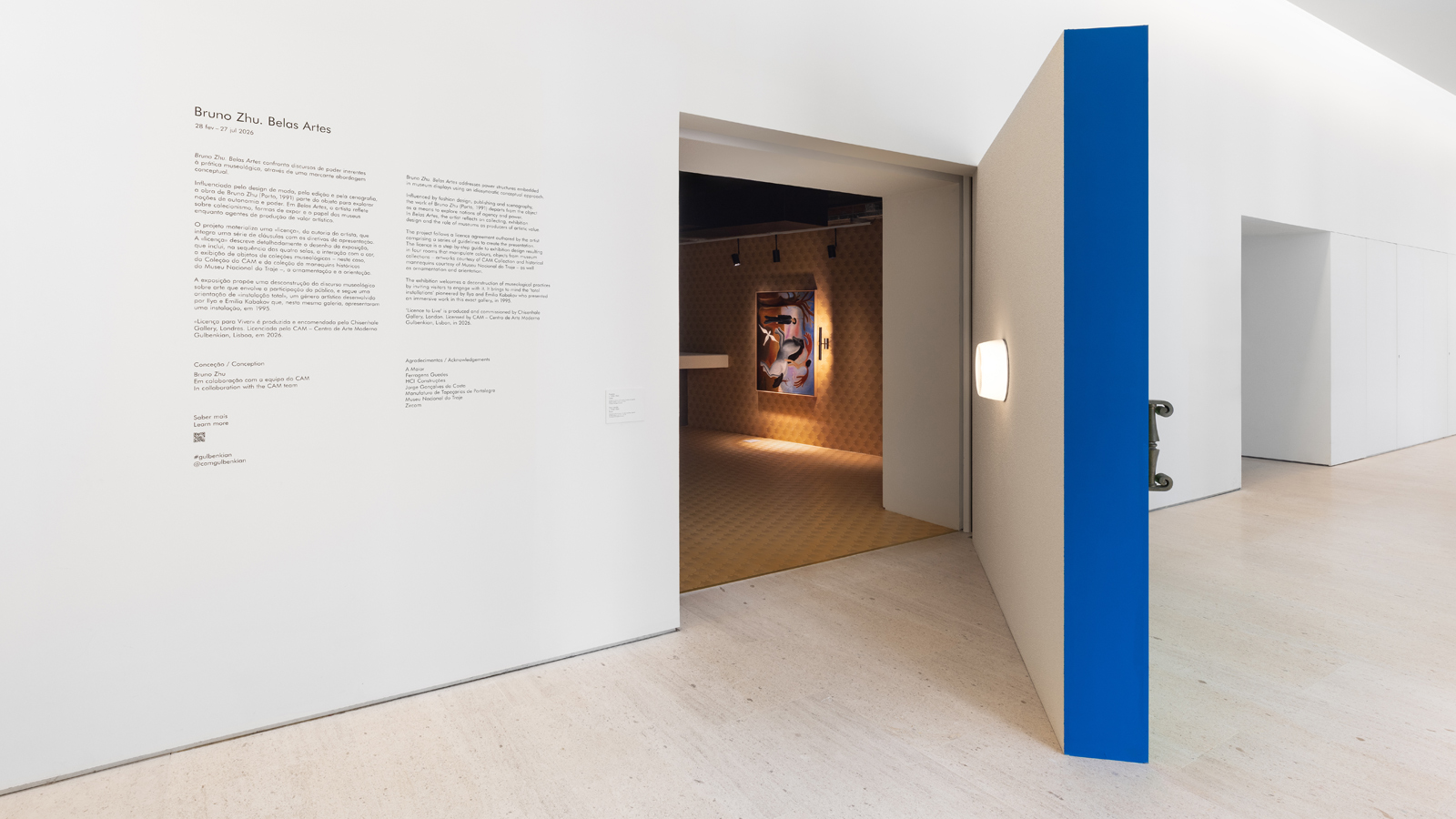
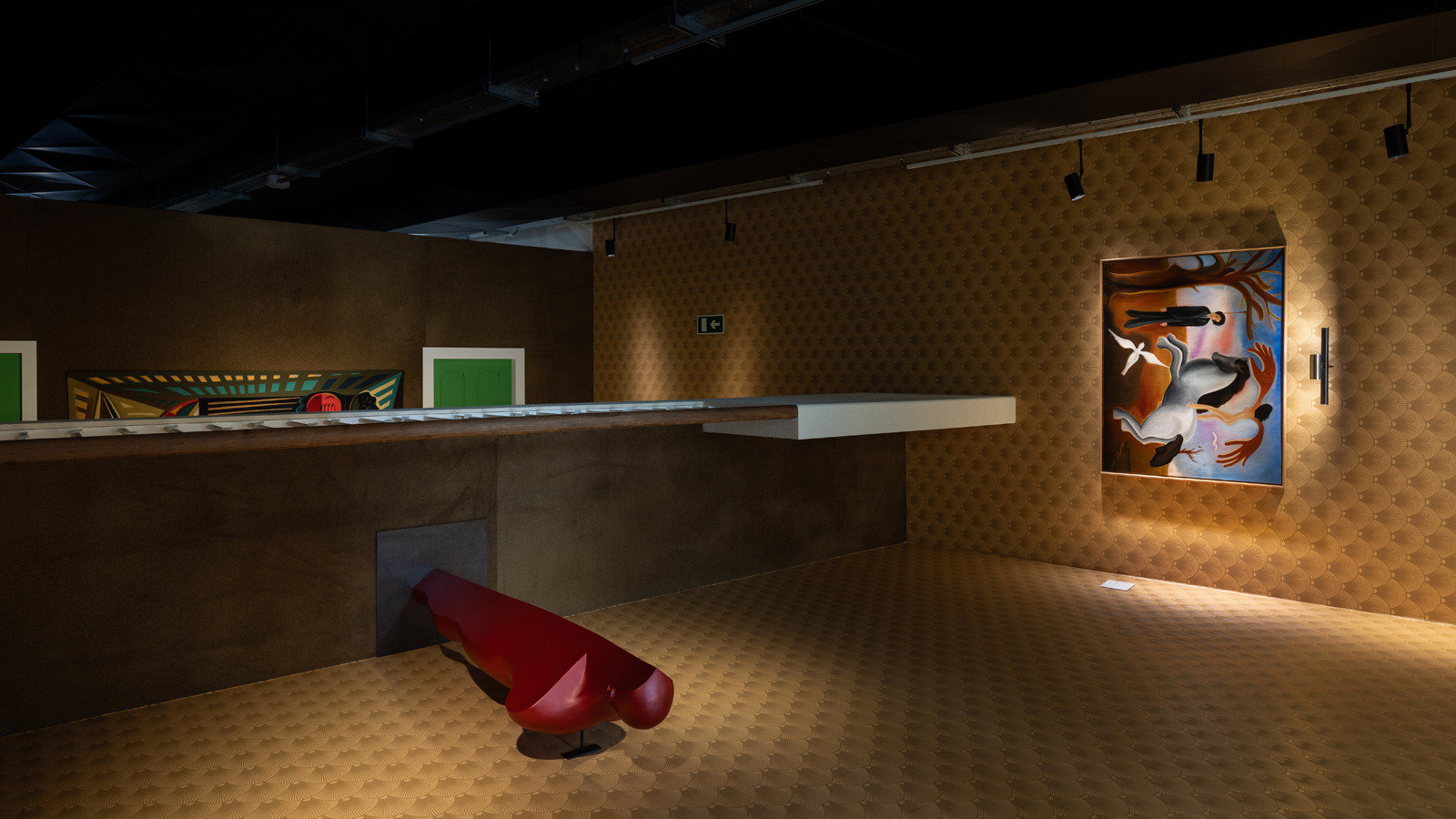
Calling the exhibition ‘Belas Artes’ is, according to the artist himself, a deliberate and uncynical gesture. ‘‘Belas Artes’, as we all know, is an institution. It’s an institution in Lisbon and in Porto, but also within European art historiography – a particular moment that crystallises from the late nineteenth century to the mid-twentieth century, marking a certain academicism in the arts, a very conservative way of thinking about what is and isn’t art.’
Far from reproducing that academicism, Zhu chooses the term in order to re-signify it – or rather, to return it to its most literal sense:
‘The arts are beautiful, and the fine arts are the most beautiful of all. It’s a sincere gesture.’
— Bruno Zhu
At the conceptual centre of the exhibition is a document rarely seen in the visual arts world: a copyright licence. It stems from a very specific experience with Chisenhale Gallery, when the artist received a contract containing a recoupment clause he found problematic. ‘Under the agreement, if the décor produced for the institution were to be sold after the exhibition, the artist agreed to reimburse the production costs.’ The contract did not specify the amount, nor did it define the duration of the agreement – it would, in principle, be perpetual.
‘When I asked what that was and requested a clearer explanation, they told me, very informally, just to sign it and that we’d review the contract later. At that moment I thought: the dream is over, the beauty of the invitation is gone, because this is predatory.’
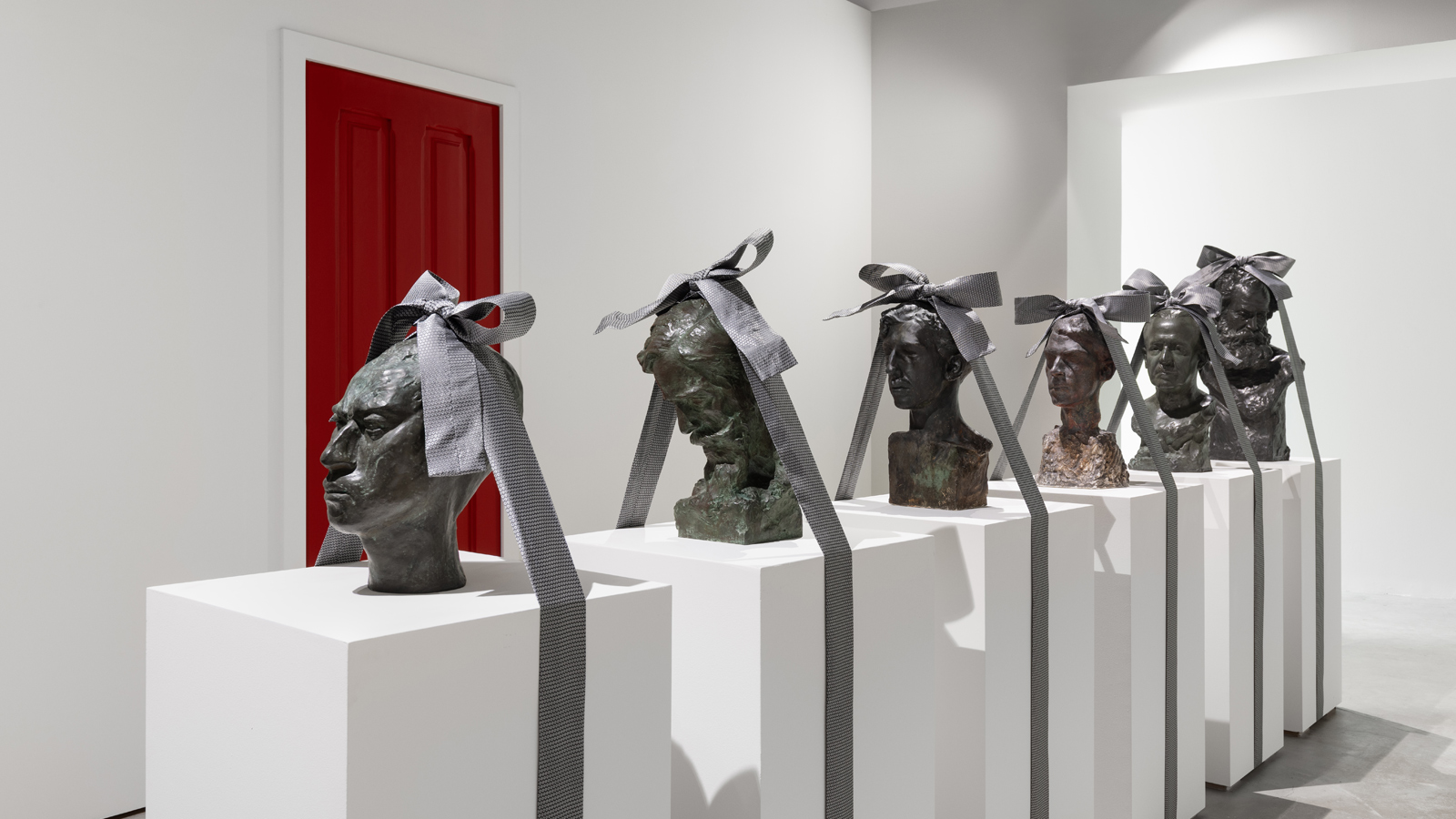
Zhu’s response was not to cancel the exhibition, but to find a structural alternative. ‘My instinct was: I can’t create art, because if I use art here, within this contract, it becomes designated as something that can be sold. But if I don’t create art, then what do I do?’
The solution was to bring into the visual arts a model already common in other creative sectors: royalty licensing. ‘I borrowed that model. We can think of it as licensing a space – using the positive potential of something that can generate returns for both the artist and for the institution, without leaving me vulnerable to a contract that isn’t clearly defined.’
The artist stresses that there is no personal antagonism in this approach: ‘The frustration comes from something very concrete, not from a moral or antagonistic place. Institutions, in my experience, aren’t people – they’re machines run by people. And many of them are good people, but perhaps they don’t have the training required to lead an institution of this kind.’
There is, however, a sign that the move has had an impact: ‘I’ve heard from other artists who’ve received Chisenhale’s contract that they’ve now removed that recoupment clause. That gives me a sense of satisfaction – there’s a precedent now.’
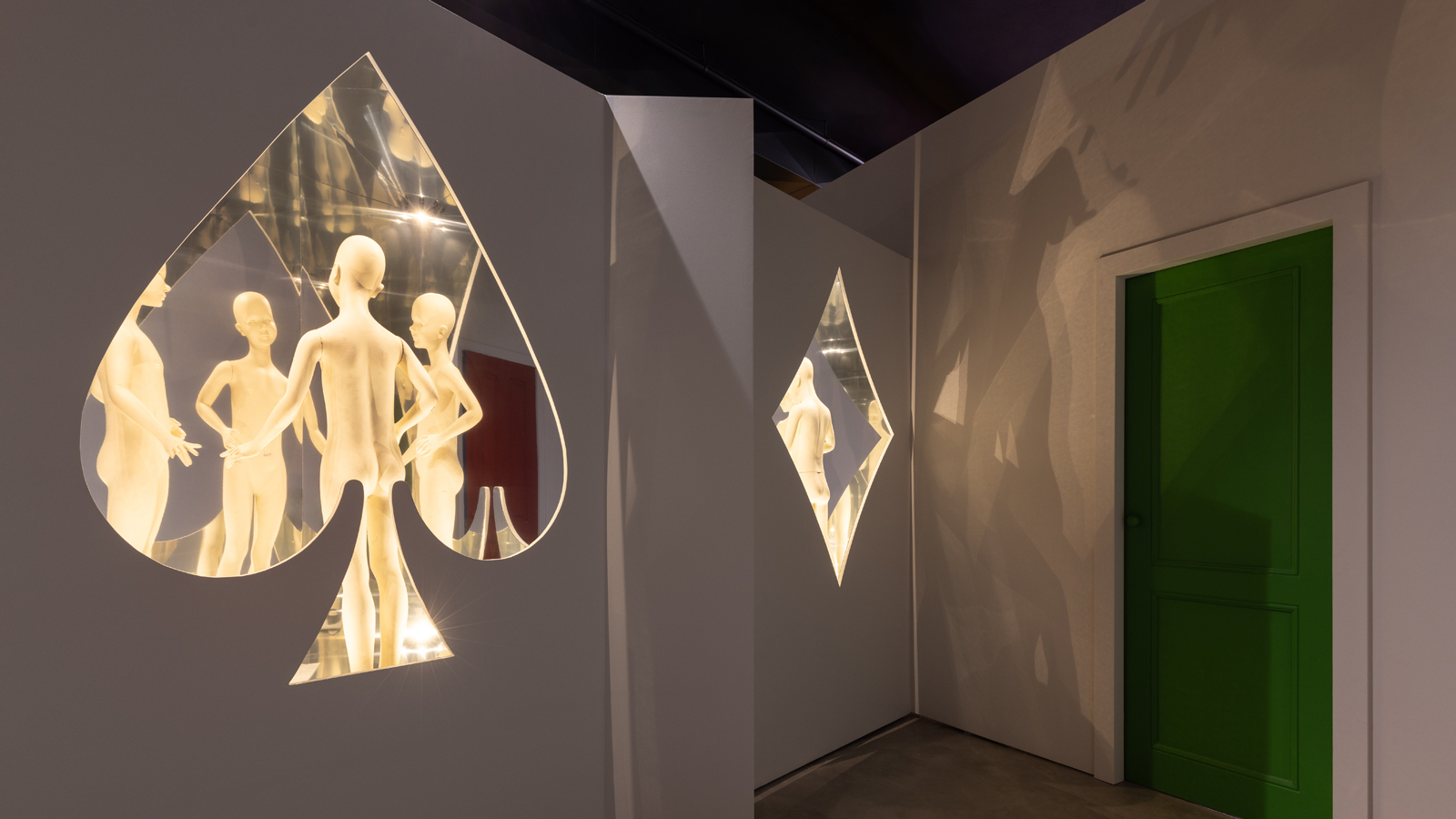
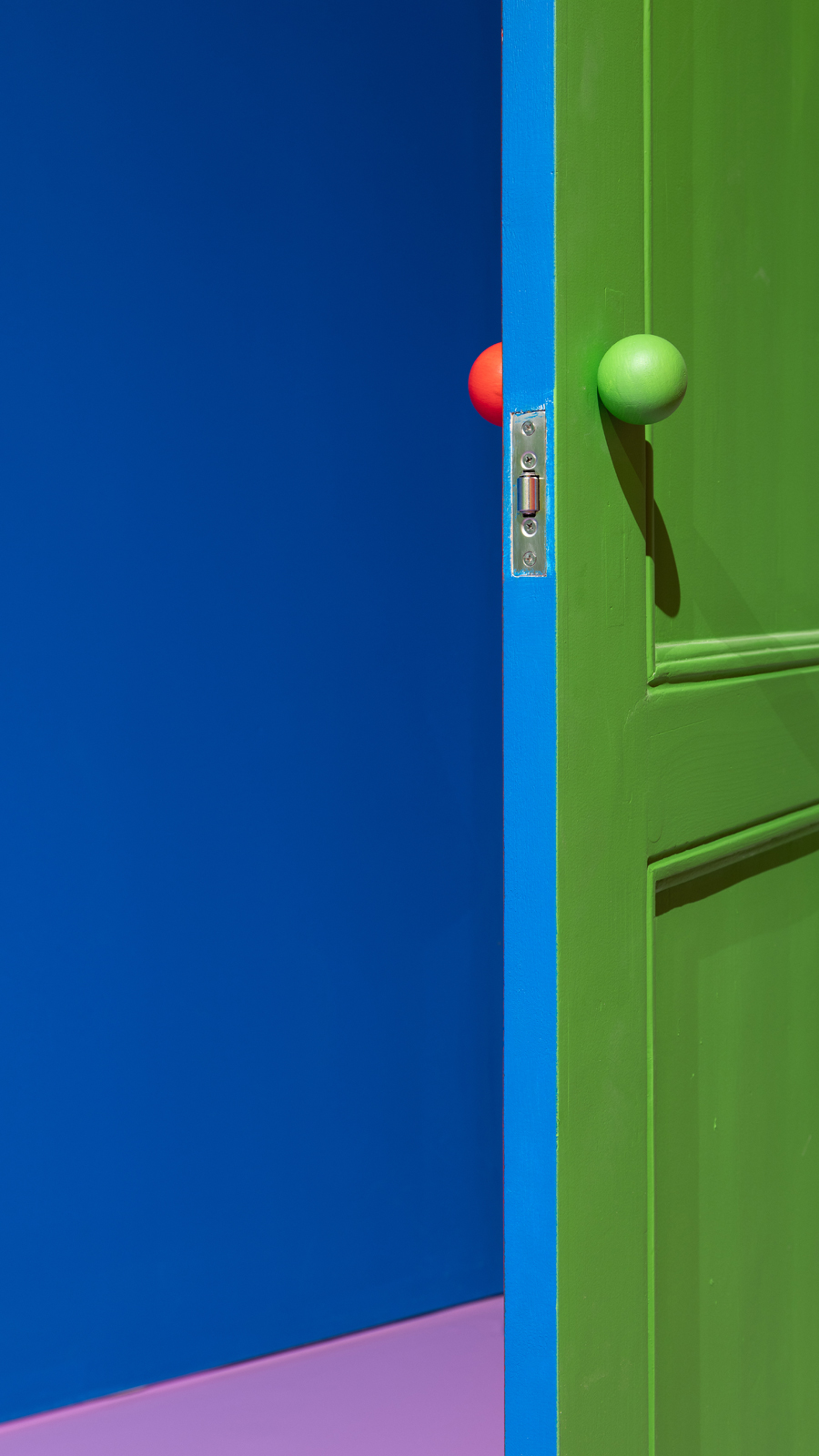
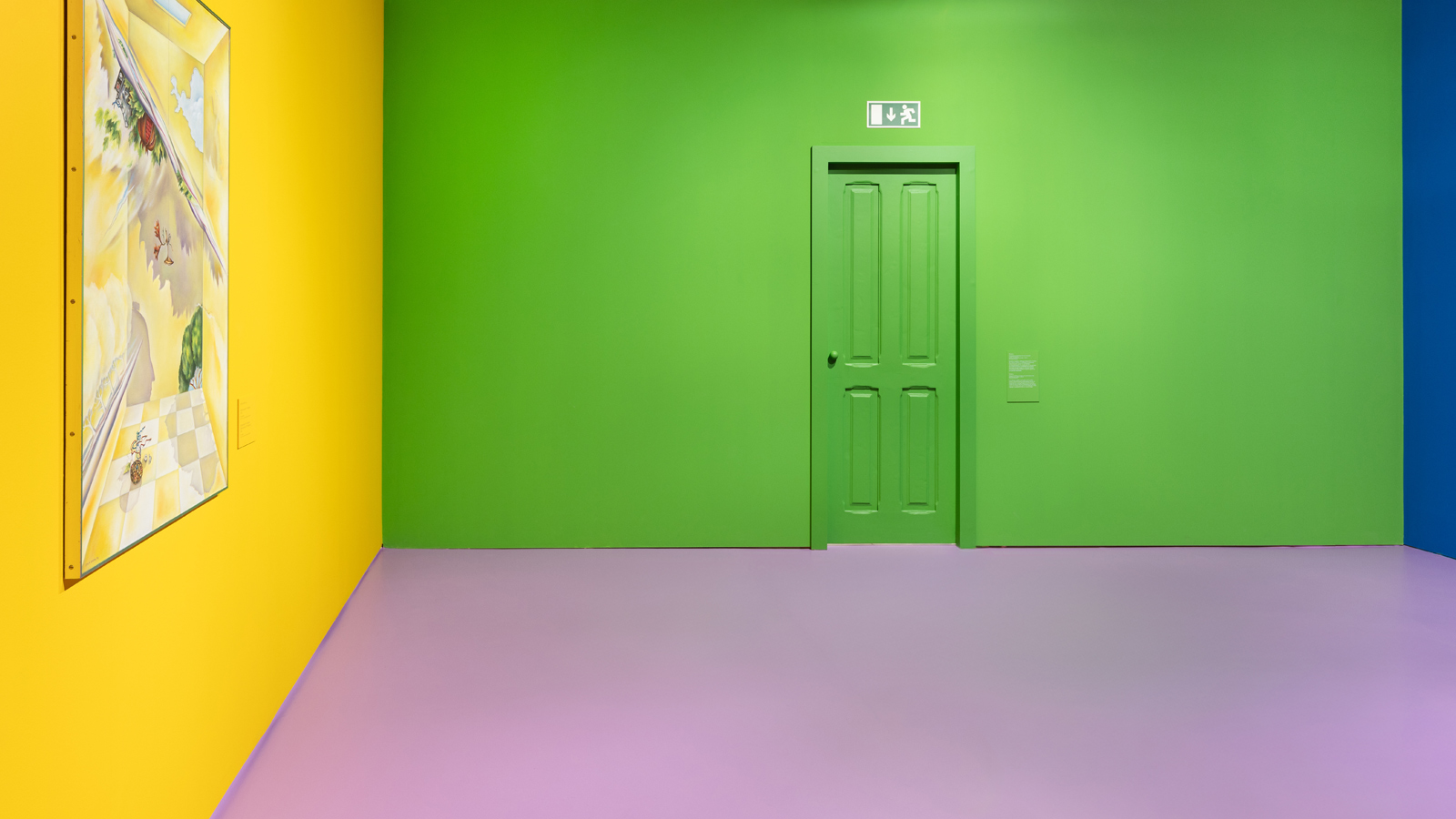
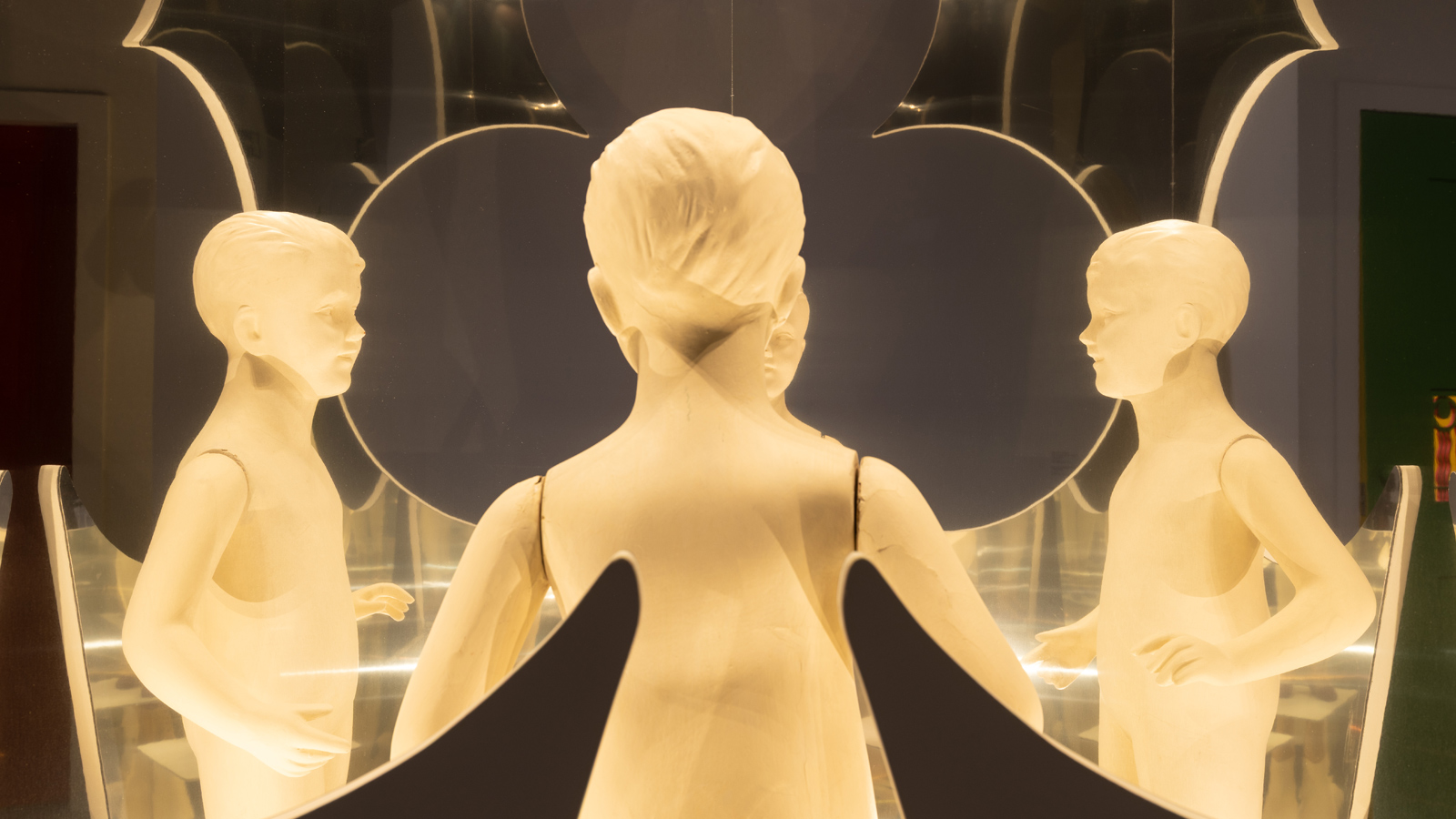
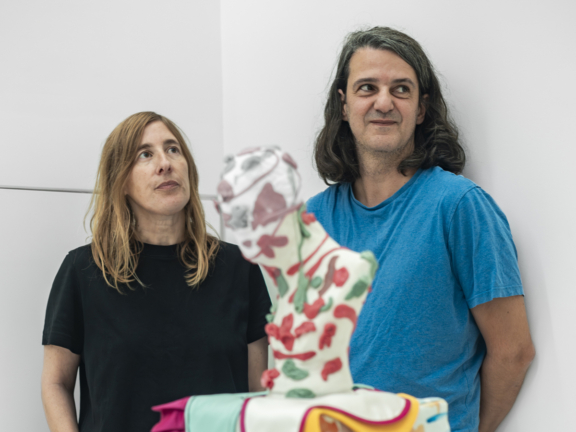
The selection of works from the CAM collection, along with a few mannequins from the Museu Nacional do Traje, followed a logic the artist describes with disarming honesty: it was driven by the formal rules of the scenography rather than by any scholarly criterion. ‘The colour room has five colours, and the rule is simple: only objects of that colour can be in that room. So instead of making a carefully studied, intellectual selection from the collection, I ended up making notebooks organised by what’s blue, what’s red.’
This apparent simplicity, however, led to remarkable discoveries. One of them involves a tapestry in CAM’s inventory, attributed to José de Almada Negreiros and listed in the online database under the title ‘Integração Racial’ [Racial Integration]. ‘I was drawn to the title. It’s such a provocative title to give a work. Suddenly, having a piece so explicitly positioning itself within a racial discourse, made by someone who lived in a very turbulent era, came about in a very innocent way: I was looking for a coloured rug for the floor and found a tapestry called ‘Racial Integration’.’
The research that followed, carried out by curator Ana Vasconcelos in collaboration with the artist, revealed that the title never actually came from Almada Negreiros. ‘This piece was called ‘Racial Integration’ for no reason at all – someone at the Foundation, in the late ’70s or ’80s, simply named it that while doing cataloguing work.’ In the archive of the Portalegre Tapestry Manufactory – still operating today – the work appears as ‘Untitled’. It is based on a watercolour by Almada Negreiros belonging to the collection of the Museu Nacional de Arte Contemporânea – Museu do Chiado.
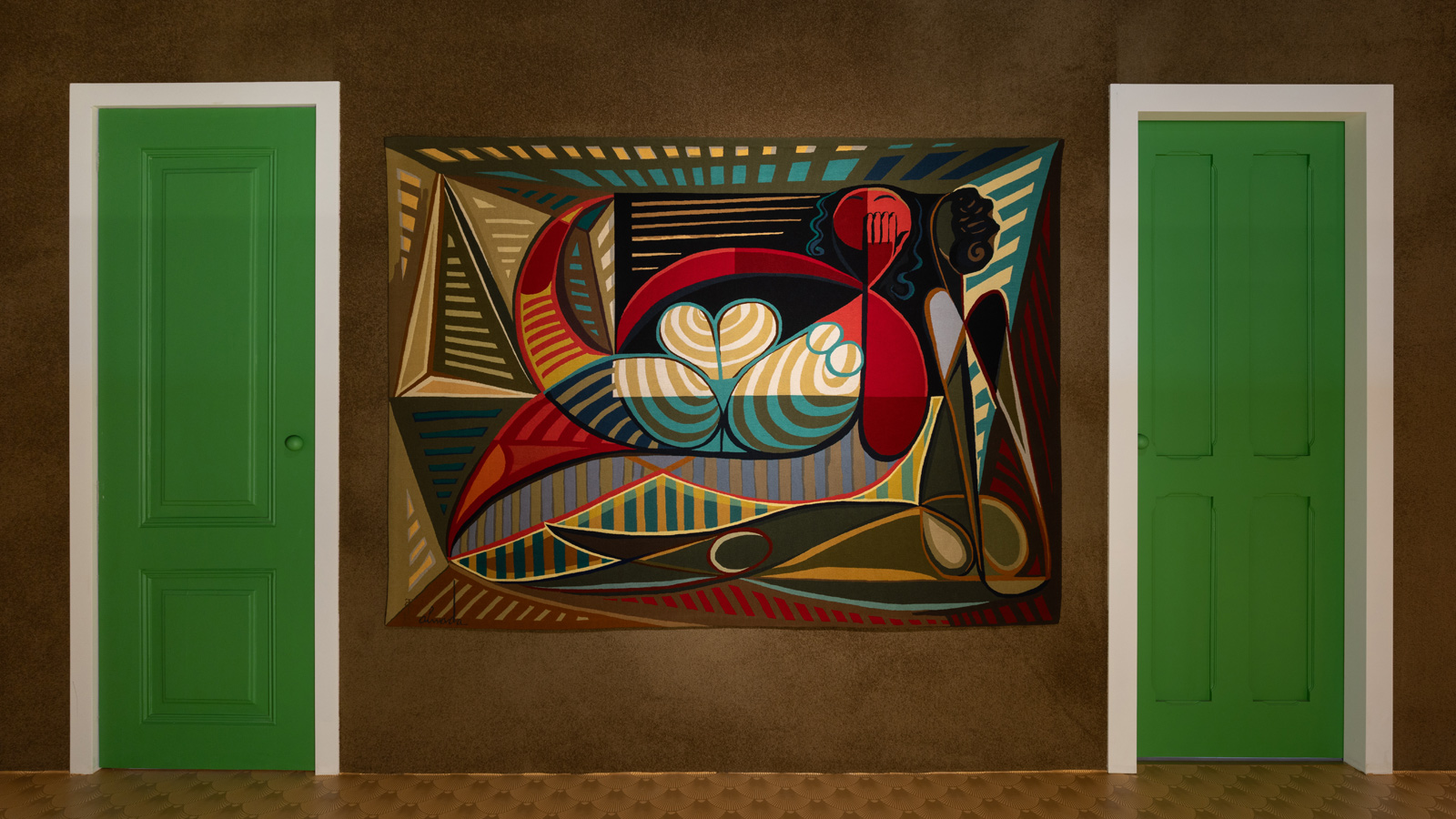
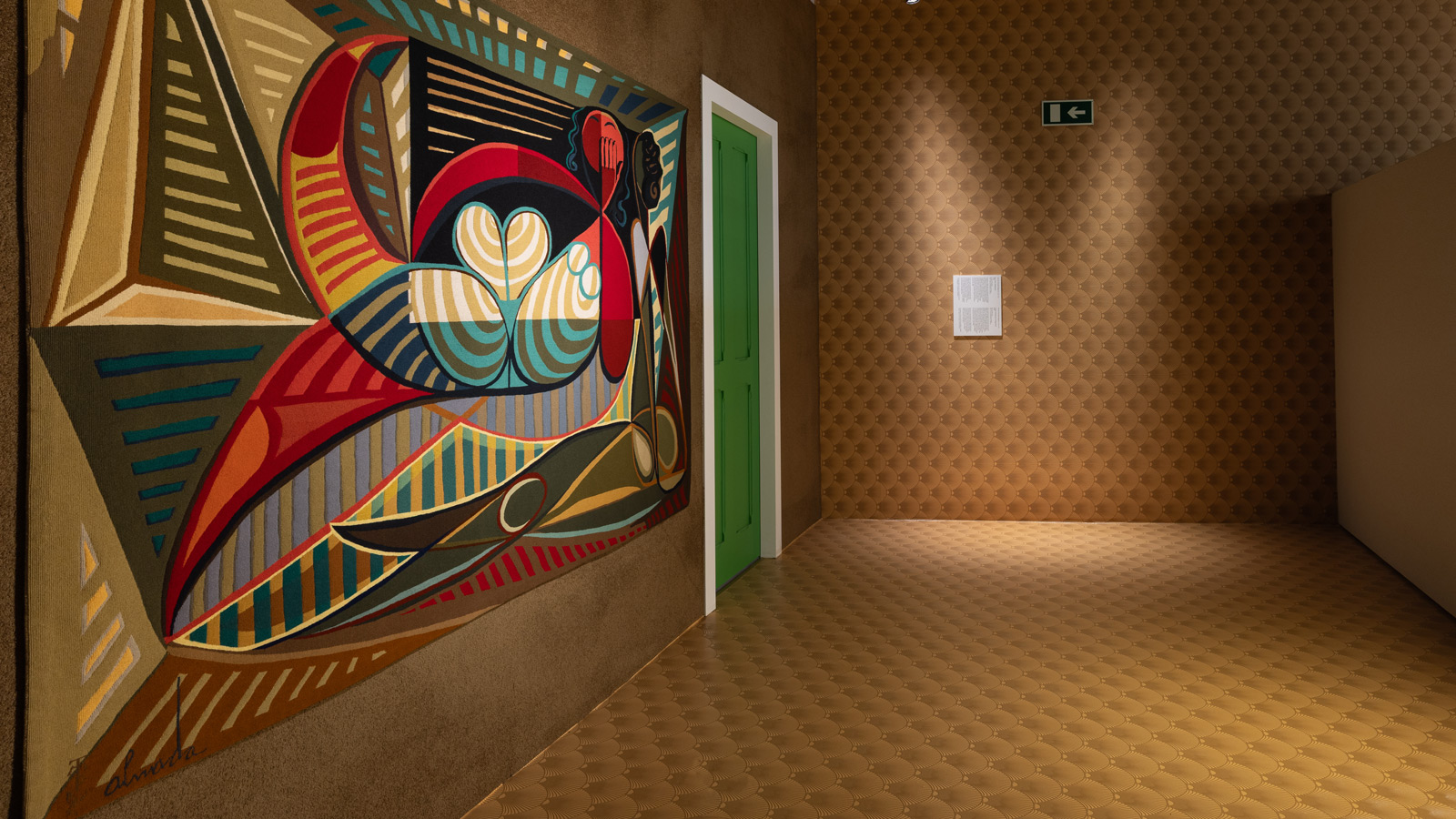
‘Nothing points to any particular discourse or ideology that could justify naming this as something racial. But someone at the museum labelled this inventory item – available online as a pedagogical object – as ‘Racial Integration’. I find it alarming that the museum made no curatorial effort to acknowledge or correct this lapse in museological practice.’
CAM has already changed the entry in the database, now accompanied by a cataloguing history, which is also included in the exhibition. ‘None of this is unusual. But what’s interesting is that the whole thing stemmed from a very simple rule.’
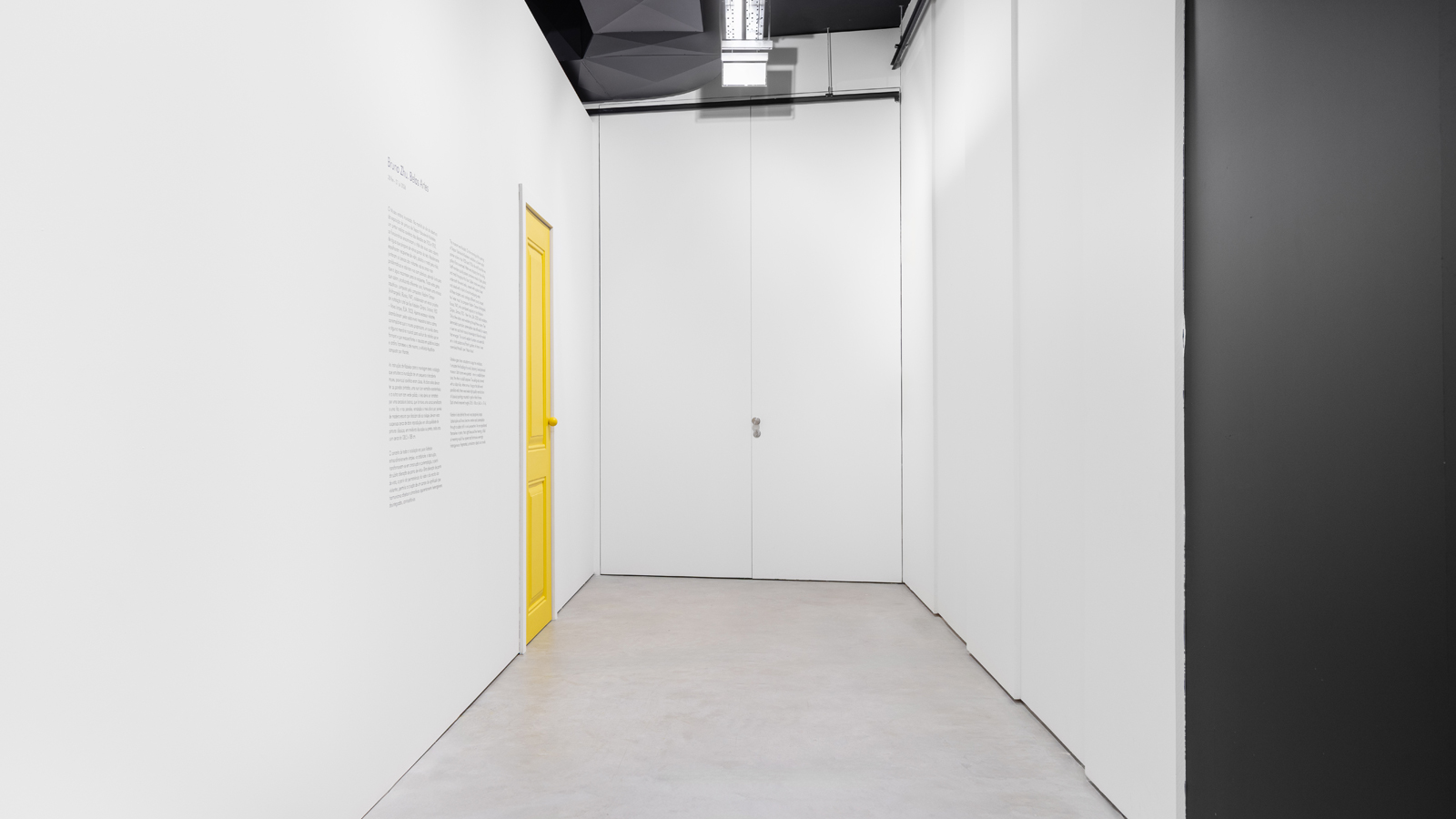
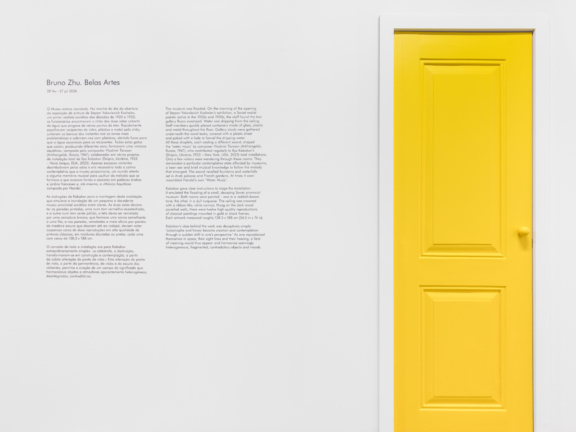
The exhibition also includes a wall text written by curator Ana Vasconcelos – but not about this exhibition. Following one of the scenographic rules, the text describes another exhibition: real or imagined, past or invented. ‘This serves two functions: it prolongs the viewer’s ambiguous experience of the exhibition – they read a text that describes nothing they’re about to see or have already seen – and it also offers the institution an autonomous space in which to present itself in an idyllic, sincere, ironic, or historical way.’
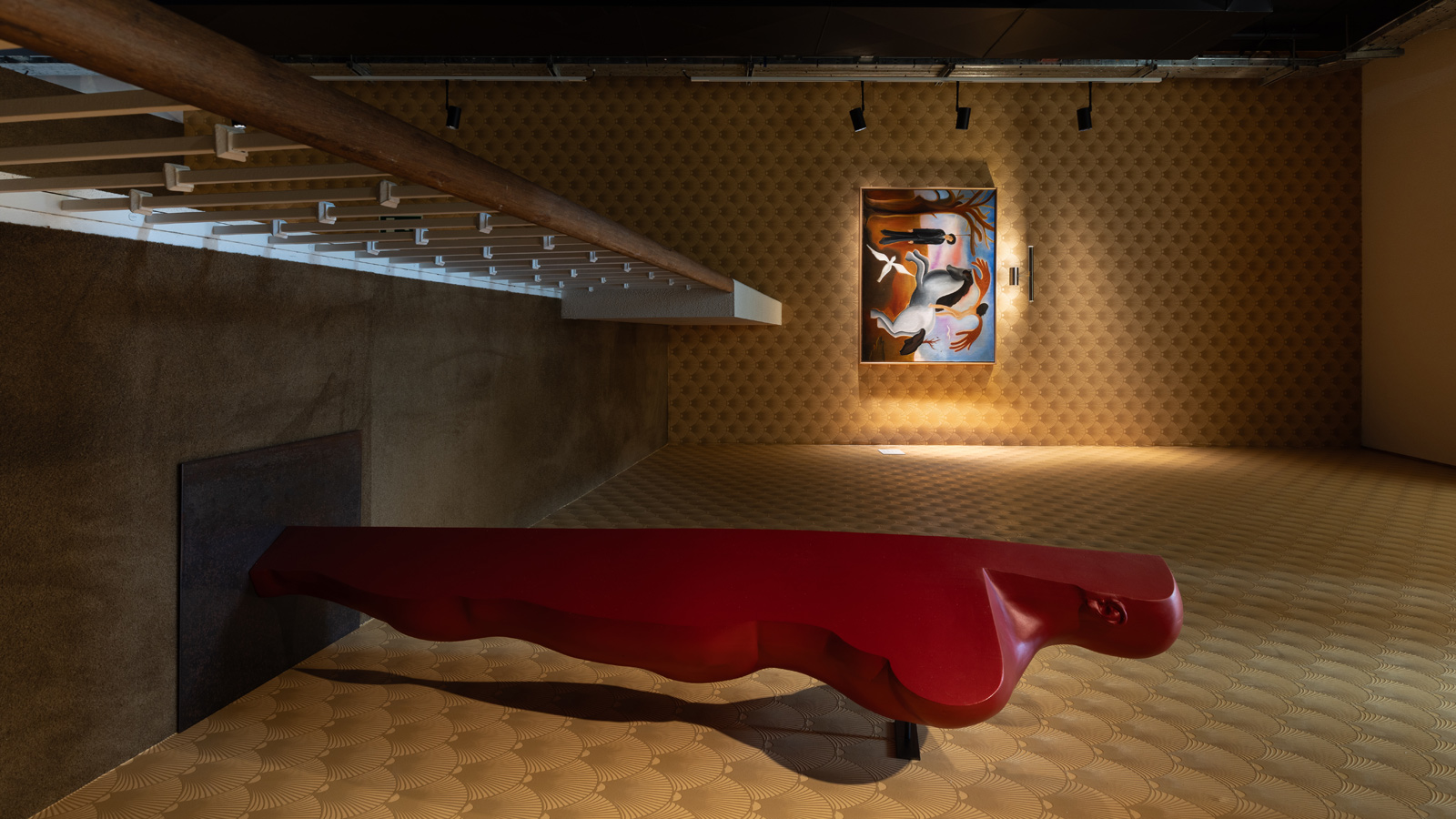
In this puzzle that is the scenography, all the pieces are forced to exist on the same horizontal plane, with no clear hierarchy.
‘The project’s simplicity means that everything that holds power loses it. Everything that’s amusing becomes relevant. Everything that’s fun becomes strange. There are no final conclusions. We’re left only with a sense that something is wrong – but it’s a wrongness that knows it has answers, and we can look for them if we want to.’
— Bruno Zhu
The conversation inevitably turns to what is perhaps the most personal issue surrounding the exhibition. Bruno Zhu is returning to Portugal with a solo exhibition at one of the country’s most important art centres, after an experience that marked him deeply. At a dinner in Lisbon, a colleague stated – in his presence – that the artist had succeeded in the art world because the people giving him opportunities saw him as a ‘xinoca’ (a derogatory Portuguese term for someone of East Asian appearance), and that this gave him value at a moment when identity politics were in fashion.
Almost a decade later, Zhu returns with an exhibition in which, deliberately, there is no work of his own. ‘There’s no work by Bruno Zhu in the gallery. We’ve made that clear: it’s a scenography by Bruno Zhu using works from the collection. Bruno Zhu is credited with the exhibition as a solo show more for bureaucratic reasons. Just as CAM is a brand, Bruno here also operates as a brand. He appears, provides a service, is paid for it, and we move on. I refuse to be an artist in a landscape where potential peers look at me only through the lens of the racialised art I’m presumed to represent.’
This refusal is not defeatist, however. It is political in the most literal sense. ‘The artist who succeeds in not being defined – that’s the truly political artist. Life is political. We have to be able to define what it means not to be defined. That’s the victory of being political: being able to define how we want our life to be, how we relate to the community, and not allow ourselves to be manipulated by narratives that may define certain aspects of us, but aren’t part of who we are.’
Alongside the exhibition, the artist is preparing the second volume of the ‘Fiction Non-Fiction’ series, an anthology of academic and literary-critical texts engaging with post-colonial thought. The first volume, dedicated to the notion of space as territory – from a fantastical island to subsistence agriculture – was produced as part of the same package conceived for Chisenhale Gallery. ‘I approached the book not as a form of expression, but as a resource. I use the institutional brand, and also the artist’s brand, as a platform to present knowledge that isn’t mine – I’m just a starting point.’
The second volume, scheduled for release on International Museum Day, focuses on the role of clothing and dress in colonial planning over the centuries. The series is divided into two parts precisely to question this boundary: ‘The fiction of Empire is also a fiction. But these are fictions that aren’t treated as fictions – they’re reality, in quotation marks.’ The volumes are produced modestly so that they remain accessible. ‘It’s an invitation for the reader to think and go deeper. The texts include bibliographies that anyone can consult.’
When ‘Belas Artes’ closes at CAM, the immediate challenge will be a material one: what to do with the scenography. ‘Institutions today are very concerned with sustainability, and my scenography involves a huge amount of materials. Dismantling is something rarely discussed – it’s not very sexy and no one cares – but in a project like this it’s essential.’ CAM has a protocol on ecological footprint, and the next step will be to find an appropriate destination for those materials.
What remains, for now, is an exhibition that refuses to be merely an exhibition and takes on other forms. It is contract, manifesto, museological research, archive – and, above all, an open question about who has the power to name things, and what happens when someone decides not to name themselves.
BANTUMEN at Gulbenkian
Explore the series







No results were found for your criteria.
You may also like
No results were found for your criteria.