
‘Desenho Habitado’, by Helena Almeida
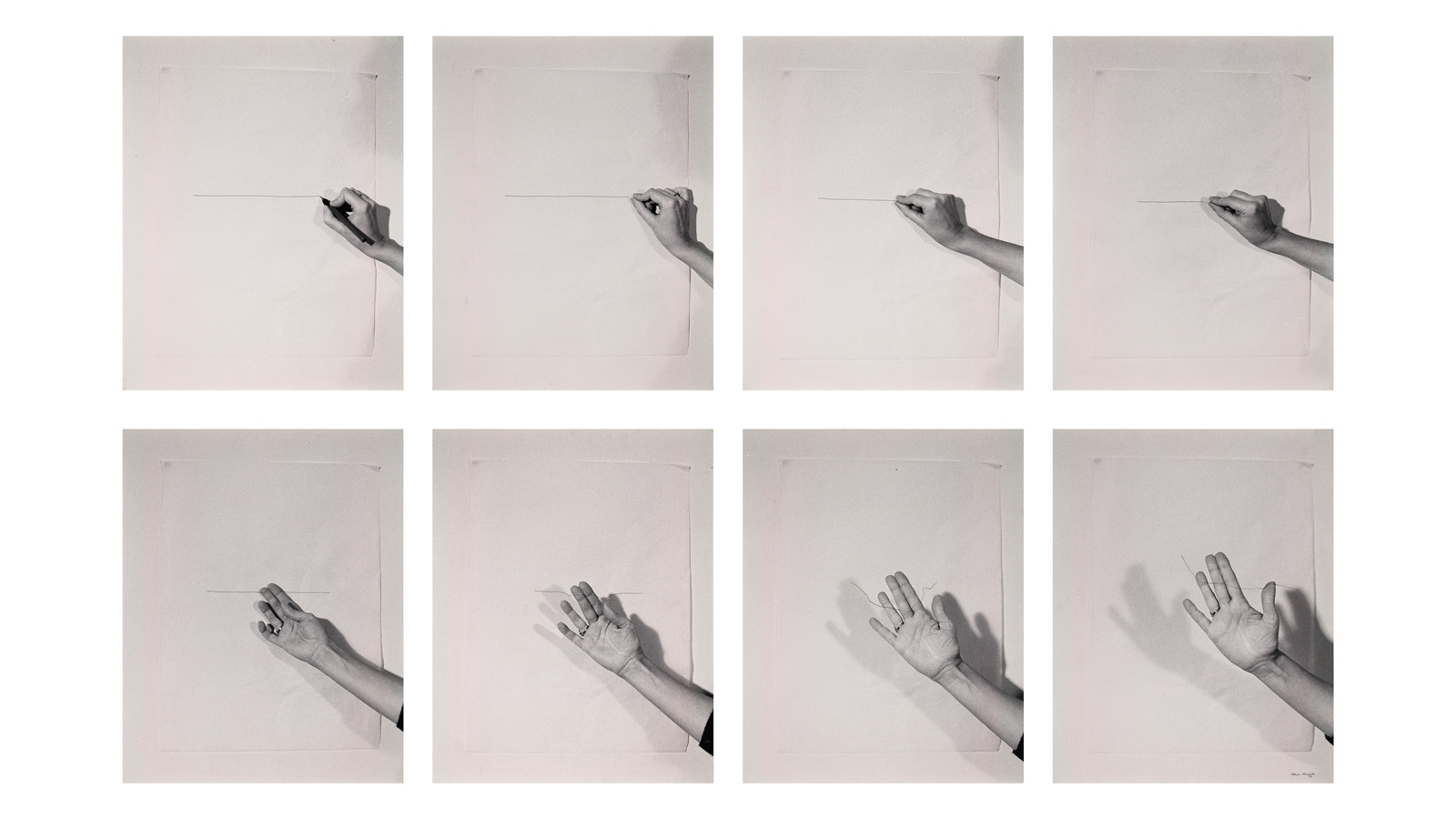
During the 1970s in Portugal, Helena Almeida’s (1934–2018) practice emerged against a backdrop in which female artists were subject to constraints and forms of invisibility. This environment shaped–though not always overtly–the body of work produced by Helena Almeida.
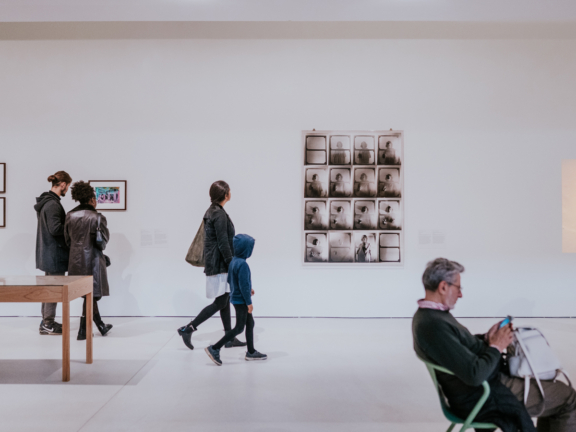
In ‘Desenho Habitado’ [Inhabited Drawing] (1977), the boundary between drawing, photography, and action dissolves. Rather than merely depicting the body, the artist integrates it as an active element within the composition. Movement thus functions as a visual extension of the work. The image does not result solely from the line; it also emerges from the act of making itself.
Throughout her career, Helena Almeida questioned the physical and symbolic limits of space. In this body of work, the body inhabits the frame, even as it contests it, as if challenging its own boundaries. The line ceases to be merely a mark on the surface; it gains rhythm, pressure, and effort as it asserts a position within it.
There is an ambiguous relationship between restraint and freedom in the work. Fragments of the artist’s body appear in their place, at times visible, at times almost absent. Far from following fixed rules, the line acts as constant movement. Instead of presenting a finished image, Helena Almeida reveals drawing as a living gesture–marked by persistence, tension, and an encounter with the space in which it is inscribed. At every moment, something resists, persists, and occupies.
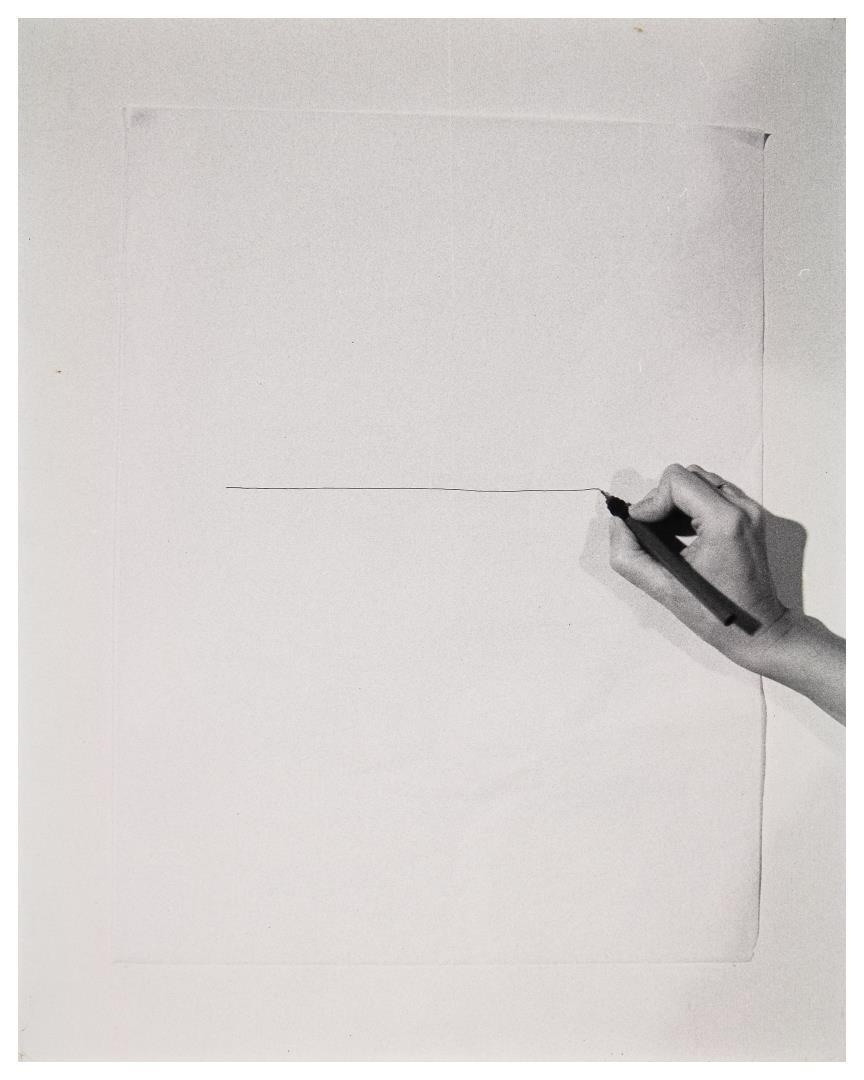
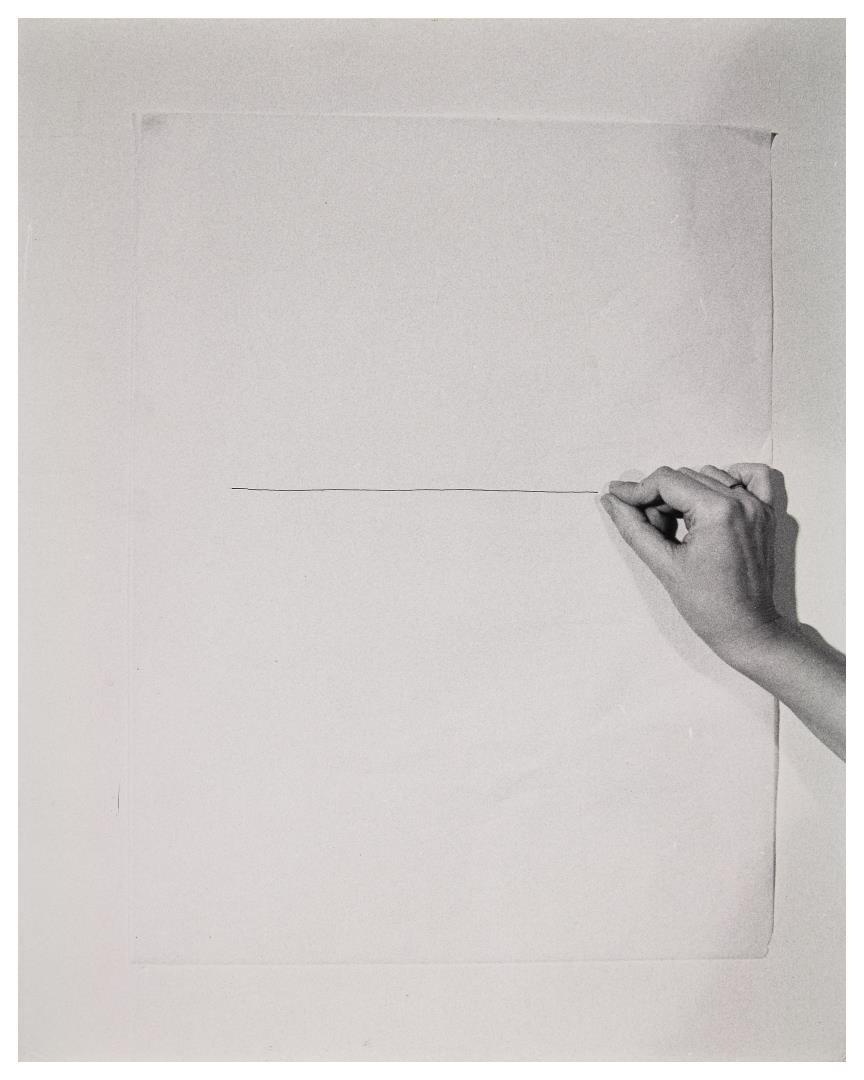
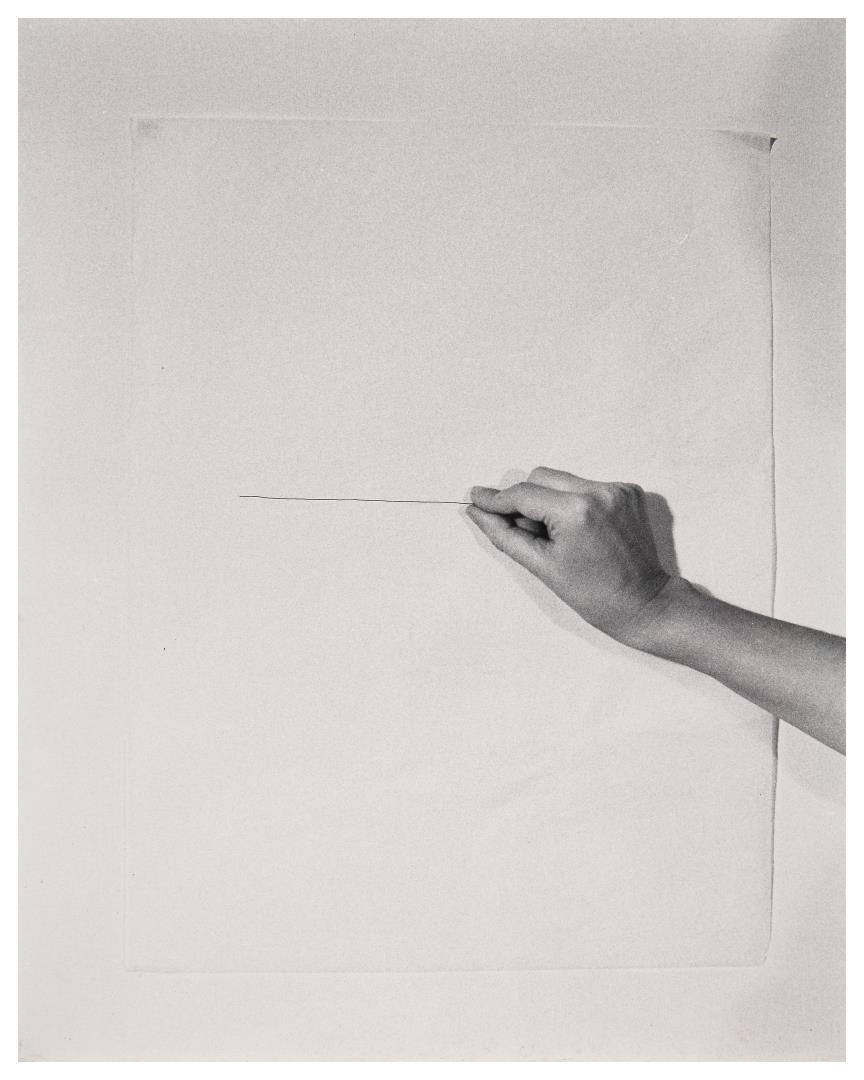
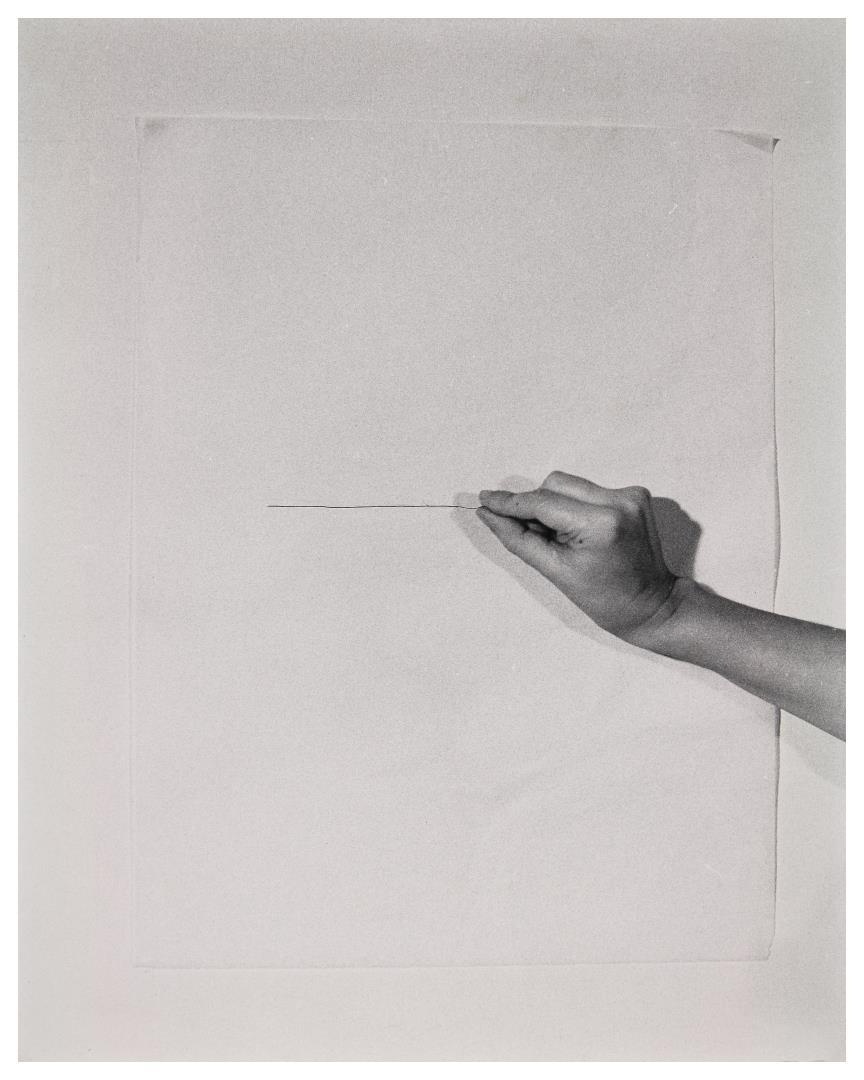
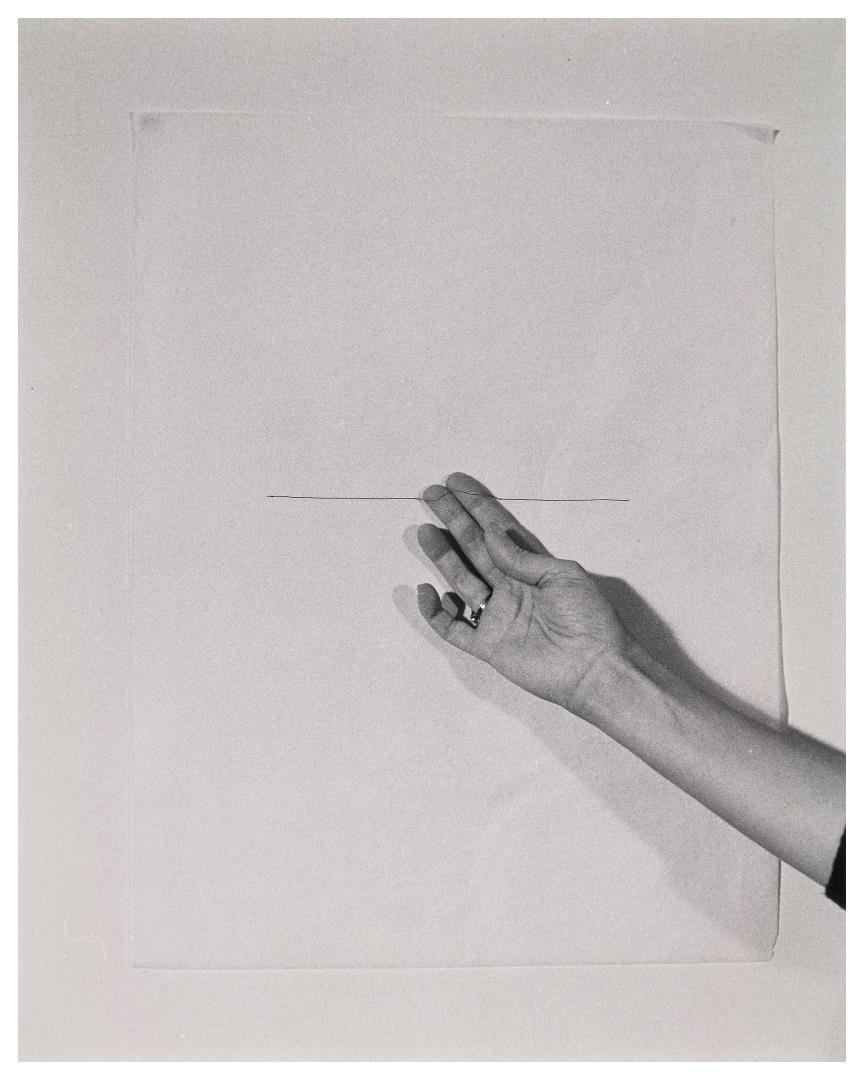
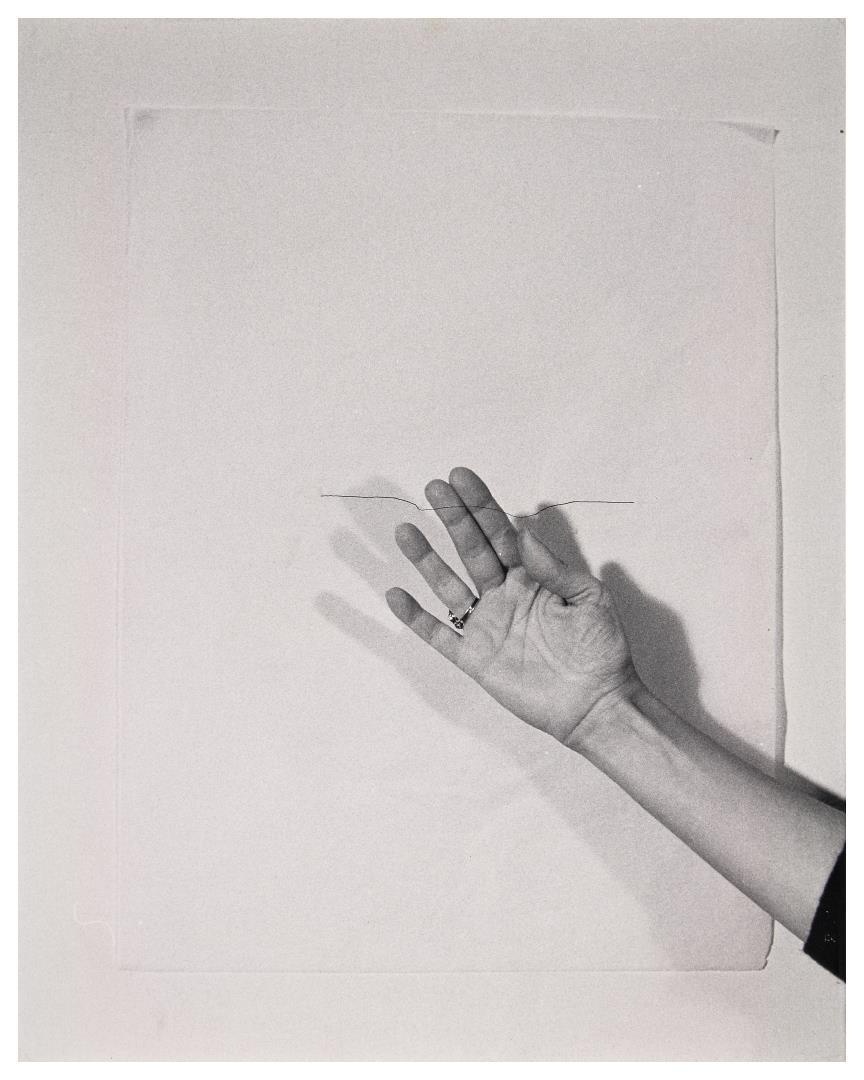
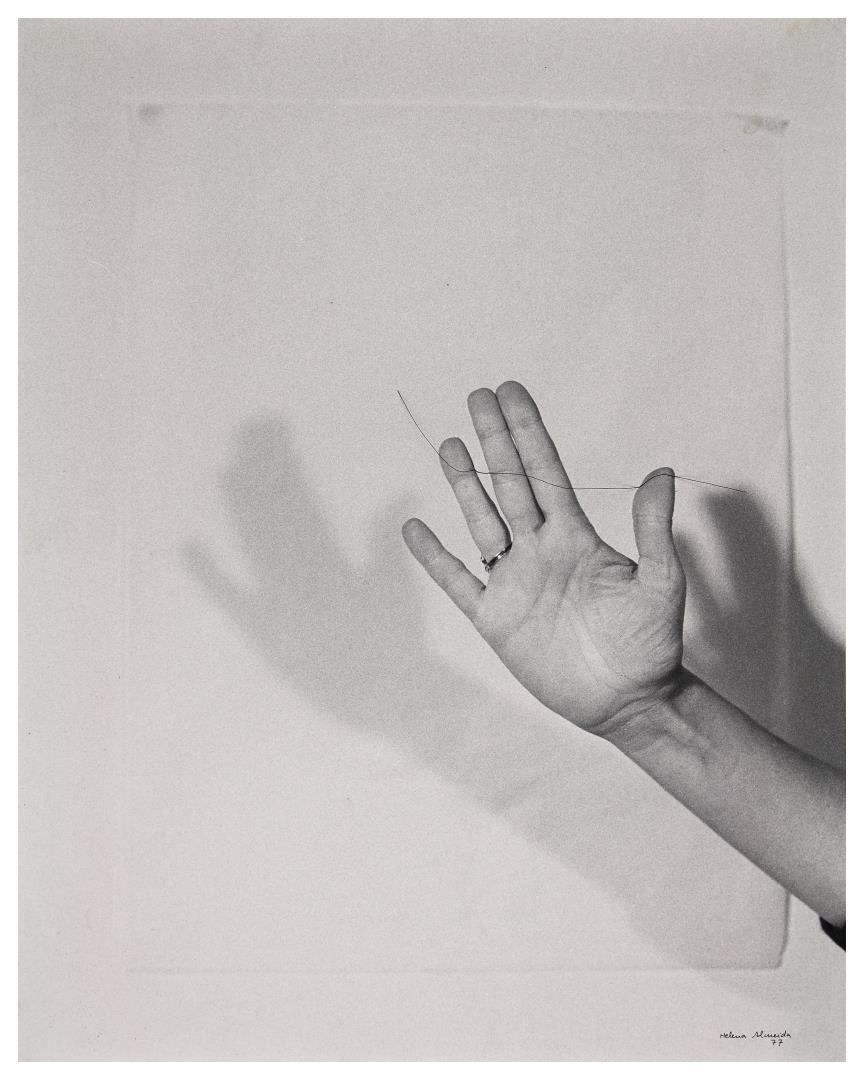
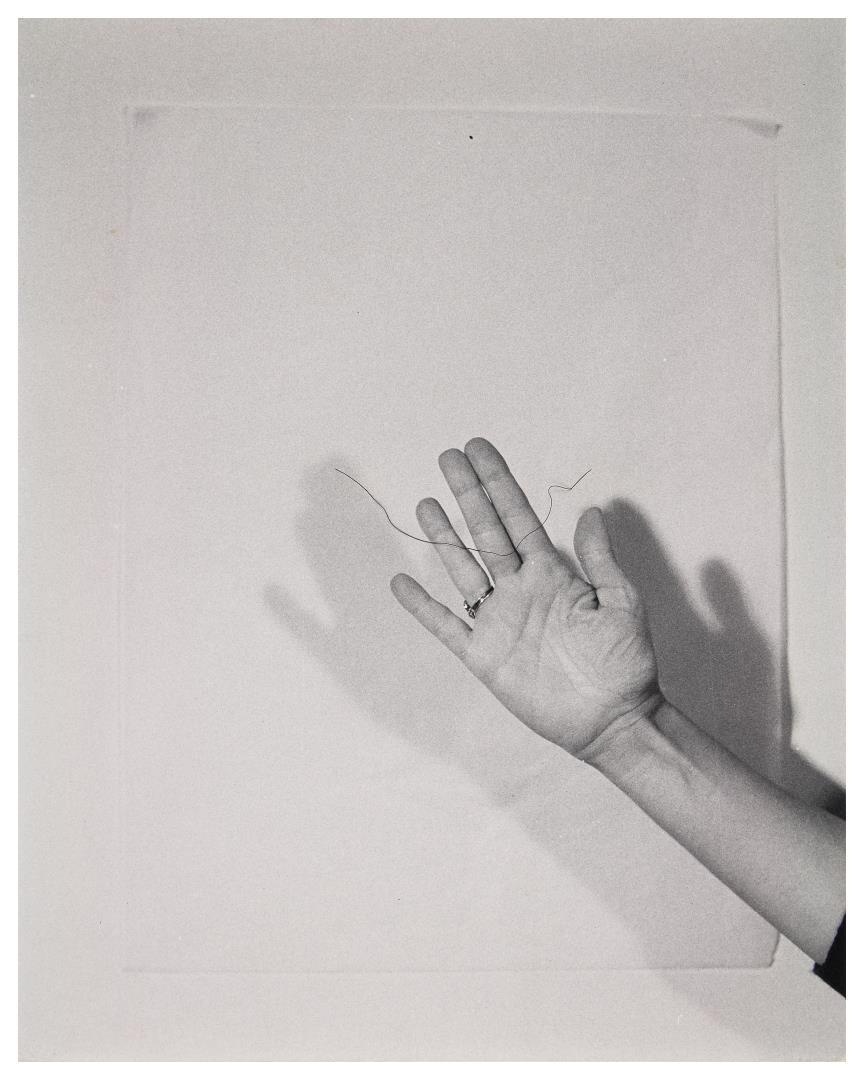
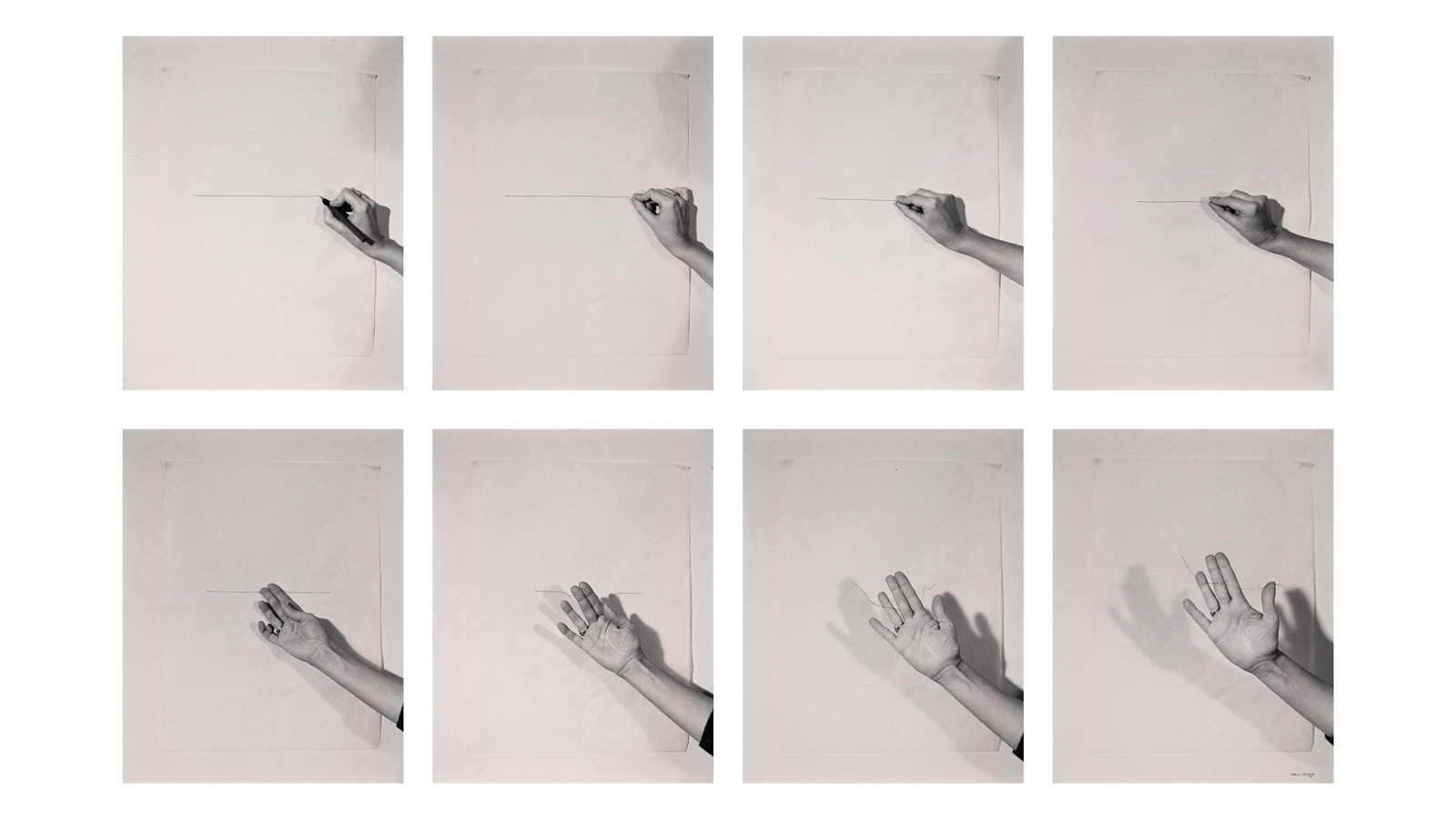
The image thus emerges as the mark of a staged moment. It is not merely a photographic sequence; rather, it reveals the trace of something done before, of someone who sought to fill the figure beyond the plane on which it exists. In each frame, a silent struggle persists–sometimes appearing, sometimes disappearing, sometimes dominating, sometimes yielding. The scene hovers between revealing and concealing, between lingering and passing.
As in the artist’s other works, ‘Desenho Habitado’ eludes any fixed interpretation. Instead of presenting the body as an immutable form, it reveals it in constant flux–always searching, never still. Between line, place, and substance, the piece maintains a subtle tension. It is through this movement that the drawing comes to be felt, rather than merely seen.
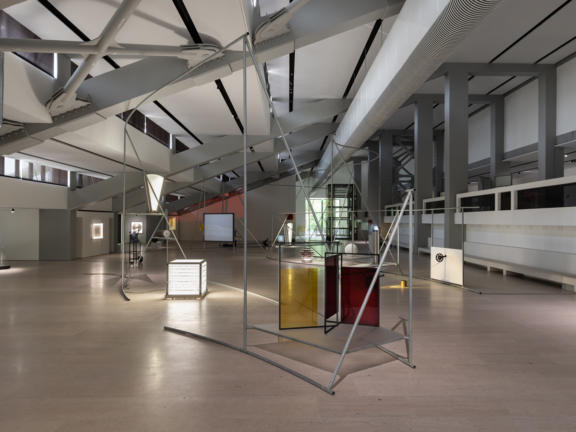
The inclusion of this photographic sequence in the exhibition ‘Rosa Barba. Drawing Vocabularies‘, presented in the Mezzanine space, highlights one of the lines of thought that runs through Rosa Barba’s curatorial practice: an attention to language, to the inscription of the body, and to ways of revealing the invisible.
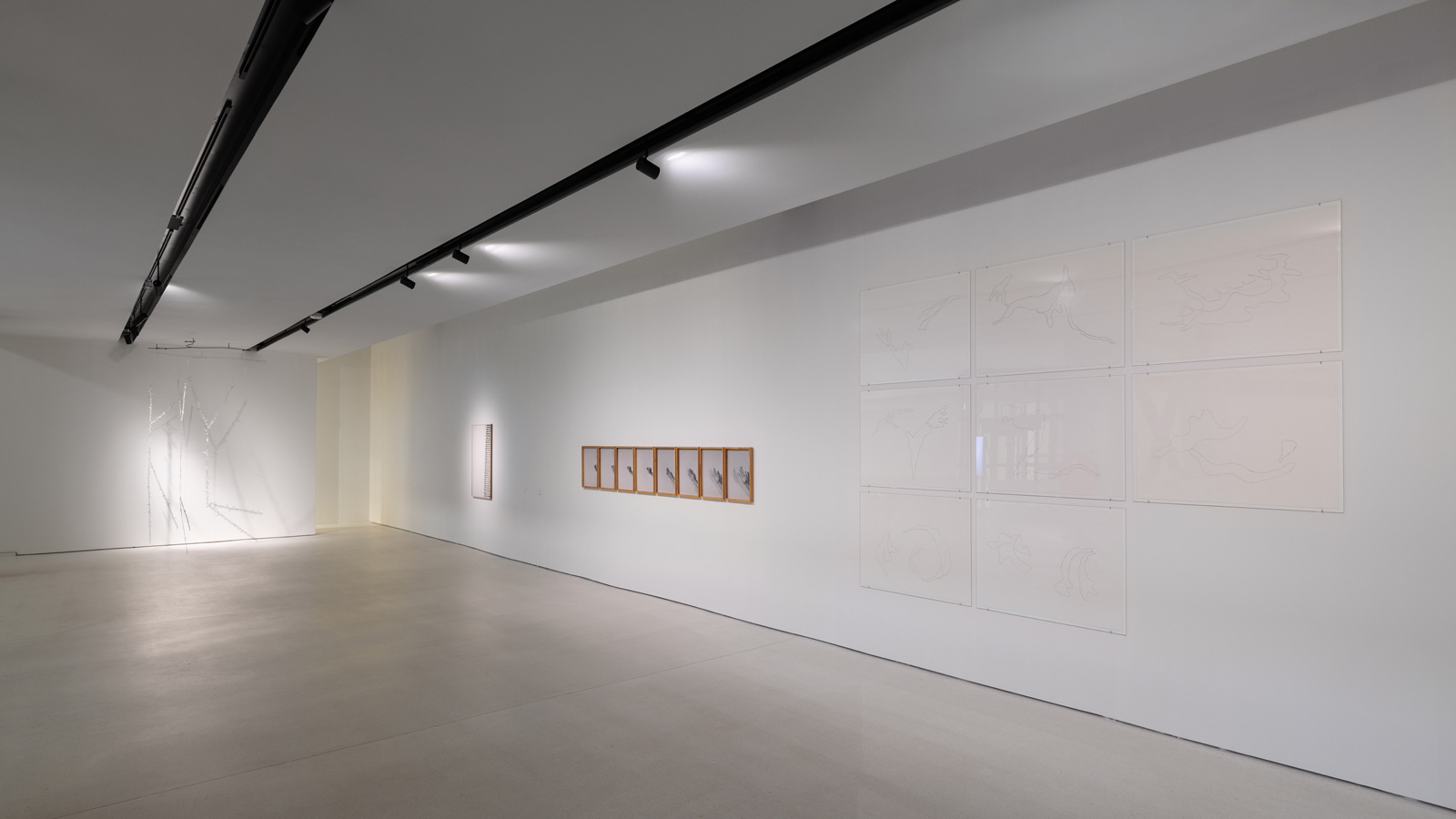
Instead of separating times or names, Rosa Barba interweaves various pieces, creating tense dialogues between words, movements, gestures, and images. Thus, the piece reveals what normally remains hidden–the tenuous transition between being there and having already left. In this way, the work reinforces one of the exhibition’s central themes: the way in which body, image, and language construct meaning through the relationships they establish with one another.
Time in the work does not move forward linearly; it coils in on itself, pulled by the weight of repeated gestures. Each photograph seems to hesitate before settling into place, as if refusing to become a monument. In the background, almost without warning, the curatorial concept resonates: nothing here is static; everything converses for as long as it lasts.
Works from the CAM Collection
Explore the series



No results were found for your criteria.
You may also like
No results were found for your criteria.