
‘Maria’ and ‘Delmina’, by Graça Morais
Born in Vieiro, Trás-os-Montes, painter Graça Morais has nature as part of her. Linked to her roots, to the rituals of the countryside, to the people and animals that are part of it, the artist paints what she sees without ever failing to transfigure reality. She recaptures memories, childhood images, the magic and mystery of the ancient wisdom of rural places.
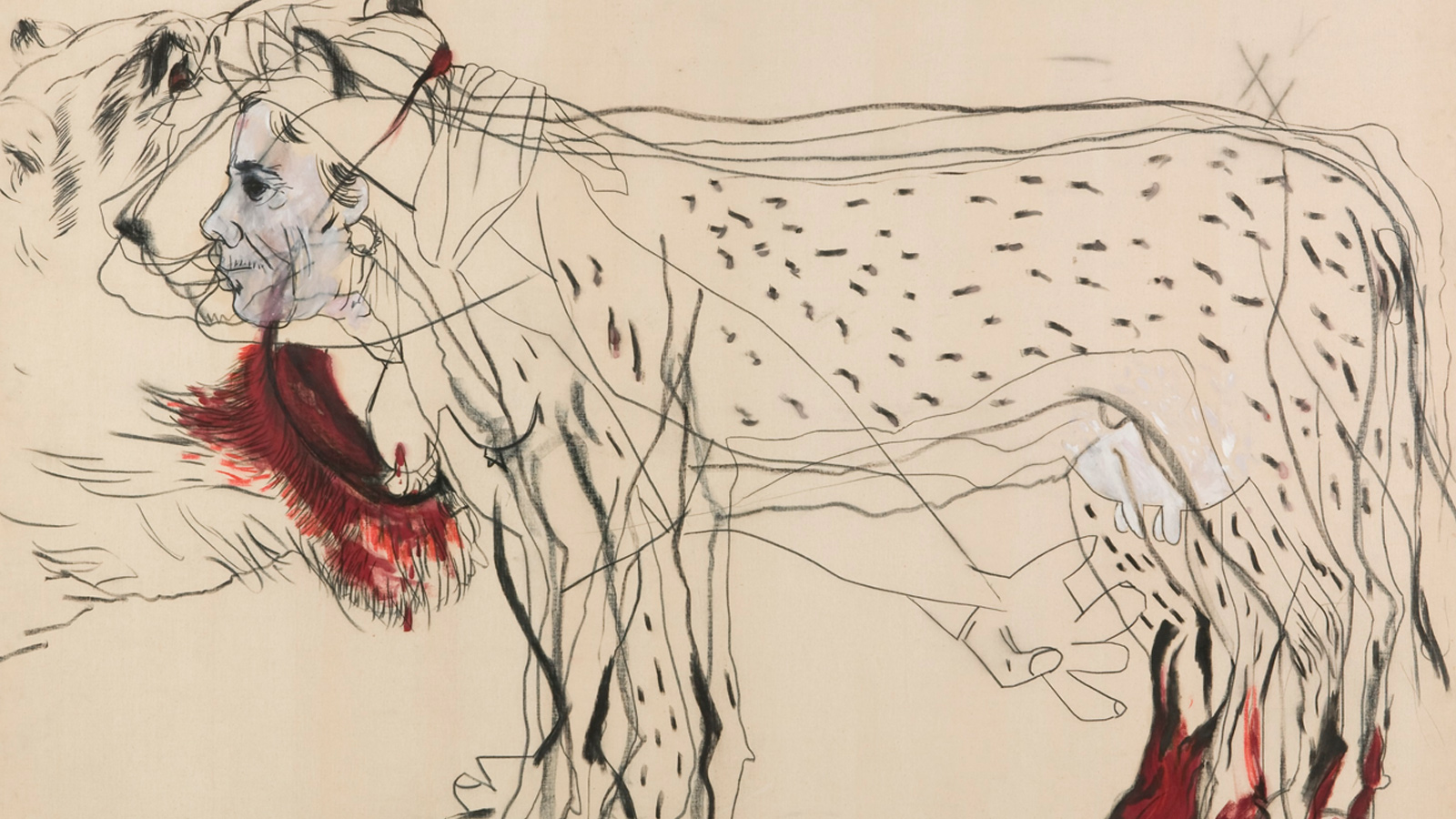
Women are a central theme in her work, and they are the protagonists of the two paintings recently acquired by CAM: ‘Maria’ (1982) and ‘Delmina’ (1982). Both compositions have a woman and an animal overlapping at their centre. The lines of the human body blend with the physiognomy of the animal, like two compatible bodies that look at and perhaps recognise each other. There is a familiarity between the two beings, as if they were the same divided body.
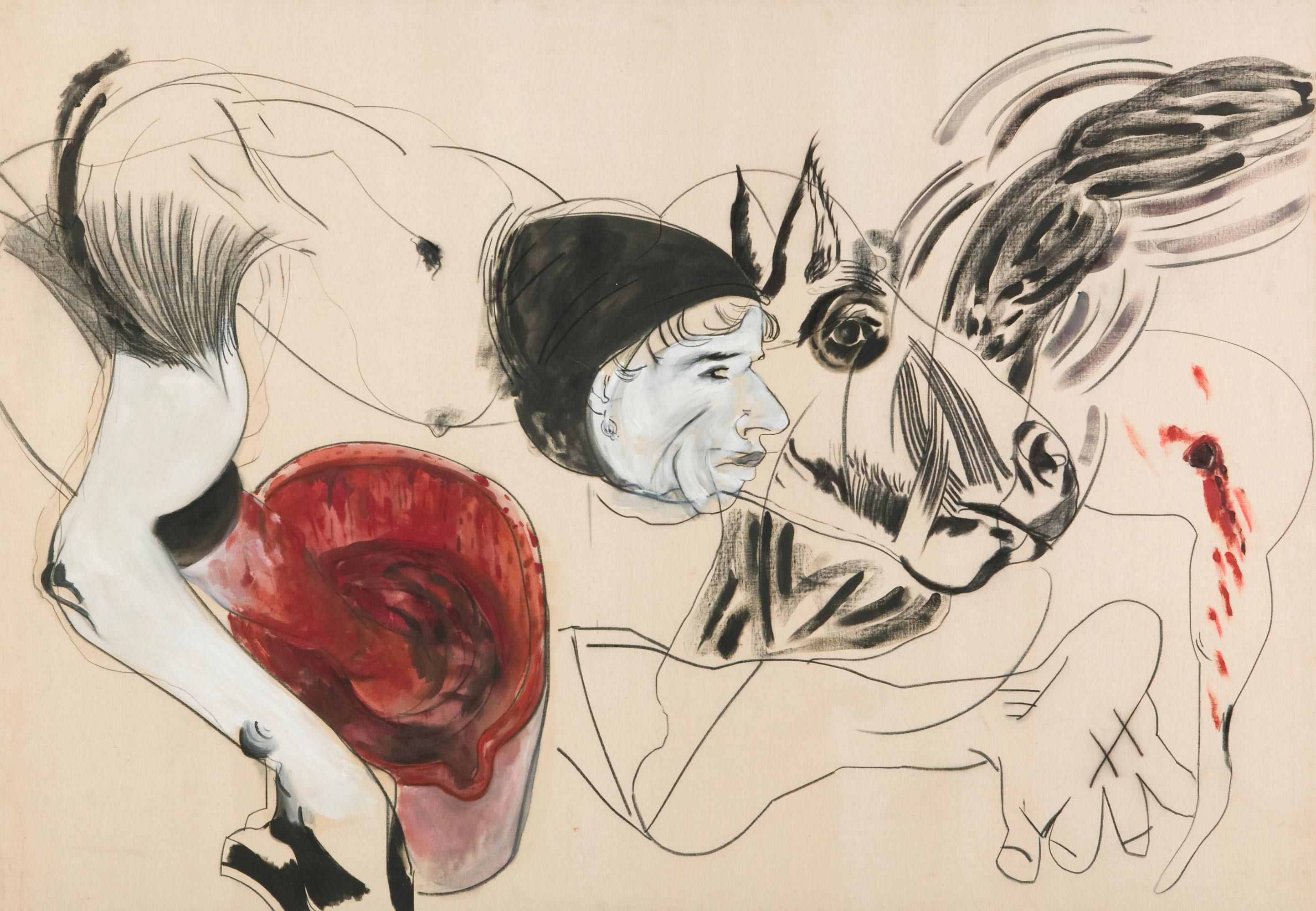
The red stains that appear in both paintings evoke blood and violence. In ‘Delmina’, a round patch on the animal’s leg suggests a gunshot wound, a possible shared pain. In ‘Maria’, there is a more obvious tension between the female figure and the animal world. To the left of the composition, the head of another animal, its mouth open, advances on the female figure’s face as if to swallow her. It is unclear whether the threat is real or symbolic, but it is a gesture suspended in time that neither materialises nor resolves, creating a sense of foreboding.
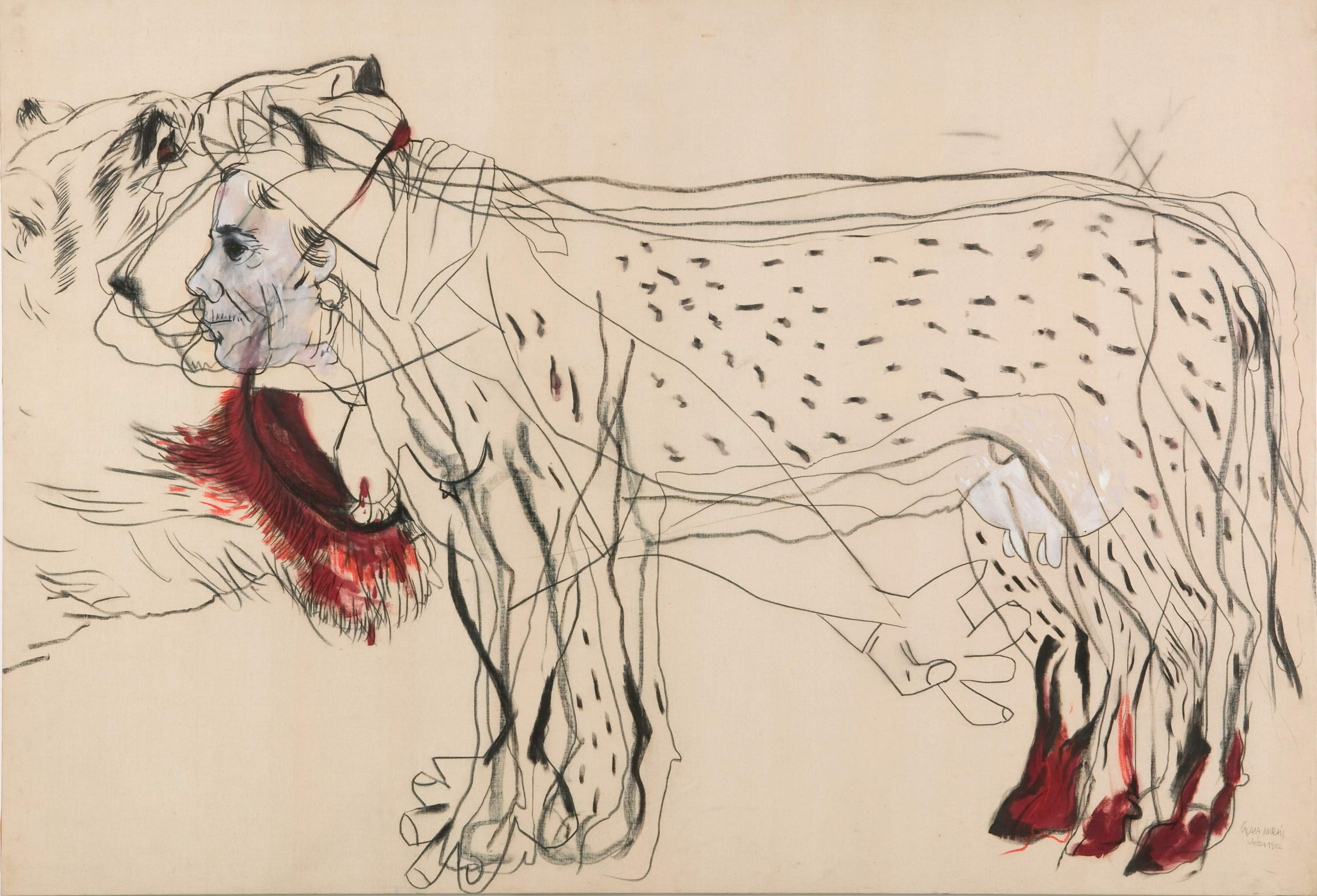
Red, present in both works, summons up the sacredness of everyday life and the cycles of life: pain, labour, childbirth, death. To suggest a similarity between woman and animal is to expose the violence to which both are subjected and to emphasise the continuity between the female body, the connection to instinct, survival and ancestral knowledge of nature.
The two figures have names which give the works their titles: ‘Maria’ and ‘Delmina’. They are not symbols or archetypes, but concrete women with their own particularities, weathered features, an attentive gaze. The faces, as places of expression and memory, are the areas of greatest definition in the compositions, with a sharpness that becomes an act of recognition and the anchor point of the painting. To name them is to establish their presence in the world and to contest the anonymity of so many rural women. Their identities persist even when their bodies are diluted in the landscape or merge, in metamorphosis, with the animal.
Graça Morais wants the viewer to enter the imaginary of the rural world, proposing an attentive listening to the invisible quality that runs through life in the countryside. The figures she paints are real presences, moulded by a daily life marked by work, proximity to nature and silent forms of resistance. ‘Maria’ and ‘Delmina’ thus open up readings on gender, territory and memory.
Works from the CAM Collection
Explore the series



No results were found for your criteria.
You may also like


No results were found for your criteria.