
Manuel Botelho and the series ‘Confidencial/Desclassificado’
Manuel Botelho, a long-time painter and draughtsman, switched to photography in 2006, a change of medium that allowed a more immediate and tangible relationship with the central issues of his artistic career: conflict, memory and self-representation. Botelho maintains, however, a visual language in dialogue with the tradition of painting in its poses and compositions.
In the series of photographs ‘Confidencial/Desclassificado’, Manuel Botelho re-signifies a period collectively repressed in Portugal, the Colonial War, one of the most traumatic periods in the country’s contemporary history. The artist adopts a performative and symbolic process by embodying the figure of the soldier himself. Through staging, Botelho transfigures his identity to represent a collective trauma, exploring the issues of war beyond its historical representation.
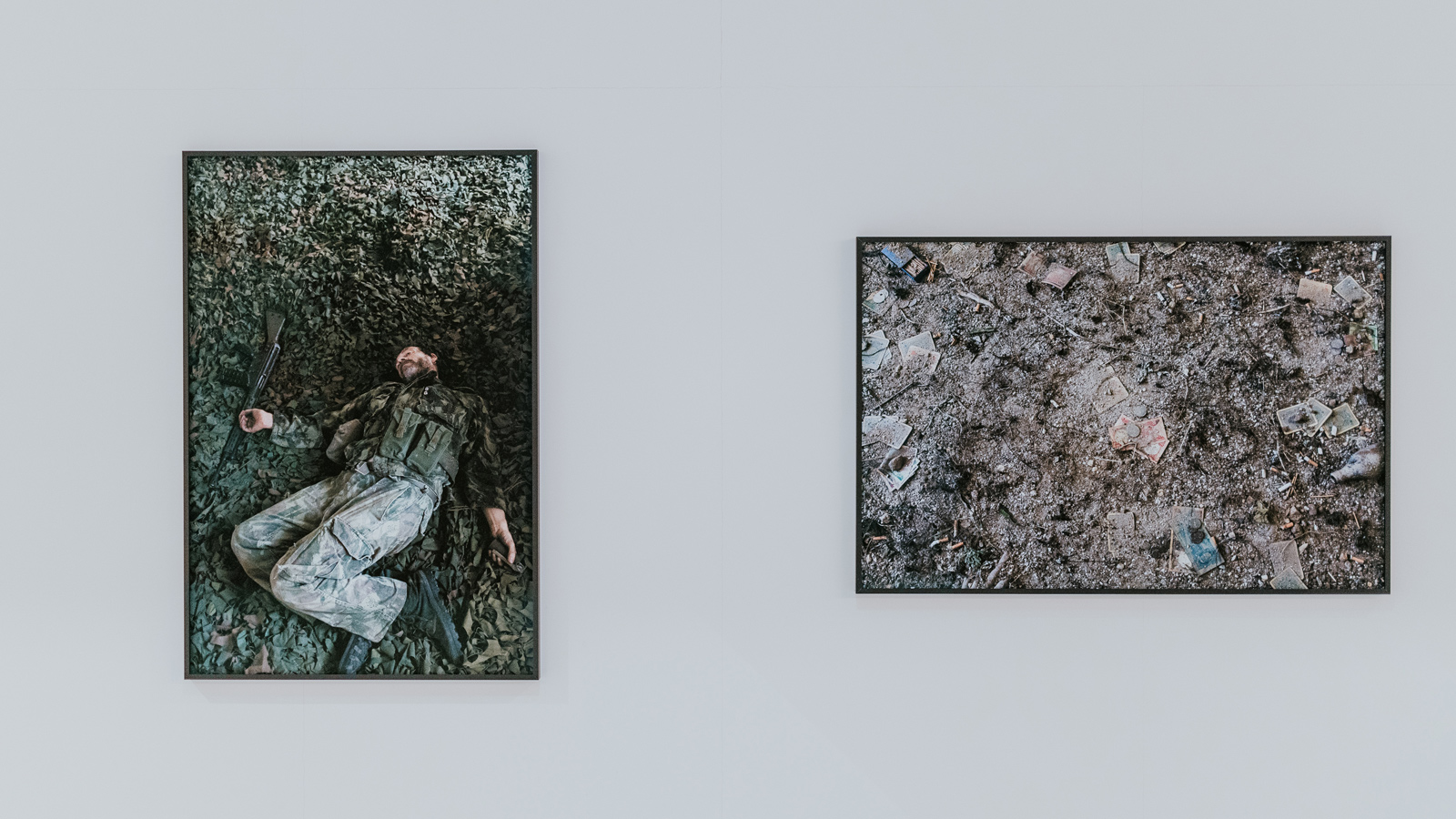
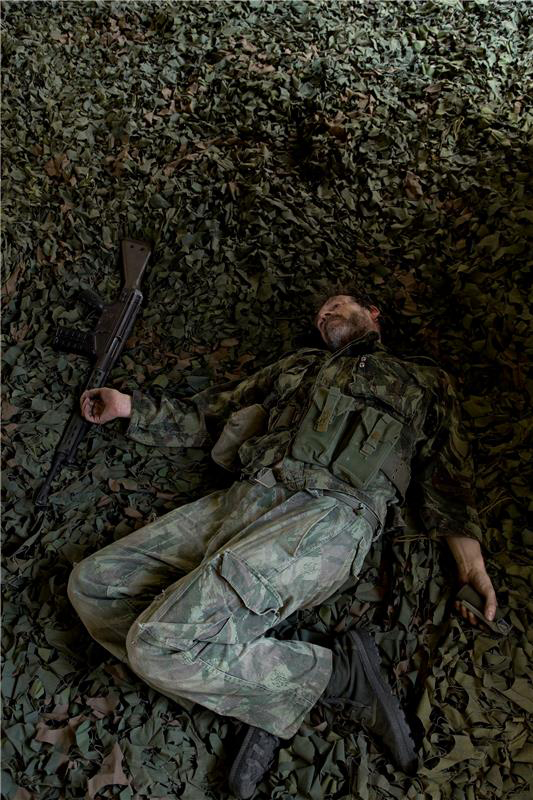
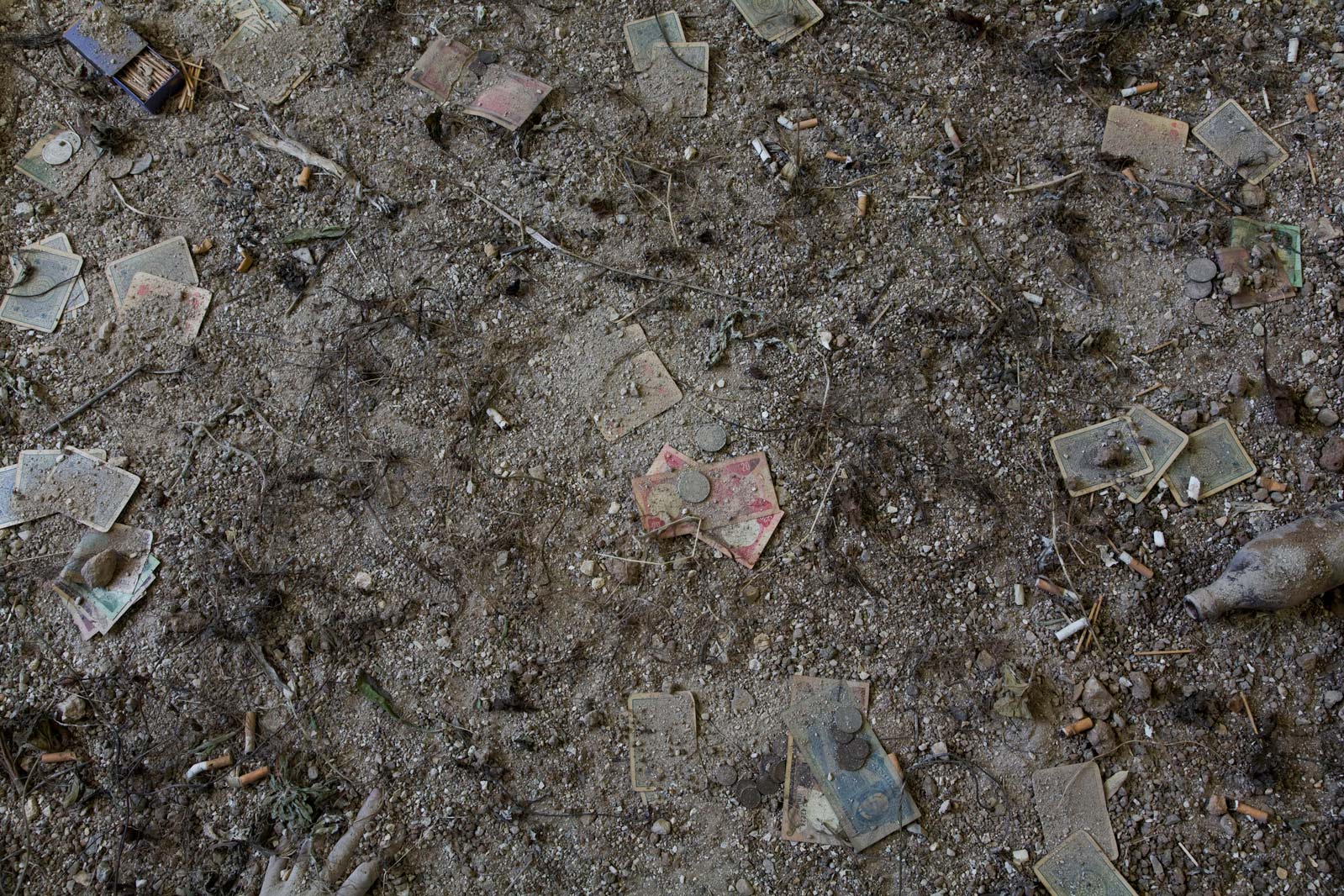
Two photographs from this series, presented in the exhibition ‘Tide Line. CAM Collection‘, are representative of the two sections that cut across the project. One, called ‘Emboscada’ [Ambush], explores direct violence, the imminence of death and the fragility of the body in situations of direct confrontation. The other, ‘Ração de combate’ [Combat Ration], deals with the material and symbolic traces of the conflict, exploring the destruction that permeates the daily lives of those who take part in it.
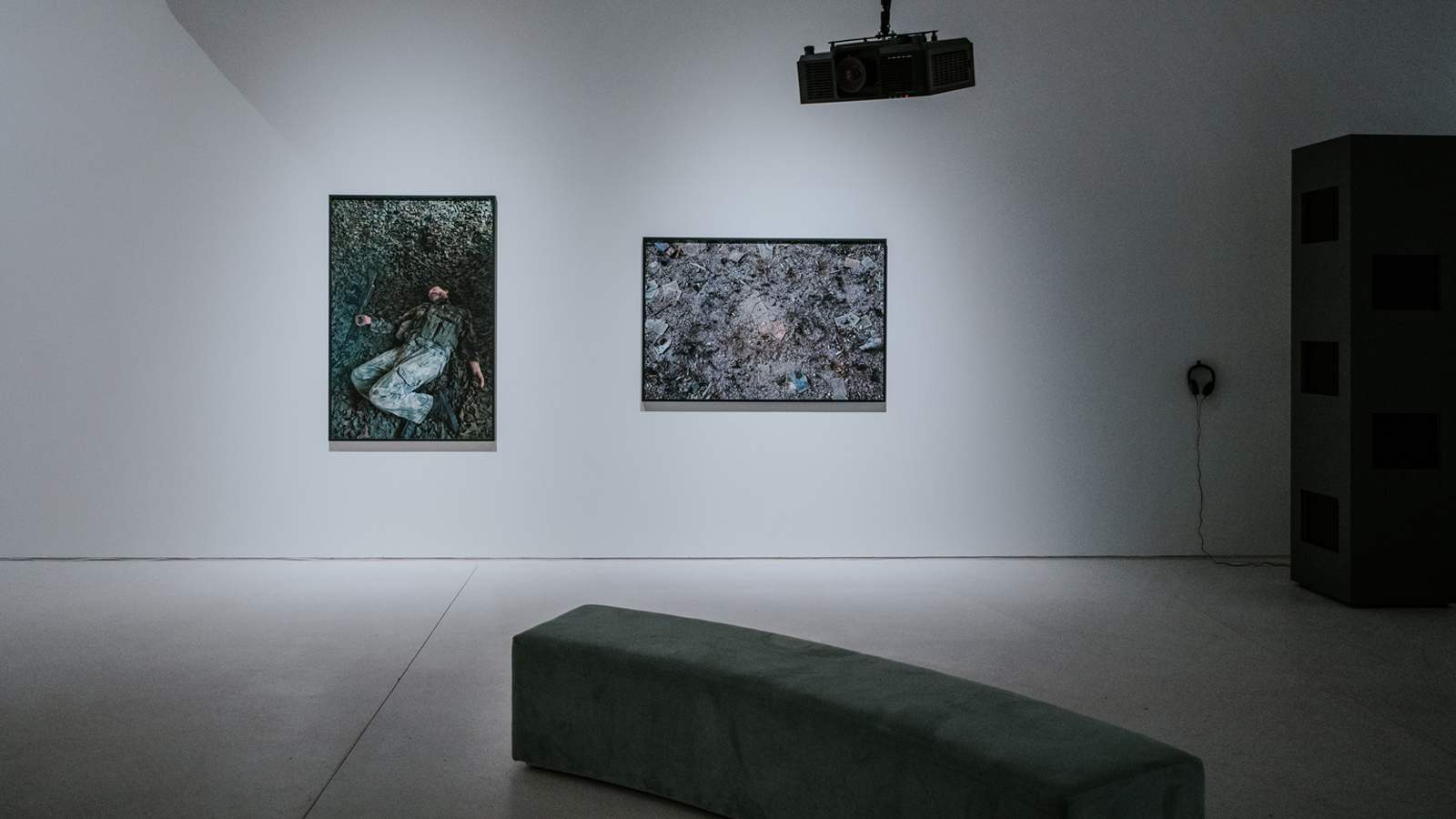
A fallen body with a gun next to it is an image that alludes directly to violence and death. In ‘83. embs‘, the pose of the body, together with its performative nature, reconstructs a memory of the past through contemporary visual language, evoking and updating the collective imagination around a historical event. The past is strangely present in this photograph.
In the image of arid, dirty soil, covered with traces of human activity, we discover remnants of the past and interrupted stories. In photograph ‘98.rç-cmb‘, abandoned objects (packs of cards, coins, cigarettes and bottles) allude to military routine and a life suspended by war. However, it is the almost imperceptible hand, appearing on the edge of the image, that confirms the definitive absence of the body, of life. Here, war persists both in the objects and in the absences they evoke.
The series presents a set of staged and meticulously constructed images, summoning the viewer to a direct confrontation with violence, death and trauma, revealing the hidden experiences of those who fought in the conflict. What was previously confidential and censored becomes visible, unveiling memories that have been repressed or erased by the official narrative. Throughout ‘Confidencial/Desclassificado’, Manuel Botelho questions the mechanisms through which the war is represented, remembered or forgotten. The duality between the real and the fictional, the documentary and the performative, offers a reflection on the nature of memory, images and history.
In Manuel Botelho’s work, staging the war is an act of resistance against oblivion, a political gesture that challenges the structures of silence and critically questions the place of war in the contemporary imagination.
Works from the CAM Collection
Explore the series


No results were found for your criteria.
You may also like

No results were found for your criteria.