
The culture that holds the gaze
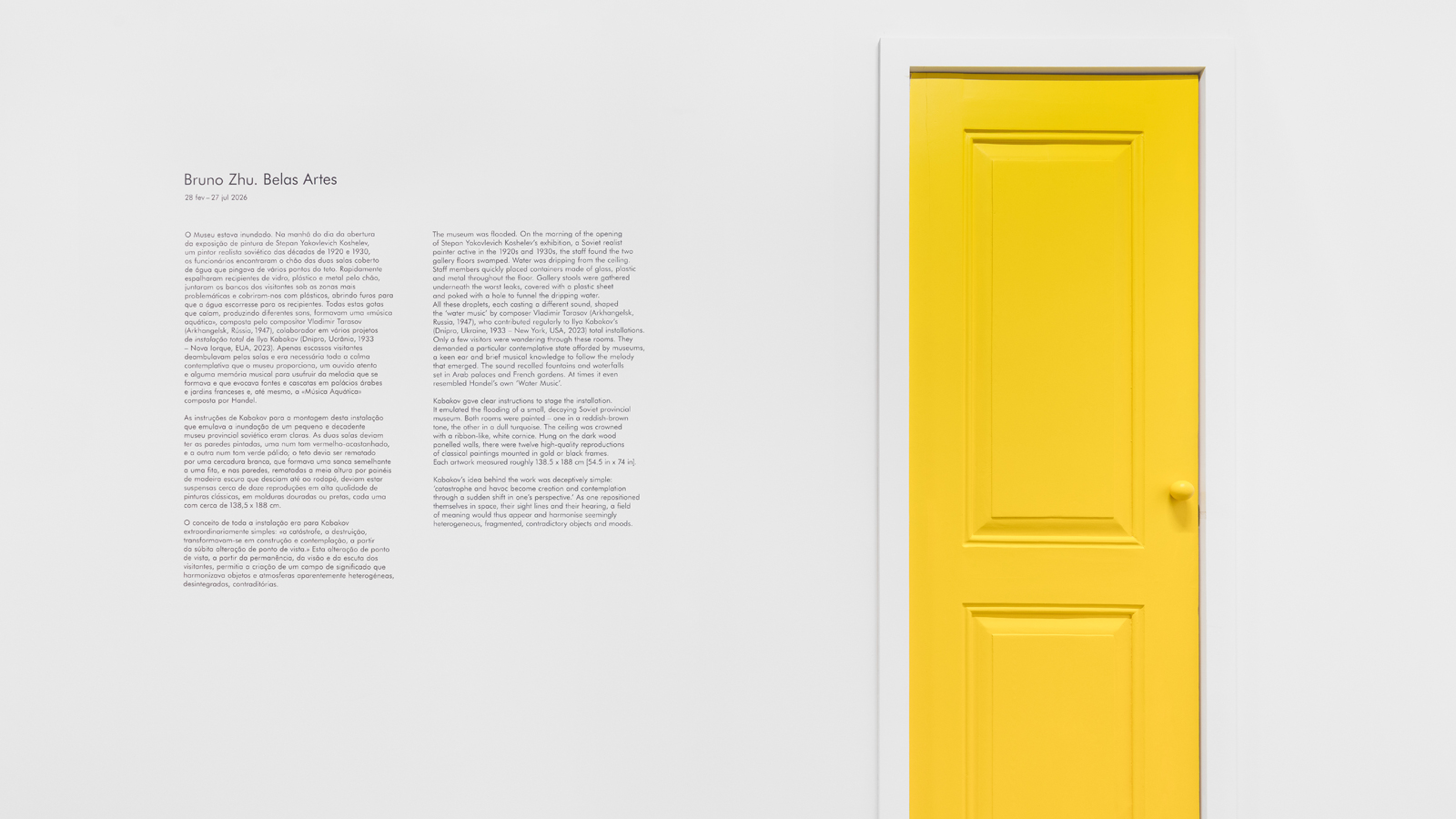
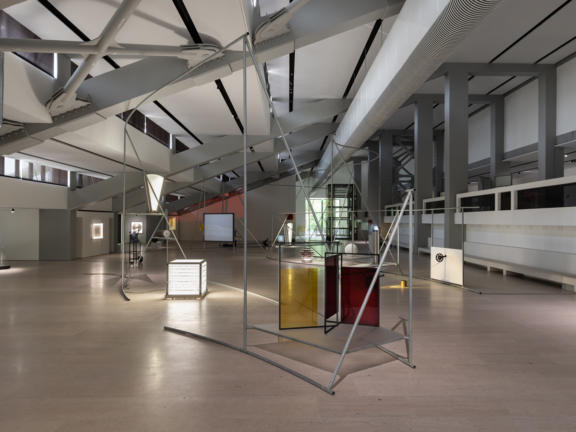
I recently visited Bruno Zhu’s exhibition ‘Belas Artes’, on display at CAM – Centro de Arte Moderna Gulbenkian, a visually stimulating offering that directly questions museological practice itself, with a palette of intentionally eye-catching colours.
I entered the space with a sense of curiosity, and some reserve, not knowing for certain what awaited me. I like visiting exhibitions because they invariably force me to look inside myself. For a long time, I didn’t think of art as something capable of questioning or demystifying. Today, I realise that even the most simple gesture can carry multiple meanings, depending on the way we place ourselves in front of it.
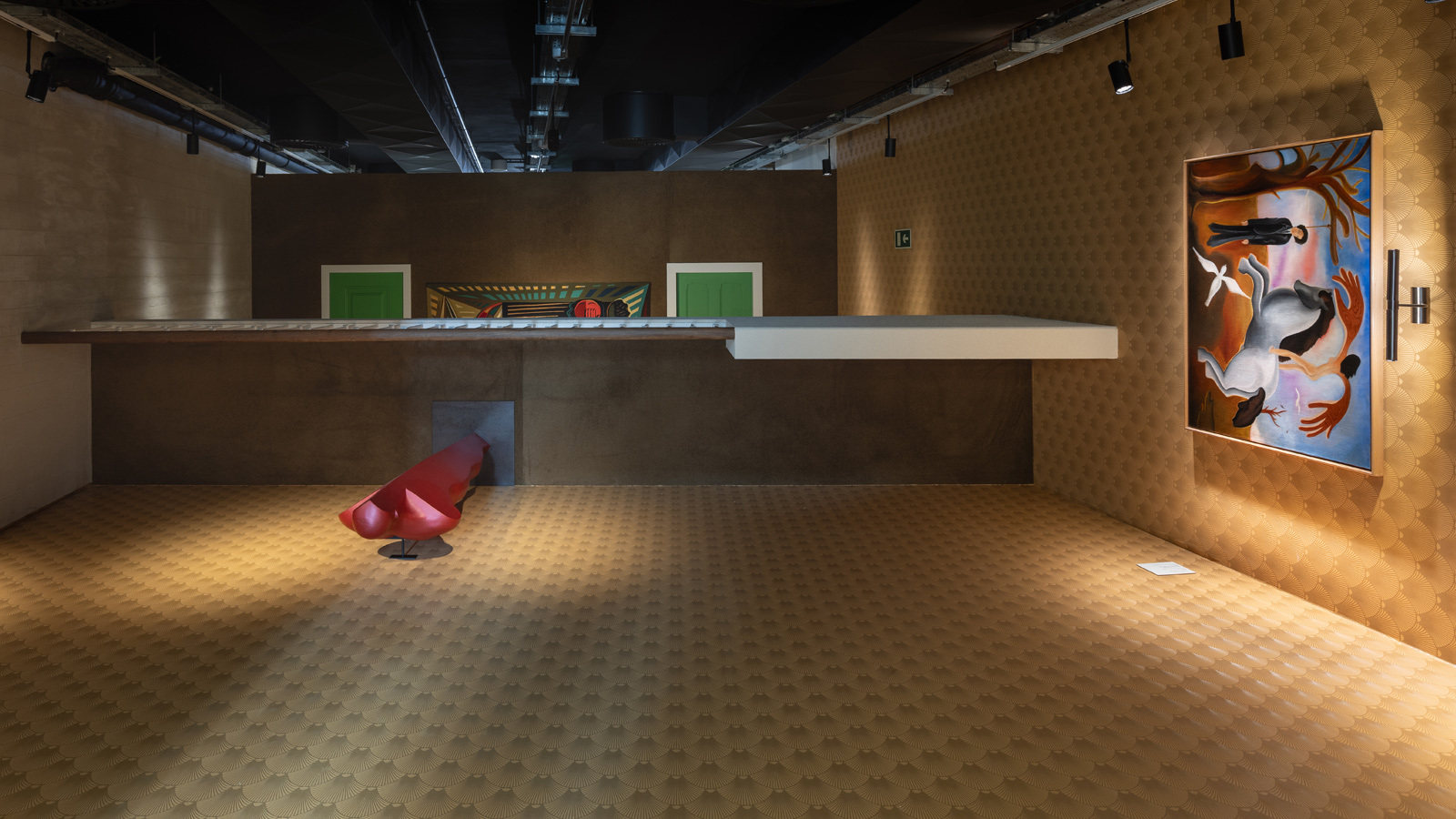
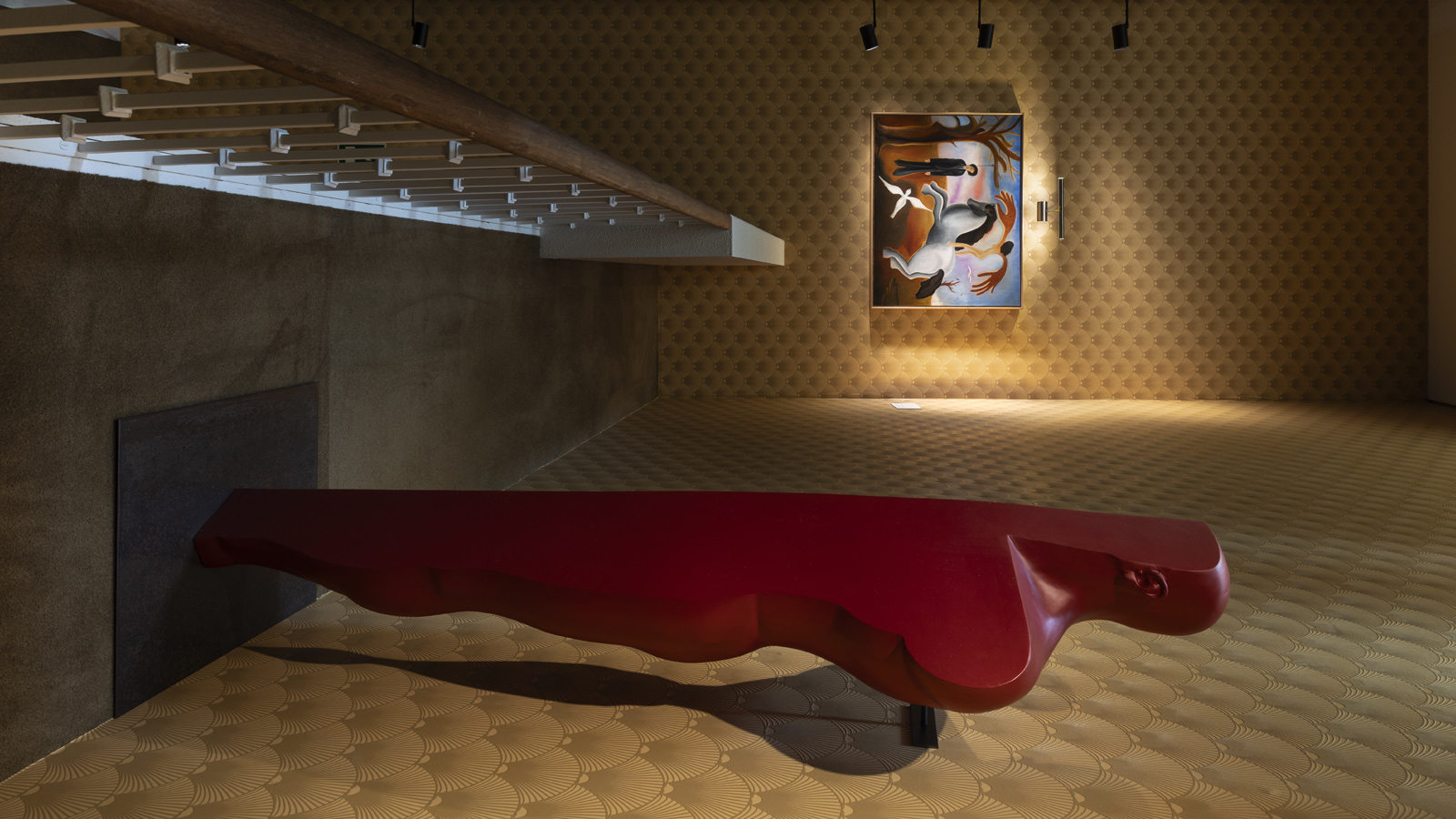
The very first room, called the ‘period room’, awoke something in me. One of the paintings was hanging on the vertical, forcing the visitor to lean to one side to look at it. My aim wasn’t just to observe; I was trying to adapt myself to the work. It depicted a horse, a woman in a suit hanging from the gallows, and, in contrast, a figure on a winged horse. I was captivated by that image, without being able to work out exactly what it meant. Even so, I couldn’t resist trying: perhaps that figure on the horse was another version of the woman on the gallows – a free version, far away from the ropes that reduce her to something lesser.
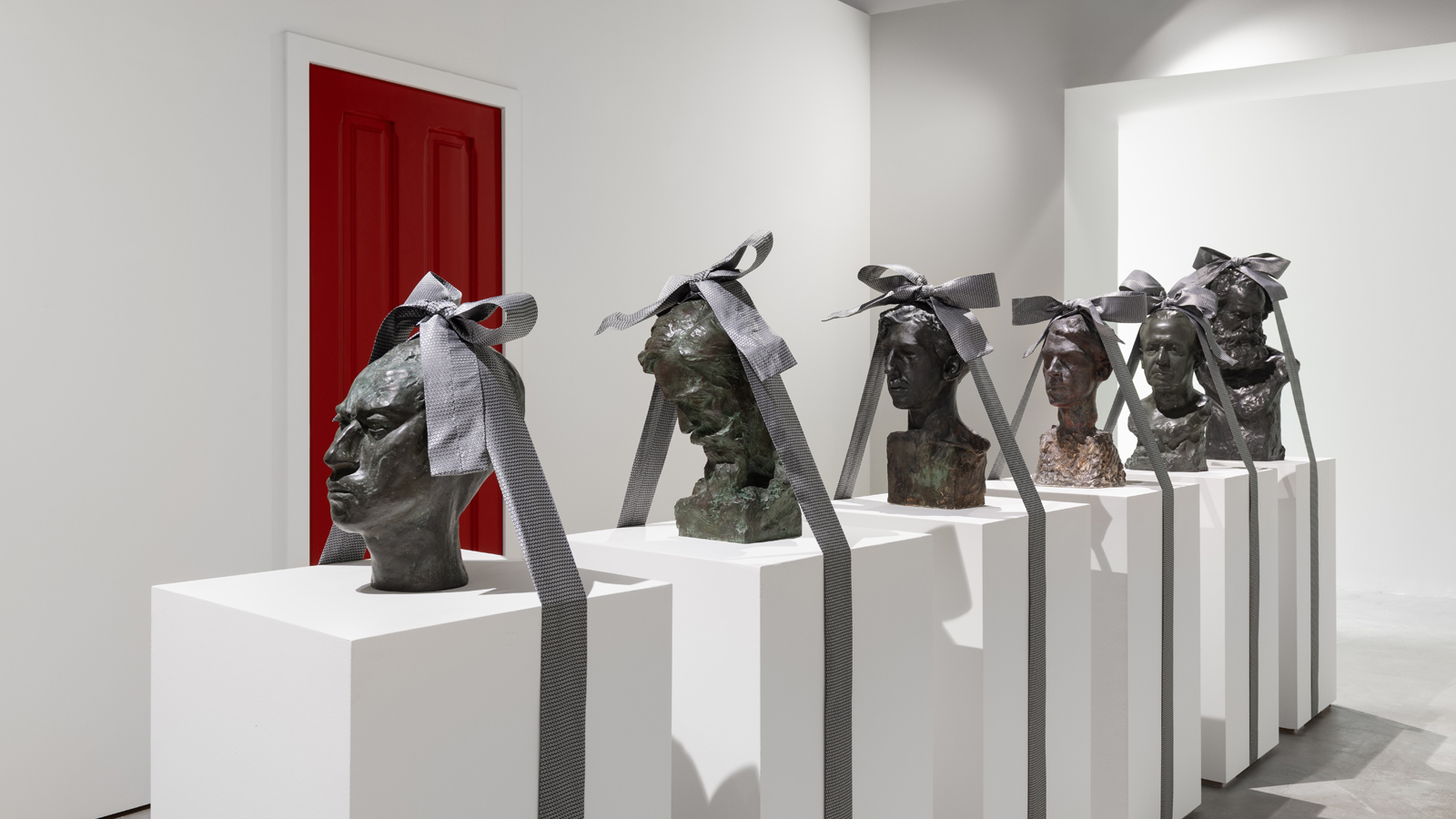
In the second room, the ‘bust room’, five figures from different professional spheres appear in a line, one after the other. What caught my attention the most wasn’t who was present, but who was not: there were no women. That absence did not appear to be innocent. It made me think about how, in different areas, recognition still tends towards the masculine, and art is no exception.
If we’re asked to name some artists, how many men immediately spring to mind? In a world where there are figures such as Frida Kahlo, Paula Rego and Sophia de Mello Breyner Andresen, we still hesitate. And perhaps the most concerning thing is this: realising that, even if we are aware of the inequality, we too reproduce it without meaning to. Knowing a little of the question that led Bruno Zhu to develop this exhibition, it makes sense to ask: how many women have been excluded from the history of art and had less visibility than their male peers? What are the structures that, even today, continue to decide what deserves recognition?
It was, however, in the ‘display case room’ that I lingered longest. One of the first details that caught my attention was the fact that the mannequins were undressed. At the Museu Nacional do Traje [National Costume Museum], we’re used to seeing them dressed, almost as invisible supports for the clothes. At CAM, their nudity made them not at all secondary: it was impossible not to look at them. That made me think about how easy it is to ignore the thing that holds up what we see. We value what is highlighted, the final product, but only rarely do we think about those who made it possible. Like those mannequins, there is always someone who sustains the visible, but it is unusual for them to receive recognition.
At the same time, among apparently younger or older figures, I felt a kind of hierarchy, something that reminded me of the relationship between parents and children, marked by an authority that is rarely questioned. Perhaps that is what stayed with me the most from this room: the idea that the gaze also learns to obey.
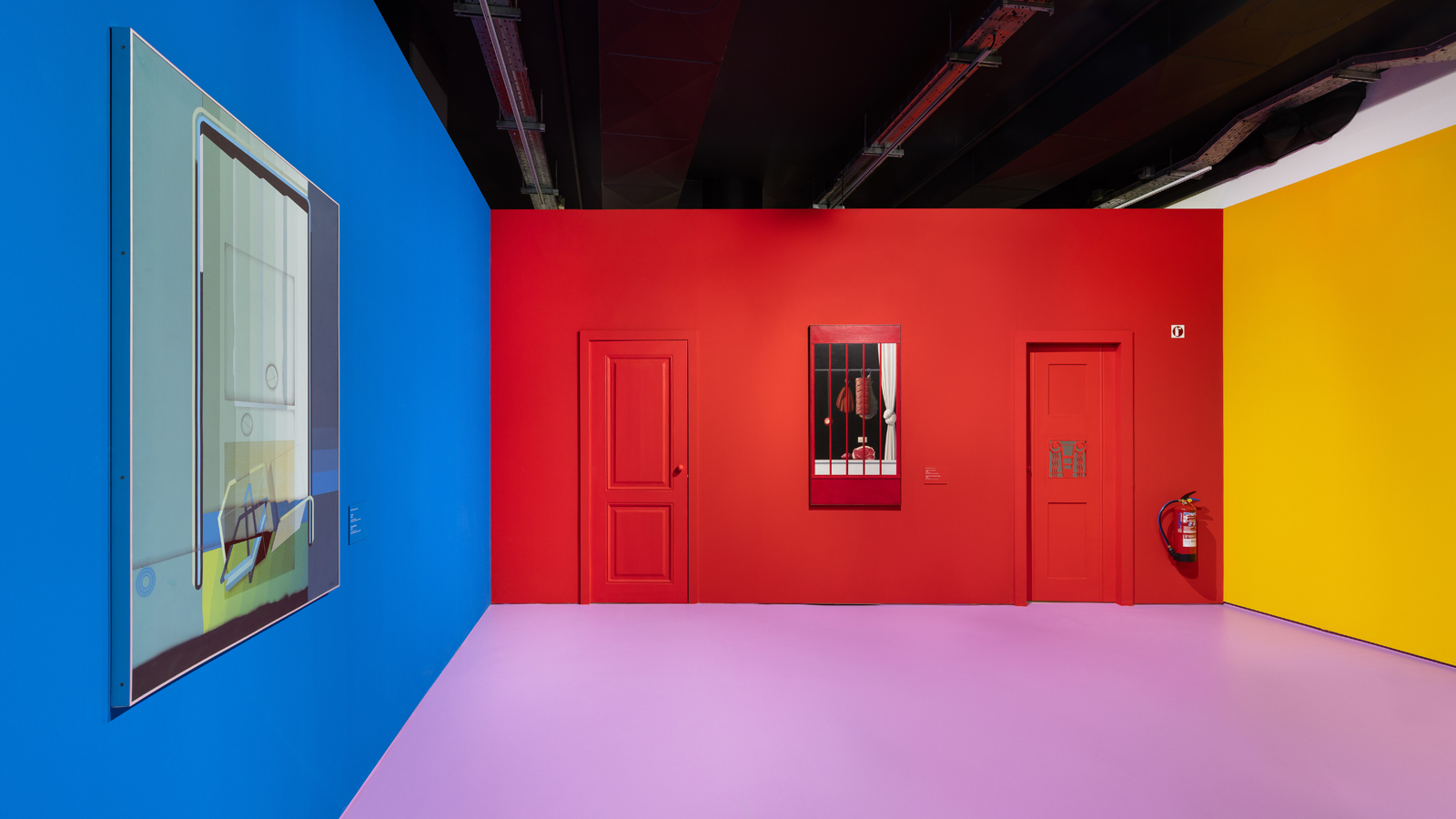
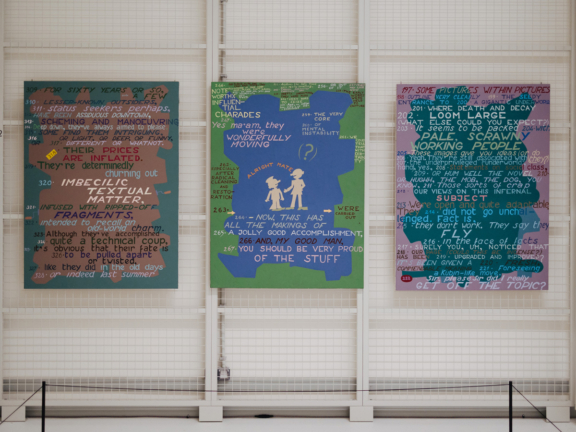
In the ‘room of colours’, the space was organised around yellow, red, green and blue, displaying three paintings predominantly associated with red, blue and yellow. In addition to the aesthetic dimension, I was struck by the perception that something as apparently simple as colour can be used to structure the way we look and interpret what is in front of us, even without us being aware of it.
As I moved through the exhibition, I started to identify a pattern: small visual choices that, at first glance, appear to be merely formal, but which end up revealing relationships of power, aesthetics and hierarchy. Nothing there seems neutral: neither the way in which things are displayed nor the selection of what to display.
I left with the feeling not only of having visited an exhibition, but of having travelled through various different ways of organising the gaze. And perhaps that is what lingers the most: the idea that seeing is never a neutral act, but always a way of interpreting the world.
BANTUMEN at Gulbenkian
Explore the series








No results were found for your criteria.
You may also like

No results were found for your criteria.