
Rosa Barba: ‘I believe that art has the power to be able to speak through a different kind of vocabulary and activate other sensitivities’
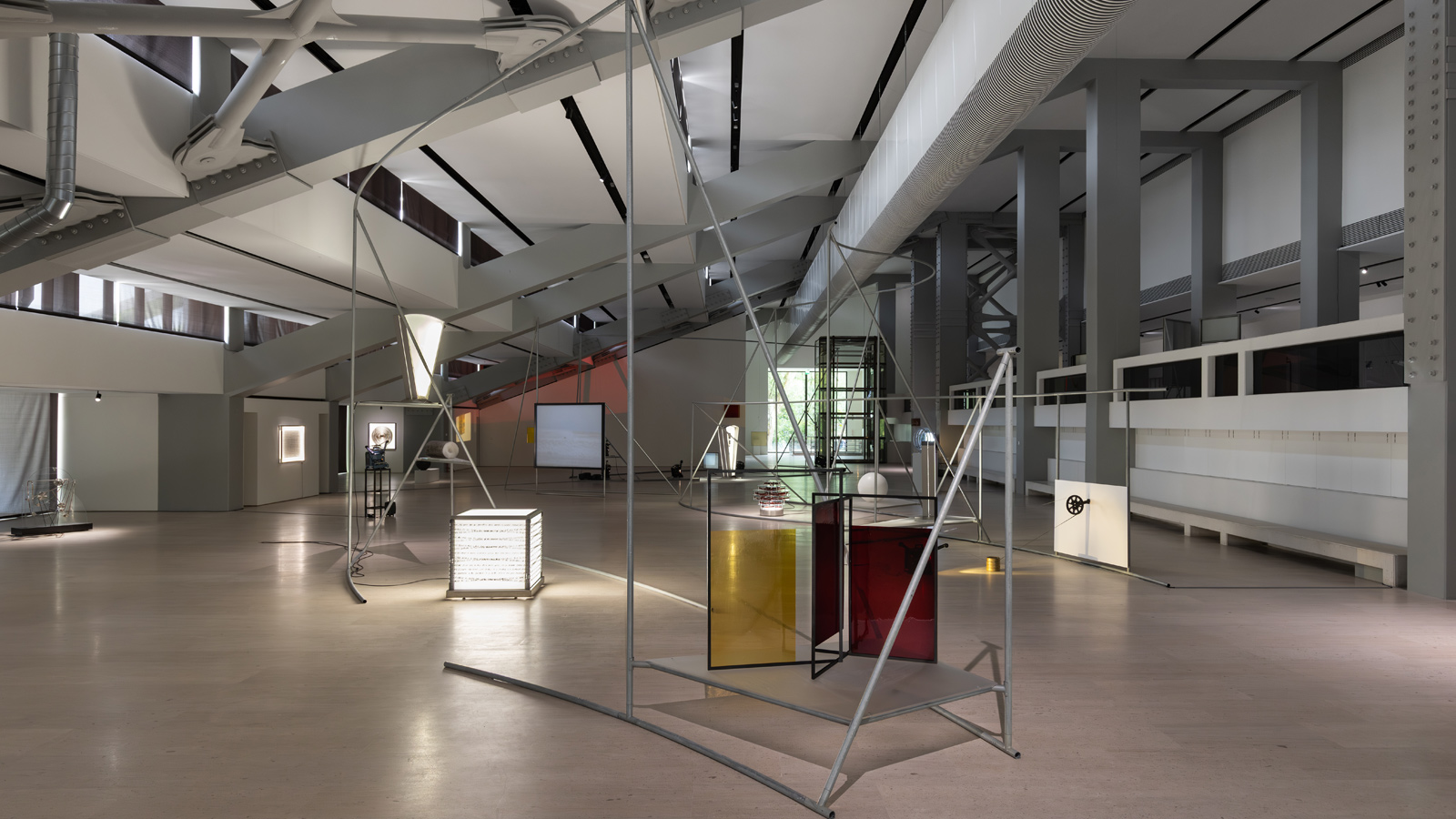
Orsola Vannocci Bonsi: In a conversation with Zoe Leonard[1] about your exhibition at the Neue Nationalgalerie (2021), she mentions that the building itself became both a conceptual and a physical frame to hold your work. How did the new CAM building, designed by Kengo Kuma, influence the way you conceived this exhibition?
Rosa Barba: The preparation for the exhibition at CAM began some years ago, and then the building experienced some delays, so I had already been thinking about this project for quite a while; and I also saw the architecture evolve from a construction site into its final form.
Usually in large exhibitions, I approach the process almost as if I were making a new film: I investigate the place, its history, and the institution itself. In this case, I spent a lot of time researching the history of CAM and its relationship with ballet and performance, even interviewing former members of the ballet company.
Then I became very interested in the architecture of the new building, and its extraordinary location and new features. I was attracted by its transparency: the glass façade creates a kind of membrane between the interior and the exterior, a breathing space connecting the museum and its garden.
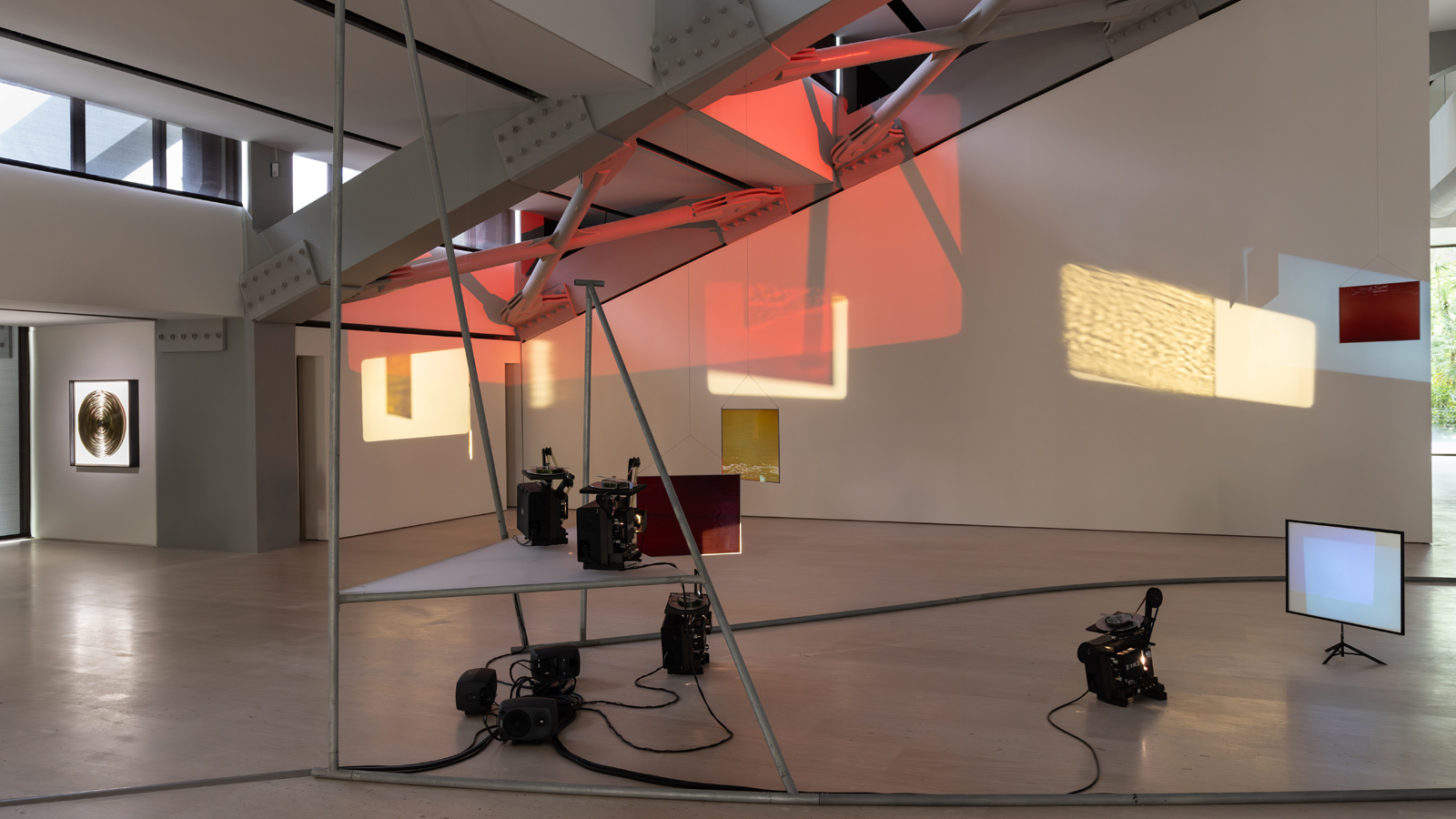
I wanted to work with it as in my practice I am interested in opening up cinematic spaces in places that are not conventionally understood as cinema. I also reacted to the building’s vocabulary, its ceiling structures, pillars, and spatial rhythms, by creating a display system in dialogue with its architecture. At the same time, I wanted to preserve sights of the garden, so that at certain moments it becomes framed like a screen and is positioned inside-out, while on the other hand the visitor experiences the sculptural environment inside the space.
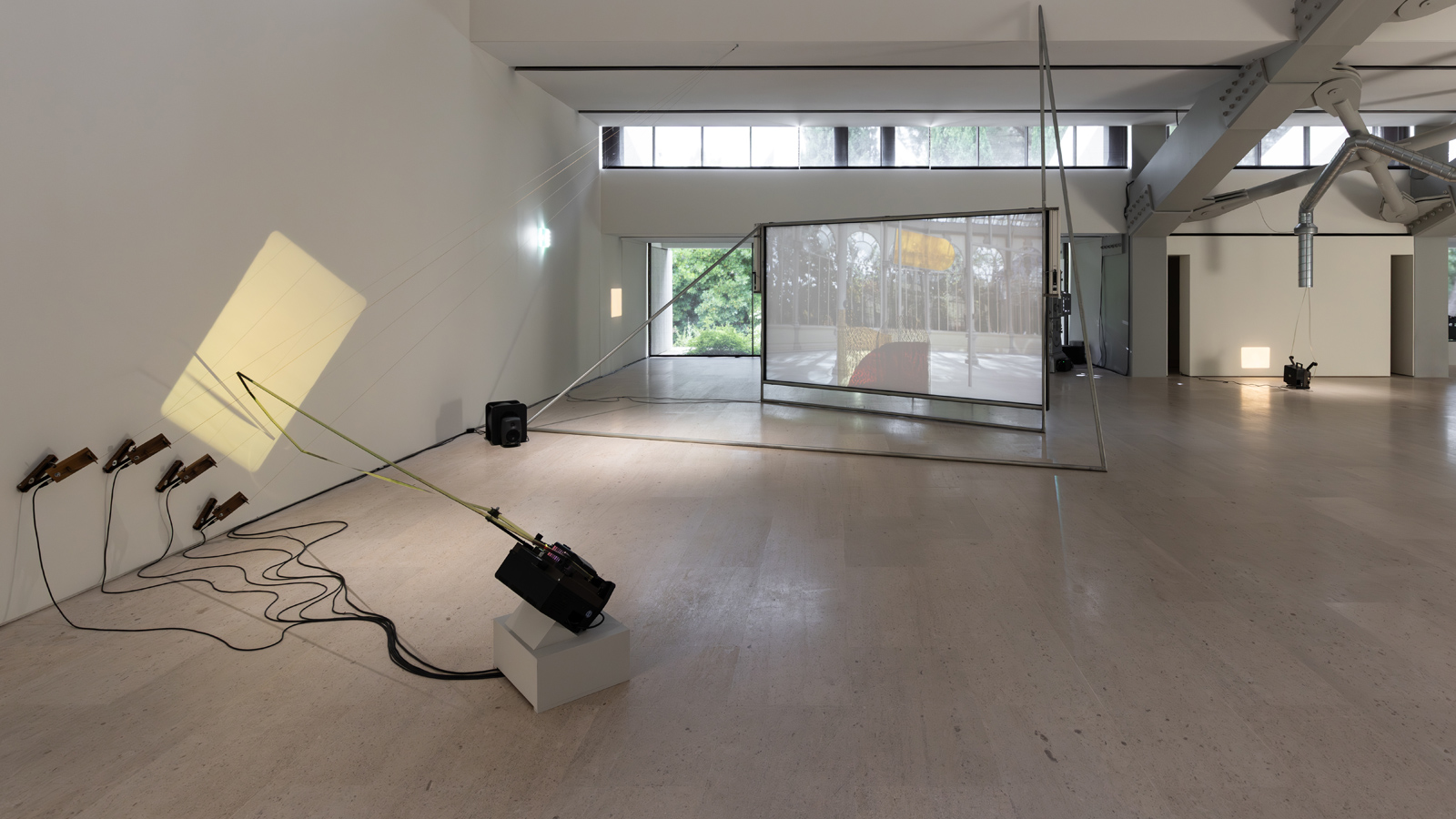
OVB: One thing that impressed me are the structures that hold the works: they do not simply occupy space but they seem to function as works on their own. How do you think the relationship between these structures and the works they support or display?
RB: For each museum I developed a specific exhibition concept, while also trying to create elements that could be reused and reconfigured across venues. I think this idea of modularity and transformation is particularly important today.
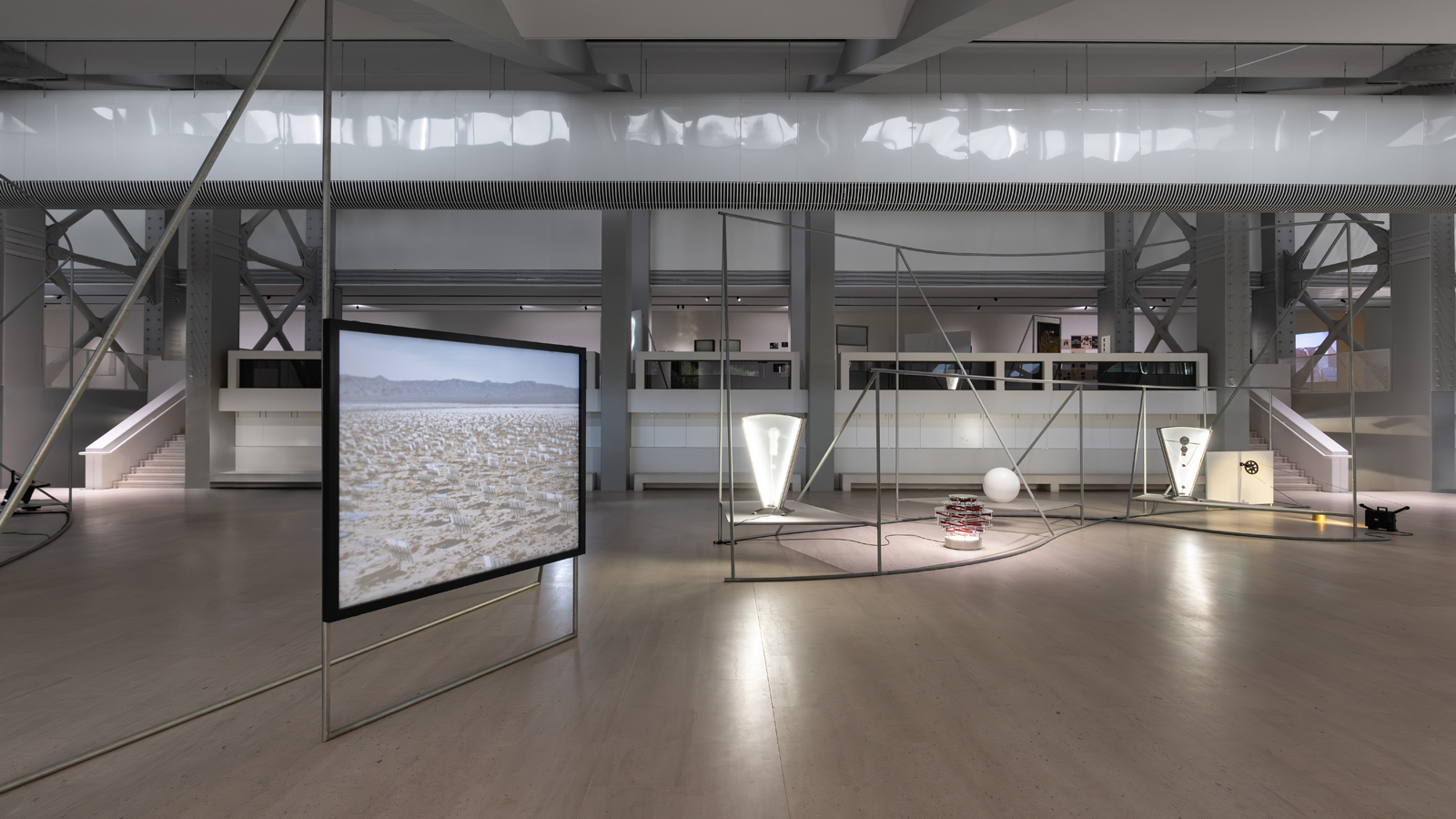
I approach films and sculptures in a similar way. They remain what they are, but they are constantly reconfigured through their relationship to a given space and to the other works around them. Often a work appears entirely different simply because of the way it is installed but then they are also seen in a different social context and ecosystem.
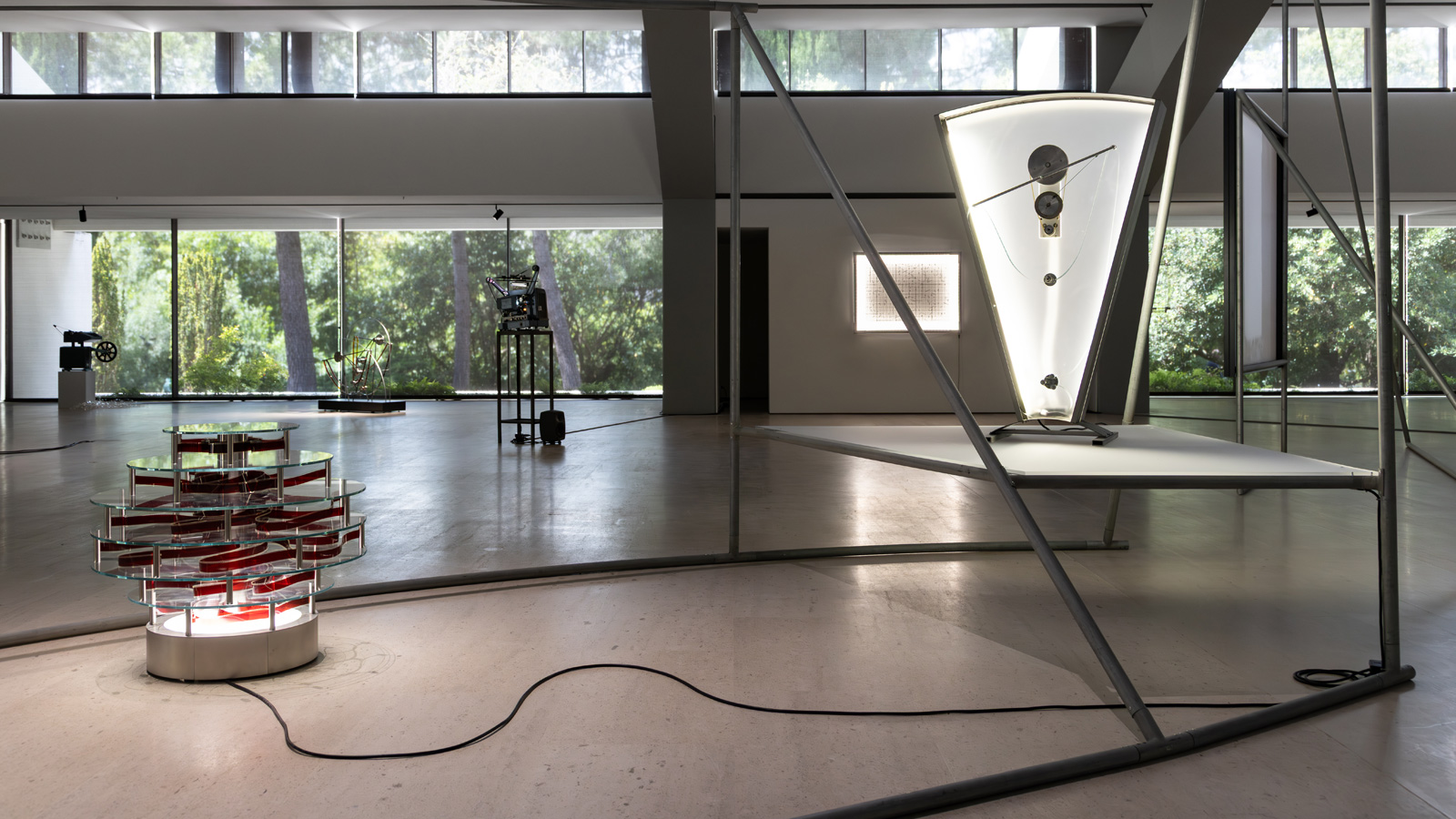
At CAM, I wanted to create a series of islands within the exhibition. Some works are brought together beneath a shared structure, almost like a canopy, while others act as accents within the space, standing independently. There is also an accumulation of elements: the drum set, the shutter system, the projections through hand-blown glass, that generates its own spatial rhythm. Some works require only minimal support because they unfold across the entire gallery, extending onto the surrounding walls and architecture.
OVB: For some exhibitions at CAM, exhibiting artists are invited to curate a presentation drawn from the CAM’s Collection. In this case, what guided your selection and why none of your works are included?
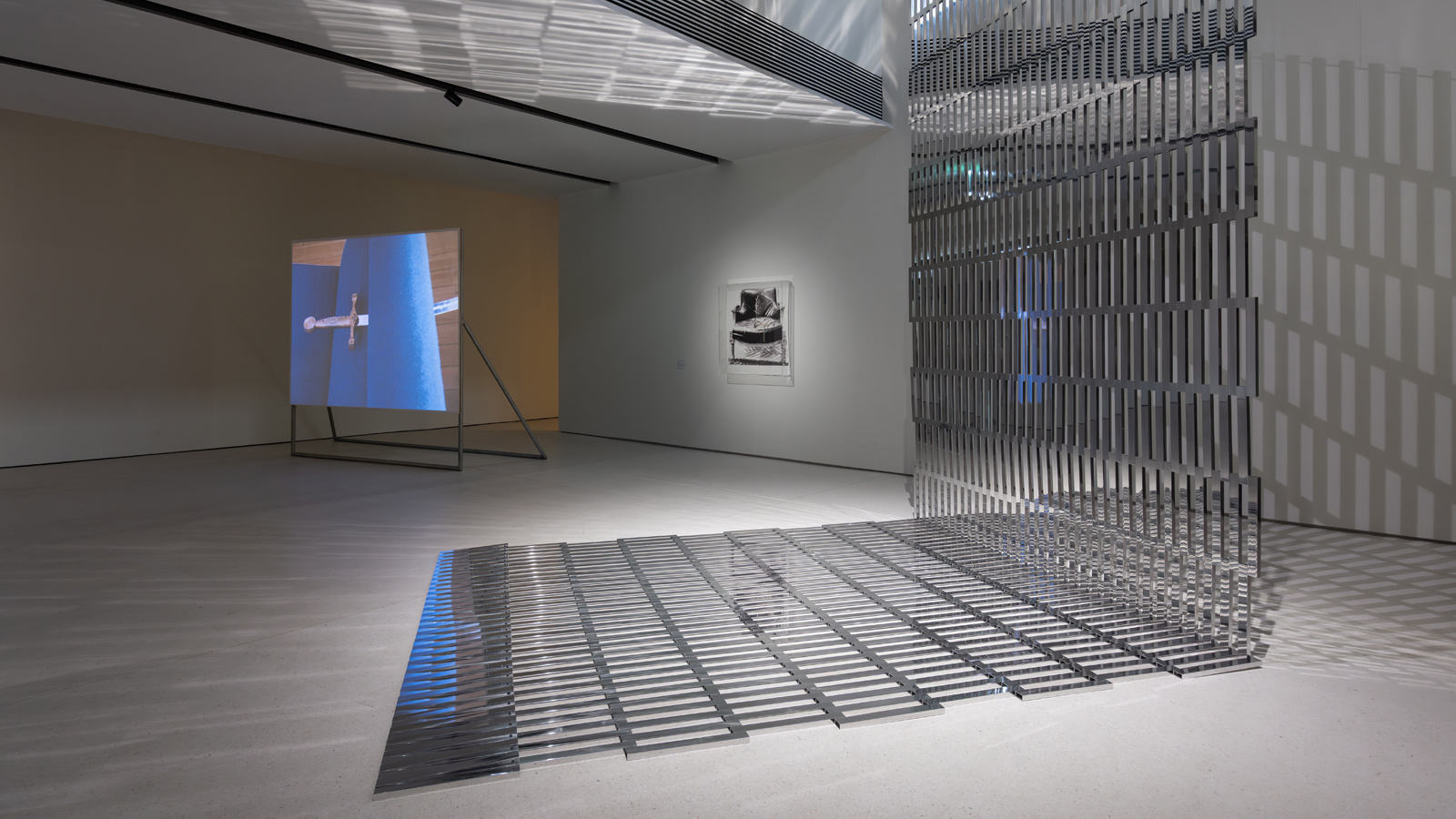
RB: I wanted to give as much space as possible to the collection itself, my own work was already present in dialogue with it through the architecture of the Mezzanine, which remains visually connected to the exhibition below. The relationship was already there.
At the same time, the structures upstairs echo elements from the installation downstairs, creating a line of formality and an ongoing drawing that connects the two presentations.
The selection process was not so different from developing one of my own works. Of course, I had a conceptual idea, in this case language and visual poetry, but I was also guided by conversations with the curator and Collection curators, who introduced me to works I might not otherwise have encountered. I think these decisions come from a certain artistic sensibility: what attracts your attention, what resonates with your interests, and the inner dialogues emerging from those encounters.
OVB: The archive is a constant presence in your practice, what interests you about it as a form of knowledge?
RB: I see the archive as a much broader concept. Of course, I am interested in institutional archives, such as museum collections, libraries, official repositories, but I am equally interested in the archives we produce collectively through our presence in the world. We inscribe ourselves into landscapes through infrastructure, industrial interventions, testing sites, and countless other traces. For me, these are also forms of archives. An archive is an accumulation of knowledge, but much knowledge never enters official systems of preservation. I am interested in those archives that have not yet been acknowledged as such, and in bringing together voices that might remain unheard. I also think of the archive as a space where time is not linear: a place where inscriptions from the past, present, and future layer, a vibrational space in which different temporalities encounter.
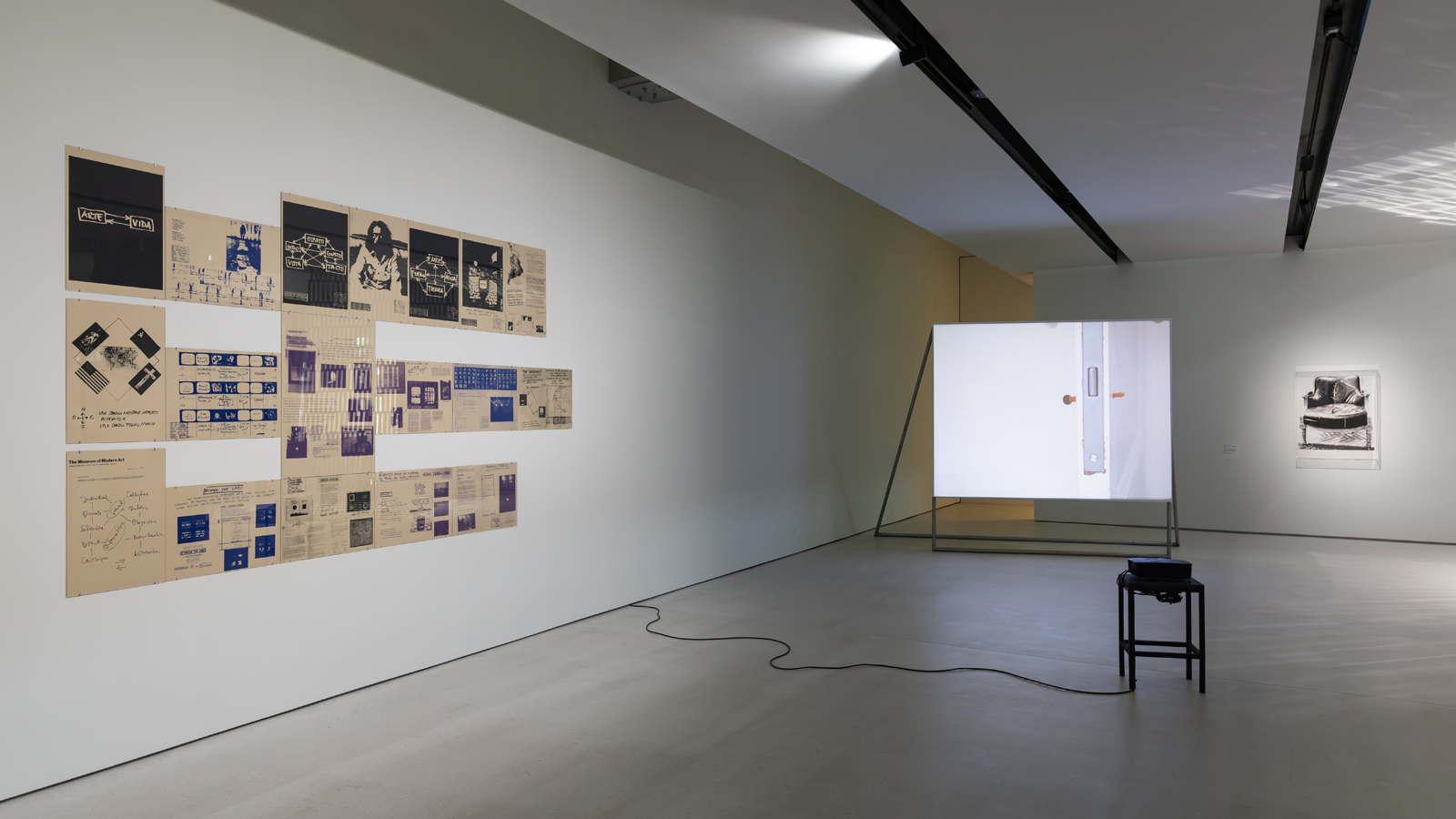
OVB: Sound also seems to play a fundamental role in the exhibition. Beyond the sound installations themselves, there are the projectors, the kinetic sculptures, and the mechanical systems that generate a constant sonic presence throughout the space. How important is this physical dimension of sound in your work?
RB: Sound is very important and is an independent voice within the exhibition. It is also performative as it engages the body directly, shaping the physical experience of the space. It activates different senses and communicates through its own language. I have never thought of it as something that, as a soundtrack, simply accompanies an image or reinforces a narrative. It exists as its own story, unfolding in parallel and affecting us in a different way.
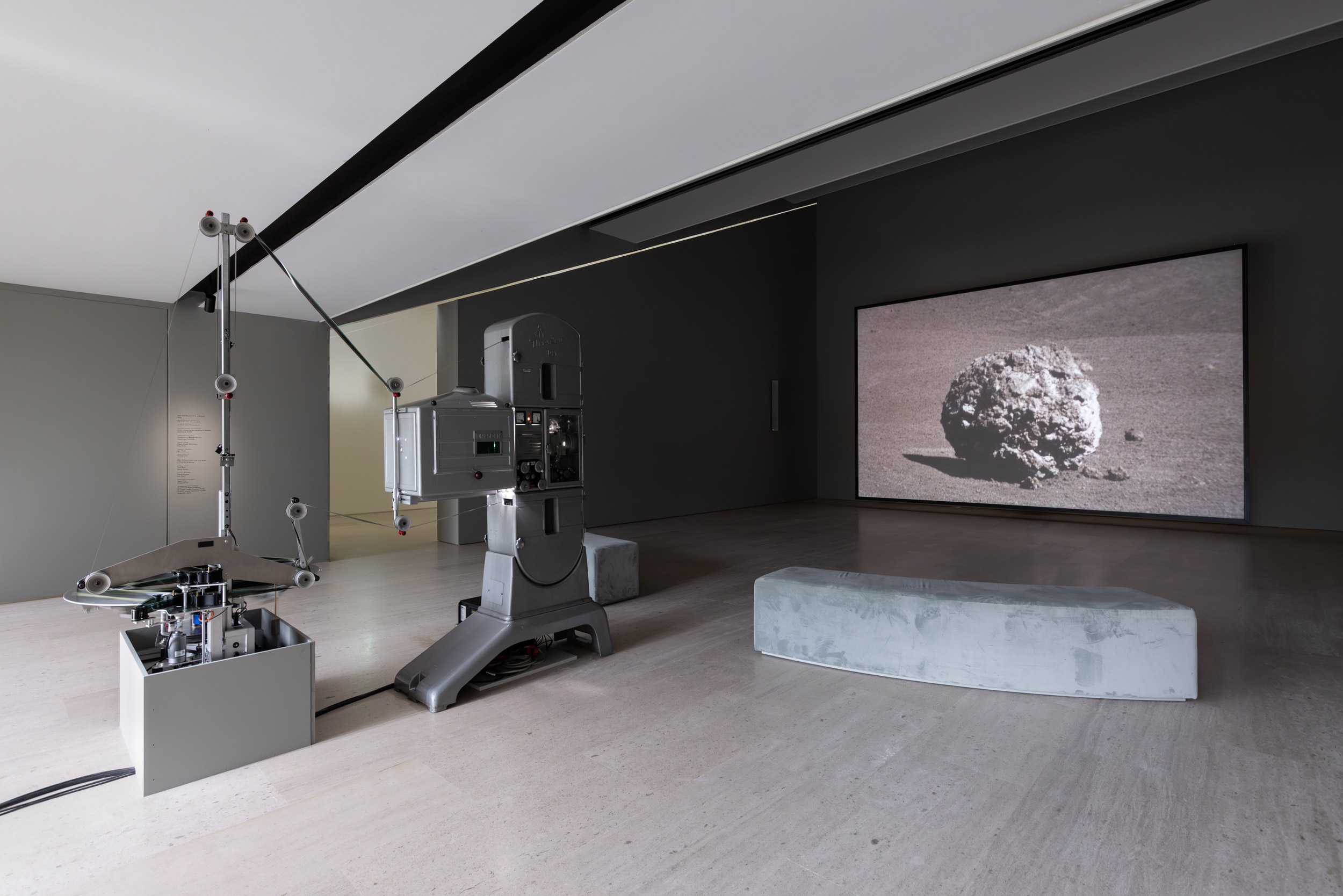
OVB: You have collaborated with the musician Chad Taylor for several years, including on Hear, There, Where the Echoes Are (2016–21) on view at CAM. I was curious about the fact that you chose to work with a drummer. What drew you specifically to this instrument?
RB: I had known Chad’s work for a long time before approaching him. Around ten years ago, I asked whether he would be interested in collaborating, and what began then has developed into a very beautiful and ongoing collaborative relationship. At the time, I was specifically looking for a drummer because I was interested in rhythm as a highly precise instrument. I was developing the idea of a shutter system that could direct and edit images in a very immediate way, almost frame by frame. But when I started working with Chad this experience opened up many more possibilities than I had initially imagined. Today, the collaboration continues to evolve, and we are working together on a new film whose structure is being shaped together.
OVB: In Myth and Mercury (2025), commissioned by MAXXI Rome and CAM, the figure of Antonio Gramsci plays a significant role in the work. Why Gramsci, and what interests you about his thought today?
RB: I started spending time in the Gramsci Archive in Palermo, which became a highly inspiring site. For several years I had been developing the idea of approaching the Mediterranean through the perspective of Gramsci’s writings and this project grew gradually and remains ongoing. I will continue expanding it over the coming years, incorporating other regions of the Mediterranean and engaging with additional writings.
OVB: Gramsci reflected on the role of the intellectuals in shaping the collective consciousness and imagination. Do you ever think about the role of the artist in similar terms, or do you prefer to keep a distance from a more explicitly political understanding of art?
RB: I would like to use the possibilities of an artistic practice to develop my own language for engaging with society, politics, people’s desires, and historical events, among other things. I believe that art has the power to be able to speak through a different kind of vocabulary and activate other sensitivities, which combines words, senses, documents, archival footage, and so on. That is what I am trying to do. In some works, this approach is more tangible, while in others it leaves more space for positioning yourself in it. In some cases, the political or social dimension is more explicit than in others. I like these dimensions to emerge through the vibration of the different layers in the work, rather than pointing towards them.
OVB: Is there a question that you find yourself returning to constantly, something that your work has not yet fully answered?
RB: There are many. Our world is changing and is going into many very unpredictable, and scary, ways, and I find myself constantly wondering how we can respond, adapt, or find ways of navigating these conditions. Sometimes the questions themselves are no longer certain, they change as quickly as the circumstances around us. What matters is then remaining attentive: keeping our senses open and being receptive to continue formulating propositions.
[1] Rosa Barba in conversation with Zoë Leonard, “Radiant Exposures” in Impermanence in Fields (Berlin: Hatje Cantz, 2025).
You may also like
No results were found for your criteria.