
A Place at the Table: ‘The Table Is an Imaginary Place’
Jule Kurbjeweit: Why is it important for CAM to run this programme ‘LUGAR’ [PLACE]? Why does this sustained work with schools’ matter?
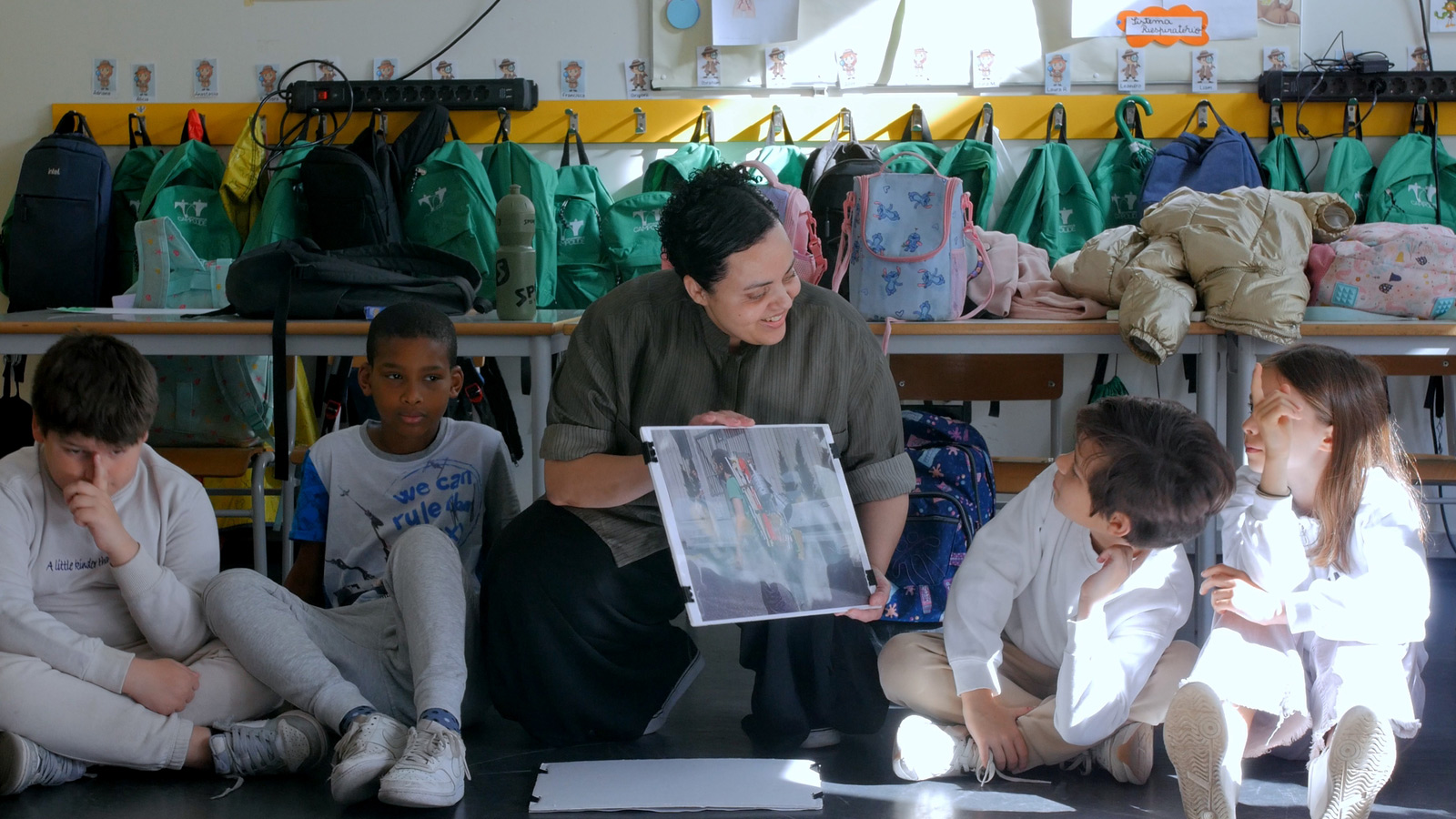
Andreia Dias: We believe in education through art and in art’s great power as a driver of transformation – personal and social alike. The experience is amplified when we have living artists sharing their practices. It’s very powerful, to the point that the children remember everything, through all sessions, as meaningful learning. ‘Lugar à Mesa’ [A Place at the Table] gave us an enormous opportunity to work on art and citizenship simultaneously. We can solve problems at the table – but before doing so as a community, we go through an artistic experience, immersive and aesthetically sensitive, that guides us along the way.
Andreia Coutinho: In a long-term project, we can actually see the transformation: from the first session to the last – how the children interact with each other, what they thought at the beginning, what they think at the end. We don’t just want to propose transformation; we can genuinely watch it happen.
AD: And the transformation isn’t only in them – it’s in all of us. There is an expanded educational territory between school, museum, artists and mediation team, built through this exchange.
JK: How was the arc of the sessions constructed?
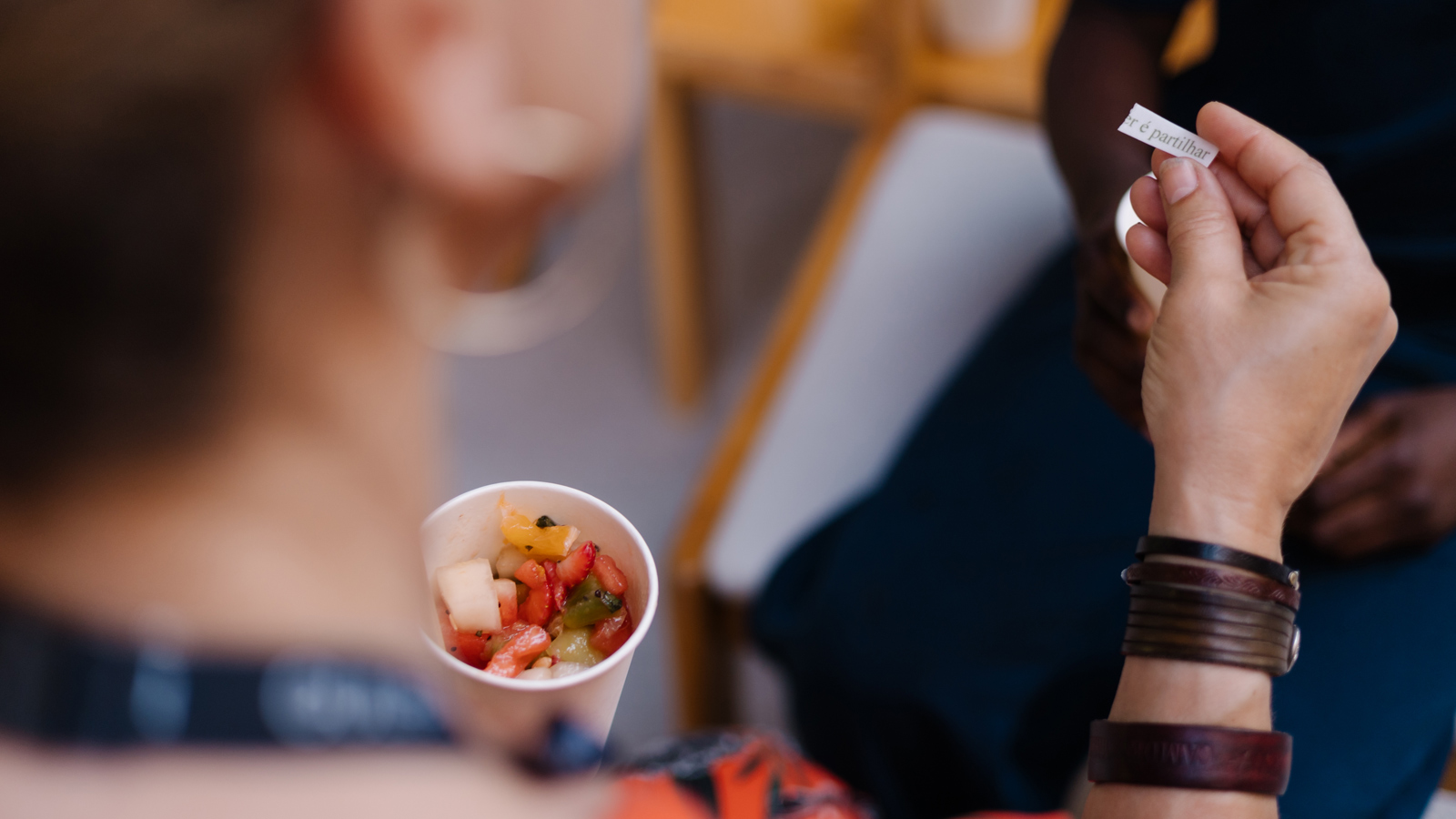
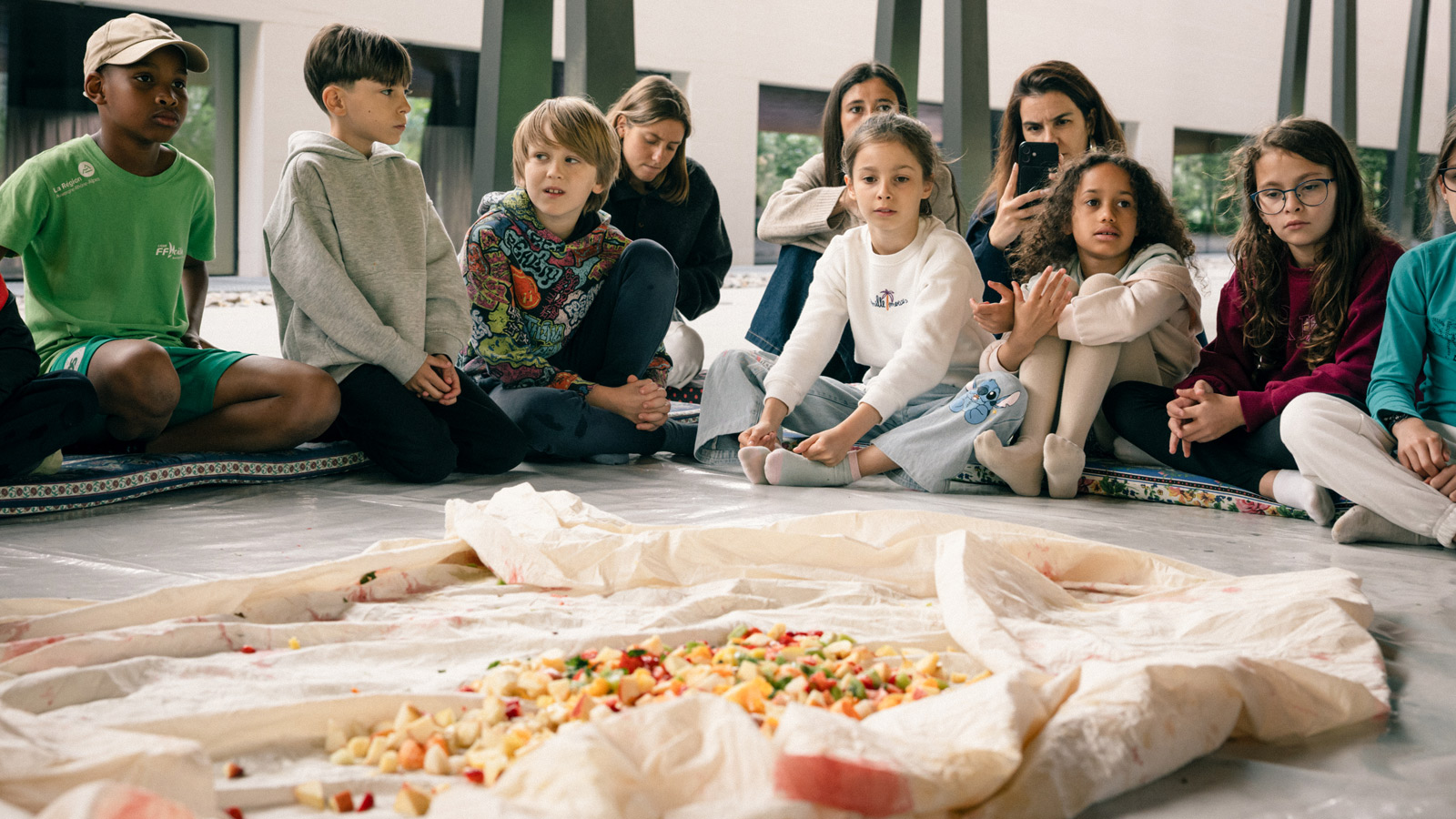
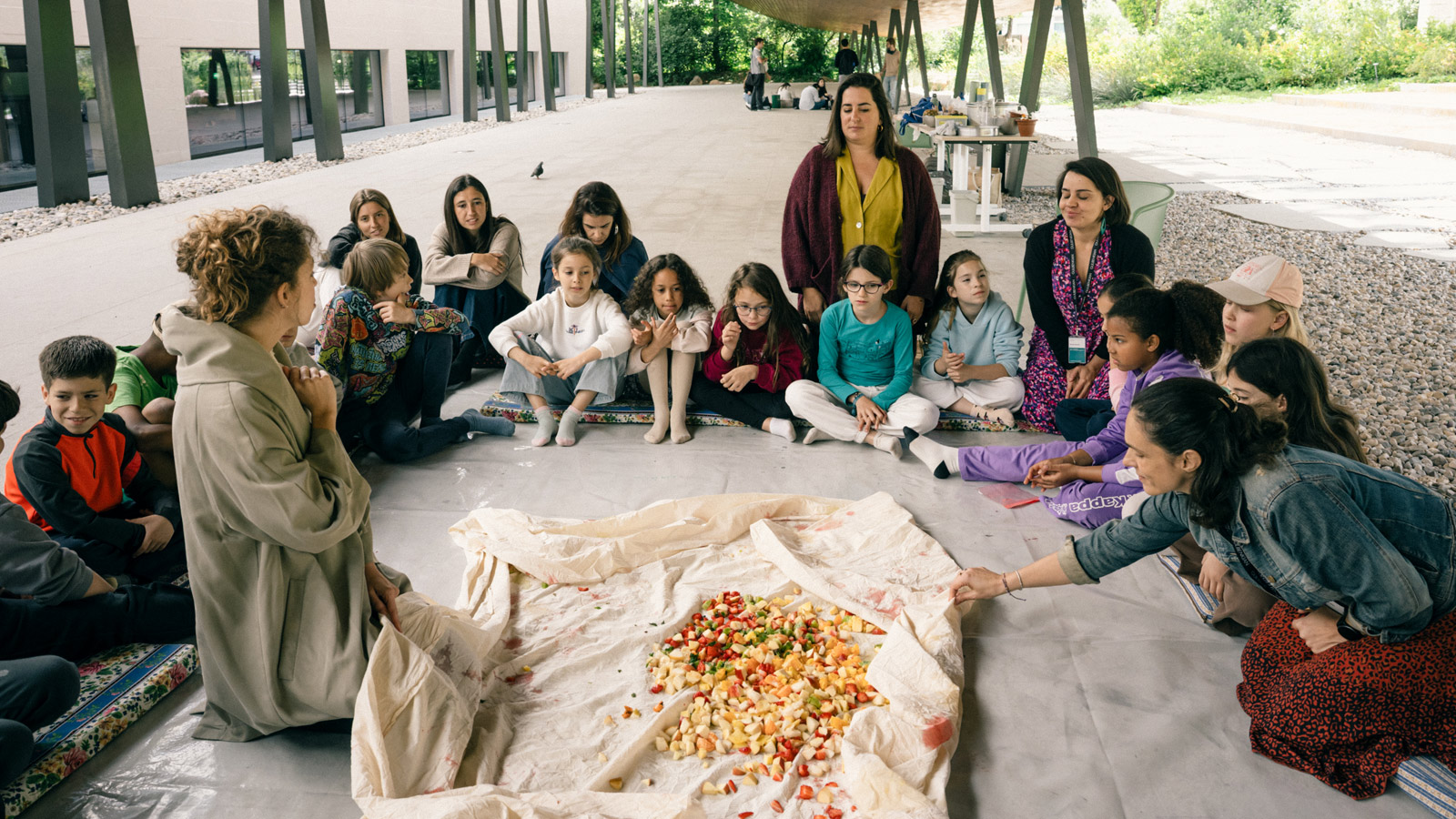
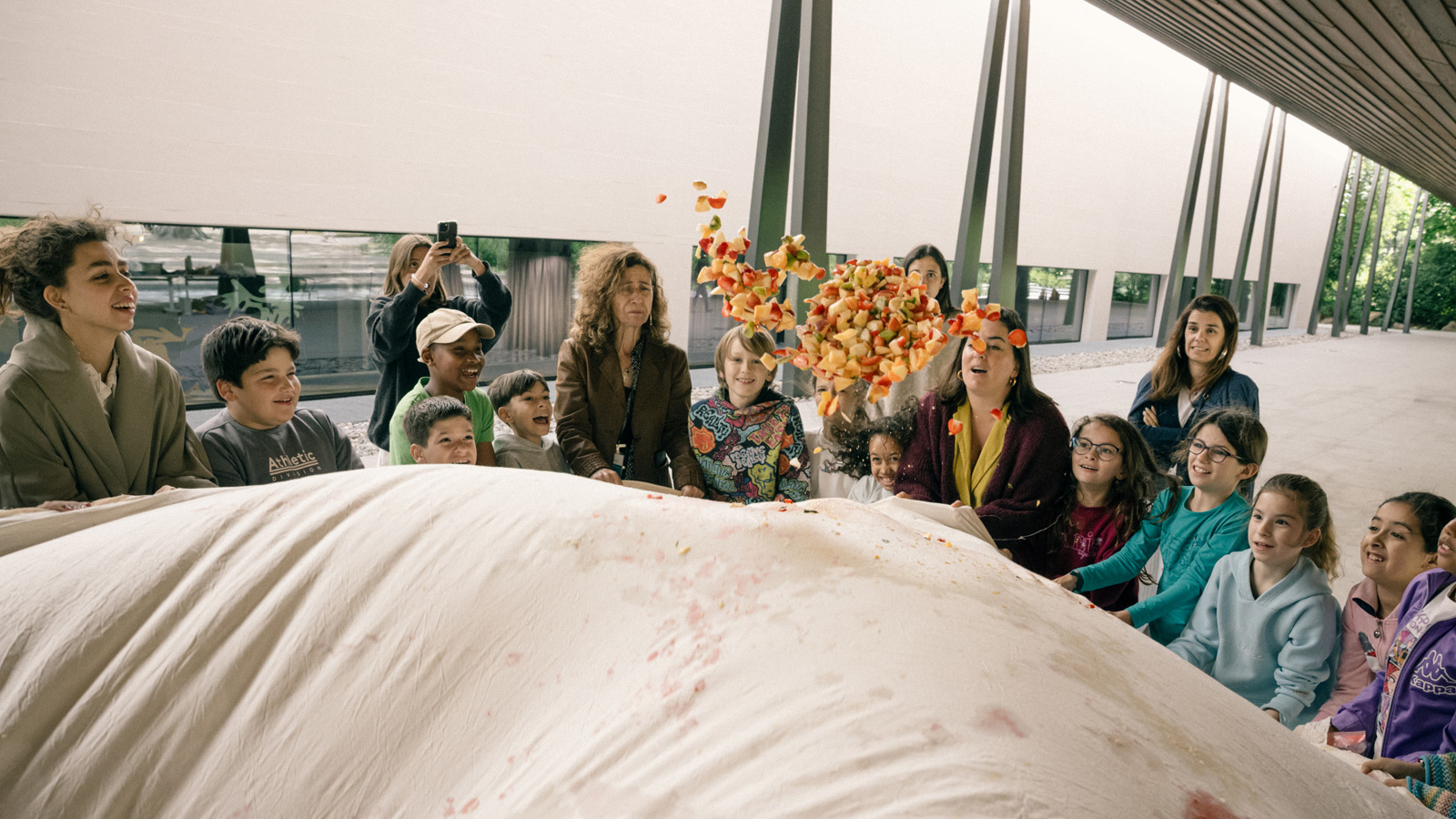
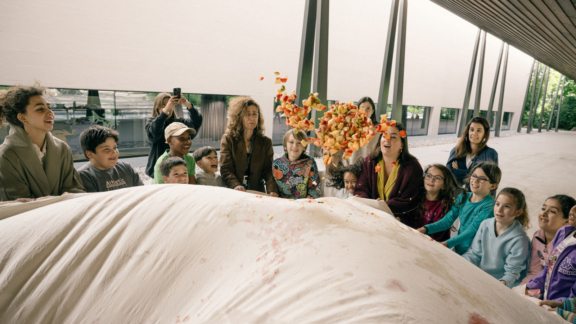
Maria Ângela da Silva: The sessions built on each other gradually. First, the artists introduced childhood memories. Everything culminated in the session where we made a fruit salad together – a great collective ritual.
Alice Artur: Designing the project as a whole was important to us. All the sessions were thought through from the beginning: what kind of experience did we want them to have? There were several factors: timing, the season of the year, where we wanted to start – with the history of food, and a deconstruction of what a museum is.
Francisca Paiva: That path was designed to be both surprising and constructive. There was an expectation of when we were finally going to cook. But the whole journey prepared us to be able to cook.
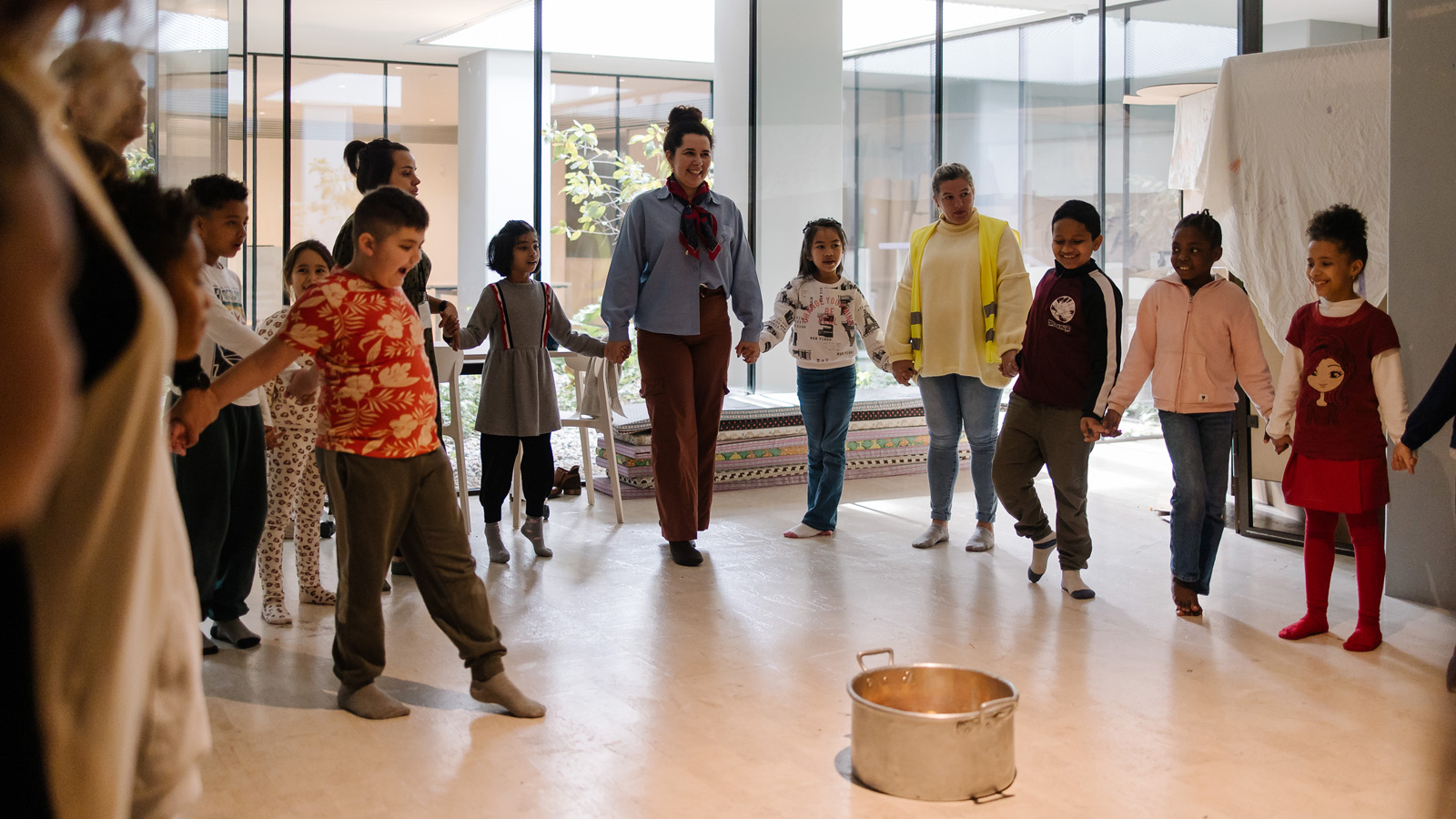
AD: The project itself is a kind of slow-cooking, with themes gradually interweaving. Before the fruit salad session, we had a session of cooking problems. Each child described a problem – personal or of the world – and then they were all stirred into a soup of problems. The fruit salad was a response to hunger, identified in every group as a shared concern: from almost nothing, we can create abundance.
Rolaisa Embaló: That opening question stayed with them: can fruit you brought feed the whole class? Probably not. So maybe we need to put them all together.
Mariana Faria: Even as we spoke of abundance, we also spoke of scarcity. There were children who came to school having not yet eaten. It’s an artistic project, but it has a social dimension: our gaze is a social one – we are attentive to each other.
AA: Food is so embedded in everything we are and do that we no longer see it. It brings us close because eating is an intimate gesture we perform with our own bodies – but collectively.
JK: How did you connect these themes to the museum?
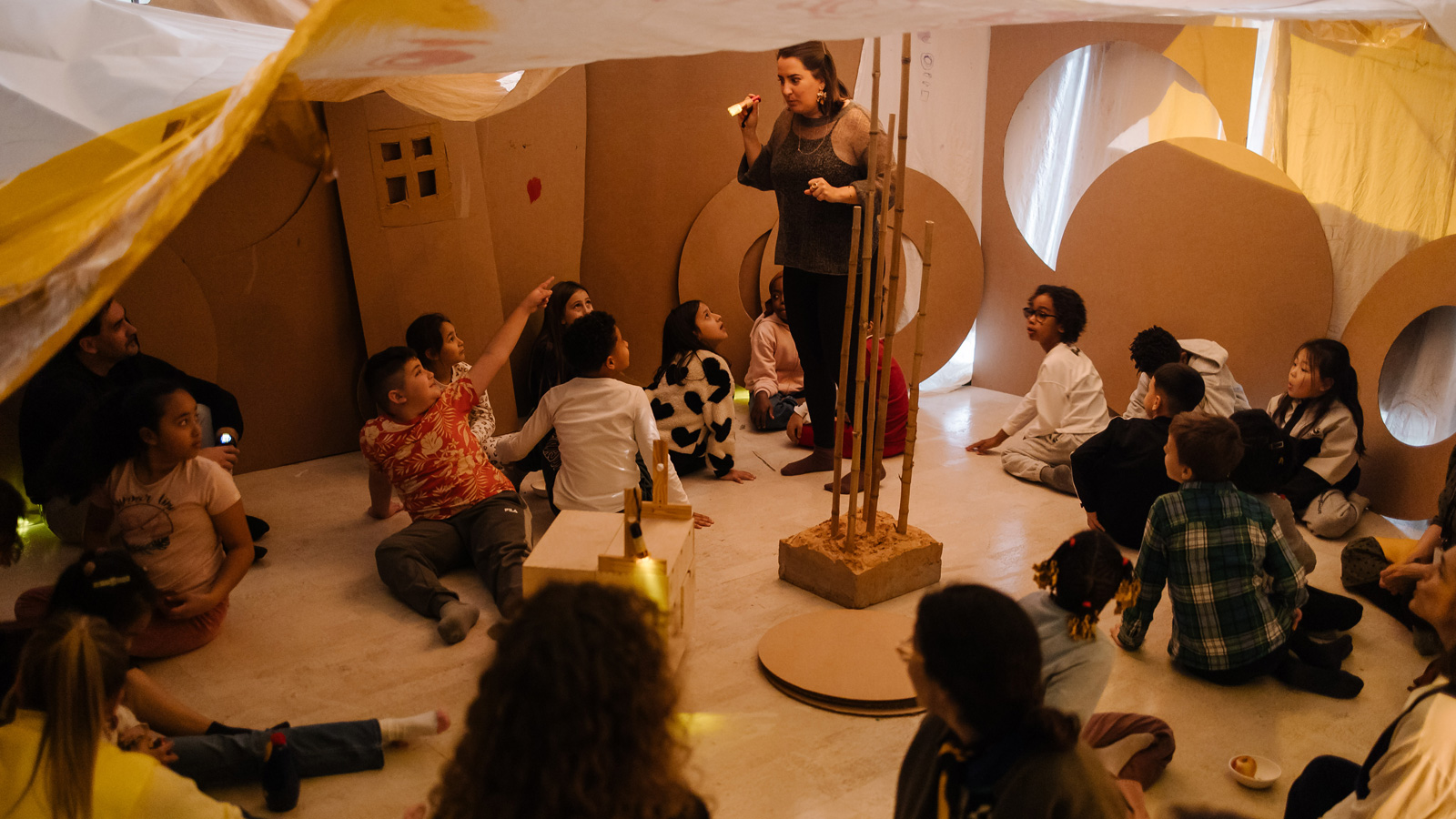
AA: We were enormously lucky with Carlos Bunga’s exhibition. It was a happy accident: Inhabit the Contradiction – an exhibition speaking of home and transient place. We wanted this relationship with the museum, but it had to speak to whatever was there.
Joana Trindade Bento: We never used the same space twice, so the museum could function as a single home, or table. ‘Lugar à Mesa’ is not fixed – it can be anywhere.
JK: It’s a meaningful thing to have that experience early, because for many people a museum isn’t an inviting space.
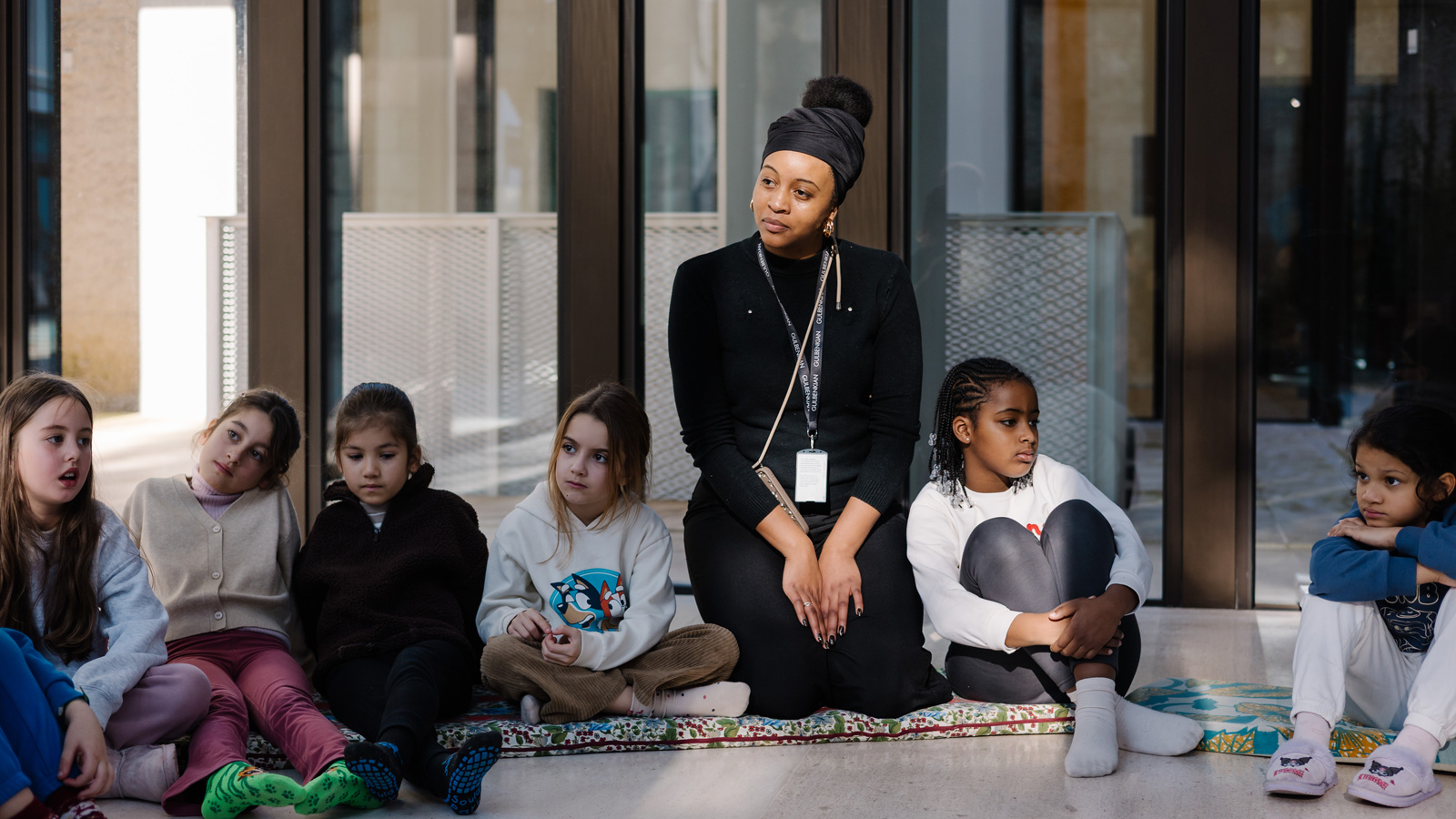
AD: One of the project’s central aims is to make the museum part of everyday life. And we’ve achieved that: they feel the museum as a home, as a space that belongs to them.
AA: That completely changes the perception they’ll carry into the future – of what a cultural space is, of what it means to see art. It allows them to inhabit the space of creation as something more intimate. That can make all the difference.
JK: Can you speak about moments that surprised or transformed you? And for the artists – how will this experience mark your practice?
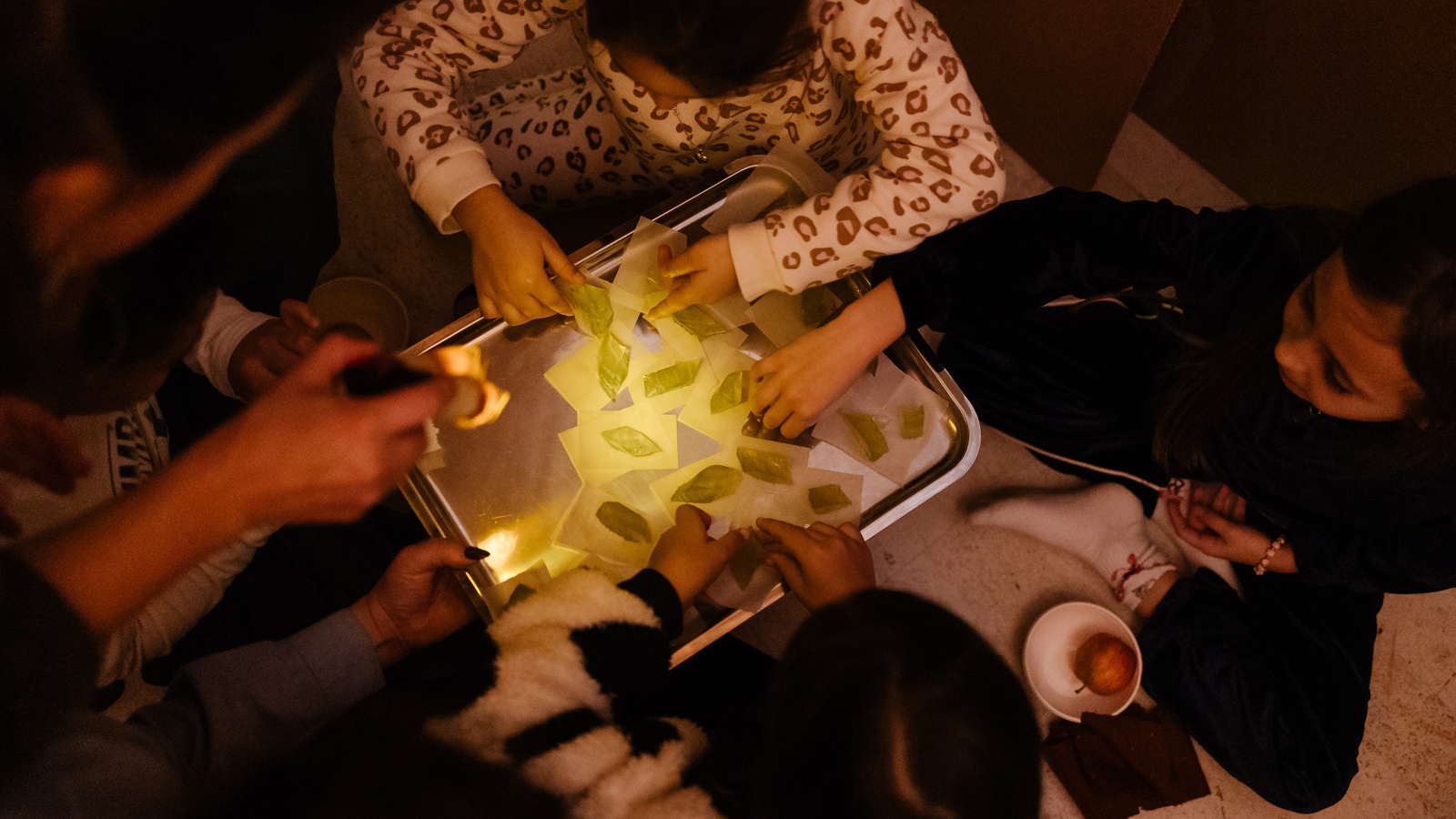
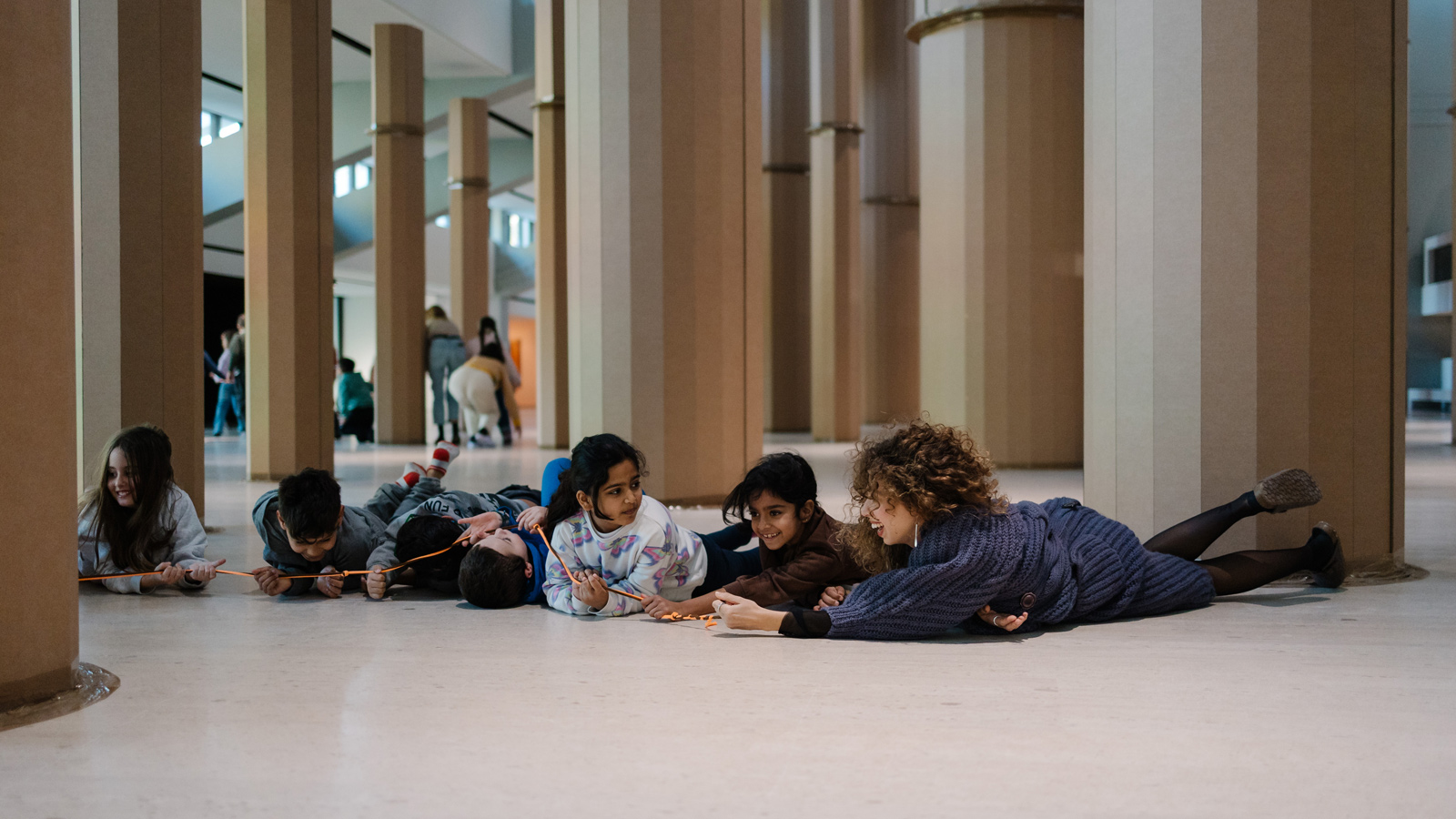
AA: The most transformative thing was being with the children and witnessing the surprise – how something we considered completely insignificant could suddenly become a portal, out of a piece of cardboard. Children understand the language of ritual better than we do. What we discuss theoretically, they know instinctively. They know how to dissolve into an experience. It was they who transformed us. What we took away is the need to simplify more. Less noise, more simplicity. And that is extraordinarily difficult for an artist.
Joana Trindade Bento: For me, reconnecting with my inner child as a creator has been spectacular – from day one, when we brought our own memories for them to experience. We don’t bring grand themes; we bring small tools for them to pass through themselves. Food makes it easy to connect with everyone, because everyone already has it in their daily life.
FP: I would place myself in a child’s body to understand how I was going to experience the session. Many of our adaptations came from that. We thought from a child’s place. And it confirmed my desire to work with children – it gives back more than any other audience and has led me to think about food in a much freer way.
AD: It’s an affective transformation. In several groups, the children came to consider us family. Because we learned in a place of warmth, care and love.
RE: When we asked ‘what did you learn from the artists?’, we expected something about food. Instead, they said: listening to classmates, respecting classmates. An entire practice of respect.
FP: They said they felt calmer. It isn’t just about being at the table – it’s about being connected, attentive, present.
AA: Always returning to this idea that we are together. And if someone is missing, it won’t be the same.
DX: We adults don’t know how to digest the world’s problems – they get stuck in us. Children already have that capacity to read the world – through a kind of hopefulness and tenderness. When we spoke about Nowruz, about Ramadan, about foods from different places, the children who aren’t from here had something to say – they were the ones who knew. Each one completing what the other said.
MF: The different fruits also represent who we are: from different origins, with different thoughts. They begin to understand that they have opinions, that we live in diversity, and that that is fine.
AC: With the small cues we gave along the way, they can build their own path and their own perception of the world.
MF: We, as a museum, are a space of possibility. It is possible; let’s do it together.
JTB: And the table can be a place of equality. We wanted teachers and students on the same level. We didn’t infantilise the children. We also deconstructed rules: we played with food but didn’t waste it, and care was always present. What matters isn’t sitting up straight – it’s respecting each person’s voice.
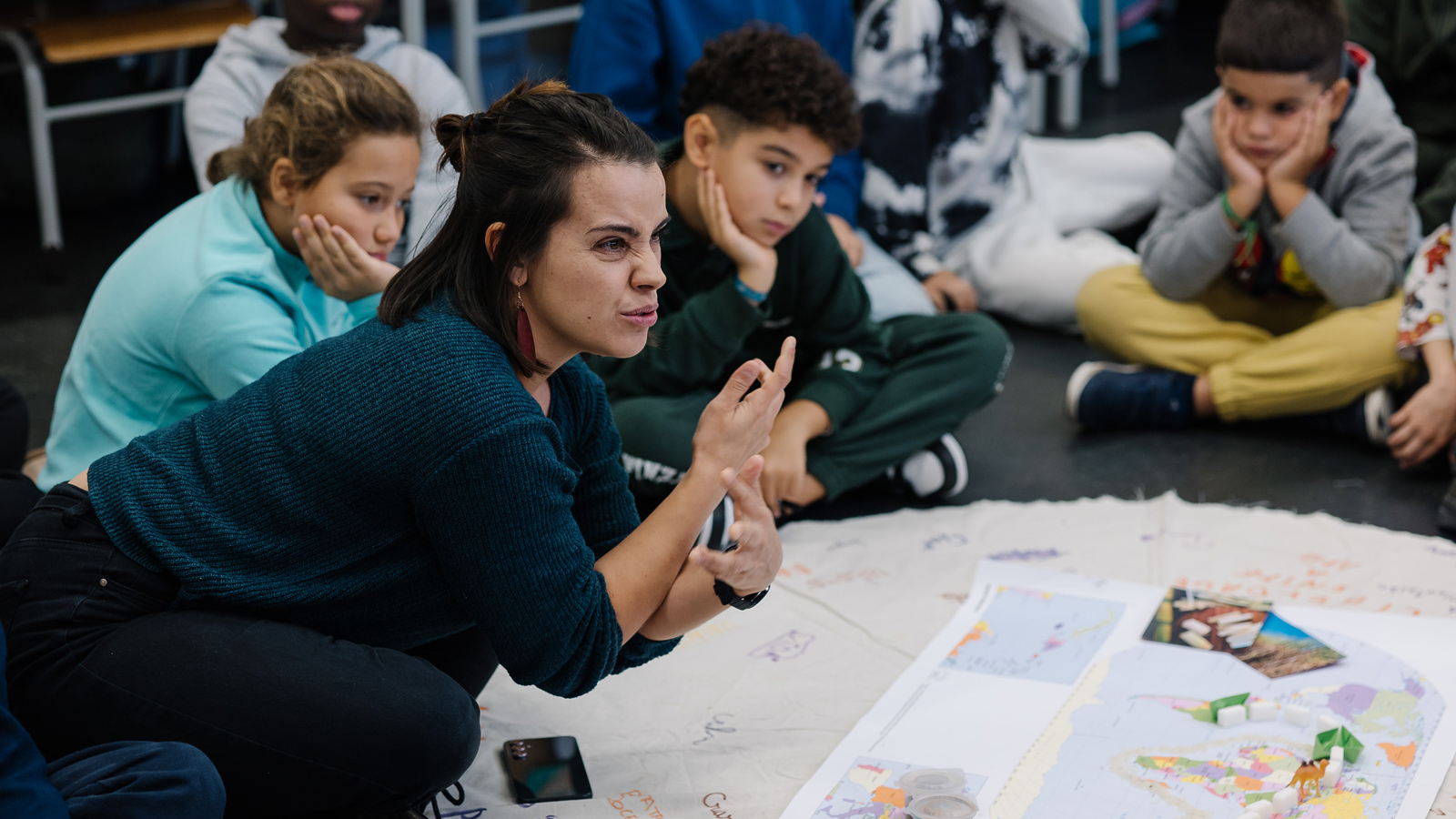
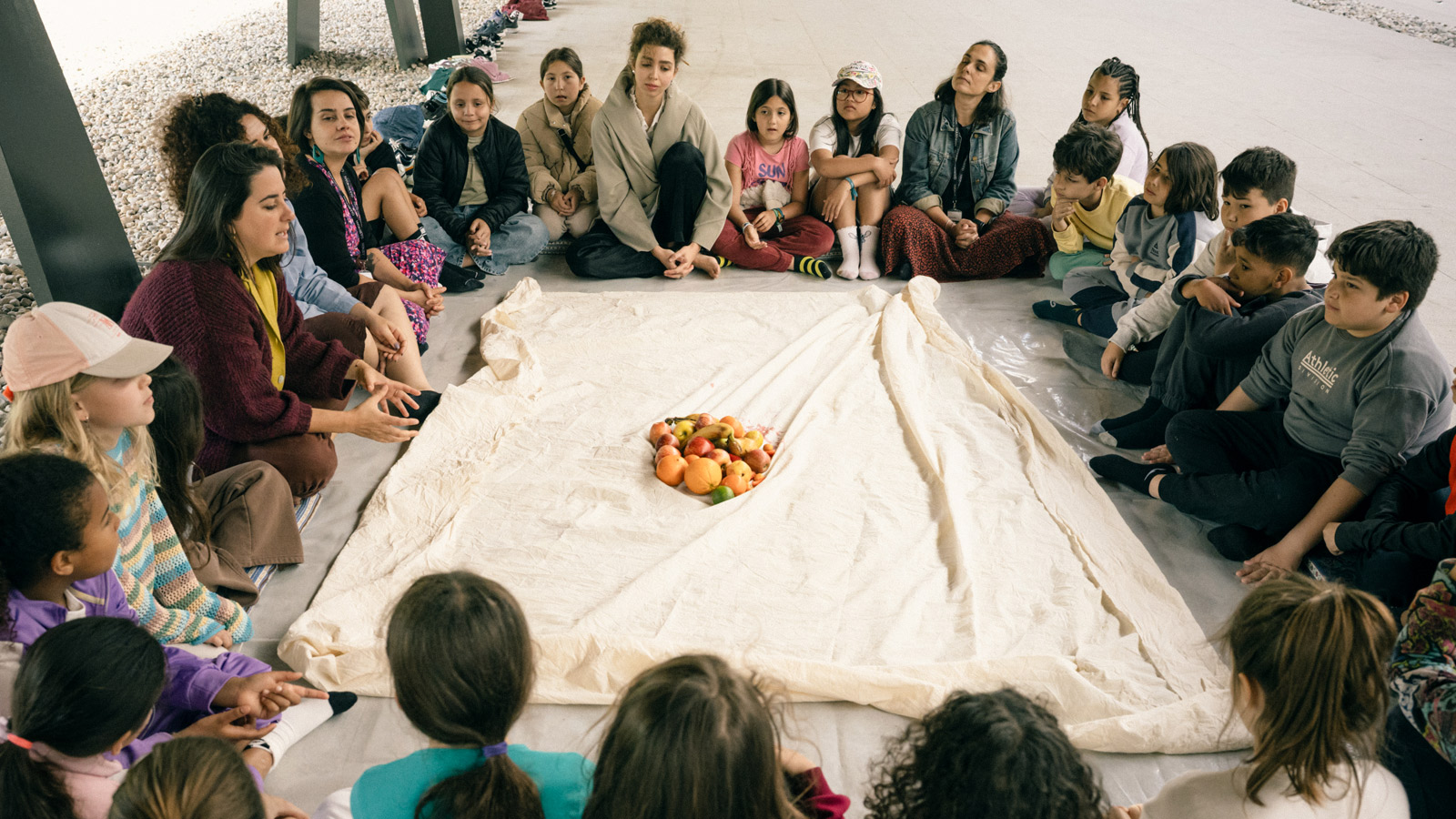
AC: The table isn’t only the space of food; it’s a space of human interaction, even when the table is a tablecloth or a carpet.
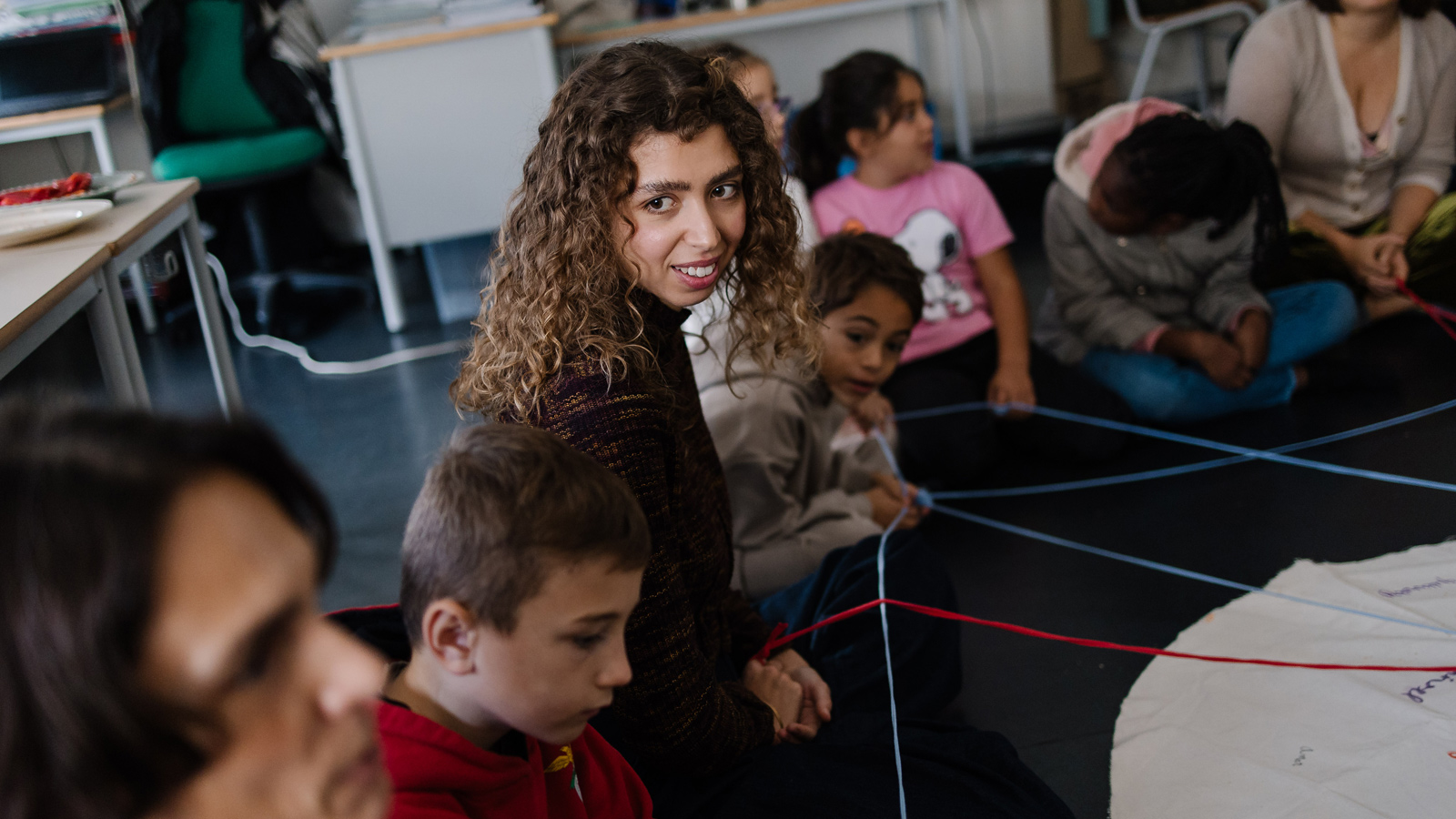
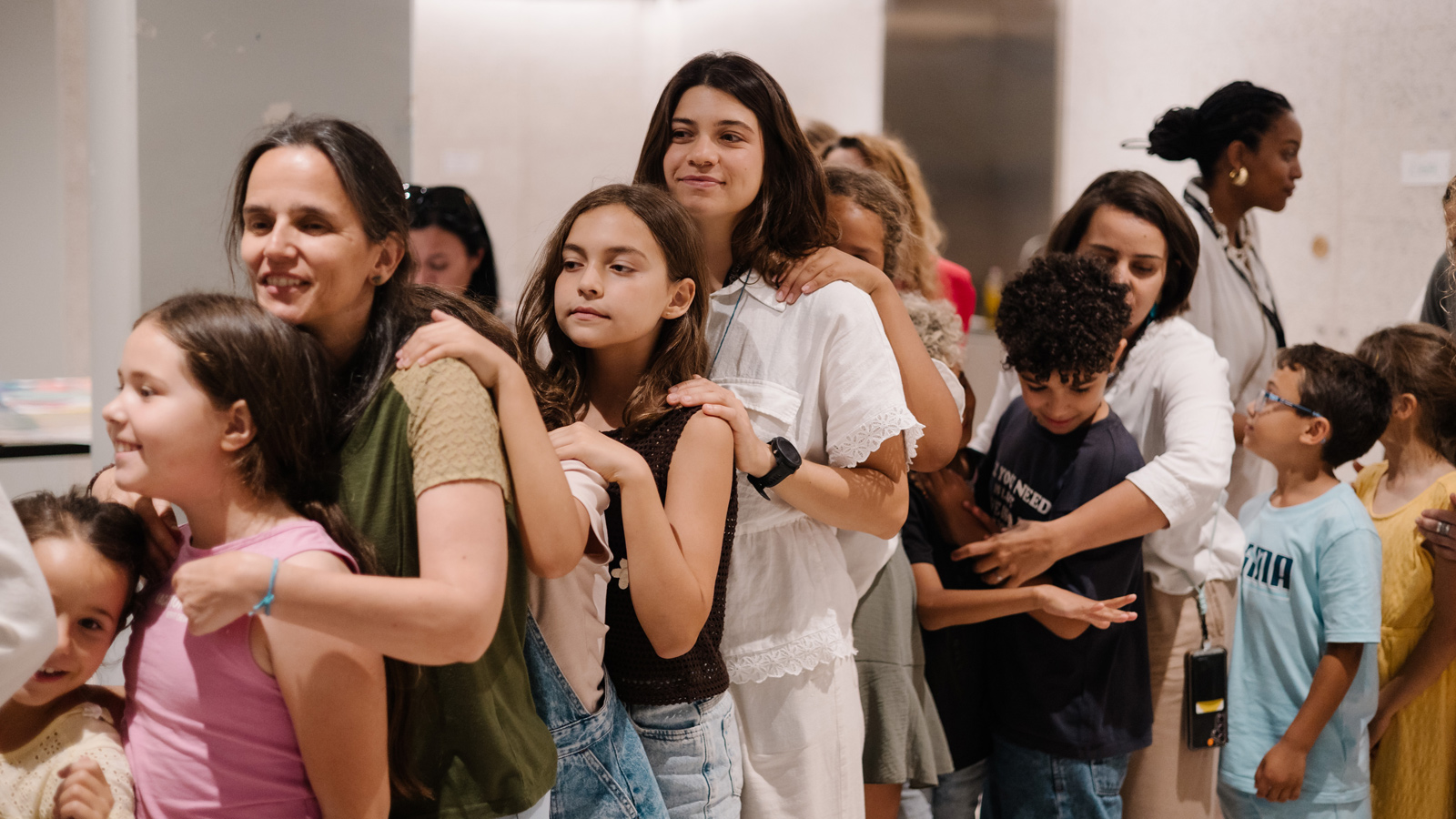
FP: The mycelium, this way of being together and connected, was also a table. The table is an imaginary place. It was always the metaphor for being together.
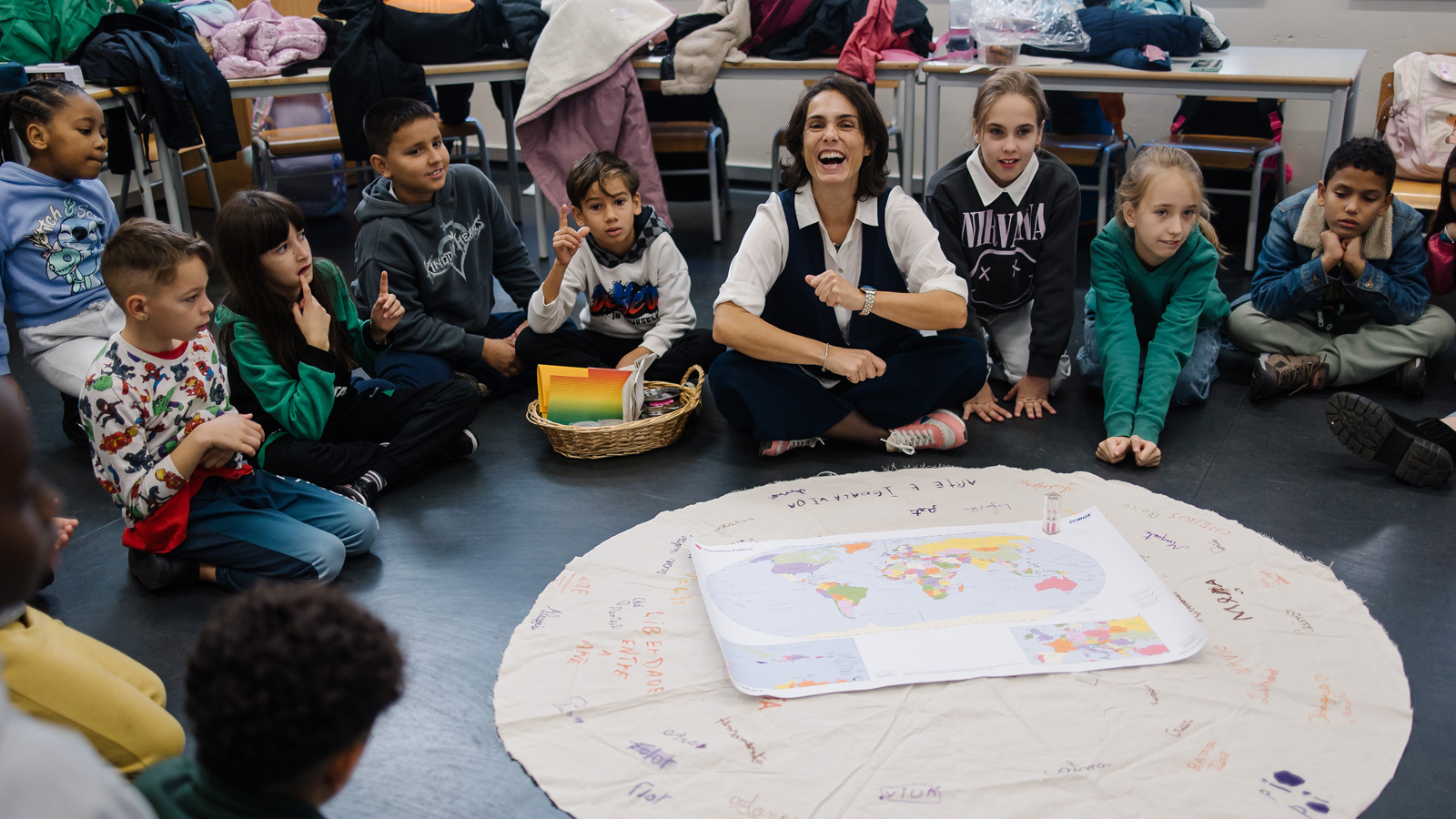
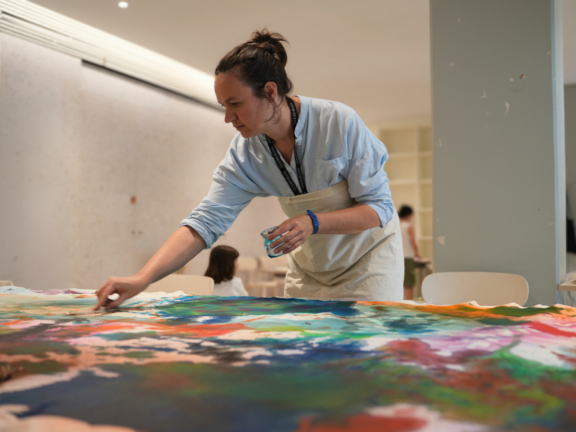
MF: There was also a sense of ownership: at the end of each session, they wrote a word on the cloth-table – a gesture that said: ‘this table is mine too’. In those words, you can also see the diversity of thoughts and of the conversation that took place there.
AA: For us, the most important thing is that they learned that being at the table means listening to one another, everyone having a place. It is to care for others. These children will sit at many tables throughout their lives. And the table is losing its power – fast food, phones at the table, people no longer truly present with each other. Now more than ever, in terms of citizenship, it matters to raise this question of the table and use food as an excuse to stop and talk to one another.
FP: When we asked how they could continue the project at home, they often mentioned the dinner table. The mission of planting that seed in them is accomplished.
AA: These experiences pass through the body somatically and stay there. Projects like this create fundamental memories for the future.
RE: As a final product, alongside all the practices, we have a cloth-table of memories: the words of an entire year. It is a beautiful object, and it is alive. The last word written by one of the children was: ‘thinking without getting it wrong’.
You may also like
No results were found for your criteria.