
Teatro da Maluca: ‘Our job is to bring people together’
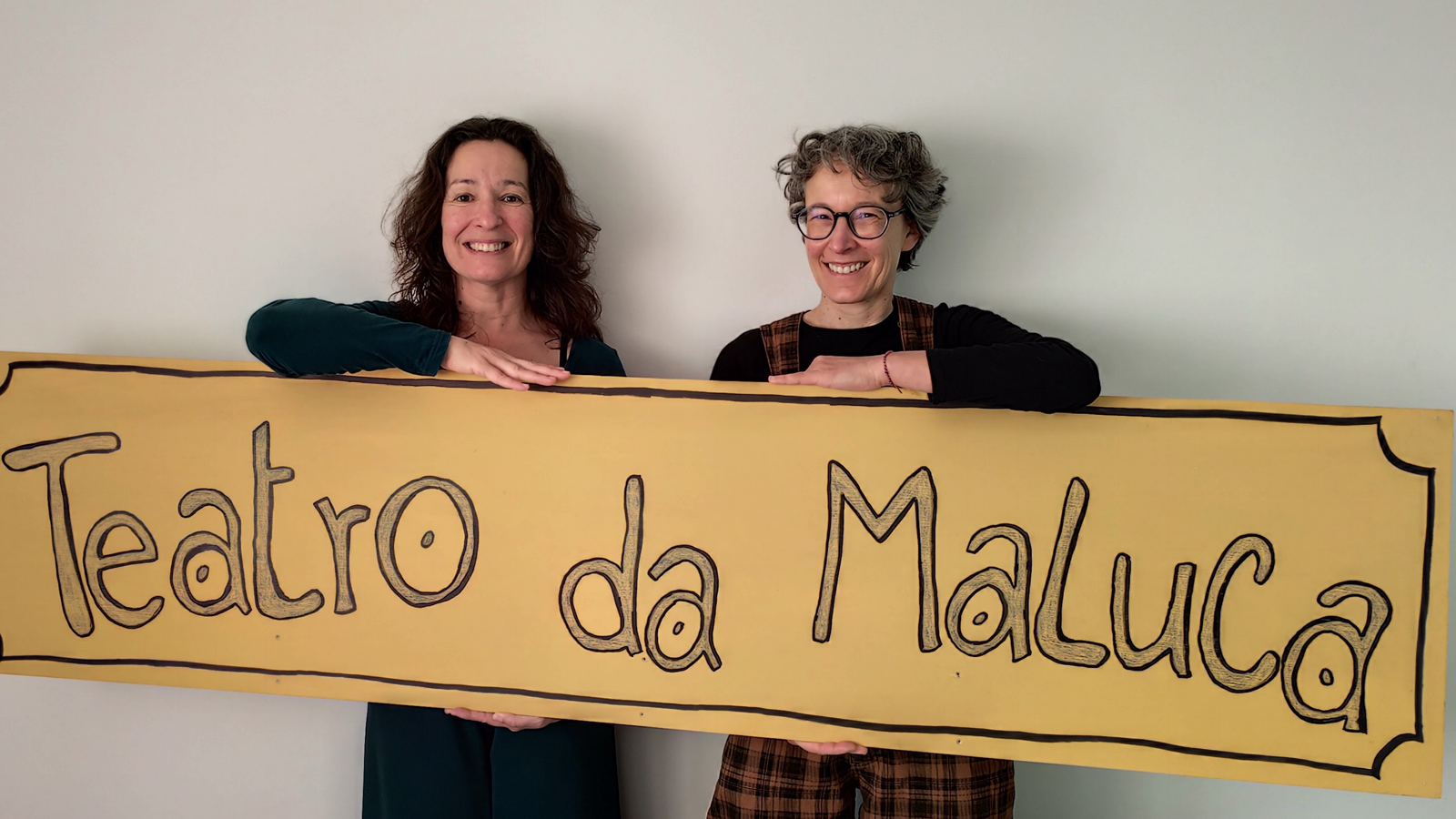
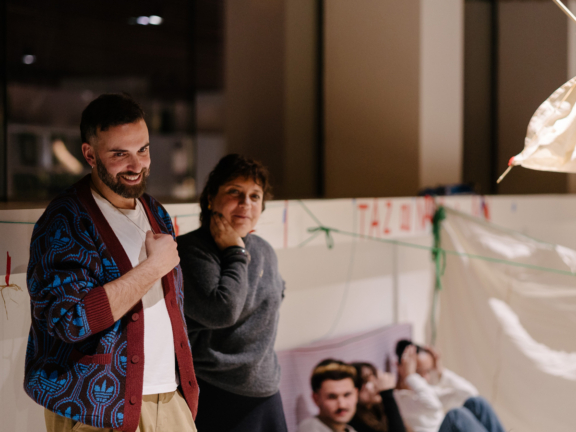
I visited Teatro da Maluca in Loures, where I received a warm welcome from Ana Limpinho and Maria João Miguel. After a quick tour of their small but versatile space, we sat down to talk, over tea and biscuits, about the Teatro da Maluca project, their monthly ZAF – Family Arts Zone workshops at CAM, and other aspects of their work that extend beyond the museum doors.
Marta Espiridião (ME): How and when did the Teatro da Maluca project come about? And what direction did you want to take it in?
Teatro da Maluca (TdM): We’re both from Loures, although we went to different schools. We both did theatre at our respective schools, but we met at the Theatre Conservatory. Our first performance together was ‘quem me dera ser onda’ [I wish I were a wave], in 2004, and from then on we continued to create together. By coincidence, we both returned to live in Loures and it made sense for us to work for this community. That was how we arrived at Teatro da Maluca, which we launched on 21 June 2024.
From the outset, we always worked with a focus on stories, on human behaviours – as in the show ‘Memórias de Algodão Doce’ [Cotton Candy Memories], which recalled the Feira Popular amusement park. In other words, things that made us stop and think about human behaviour, and how people are brought closer together when they go to see a show.
For example, a show about loneliness among the elderly, in which we wanted to think about what we’re all doing in this world, what remains at the end. We don’t start with pre-written scripts, but with texts that aim to explore a certain theme, which we then work upon as a group during rehearsals.
What we think is: ‘What do we feel like talking about? What do we want the audience to feel after this show?’ We know that theatre in itself is nothing, all it takes is someone to watch and someone else to perform. Either we make this something special, working with the kind of memories that endure, or it’s nothing. What’s important is to think about what’s pressing at any given moment.
ME: Where does the name ‘Teatro da Maluca’ come from?
TdM: It comes from a story about this square, where we’re based, which is called Campo da Maluca because of a lady who lived here in the last century who was regarded as a ‘maluca’, a madwoman. Because we generally work from stories, we like to say that the first story is that of our name. And our first performance was precisely about the madwoman’s story.
The madwoman was a washerwoman and lived an unconventional life. She was visited by a man who wasn’t from around here, she was a single mother… Her behaviour was regarded as ‘different’. All we have to work with are the remains of things, but from those remains we rebuild a story, which becomes our show. But, in fact, this name also serves as a warning, not just about the stories that each of us brings, but also about the way we label one another so quickly.
ME: What other activities does Teatro da Maluca host?
TdM: We have our show, ‘Maria Maluca’, which is now on tour. We hold some sessions in our space, but it’s very small and can’t fit more than 15 people, so we present the show in the venues of different associations in the Loures area.
We also hold sessions on traditional storytelling, called ‘a Tale and a Tea’, and organise full-day workshops, or week-long workshops for kids during the school holidays. We also have our ‘bibliotroca’ [book swap library] and puppet workshops. The idea of these workshops is to create puppets with familiar materials that the children can use at home without having to spend a lot of money. For the ‘Feira Saloia’ [Country Fair] in Loures, for example, we made some little model theatres with short legends that can be staged using paper figures. Our intention is to enliven staged readings or small shows, to create a visiting habit among the public, without it being in a classroom context. For example, for ‘Maria Maluca’, we held some story-sharing sessions, and literary gatherings with various agents from the area.
Then we have our annual theatre workshops, once a week. We have three classes: children, young people and adults. We started last year, so this is the second year. At the end, we’ll have our ‘Teatro da Maluca Festival’, where each class will present a show. We don’t do it here because the space is too small, but we have a partnership with a nearby collectivity, in À-das-Lebres, to show our work. For the classes, all we need is creativity. It is enough to transform our tiny space. It’s small, but we try to make it a bit bigger and more functional; it’s a very welcoming environment.
In addition, we have accredited training: at the moment, we’re offering training for storytellers. And we have a partnership with the school libraries, where we hold story sessions for the first and fourth years of primary school. We also offer workshops for schools, for both pupils and teachers.
ME: How did your collaboration with CAM come about?
TdM: It was thanks to CAM’s call for proposals to some associations, in which we were included. When we were chosen, we thought: ‘this is a fun challenge’, shifting from the specific context of the theatre to the museum. One of us has a background in set and costume design, which involves an aspect of the visual arts applied to theatre, and another is an actor, theatre director and dubbing artist, so we tried to create a project that combined both things, the performing arts and the visual arts.
ME: How do you approach the educational aspect? How do you relate the project to the museum?
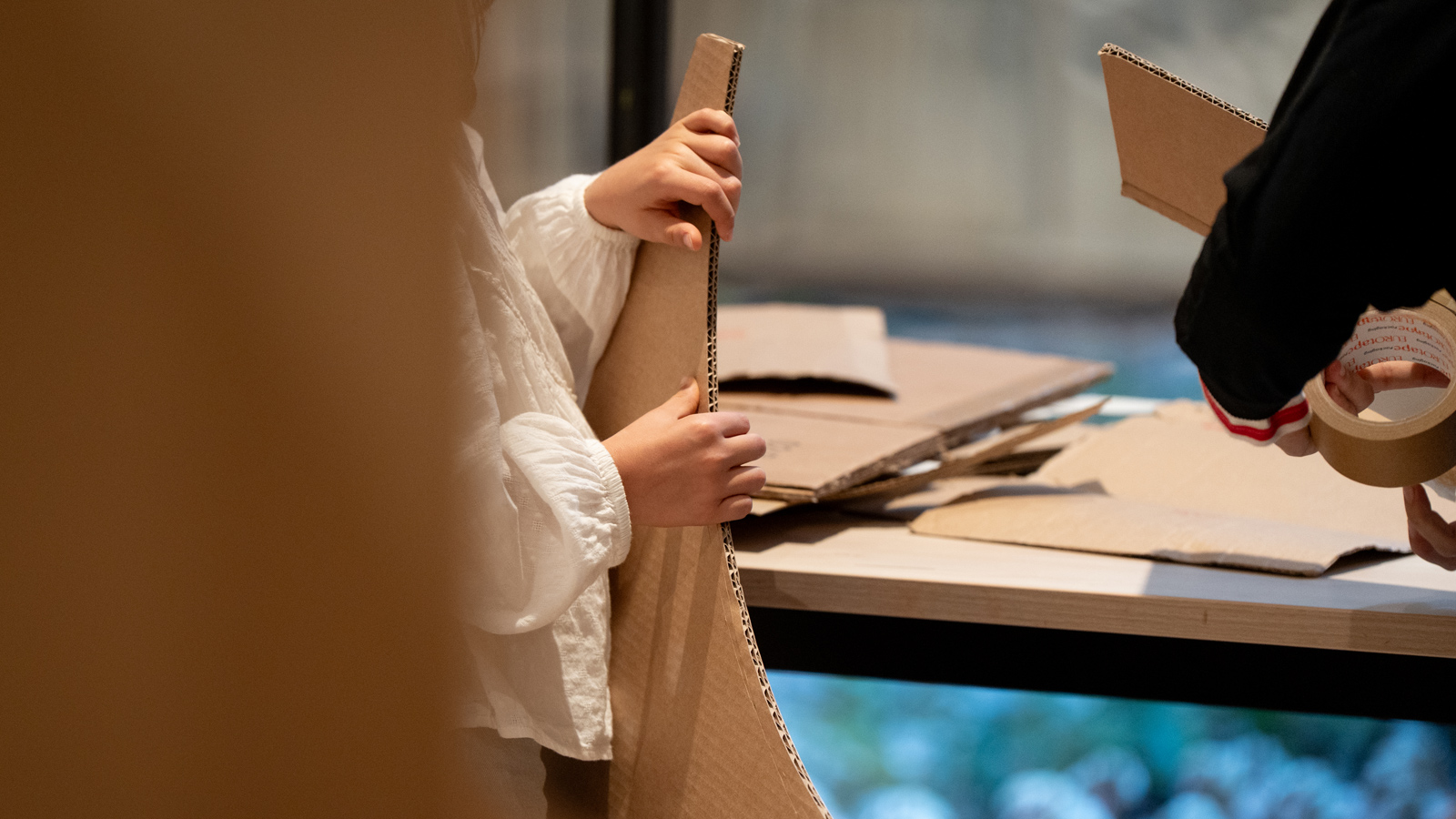
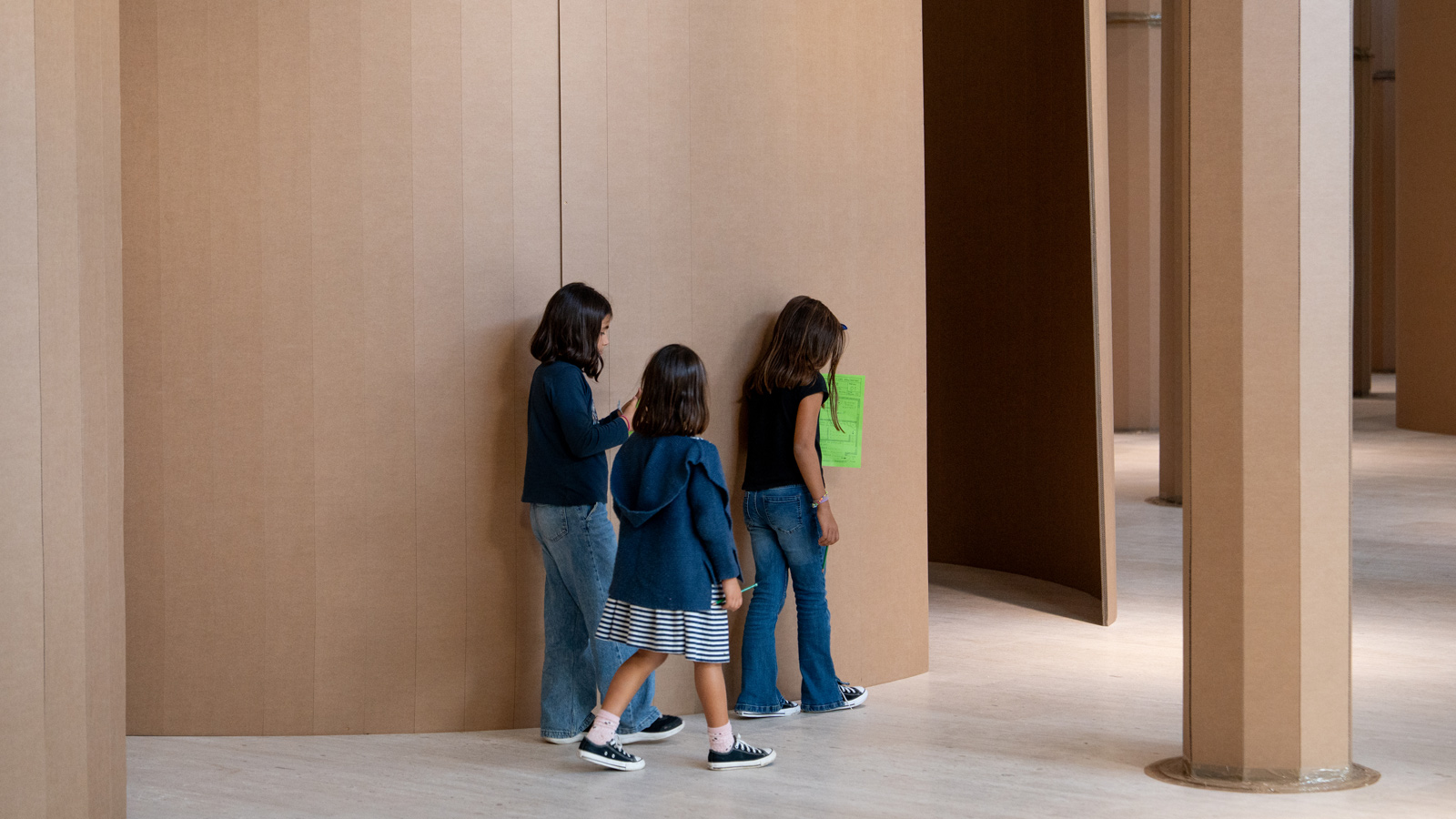
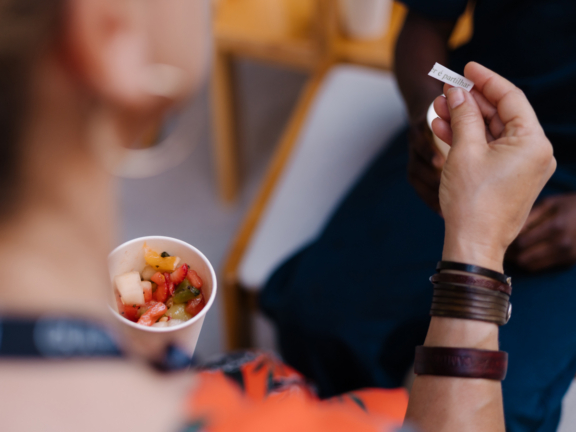
TdM: When we’re going to an exhibition, we place ourselves right there and think: how will a child be able to enjoy themselves here? What can we do to make the child accompany their parents, and the parents accompany their child? With that in mind, we approach the ‘exhibition sheets’ placed around the exhibition as a kind of treasure hunt. It’s always a game, a bit of fun. Some of the sheets can be turned into paper fortune tellers, and in others you can join the dots to reveal a detail in the work. We’re always thinking about challenges that make these sheets appealing, so that when they return to the ZAF space, they want to play and are armed with a bit of information. The main question that arises when we think about the educational aspect, the museum, the exhibition, is ‘how can this experience be shared?’
ME: What intersections do you find between theatre and contemporary art?
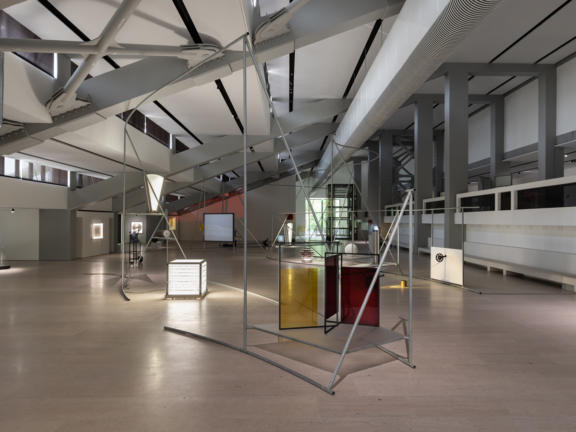
TdM: We believe there’s an increasing crossover between different artistic areas, and that’s a good thing. The performing arts exist in the visual arts, just as the visual arts exist in the performing arts. It’s all interlinked. And CAM, as a place of contemporary art, has works that are multidisciplinary. For example, the Zineb Sedira exhibition, which inspired the ‘posters for a better world’ workshop, was extremely scenographic. And perhaps the most difficult to work with – it was a challenge. We got there and thought: ‘What are we doing here?’ It’s interesting because it gets us out of our comfort zone and we start asking questions.
We truly believe that the intersection takes place at the very moment when all of us, CAM, Teatro da Maluca, and the audience, want to be with each other. And there are no real boundaries: of course, no one can touch the works, but we can look at them and think ‘what if it were me?’
Essentially, we want to demystify art and give everyone the opportunity to play a little.
ME: Could you tell me a bit more about what you’re developing with CAM?
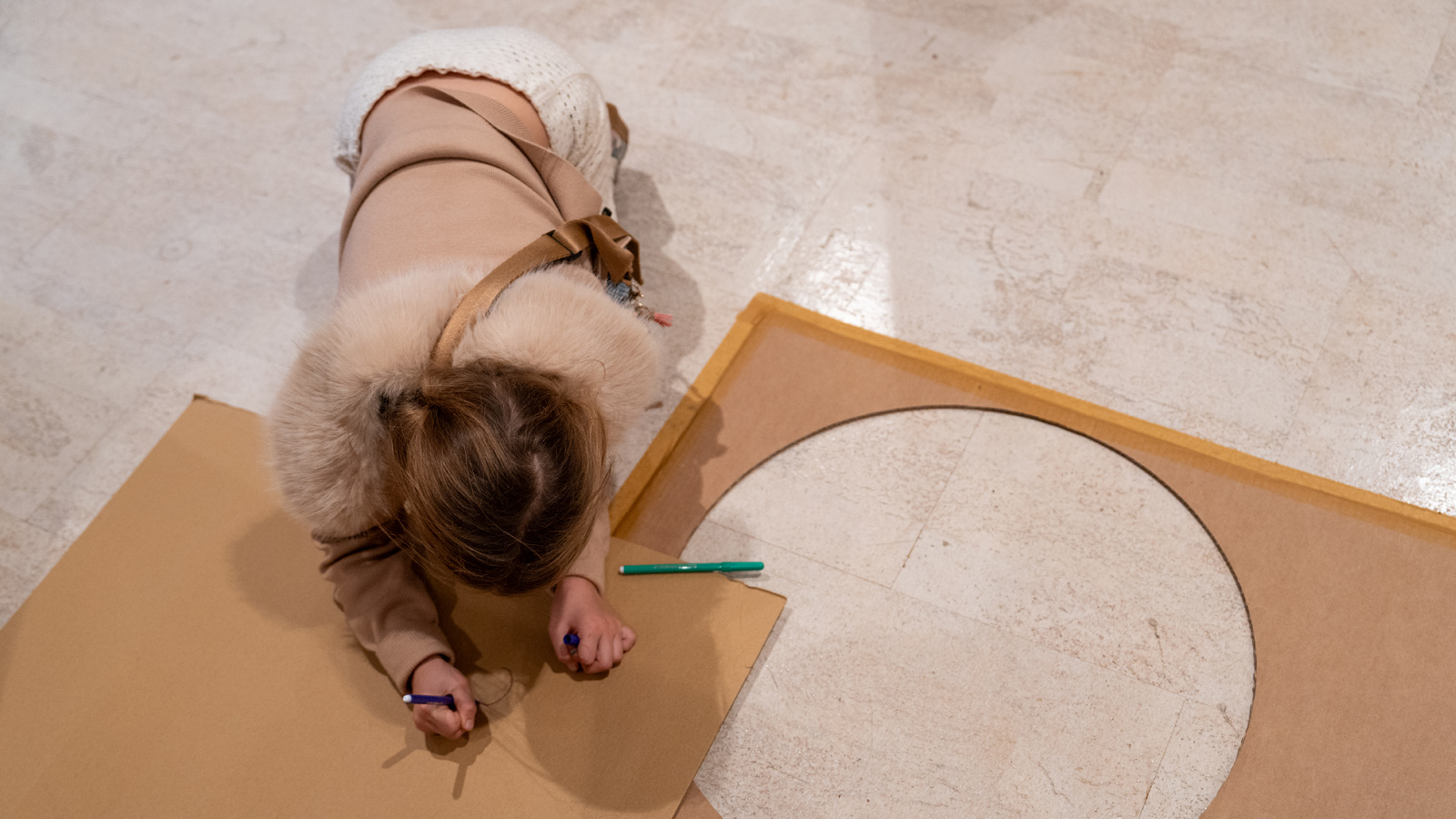
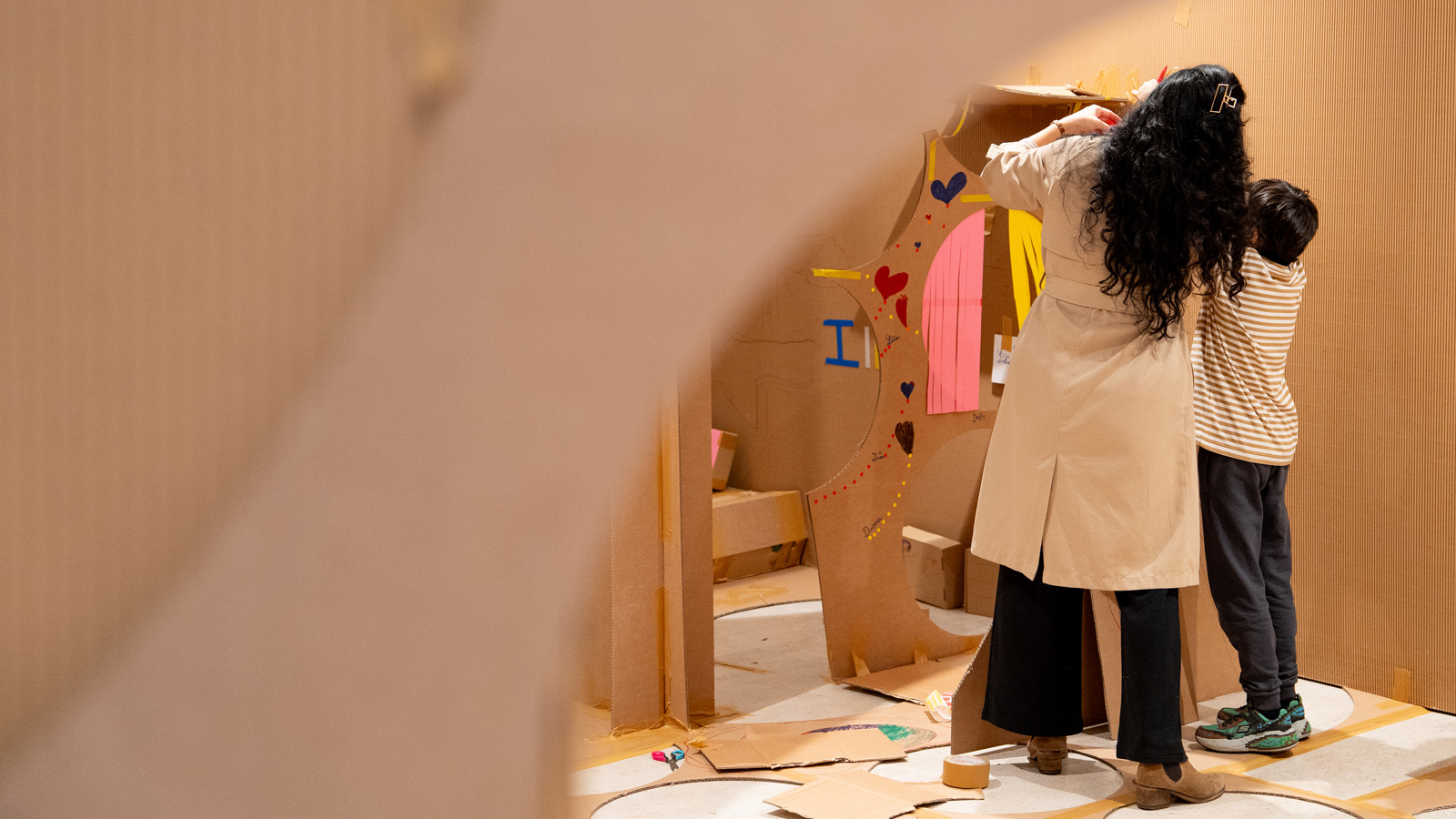
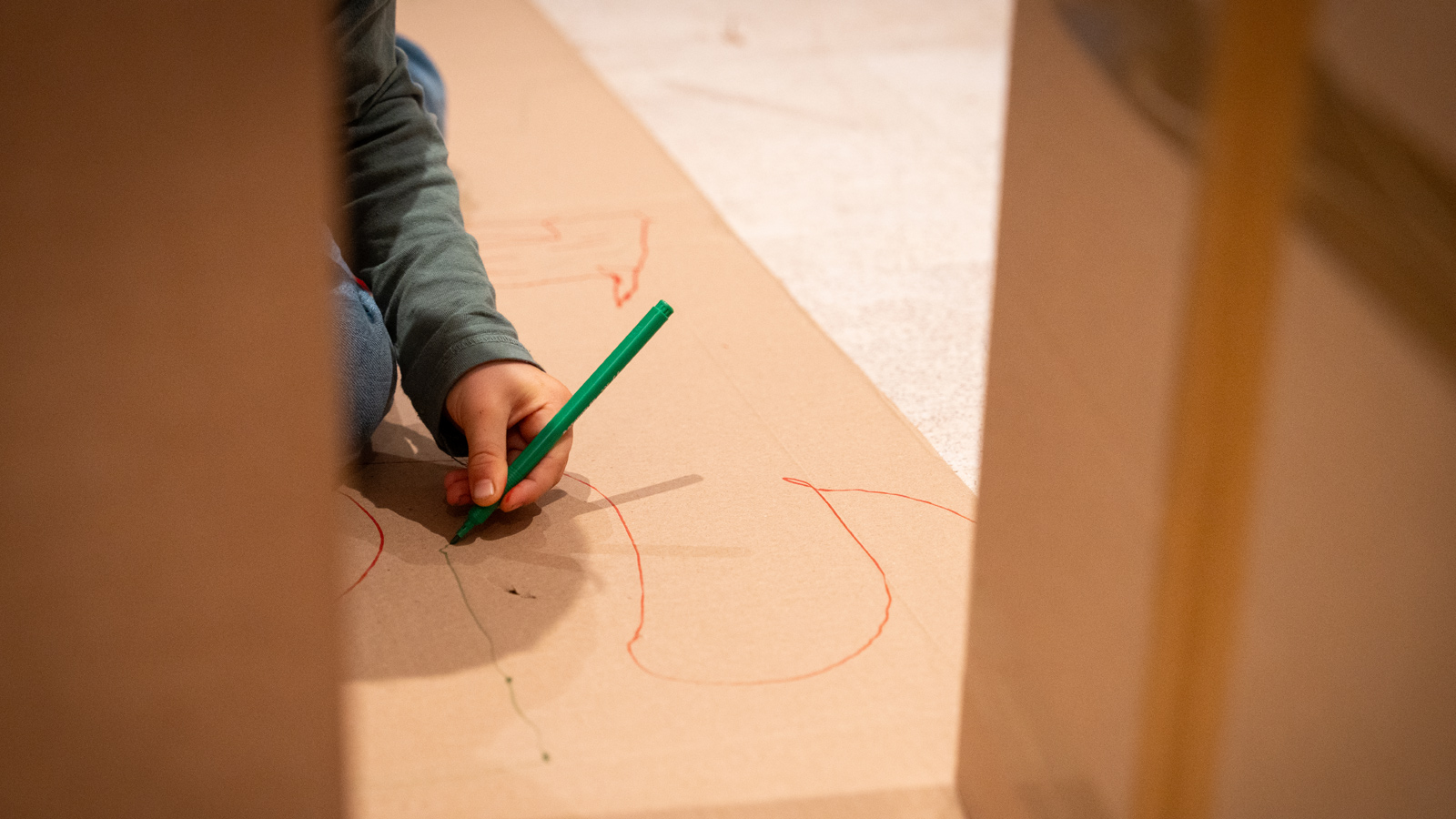
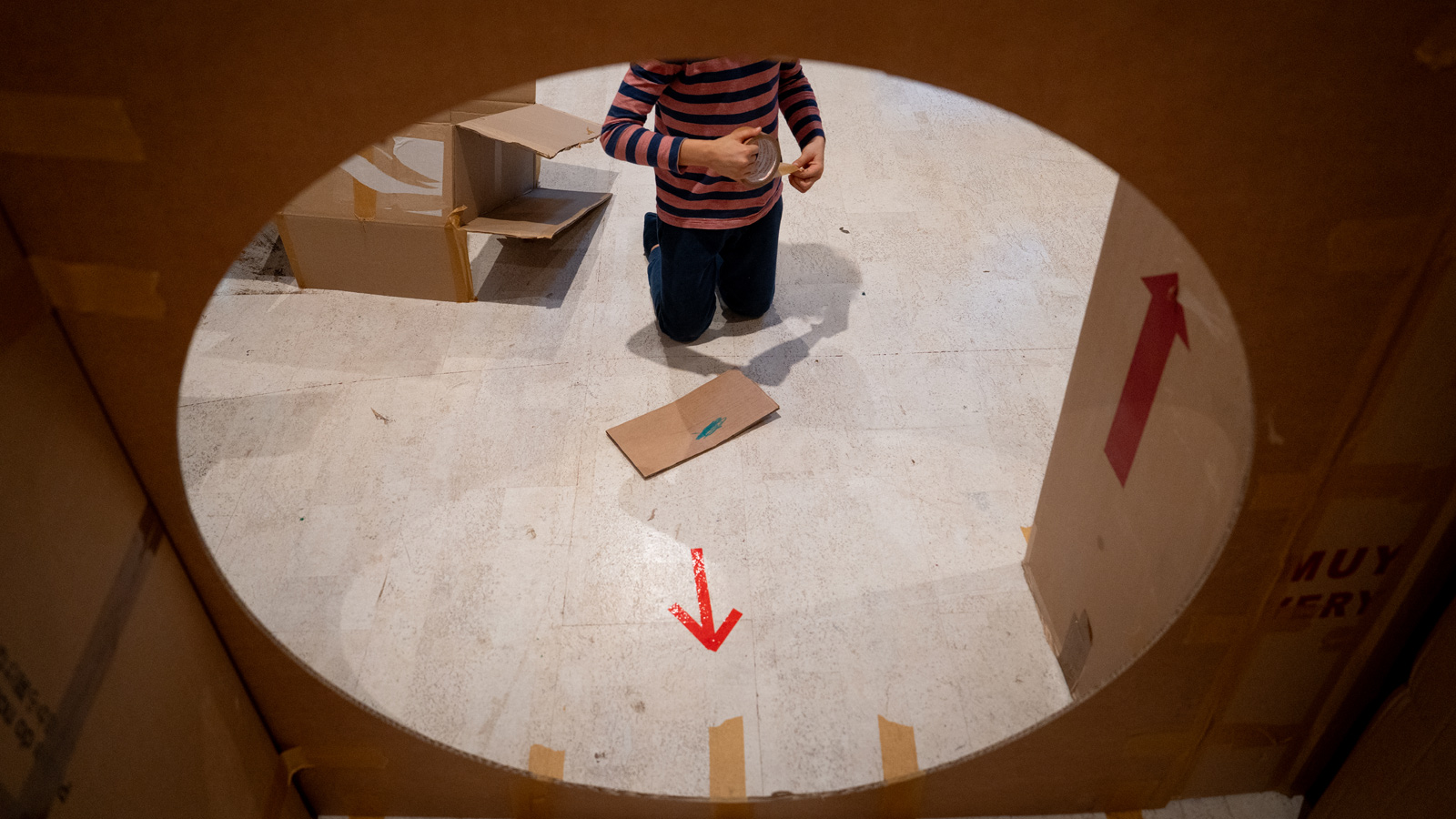
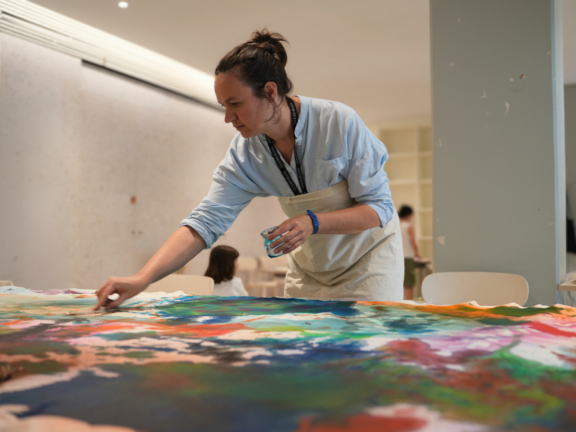
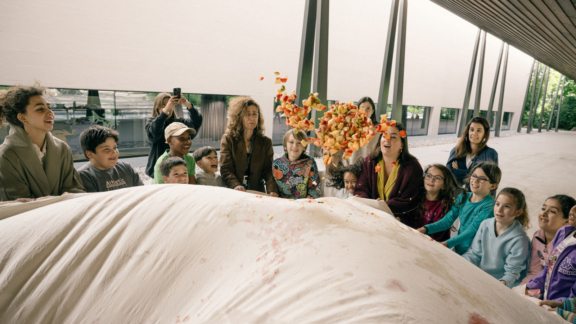
TdM: Our challenge was to create workshops inspired by one of the exhibitions taking place or a work exhibited at CAM. It’s a workshop for families, once a month, for a whole day and with free admission. People can arrive at whatever time they like and stay for as long as they want. Sometimes they stay for the whole day, it’s really nice. It’s very different from our more regular workshops, which have a limited time and a much more rigid structure. It’s a challenge that has given us great pleasure.
We invite families to go and see the exhibition first, with the exhibition sheets we compiled, and then to return to the ZAF space for the activities. Because normally we go to see exhibitions first and then we think about the workshop. At each ZAF session, we always invite a third person, so that we have people from different areas, with different styles and viewpoints. We’ve already had people from the areas of history, ceramics, architecture, sound…
ME: And have the ZAF workshops at CAM gone well?
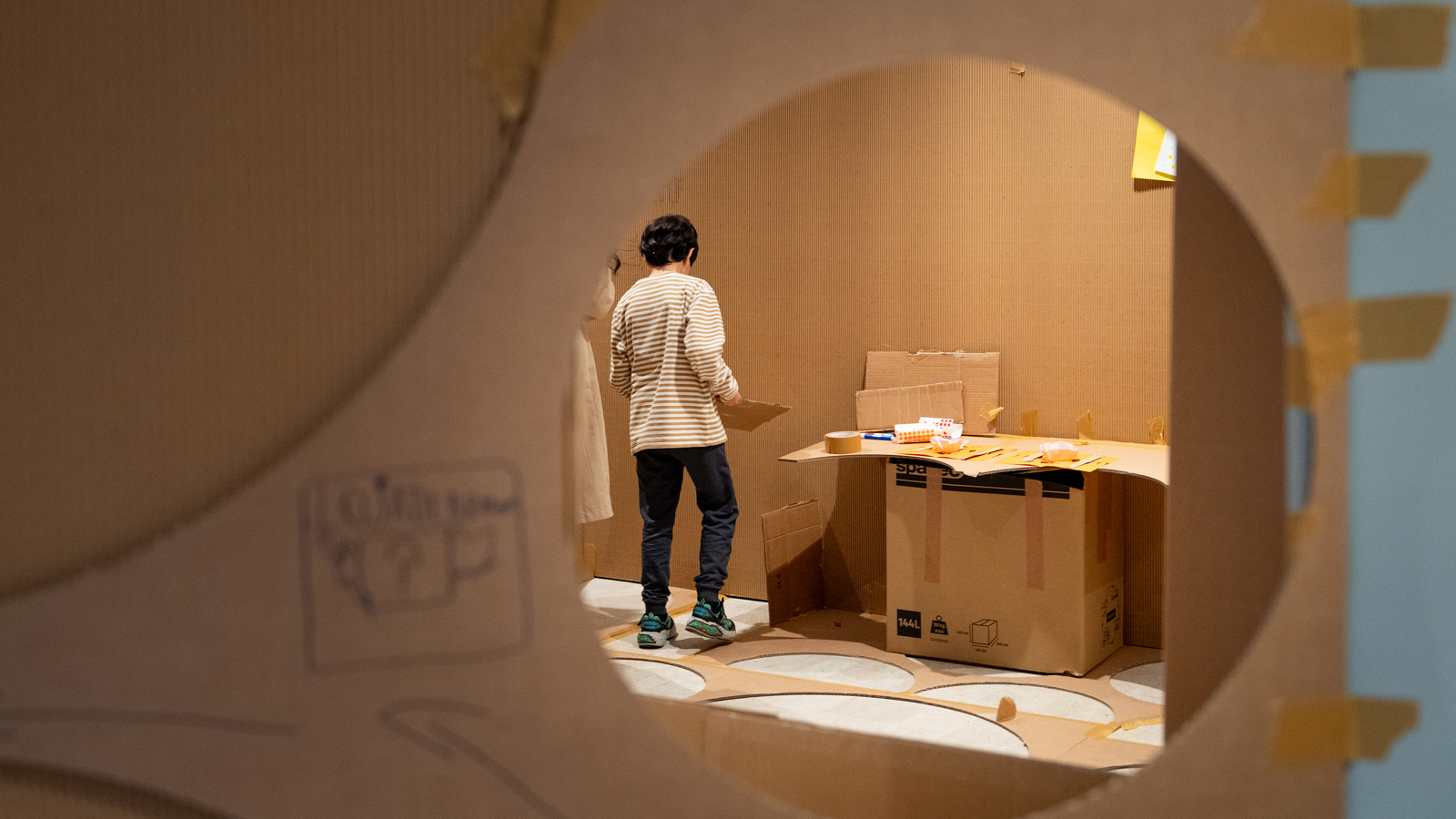
TdM: They’ve been very gratifying. We’ve always had lots of people, sometimes going over capacity. And the best thing is seeing people repeating it, marking it in their calendary and coming back. That’s an excellent sign. Several parents have told us that this is a brilliant way for children to see the works, the idea of setting challenges for the exhibitions forces them to look differently. They feel like the exhibition is for them too.
The way families join in is very interesting. We create a familiar space where everyone is welcome. It’s not just the children taking part and the parents watching or wandering off. We insist that the parents join in as well. They too want to play, want to draw, want to create. These days, there’s less and less time to play. And the children love it when their parents join in. When we’re all together, we’re creating moments of sharing that aren’t just for children and their respective parents; all the families share. It’s a place where everyone is at the same level, where no one is more important than anyone else. We’re all in it together. And we believe that the importance of the whole should be cared for.
In addition, there’s a strong sense of creating together through individual participation. For example, in a workshop where we recorded audiobooks, all the parents and children recorded a part, then they were sent the file at home, so they could listen to their voices alongside the others. They feel that: ‘I was part of this, this exists because I contributed something.’ It isn’t just the children that get involved, it’s the whole family.
ME: What are Teatro da Maluca’s forthcoming plans?
TdM: Something we really want to create this year is a book with legends from the Municipality of Loures. Using all the research we’ve done and, and since we’re a theatre, we want it to be related to the model theatre set, something in which we can put together a theatre, for the legends to be dramatised. A book that transforms into all this.
We’ll continue the tour for ‘Maria Maluca’, our show about the story after which our group is named. We want to take it to all corners of the municipality of Loures, to the associations and collectivities. Loures doesn’t have a theatre or cultural centre, so that’s why our way of reaching people is going out to find them, working with them.
At CAM, the collaboration continues. In the future, we want to explore the world of physics and, above all, shine a light on the people who work at CAM. Who are the ushers, who cleans, who does maintenance, who makes it what it is? That’s an idea we’re keeping for later.
You may also like
No results were found for your criteria.