
Eduardo Batarda: ‘Nothing within them presents itself as the thing itself.’
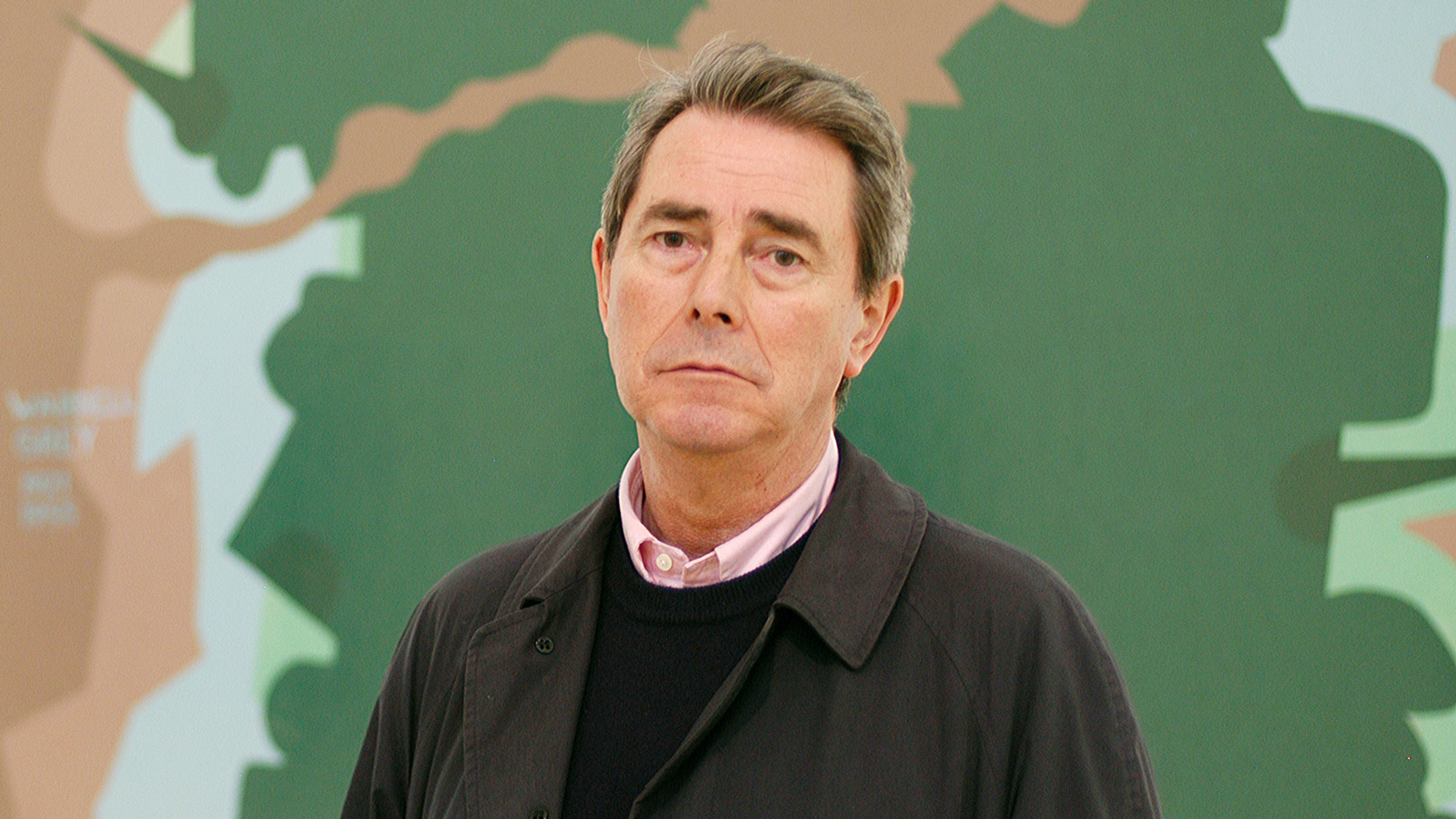
The narratives associated with Eduardo Batarda (1943-2025) run through Portuguese art in crucial ways. Almost everyone who spent time with him added yet another layer to the understanding of his character, both as an artist and as a (mythic) figure in the collective imagination. My own perception of Batarda was formed in that same way: through years of listening to the stories shared by fellow artists, friends, students (and enemies), as this figure gradually came into view during my years as an art history student.
‘Eduardo Batarda’s paintings are not merely paintings; they are paintings that tell us and show us that they are paintings and nothing (?) more than paintings. They are meta-paintings, but as they are also paintings, we cannot avoid being left with yet another problem (…)’.[1]
Now that I have been able to carry out more in‑depth research, I can identify and confirm the multiplicity of facets that contributed to making Eduardo Batarda an intentionally opaque artist. As Ernesto de Sousa writes: ‘But also because a doubt lingers – all the more pertinent given that the painter-critic is unquestionably intelligent: might all this be a very deliberate fraud? Might Batarda be having a laugh at our expense? And deep down, might he be entirely aware of this exercise in emptiness and monotony? This, indeed, would be shocking, and in a different way outrageous.’[2]
It is within this context that I offer this tribute to the artist, at CAM’s invitation, following the recent acquisition of three of his paintings. To this end, I draw on as comprehensive a reading as possible, bringing together catalogue texts, interviews and audiovisual records.
I recall my first encounter with his work at the exhibition ‘Mise en Abyme’, in 2016, organised by Julião Sarmento at the Pavilhão Branco in Lisbon. Conceived with a retrospective intent, the exhibition brought together some of the artist’s most emblematic series. The sense of surprise I felt as a viewer led me to linger in the exhibition for an extended period, entering and leaving the rooms repeatedly, confronted by an aesthetic intensity that proved magnetic, obsessive and rigorous.
The pronounced diversity of styles, scales and symbols embodied one of the artist’s recurring mottos, ‘attempt-error-attempt’, and inscribed within his practice a continual pursuit of critique and a subversion of dominant artistic trends.
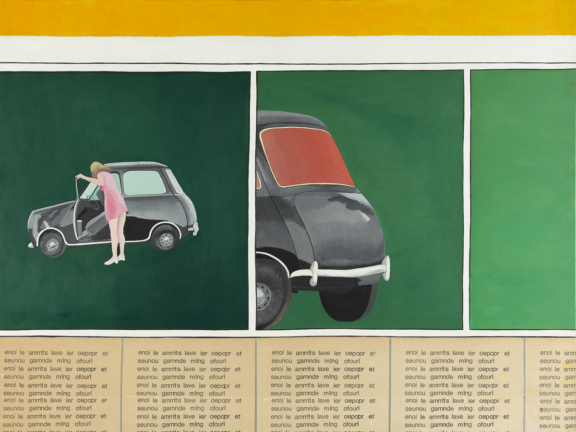
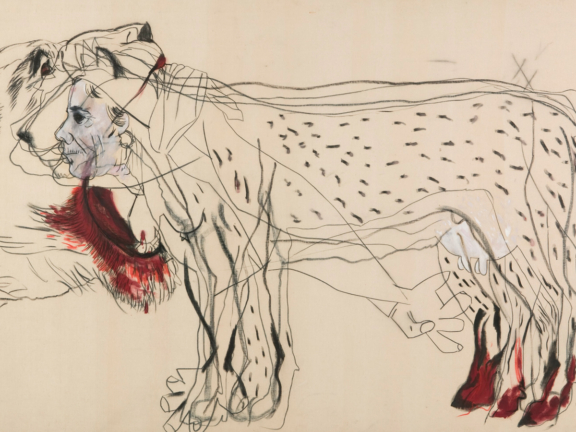
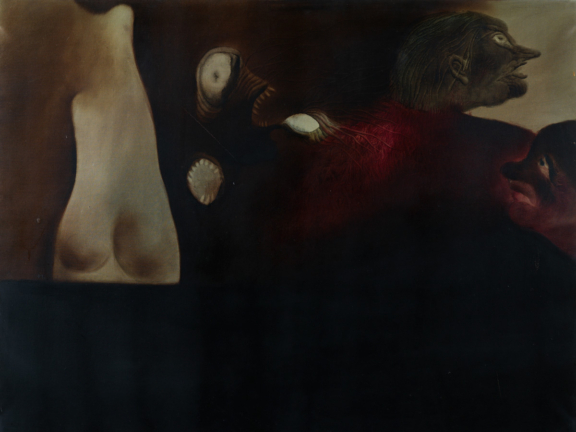
Eduardo Batarda’s artistic career began in the 1960s with his well-known watercolours. The artist observed that these works initially functioned as commentaries on painting, before asserting themselves as ‘animations’, humorous episodes, or comic-strip narratives. The watercolours articulate a clear ambition to be far more than simple images, embracing ambiguity and indeterminacy not as an impasse but as a productive field of tension. These works engaged directly with the artistic moment in which they emerged, drawing on the languages of illustration and comic strips while bringing to them an erudite approach drawn from the classical painting tradition.
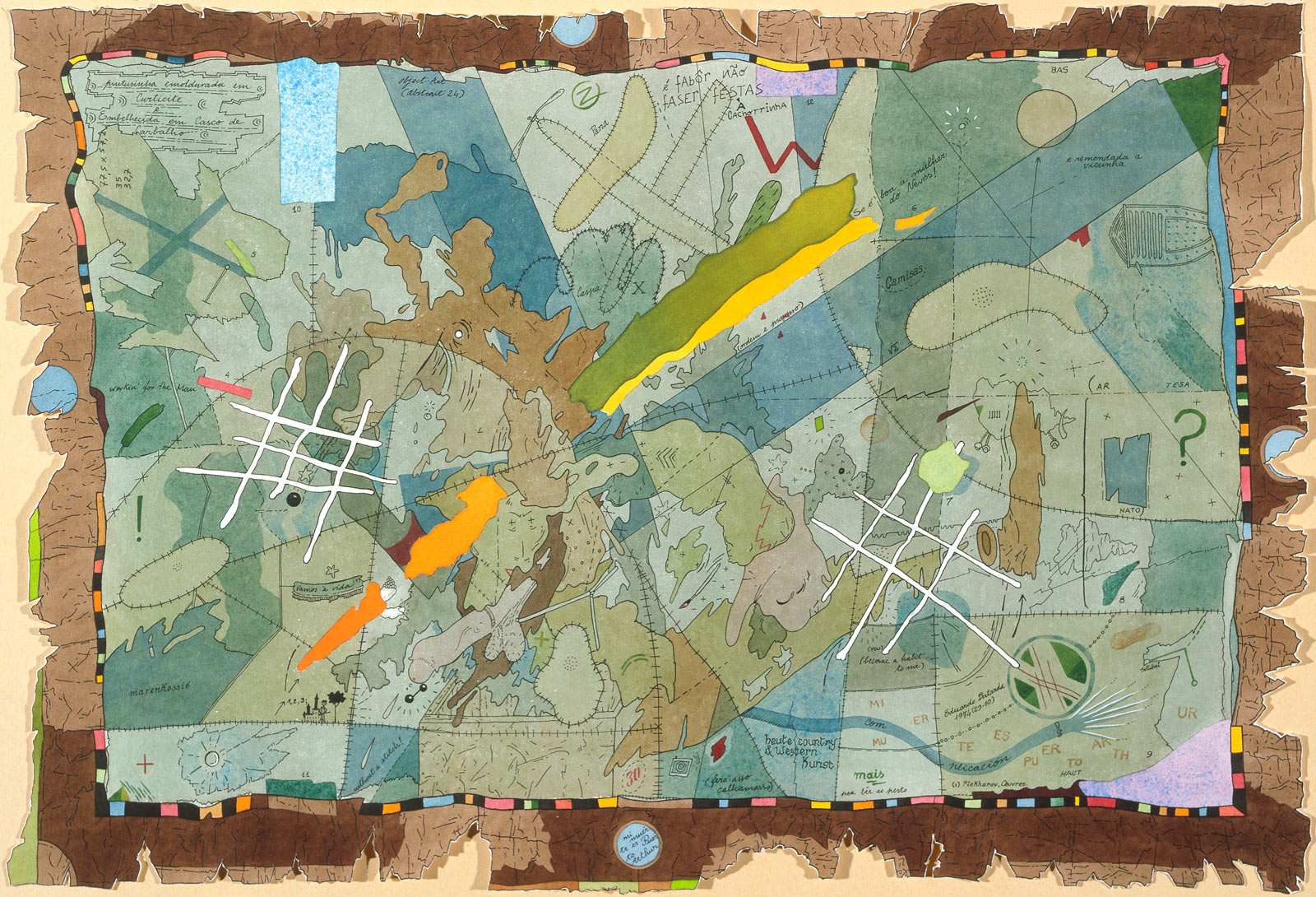
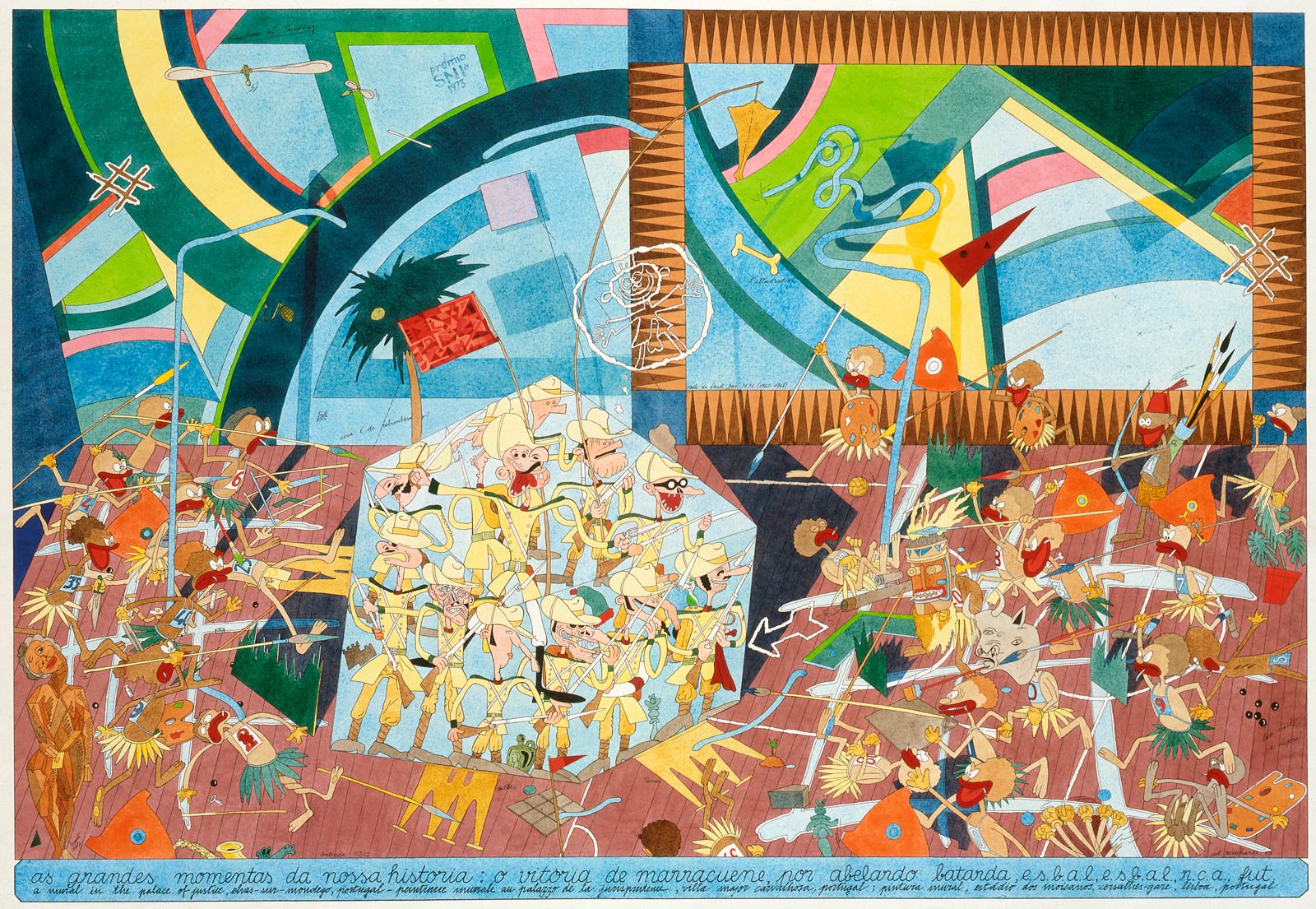
The works from this period reflect the Portuguese context, both in the circulation of the arts and in the hierarchies that shaped the artistic field. Classified as graphic arts, semi-pornographic, or minor, these images – often associated with amateur painting – find in Batarda’s watercolours a deliberately disruptive and oppositional gesture, one that asserts itself against the dominance of abstractionism and consolidates a critical and insurgent practice.
The artist, who always sought to distance himself from biographical readings of his work, made his dramatic and systematically ironic personality, his persistent problematisation of discourse and constant self-editing, as well as the opinions of those who wrote or spoke about him, a central element in understanding his artistic practice.
As Sarmento observed: ‘It is difficult to have a conversation with Eduardo Batarda. This is because, by the time he reaches the end of his discourse, sometimes we have forgotten the start, which may well now be the end… one never knows. Nor does one care. And because his speech is so filled with dashes, brackets and parentheses, which almost always refer to something unusual, hung on the start of the sentence without allowing the end to be seen, sometimes we are unable to understand where he wants to go. Or we forget. Which is our own fault, of course. Because the discourse, although long, is always flowing, efficient, clean and simple.’[3]
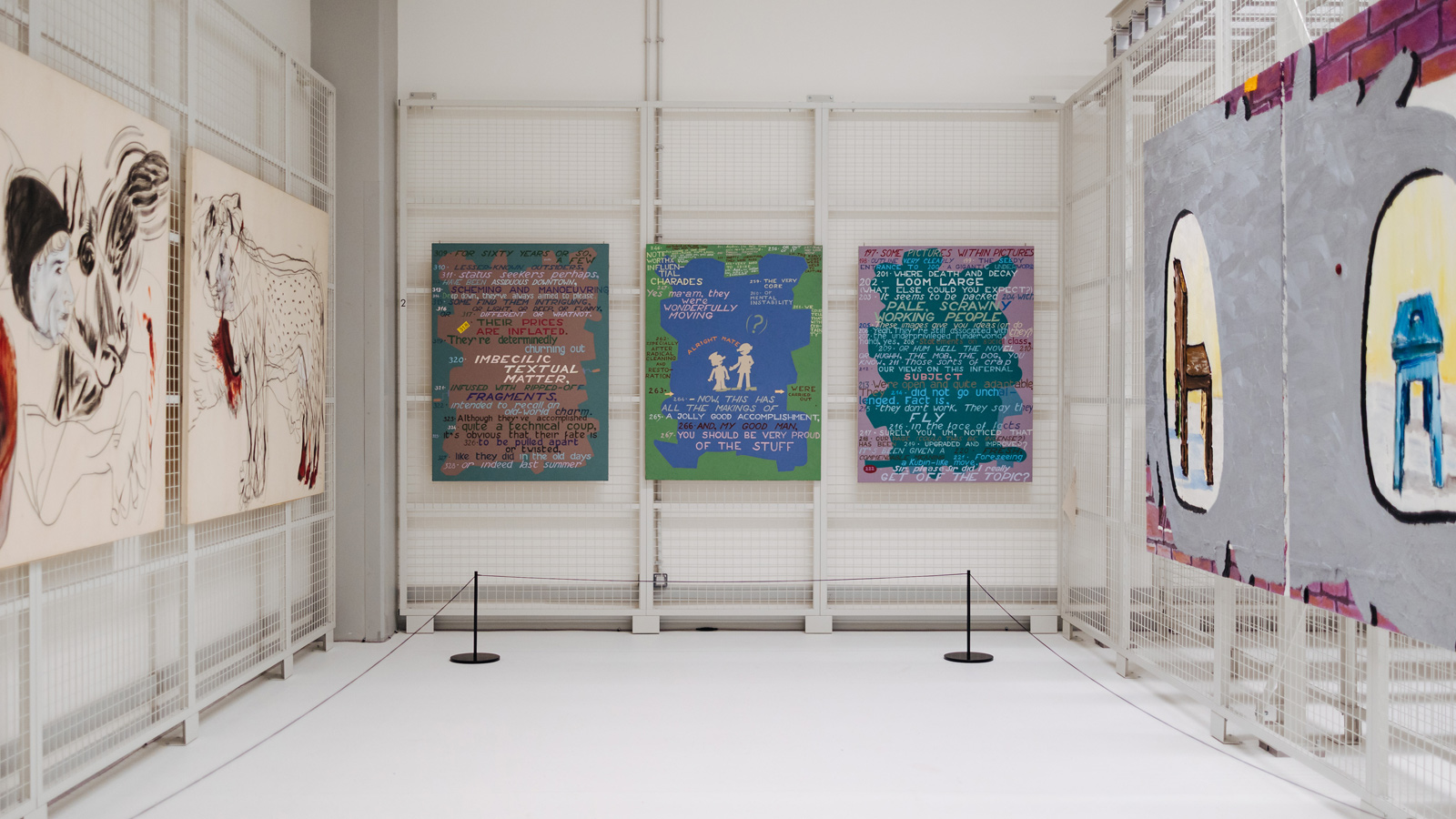
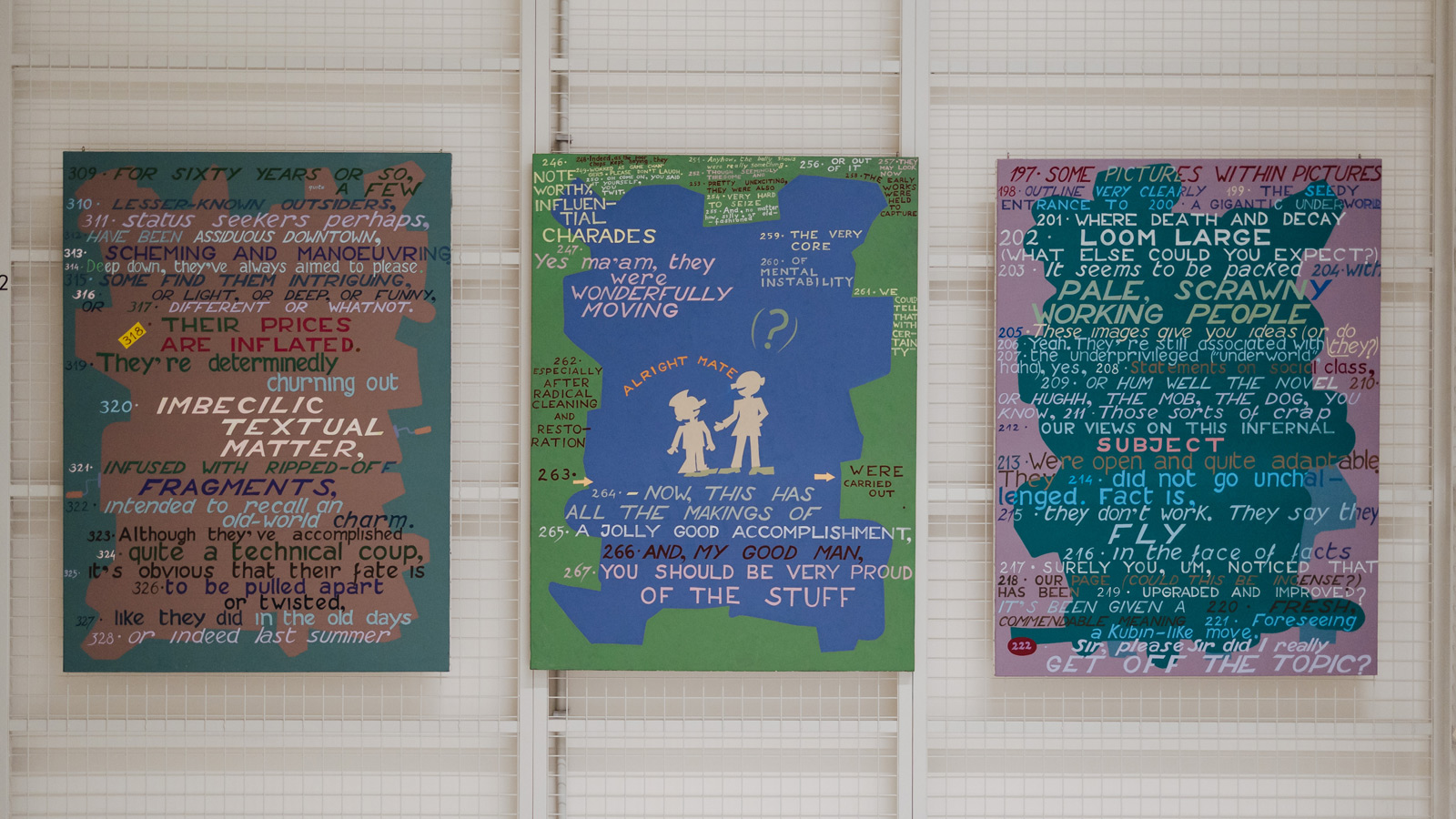
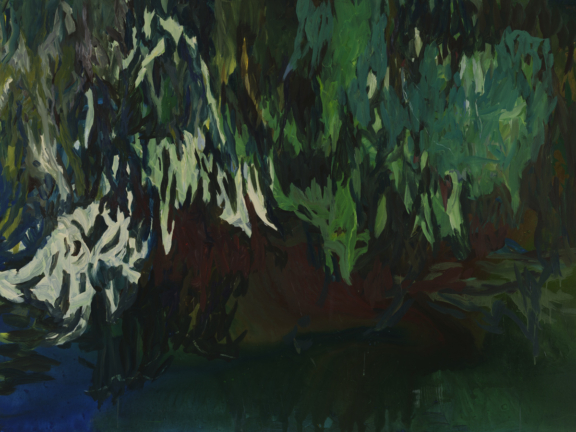
The three paintings acquired by CAM: ‘Image descriptions, 2 – [Imbecilic Textual Matter]’ (2017); Image descriptions, 2 – [A Jolly Good Accomplishment] (2017); Image descriptions, 2 – [Pale, Scrawny Working People] (2017), form part of the series ‘Image Descriptions’ (2017) and were shown at Galeria Miguel Nabinho in Lisbon. This title, the artist explained[4], refers to a literary exercise from Classical Antiquity: a prose competition in which a painting or bas-relief was described exhaustively and rigorously, with the prize going to the writer who achieved the highest literary quality. Here, the reference appears only as an allusion: the works comprise sets of oblique, fragmented phrases marked by puns, quotations, banalities and scattered thoughts, produced in a similar and deliberately imprecise manner, such as: ‘Their prices are inflated’, ‘In the face of facts’, and ‘Yes ma’am, they were wonderfully moving’.
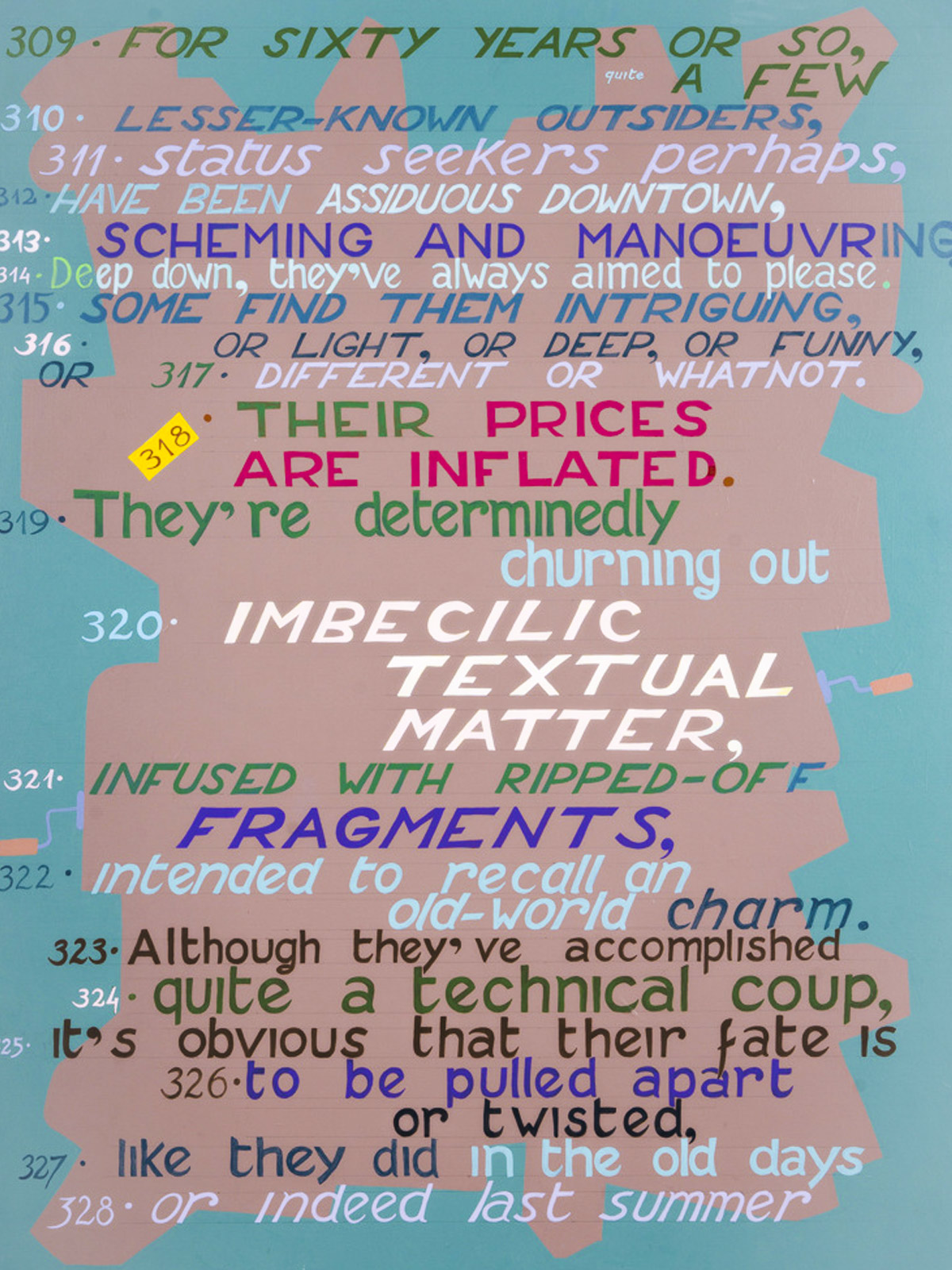
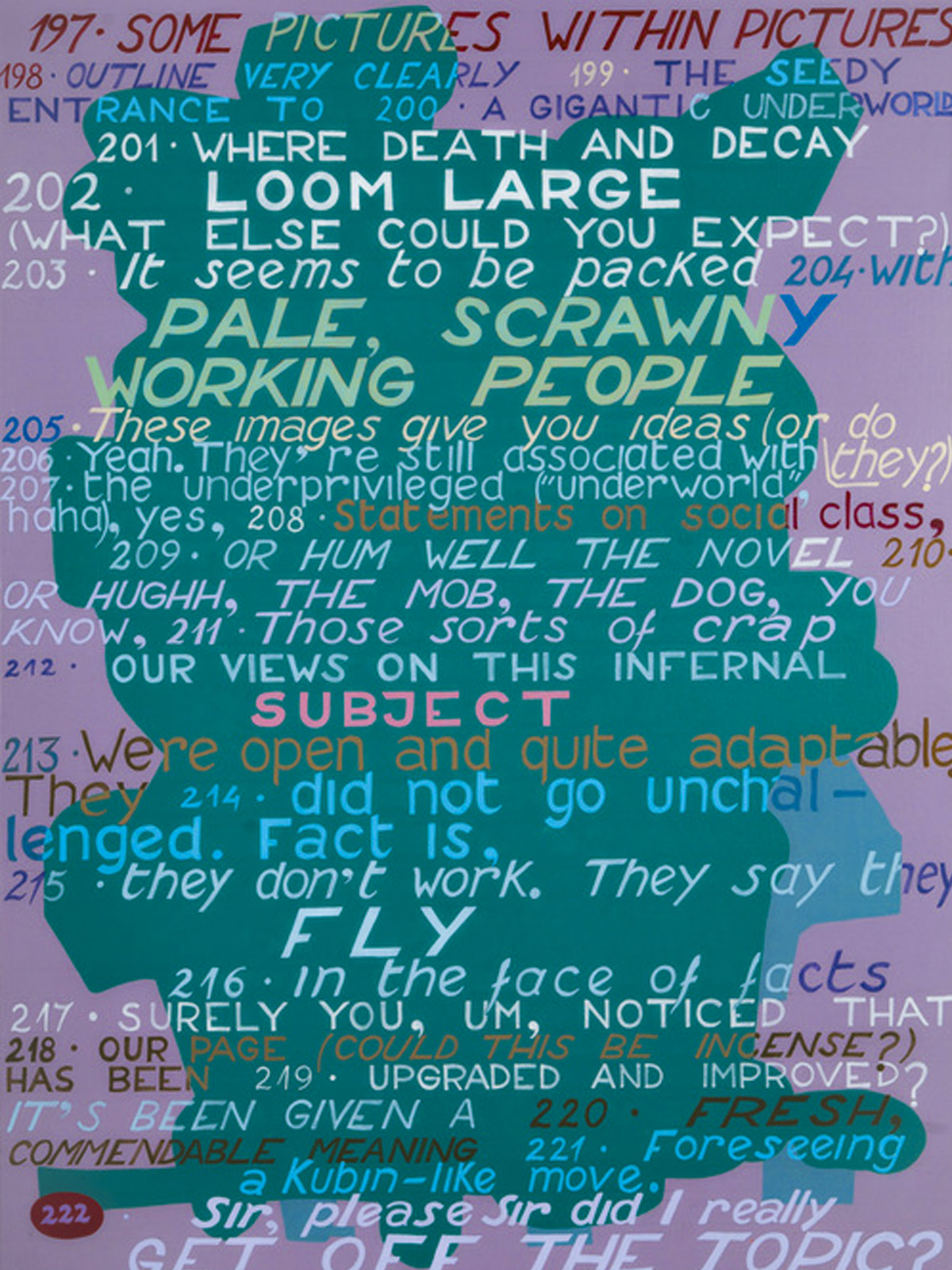
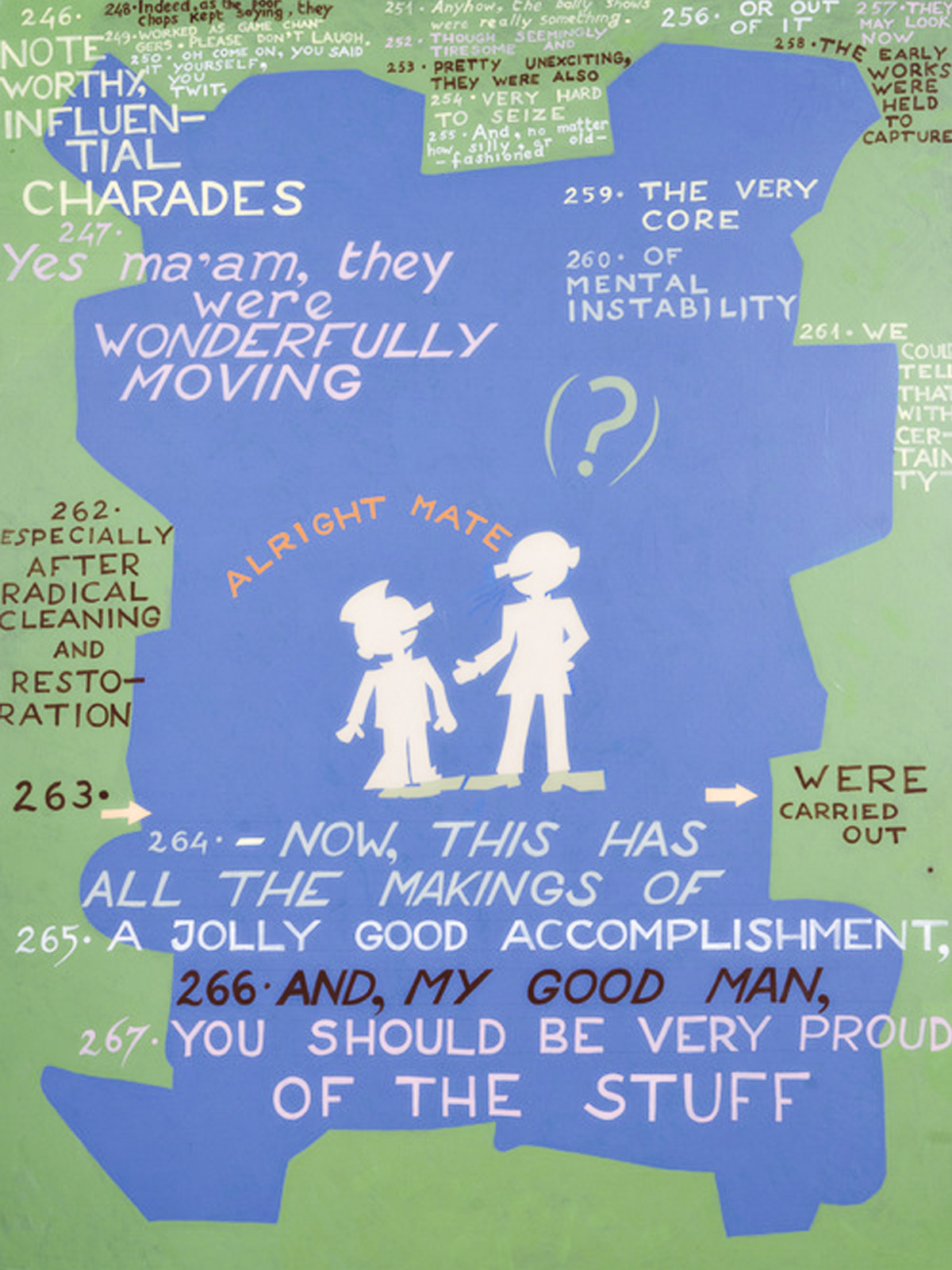
These works demand a physical engagement from the viewer, inviting their collaboration in reading the texts and interpreting the images, yet illegibility also plays a fundamental role. The text is incorporated into the image, drawing on references to works from the 1960s and following a ‘rigour born of ingenuousness’,[5] in which the visual construction obeys a kind of ‘pictorial mathematics’.[6] The composition functions as a map, a device of uncertain orientation, more akin to drifting than to representation. Although he did not consider himself a figurative painter, the words and phrases operate as elements of figuration, arranged through a collage technique (cut‑up method) and creating this field of tension between the logical and the absurd, image and language.
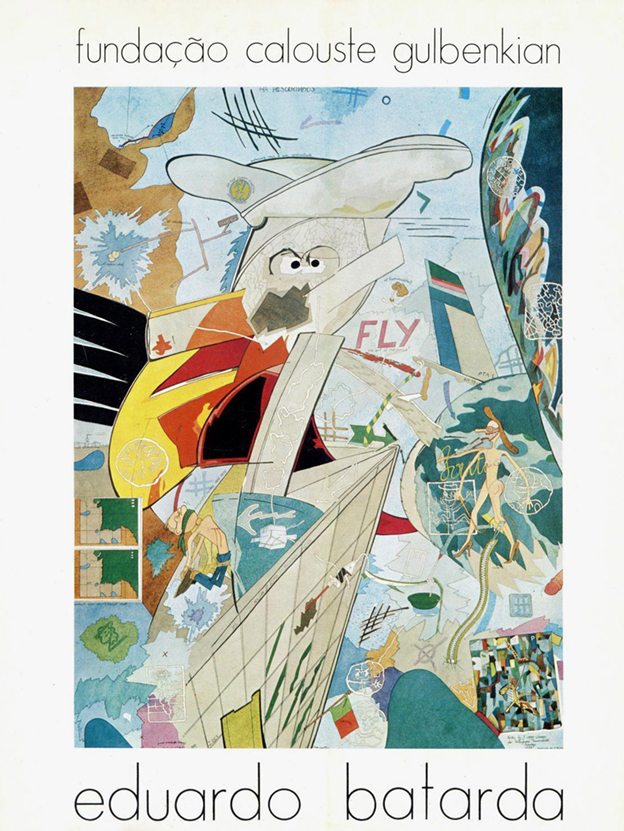
I would like to end with a quotation from Eduardo Batarda, taken from the catalogue text for his Calouste Gulbenkian Foundation grant exhibition in 1975, which clearly confirms the presence of a structuring critical intention from the earliest moments of his artistic practice: ‘(…) for the reading of these “pictures”: none of them, nothing within them, presents itself as the thing itself. They are citations, citations of citations, and, extending further, self-citations.’[7] This statement reveals a materialisation of self-referentiality in his works and a refusal of any transparency or representational immediacy. From early on, Batarda positioned painting as a field of displacement, where the image is constructed as commentary, repetition and friction, anticipating a practice grounded in the instability of meaning, in irony, and in the problematisation of the very devices of art itself.
[1] Alexandre Melo, ‘Algumas hipoteses especulativas’, in Eduardo Batarda, Pinturas 1965-1998, exhibition catalogue, CAM, 1998.
[2] Ernesto de Sousa, ‘Fora do jogo, mas ao contrário’, in Eduardo Batarda: Pintura, exhibition catalogue, Galeria 111, 1992.
[3] Julião Sarmento, exhibition Mise en Abyme, Pavilhão Branco, Galerias Municipais, Lisbon, 2017.
[4] Promotional video for the exhibition Image Descriptions, 2, produced by Galeria Miguel Nabinho, 2017.
[5] Isabel Carlos, ‘Três perguntas a Eduardo Batarda’, Revista Contemporânea, 2017.
[6] Isabel Carlos, ‘Três perguntas a Eduardo Batarda’, Revista Contemporânea, 2017.
[7] Eduardo Batarda Fernandes, Calouste Gulbenkian Foundation, 1975.
Works from the CAM Collection
Explore the series



No results were found for your criteria.
You may also like


No results were found for your criteria.