
Yonamine’s living sanctuary: ‘The only thing that moves me to make these pieces is called love.’
Yonamine (Luanda, Angola, 1975) spent a long period living and working in Portugal, and still maintains a close link with the country today. His artistic practice involves classic multidisciplinary techniques, such as painting, drawing and sculpture, using recycled or re-appropriated materials, with references to graphic design and in dialogue with music and politics. He approaches themes such as marginalised narratives, constant social transformation and a collective expression built around the subversive use of the symbologies and mechanisms of western capitalism, and applied to the reality he experiences as an African artist.
The work ‘ANOTHER DAY ANOTHER LIFE’ (2024) gives new meaning to the North American colloquial expression ‘another day, another dollar.’ In Yonamine’s reading, this phrase becomes a celebration of ‘carpe diem’, suggesting that each day should be lived as if it were a whole life.
The title of the work sets the tone for the group of pieces acquired by CAM, where the repetition of the word ‘another’ emphasises the fusion between commercial language and a spiritual dimension. As the artist explains: ‘More than anything, we are made of flesh. But we also have a spirit. And we can’t let that spirit die in our artworks. That’s what I love, having works that contain a social argument, that have a flavour, a smell, a volume, in other words, works that have four dimensions.’
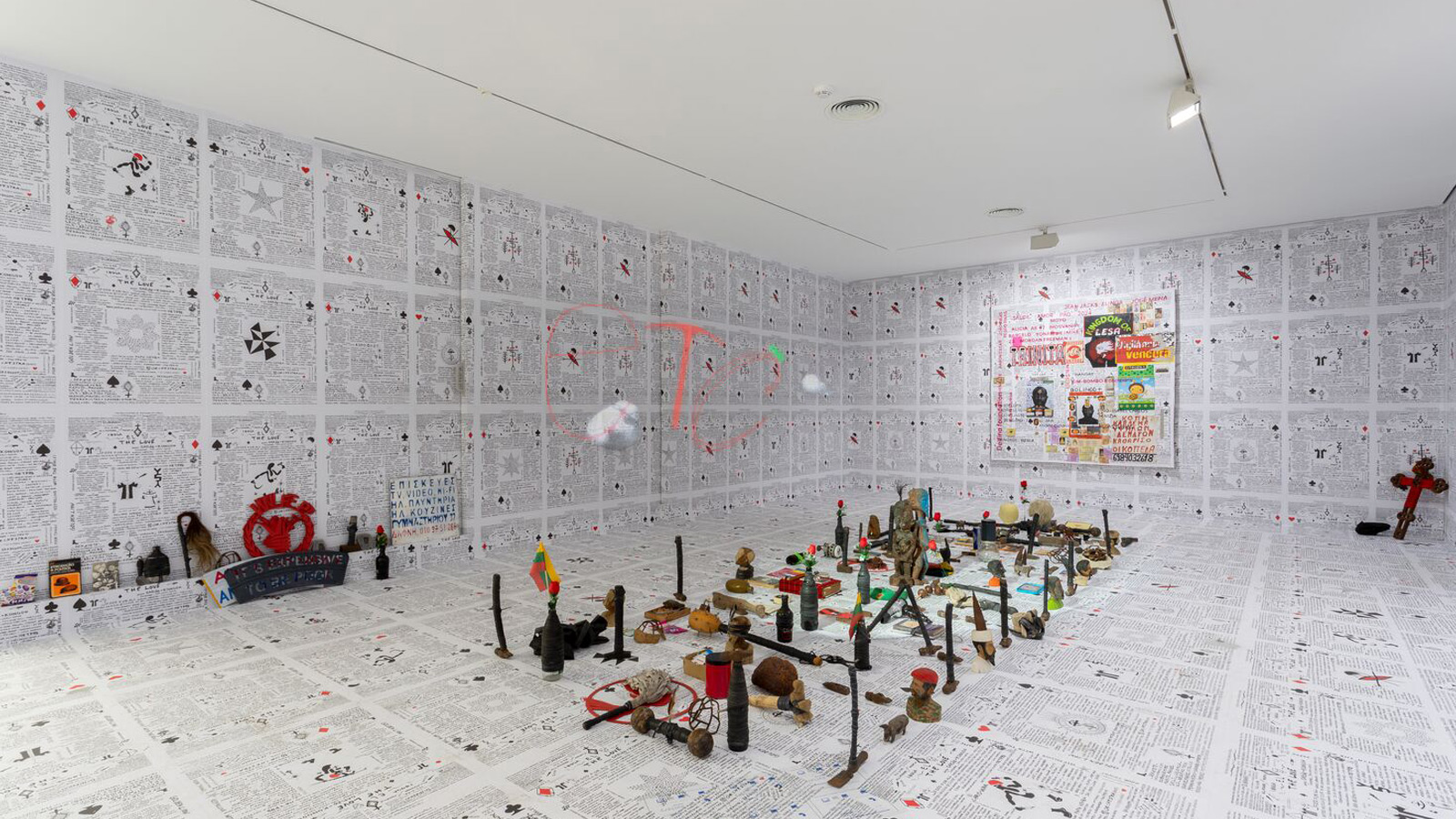
The installation was presented in a room with a mural of collages and objects such as statuettes, tools, talismans, flags and vases with flowers, arranged to compose an altar. The resulting ensemble suggests a place of worship, prayer, observation and consumption, where positive and negative energies meet, creating a situation of power, confrontation and catharsis. The work is also a tribute to the artist Paulo Kapela (1947–2020), an inspirational friend to Yonamine, and a symbol of resistance and activism in African culture and politics. In the artist’s words: ‘As well as being an homage to Kapela, it is also a provocation aimed at Portugal and an attempt to highlight other things that, as a rule, are not shown or regarded as works of art. It is not just in Portugal that the contemporary art system expects clean, finished things, pieces that are ready to hang on the wall and with an easily-identifiable commercial value. When different pieces appear, it scares them.’
The absence of plinths and barriers, the scale of the pieces and their placing on the floor allow the public to get close to the work, which humanises it and encourages a more personal reading that blurs the boundaries between art and everyday life. ‘We need to feel the ground beneath our feet a bit more, feel that contact with the earth, with nature, before we start to paint, before we can hope to make true altars like Paulo Kapela’s. Really, all those who aspire to be like Kapela lack that ground. One needs need ground first, before one can build an altar. That’s a criticism.’ This attitude, anchored in real facts and experiences, amplifies the audience’s identification with the work and fosters a relationship with the artist’s values: ‘Perhaps that altar represents a philosophical lesson about living our lives, the idea of travel.’ Collective expression and shared rituals are central elements in Yonamine’s work and the invitation to interact and participate, albeit indirectly, challenges the traditional passivity of artistic contemplation.
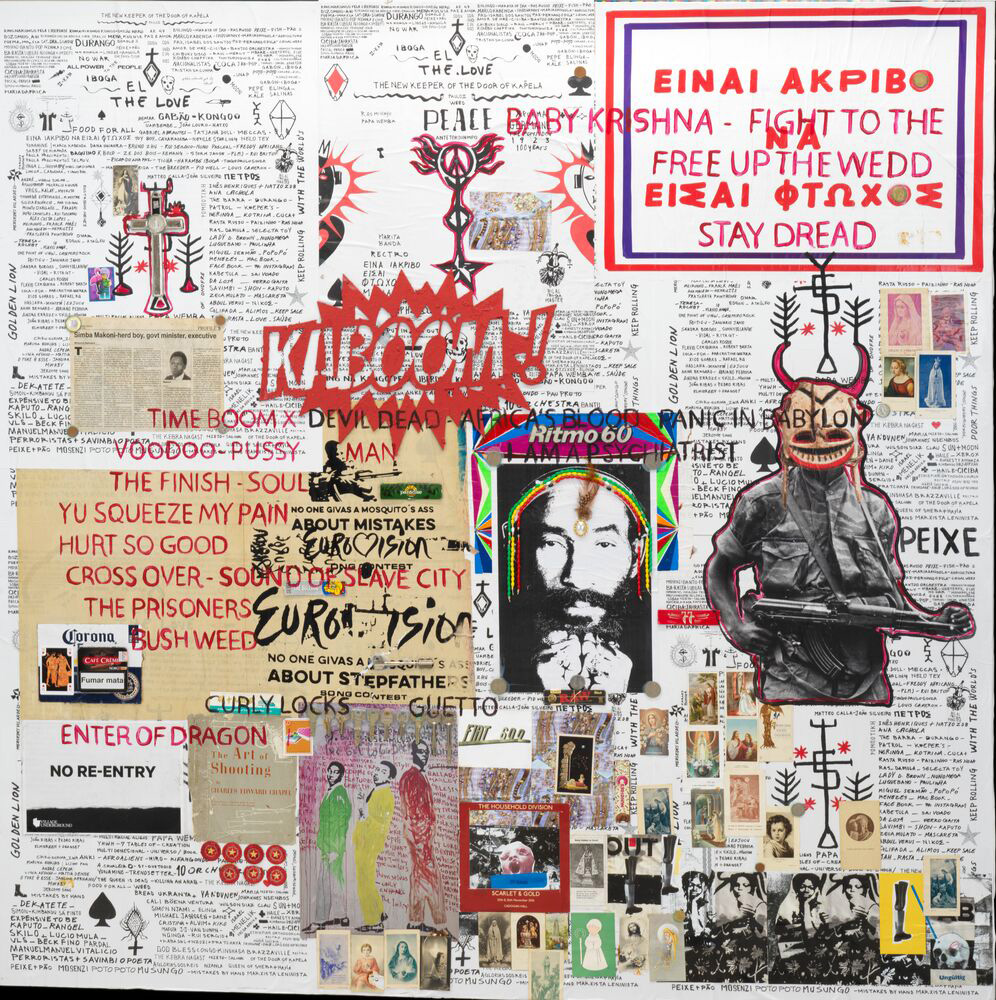
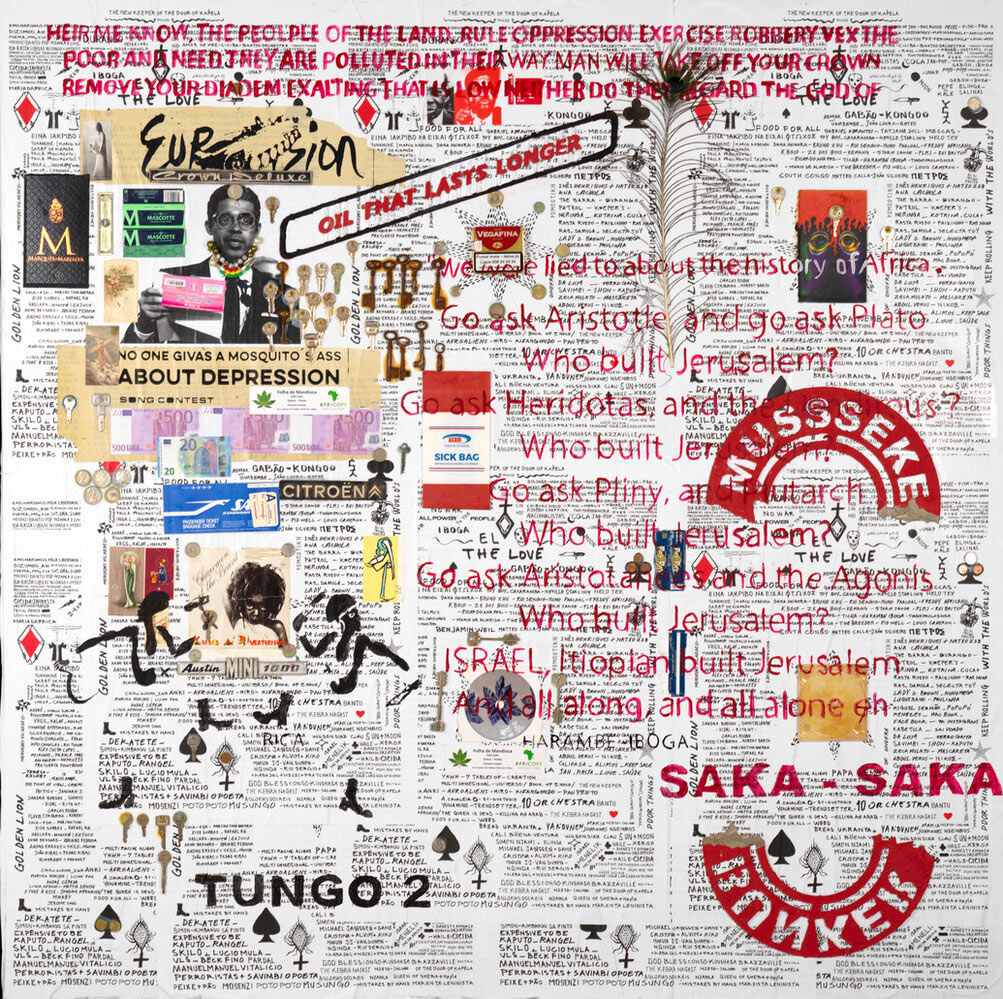
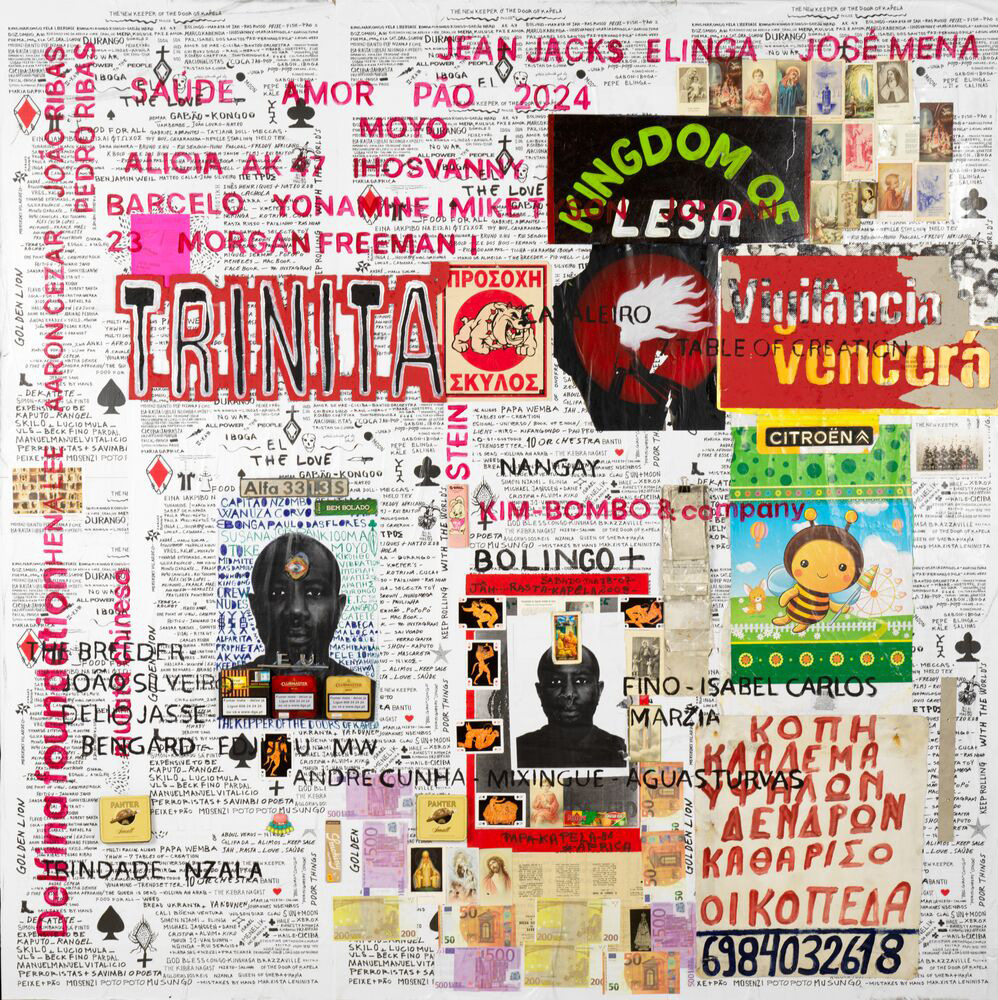
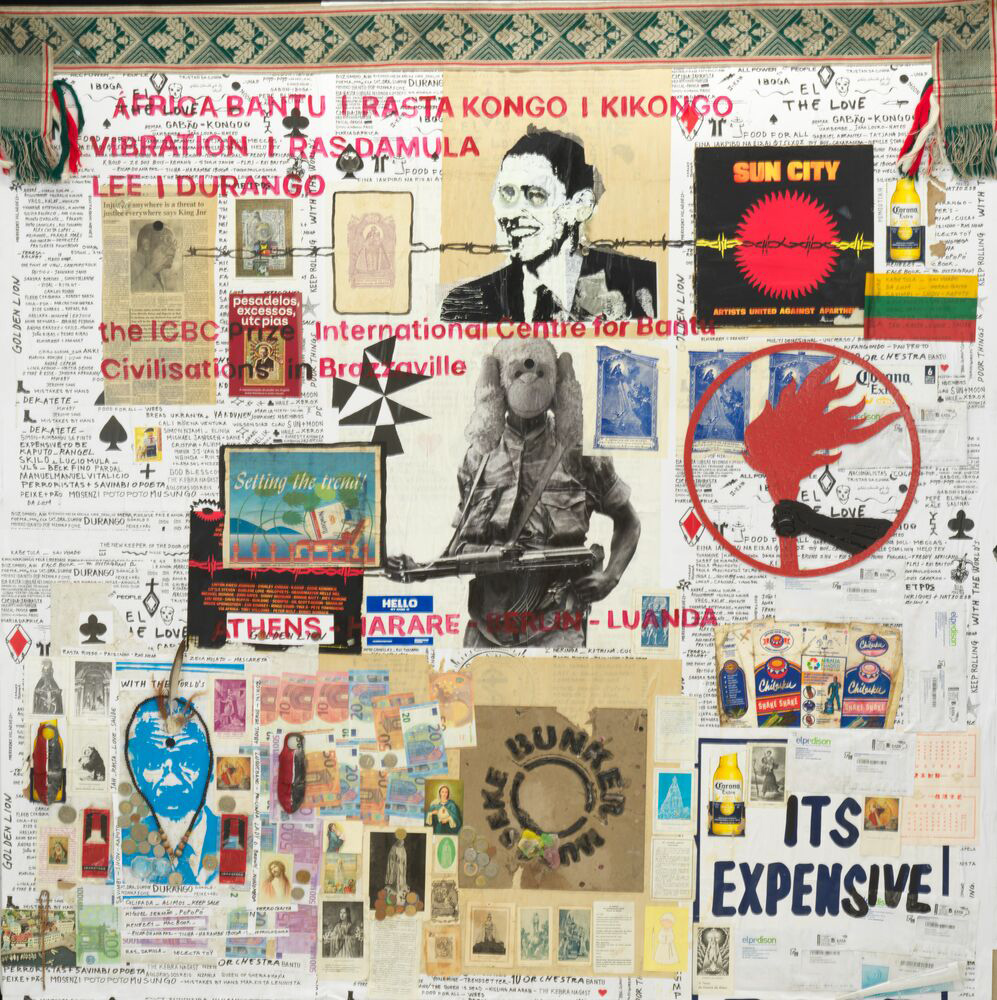
The exhibition space is made into a place of encounter and exchange, evoking the idea of a living sanctuary, where art serves as a driving force for reflection and social transformation. Paintings such as ‘Beaucoup de Saka Saka’ (2024), ‘Eu não sou eu’ (2024), ‘Setting the Trend!’ (2024) and ‘STRAY DREAD’ (2024), also acquired for the CAM Collection, reveal the visual and symbolic lexicon built by Yonamine, which blends references from American culture, African music, popular culture and ancient traditions.
Posters with phrases such as ‘NO RE-ENTRY’ appear repeatedly, recalling the rhythm of mantras and simulating advertising techniques, creating, yet again, spaces where the urban and the spiritual meet. ‘I’m not looking for fiction. I’m looking for prophecy. I’m not interested in futurism or afrofuturism. What I like doing is voodoo and syncretism. It is a pure scene, with no evil, without the temptation to do anyone any harm. The only thing that moves me to make these pieces is called love.’
‘I like working with newspapers, because you don’t need to date the paper, it marks it for me, it situates us in time,’ says the artist, explaining the newspapers stuck to his canvases. Indeed, the works bear witness to their own production, while professional and personal interactions are referenced in the form of names of collaborators, curators, friends and fellow artists, as, for Yonamine, ‘credits are very important, because they remind me that I’ve never lived alone. Everything has its credit and we have to remember to keep that.’
Yonamine challenges fixed categories and proposes a new vocabulary in which spirituality, politics and everyday life intersect. His works act as living sanctuaries, spaces of encounter and resistance, where recycled objects, personal memories and cultural references are transformed into a common language. Rather than to contemplate, the artist invites his audience to participate: to feel, to listen and to keep their feet on the ground.
Works from the CAM Collection
Explore the series


No results were found for your criteria.
You may also like
No results were found for your criteria.