
The Collective Glossary and the Politics of Institutional Language
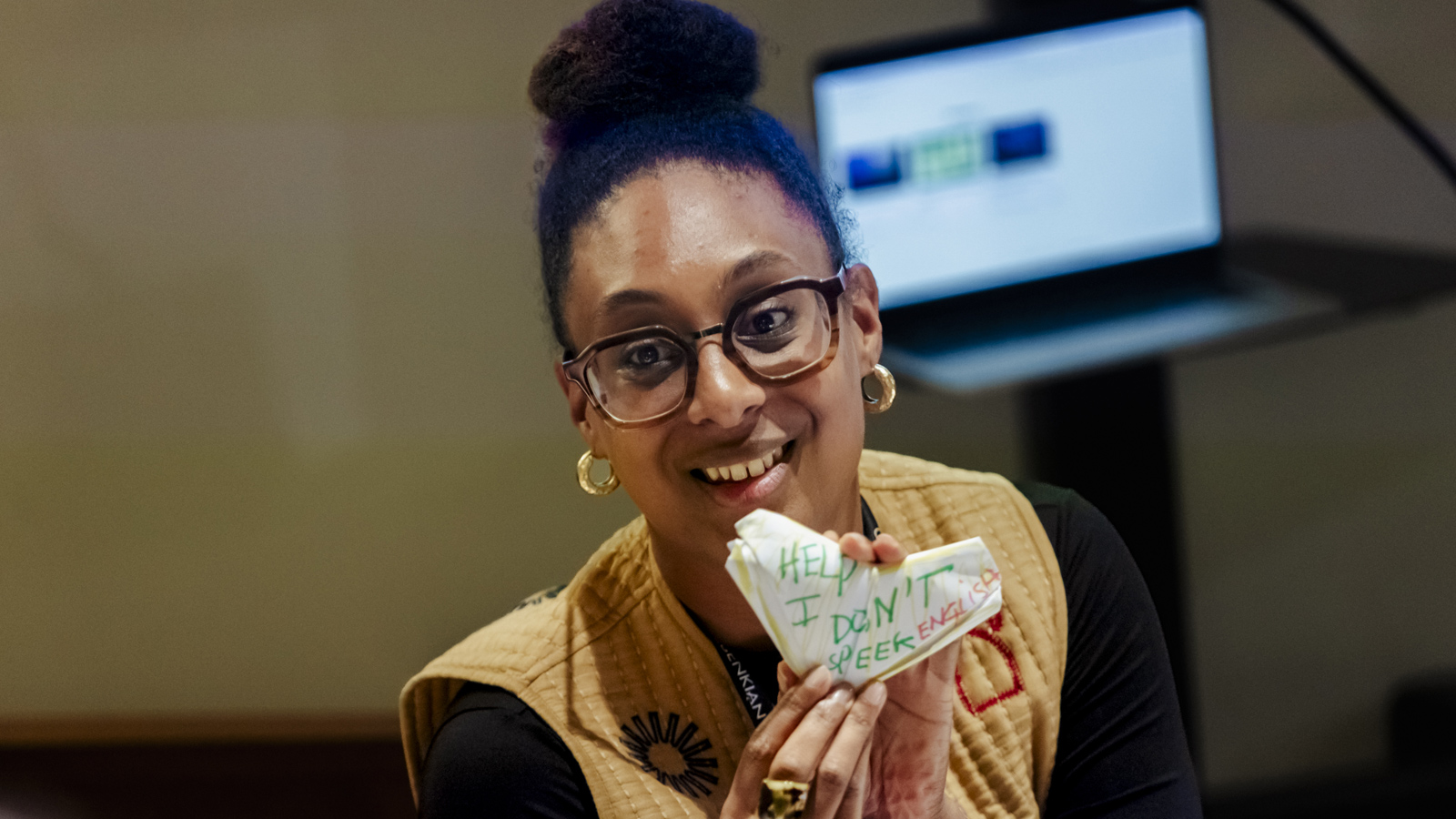
The ‘Online Glossary’, also presented at CAM, forms part of this project, subtitled ‘Co-Creating Inclusive and Sustainable European Art Institutions’. Developed through collective processes, the project proposes a critical reflection on language as an institutional practice and as a system of power that organises, legitimises and excludes, questioning how cultural institutions construct and stabilise meaning.
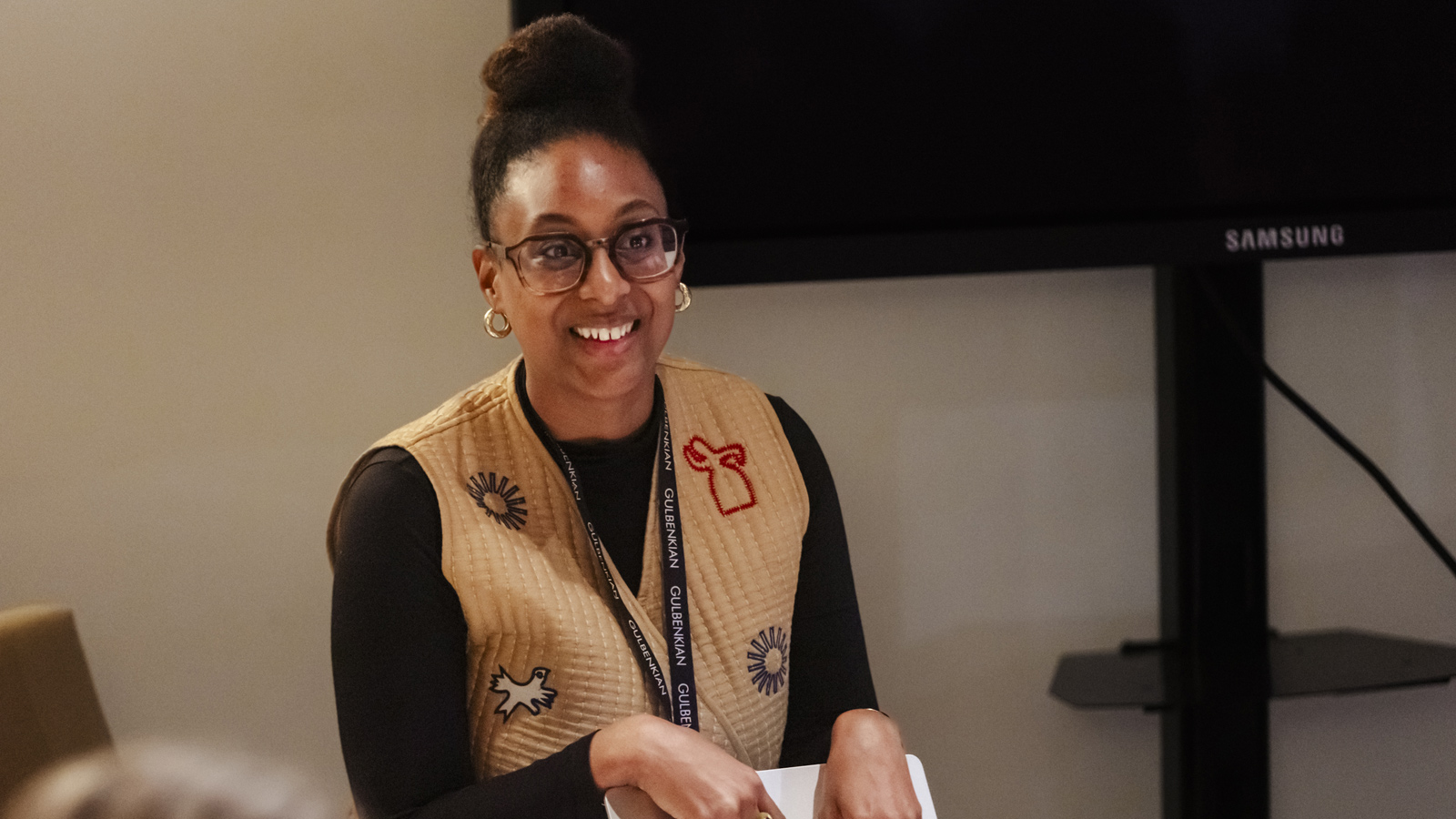
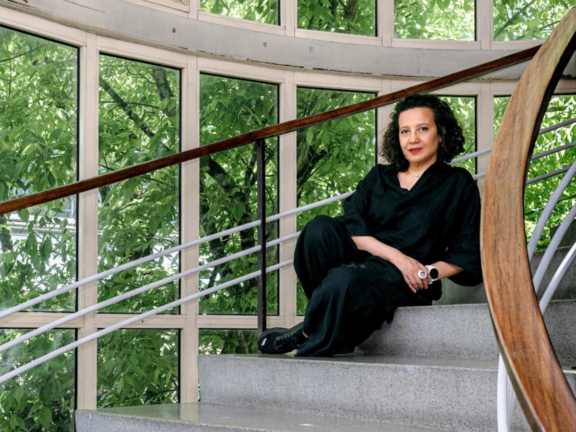
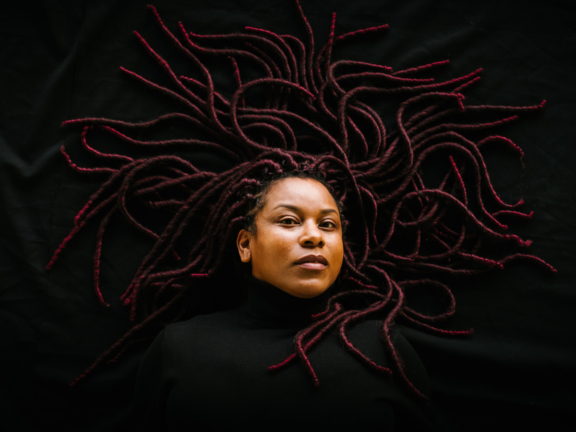
The work emerges within a curatorial trajectory shaped by artistic practices, political reflection and a critical attention to the institutional structures of contemporary culture. Developed by Cindy Sissokho, a curator and cultural producer born in France, the ‘Online Glossary’ forms part of a research strand centred on anticolonial practices and social and political approaches within the arts, also evident in recent projects developed in international institutional contexts.
Before emerging as a curatorial tool, reflections on language arose from an experience of estrangement from language itself. ‘I became interested in developing a critical reflection on what it means to grow up and try to exist within a language that doesn’t resonate with my identity’, she explains. Her relationship with French, her mother tongue, emerges as an initial site of friction, marked by the difficulty of fully recognising herself in the words available.
This feeling reappeared later in her encounter with the institutional world of the arts. Observing its codes, discourses and hierarchies, the curator identified a parallel between language and institution: ‘the experience of inhabiting these institutional spaces was, in many ways, similar to trying to inhabit a language.’ It is from this equivalence – between language and institution as spaces of belonging and exclusion – that the ‘Online Glossary’ began to take shape.
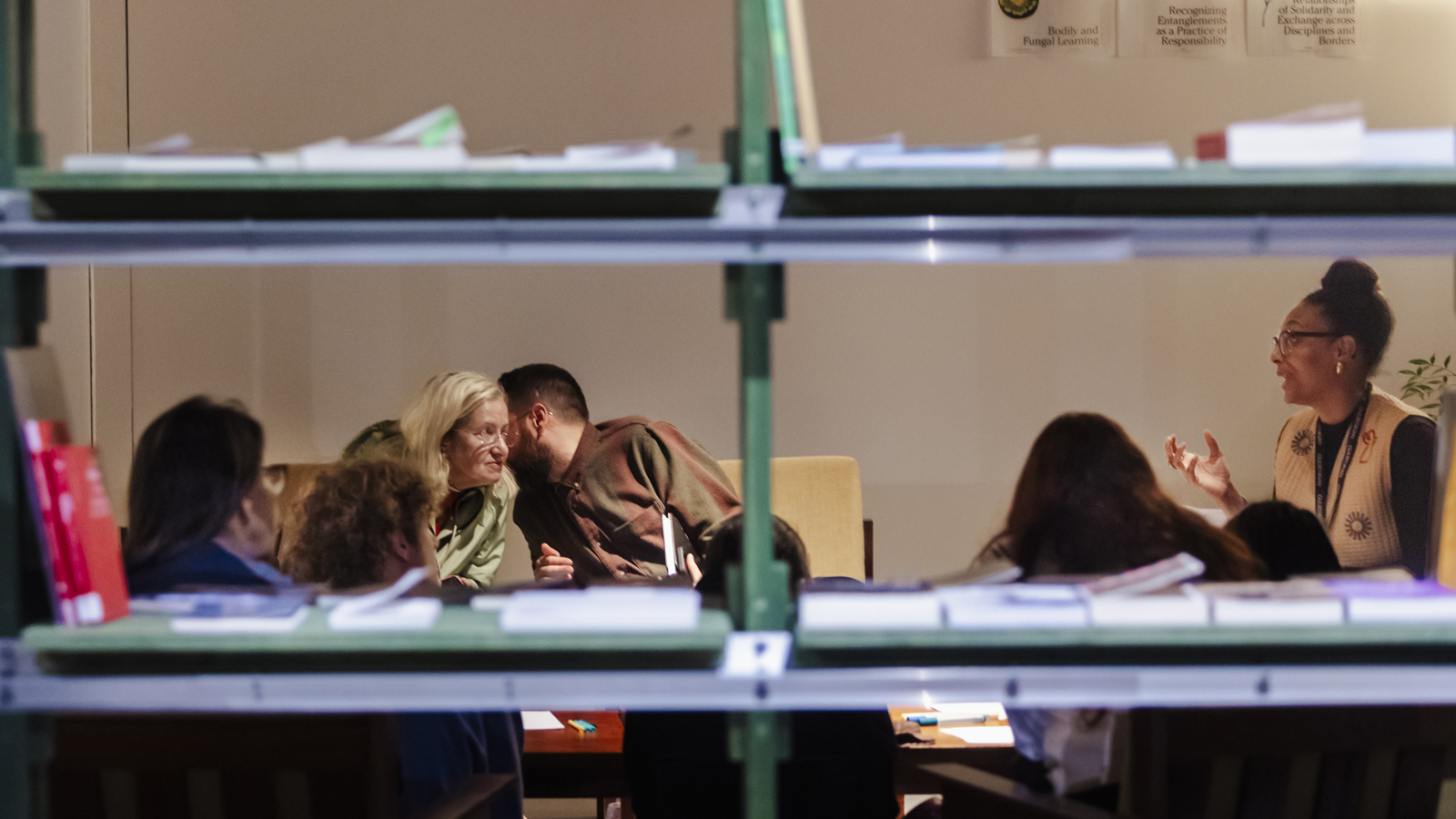
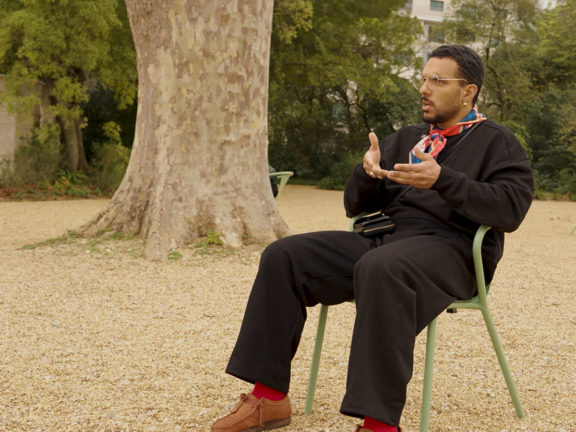
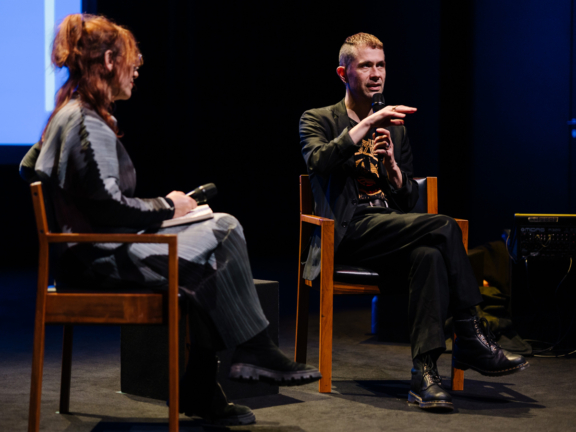
In conversation with BANTUMEN, Cindy Sissokho highlights the centrality of language within power structures and the need to question the idea of institutional neutrality, arguing for the transformative potential of collectively built tools. The choice of format responds to the need to create a space where diverse people can name their relationship with cultural institutions based on their own experiences, without the imposition of a pre-legitimised vocabulary.
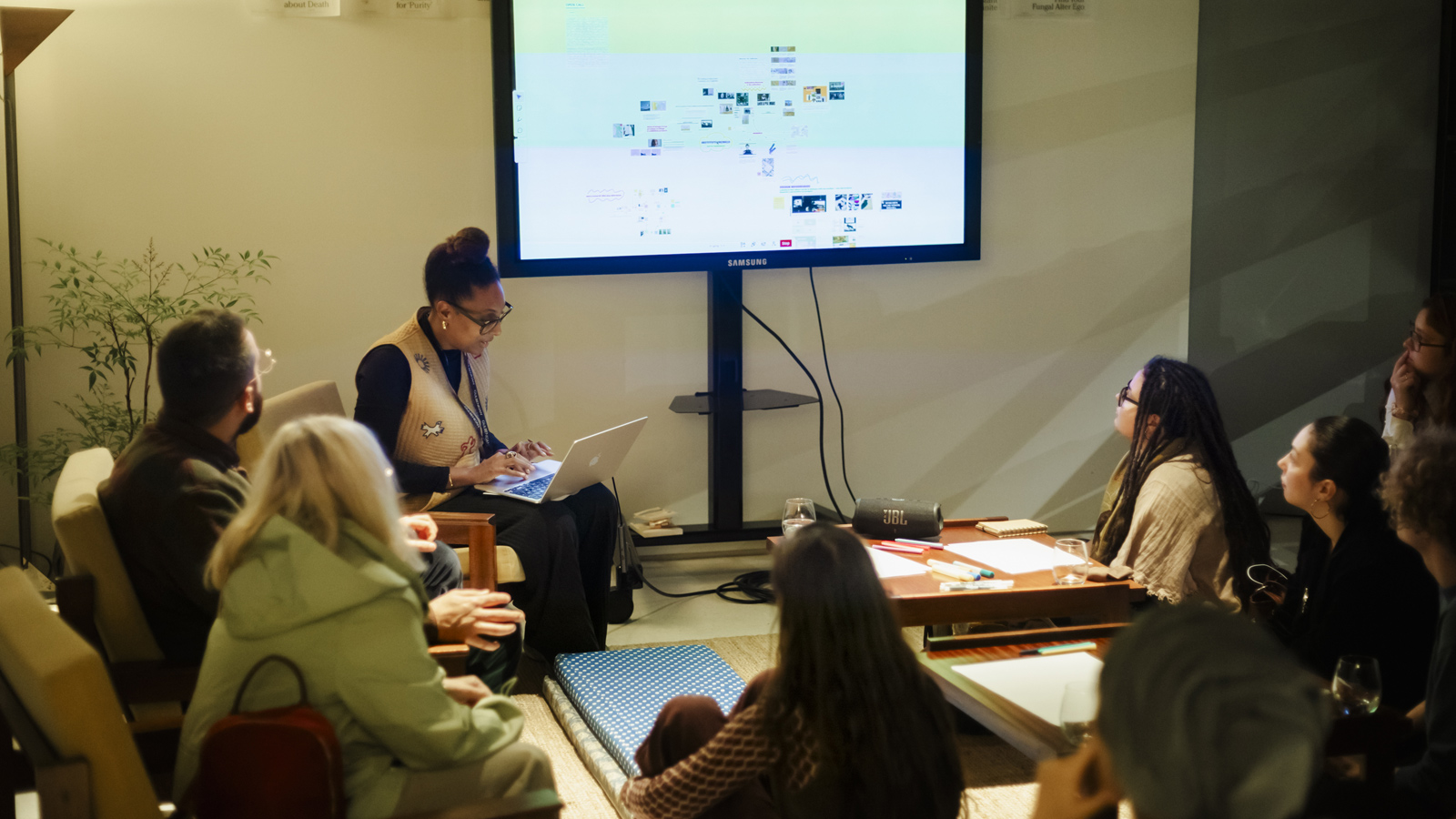
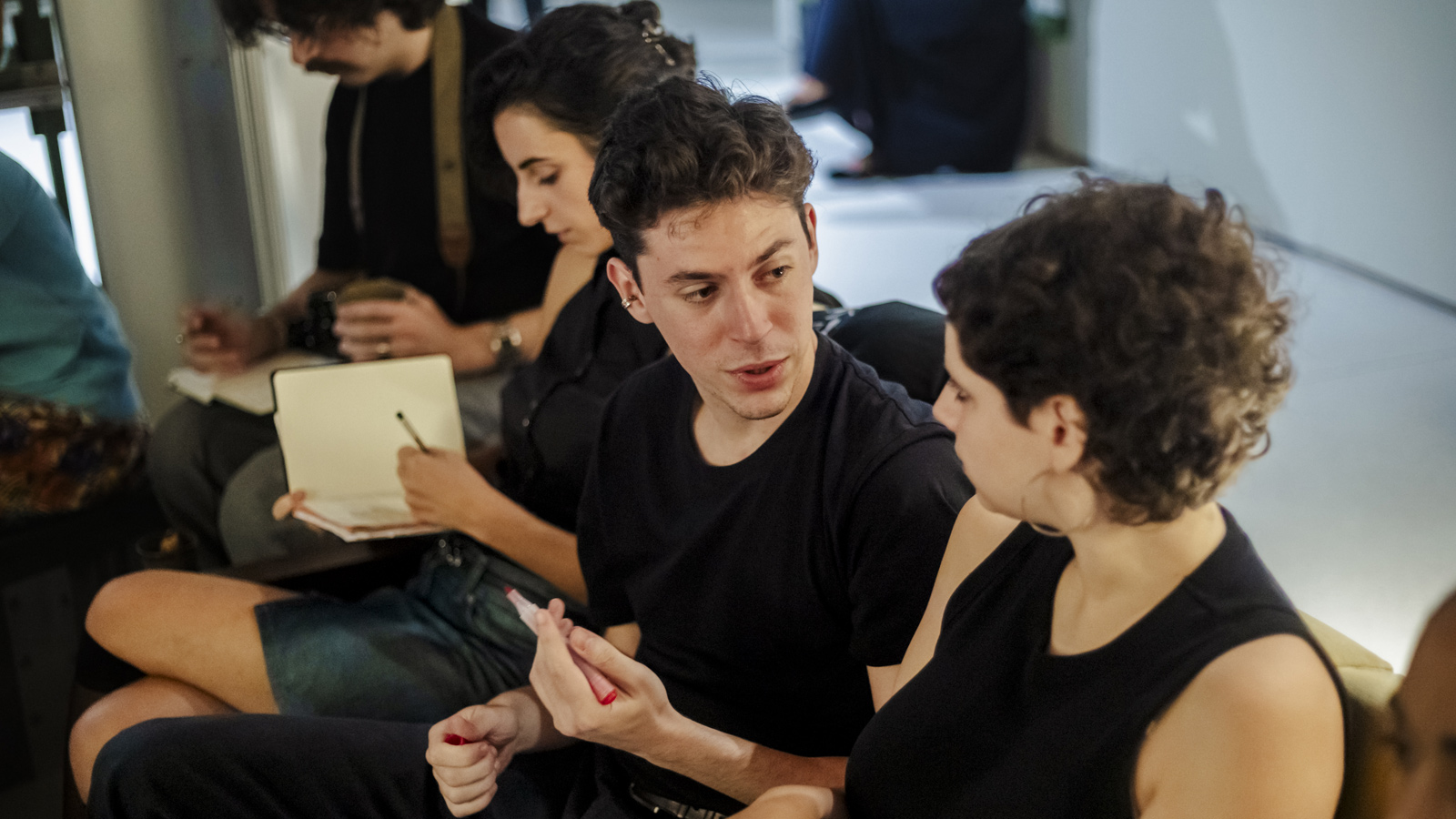
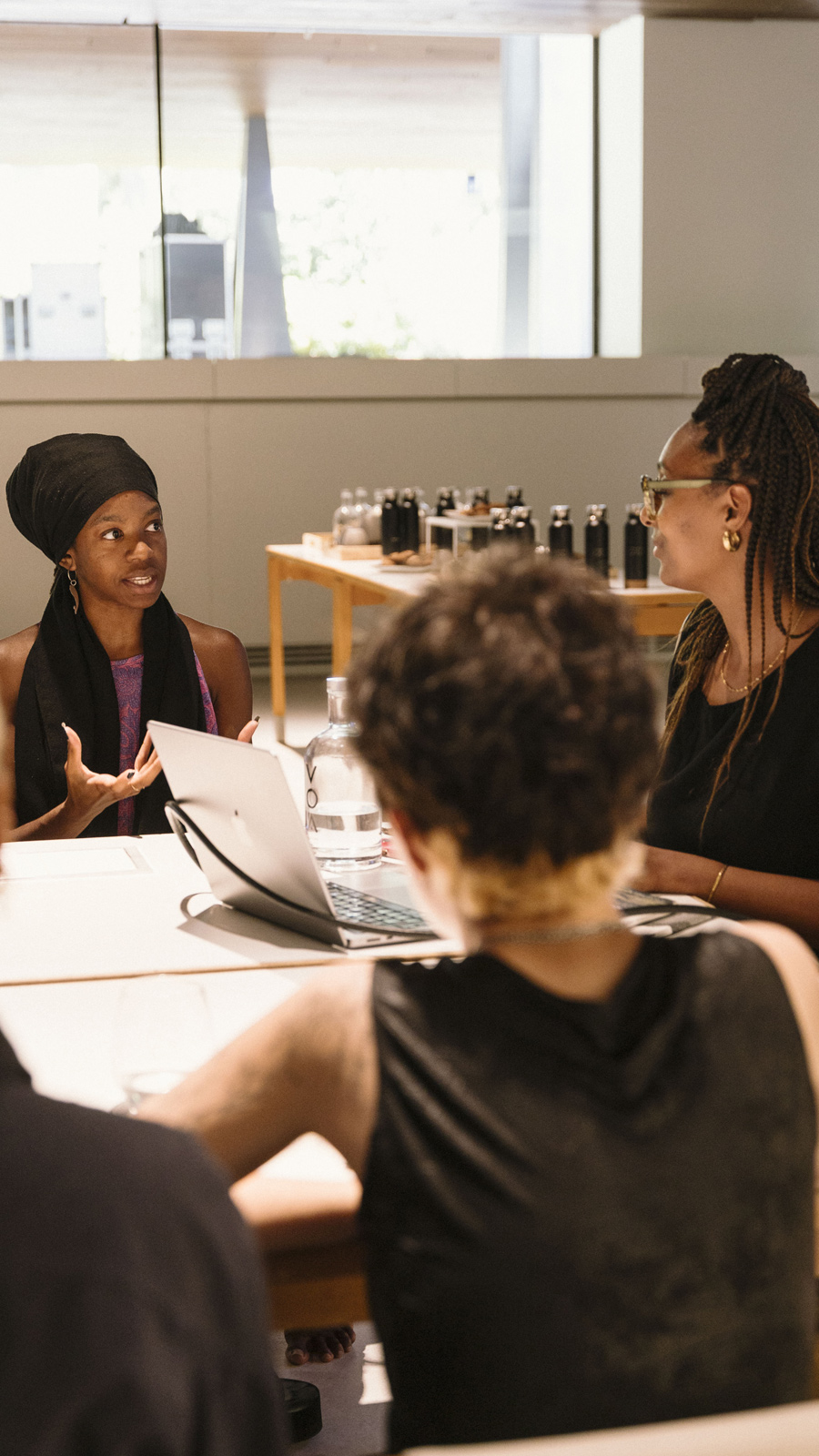
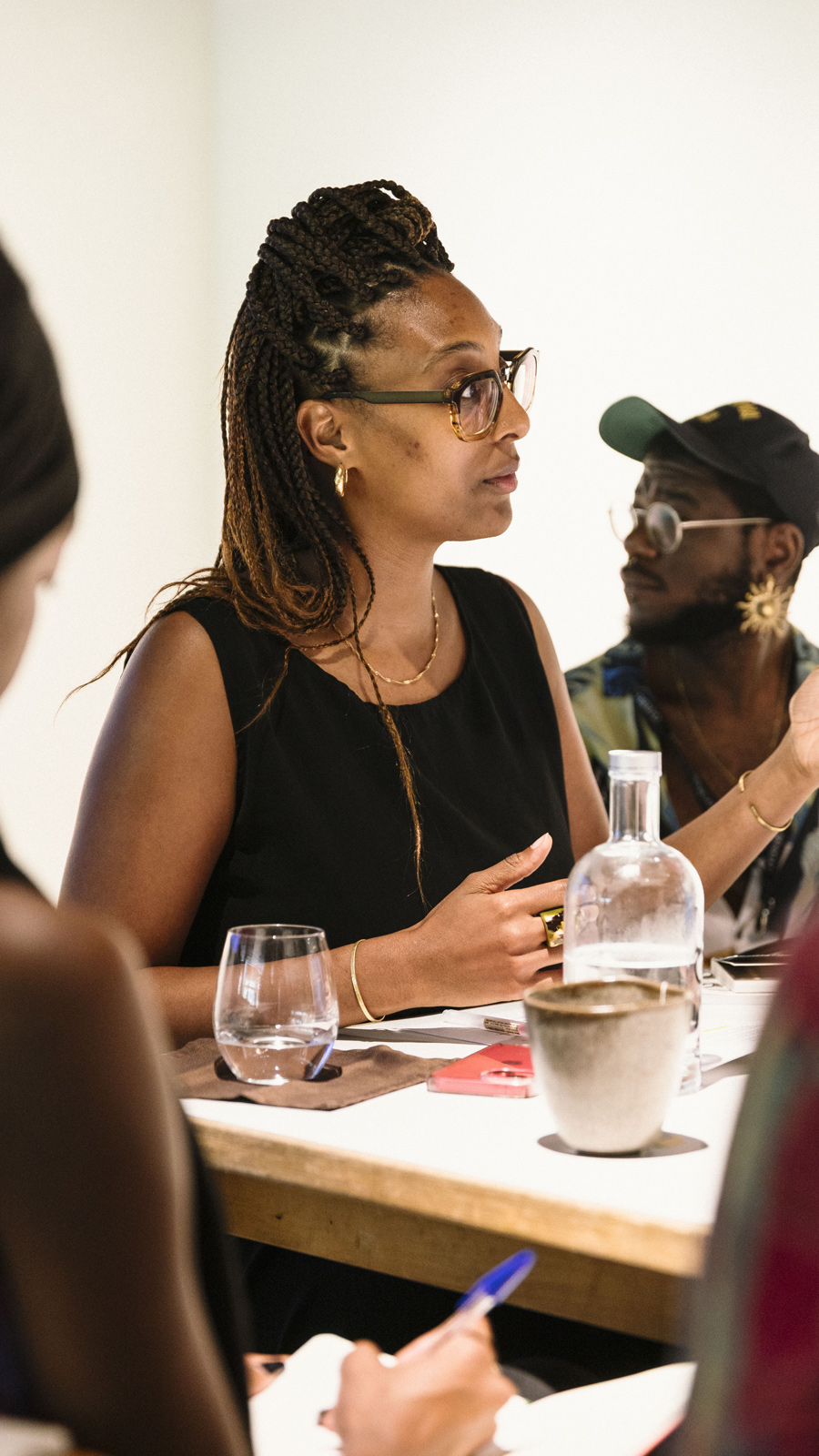
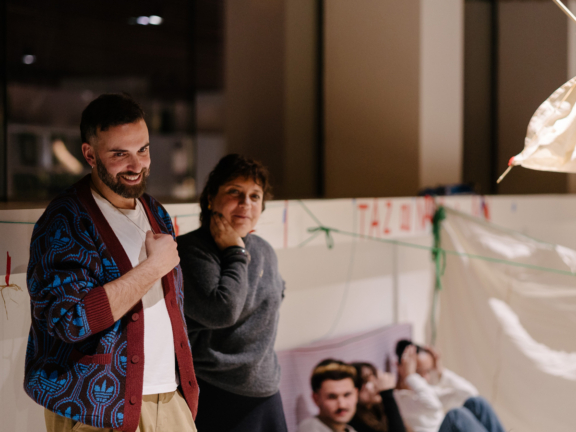
Conceived through gatherings, conversations and workshops, the glossary functions as a space of connection between people who engage with institutions in different ways – as professionals, audiences, critics or occasional participants. The moments of collective work became spaces of sharing, with vulnerability taking on a central role. ‘Finding room for vulnerability together is essential, because it allows each person to find their place within the group.’
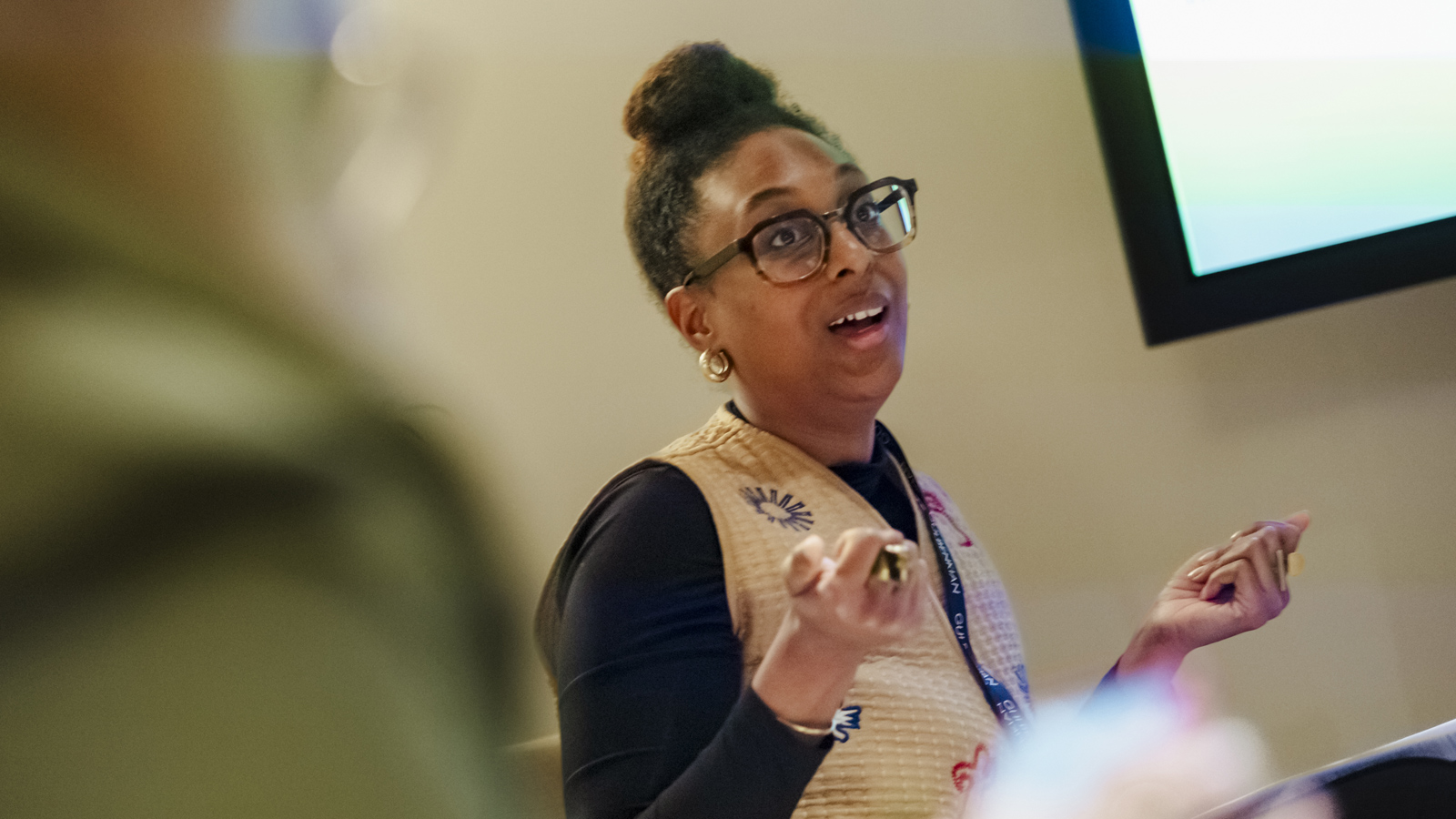
By embracing this process-based dimension, the ‘Online Glossary’ deliberately distances itself from normative and hierarchical models of knowledge production. Rather than fixing definitions, it opens up space for ambiguity, conflict and lived experience, recognising that meaning is always situated within and shaped by relations of power.
Cindy Sissokho’s reflection on institutional language is expressed through infrastructure, hierarchy, the programmes that are proposed, and the ways in which spaces are experienced. Feeling welcomed or excluded, comfortable or intimidated forms part of this silent vocabulary that continues to uphold authority and limit public agency.
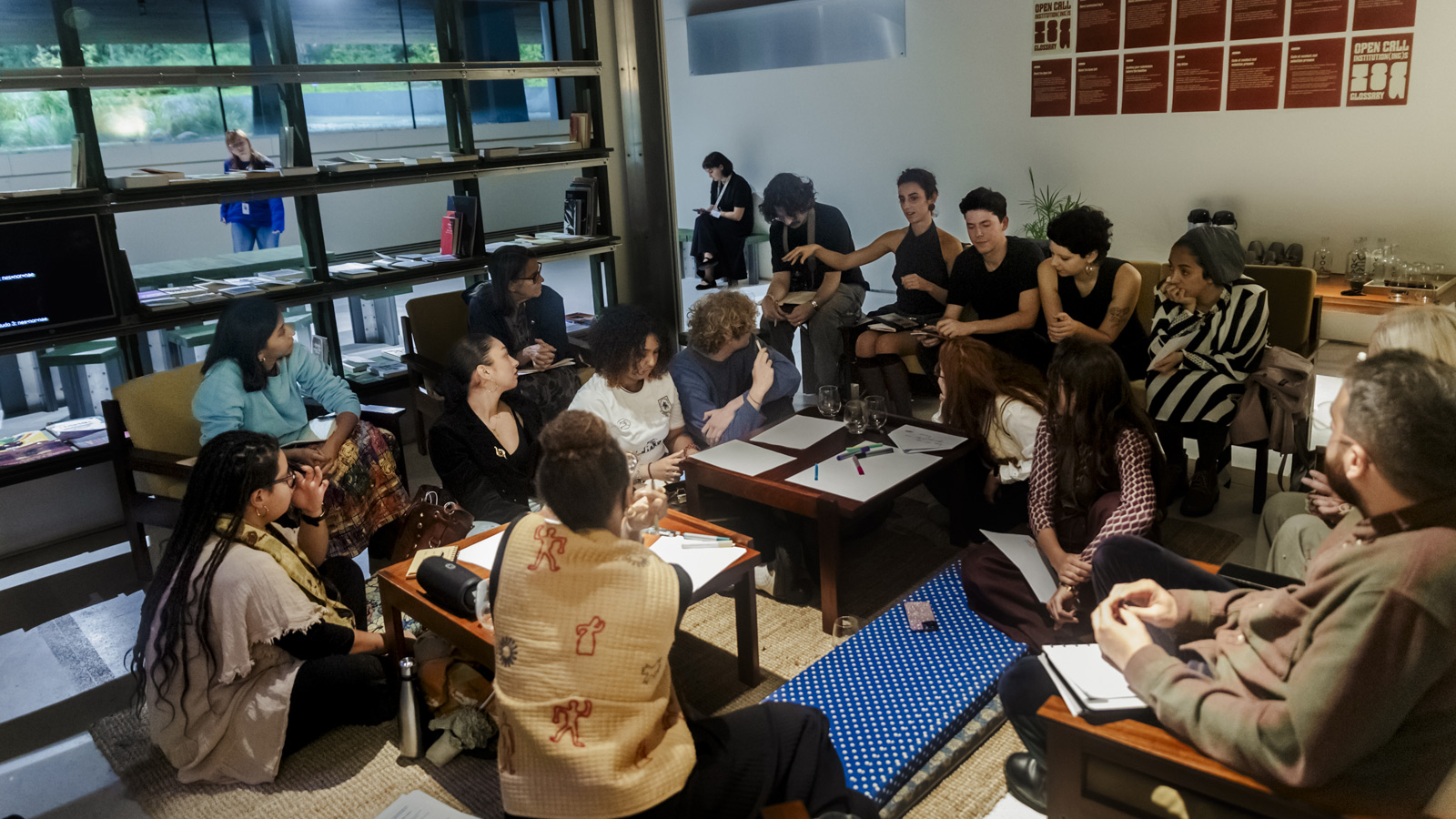
This reading takes on particular significance when situated within the historical context of museums and art centres, marked by colonial legacies that extend far beyond the content of their collections: making these mechanisms visible emerges as a minimum condition for any transformation that seeks to move beyond the symbolic.
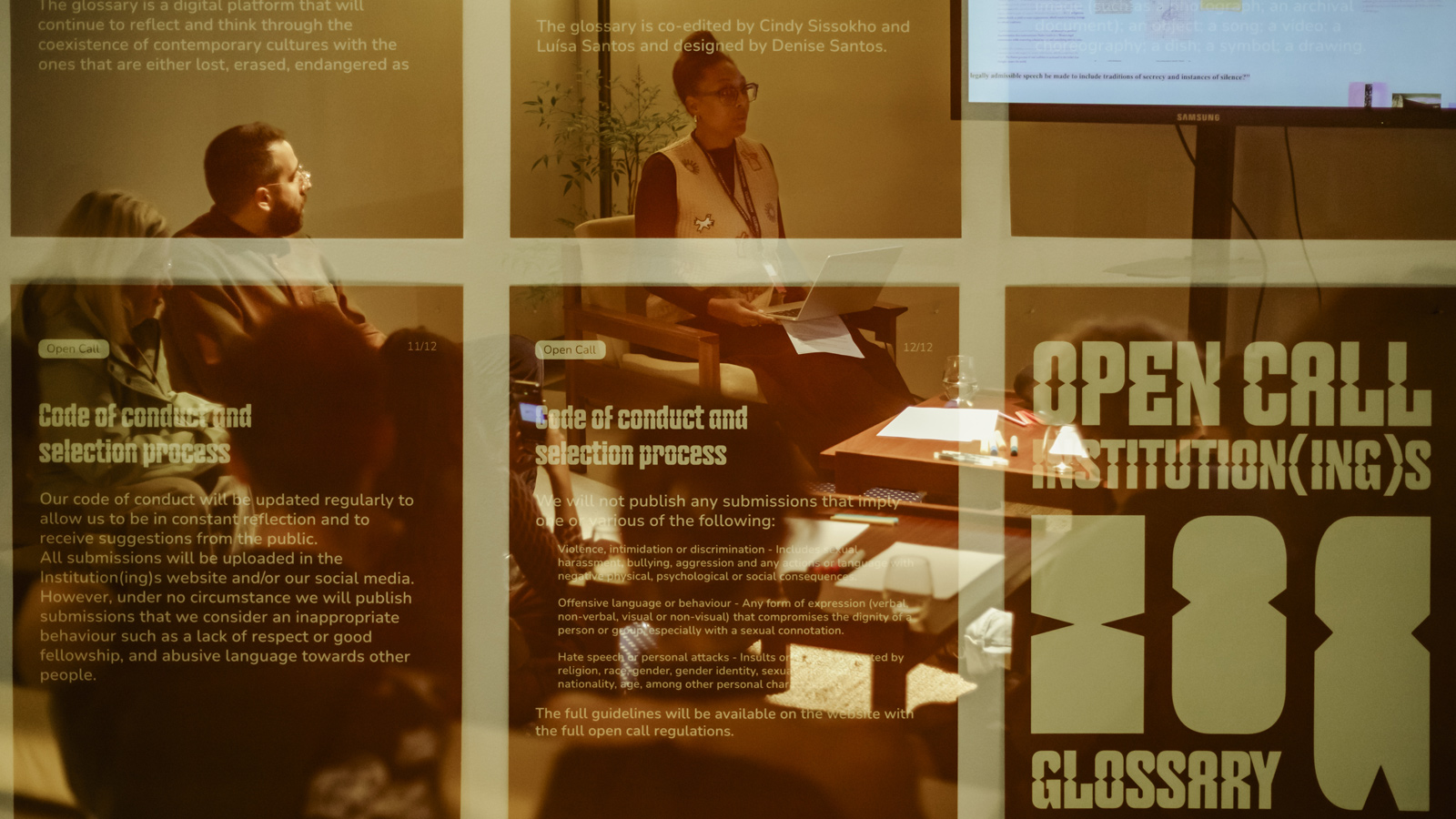
Although the project includes CAM as a partner, the direct influence of the partner institutions on the glossary’s content was intentionally reduced. Their presence became visible primarily through hosting the public programme, preserving the platform’s critical autonomy and preventing the tool from becoming an extension of a specific institutional logic. This autonomy was also evident in the process of submitting terms. All contributions were accepted, provided they met the basic criteria: ‘It was important not to exclude anyone who wanted to share something personal or something in development’, Sissokho notes. The glossary thus establishes itself as a space of visibility for ideas, stories and projects that often remain outside institutional circuits or do not find public platforms.
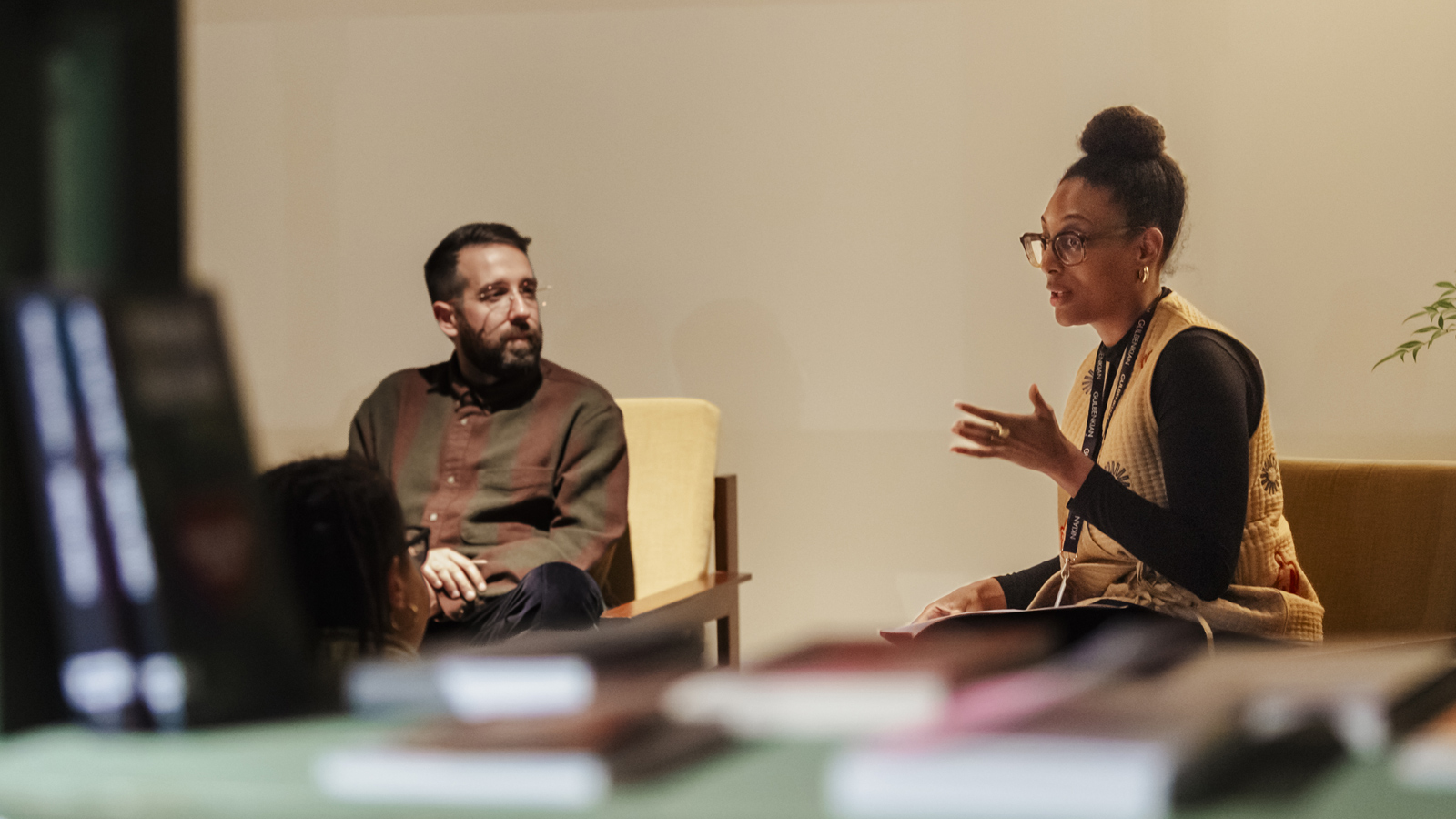
Conceived as a constantly evolving digital platform, the ‘Online Glossary’ rejects the fixity associated with traditional institutional documents. Over the next two years, it will remain open to international contributions, functioning as a space for expression, learning and community-building.
Questioning institutional language, in this context, means exposing frictions that do not always find immediate resolution. By making visible the mechanisms of exclusion inscribed in institutional discourse and practice, projects such as the ‘Online Glossary’ place institutions under pressure to demonstrate their capacity for review and sustained transformation. The curator stresses that there are concrete actions available to institutions, from the choice of the stories they tell to the people they invite to share their work and perspectives. She nonetheless acknowledges the fatigue that accompanies this kind of intervention. ‘That’s where the work becomes both more bearable and more rewarding.’
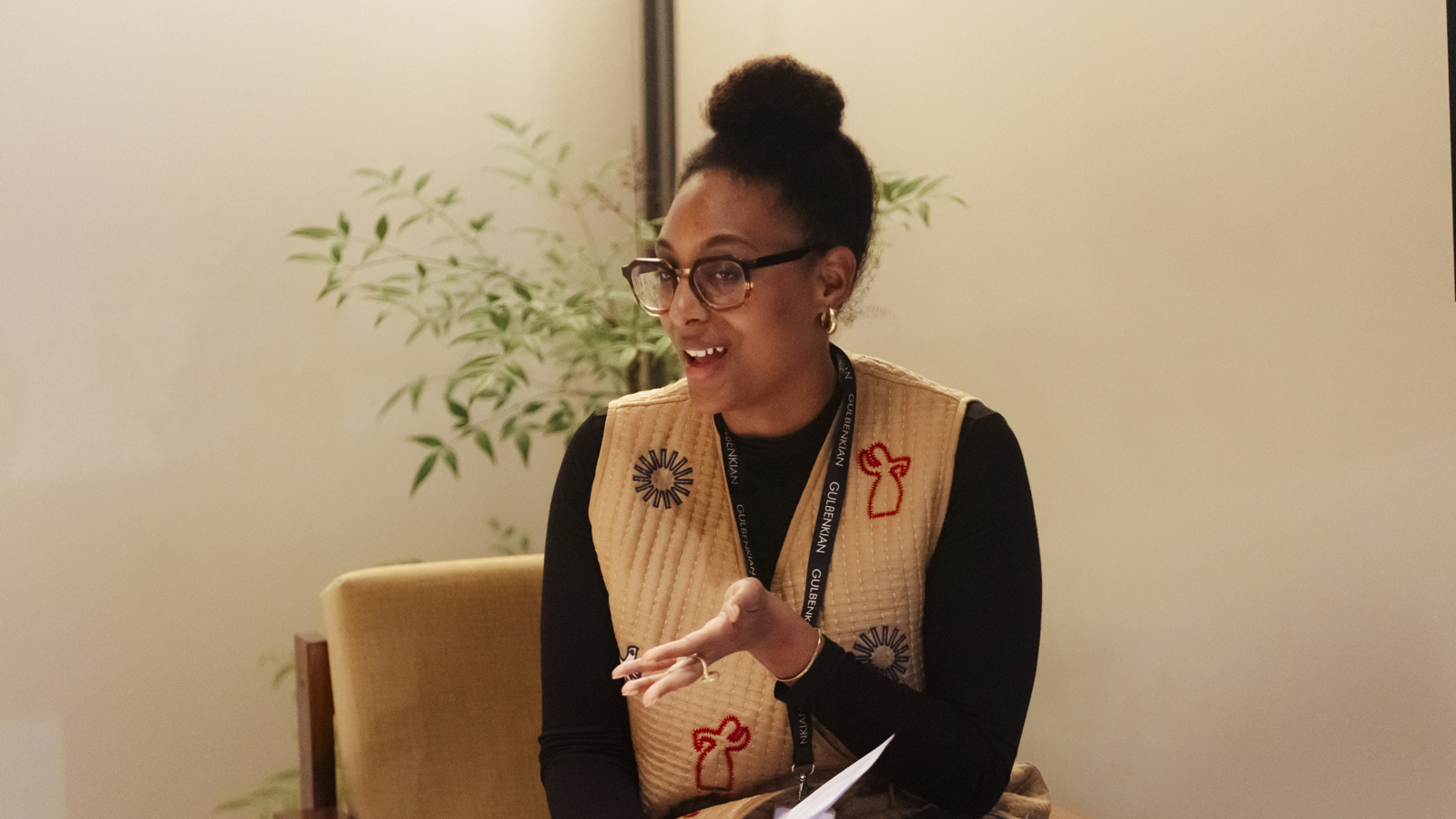
The experience accumulated throughout this work led Cindy Sissokho to identify a recurring limitation in the way institutions incorporate critical language. Without structural change, this vocabulary tends to circulate as a discursive surface, without translating into concrete changes in institutional practice.
Conceived for all those who wish to feel represented and to have agency within cultural institutions, the ‘Online Glossary’ positions itself as a tool for encounter and listening. For Sissokho, making institutional language visible is a necessary condition for granting agency and opening space for uncomfortable truths. ‘I can’t do my work without embracing that commitment’, she concludes.

BANTUMEN at Gulbenkian
Explore the series









No results were found for your criteria.
You may also like



No results were found for your criteria.