
Pocas Pascoal: cinema as a way of challenging oblivion
-
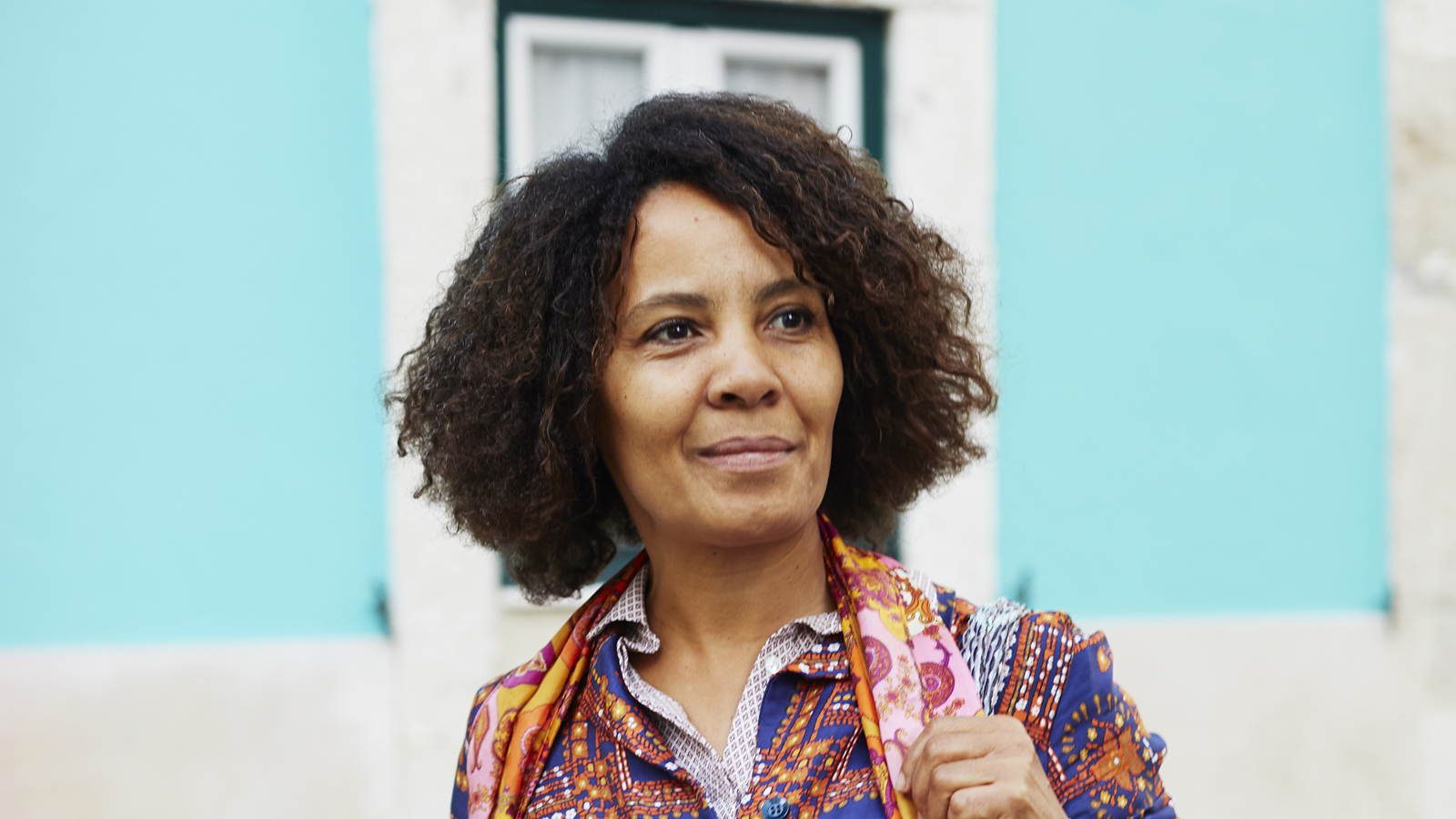
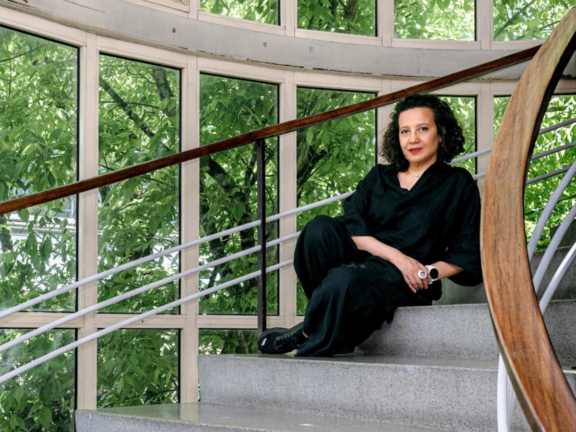
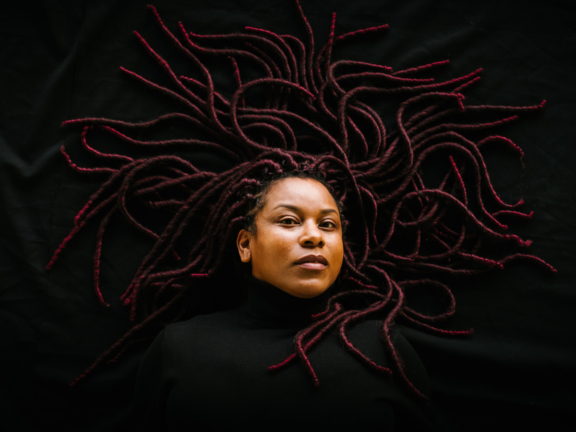
© Luena Tisserand
Pocas Pascoal’s journey starts behind a camera and extends in a gesture that is in itself political, shaped by persistence and the need to create space in a territory that for a long time was closed off to her.
Born in Luanda, in 1963, she became the first camerawoman for Televisão Pública de Angola, at a time when the technique seemed to be reserved for men. Years later, now living in France, she deepened her relationship with the image and found that editing gave her a way of thinking about cinema from the inside, a way of organising the world through precision.
She studied at the Conservatoire Libre du Cinéma Français, in Paris, and joined the group of resident artists at the Cité internationale des arts. She spent 15 years surrounded by camera shots and cuts until she realised she wanted to tell her own stories. It was then that she made her début as a director, managing to combine in her creations both the technical side and the desire for expression, which before had been separate entities.
The creative impulse led her to her first short film, in 1998, and, several years later, to ‘Por Aqui Tudo Bem’ (All Is Well, 2011), also known as ‘Alda e Maria’ (Alda and Maria), her first fictional feature film. That work, now returning to the ‘Black Gaze – Showcase of Black Cinema in Portugal’ at CAM, marked the affirmation of an authorial gaze focused on experiences of exile and survival. More than just a chance to reconnect with the audience, the fact that the film is being screened in an institution of this weight symbolises the entry of a Black cinema, made from the inside out, into a space historically removed from those voices.
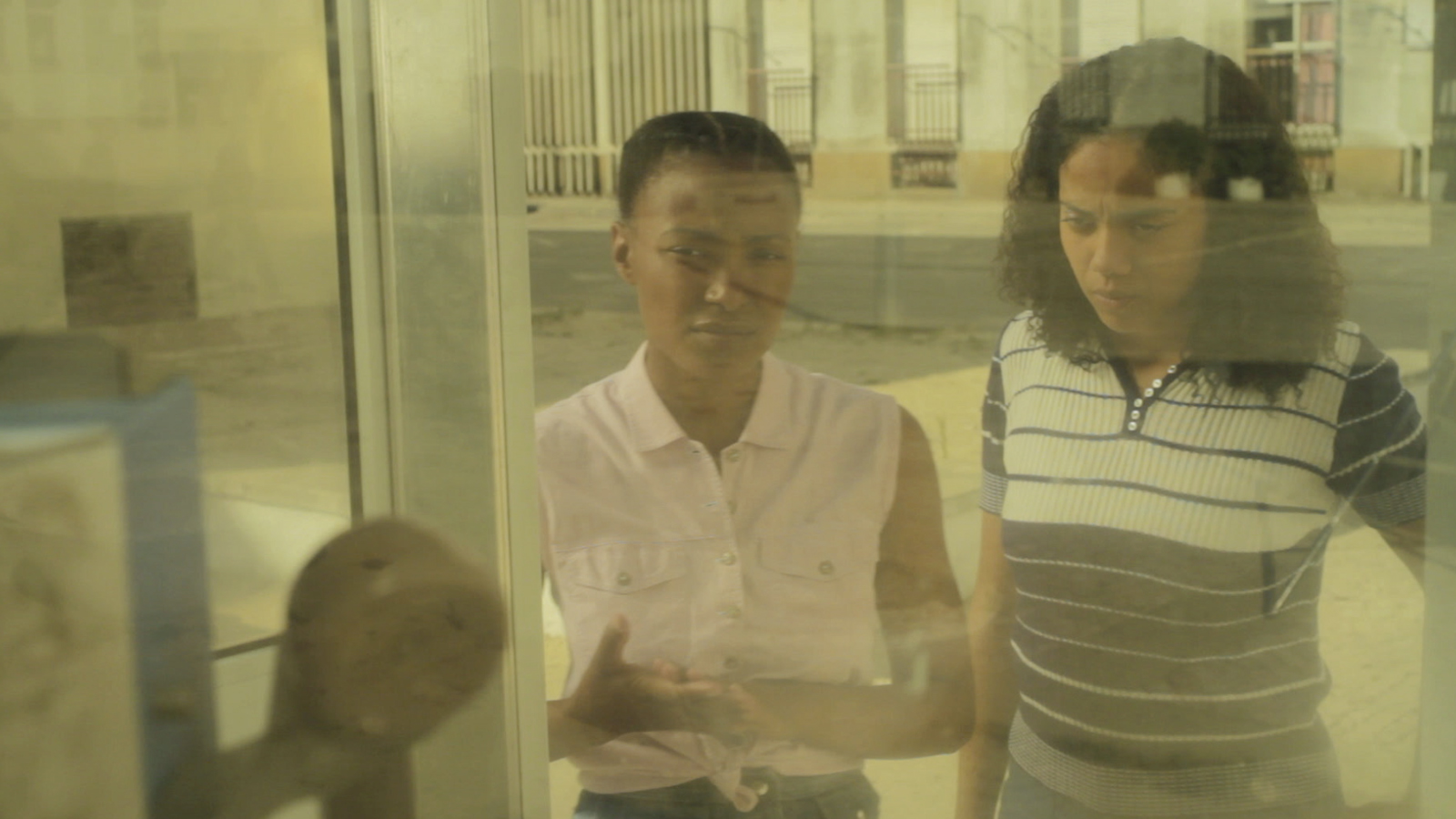
The film follows two Angolan sisters fleeing the war and trying to survive the early 1980s in Lisbon, a city that is both a shelter and a boundary, a place of exclusion and possibility. ‘It’s a film that doesn’t age, because it talks about exile and immigration. These themes are still present.’
The story, built from fragments of her own youth, became a metaphor for diaspora and persistence in naming that which is so often omitted. The film won her various international awards at festivals including FESPACO and the Los Angeles Film Festival, cementing her name among the most important voices in contemporary African cinema.
Throughout her repertoire, the act of filming is also an act of resistance, and the film becomes an extension of a struggle for existence. The themes of war, crossing continents and exile permeate her narratives with no hierarchy between the personal and the historical, because both feed off one another.
Pocas fled Angola in search of survival and found in Portugal the same inequalities she had encountered back in Africa, where the colonial past lingered in the streets and in people’s behaviour.
‘I noticed the inequalities and recognised that the history of colonisation was still all too present around me. I couldn’t talk about one thing without talking about the other.’
Her personal experience sparked the realisation that cinema could operate as a space of restitution, not just as memory, but also as symbolic reparation, making room for stories told by those who lived them.
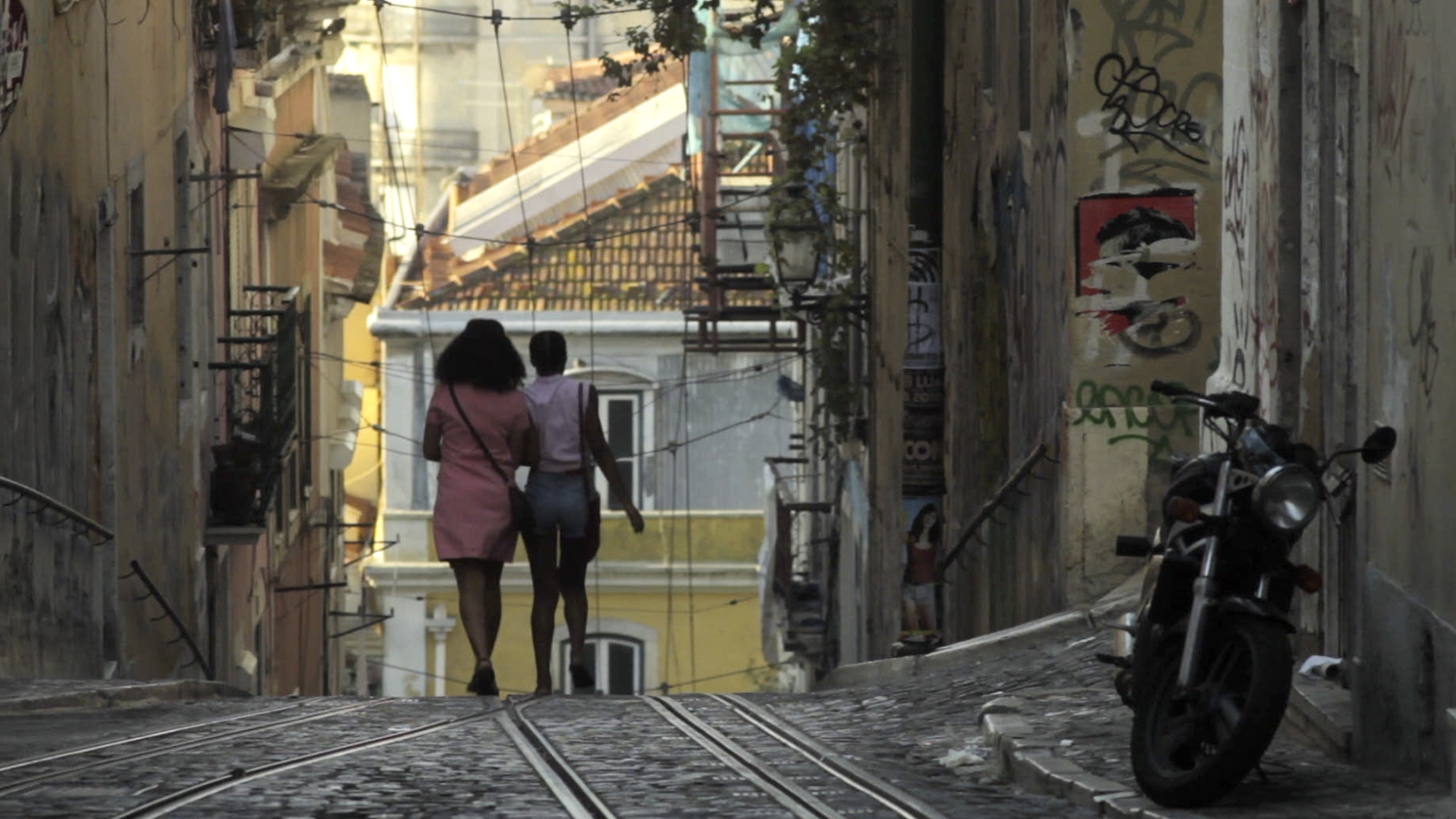
The director’s gaze cannot be confused with that of those who observe from a distance, because it is born of the experience and emotion of someone who has known war, displacement and racism, and who has learnt to translate those experiences into images that carry the weight of history. ‘When you don’t live a story, there’s always a distance in the gaze. You might have imagination and technique, but you lack the emotion that comes from experience.’
It is that proximity to lived experience that gives her works longevity and explains why ‘Alda and Maria’, now more than a decade old, continues to circulate around the world to be debated at universities and screened at festivals, perhaps because it conveys something that resists time: the need to exist under the spotlight.
The idea of home, physical and emotional, permeates her entire filmography and heightens the restlessness of those who live between geographies. The war separated her from her country of birth and time consolidated that distance, transforming absence into a recurrent theme.
‘The worst thing is losing all the cultural and family links. You can never go back and find the same place. When we return, it’s no longer the way it was. Countries change, people change.’
Forty years later, she divides her time between Angola and France, split between allegiances that touch but don’t overlap. ‘I still feel Angolan, but I also feel French. When I’m in Angola, I feel uprooted. That feeling of home never returns.’
The distance, however, turned into creative matter and a possible way of seeing things. ‘It’s pain, but also richness. Coexisting between cultures gives me another perspective. My imagination is made of what remained and what I’ve found.’
The balance between creation and survival has marked the way she works, in a career frequently hindered by lack of institutional support. For years, she worked without support structures or consistent funding, developing her path with perseverance and mindful of the circumstances in which the film is produced.
‘Financing is decided by juries composed largely of white people and, very often, without women. They slam on the brakes when a project comes from Black directors. They read the project and, before even looking at the artistic side, they look at the skin colour.’
Despite this criticism, she utters these words with the serenity of someone who sees, for the new generation of directors, times that seem less bleak than they did when she started. ‘I see Black women, like Alice Diop and Denise Fernandes, appearing at big festivals. North American women have achieved greatest visibility, but we keep on fighting to exist,’ she says, alluding to the current state of the sector.
Memory and collective history form the core of a work that is also built on the experiences of the person making it. ‘I lived during colonisation, I witnessed my family’s suffering and later I experienced exile. All of that is present in my films,’ she states, adding that she sees reminiscence as a means of correcting stories that were left incomplete.
‘History is poorly explained, or not told the way it should be. In Portugal, there is a romanticised view of colonisation. Cinema can help re-tell that reality and spark reflection.’
In her opinion, cinema is a form of consciousness and, for that reason, inevitably political. ‘To my mind, cinema can only be political. It’s a way for me to denounce what happens in the society where I live.’
The gesture, however, is not entirely a means of denunciation and filming is a way of shifting the viewer’s gaze and returning complexity to the stories.
‘The aim is to make people think about what they see. To show that some realities are told from a single point of view and that we need to make room for the other.’
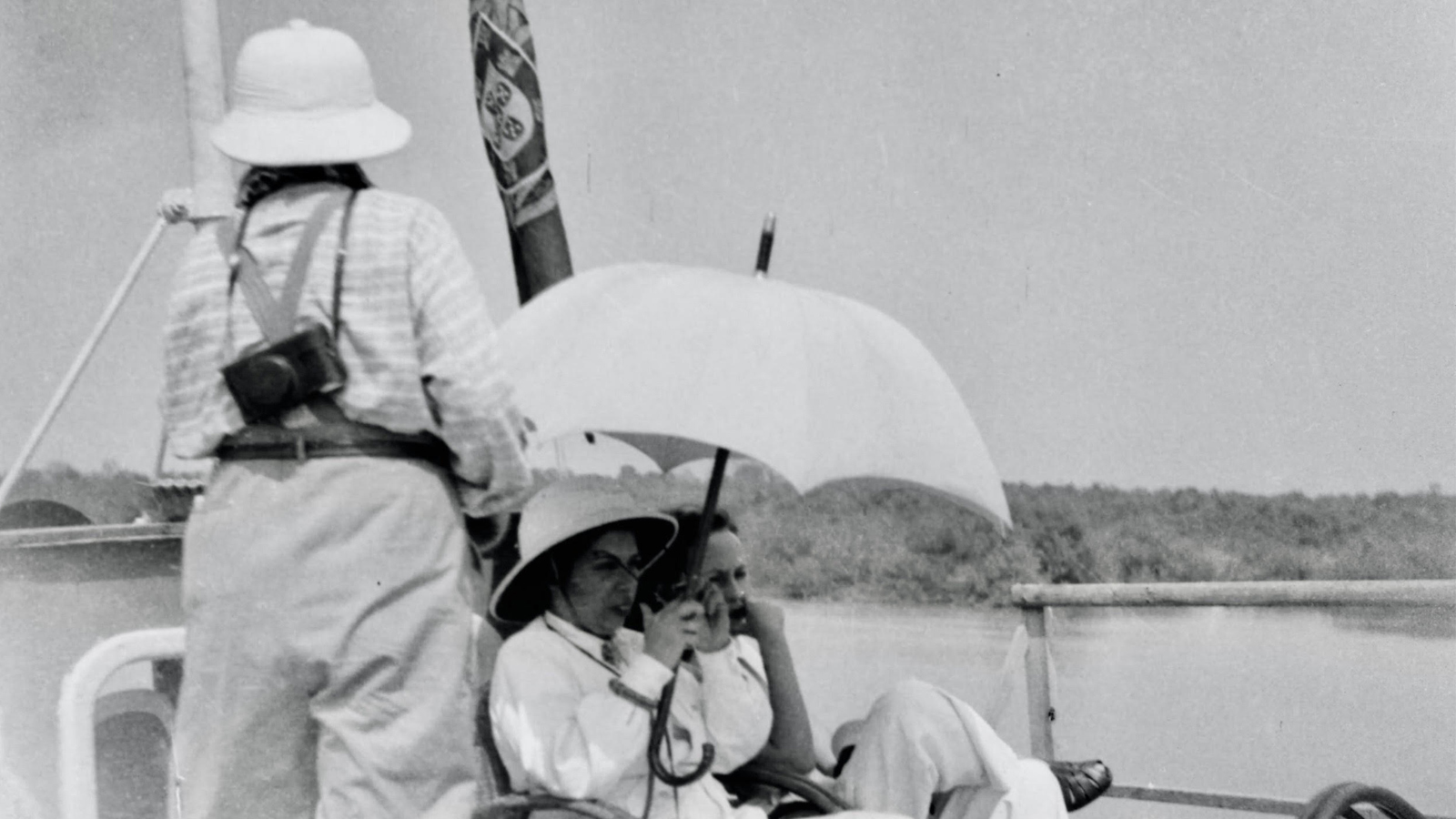
Exile shaped her way of seeing and filming, allowing her to observe the world from two places. That dual allegiance became the driving force behind a gaze that questions the way Portugal continues to face its colonial past. ‘I don’t see many Portuguese films portraying the Black experience or colonisation. There are exceptions, but they are still rare. There’s a need to look at history from the point of view of those affected by it.’
When she speaks about the recognition of African cinema and Black voices, she is pragmatic and admits that ‘it all comes down to funding. No one makes good films without support. Black people need to be included in juries, to offer a different perspective on projects.’
She claims that, although institutional representivity defines the type of narratives that reach audiences and the way they are received, ‘there are many films about Africa made by Europeans, and it’s not that it shouldn’t happen, but there needs to be a balance. There is an audience for cinema made by Africans, people interested in getting to know other perspectives and communities that want to see how they are represented.’
In recent years, she has explored documentary film as a natural extension of her artistic practice. In ‘Sopro’ (2021), which won the Árvore da Vida Prize at IndieLisboa, she returns to memory and the reconstruction of absences, restating cinema’s role as a gesture of remembrance and of the future.
The screening of ‘Alda and Maria’ at CAM is thus meaningful in a way that extends beyond its exhibition. It represents the opening of a symbolic space for a Black cinema that is rarely shown in institutional contexts, and the possibility of rewriting relationships between those who film and those who are filmed.
‘It’s significant that an institution like the Gulbenkian is promoting a showcase of Black cinema. It means openness and recognition. I hope it continues, because there’s space for and curiosity about these narratives.’
Pocas Pascoal’s career reflects a life built up of moving and staying, in which filming became a means of understanding what changes and what endures, fixing on the screen the voices distanced by time. ‘I can’t talk about one thing without talking about the other.’
It is between those two worlds that her work assert themselves, constructing a cinema that returns visibility to stories that time has tried to erase and transforms between-places into a space of creation and permanence.
BANTUMEN at Gulbenkian
Explore the series




No results were found for your criteria.
You may also like
No results were found for your criteria.