
BANTUMEN at Gulbenkian

As a child and teenager, apart from a natural connection to music (at home, my parents accumulated VHS, vinyls and cassettes, mainly of Cape Verdean, Angolan and Congolese music), art was never a word I felt close to. Going to an exhibition or some kind of cultural event was never a possibility either for me or my parents, whose time was enslaved to menial labour and whose meagre income was strictly dedicated to our survival.
I lived in Portugal until I was 22 and, until then, I don’t remember ever having the chance to imagine that visiting an exhibition could occupy my free time or provide me with new possibilities of imagination. Apart, of course, from the exhibitions in which I had taken part in Visual and Technological Education classes in secondary school. Art has always appeared in my conscious and unconscious as something distant from my perception, both individual and social. At school, art meant people like Monet, van Gogh, and the sort, which automatically gave the subject an inaccessible status. Not least because, in order to admire their works, you had to travel.
I left Portugal for the first time at the age of 22, when I was already working and could afford to think about travelling. That year, 2007, I entered a museum for the first time: the Louvre.
It’s curious how a lack of imagination and awareness of possibilities/opportunities indelibly guides our social and cultural experiences. I’ve always been aware of this unattainable place where art was situated for me, and I remember vividly walking through the gates of the Calouste Gulbenkian Foundation for the first time in 2005. At the time, ‘Looking Both Ways / Das Esquinas do Olhar. Arte da Diáspora Africana Contemporânea’, a travelling exhibition by the Museum for African Art in New York, centred on contemporary art from the African diaspora happened to be on show.
In 2015, already at the age of 30, together with Eddie Pipocas, I set out to develop ‘BANTUMEN’, which aimed to create a space where news and stories about the Portuguese-speaking Afro-descendant community could be presented away from the usual biased and limiting perspectives of the mainstream media. Culture has always been at the epicentre of this initiative, and we believe that through culture it is possible to change mentalities, through knowledge and empathy towards those we call ‘others.’
We begin with a long report on ‘Little Africa Paris’, a tourist guide to art, fashion and entrepreneurship with African origins in the French capital. The founder, Jacquiline Ngo Mpii, guides us through ‘Beauté Congo, Congo Kitoko’ (Cartier Foundation), an audacious group exhibition that retraced almost 90 years (1926-2015) of contemporary Congolese art, including painting, photography, installations and comics. It was there that I discovered the artistic magic of Chéri Samba, a master of popular painting whose works were exhibited for the first time in 1978. The rawness and boldness of each pertinent social and political criticism, then and now, made me contemplate and reflect for the first time on art as a vector of social awareness and critical reflection.
I remember, as if it were today, thinking that I should have had access to this kind of art exhibition as a child. But how? The Sintra rail corridor was always the limit of my imagination, and going to Lisbon only happened in a family outing, just like an event – I still have memories of what I imagine was my first time in Praça dos Restauradores, when I was maybe 11 years old – at most to go window shopping or to see the boats leaving Terreiro do Paço, eat an ice-cream and go home.
Meanwhile, we also had the opportunity to cover the first edition of AKAA (Also Known As Africa), a fair dedicated to contemporary African art, which also happened to take place in Paris; we organised FRAGMentes in 2016 in Lisbon, our first exhibition, with photographs by Indi Nunez and illustrations by Piera Moreau, the first of many partnerships with curator Ivanova Araújo; and, in addition to all the interviews and reports we’ve done on Afrocentric arts in its most varied disciplines, we also held the MIA (Mês da Identidade Africana), with an exhibition at its epicentre.
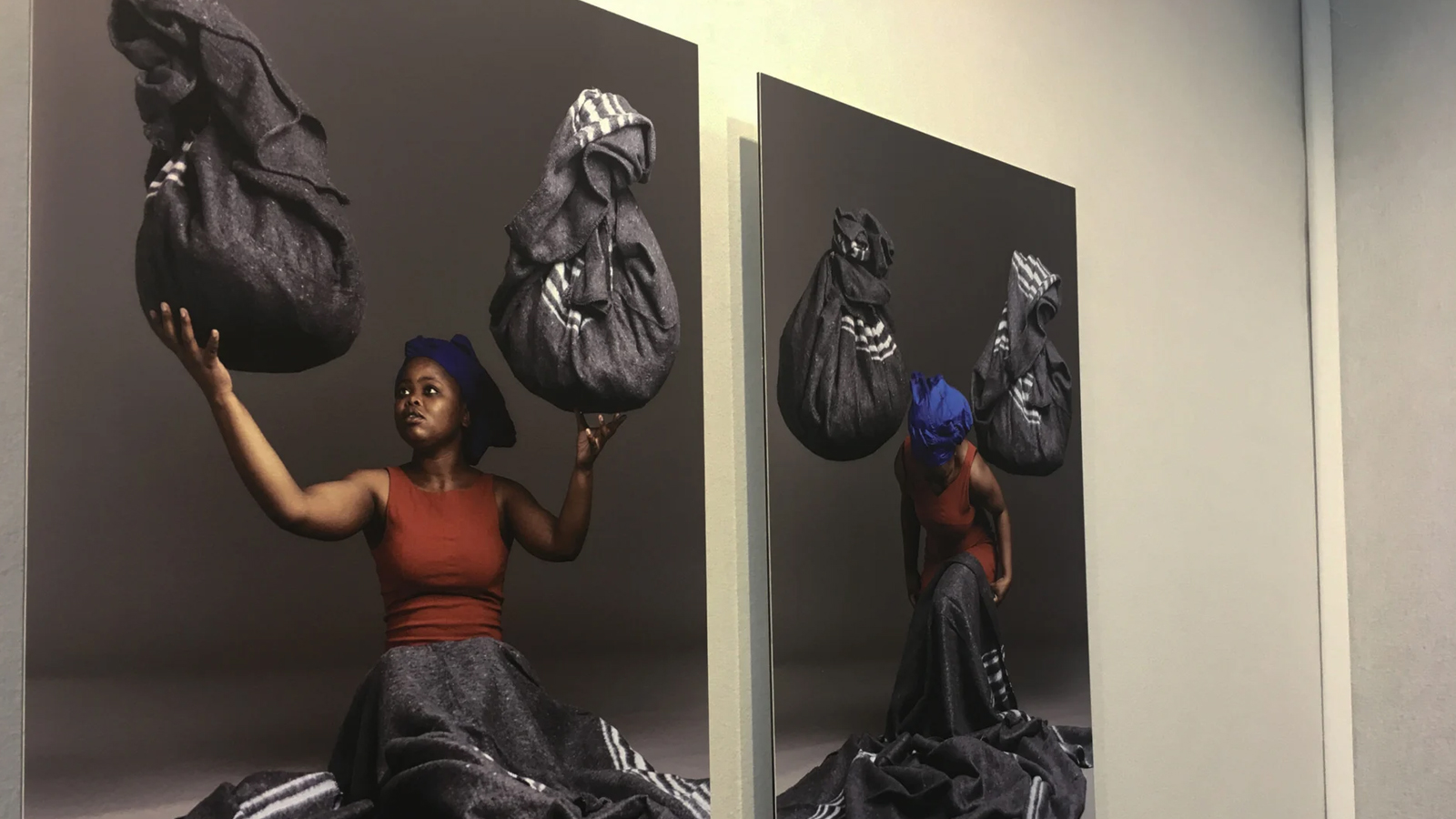
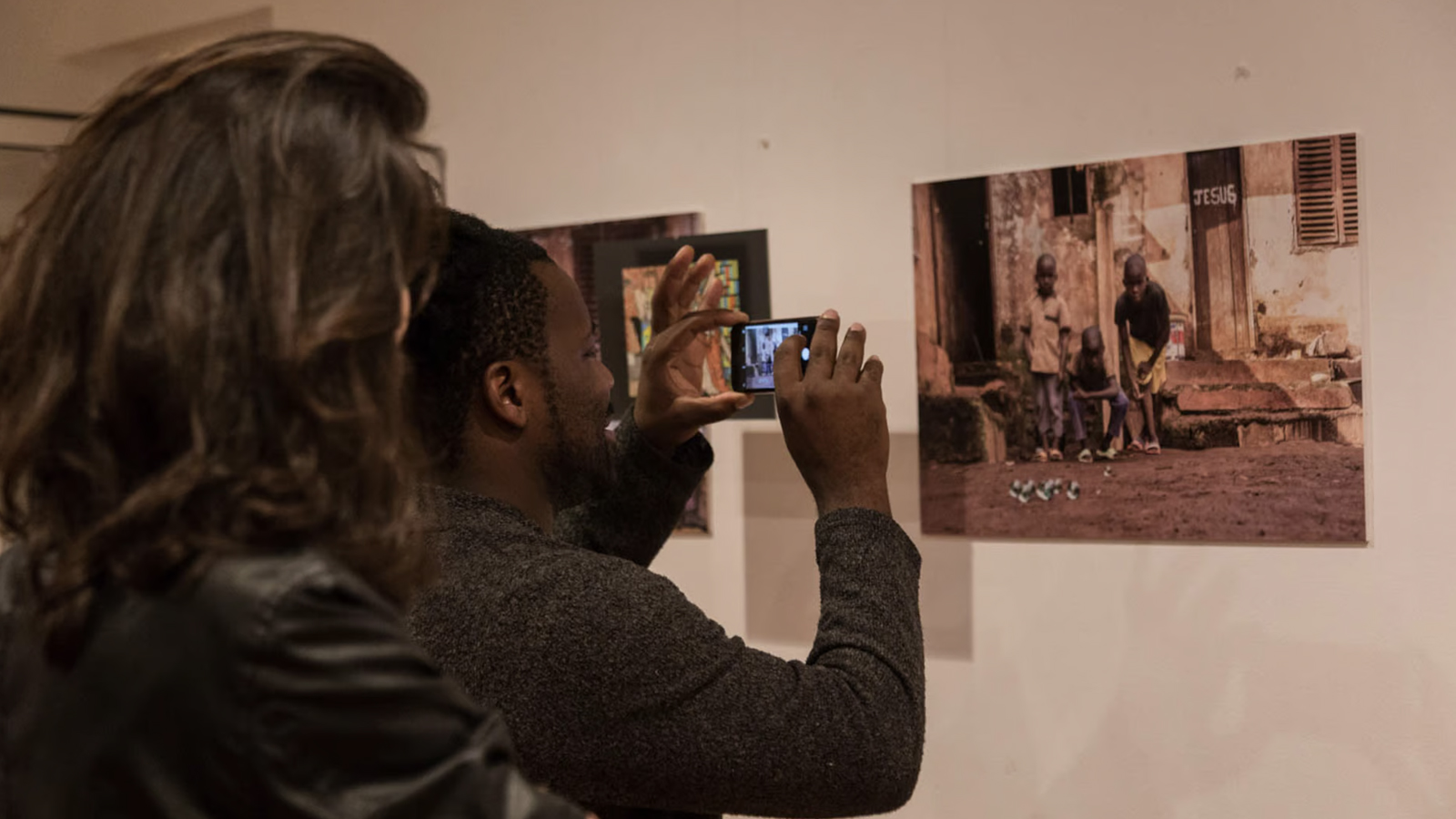
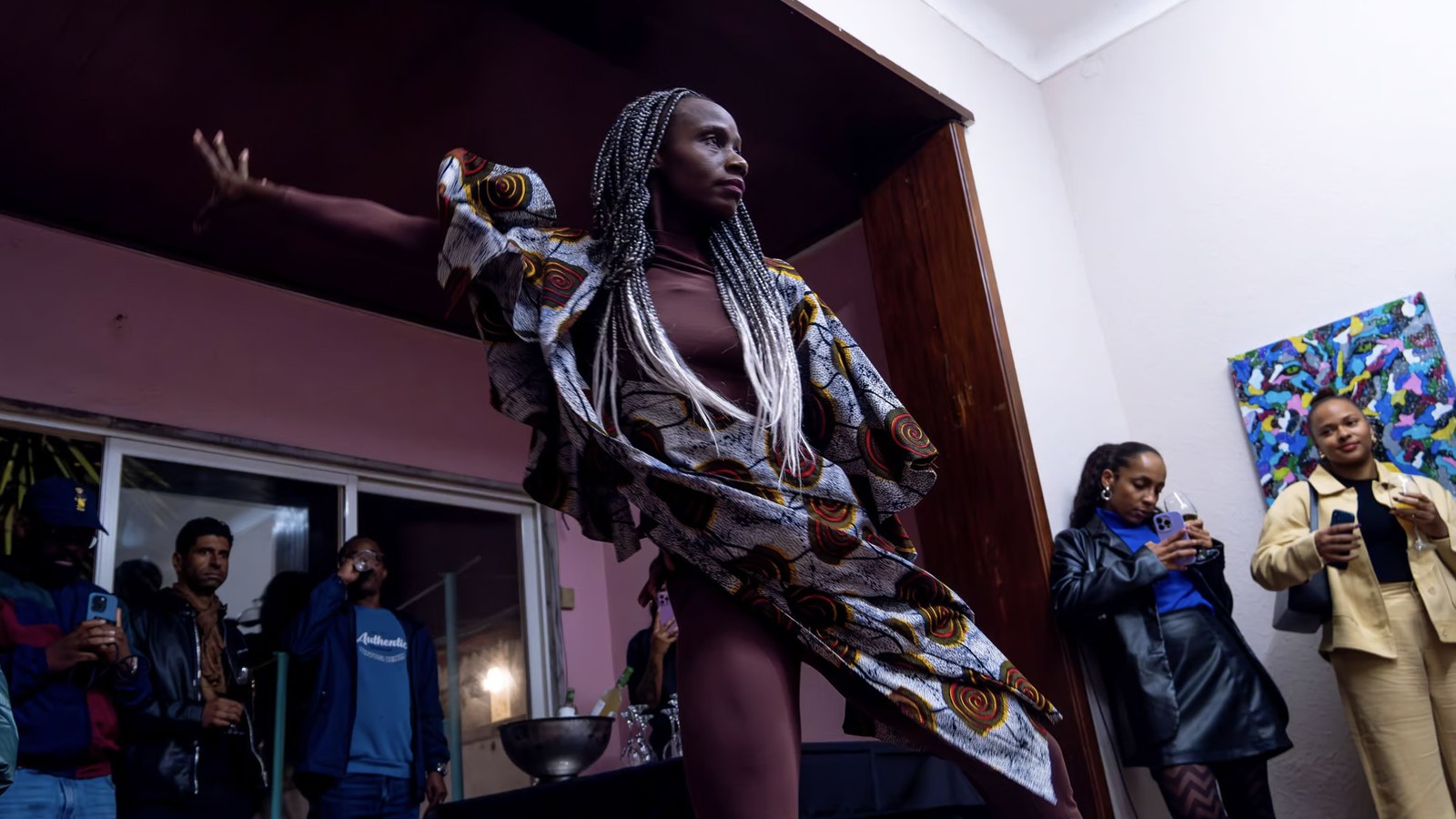
Now I ask you: at a time when the Internet was not yet an option, if knowledge and desire were not instilled in me as a young adult by my family or school, how could I have imagined that I would be able to cross the threshold of spaces like the Calouste Gulbenkian Foundation?
Chéri Samba helped me, at the age of 30, to awaken my curiosity and a desire to find out more – and to allow those like me, who had no idea that they could also imagine, to actually imagine.
Today, thanks to the wonders of the Internet, we can follow this urge to occupy, create and visualise spaces and imaginaries. That’s why BANTUMEN accepted an invitation to work with the Calouste Gulbenkian Foundation over the next few months without any hesitation (the girl I once was winked at me and said: ‘Who would have thought?’).
We’re going there to occupy our own histories and artistic possibilities through the artists who will be exhibited there, in order to transmit them to the community, with our essence and perspectives imbued with notions of decentralisation, periphery, blackness and provocation.
This movement is a call to the community to occupy this and other spaces whose doors, until now, have been abstractly warped by classicism. Today, through CAM – Centro de Arte Moderna Gulbenkian, there is a space that, as it identifies itself, ‘aims to unlock the transformative power of art in order to promote individual and social transformation.’
Reflecting, considering, reconsidering, integrating and expanding are what we propose to do through articles, interviews and reports, at least three times a month, in this space, over the coming months.
BANTUMEN at Gulbenkian
Explore the series

No results were found for your criteria.
You may also like
No results were found for your criteria.