
Will we ever be able to rest?
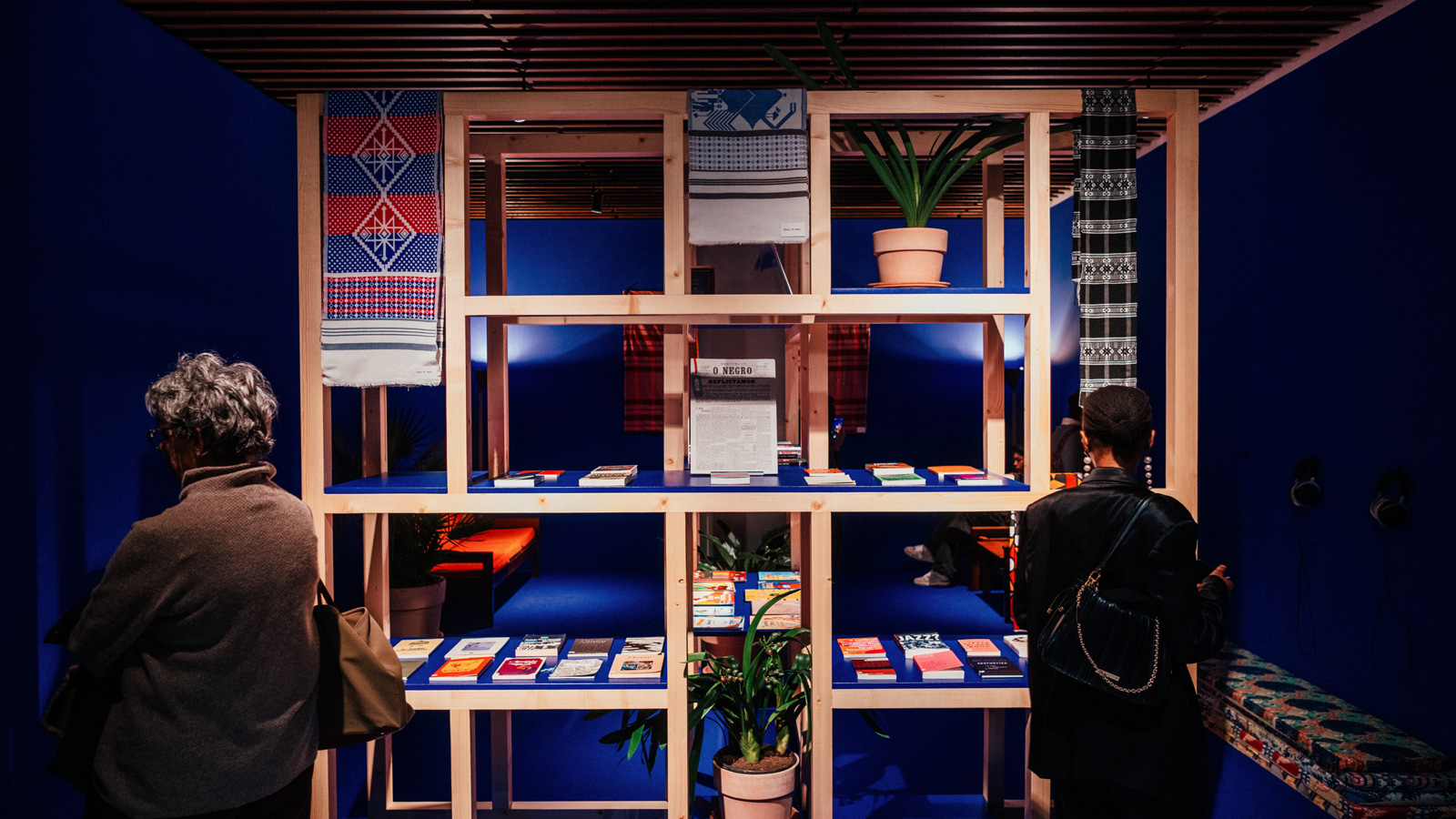
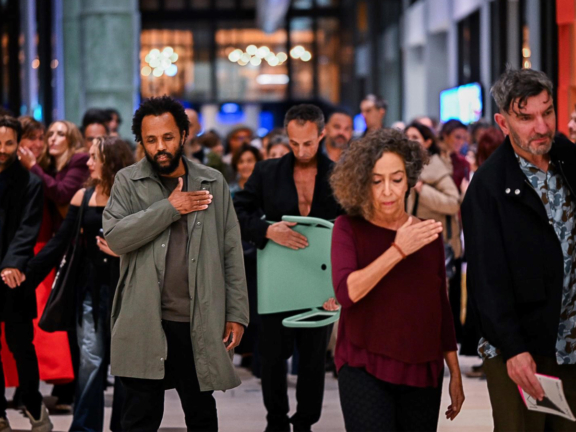
After finishing my day at work, I had an hour to spend in the city centre and visited Julianknxx’s exhibition, Chorus in Rememory of Flight. Upon entering, our senses are activated by the sound of the violin, played by Edvânia Moreno. The choral singing invokes the presence of our spirit, preceding and preparing our body to listen to the testimonies about the long marches undertaken by black bodies within the walls of Europe – a Europe constructed on the basis of the labour and exploitation of precisely these bodies.
That’s how I see this exhibition – which constitutes a beautiful cinematic work. It allows us to perceive the black experience (of survival) in the self-proclaimed lands of the colonial settler. Although we cannot see, in such a direct manner, the portrait of the non-beautiful, it is nonetheless present in these bodies – violence, racism, long working hours, lack of decent pay and working conditions, housing shortages, imprisonment, subalternity, the collective imposition of non-being and non-belonging, and above all, tiredness. Because we have been tired, and accumulating fatigue, for many years. At the end of the journey, based on movement and cinematography, Julianknxx directs us to the Reading Room – a place to read, listen, relax and, above all, to rest.
The Reading Room has a small library, which involved the literary curatorial participation of Vítor Sanches, Dentu Zona – Cova da Moura, and also the curatorial team of the public programme – Jesualdo Lopes, Paulo Pascoal, Rafael de Oliveira and Selma Uamusse.
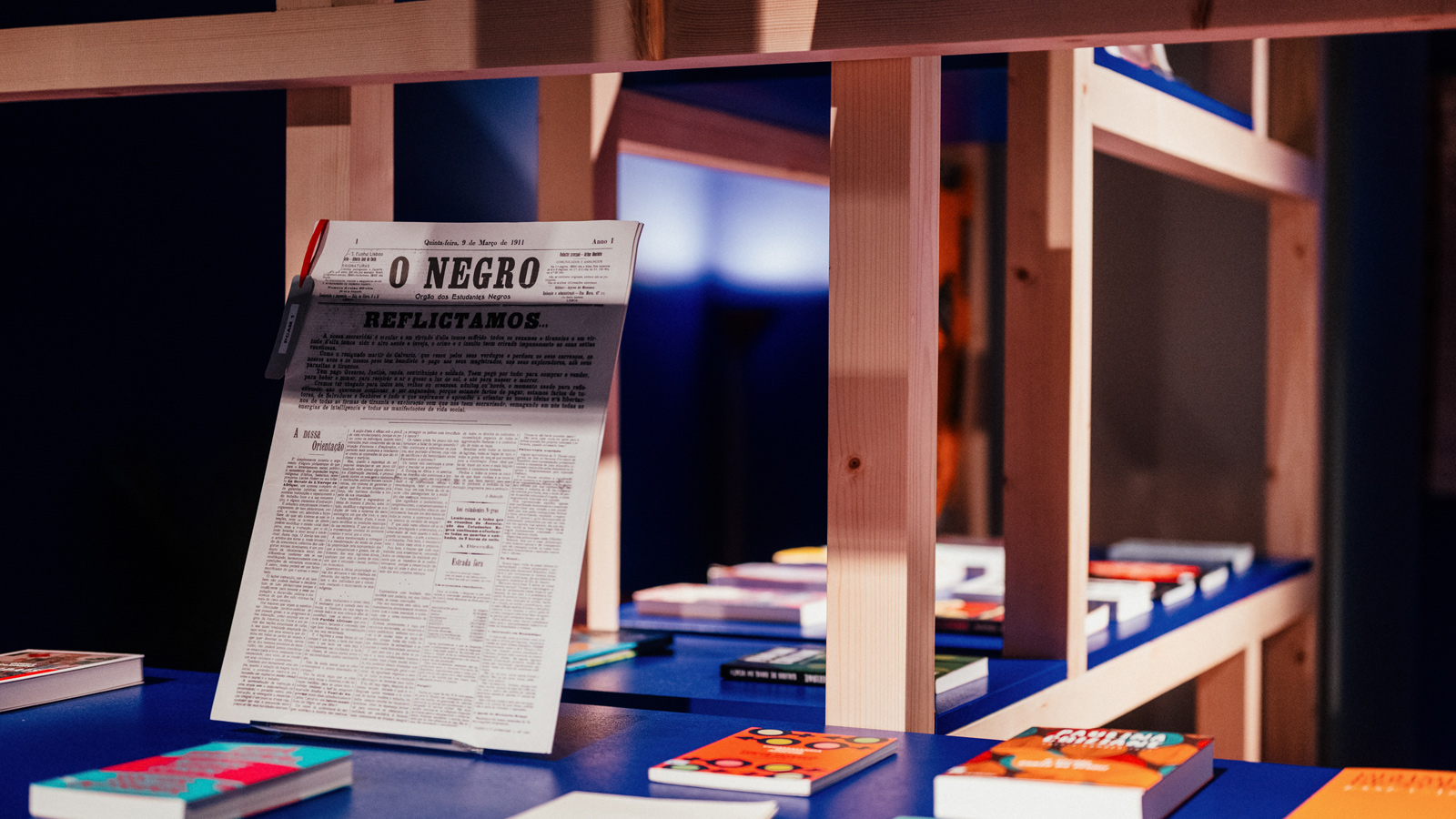
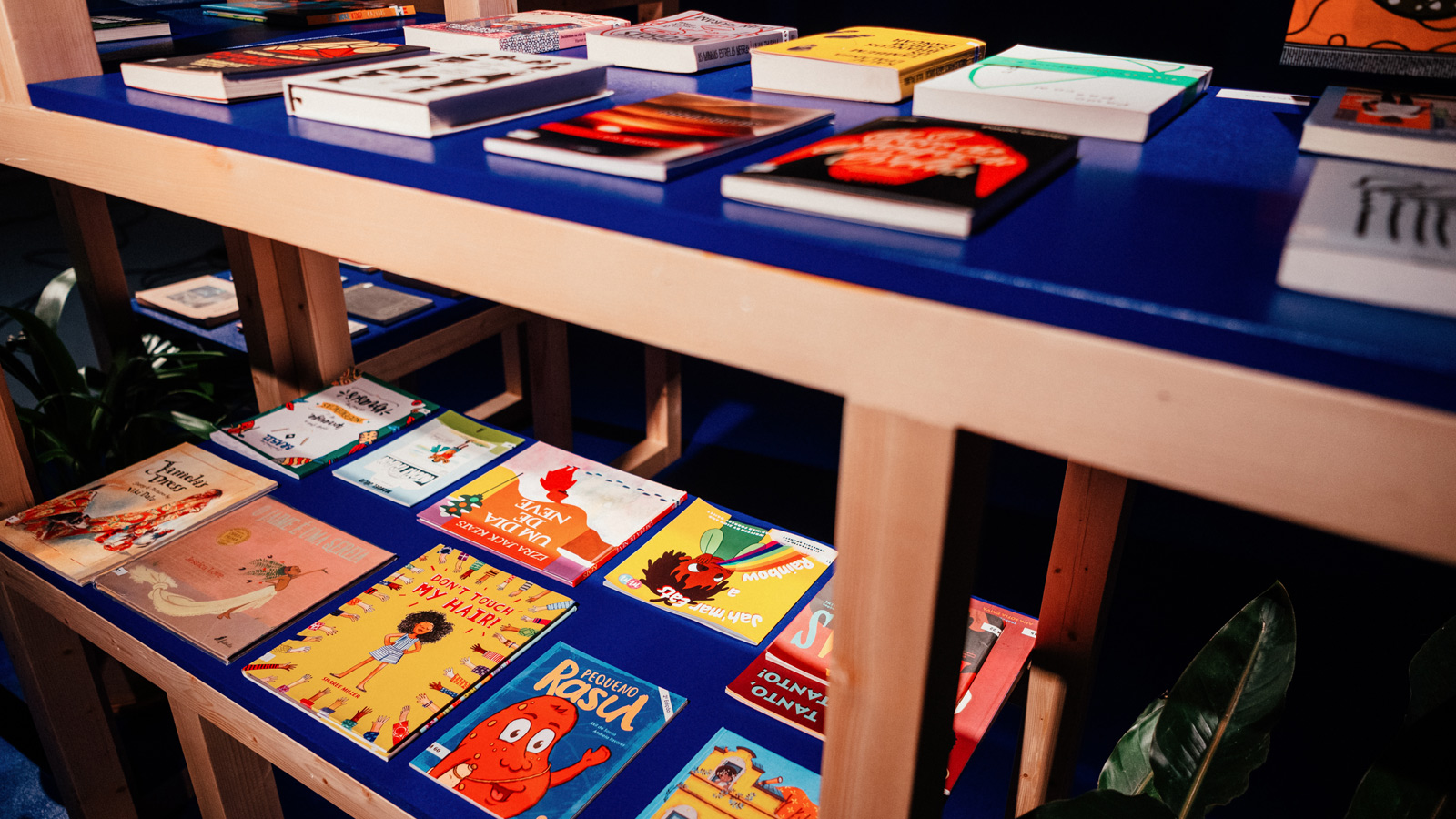
We have the chance to peruse books that may enable us to find answers to the questions identified in the testimonies throughout the exhibition, that may teach us how to don black skin beneath the sun. Books that constitute instruments on how the black body can survive in the sphere of capitalism, that inform us about being, about existing, about asserting ourselves and, above all, are instruments for collective struggle – a secular struggle waged by our ancestors, which we have inherited today, with new contours.
That is why, even though the Reading Room has sofas and ottomans, on which we can sit and relax, as black people we are still targets of oppression.
Being able to rest has become a utopian dream, because we are still being murdered, we are constantly on alert, we need to protect and organise ourselves and we have become accustomed to exhaustion. However, utopia inspires us and makes us imagine a possible place where, for example, we will be able to slow down and discover that we are more than just bodies made for work.
A utopia where we can live in a place where the peoples of Africa will own their own wealth, where our spirits can celebrate, where we can sit round and listen to each other’s stories, where we can live in harmony with nature, where we will be totally free from exploitation and where we can exist collectively.
Meanwhile, sitting on a pouf, listening to the audio recordings of Julianknxx’s interviews in Lisbon – published by BANTUMEN, with excellent production by Luzingo – the museum attendant informs me that I have ten minutes to leave because the Reading Room is about to close. Tomorrow is another day of work, another day of struggle and the utopia of rest will continue to be the beacon that guides our movement.
One day we will all be entitled to a collective rest period!
BANTUMEN at Gulbenkian
Explore the series







No results were found for your criteria.
You may also like

No results were found for your criteria.