
‘The aesthetics of song: the transfiguration of Saint Cecilia,’ by Isabel Carvalho Laurinda Branquinho
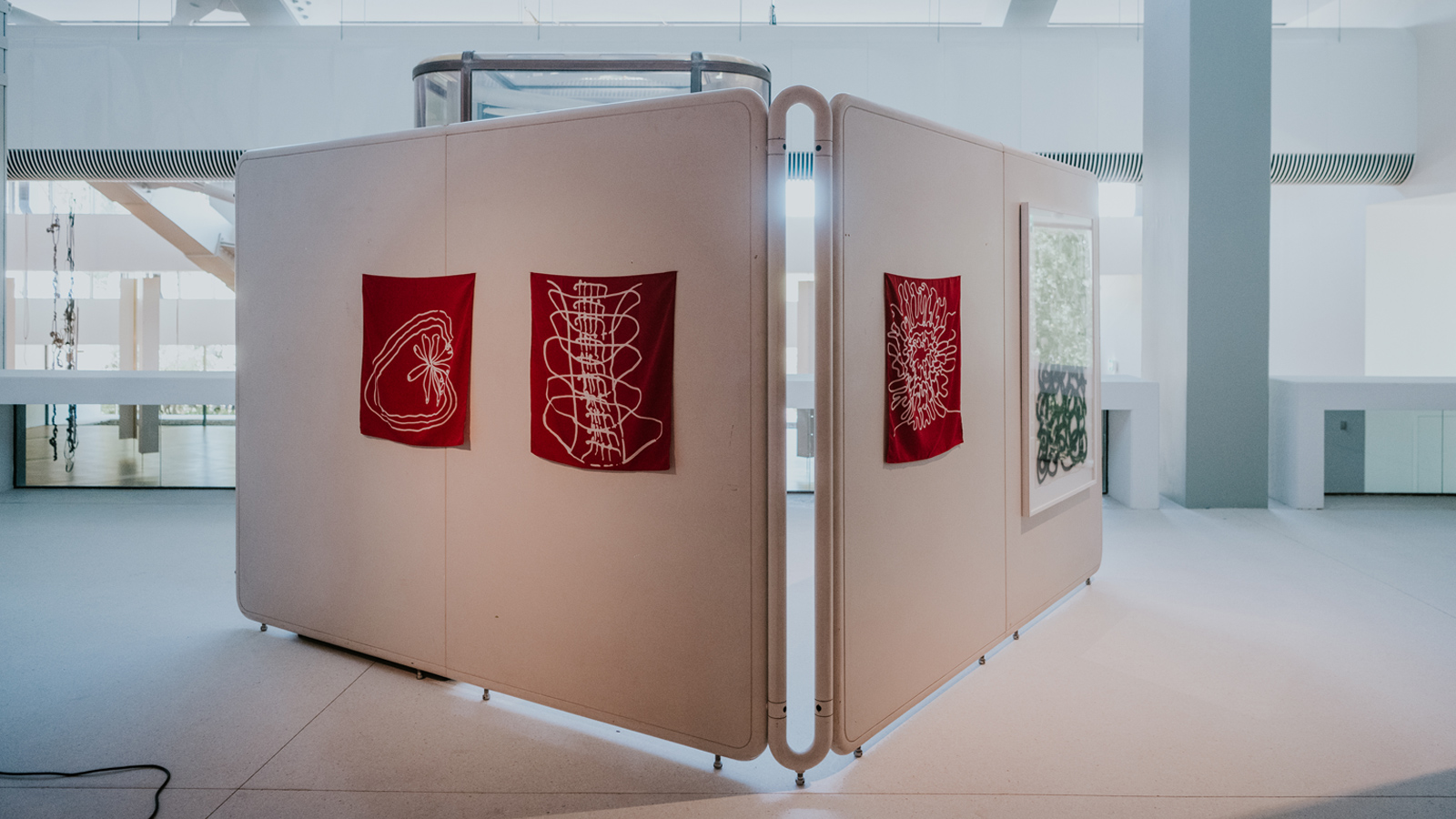
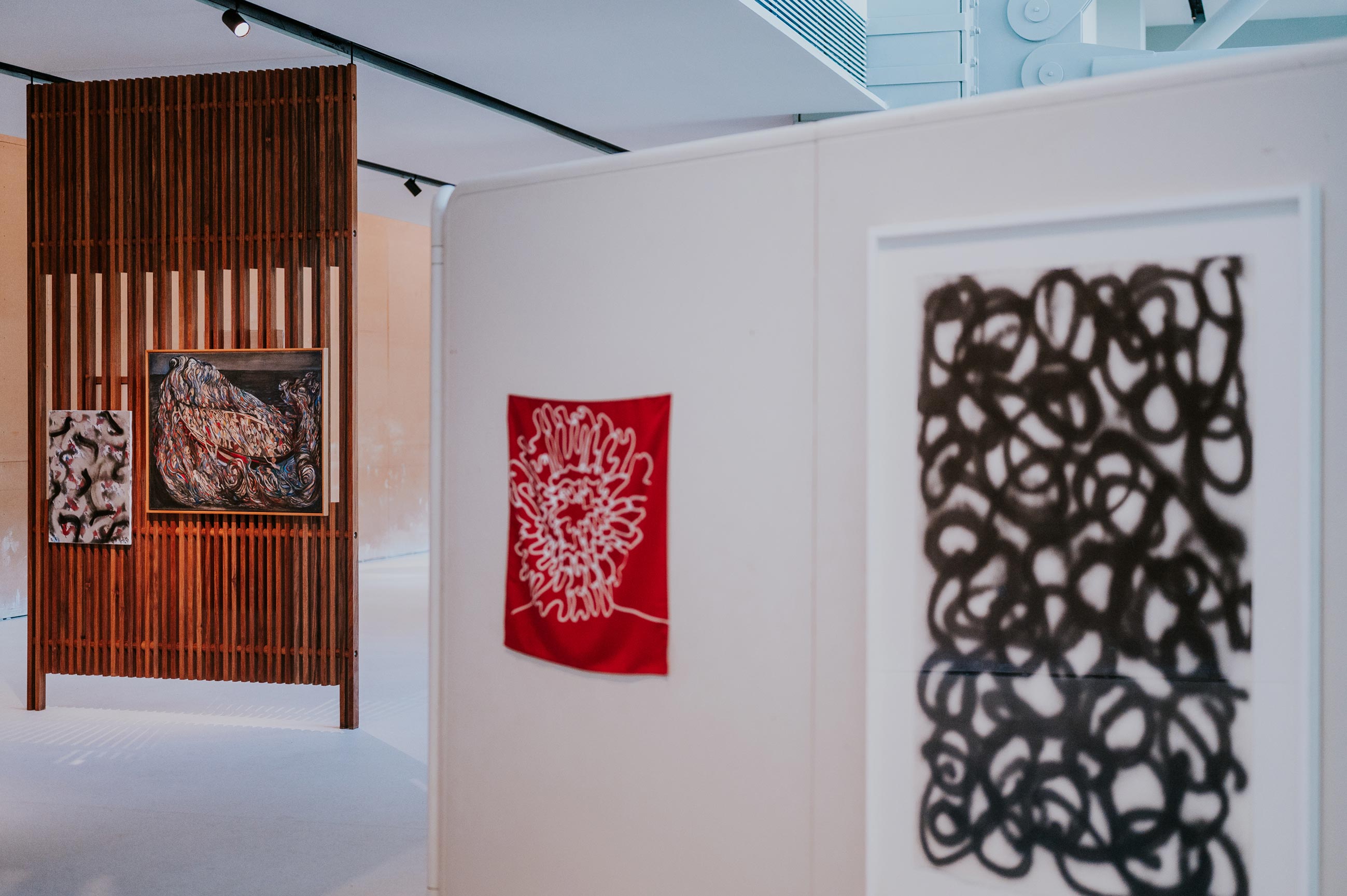
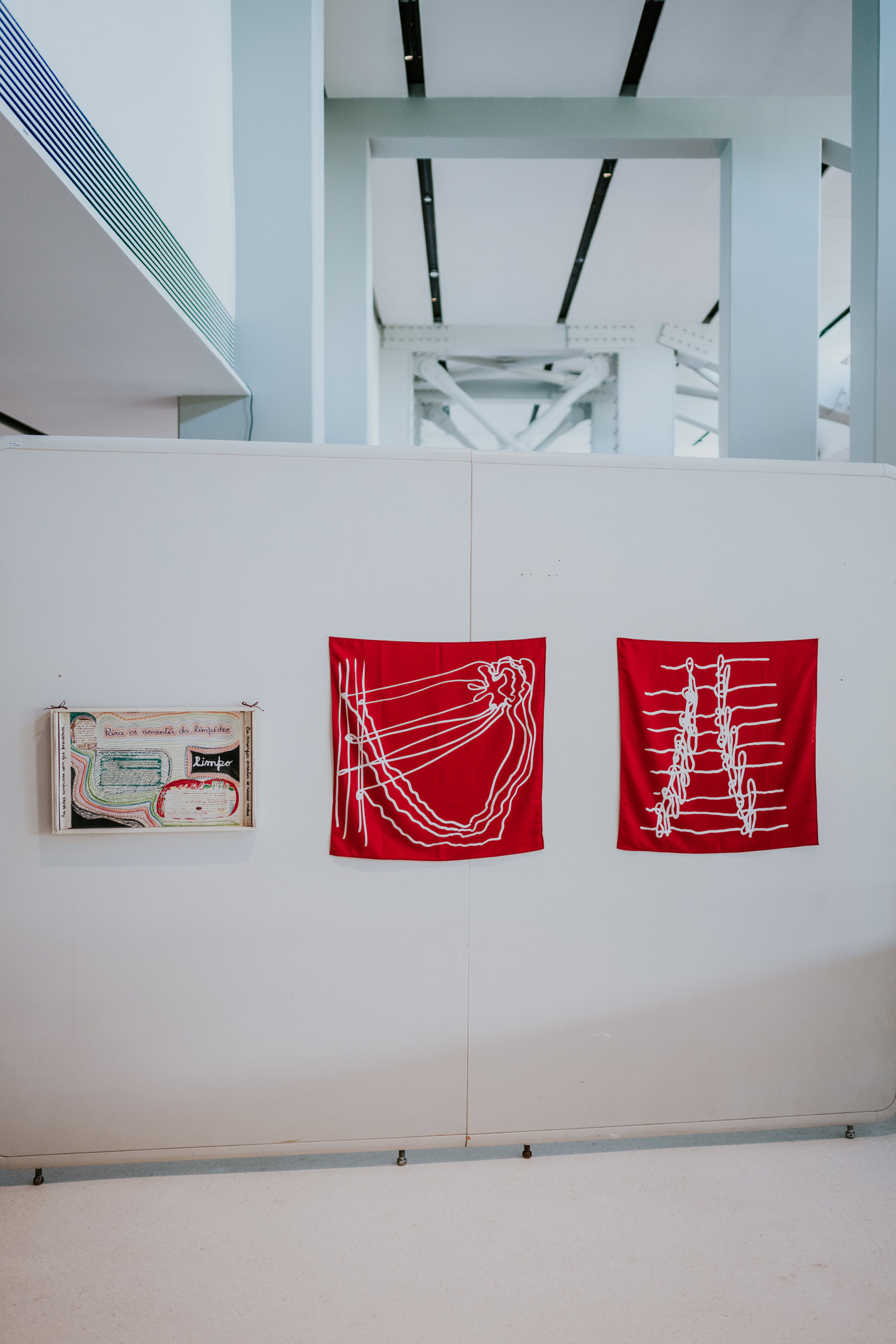
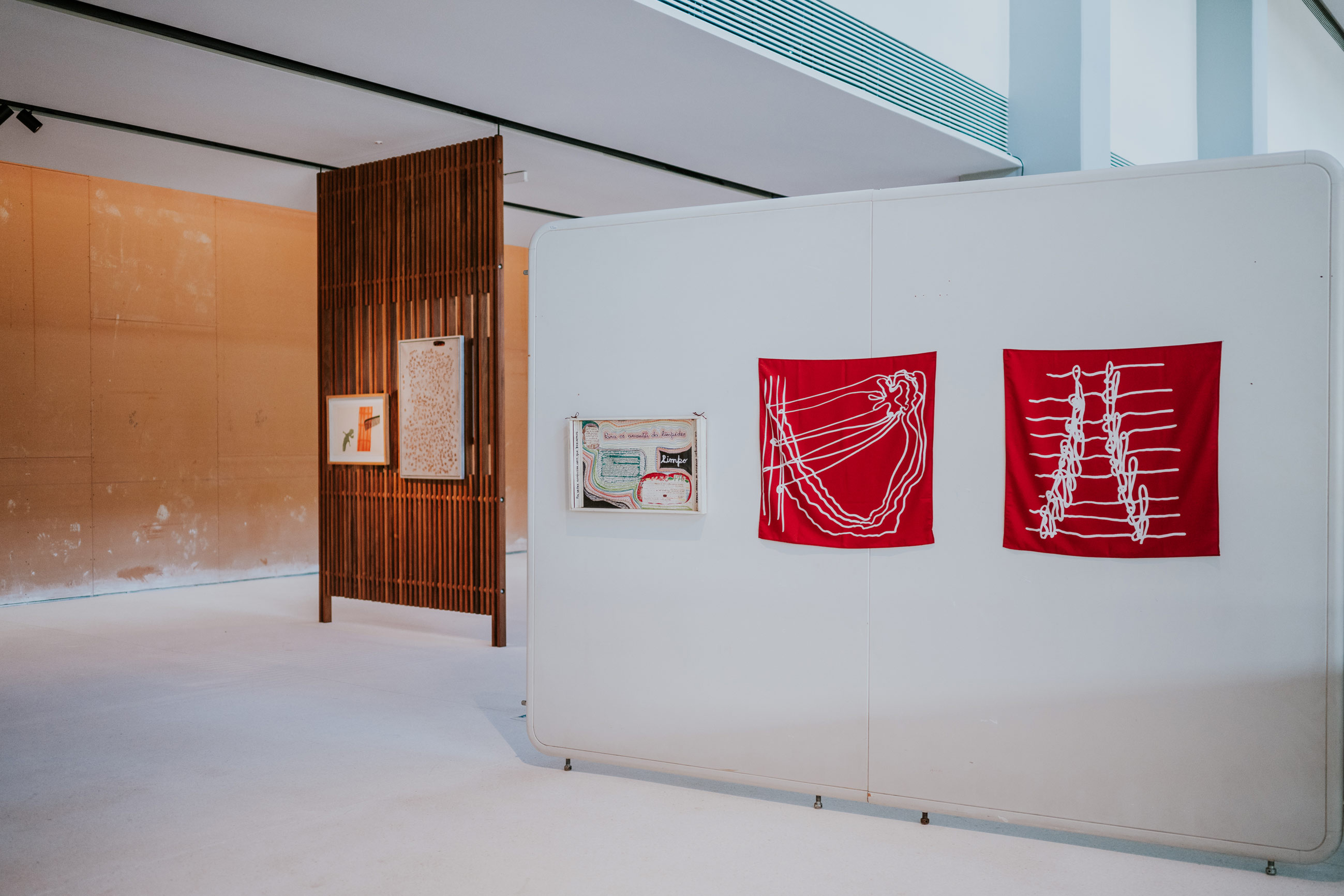
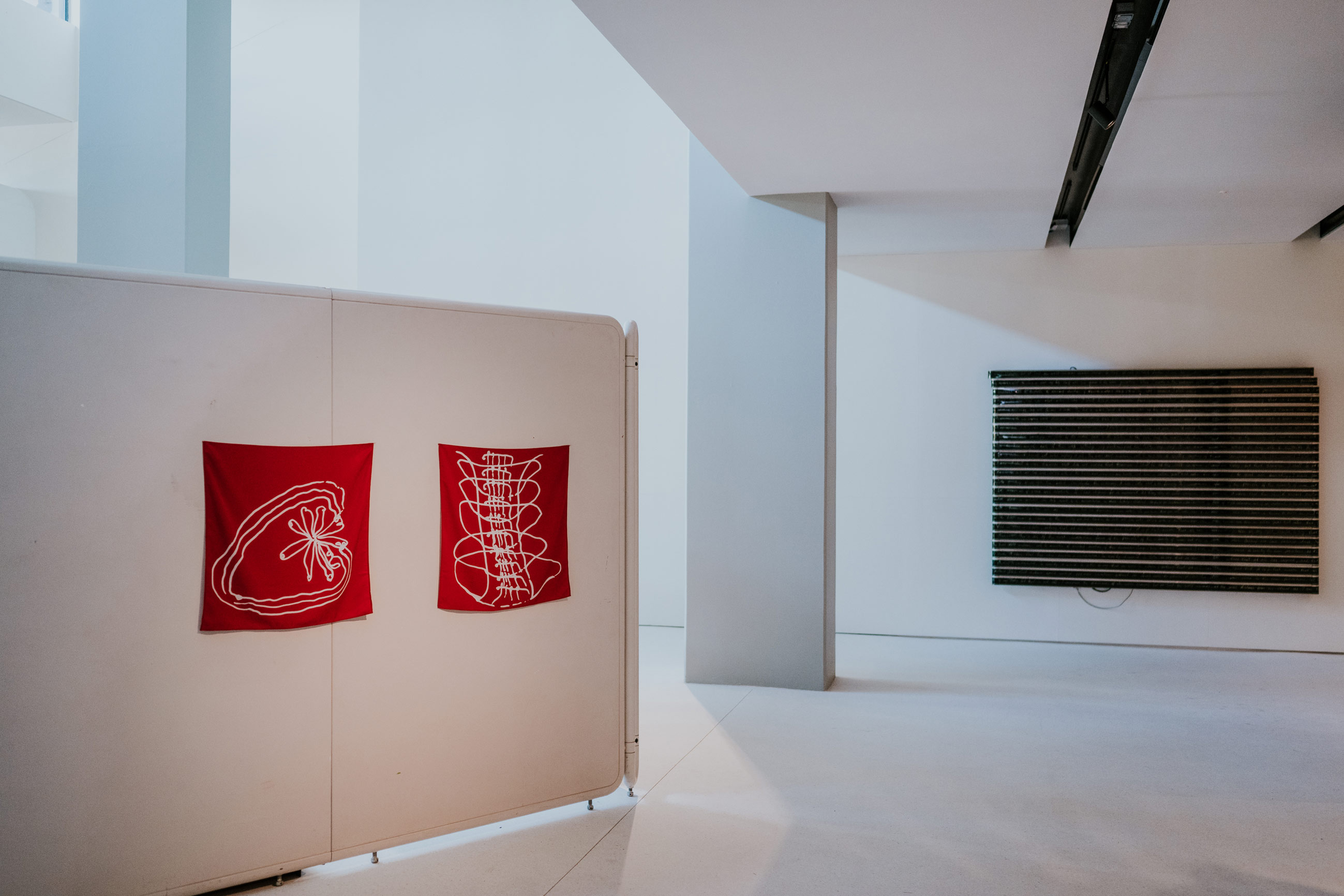
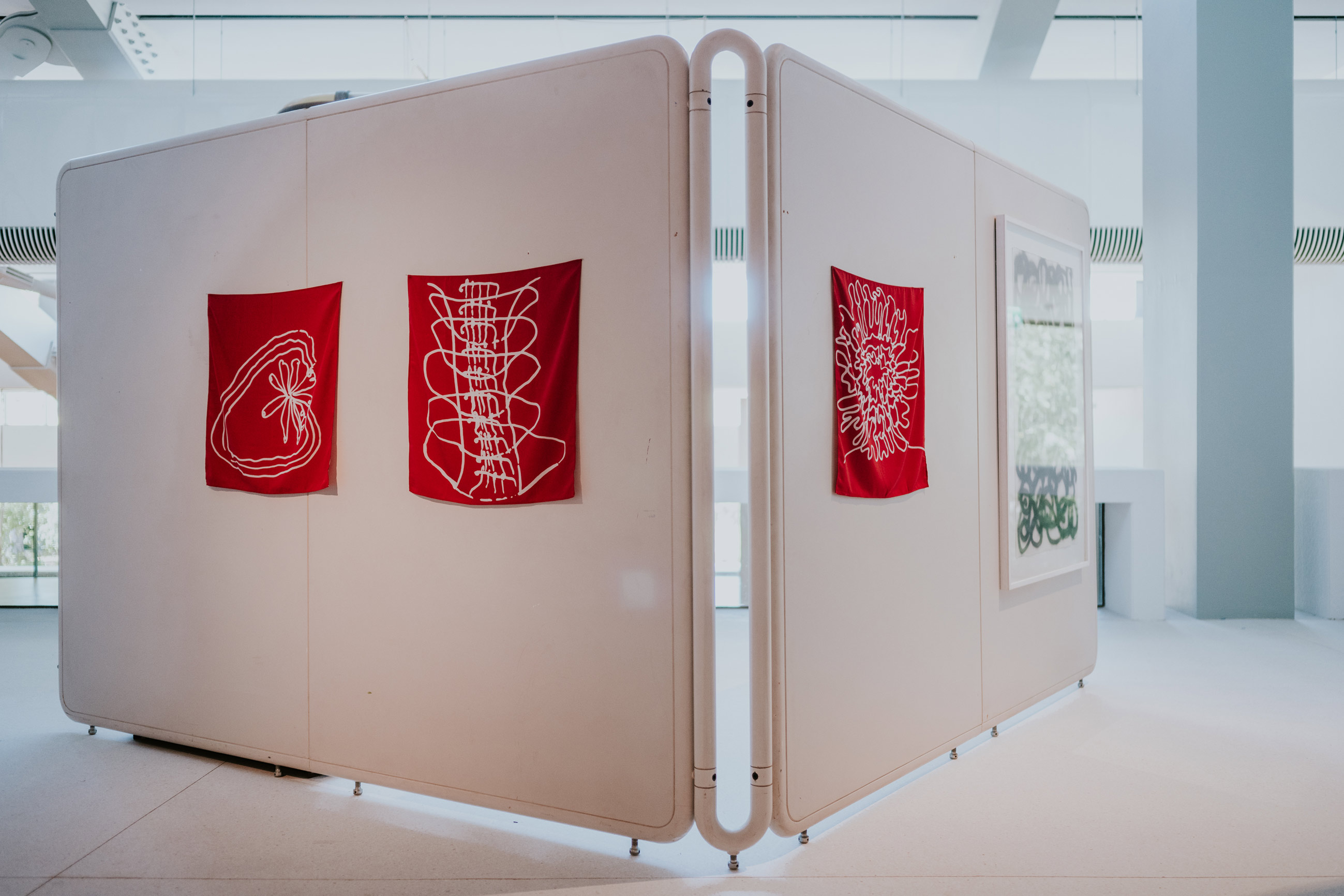
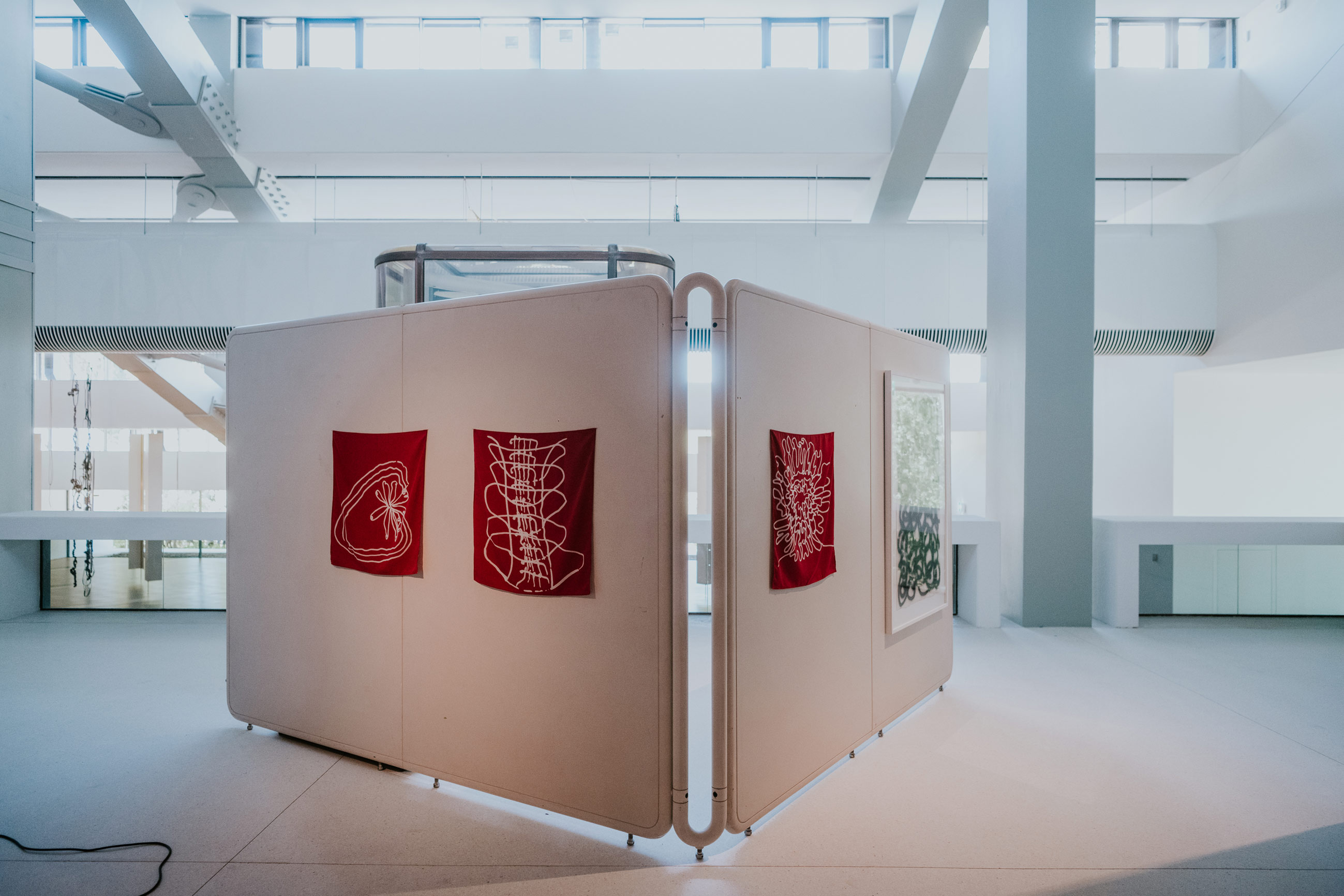
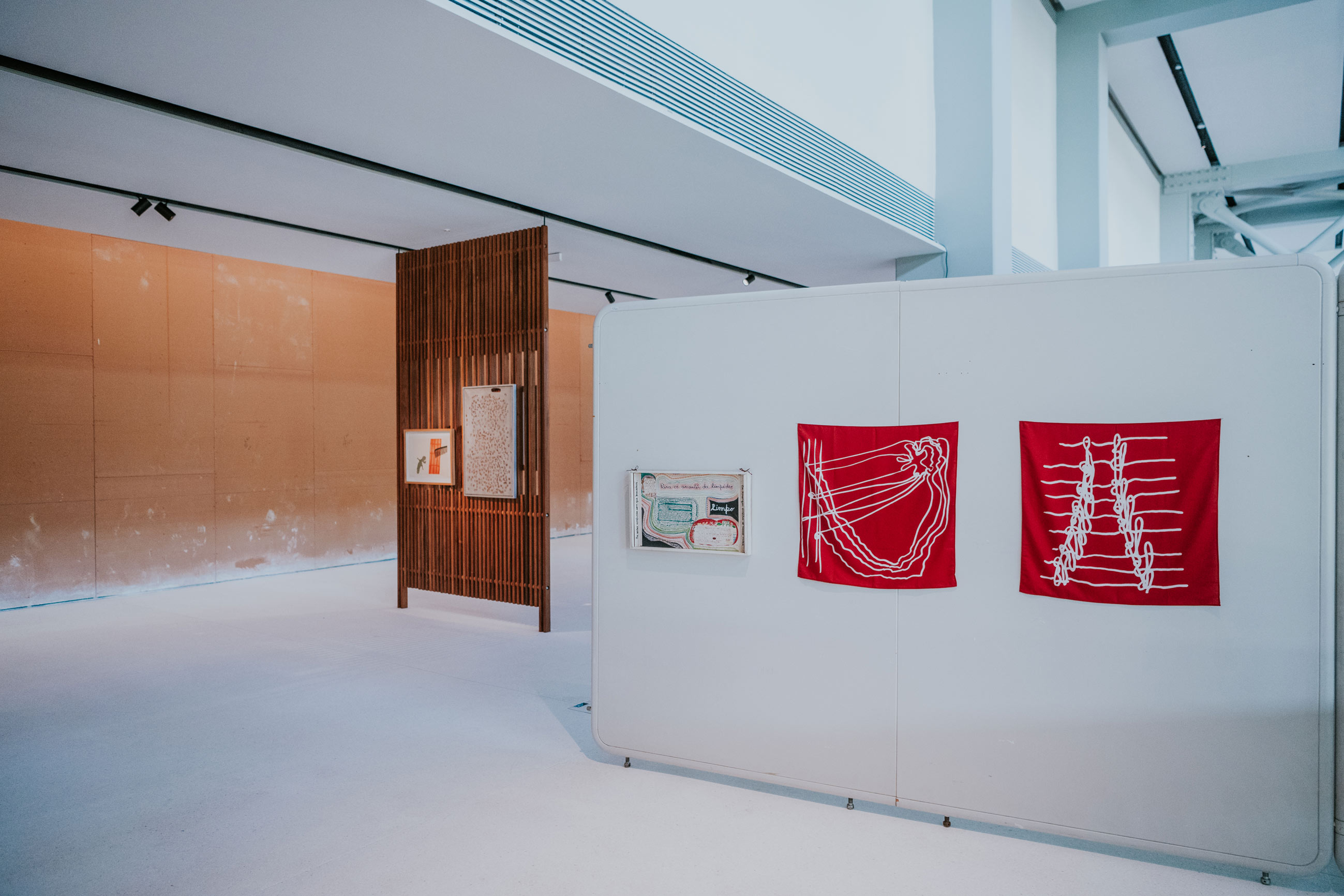
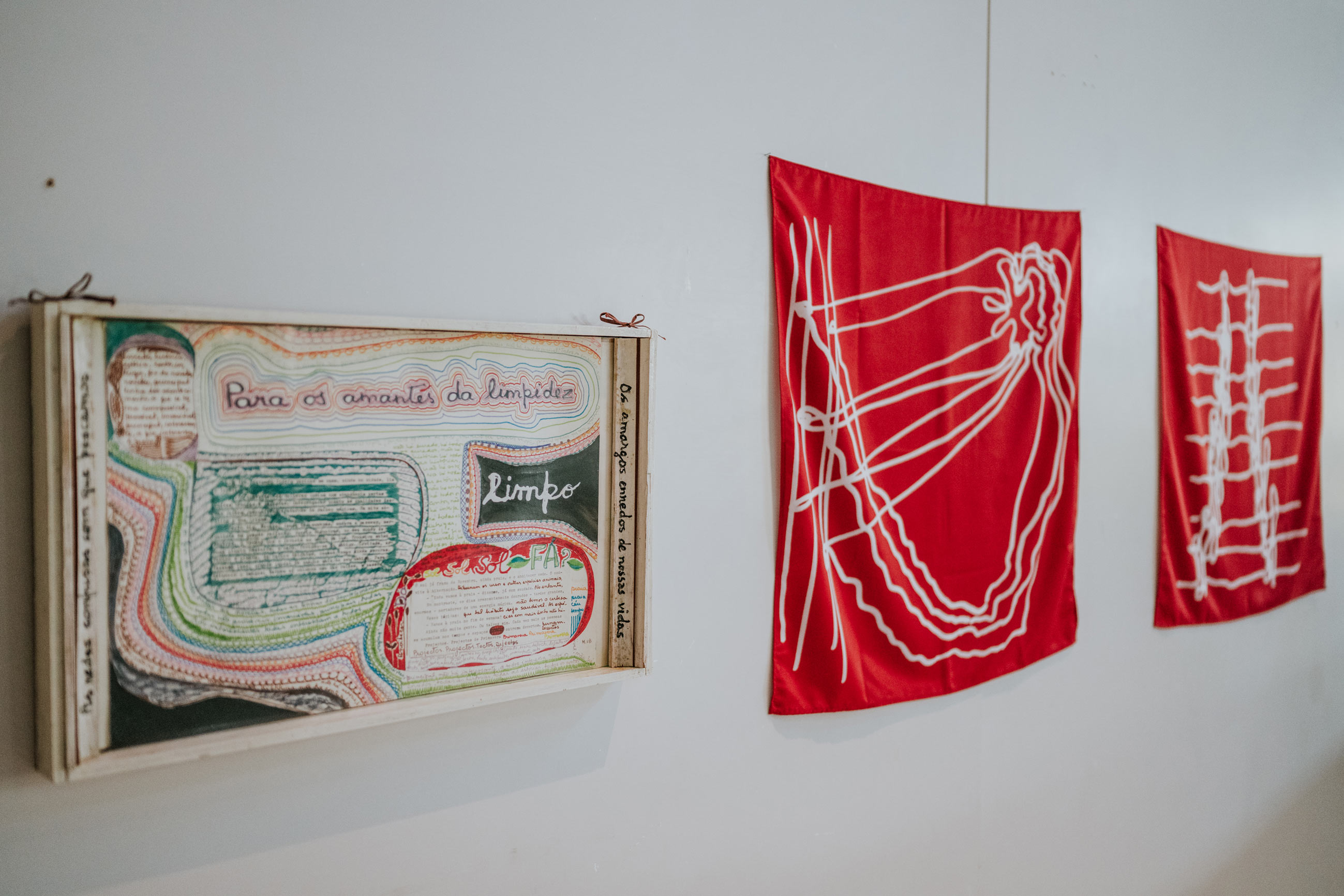
Isabel Carvalho’s work ‘L’esthétique du chant, La transfiguration de Sainte Cécile. Les foulards sont comme des pièces de vêtements ornementaux contenant la promesse d’une expression collective plus adaptée’ [The aesthetics of song: the transfiguration of Saint Cecilia. Scarves are like ornamental pieces of clothing holding the promise of a more appropriate collective expression], was chosen by Leonor Antunes to be part of the selection of women artists from the CAM Collection who establish a dialogue with her work in the exhibition ‘the constant inequality of leonor’s days*’.
Isabel Carvalho’s artistic practice is strongly marked by the potential of language. The word plays a central role in her work, from the visual arts to editorial work. In this piece, the artist invokes the figure of Saint Cecilia to reflect poetically on the act of singing and its social function.
In Christian tradition, Saint Cecilia is known as the patron saint of music, a symbol of spiritual transcendence through sound and voice. In the writings about her martyrdom, it is said that she suffered three blows to the neck, but remained alive for three days. Her voice, far from being erased by violence, became a symbol of resistance because it continued to sound when her body should no longer have been able to speak. The neck, a point of vulnerability but also of vocal expression, becomes resistance, and Isabel Carvalho appropriates this power.
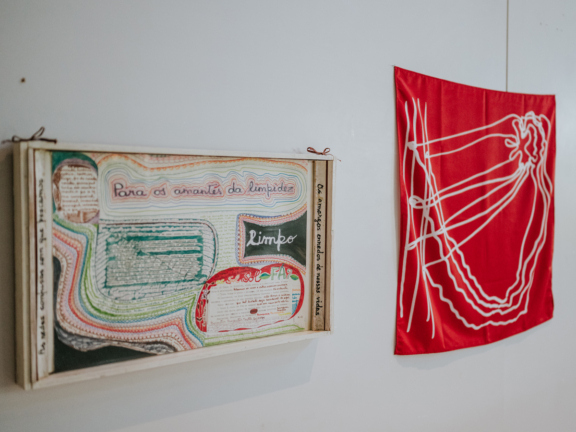
The six fabric scarves that make up the work present a dialogue between text and image, matter and idea. The first, written in French, establishes a theoretical and poetic framework on singing, suggesting that, more than an acoustic phenomenon, this is a practice deeply linked to identity and the ability to create community bonds. Music and singing transcend bodies, transfiguring us through the power of vibration and resonance: it is an expression that surpasses all codes.
On the next five scarves, flowing white lines are drawn that rip through the red of the fabric. The drawings evoke the vocal cords, the anatomical features of the neck, sound waves or vibration patterns, alluding to the desire to materialise sound and its invisible flow of energy. Each scarf seems to capture a moment in the movement of the song. Red, the colour of blood and martyrdom, but also of passion and devotion, reinforces the visceral and symbolic character that exists between body and song.
As a textile object, the scarf is traditionally an accessory associated with protecting and adorning the head and neck. It is a sign of femininity and an element of cultural codification that takes on different meanings depending on social, historical or political context. Isabel Carvalho subverts its function, using it as an artistic support that contains a conceptual and critical proposal. The scarf is re-signified, ceasing to be an adornment and becoming a surface for symbolic inscription.
By engraving the materialisation of the voice and its resonance on the textile, Isabel Carvalho suggests that singing, like memory, resists erasure; it persists beyond the disappearance of the body, ‘in an imperceptible materiality, but so true and full of life,’ as written in the text of the first scarf.
Works from the CAM Collection
Explore the series









No results were found for your criteria.
You may also like









No results were found for your criteria.