
‘An open suitcase,’ by Johanna Carter
Before she was an artist, Túlia Saldanha (1930-1988) was a woman – a feature that marks her oeuvre, becoming simultaneously a characteristic and a condition. It is impossible to think of Túlia Saldanha’s work without evoking the idea of place and the subversion of spaces traditionally associated with the female world that, in dialogue, through the artist’s action, marked the landscape of Portuguese visual arts in the twentieth century.
The setting of Túlia Saldanha’s work is that of a country, between 1960 and 1970, clearly dominated by huge disparities between the urban centre and the rural interior, determining the destiny of those who lived there. The codes that mark this time and space become key coordinates, expressed formally through sculpture, installation, performance, drawing or painting.
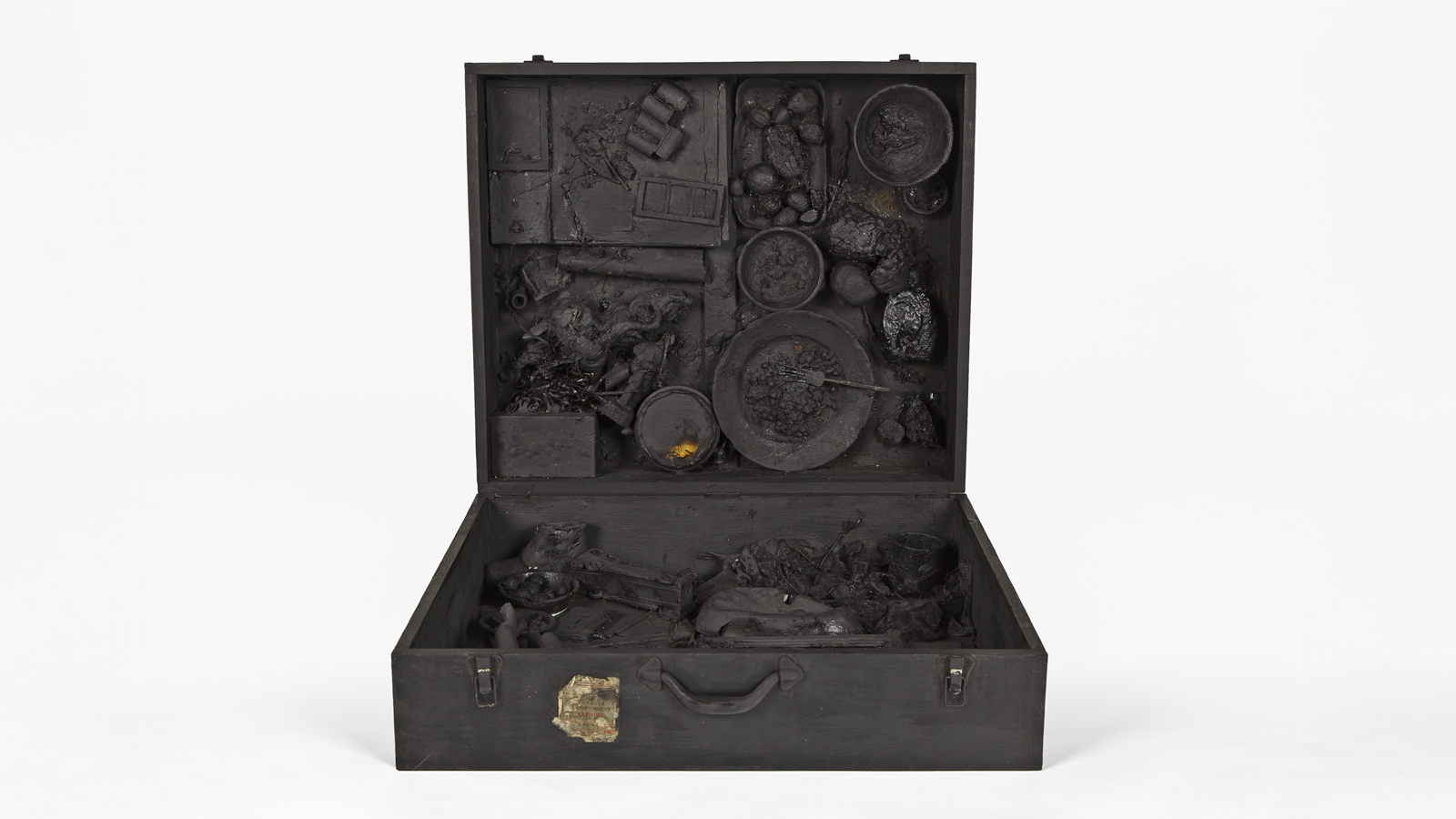
In ‘Do Nordeste a Coimbra’ (1978), Saldanha crystallises a time – a time that passes and destroys.
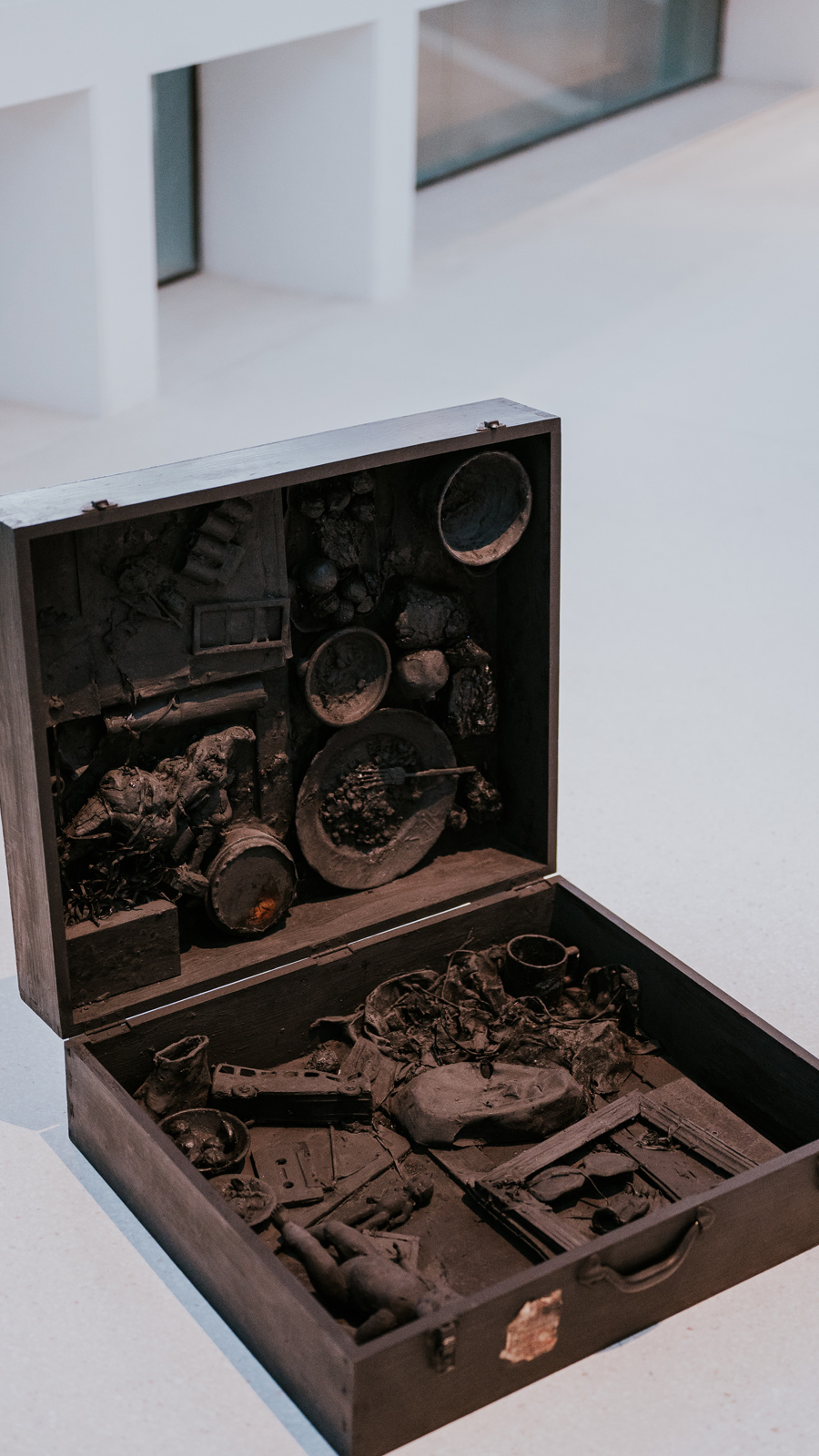
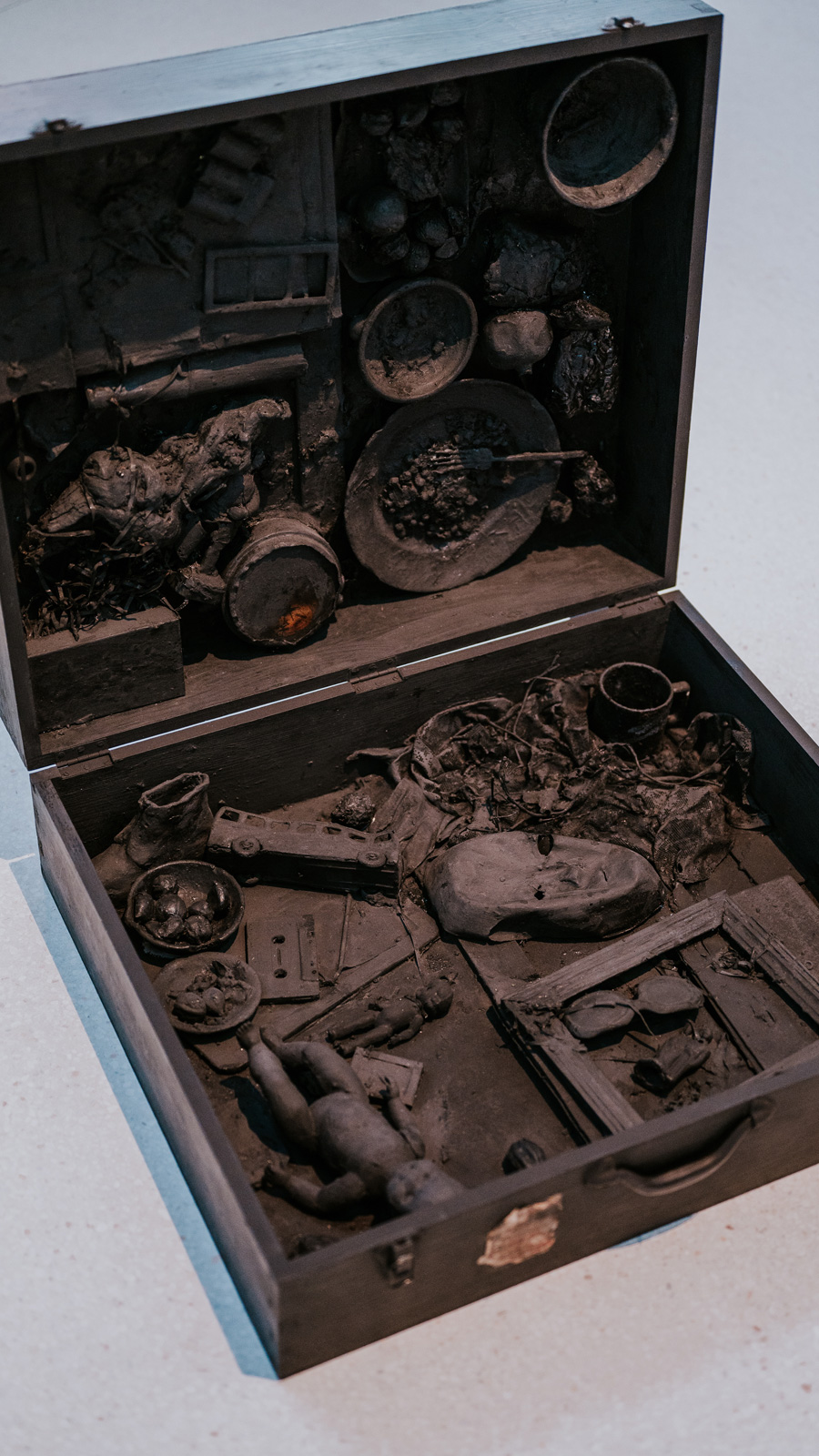
The objects filling the case bear witness to stories. In dialogue, they lend themselves to a chronological reading stretching from toys – little cars and dolls – to the brushes and bride’s veils and cooking utensils on show, some of them appearing to bear traces of food, as though just cleared from the table. These are mundane objects, different from one another, but they inevitably evoke a female imagery linked to the domestic space. At first glance, the way they are arranged suggests a chaotic layering. However, something in the upper part of the suitcase points to a certain order.
This tension conveys two ideas that I feel are essential – first, the idea of the time covered by a woman’s life, expressed by objects that accompany the domestic labour to which many women are confined. Second, the ambiguous and trusting relationship between the disorder and apparent harmony of domestic life.
The black cloth that covers the apparently charred objects alludes to the suspension of time and memory, making the forms appear clearer and more visible at times, less so at others. Túlia Saldanha contrasts that chromatic harshness with the material fragility of the objects, playing with the total invisibility of the work, which in turn plays with the invisibility of domestic labour, inscribed in the everyday life of women.
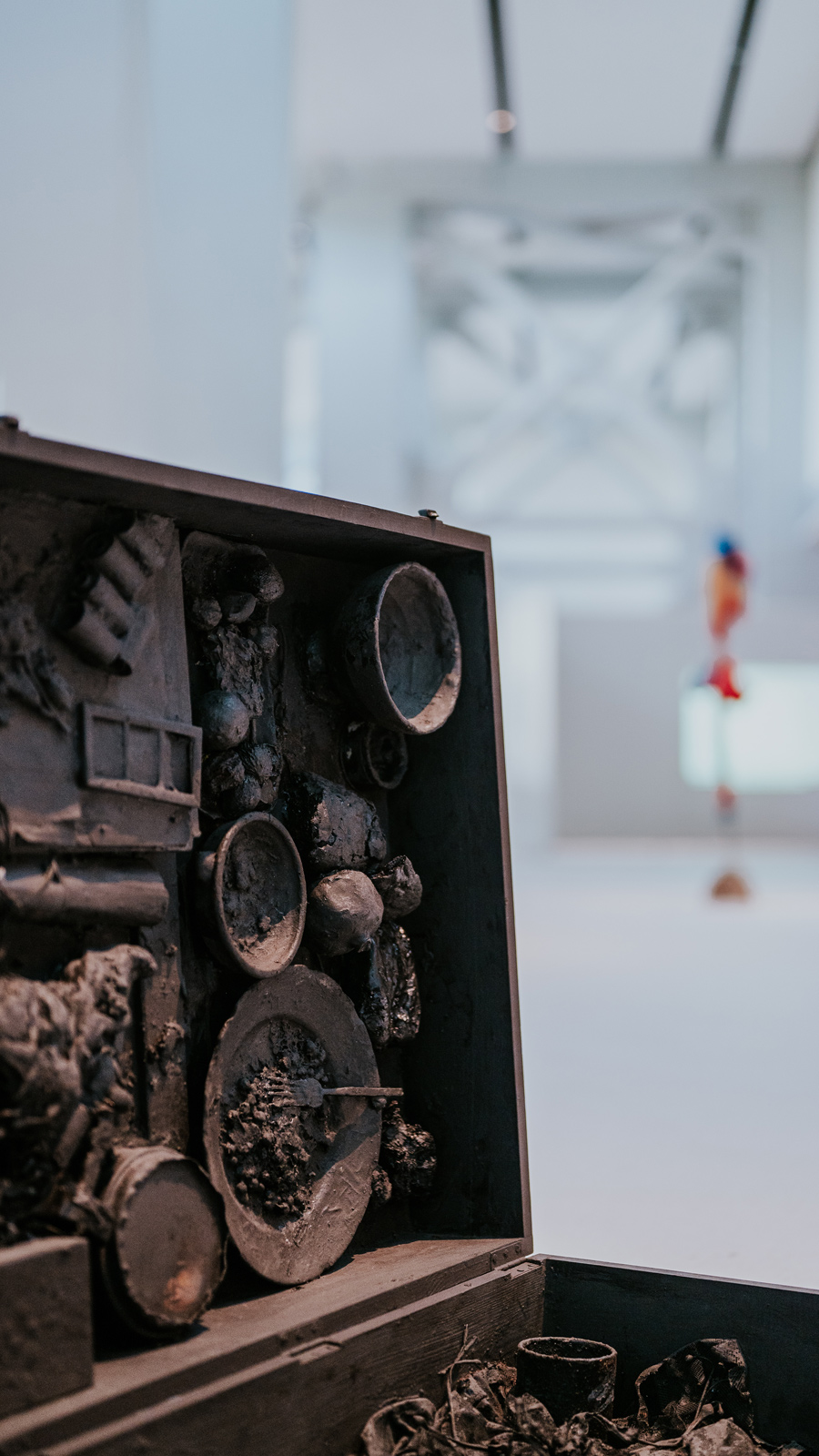
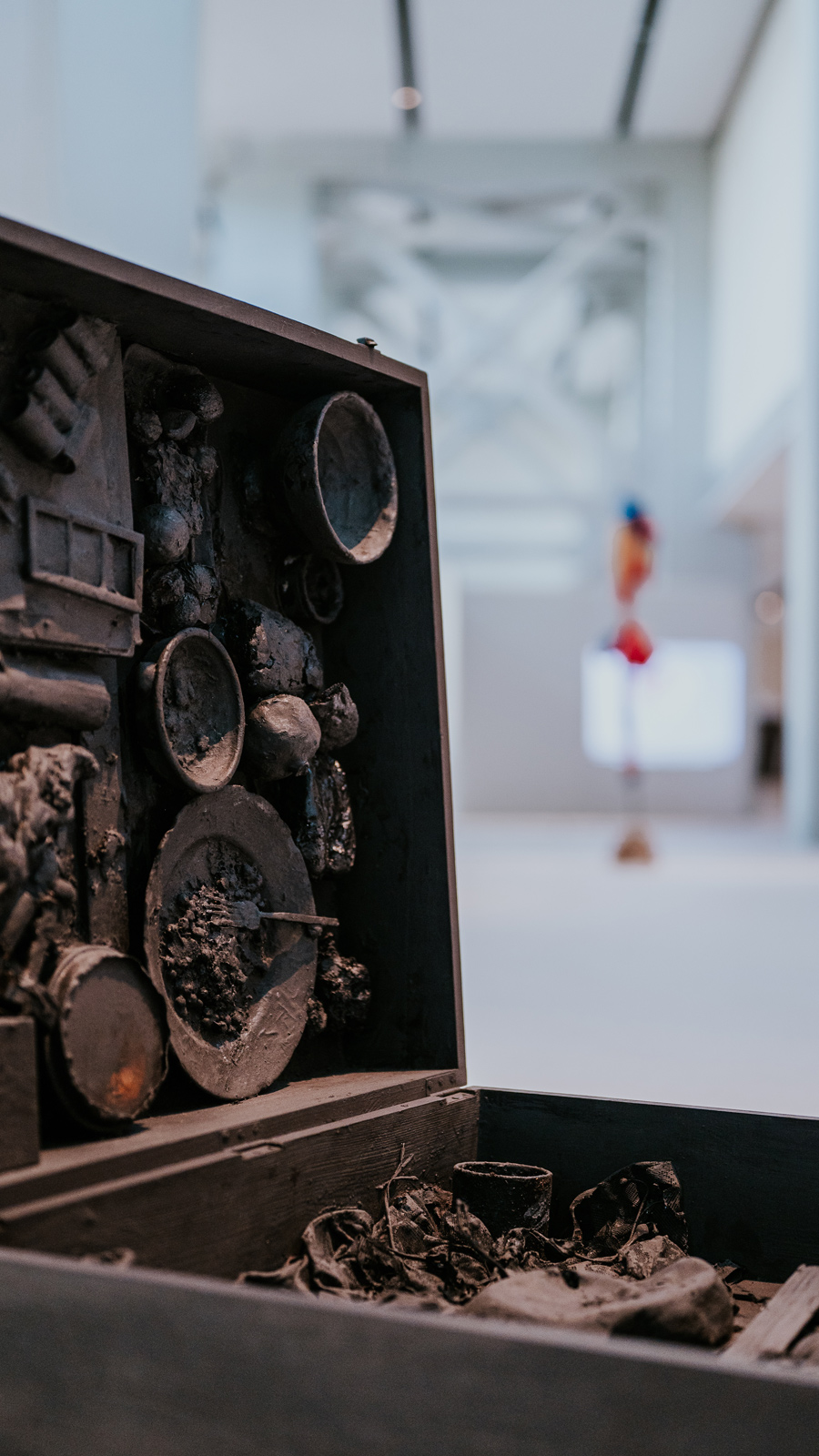
The lack of colour, creating a homogeneous shade of black, becomes a blank canvas where our references and ideas converge in pre-existing forms. ‘Do Nordeste a Coimbra’ is an invitation to stop, observe, associate and reflect. It is an open suitcase, but never quite enough for us to decipher it. The encounter between the observer and Saldanha’s work results in a collaborative and open process. It represents a place to occupy, a fleeting time already past, but which allows itself to be seen through the traces it leaves on the matter.
Túlia Saldanha is an artist who proposes a relationship of contact and mutual influence with visitors, emphasising the role of art as an outcome of the projection of the artist herself and of her audiences. It is a work that is ephemeral, transitory and nomadic in nature, which links to life – because it is impossible to dissociate it from its life.
Works from the CAM Collection
Explore the series



No results were found for your criteria.
You may also like

No results were found for your criteria.