
«The Scheherazade’s Labyrinth», the augmented-reality game aiming to attract young people to CAM
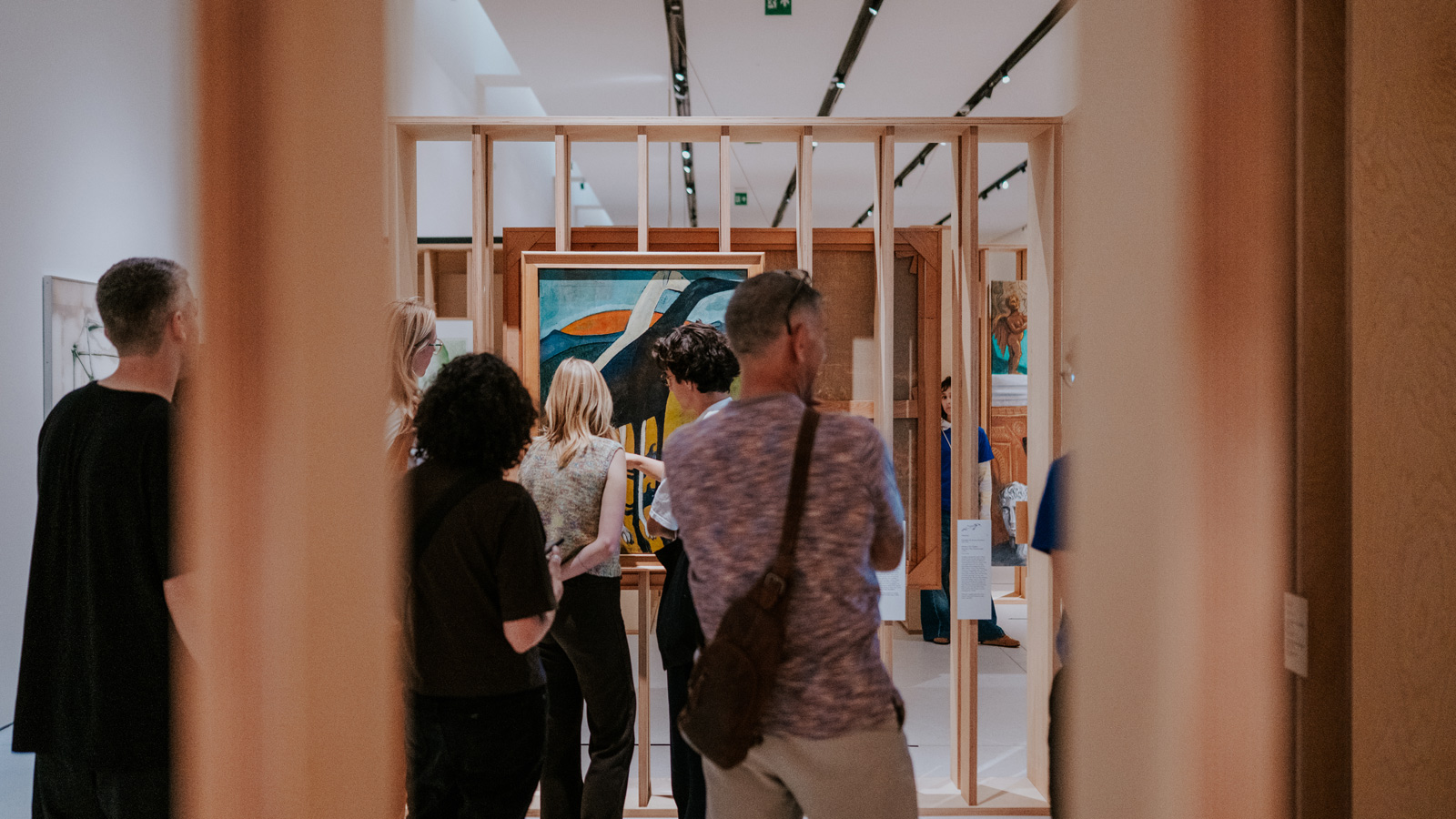
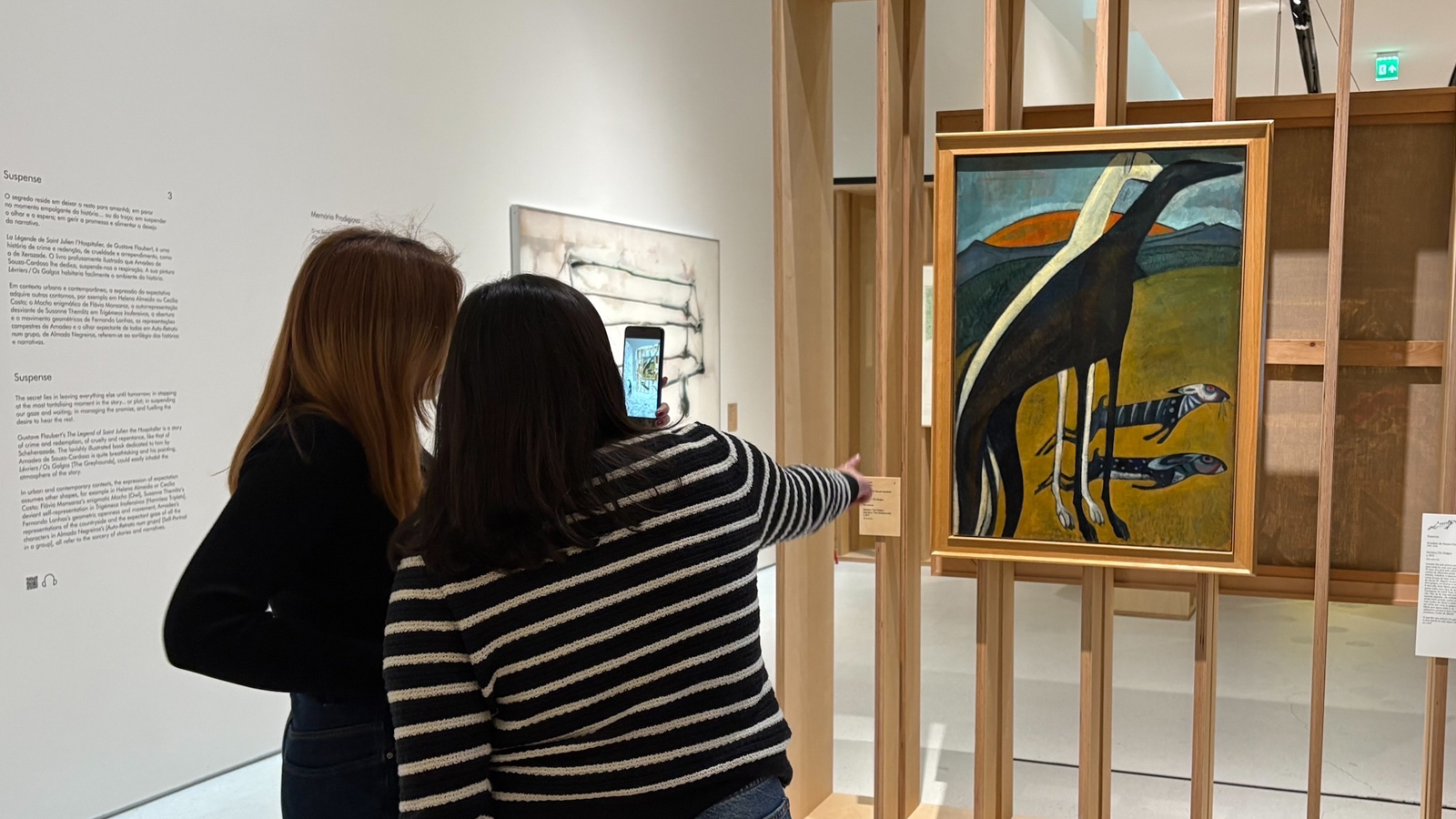
CAM spent a year listening to young people before getting to work. The most ambitious outcome is an augmented-reality game called The Scheherazade’s Labyrinth, developed by Damara Inglês in partnership with JUNITEC, the junior enterprise of the Instituto Superior Técnico. In this world, Amadeo de Souza-Cardoso’s greyhounds leap out of the canvases, and visitors become the protagonists of the story.
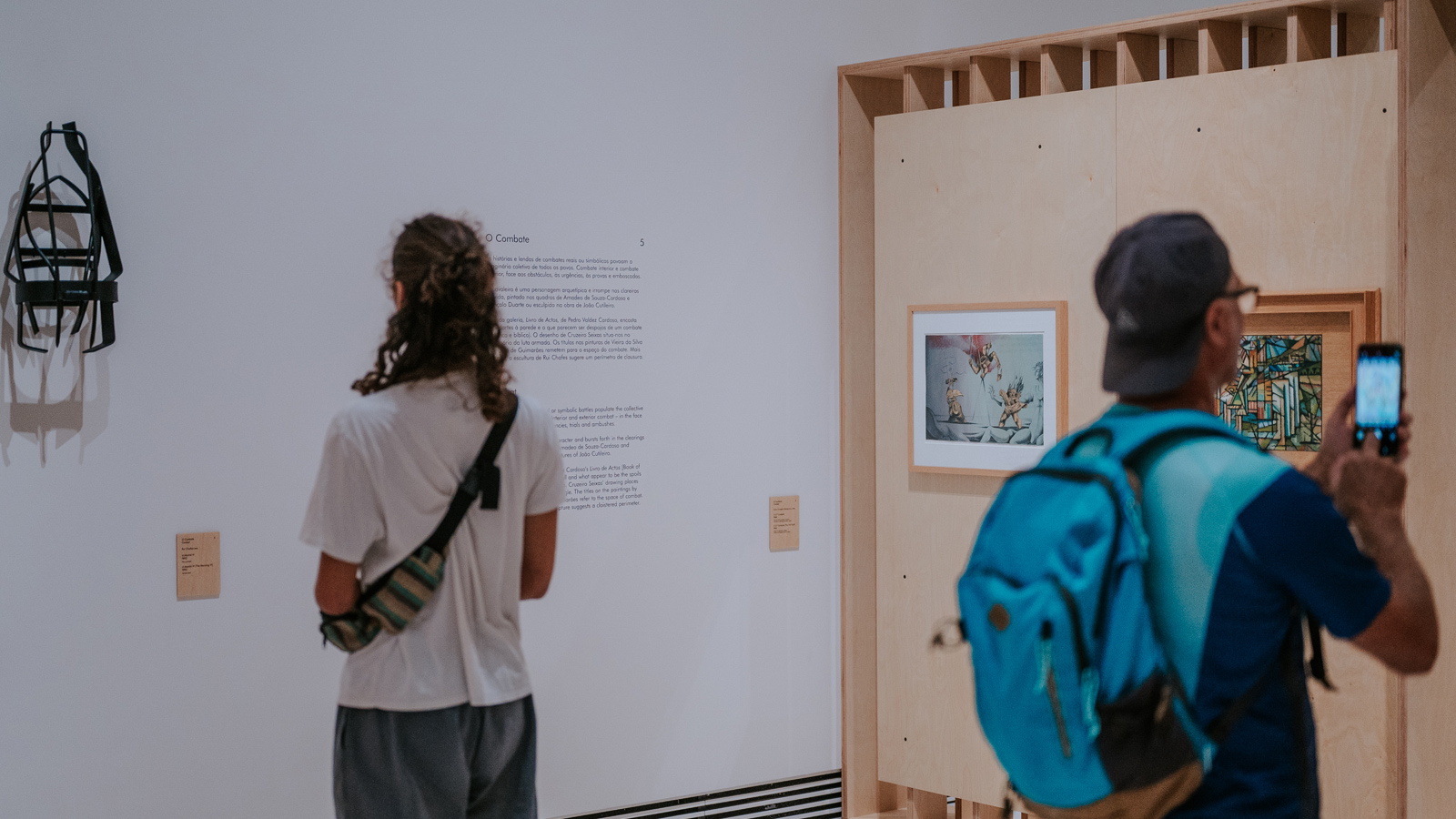
Players go into CAM and receive a QR code on their ticket. Nothing to install. No need to create an account. Just a name—which can be fictional—and they’re ready to begin. From there, they become the main character in a story: to escape the labyrinth, they must make their way through the galleries, discover clues, learn fascinating facts about the artworks and artists, and earn points in the process. A character called Dramatic Egg accompanies them throughout the experience via chat, offering instructions, humour and the occasional surprise. Point the camera at the artworks, and reality changes. This is The Scheherazade’s Labyrinth.
The project was born from CAM’s decision to look past the numbers alone. In 2022, total museum attendance in Portugal recovered to 15.8 million after the pandemic lows, but still fell short of the 19.8 million recorded in 2019—furthermore, in many museums, the visitor profile remained unchanged. CAM decided to listen before acting: for an entire year, it consulted a youth advisory board to understand what was not working and what could change. After many conversations and exchanges, one conclusion stood out: this generation does not want a passive museum experience. They want to participate, decide, belong.
A survey of 160 young people aged 13 to 25 found that over half would change their habits if museums focused more explicitly on younger audiences; roughly 60 percent said they were simply not interested in the exhibitions. The response that followed was tangible: free Saturday evenings for under-30s, a garden that encourages visitors to stay, and activities shaped by the Collection.
The Scheherazade’s Labyrinth is the newest and most ambitious project to emerge from this new phase at CAM.
To develop it, CAM turned to JUNITEC, the junior enterprise of the Instituto Superior Técnico, founded in 1990 and the oldest of its kind in Portugal. With more than 60 active members, JUNITEC operates as a technology consultancy made up entirely of IST students, with projects spanning machine learning, artificial intelligence, data analysis, cybersecurity and web development, for clients such as Thales, the Calouste Gulbenkian Foundation and CEiiA. It was named Portuguese Junior Enterprise of the Year in 2022, 2023, 2024 and 2025, and European Junior Enterprise of the Year in 2023 and 2025.
For the CAM project, the team is led by Damara, an artist and creative technology specialist responsible for developing the storytelling and the seven augmented-reality filters. Project coordination and consultancy at JUNITEC are led by Sofia, a first-year master’s student in Biomedical Engineering at IST. Leonor, also a first-year student on the same master’s programme, is part of the technical programming team. They are joined by Hugo and Diego, third-year Computer Science students at IST, responsible for the frontend, gameplay, and user registration and database management.
The starting point was a series of brainstorming sessions between the JUNITEC team and CAM’s project leads, where the objectives, visual aesthetic and narrative structure were defined. It quickly became clear that this would not be a digital guided tour, but something with its own internal logic. The scoring system is deliberate—the team identified a competitive spirit as one of the key drivers of engagement for this audience—and from the very beginning, the process was shaped by a willingness to experiment, as Damara notes:
‘There are moments when even my own sense of reality is suspended—that’s when I know we’re heading in the right direction.’
— Damara, artist and creative technology specialist
Building a game from scratch means tackling questions long before a single line of code is written: what emotions it should evoke, when the player should be surprised or rewarded, and what level of complexity remains accessible without becoming a barrier. That was the starting point for the team—thinking like players rather than programmers, and imagining what would engage them personally.
Only then did they move on to planning the technical architecture: navigation flows, data structures, and how the system would scale with the number of simultaneous users.
The resulting interface is built around familiar patterns—a bottom navigation bar with the Dramatic Egg chat, a camera for interacting with the artworks, and an exhibition map that follows conventions instantly recognisable to any Instagram or YouTube user. That familiarity is deliberate: it reduces friction and allows attention to move swiftly to the experience itself.
‘Our idea was to look at the apps we use every day—Instagram, YouTube—and start from there. We didn’t invent a new language. We wanted everyone to feel comfortable from the very first moment.’
— Hugo, Computer Science student at IST, responsible for the frontend
One of the most significant constraints was user privacy. As this is a project within a museum, with a potentially young and diverse audience, the team had to find a way to identify players in-game without collecting any personal data. The solution—a fictitious name linked to a unique code generated for each ticket—emerged from several meetings with CAM’s IT team and a research process that proved longer than anticipated.
‘The biggest challenge was finding an authentication method that allowed users to identify themselves easily without providing any personal information—and that took time.’
— Diego, Computer Science student at IST, responsible for the frontend
The issue of artwork permissions also shaped the development process. Working with a Collection like CAM’s—more than 11,700 works by 1,352 artists, including paintings, sculptures, installations and photographs produced from the early twentieth century to the present day—means respecting the rights of each artist or their heirs. The initial planning had to be flexible enough to accommodate changes to the selection of works as permissions came through. Constant adaptation became the norm rather than the exception.
‘At JUNITEC we always begin each project with detailed planning. We did the same here, but the storytelling kept evolving, and we adapted as we went. That makes perfect sense when you’re working with a museum.’
— Sofia, project coordinator at JUNITEC
In addition, some of the programming languages and specialised tools required for the project were not yet part of the team’s established toolkit, turning development into a twofold process: building the game while learning how to build it. The strategy they settled on was pragmatic.
‘I assumed that most things would go wrong so when they didn’t it was a pleasant surprise.’
— Leonor, Master’s student in Biomedical Engineering at IST
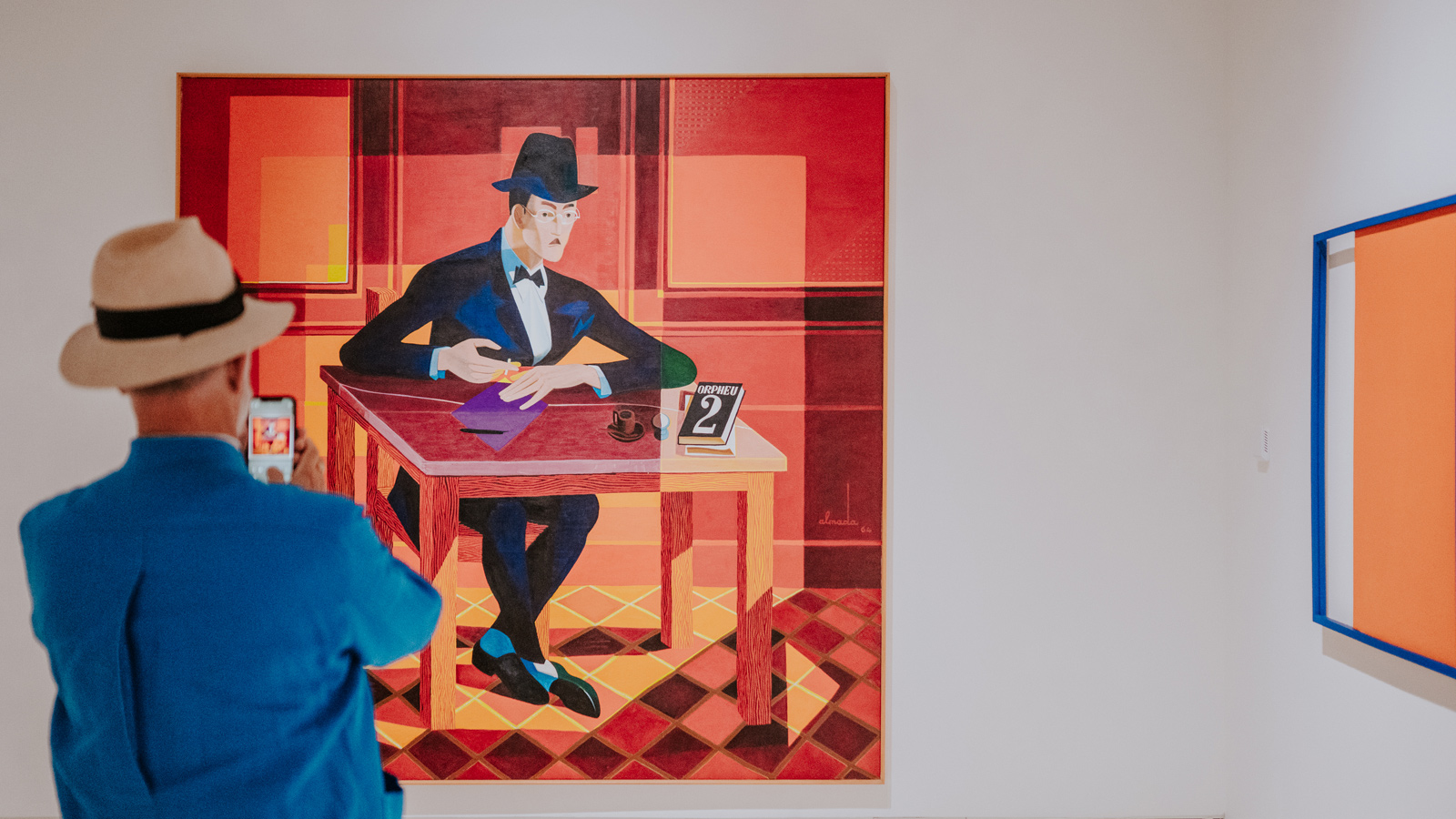
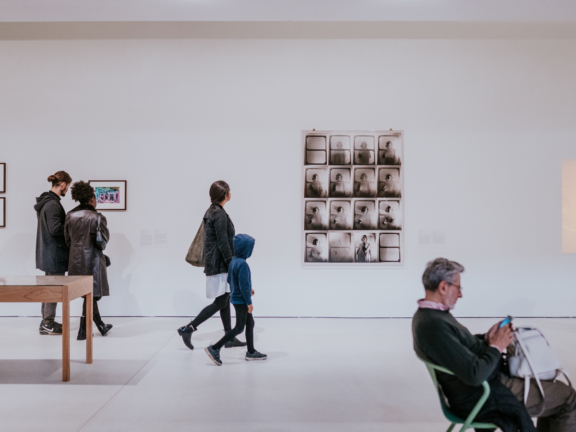
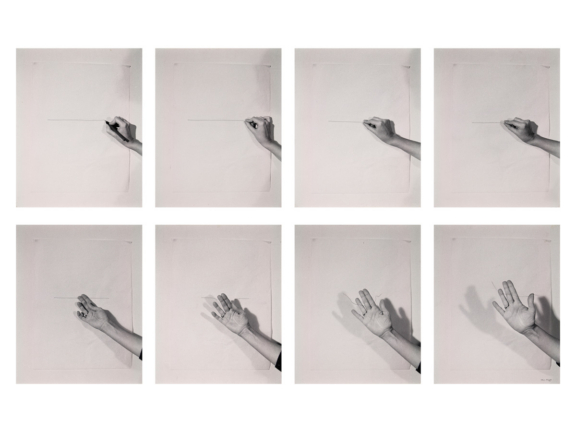
The most demanding element of the project is the set of seven augmented-reality filters, each linked to a different artwork and artist in the Collection. For Damara, who has previous experience developing filters for commercial brands, the difference in scale is immediately apparent: instead of working with a single visual identity, she is working with seven at once, each with its own aesthetic, historical context and narrative logic. Artists represented in the Collection include Amadeo de Souza-Cardoso, whose Cubist- and Orphist-influenced paintings are currently on loan to the Guggenheim Museum in New York; José de Almada Negreiros; Maria Helena Vieira da Silva; Paula Rego; and Helena Almeida, whose celebrated series of sixteen photographs from 1976 features the artist in almost every image.
Each artwork calls for its own development process. One of the most compelling filters centres on Amadeo de Souza-Cardoso’s greyhounds: the figures in the painting come to life and interact with the gallery space, leaping between the canvas and the floor in front of the visitor. Another takes the form of a minigame, with a technical approach closer to that of a console game than a camera effect.
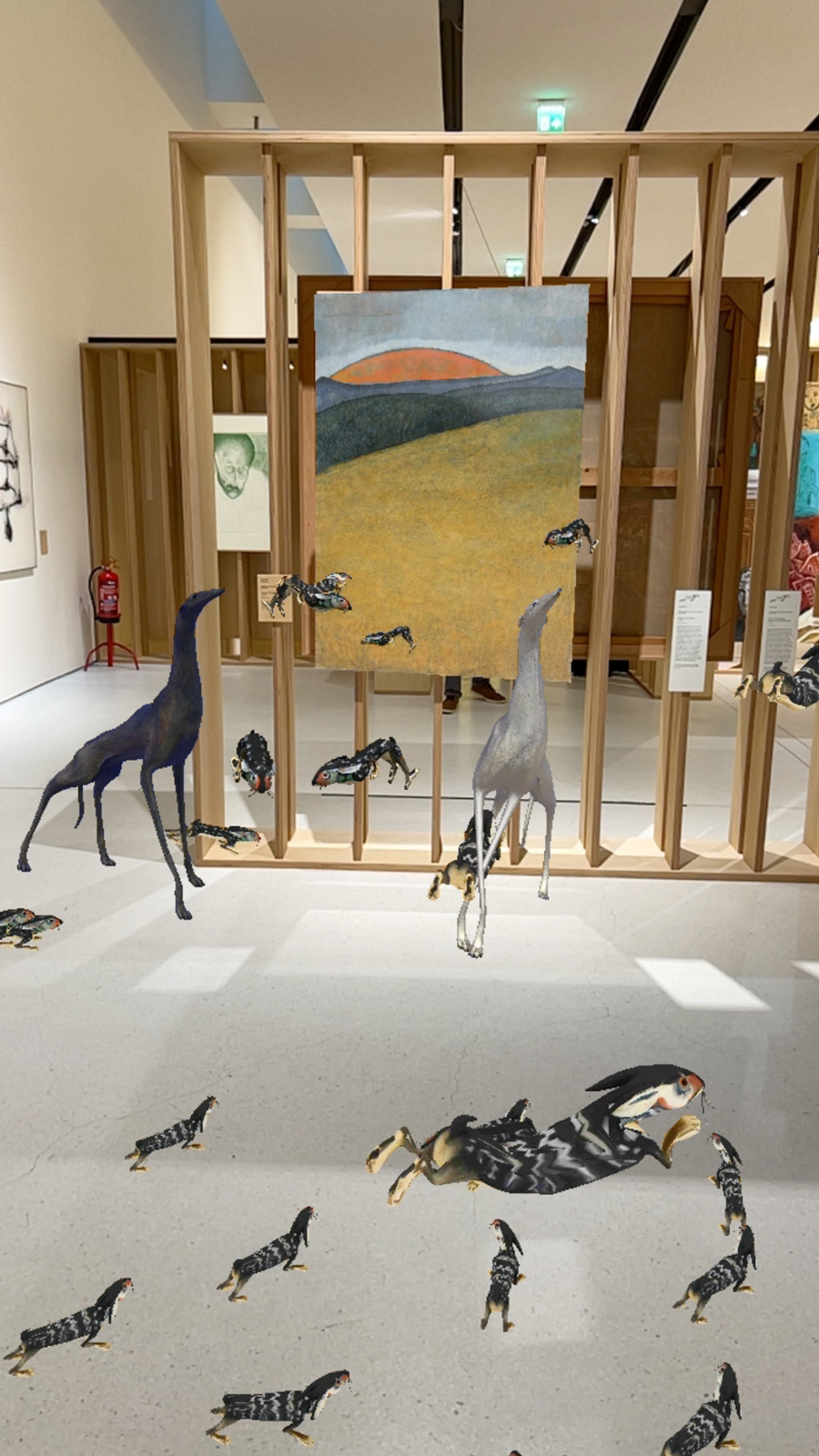
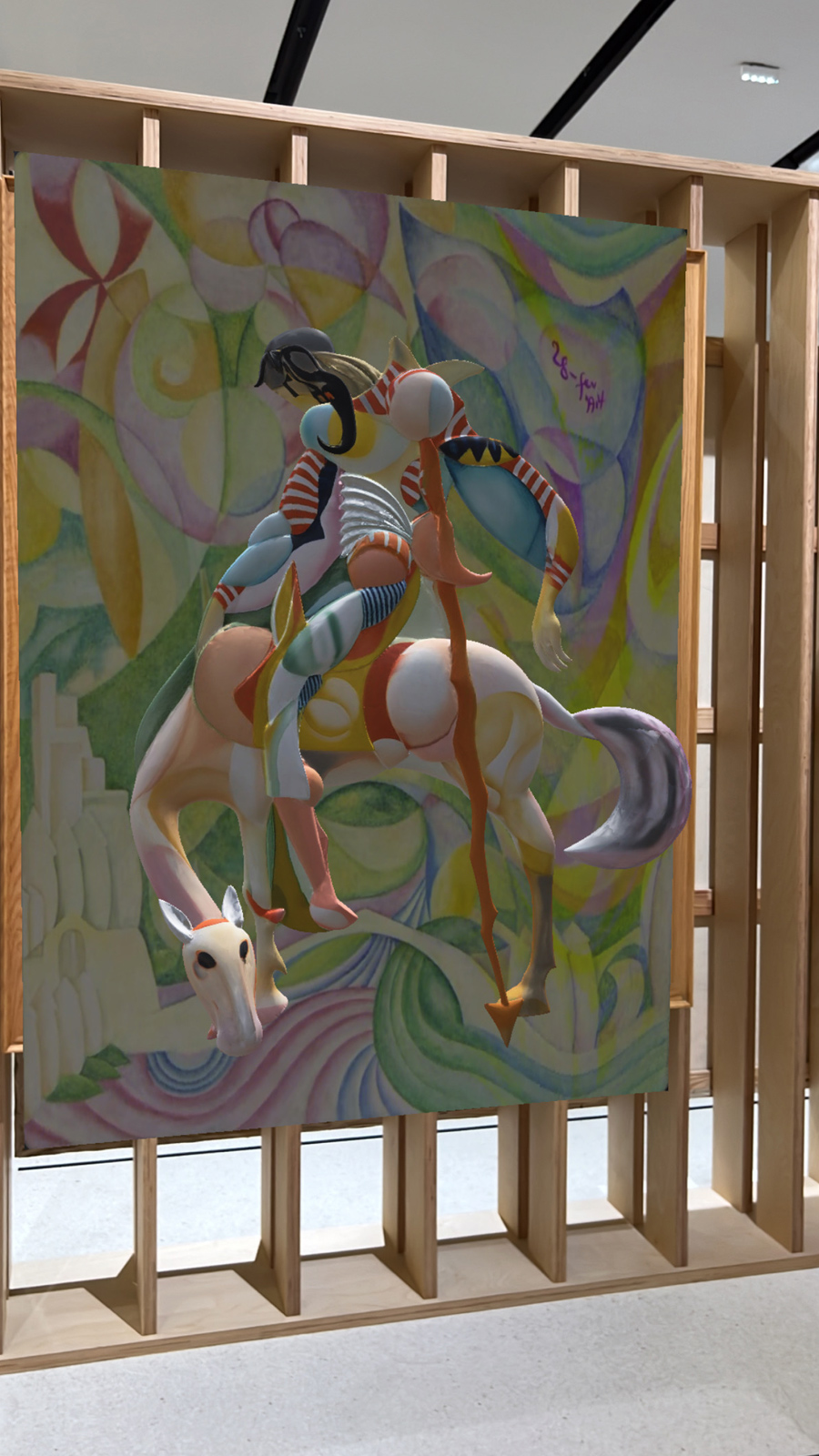
The most common workflow for creating the 3D objects involves using artificial intelligence to transform images of the artworks into three-dimensional models that are animated and integrated into the physical gallery space. Some filters automatically adapt to the lighting conditions in the room; others rely on image recognition and require the user to stand at a specific distance from the artwork. How visitors navigate the space—and how the game accommodates multiple people playing simultaneously—will be tested and fine-tuned in the gallery itself.
‘There’s a moment where we want a character flying through the space to show the way—and that filter has been giving us headaches for over a week.’
— Damara, artist and creative technology specialist
When developing the filters, the most common obstacle is the processing load the effects place on users’ phones. A filter can be fully developed and then simply fail to work when uploaded, requiring each component to be broken down and analysed separately, turning what could have been a one-day process into one that takes three or four. Damara describes the process as a lesson in patience—and in managing her expectations about time.
Artificial intelligence was present at almost every stage: generating 3D objects, helping to resolve coding errors, accelerating the team’s learning of programming languages they had not yet mastered, and shaping the storytelling. But the team is clear-eyed about the implications. For Damara, the issue is not abstract: automated 3D object generation has already replaced some of the work that previously required hours of manual work. Human judgement is still necessary, but for this specific type of task, the moment when it may no longer be needed is fast approaching.
‘As a 3D designer, AI has already taken my job. Unless we’re talking about a creative process involving original conceptualisation—then I’m still needed.’
— Damara, artist and creative technology specialist
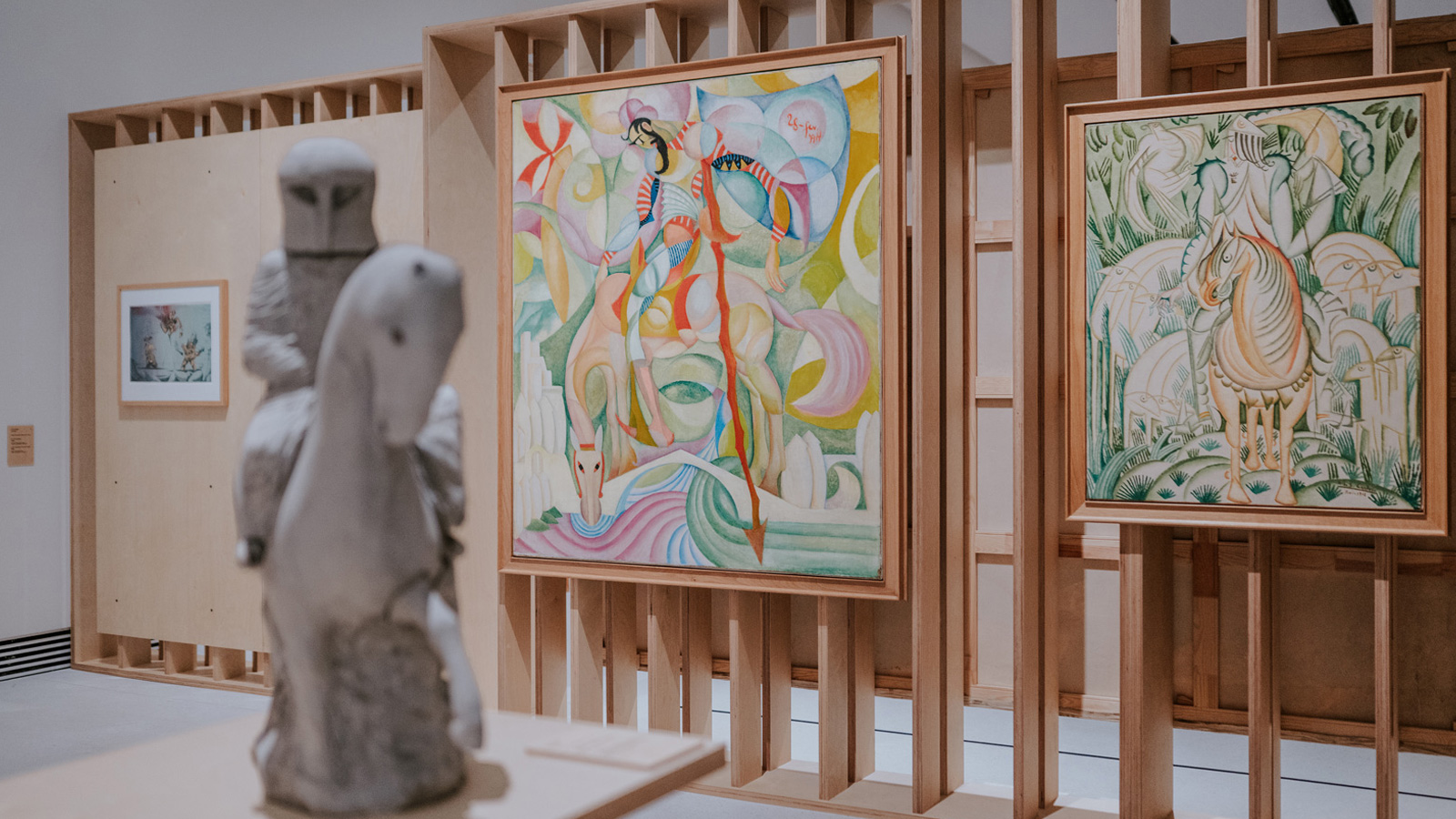
One of the project’s unexpected outcomes was the team’s growing engagement with the Collection itself. As they researched each artwork for details to incorporate into the game—preparatory sketches, biographical context, acquisition histories and connections between artists—the team members themselves became more informed and attentive visitors. It is precisely this sense of connection with the artworks that they hope to pass on to whoever plays.
‘The little-known details that make the game so unique are the very things we didn’t know ourselves—and that completely fascinated us.’
— Leonor, Master’s student in Biomedical Engineering at IST
The Scheherazade’s Labyrinth is the digital embodiment of a conclusion CAM reached after a year of listening to young people: passivity is not an option, and a connection with art must be built, not simply awaited. For those who like neither museums nor games, the team has a simple answer: this is neither a museum nor a game. It is an experience. And experiences, unlike works sealed behind glass, are meant to be lived rather than simply observed.
BANTUMEN at Gulbenkian
Explore the series








No results were found for your criteria.
You may also like



No results were found for your criteria.