
The metamorphosis of Inês Zenha: hydric bodies in ‘Murky Waters’
Marta Espiridião (ME) – Murky Waters begins with an invitation to ‘become liquid’. How does water become not just a metaphor but the protagonist of your work?
Inês Zenha (IZ) – Water has become a language that allows me not only to approach a corporeality in a constant state of becoming, but also a reality that escapes definition. There is a very intimate relationship between my body and water, one that runs not only through sanitary architecture but also through the ways in which we inhabit natural spaces close to a body of water. These are profoundly public and political spaces, where cultural ideas about our naked bodies are reproduced and negotiated.
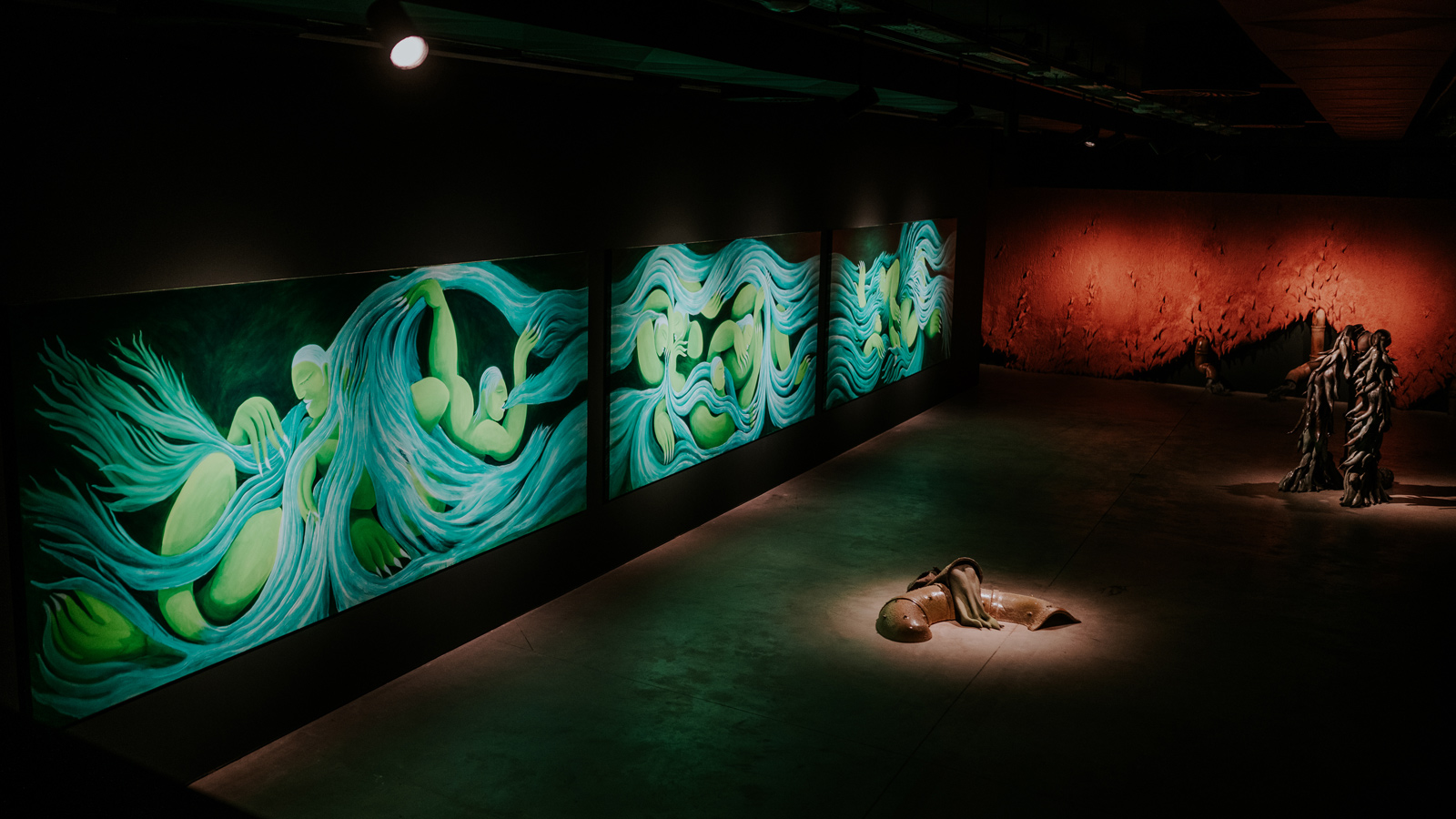
As a trans person, I often find that moving through these public spaces, whether sanitary facilities or natural spaces near water, is charged with friction. Bathing in public is still a difficult experience because of the way others’ gaze falls on my body. But when I finally get into the water, I feel free within my own nakedness. This feeling runs through the paintings, where the bodies seem at last to find a place in which they can exist without having to answer to those expectations.
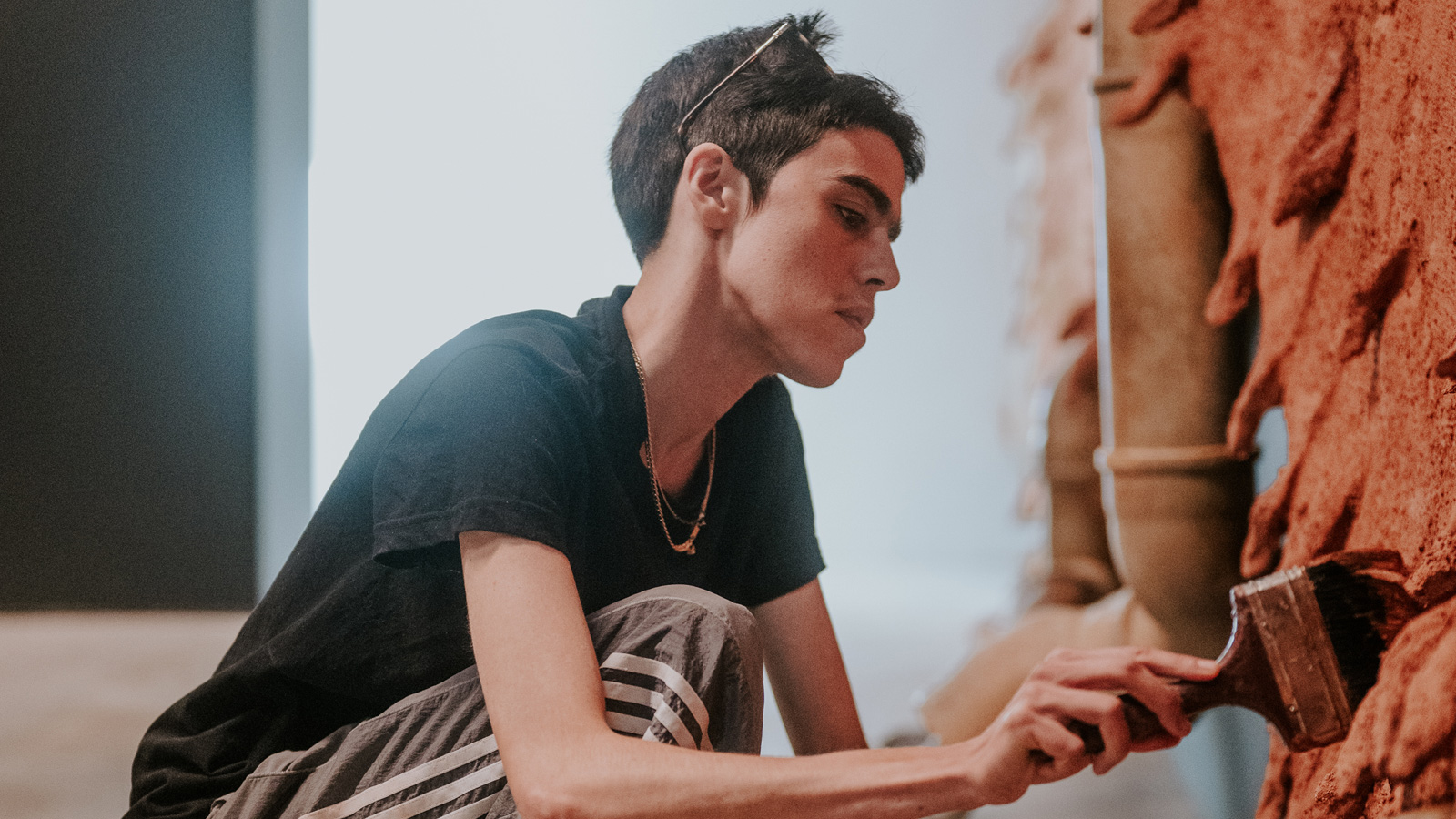
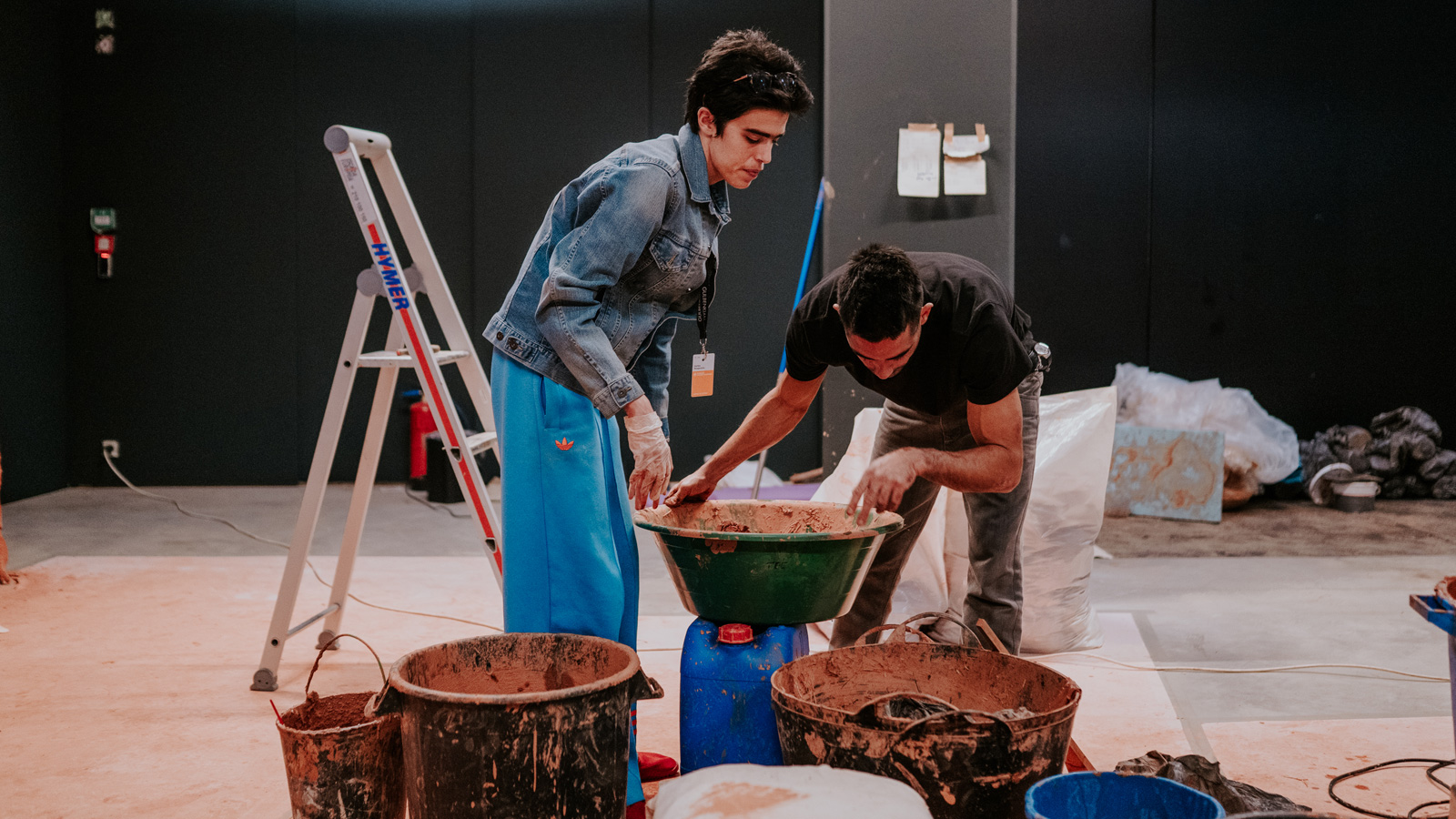
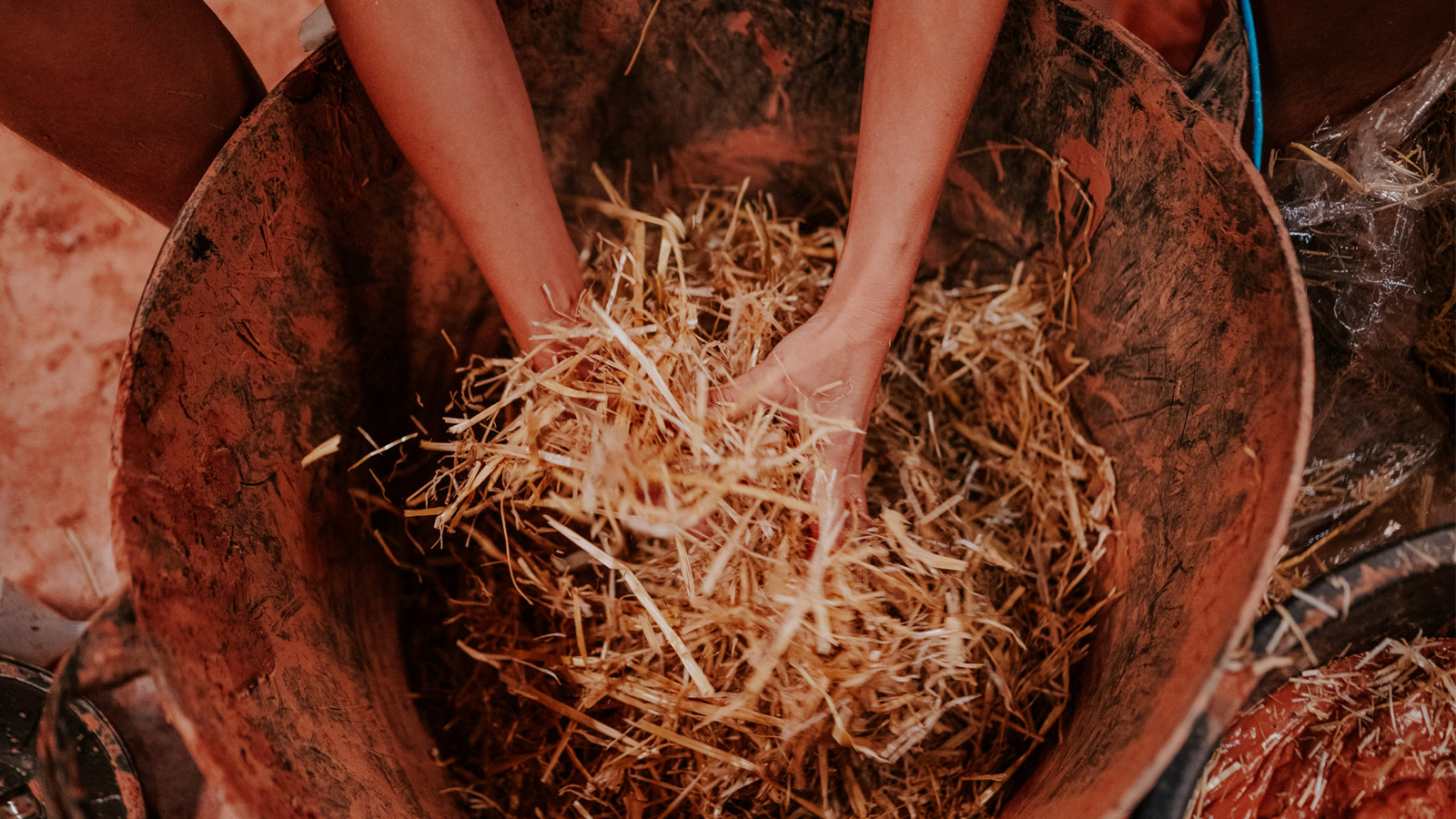
I think this relationship also extends to my work with clay. For me, working with clay is not simply working with earth; it is working with a body of water: living matter that breathes, transforms and feels in a way I recognise as close to my own bodily experience.
ME – And when you speak of murky water, the kind that hides the bottom, are you in some sense also making a case for opacity, for the right not to be entirely legible or transparent?
IZ – Murky waters are about confronting our need always to find a bottom, and the impossibility of reaching any absolute truth about what we are. Facing our own murkiness means making space for those parts of us that language may not be able to reach, and letting ourselves be transformed by uncertainty. It is also a way of embracing ambiguity and opening a path towards what we cannot define, or towards the strange. I do not think we have to put ourselves in someone else’s shoes to empathise with, or understand, the life of someone, or something, different from us. Strangeness can also be a place of encounter and closeness.
ME – What led you to this confluence of the sacred and the abject (‘between temple and sewer’)? Was it a deliberate attempt to bring together ideas that usually sit at opposite poles, or did it also arise from the nature of clay itself?
IZ – All the themes and symbols in my work come from my personal experience and socio-cultural context. I grew up with these ideas, in which bodies and desires that do not conform to the dominant homogeneity are seen as not only unnatural, but also historically impure, non-human, monstrous and therefore unworthy of the same conditions of existence. So I feel a deep need to create spaces close to the sacred within a body taken for a monster.
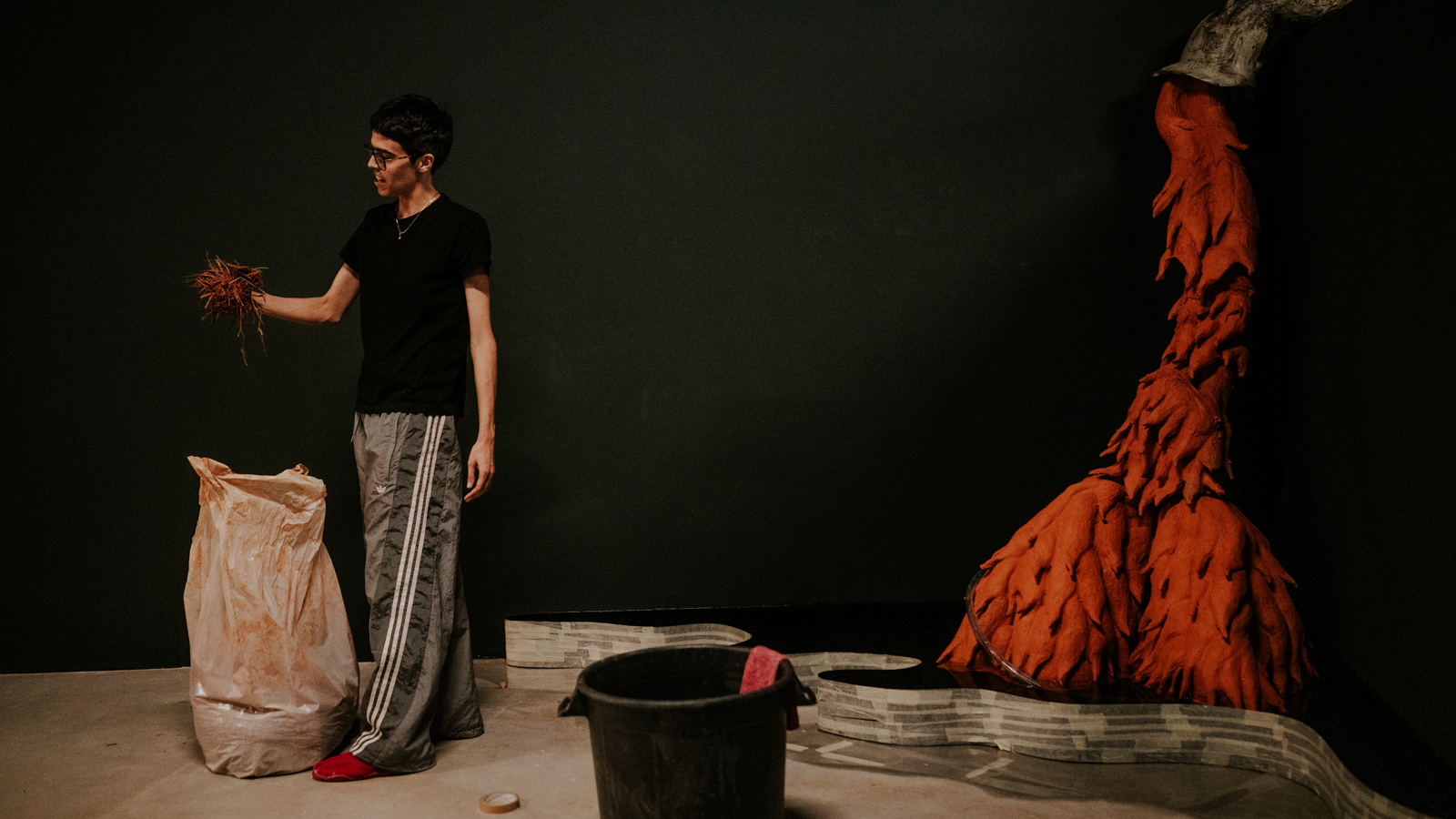
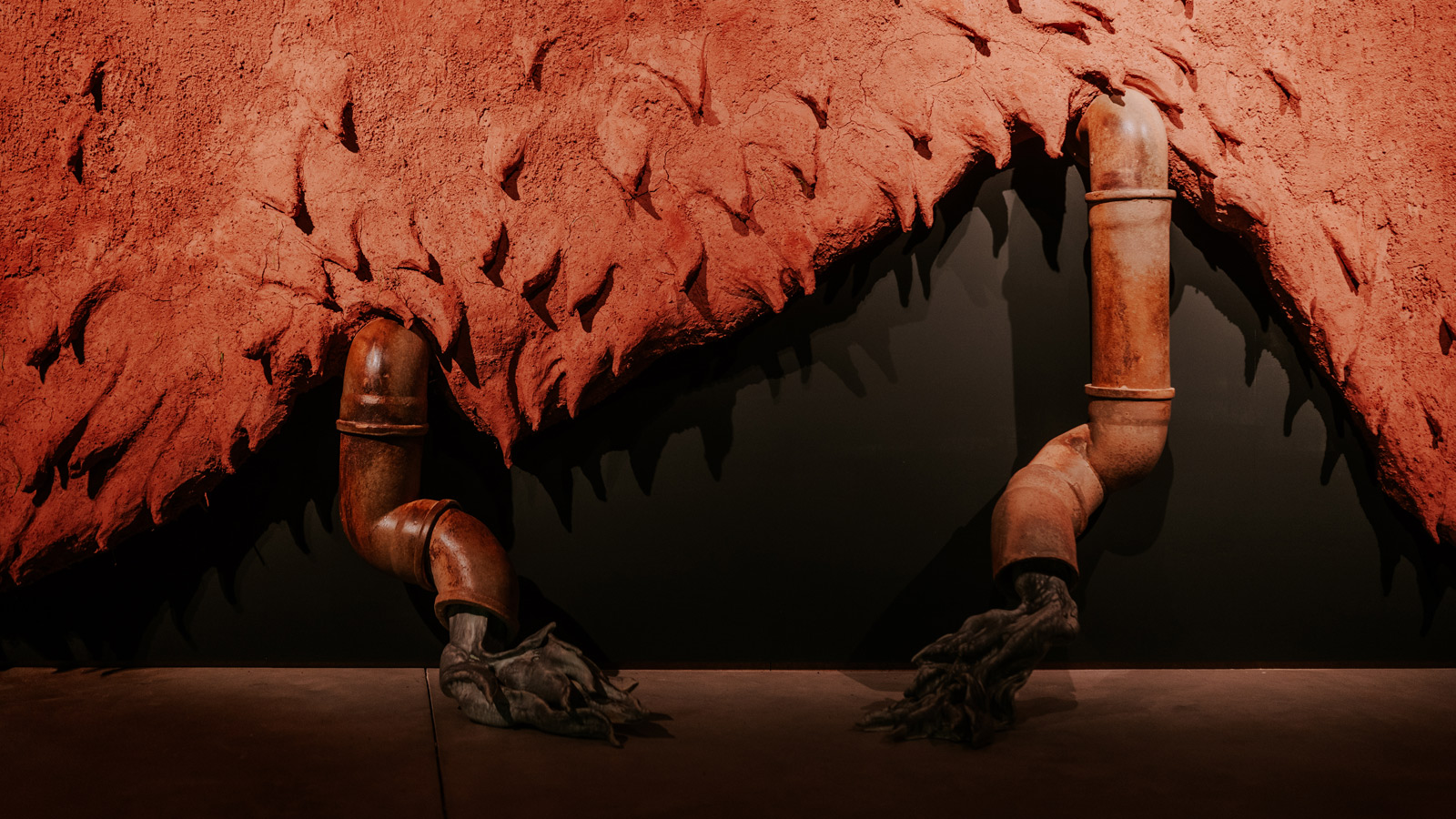
The sewer is indeed a metaphorical place for speaking about the abject, but it is also this shadow world that exists within our walls, beneath our city, reflecting everything we repress, not only emotionally but also culturally. The distance we put between ourselves and our own waste and excrement also reveals how we have learned to associate certain parts of our existence with disgust and impurity. The sewer thus becomes an extension of our own interior, because, like our cities, we too have systems of digestion and filtration inside our bodies.
In my work, I draw a connection between the rigid, artificial systems we build to channel, filter and contain the flows of our insides and the cultural structures we impose on our own bodies, in an attempt to hold back the murky, free waters within us. At the same time, I try to reverse this relationship of repulsion by restoring a divine and beautiful dimension to the subterranean and to our own bodies.
ME – You work with raw clay, which is vulnerable to time, but also with glazed stoneware, which fixes form. How do you balance this refusal of stability with the desire for durability?
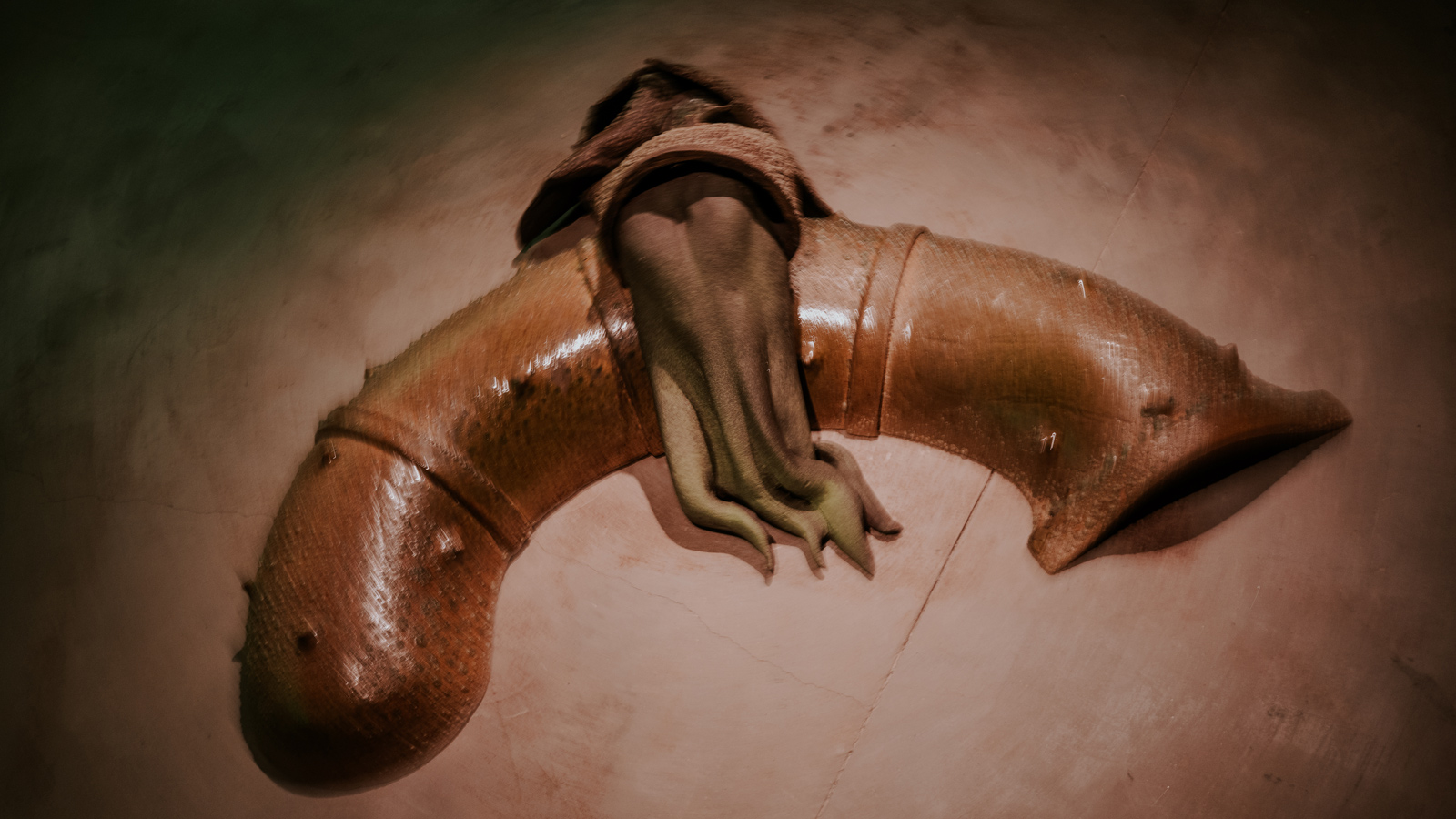
IZ – Durability does not imply stability. Ceramic is, in fact, one of the most fascinating materials: it can survive even volcanic eruptions. But it is also its constant vulnerability to transformation—between contraction, expansion and erosion by time and weather—that allows us to study not only civilisations, but also past changes in the natural world. That is why I feel that, in a way, many of my ceramics are more like fossils than sculptures. When I work with glazes, for example, I am not looking for stability—quite the opposite. I am interested in glazes I cannot control or predict, where the slightest variation in application, temperature or clay body can produce unstable results. It is often by listening to the material’s own instability that I arrive at my forms.
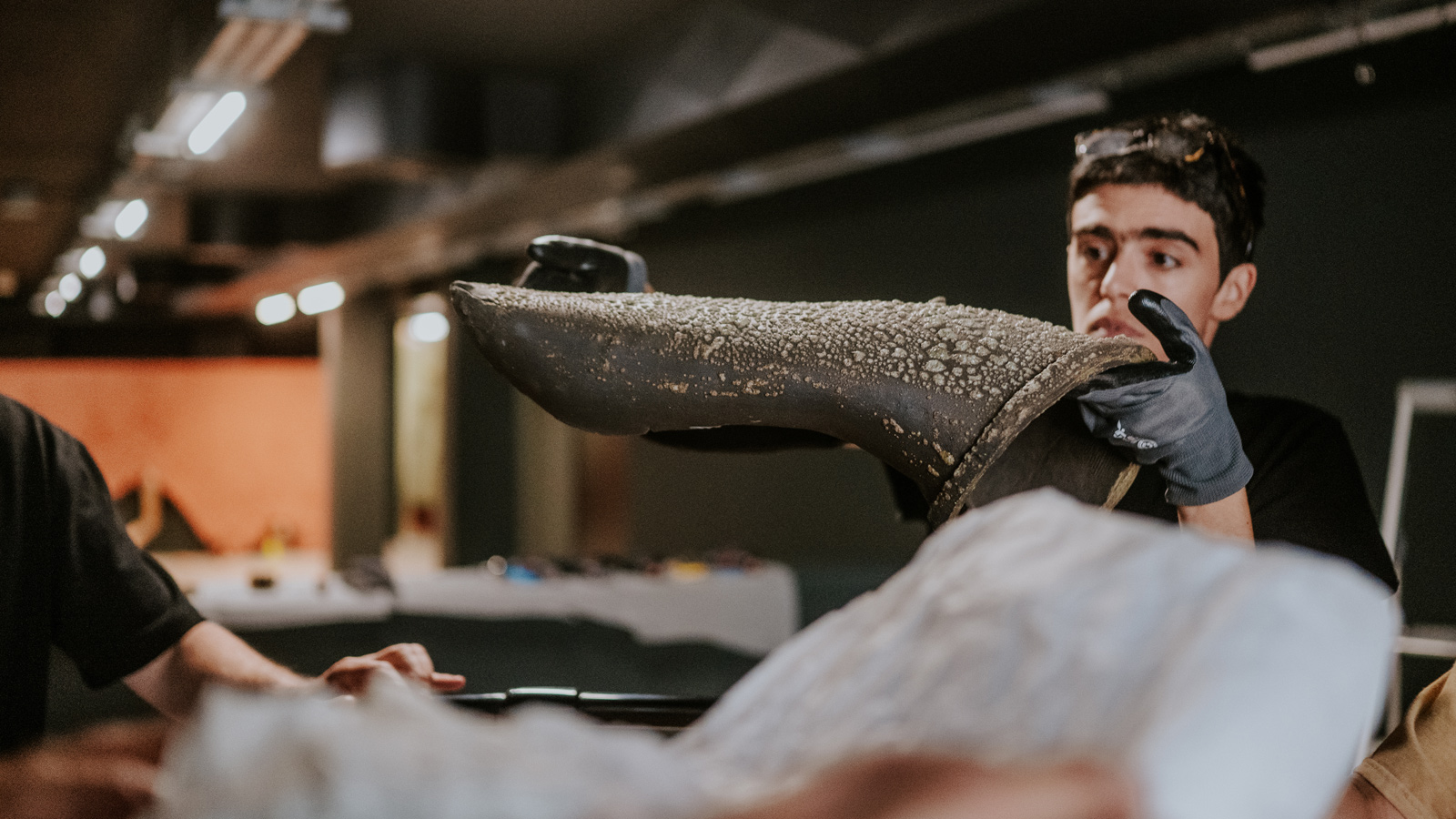
ME – How do sculpture, painting and ceramics relate to one another in your process? Are the Living Waters paintings an extension of the sculptures, or another hydric territory altogether?
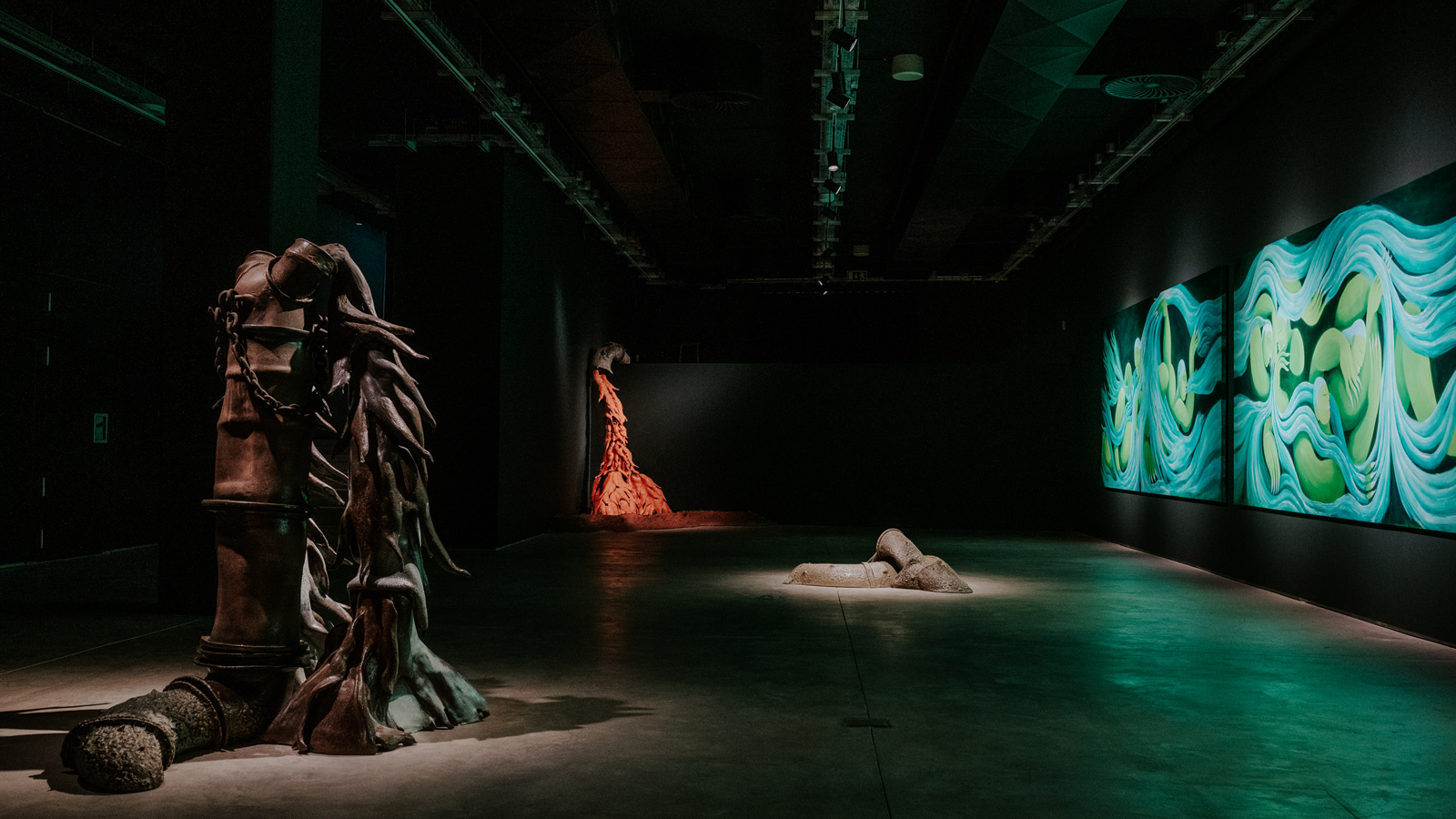
IZ – I would say the paintings are interior places and the sculptures are interior bodies that inhabit exterior spaces. Painting takes me to another place where I can simply be and invent a different reality, whereas in ceramics I feel that I am dealing with the body itself within the structure of the present moment.
ME – The Becoming-Hydra series now includes III, IV and V. How did the series begin, and how do you map its metamorphosis?
IZ –The series grew out of a desire to give life to a body like the Hydra, a seven-headed monster, something we usually see as a problem or find hard to understand. A monster whose only condition is to keep being reborn, however often others try to destroy it. The pieces are like its heads, part of the same body in different states or moments of becoming. Their metamorphosis follows my own physical and emotional changes. I do not map that transformation, as it is quite instinctive and happens alongside my own life.
You may also like
No results were found for your criteria.