
Inês Zenha. Murky Waters
Event Slider
Date
19 Sep 2026 – 08 Feb 2027
- Sat,
- Closed on Tuesday
Location
Project Space Centro de Arte Moderna GulbenkianPricing
- Free admission
Subject to ticket collection on the same day.
In Murky Waters, Inês Zenha (Lisbon, 1995) creates a fluid and immersive landscape where identity, desire and corporeality interweave in a continual process of transformation.
Based on a vocabulary that is simultaneously poetic and political, the artist proposes an underground journey through systems—of the body and of human infrastructures—in which water, bodily fluids and clay become the common threads of that transformation.
This notion of ‘becoming liquid’ is the conceptual and formal axis of the exhibition. In their refusal to be fixed, classified or contained, the liquids mirror the dynamics of the queer experience, marked by ideas of negotiation, transition and resilience. Water thus ceases to be merely a metaphor and instead takes a leading role, passing through and linking the different works.
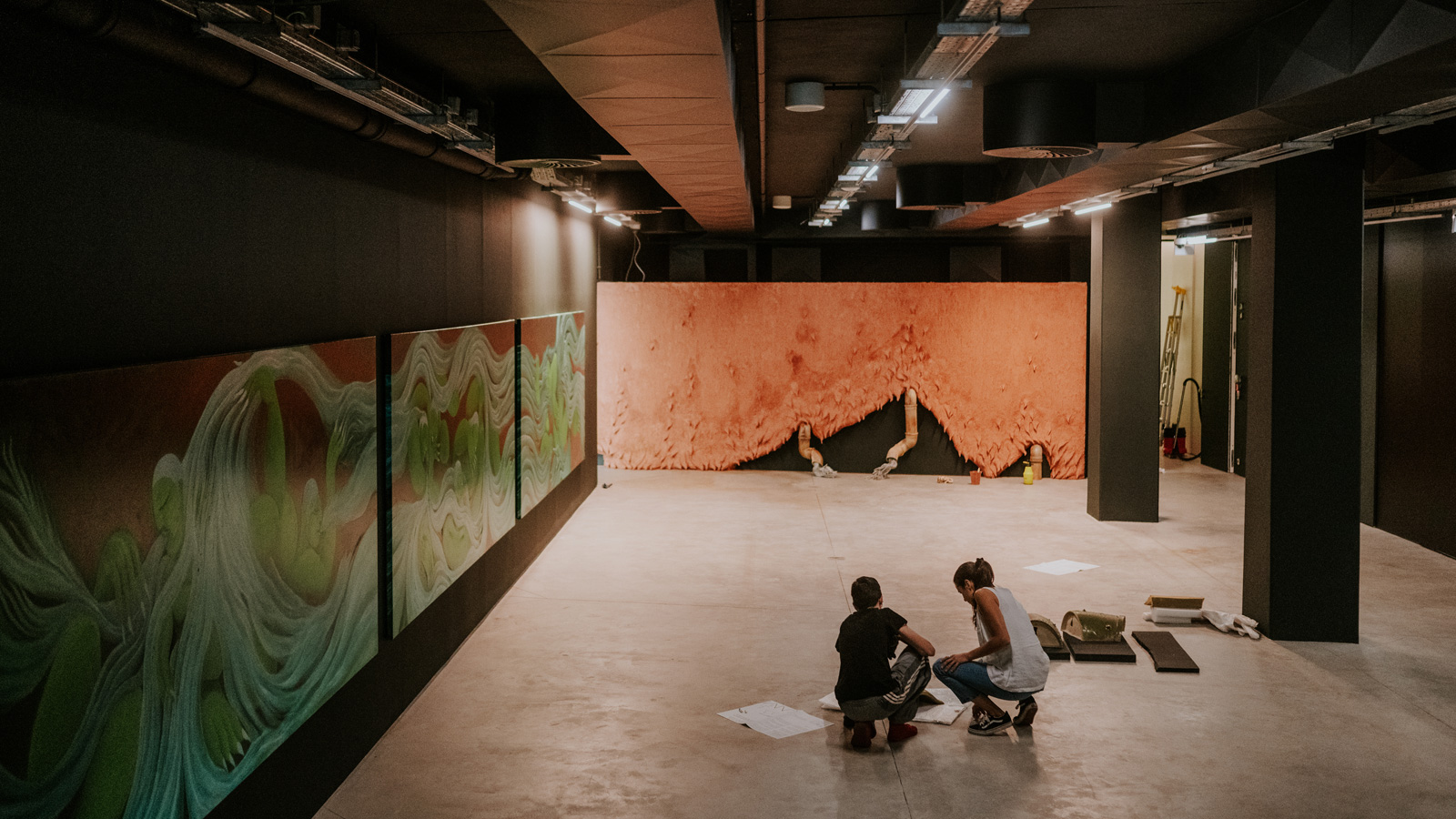
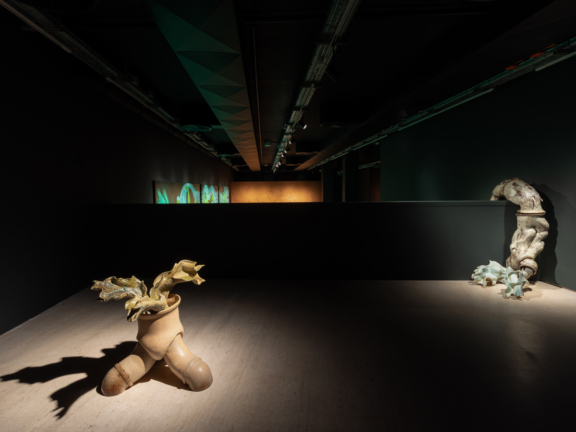
The exhibition space transforms into a kind of post-human cave—simultaneously a temple and a drain—where pipes and hydraulic systems cross paths with performative gestures, converting the exhibition into a living organism that breathes, overflows and digests. In this porous atmosphere, the audience is no longer a passive observer but participates in a choreography of flows, invited to feel for themselves the rhythmic movement of water.
/
Murky Waters rejects the hygienic logic of purity and order. Instead, it welcomes the monstrous, the animal, the stranger, the shady and the queer—figures that have historically been erased in the dominant normative imagination. Zenha’s work insists on their presence, building a space where contamination becomes care, vulnerability becomes strength and marginality becomes a place of radical affirmation.
Rather than offering answers, the exhibition creates the conditions to feel, experience and unlearn. Murky Waters celebrates porosity, hybridity and survival, reminding us that, like water, we endure not in spite of our fluidity, but precisely because of it.
/
— Expresso‘What Inês Zenha seems to propose is that all this comfort should collapse, making way for the power of nameless things, whose hybrid condition enters this conceptual geometry like a fertile, life-giving virus. ‘Liquid intelligence’ resists suppression, as well as the constraints imposed by classification or delimitation.’
Topics
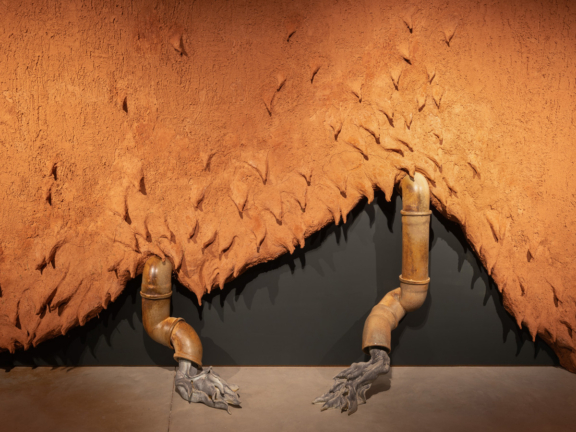
Desenterro [Unearthing]
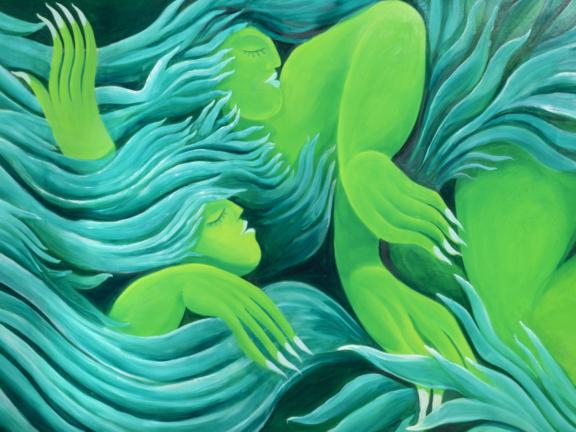
Águas-Vivas [Living Waters]
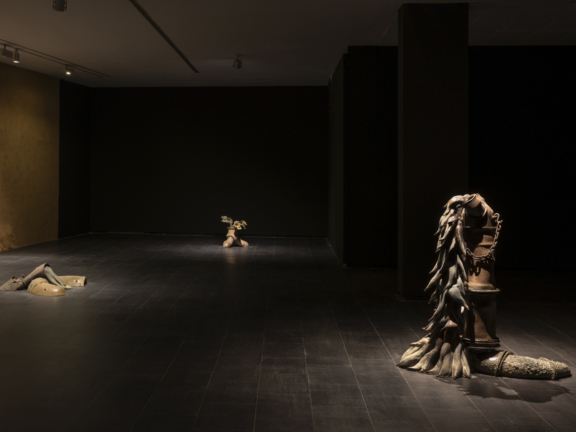
Becoming-Hydra
-
Somos Lodo [We Are Mud]
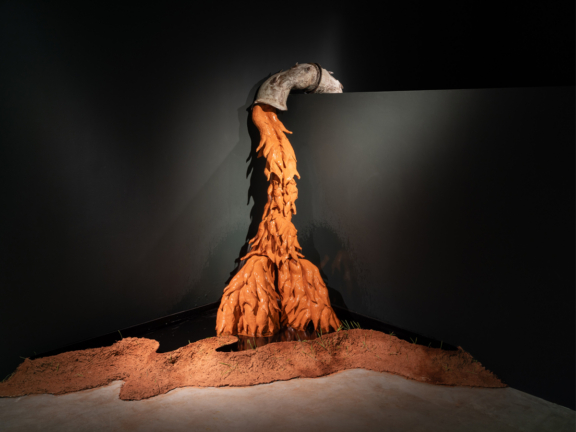
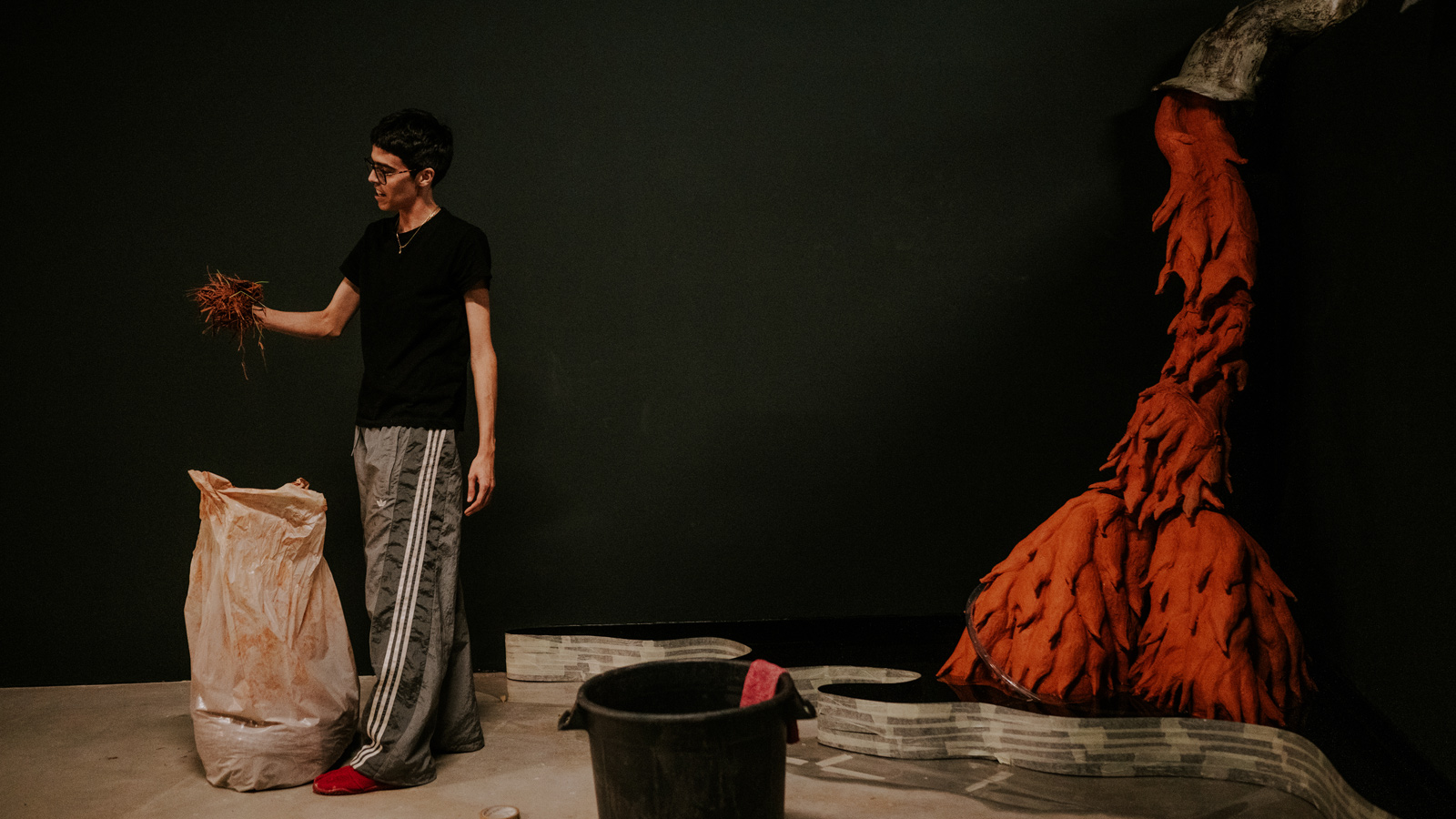
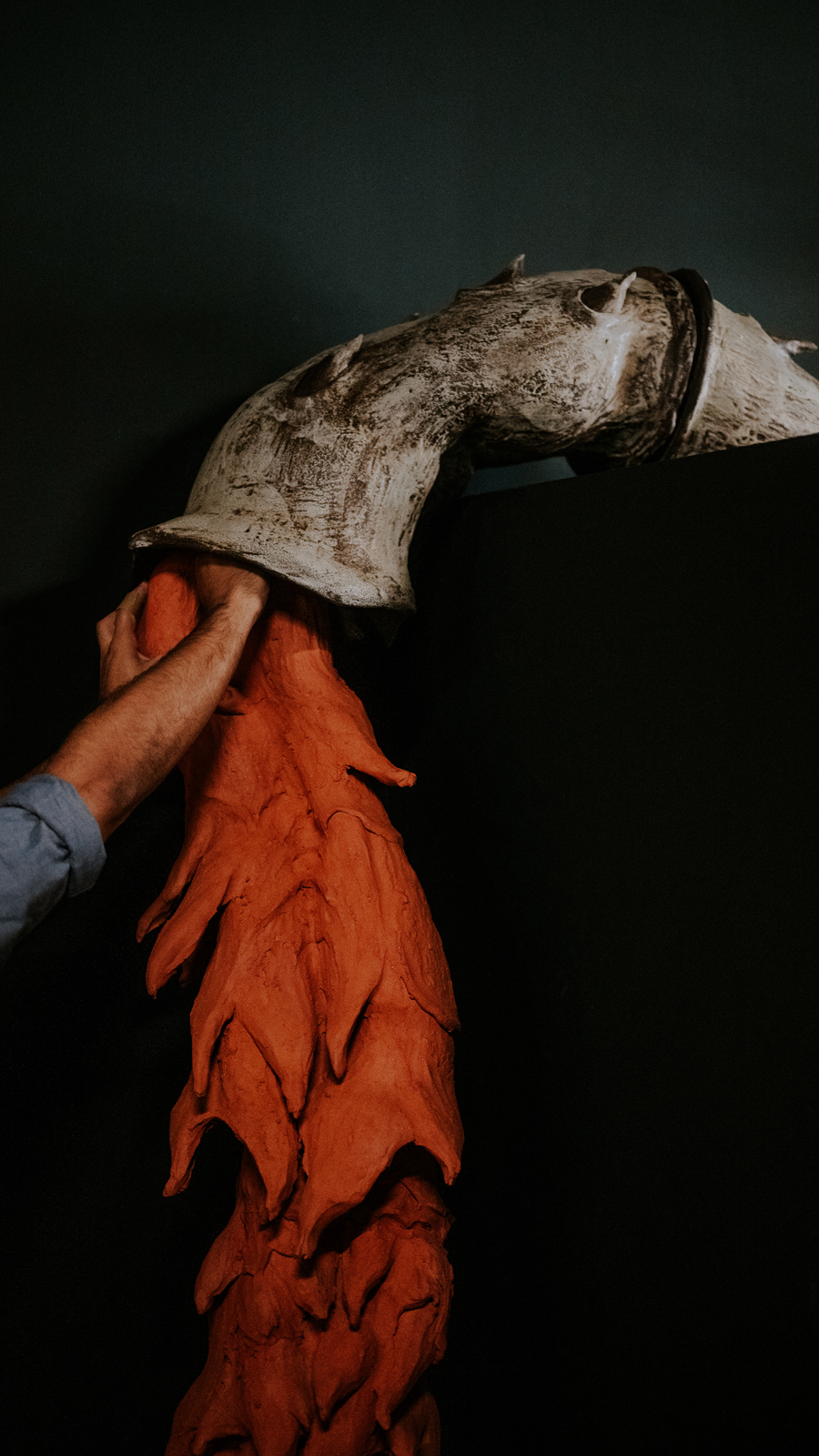
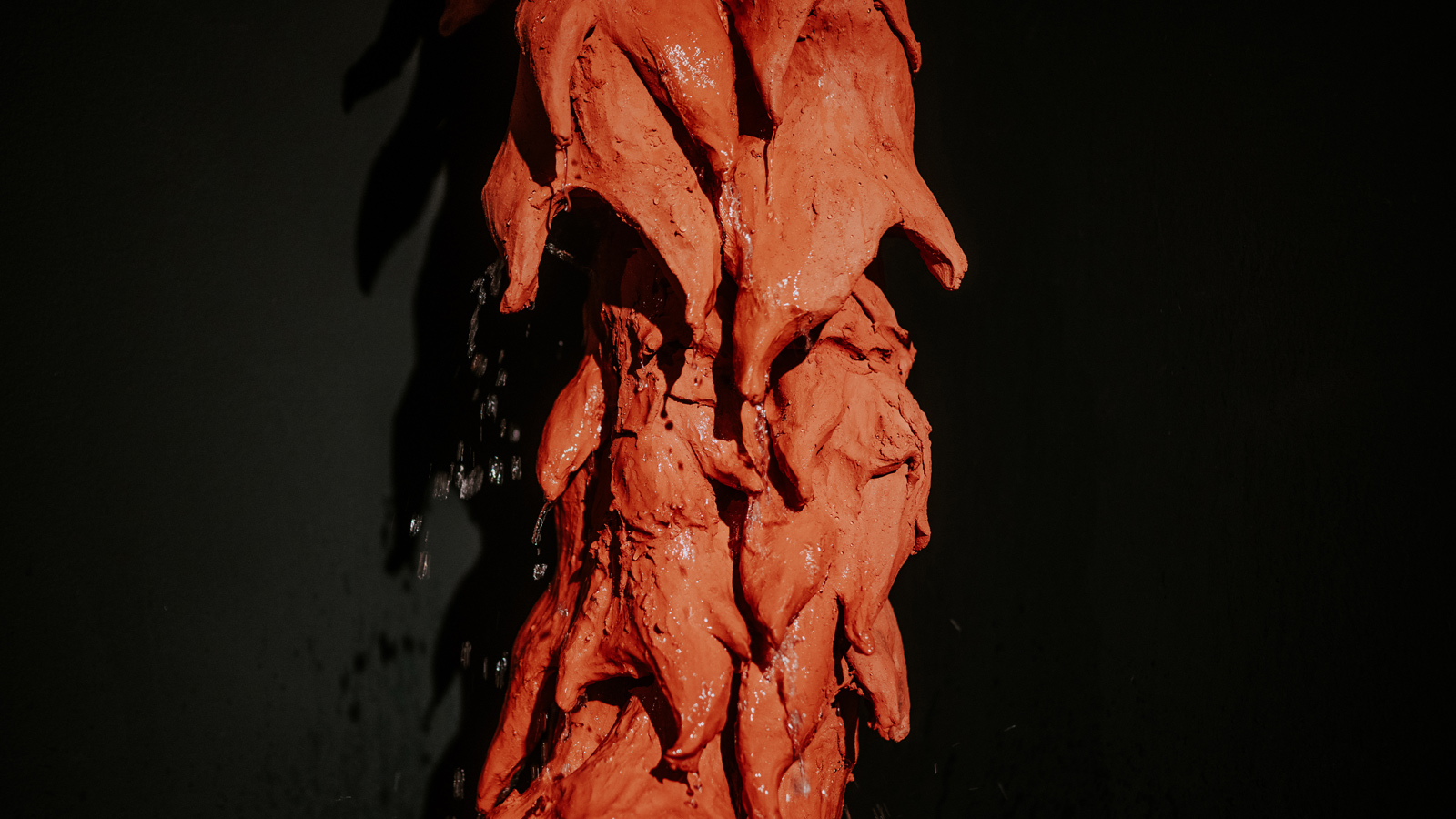
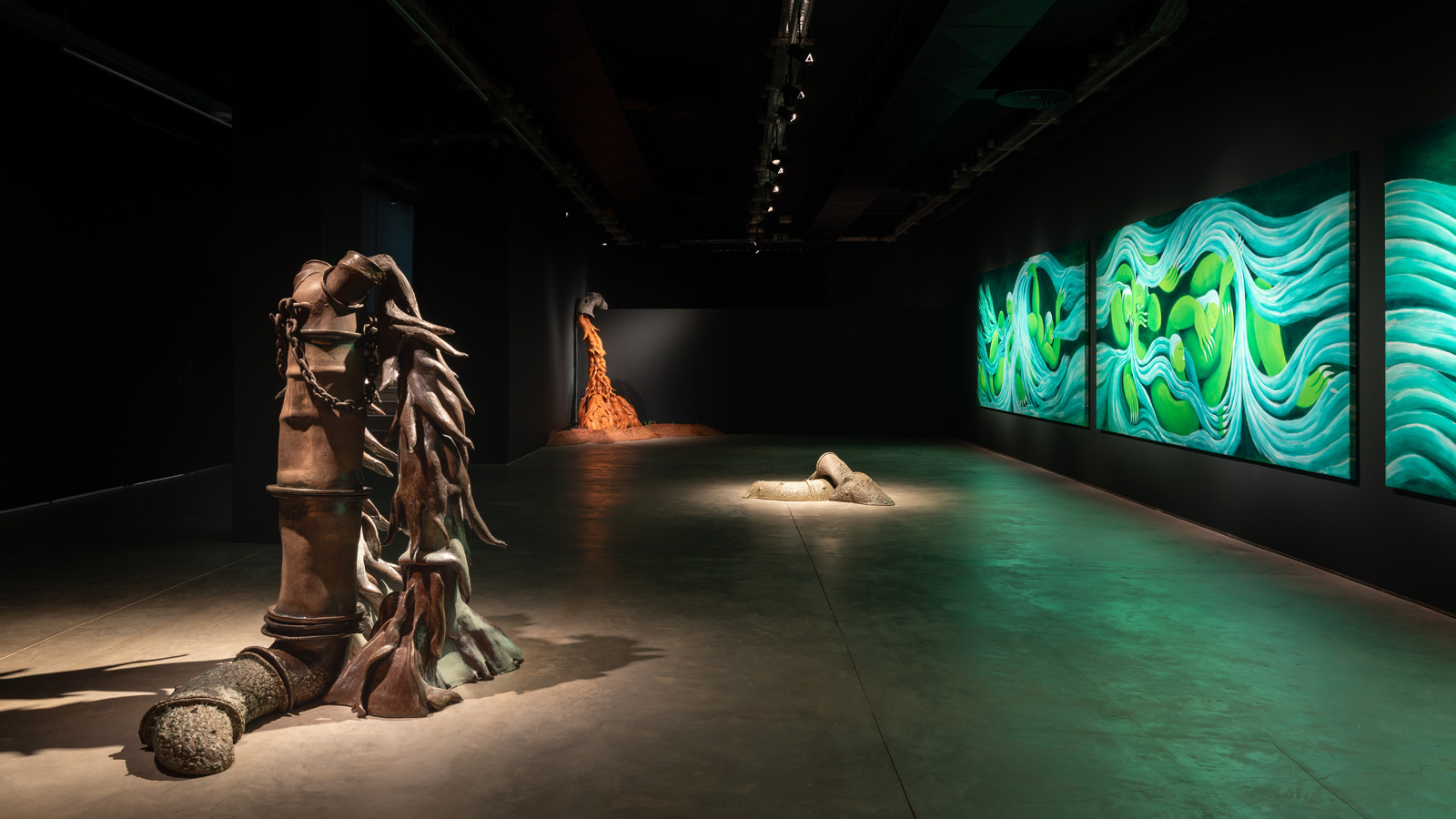
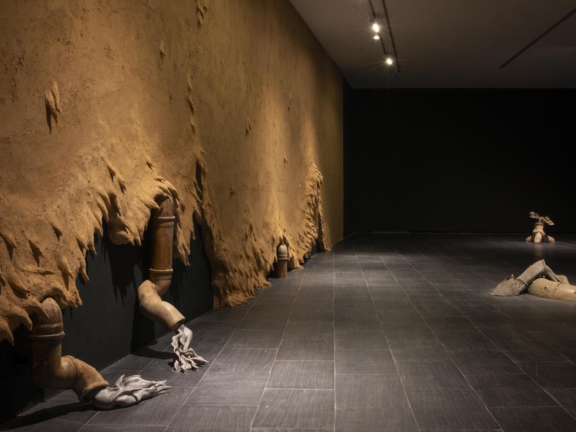
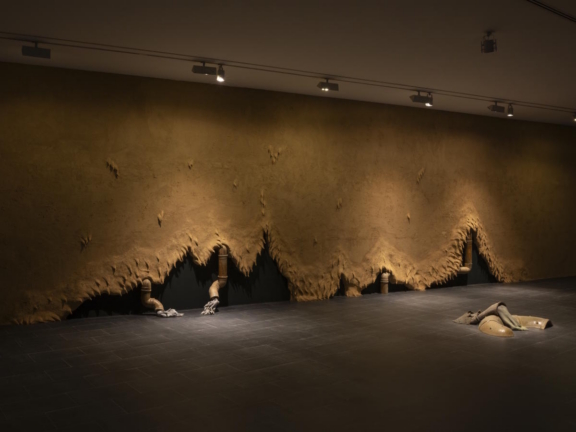
Conceived especially for the presentation of ‘Águas Turvas’ [Murky Waters] at CAM, Somos Lodo marks the start of the exhibition route and makes water the first protagonist of the exhibition. The continual flow that passes through the sculpture makes visible the movement between body, land and infrastructure, where matter, architecture and organism cease to exist as separate entities. By reclaiming mud as an origin and a fertile material, the work rejects oppositions between purity and impurity, natural and artificial. Water thus takes its place as the common thread of the exhibition, inviting us to imagine forms of existence founded on interdependence, care and the constant possibility of becoming.
-
Desenterro [Unearthing]
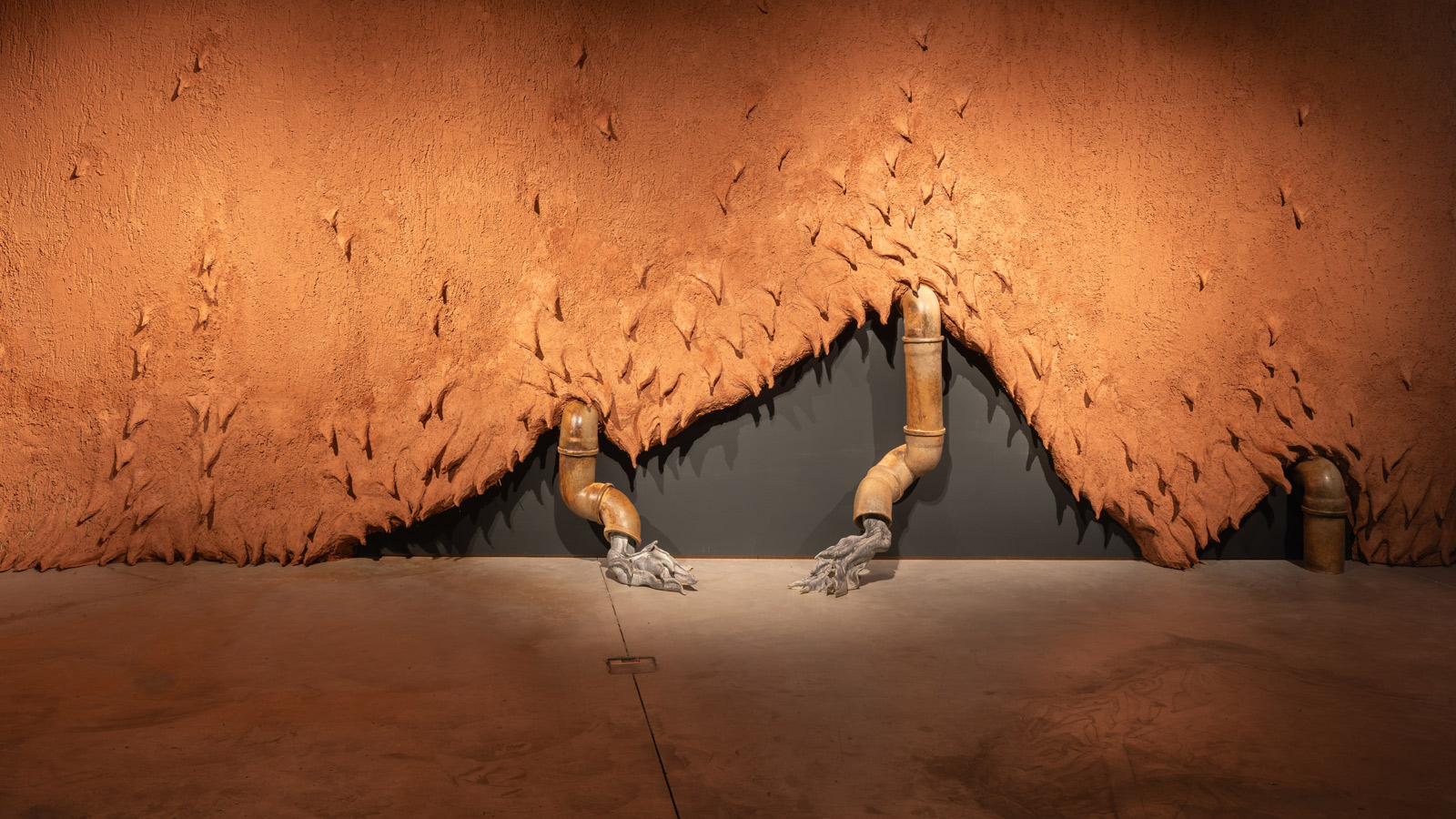
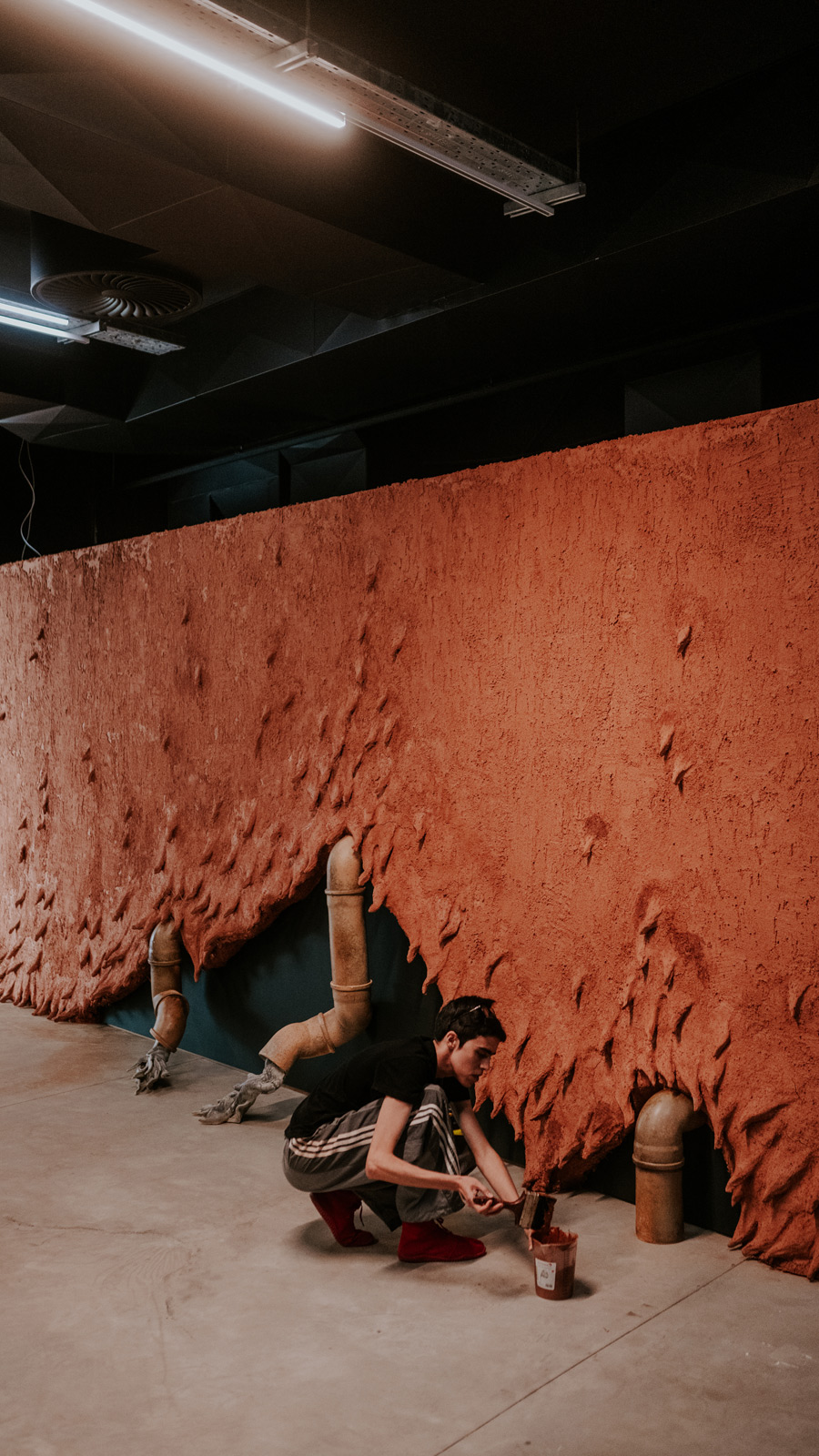
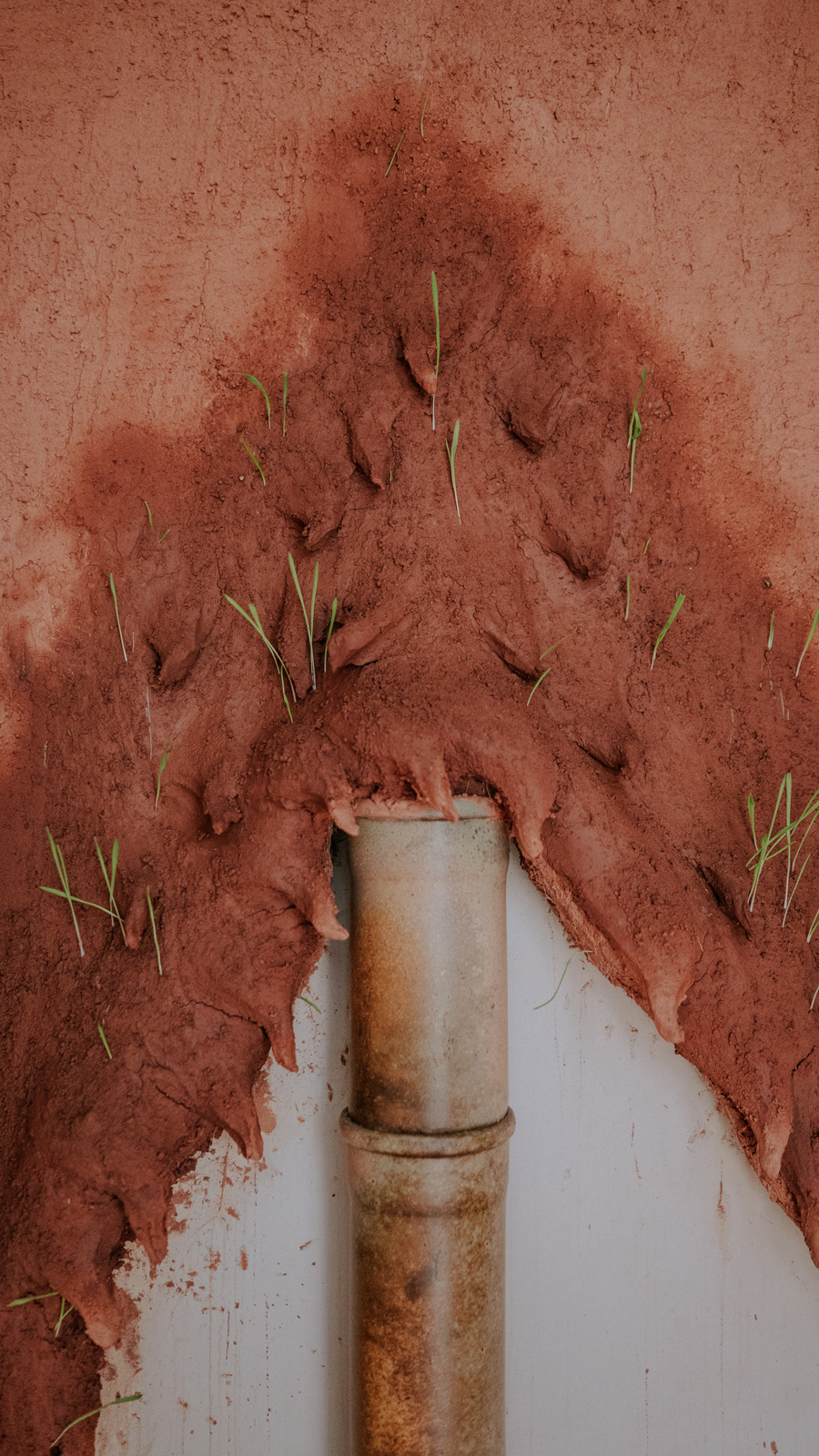
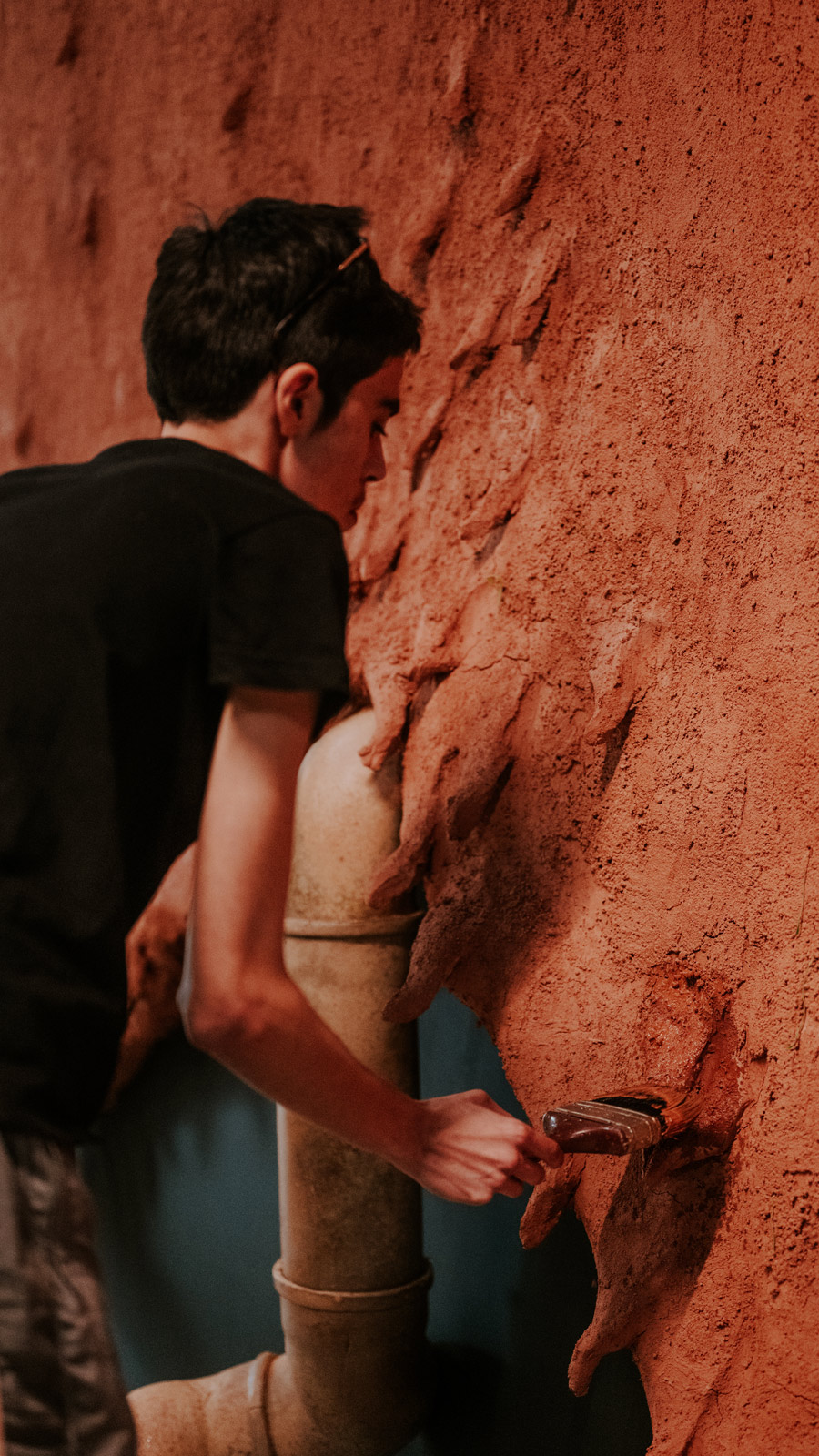
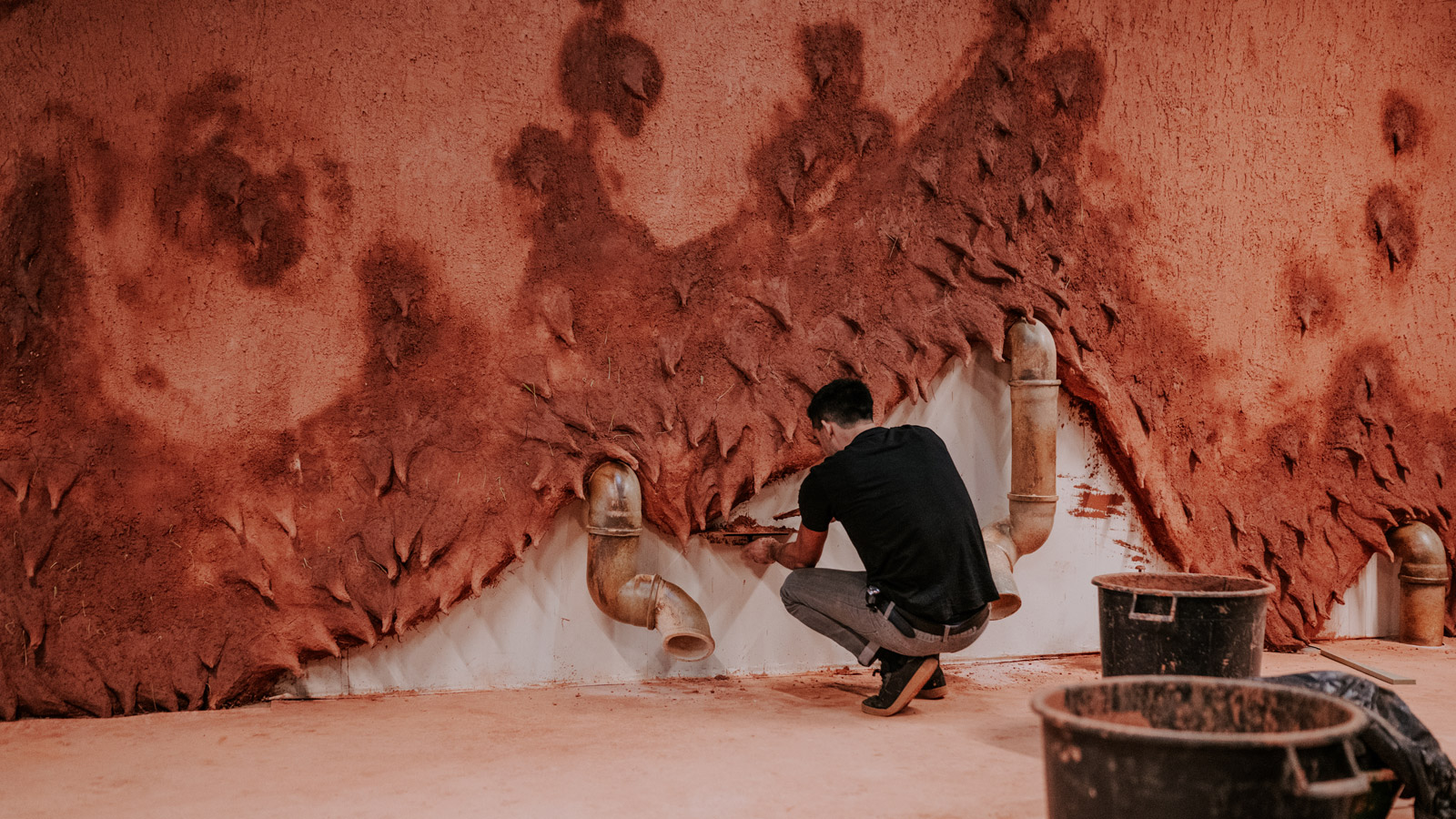
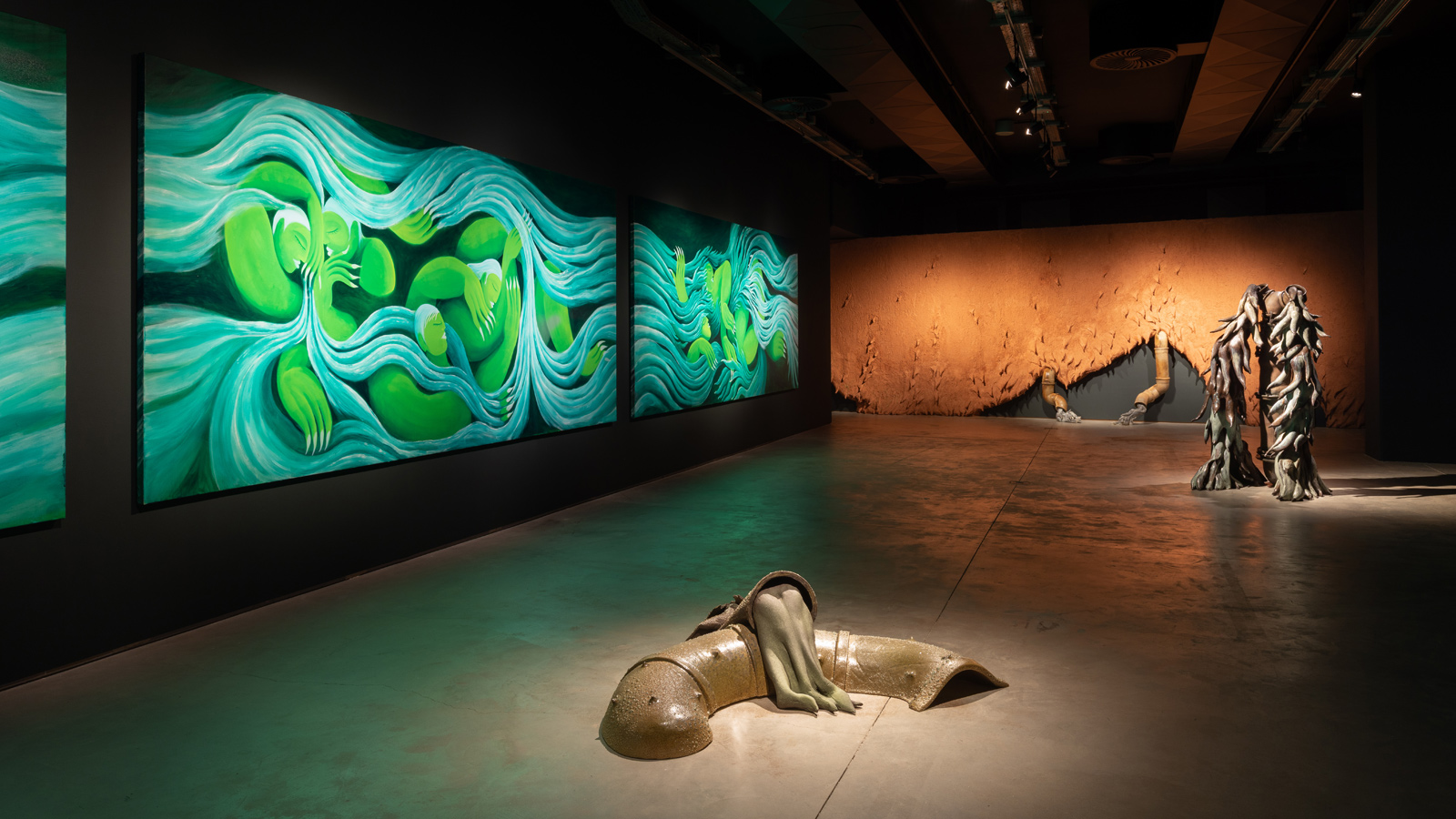
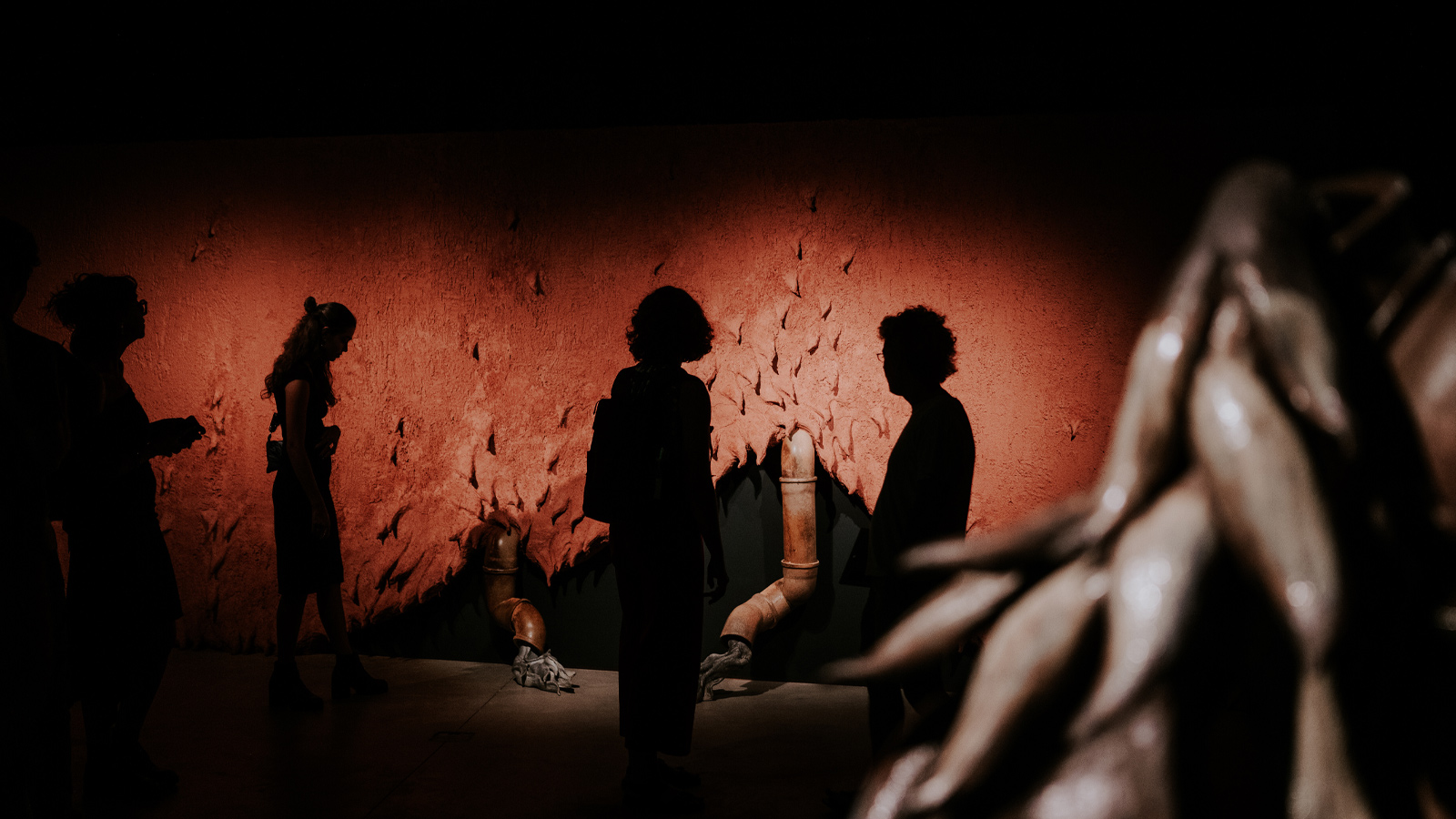
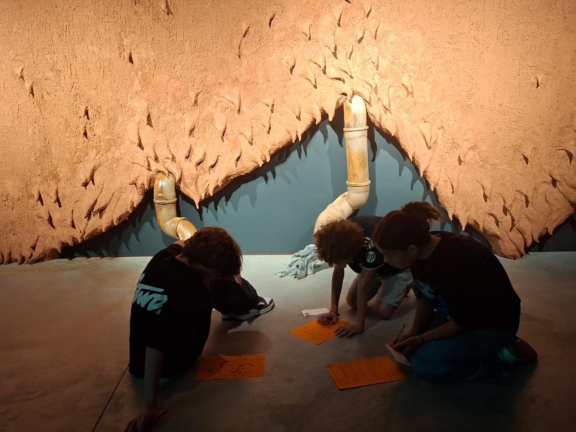
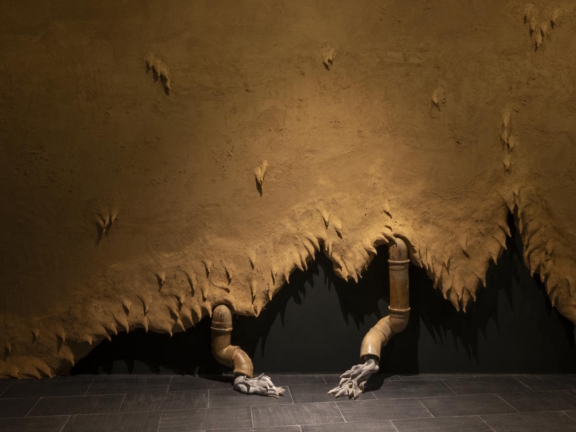
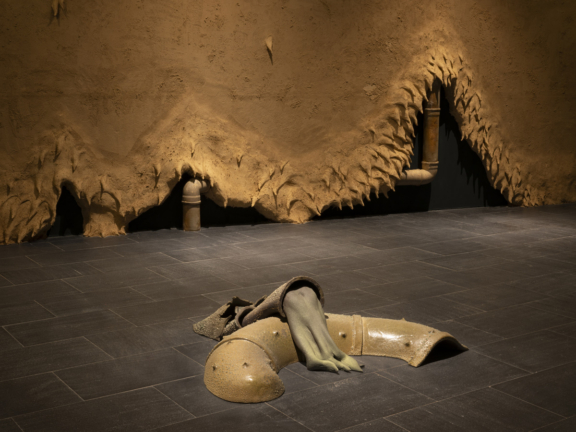
The mural ‘Desenterro’ transforms the wall into a living organism where land, body and infrastructure become inseparable. Made from unfired clay, the work remains vulnerable to time, rejecting stability as a value. Hairs, cracks and excrescences are scattered across the surface, infiltrating the architecture and bringing to the foreground a part of the body historically subjected to rules of control, hygiene and gender. By merging organic growth and erosion, body and construction, the work restores the land as a place of memory and emergence of other life forms.
-
Águas-Vivas [Living Waters]
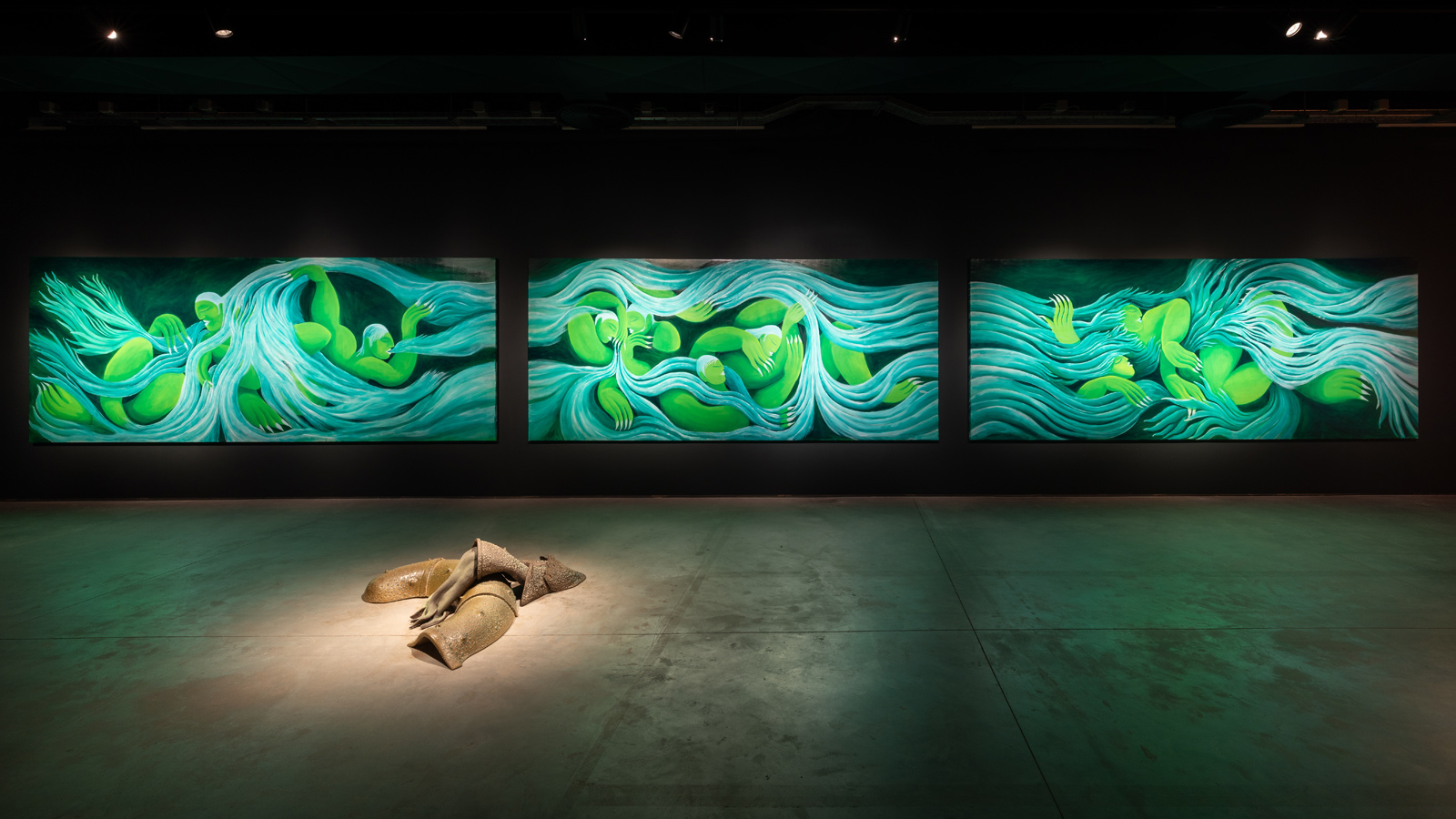
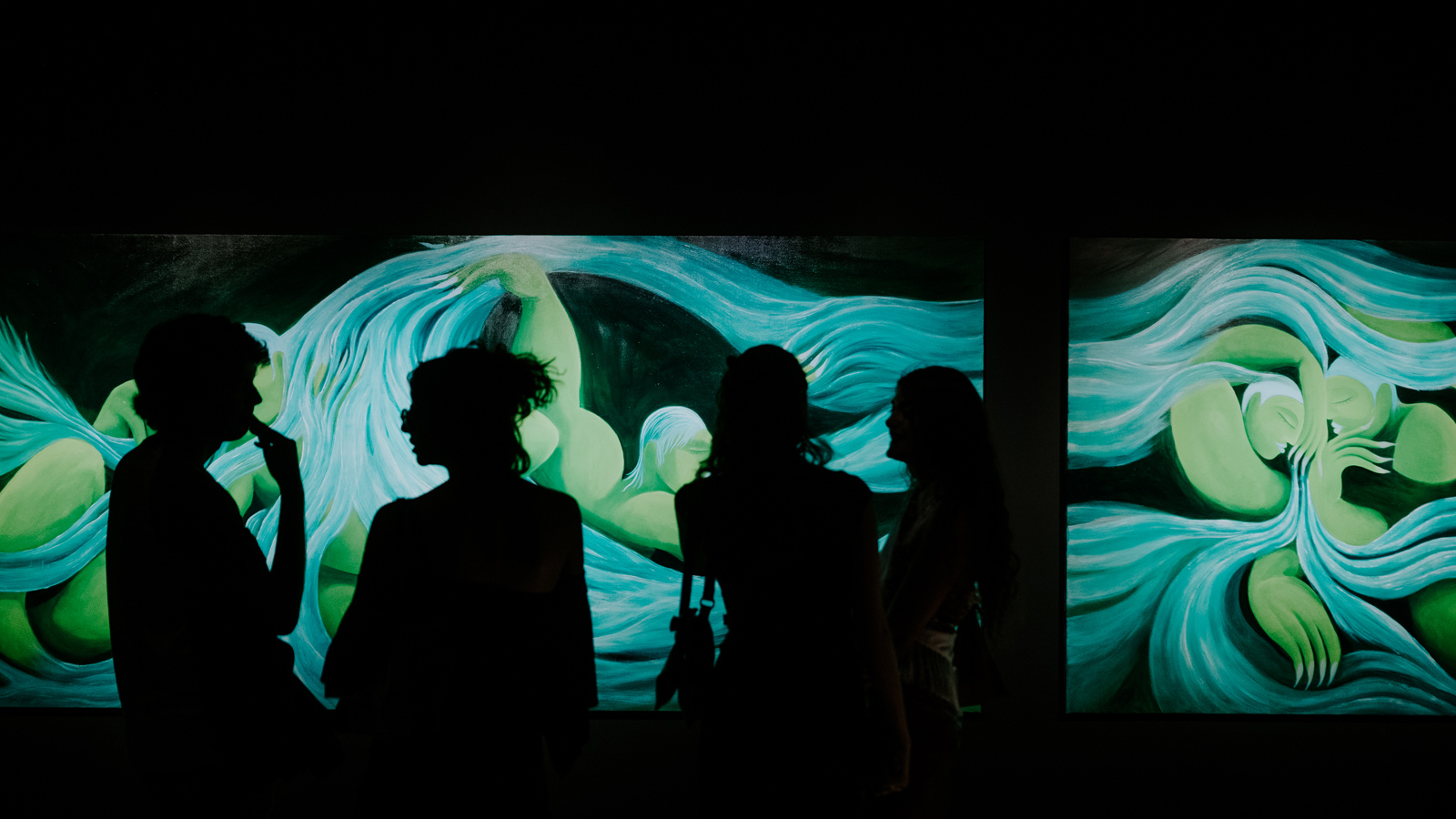
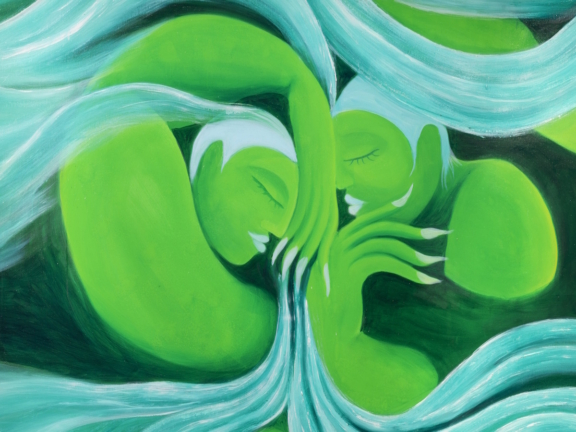
The triptych ‘Águas-Vivas’ appropriates the panorama—a format historically associated with conquest, power and the construction of patriarchal and heteronormative imagery—to imagine another horizon. Permeated by a green that fluctuates between the natural and the artificial, the vital and the toxic, these paintings embody figures that are hybrid, fluid and more-than-human. In the fog, in which any horizon remains suspended, bodies find and shelter one another, moving forward together. Uncertainty does not prevent transformation, nor the possibility of liberation: it is there that care, resistance and collective imagination find the space to emerge.
-
Becoming-Hydra
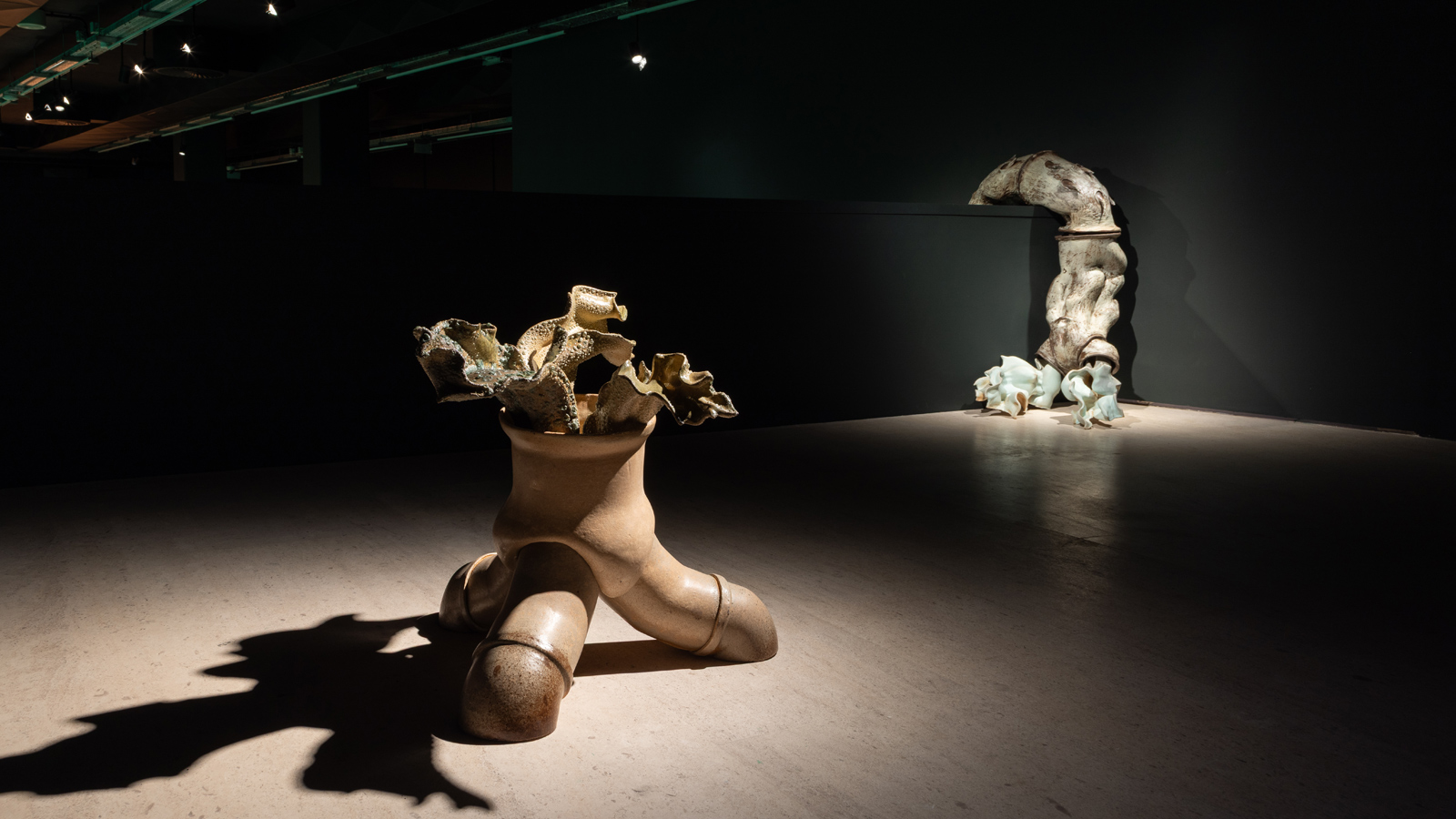
The series of sculptures ‘Becoming-Hydra’ brings together a group of hybrid organisms in which pipes, organs and plant forms seem to belong to the same vital flow. The glazes evoke the path of water, from the source to the ground, crossing pipes and intestines, making each surface a record of sedimentation, erosion and metamorphosis. Like ruderal plants that flower on terrain disturbed by human activity, these sculptures occupy the fissures in the built environment and highlight the interdependence between bodies, materials and ecosystems. In constant becoming, they imagine forms of life where growth and transformation are inseparable.
Biographies
-
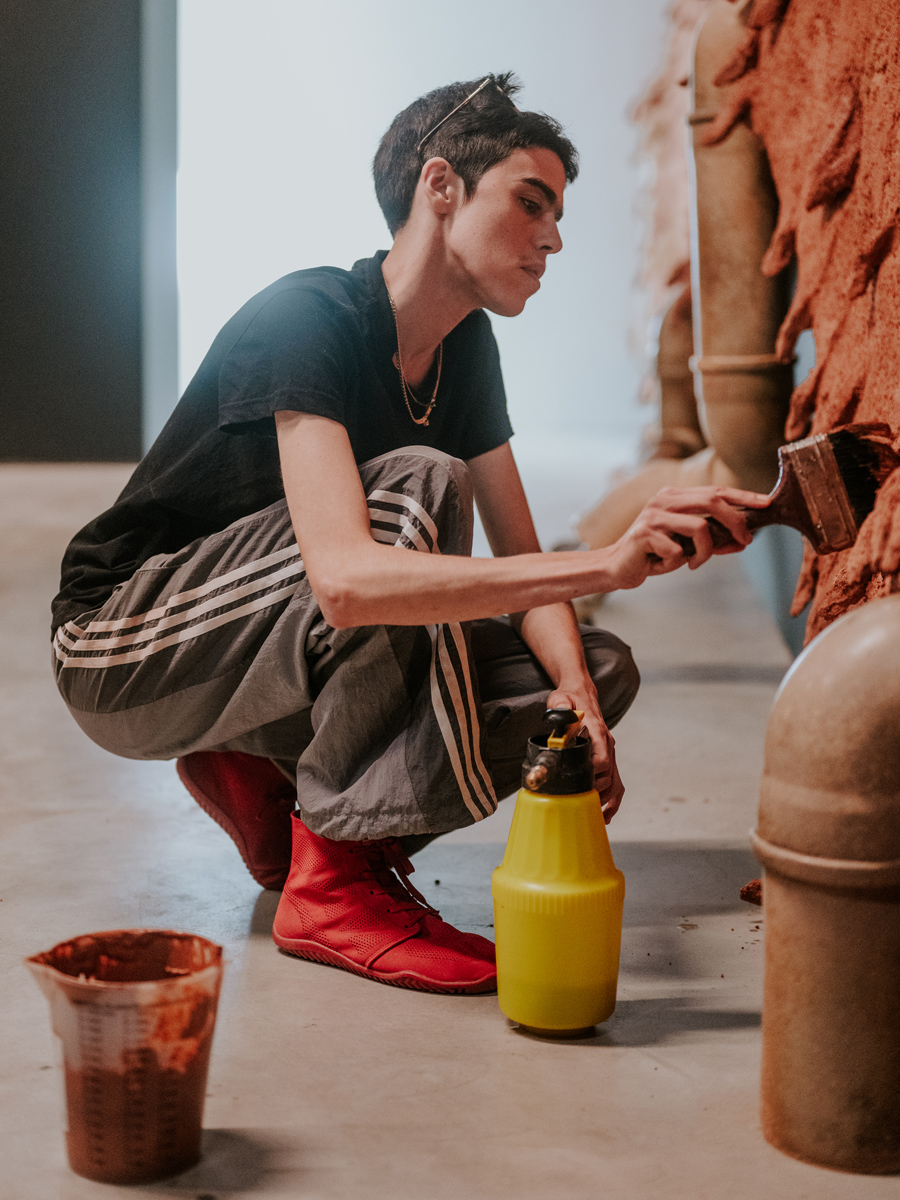
Inês Zenha
Inês Zenha (Lisbon, 1995) has a degree in Fine Arts from Central Saint Martins in London and, until recently, lived and worked in Paris. The artist currently lives and works in Lisbon.
The work of Zenha is included in various institutional collections. Recent solo and group exhibitions include: Collegium, Arévalo; Kunsthalle Lissabon, Lisbon; Museo Nacional Thyssen-Bornemisza, Madrid; Théâtre du Châtelet, Paris; La Maison Rouge, Paris; Saatchi Gallery, London; Central Saint Martins, London; and Freud Museum, London. -

João Mourão e Luís Silva
João Mourão and Luís Silva are co-directors of Kunsthalle Lissabon, which they founded in 2009. They curated the Portuguese Pavilion at the 59th Venice Biennale (2022), with ‘Vampires in Space’ by Isadora Neves Marques. Their most recent projects include solo exhibitions by Inês Zenha (CA2M, Madrid), Mounira Al Solh (Serralves Museum, Porto), Jonathas de Andrade (CRAC Alsace and MAAT, Lisbon), among others. In addition to collaborating regularly with various publications and editing several monographs, Kunsthalle Lissabon has presented exhibitions by various artists.
Credits
Curators
João Mourão
Luís Silva
Main image
© Bruno Lopes
Project originally produced by

The Calouste Gulbenkian Foundation reserves the right to collect and keep records of images, sounds and voice for the diffusion and preservation of the memory of its cultural and artistic activity. For further information, please contact us through the Information Request form.
Related
No results were found for your criteria.