
Heroines of the Arts: ‘I was trying to understand what this thing of making art actually is.’
Jule Kurbjeweit (JK) – How did the ‘Heroínas das Artes’ [Heroines of the Arts] collection come about?
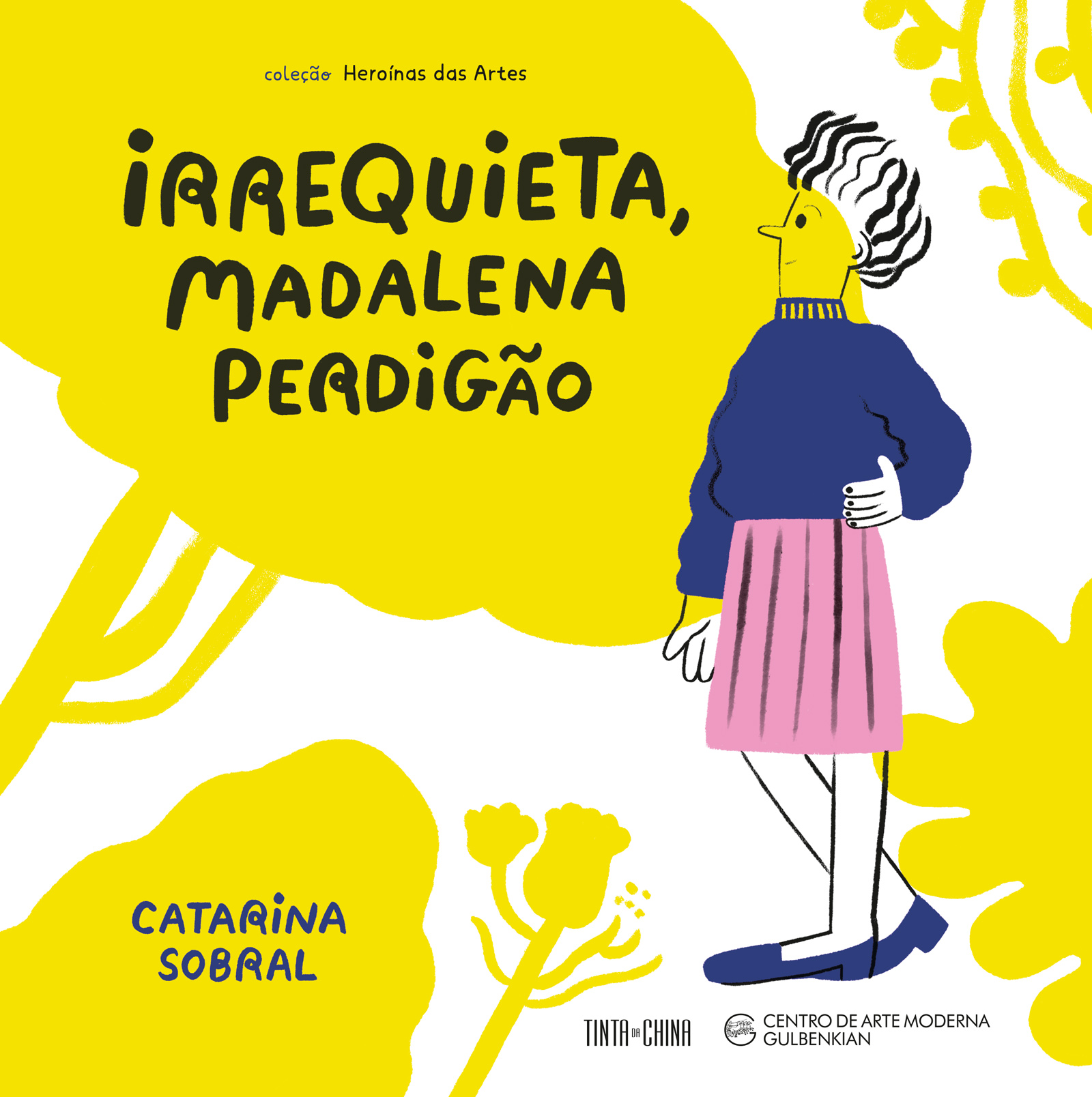
Catarina Sobral (CS) – The idea had come from CAM and Edições Tinta-da-China. The first book was meant to come out in the same year as the exhibition on Madalena Perdigão, and the second for the opening of the Leonor Antunes exhibition, whose title was inspired by a drawing by Ana Hatherly; those two were already mapped out. We then tried, in line with CAM and Tinta-da-China’s programming, to fit the remaining books in as best we could: the aim was always to make use of the dates to tie the launches to the exhibitions in which the artists featured at CAM.
JK – And how are the artists chosen?
CS – It has to do with the relationship the artists had with the Gulbenkian Foundation. Of course there are many important Portuguese women artists, but the choice has mainly been tied to the CAM’s collection and exhibitions.
JK – Why did you decide to make a collection dedicated to women? And what does the idea of ‘heroines’ mean here?
CS – It means these women managed, despite the political contexts and the society they lived in—even harder back then—to produce artistic work of great quality. Then there’s a contradiction: that importance isn’t always taken into account when art history gets written. They’re not given the same weight as men. The collection is an attempt to address that contradiction, bringing to light work of the highest quality that hasn’t always received the recognition it deserved, especially for a young readership, which is who these books are aimed at.
JK – How do you begin the process of creating each book?
CS – The theme is the challenge: working out what it is I want to say. CAM naturally wanted the stories to be faithful and to show the importance of these women’s careers. But within that constraint I had quite a lot of freedom to find the central idea for each book. Even though it’s a biography, and has to portray who they are, what they lived through and what they tried to do with their work.
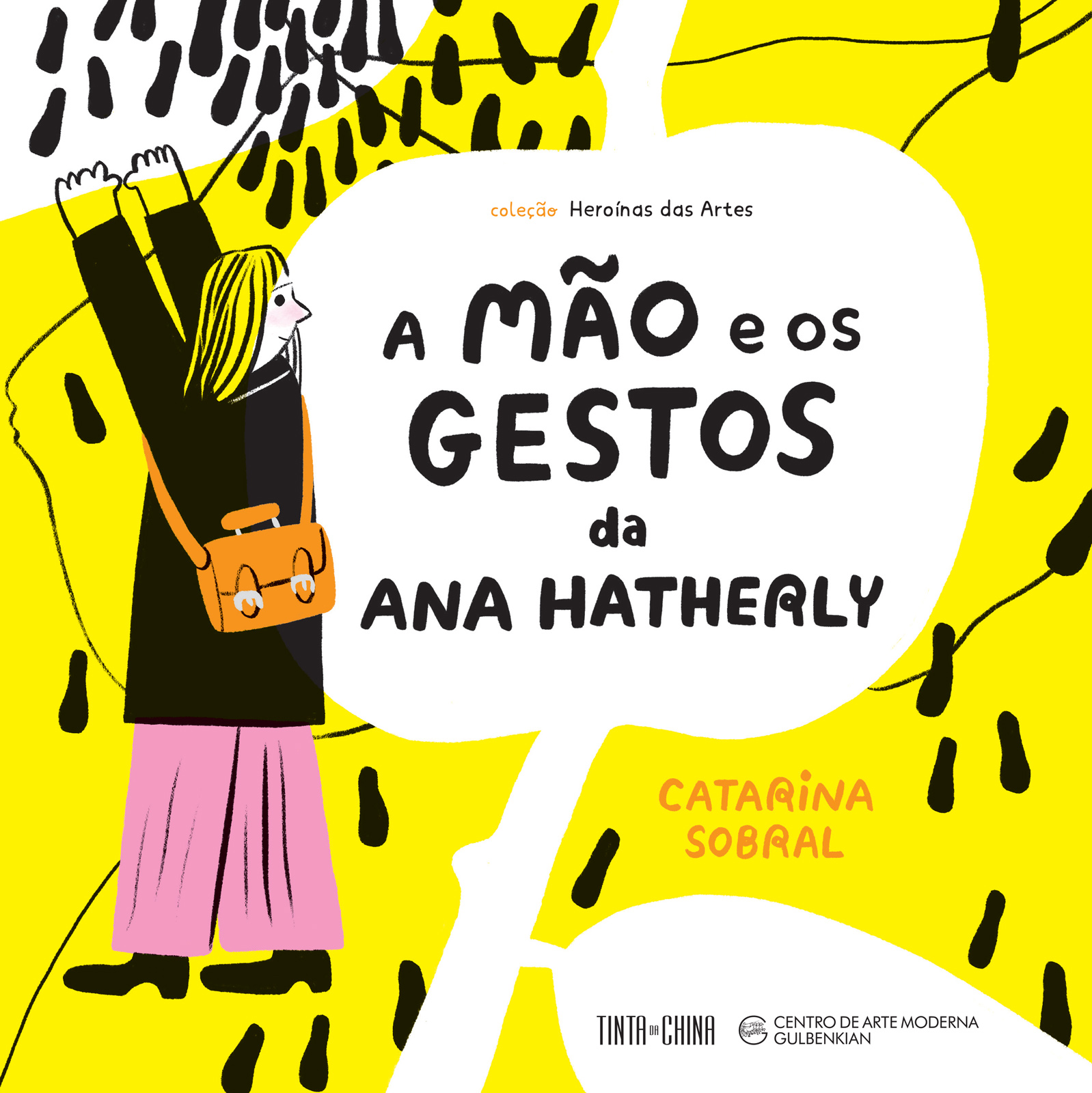
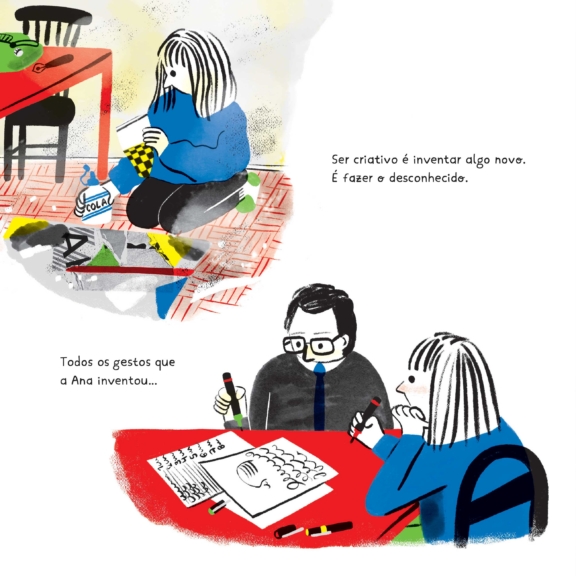
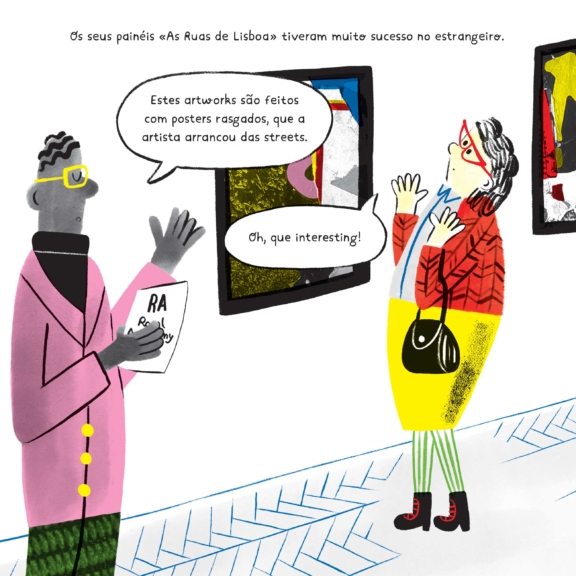
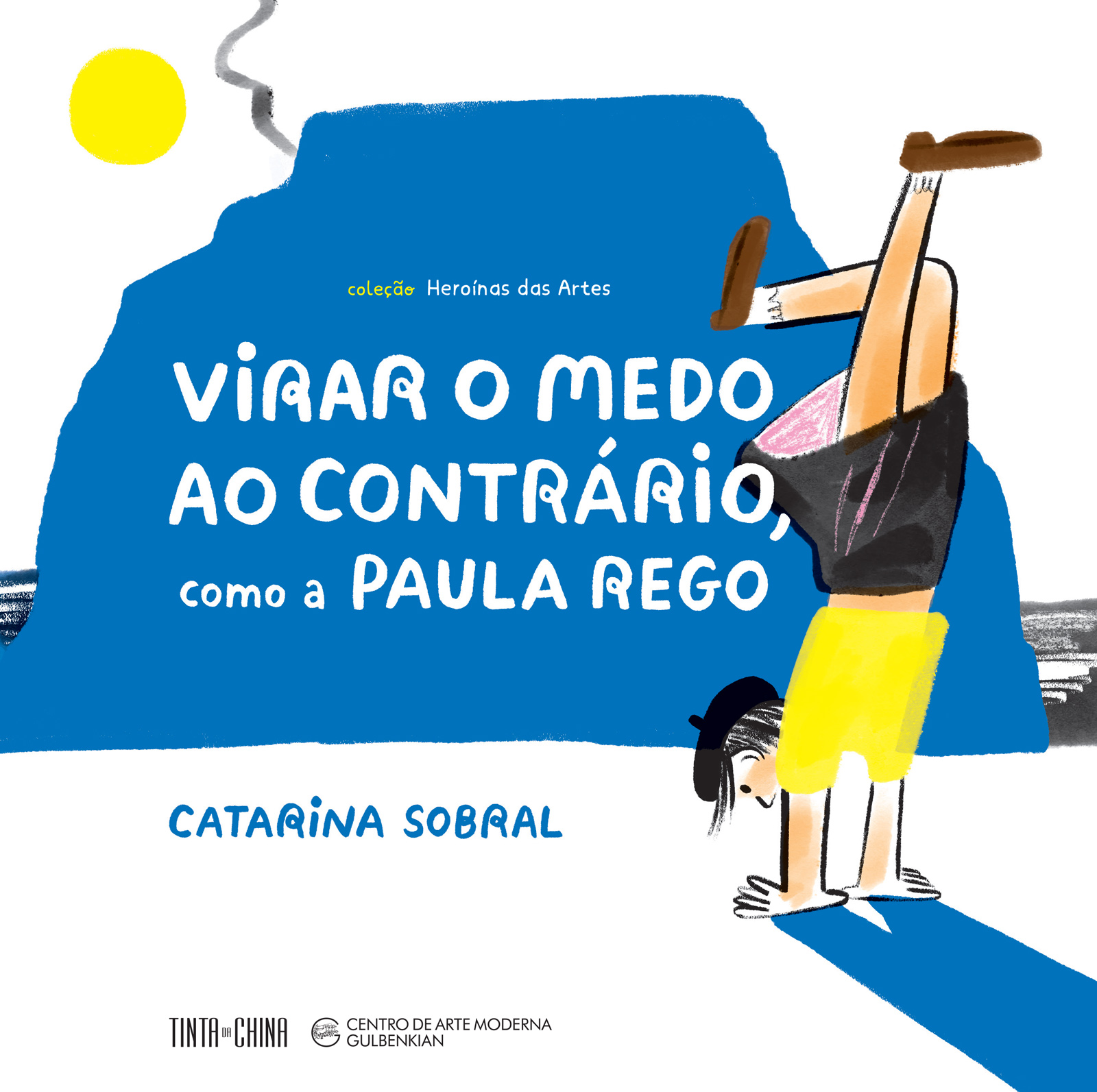
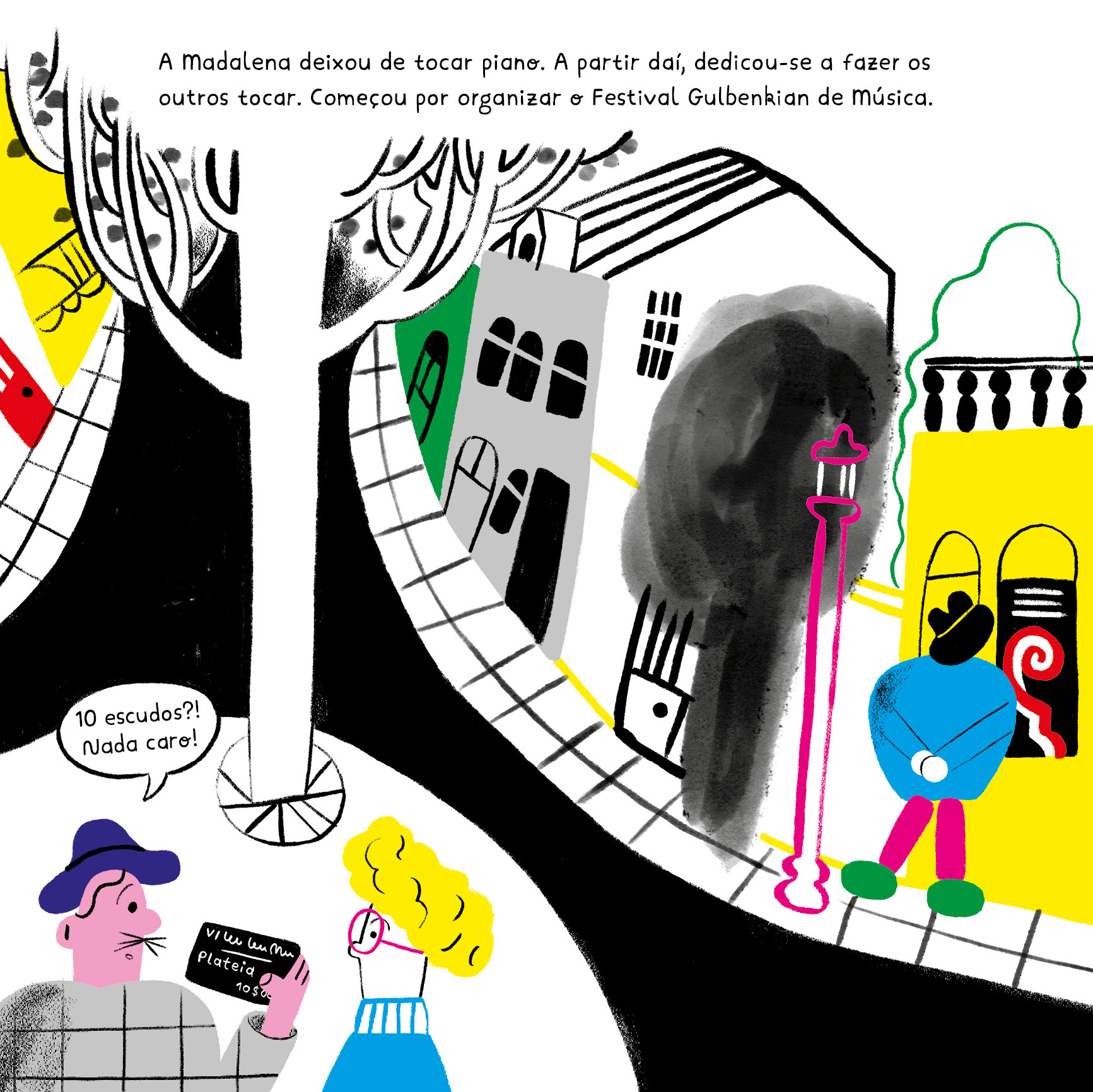
I wanted these books to have almost the same function as a work of fiction, a narrative for children: one more piece for the reader to discover what it means to inhabit this world. So finding that thread that runs through to the ending is what I try to identify as the pattern in their lives. In Paula Rego‘s case it was overcoming fear, metabolising what hurts, whether that’s fears, pain or sadness. In Ana Hatherly’s, the idea of experimentation, the challenge of constantly renewing our perception: is it a poem or a drawing? What is it saying? In each of the books I tried to find that trait which, at least to me, turned the biography into a story.
JK – At the end there’s also a biographical timeline, but it serves a different purpose from the narrative.
CS – Exactly. Those facts, on their own, probably don’t mean much to a child. If there’s curiosity about what happened before or after, the timeline clarifies things. But the narrative serves a different purpose.
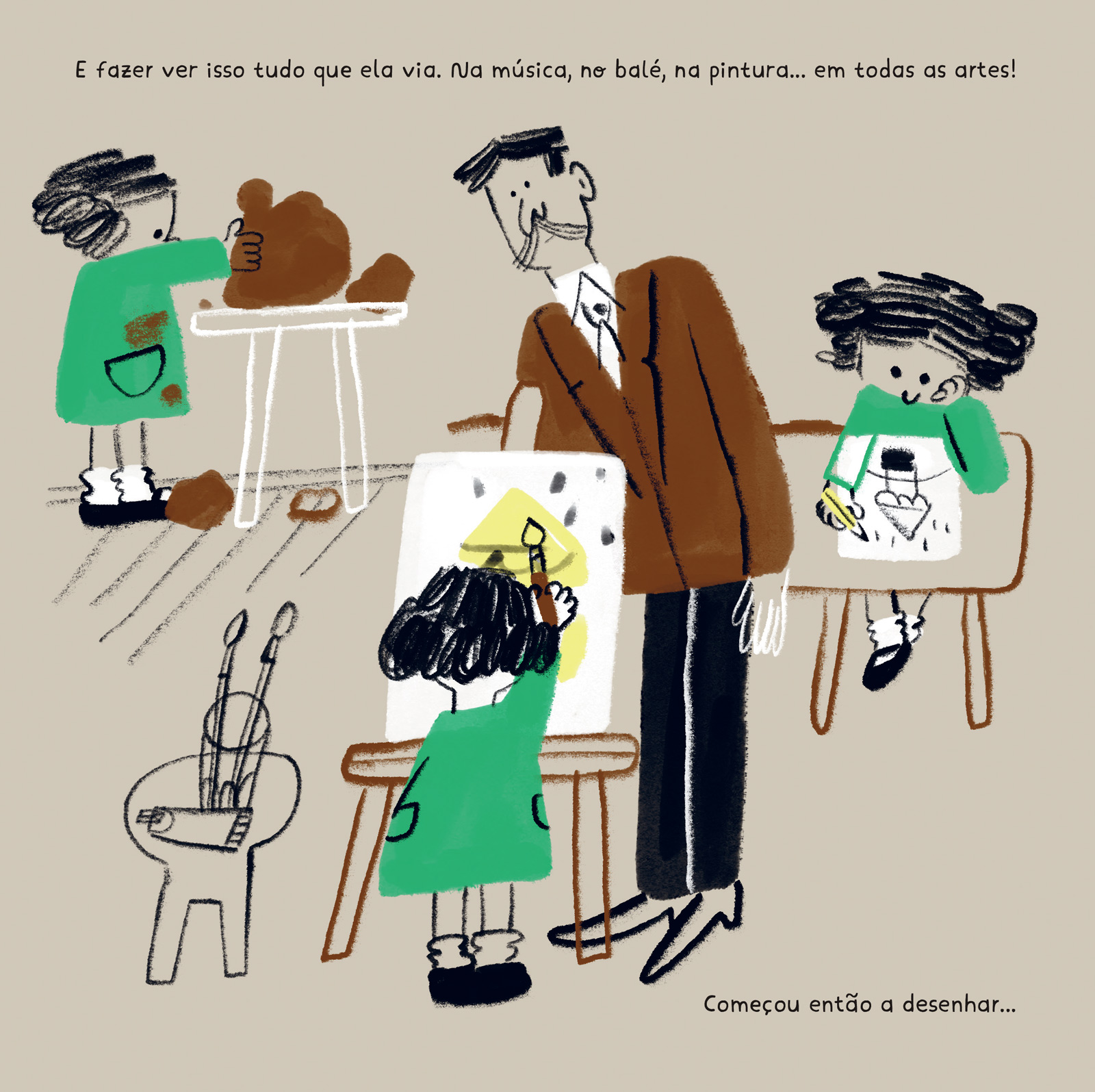
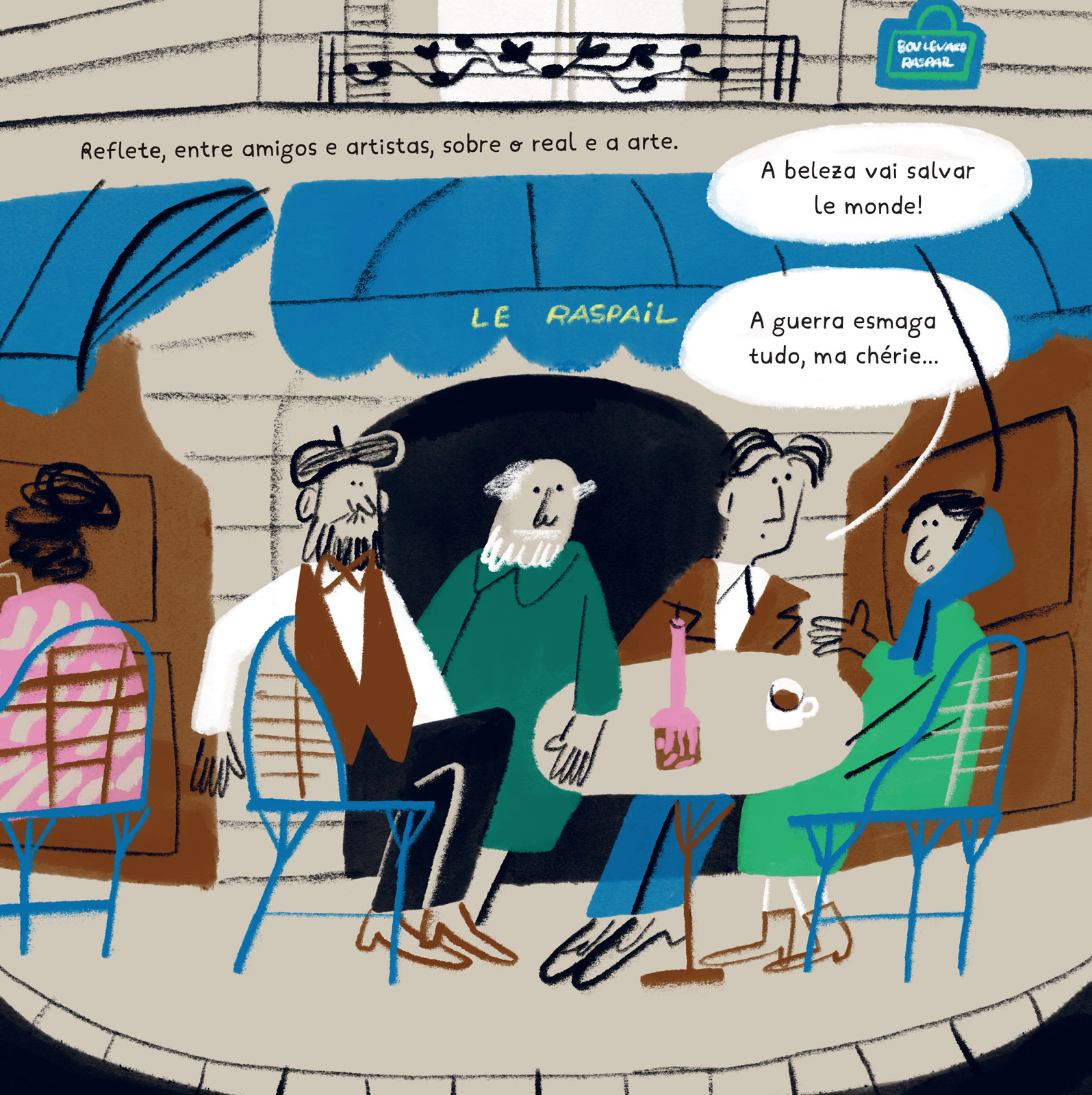
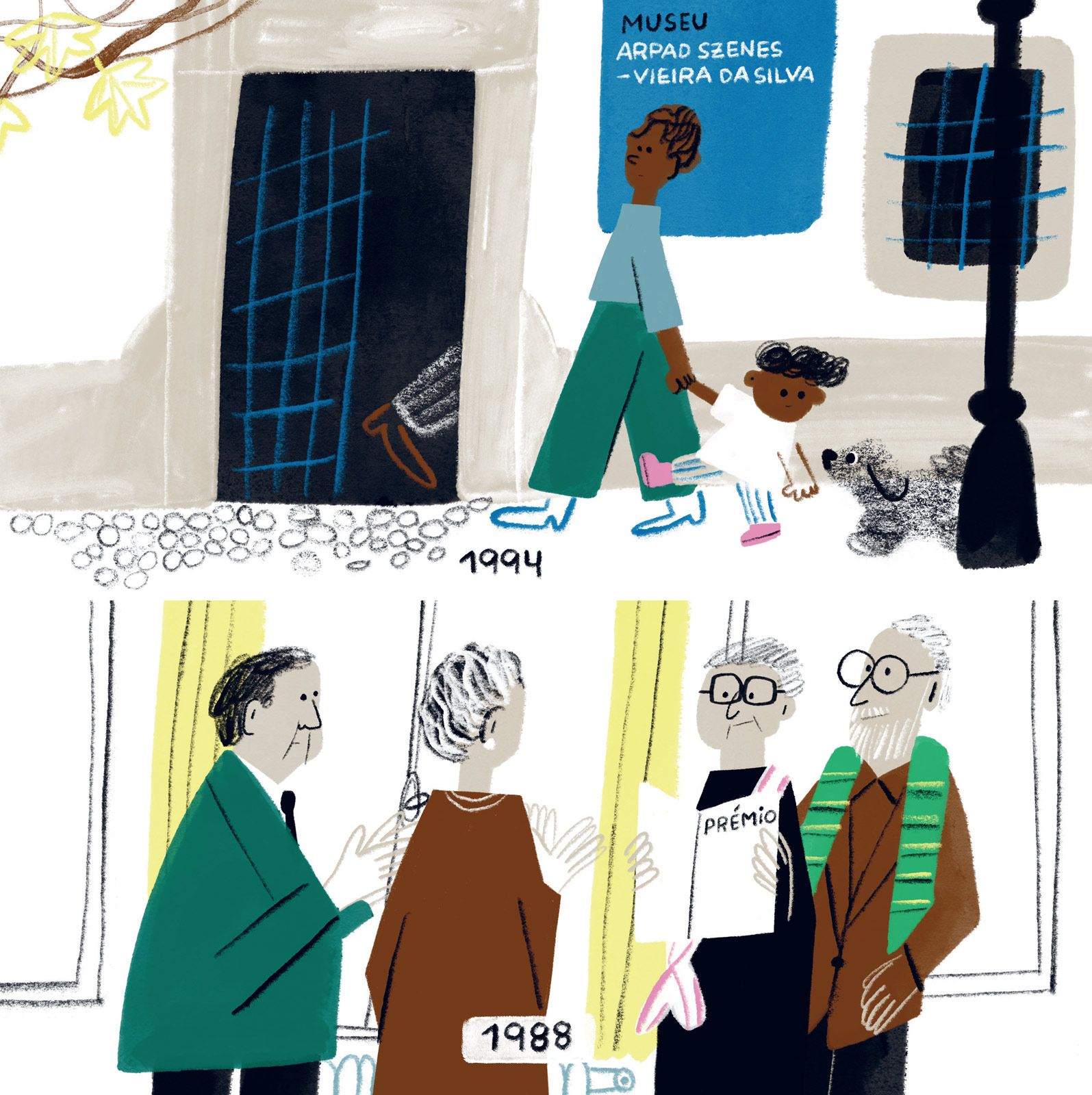
JK – How do you approach a real biography, which sometimes touches on difficult subjects, without hiding reality but also without losing touch with a young audience?
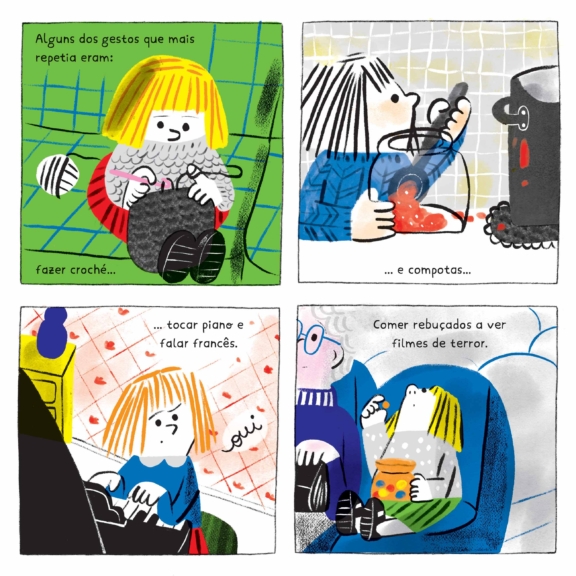
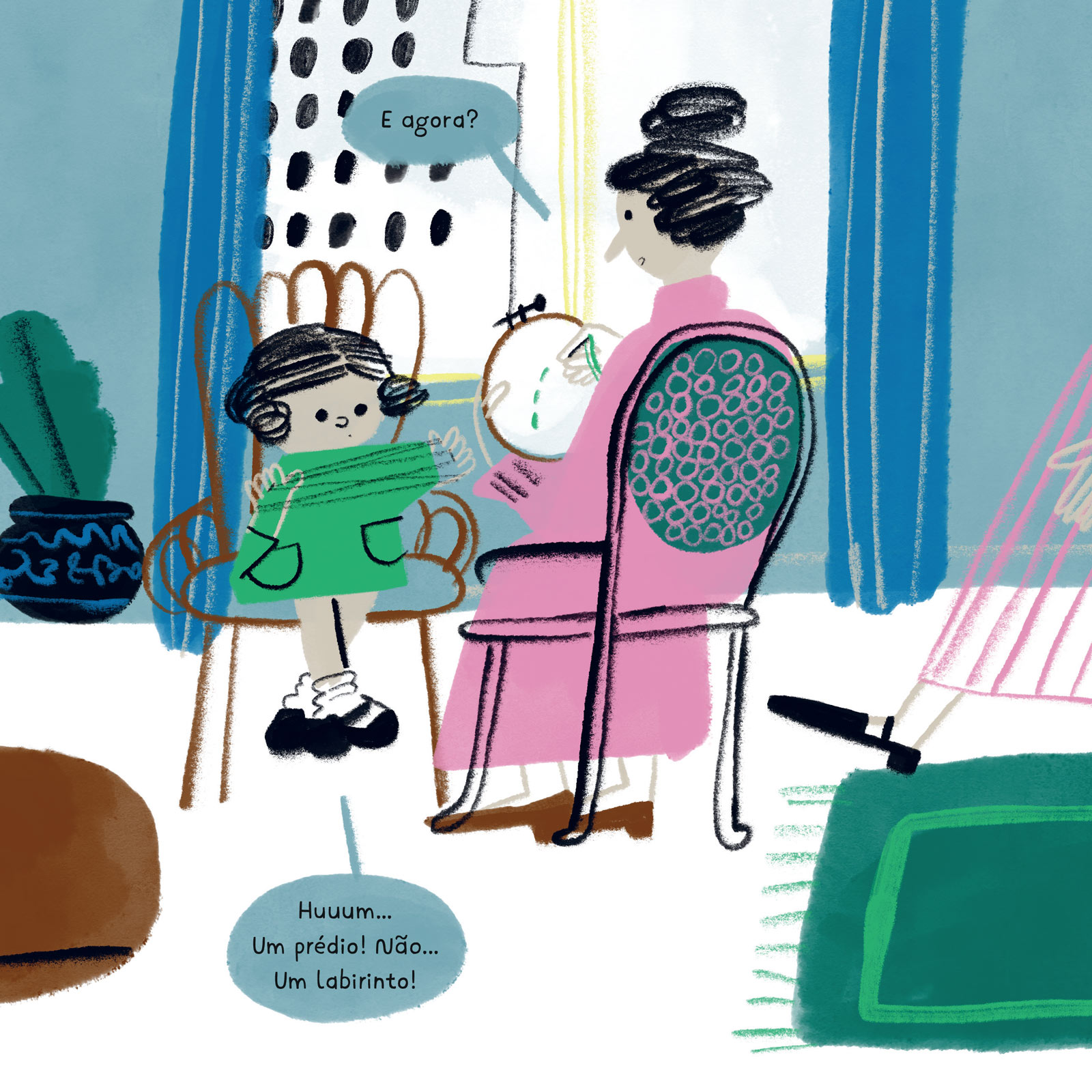
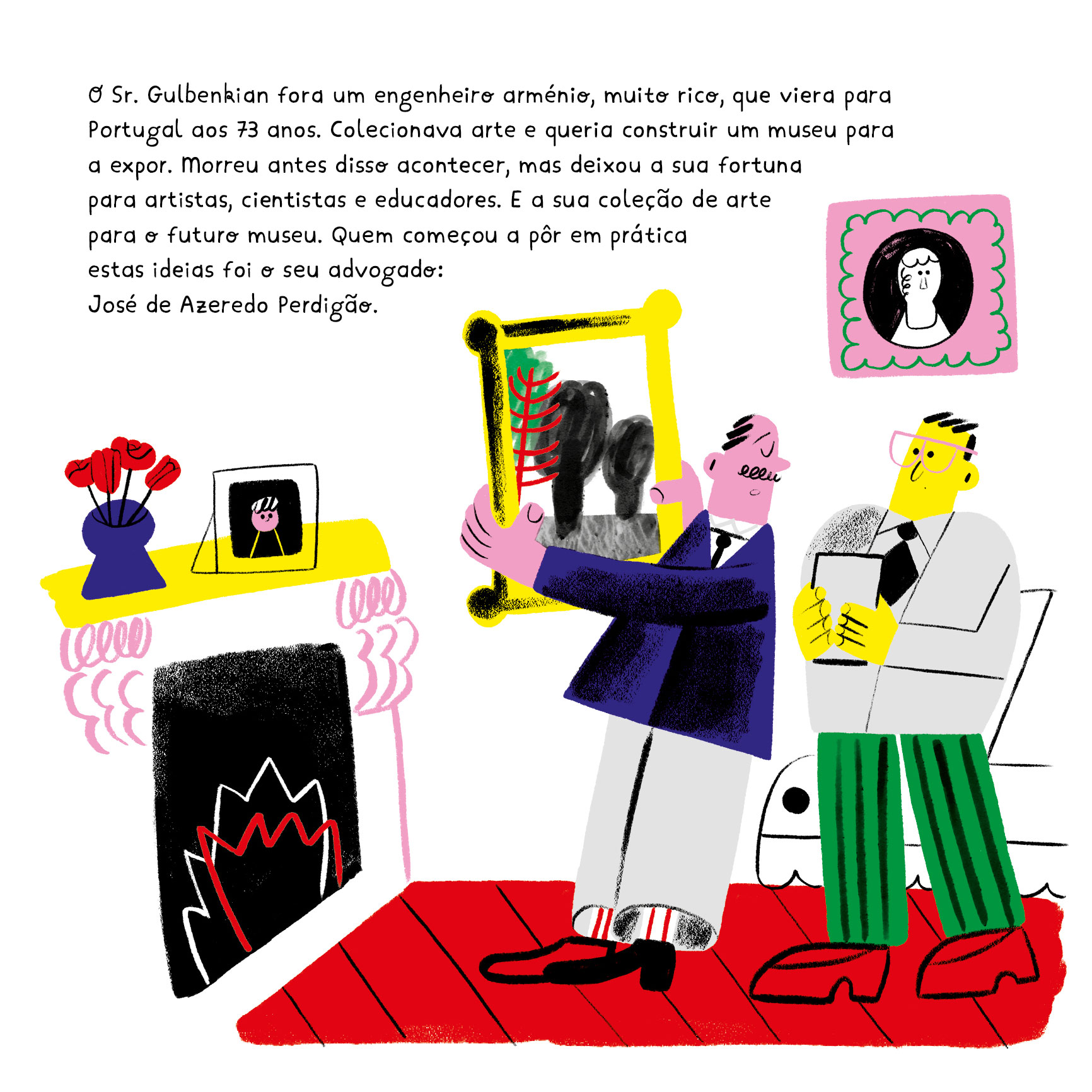
CS – I think the first challenge is finding that thread. The second is managing to tell the stages of these women’s lives in a way that’s close to children’s own experiences: with the question of fear, for instance, I can’t use words like ‘metabolise’ or ‘sublimate’; I have to find the right word, do the ‘translation’. Then there’s a third challenge: doing this work through image. There’s my own style and the artists’ style. The works have to be recognisable, and at the same time work within the language of the book. And then there are the graphic questions: page composition, rhythm, the alternation between single and double-page spreads. All of that tells the story too.
JK – How, then, does your visual language engage with each artist’s work?
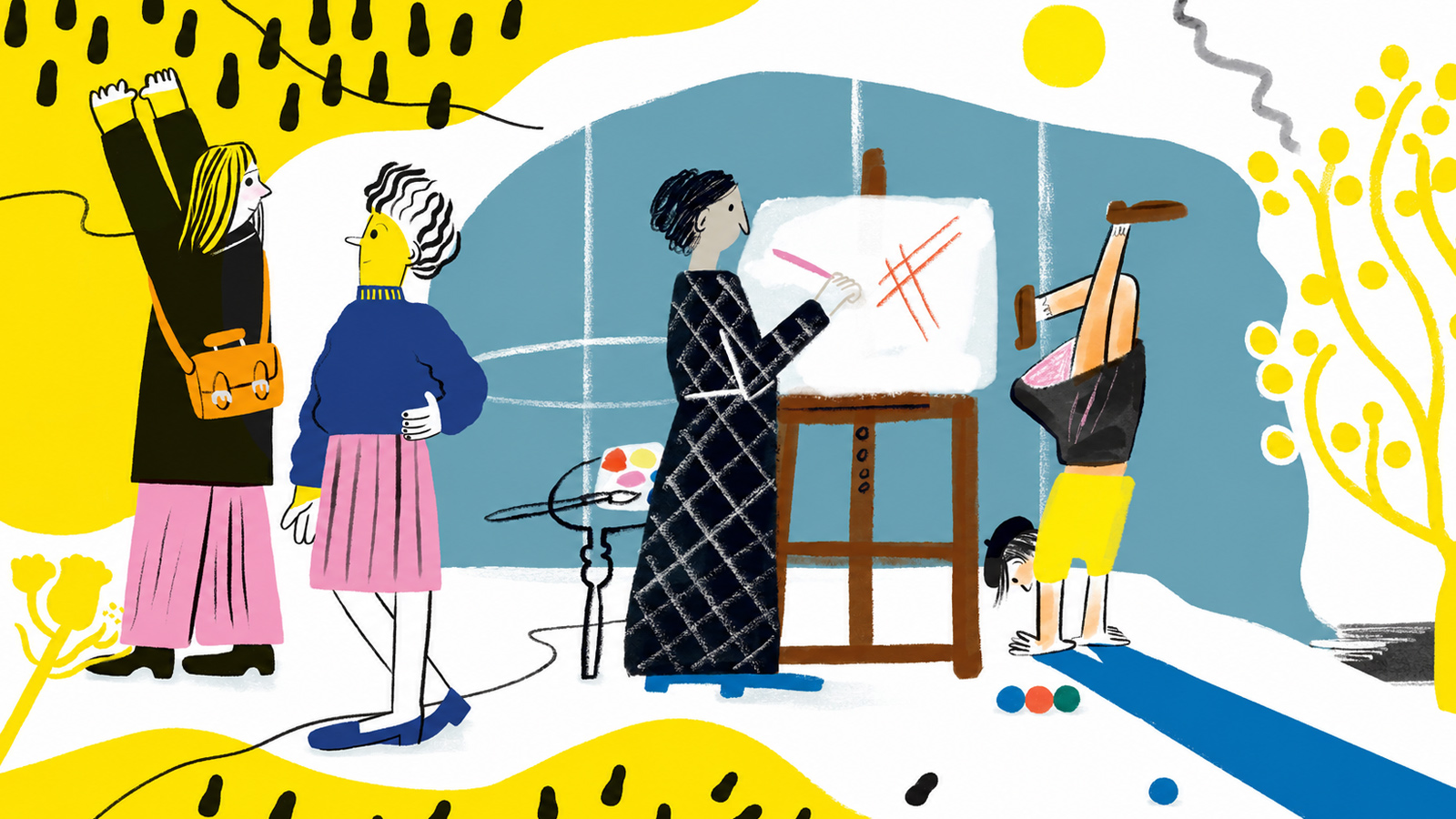
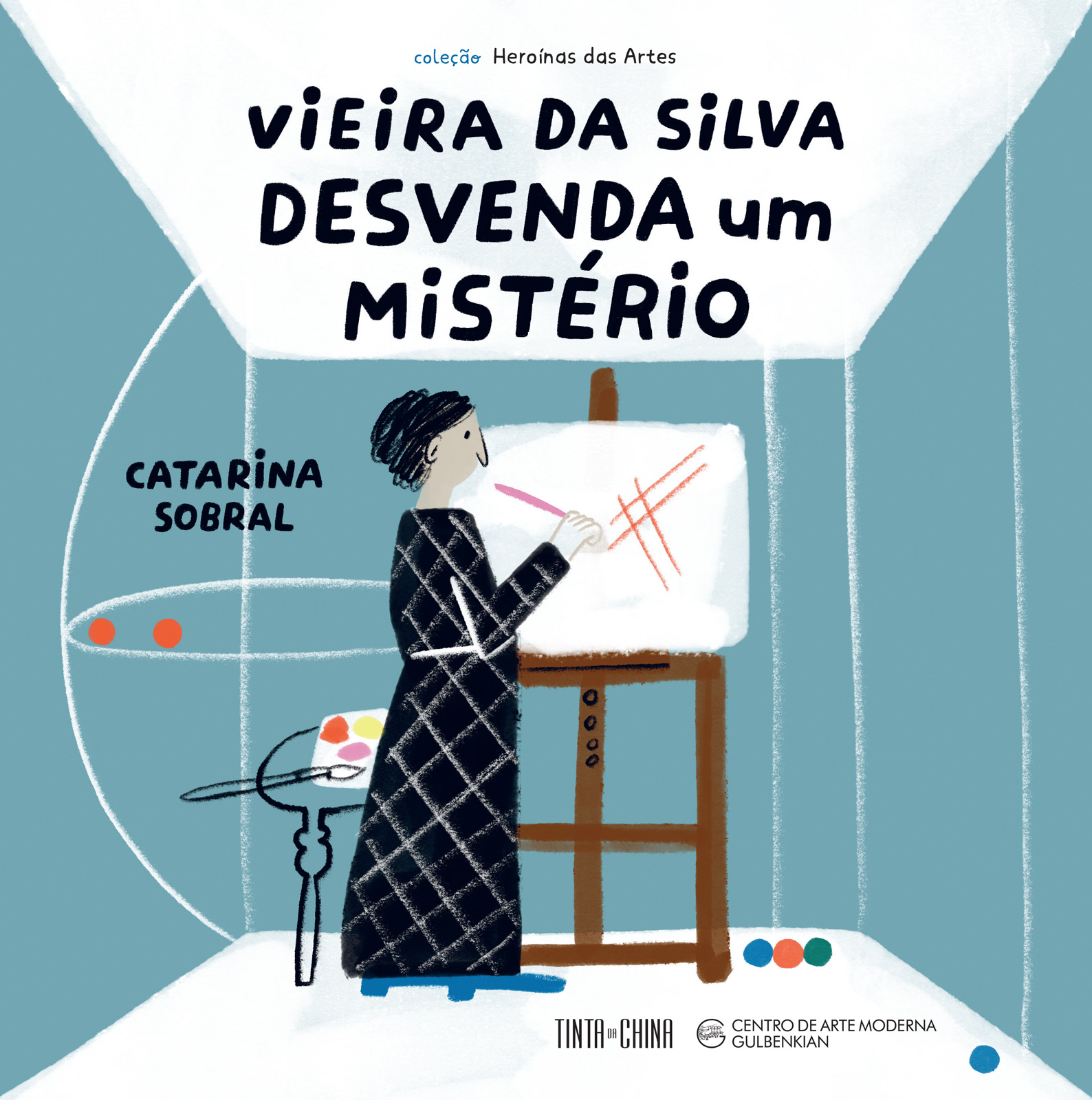
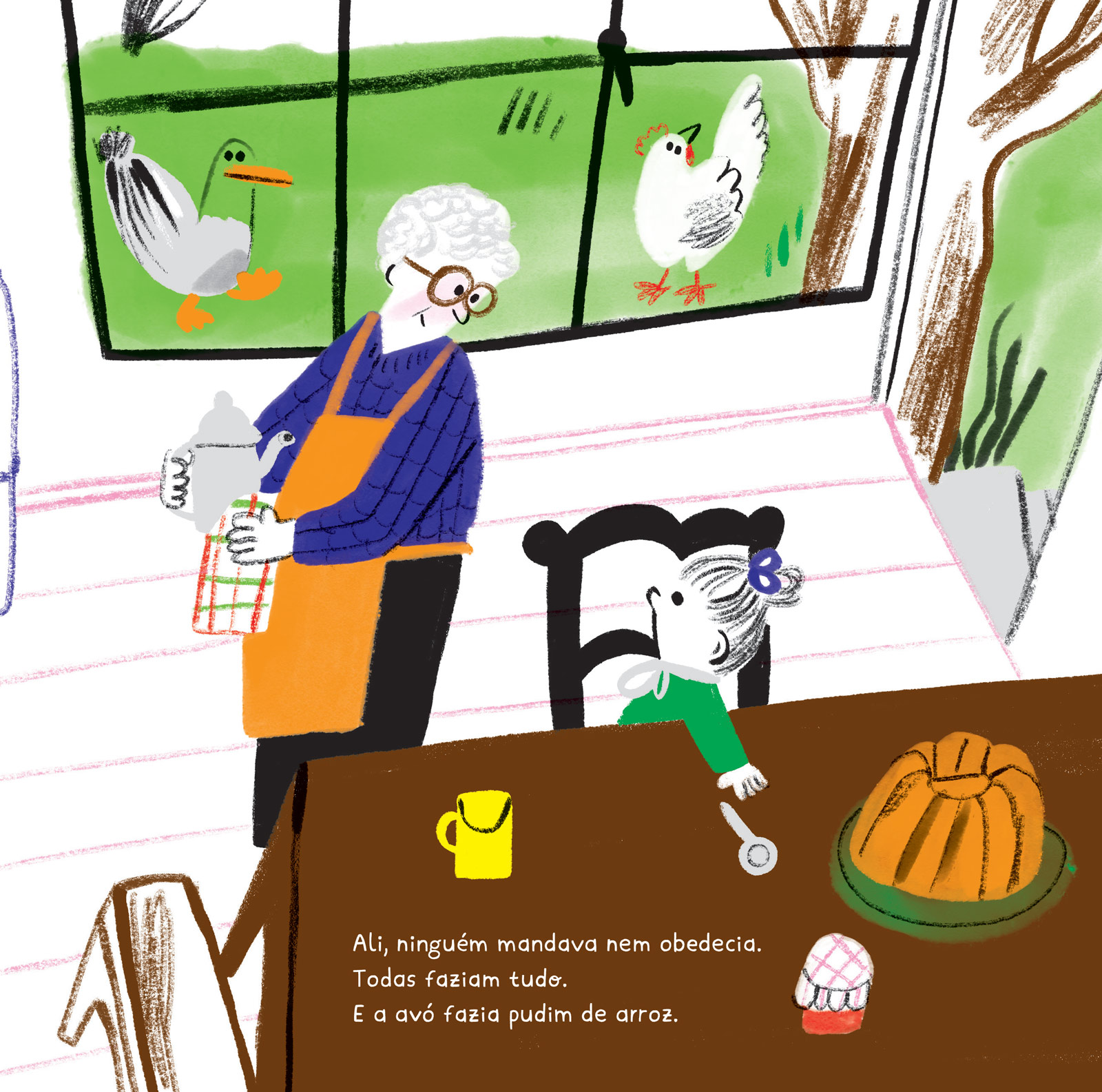
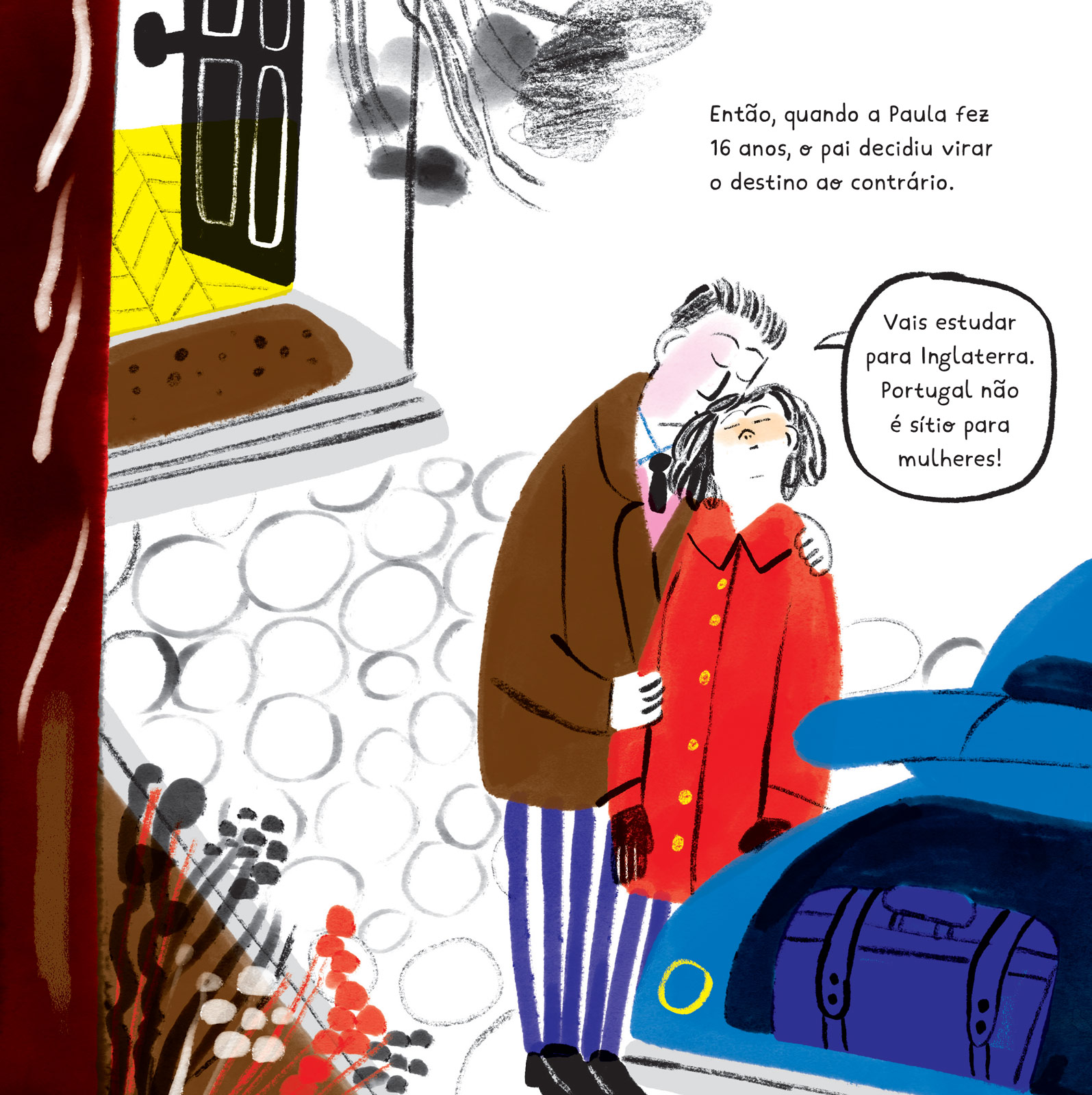
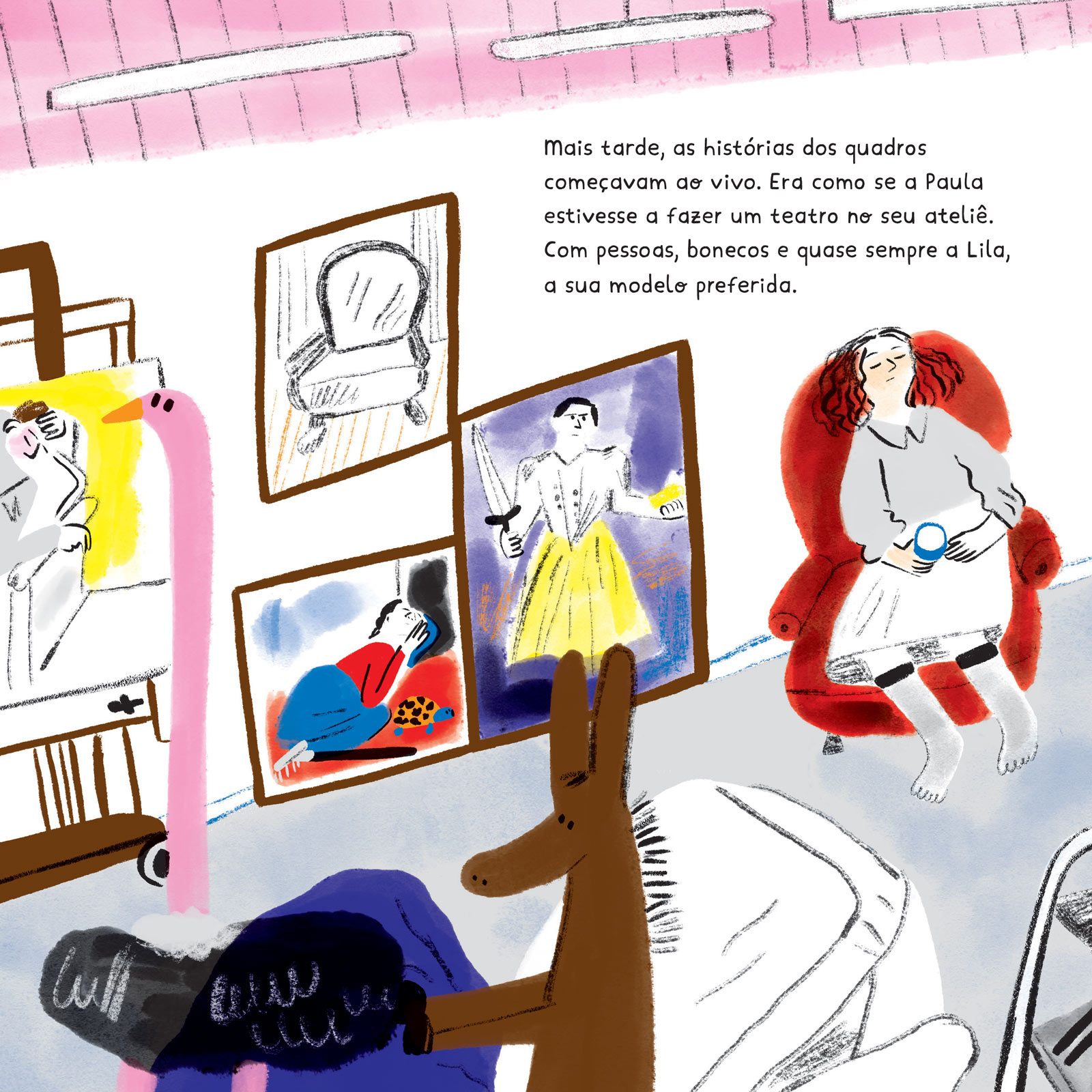
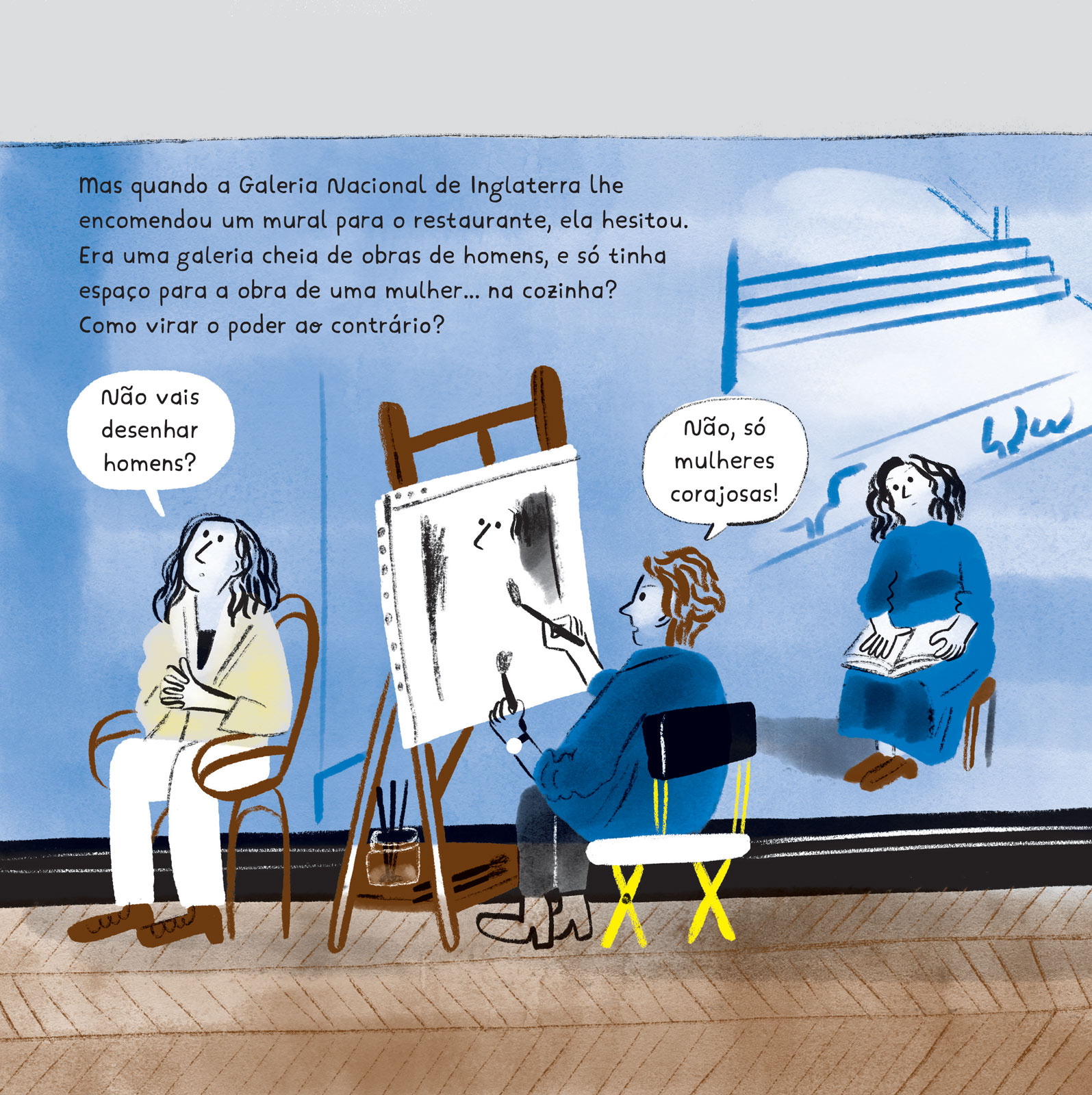
CS – It was interesting to see how each painter’s style ended up influencing my own. The Paula Rego book became more descriptive, with more line and perspective, because her paintings are like that too; whereas the Vieira da Silva one is more modern, simpler in its use of colour blocks. My own style stays consistent—it was important for the collection to work as a whole—but I adapted the colours, the brushwork and the level of detail to each artist.
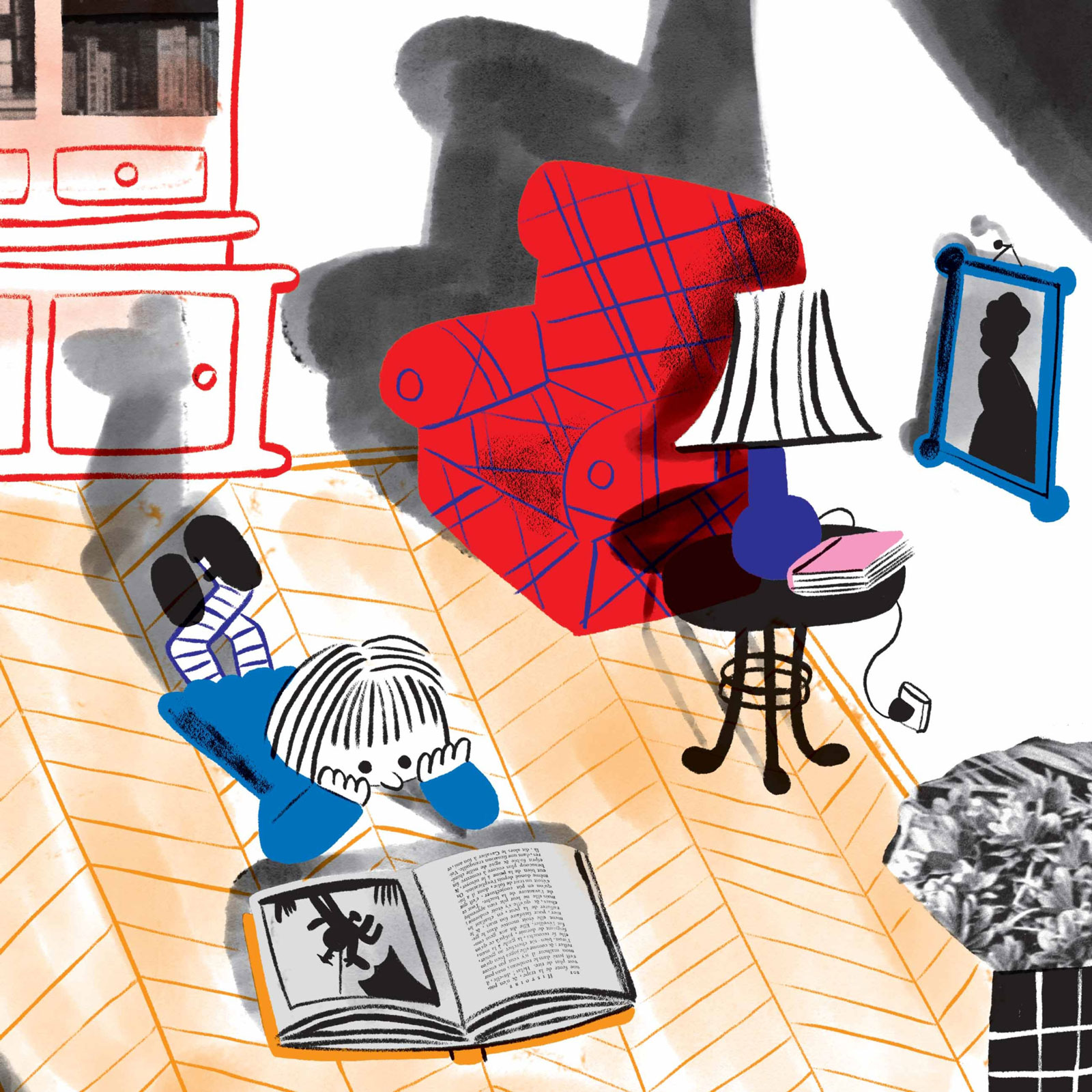
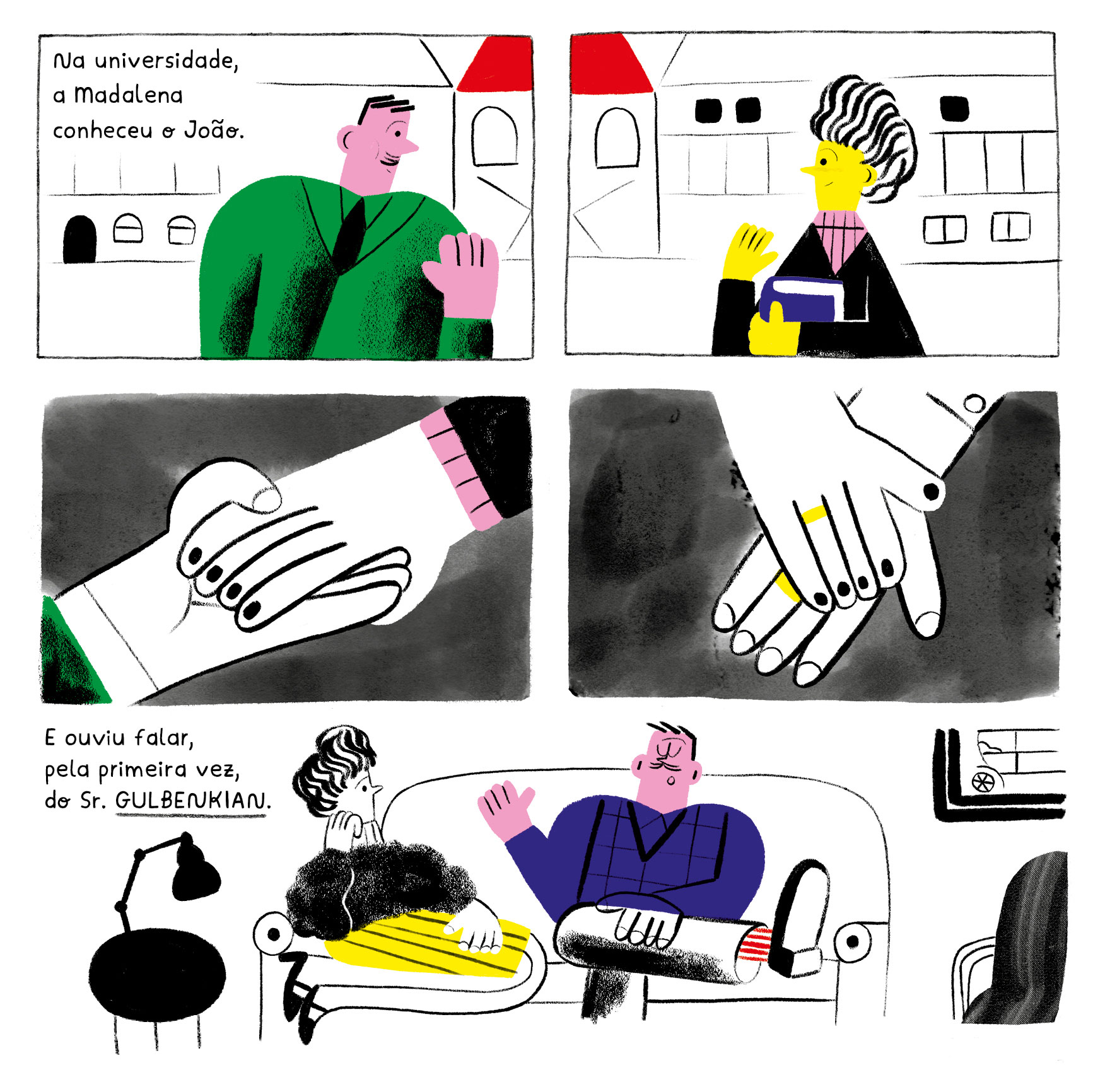
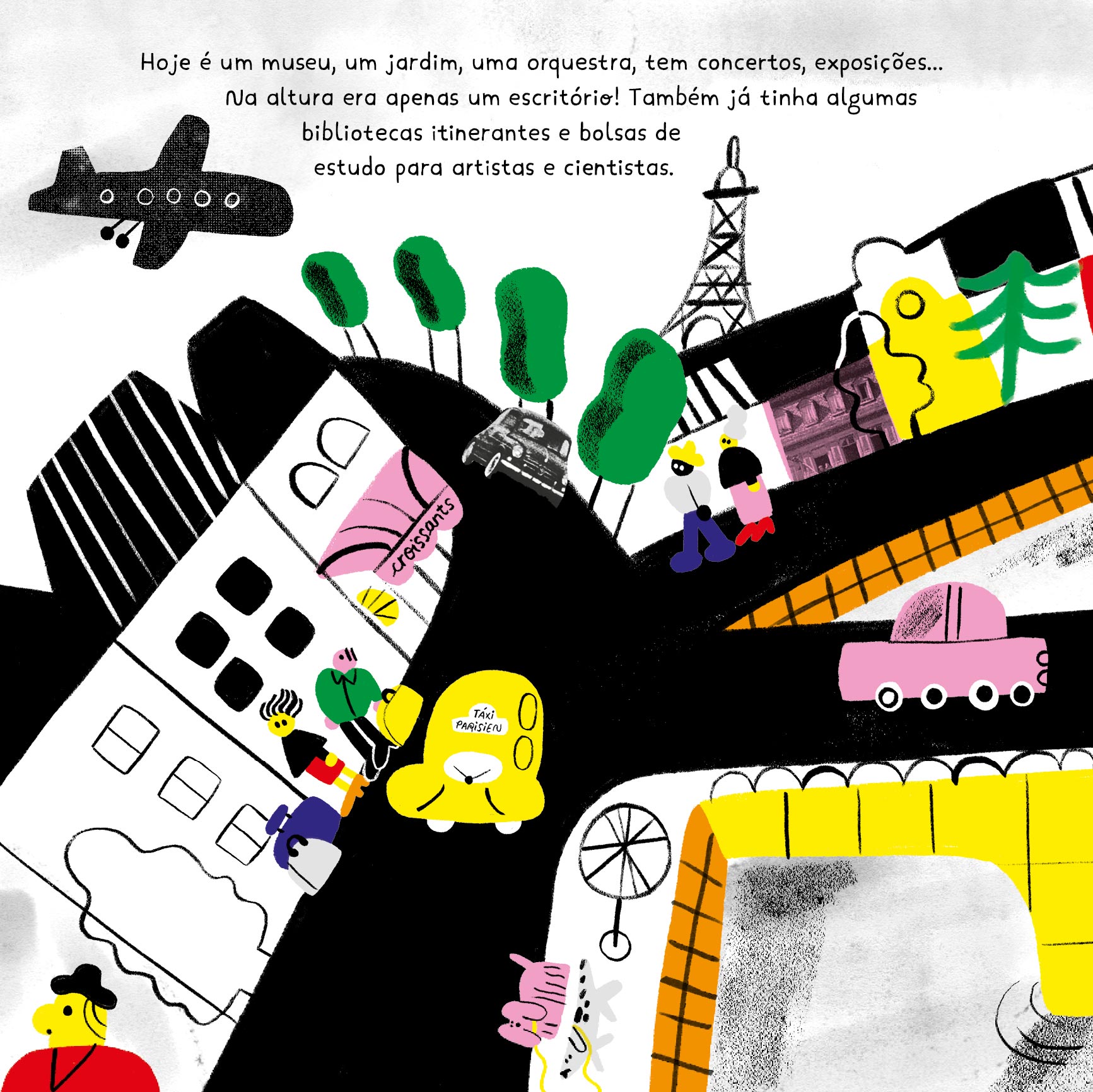
I also slip in a few details that don’t always get spotted on a first read. The endpapers at the beginning and end are always different, but linked to one another. They often start with a child’s game and end with a transformed element, tied to the artist’s work. In the Paula Rego book there’s a secret: the animals that appear in the darkness of the night are exactly the same, in the same position, when you turn the book round, but at the end, as the text says, ‘the light went on’. And in the Madalena Perdigão book there are three pages in a row with the same diagonal, like a cinematic match-cut between consecutive scenes. That’s also a way of linking the episodes of her story through the images.
JK: Is there an idea common to all four books?
CS – Yes, for better or worse, all artists try to work through what they live through by means of art. They all want to try new things, to show their own perspective on the world. In Ana Hatherly it’s experimentation that stands out most; in Paula Rego, fear; in Vieira da Silva, perspective. But underneath it all, that’s part of what art is. The book then belongs to whoever reads it. The seeds are there and they can bloom into many different flowers. I think, without quite realising it, I was trying to work out what this business of making art actually is. Perhaps, in a way, it’s my own biography too.
JK – And besides introducing these artists, the books also end up telling a part of the history of Portugal.
CS – Yes. They all lived through the dictatorship and tried to show that through their work. The first book is already a statement about the importance of these women: Madalena Perdigão transformed the country’s cultural landscape. And I think it’s interesting that the books are used as a document for interpreting the exhibitions, because they’re objects that remain available forever.
JK – Which story touched you most personally?
CS – Madalena Perdigão’s. She’s someone who ought to have far more recognition for what she did for cultural creation in Portugal. Not only did she deserve greater recognition herself, but she also spent much of her life working towards recognition for other women. It’s the book with the most pages, because there was more to say. That allowed for a different kind of pacing: the same setting appears three times, at different points in her story, to show the connecting thread—or, in her case, the constant—which is change itself.
You may also like

No results were found for your criteria.