
The world as seen by Frederick Wiseman
The footage of the workers leaving the Lumière factory encompasses some of the things that would later be of interest to Frederick Wiseman (1930–2026), a film director whose career was dedicated to observing collective life, its spaces and the people who cross them. For more than half a century, the North-American director shot some well-known places – and others that are less so: schools, hospitals, barracks, courts, museums, libraries, zoos, New York neighbourhood’s streets or small towns in the Midwest, trying to understand them. In that sense, there isn’t really such a huge leap between that inaugural moment of cinema outside the Lumière brothers’ factory and Wiseman observing students and patients entering and leaving a university or a hospital: in both cases, it’s about paying attention to certain moments of our reality.
The discussion between ‘reality’ and ‘truth’, so often summoned when one refers to the duo documentary-fiction, is currently worn out – and is, in reality, almost as old as Lumière’s film (did the workers leave the factory because someone told them to? and what about the dogs or bikes that can be seen in the shot, were they usually there?). It’s not always a particularly productive exercise trying to understand why certain films seem closer to our lives than others, or decide what is more or less artificial in discussions that convoke hypertrophic words such as ‘art’. It is known, as a general rule, that a documentary does not work with figurines or a script; but reducing Wiseman’s cinema to these kind of distinctions doesn’t tell us much about what really matters. These films do not seek to show ‘reality’ or offer a definite version of the truth.
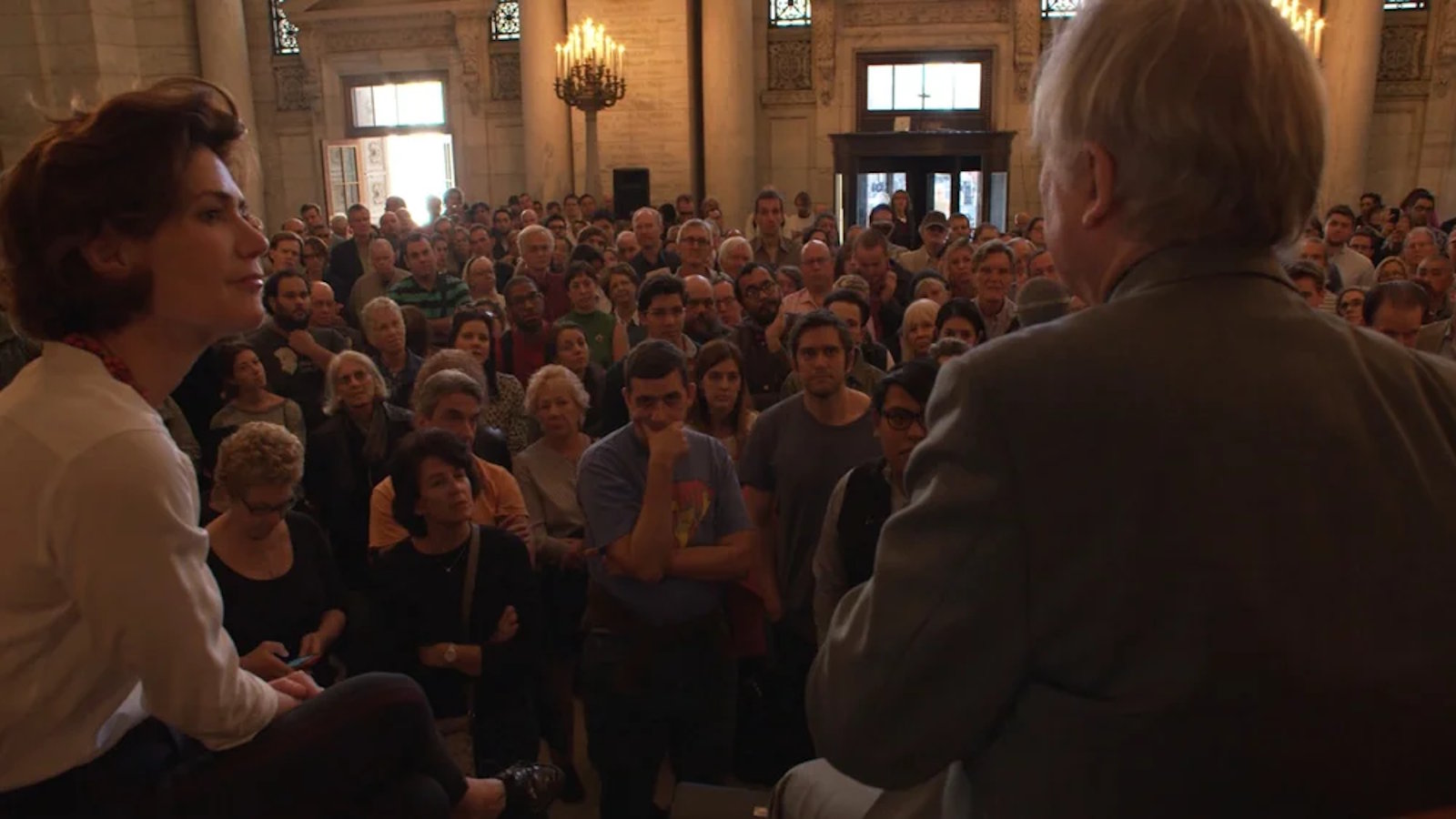
That is probably why Ex Libris (2017), dedicated to New York’s Public Library, starts with a conference held by a philanthropist who defends science and reason against religious faith or astrology, speaking with great conviction of being on the side of what he believes to be the truth. As the film goes through reading rooms, public debates around poetry or science, meetings and educational programmes about immigrants and churches, that opening speech starts to resonate in a different way. Not because the film contradicts it directly, but because the library’s own matrioska that the film opens up starts to reveal how fragile that certainty around words like ‘truth’ or ‘belief’ is.
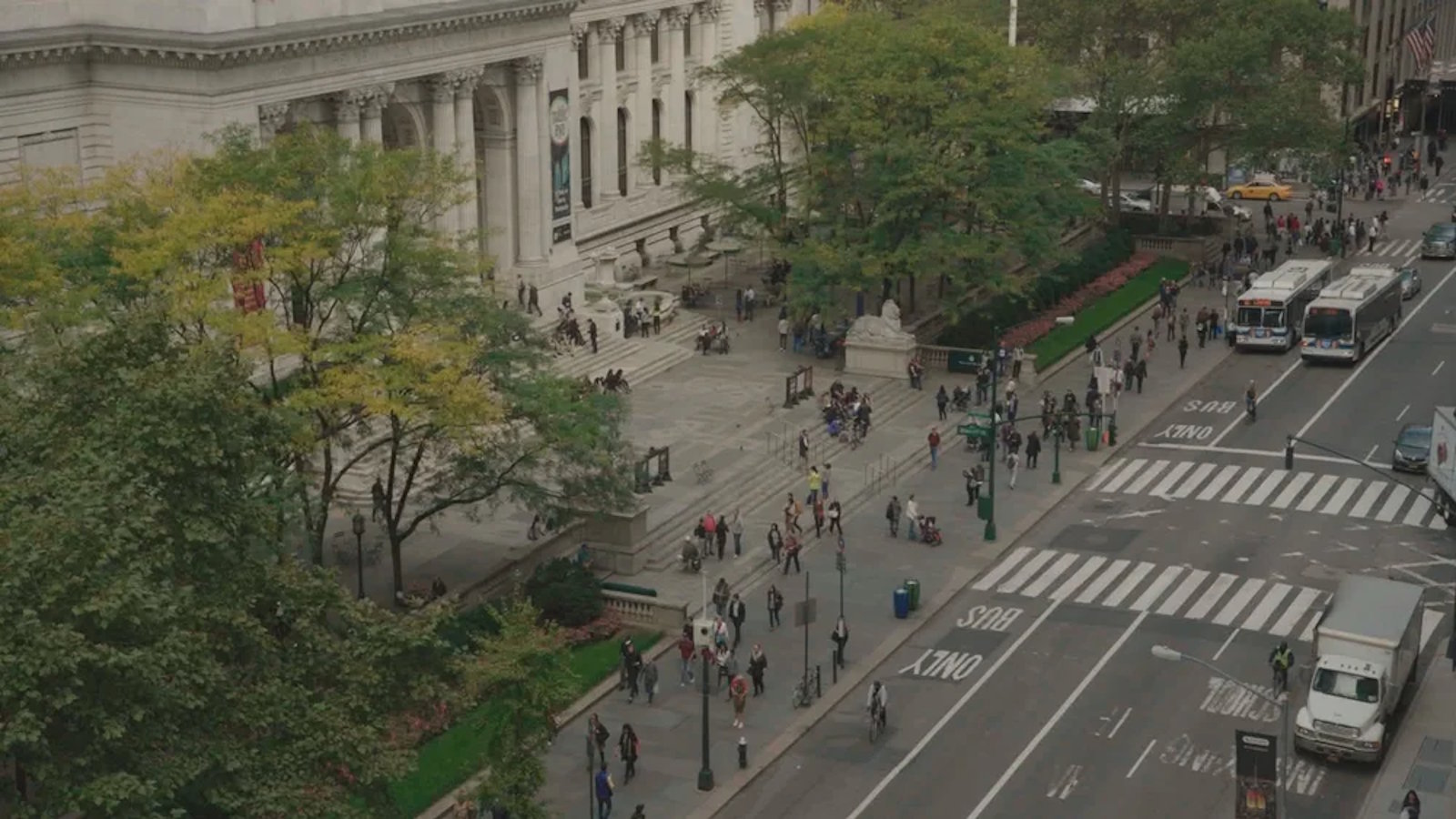
This caution also relates to the way Wiseman worked. He would spend one or two months filming a place, frequently gathering more that one hundred hours of footage, without really knowing what the film would be. The editing stage – which could take longer that nine months – was the moment he would start to realise what had been captured. When Wiseman filmed places and conversations, he was mainly looking for something. Not for a definite truth, but rather an exploration of certain aspects of the world that we normally overlook: a conversation that takes place next to us in the Tax Office or the administrative meeting that occurs somewhere near the garden where we are having a snack. His films bring us closer to these intermediate places, where banality takes shape without, at a first glance, revealing much about itself – and where, precisely for that reason, it is worth paying attention to.
From this attention emerges a sort of everyday drama. It is not surprising, though, that the wordy meetings about the present and future of the institutions take up such a central role in his cinema. At first they do not seem particularly fascinating: people sitting around a table, debating regulations and budgets. But Wiseman realised very soon that these encounters are, from a dramatic point of view, extraordinarily rich. They cross different opinions, efforts to persuade, small negotiations, betrayals and momentary alliances. Each participant chooses their words carefully, tests arguments, hesitates or insists upon something. What looks like mere administrative routine is actually a form of theatricality as intense – sometimes even more so – as what we find, in other parts of his work, in a court or in a kitchen of a luxury restaurant.
This focus on the small tensions and rhythms of a situation can also explain the simplicity in Wiseman’s method. For many decades, his cinema kept an almost elemental quality: a camera, a microphone and a recorder, film rolls and a place with people; months later, in an editing room, everything that was recorded is reviewed, cut and reorganised, without using interviews, commentary or music that evokes any feelings. For a long time, this method was described as a ‘fly on a wall’, as if the director would just observe what was happening in front of the camera. The metaphor, however, is inadequate. If we what to keep the image, it’s probably safer to think about the musca depicta in Renaissance painting – the small fly painted on the surface of the canvas, which, at a first glance, deceives the eye, pretending to be resting on top of the painting. The effect is well-known: a trompe-l’œil that makes the fly appear to be external to the painting, when, in reality, it’s part of it. In Wiseman’s films something similar happens. The observation may suggest a neutral presence, as if the camera is simply recording what’s happening. But this neutrality[1] is an illusion. Just as the painted fly is part of the canvas, the limits of the observation are part of the film: the decisive operation moves to the editing stage. What we see is the result of an intellectual architecture – an arrangement of images that makes it clear that the filmed reality is being shaped.
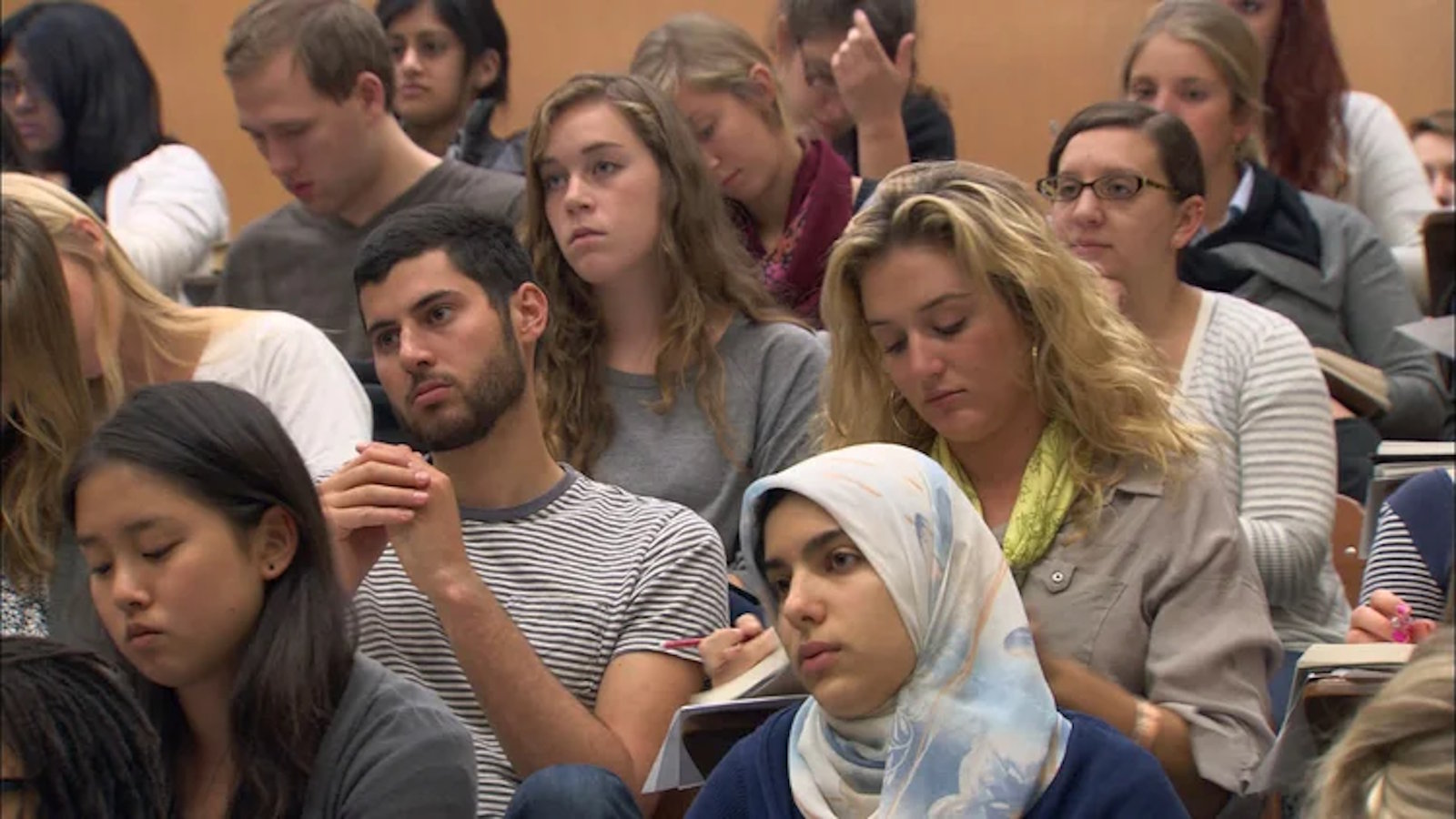
That is particularly clear in At Berkeley (2013). The class on Moby-Dick, where professor and students debate captain Ahab’s obsessions, is shown intercalated with administrative meetings on budget cuts and discussions between students who look for ways to get organised and defend their rights. Something similar happens in Juvenile Court (1973), when a girl, reprehended for refusing to wear a bra, thus violating the school’s regulations, rebels against the law that establishes a magical age – eighteen – from which point on everything is suddenly allowed. A little later, in the final sequence, we can see a young man escaping the electric chair precisely for being a few months shy of the legal age. When put together in a sequence, these scenes can be seen as parts of the same force field.
From a broader perspective, these rhyme games continue from film to film. In Hospital (1970) and Zoo (1993), for example, bodies being treated in operation rooms can be seen – either human or animal – as if the act of repairing a body were to cross different institutions. In a different direction, Welfare (1975) and Hospital seem to belong to the same helplessness universe: we see abandoned mothers, sick children, poor people trying to bargain for help and assistants who try to respond to impossible cries for help.
In that film, shot at the Metropolitan Hospital Center in New York, we see hallways where patients are sort of forgotten while waiting for medical care. The film does not tone down on what we find there: exposed organs that contract, vomit, blood, screams and a lot of sweat. But from the harshness emerge some unexpectedly burlesque moments. In one sequence a student enters the ER panicking after ingesting mescaline. While the doctor tries to understand what was ingested, the student insists that he’s going to die. ‘You’re not gonna die’, declares the doctor in an almost fatherly serenity. The student rambles about his degree, his girlfriend in Europe, exaggerating each feeling as though he’s close to the end. The scene is reminiscent of Chaplin’s tragic comedy Easy Street (1917) – until the tone abruptly changes. In the next sequence we seem someone close to death, an African-American young man with bullets all over his body. A little later another patient comes on, high on heroin, asking if there are cops around; next comes a woman being dragged by the arms, weeping for someone she has just lost.
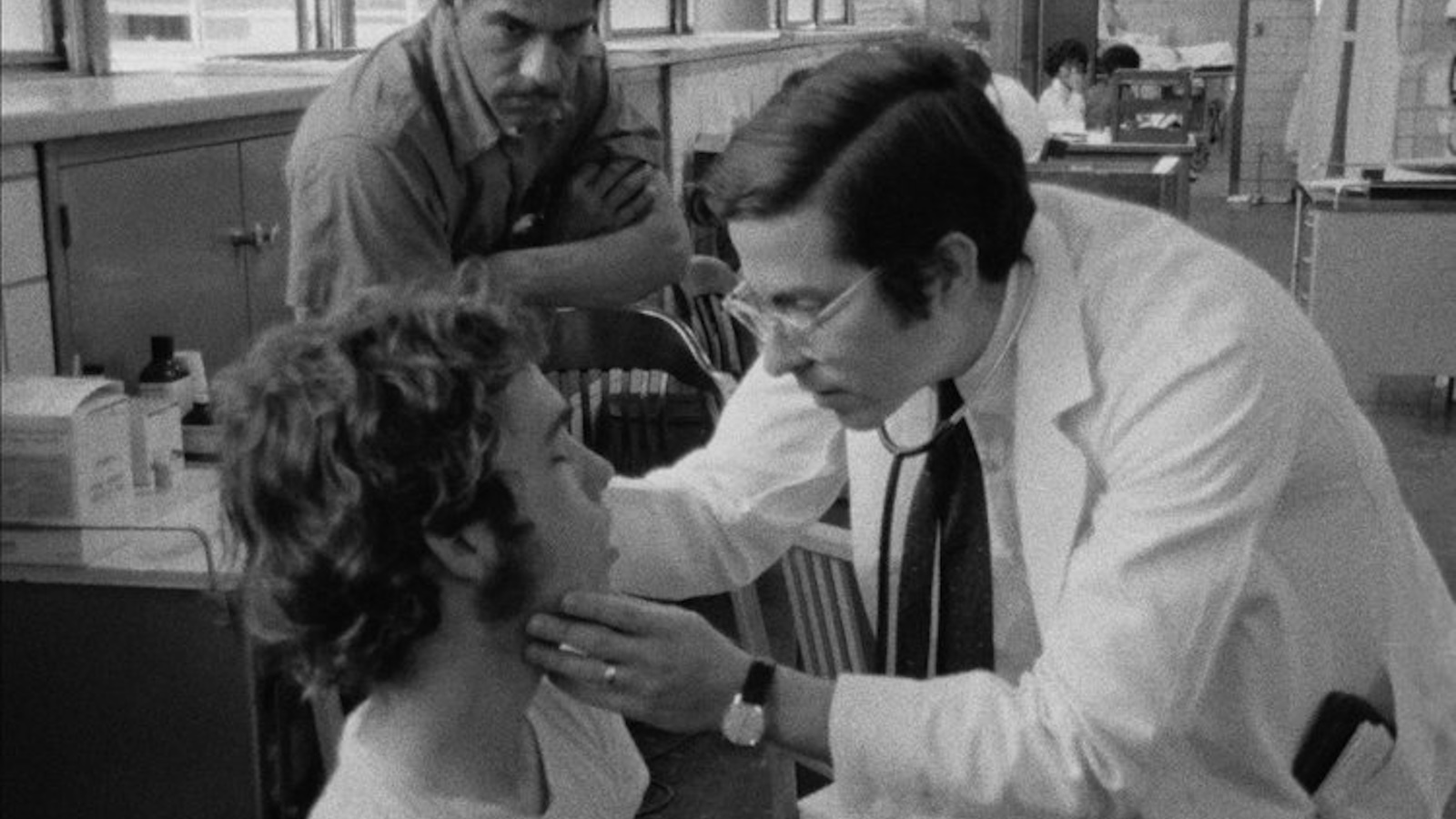
This abrupt passage between the burlesque and the tragic describes something essential. Jean Renoir had figured that out in La Marseillaise (1938), where a painful goodbye between a soldier and his mother can coexist with a small gag in which another soldier trips on himself. Something similar happens in Wiseman. It is not about technical virtuosity, but a rare sensibility to bring forth, from scraps, the pulse and breath of life. The viewers, absorbed, feel in their bones the raw depiction of misfortune – the disease, the vulnerability of the bodies or the power tensions, but also the stubborn vitality that pulses through many of those bodies. In these sequences, one can recognise moments of tension and pause, conflict and resolution, as if the the daily life of institutions quietly reflected the same dramatic structure as classical stories. Wiseman films a lot, shows a lot, but his films still retain a certain elliptical quality, as if we were expecting certain situations to be highlighted, yet that emphasis never comes. It’s as if someone had already underlined them with a pencil, and we see only the traces of the eraser that tried to wipe them out.
Little by little, a sort of catalogue of behaviours begins to take shape: a survey of personalities. These films have something of a great casting, as if each person that is seen brings a small performance, thus creating a big Human Comedy in which each presence adds a piece to the big portrait. This filmography is an investigation – an attempt to observe and analyse people: why does someone ask for a tissue or a cigarette in that specific moment? What does a man’s choice of clothes for a meeting mean? Why is that woman in military uniform? Why does someone hesitate mid sentence? What does a sudden change of tone mean? Many times we see people who, just like us, say and do things in a very deliberate way, without knowing exactly why. The life of a manager in an important meeting, a patient who asks for help, or an exhausted nurse at the end of his shift is made of automatisms that we often overlook, even though they describe us. The human experience is thus strangely contradictory: even an observer might feel sorry for someone who causes suffering or shows contempt toward those who are suffering. In this sense, these films show a certain sense of alienation from the world. As we get familiarised with these places and their inhabitants, everything seems to become a little strange, as if what we thought we knew revealed itself in a different light. Perhaps this is because all these stories are rarely complete. We have access only to fleeting moments, as in Dante’s descent, where we encounter figures defined by an action or a phrase that fixes them in that moment. In Wiseman’s films, something similar happens: people are frozen in the film as individuals who did or said certain things in a specific place, captured in a gesture or a decision that comes to define them before our eyes.
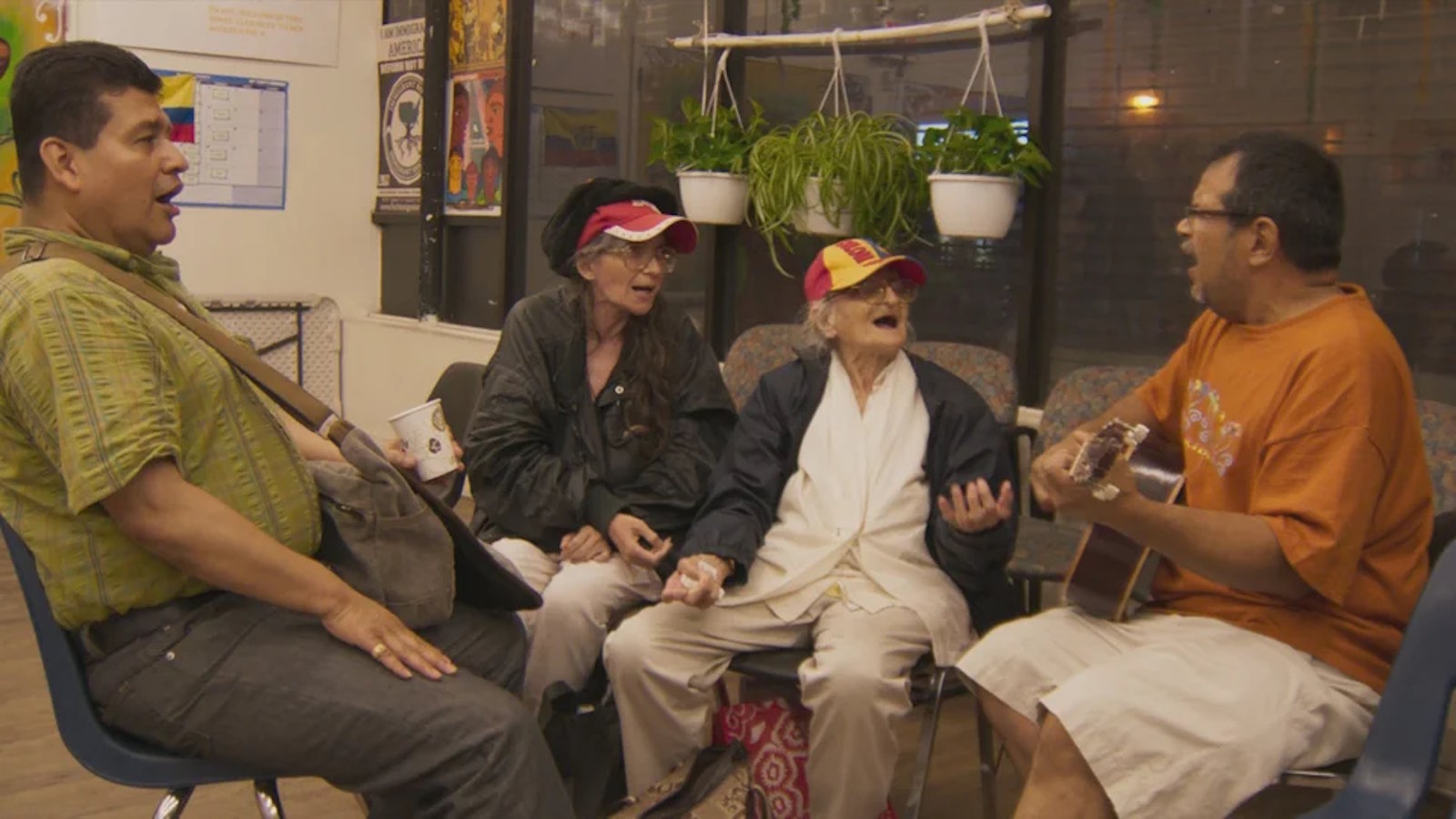
Watching a film by Wiseman takes time. Many of them last more than three hours, but this extension is not a whim. Certain movements can only be made visible if we give them space to develop. The spectator is invited to share this time: they don’t receive a ready-made thesis, but rather a series of moments that require a willingness to observe and reflect. In a moment where image circulation is faster and faster, Wiseman’s cinema insists in a different way of looking. The film serves as a device for drawing attention, reminding us that sustained observation is, in and of itself, a form of thought. The cycle presented in the Gulbenkian – the third moment of Power and Glory, dedicated to ‘Institutions’ – allows us to see precisely that: from Hospital (1970) to State Legislature (2007), from La Danse (2009) to At Berkeley (2013), from In Jackson Heights (2015) to Ex Libris (2017). In each of these films, the same principle can be recognise: to remain in a place for some time, until it starts revealing, little by little, what is normally external to our field of vision – and which, by revealing itself, ultimately concerns us as well.
[1] This apparent neutrality has never stopped Wiseman’s films to provoke strong reactions. His first film, Titicut Follies (1967), shot at a psychiatrist institution for inmates, was banned from circulation for years – an early sign that observing certain places up close could shed light on what was meant to be kept hidden.
You may also like





No results were found for your criteria.