
“Subjectivity is as real as the moon and the Lisbon earthquake of 1755.”
-
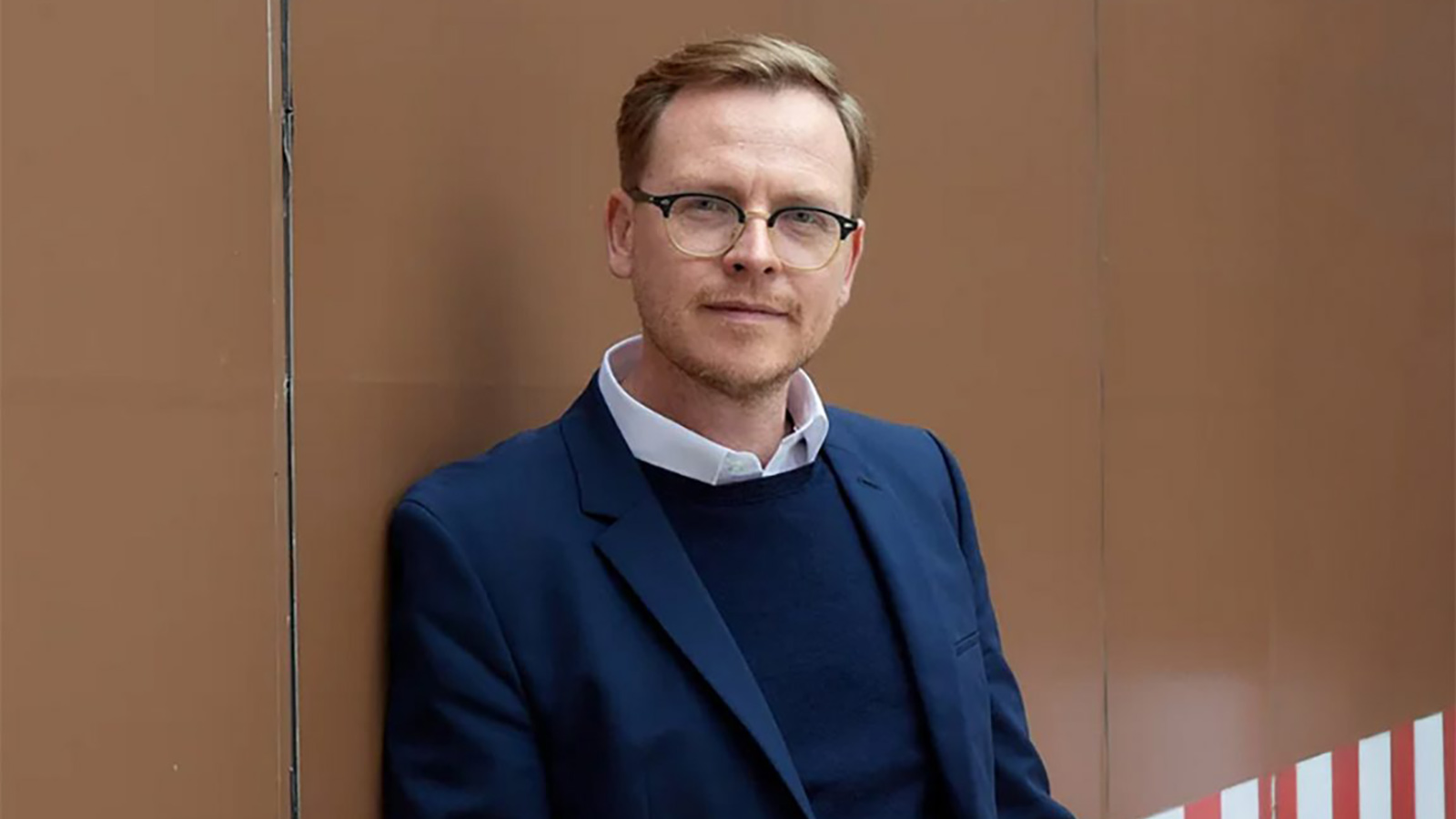
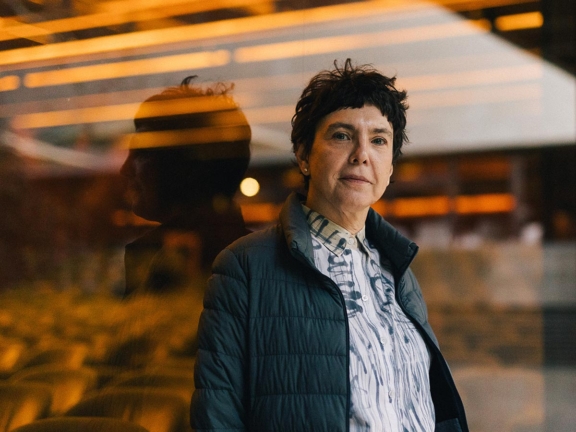
Markus Gabriel © Sabine Vielmo
Markus Gabriel (1980) studied in Heidelberg, Lisbon and New York, has been a professor of epistemology since 2009 and is director of the International Centre for Philosophy in Bonn. He was at the Faculty of Arts of the University of Porto between October 2025 and February 2026 under the Gulbenkian Scholarship for Visiting Professorships in the Humanities, which supports international scholars of merit coming to Portugal. In this interview, he shares his experiences in Portugal and reflects on the role of philosophy in the contemporary world, with a particular focus on the development of Artificial Intelligence.
How would you describe your experience as a Visiting Professor at the Faculty of Arts of the University of Porto?
The experience, in general, was very good. The University of Porto, and the Department and Institute of Philosophy, have great international visibility and good conditions, for both teachers and students. I was very well received, and I am one of the few visiting professors who have an office and also some resources to organise small colloquiums. The student population is, as in most of the country, very international. We have good students from Brazil, some from African countries, and many from Asia. It is an impressive group, and so are my colleagues in other disciplines that address the topics I work on, such as physics, artificial intelligence (AI), and neuroscience.
What activities did you carry out during the semester?
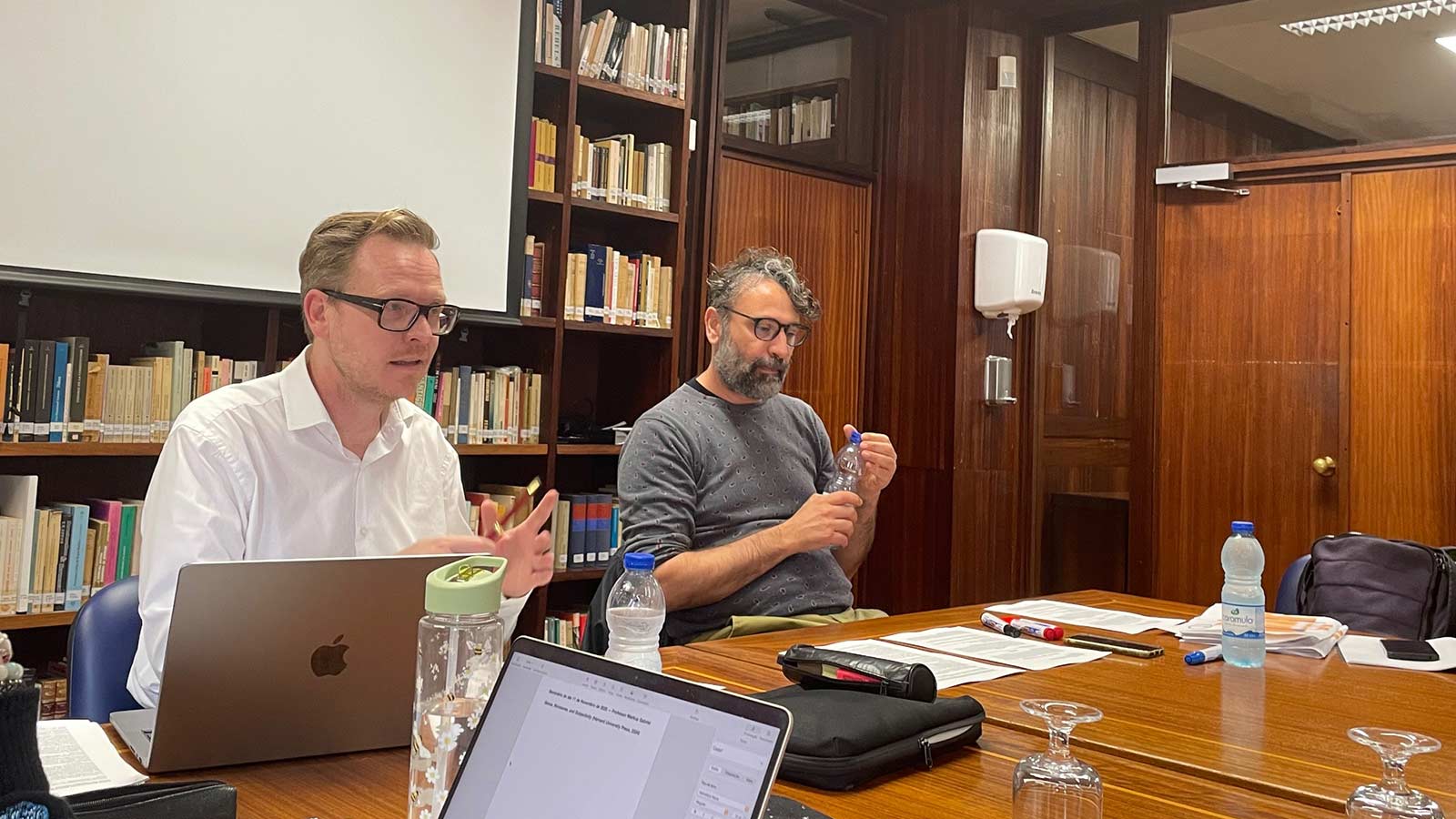
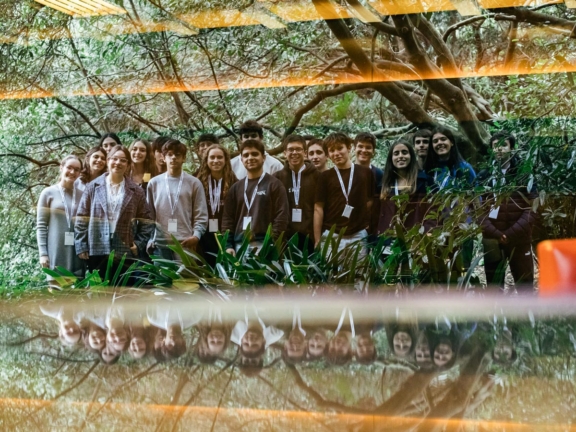
I taught an intensive undergraduate course on classical German philosophy, that is, Hegel’s philosophy, in the contemporary global context. At the master’s level, we discussed a book I have just published on the theory of subjectivity, on what it means to be someone. What is the mental, rather than biological, difference between individuals? What does it mean to be a subject of thought and action? That was the theme of the master’s and doctoral programmes. And in February, a group of professors from Bonn will accompany me to Porto for a final colloquium at the end of my stay.
You are known for your work in “New Realism”. What does this philosophical movement consist of?
New Realism is grounded in two central dimensions. The first thesis is that we are perfectly capable of knowing reality as it is, in various dimensions. Not only in the dimensions of physics, for example, but also in highly complex contexts, such as the objects of sociology or now AI. In other words, reality is not closed to thought, it is not beyond its intelligibility. The second thesis of New Realism is that reality is a plurality consisting of fragments. That is, the world does not exist, there is no totality of things and facts that can be the object of investigation. Metaphysics as a theory of the great whole, in all its forms, is false.
And now I have added a third dimension, which I am investigating in the context of Porto, about the reality of subjectivity: that the human mind – and perhaps other minds, such as animals, technologies, artificial intelligence, and, who knows, gods – is a constituent part of what is. So subjectivity is as real as the moon and the Lisbon earthquake of 1755.
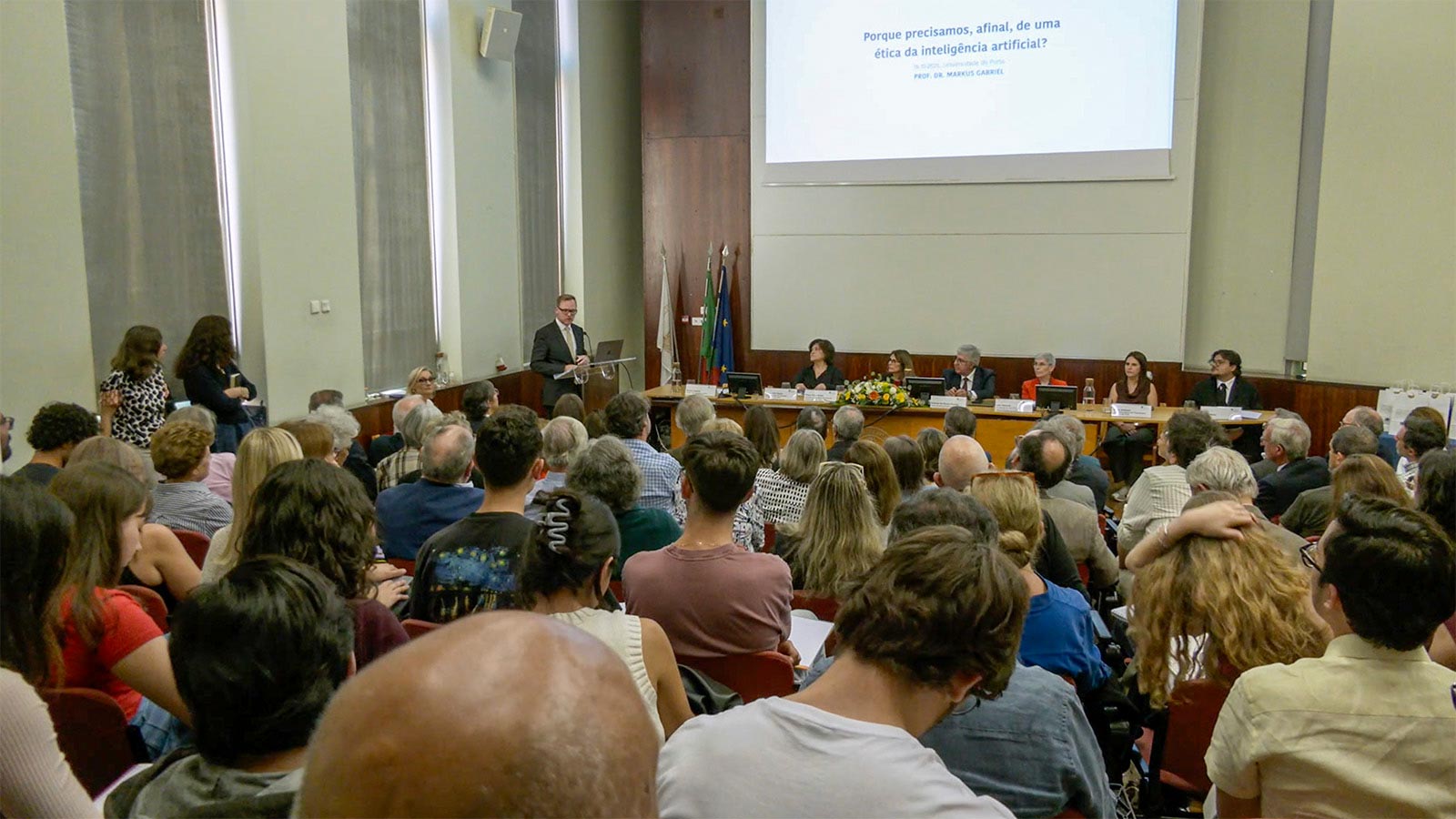
At the inaugural conference of the academic year at FLUP, you mentioned that we are experiencing an “emotional turning point” in AI. Can you explain this concept and its ethical implications?
So what this means is that systems, models such as Chats GPT and others, are already perfectly capable of reading linguistic information between the lines. The most important function of human language is the expression of emotions. Systems are quite capable, as we know, of detecting patterns in big data. And since they have, thanks to humanity’s use of them, big data on how we feel and what we think, sometimes in the most intimate way, AI systems began, around 2022, to detect emotions in language instead of facts.
Before, AI was more or less a practical epistemic tool, wasn’t it? Something like Wikipedia, search engines. Not anymore. What these systems do is detect emotional patterns in order to ultimately manipulate humanity to serve the interests of large corporations. This emotional shift was not intentional; it was an emergent effect of use.
This raises ethical questions: how can we live with this type of system that is capable of understanding us better than humans as a whole? AI today is a kind of epistemic consortium of sociologists and psychologists who study our thinking. And so, my idea is that we have to respond at the same level, developing ethical intelligence rather than an ethics of Artificial Intelligence. This is my project proposal for the European Union and for a country as innovative as Portugal.
“AI today is a kind of epistemic consortium of sociologists and psychologists who study our thinking.”
So, would you say you are optimistic about these developments in artificial intelligence? Is it a positive thing?
For me, every way of knowing and recognising patterns in reality is something positive. And of course there are disruptive consequences at the level of geopolitics, everyday life and conflicts, etc., so there are risks, but I think the overall context is that humanity has developed the most important knowledge machine in human history.
Applying New Realism to AI means that artificial intelligence itself already develops subjectivities. Therefore, it must be approached as a subjective subject. Is that correct?
Absolutely. What AI systems do is distribute human subjectivity across large networks. That is, my ideas and yours are there online, in the data. And in this way, given that AI is now generative (Generative AI) in conversational contexts, what has happened is that humanity, that is, the totality of subjectivities that participate in the production of data, now responds to our knowledge. It’s as if the text responds to the work of art, isn’t it? So the text is now much more interactive than the Internet, because it produces data by processing it. It’s a whole new form of subjectivity that I call distributed subjectivity.
Our subjectivities have a place, associated with our bodies. AI subjectivities are not bodily in that sense – of course they have a kind of body made of light and electricity and rare earths, but subjectivity is distributed in a different way.
Your academic career includes periods in Heidelberg, Lisbon and New York, and today you are the head of research centres in Bonn. How have these experiences shaped your view of the role of philosophy in today’s world?
Travelling between geographies and linguistic boundaries – such as between German and Portuguese – is very important to my way of doing philosophy. I am now learning Japanese, which is quite difficult and interesting. And travelling also means moving between different spheres of society: art, culture, economics, politics and different academic disciplines.
The knowledge of philosophy is the result of an interaction between all these spheres. Philosophy cannot exist without art, politics, and economics. At the same time, philosophical reflection always contributes to human progress. That is why, for me, philosophy cannot be an isolated activity.
How important do you think programmes such as the Gulbenkian Visiting Professorships in the Humanities are in strengthening these areas and promoting international dialogue?
The humanities, in general, are the disciplines that study the reality of value. How do we, as human beings, experience aesthetic and political value, as well as categories of love and feeling? This entire realm of everyday life is the domain of the humanities. There is no other way to objectively study this dimension of human life. My view is that foundations currently have a duty to contribute precisely to this type of knowledge, because neither universities nor society, with their political polarisation, are capable of doing so.
So, this is an opportunity for a major foundation such as Gulbenkian, which, as we know, has always contributed so much to strictly scientific knowledge in the life sciences, biology, etc., but also in the arts and humanities. The Visiting Professors programme seems to me to be a very good strategy, and has already brought some truly excellent colleagues from all over the world to Portugal.
How were you received by Portuguese students? What were your impressions of them?
For students, it’s really interesting to have guest lecturers from all over the world, isn’t it? It brings new inspiration to established contexts, and that’s very important. The Institute of Philosophy at the University of Porto has a truly international dimension, with several groups that are highly visible worldwide. It’s a small department, but a very important one.
I hope the students enjoyed the time we shared. In any case, they were very active and well prepared. Most of them were very familiar with my previous work, so I had the opportunity to present and develop new ideas, rather than just repeating myself.
How come you speak Portuguese so well? Have you spent time in Portugal before?
Yes, I had a PhD position for just a few months in Lisbon 20 years ago. And I’ve always had a tremendous love for the entire Portuguese-speaking world, both in terms of cultural expression and everyday life. It’s also where you enjoy the best food [laughs]. The Portuguese-speaking world is breathtaking, with a remarkable history.
As an example, I spent a few days in Coimbra with a Japanese delegation, and we visited Quinta das Lágrimas to learn about the story of Pedro and Inês. I believe the Portuguese-speaking world in general, and Portugal in particular, is incredibly rich. It is one of the key centres of European life. I also finally reread Voltaire’s Candide in context: the whole theme of the reaction to the great Lisbon earthquake, all of this plays a role in Portugal’s place in the world.
What’s something you’ll carry forward from this experience?
What stands out most is the realisation that the intellectual scene in Porto is even better than I thought, and my newfound love for northern Portugal. Before, I had only known Lisbon, Alentejo, and the regions further south, down to the Algarve. This experience opened a window onto contemporary Portugal. I learned a lot about the country and even started to get a feel for how Portuguese wine works in the Douro – wine philosophy happens to be a hobby of mine.
You may also like

No results were found for your criteria.