
Gulbenkian scolarship holders set off on a U-shaped journey into the future
-
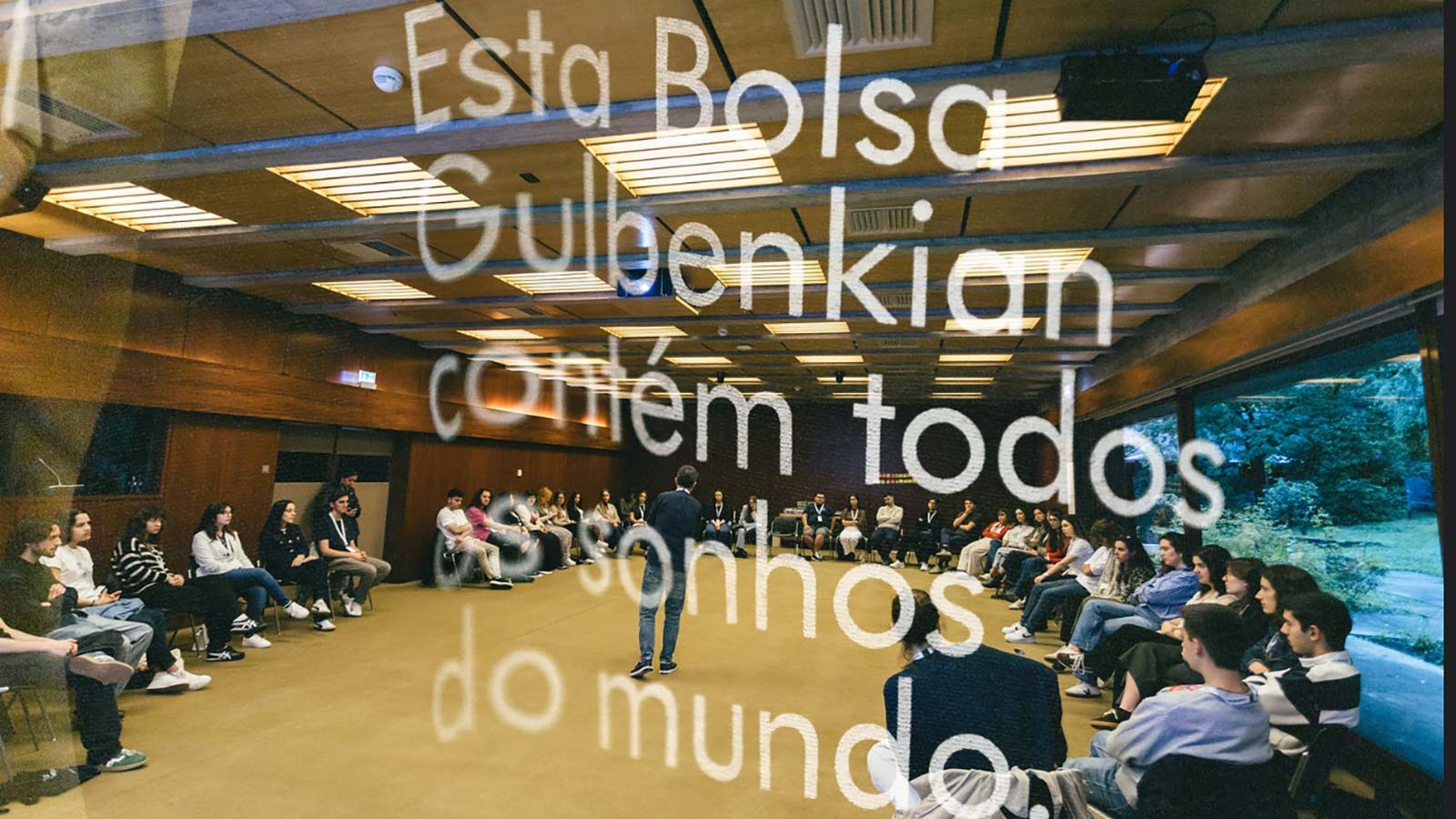
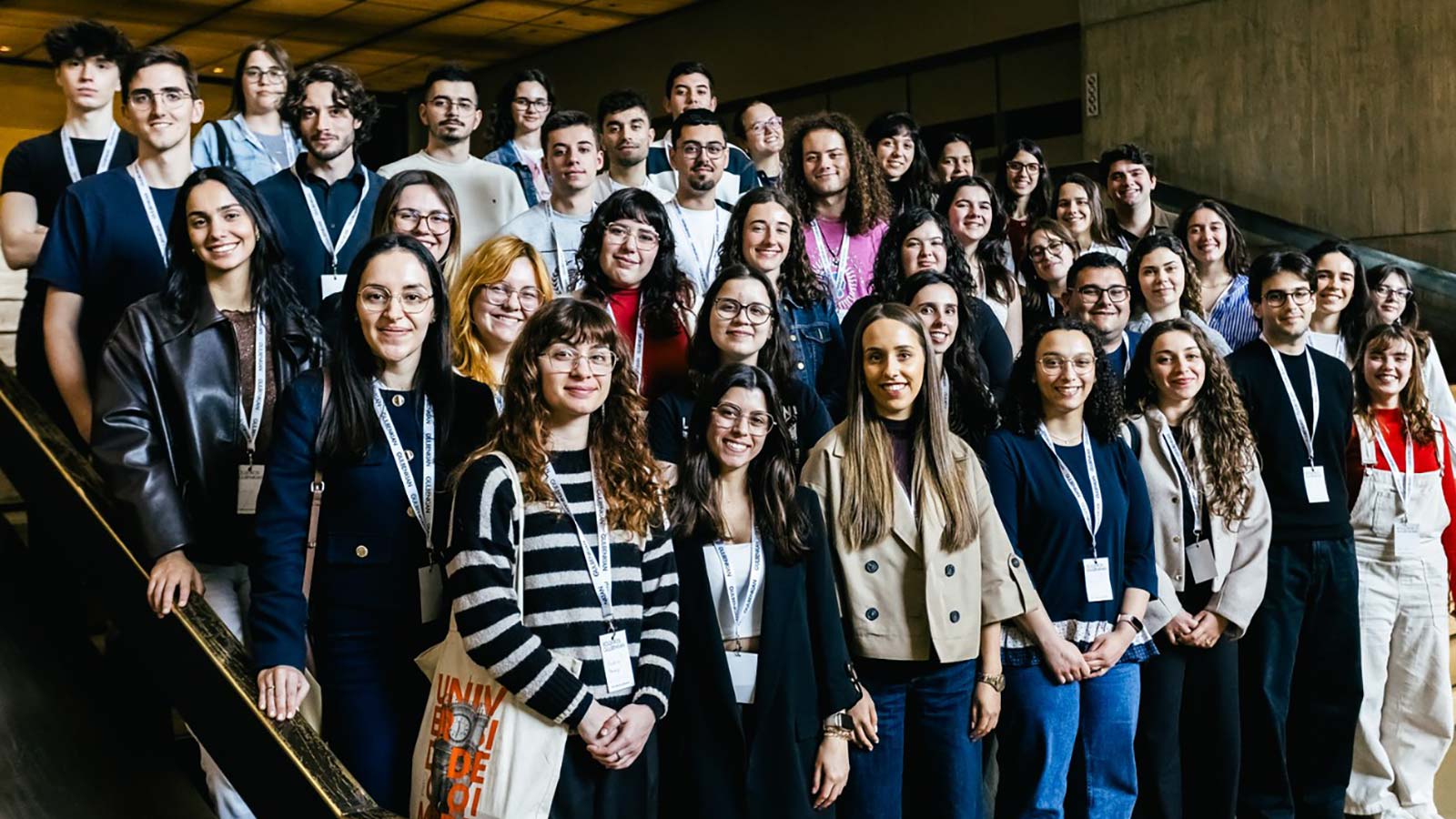
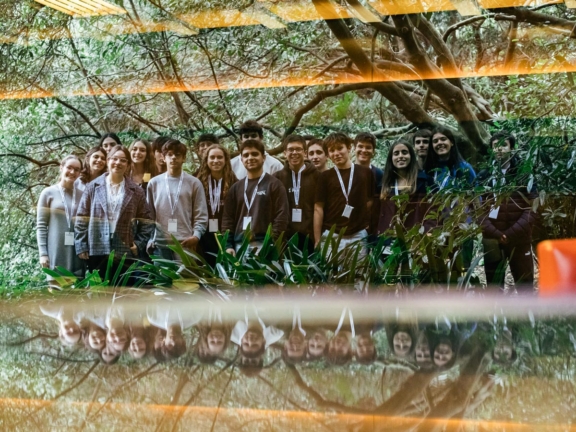
The training course "Rumo a uma Liderança Integral" [‘Towards Holistic Leadership’] brought together 40 Gulbenkian New Talents scholarship holders © Francisco Gomes
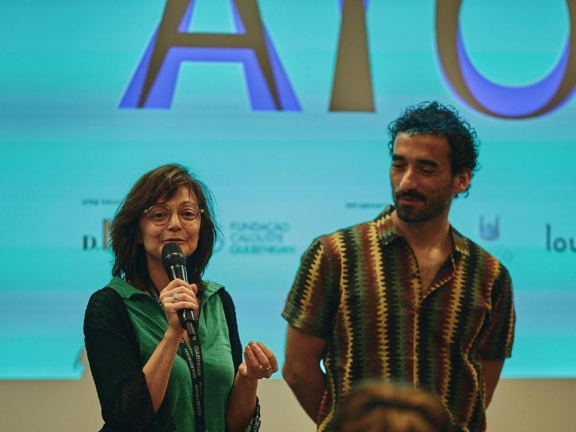
They come from various regions and universities across the country. Their fields of study may differ, but they share a common goal: to learn how to lead. While their paths are just beginning, these 40 Gulbenkian Merit and New Talents scholarship holders share a history that includes both accomplishments and moments of insecurity and anxiety. They are here because they want to “step out of their bubble” and look towards the future, towards the moment when society will call on them to take action. Seated in a U-shaped arrangement, the audience has Vasco and Susana as their guides on this journey.
Her studies are going “okay”, but Beatriz, 22, gives voice to a concern shared by this diverse group of young people. “We didn’t really get to fully experience childhood – growing up with so much information in the digital age, a certain innocence has faded, and it worries me that we have to face an uncertain, declining future. (…) I’m very rational, so I came here to explore, in search of what I can’t find on my own – in myself or others.”
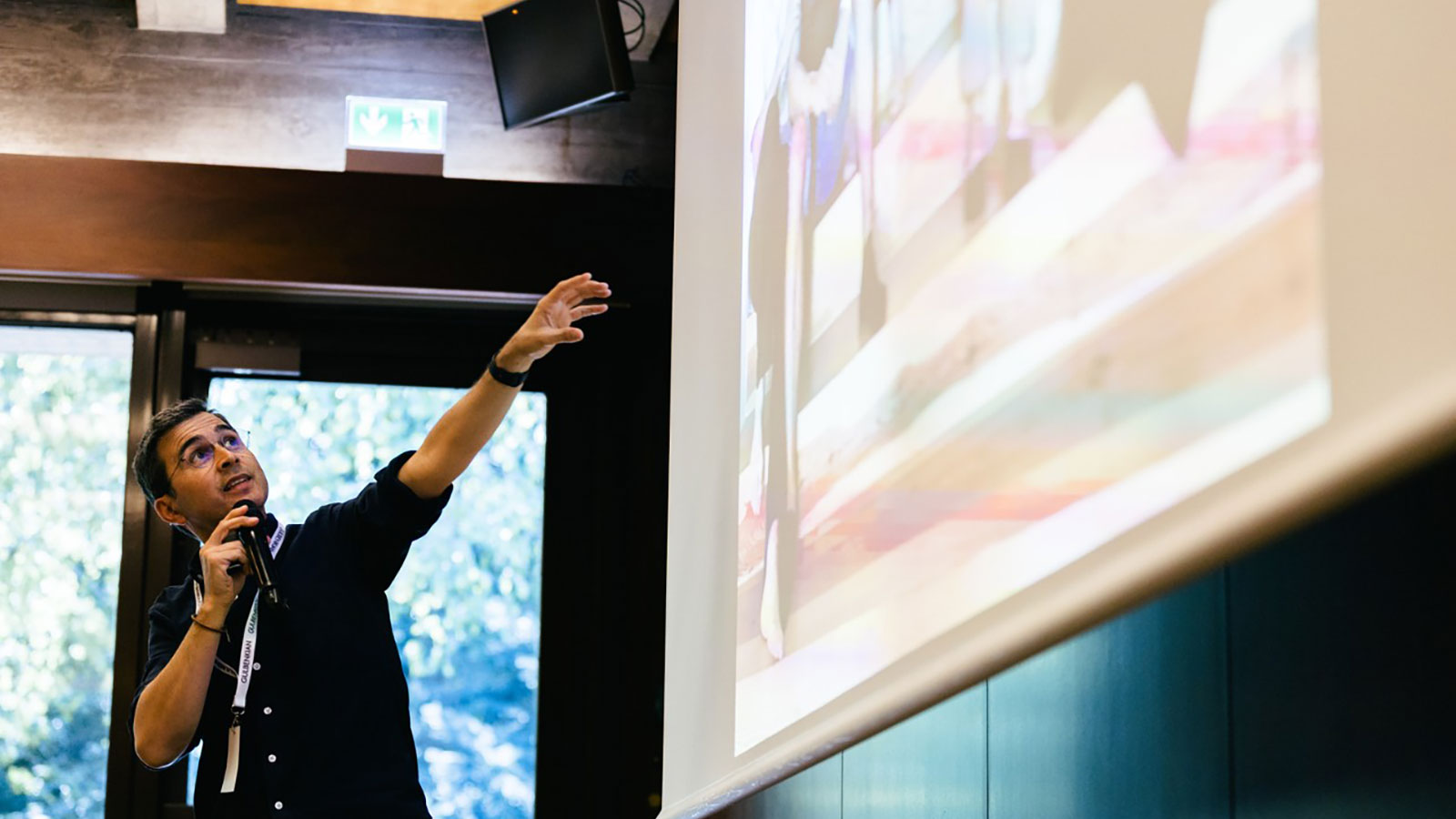
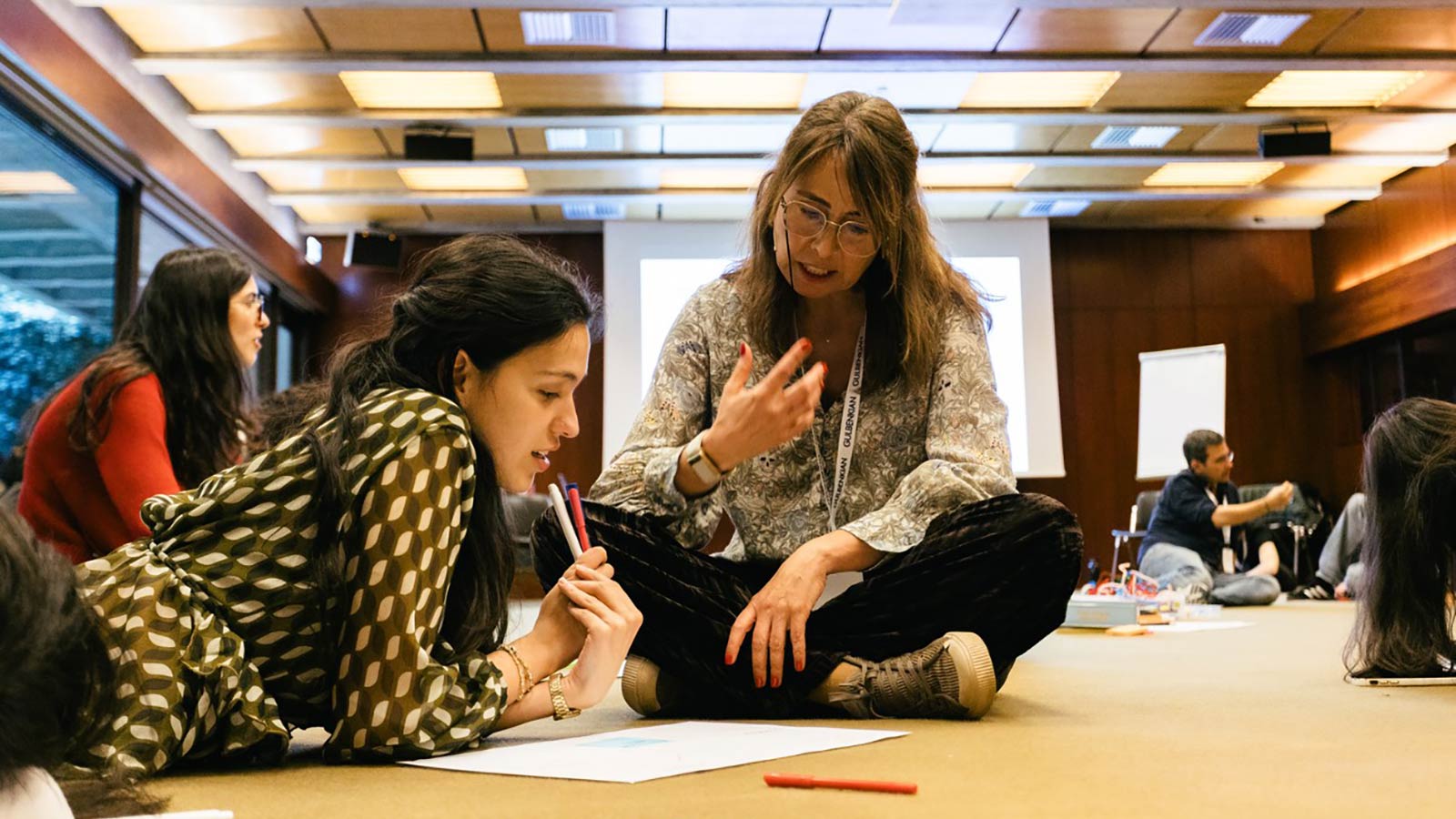
“Towards Integral Leadership” is the name of this initiative, and its motto is “sowing the seeds of networked leadership”. “Everything we produce and create is connected to who we are,” but it is important not to forget that “we are not alone in the world”. The quote comes from trainers Vasco Gaspar and Susana Carvalho, facilitators with the Presencing Institute, who, on this two-day journey, will provide these young people with useful tools to “help them manage the epidemic of anxiety that is paralysing them, gain more control over their lives and develop a vision for the future”.
The focus should be on the inner self – on who we are, why we do what we do, on the humanistic values promoted by the Gulbenkian Foundation, on contributing to a better society, and on creating conditions that allow these young people to connect with the values that already lie within them.
— Vasco
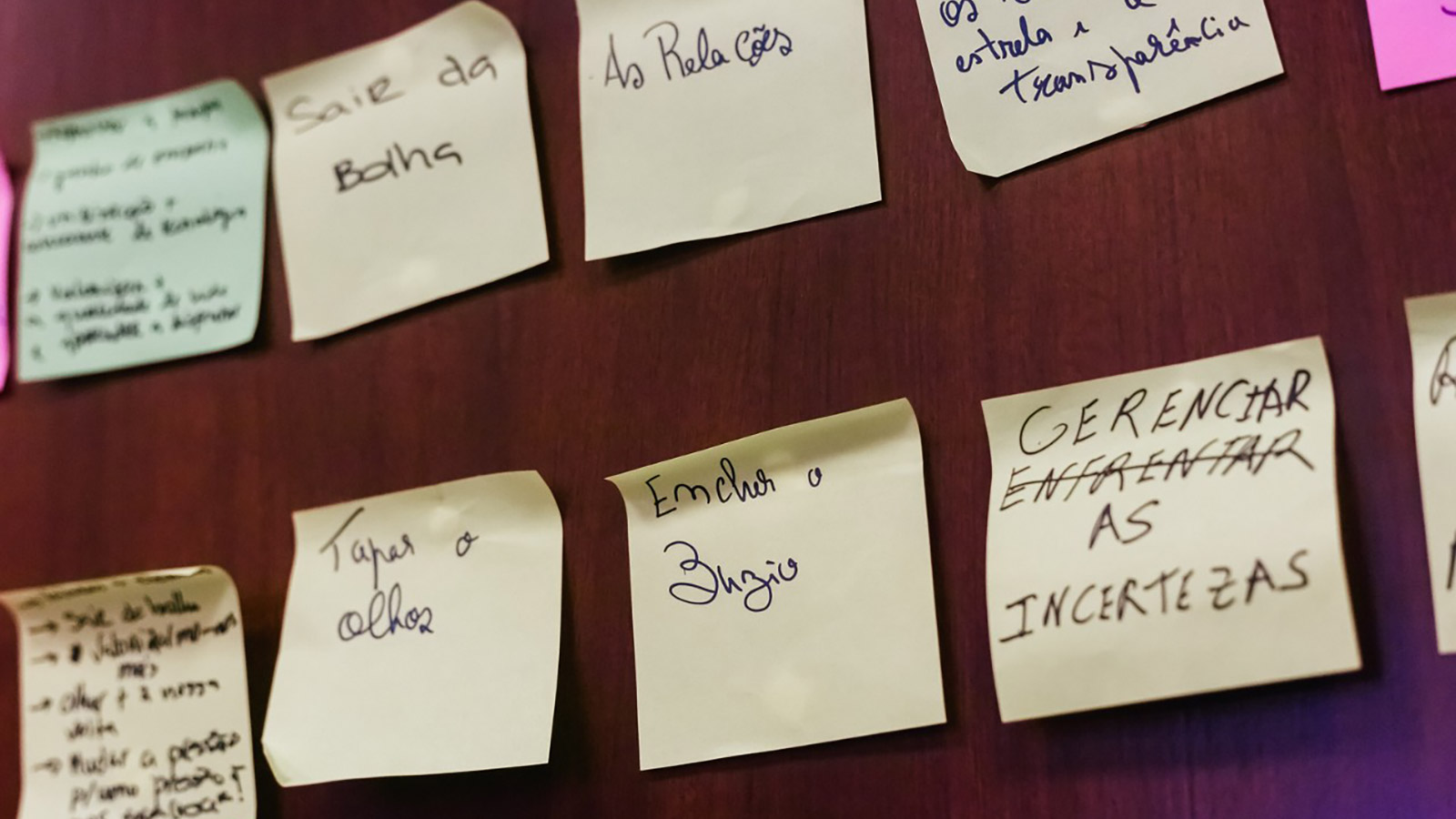
In order to come together as a group, they are invited to walk around the room and look at one another. This leads to plenty of shy, hesitant smiles and just as many unexpected collisions. It helps to “break the ice” and, who knows, perhaps make a new friend. Next comes another challenge: a short conversation in pairs, at the end of which each person writes a personal characteristic of their partner on a label and sticks it on their partner’s back. This was the activity that Mara, 23, enjoyed the most. It helped break down the initial shyness and showed that “writing something about someone” is simpler than it might seem.
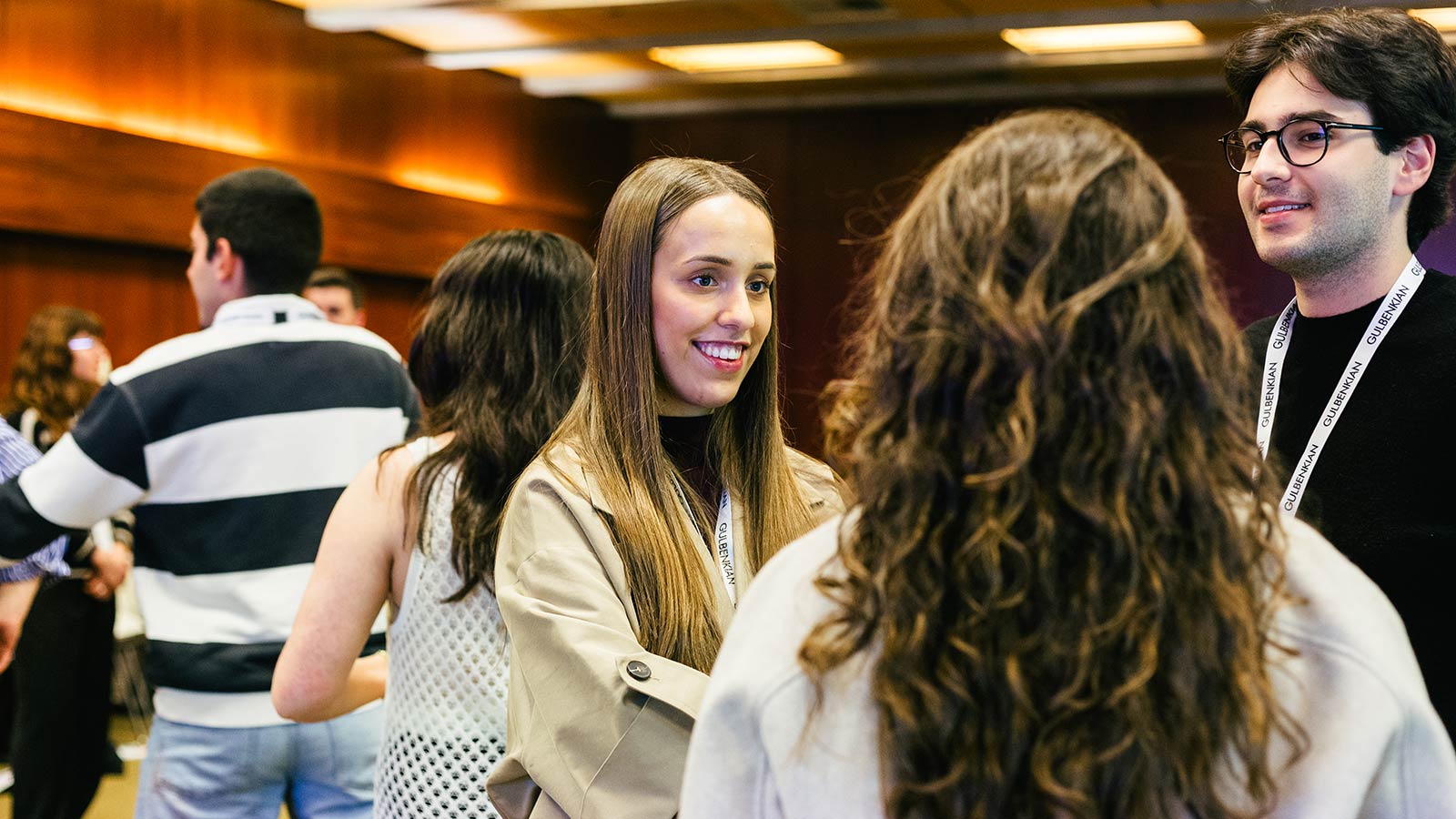
With the group now in sync, this becomes “the world that matters.” The starting point of this journey is a video featuring a powerful message from a young Argentine woman. Her name is Violeta Lacroze, and in an emotional testimony – taken from a conference in Stockholm – she explains how, in the midst of the Covid-19 pandemic, she managed to distance herself from the “anaesthesia caused by digital noise” and the pressure of algorithms, reconnect with real people, and how this helped her find herself and give meaning to her life.
No one was indifferent to the story. And that was the goal: to show them that they are not alone, that many other young people share the same concerns.
A journey without preconceptions
Once the group is more relaxed and engaged, the anchor is dropped: Theory U. Along their journey, and “without preconceptions”, they will make three stops that represent the past, present and future. Vasco explains how, in their own time, each of these will prove important. The idea is that once they form a “community united by a sense of belonging”, they will set out together in search of answers to the challenges of the present and, together, chart future paths towards a “more empathetic and sustainable” society.
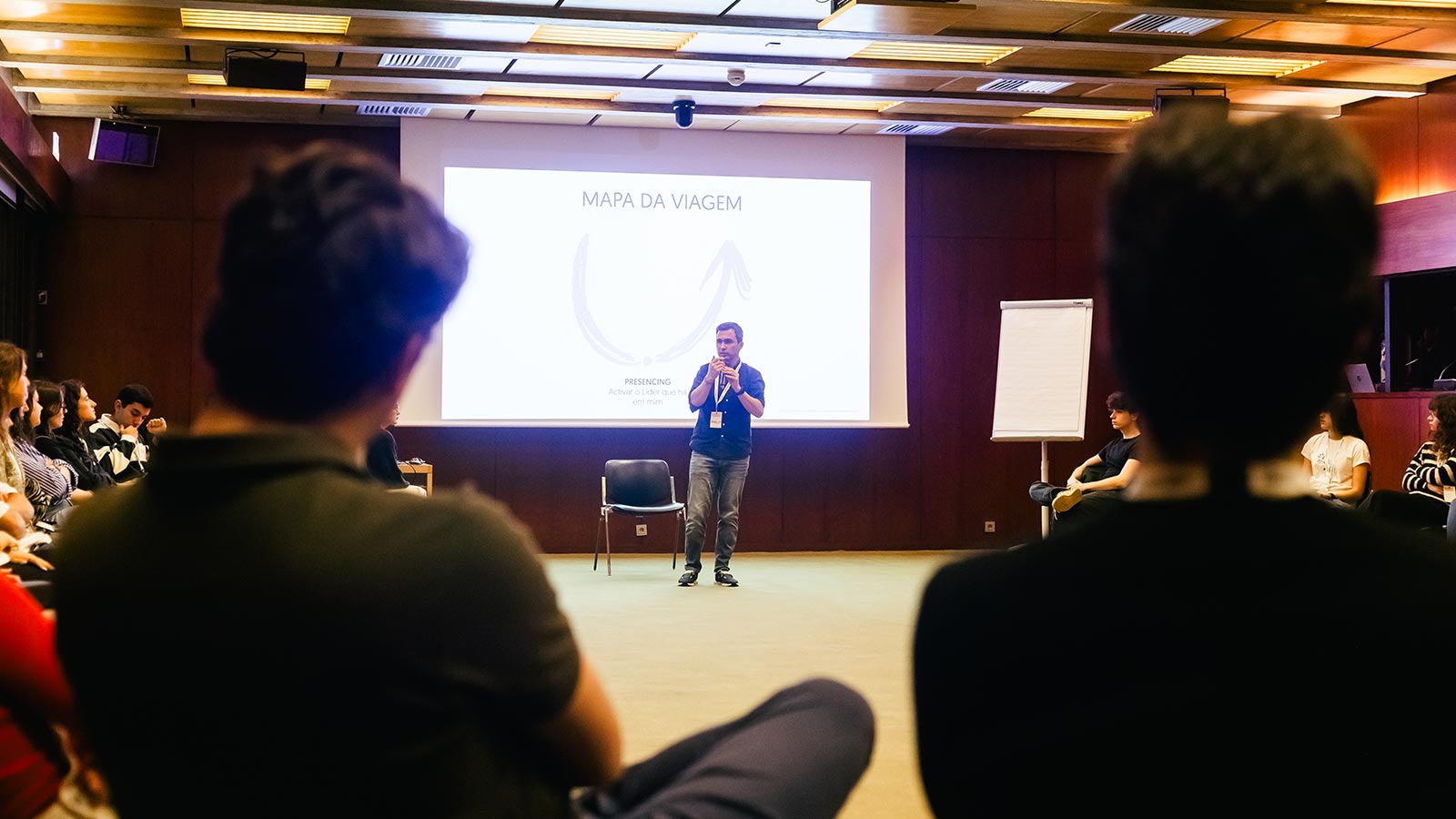
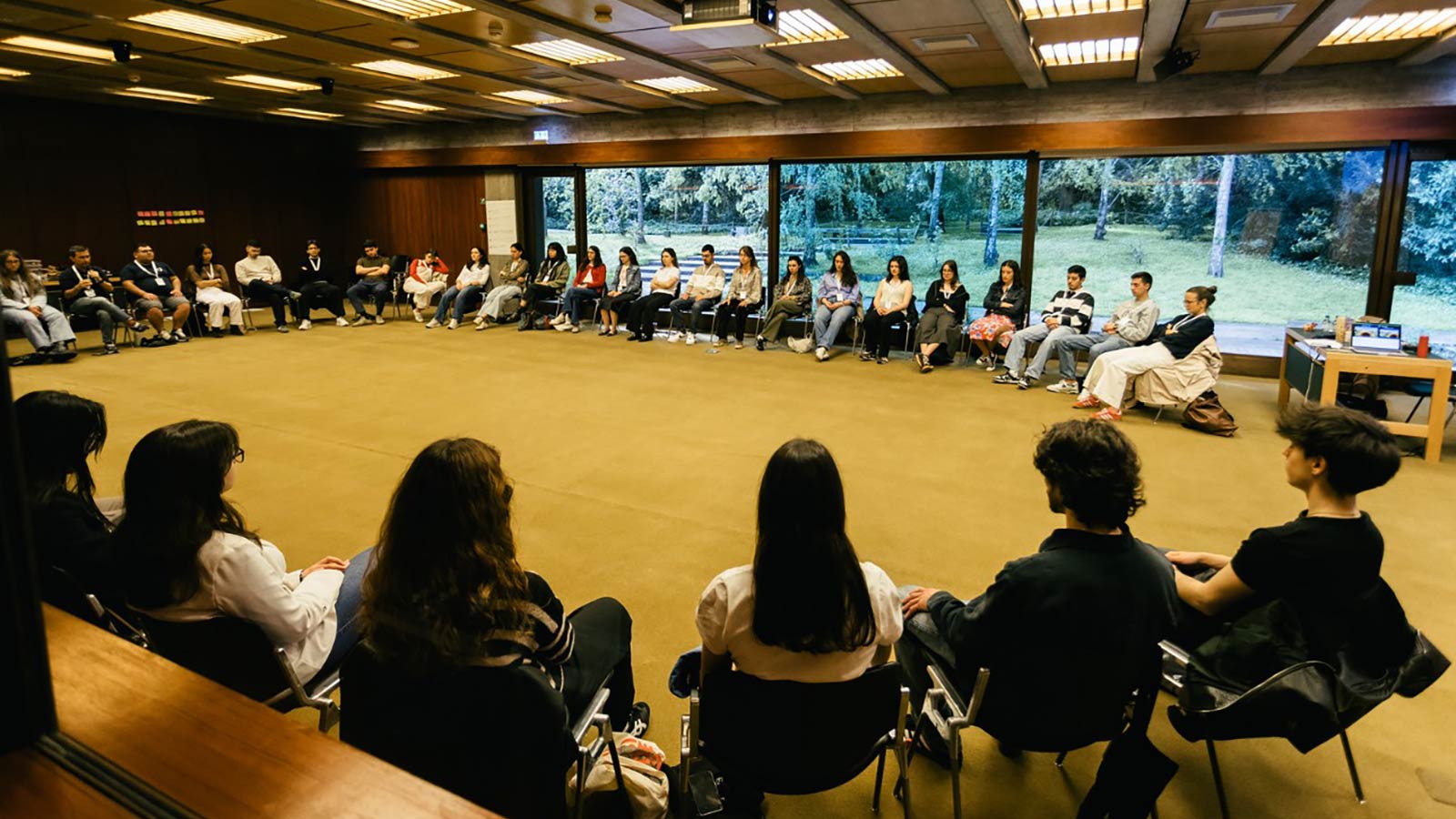
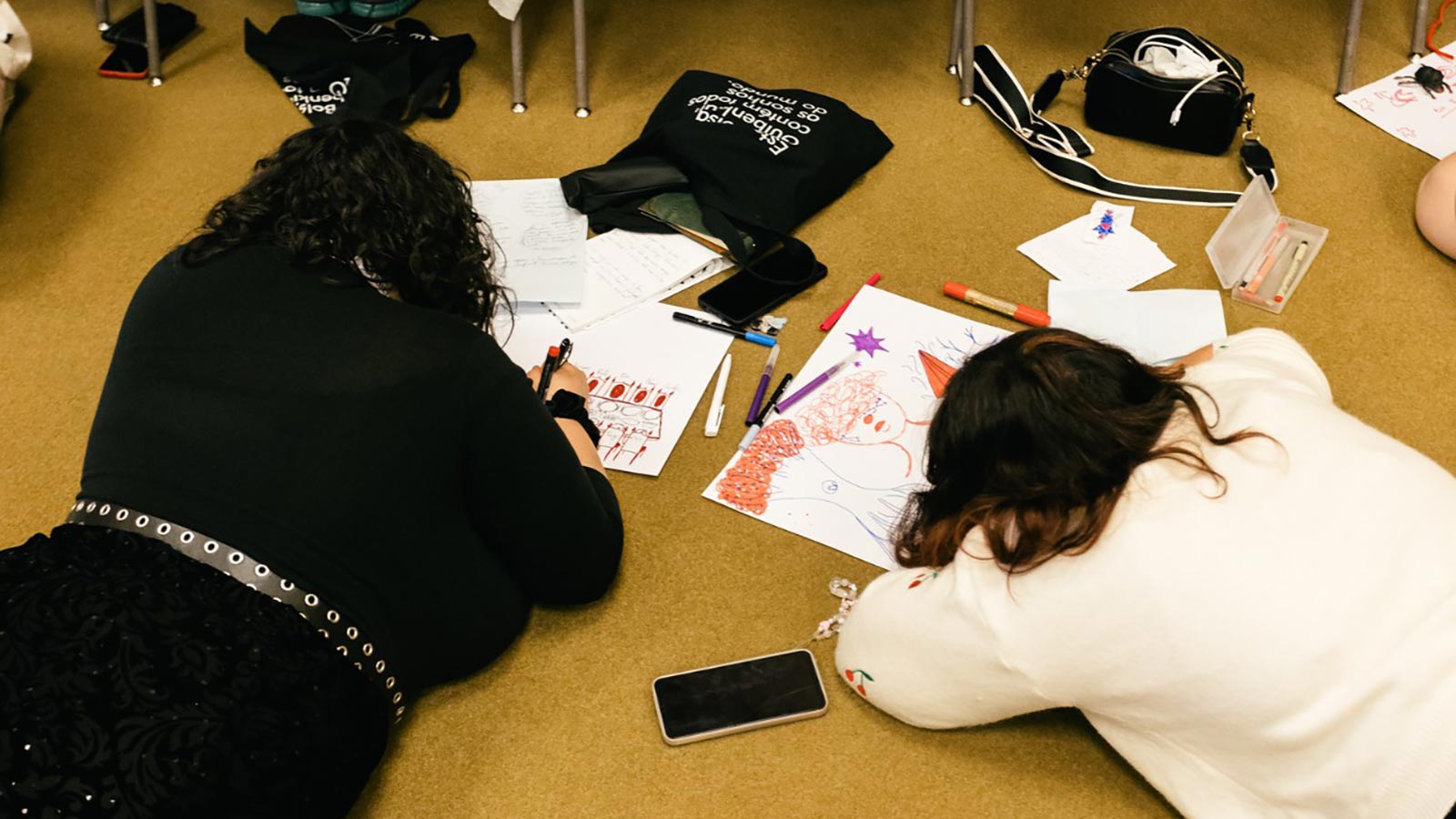
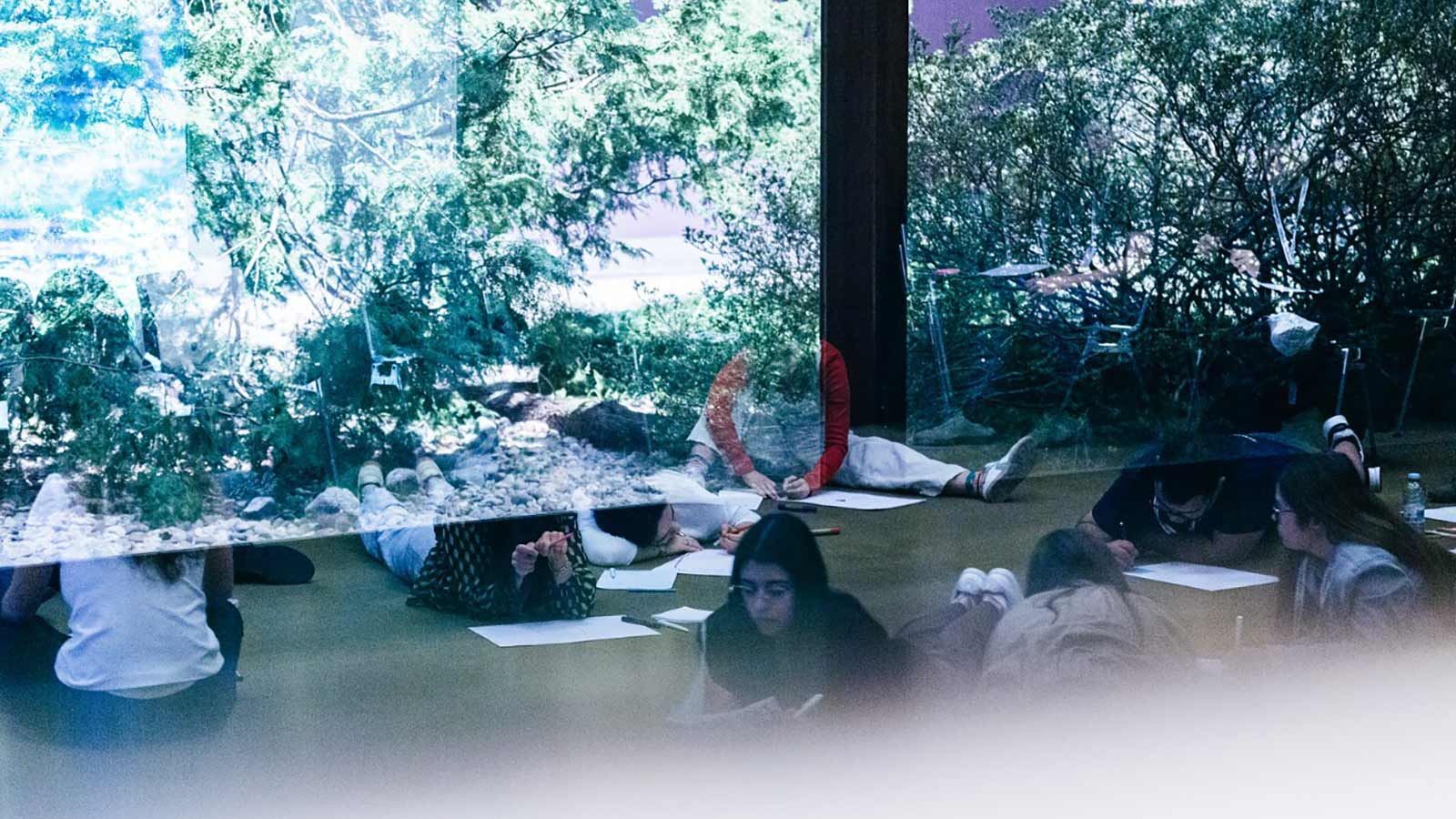
The space is a room with a privileged view of the Gulbenkian garden. The chairs are arranged in a U-shape so that everyone can see one another. Here, everyone can “let go of their worries” and the stress of the outside world and focus on the “self, without judgement”. People can take their shoes off, sit on chairs or on the floor. What matters is that everyone is comfortable. Vasco asks participants to work in groups of three and take turns listening to one another as part of a mindfulness exercise.
To be a true leader, you need to know how to listen, view things from others’ perspectives, and immerse yourself in their world. (…) We are not alone in the world.
— Susana
Eyes closed or not, as they listen to Icelandic composer Ólafur Arnalds (whose music will be heard again over the coming days), the scholarship holders are invited to mentally bring into the room people who are important in their lives. The song “Lag Fyrir Ömmu” – a tribute to the musician’s grandmother – carries a heavy and sad meaning for some. These less pleasant emotions were precisely what Vasco and Susana wanted to tap into. It is important that they learn to “use them wisely”. How? By drawing on the “powerful reserves of resilience”, the key to unlocking each person’s most important abilities. This is what they do on a walk through the Gulbenkian gardens with a companion of their choice. They remain strangers to one another, yet they are already able to share moments that inspire them to overcome challenges.
In such an impersonal world, we don’t really delve into people’s stories, but when we get to know them, we realise we have a lot in common. I’m grateful to the Gulbenkian Foundation for this opportunity to help us meet people who enrich our lives.
— Mariana
At lunchtime, some have already reserved a seat next to their journey companions, whilst others still sit wherever they please, but are more open to a quick chat. The canteen, on the third floor of the Gulbenkian, has become increasingly noisy with every meal, and at the table, of their own accord, no one ever uses their mobile phones.
After settling our stomachs, we talk to our bodies. The phrase sounds a bit odd, but Vasco and Susana explain what they mean and reassure anyone who “doesn’t feel up for it”. The idea is to “respect each other’s space” and “communicate through gestures,” but – and this is the unusual part – while “looking at the floor,” with eyes fixed on the yellow carpet in the room. “All emotions are welcome” and “there are no wrong approaches”.
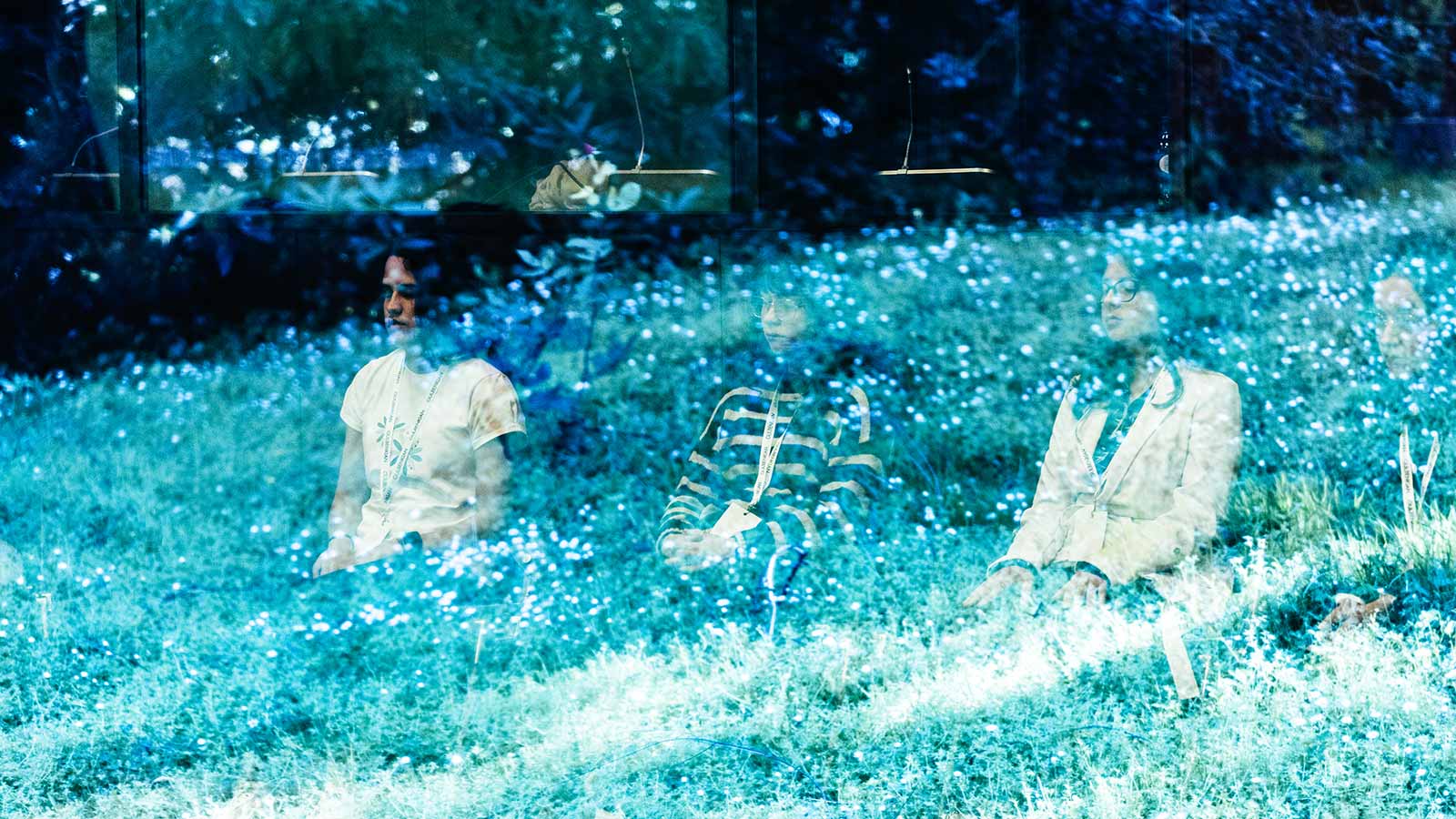
Once their minds and bodies are relaxed – perhaps for the first time on this journey – the group will split up and “enter a new world”. There are only two paths: that of dialogue (a World Café) or that of the social body (referred to by the curious term “Stuck”). Most of the scholarship holders opt for the first and stay with Susana. Twelve young people accept Vasco’s challenge and leave this room for “the laboratory where internal and external forces” will set them free. In another room, with no windows to the outside, they will learn to use their bodies as a sculpture that conveys emotions. Divided into three groups, all members must compose the sculpture. If at the beginning of the activity distance prevailed, by the end, touch had become natural.
A generation that feels “trapped” and “lost”
The day is drawing to a close, but first a map reveals how much there is still to discover about the dreams and ambitions of this generation. “It’s a tool that helps you see how you view what’s happening in your life,” says Vasco. He gives a few examples. They seem strange, but in the end, it will all make sense.
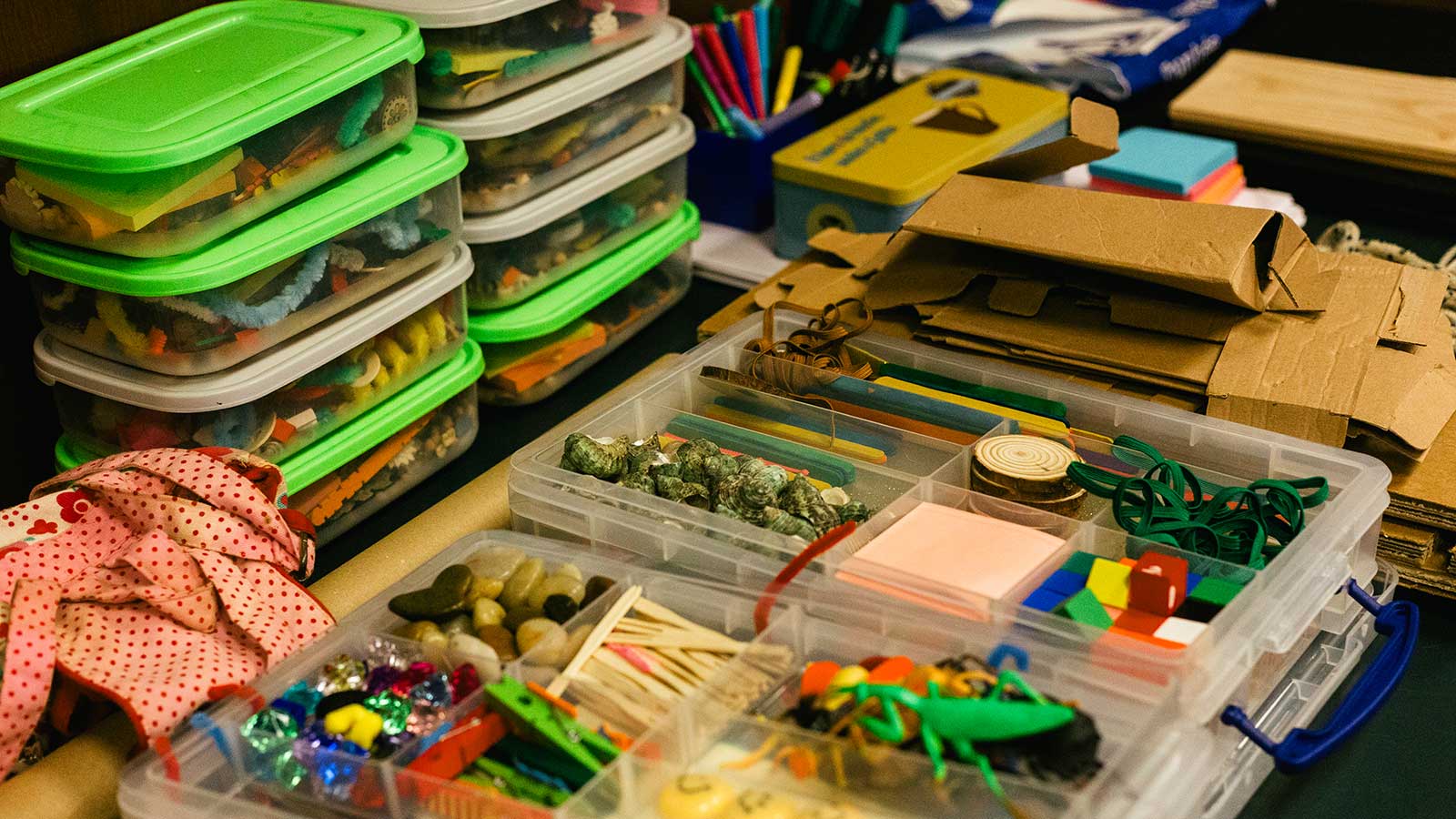
The idea is for them to place whatever objects they choose on a black A4 sheet of card with a circle drawn in the middle, representing “today’s world”. Each object represents something or a particular moment. The first and most important object to be placed – “anywhere, inside or outside the circle” – represents the generation. Then, each member of the group adds other objects, depicting “the forces, tensions, obstacles and relationships” that make up the world of every single one of them.
It is interesting to note how the same generation is represented by such different objects: a red ribbon representing “a feeling of being trapped”; a bean that symbolises a “seed for the future”, a kind of diamond that “represents our worth”, a “lost” star, intentionally placed in the centre of the circle, and a piece of card with gold glitter, the only object left outside the circle because “we haven’t really entered the world yet”.
I wish people would show us a bit more kindness, because it’s our first time experiencing life and we’re doing so in a world that can be difficult to keep up with, even for those who’ve been here longer, so imagine how it is for us.
— Mara
The next challenge is to rebuild it with the future in mind, focusing on ways to “leverage potential”, and identifying ways to change or improve things. Some elements are removed and others are introduced to shape a better future: through “social awareness” and “trust”, “technology as a force for good”, or a “change of perspective among our elders”.
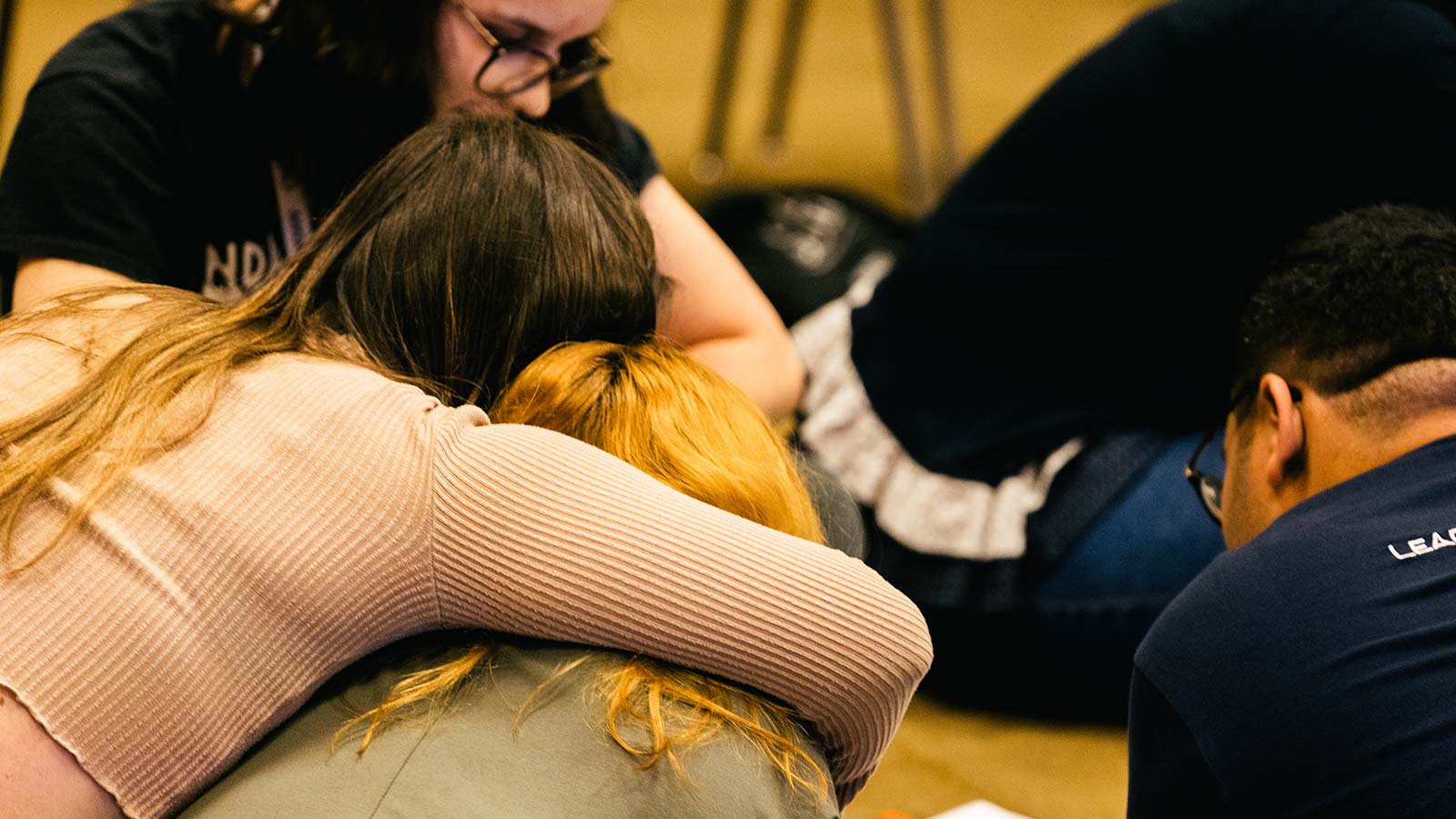
The group doesn’t seem quite the same. There’s a lot more cohesion and connection. Newcomers are welcomed in, and there are no empty seats left to keep the scholarship students apart. The weather outside is sunnier, though the wind is still strong. And here, inside the room, “how are we doing”? Vasco would like to start there, by talking about how we’re feeling, and then “calmly get back to work”.
To ensure the microphone does not act as an inhibiting factor, Susana decides to swap it for a small “talking stick”. She wants them to share their “deepest intentions”, to “listen to their hearts”, adds Vasco, because “a true leader is someone who follows their heart”. If at the beginning of this Gulbenkian initiative, the young scholarship holders said they were seeking “knowledge”, new “learning experiences” and a way to manage their “insecurities”, now, in the final stretch of this journey, they speak of “gratitude”, “confidence”, “new connections” and “not being afraid to fail”. We are officially halfway through our U journey, and now “the leader is able to sense something emerging” – and we are ready to proceed.
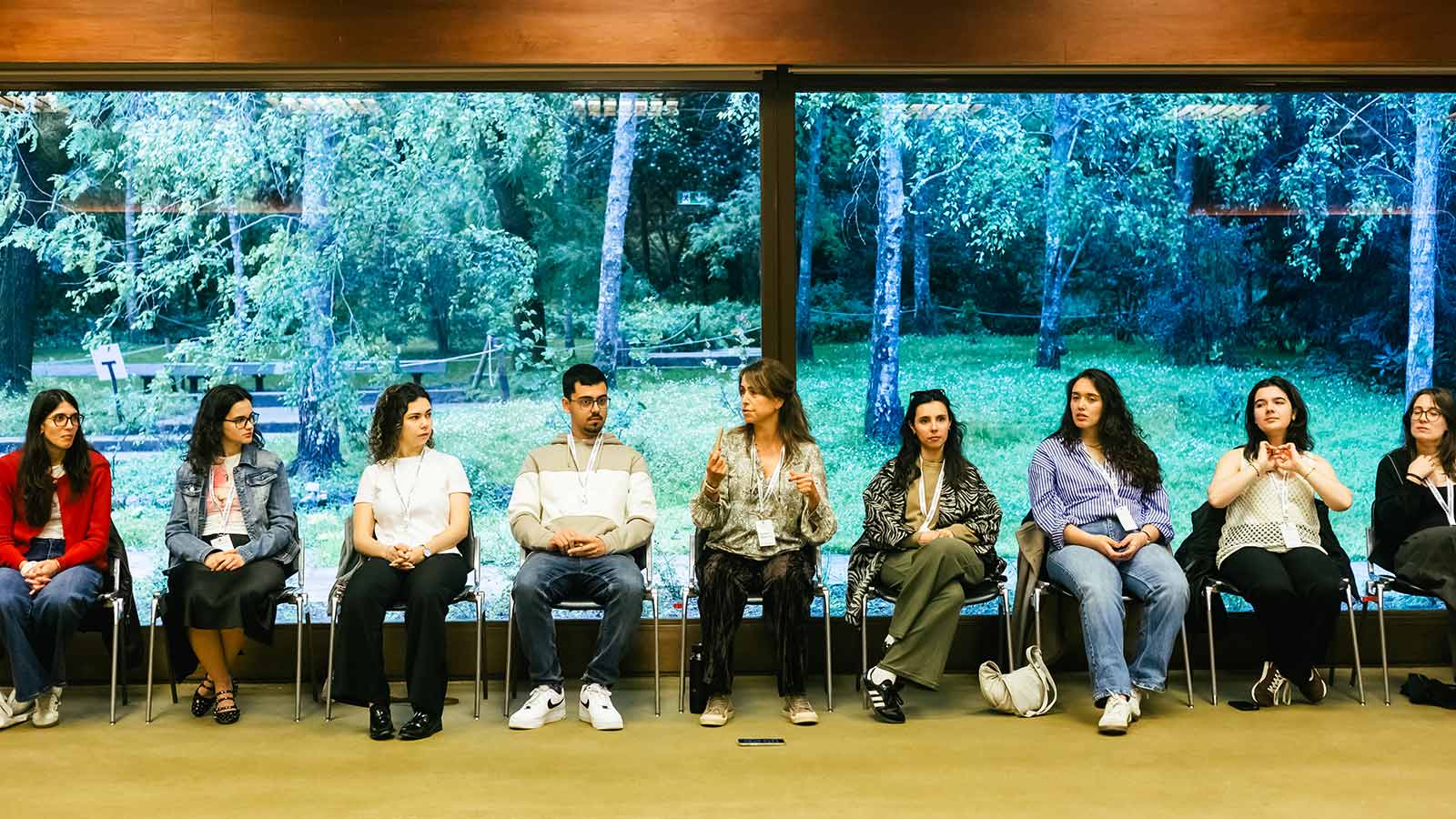
Using their bodies, whether sitting or standing, wherever and however they like, the challenge is to travel into the future and, through their “Present Self”, offer “advice to their Future Self”. Sharing once again takes centre stage, and the language used reflects their achievements: “trying things out”, “there are people who believe in me”, “uncertainties provide opportunities for growth”, “obstacles are doors that open”, “there are more possibilities than my eyes can see” and “many futures.”
A video with a thought-provoking title – “Build a life, not a CV” – brings the journey to a close. It shares the stories of brilliant people, such as these 40 Gulbenkian scholarship holders, who at some point heard the word ‘no’ but were inspired by that ‘no’ to follow their convictions and “take a chance”. This is precisely the message that Susana and Vasco wanted to convey to this generation, to “make it resilient and capable of changing the game”. After all, the future is already here!
You may also like
No results were found for your criteria.