
“I had no idea that fake news could be so fake!”
“They don’t listen to us!” complained the 11th grade students attending philosophy class at Almeida Garret Secondary School in Vila Nova de Gaia last year, referring generically to political decision-makers. The teacher, Maria Carlos, seized the opportunity and in one of the following classes split the class into two groups: on one side, half of the students would pretend to be a group of politicians ready to listen; on the other, voters ready to ask questions, make suggestions or simply point fingers. Between them, space for a broad debate on all kinds of topics.
Pretty soon, the situation turned around. The students quickly realised that they didn’t have that many questions to ask, perhaps because they weren’t keeping up with current events. They also realised that there weren’t enough arguments on either side to have a serious debate on hot topics, such as immigration. Mariana and Leonor did not like hearing certain things from some of their classmates, nor did they appreciate the fact that there was no “evidence to support such opinions”. On this occasion, they decided to do more than just shrug their shoulders and move on.
Coincidentally, Mariana had been informed by a cousin who works at the European Parliament about a competition that could be of interest to her. She was referring to Pinóquio na Escola [Pinocchio at School], promoted by Polígrafo, with the support of the Gulbenkian Foundation. The initiative challenged secondary school students to create original content to combat disinformation. It had the support of the Directorate-General for Education, the European Commission Representation in Portugal, the European Parliament Office in Portugal, the National Agency Erasmus+ Youth/Sport and the European Solidarity Corps, and the prize was a trip to Brussels. Mariana and Leonor did not hesitate. They spoke to their philosophy teacher and, even with national exams on the horizon, decided to take up the fight against disinformation.
Was it worth the effort?
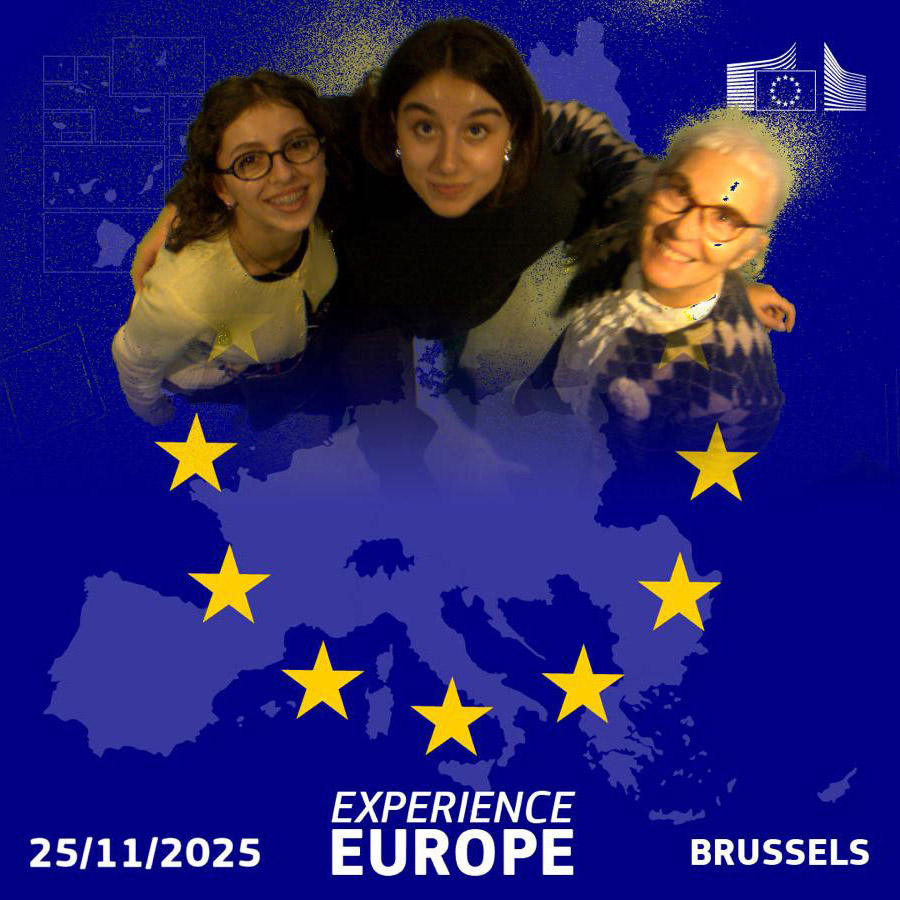
Mariana and Leonor’s work, Immigration: problem or opportunity?, was one of seven selected from among 47 participants. The prize came at just the right time. Mariana had never been to Brussels, and the city was an option for continuing their studies in university.
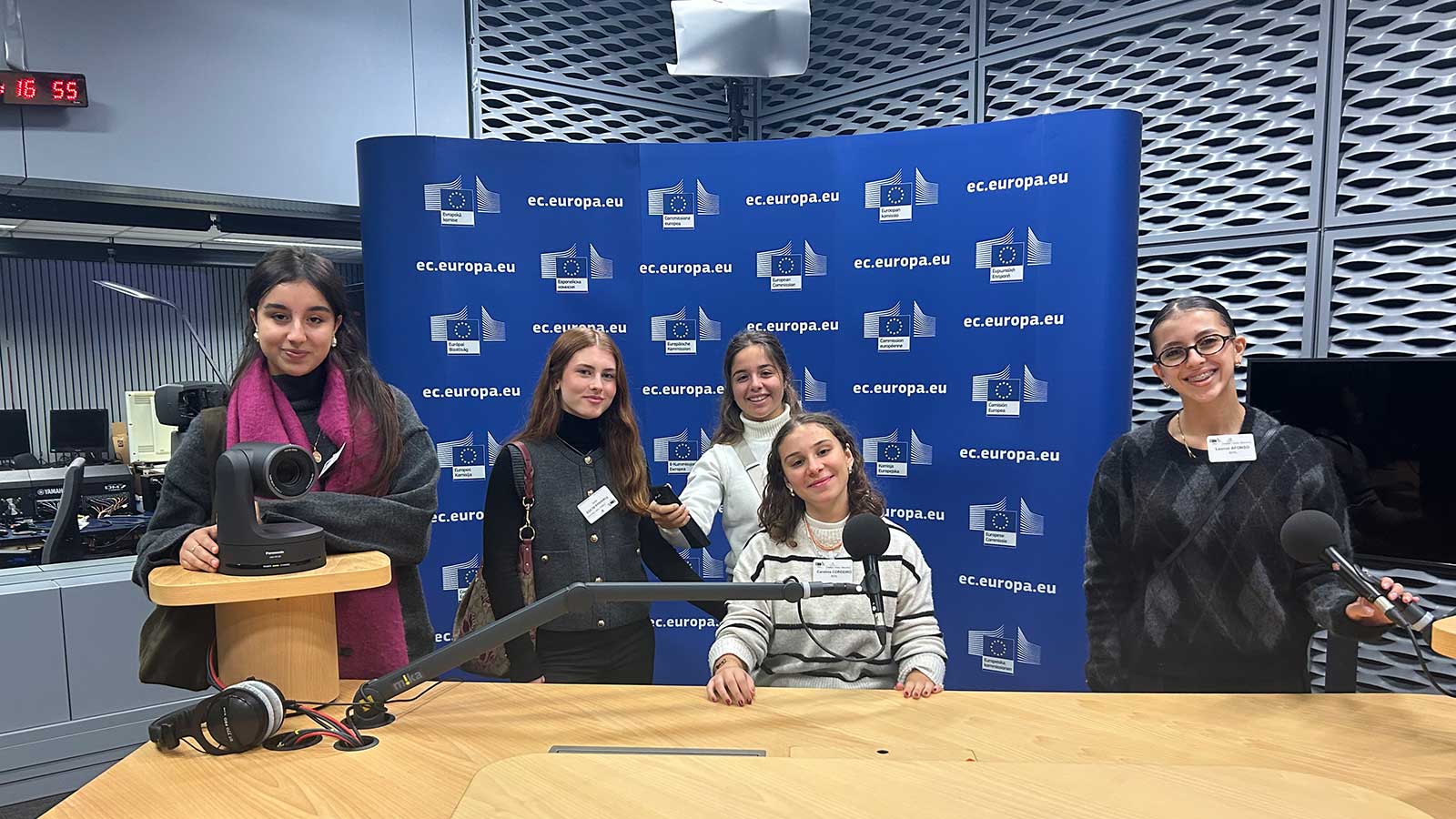
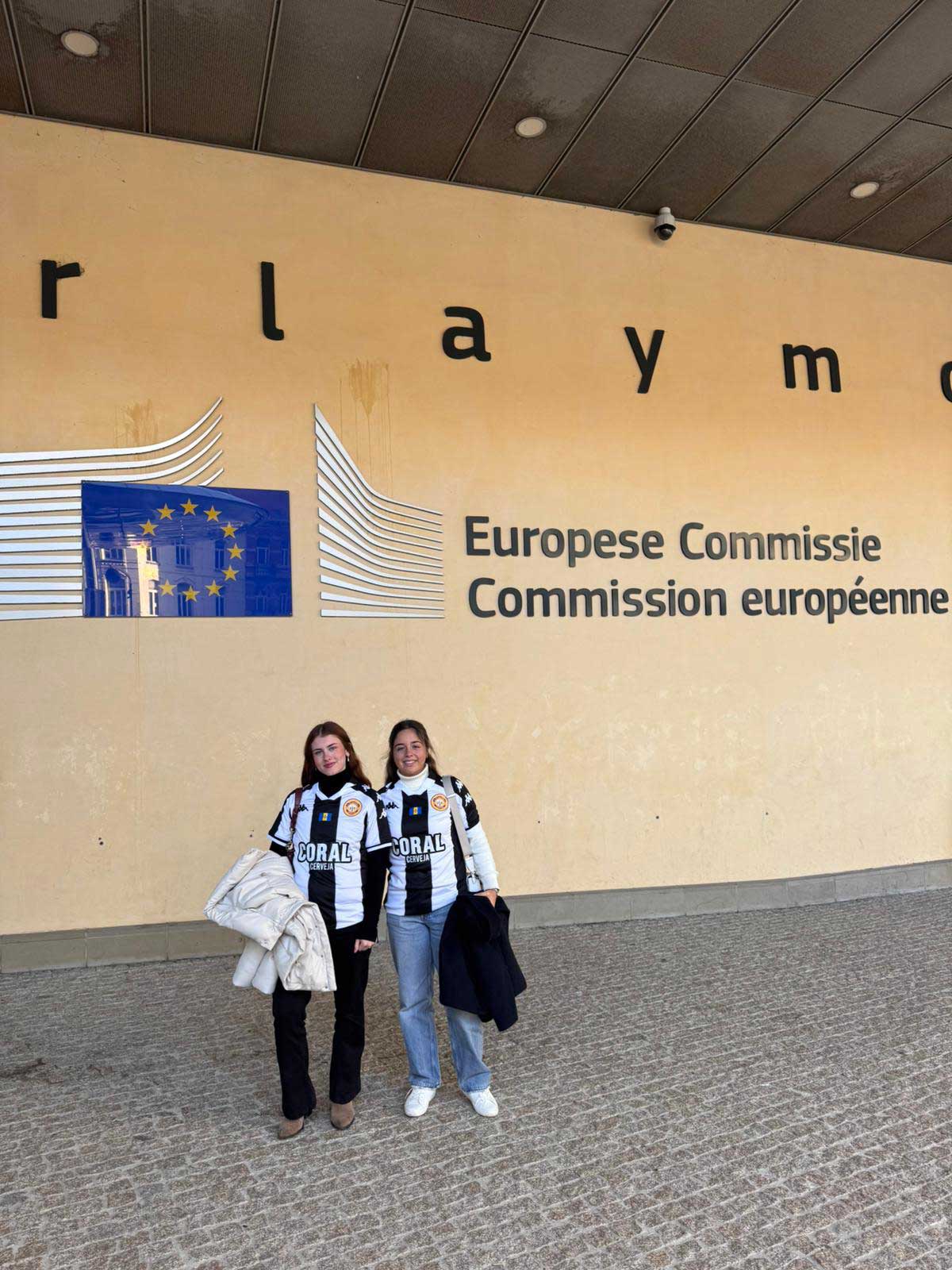
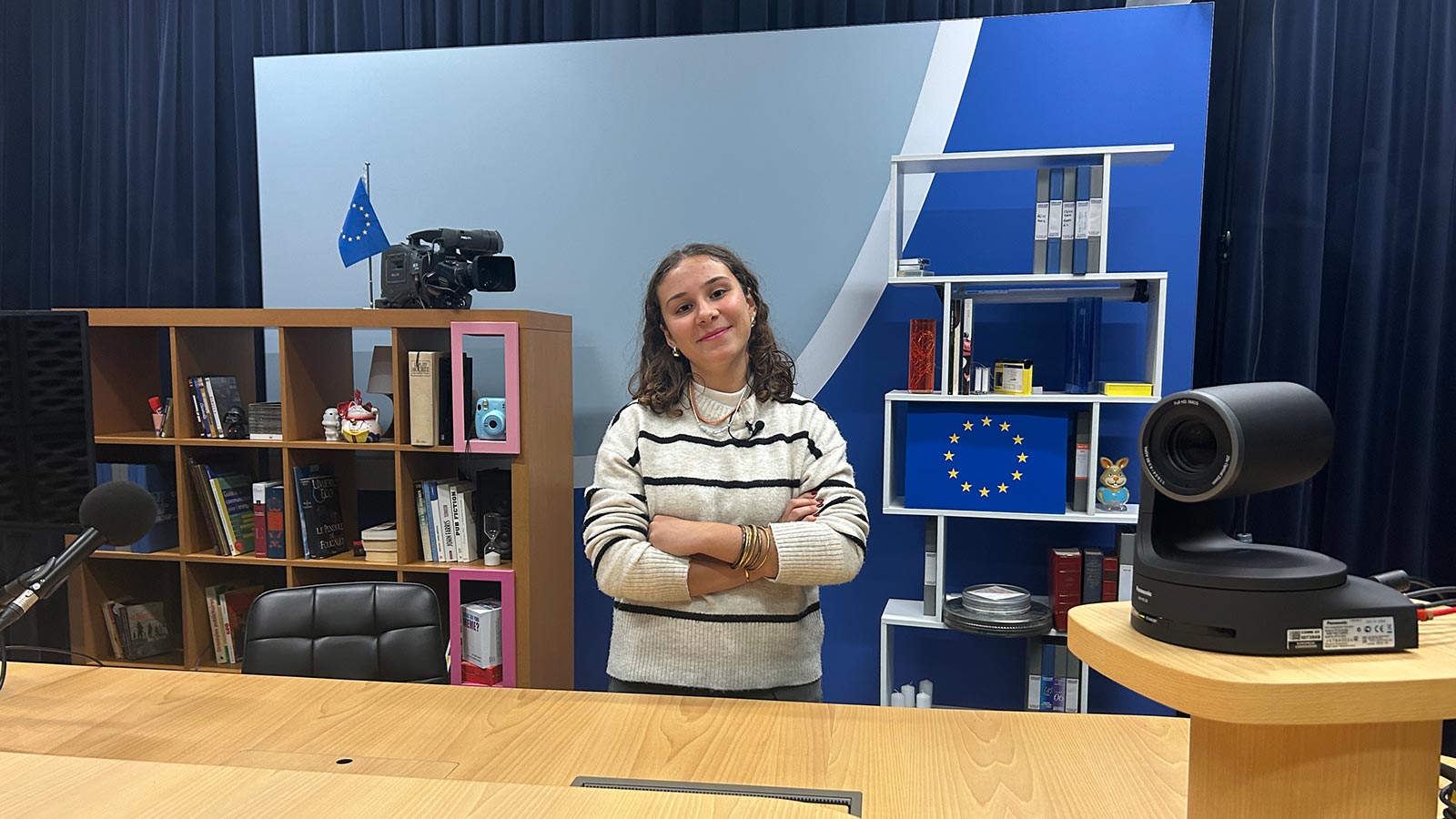
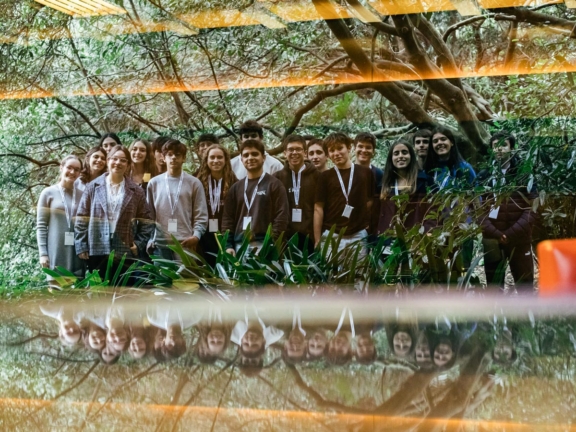
On their trip to the Belgian capital, the winning teams – two secondary school students accompanied by a teacher, all from different parts of the country – experienced many things: they took flight with Spanish military personnel who fight forest fires and prepared for an earthquake, two experiences provided by a sophisticated virtual reality system at the Experience Europe exhibition centre. Carolina, a former student at Externato Marista de Lisboa, said her favourite part of the virtual “trip” was seeing and hearing the story of a boy from Kenya who was able to study thanks to one of the European Commission’s cooperation programmes. “I didn’t know the European Union was working there!” she said, enthusiastic about her discovery.
While traveling, these “ambassadors against disinformation” also listened to members of the European Commission talk about how the institutions work, migration policy (the main theme in the winning projects) and innovation, information and disinformation. The difference between false information and disinformation, and between migrants and refugees, was explained to them. Teams also had the opportunity to present their work and receive feedback.
The students from Braga, for example, had analysed a leaflet containing ‘extremist rhetoric and false information, inciting hatred against immigrants’. They heard from the Commission’s spokesperson that disinformation strategies often resort to controversial topics, many of which are exploited for their emotional impact. They realised that the right strategy to adopt is to be proactive in passing on information, especially when it comes to controversial topics.
They also heard that prolonged exposure to this type of narrative on social media is dangerous, because young people do not question it and because social media is not subject to a code of ethics, as is the case with the media. Hence the importance of questioning, seeking more information, and having solid and well-founded arguments. Hence the importance of media literacy, which is the foundation of the Pinocchio at School initiative. Before continuing their visit, they were told that “this type of action safeguards democracy, which belongs to everyone. You are the guardians of democracy”.
The various dimensions of information
Beyond the lessons learned from all the lectures they attended, travelling with teams from other parts of the country was stimulating as it allowed them to engage with difference. There are many differences between students: reality is not the same for those living in urban centres as it is for those in the interior, and age is also a factor. Maria and Francisca, who live in Madeira, are an hour and a half by plane from mainland Portugal, but it is the team from Lousada that talks most about distance: “We are so close to Porto and yet so far from everything”. The students from Serpa assure us that disinformation isn’t as widespread there, but in Braga, a leaflet with extremist and false narratives was widely distributed, providing the basis for the students’ work.
Some people feel that those living in the interior are less prepared to deal with disinformation. And there seems to be a consensus that age makes a difference in terms of information consumption: in a group discussion, it was argued that while young people receive more information, they are also more impressionable, more naive, and the fact that they consume information faster inhibits them from thinking more deeply about things.
After this experience, they have clear ideas about what to do. “I had no idea that fake news could be so fake!” says Carolina. “Sometimes it’s exactly the opposite of the truth! Now, both Carolina and the other students know how to avoid and combat disinformation. They will spread the message to other students. Mariana and Leonor, in Gaia, have already prepared a presentation they will make at their school. Everyone is determined to “use their critical thinking skills more and avoid automatically accepting information as true”. The Pinocchio at School experience, they say, “will guide us in the future; it inspires us to be the kind of people who want to make the world a better place”.
The second edition of Pinóquio na Escola [Pinocchio at School] is already underway, with several new aspects (one of which is that it has been extended to middle school students).
You may also like
No results were found for your criteria.