
Confluence Laboratory and Ciranda: Saberes, an expanded dialogue with the exhibition Complexo Brasil
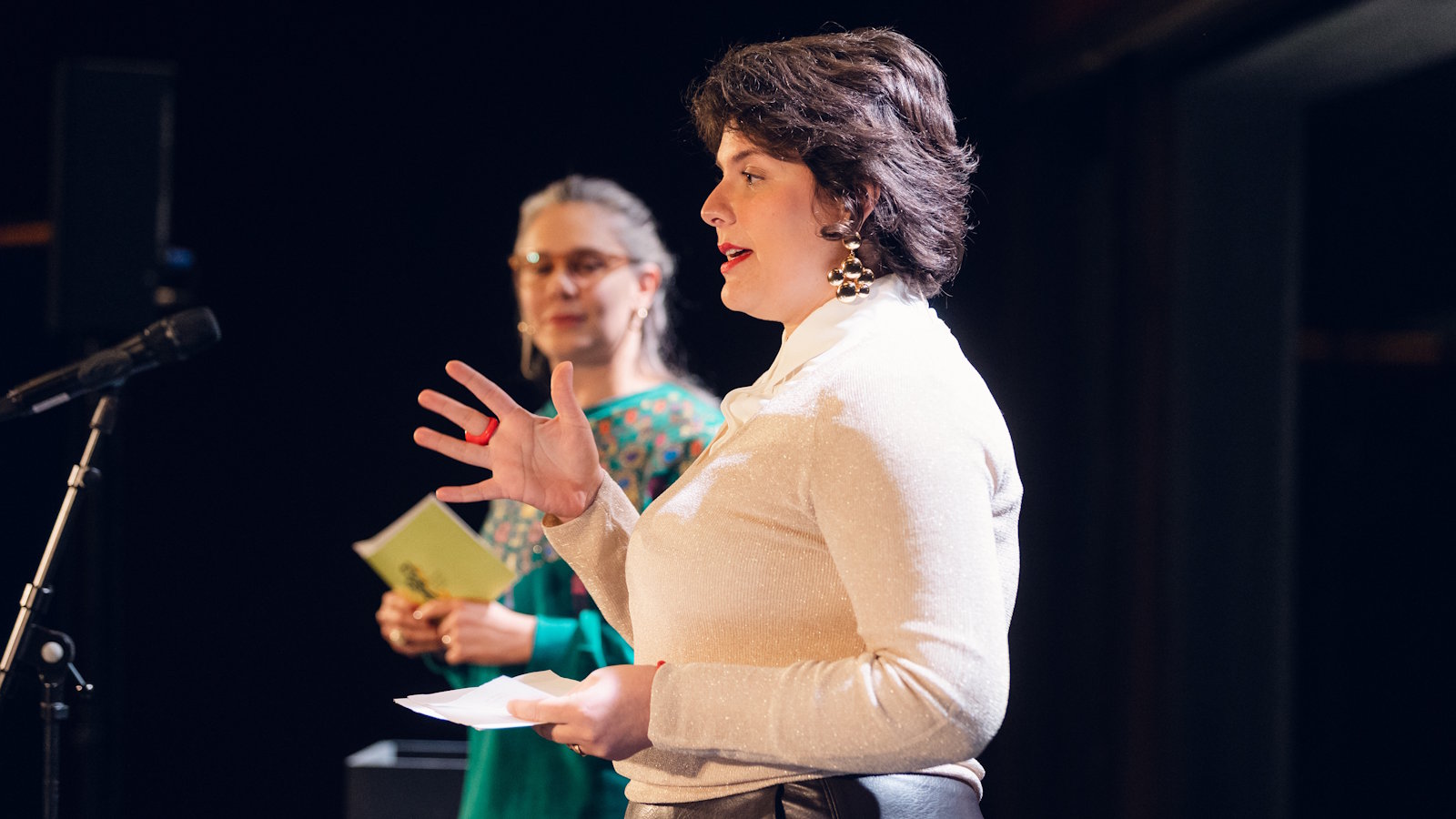
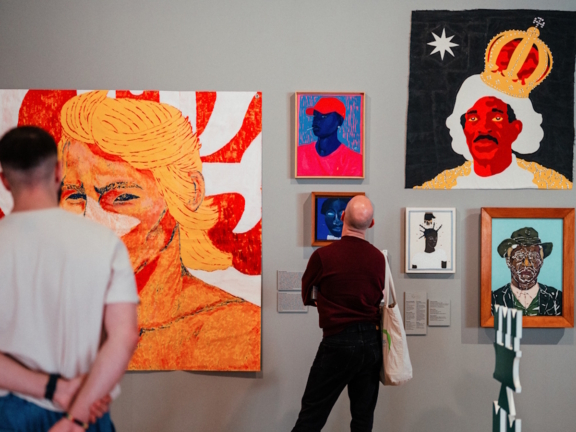
Created as a critical device and not as an set portrait, the exhibition complexo brasil, taking place at the Calouste Gulbenkian Foundation, proposes the demanding exercise of looking at Brazil from the perspective of its fractures, tensions and historical overlaps, without the temptation to reduce the country to a reconciled image of itself. It is within this framework that the Confluence Laboratory and Ciranda: Saberes are inscribed, two projects that break free from the condition of parallel programming to establish themselves as conceptual and political extensions of the exhibition itself.
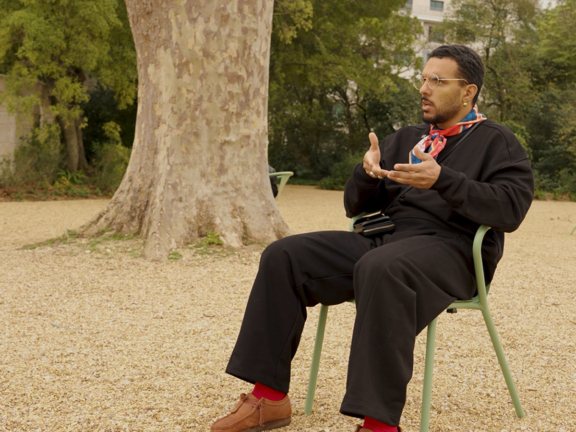
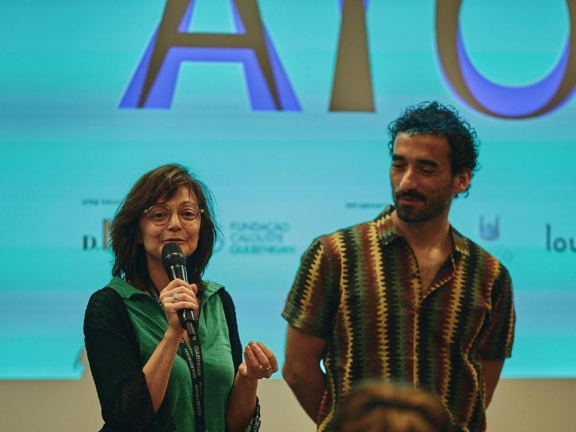
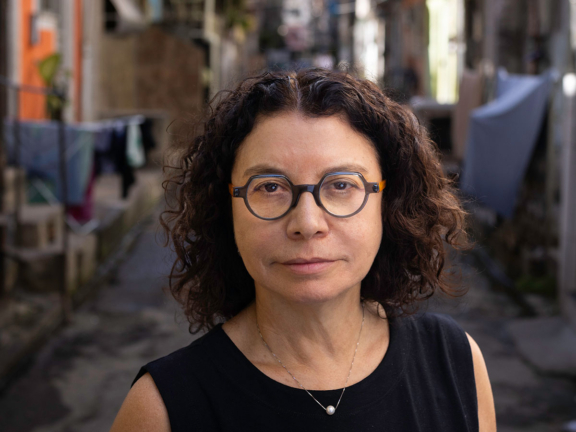
In an interview with BANTUMEN, Maria Giulia Pinheiro describes these two projects as a response to the central question posed by the exhibition: how can we create spaces for thought and experience that do not neutralise conflict, but rather make it visible, shareable and productive? This intention is in the origins of the Confluence Laboratory, created not as a commentary or mediation, but as a critical friction. ‘The laboratory stems from the idea of creating a critical conversation between the exhibition and the exhibition itself. Not to explain it, but to engage in dialogue with it, based on our contradictions and the places from which we speak.’, she claims.
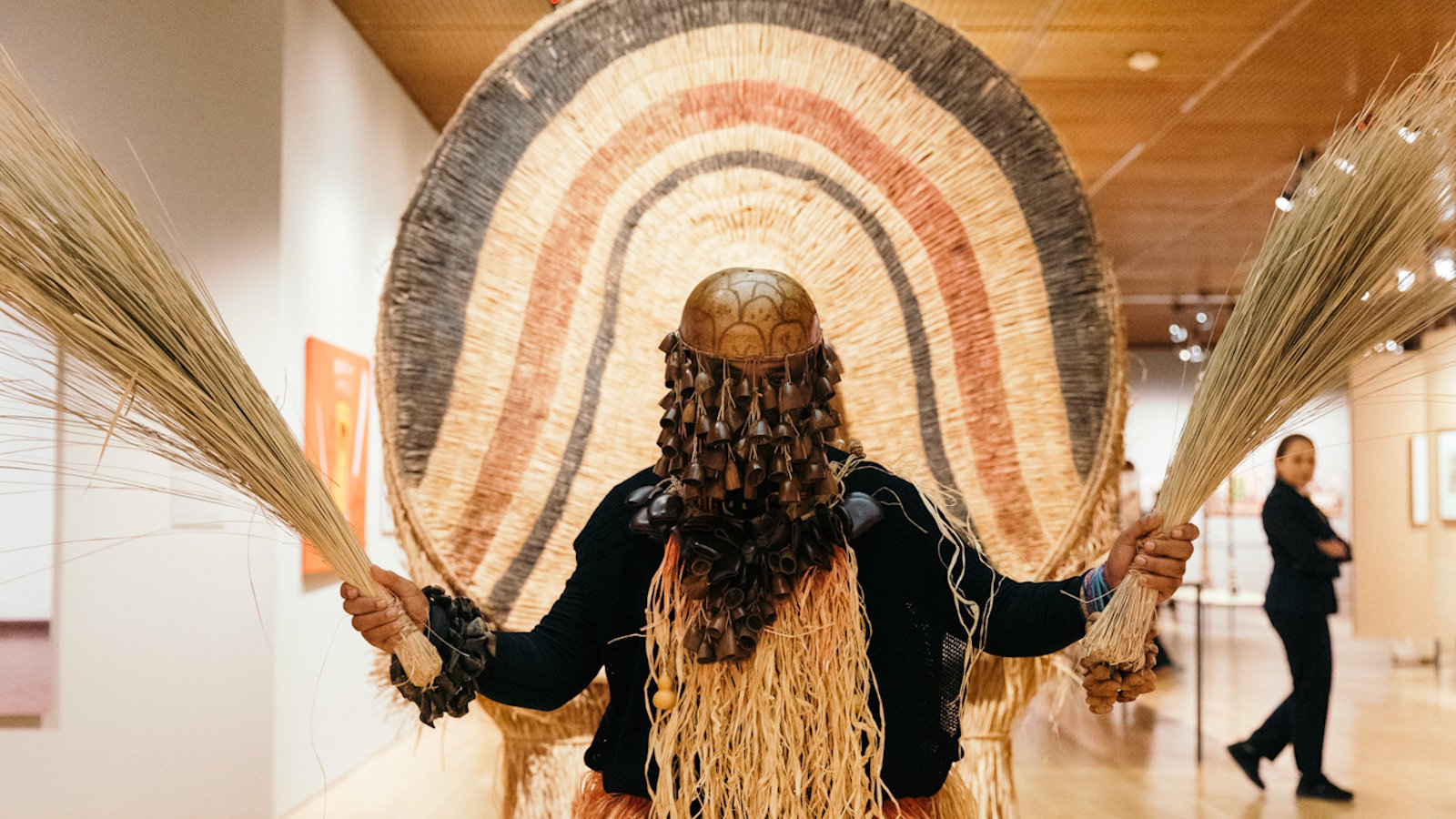
The project thus unfolds from an explicit rejection of isolated authorship: the proposal was to bring together Brazilian migrant artists living in Portugal, summoned not to represent Brazil, but to assume themselves as a localised part of a multiple and contradictory territory. Migration, in this context, emerges as an experience of transformation, with a direct impact on identity and artistic practice. ‘When you migrate, everything changes. Who I am changes and, inevitably, my work begins to speak about what we are doing here, about what this encounter can promote,’ emphasises Maria Giulia.
This distance allows us to question São Paulo’s historical centrality as the narrator of the country and, by stepping outside this axis, it becomes possible to regionalise our perspective and recognise the weight of economic and symbolic concentration in the Southeast, dismantling the idea that one part can speak for the whole. The artist herself identifies this moment as decisive in her career: ‘It was only when I moved away from São Paulo that I was able to perceive São Paulo as a region and not as the narrator of Brazil. This deconstructs many certainties and forces us to look inward.’
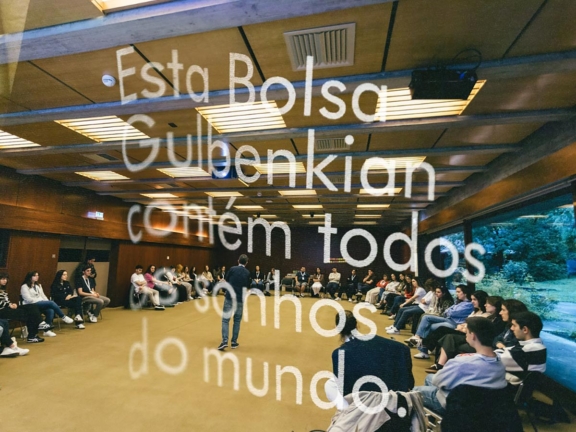
The process of creating the laboratory was deliberately open. After a guided tour of the exhibition and long hours of collective debate, there was still no definite outcome. Indeterminacy was adopted as a method and as a working condition, in an artistic context in which individual authorship and control over the outcome continue to be dominant values. ‘My proposal was to dissolve authorship. I didn’t want to present my own work, I wanted us to build something together’, explains Maria Giulia, acknowledging that this choice also meant accepting uncertainty and working without any guarantees regarding the form or outcome.
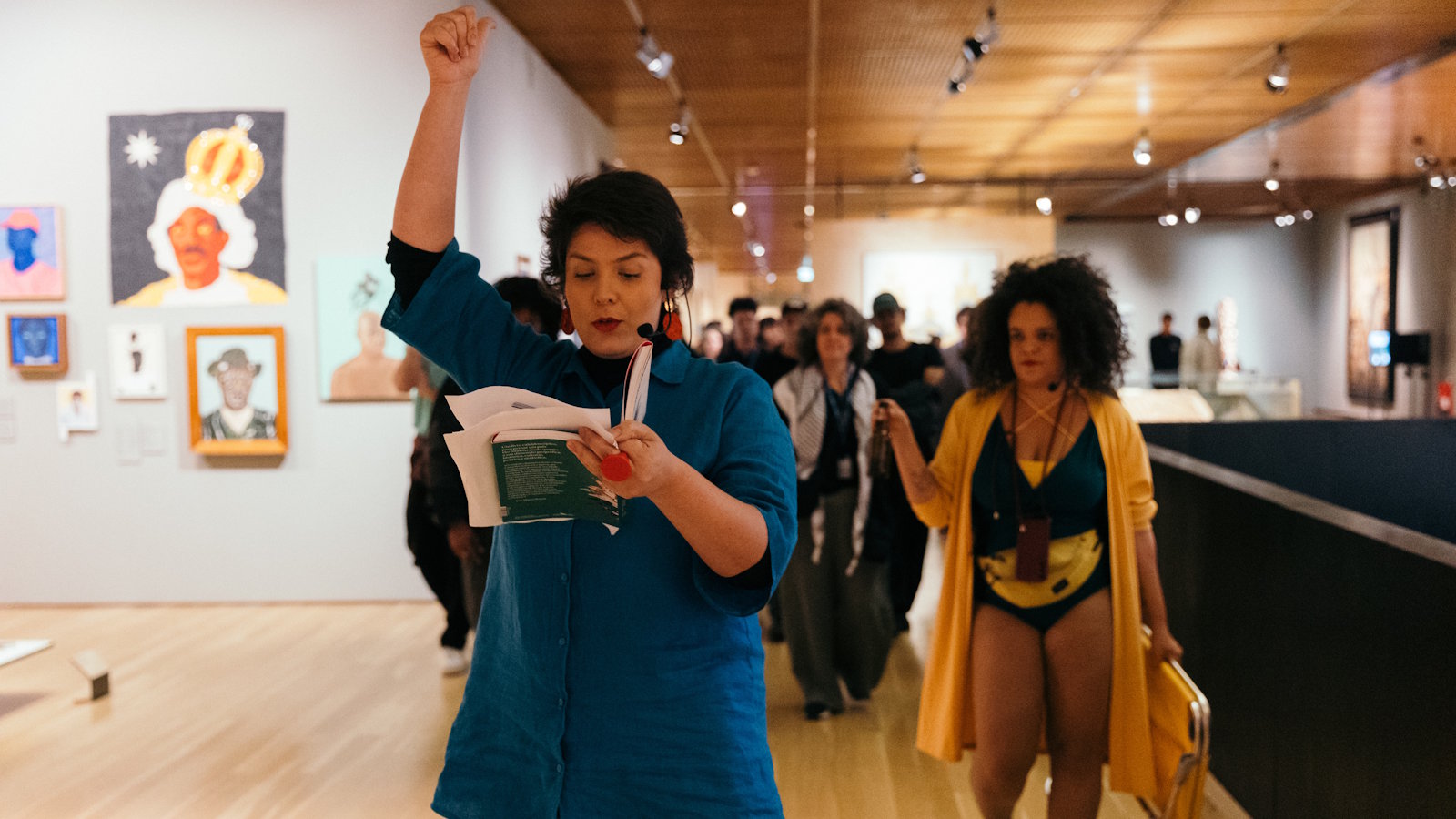
The notion of confluence that runs through the laboratory dialogues directly with references summoned by the artist herself throughout the interview, in particular the thinking of Nêgo Bispo, Brazilian philosopher, poet and political activist. Confluence appears here not as a cordial fusion, but as the coexistence of differences, marked by friction, overlaps and tensions. Without any attempt at conceptual appropriation, the curator refers to this thinking as a possible key to interpretation and action, emphasising the need to think about it from one’s own perspective, with an awareness of the limits and contradictions involved.
What reaches the audience is not organised according to the traditional logic of spectacle. The experience is created as a shared journey, traversed by different scenes and languages, in which the initial welcome – marked by codes associated with the Brazilian imagination, such as informality, conversation and conviviality – works as a gateway to a set of artistic responses to the discomfort instigated by the exhibition. Each intervention emerges as a creative response, not as an explanation, but as a confrontation.
The relationship with discomfort runs through the entire Confluence Laboratory as an operating principle. Maria Giulia describes creation as a gesture of response to what the exhibition calls for, pointing out that artistic work arises from the need to give back, in its own language, what has been received. ‘I strongly believe in creation as revenge’, she says, while clarifying that it is a symbolic reaction, not appeasement. To create means to respond without negating the conflict, rewriting it on another plane.
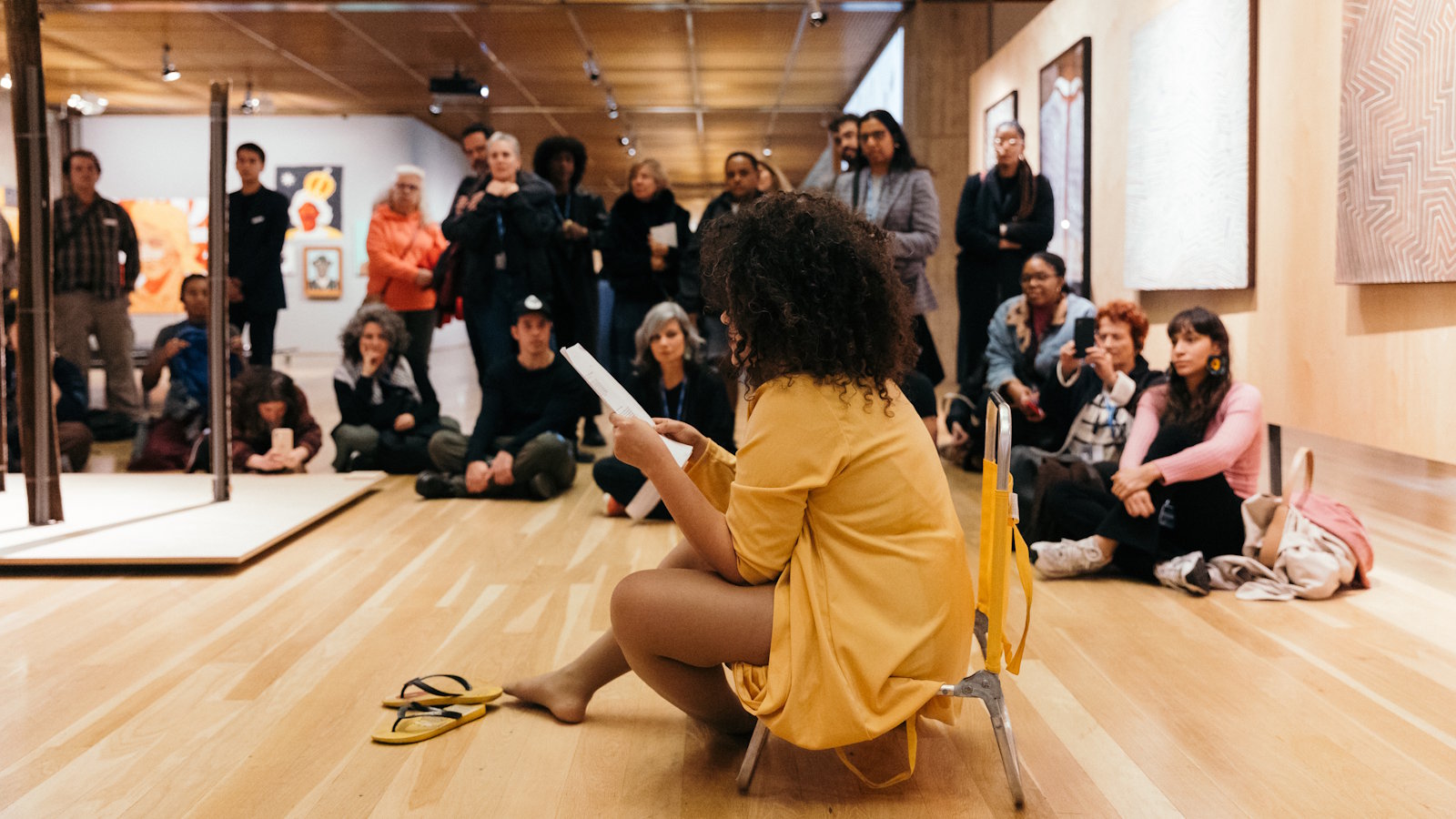
Here, the exhibition is a glimpse into the historical wound, which is still open – and that perhaps should remain that way so as not to be pacified. ‘The wound is infected and that’s a good thing. Because there is no reparation without infection’, observes the artist, who rejects any notion of simplistic cure.
One of the central moments of the laboratory involves questioning cultural anthropophagy, a concept associated with Brazilian modernism and Oswald de Andrade. Far from being an uncritical celebration, the reference is permeated by an uncomfortable reading, which also exposes its predatory potential, especially when considered from a historically hegemonic regionalism. By making this position explicit, the workshop reveals mechanisms of appropriation and erasure that are still active in the construction of national narratives.
On the other hand, Ciranda: Saberes develops in a distinct direction, despite sharing the same ethical horizon. Created as a device to encourage reading and sharing, the initiative rejects the centrality of the authorial text and proposes the reading aloud of works by thinkers, poets and writers who have already ‘made the crossing’. In this edition, designed specifically for complexo brasil, the proposal deliberately broadens the notion of literature, questioning colonial separations between poetry, philosophy, political thought and experiential writing. ‘This division between what is literature, what is philosophy and what is poetry is deeply colonial. There is no such separation in life’, says Maria Giulia.
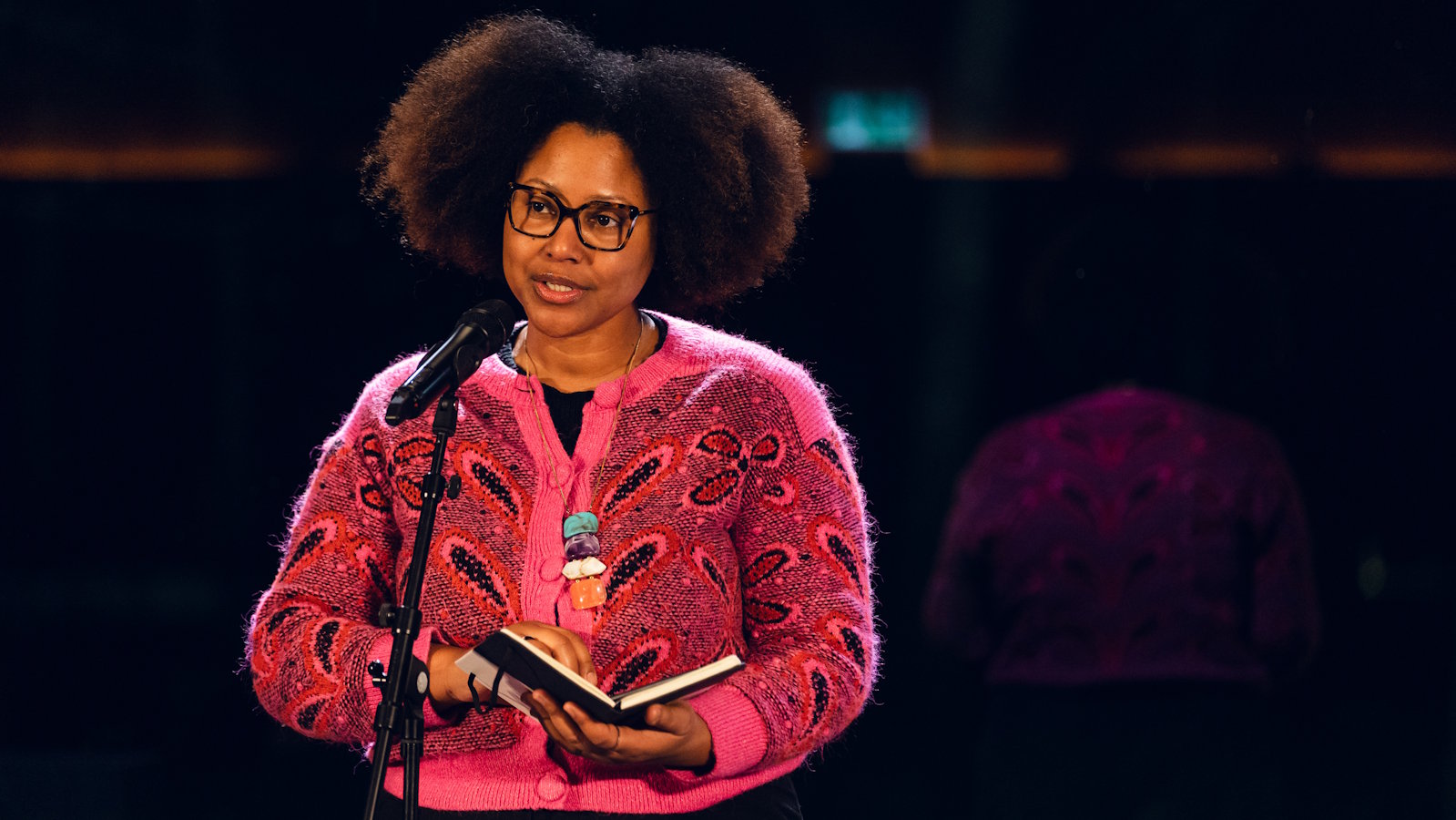
Ciranda‘s curatorship brings together authors whose work does not always occupy the centre stage of the literary field, but which proves decisive in thinking about contemporary Brazil and its reverberations in Portugal. Among the names featured in this edition are Gisela Casimiro, Tatiana Salem Levy and Izabelle Louise, alongside other participants from diverse backgrounds, not always Brazilian. This choice reinforces the idea that this knowledge circulates in Portuguese territory and engages in dialogue with it from multiple positions.
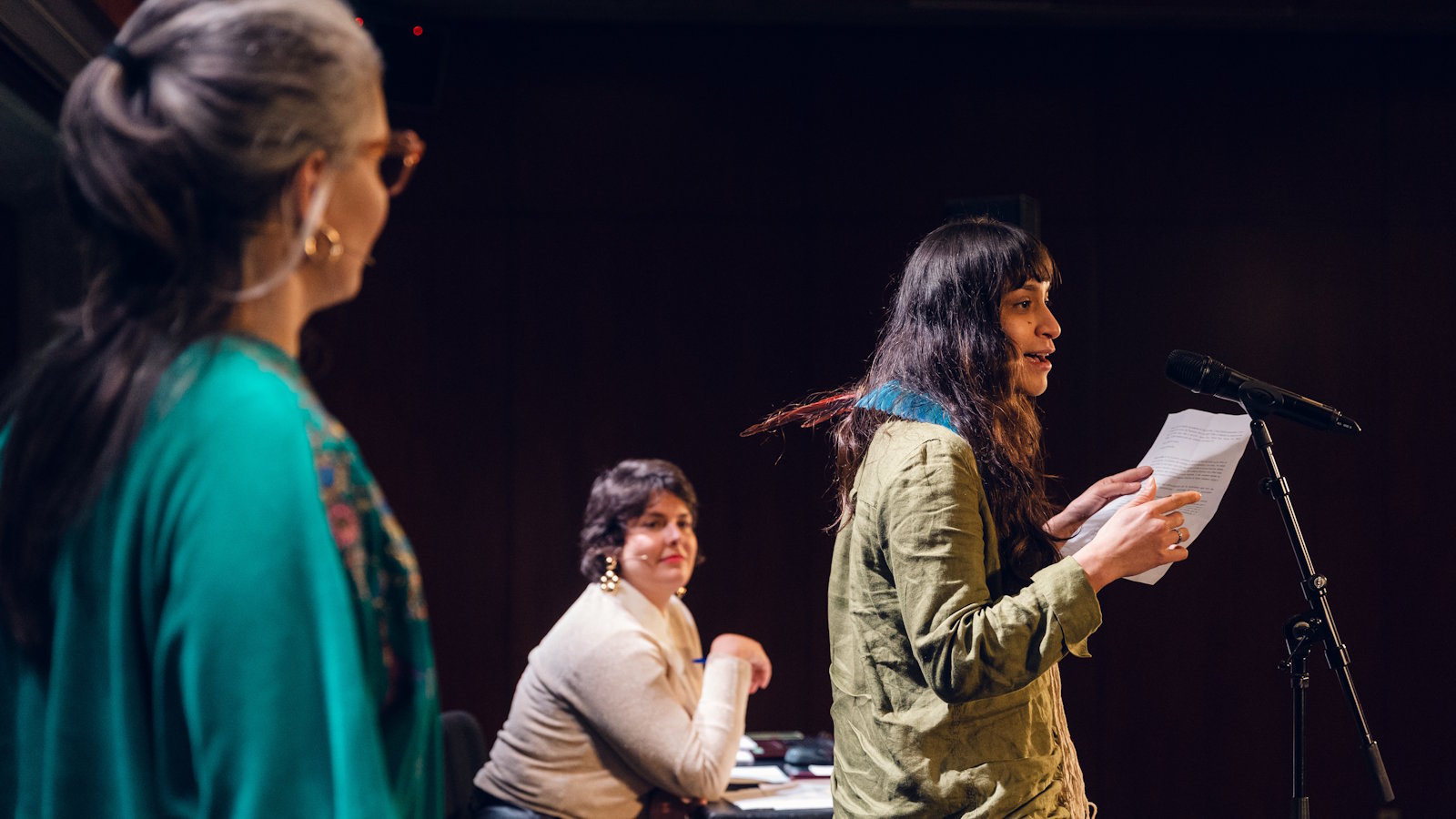
The open mic, which complements the edition, follows the same logic, offering the public a space to share references, readings and concerns, without the pressure of individual authorship. The slam, performative readings and other initiatives linked to the spoken word – including actions developed at the Centro de Arte Moderna – emerge in continuity with Ciranda and the Laboratory, as ways of coming together around the word and presence.
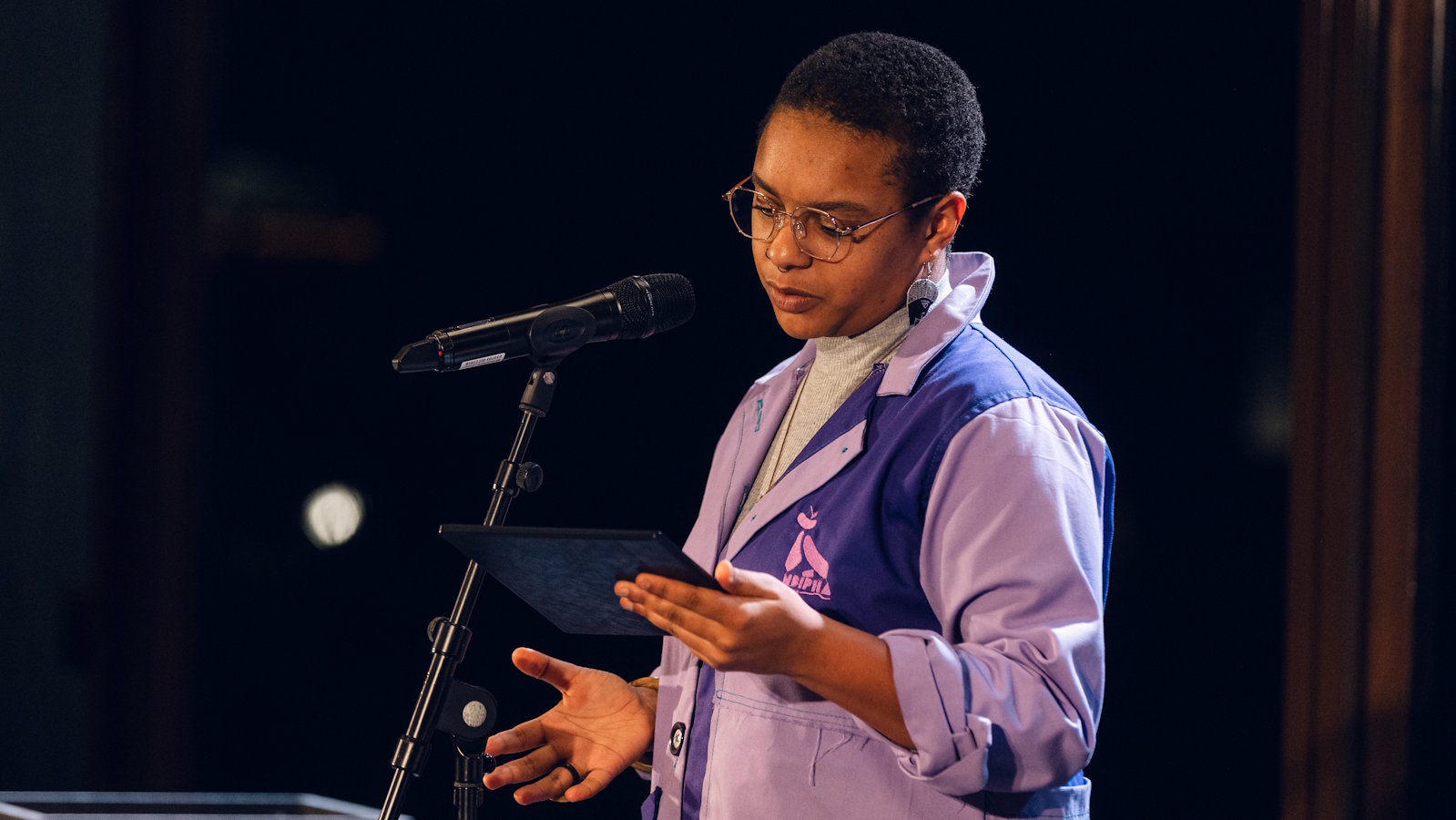
The public follows the entire process as an open question, and Maria Giulia points out that the question of who attends these meetings – and from where – has always been present, without assuming a homogeneous audience or one that is already aligned with the issues at stake. Thinking about the audience implies recognising unequal positions and accepting that dialogue is built on an asymmetrical field, where the meeting requires listening, time and displacement.
Despite their formal differences, Confluence Laboratory and Ciranda: Saberes answer the same underlying concern: what dialogue strategies are possible in a time marked by political polarisation, self-censorship and the constant dispute over narratives? Although there are no concrete answers, Maria Giulia believes in dialogue as a possible path, despite the constraints that may arise from it. ‘True dialogue hurts. It requires sincerity and the acceptance that what we say can be misrepresented,’ acknowledges the artist, insisting nonetheless on the need not to give up on this exercise.
Perhaps for this reason, the most significant shift that these projects propose to the audience is an invitation to self-reflection. Not adherence to a thesis or theory, but rather the formulation of questions that place the subject itself as a bridge to the world: who am I on this moving map, where am I speaking from and where do I want to go? And above all, how can I take others with me without erasing the differences in our paths?
BANTUMEN at Gulbenkian
Explore the series
No results were found for your criteria.
You may also like
No results were found for your criteria.