
Dino D’Santiago and the Gulbenkian Summer Garden, half a decade later
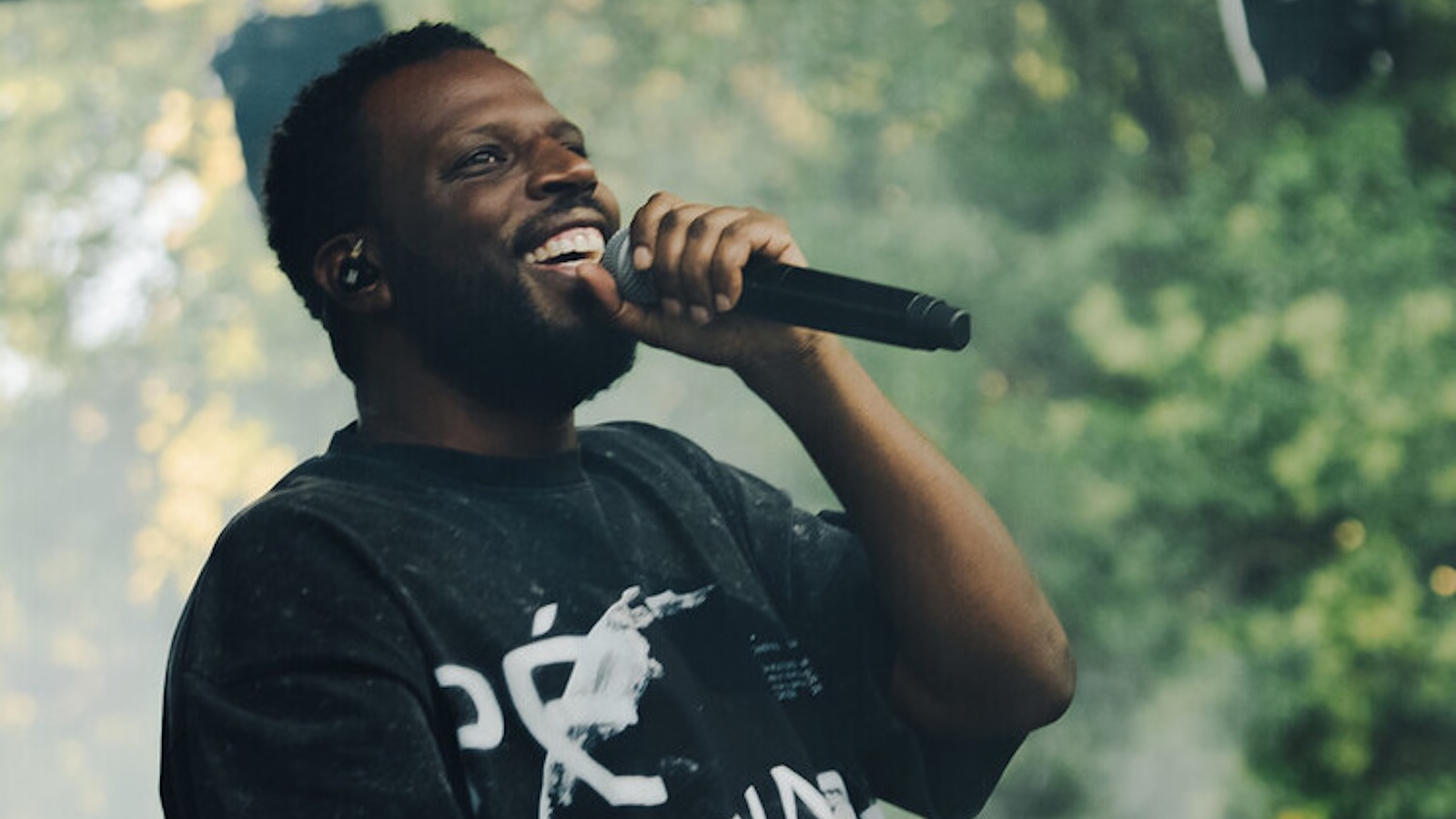
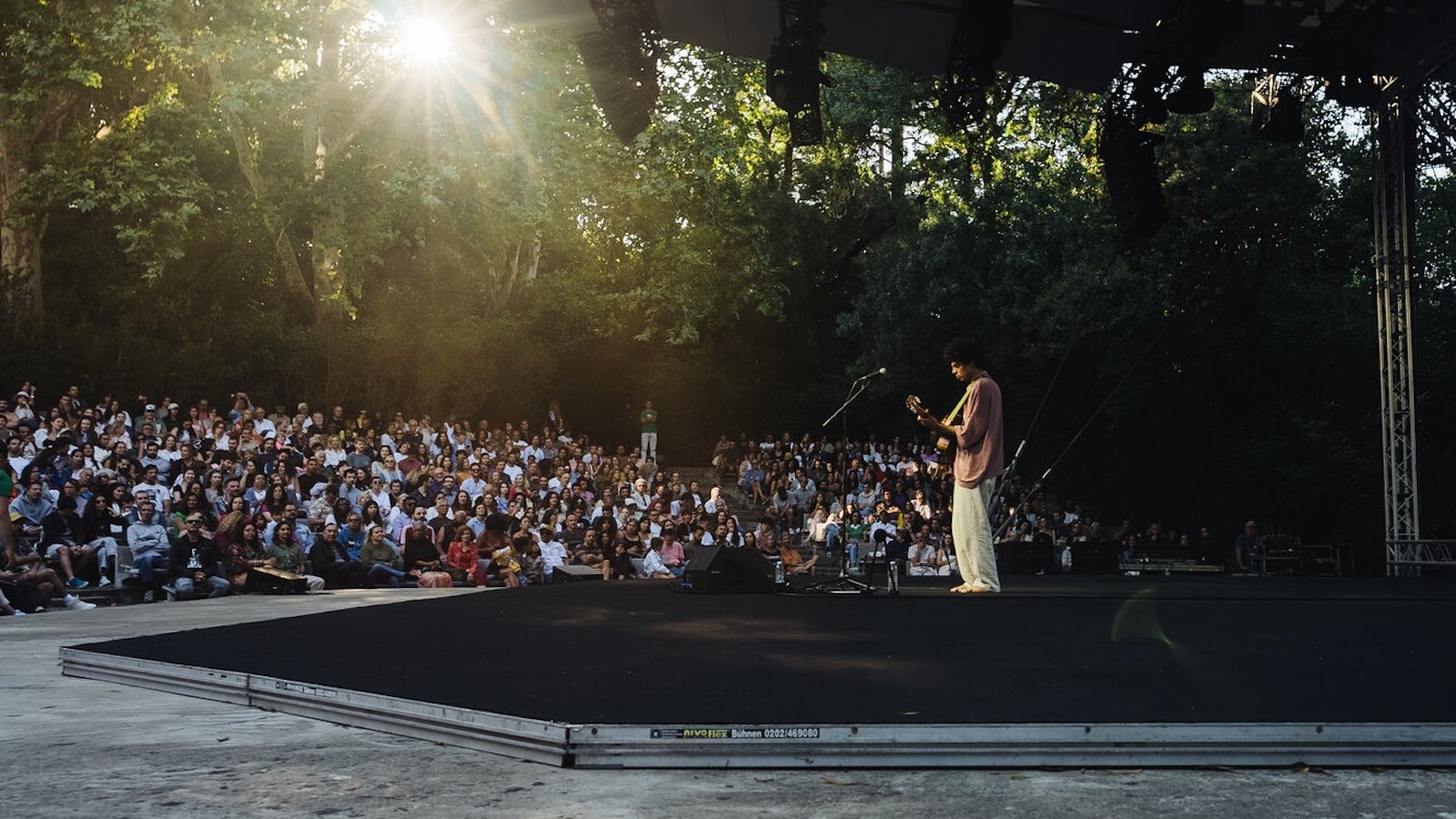
This year’s Gulbenkian Summer Garden takes place between 27 June and 12 July, over the course of three weekends, in which the Calouste Gulbenkian Foundation opens its gardens – as well as its main building and the CAM – to concerts, talks, DJ sets, films, and family activities, all with free admission. It’s a gesture that transforms a space normally associated with a certain institutional weight into a territory for everyone: the programme travels through Angola, Brazil, Cape Verde, Guinea-Bissau, and Portugal, spanning from the most traditional to the most contemporary, and also includes the screening of the seven episodes of the anthology “Novas Narrativas de Caça”, followed by talks.
For the fifth consecutive year, the musical curation is in the hands of Dino D’Santiago. Half a decade of collaboration with the institution has translated into more than two hundred artists presented across the Grand Auditorium, the Open-Air Amphitheatre, and the Garden, as well as into a way of thinking about Afro-descendant culture in the heart of Lisbon that has itself become part of the institution’s history.
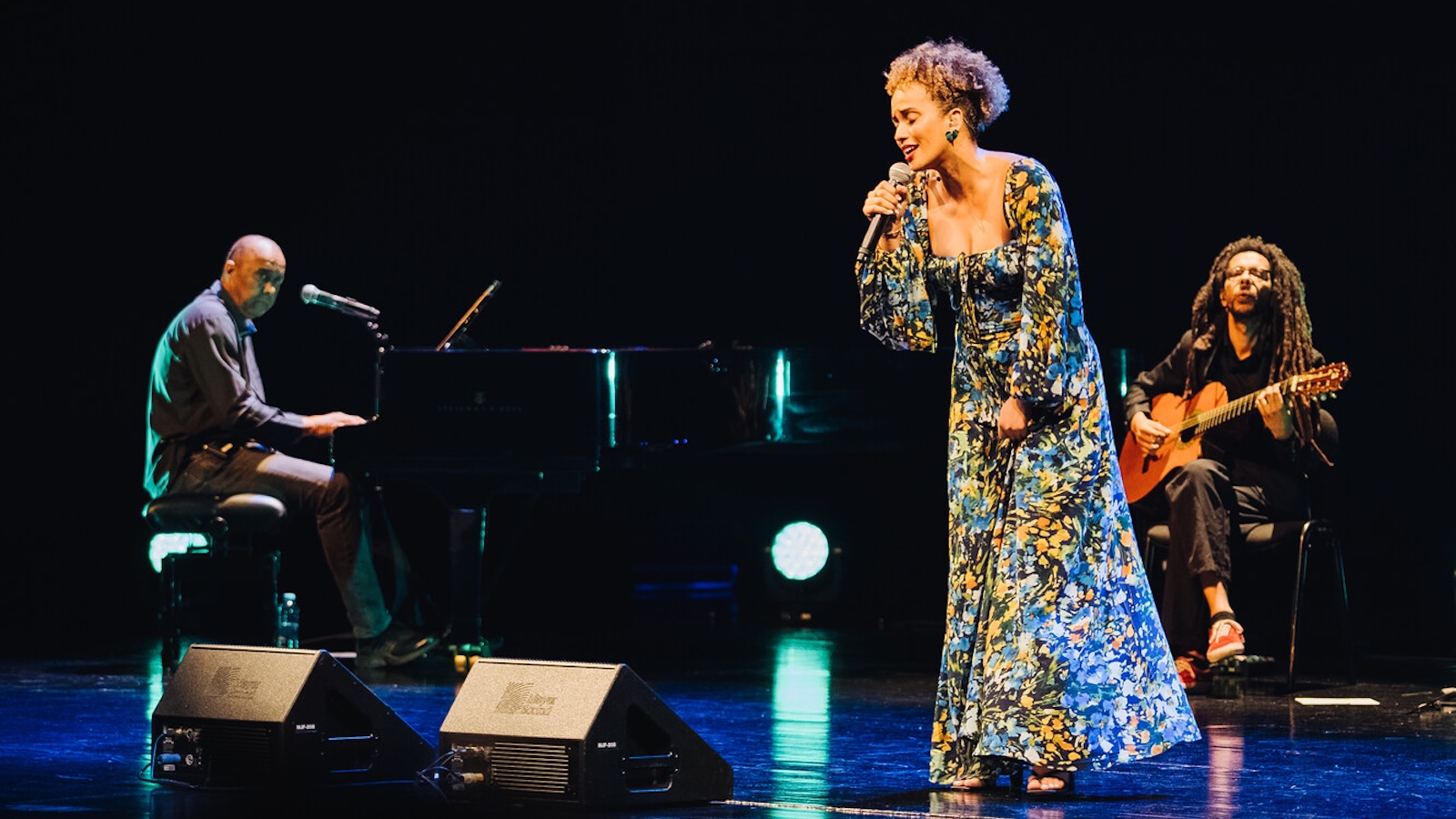
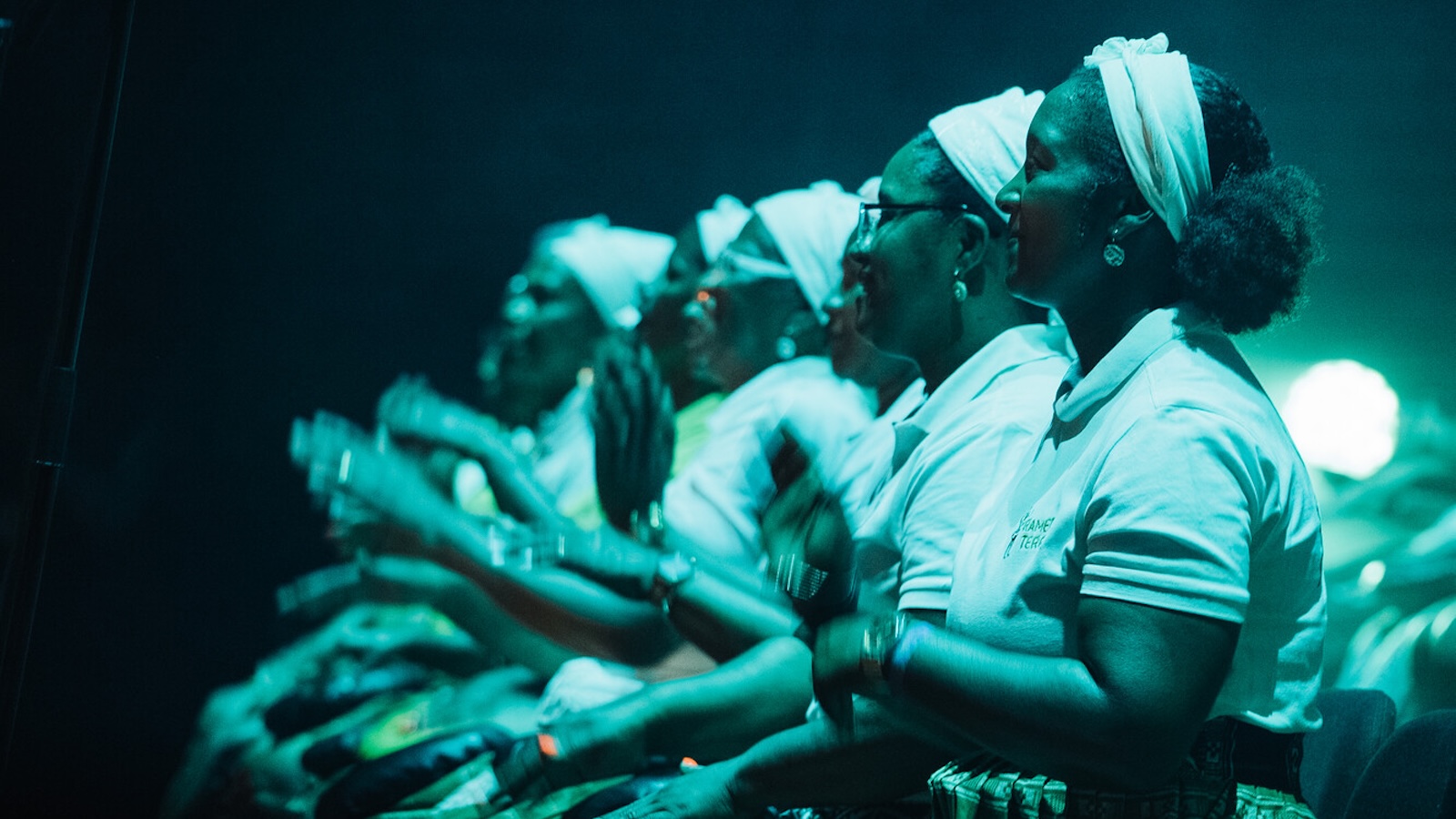
In this interview, Dino D’Santiago reflects on what he has learned over these five years of curating the festival, the criteria that guide him in creating the programme, the relationship he has built with Gulbenkian, and a personal journey between Portugal, Cape Verde, and Brazil that has reshaped the way he sees life and work.
When asked what he has learned over time, Dino always returns to the same point: people. The most beautiful thing, he says, has been realising the impact culture has, wherever it is present. And he measures that impact through small, almost domestic signs: the moment when the families of the Foundation’s own staff began wanting to be there, when before they never showed up. “It changed the way families took ownership of that space, which belongs to everyone,” he sums up. The symbolic weight is not lost on him: at first, he saw himself as one of the few non-white faces leading a project of that scale, and five years later, he speaks of an audience travelling from Chaves, Bragança, the Algarve, and Alentejo just to experience the festival’s spirit – and of international programmers who, whenever they pass through Lisbon on tour, send him their catalogues hoping to become part of this story.
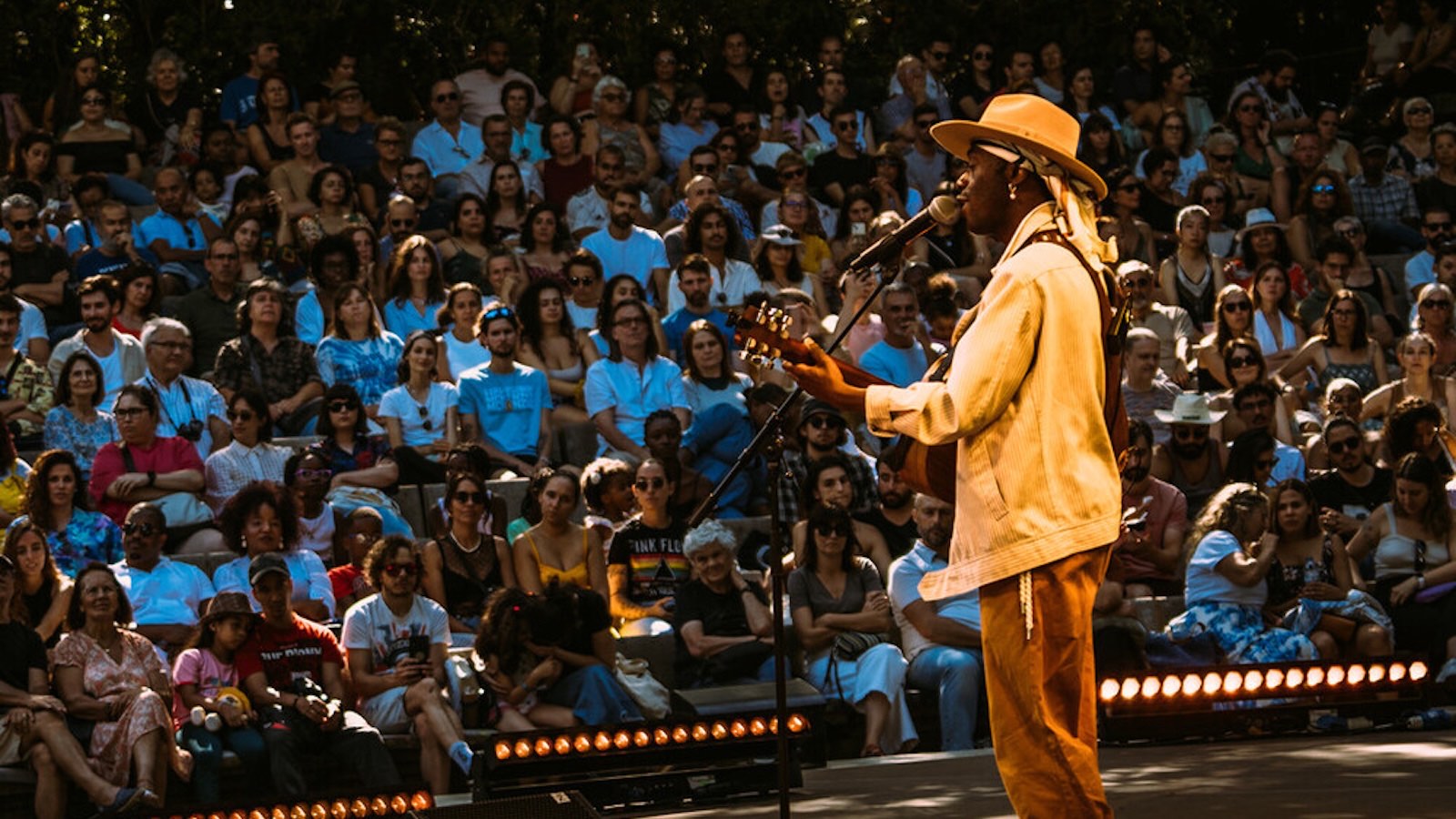
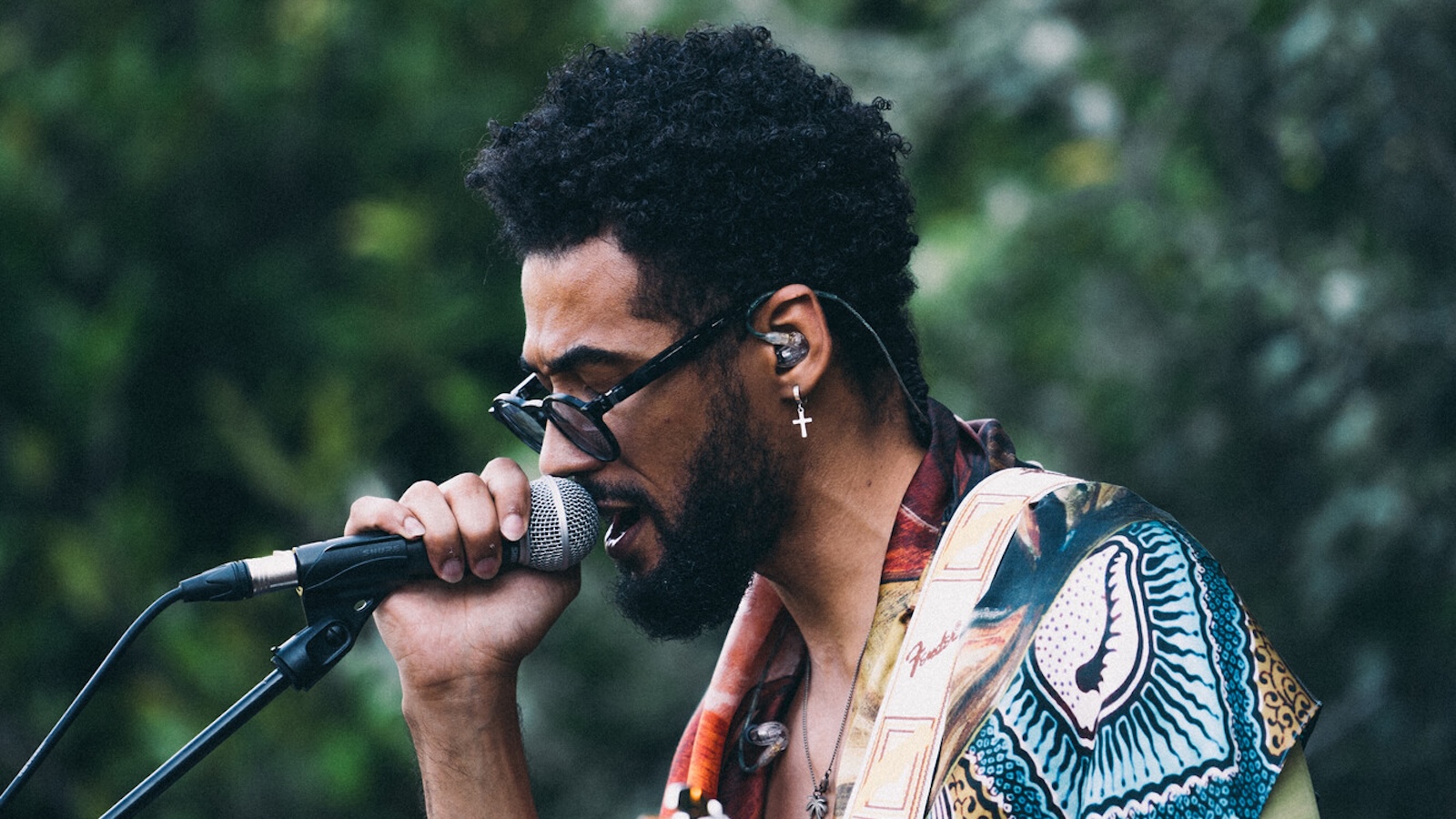
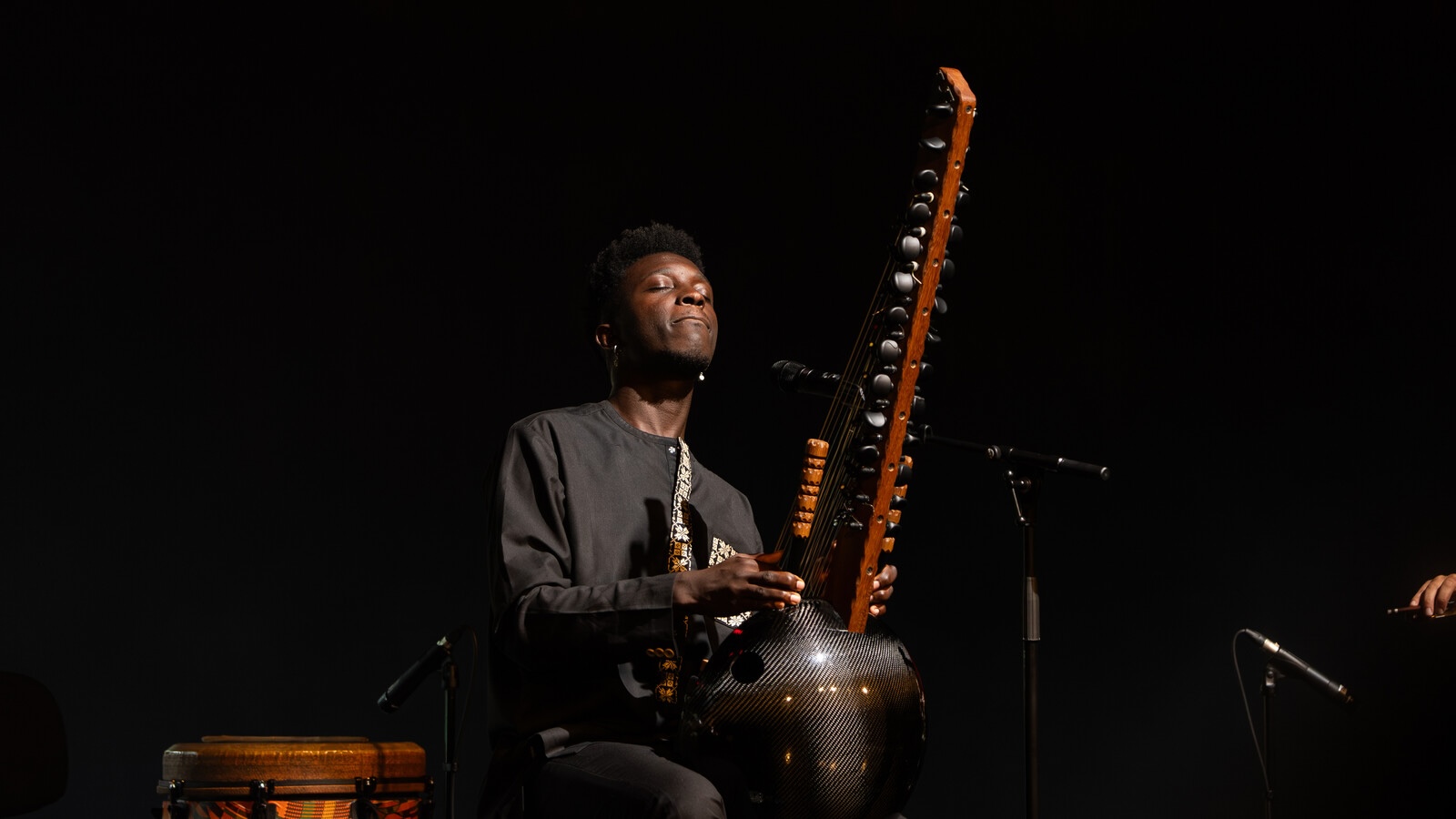
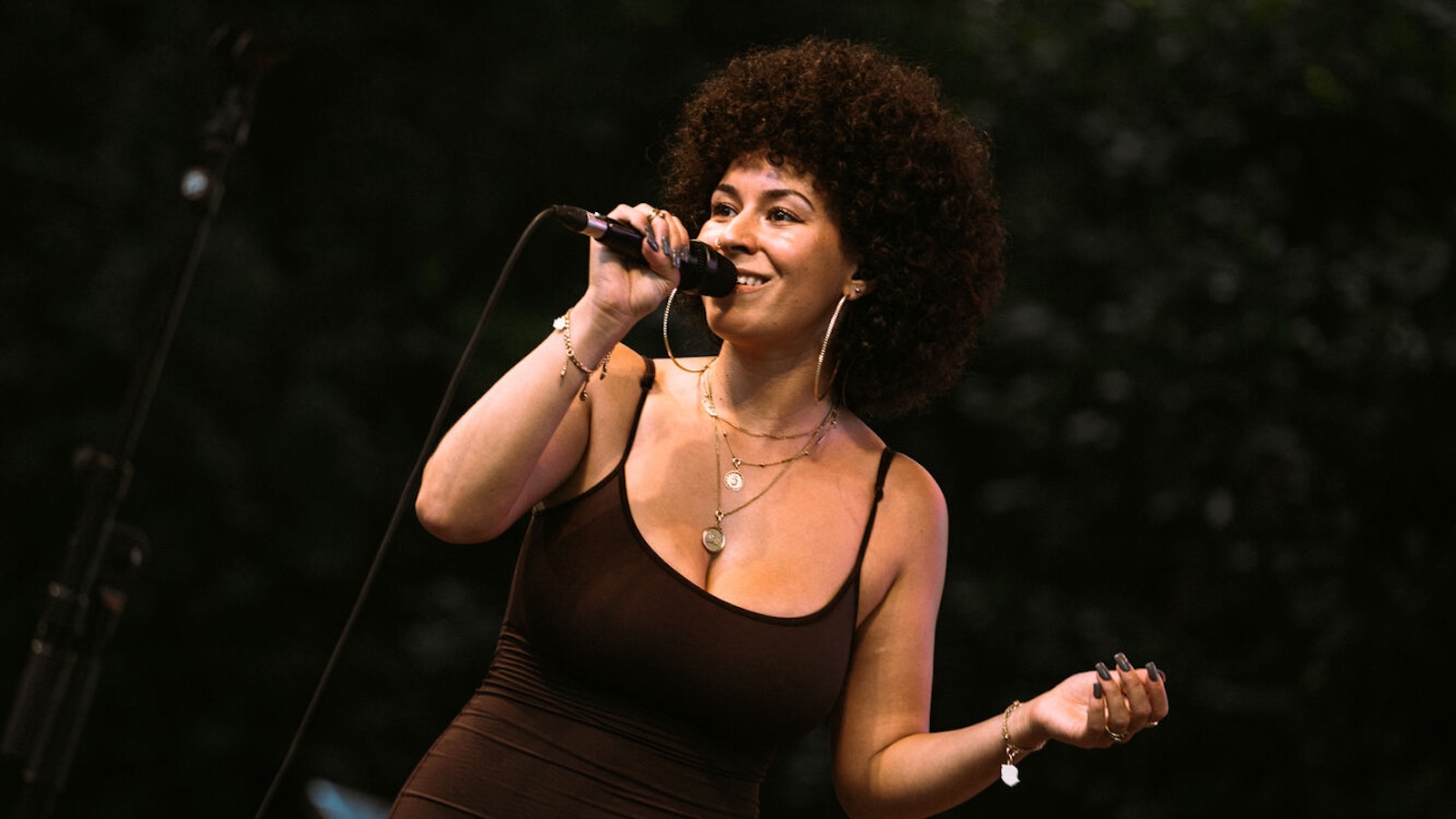
The phrase he repeated in a previous edition – that curating music is, at its core, about curating encounters – still holds, but it has gained an addition he is keen to stress: “I would only add that curating music heals.” He supports this with names and careers such as that of Jota.pê, who described his concert at the amphitheatre as the best moment he experienced in Europe, and with whom he has since collaborated; Toty Sa’Med, now back in Angola carrying out a similar curatorial effort with local talent; Momi Maiga, from Senegal, who went on from there to tour the world; and Libra, whose career surged after that stage.
For Dino, what makes all of this possible is the democratic nature of the project: a space in the city centre that fills up without the artist needing to worry about ticket sales, with the infrastructure already in place and the right audience waiting for their art. It is here that the idea that runs through the entire conversation returns – one he repeats like a refrain: “the greatest work is the audience. Only then does it make sense.”
Eighty per cent new faces, zero antibodies: the criteria behind five years of curation
This year’s lineup places established names alongside emerging voices. Os Tubarões, one of the great names in Cape Verdean music, share the programme with Nancy Vieira, a long-established voice, as well as with Soraia Ramos and Rita Vian. How, then, is the balance between legacy and renewal achieved? Dino adjusts the premise before answering, and his correction reveals that it is less a strict criterion than a deliberate proportion. “Eighty percent of the lineup is made up of new faces, fresh blood.” The presence of Os Tubarões this year is one of the exceptions that proves the rule, explained by a specific circumstance: the Foundation brought its orchestra to Cape Verde as part of the celebrations marking fifty years of independence, and inviting the group emerged almost as a gesture of reciprocity – in a context where travel costs would normally lead to prioritising artists already based in Portugal.
There is, however, one aspect that allows no compromise. “The first standard is excellence – artistic excellence,” he says, distancing himself from any kind of paternalistic reading: this is not a social or outreach project, but one whose aim is for anyone, regardless of where they come from, to experience an outstanding performance. To support that standard, Dino draws a comparison: the artists who take to those stages have the potential to build careers on the scale of Mayra Andrade, Carminho, or Slow J. That transition has not yet fully happened, but, in his view, it is only a matter of time. Alongside excellence, the second axis is ensuring a lineup largely rooted in the sounds of the Afro-diasporic drum, while also creating space for Portuguese artists who understand these crossings and undertake their own journeys in dialogue with those roots.
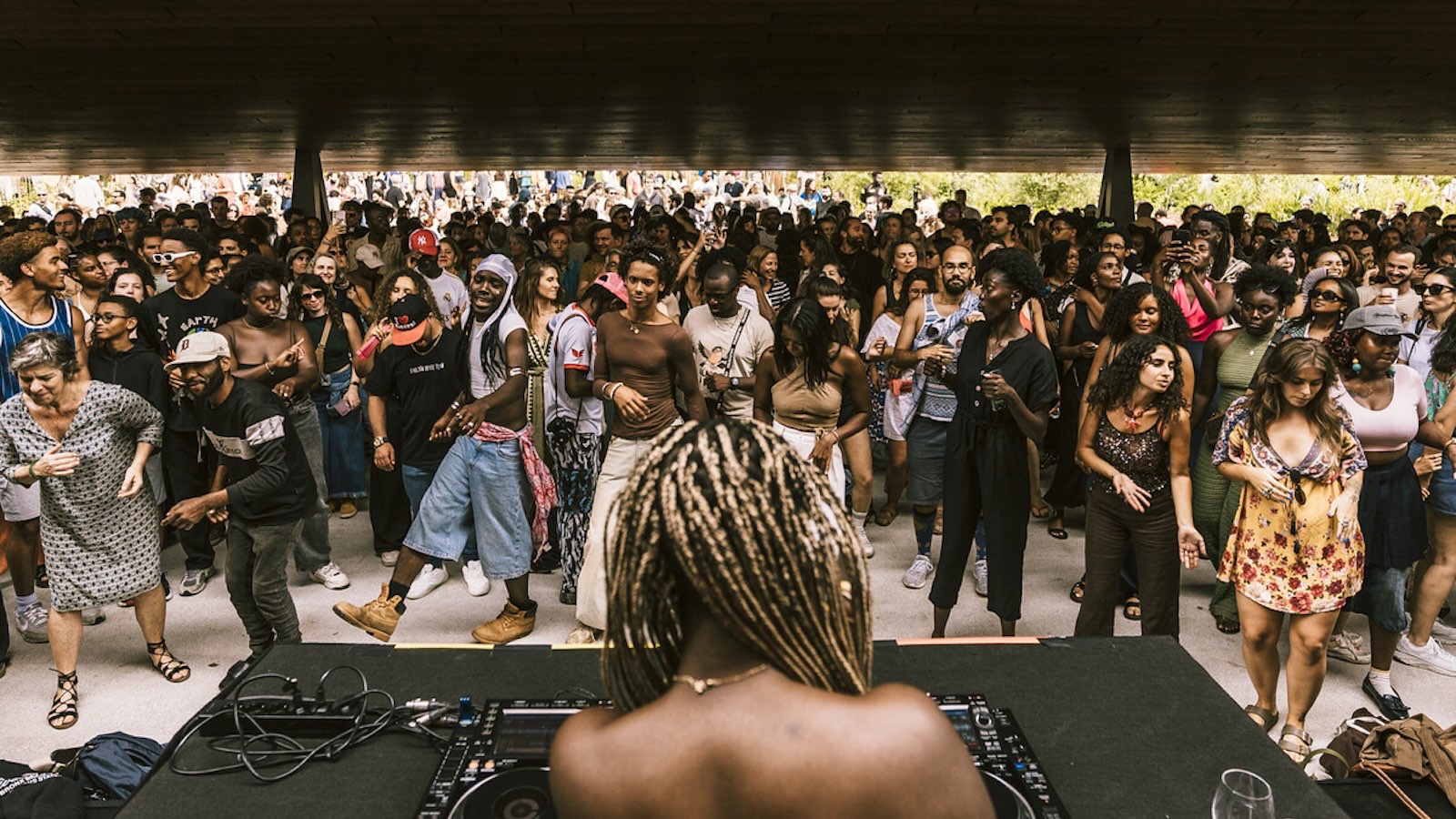
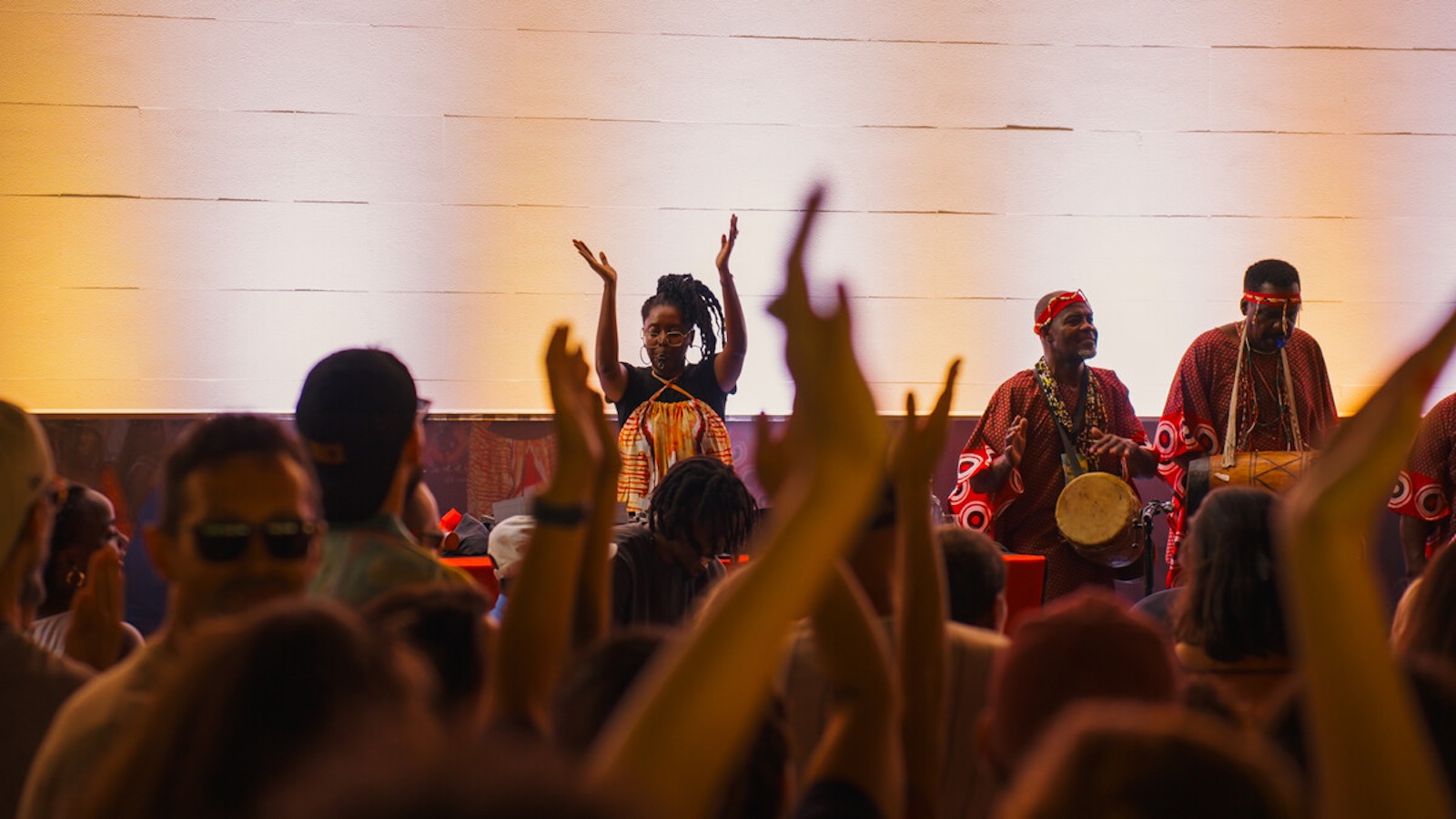
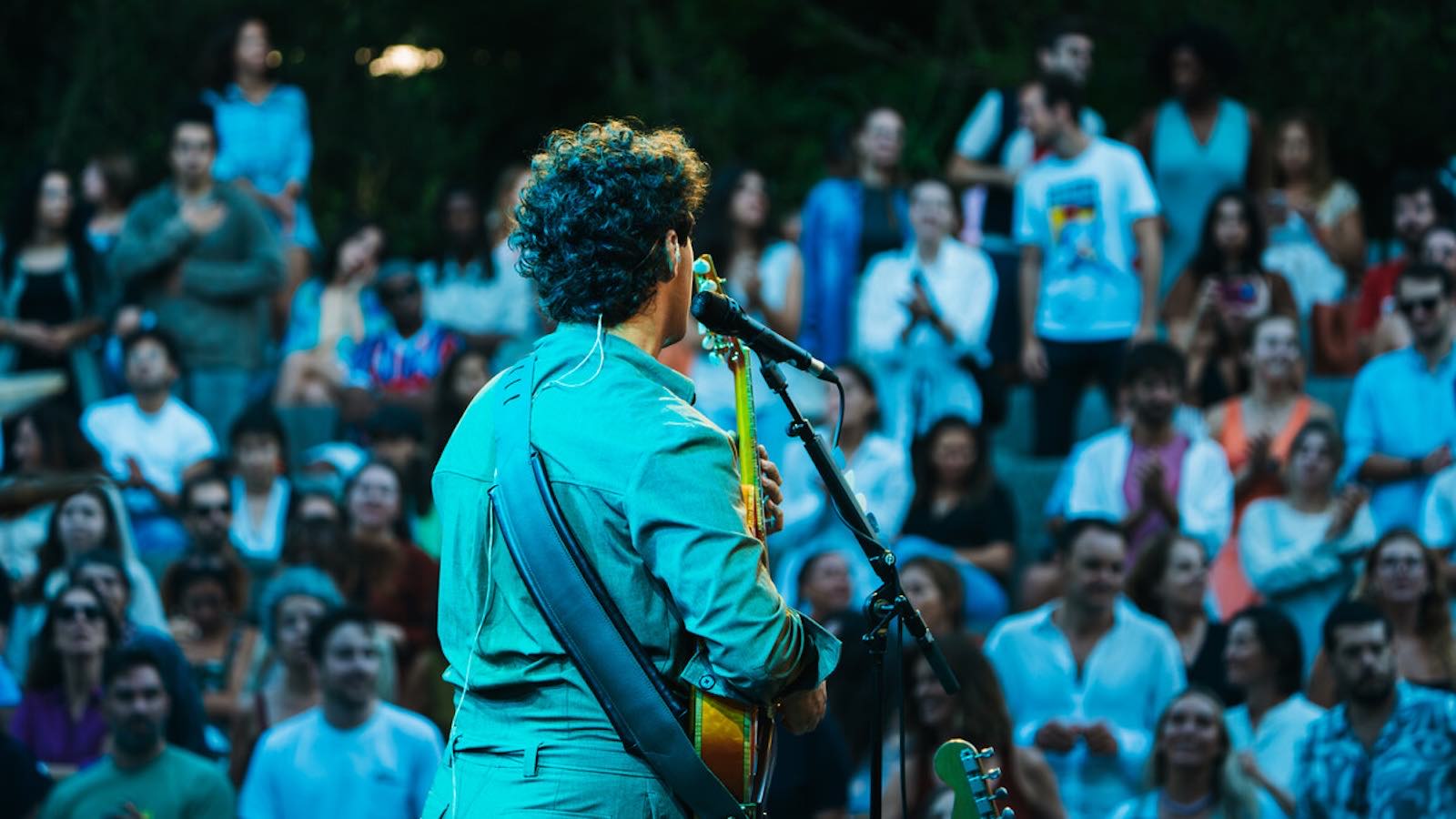
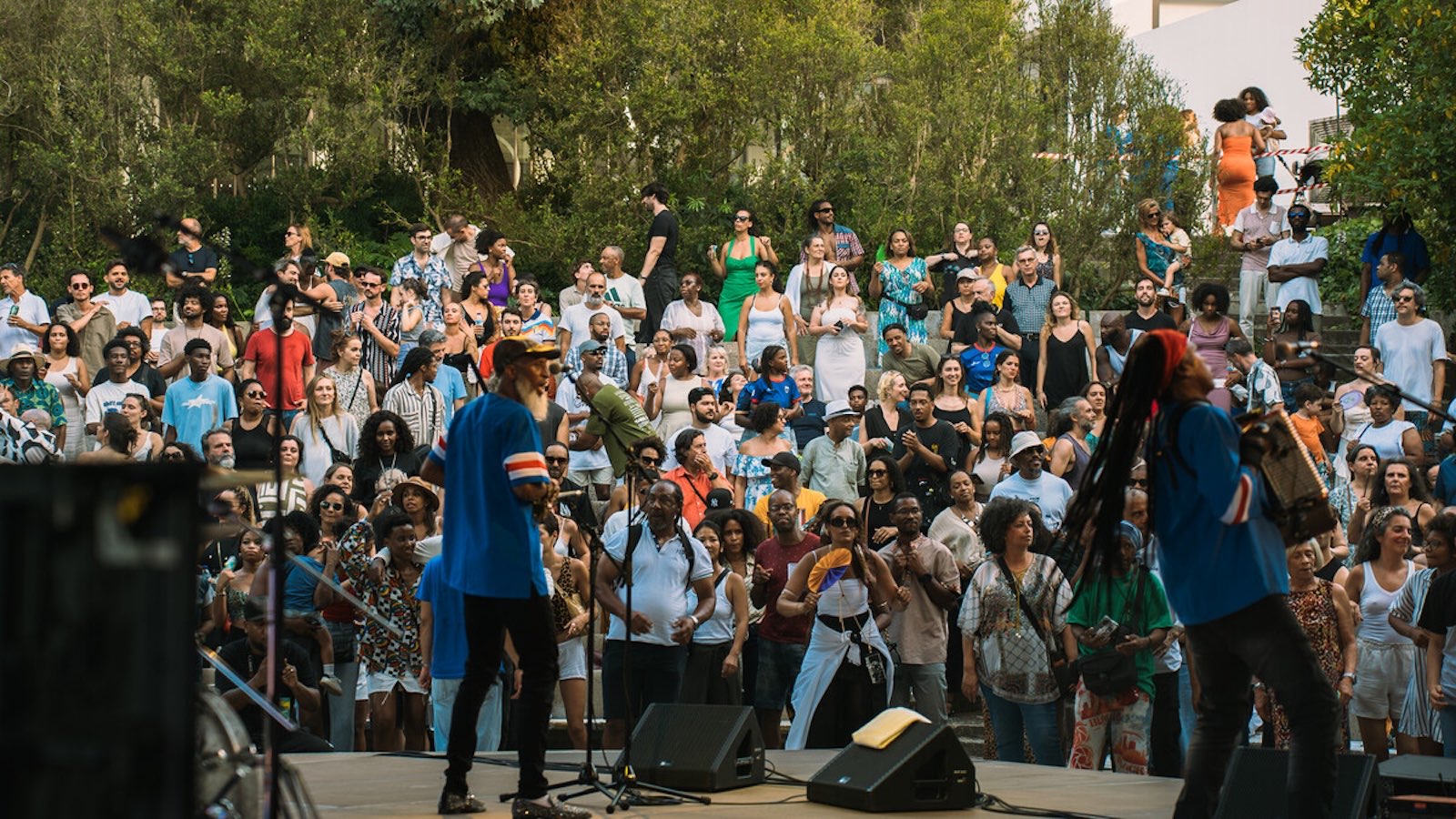
There is still room for discovery, and this is perhaps where the festival most distinguishes itself from a line-up of big names. Dino recalls the year Ferro Gaita took to the stage. A band that Cape Verdeans grew up with, but whose significance was unknown to many Portuguese, and which turned out to be a revelation, with the audience dancing non-stop. And then there is the generosity of the artists themselves, which he describes with gratitude: as everyone receives the same fee, each artist decides whether to come with a larger line-up or alone, with a guitar in hand, and it is not uncommon for them to choose to bring the whole band. What matters to him, he says, is that they bring what they truly are, and not a scaled-down version of themselves.
On his relationship with the Gulbenkian, Dino is forthright in explaining why he is still there after five years, and his explanation is as much one of gratitude as it is of surprise. “Over the past five years, they’ve always trusted me one hundred per cent.” He describes a flexibility and respect that have allowed him to shape the narratives on his own terms, without ever feeling that anyone was using his platforms for their own ends; on the contrary, it is often the Foundation itself that suggests new directions to him. It is this absence of friction, of “antibodies”, that she points to as the real reason for her staying. And she sees it as part of a broader shift within the institution: that of becoming a space where anyone can walk in, even if it’s just to have a coffee. She goes on to list, incidentally, what the centre has published and exhibited: the book on the slave trade routes, which she says she is devouring, or the complexo brasil exhibition, which showcased previously unpublished books and gave her access to a part of her own culture she was unaware of. “I became a fan, without even knowing what the place was like,” she confesses, adding that, when she is there, she feels so at home that she would rather watch than work.
In this year’s edition, one of the highlights is the series “Novas Narrativas de Caça”, whose episodes will be screened at the Foundation, accompanied by talks bringing together actors, producers and directors to discuss each one; an event he describes as historic and which points to a broader trend. The series, he notes with evident enthusiasm, has topped the viewing figures on RTP, which, in his view, disproves the notion that content created by people of African descent is confined to the internet and proves that the public really does want to engage with what is being produced. “We’ve always done it. It’s just that the platforms are better now.”
Salvador, the Amazon and Criolo’s advice: the Atlantic crossing that changed everything
However, one cannot fully understand these five years without considering what was happening in parallel in Dino’s life, and this is where the conversation takes a different turn. The last three years have been, in his own words, a journey – particularly the time spent in Brazil, which gave him a space he says he had not had before: that of spirituality linked to the African continent. He was familiar with African-rooted religions from a distance, mainly through the internet, and felt that, even on the continent itself, Muslim and Catholic cultures predominated; arriving in Salvador, where these roots remain alive, was a culture shock that he describes as positive, and which coincided with a period in which he was deeply questioning his place within that triangle between the PALOP countries, Brazil and Portugal. Today, before taking to the stage, he prays to his orixás. He recognises himself as a son of Oxóssi – the hunter who has but a single arrow and therefore cannot miss – and attributes to this image a change on both a personal and professional level: he has stopped ‘shooting arrows at random’ and has become more assertive in life. At the same time, he is keen to point out, his admiration for the presence of Jesus Christ in humanity has also grown.
It was advice from Criolo, a Brazilian singer, rapper and songwriter, that helped him come to terms with the tension of belonging to several places at once. “You don’t have to fly any flag other than your own existence,” he recalls being told, at a time when he felt he almost had to claim the right to belong to the country where he was born. The son of Cape Verdeans, born in Portugal, with two homelands that he loves and the right to enjoy both, he found a third in Brazil that gave him the space to embrace his African identity without having to fight for that place. Hence his gratitude, which he quantifies: over eighty per cent of his library comes from Brazil, a country that has translated and studied African and Afro-Brazilian thinkers and philosophers to whom, he says, he would not have had access from Europe and whose perspective he distinguishes from the American one, which is, in his view, too centred on African-American history.
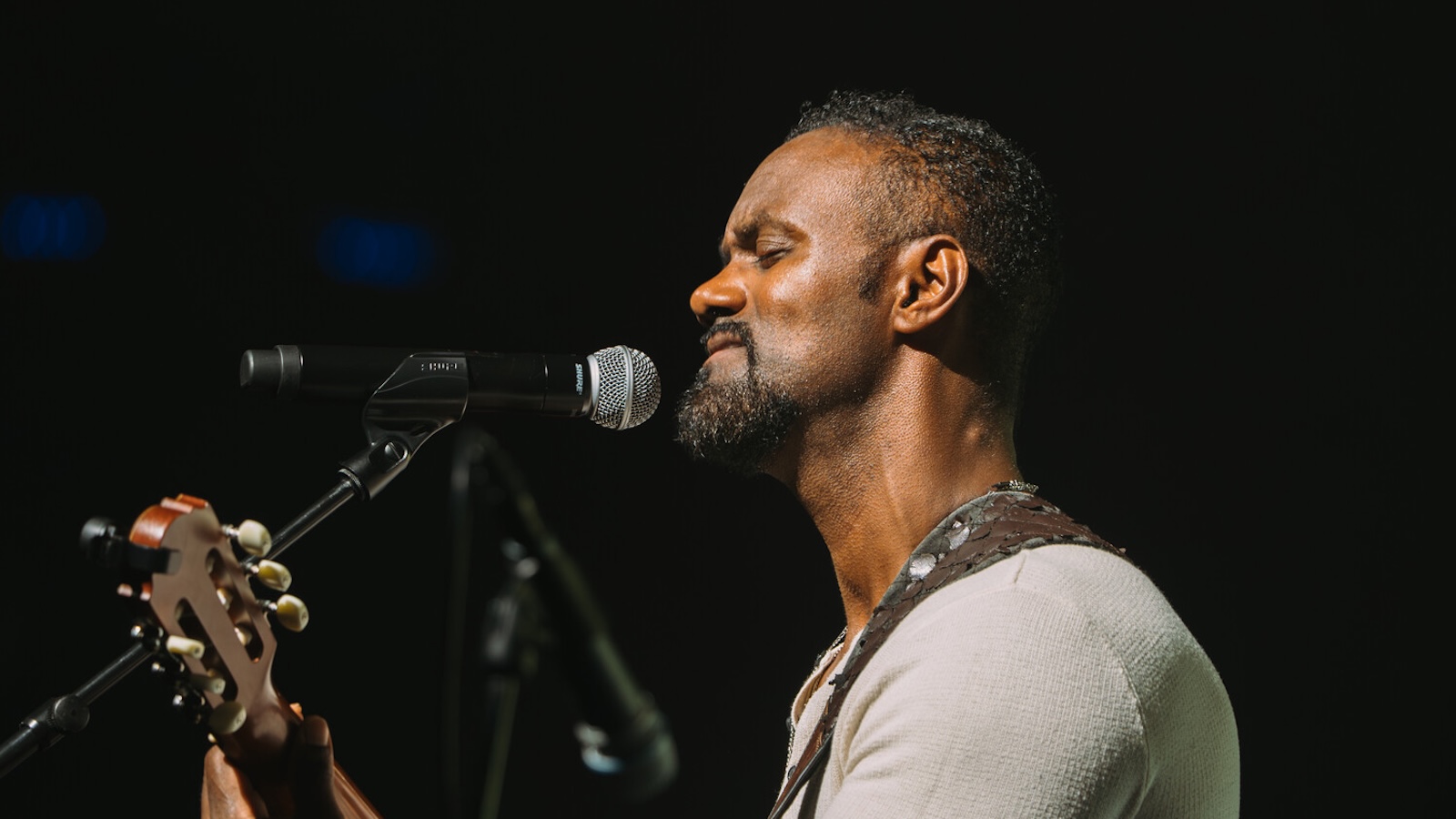
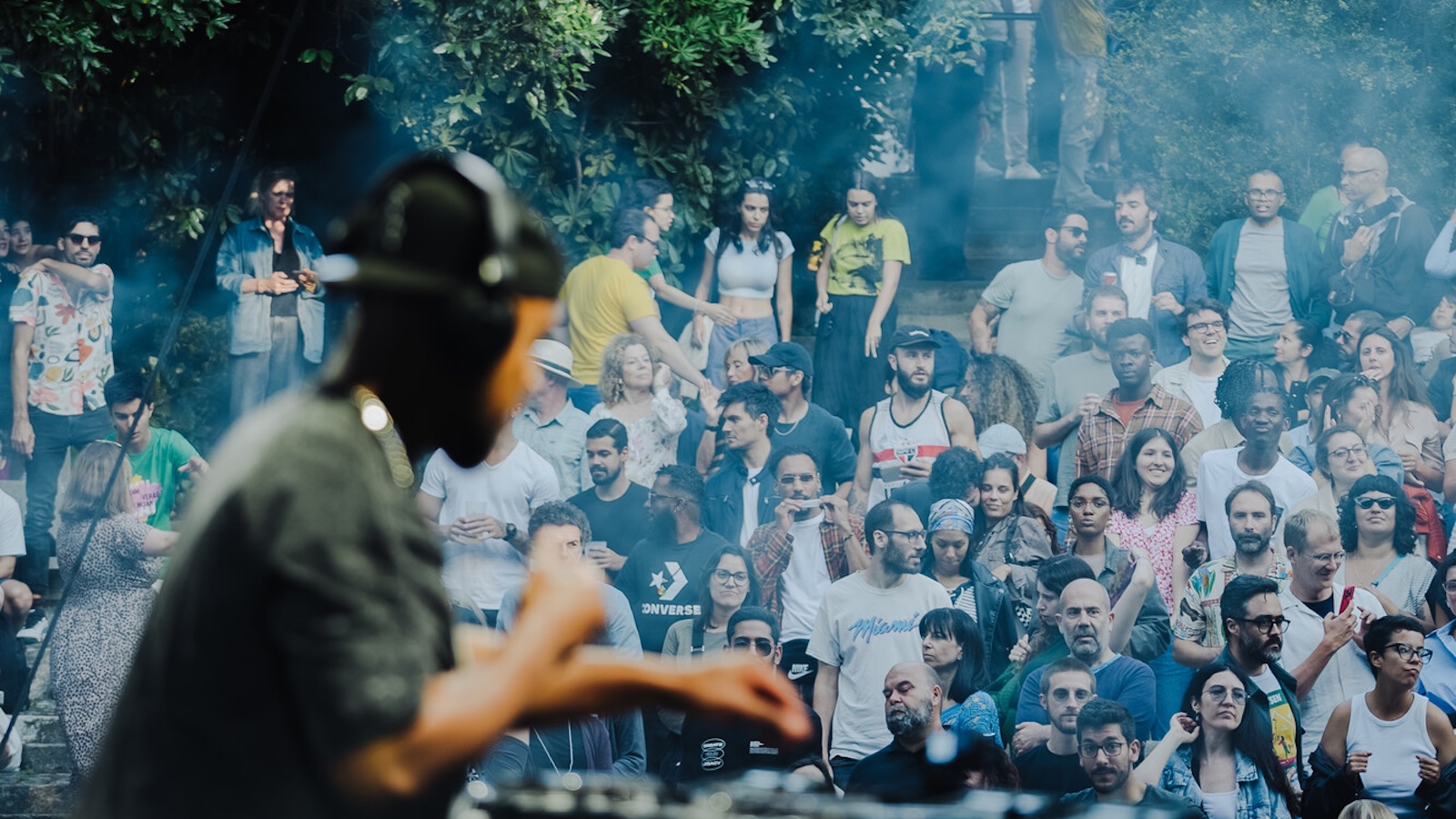
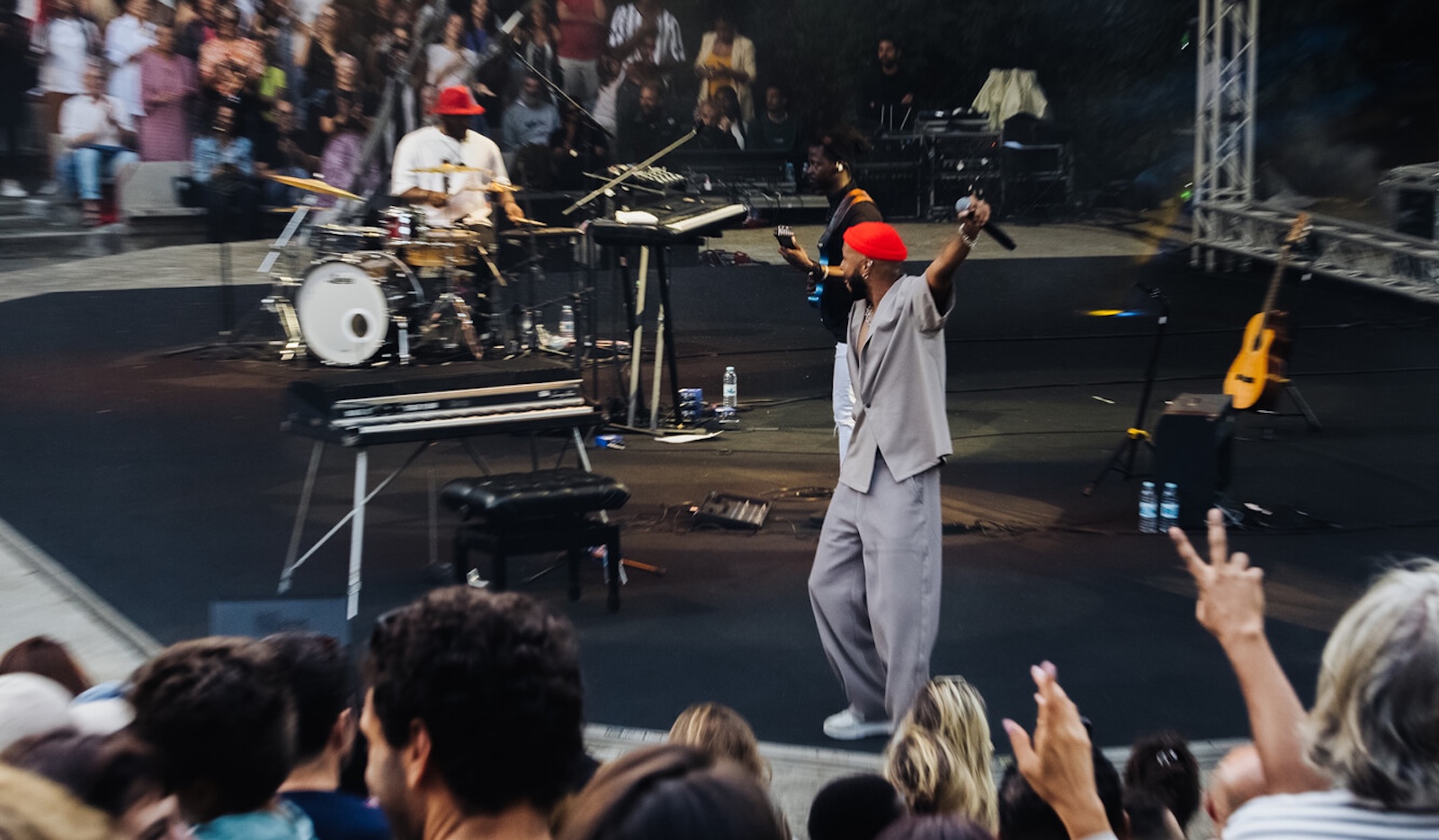
At the heart of it all lies a shift in priorities, which he pinpoints precisely in time: after becoming a father, he realised that everything he did now had a direct impact on his children. Fifteen days in the Amazon taught him that what he had called silence was, after all, the absence of life. He found it hard to adapt to the forest, which was “always roaring”, until, around the sixth day, he came into harmony with it and understood that this was the connection with nature that African peoples had always felt. “That’s why we suffer when we come to work in Europe,” he observes. From then on, he focused on his family and social work, and the Mundu Nobu project – an association he runs with Liliana Valpaços – has become one of the pillars of his life, with the children he looks after taking the place of his own. As for social media, he has chosen to distance himself deliberately: he doesn’t read messages, he posts his updates and moves on, refusing to be absorbed by that energy field. “The street has always given me love,” he says, in contrast to the parallel universe that has been built online and which no longer holds any legitimacy for him.
Regarding what is required for this edition, Dino offers a piece of advice that is both practical and ethical. Tickets are free and can be collected on the day itself, from 3.00 pm, with a limit of two per person. And anyone who suspects they might not actually be going to a concert should refrain from collecting them, so as not to take the place of someone who really wants to be there. It is a consideration which, in his words, extends the very spirit of the event: that of families sitting on the grass, with speakers playing, bodies belonging to that place without a hint of friction. More than the music, more than anything else, it is this sense of belonging to the space that he considers the most beautiful aspect of the Summer Garden. It is, in the end, the same idea expressed in different words: the greatest work of art is the audience.
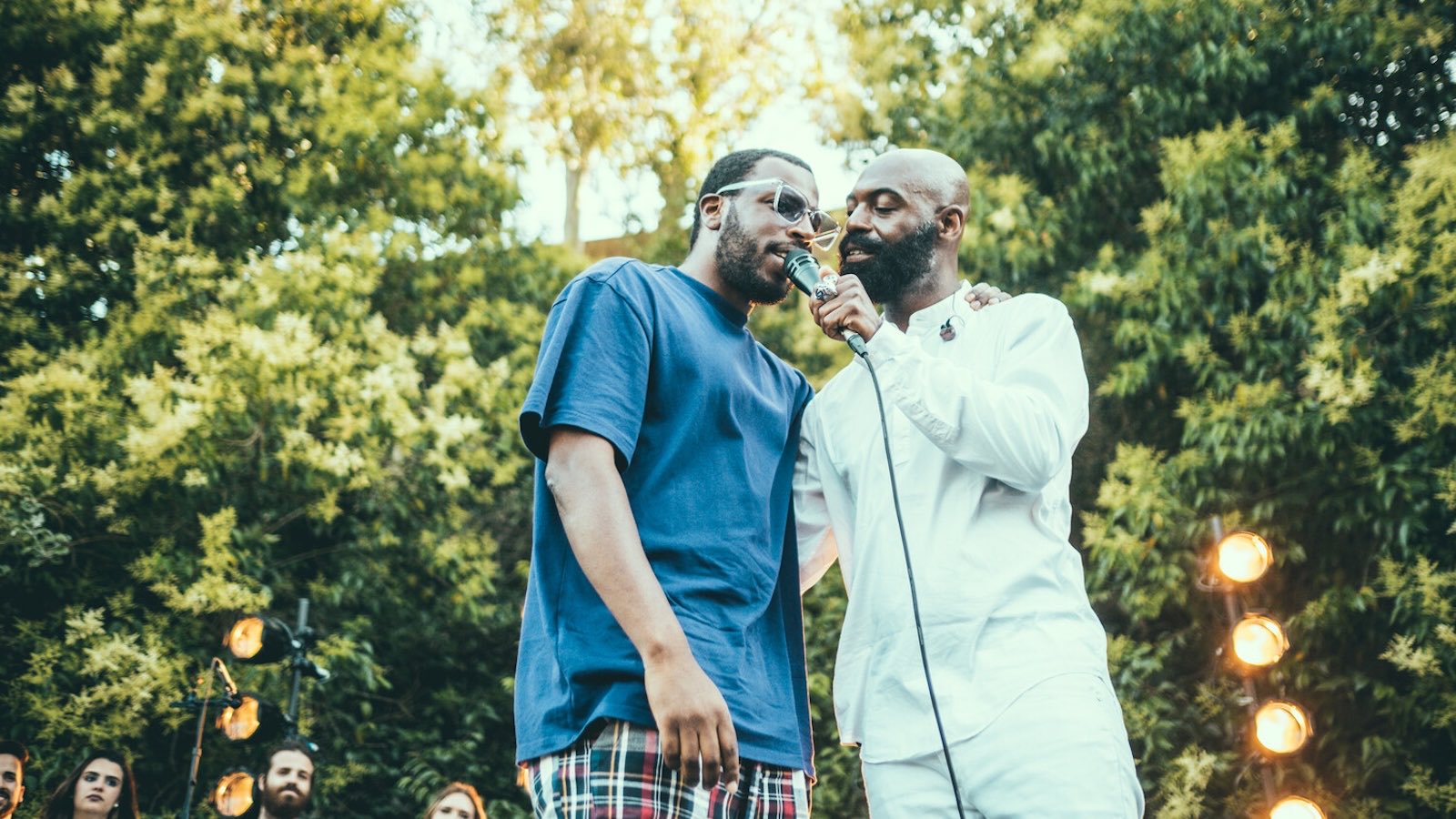
And after the summer? In September, Rio de Janeiro and a tour of Brazil. And, in the final quarter of the year, a new album – the first since Badiu, released in 2021, recorded over the course of three years, precisely during that journey between Brazil, Cape Verde and Portugal, an approach similar to the Criolo, Amaro & Dino project, released this year. The name has already been chosen, but it’s being kept under wraps: an artistic installation is being prepared for the moment of its reveal.
BANTUMEN at Gulbenkian
Explore the series

No results were found for your criteria.