
‘Everyone has a body, and it’s through our bodies that we are reminded of our humanity.’
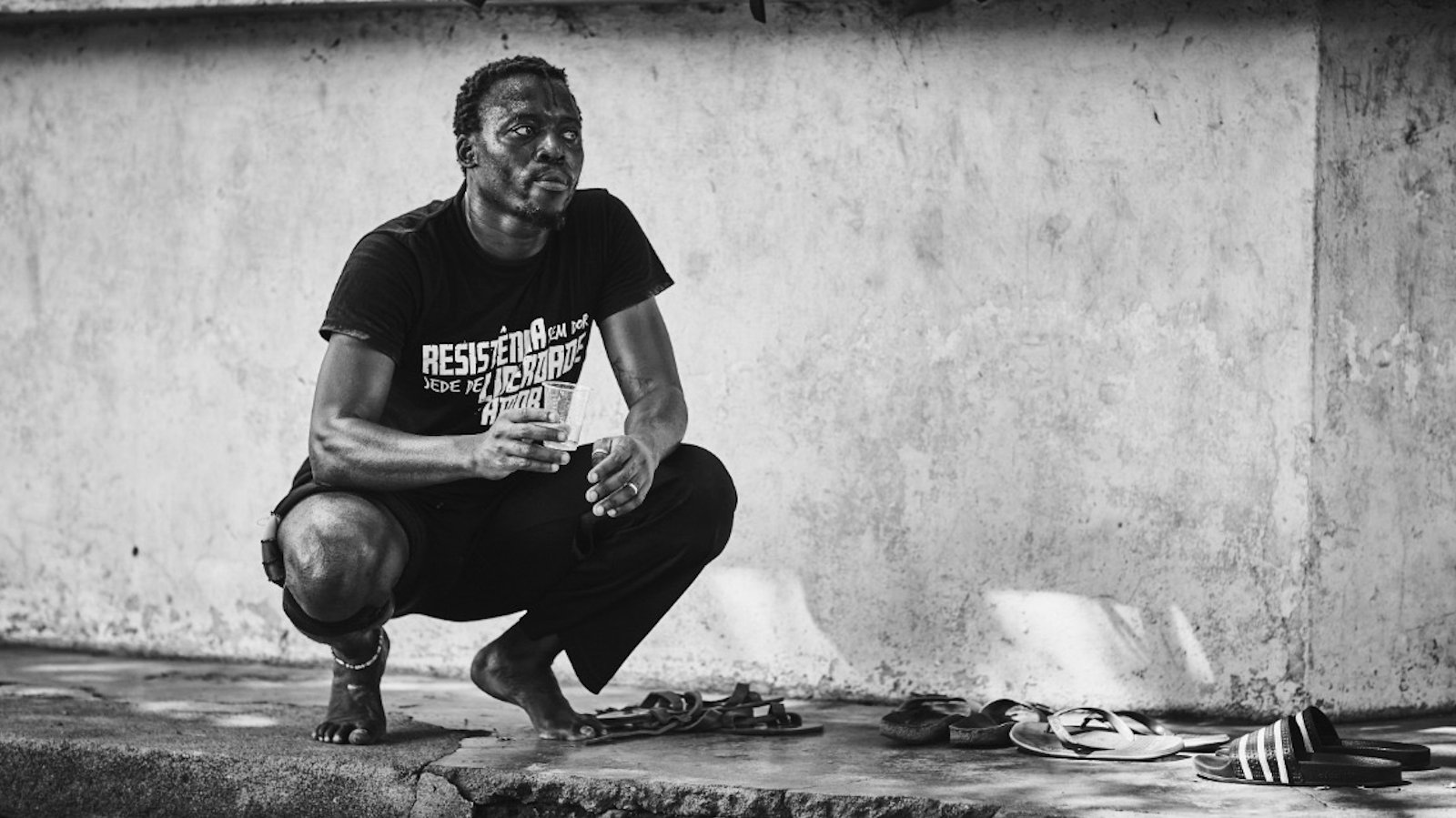
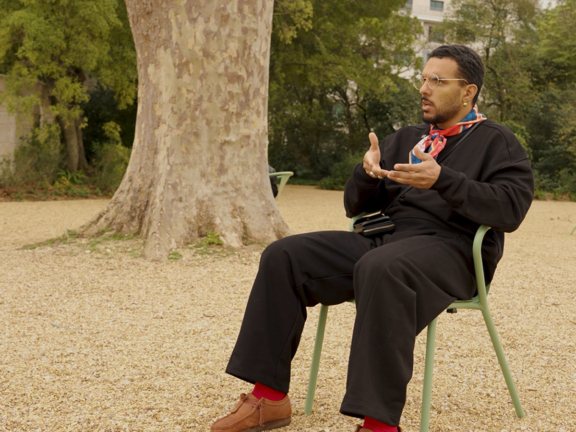
Contemporary Mozambican dance has been establishing itself as a relevant area of research in the African scene, and Idio Chichava’s career helps explain why. The choreographer, shaped by traditional practices and an attentive dialogue with international methodologies, has created a language rooted in everyday life, memory and experimentation, rejecting folkloric stylisation and the uncritical adoption of European models. His work is based on the simple but fundamental conviction that the body is a living archive, capable of storing memory and producing thought.
This insight began taking shape in the rituals and festivals of Mozambique, environments where dance is an expression of the community. Idio speaks of these contexts as the basis of his training: ‘Traditional dances have always been my church and my school.’ In this space, movement is a tool for attention, a way of participating in collective life and a way of listening to the environment. Improvisation arises not as an aesthetic device, but as a natural consequence of being in relation to one’s surroundings. This is where he came to understand that the body thinks and that creation is born from this ongoing dialogue with the immediate world.
Intuition found new life when foreign choreographers visited Maputo and worked with local dancers. The encounter with Thomas Albert and David Zambrano, in particular, confirmed to him that the wisdom of the body could be taken as a method. ‘They allowed space for the intelligence of the body’, he recalls. The experience consolidated the idea that Mozambican tradition contains a potential contemporary repertoire, capable of dialoguing with other international scenes without losing its origin or authenticity.
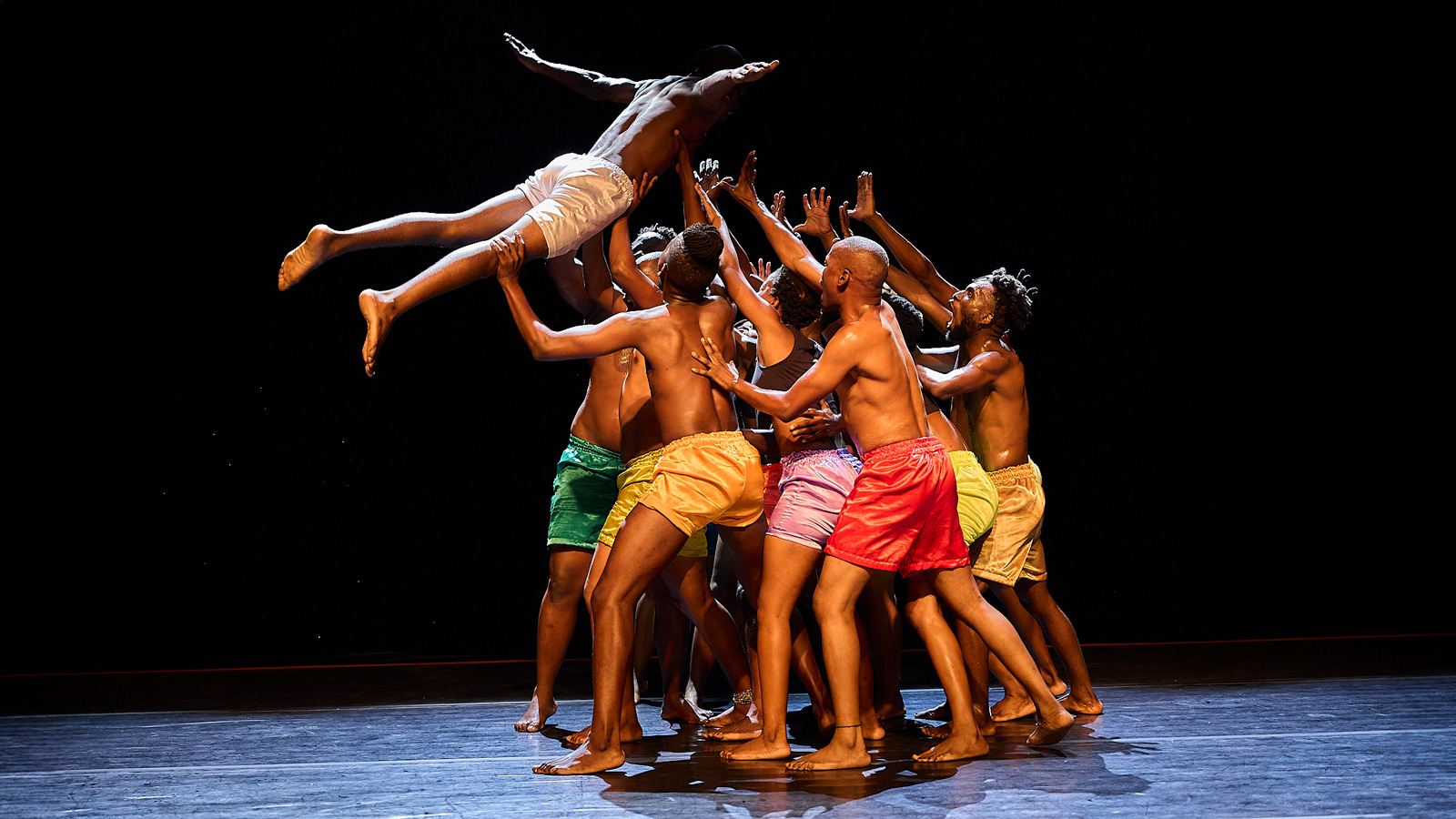
The relationship between memory and creation manifests itself in the way he organises movement. In traditional schools, he recalls, the body does not dance alone: ‘You dance and sing. The voice completes the movement.’ This fusion has shaped his artistic vocabulary and structured the way he constructs dramaturgy. The collective physicality that runs through his projects, the way bodies call to each other, and the centrality of everyday Mozambican life give his works a coherence that he sees as an essential part of his identity. ‘This is where I come from. This is what I have. This is where I start to create.’
Tradition, however, does not exclude technique, and the choreographer insists that the dedication he seeks on stage can only be sustained through rigorous preparation. ‘I am not interested in the age of the body, nor the size of the body. I am interested in training and availability.’ He advocates disciplined studio work, attentive to the possibilities and limits of the body, capable of sustaining a dance that aspires to circulate globally. For him, the Mozambican scene has the potential to gain international recognition, provided that artists have the time and structure to further develop methods and processes.
That’s where the community side of his work comes in, one of the areas that best reveals where he wants to put Mozambican dance. The performers who work with him not only take part in creating the choreography, but also get involved in the day-to-day running of the company, helping out with production, internal organisation and logistics. ‘They are at the service of dance’, he says, not in a hierarchical sense, but as a way of ensuring that the work is constructed collectively and consciously. The idea that each dancer is responsible for more than just their own body reflects a broad vision of what it means to dance in Mozambique, where the institutional network that in other contexts ensures the continuity of projects is often lacking.
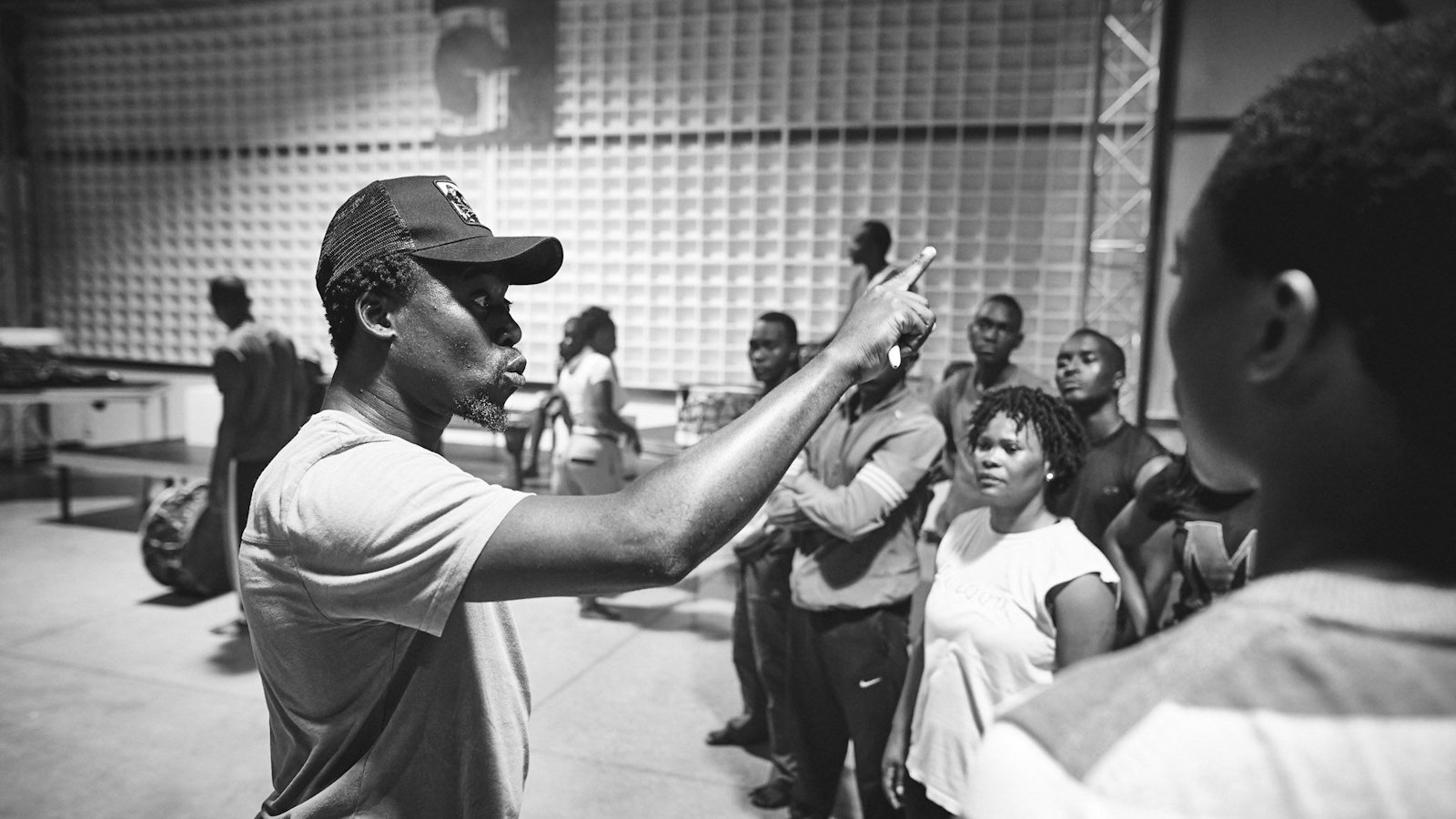
This practice gave rise to Converge+, a platform described as a ‘place for artistic collaboration, encounters and experimentation’. The space functions as a structure for creation and coexistence, where performers are encouraged to think critically about their own process, to experiment with interpretations, and to share questions and solutions. Idio often emphasises that “each dancer is an institution’, reinforcing the importance of autonomy and individual responsibility within a collective intelligence. Converge+ thus fulfils a dual role: it supports artistic projects and trains a generation of performers used to thinking about dance beyond technical execution, integrating production, criticism, management and the relationship with the audience.
This understanding extends to how he conceives the circulation of works. For the dancer, training artists is inseparable from training audiences. Bringing the periphery and the centre closer together is therefore a fundamental condition for preventing dance from becoming elitist. The work must return to the places where it was imagined, to the contexts that give it substance. ‘Dance has to be at the service of people. It cannot be bound by codes that alienate,’ he says, summarising a position that emerges particularly clearly in Vagabundus.
The piece, one of his recent creations, marks a turning point in the way Idio thinks about the dancing body in Mozambique. ‘We have to start getting people to read dance based on what we dance here, on the way we think’, he explains. Vagabundus stems precisely from this urgency: it challenges the dominant perception of which bodies are allowed to occupy the contemporary stage and which aesthetics are legitimised. Idio puts bodies on stage that carry everyday life, rhythm, scars and memory, rejecting the expectation of neutrality often associated with contemporary western dance. ‘Everyone has a body, everyone feels pain’, he says, emphasising that the work calls on this shared humanity to dismantle symbolic and geographical boundaries. The piece insists that there is no place where a Mozambican body cannot be – ‘we are beings of the world’ – and makes visible an ethic of presence that permeates all his work.
In this context, the SEDA Prize, launched in 2024 by the Gulbenkian Foundation (in partnership with other European cultural institutions) and won by Ídio (with Dorothée Munyaneza) in its first edition, represented a turning point in his career, allowing him to move forward with the creation of a studio on the outskirts of Maputo, a long-desired project. ‘We don’t have spaces where work can be monitored, where it can be tested, where mistakes can be made and corrected. There is no intermediate space between the idea and the stage.’ The new studio seeks to occupy this space of maturation, functioning as a laboratory where processes can gain time and context. The construction, designed in dialogue with the neighbourhood, is progressing despite financial constraints: land acquired, licences obtained, architectural design finalised and walls going up. ‘About 45% of the work is done,’ he sums up. More than just physical work, Idio sees it as a transformative gesture: ‘Just the fact that it has started already changes everything.’
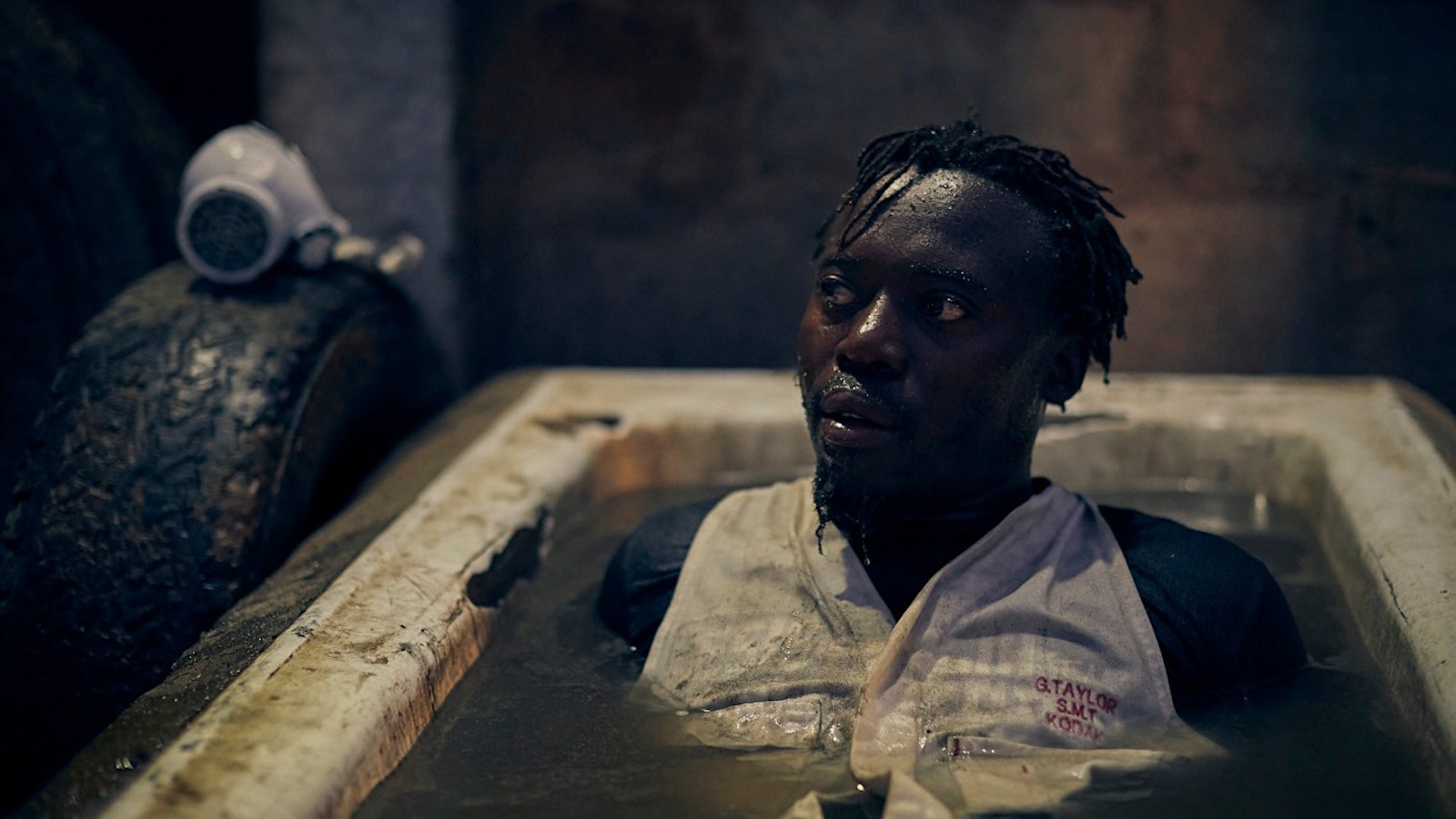
In addition to creation, the studio aims to be a space for continuous training, where young dancers can experiment with methodologies, test physicality, and learn production. ‘We have to create conditions for Mozambican artists to have works ready for the market,’ he says, advocating a model that produces from Mozambique and does not respond to external expectations. This ambition includes rethinking production models: ‘I’m not interested in copying a European studio. I want to think about what a Mozambican production looks like, with our rhythms, our ways of doing things.’
International visibility brings responsibilities, but Idio resists the idea of shaping his work to fit narratives that place African artists into pre-fabricated categories. ‘We have to work as Mozambicans with what Mozambique offers. The world will accept that for what it is.’ When projecting the future, he describes it as something that is already hinted at in the present: ‘Mozambique with the potential to establish itself as a platform for contemporary African dance. I imagine the country as a window where everyone will want to come and learn from us.’
BANTUMEN at Gulbenkian
Explore the series


No results were found for your criteria.
You may also like
No results were found for your criteria.