
Small steps that change lives
-
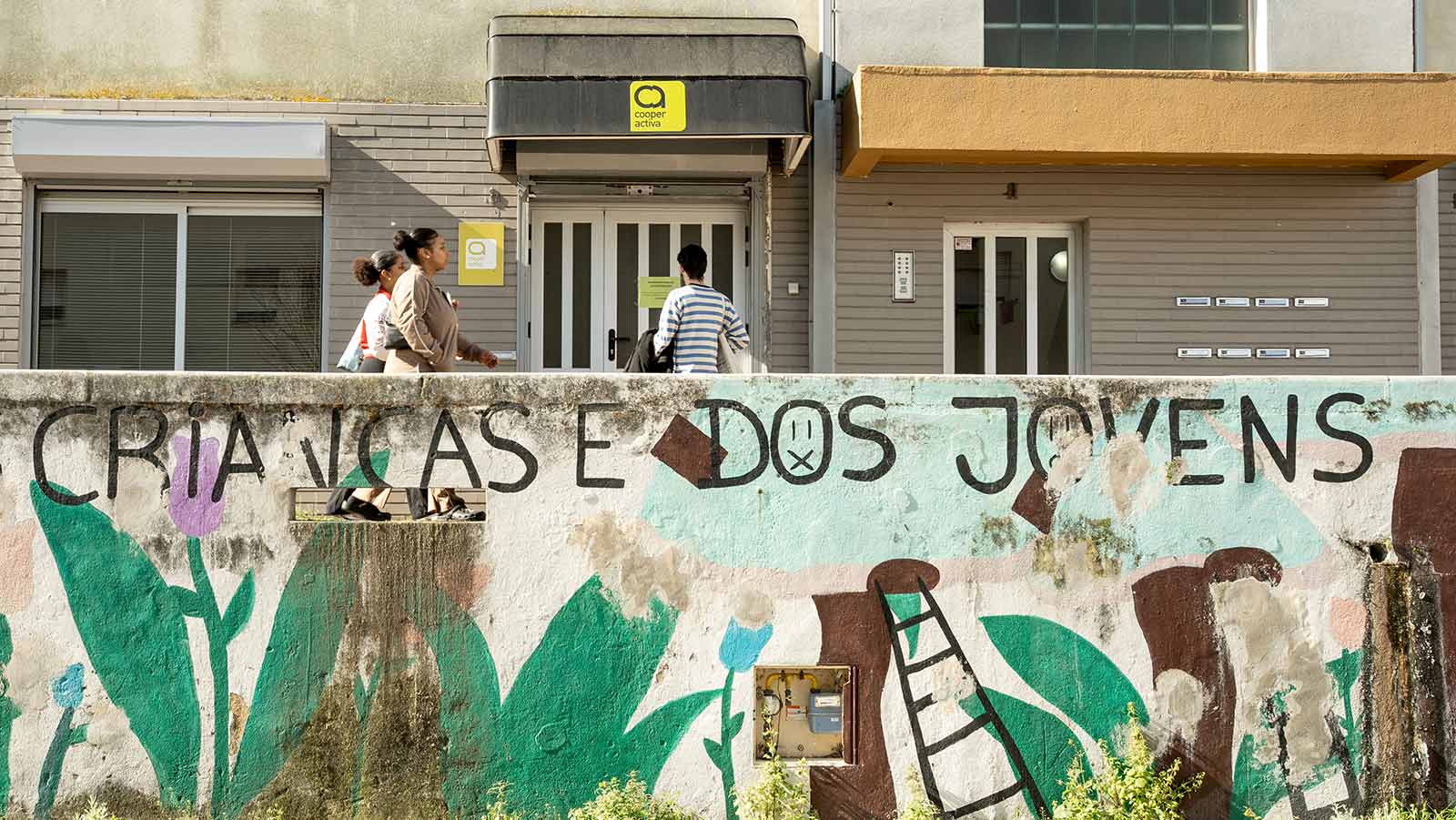
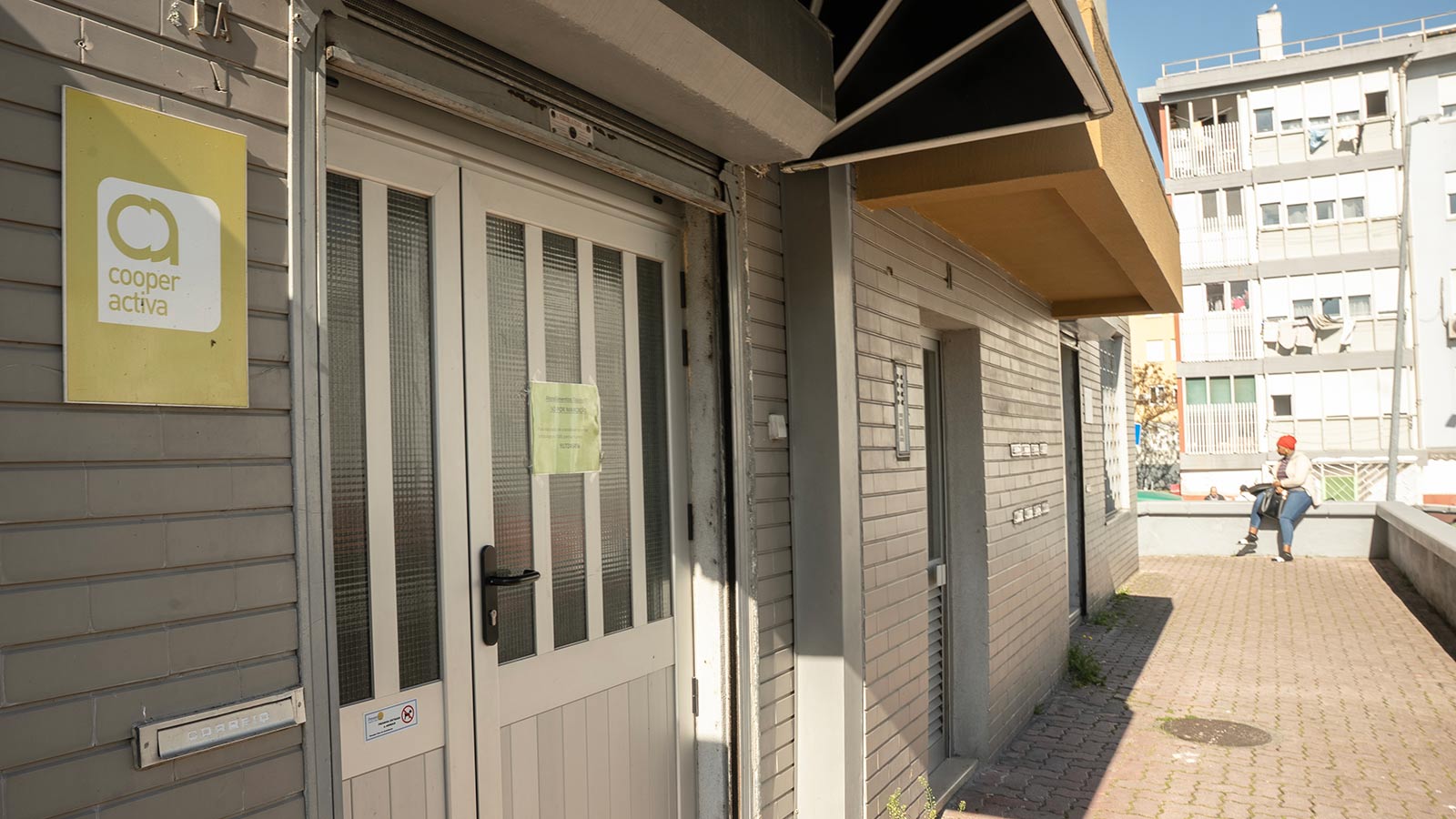
Cooperactiva, which has been operating for 20 years, is home to the Gulbenkian Study Centre in the Zambujal neighbourhood © Márcia Lessa
A youngster walks in. A few minutes later, a second one arrives, soon followed by a third. It’s study time at the Gulbenkian Study Centre.
At the door, Ana Paula coordinates arrivals, passes on instructions and handles the little details that keep everything running smoothly: “Lara’s already in the room. You can go and join her”; “Angela hasn’t arrived yet, but you can wait downstairs”; she’ll get one hot, one cold, and one without – referring to how each person takes their milk with cereal at snack time.
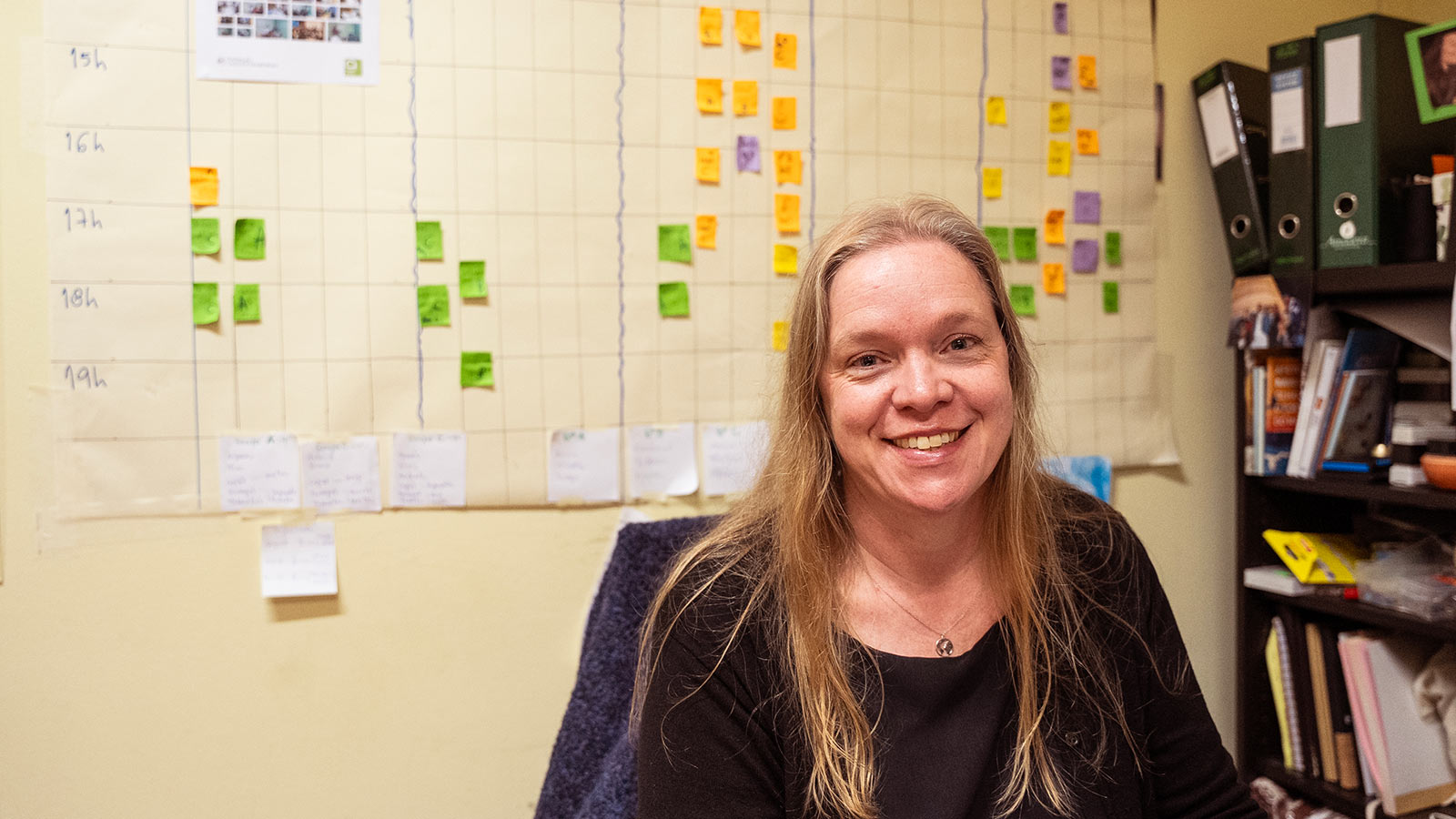
A social worker and employee of the Cooperactiva Cooperative, where the Centre operates under her management, Ana Paula Silva knows every student. She speaks to the mothers when they arrive and calls them when she needs to remind them that “tomorrow is tutoring day”. She is aware of how their grades are progressing and of everyone’s general mood. She manages timetables on a board covered in post-it notes, “otherwise it would be impossible” – and, with 23 students to look after, she coordinates teachers and mentors, acting as a link between the school and the Gulbenkian Foundation, which runs the project. And, in addition to snacks, she also takes care of other activities that come up – a trip to Jump Yard with the younger ones, a concert at the Gulbenkian Grand Auditorium, a visit to CAM with the older ones during the Easter school break, a visit from Physics students from Instituto Superior Técnico, and any other activities that come up.
That Wednesday, she had to improvise. The mentors, all Gulbenkian scholarship holders and university students, cancelled at the last minute. Their university had rearranged their schedules. Augusto had never attended a session with the mentors, but Tiago encourages him: “You have to go. It’s really cool. They chat with you and give you advice.” They talk about choices, possibilities, the future. They share their experiences, and this is encouraging. That’s what he explains to his friend, who is a 9th grader, and still doesn’t quite know what to do in the coming school year. Most of the kids in the neighbourhood are steered towards professional education, says Ana Paula. But not all of them. Tiago knows he wants to study Arts, but Augusto is still unsure – “I always wanted to be an accountant or a lawyer. But now I don’t know anymore.”
“Now” is very close to the moment of decision. But it is also related to context – ever since he started attending the study centre.
“With hard work I’ll get there”
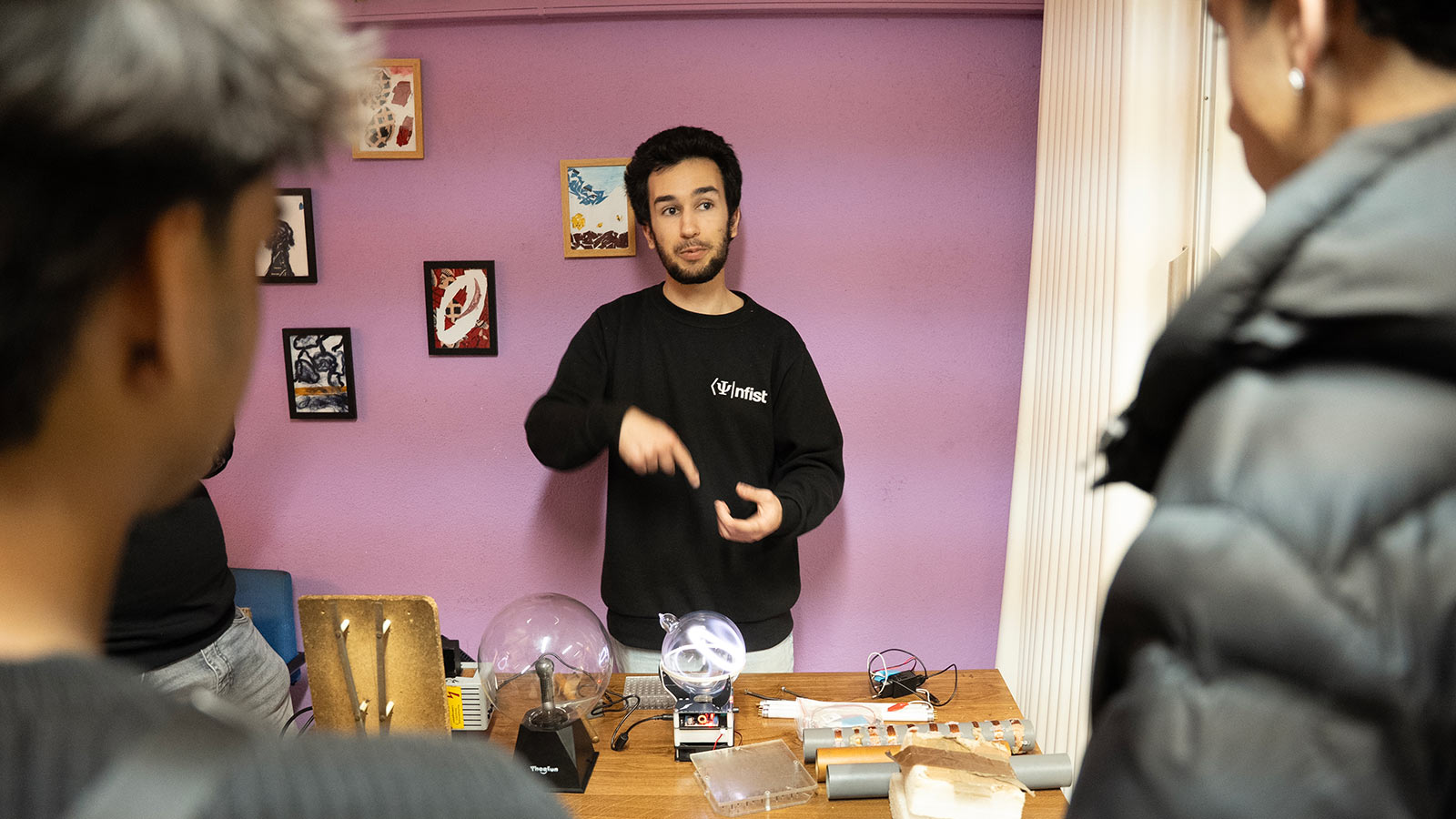
With no mentoring session, Augusto walked past the room where students from the Physics Department at the Instituto Superior Técnico (IST) were conducting experiments with the students. The visit came about by chance, during a meeting at the Calouste Gulbenkian Foundation: Pedro, a mentor at the Padre Cruz Neighbourhood Study Centre and a physics student at IST, suggested to Ana Paula, manager of the Zambujal Centre, that future physicists could conduct experiments with the younger children, sparking their interest in that field of study. Ana Paula seized this opportunity.
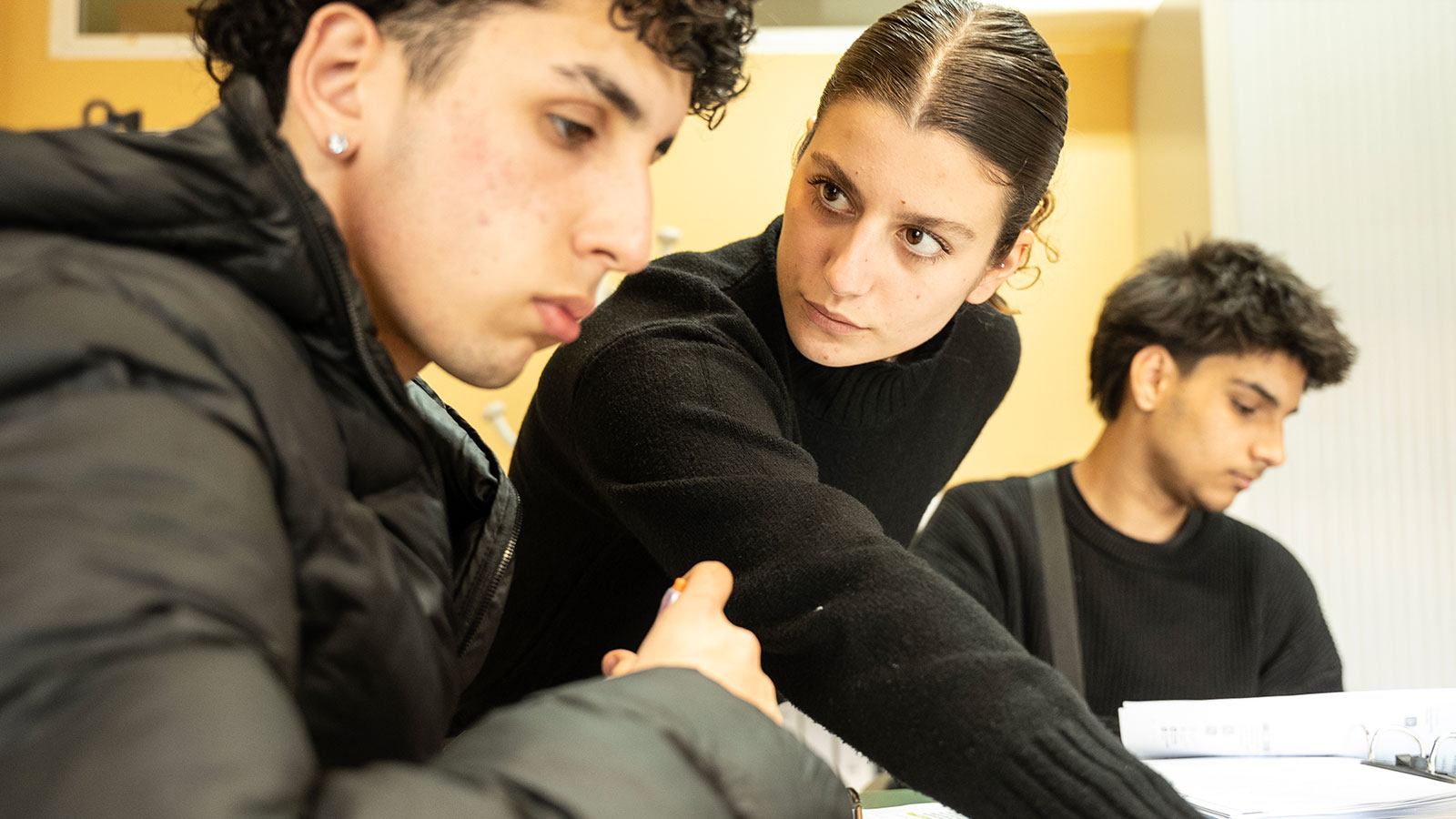
Eager to learn about electromagnetism, Augusto kept asking questions about plasma, volts and amps, atoms, energy and nuclear fusion. No one would guess that he struggles with maths. “Last year I scored 10 out of 100. In the last test I scored 40. But I’m definitely going to pass the one I did today!” he says proudly. He looks at Tiago, who finished all his English worksheets long before his classmates, and explains: “I think I’m a bit slower, but with hard work I’ll get there!” Augusto wants to make the most of the opportunity he’s been given; he wants to achieve what his parents couldn’t and attend university. But above everything else, he wants “to be a role model for his younger siblings”.
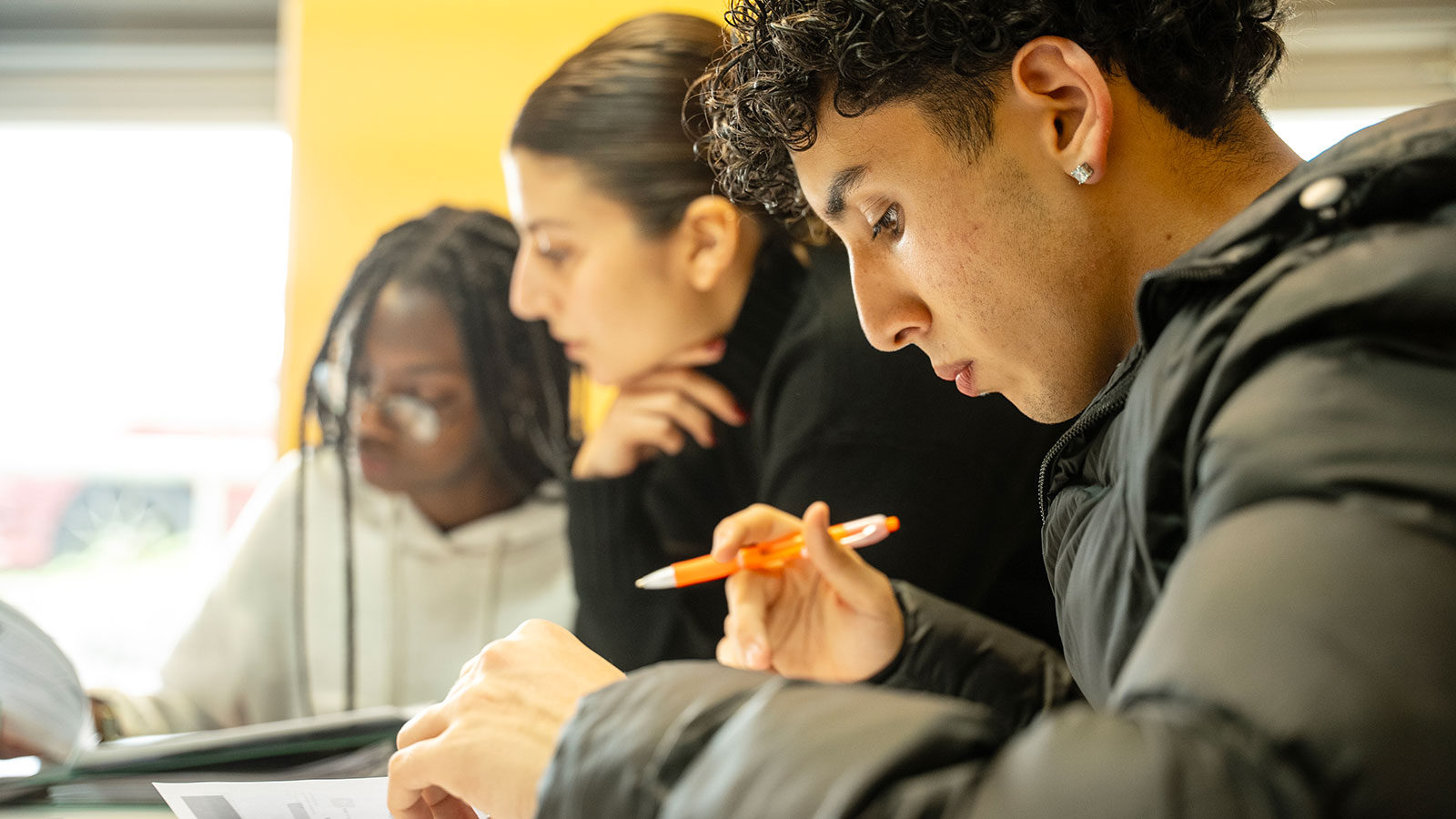
In the classroom, Lara Azeitona – the young aerospace engineer who, whilst finishing her thesis at Instituto Técnico, tutors four classes – encourages him and answers all his questions. Here, there’s no shame in asking questions. The tutoring sessions consist of only three students, usually at the same level of knowledge. And when their levels are not the same, they all help each other. Tiago helps Augusto with English. He hadn’t studied the subject for several years at school, but music and films gave him enough of a grasp to keep his grandes above “90-something per cent”. His grades in other subjects average 80%. In Maths and Portuguese, where Tiago finds it hardest, his grades have improved significantly, but he wants to “do even better”.
No longer invisible
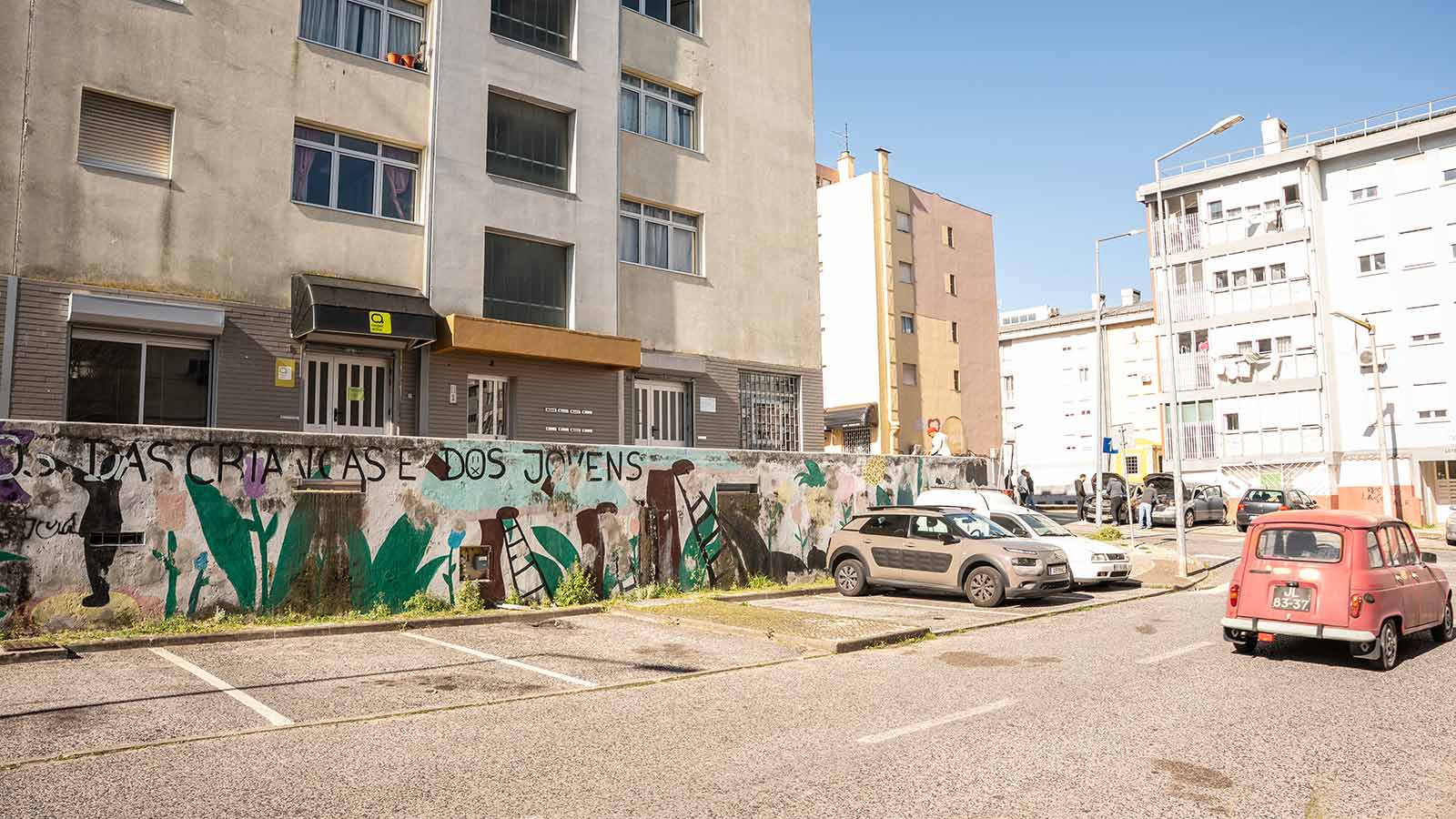
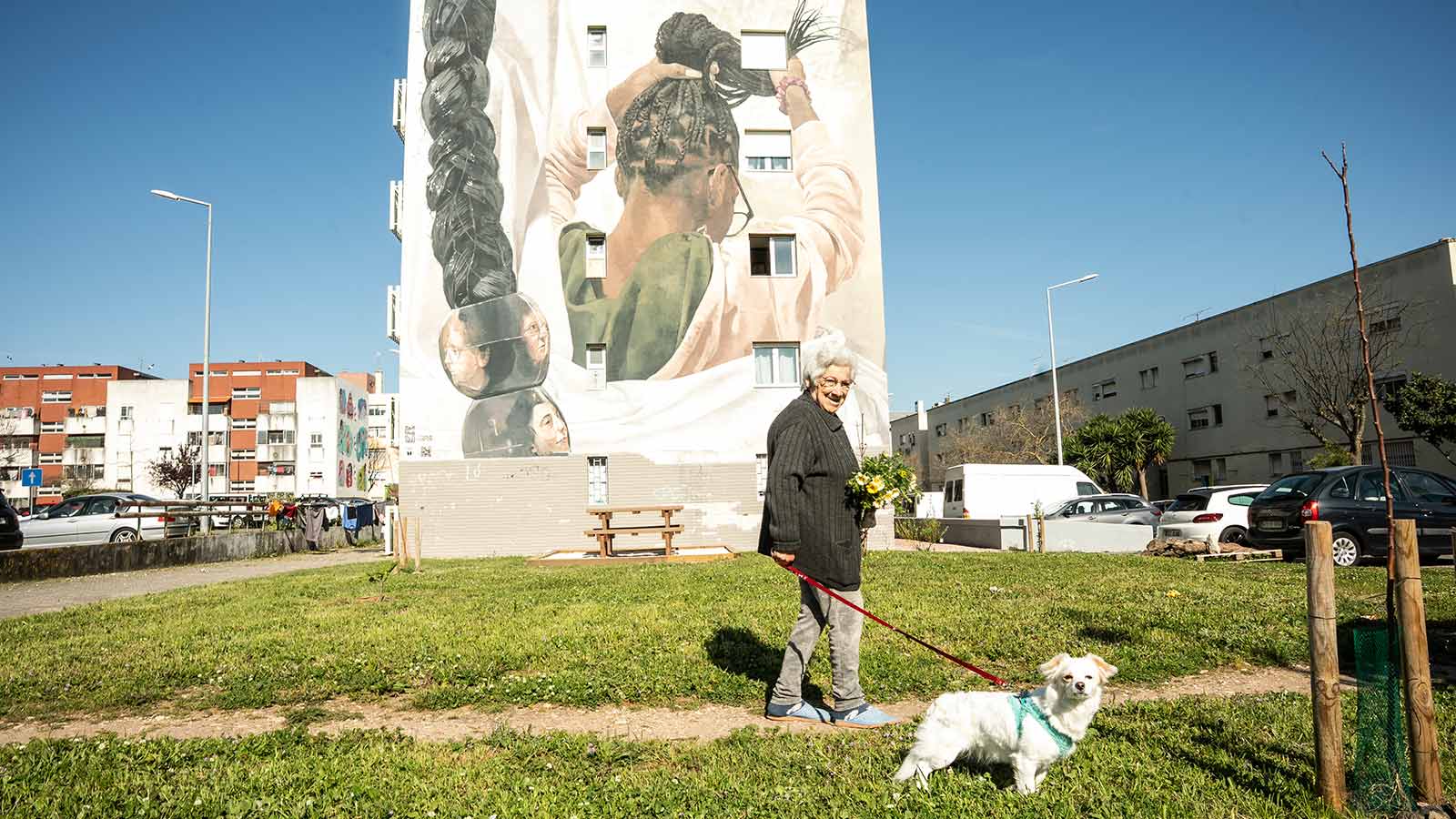
The Gulbenkian Study Centres were established in late 2025 in three iconic neighbourhoods of Greater Lisbon – Bairro Padre Cruz, Bairro do Zambujal and Vale da Amoreira – where school failure and dropout rates exceed the national average. In many cases, the socio-economic vulnerabilities of families are exacerbated by their difficulties in monitoring school performance, supporting learning and helping with homework.
The centres aim to reverse this reality by offering tuition to groups of three students, with teachers specialising in Portuguese, mathematics and English; mentoring; and cultural and exploratory activities outside the neighbourhood. In other words, the centres aim to provide specialised support, personalised guidance, and encouragement for academic ambition, showing that even in these areas there is untapped potential.
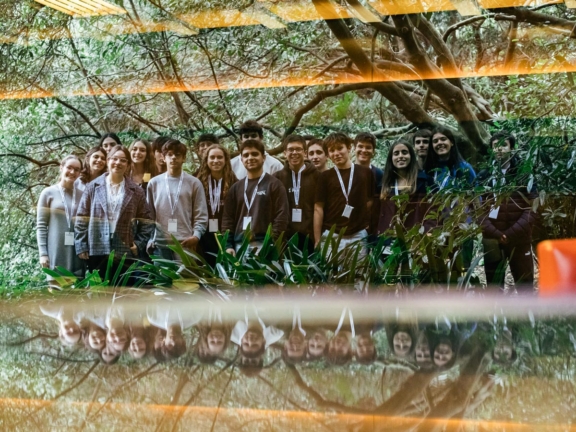
The Zambujal Study Centre has 23 students, from the 4th to the 12th grades, all from the Almeida Garrett School Group, all residing in the neighbourhood. According to Ana Paula Silva, the project does not exist to “address the challenges faced by schools [the lack of teachers is just one example], but to empower students who, despite the difficulties, can be high-achieving students.” It exists, she explains, so that “invisible” students can be recognised – those who are not included in additional support measures at school because they are not at risk of failing, but are also not included in merit-based programmes.
Ana Paula is keeping a close eye on things: on the fourth-year student who asked her to come in every day, on the other who just needs a little encouragement to keep studying, and on Maiara and Inês, who attend a professional school and need some extra help to get into university. Maiara has never studied Philosophy and, in eight months, must cover a two-year curriculum to get into law school; Inês, for her part, is focusing on Applied Mathematics for the Social Sciences in order to apply for psychology.
Predictions? Only at the end of the school year
Nicole, a student who used to get “pass” grades, now only gets 4s and 5s, notes Ana Paula. “And she still argues about her grades!” Her mother, Tânia, is very pleased with her progress. She hopes that the future will be brighter for Nicole than it was for her. Tânia started studying Accounting, but “financial problems” forced her to drop out of her degree. Now, at 35, she’s doing an internship again, which is far better than being unemployed, a situation she ended up in “after having a baby”, according to her. There’s a real sense of hope in the air at the centre.
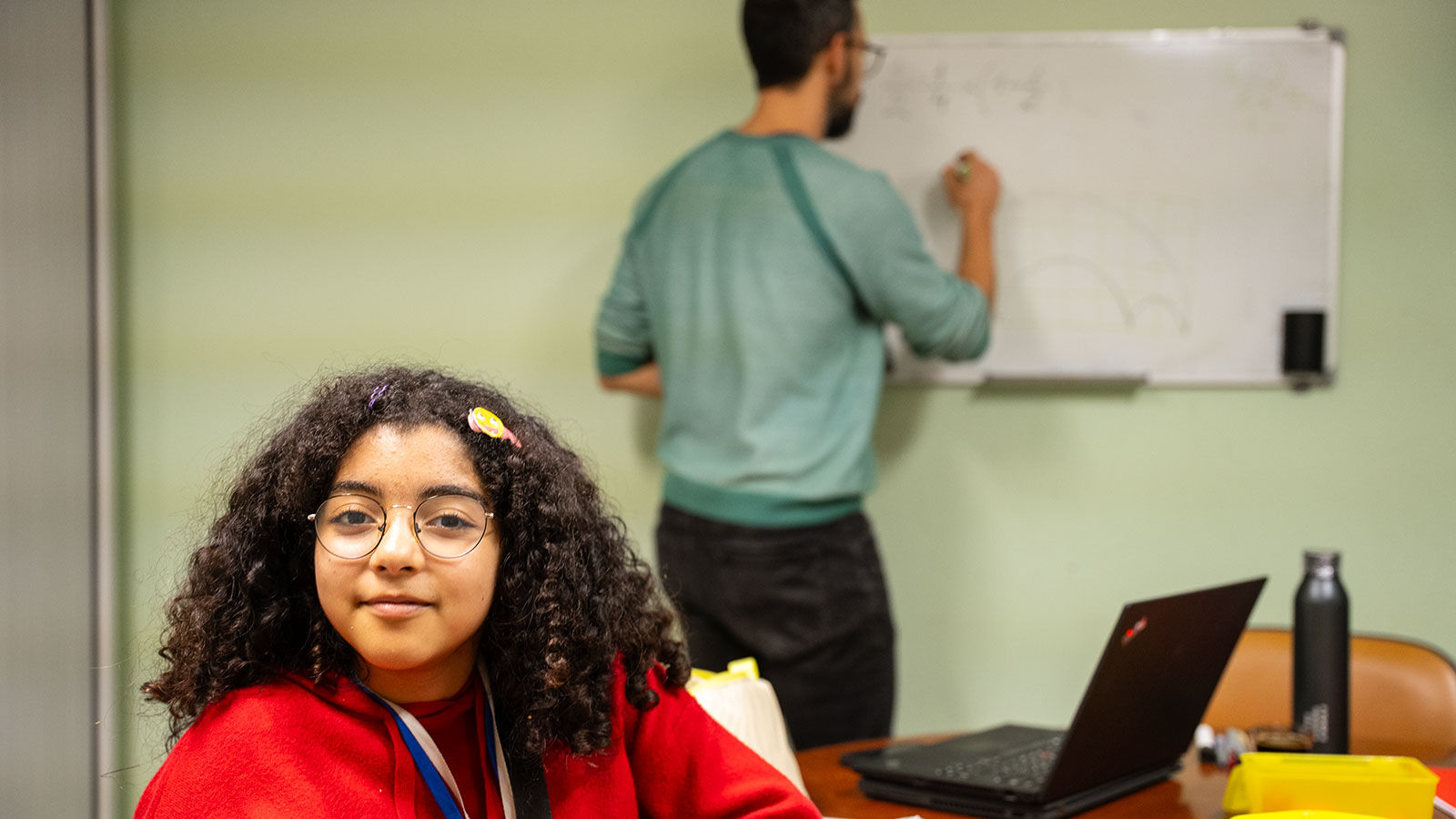
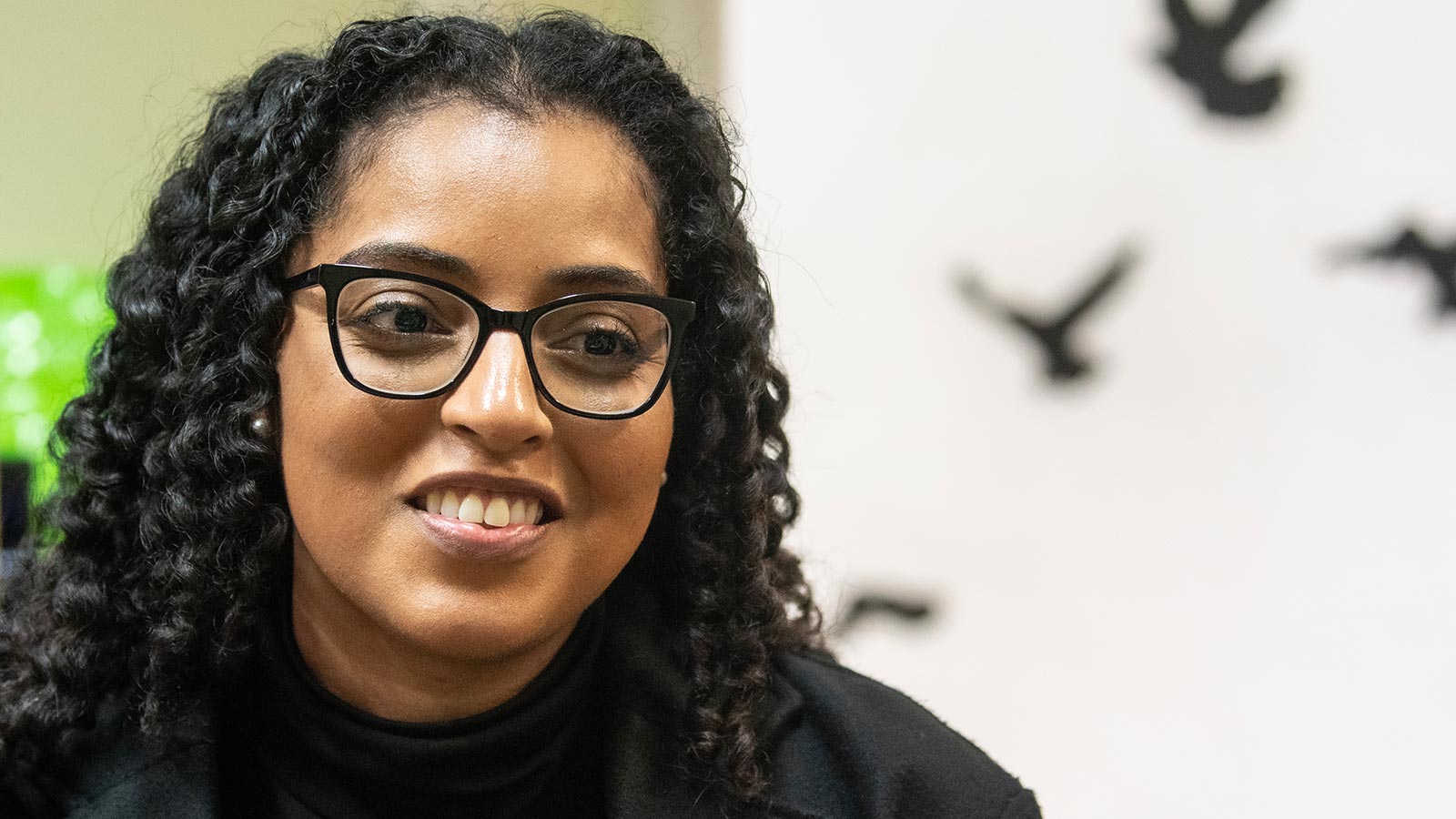
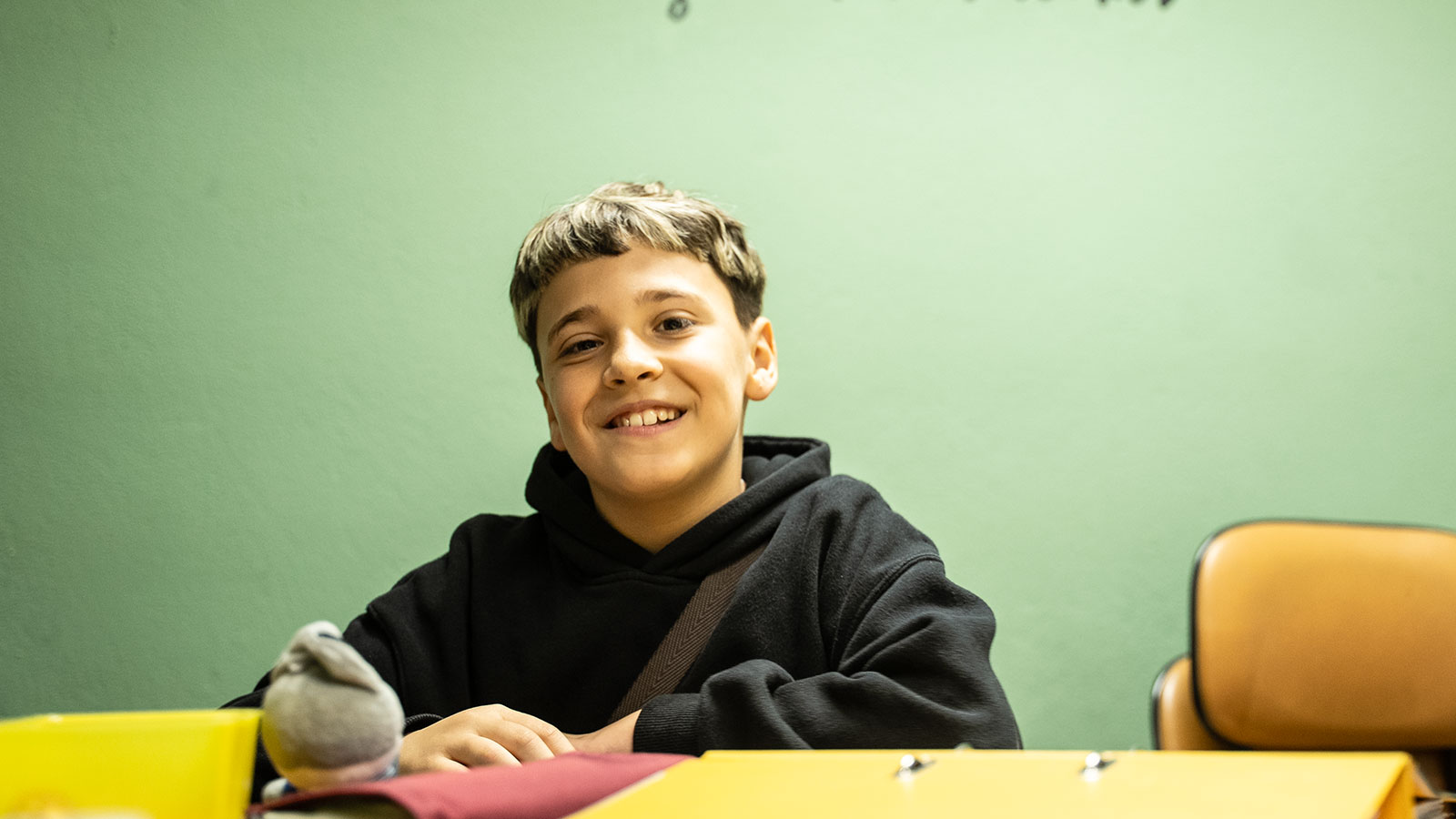
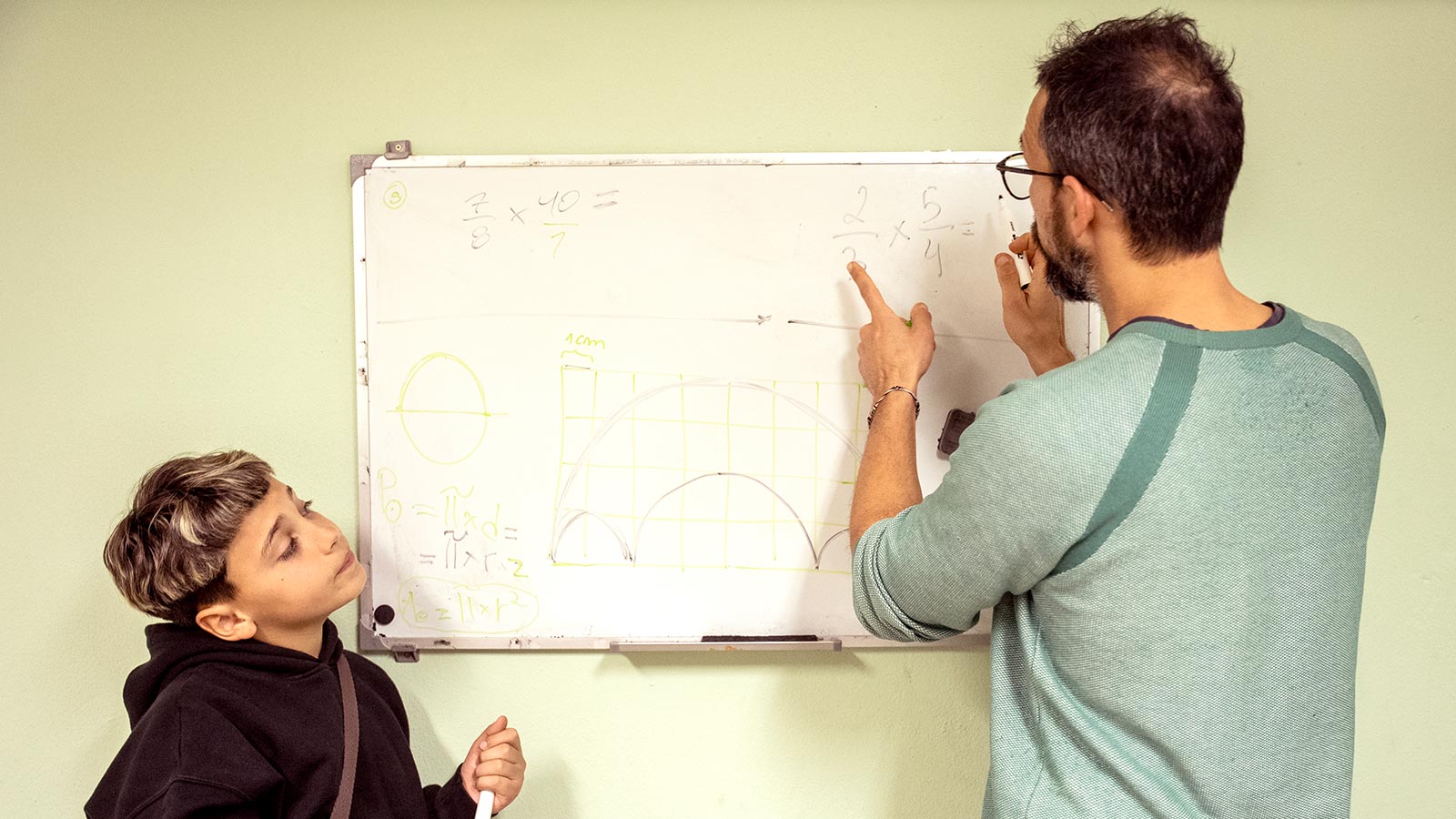
António Mota brought carrots and radishes. “Teacher you got me into carrots!,” says Nicole, before opening her maths book. The blackboard is divided into two sections: at the bottom, volumes for Nicole; at the top, numerical expressions for Diego. Kevin stayed at home, as he’s ill…
António applied to teach these classes because he liked the project. He knew the neighbourhood and had previously been involved with Orquestra Geração, a project run by Amadora Council and supported from the outset by the Gulbenkian Foundation. He teaches at a private school, where the challenges are different: it’s not just the noise and attention in the classroom; “at the centre, the children want to be here and they’re happy. You can feel their willingness, their gratitude. The emotional reward is far greater.” Just a few months on, the results already show up in their attitude, in the way they present their work, in the material they now bring to the lessons. And “Nicole, for example, keeps getting very good grades!”
Despite her reluctance to share results, it’s clear that Ana Paula has already celebrated many victories: Nicole’s grades; her sixth-grade student who “used to get all Fs and, four months later, is getting almost all As”; the student who became a straight-A student (“his mum even posted it on Instagram!”); and Délcio, who was hesitating but ended up signing up for the national exams.
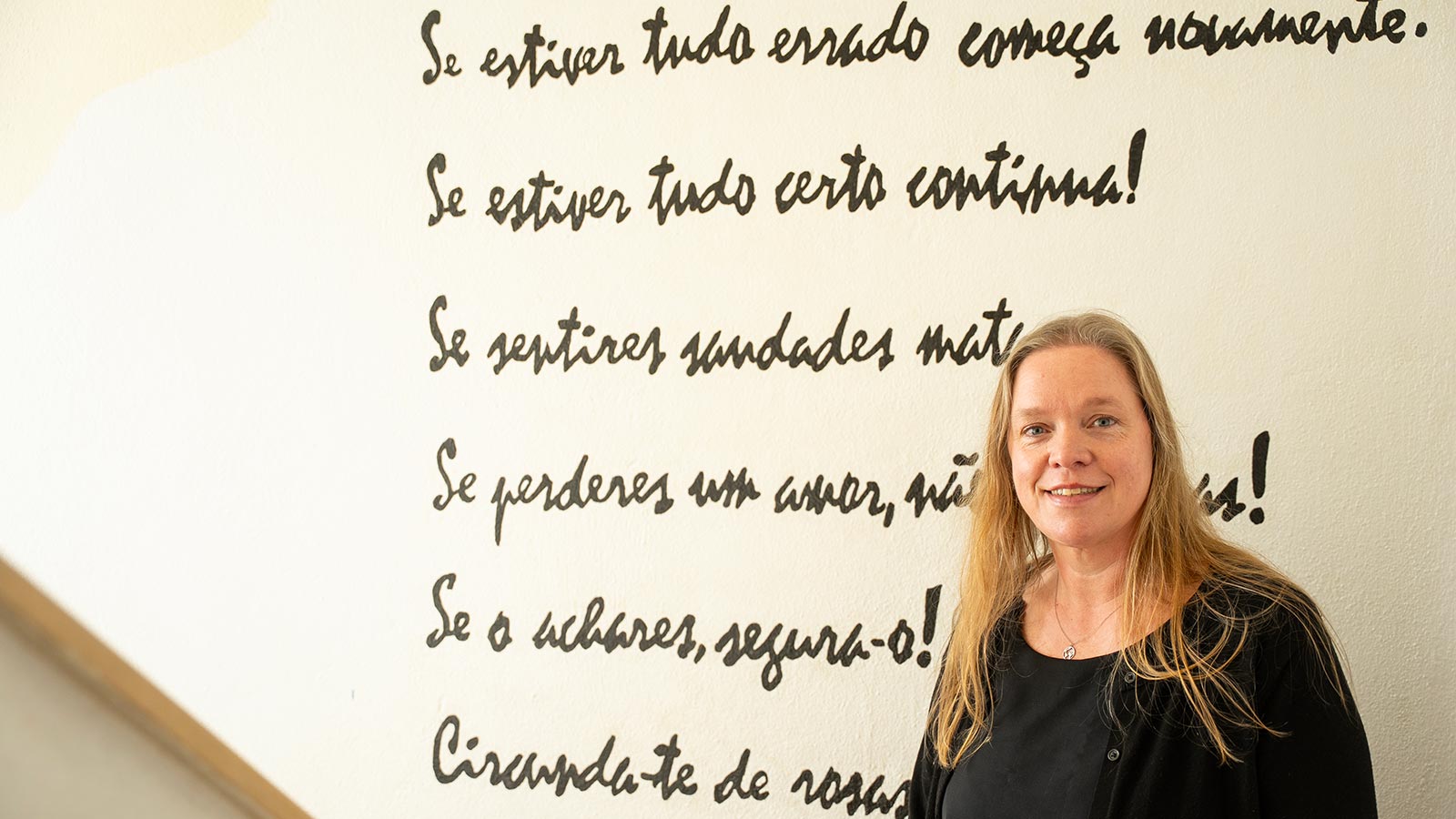
It is at school that these results are achieved. But it is at the centre – that calm and safe space where they can ask all sorts of questions as often as they need to, where there is no shortage of tutors, where teaching can be tailored to individual needs and relationships can be built – that daily successes are experienced and a vision of a future emerges, one in which opportunities are equal for all children and young people, regardless of their background.
You may also like



No results were found for your criteria.