
“Less is produced in Portugal, but what is produced is considerably more innovative”
-
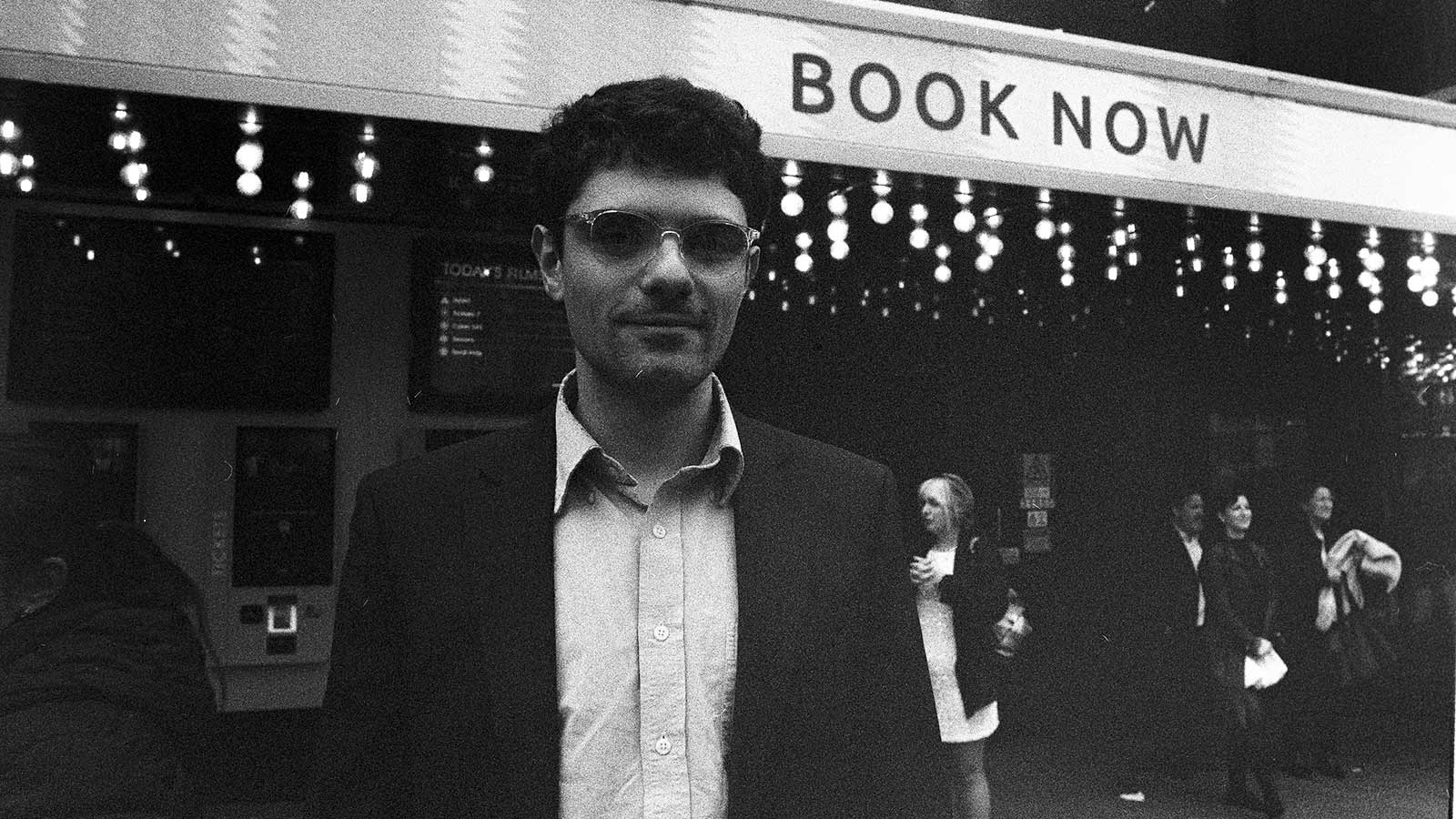
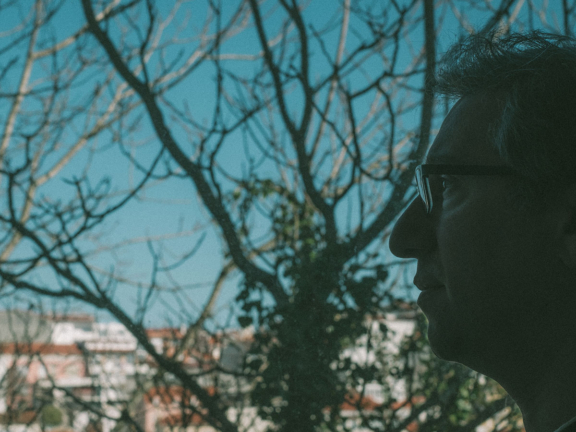
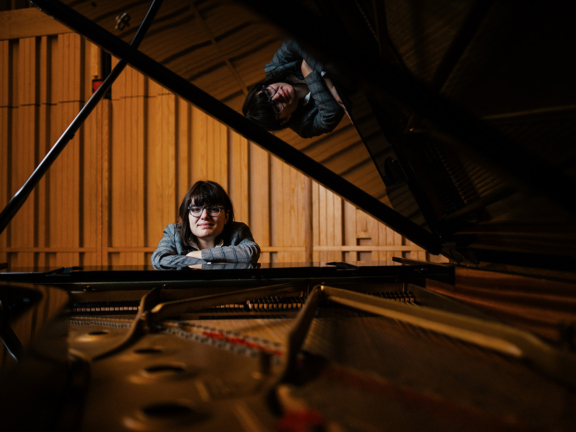
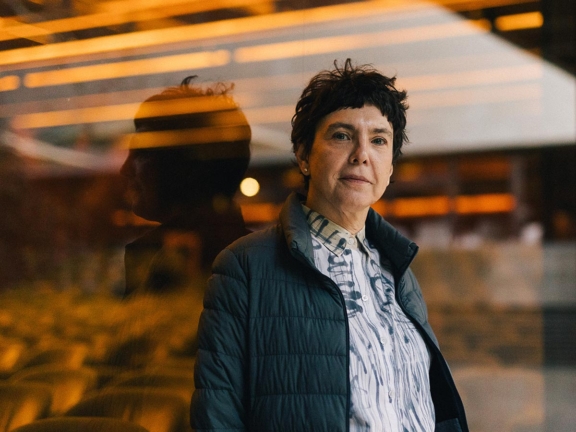
Vicente Molder © DR
Let’s start at the beginning. Why did you decide to study film, and sound design in particular?
My parents are musicians, so sound has always played an important role at home, and much of what shaped me as a child came from music. At the same time, my grandparents are passionate cinephiles who introduced me to countless films. Ever since I was young, I spent weekends at their house watching films with them.
During high school, I went through a phase where I felt a bit lost. I knew I was drawn to both music and film, so I decided to take a film course at Restart. That’s where I began experimenting with sound, particularly during a module on sound design and editing for a short advert. That experience was a turning point – I had a blast and realised it was a path worth exploring. Looking back, it feels like a natural outcome of two family influences: my parents on the music side, and my grandparents on the cinema side.
How did you end up in London, at the National Film and Television School? What was the master’s programme like?
I first attended the Lisbon School of Theatre and Cinema (ESTC). After graduating, I began working on film sets as a boom operator and sound recordist, but over time I realised I needed a stronger foundation in post-production, particularly in editing and sound mixing. I felt that in Portugal, I might not reach the level I was aiming for through formal education alone; more likely, I would start working immediately and learn on the job, which can be a slower process. At the same time, certain aspects of the Portuguese film industry can be somewhat chaotic. That led me to ask myself: where could I continue learning and become more efficient?
The British film industry is highly organised and structured, whereas in Portugal it operates on a much smaller scale, often feeling closer to a tight-knit community than a fully developed industry. My goal was to learn from the British system and incorporate that sense of organisation into my own working methods – into my workflows, as they say. That was ultimately the main reason I chose to come to this school: the level of professionalism is extremely high. I applied, was accepted, and then went on to apply for a scholarship with the Gulbenkian Foundation.
During your master’s degree, you had the opportunity to learn from figures such as Francis Ford Coppola and Paul Thomas Anderson. What did that mean to you? Was there a particular moment that stood out?
Just last night, I was thinking about this masterclass with Walter Murch. He shared something that felt like insider knowledge – something most people aren’t aware of – and hearing that alone made my time here feel completely worthwhile. He spoke about how Star Wars can be seen as a parallel to the Vietnam War: the Viet Cong as the rebels, and the Empire as the United States. And yet, he managed to unite an entire country around a story that, in a way, ran counter to its own reality – because audiences interpreted it very differently. It’s incredible.
I also recently attended a masterclass with Paul Thomas Anderson, which was particularly insightful. Beyond what these film-makers share about their work, I value the opportunity to understand who they are as people outside their films. Walter Murch, for example, seems to reflect the precision and curiosity of his craft: deeply focused and highly analytical. During one session, he spent several hours presenting slides of different faces, illustrating how the golden ratio can be observed in many of them, while pointing out exceptions – such as Donald Trump. Overall, he came across as someone intensely attentive to detail and fascinated by the finer structures of the world around him.
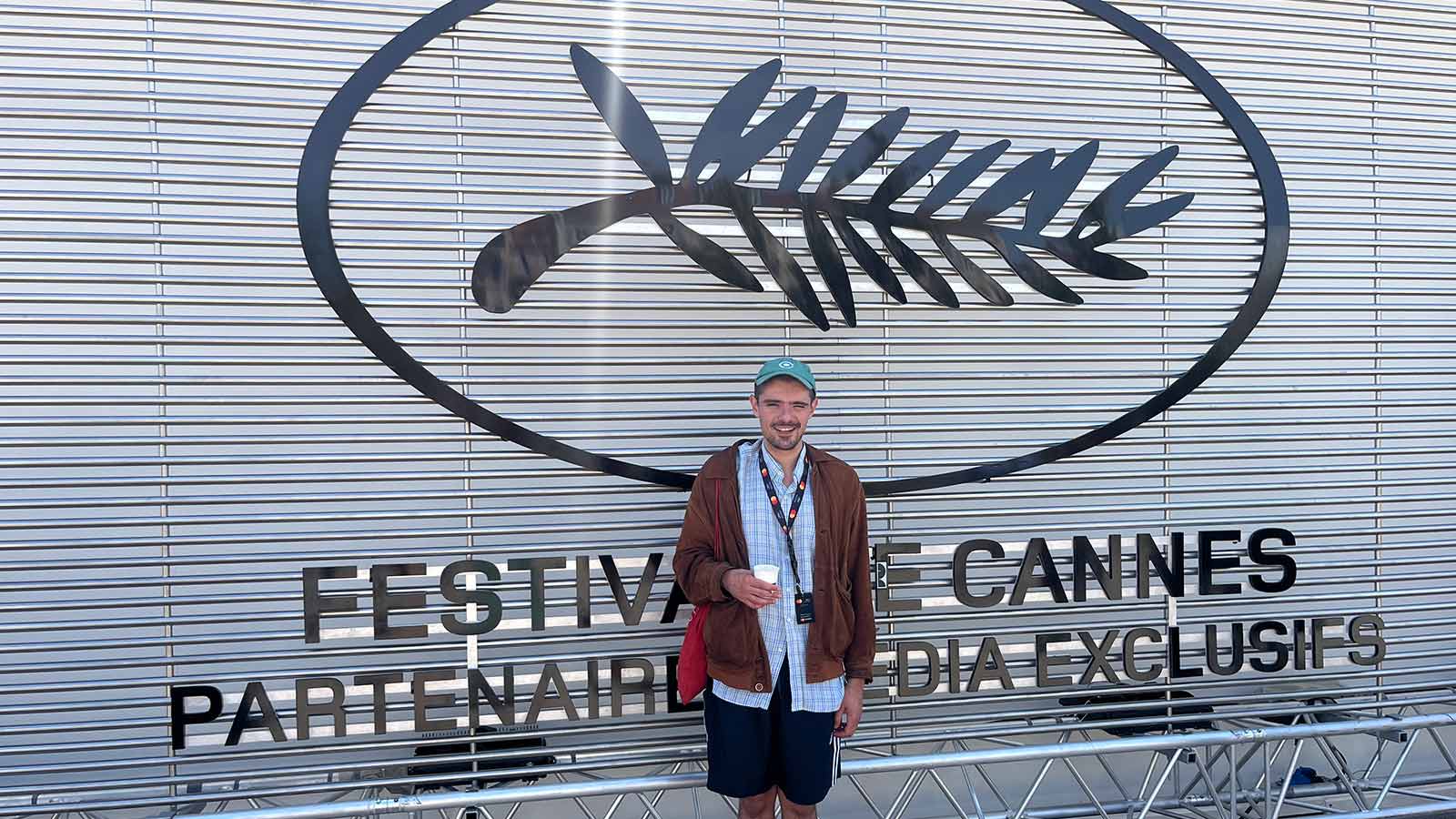
Finishing your master’s degree with two films selected for the Cannes Film Festival is an extraordinary achievement. How did you feel about receiving this recognition, and what impact do you think it has had – or might have – on your career?
I think it’s great for me, mainly because it allows me to attend the Cannes Film Festival, watch a wide range of films, and see what other film-makers around the world are doing. Festivals are also a good place to meet people, get to know other film-makers, and find new sources of inspiration. Of course, having a regular presence at a festival can help shape and define one’s aesthetic – particularly in my case as a sound designer – but the main benefit is simply being able to attend and experience it.
You mentioned earlier the differences between Portuguese and British cinema. What differences do you see?
Firstly, cinema in the UK is largely driven by the need to sell tickets and generate revenue, whereas in Portugal it is primarily supported by public funding and operates with less direct commercial pressure. In that sense, Portuguese cinema tends to place greater emphasis on artistic merit. However, this also creates a contradiction: despite this public investment, there is limited effort to ensure that these films reach wider Portuguese audiences.
In other words, films in Portugal tend to be made in a more “amateurish” way – by which I don’t mean less professional, but rather more passionate and instinctive. This approach often allows each project to find its own way of reinventing itself. The films can vary significantly; there is a general structure, but each one takes shape differently, from the size of the crew to the dynamics within the team. I love this way of working, although it can sometimes feel chaotic. That sense of being slightly lost can also be productive for the creative process. To develop new forms of cinematic language and explore new ideas, this kind of environment can be necessary for something new to emerge.
The challenge with the British film industry is that it is highly entrenched, with established ways of doing things – and there is a strong tendency toward “this is how it’s done”. As a result, films are often approached more like products, with a greater commercial focus. This level of organisation is also reflected in the films themselves: stylistically, they can feel quite uniform, often operating within a similar visual palette and emotional register.
Can you explain what a sound designer does?
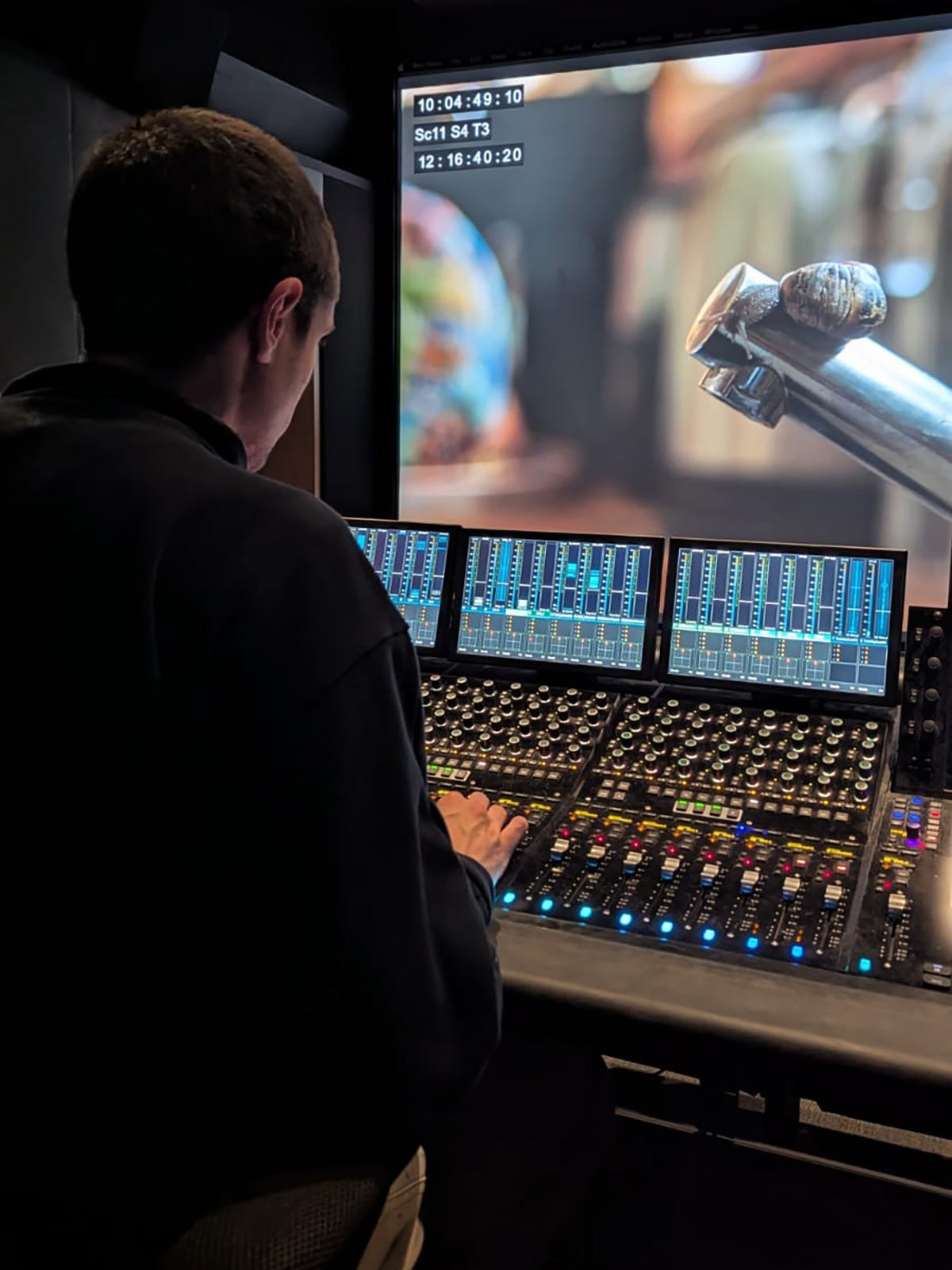
It depends very much on the project, but ideally a sound designer is someone who works on the project from the outset alongside the director and is responsible for exploring the sound aspect of a film. Essentially, they help the director think about sound, edit the sound, develop the most creative sound ideas, or handle the mixing; in other words, their role can take many forms. In this academic context, and in most contexts within the independent film and short film sector, the sound designer often handles the entire post-production of the film.
In Portugal, for example, there is a tradition more influenced by French cinema, where the role of the sound engineer or sound director involves recording dialogue and overseeing not only the shoot but also post-production – someone directly involved in every stage of the process. Here in the UK, things are more compartmentalised: you have the production sound recordist, and then the sound supervisor or sound designer, who manages the post-production workflow. As a result, the role can vary – ranging from a post-production sound coordinator to someone who oversees the entire process, or, in some cases, focuses on a single aspect of it.
When we talk about sound in this case, are we referring to all the sounds in the film, not just the music?
The music is usually composed by a composer, or the rights to existing music can be acquired. I work on the Foley effects and ambient sounds, edit and assemble the dialogue and sound effects, and then carry out the final mix, balancing the levels so that everything comes together to sound like a film.
Sound in Portuguese cinema is often a target of criticism…
There is often this perception that sound in Portugal is weak, although – no offence to the actors – Portuguese pronunciation can sometimes make dialogue harder to understand. People often speak in a more subdued way, which can affect clarity on set. In contrast, in English-language productions, dialogue is generally very clear and articulated, even in less-than-ideal recording conditions. Actors tend to project their voices well, which is likely linked to a strong theatrical tradition, including Shakespearean theatre and musical heritage. In Portugal, we are much more reserved in that sense; there is often a certain shyness when it comes to projection.
How did the Gulbenkian Foundation’s Arts Training Abroad Scholarship play a key role in making this journey possible?
If I hadn’t received the Gulbenkian scholarship, I wouldn’t have been able to come to London in the first place, as the cost of living here is significantly higher than in Portugal, as are tuition fees. More than anything, the scholarship gave me the opportunity to focus entirely on improving in what I wanted to study over these two years. In other words, I had no distractions; I didn’t need to worry about earning money to pay rent. In that sense, the financial support provided a sense of stability that allowed me to focus 100% on my studies, and that has been an incredible experience. I feel very grateful and privileged to have had this opportunity. However, when the scholarship ends, returning to reality will be difficult.
What are your plans for the near future? Do you want to stay in London?
Yes, the plan now is to stay in London for a while and see if I can expand my network. Compared to Portugal, much of the work here is done remotely, which has its advantages but also some downsides, since I believe personal contact and being physically present are especially important in the film industry. At the same time, the British approach is so organised and well-structured that remote collaboration often works effectively. Once I’ve built a wider network of contacts, my plan is to return to Portugal and eventually bring some of my clients with me.
Would you like to make this your full-time career?
Yes. I recently finished university, and I’m already starting to get some work here, but the plan is to go back to Portugal eventually. Because, as I said before, from a creative point of view, I’m much more interested in the projects being done in Portugal. Between the projects I work on here and there, I’d say that almost three out of every three short films in Portugal are nominated for major festivals, whereas here only about one in ten short films is. Less is produced in Portugal, but what it does produce tends to be much more innovative, and that interests me greatly.
Fellows’ Stories
Explore the series







No results were found for your criteria.
You may also like


No results were found for your criteria.