
“Politics will always be a part of me”
-
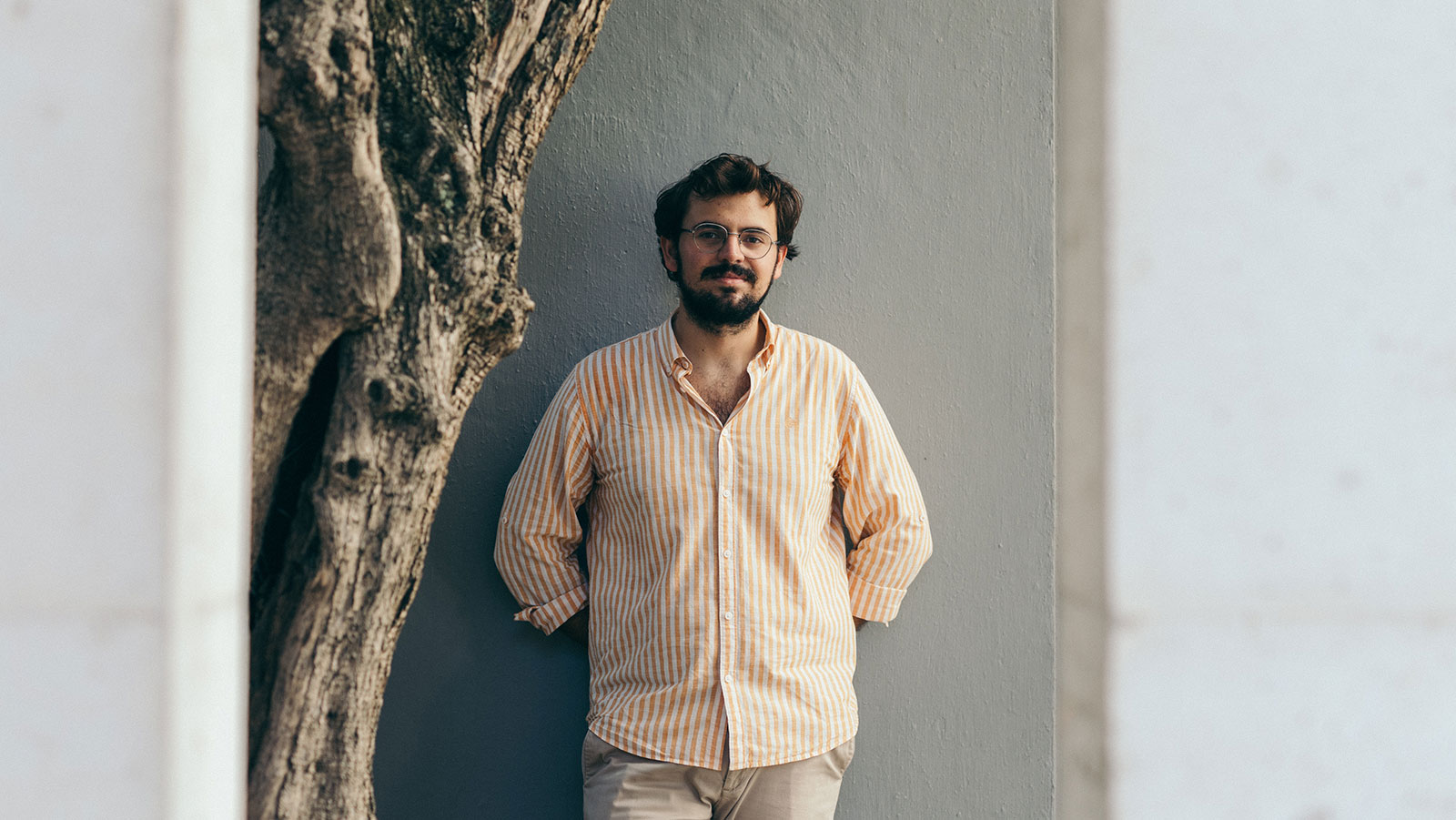
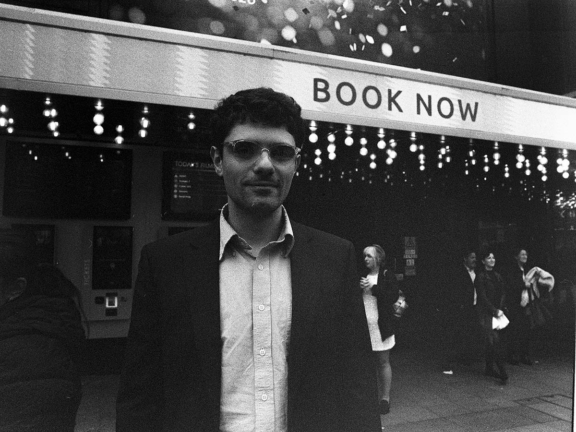
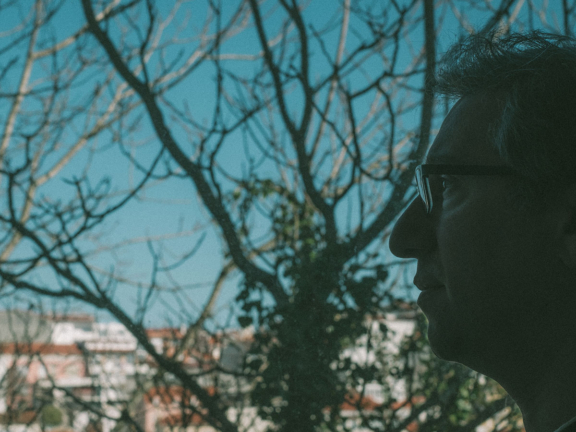
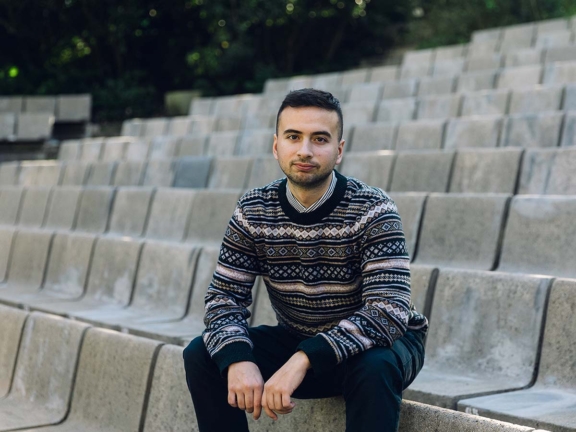
Manuel Leite © Ricardo Lopes
In high school, you thought you wanted to study Physics and Mathematics, but ended up studying Medicine. Why this change of path?
It was a bit by chance, I suppose. Since I was a child, I’ve been interested in everything, which I actually think is more of a flaw than a quality. I never really knew what I wanted to do when I grew up… But I think, above all, I’ve always been drawn to things that challenged me and pushed me forward. In high school I felt that strongly about Physics and Mathematics, and in my final year I started gaining interest in Medicine – perhaps also because it was during the Covid-19 pandemic – and because of the human contact involved. I thought Medicine would give me more of that than Physics or Mathematics.
And where do Public Policies come into play?
At home, my parents and grandparents were always very interested in politics, so I always thought a lot about those issues. After entering university, I joined a youth political party, without knowing anyone, simply because I wanted to play a more active role in society. I soon realised that most of the people there were studying Law or other fields more closely related to politics. And what I felt, in the debates I had with them, was that I lacked training in that area. That’s why I enrolled in a master’s, pursued this path in Public Policy in the field of health, and applied for the Gulbenkian fellowship. It was a mix of being curious about everything and realising that this was the area where I could leave my mark on the world and have an impact on society.
Is it possible to combine a degree in Medicine with a master’s in Public Policy?
That’s a tough question. When I applied, it was already with the plan of taking some extra time to complete the master’s. I applied as I was moving from my third to fourth year in Medicine, and my original plan was to finish the coursework – year one of the master’s – by the fifth year of Medicine, doing half the subjects each year. In the first year I did slightly less than half, but last year, for several reasons, I didn’t do any subjects at all. It wasn’t an easy year.
Because of academic challenges? Medicine isn’t exactly an easy degree.
Because of academic challenges and other reasons. Actually, I even think Medicine is easier than most people assume. Of course, it’s a lot of material, very intense, and with the added responsibility that one day we’ll be treating patients and what we learn will be put into practice. But it’s a course that is a bit more mechanistic, mostly memorisation, unlike Mathematics, Physics, or even Public Policy, which require a deeper understanding. For me, that’s not particularly difficult.
That also relates to the way Medicine is taught, doesn’t it?
Yes, ultimately it is a critique of how medicine is taught. But, anyway, last year I was also on the board of ANEM (National Association of Medical Students), I sit on the School Council, I’m part of the Student Assembly leadership, I’m doing the Gulbenkian fellowship – I got myself involved in a lot at the same time and couldn’t manage it all. But I intend to continue and finish the master’s while taking care of my mental health.
In your application for the Gulbenkian New Talents scholarship, you said you chose Medicine to escape a sense of helplessness, but later realised that not only did you fail to escape it, you actually came closer to it. Can you explain what you mean by that?
I went into Medicine because it’s something where I feel I can make an impact – I’m not doing things just for myself. But I don’t like the discourse a lot of people in the field have, the “I came here to save people” narrative. I find that quite reductive. What really makes a difference in our patients’ lives is often something a doctor alone cannot do, because many health problems are manifestations of the context people live in.
For example, Portugal is one of the European countries with the highest consumption of antidepressants. As doctors, the best option we often have for a patient who is depressed is to prescribe antidepressants. Sometimes there’s this discourse that what’s wrong is prescribing antidepressants. But maybe what’s wrong is that so many people are depressed. Shouldn’t we be asking why that is happening? Maybe it has to do with how society is organised, with the support networks people have. And that’s something Medicine alone won’t solve.
To solve it, we need to act as a whole, as a society. These little realisations are what disappointed me somewhat in Medicine and pulled me towards Public Policy.
How do you imagine connecting these two areas – Health and Politics?
Most likely I won’t want to pursue a career as a traditional clinical doctor. There’s a specialty called Public Health, which sits precisely at this intersection between Medicine and Public Policy – it’s about thinking of Medicine at the population level, and about measures we can take to improve health across an entire population, without focusing on the individual patient. I’ll probably follow that path, but I can also see myself pursuing an academic career in health policy more specifically.
In any case, even if I do end up with a normal clinical career (which I don’t entirely rule out), politics will never leave me. And there are many doctors who, while practicing traditional clinical medicine, also think deeply about these issues and have active political engagement. I feel that both the fellowship and the academic training I’m receiving are preparing me for that as well.
How is the Gulbenkian fellowship helping you take that step?
The greatest merit of the fellowship, for me, is the exposure we get to what research really is. Because the ISCTE master’s programme is broader in scope, and the fellowship essentially bridges the two, allowing me to engage specifically in Health Policy research with the support of a tutor.
In Portugal and in the European Union, it’s forbidden to advertise prescription drugs. What I’m researching with the fellowship is how the presence of those drugs in the media may be used as a way to bypass that prohibition. It’s something that has been observed empirically, but for which there is no concrete data. For example, even though direct advertising of a particular drug is not allowed, sometimes you see articles about the disease the drug treats. We want to understand the process by which society comes to see a certain problem as solvable through medication, and the role the media might play in that process – leading to the drug being reimbursed, or to doctors being more likely to prescribe it, etc. – which is, ultimately, a way of circumventing the advertising ban, resulting in decisions that aren’t fully evidence-based.
If you had to describe what health is, what would you say?
The WHO (World Health Organisation) defines it as a complete state of well-being, not just the absence of disease. I think that’s important to emphasize. It includes physical, mental, and also social well-being.
Of course, the main focus of Medicine is to fix what is wrong with the individual body. But there’s increasing attention on mental health issues, and also on this third dimension: people are not isolated beings, we are all integrated into communities. That plays a major role in people’s health as well.
So, does the future of Medicine lie in a more integrated and less individualistic vision of health?
I believe so. Sometimes we’re overly confident in thinking we can solve more problems than we actually can. A 15-minute consultation won’t convince someone to take care of themselves, or to leave an abusive husband, or persuade an elderly person to go for a daily 15-minute walk if they live alone in a place where it’s not practical to do so. It is in the search for answers to these types of situations that we begin to leave the realm of Medicine and enter that of Public Policy.
Fellows’ Stories
Explore the series
No results were found for your criteria.
You may also like


No results were found for your criteria.