
The silences of History and the racism they perpetuate

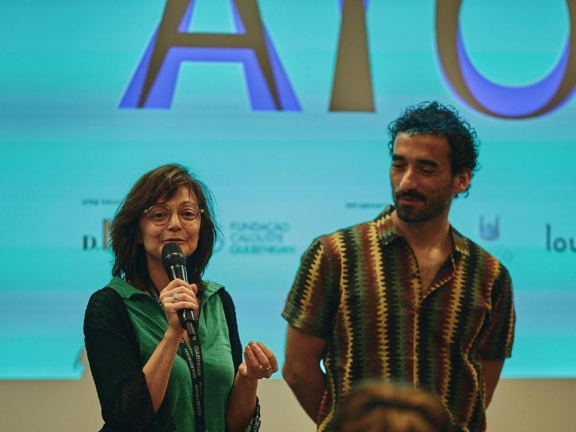
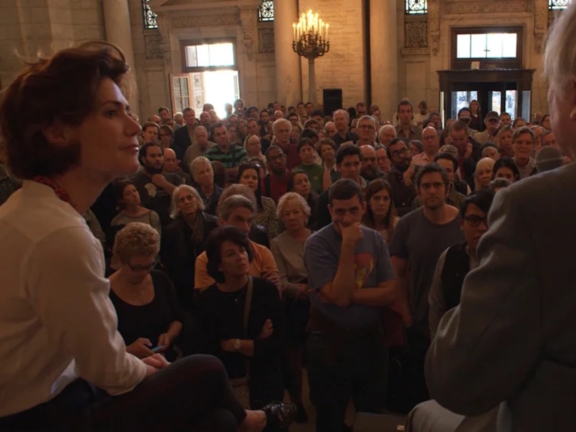
On 11 July, the Calouste Gulbenkian Foundation, in collaboration with the Slave Wrecks Project, held the conference ‘Racism as the legacy of slavery’, the second dedicated to this topic. Aurora Almada Santos, researcher at the Institute of Contemporary History at Universidade Nova de Lisboa, and Marta Araújo, researcher at the Centre for Social Studies at the University of Coimbra, discussed the importance of teaching and publicly disseminating the history of slavery. I’d like to highlight a few ideas that I heard, which, while not exactly new, seem relevant in a social and political context where the few advances made seem to be under threat.
In 2001, at the World Conference against Racism, the United Nations established a direct link between the history of slavery and contemporary racism. In Europe, political recognition of this link came only after the protests of 2020, following the murder of George Floyd. It was in June of that year that the European Parliament declared that the historical origins of racism are rooted in the history of slavery and colonialism. This was the first time a European institution politically recognised this indelible link.
Although often relegated to the footnotes of history, slavery and the transatlantic slave trade have left important marks on contemporary societies. One of the most significant is the racial ideology on which social prejudice and structural and institutional racism are still based today.
Academic research on the history of slavery and the teaching of that history focuses mainly on the American context. Europe has traditionally been very silent on these issues, both in the classroom and in school textbooks – a silence that, in most countries, has been broken mainly, and only, in the last decade.
In Portugal, policymakers in the field of education choose to remain indifferent to the various recommendations criticising the depoliticised way in which the history of Portuguese slavery and colonialism is taught – omitting any reference to its connection with racism today.
Documents such as ‘Aprendizagens Essenciais do 3º Ciclo’ [Essential Learning Outcomes for the 3rd Cycle], by the Direção-Geral da Educação [Directorate-General for Education], or the measures set out in the National Plan against racism do not yet seem to have had any practical or widespread effect on how the issue is addressed.
The imagery of the ‘discoveries’, the expansion, and the glorification of the empire continue to shape narratives. In school textbooks, and in a comparative analysis with what is happening in other former European colonising countries, the speakers found what any student without further information on the subject cannot find on their own: inappropriate frameworks and the erasure of the violence inherent to the transatlantic slave trade, the resistance of enslaved peoples, the processes of racialisation and how the notion of race was constructed over the centuries – fundamental aspects for understanding today’s inequalities.
From slavery, we jump on to abolition, as if that is where the chapter on oppression ended. Little is said about forced labour throughout the colonial period, or about the difficult processes of decolonisation that followed 25 April. Omitting these issues deprives students of the opportunity to develop a critical understanding of events and prevents them from identifying the echoes of the past in the present.
Racism is neither natural nor universal. Notions of race were developed to justify the exploitation of black people, and the repercussions of racialisation processes continue to this day. When education ignores this origin, it contributes to perpetuating a society that continues to treat racism as an individual problem, rather than as a problem that is structurally and institutionally embedded in Portuguese society.
And when we talk about education, teachers obviously play a crucial role. But several teachers contacted by the speakers also feel that they have not been given sufficient tools to critically analyse slavery or make connections with the present. In this way, the teaching programme risks reproducing stereotypes or simply avoiding the subject altogether.
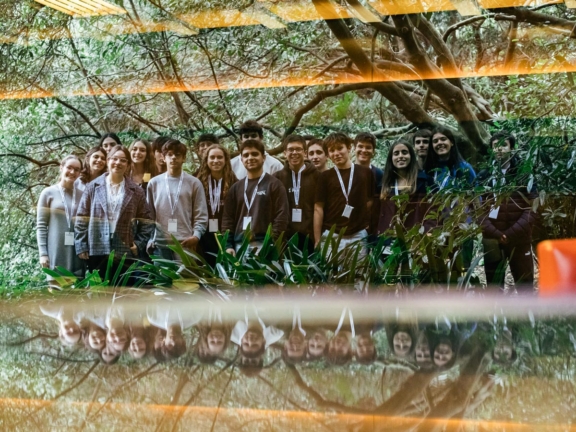
That is why initiatives such as the course ‘Difficult histories, Difficult legacies’ are to be commended, created and taught by the Slave Wrecks Project – a project dedicated to researching the history of slavery, the slave trade and its legacies – in collaboration with the Calouste Gulbenkian Foundation and the Smithsonian Museum of African American History and Culture. Aimed at training teachers, museum mediators and other professionals in the field of education in how to approach complex histories, such as the transatlantic slave trade, it ran for a second time this year, and within the scope of which this conference, open to the public, was held.
Let us understand the past and take responsibility for the present. History is not a court of law, and acknowledging our colonial heritage is not a matter of guilt, but rather of responsibility. Educating ourselves about the past is not about judging our ancestors, but rather recognising the mechanisms that still structure our society today.
BANTUMEN at Gulbenkian
Explore the series



No results were found for your criteria.
You may also like




No results were found for your criteria.