


Difficult histories, difficult legacies
How to teach and talk about slavery
Event Slider
Date
29 Jun – 03 Jul 2026
06 – 10 Jul 2026
Location
Foyer Room (Level 1) Calouste Gulbenkian Foundation
These theoretical-practical courses aim to train teachers, museum mediators and other educational professionals in addressing difficult histories, such as the transatlantic trade of enslaved people.
Focusing on historical elements that contextualise Portugal’s role in the trade of enslaved people, these courses highlight the important legacies of this trade, Over the course of a week, experts from diverse fields will challenge traditional perspectives and dispel enduring myths about Portugal’s role in the slave trade.
The programme will draw on international experiences in curriculum renewal and introduce innovative teaching methods, such as incorporating personal narratives into classroom practice. Participants will also examine colonial museums and collections, exploring how cultural spaces can enrich educational approaches.
The course features debates, hands-on activities, museum visits, and public lectures led by renowned researchers. For certification, each participant will design a project tailored to their own school or educational setting.
More than a training programme, this course offers an opportunity to rethink how history is taught, confront Eurocentric narratives, and experiment with new ways of engaging students.
This course is supported by the Smithsonian National Museum of African American History and Culture and the Slave Wrecks Project, with the collaboration of the National Museum of Natural History and Science of the University of Lisbon.
This course is accredited through the Centro de Formação Prof. João Soares.
Biographies
-
Aurora Almada e Santos
Researcher at the Institute of Contemporary History and the IN2PAST of the NOVA University of Lisbon. Her main research interest is the Portuguese decolonisation, namely the international dimension of the struggle for self-determination and independence of the Portuguese African colonies. She was recently a member of the Advisory Board of the educational project MANIFEST: New Artistic Perspectives on the Memories of the Transatlantic Slave Trade (2022–24), co-funded by the European Commission. In connection to this, she wrote entries for the MANIFEST Digital Resource Center, addressing issues such as the lack of memorials to slavery in Portugal.
-
Beatriz Linberger
A cultural and artistic mediator at various museums in Lisbon and a PhD candidate in History at the Universidade Nova de Lisboa. Her research focuses on the circulation of goods from the colonies to the metropolises, which gave rise to new trade networks and shaped the political and economic relations between the modern European empires. Her main interest is in bringing academic research closer to the public through the country’s museum collections. She took part in the design and delivery of the guided tours Between Your Teeth: Adriana Varejão and Paula Rego (2025) and Complexo Brasil (2025–2026).
-
Cristina Roldão
PhD in sociology, researcher at ISCTE-IUL and professor at the Setúbal School of Education (ESE/IPS). She has actively participated in academic and public discourse on racism in Portuguese schools and society. She was a member of the organising committee for the 7th International Afro-European Conference and helped coordinate the Roadmap for Anti-Racist Education at ESE/IPS. She is a columnist for the newspaper Público and served on the Working Groups on the National Plan to Combat Racism and on the Collection of Ethnic-Racial Data in the 2021 Census. She is co-author of the recent book: ‘Tribuna Negra: Origins of the Black Movement in Portugal’ (1911–1933).
-
Lucimar dos Santos
With experience in research on history, historiography, and race relations in colonial, imperial, and republican Brazil, she focuses particularly on the history of imperial Brazil, with an emphasis on slavery and the post-abolition era in urban Rio de Janeiro during the 19th and 20th centuries. She is a content creator for the AFRODIÁLOGOS platform; an activist with the Unified Black Movement; a member of the Network of Black Historians; a cultural advisor for ACEMADES; a researcher at the Laboratory of the History of Religious Experiences at the Institute of History at UFRJ; a researcher with the Local Education History Studies research group (UERJ); and a teacher in the municipal public school systems of Duque de Caxias and Magé.
-
Marta Araújo
PhD (University of London, 2003), she is a main researcher at CES. Her research focuses on public and school history, with an emphasis on narratives of (anti-)colonialism and slavery, as well as public policy, political discourse, and ethnic-racial equality. She is vice-chair of the CES Scientific Council and a doctoral-level instructor. She was a visiting researcher at CEREN at the University of Helsinki. She serves on the editorial boards of publications on sociology, “race”, and education in Brazil, the United States, Great Britain, and Portugal, and has published internationally in highly reputable journals.
-
Orlando Serrano
Head of PK-12 Learning at the Smithsonian Institution’s National Museum of American History (NMAH). He supports and develops informal educational and leadership experiences for students, professional development workshops for educators, and curriculum content. He is a founding member of The Center for Restorative History at NMAH. He is also on the Board of Directors for the Museum Education Roundtable where he serves of Co-Chair of the Editorial Team that manages the Journal of Museum Education. PhD in American Studies and Ethnicity from the University of Southern California.
-
Raquel Machaqueiro
She holds a Ph.D. in anthropology from George Washington University (2019), and her research covers topics related to international development, environmental policy, human rights, science and technology studies, and the transatlantic slave trade. With fieldwork in Brazil and Mozambique, she is currently part of the Slave Wrecks Project, where she conducts research on the relationship between the slave trade and the Portuguese financial world. She teaches history in the Portuguese public school system. She is the author of the book The Carbon Calculation (The University of Arizona Press) and is currently working on a new book about the Portuguese slave trade.
-
Susana Gomes da Silva
She started out wanting to be a dancer and a scientist. She then chose to study History, much to the dismay of her family of scientists. She graduated with a degree in History, devoted herself to teaching, and then decided to change direction. She completed a postgraduate course in Museums and Education in Barcelona, undertook an internship at the New Museum of Contemporary Art in New York and obtained a Master’s degree in Museum Studies in Leicester, UK. She discovered that museum education was truly her calling and has since been working at the Calouste Gulbenkian Foundation as a programme coordinator at CAM’s education and mediation department.
Programme
29 Jun
10:00 – 13:00 / Myths and prejudices about Portuguese historiography, the history of slavery, Africa and Africans
14:30 – 17:30 / Deconstructing myths: building a new historical narrative and new pedagogical approaches
30 Jun
10:00 – 13:00 / Teaching slavery in Brazil – a comparative approach
14:30 – 17:30 / Decolonization and the teaching of history
01 Jul
10:00 – 13:00 / Practical workshop on school textbooks
14:30 – 17:30 / Theoretical issues in teaching history
02 Jul
10:00 – 13:00 / Teaching slavery in the USA – a comparative approach
14:30 – 17:30 / Workshop at the Gulbenkian Museum or at CAM
03 Jul
10:00 – 13:00 / Visit to MUHNAC
14:30 – 17:30 / Reflections, evaluation and course conclusion
06 Jul
10:00 – 13:00 / Myths and prejudices about Portuguese historiography, the history of slavery, Africa and Africans
14:30 – 17:30 / Deconstructing myths: building a new historical narrative and new pedagogical approaches
07 Jul
10:00 – 13:00 / Teaching slavery in Brazil – a comparative approach
14:30 – 17:30 / Decolonisation and the teaching of history
08 Jul
10:00 – 13:00 / Practical workshop on school textbooks
14:30 – 17:30 / Theoretical issues in teaching history
09 Jul
10:00 – 13:00 / Teaching slavery in the USA – a comparative approach
14:30 – 17:30 / Workshop at the Gulbenkian Museum or at CAM
10 Jul
10:00 – 13:00 / Visit to MUHNAC
14:30 – 17:30 / Reflections, evaluation and course conclusion
18:00 – 20:00 / Talk "New forms of nationalism and the denial of history"
Credits
Concept and direction
Raquel Machaqueiro
Stephen Lubkemann
Instructors
Aurora Santos
Cristina Roldão
Inês Fialho Brandão
Marta Araújo
Lucimar Felisberto dos Santos
Orlando Serrano
Susana Gomes da Silva
Image
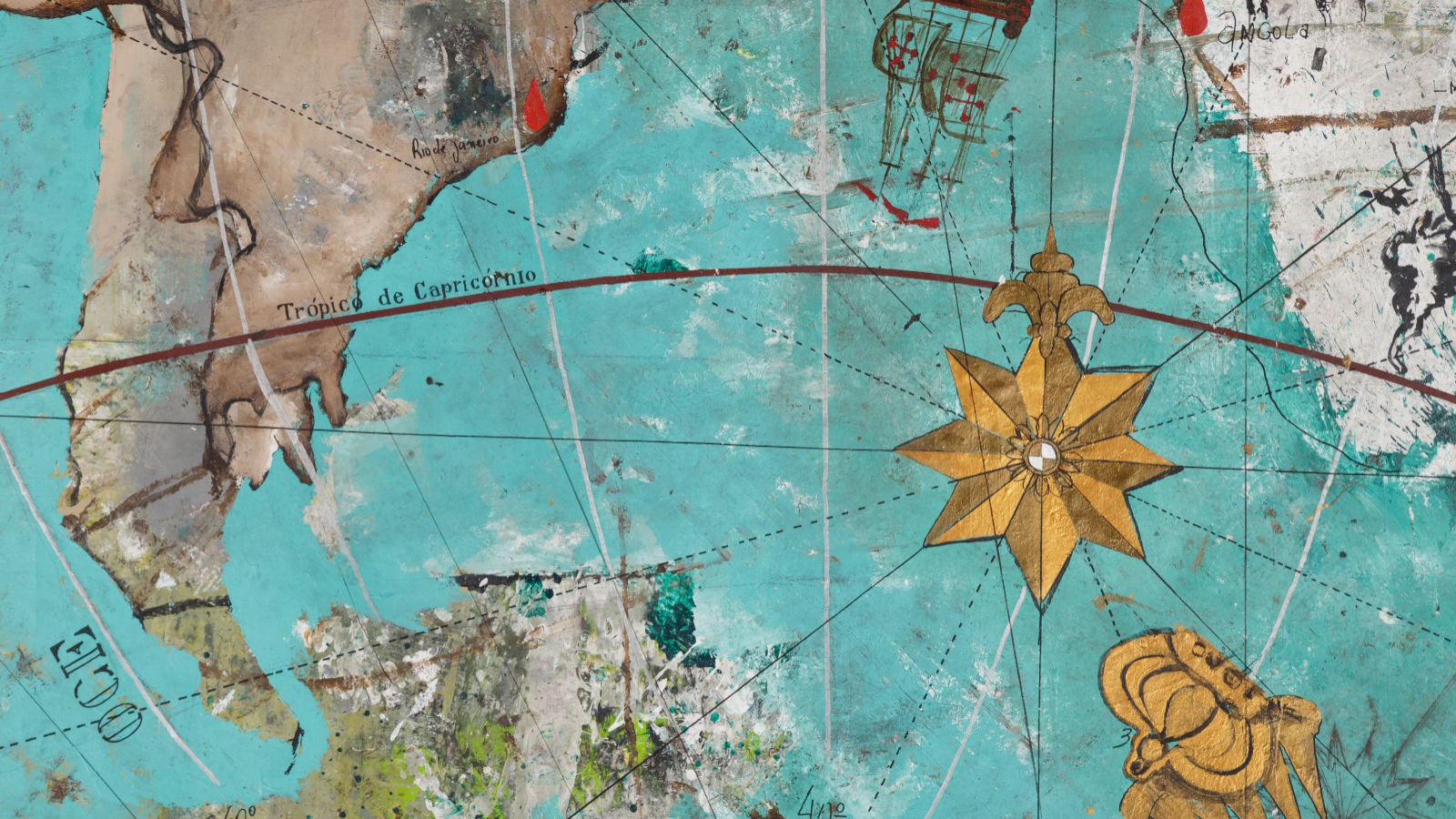
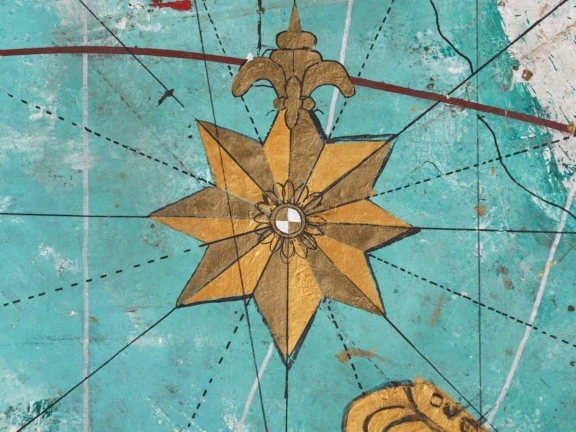
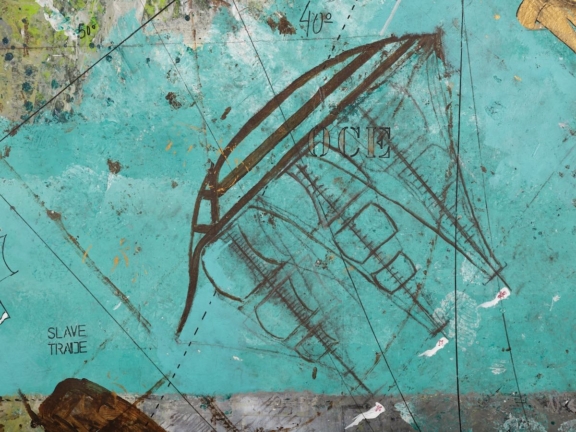
"Só vou ao Leblon a negócios" (detail), 2016 © Arjan Martins
Promoters / Partnerships
Related
No results were found for your criteria.