
Francisco Trêpa: ‘The result is an exhibition in constant metamorphosis’
When I reached out to Francisco Trêpa to interview him about ‘Francisco Trêpa. Gall Ball’, on view at CAM from 20 September to 20 January 2025, I suggested that instead of talking in a neutral setting, we should meet somewhere more attuned to the project and its underlying themes. In light of the exhibition’s origins, subject matter, and intrinsic relationship with the Gulbenkian Garden, I suggested meeting there. I then asked Francisco, as a starting point for our conversation, to choose a spot in the park that had a particular connection with the exhibition. And so, one day in August, we met at the entrance to the auditorium and headed straight to the place he had selected, embarking on a meandering dialogue through the garden. Taking as our starting point the main focus of his most recent research – oak galls, the small round growths that form on oak trees through an unusual process – we touched on themes such as hybridisation, parasitism, biological empathy, affirmative excess, baroque sci-fi, and other elements that shaped the thinking behind this exhibition.
Mattia Tosti: Why did you choose this spot, and how does it relate to your exhibition ‘Francisco Trêpa. Gall Ball’?
Francisco Trêpa: I stopped by this tree because it’s one of the Gulbenkian Garden’s oaks. If you look closely, those little balls on the branch are oak galls, whose story provided the inspiration for the exhibition. My connection with them emerged in two distinct phases. The first was around three years ago, during a residency in Caldas da Rainha. During a walk one day, I found myself surrounded by oak trees and began observing them. As with many species, the natural sequence is to flower first and then bear fruit, usually at the tips of the branches. But I noticed that, alongside their fruit (the acorns), some trees had these small spheres in unexpected places, outside the ‘natural’ order. I held one in my hand and was intrigued by it: I knew it wasn’t an acorn, but I had no idea what else it could be. It was a mystery that fascinated me.
MT: From a distance, they could easily be mistaken for acorns.
FT: Yes, but they’re something entirely different. I only discovered that later, during a visit to the CAM Garden, when someone explained that oak galls aren’t the oak’s fruits, but rather the tree’s reaction to the sting of a wasp. The wasps deposit their eggs and inject toxins that alter the tree’s genetic code, causing it to produce an oak gall, which encloses, nourishes, and protects the larva until it develops. When I heard that, I knew straight away that the story of these strange little balls deserved a stage.
MT: That interaction between two such different species resonates with your recent interests and projects, where you explore hybridisation and symbiosis on both metaphorical and socio-political levels. But in the case of the oak gall – and in this exhibition – the focus shifts toward the parasitic dimension.
FT: Yes, my exhibition ‘Flor Cadáver’ [Corpse Flower], which I presented at Galeria Foco in 2024, for example, dealt with pollination processes – a symbiotic relationship in which flowers and pollinators depend on one other: pollinators feed primarily on nectar (and sometimes pollen) and, in the process, transfer pollen between flowers, enabling the plants to reproduce. But the relationship between the oak and the wasp follows a different logic – there’s no reciprocity, only parasitism. The oak doesn’t need the wasp, but the wasp depends on the oak to such an extent that it has evolved to reproduce solely through this process. It’s as if an animal had a child with a plant, through a kind of hack. This collision between two kingdoms fascinates me because, although parasitic and even violent in certain aspects, it also reveals a dimension of generosity and biological empathy that I’m keen to explore.
MT: It seems you’re attempting to rethink the notion of parasite, lending it a more positive connotation – not as a being that merely extracts resources from another, but as a force that, by interfering with, inhabiting, and transforming a system, ends up generating new possibilities.
FT: Exactly. The oak tree doesn’t suffer in this process and, through the oak gall, it provides the wasp with everything it needs to complete its metamorphosis – from egg to larva, from larva to adult insect. When the wasp finishes that cycle, it burrows a channel and leaves its vegetal womb, never to return. Up to that point, it may seem that the wasp’s actions benefit itself only, but in fact, the oak gall it leaves behind becomes a shared resource, repurposed by other forms of life, such as termites and ants. So, from a parasitic relationship, a communal dimension also emerges.
I’m interested in questioning how certain beings are vilified: who decides what counts as a pest or a parasite? Ultimately, all forms of life are striving for the same thing: survival. That’s precisely the idea António Damásio develops with his concept of homeostasis – the ability of an organism to remain alive and in balance even when faced with external changes, whether environmental or cultural. Every being, whether wasp, oak, or human, strives to adapt and persist. That reflection also intersects with my own life, with the feeling of always being slightly outside the norm.
MT: Your work not only has a strong visual identity, marked by recurring characters that metamorphose across projects, but also reveals a consistent narrative continuity, with multiple points of contact between exhibitions. I’d like to know how the story of the oak galls integrates with this, assuming sculptural form and its own autonomy?
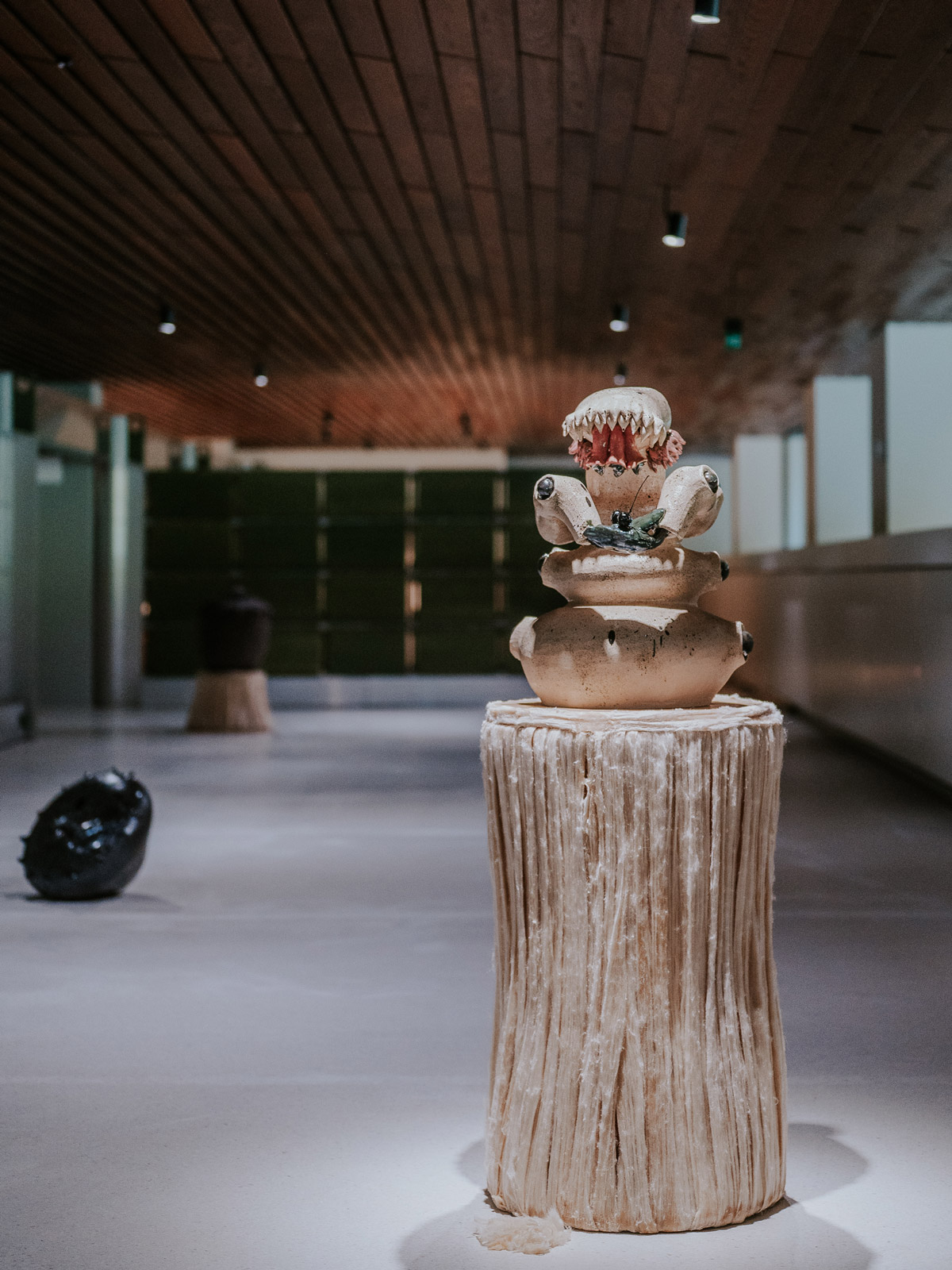
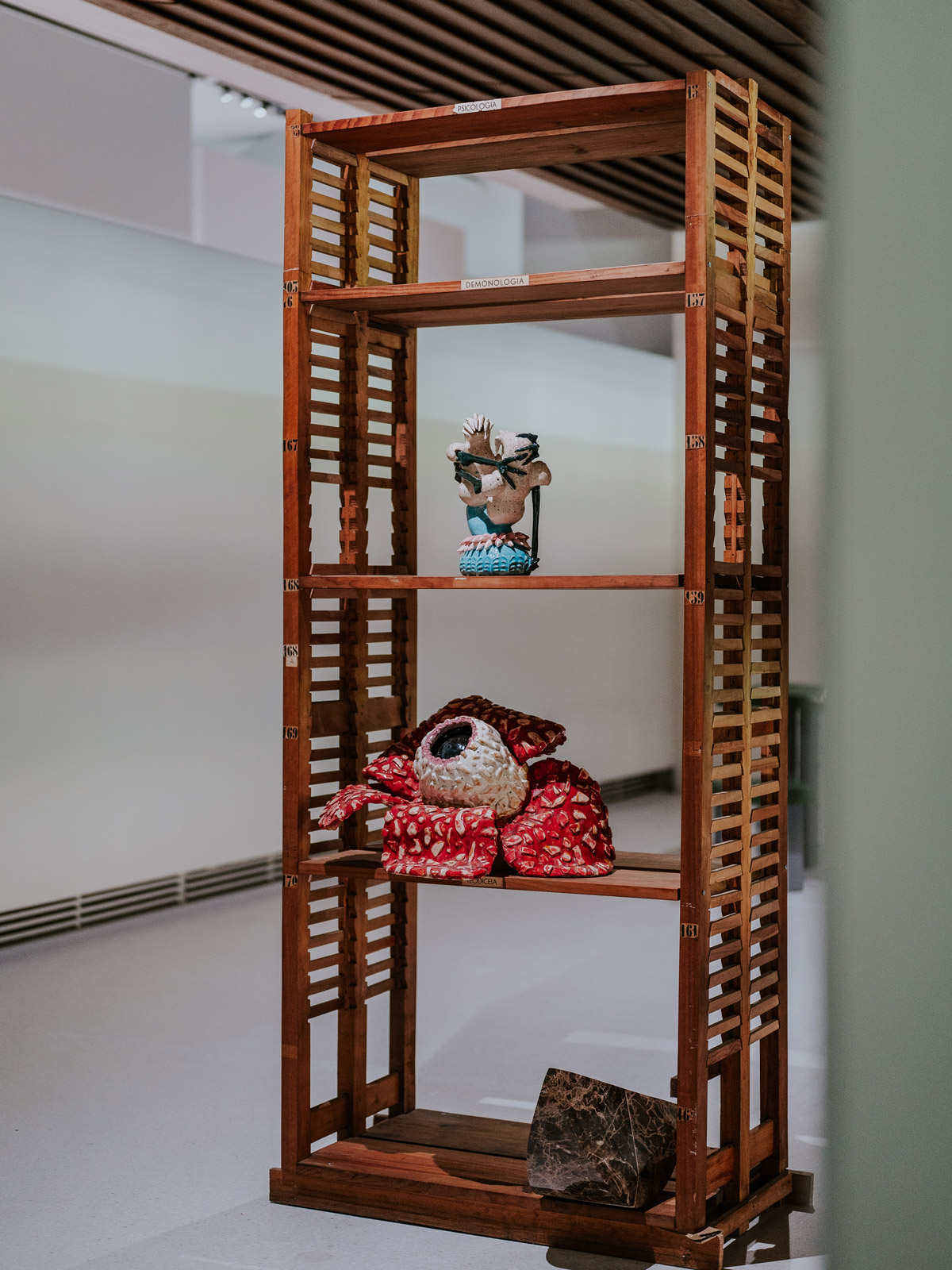
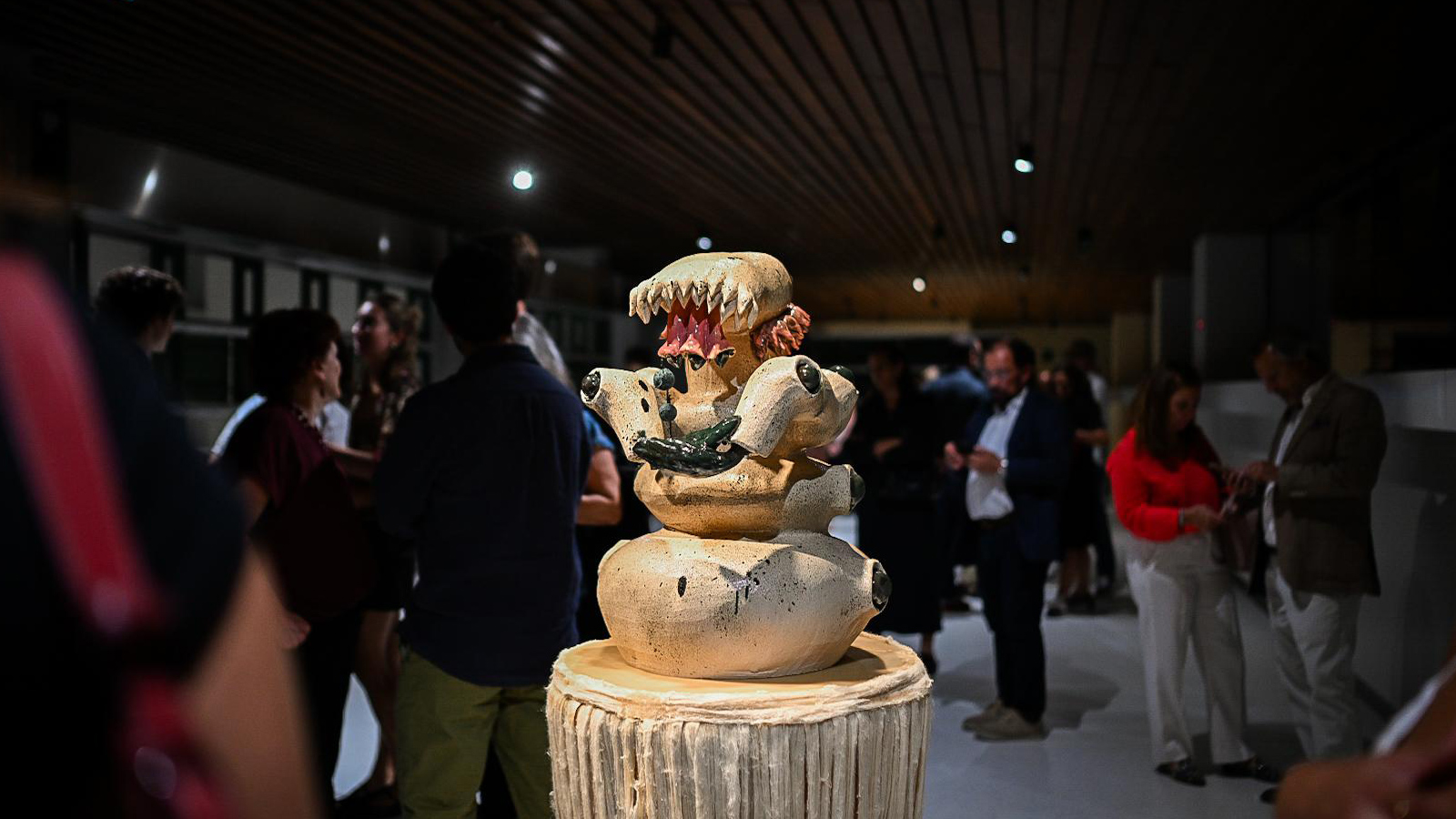
FT: To create a universe, even a fantastical one, it’s not enough to give it life; it also needs continuity, returning to the idea of homeostasis I mentioned earlier. In that sense, many works in this exhibition present new versions of a character that has appeared in previous projects. Here, that character re-emerges to illustrate the story of the oak galls and the various narrative branches I’ve created around them. For example, the piece No Início, A Ferida [In the Beginning, the Wound] depicts a character pricking a wall, evoking the action of the wasp, as well as the idea that something new can emerge from a violent act. In another work, we see a character holding an oak gall and observing it. I called it Autorretrato [Self-Portrait], because I recognise myself in that gesture – this figure holding a small sphere and seeing a world within it became, for me, both the starting point and the destination of the entire exhibition.
MT: Could you explain why, in the exhibition’s title, you link the idea of a ball – in the sense of a communal dance – to the oak gall’s story?
FT: It is, above all, a celebratory association. I wanted to celebrate this process that so fascinated me, and in which, much like a ball, where people come together and create something collectively, the two species interact and bring something new into being. But I see a ball as something more complex than dance alone: it’s a communal gathering shaped by rituals, codes of language, and its own customs, which are constantly reinvented and transformed over time. In this sense, I sought to draw a parallel between the story of the oak galls and a ball, since both unfold in stages of encounter and separation – beginning in a movement of communion, passing through different rhythms and phases, and culminating in a conclusion: the end of the ball, the wasp’s departure from the gall. Yet these endings, far from being mere conclusions, open space for new beginnings.
The title also points to the idea of sonority and musicality, which runs through my work: not something audible or tangible, but manifested in the rhythm of colours, in the repetitions and variations of forms and themes that extend from one project to the next.
And, as in many of my pieces, there’s a queer dimension here too. The English translation, ‘Gall Ball’, makes that aspect even more explicit. In English, ball refers not only to a dance or party, but also to a particular kind of event within LGBTQ+ communities, especially linked to drag and queer cultures. These balls are radically free performative spaces, where identities, aesthetics, and expressions are explored – often ones that find no place outside those contexts.
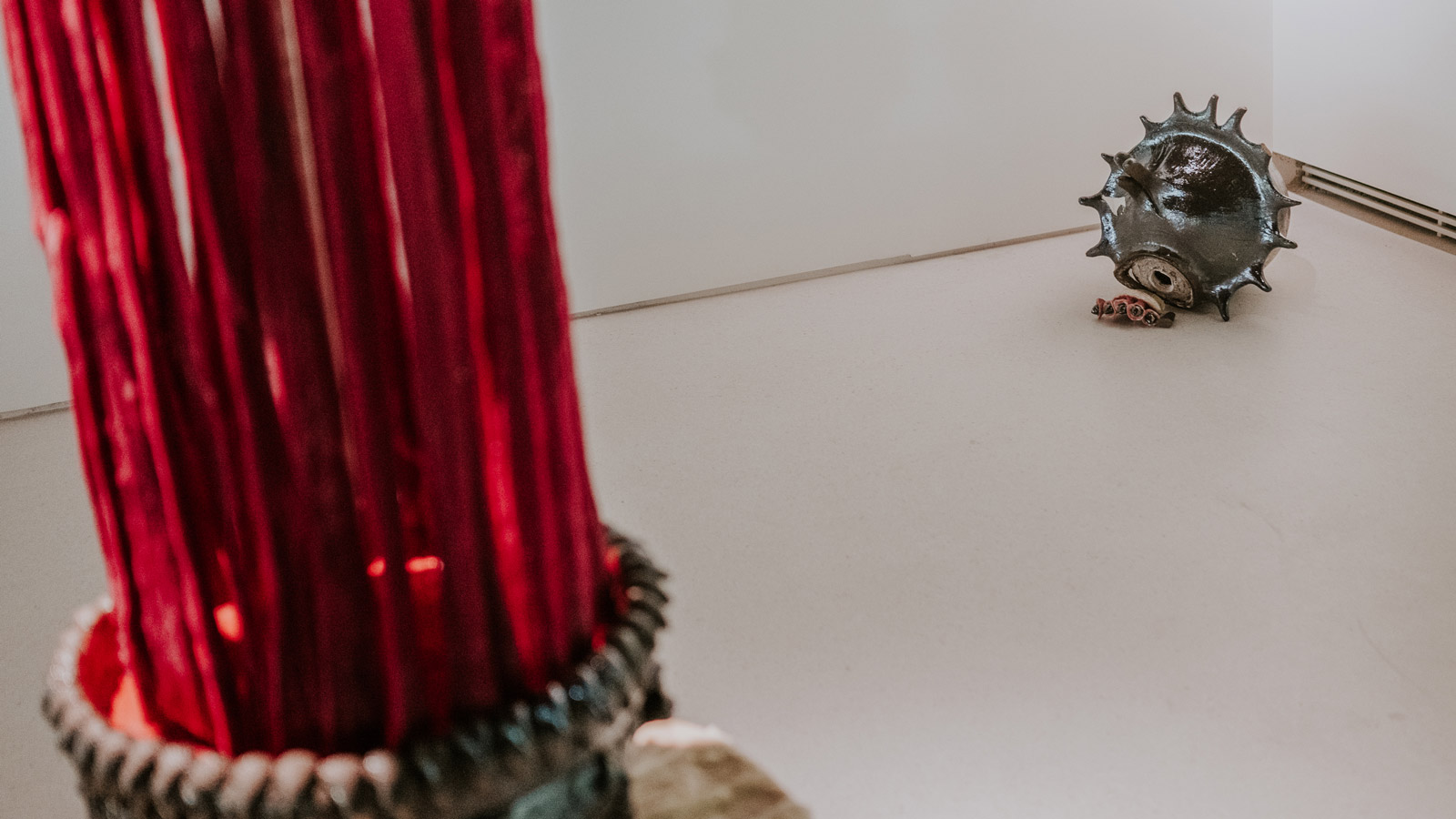
MT: Now that you mention balls, beyond the ideas of freedom and transformation, there’s also this notion of excess as affirmation – in terms of clothing, poses, and make-up – which becomes a kind of power, a way of standing out and claiming space. I’d like to connect that idea of excess to the term you use to describe your pieces: ‘baroque sci-fi.’ I’ve always found this concept fascinating because it brings together two seemingly polar opposites – sci-fi, associated with a minimalist aesthetic and projection into the future, and the baroque, marked by a taste for excess and linked to a distant past. Could you talk a bit more about this term?
FT: All my characters have something of sci-fi about them because, as we’ve seen, they’re hybrids, crossing species and references. From them, I build fictional and speculative narratives, but ones that are always closely tied to science and lived experience. I think that’s where the sci-fi aspect of my work comes from, even though it doesn’t follow the typical aesthetic of the genre. This is where the baroque comes in – not only in the forms and details of the figures, but also in the use of ceramics, an ancestral technique.
Another aspect of my work that evokes the baroque is sensuality, present in the exuberance with which the style treats form, desire, and passion – something particularly visible in its depictions of ecstasy. I try to reflect that same sensuality when representing plants, which, in their own way, also draw on those forces to reproduce: the flower, for instance, exists to attract; the bud carries a sensual quality, and colours emerge precisely for that purpose.
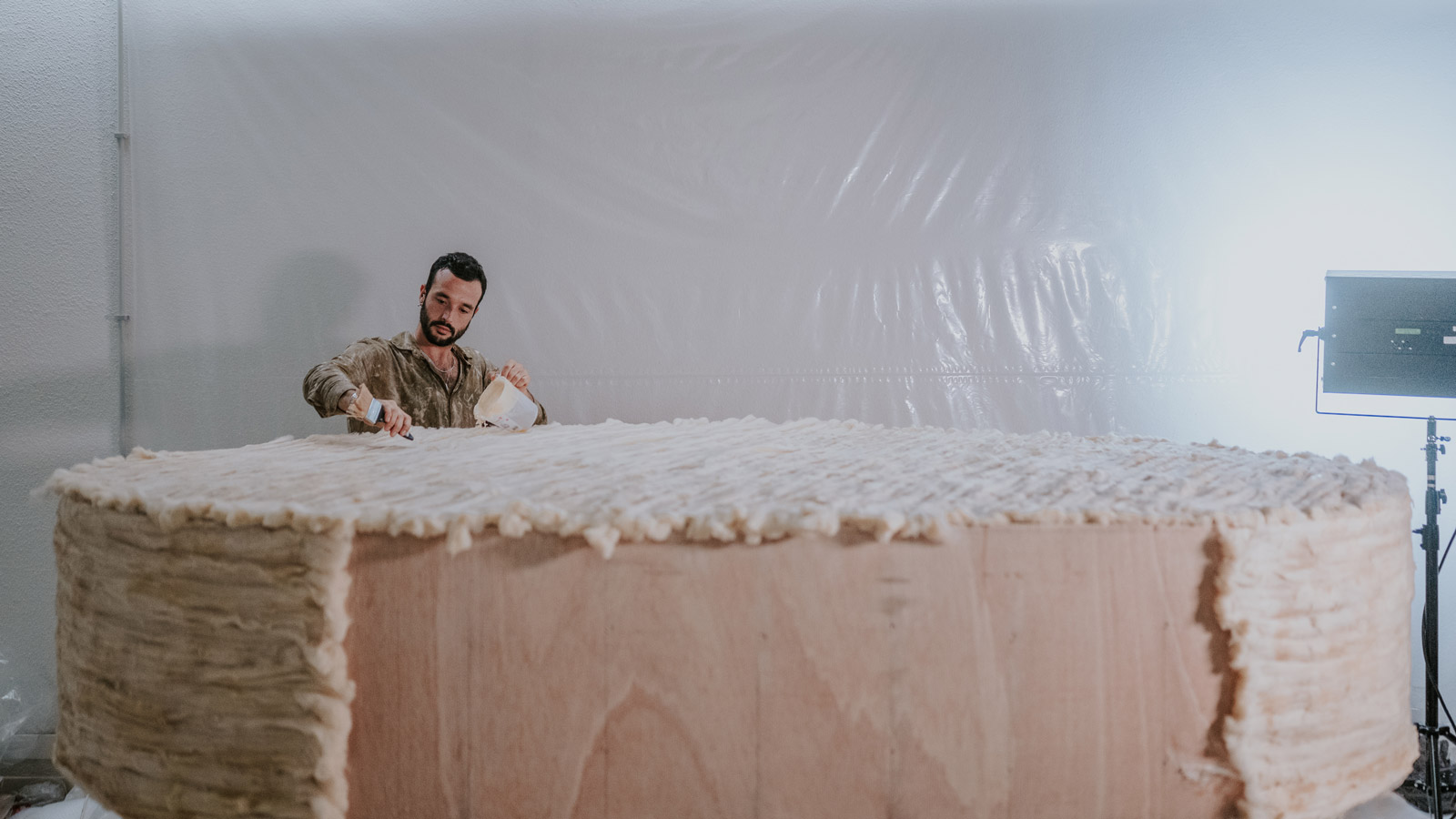
MT: I think that term works really well for your work, especially when we consider that baroque sculpture has a strong theatrical dimension. I see that in your pieces: there’s always movement, tension, displacement, and interaction between them.
FT: That’s another aspect that brings my work closer to the baroque. For instance, one of the sculptures I presented for the 2025 EDP New Artists Award was inspired by a highly theatrical baroque sculpture, ‘The Rape of Proserpina’ by Gian Lorenzo Bernini, which depicts the exact moment Pluto seizes Proserpina and she transforms into a tree. What interested me most was the composition of the sculpture rather than the myth itself. I came across this reference while thinking through the idea of baroque sci-fi.
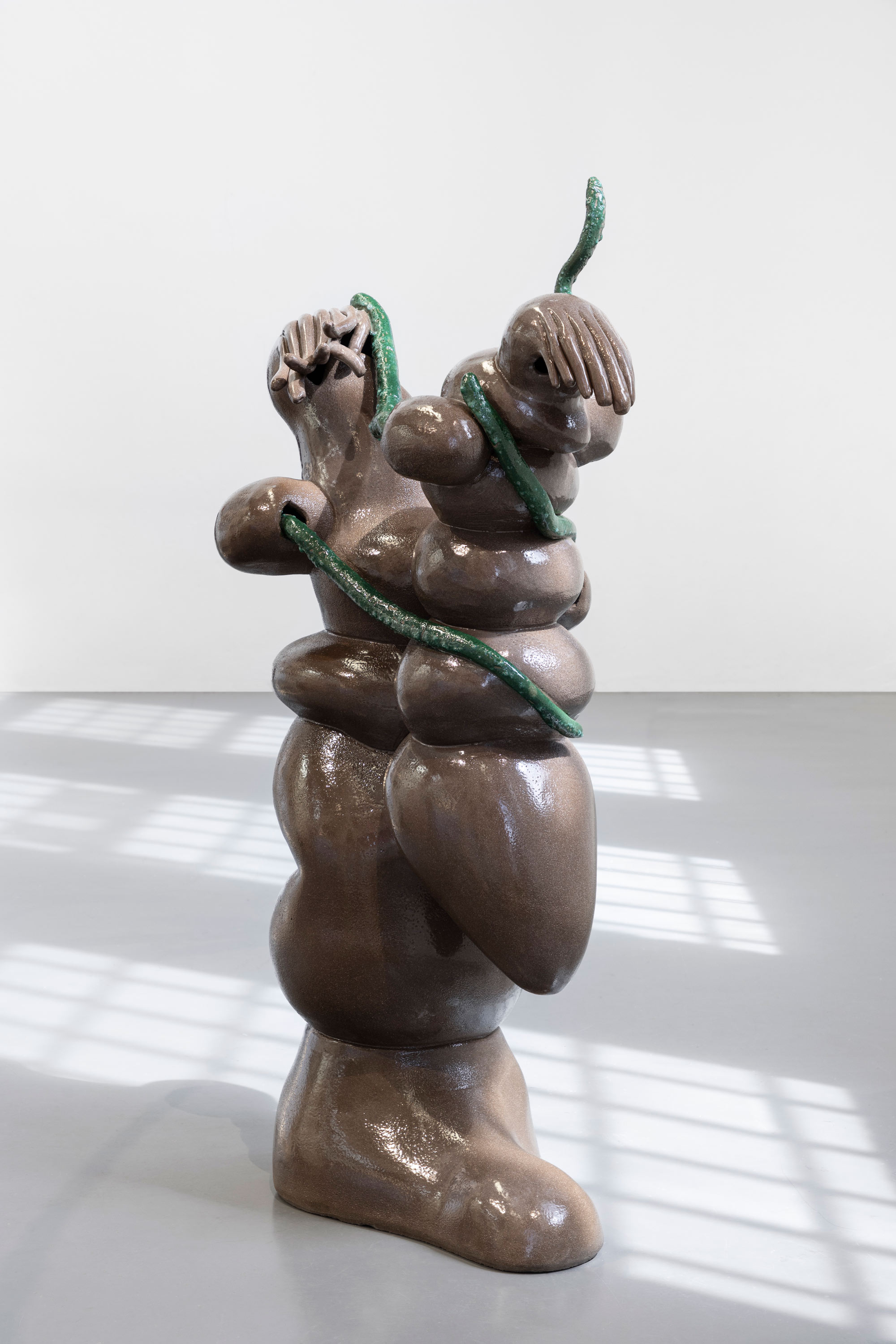
MT: That sculpture by Bernini, where we see Proserpina as a hybrid between tree and human, presenting nature as a refuge against danger, connects particularly well with ideas I associate with ‘Gall Ball’.
Speaking of the exhibition, I found it interesting how certain elements reflect the collaborative spirit of the story it tells – I’m thinking of the collective curatorship by students from Universidade Católica, and its ‘open’ character, where you continue adding pieces and interventions over time. Could you talk a bit about this collective and open dimension of the project?
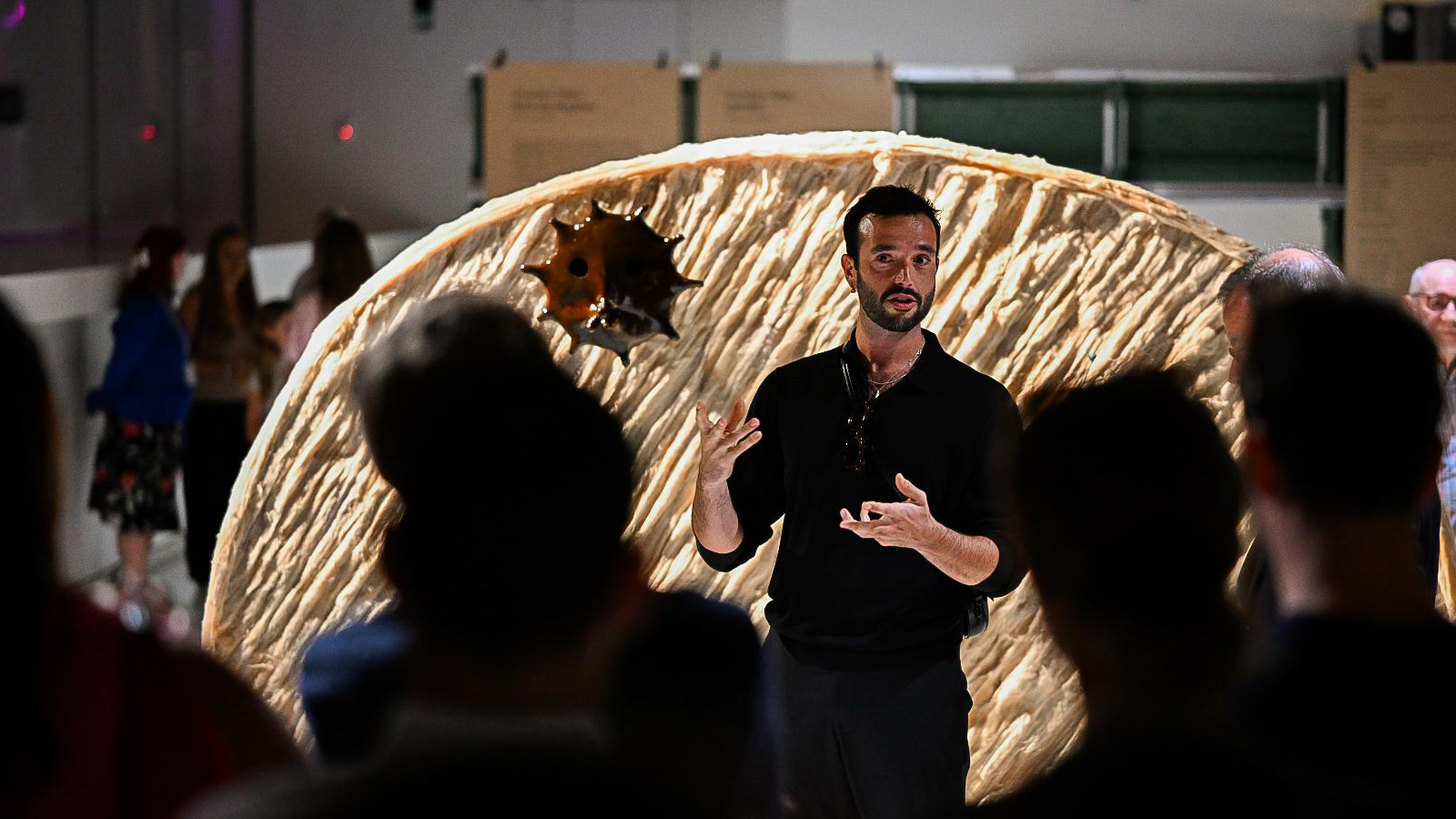
FT: The project is collaborative on a number of levels. There’s a partnership between CAM and Universidade Católica, and, as part of that collaboration, a group of students took charge of curating the exhibition, following the process closely, contributing to the installation, bringing ideas to the public programme, and even writing stories for each piece, giving voice to the characters.
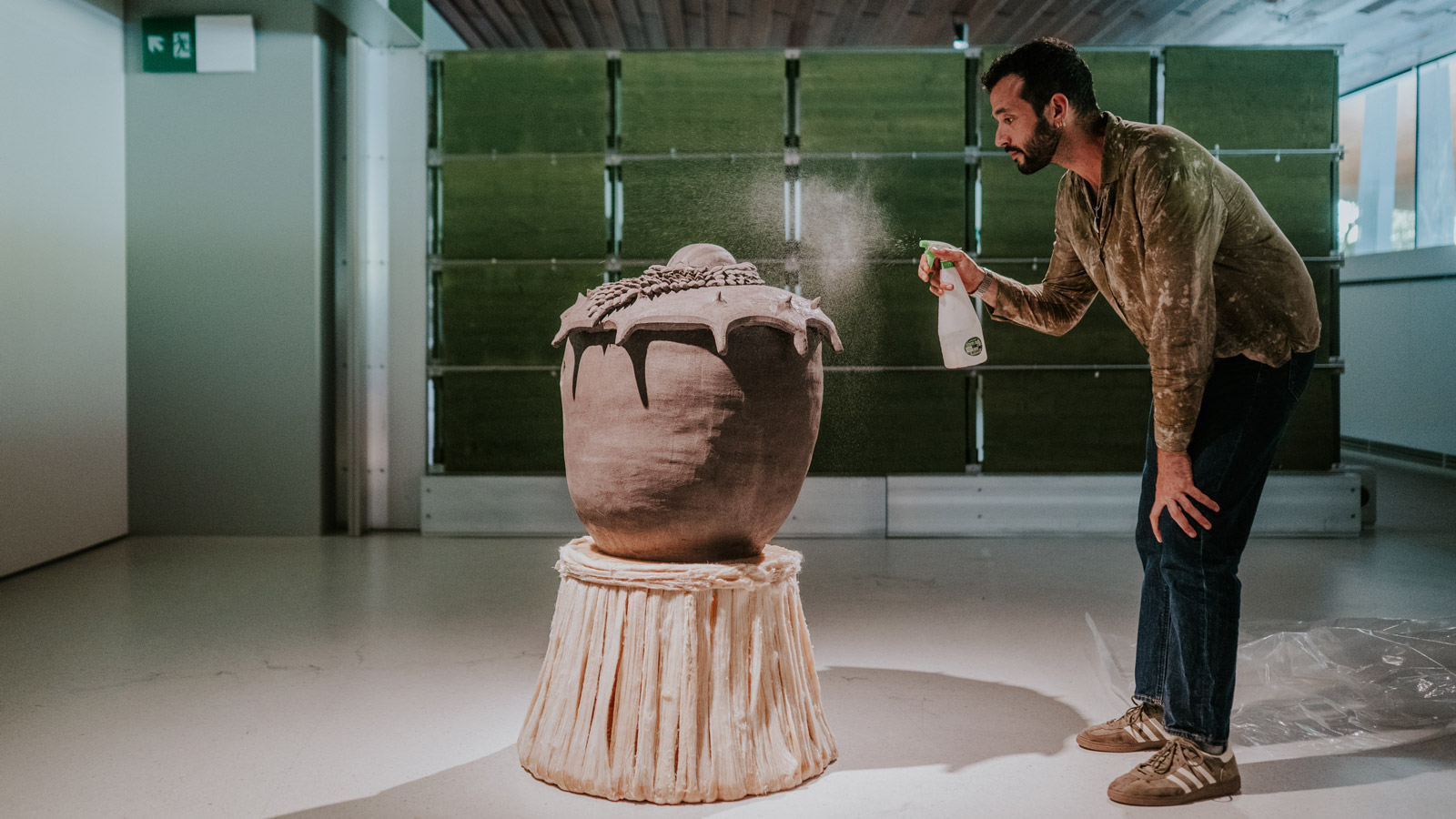
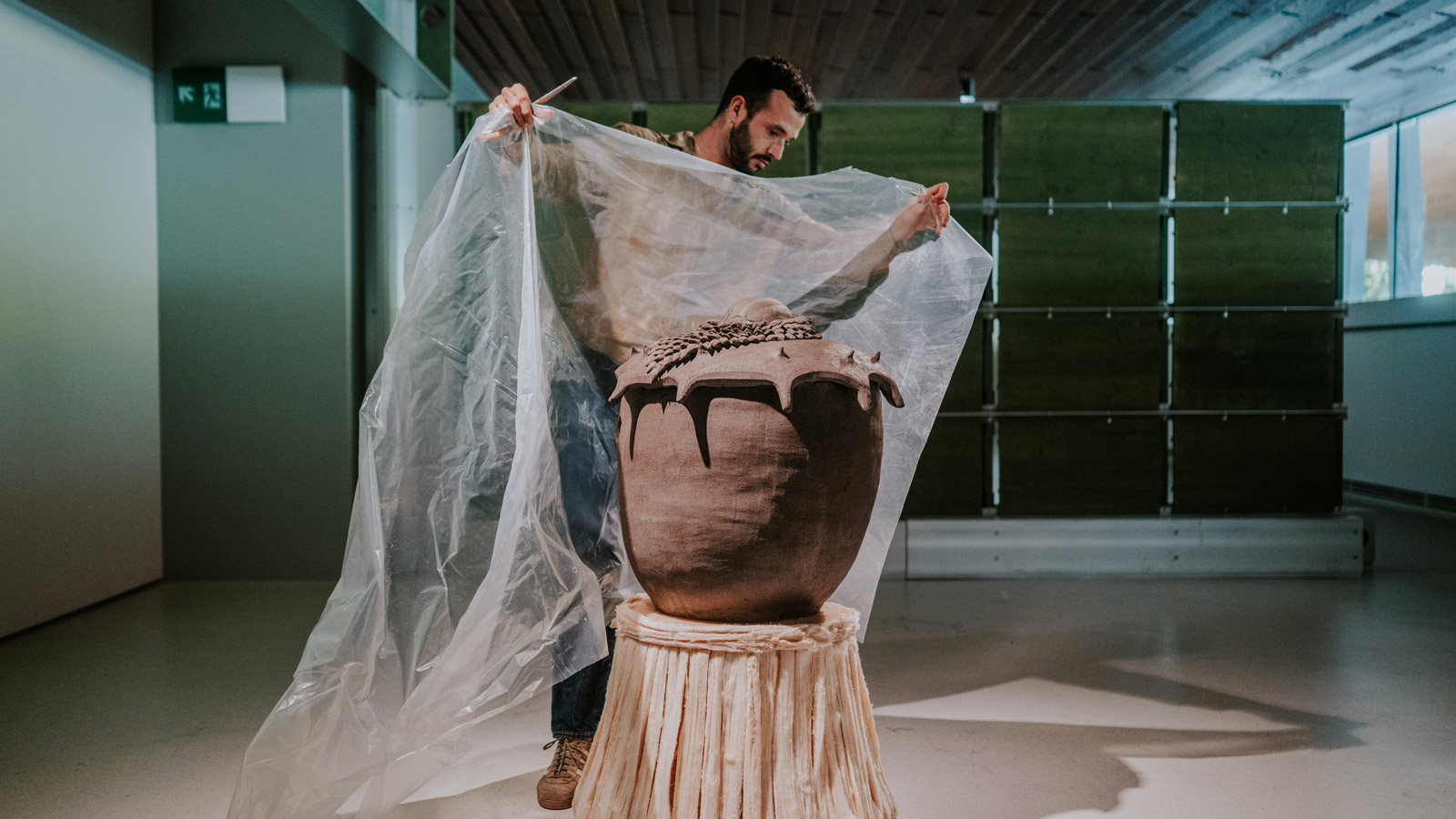
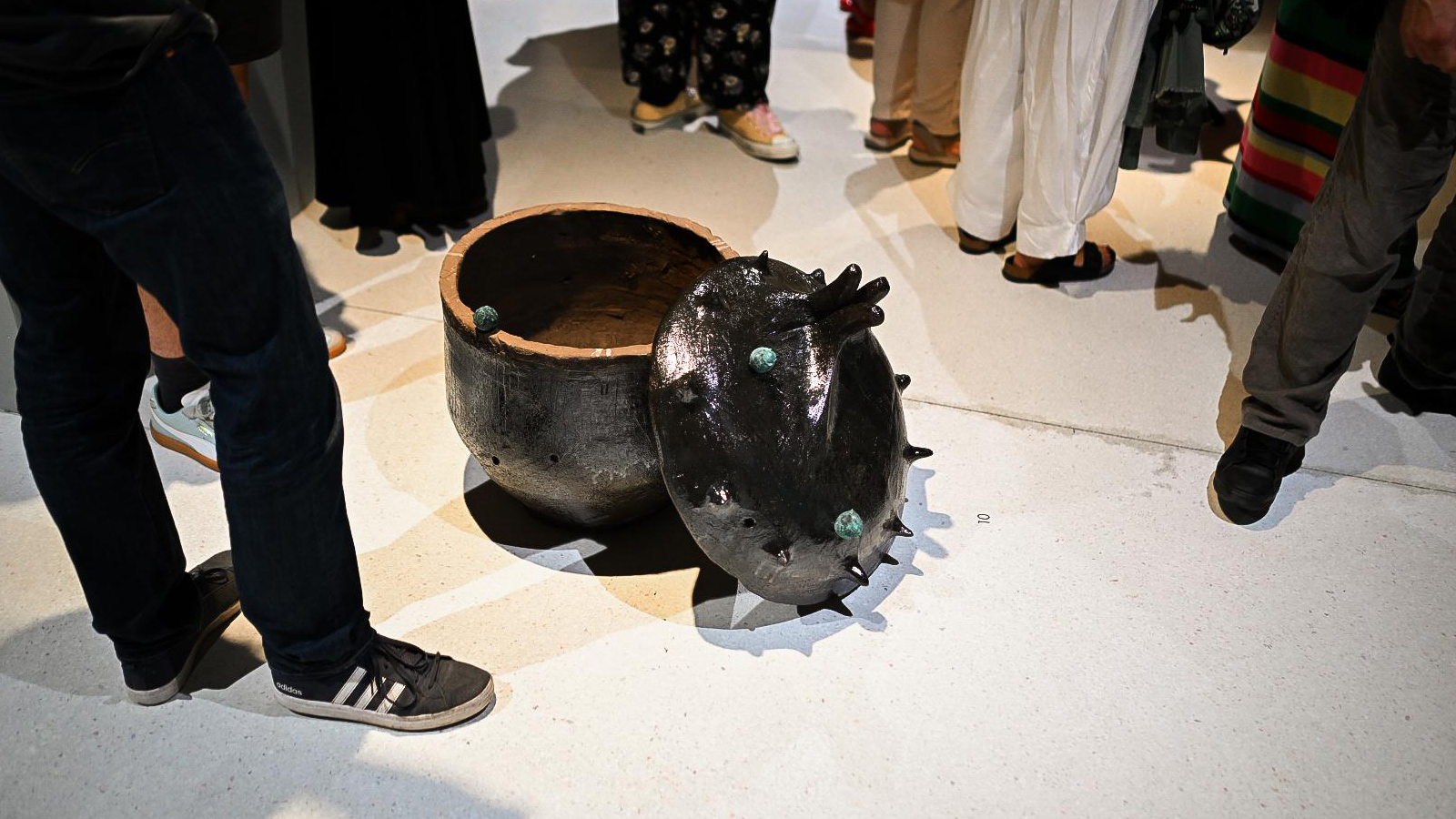
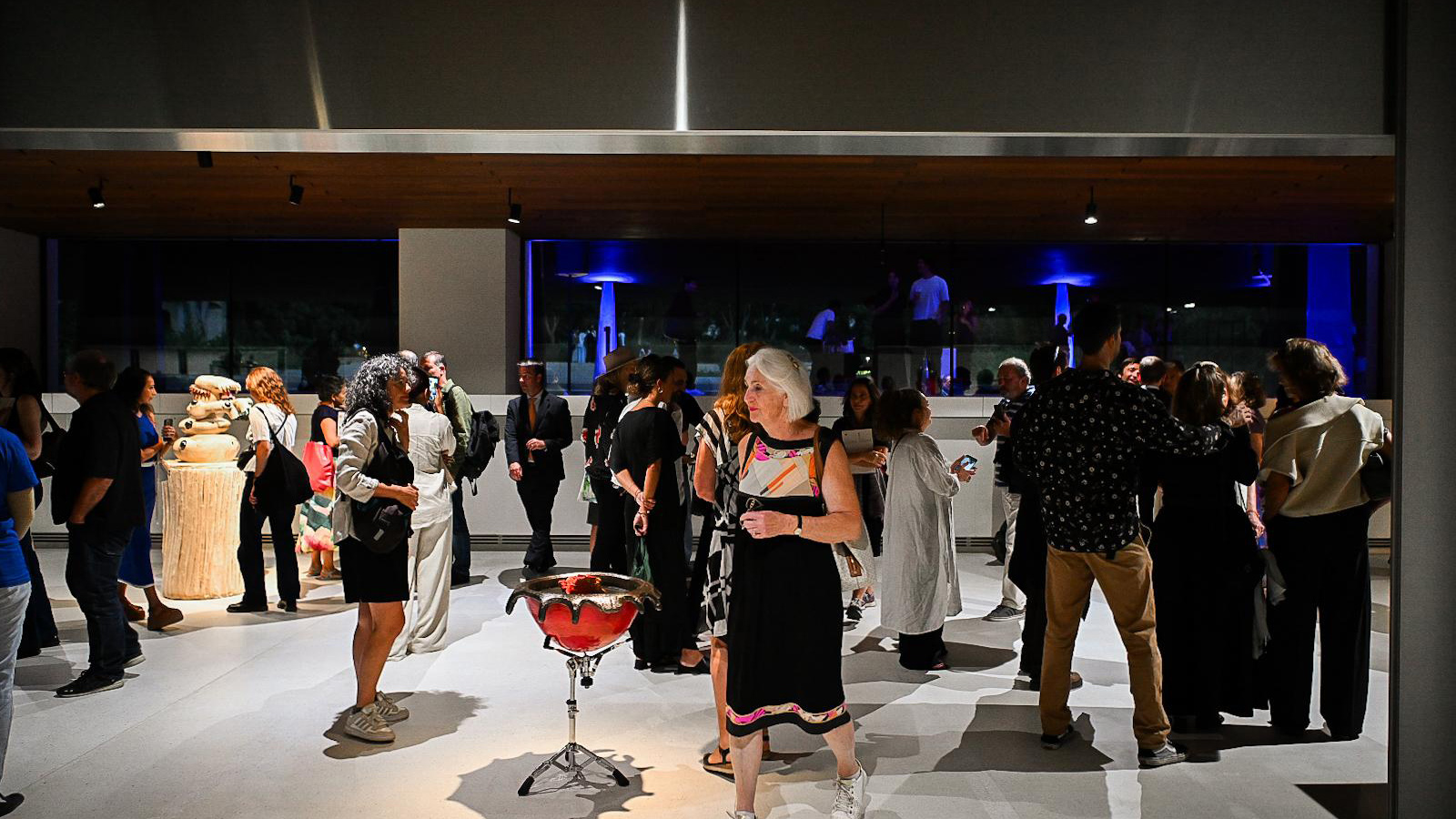
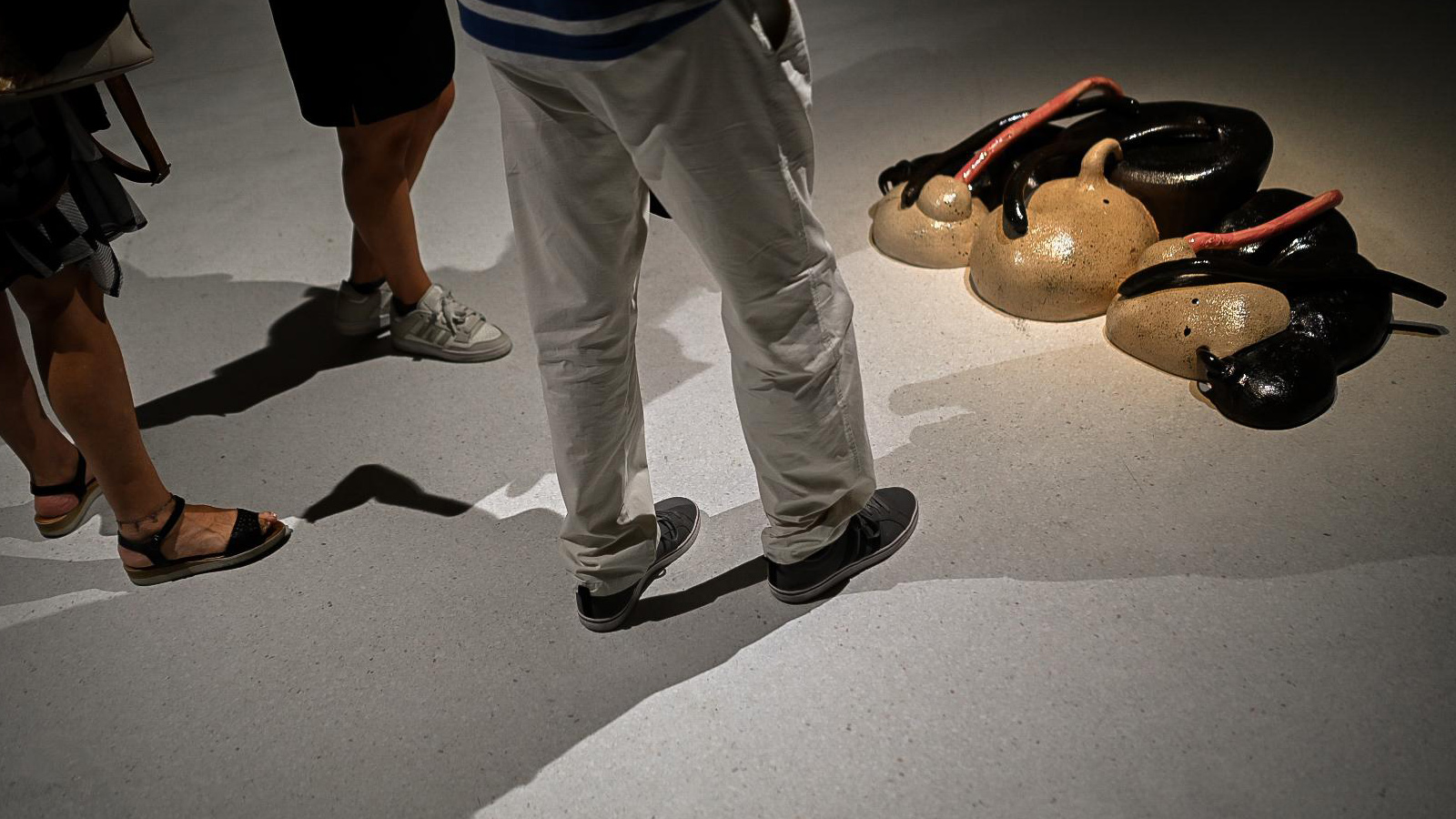
It’s also the first exhibition in the ‘Institution(ing)s’ programme, a European project reflecting on the future of institutions. Since exhibitions in this space are more experimental in nature, it wouldn’t have made sense to present something traditional or closed. My idea was to incorporate the concept of transformation – central to my work – into the exhibition itself, creating a space where I’d be actively working. I wanted to show part of the ceramic transformation process, its shifts in shape, colour, and consistency – something that’s usually hidden from public view.
‘The result is an exhibition in constant metamorphosis: some pieces will be fired during its run, while others will be glazed, and some will remain in progress.’ Visitors will be able to witness moments of creation unfolding within the exhibition itself, making it dynamic and alive, just like my work.
You may also like
No results were found for your criteria.