
“When we sing, we forget about the bad things in our lives”
Mondays tend not to be happy days. I hate Mondays must be the most famous phrase uttered by Garfield, the lazy, sarcastic orange cat who for decades has graced newspaper pages around the world. But aversion to Mondays goes far beyond the comic strips created by Jim Davis in 1978. The Boomtime Rats’ song “I don’t like Mondays” is perhaps the most famous, but by no means the only one to mention that feeling of discouragement, frustration and sadness that characterises the end of the weekend and the inevitable return to the daily grind.
Surprisingly, at Ajuda de Mãe’s headquarters in Alcântara, Monday seems to be the most anticipated day of the week. It is the day for baby massage in the morning and music and singing in the afternoon!
The music and singing sessions are a way of supporting some of the mothers accompanied by the institution who are suffering from or at risk of postnatal depression. The project (called Music&Motherhood) is not new, but only arrived in Portugal in October 2024. We will come back to its story later. For now, let’s focus on the session we attended.
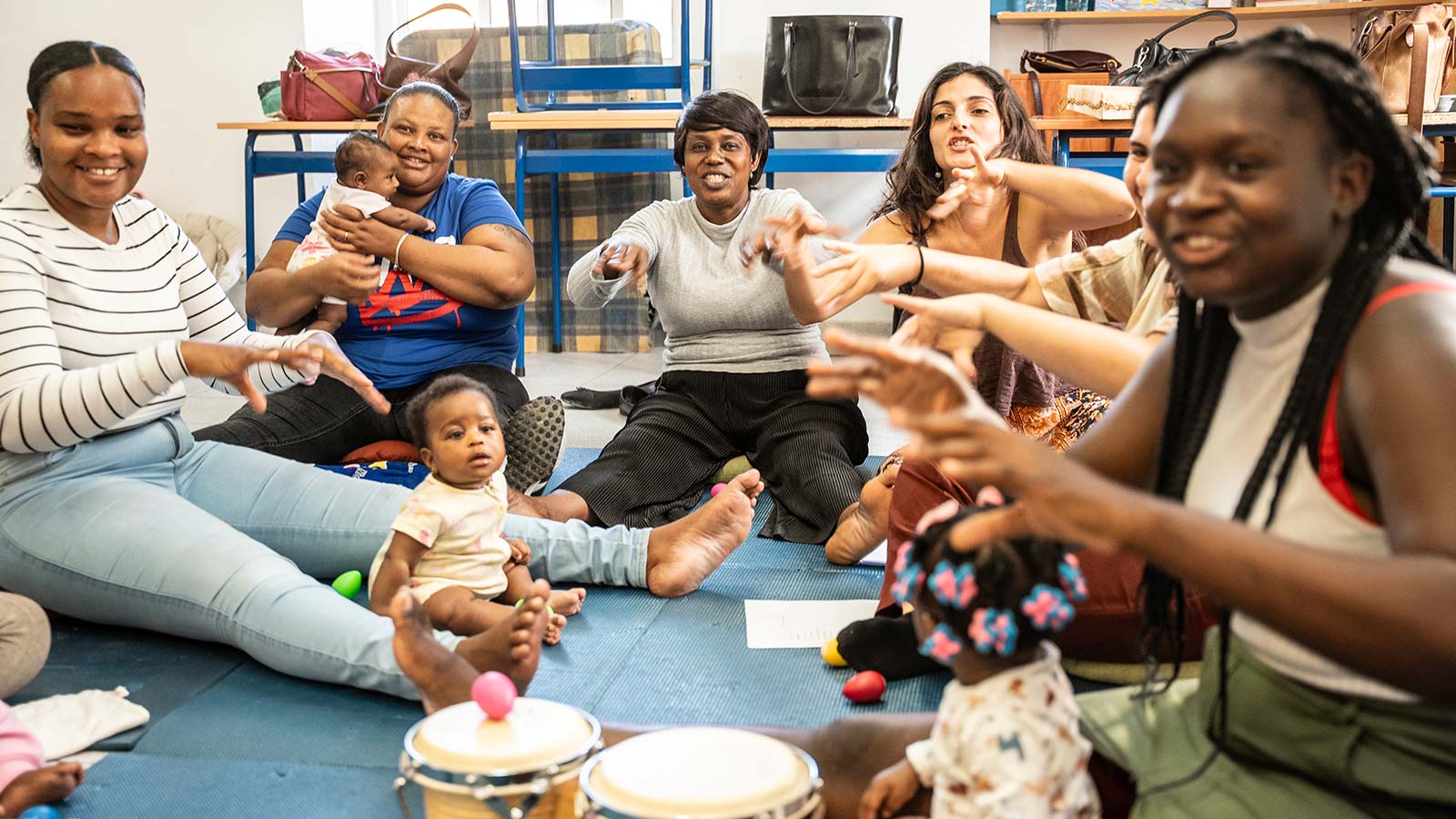
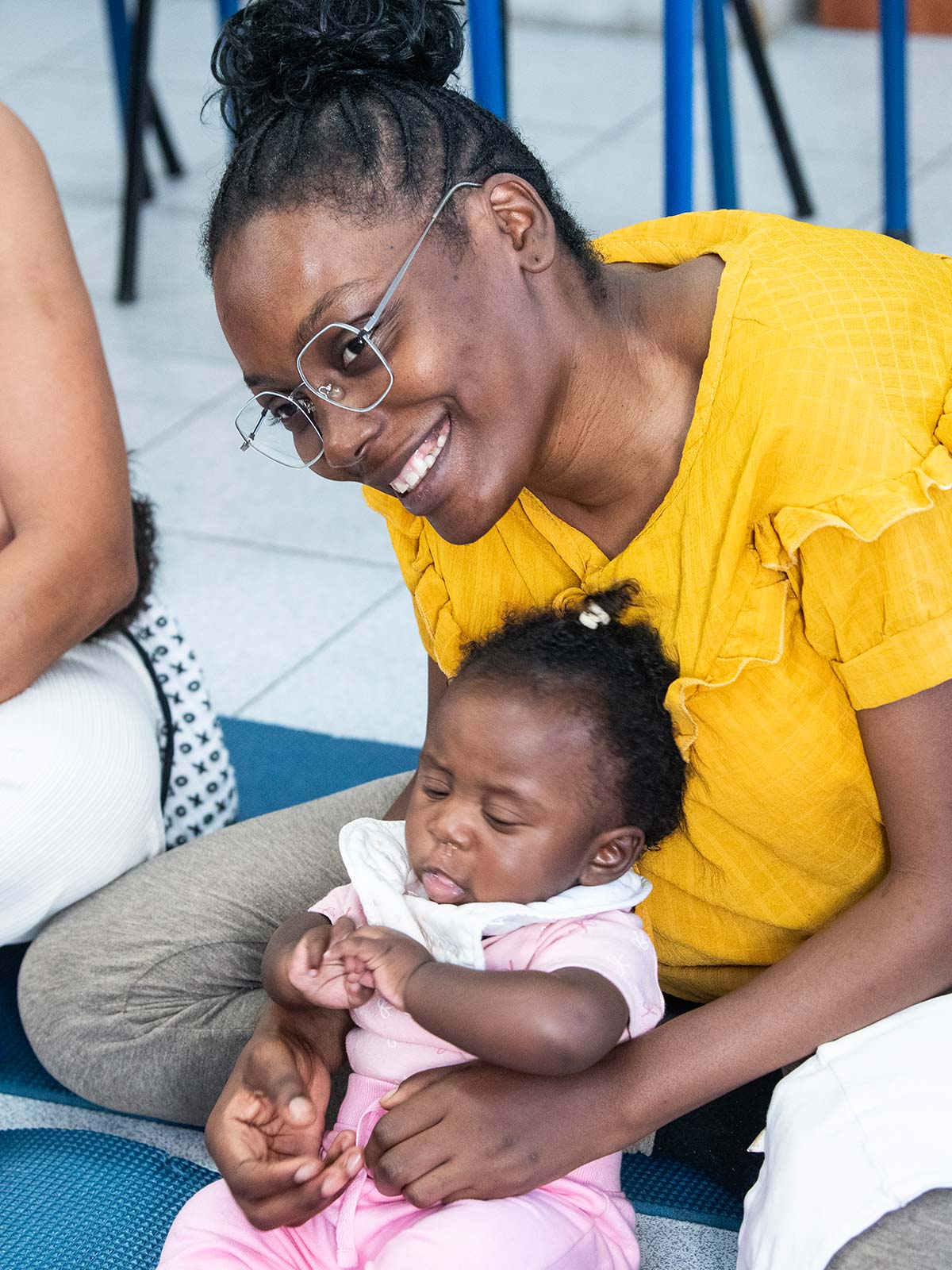
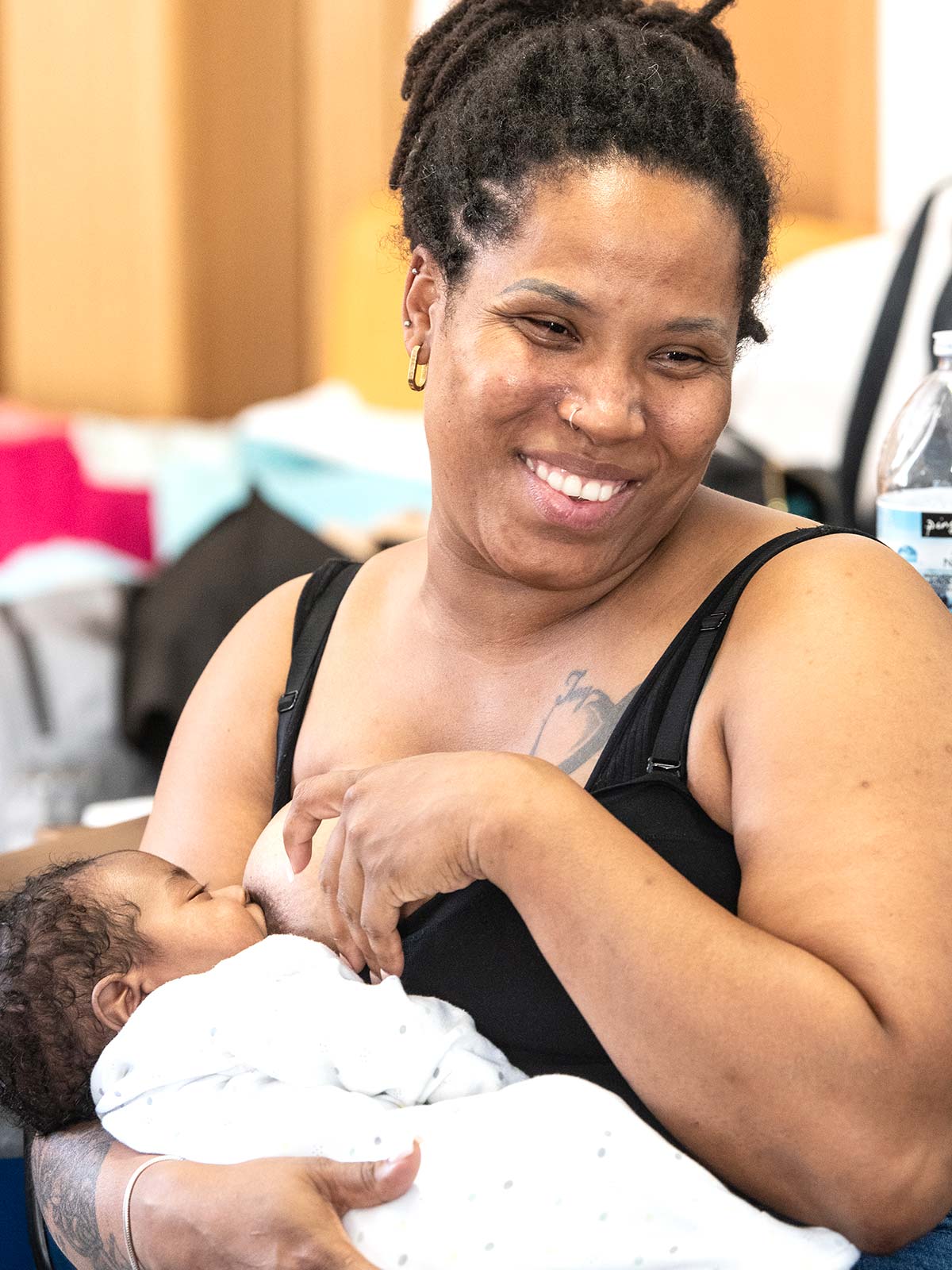
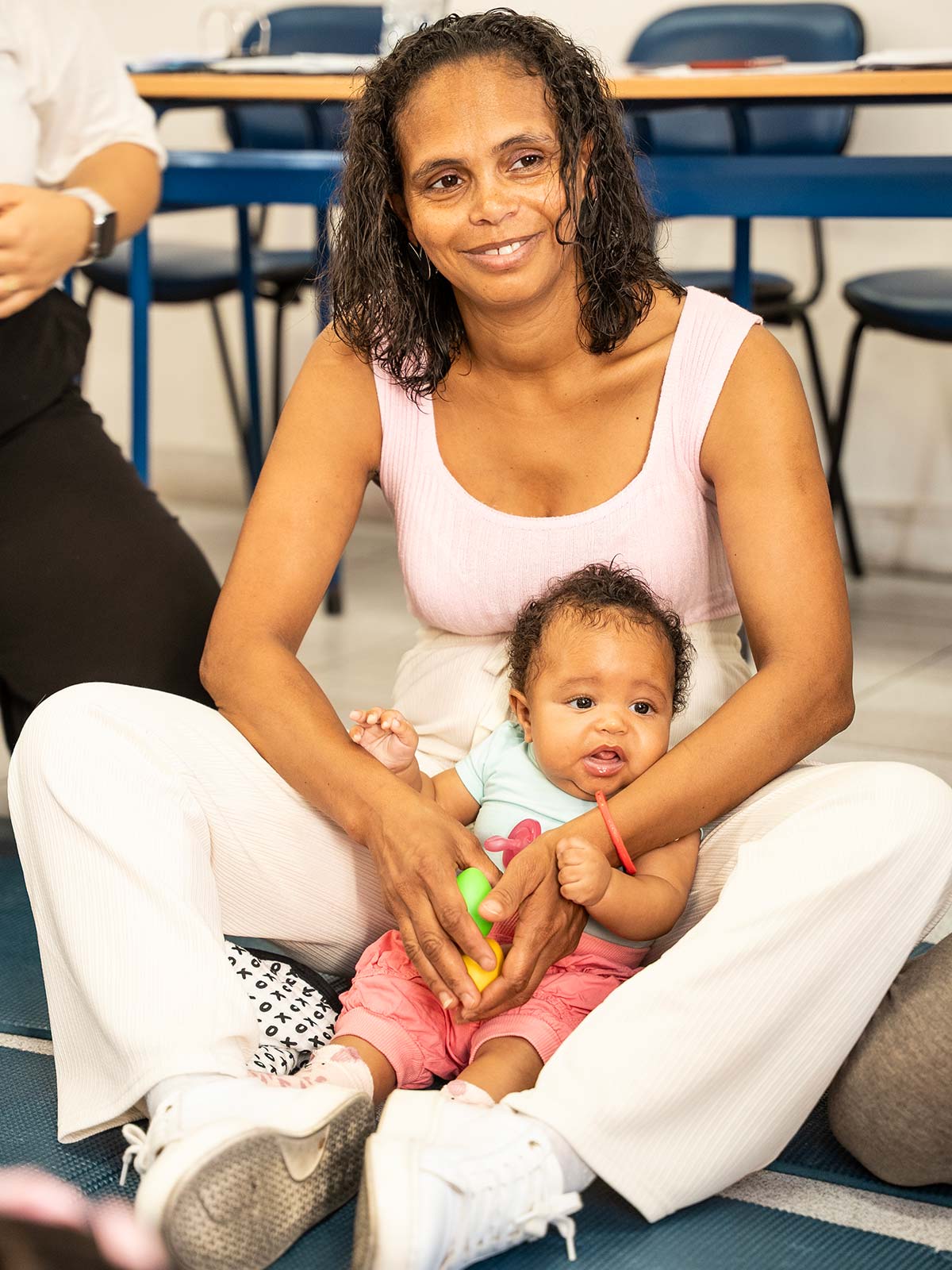
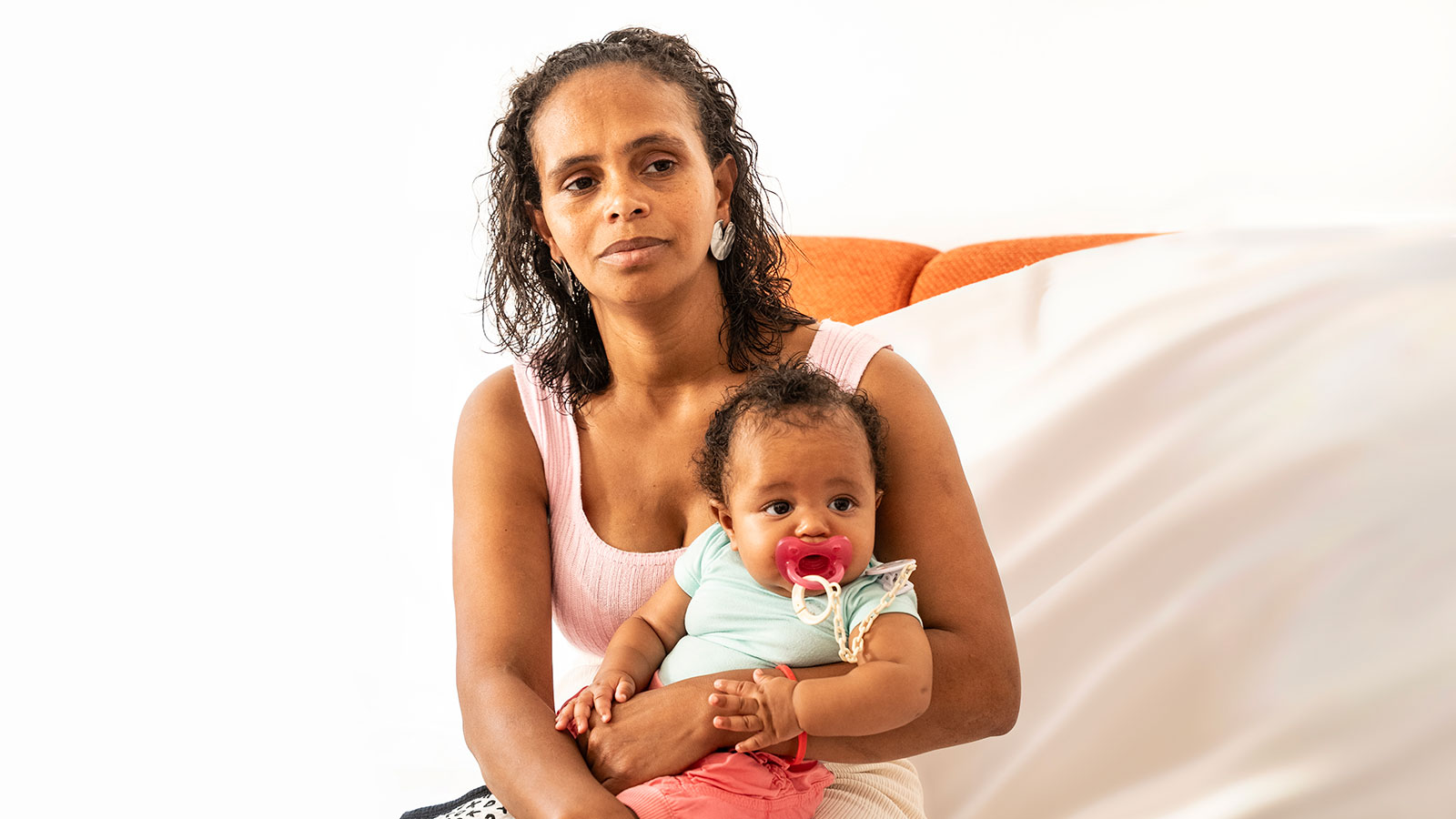
On the first floor of an isolated building in Alcântara, Lisbon, ten mothers and their babies waited for the session to begin. Some were waiting, staring into the distance… but most were chatting while breastfeeding, changing nappies or rocking their newborns. No one would say that they had been referred there (by a health unit, social services, a parish council, the Commission for the Protection of Children and Young People, or within the institution itself) because they were in a vulnerable situation – whether they were teenagers, migrants, single parents, suffering from isolation and/or socio-economic vulnerability – at risk or in the midst of postpartum depression. Several mention loneliness and being overwhelmed, some are unemployed and do not know where to turn.
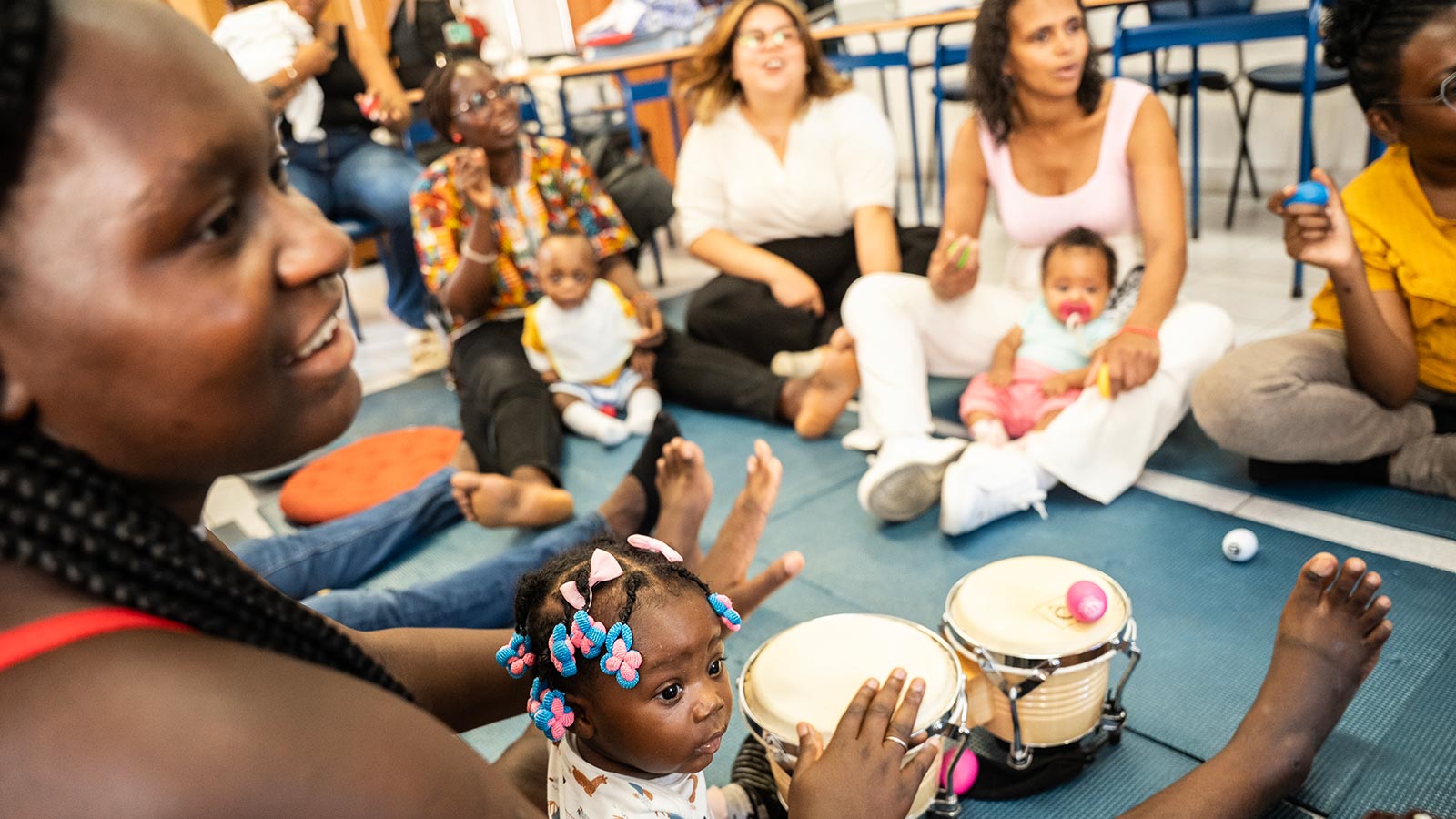
Ana Lídia and Felícia, singing leaders, would make a difference from this moment on. Together, they would breathe until everyone felt good, deep down, taking advantage of that time to disconnect from life and relax by stretching, turning their necks, feeling their shoulders and letting the pressure out. It wouldn’t be long before everyone let their guards down and started singing together.
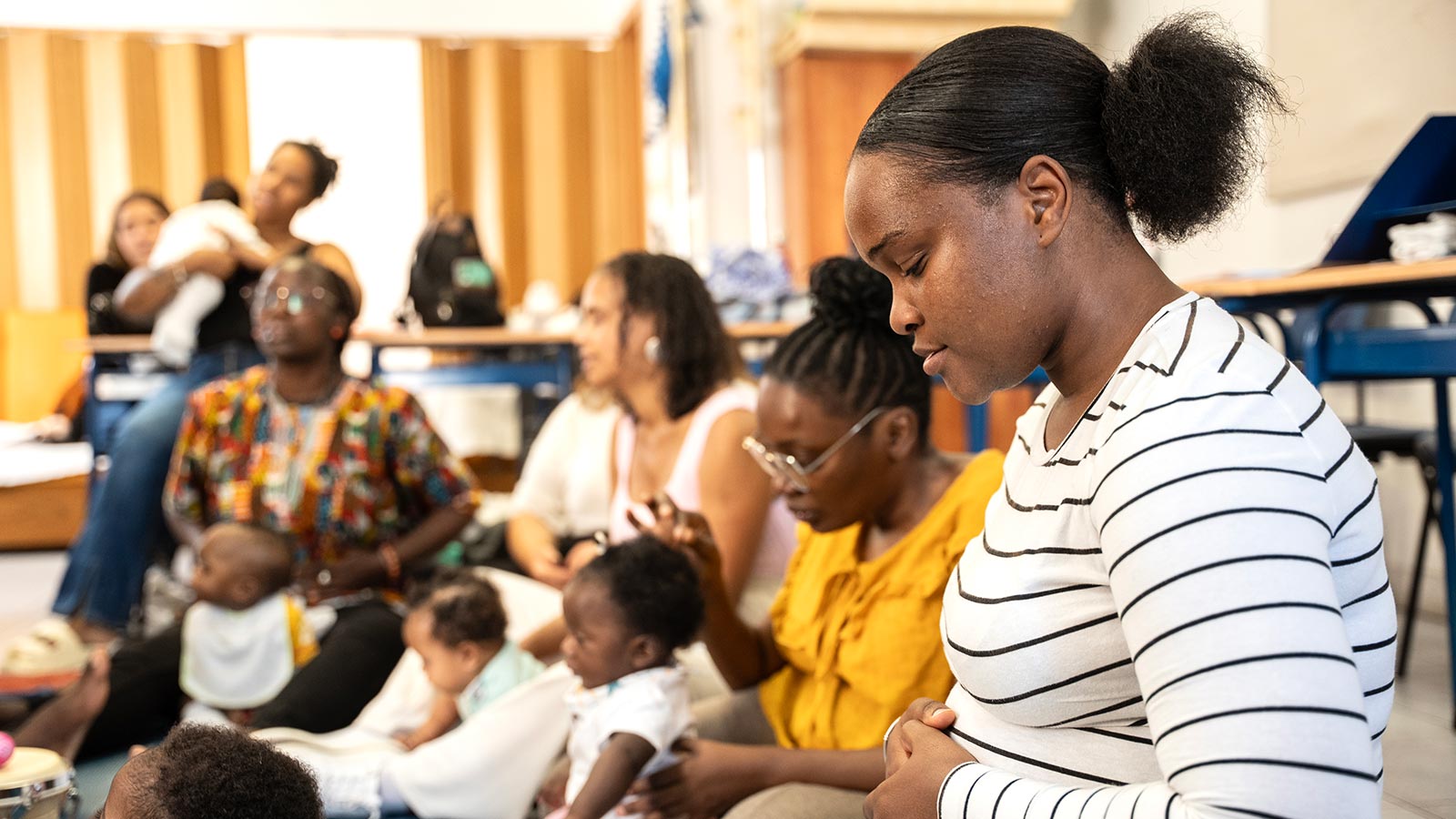
After the Hello Song, they moved on to another, “a lullaby for the babies to sleep”, explained Ana Lídia, as she strummed her guitar. “Sometimes we too need to be cuddled. Sometimes we also need a hug, don’t we?” The theme was subtly introduced. And then they would move on to a more cheerful song, open to improvisation, and so on, with little notes that would subtly mention loneliness and gratitude, about putting the phone behind your back, just as you can put problems behind your back too. In the last round, they sang together and shared how they felt about the session – “very good”, “happy”, “wonderful”, “fun”, “cheerful”, “spectacular”… all good feelings to take home with them. Suddenly, one mother takes advantage an echoing melody and says, “Why can’t it last longer?” and another replies, melancholically, “Because we can’t sleep here”.
The stigma of postpartum depression
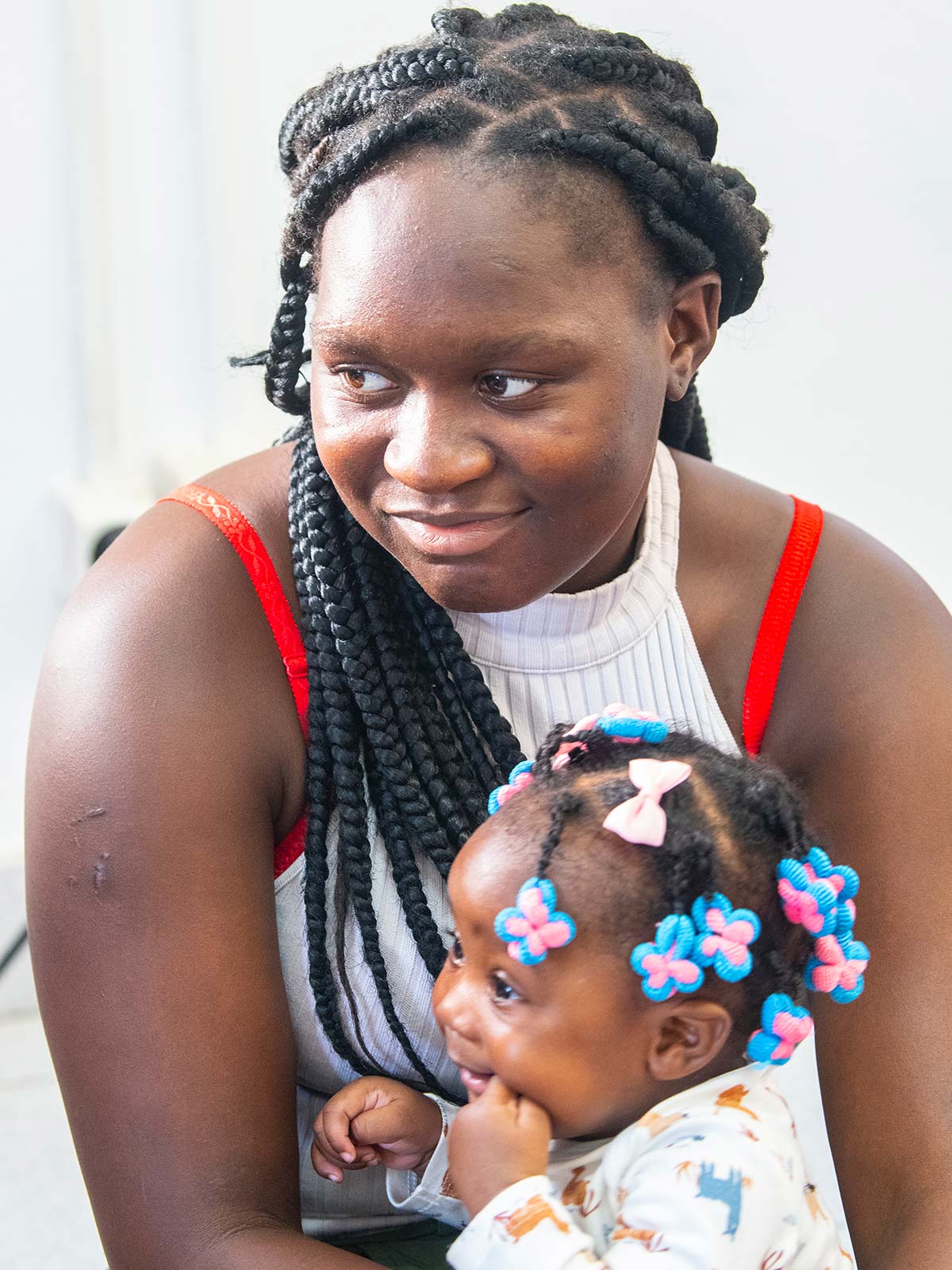
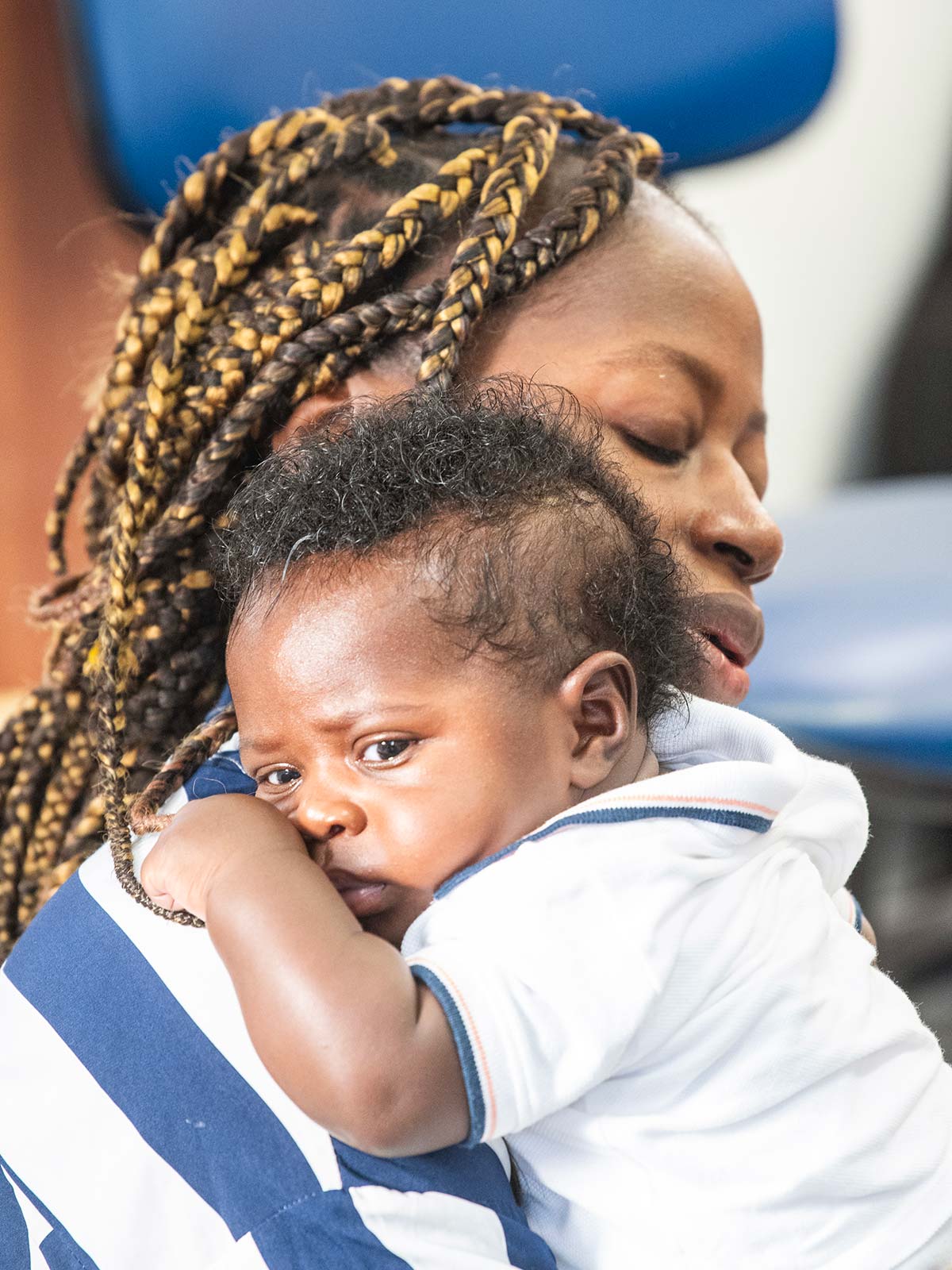
At the end of the session, the mothers would return home – to the house or room where each one is staying. At 41, Beharina considers herself “the mother of the group”. Having arrived from Guinea-Bissau eight years ago, she dedicates her days to caring for her sick mother and her eight-month-old son, Alwedim. “When my boss found out I was pregnant, he fired me,” she says. Unemployed, she cannot pay for her home. And so, with the weight of the world on her shoulders and a baby in her arms, she went to the Odivelas City Council to ask for help. They put her in touch with Ajuda de Mãe, where, in addition to support for her child (clothes, toys), she would receive training to help her find a new job. The course includes Portuguese language classes, citizenship, social skills, home economics, laundry and ironing, caring for the elderly and children, cooking, among other subjects. It also ends with an internship.
The music and singing programme was introduced by a proposal from the National School of Public Health, responsible for adapting to the Portuguese context a project launched in 2015 in the United Kingdom and which has expanded to other countries, with the support of the World Health Organisation.
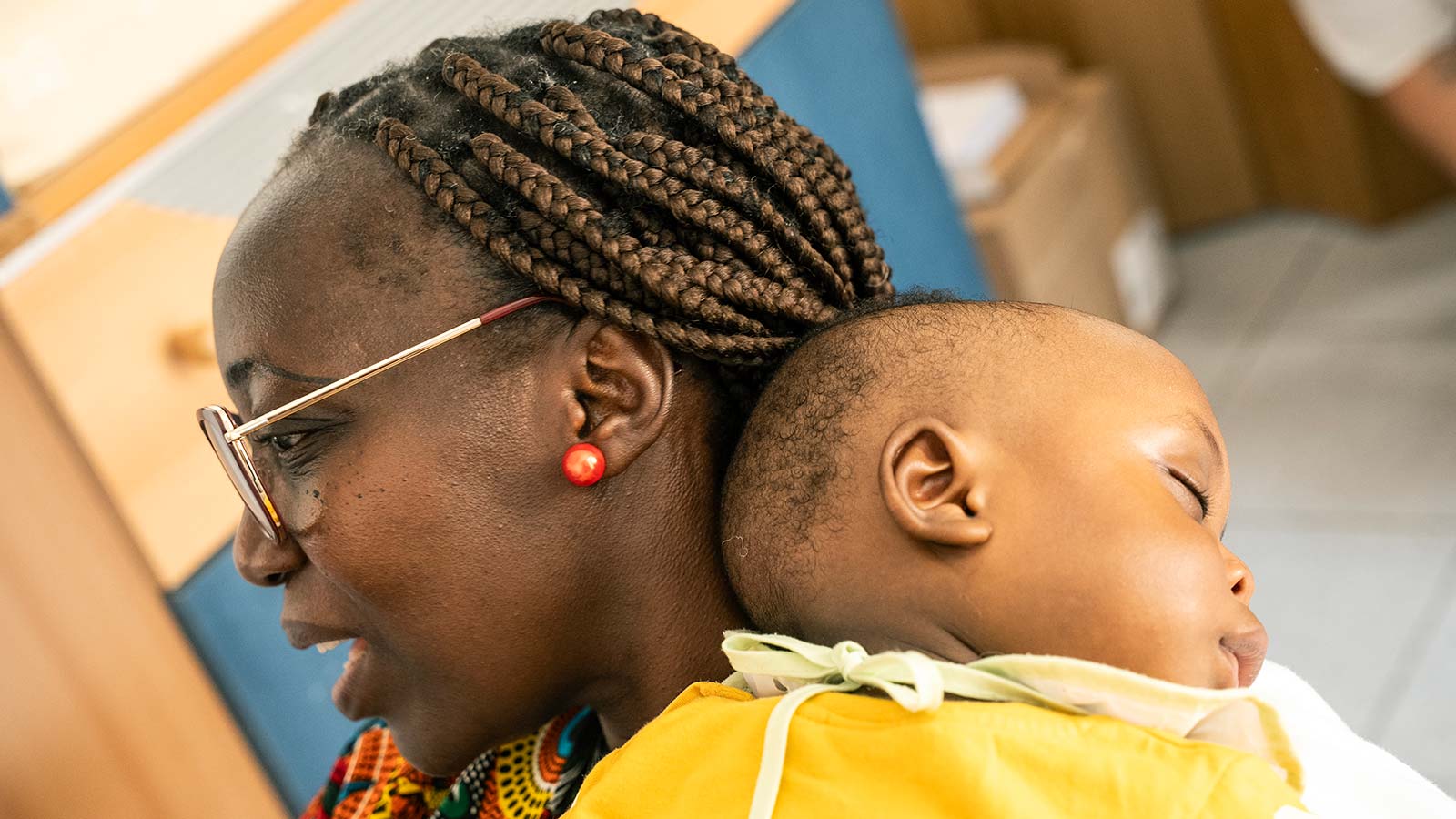
The sessions have helped Beharina a lot. “It’s a lot of fun. It cheers me up and helps me get a lot of things off my mind,” she says. The sessions have also helped Isabel, 32, who has a four-month-old daughter, Malia. She arrived from Cape Verde six months ago on holiday, but ended up being hospitalised with pregnancy complications and had to stay here, far from her three boys (aged 10, 6 and 3). She recalls how she “had a lot of worrying things in mind… if we don’t have anyone to support us, some people get depressed. When we sing, we forget about the bad things in our lives”.
The stigma surrounding mental health in general, and postpartum depression in particular, continues to be a barrier to seeking help in Portugal and other countries. “The adoption of arts-based interventions, implemented in community contexts, can mitigate this barrier by offering an opportunity to improve mental health and well-being through a language that normalises the support one receives”, explains Sónia Dias, director of the National School of Public Health and principal investigator of the Music&Motherhood project in Portugal, supported by the Gulbenkian Foundation, as part of the Growing Minds initiative. This intervention, she continues, “aims to prevent and reduce the symptoms of postpartum depression and improve the bond between mother and baby. It complements clinical and therapeutic care, when available, by offering an additional avenue for expression and well-being. This intervention increases the feeling of belonging, promotes support networks, reduces stigma and barriers to access; it is a dedicated approach to the issue, in peace and in a group, in a safe space, with the baby”.
Involving healthcare professionals without overloading them
This is the third group to undergo this kind of session. Before them, two dozen mothers had already been through this experience between May and July in other civil society organisations. According to preliminary results, explains Maria João Marques, programme coordinator, “there was an average decrease of 49% in symptoms at the end of the programme, with seven out of ten women no longer showing signs of postpartum depression. Mothers also reported improvements in the mother-child bond, increased self-esteem, a stronger sense of belonging and greater social support, among other positive results”.
“Although postpartum depression can affect women from all backgrounds, evidence shows that in situations of greater social or economic vulnerability, the need for emotional and social support tends to be more pronounced”. From January onwards, the project is expected to involve other implementation sites, namely local health units in the Lisbon Metropolitan Area. It is important, says Maria João Marques, “that the intervention takes place in community contexts because, by being rooted in the community, the intervention helps to reduce the pressure on healthcare services and to develop close, powerful, and cost-effective solutions to support families.”
You may also like


No results were found for your criteria.