
“I Love destructions in the pursuit of seeking”
Marcelino Vespeira at the Calouste Gulbenkian Foundation
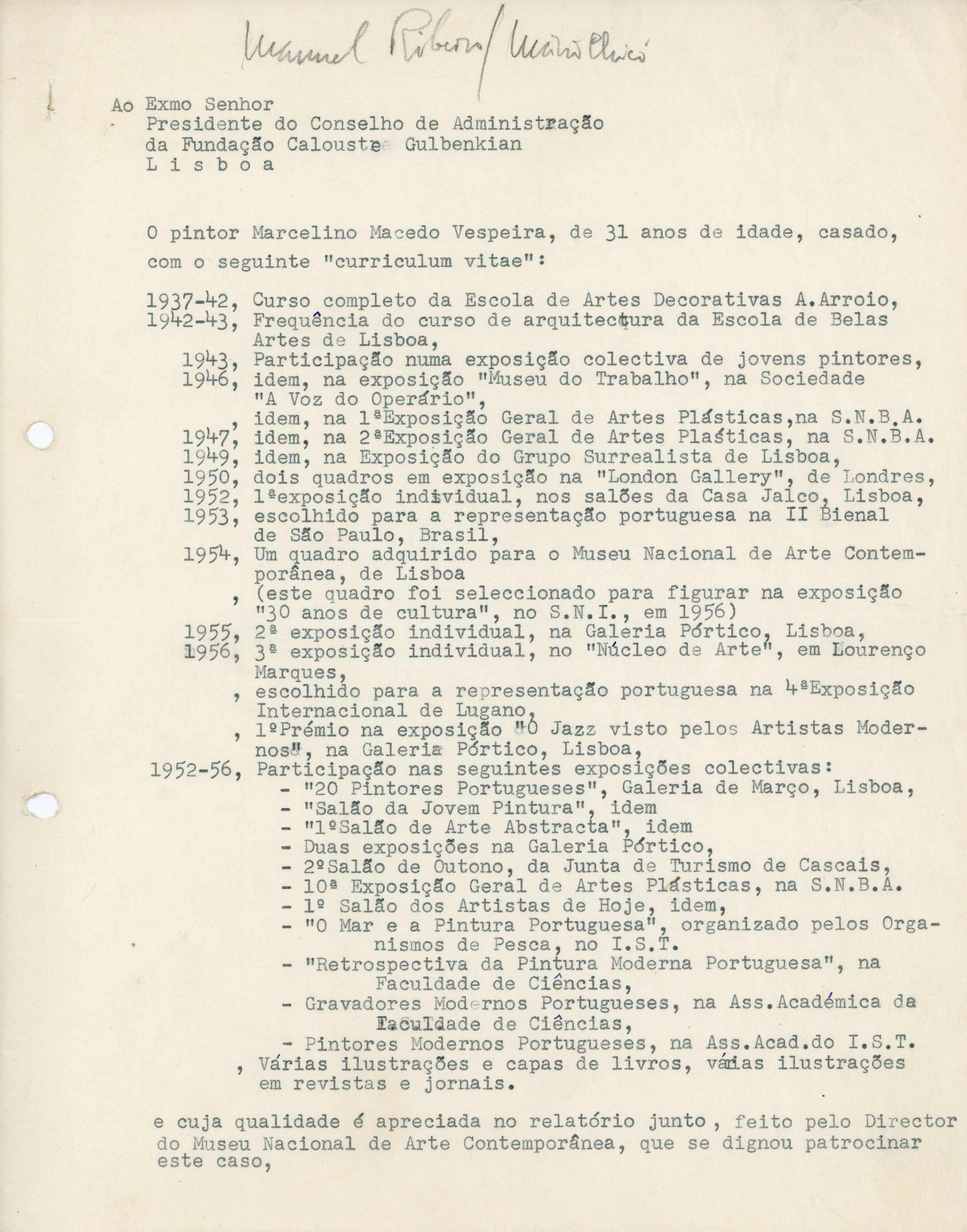
Vespeira’s first contact with the Calouste Gulbenkian Foundation occurred in January 1957, when he addressed its chairman, José de Azeredo Perdigão, who was also responsible for the Arts sector, requesting a study grant in Painting.
At only 31 years of age, he already presented a significant curriculum as a painter, with participation in exhibitions in Portugal, England, Brazil, Mozambique and Switzerland, and with illustrations in books, newspapers and magazines. Nevertheless, in the letter he sent to Azeredo Perdigão he stated that he needed “in order to make better use of his artistic possibilities and to develop his technical qualities, to devote himself exclusively to painting work”, without depending on graphic work to guarantee his livelihood.
Such full dedication, he believed, would only become possible with “the support of the Gulbenkian Foundation which, in various ways, has shown its intention to protect and foster all artistic activities”. Despite the inclusion of a letter of recommendation from the sculptor Diogo de Macedo, then Director of the National Museum of Contemporary Art, the grant was not awarded, on the grounds that there was not yet a defined policy for granting support in the field of the Arts.
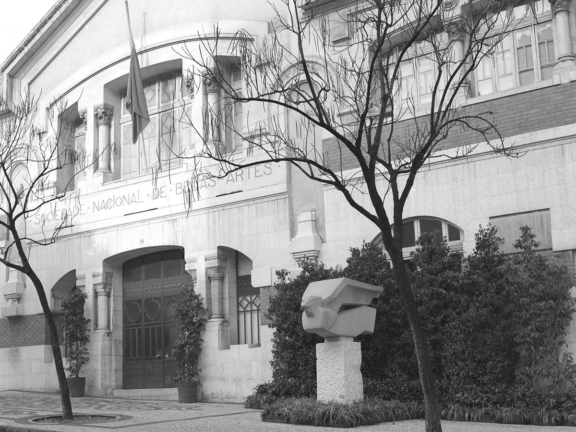
The opportunity would, however, arise later that same year, 1957, when the Foundation organizes its first major initiative in the field of the Arts, the I Exposição de Artes Plásticas, which would take place in December at the Sociedade Nacional de Belas Artes. For this exhibition, artists were invited to submit applications in the categories of Painting, Sculpture, Drawing and Engraving. In addition to stimulating artistic creation, the exhibition also aimed to distinguish the participants and reward the works that stood out for their quality and artistic merit.
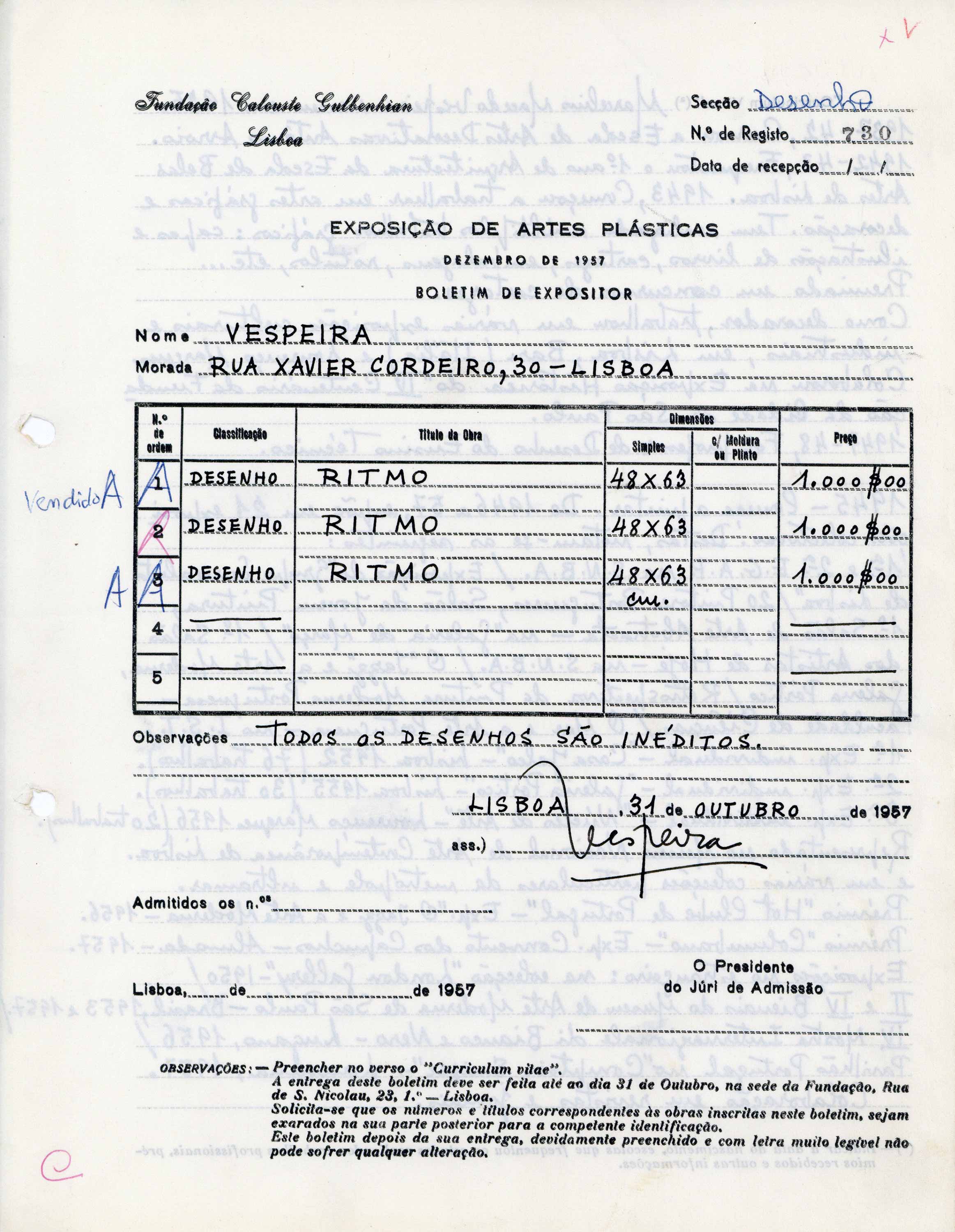
Vespeira then submitted his application, with the works Óleo 104 and five unpublished pieces — Óleo 105, Guitarrada, and three drawings from the Ritmo series — and he was admitted in the categories of Painting and Drawing. Of this group, only one drawing was excluded by the Jury for the Admission of Works. He was not, however, awarded any prize in the competition held as part of the exhibition. Even so, he benefited from other opportunities made available to the participants, namely access to funds established by the Board of Trustees to support the exhibiting artists, whether through the granting of study scholarships or the acquisition of their works of Art.
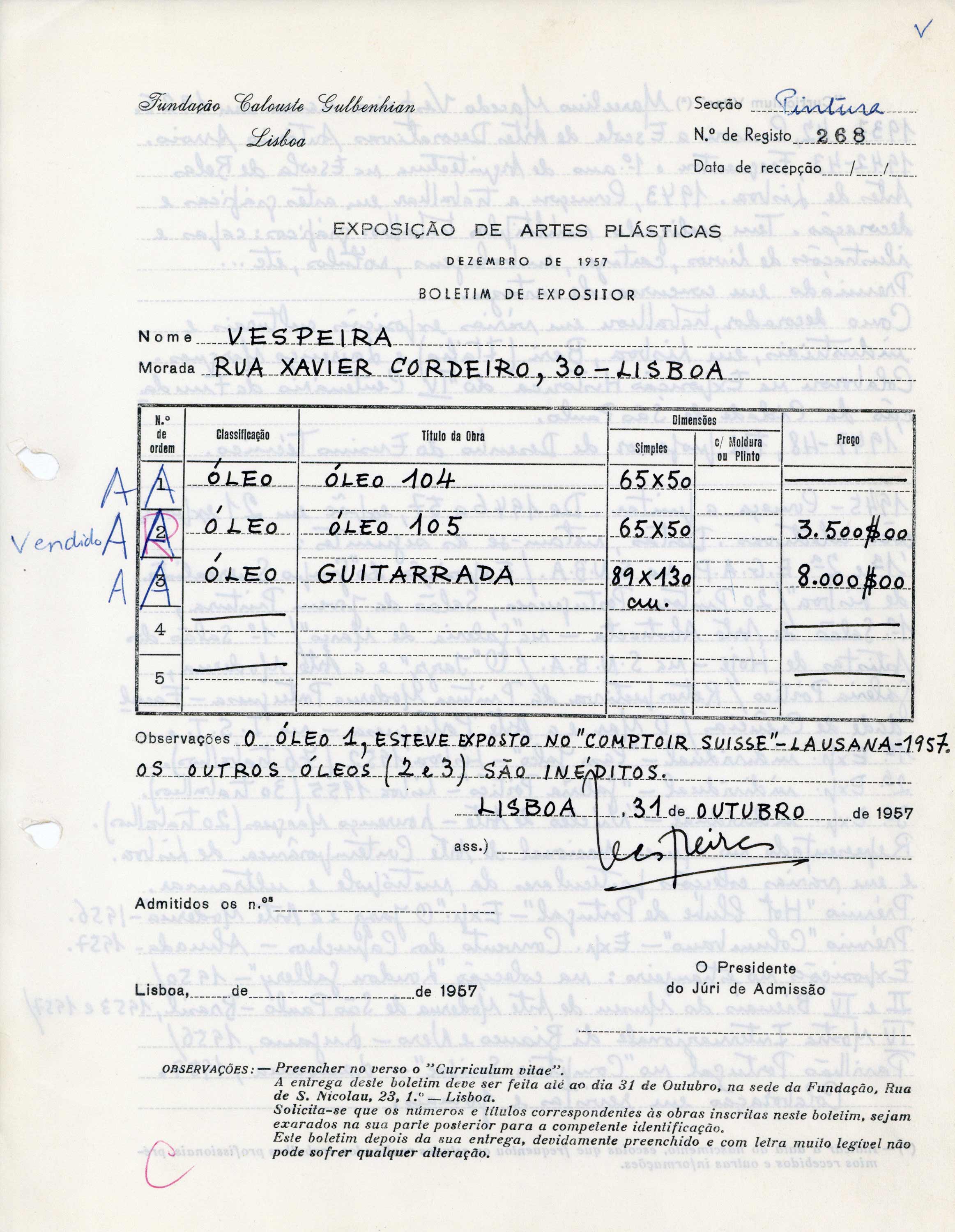
It was in this context that, early in 1958, Vespeira’s Óleo 105 (1957) was acquired for the Foundation’s nascent collection of modern and contemporary Art, and that he was finally awarded the long-sought grant for 8 months of study and development in Painting – 5 to be spent in Portugal and the remaining 3 abroad. A supplementary grant was also awarded to his wife, the painter Albertina Mântua, to accompany him.
Vespeira makes use of the grant in Portugal between August and December 1958. In the report sent to the Foundation in January 1959, he expresses his gratitude for the resources provided: “the materials acquired corresponded to my studio requirements, so that the works may have the quality that every artistic work must have to be considered valid. I had the pleasure of painting on canvas and not feeling the lack of a color at the moment when the painting required it”. And he concludes: “as for the artistic benefit – the oils and temperas I executed during this period – speak better than any words I might write”.
While the grant is underway, he is invited by the Grupo Pró-Évora to join the International Art Mission – an initiative proposed by the painter Júlio Resende and carried out in Évora, with the purpose of “bringing together visual artists of various nationalities for a determined period so that, through personal and artistic exchange, they might create works inspired by the local setting to be presented in a closing exhibition”.
Its realization was made possible with the contribution of “the Calouste Gulbenkian Foundation, whose substantial and generous grant ensured that it could indeed be achieved”, as noted by António Bartolomeu Gromicho, president of the Grupo Pró-Évora. Vespeira would later regard this initiative as crucial to the development of his artistic practice.
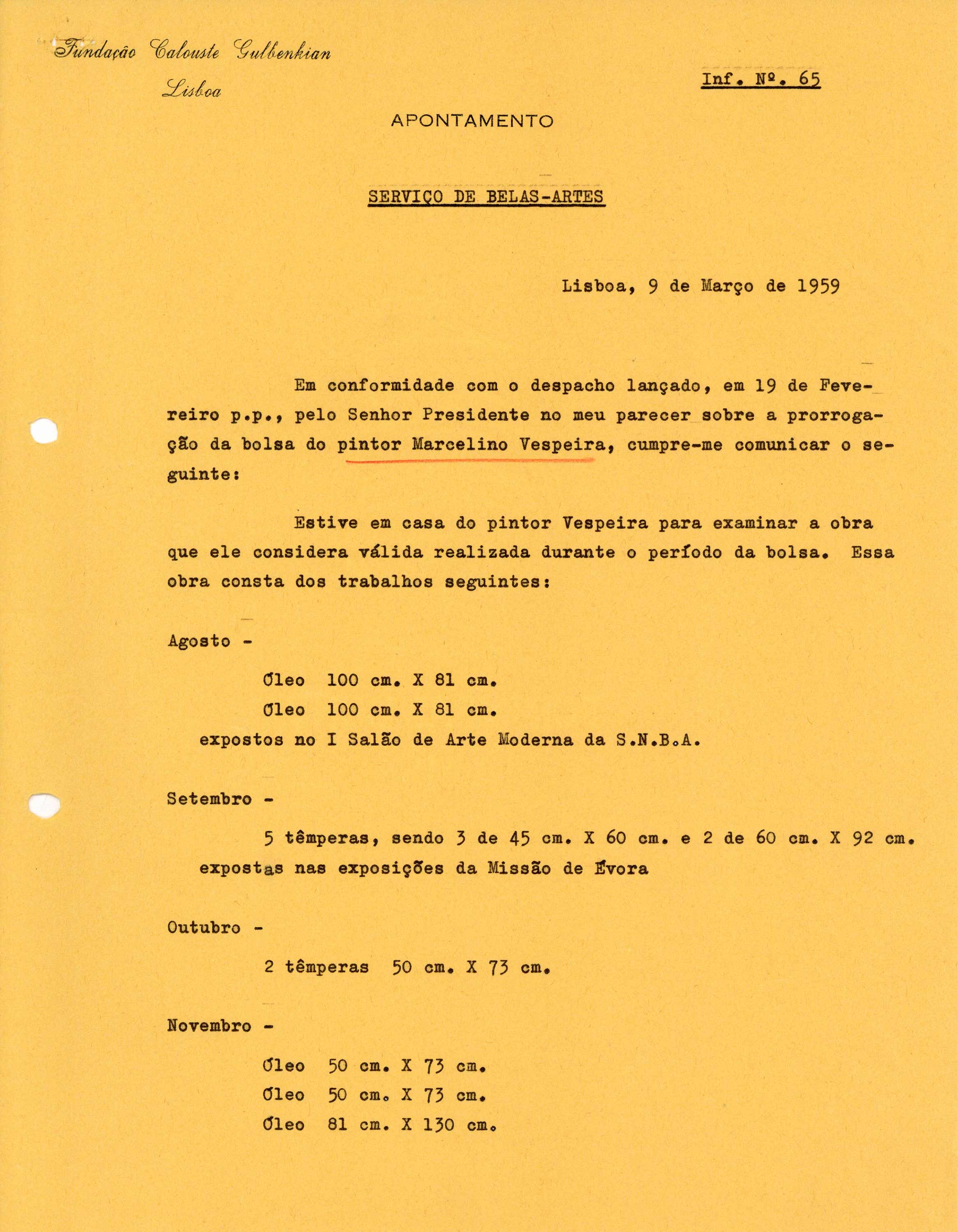
At the end of the grant period in Portugal, the artist requests its extension. Maria José de Mendonça, head of the Fine Arts and Museum Department, is appointed to assess it, considering the work carried out by the grantee.
She writes in her report: “Vespeira is a young honest artist with talent; it would be advisable for the Foundation to give him this opportunity to achieve what he seeks — to find a path and shape his artistic personality”. And further: “what I was able to examine of the works in oil, tempera and gouache shows, as I had already observed in the exhibitions at the [Sociedade Nacional de Belas Artes] and in the Évora Mission, a clear progress in the structure of the composition and in the enrichment of color”. She concludes by recommending “that the Foundation give this opportunity to the artist, who fully deserves it”.
The national phase of the grant was therefore extended for a further six months, from March to September 1959.
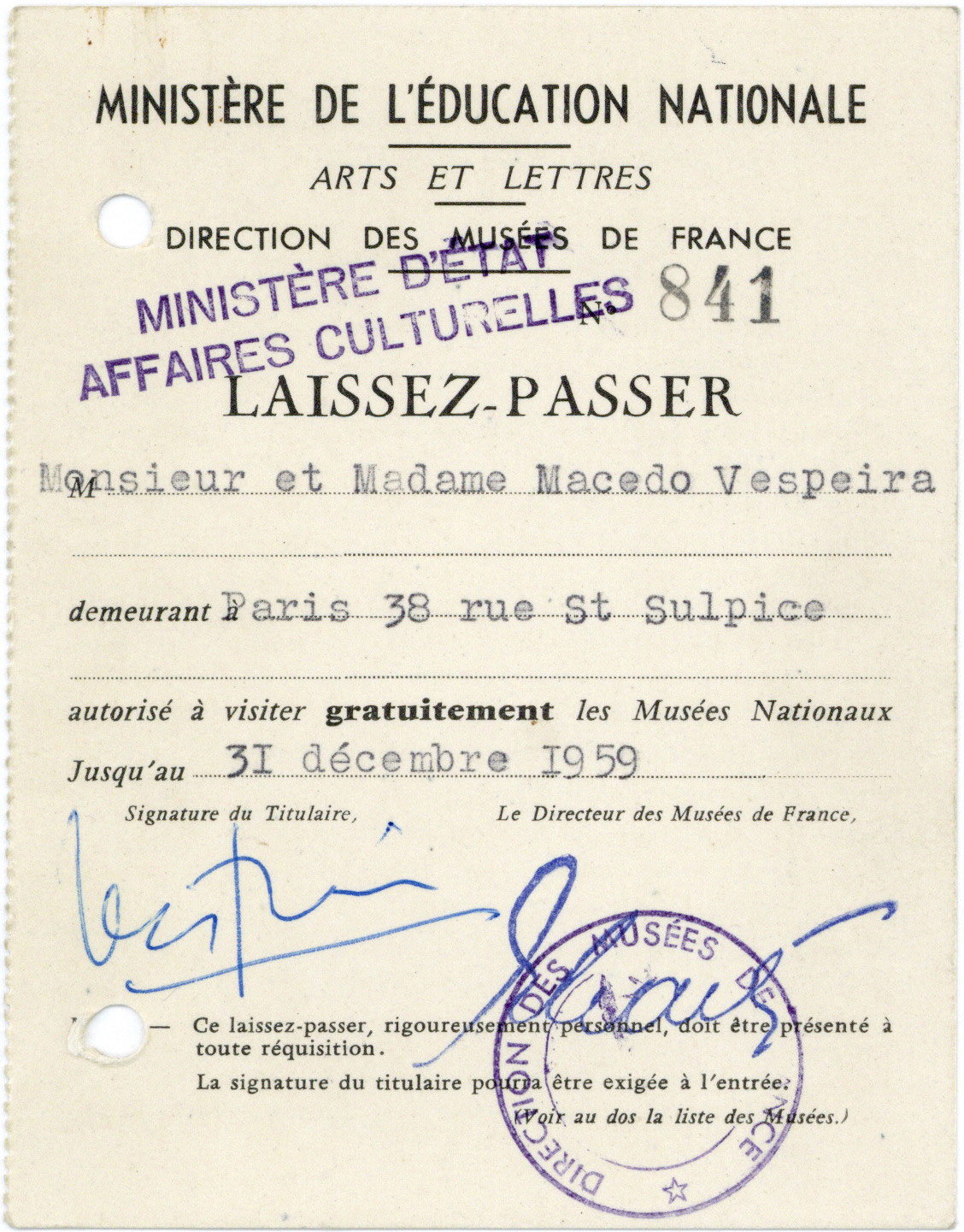
He subsequently began the grant abroad, devoted to “observing the works of the Masters of ancient and modern painting, in museums, in exhibitions, and in possible visits to studios and artistic centers” in important cultural centers of Europe: Madrid, Toledo and Barcelona in Spain; Rome, Orvieto, Perugia, Assisi, Arezzo, Florence, Siena, Venice, Padua, Verona, Mantua and Milan in Italy; Bern and Basel in Switzerland; Amsterdam, Haarlem, The Hague and Rotterdam in the Netherlands; Antwerp, Brussels, Bruges and Ghent in Belgium; and Paris in France.
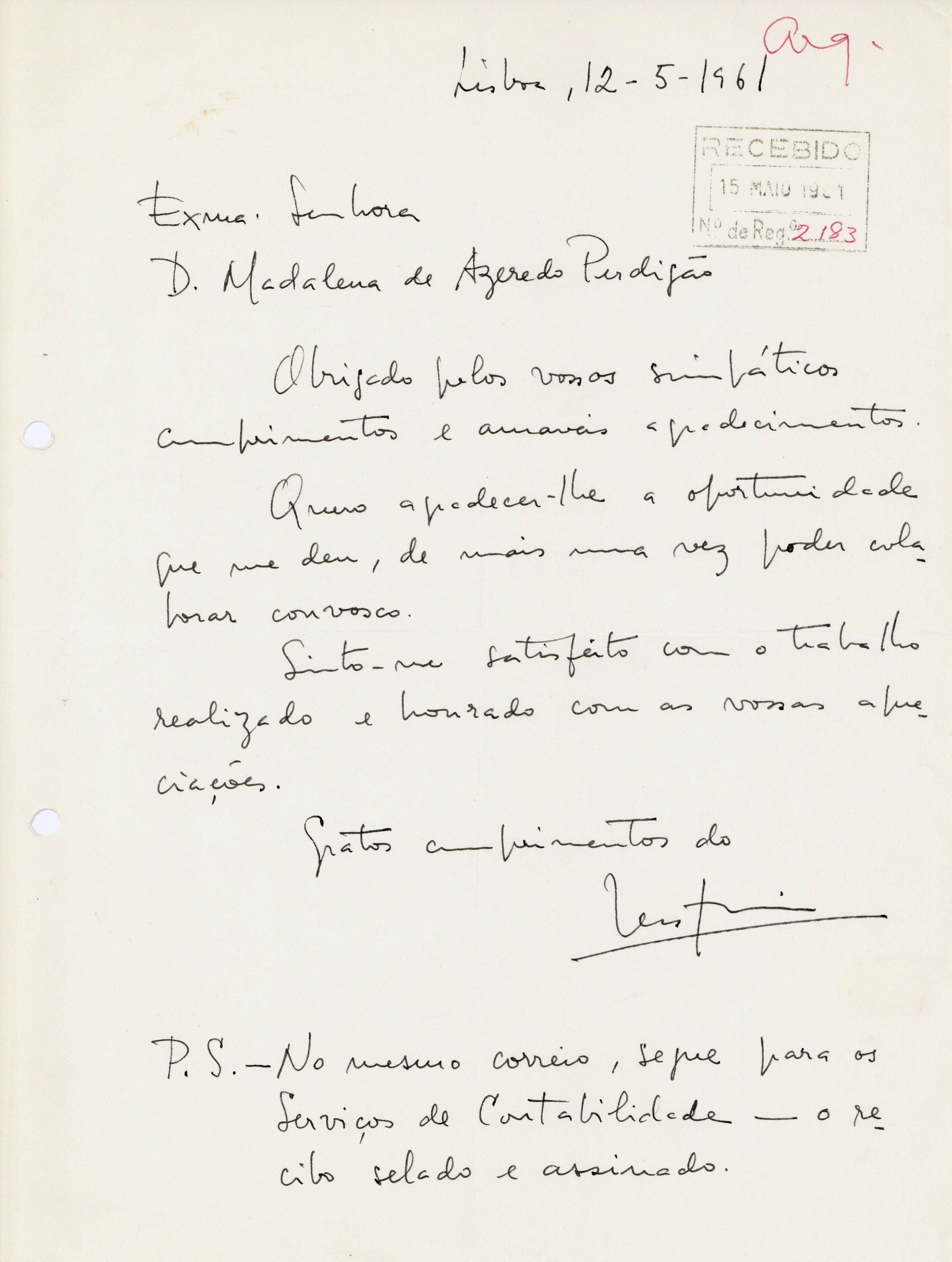
Vespeira reviews his artistic development in the scholarship report he submitted to the Foundation in February 1960: “In the period of 11 months (5 and then another 6 months) that were given to me to work here in Lisbon – my painting gained greater dimension and my taste for and commitment to studio practice were broadened. Although I had to resort to earning money through graphic work, all the time that was possible for me – was dedicated to fulfilling my responsibility as a grantee. And thus, in realizing myself more as a painter, I distanced myself further from my usual graphic work (…) I have more paintings at home, and the desire to paint and to realize myself as a painter became more deeply felt and more vital”, he concludes.
Regarding the scholarship abroad, Vespeira offers an interesting reflection on the impact of the journey on his artistic activity: “Today I am fully conscious of what I already felt: – this journey, or others like it, should have been undertaken some years ago. Only now was it possible for us, thanks to the grant awarded to us. It was wonderful and we are very grateful to the benevolent Gulbenkian Foundation, but I recognize that I am already 34 years old and the feeling of anguish for what I might have done is now – more serious. The eyes would have been cultivated sooner, before the marvels only now seen – and the active force of those visions would have been more timely and more beneficial. I would have had greater capacity for reception, though less for appreciation. I would have made more mistakes, but today I would certainly be – more free”.
And he concludes: “Fortunately, the hands were longing for the brushes, and I began to paint and destroy. I love destructions in the pursuit of seeking.”
The Foundation would later acquire from the artist the works Óleo 130 (1960) and Óleo 131 (1960), produced in the post-grant period.
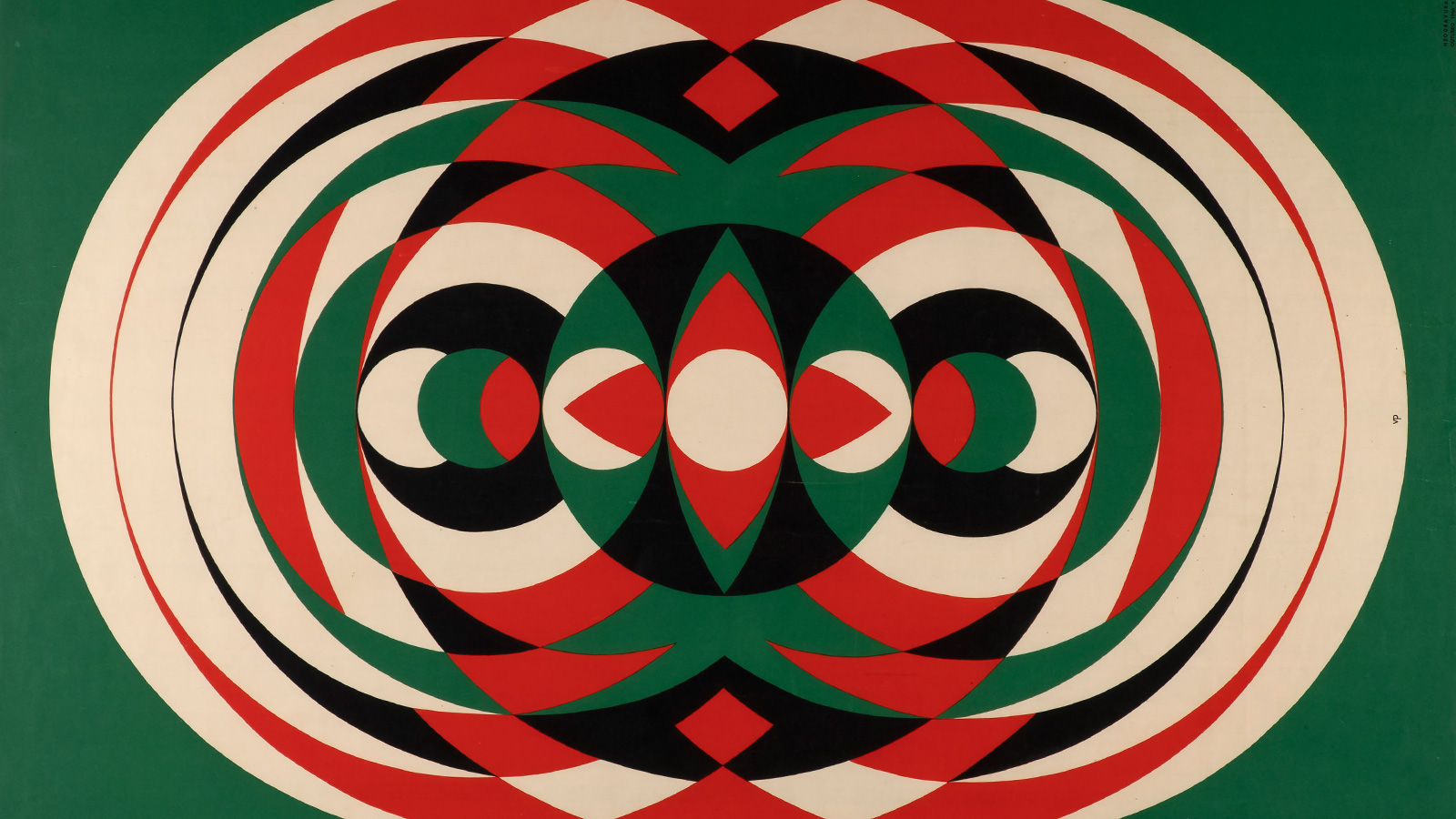
The relationship with the Foundation is consolidated that same year when, at the invitation of Madalena de Azeredo Perdigão, director of the Music Department and mentor of the Gulbenkian Music Festivals, he is asked to design the poster for the 4th Gulbenkian Music Festival, under the guidance of the painter Bernardo Marques, graphic director of Colóquio: revista de artes e letras and “consultant to the Foundation on matters of graphic art”.
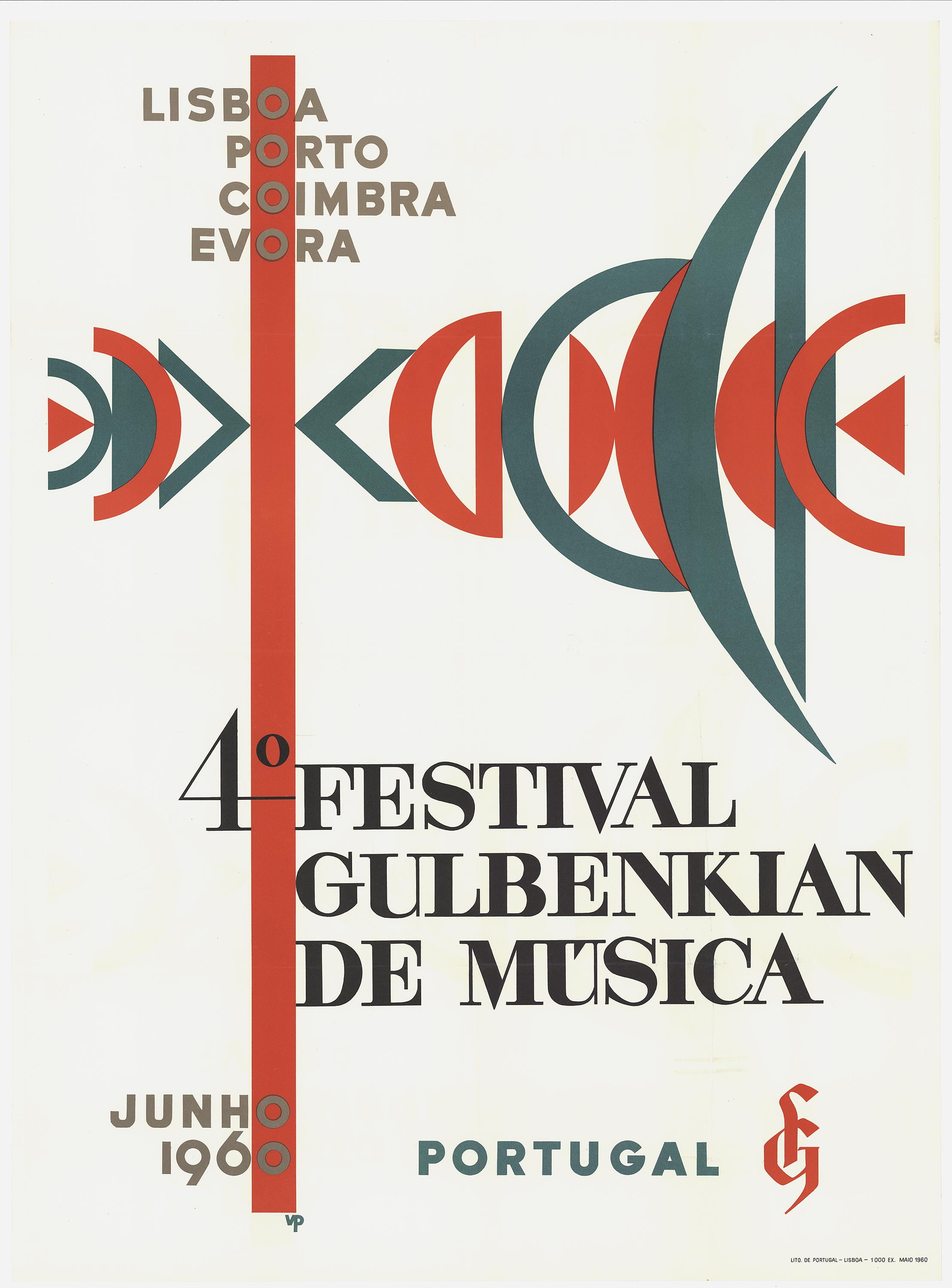
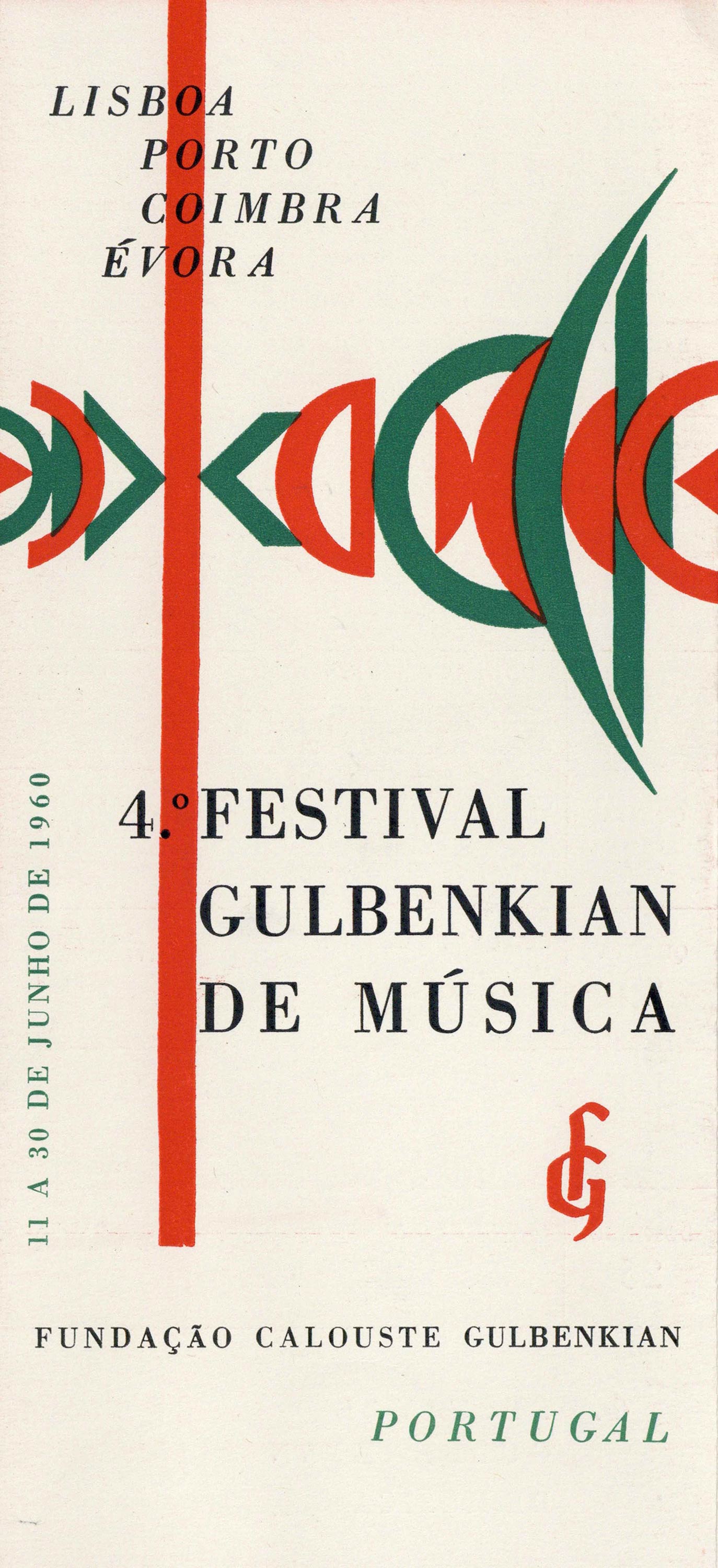
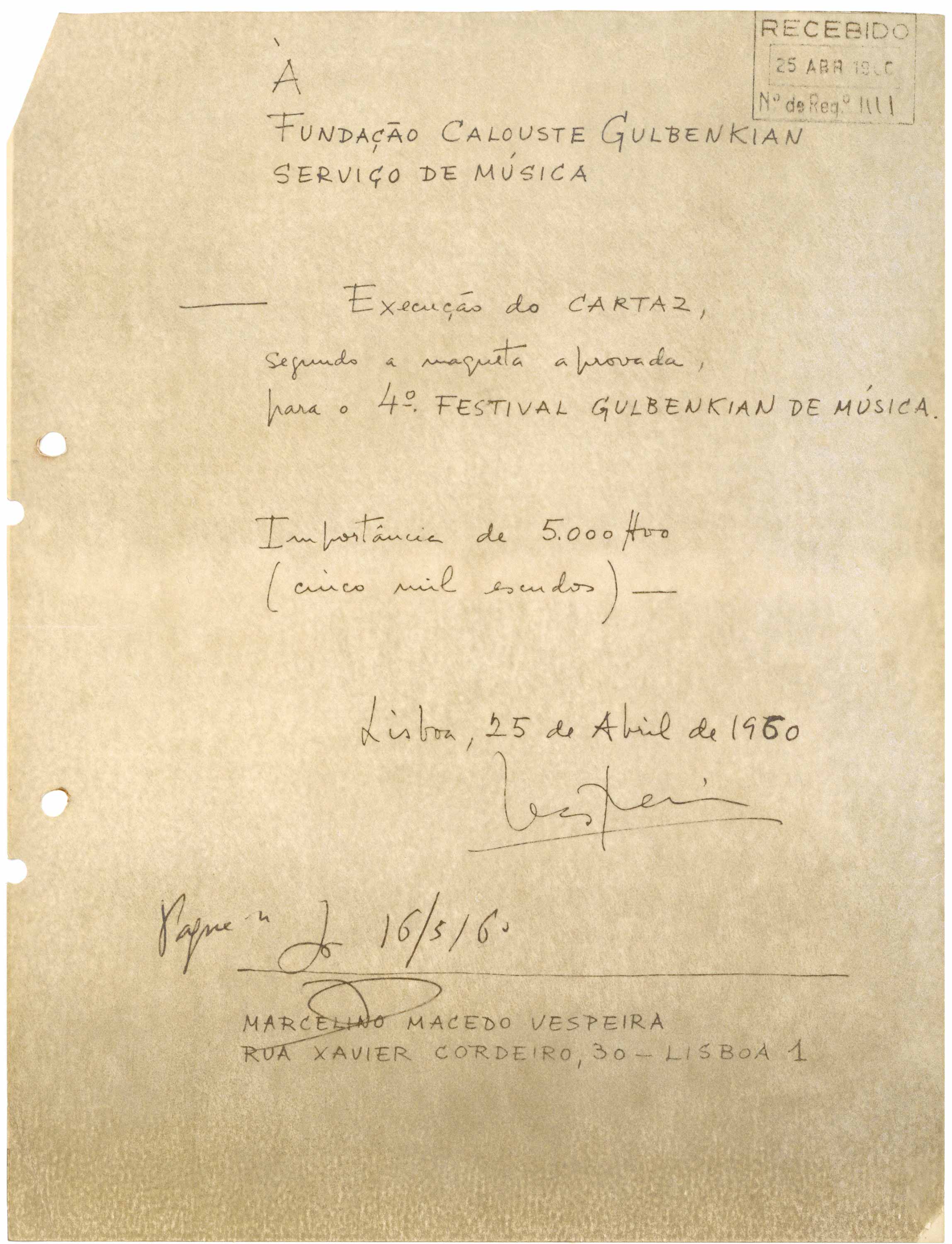
The success of this graphic piece marks the beginning of a regular collaboration between Vespeira and the Foundation, especially with the Music Department. Between 1960 and 1967, he was responsible for the graphic identity of the Gulbenkian Music Festivals, from the 4th to the 11th edition.
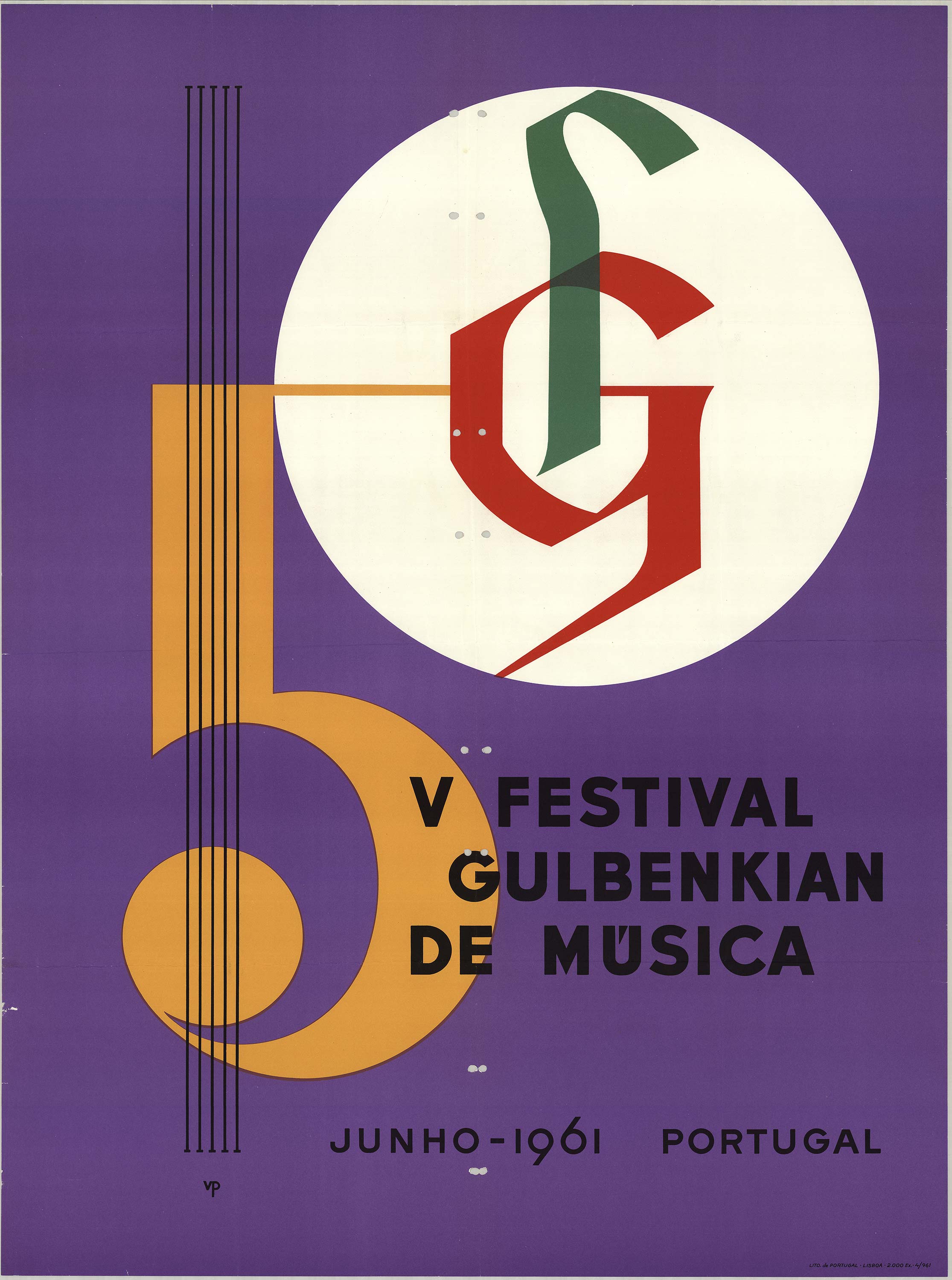
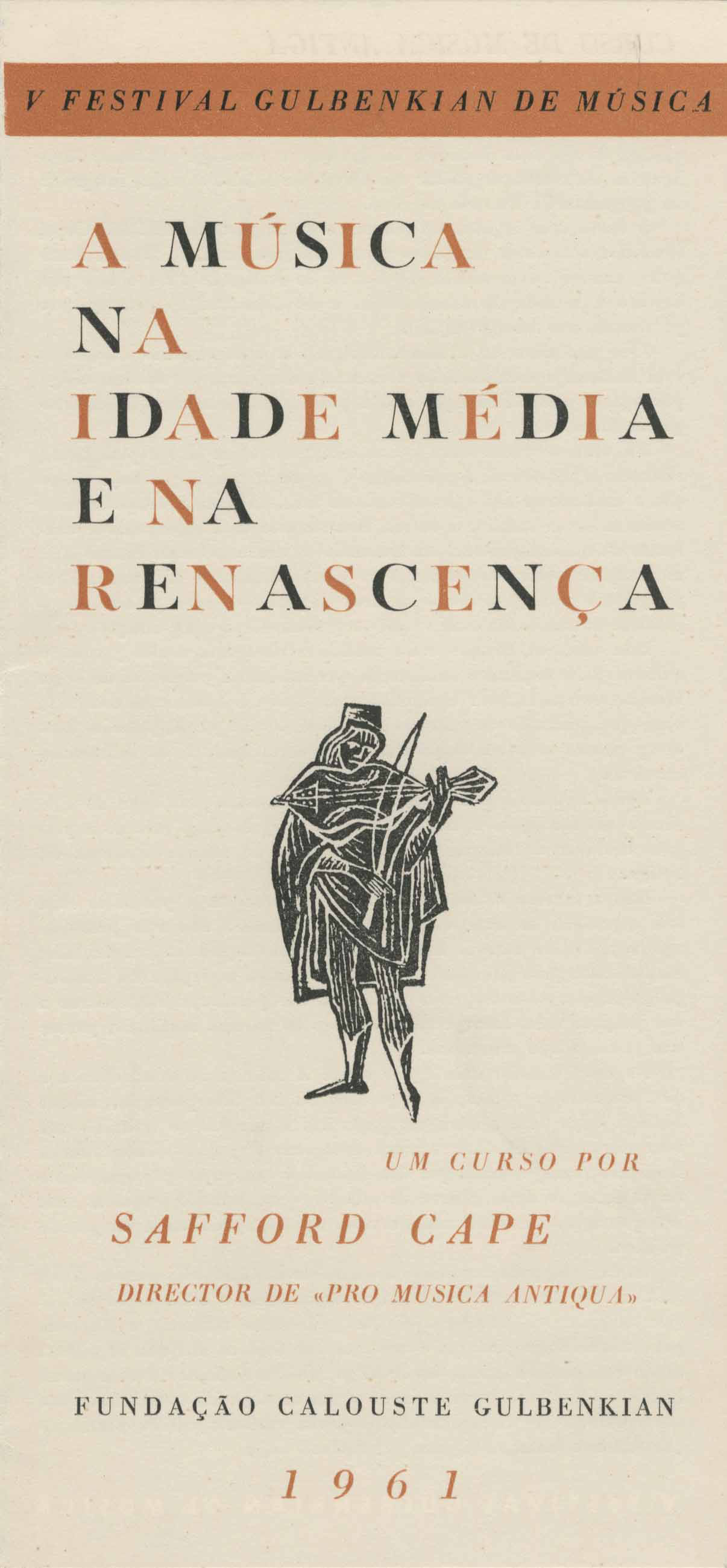
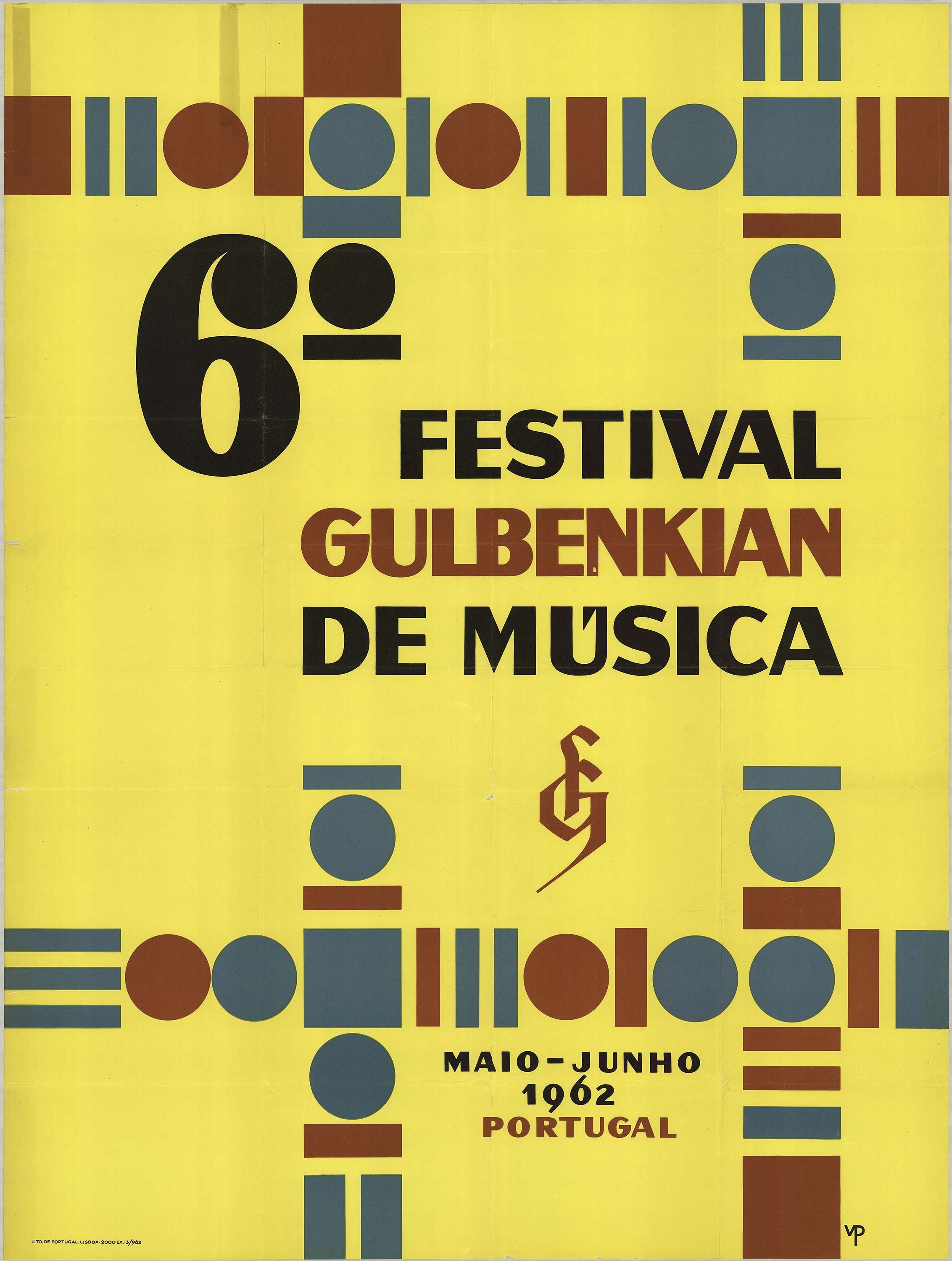
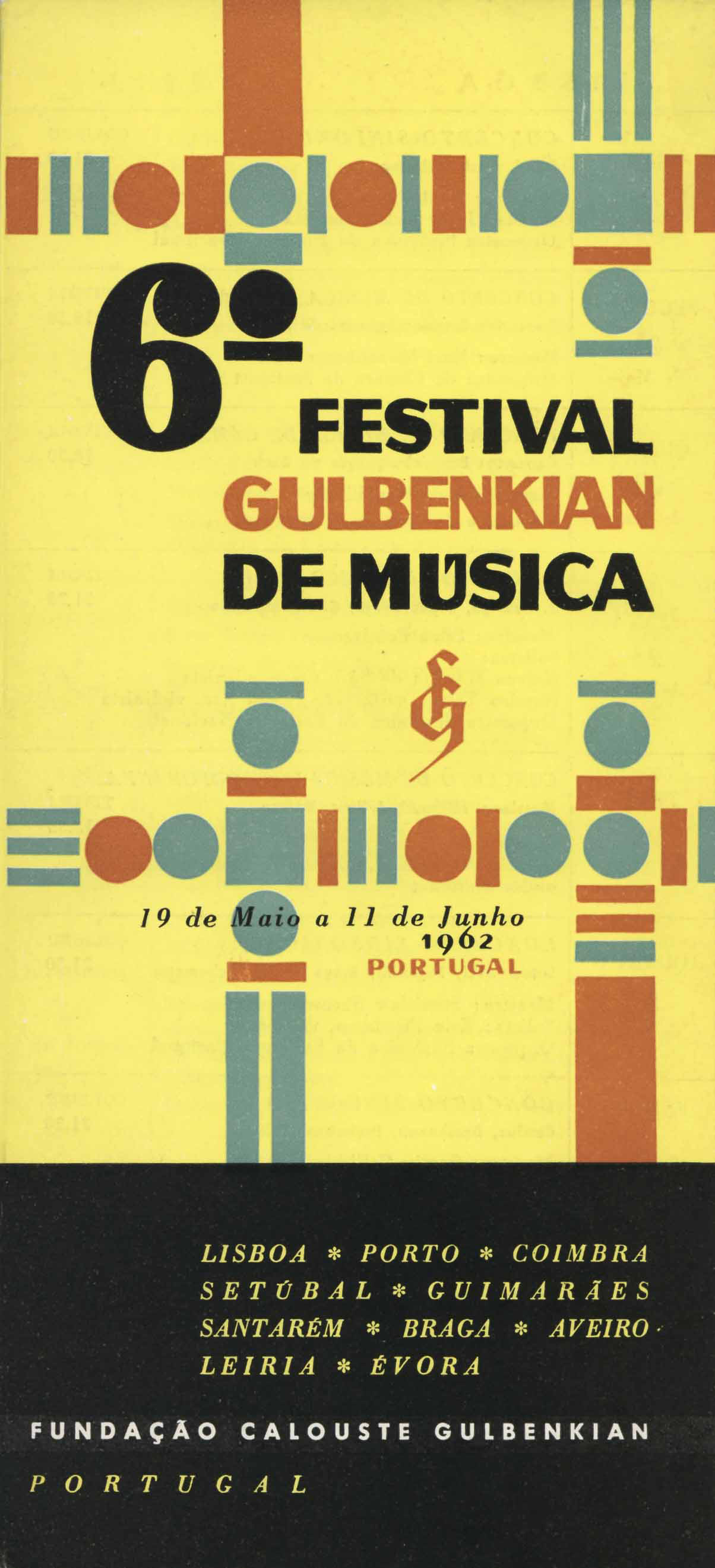
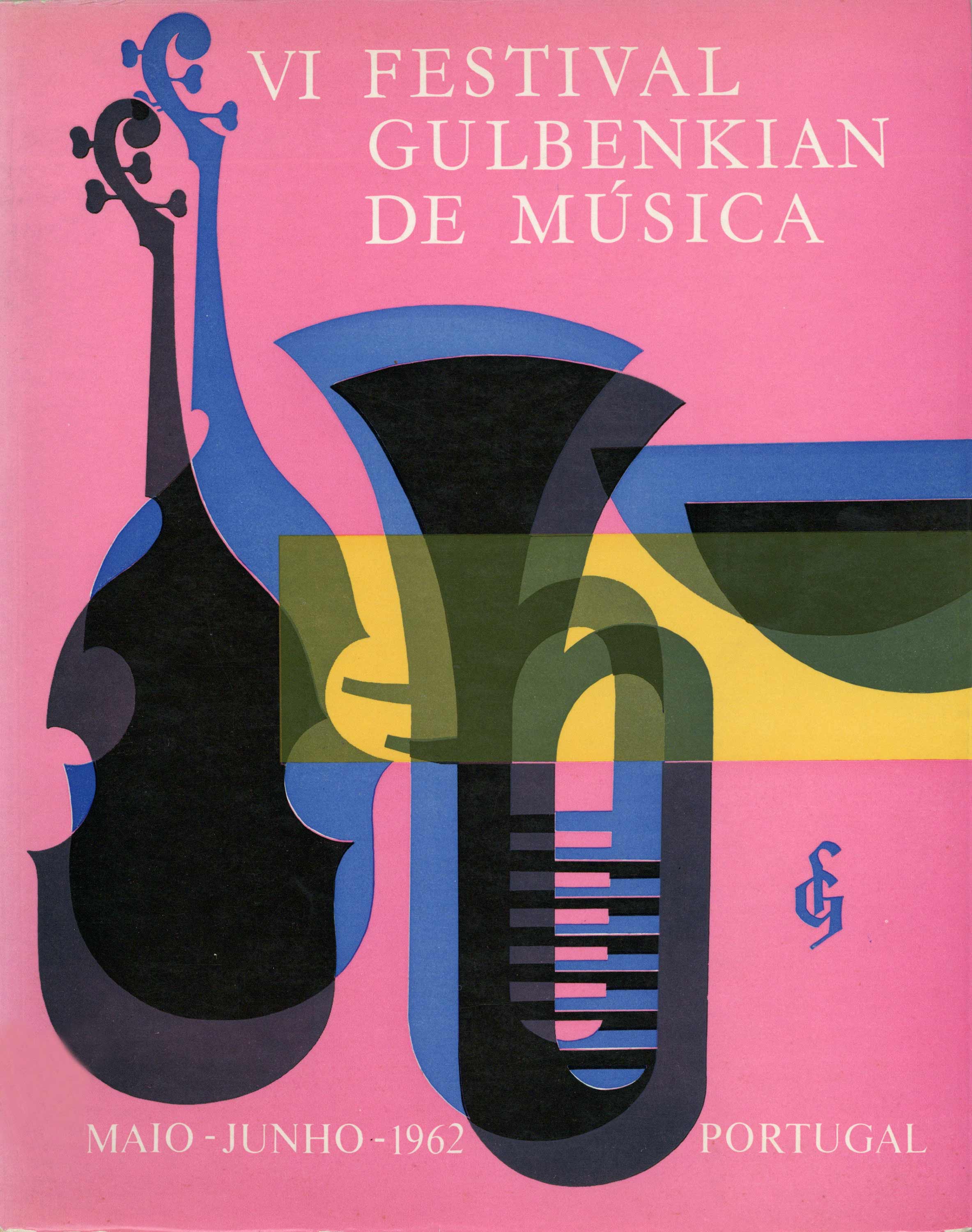
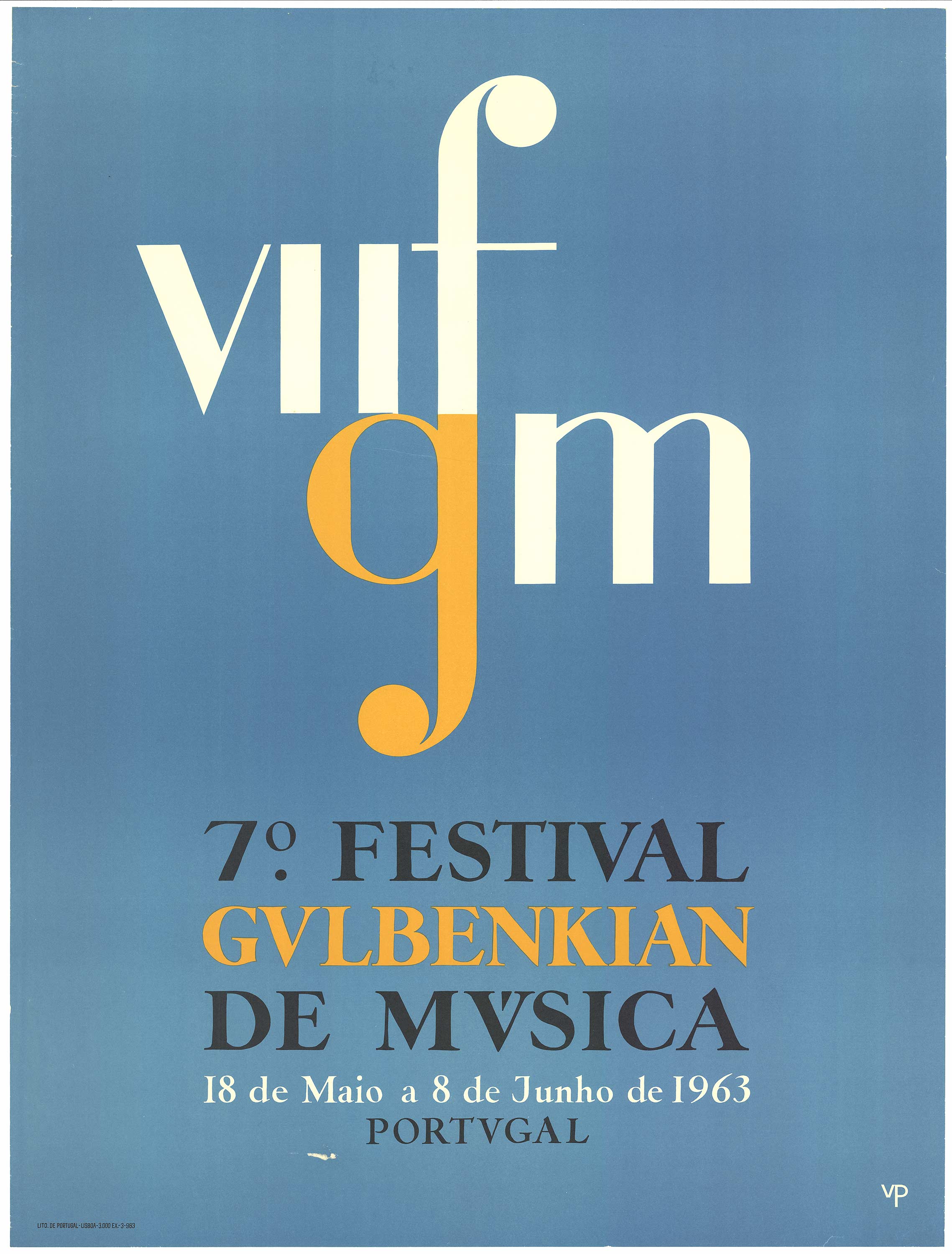
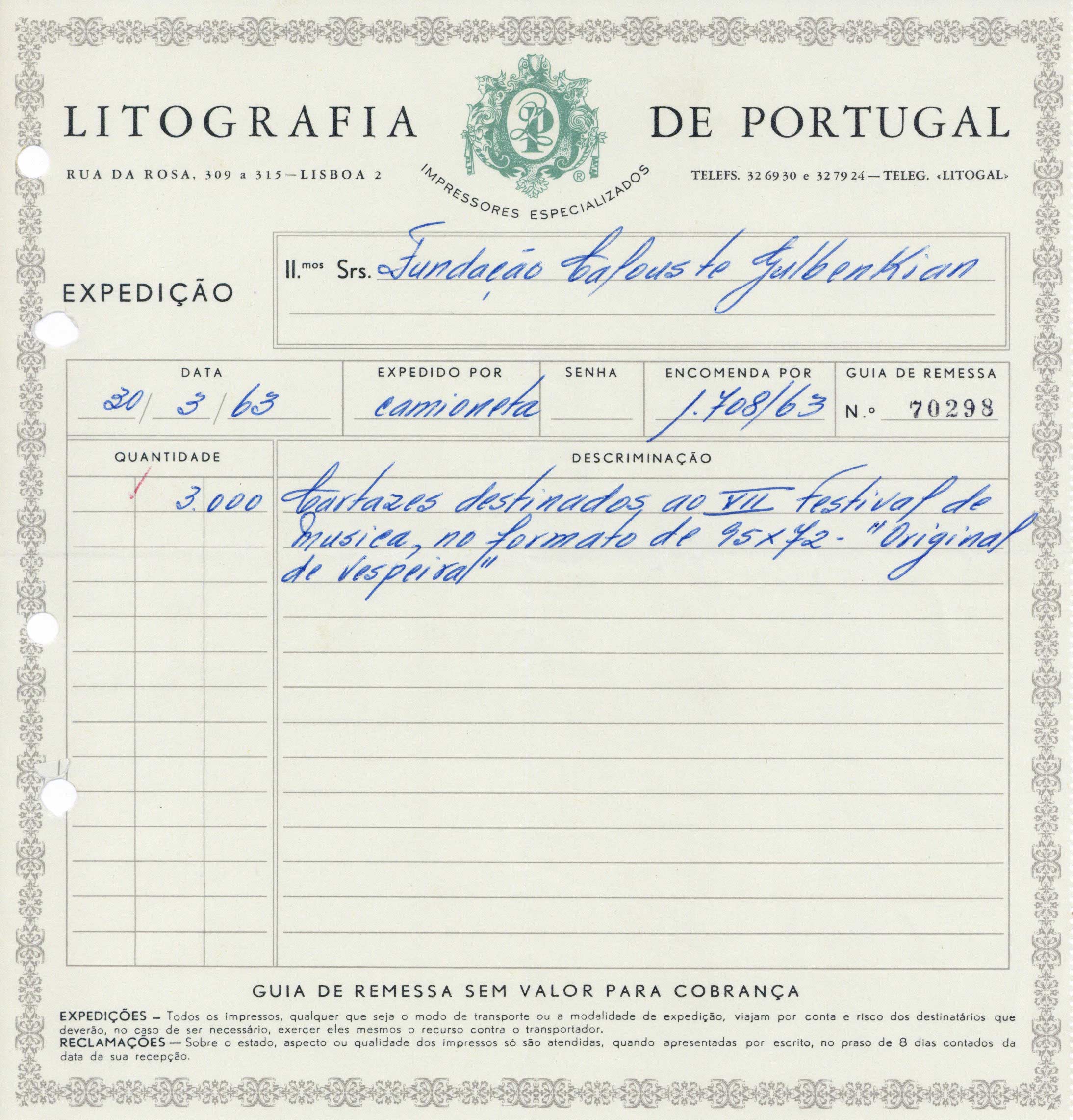
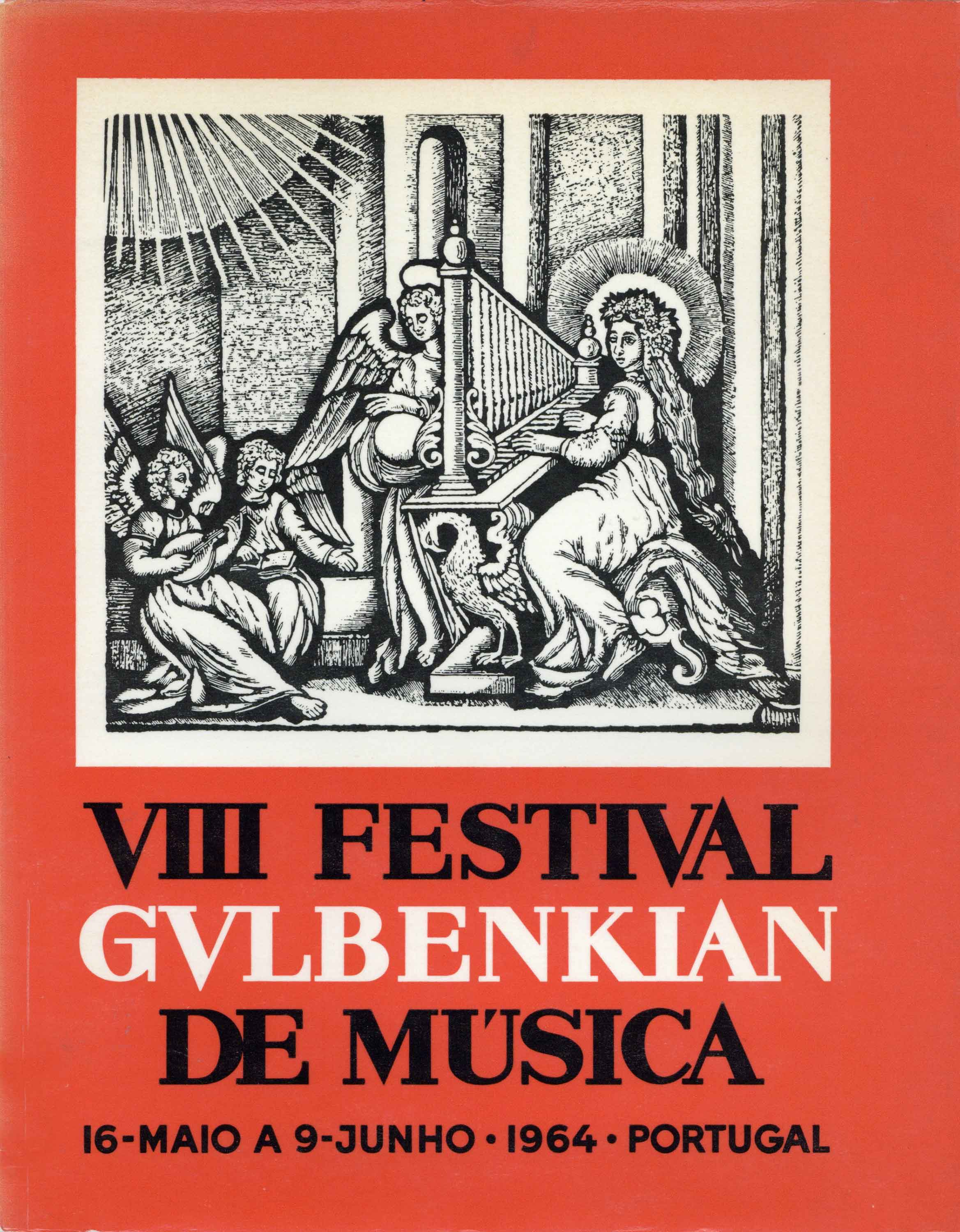
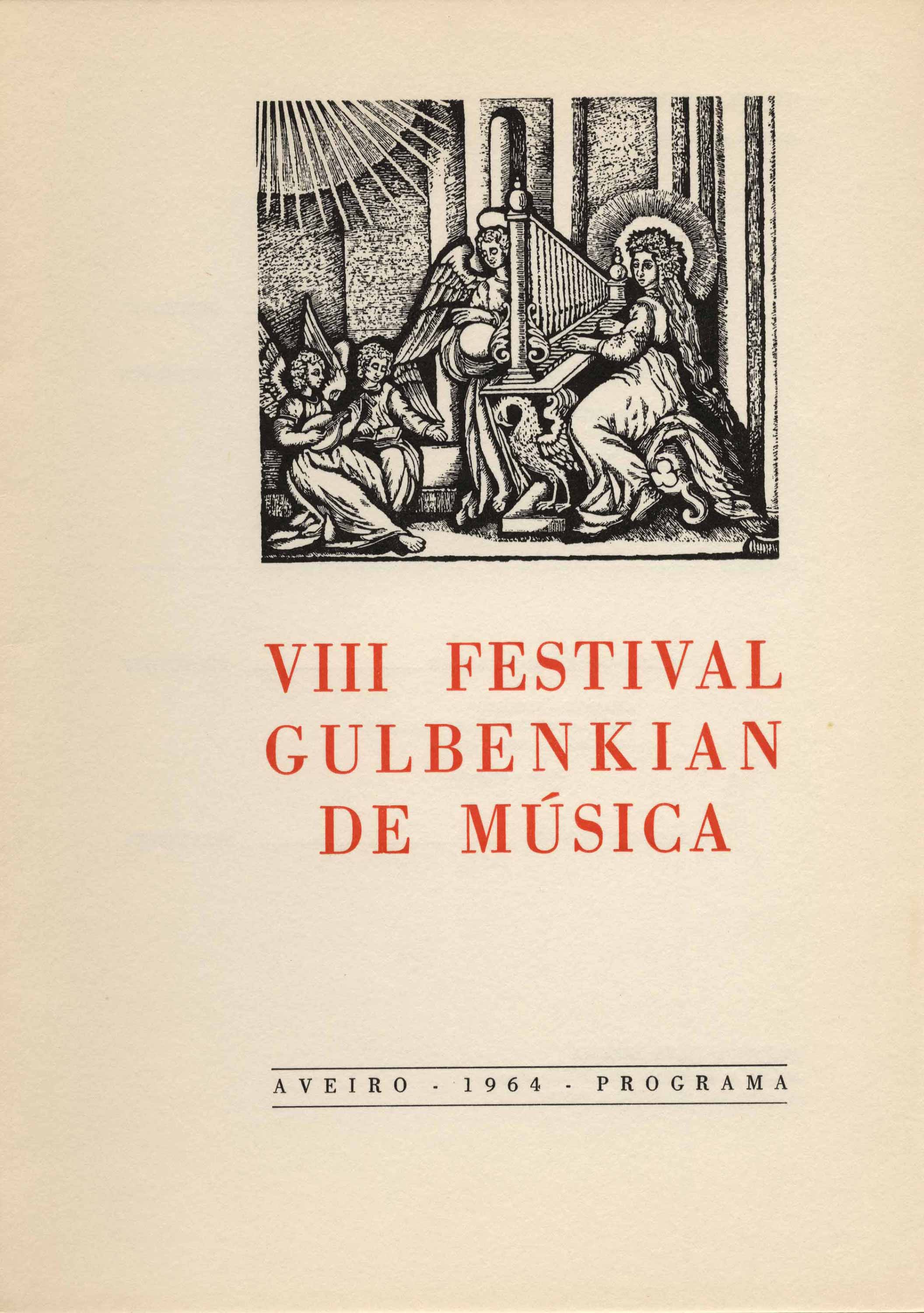

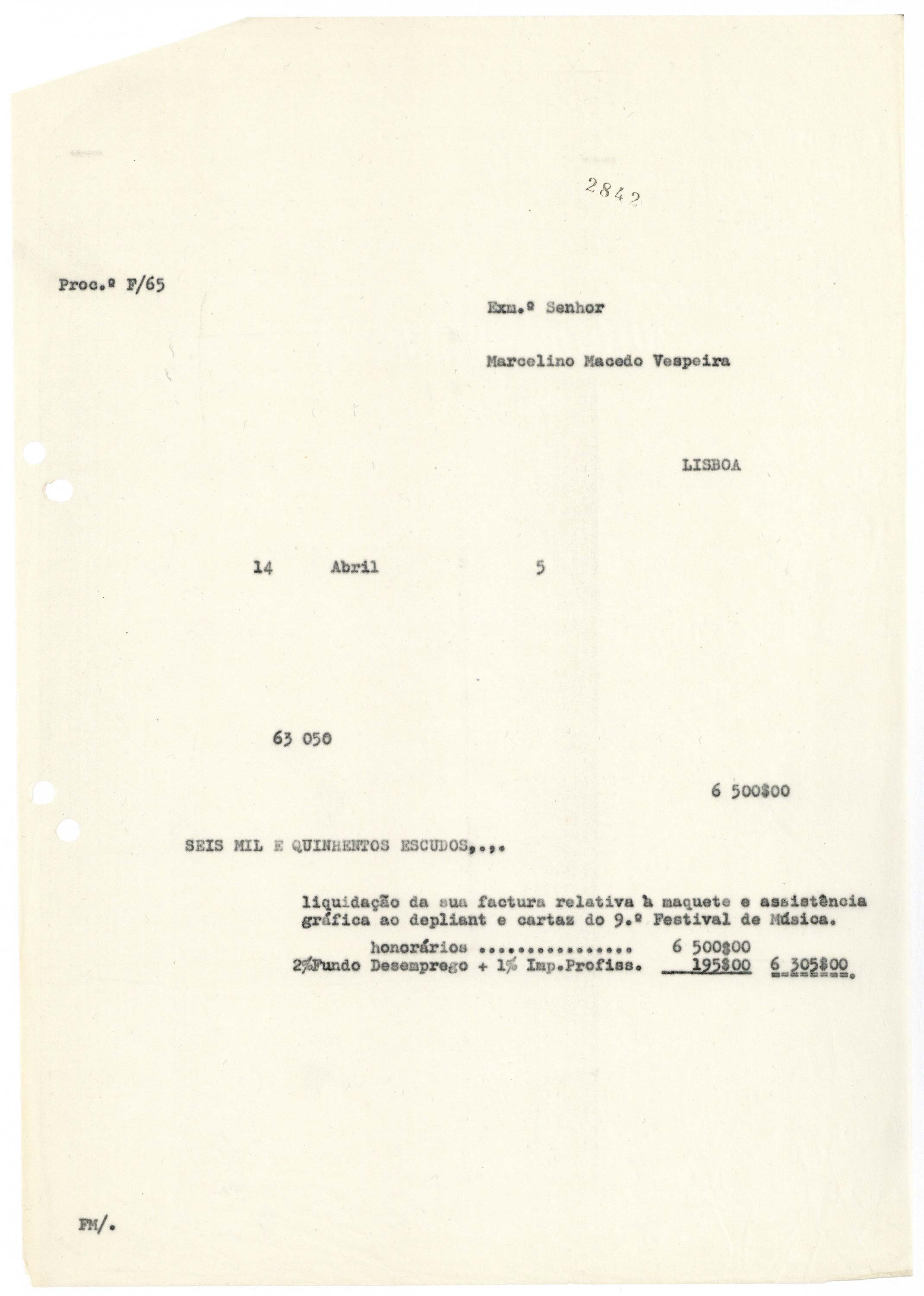
The graphic work from this period displays a clear modernist influence and, above all, a strong engagement with Optical Art (Op Art), defined by the creation of optical illusions through geometric patterns, stark contrasts and visual effects that evoke sensations of movement or depth. The designs created for the 10th and 11th Festivals are the most representative examples of this approach.
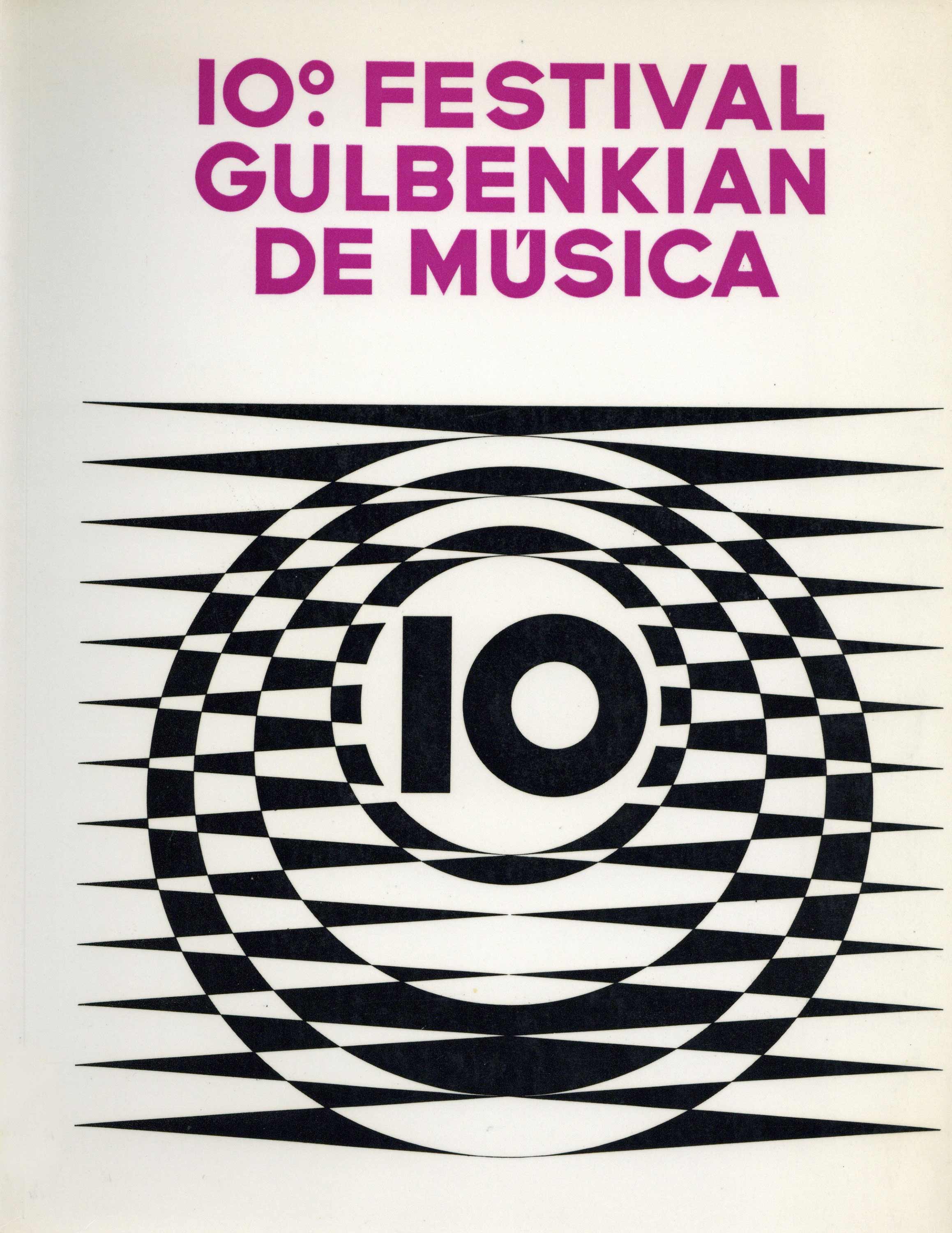
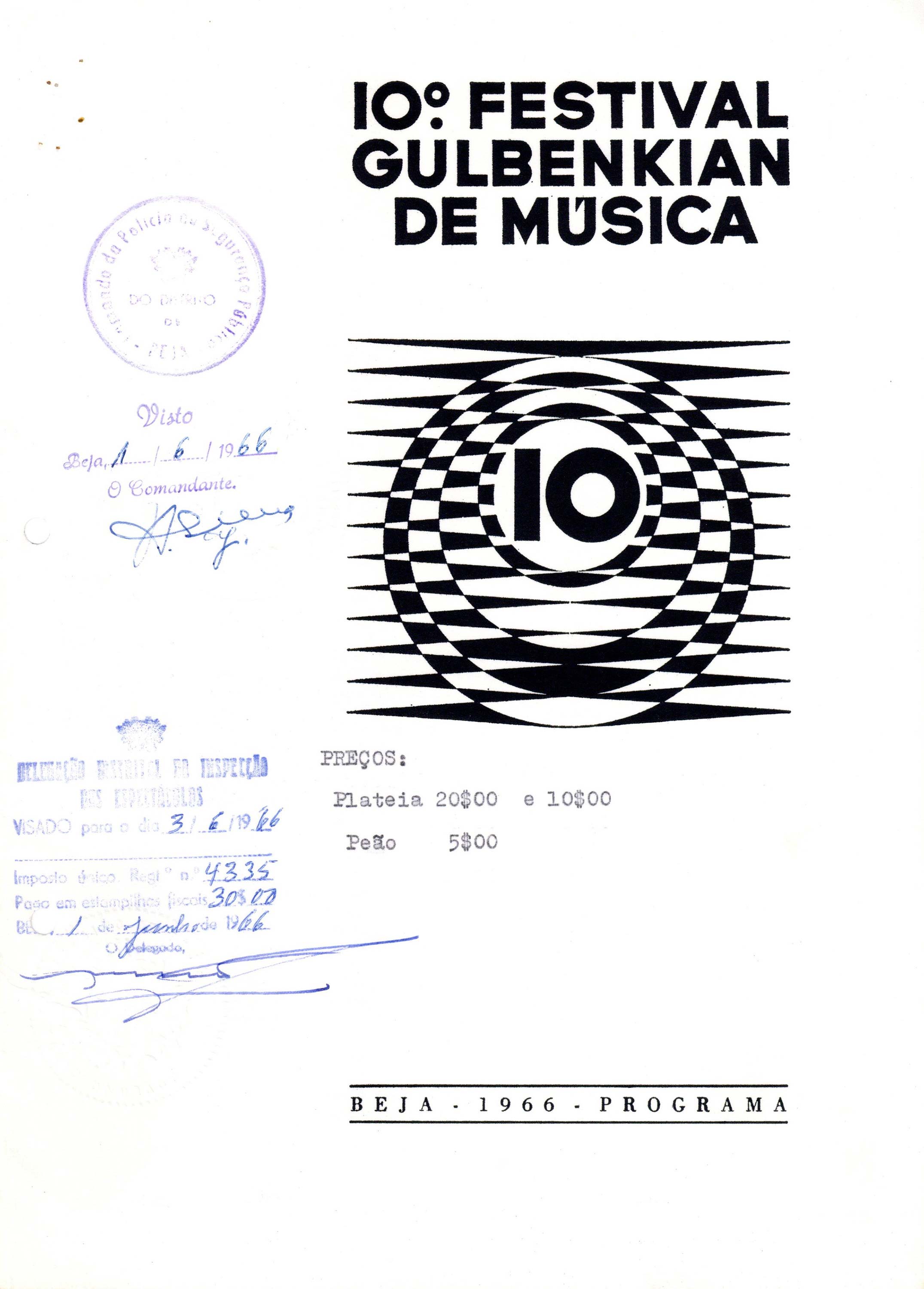
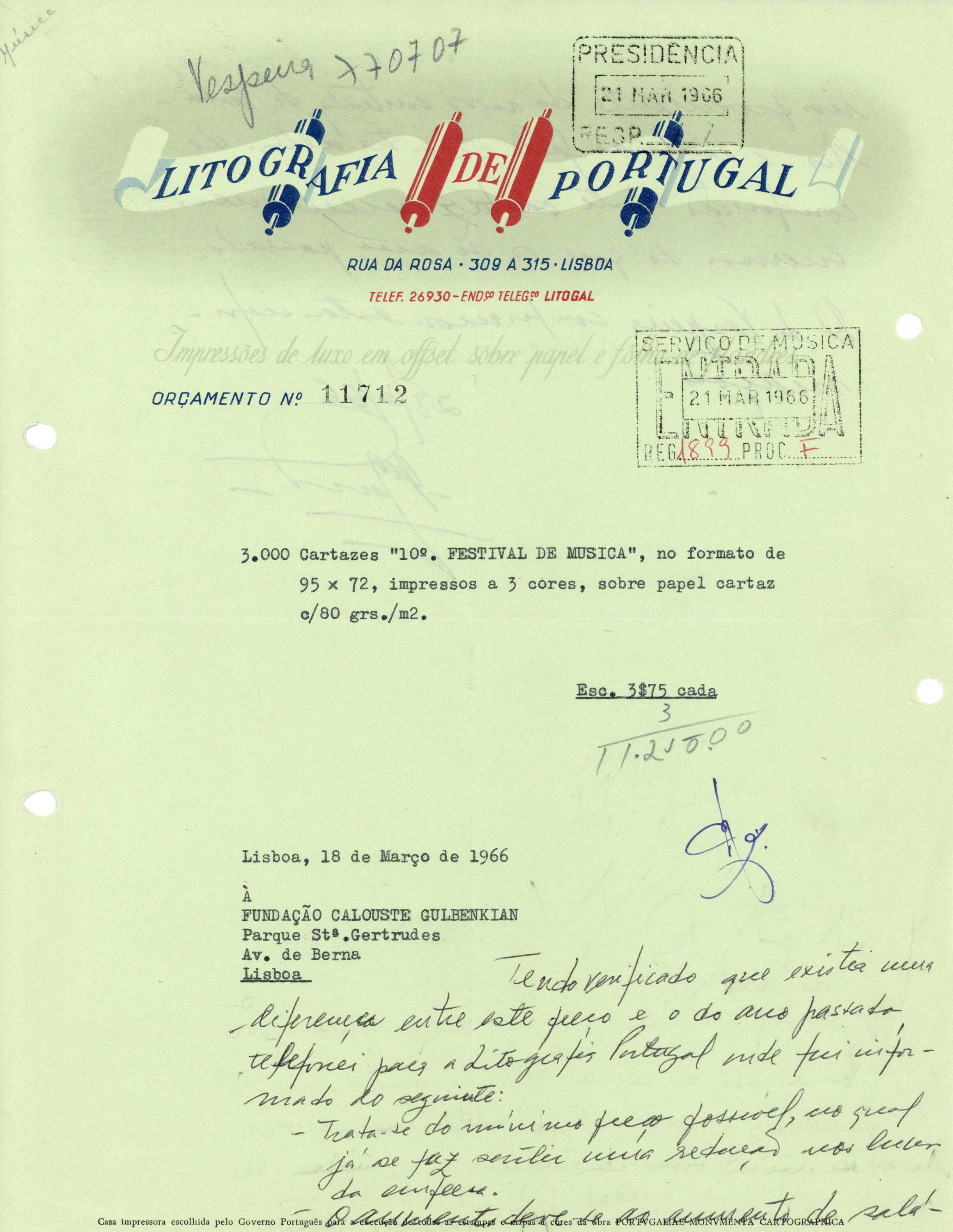

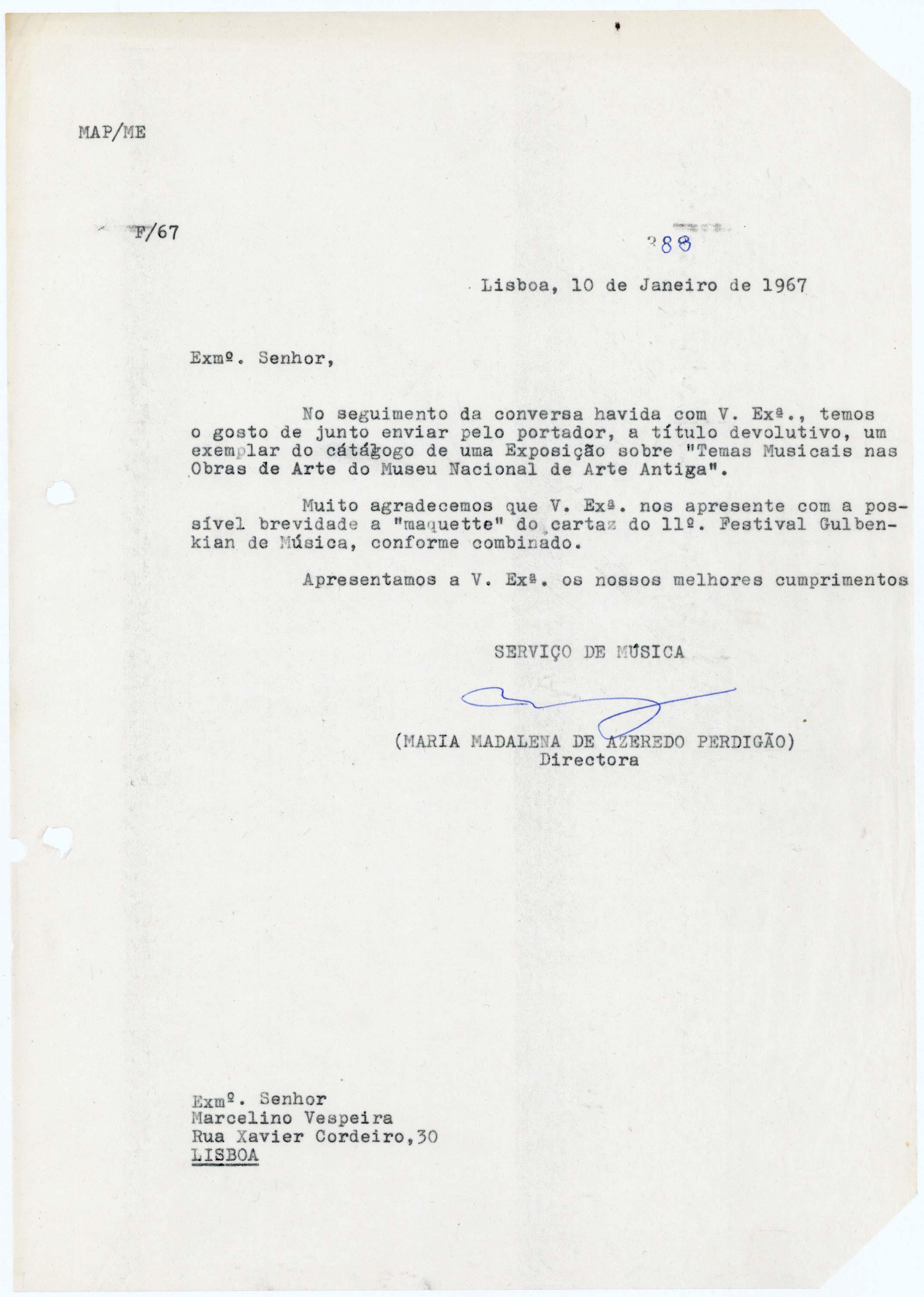
Still within the festival context, he is responsible for the graphic design of the materials for the exhibitions Evocação de Beethoven (1960) and Jean-Philippe Rameau (1965).
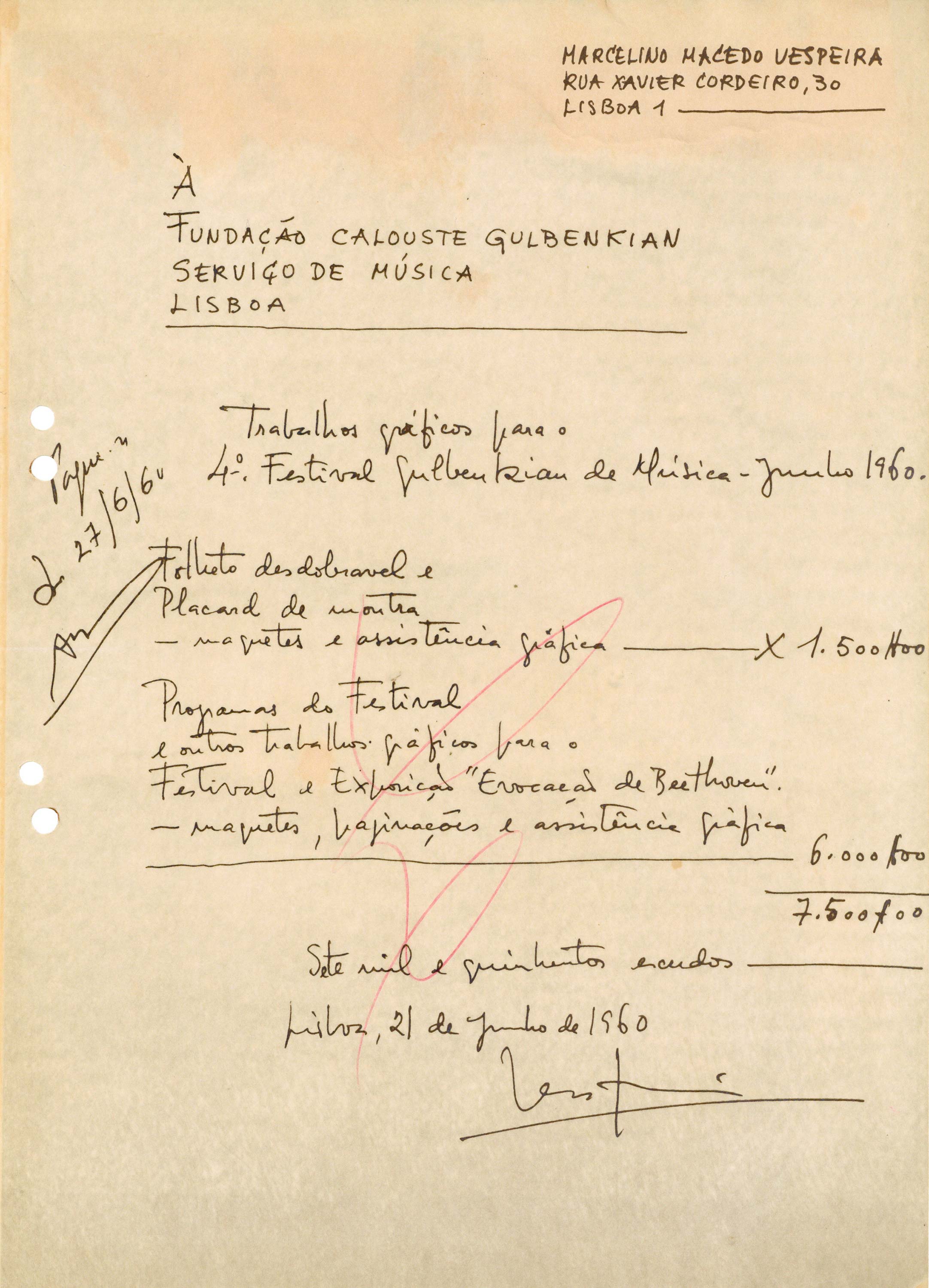
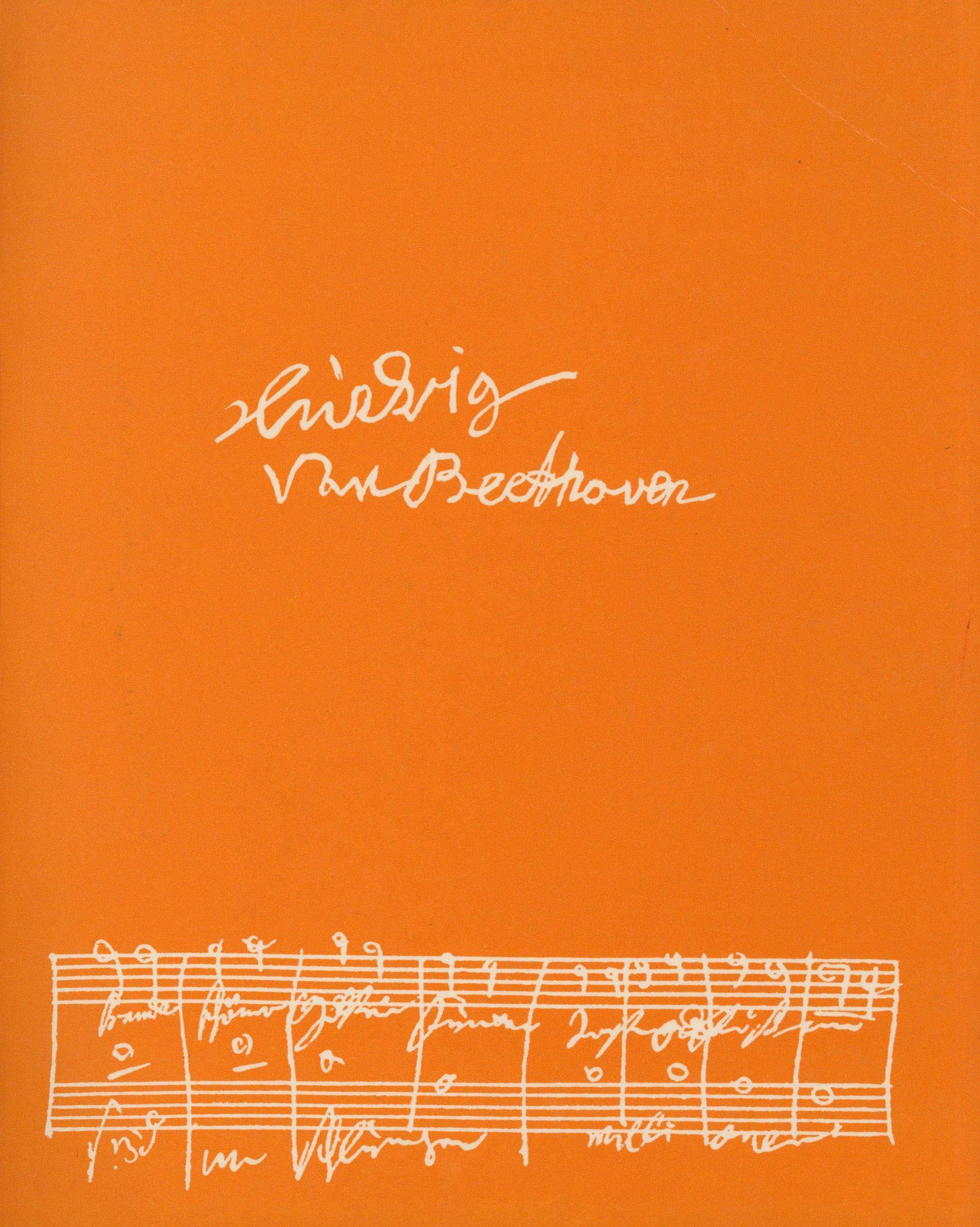
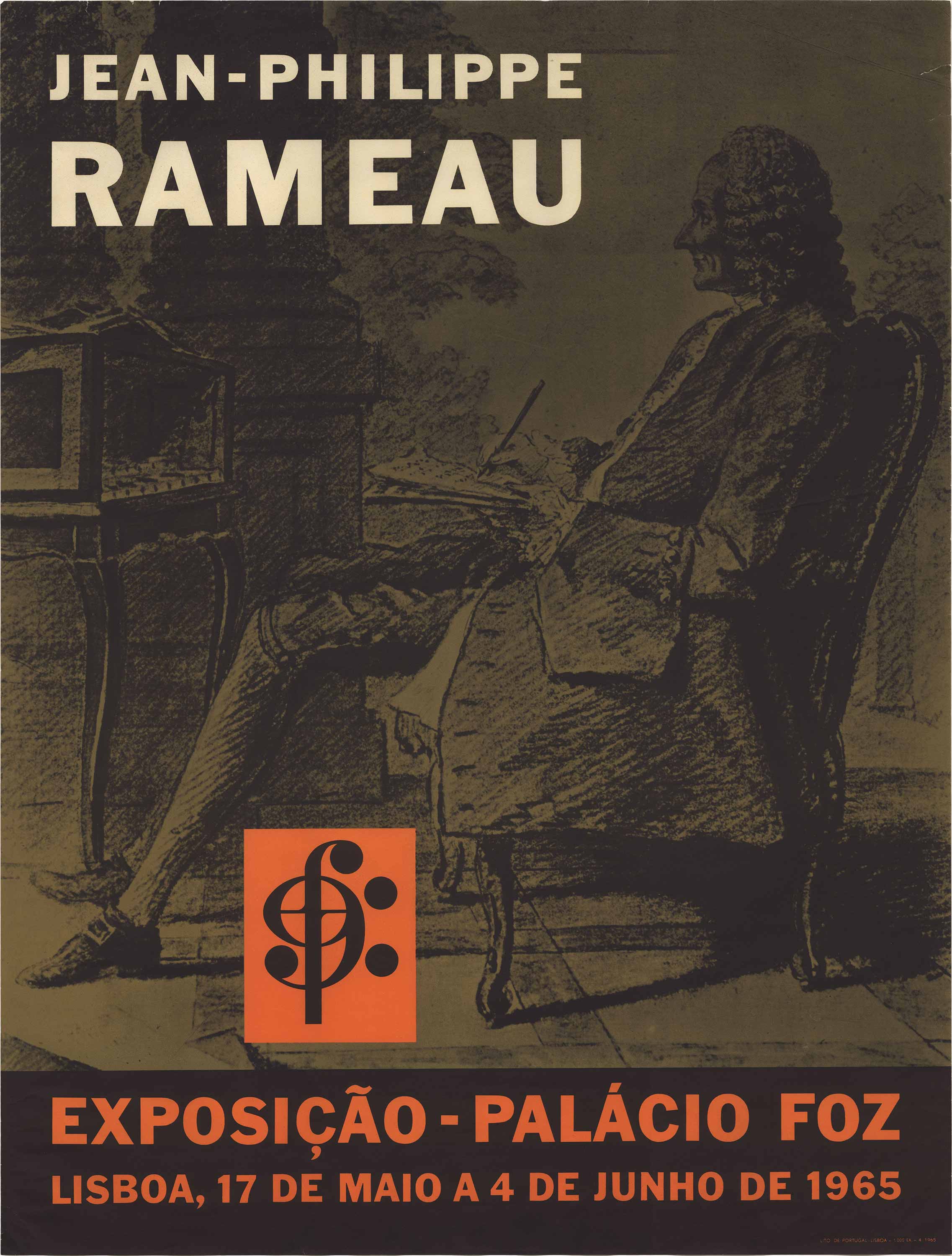
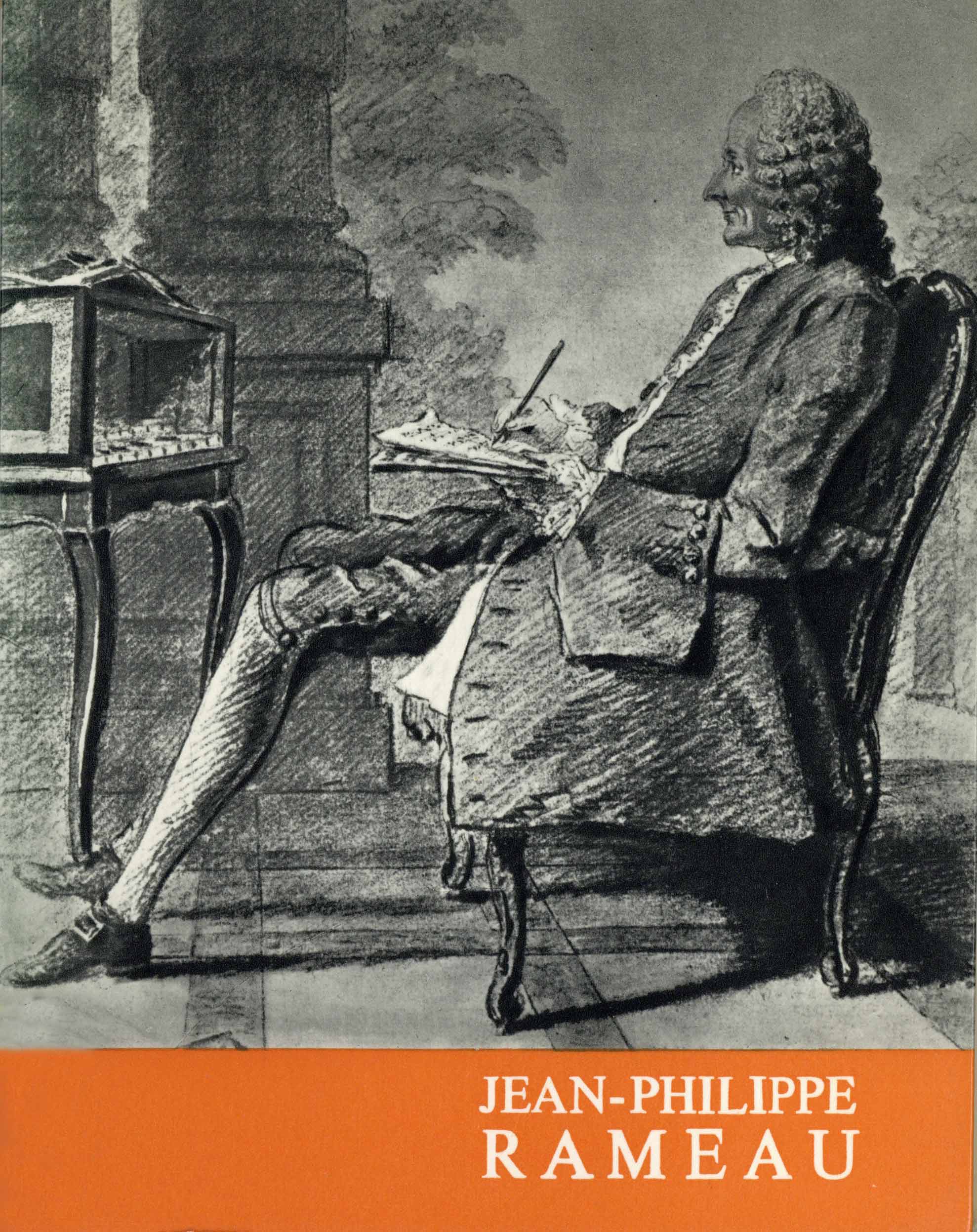
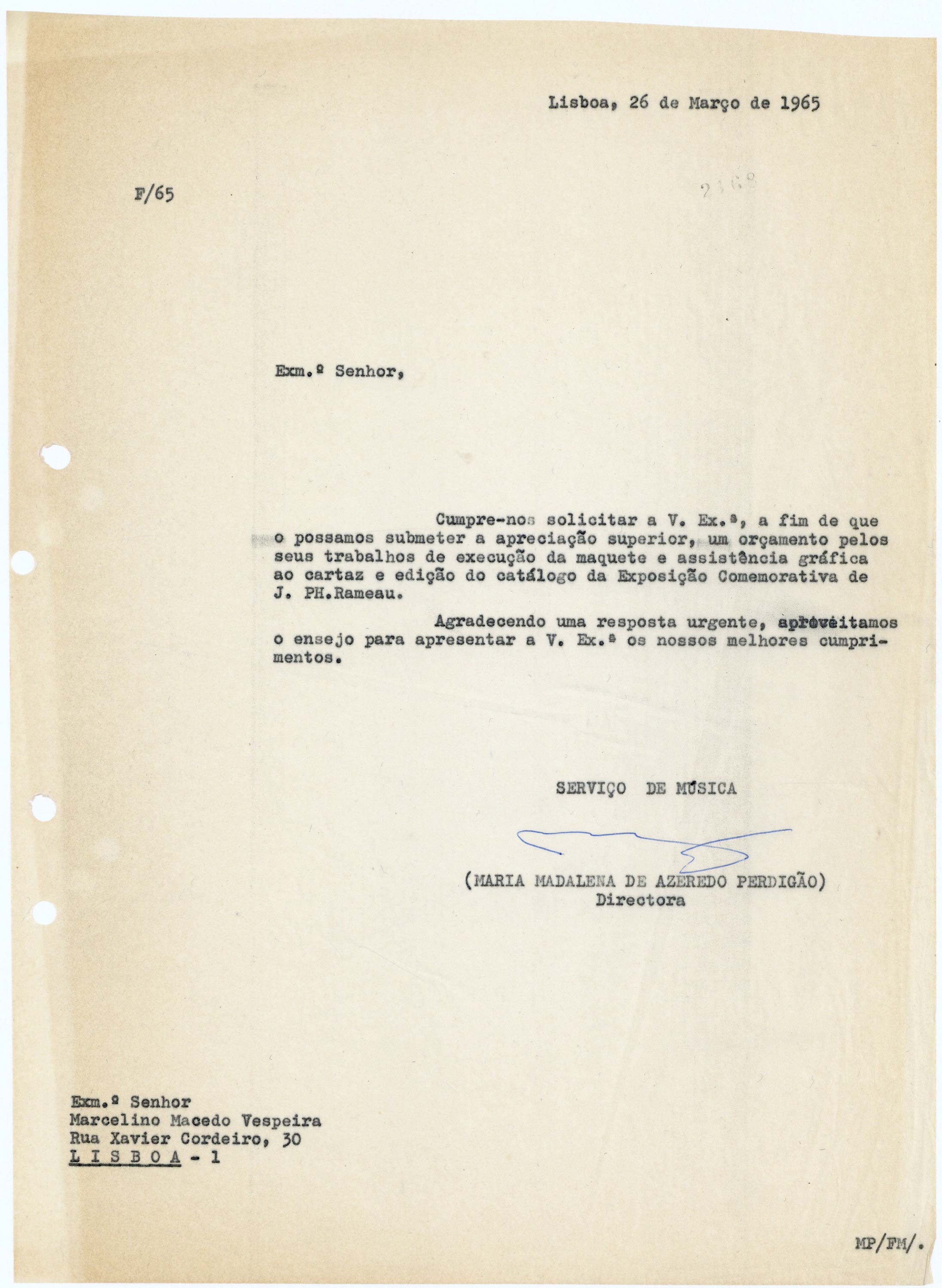
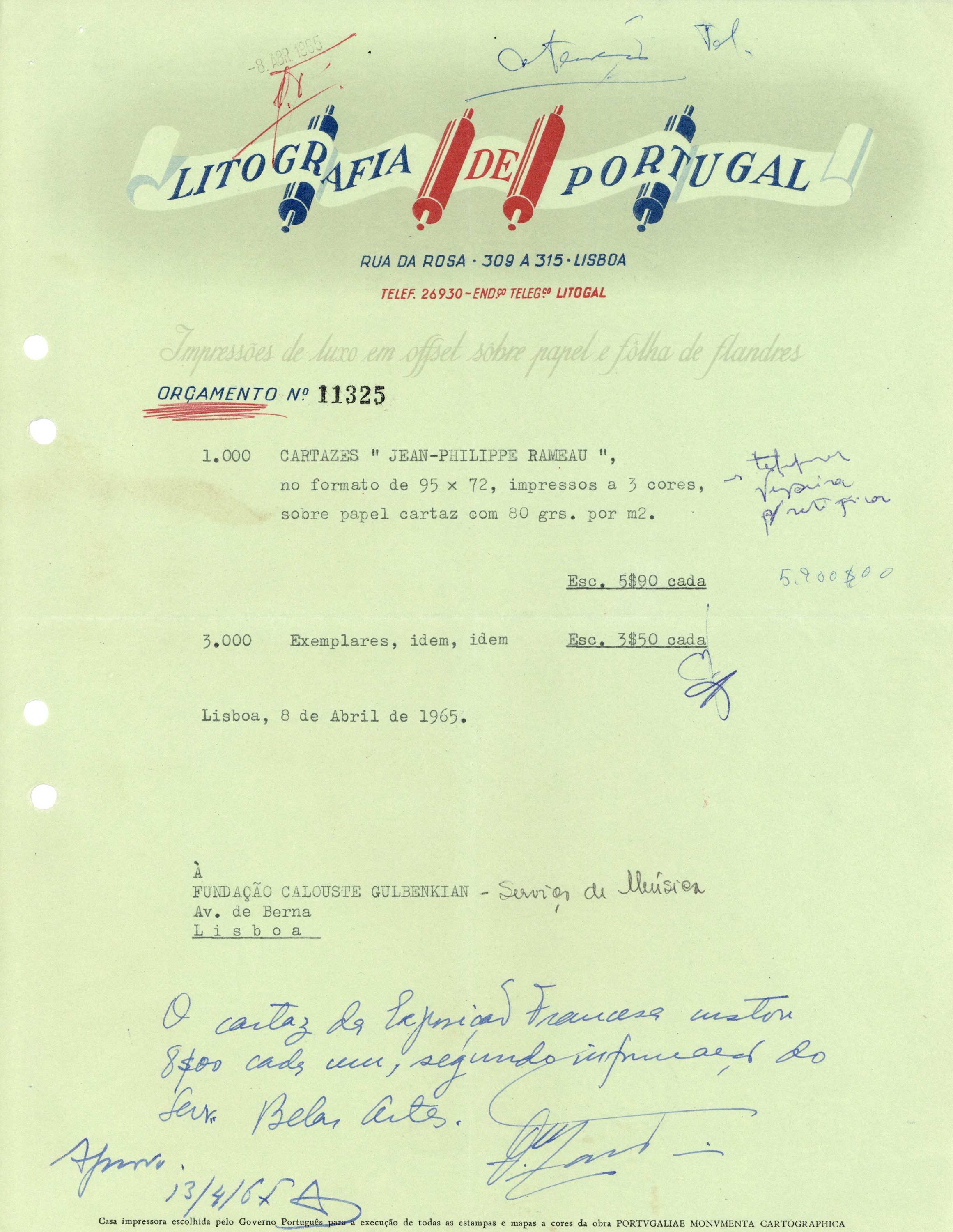
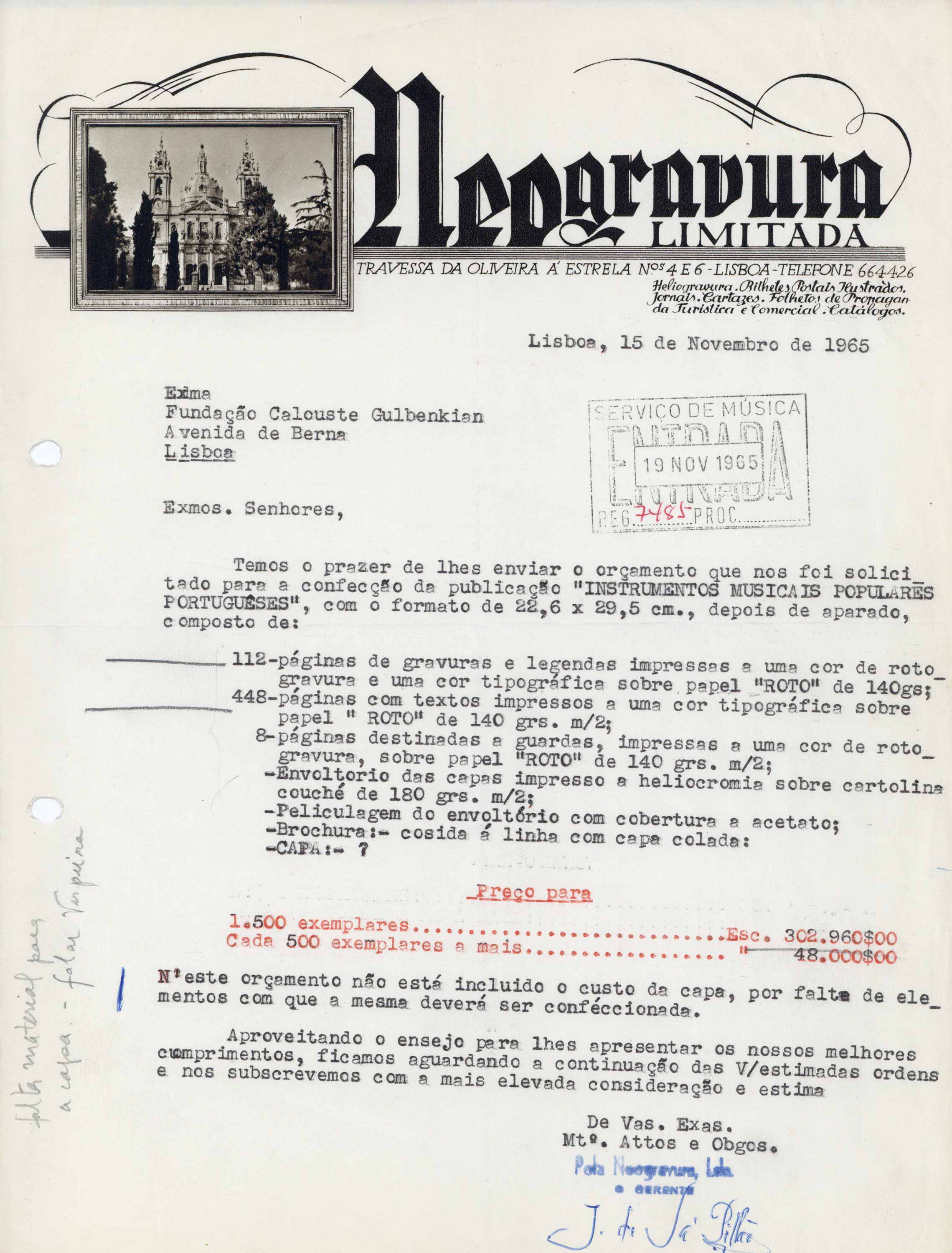
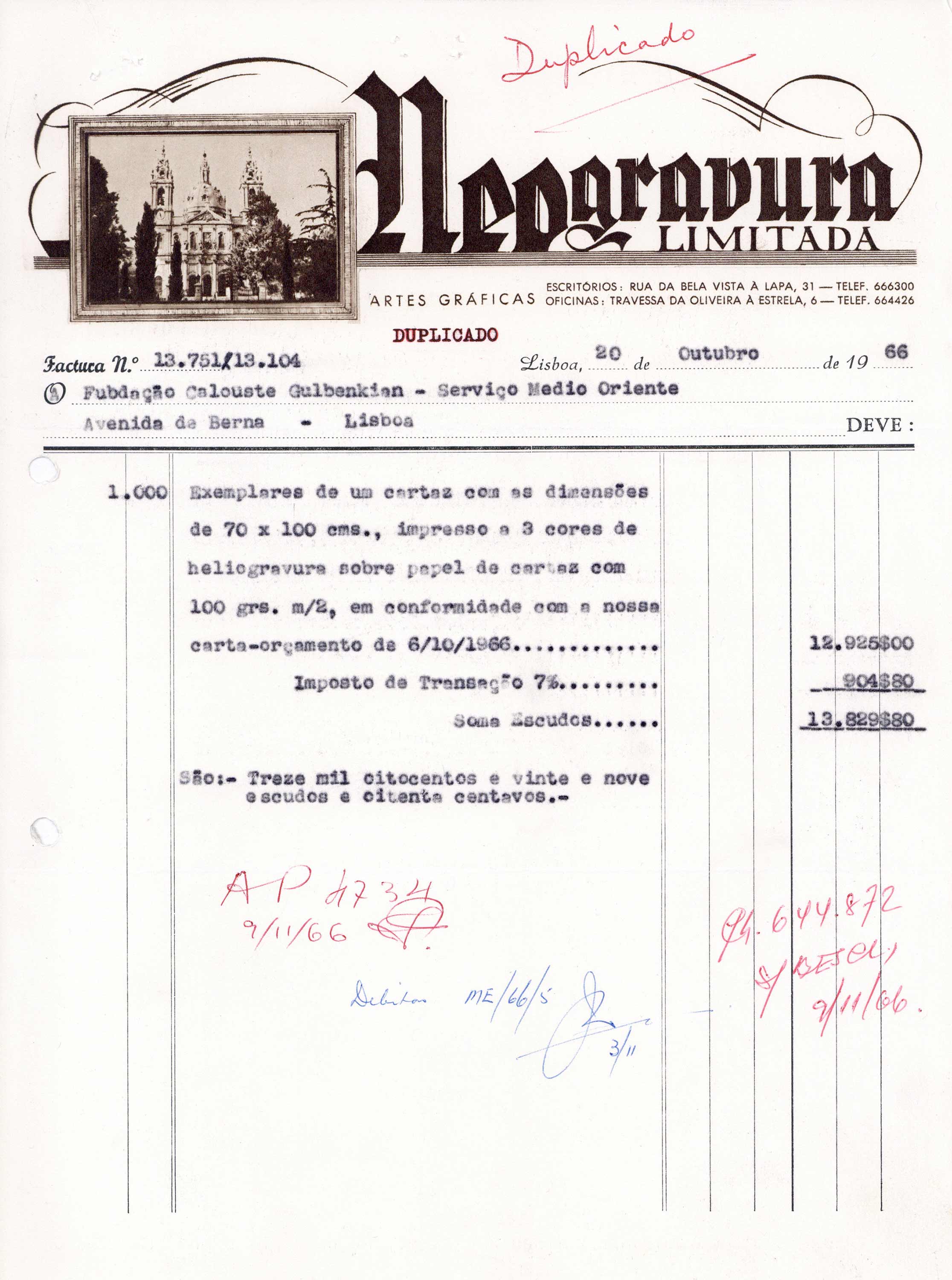
Posters, catalogues, brochures and leaflets display striking and visually impactful design, produced in partnership with leading printing houses such as Litografia de Portugal and Neogravura, essential throughout the process of composition and printing.
At the end of 1961 he takes part in the II Exposição de Artes Plásticas, competing in the category of Painting with three unpublished works: Prometheu (Óleo 154), Gira-Sol (Óleo 160) and Gira-Lua (Óleo 161).
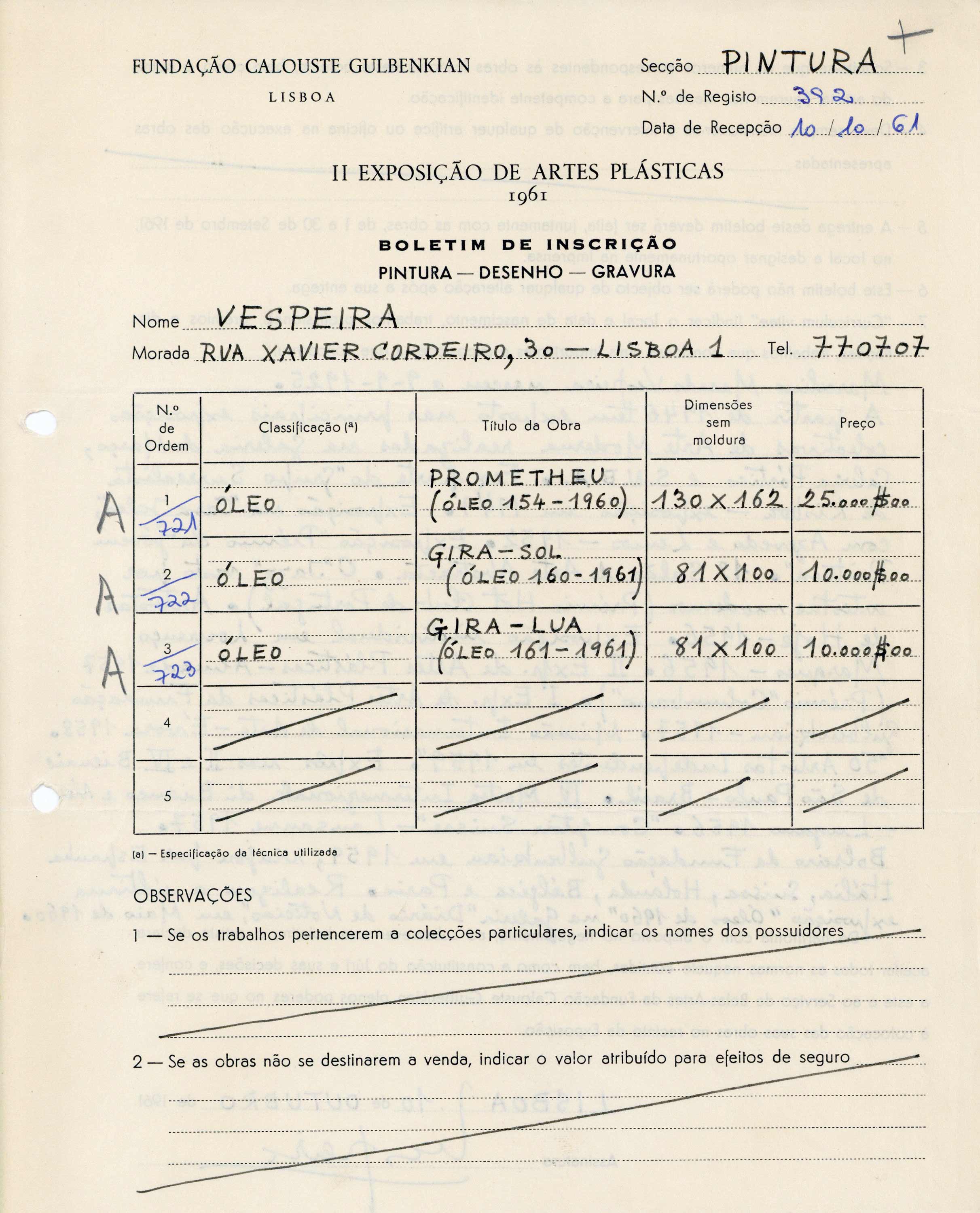
The works were shown in the modern building of the Feira Internacional de Lisboa, where they remain on display until January 1962. Once again, Vespeira was excluded from the group of awarded artists. On this occasion, the Gulbenkian Foundation did not acquire any of his works. However, in January 1962, Artur Nobre de Gusmão successfully proposes to Azeredo Perdigão the acquisition of Óleo 170 (1961), describing it “solidly constructed and well suited to representing the painter well in future travelling exhibitions that the Calouste Gulbenkian Foundation may organize”.
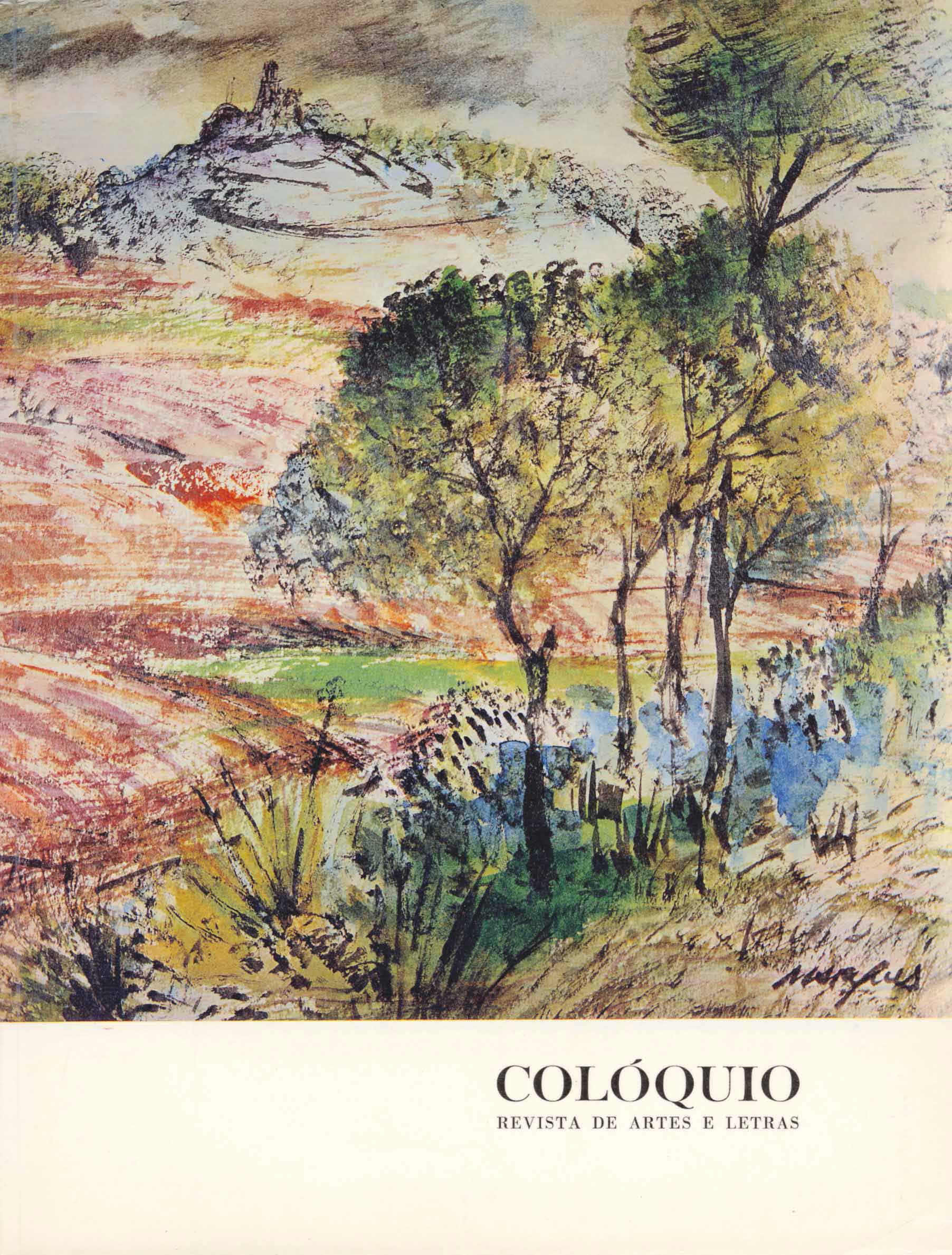
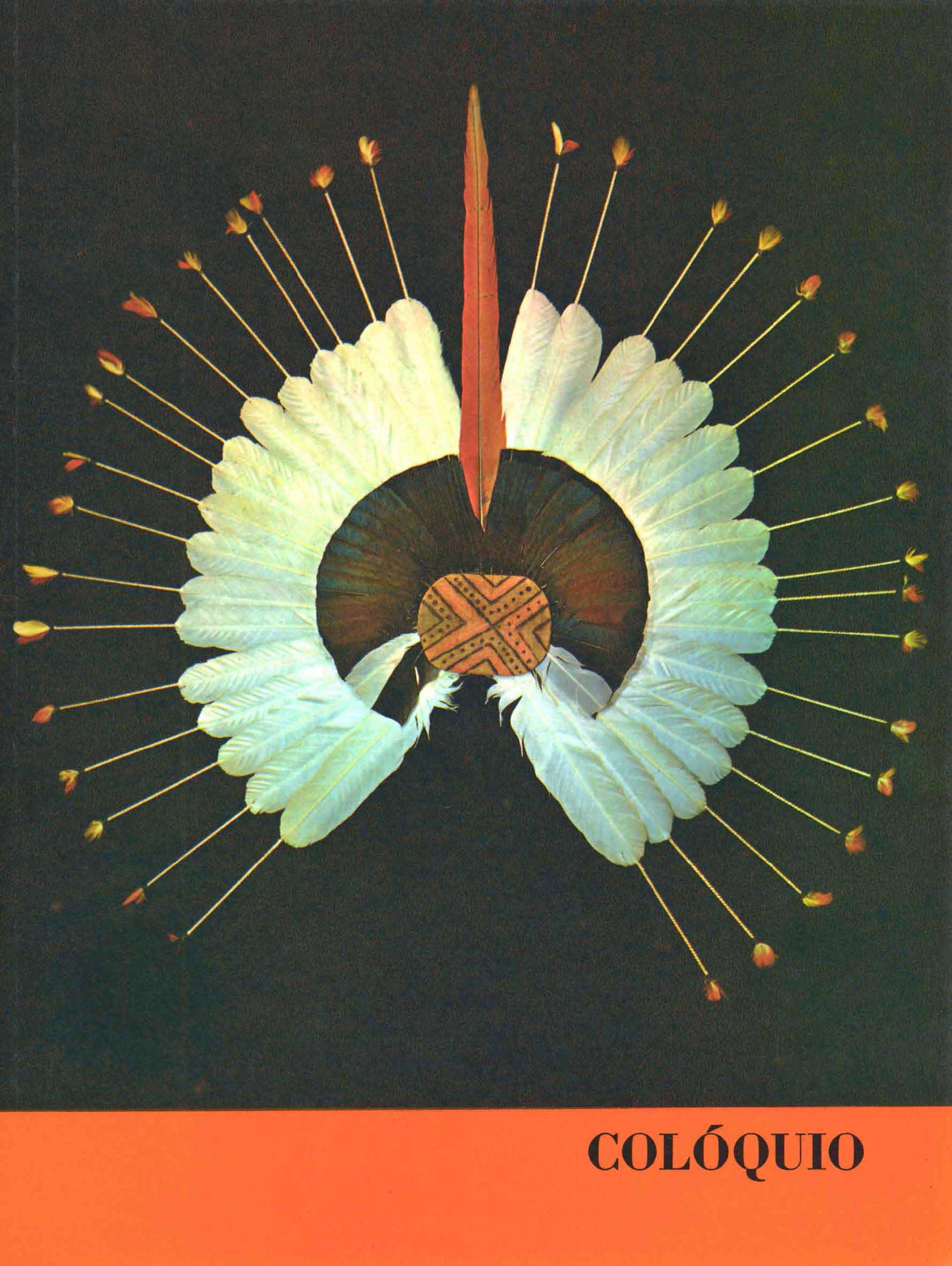
At the same time, he takes on, at the invitation of José de Azeredo Perdigão and on the suggestion of Reynaldo dos Santos, Hernâni Cidade and António da Costa Isidoro, the graphic direction of Colóquio: revista de artes e letras, succeeding Bernardo Marques, who had recently passed away. Between late 1962 and late 1966, the artist is responsible for the graphic design of twenty issues of the publication (from no. 21 to no. 41). He renews the visual identity of the magazine, modernizing its design, without, however, compromising the editorial line established by Bernardo Marques.
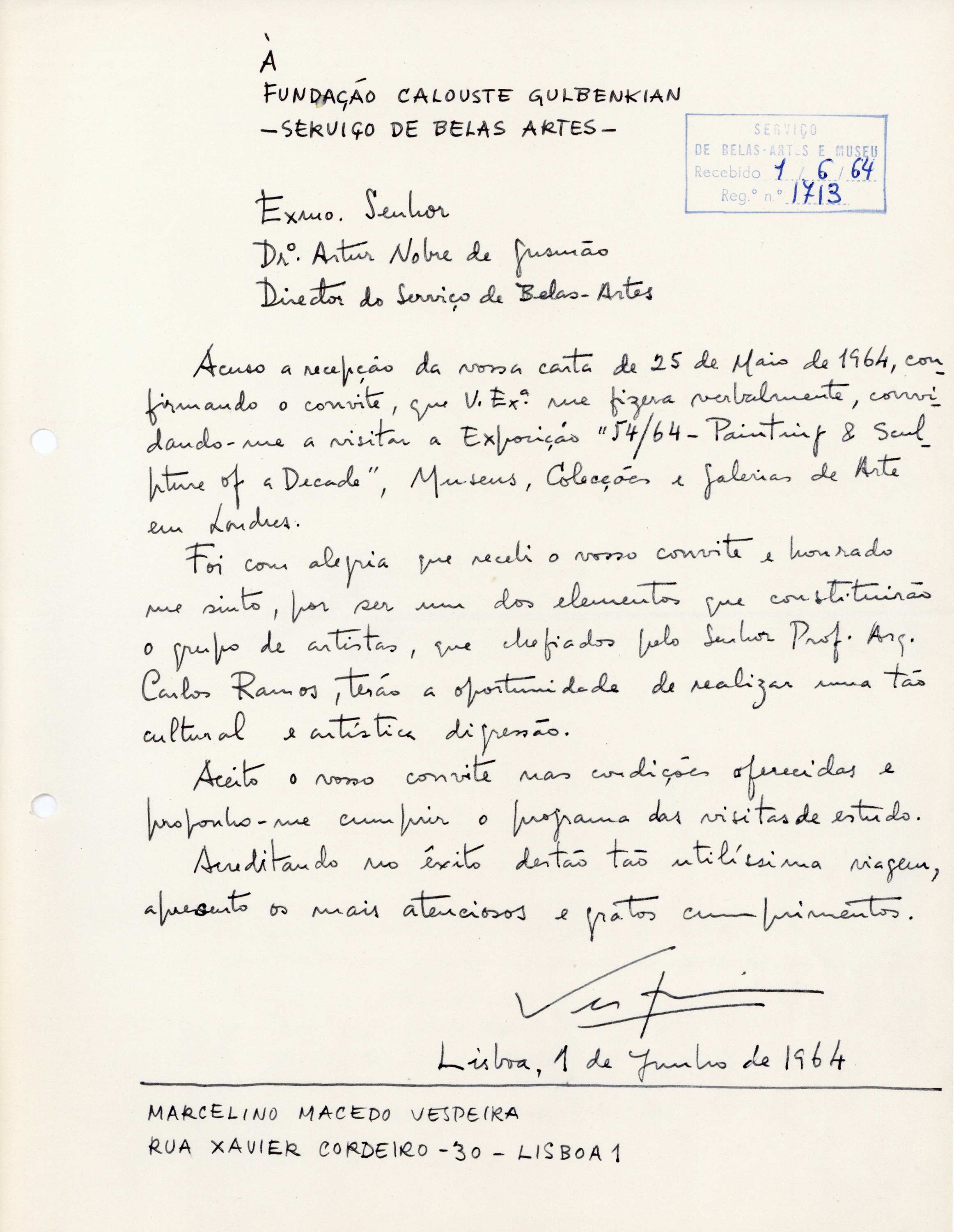
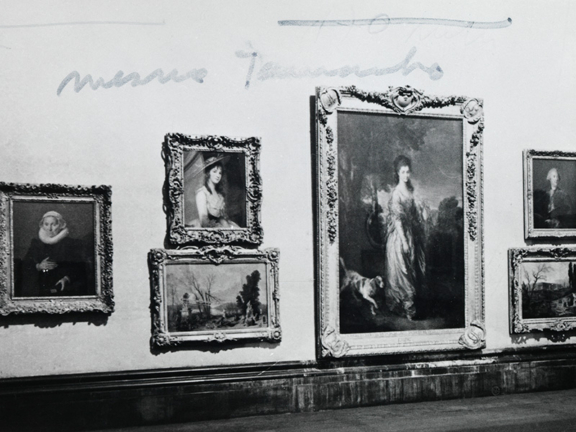
A new opportunity would arise in June 1964, when he joins the group of Portuguese artists invited by the Foundation to visit the exhibition 54-64: Painting & Sculpture of a Decade, at the Tate Gallery in London, with the aim of offering participants a broad perspective on the most recent developments and trends in international contemporary Art, with particular focus on painting and sculpture.
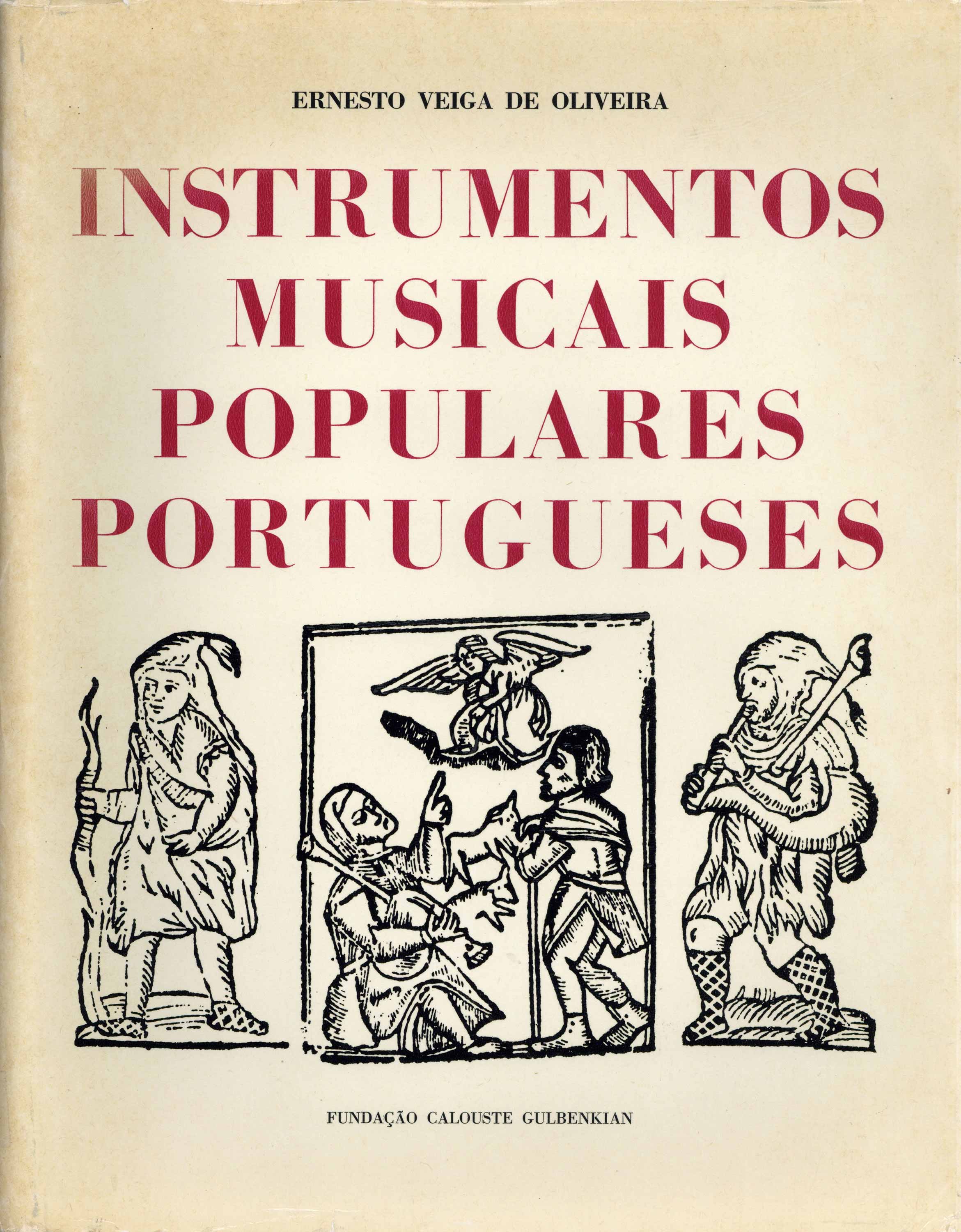
In late 1965, the artist is invited to take charge of the graphic direction of Instrumentos musicais populares portugueses, a monograph by the ethnologist Ernesto Veiga de Oliveira, to be published by the Foundation – a task he adds to his responsibilities as graphic director of Colóquio magazine and of the Gulbenkian Music Festivals.
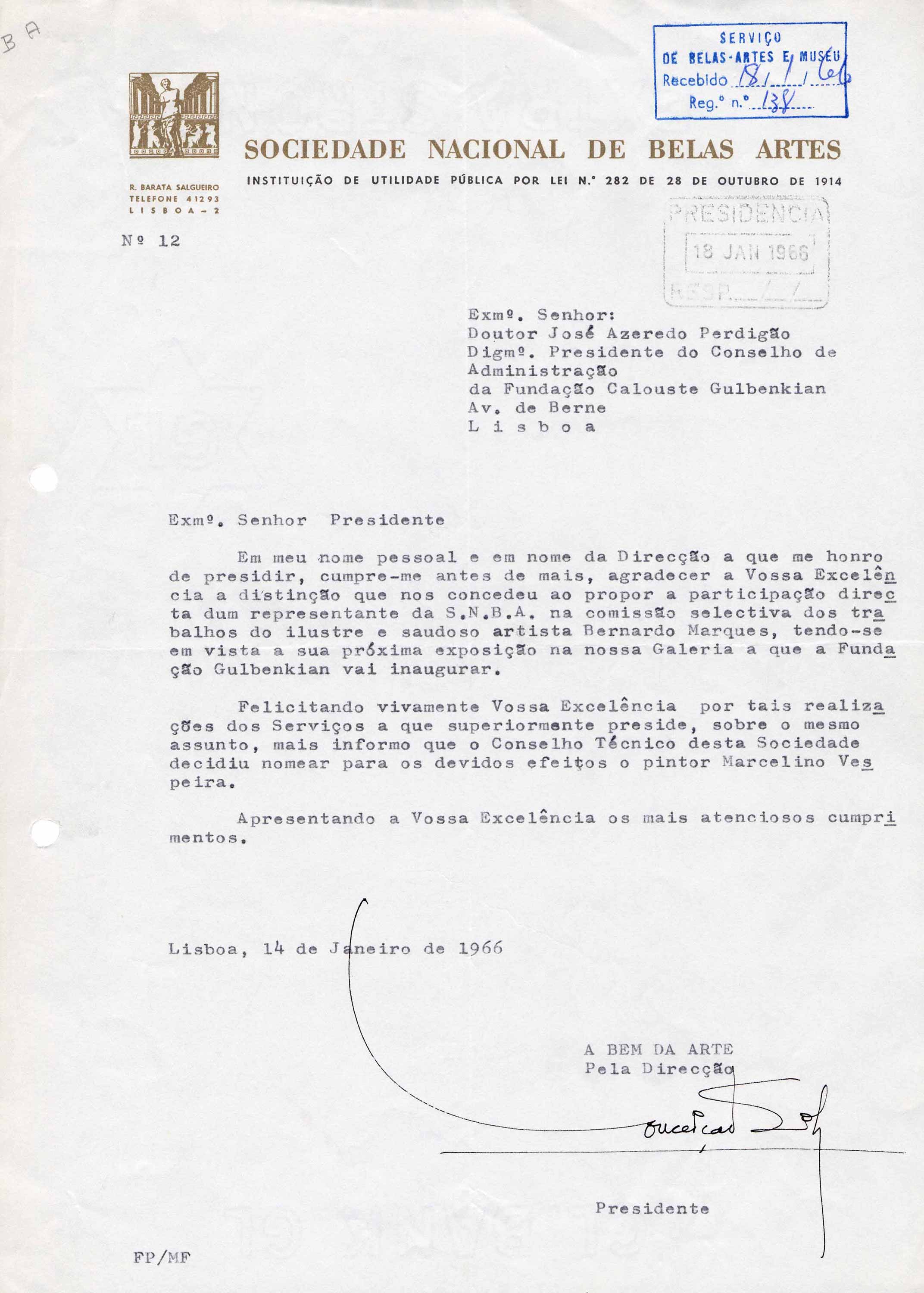
The following year, with an already recognized trajectory, he is appointed the SNBA representative on the selection committee for the exhibition Bernardo Marques. Obras de 1950 a 1960.
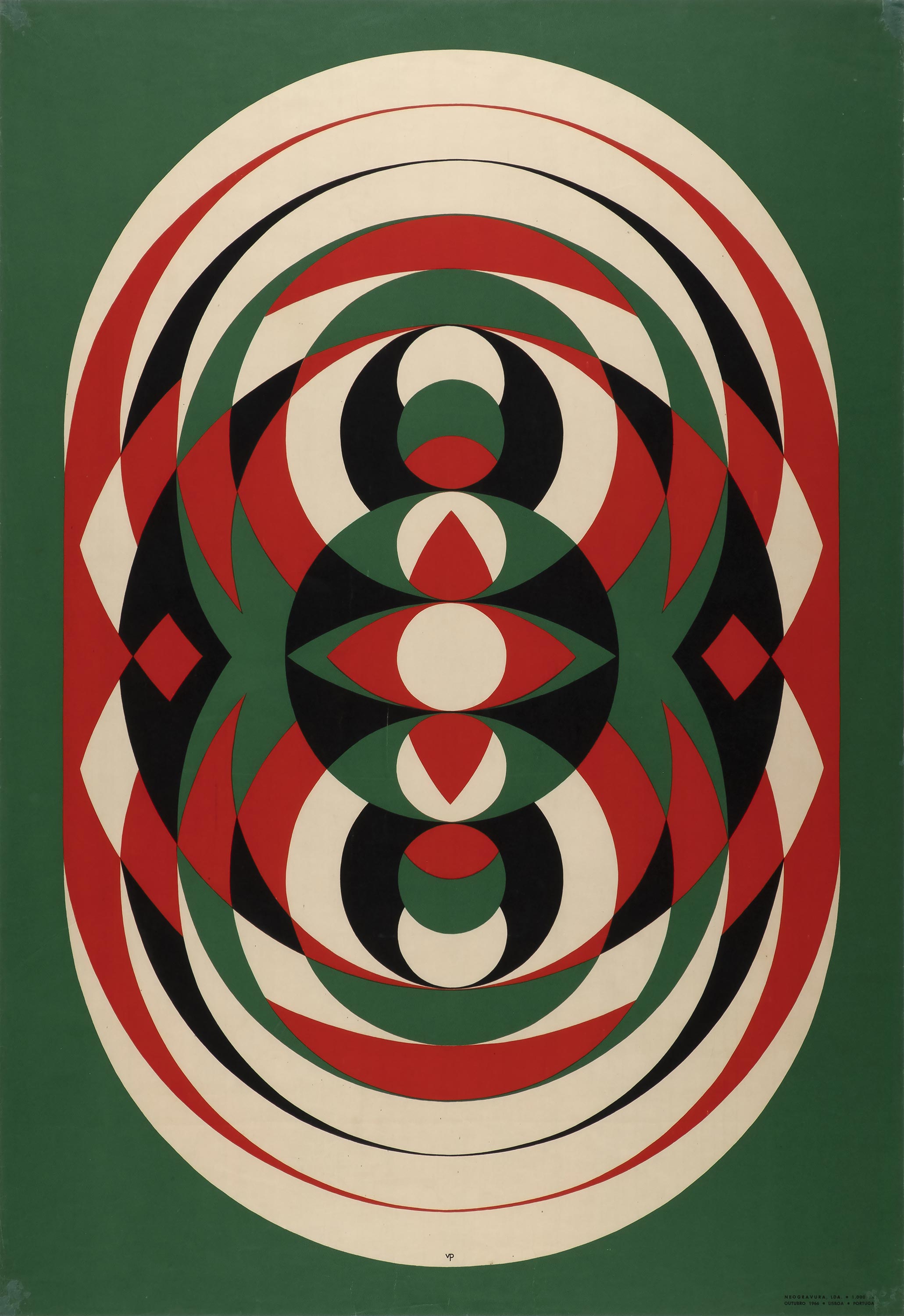
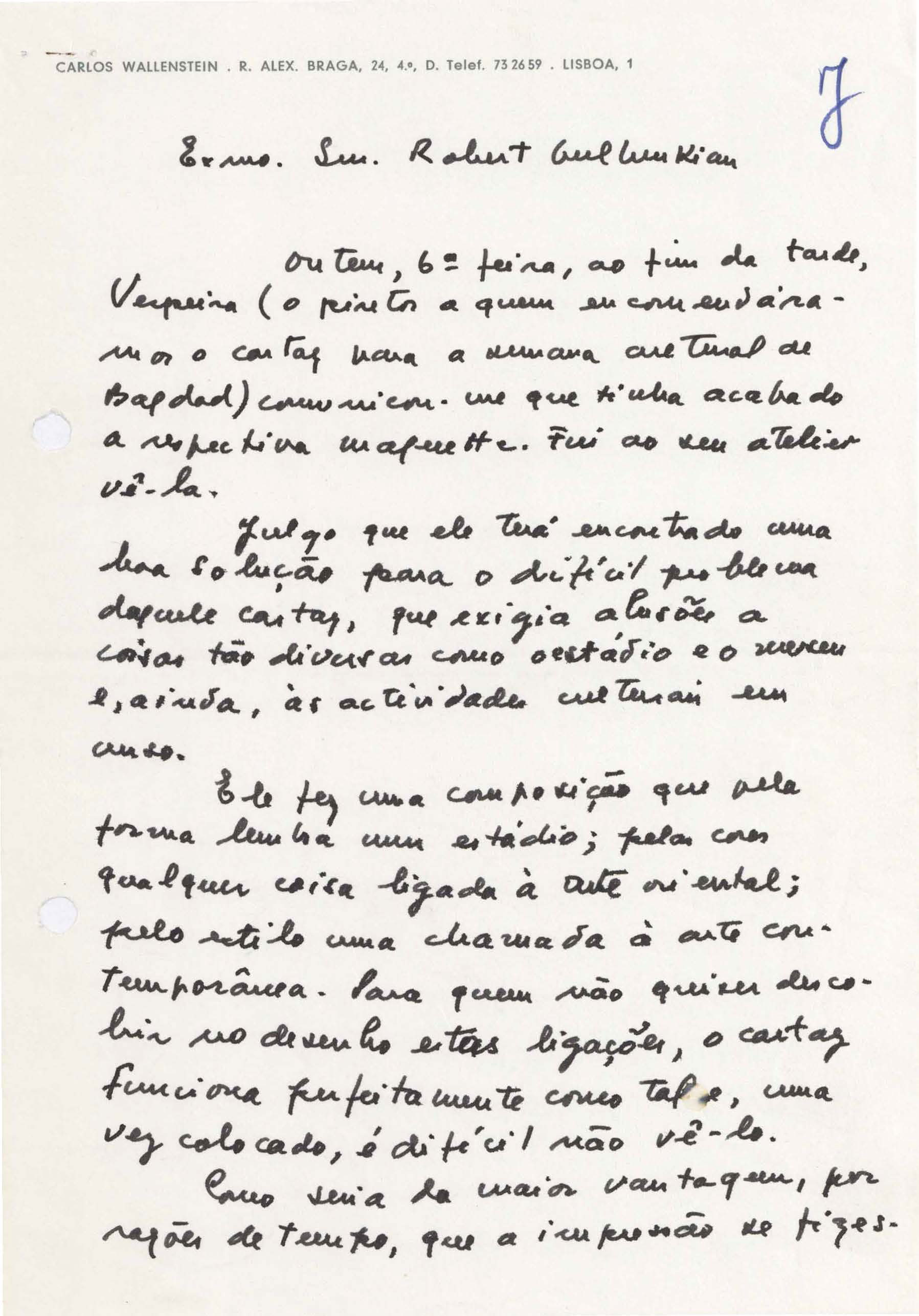
Also in 1966, the Foundation organized A Week of Culture and Art in Baghdad held in the Iraqi capital to coincide with the inauguration of the Al-Sha’ab Stadium – a major sports complex donated by the Foundation to Iraq.
Vespeira is invited by the Fine Arts and Middle East Affairs Departments to design the mock-up of the poster and brochure for the music concert, which he responds with a design firmly rooted in the Op Art vocabulary he was exploring at the time in his work for Gulbenkian Music.
Commenting on the mock-up, Carlos Wallenstein of the Fine Arts Department wrote to Robert Gulbenkian, administrator responsible for Middle East Affairs: “[Vespeira] seems to have found a good solution for the difficult problem of that poster, which required allusions to such diverse things as the stadium and the museum, as well as the cultural activities under way. He made a composition which in form recalls a stadium; in color evokes something of oriental Art; and in style calls contemporary Art to mind. For those who do not wish to identify these references in the drawing, the poster functions perfectly well as such, and, once placed, it is impossible to overlook.”
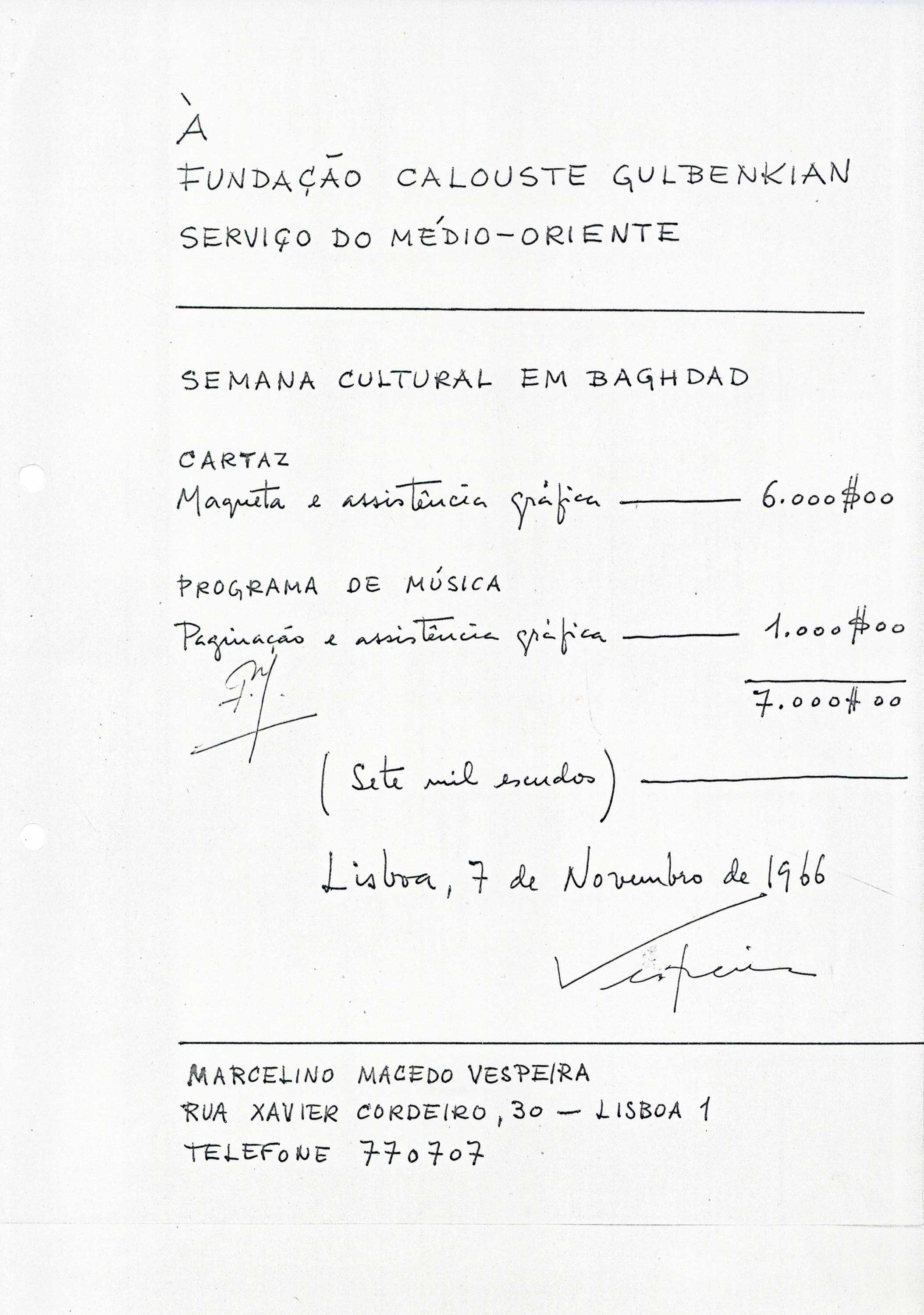
At the end of 1966 he steps down as graphic director of Colóquio, due to disagreements with the artistic and literary direction of the magazine. This does not interrupt his relationship with the Foundation.
Still in 1969, the Music Department commissioned him to create one final poster: a promotional poster for the Gulbenkian Ballet Group, later Ballet Gulbenkian. The aesthetic clearly reflects the Op Art influence that characterizes his graphic output during this period.

Years later, Vespeira would adapt this design for inclusion in the program booklet of the group’s 1975 season.
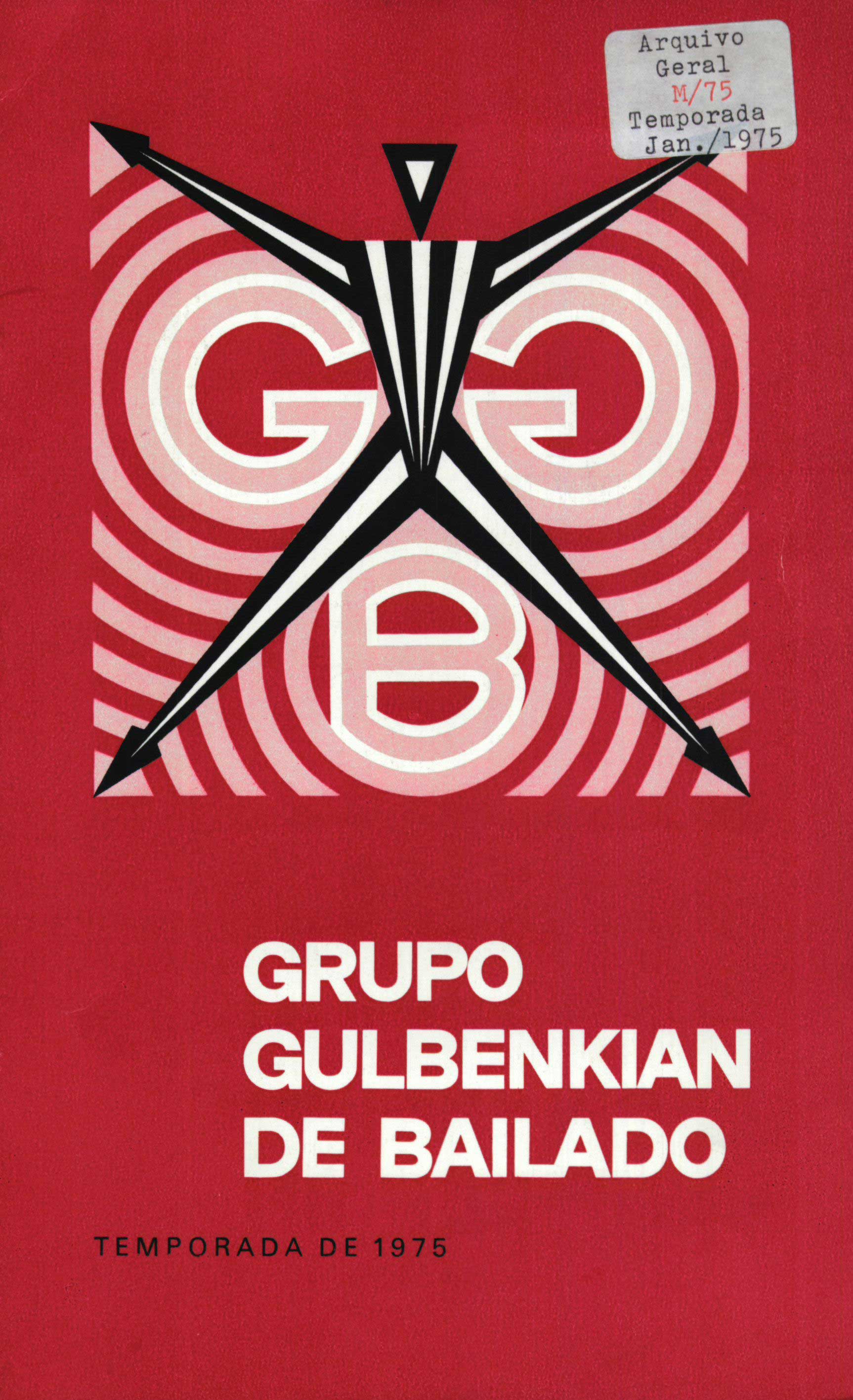
In February 1980, the establishment of a Purchasing Committee for the selection and acquisition of works of Art for the collection of the Centro de Arte Moderna (CAM) opens a new phase of acquisitions of works by Vespeira.
At the first meeting for acquisition decisions, on 14 March 1980, José Sommer Ribeiro, director of the Exhibitions and Museography Department, presents a list of works that Marcelino Vespeira was willing to sell, shown earlier that January in the Acta Médica Portuguesa. Cinco Exposições Individuais de Cargaleiro, Cruzeiro Seixas, Nikias, Pomar, Vespeira, in which the artist participated with 32 collages and a serigraph.
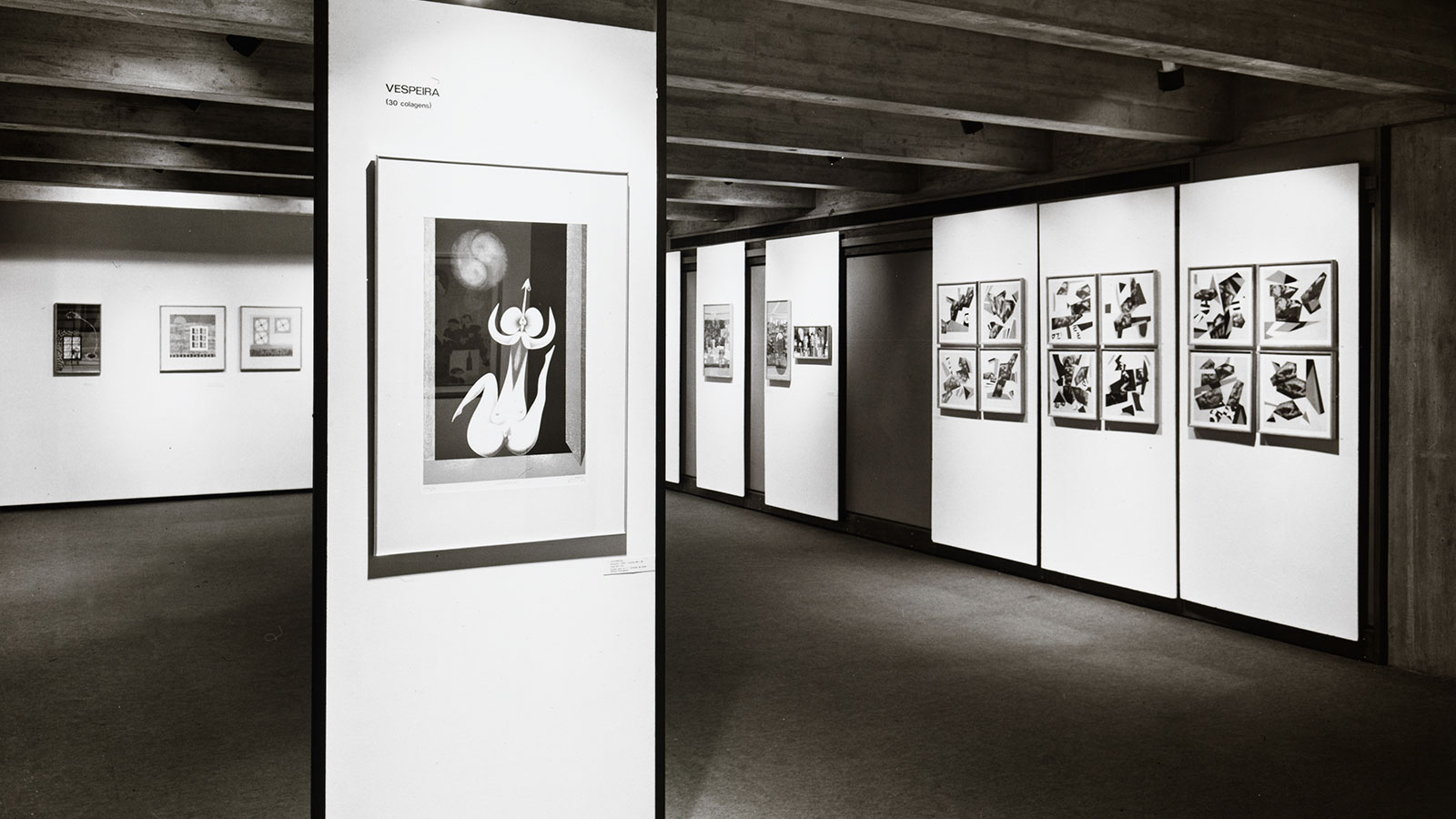
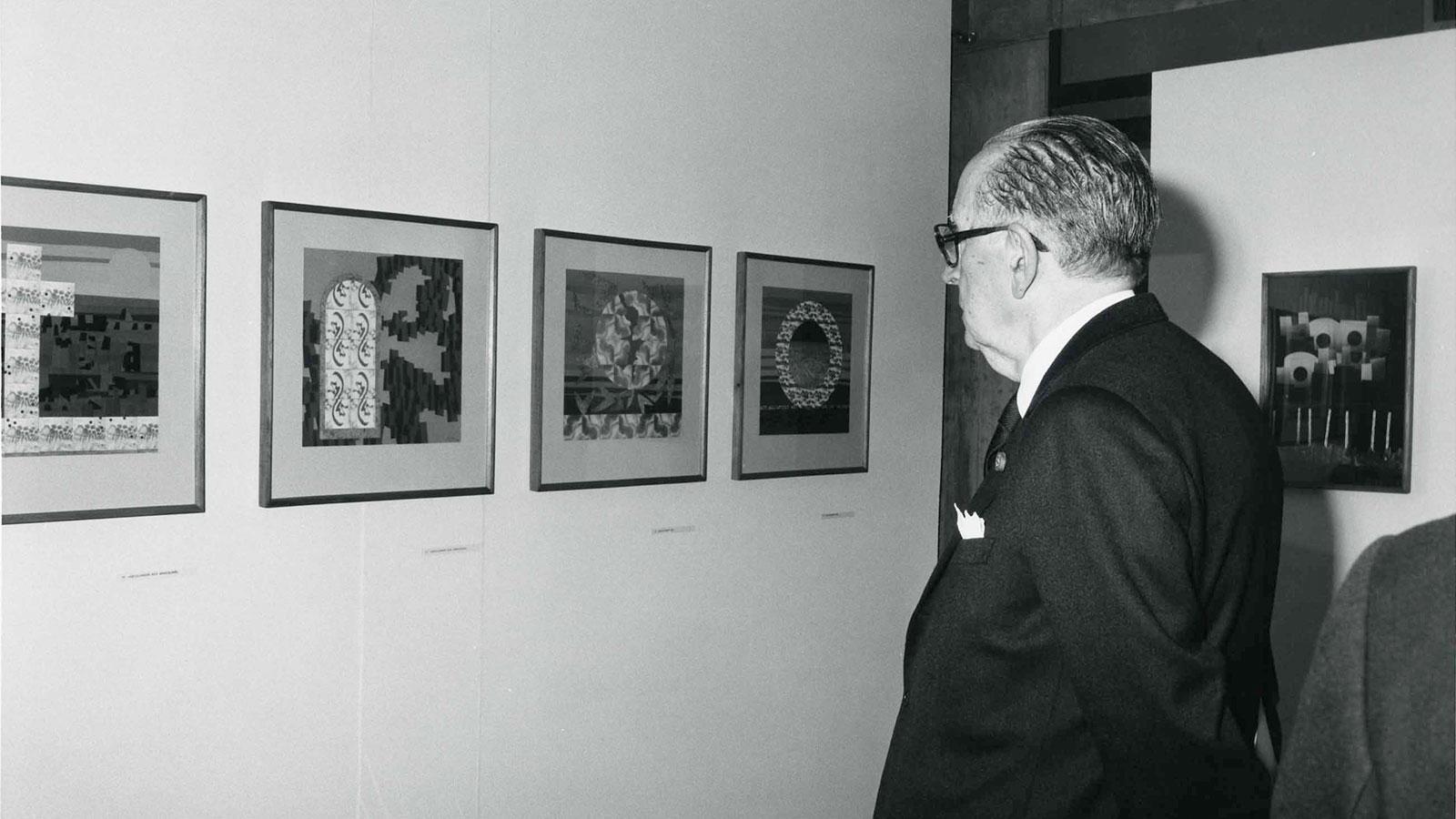
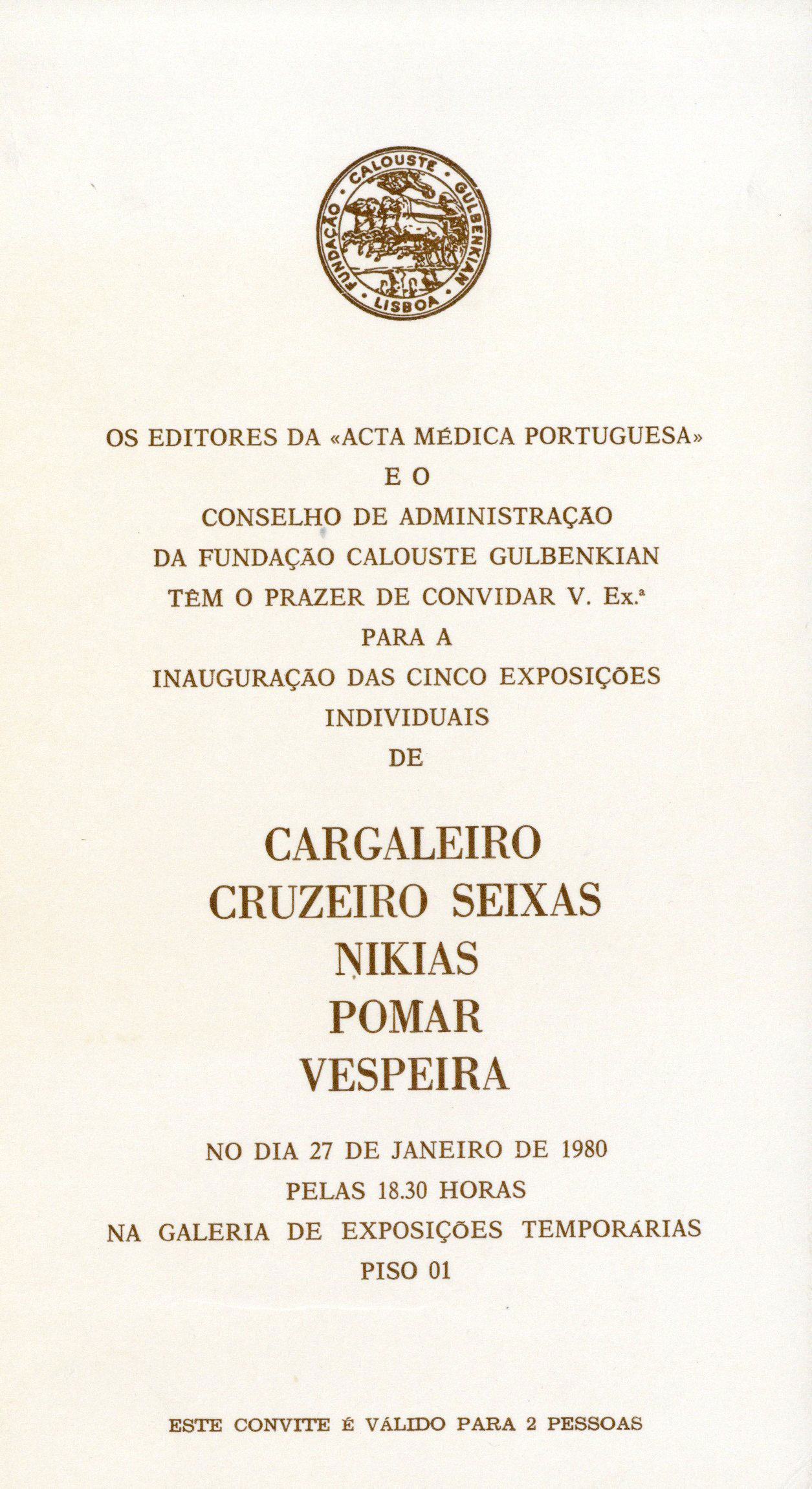
The Purchasing Committee decides to acquire the “6 collages, collectively titled Família Azulejamor, which document a new creative phase after many years without painting”. The set, created in 1978, includes: Azulejamor Avô José Vespeira, Azulejamor Avó Margarida, Azulejamor Avô Marcelino, Azulejamor Avó Conceição, Azulejamor Pai and Azulejamor Mãe.
Later, the artist would donate to the Foundation a print of his only serigraph displayed in the exhibition – Luzúbrica (1979).
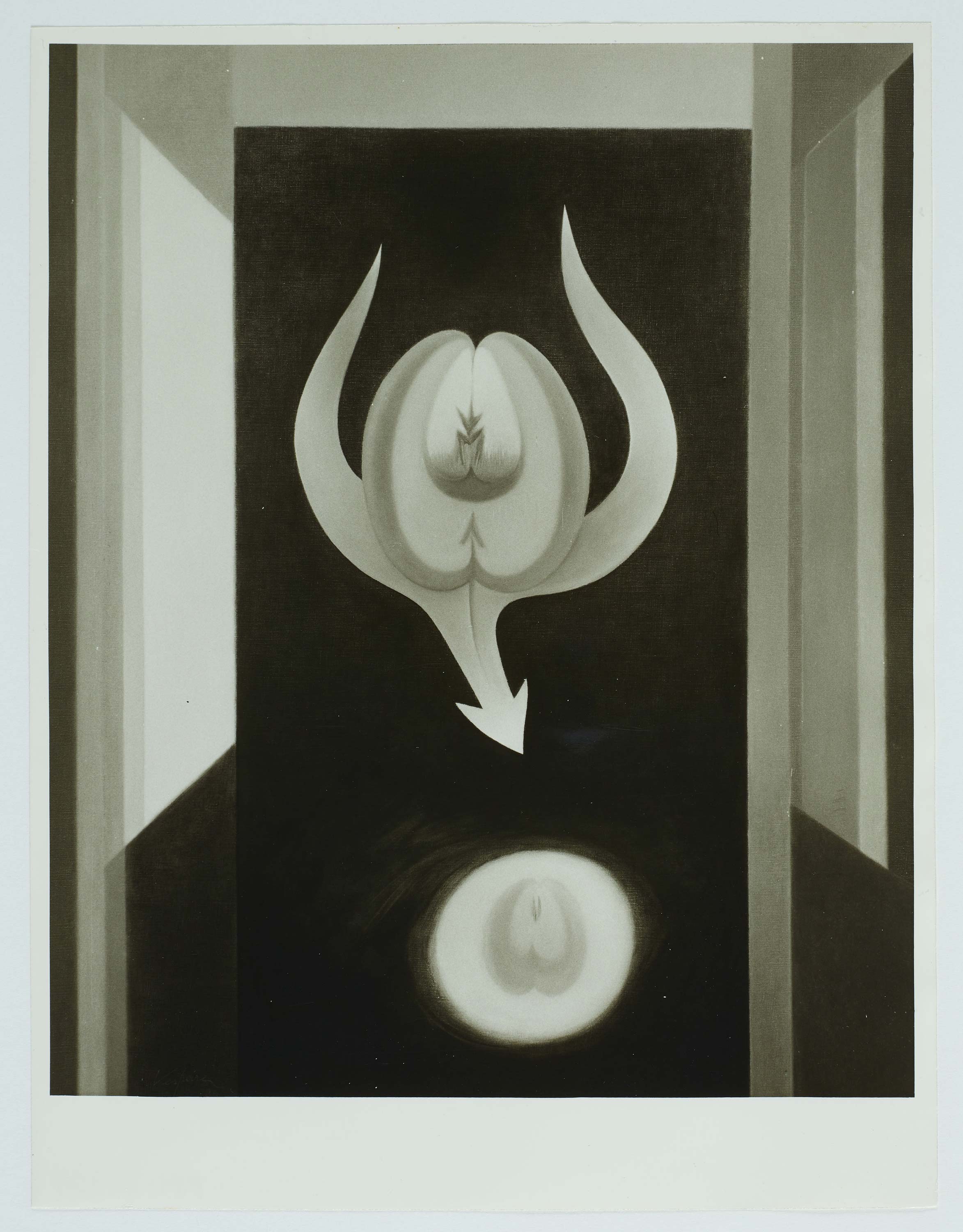
In mid-1982, Vespeira proposes to the Foundation the purchase of some of his most relevant works, some of which had been included in the exhibition Os anos 40 na Arte portuguesa, organised by the Foundation earlier that year. The proposal included the oils Apertado pela fome (1945) and Simumis (1949), an untitled India ink drawing (1951), the sculpture O Menino Imperativo (1952), the gouache Ex-Voto-Maria (1979), and the group of nine wax-crayon drawings Musagrafia nove (1980).
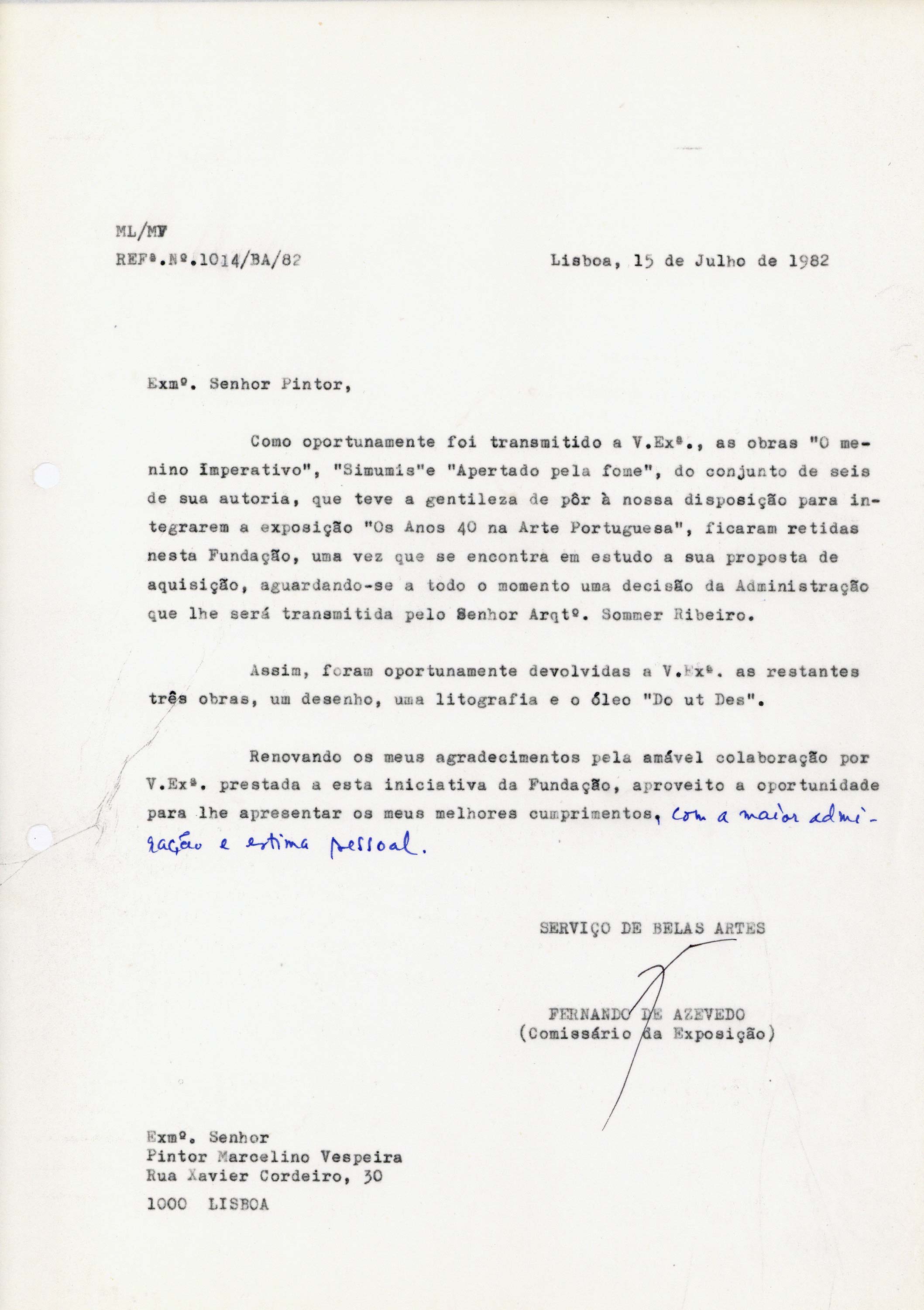
The Purchasing Committee issues a favorable opinion, emphasizing the importance “of these fundamental works, both of neo-realism, as in the case of Apertado pela fome, and of surrealism – Simumis and Menino Imperativo (mannequin)”.
Azeredo Perdigão authorizes the purchase of the lot, except for Musagrafia nove, which would only be acquired later, in mid-1984. At that time, the serigraph Abrilimagem (1980) is also incorporated into the Centro de Arte Moderna collection
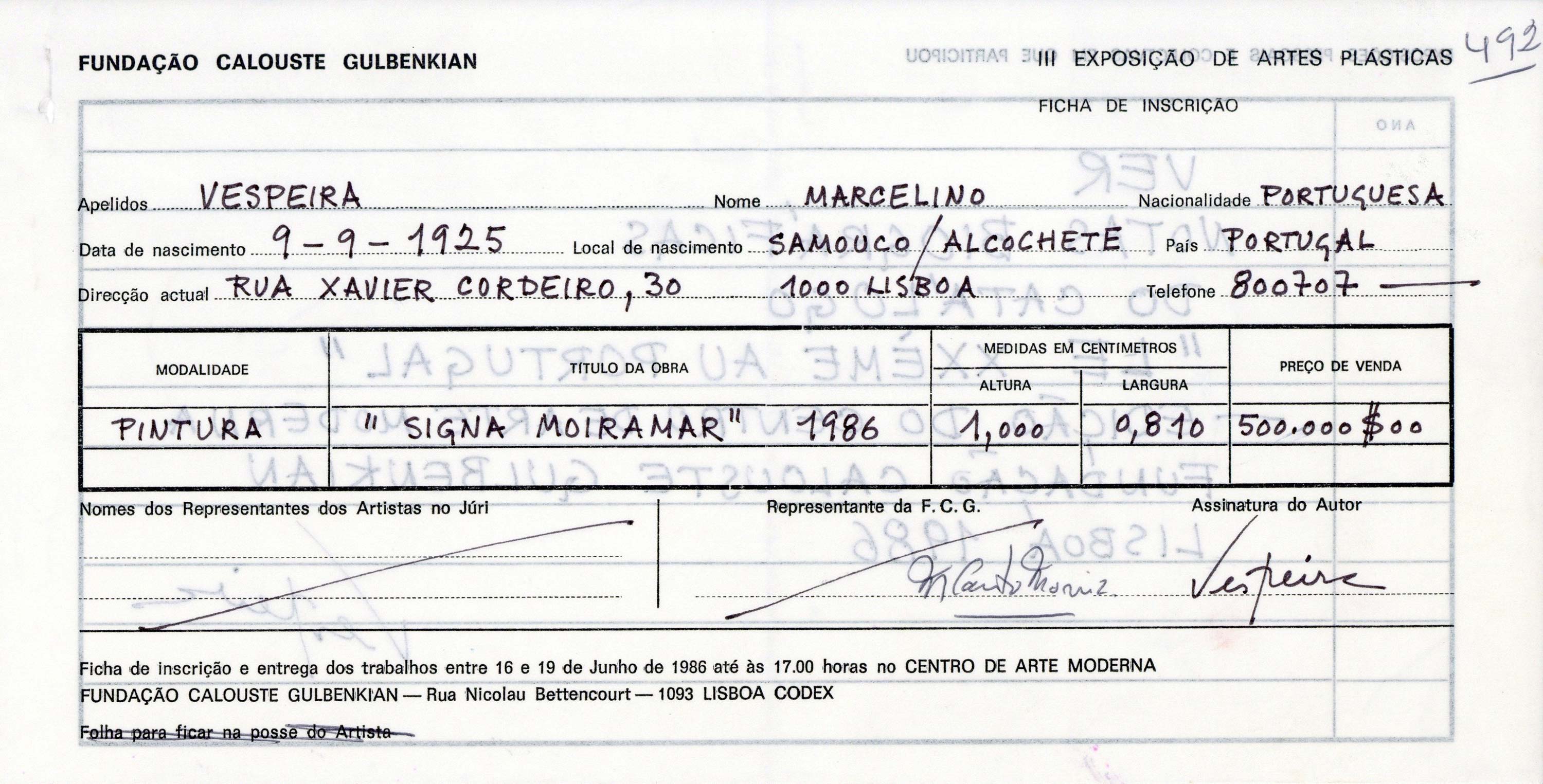
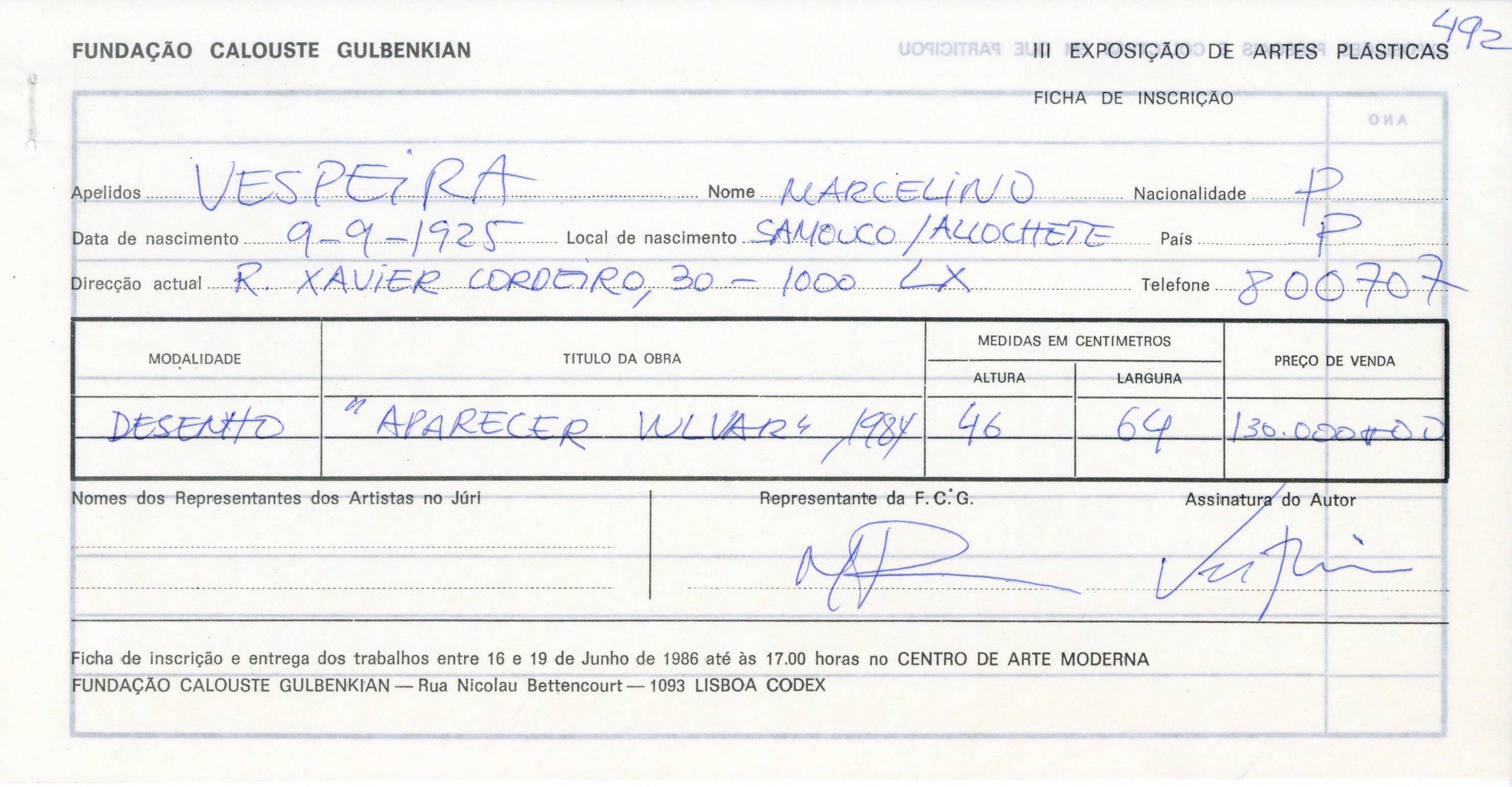
In the summer of 1986, Vespeira takes part in the III Exposição de Artes Plásticas, in what would be his final significant interaction with the Calouste Gulbenkian Foundation. He is accepted in the Painting category with the oil Signa Moiramar, produced that year, and submits Aparecer Vulvar (1984) in the Drawing category, which is, however, rejected by the Admission and Award Jury. In this, as in previous editions, he does not receive a prize.
Across nearly three decades, Marcelino Vespeira forged a deep and multifaceted relationship with the Foundation, punctuated by moments of institutional support, artistic collaboration and recognition.
As a grantee, visual artist and graphic designer, Vespeira left a distinctive mark on the Foundation’s history – visible in the breadth of artistic projects he undertook and in the presence of his works in the Centro de Arte Moderna collection. This enduring relationship reflects not only the artist’s versatility but also the Foundation’s role as a driving force in fostering artistic creation in Portugal.
From the Archives
Explore the series
No results were found for your criteria.
You may also like
No results were found for your criteria.