
The Eventful Childhood of Mikaël
Calouste Gulbenkian’s only Grandchild
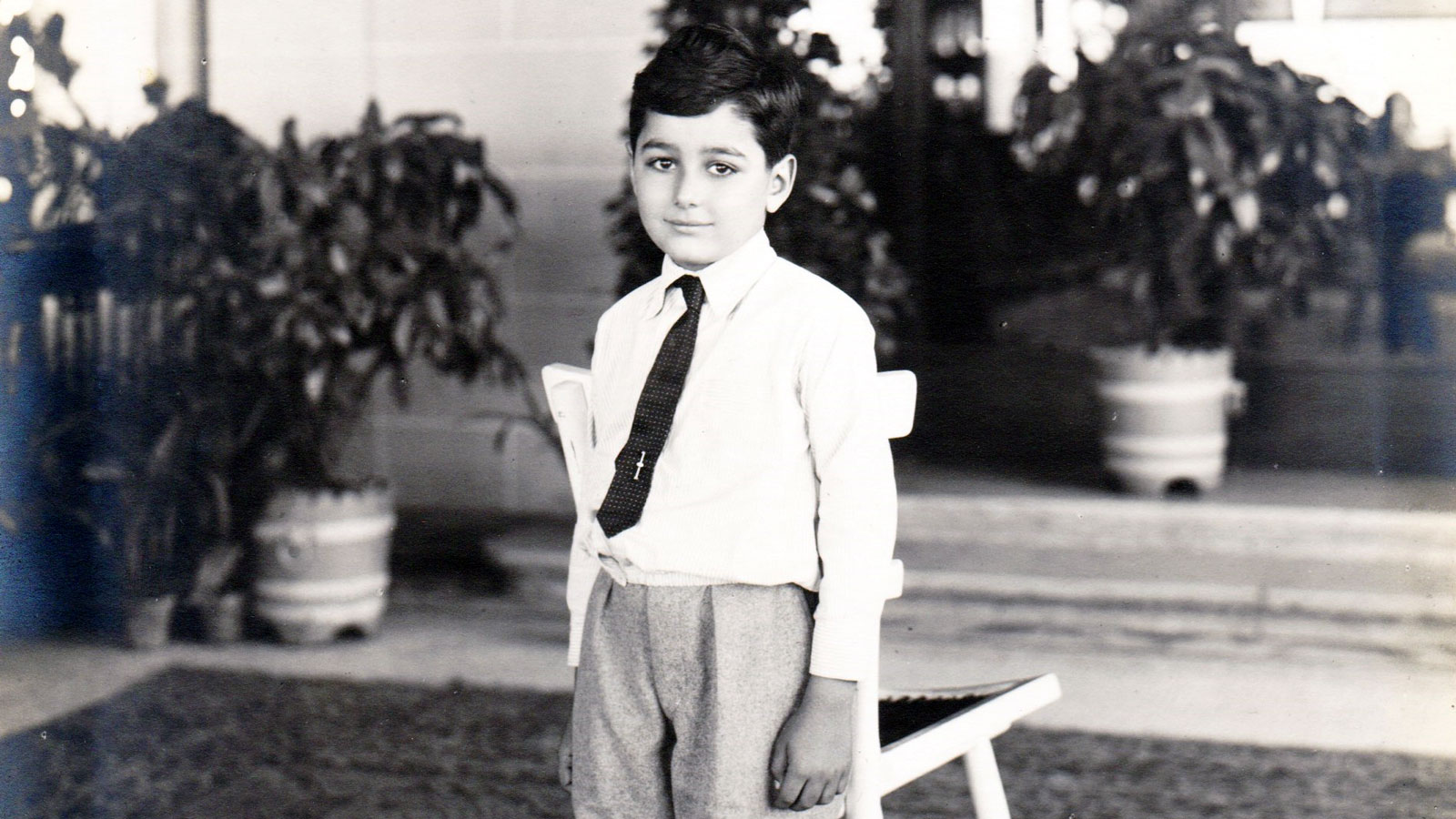
Calouste Gulbenkian was fifty-eight years old when, on the 7th of May 1927 his only grandchild Mikaël was born in London to his daughter Rita and her husband Kevork Essayan.
Nubar, Calouste’s eldest son, also lived in London at the time. Then aged thirty-one, he had separated from his first wife, Herminia Feijóo, with whom he had no children. He was then involved with Doré Plowden, a music-hall performer who would later become his second wife – and, in due course, his second ex-wife. Calouste’s relationship with his son was far from harmonious. His wife, Nevarte, divided her time between London and Paris.
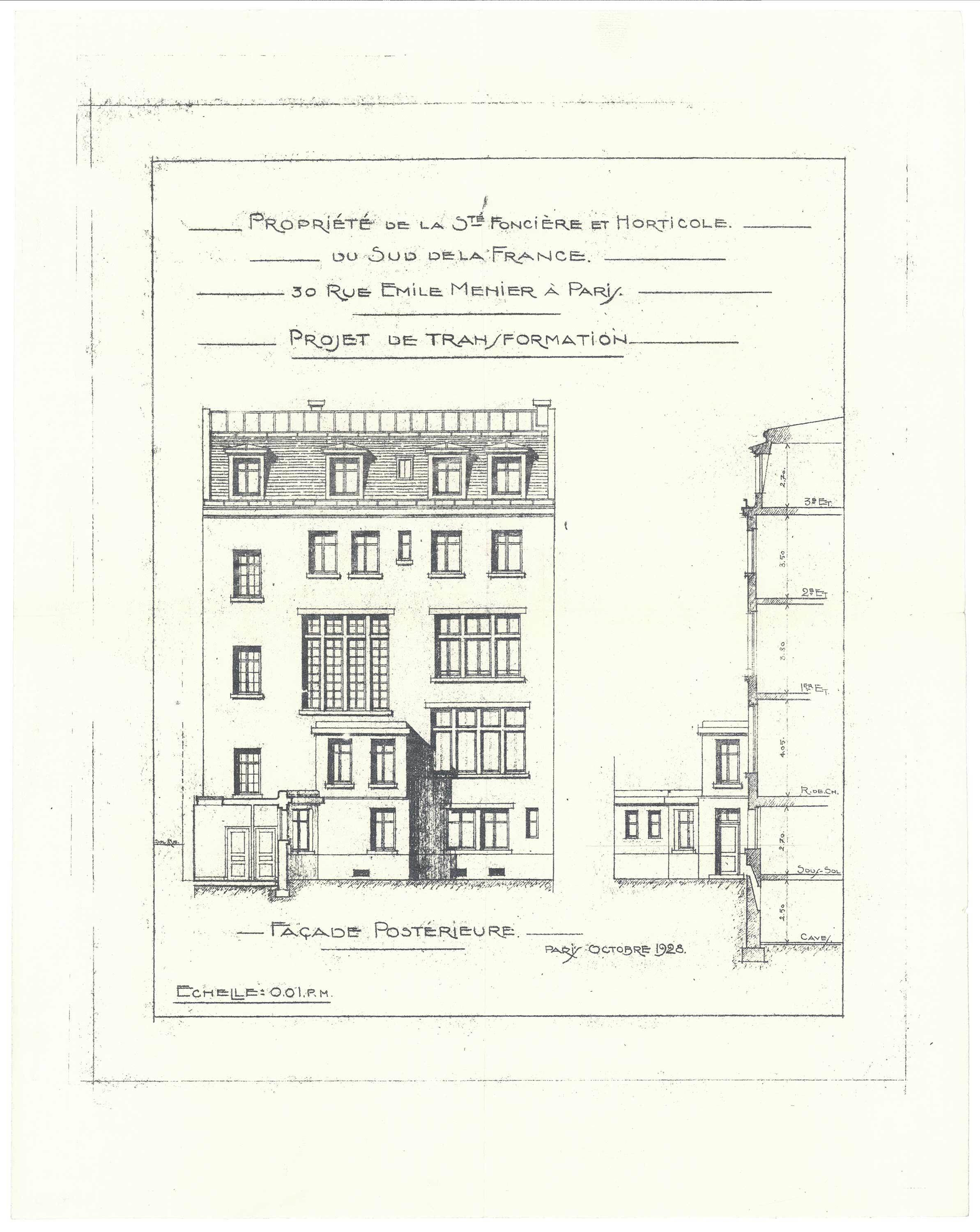
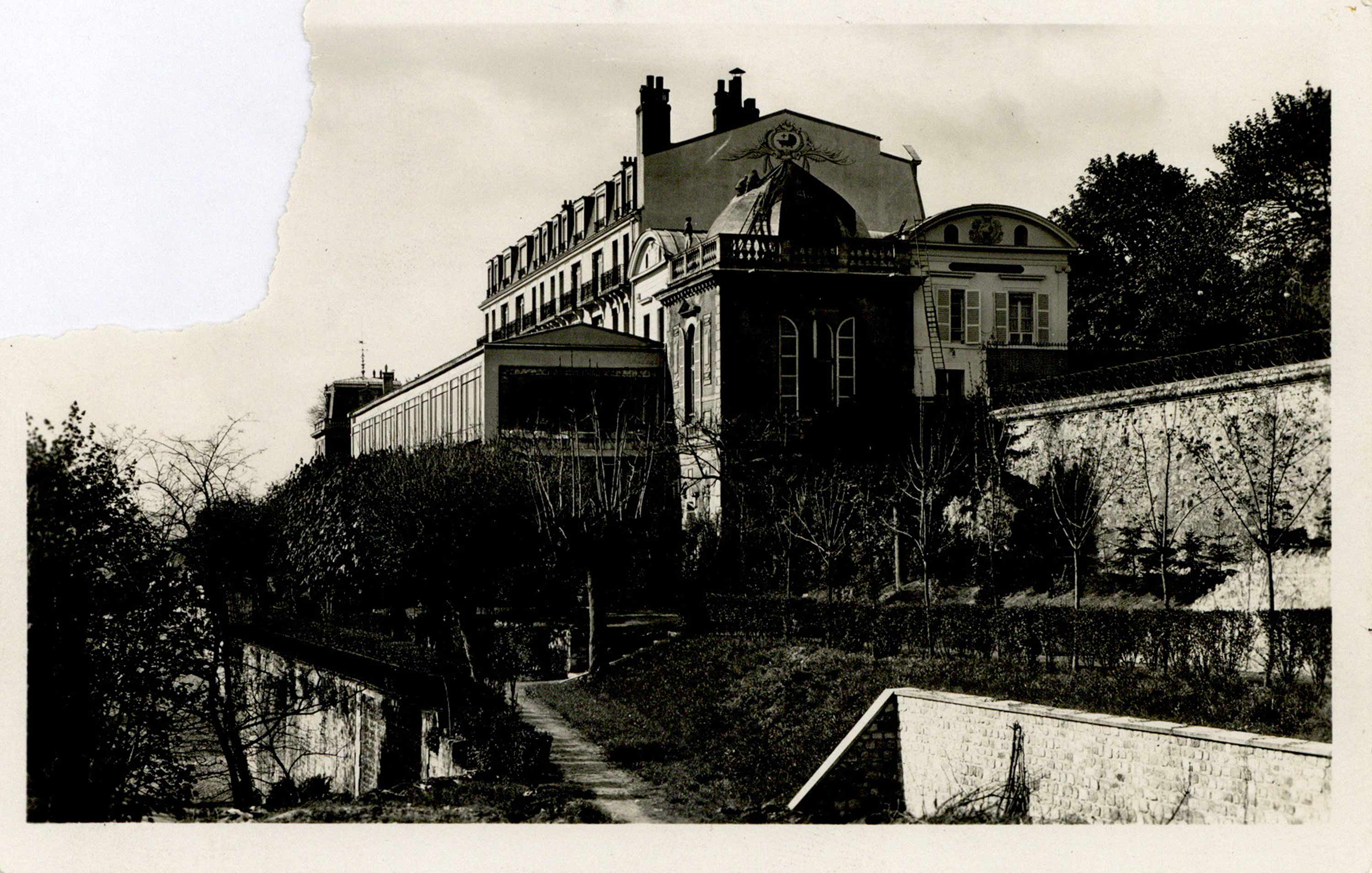
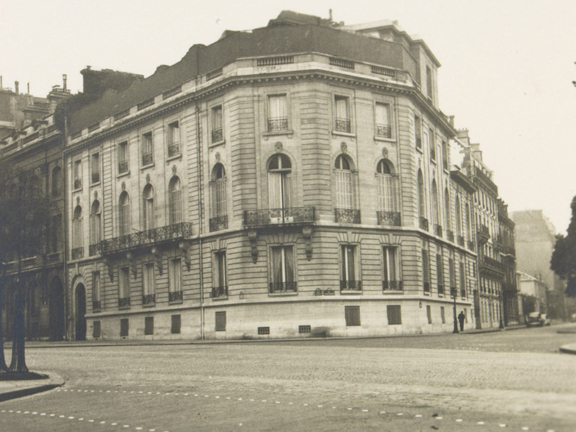
Mikaël spent the first three years of his life in the family residence at Hyde Park Gardens in London, and subsequently moved to Paris. Calouste, who had by then acquired and renovated 51 on Avenue d’Iéna, in Paris, persuaded Rita and Kevork to join him in France. The reunion took place in 1930. The young family established itself at Rue Émile Menier. Calouste believed his business interests would benefit from a closer collaboration with his son-in-law.
Unlike Kevork, a diligent worker, Rita’s transition to the French capital was anything but smooth. Her fondness for a lively social lifestyle gradually evolved into a more overtly bohemian existence, casting a shadow over the household.
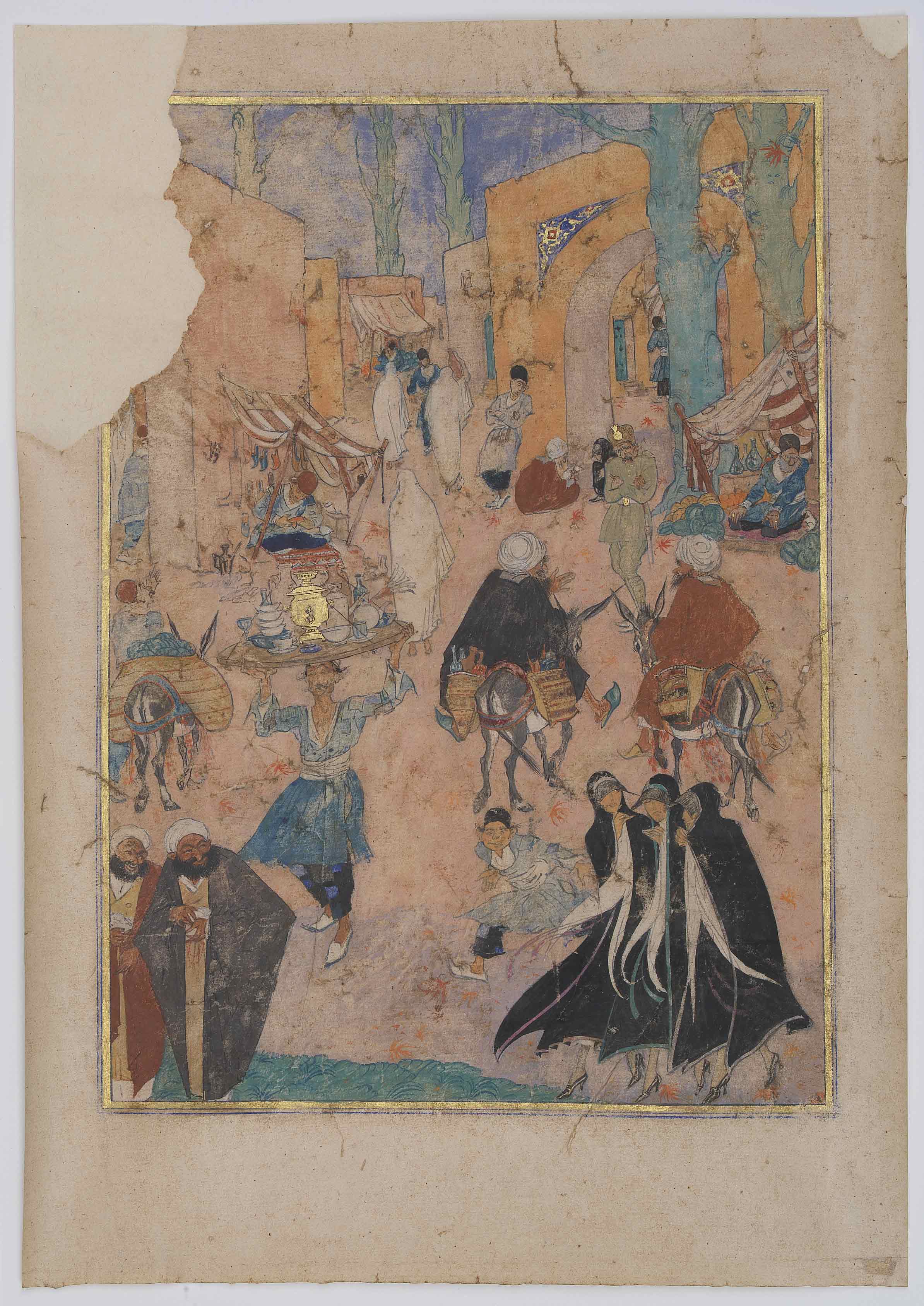
Mikaël’s childhood was frequently marked by his mother’s absences, which caused profound concern among the family. Matters deteriorated further when Rita became involved with a Russian émigré and miniaturist, Paul Mak – from whom Calouste is said to have commissioned a miniature in 1932. To Nevarte’s dismay, this new companion began to appear with increasingly inappropriate regularity. Determined to safeguard her grandson’s stability and shield him from the turbulence surrounding Rita, Nevarte made his well-being her chief concern.
Miss Rae, Mikaël’s nanny, assumed an important role, accompanying the boy for extended periods of time during their stays in hotels or with acquaintances. Calouste, who undoubtedly received regular updates from Nevarte, also maintained correspondence with Miss Rae, who would write to inform him of the child’s daily life, developmental progress, and the household expenditures incurred.
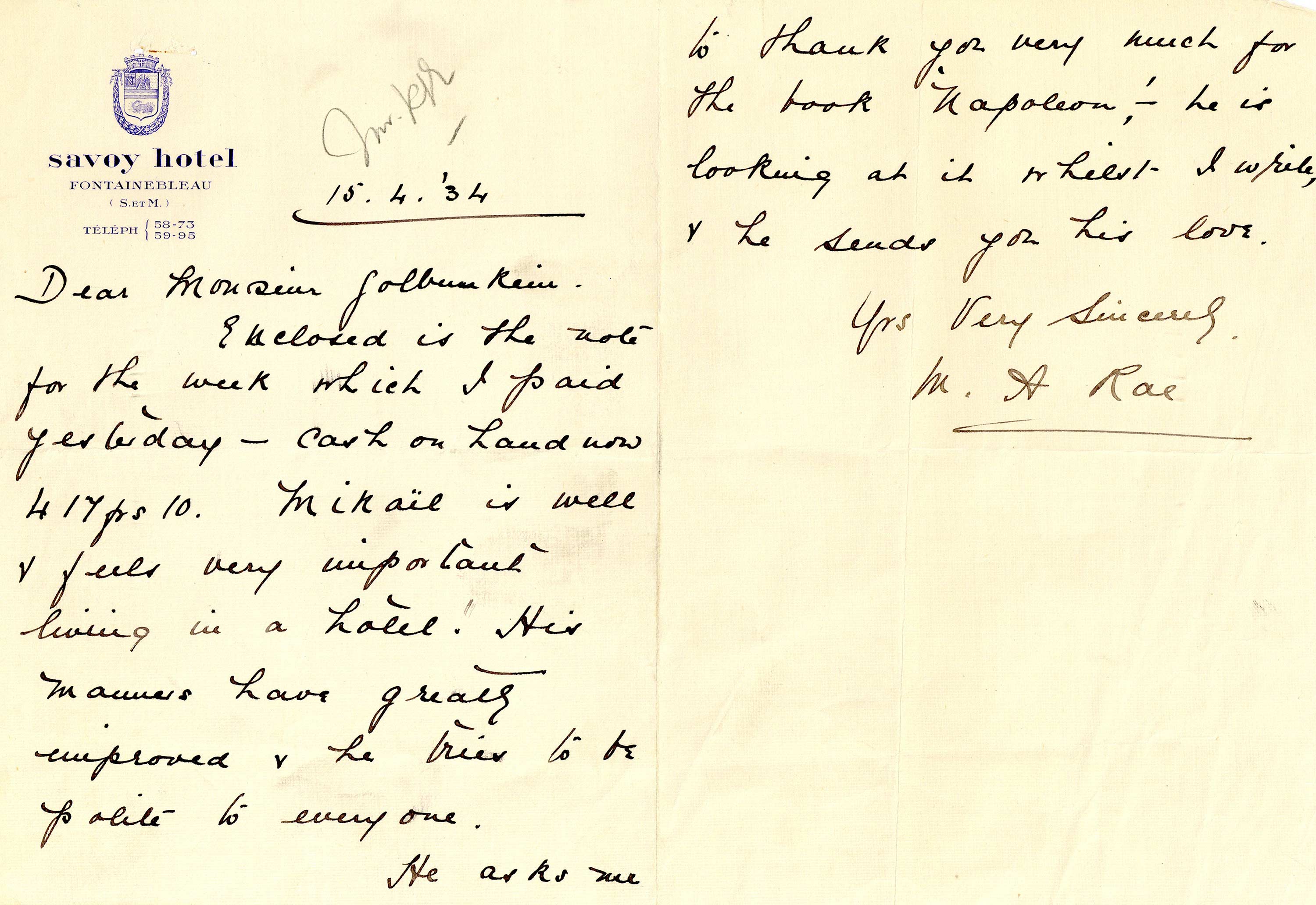
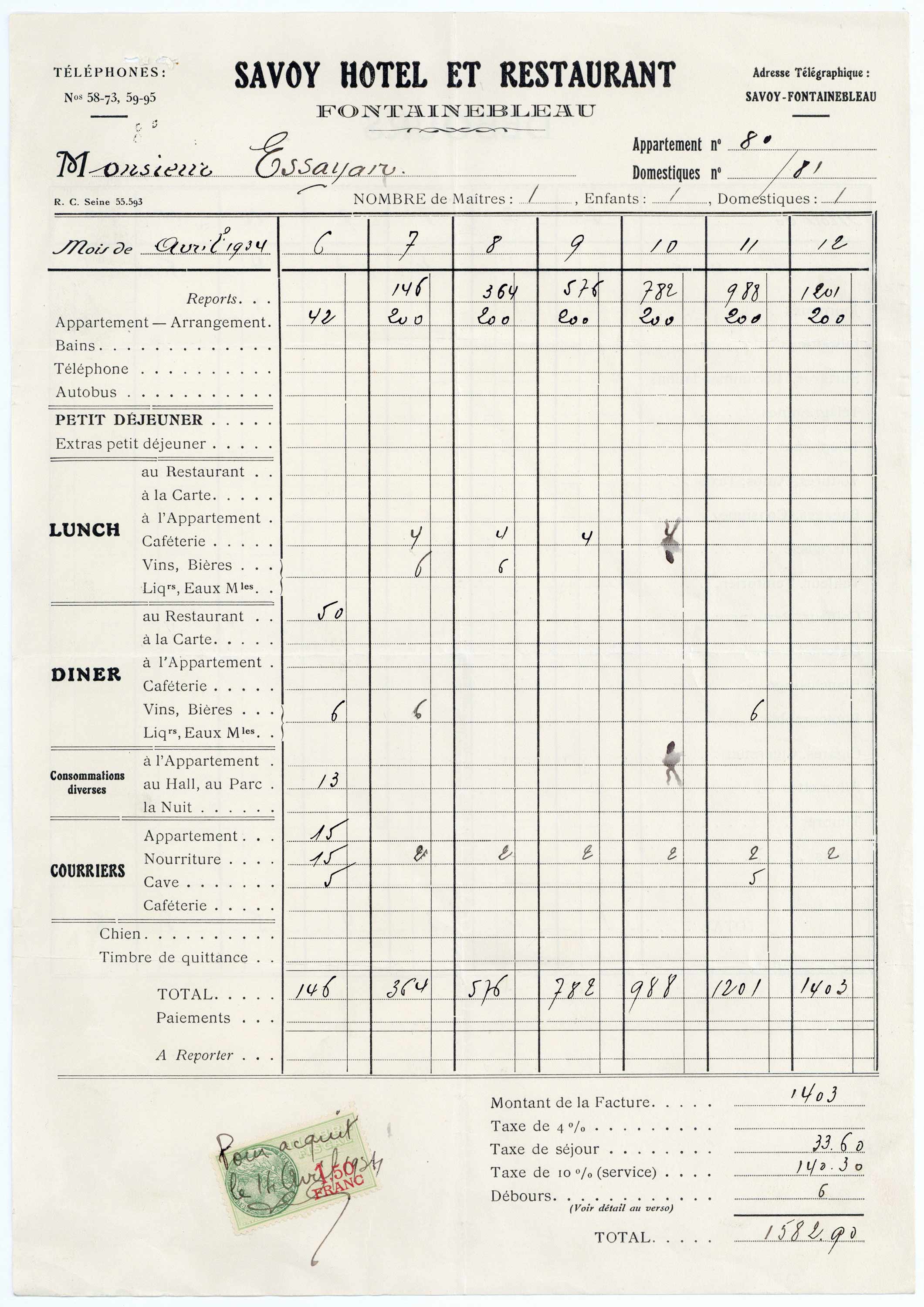
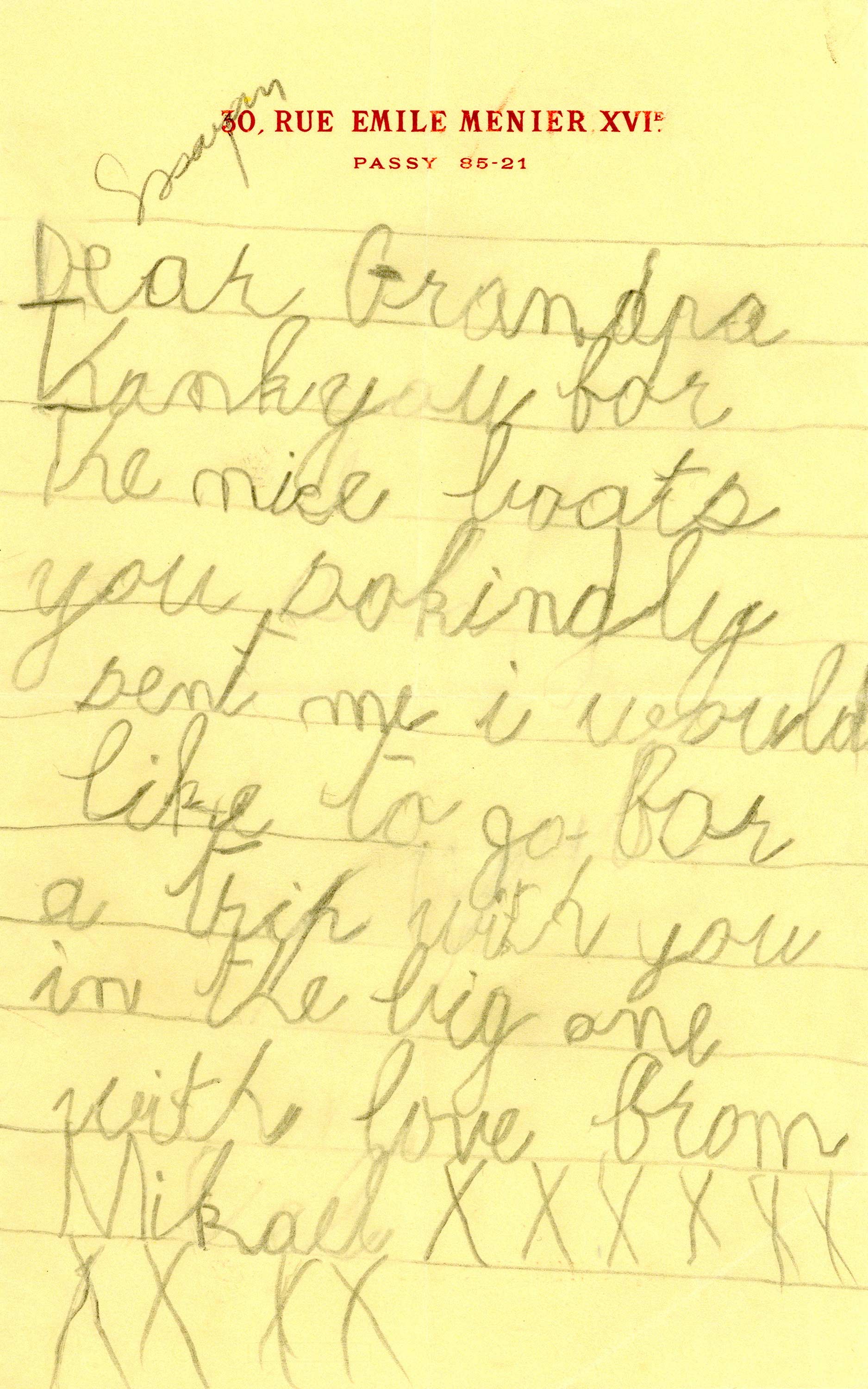
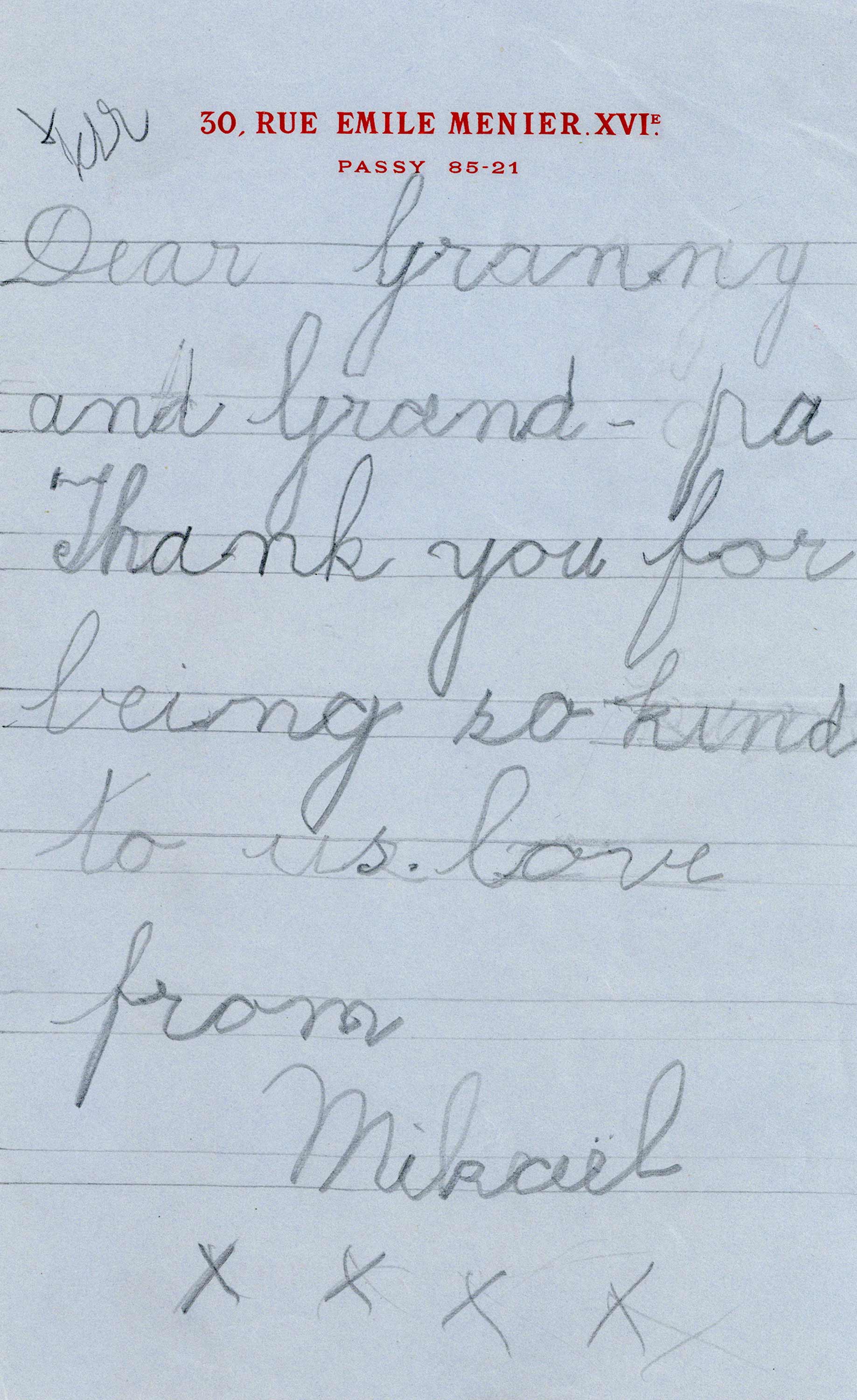
It is through this correspondence that we learn how, even before his seventh birthday, Calouste sent his grandson – then, staying at the Hotel Savoy in Fontainebleau – a book on Napoleon. In return, Mikaël wrote to his grandfather in large, childlike letters, a short note that suggests he also received a photograph of a yacht – possibly the very same vessel Calouste had sailed to Egypt earlier that year, in 1934.
Nevarte confided in Nubar her growing unease with Rita’s continued association with Mak – a relationship that would persist into 1937. She expressed concern over the detrimental influence this man exerted upon the environment in which Mikaël was being raised.
With signs of marital instability becoming ever more evident in their residence at Rue Émile Menier, many feared an imminent divorce between Rita and Kevork – though this never came to pass. Nonetheless, the situation provided Nevarte with a pretext to remove Mikaël from school and from his mother’s care, bringing him instead into her own home on Avenue d’Iéna.
To re-establish ties with his daughter and reassert some control, Calouste rented her an apartment at 63 Rue Lauriston and granted her an enhanced monthly allowance, conditional upon certain stipulations.
Contact between Mikaël and his mother was limited to a single weekly letter, which his grandparents permitted him to write. However, while Paul Mak remained an influence, mother and son stayed apart. Calouste used every ounce of his influence to remove the unwelcome presence from his daughter’s life, while Rita fought just as hard in the opposite direction. Matters calmed only when Mak eventually settled in Brussels.
Meanwhile, Rita maintained correspondence with her brother Nubar, discussing her son’s education and advocating for his enrolment in an English institution – a clear preference over schooling in France, due to the prospective advantages should Mikaël pursue a future career in England.
Nubar acted as a quiet intermediary between mother and grandmother, unbeknownst to the latter. The prospect of continuing Mikaël’s studies in England emerged as a solution agreeable to all, offering both educational merit and a reprieve from domestic upheaval.
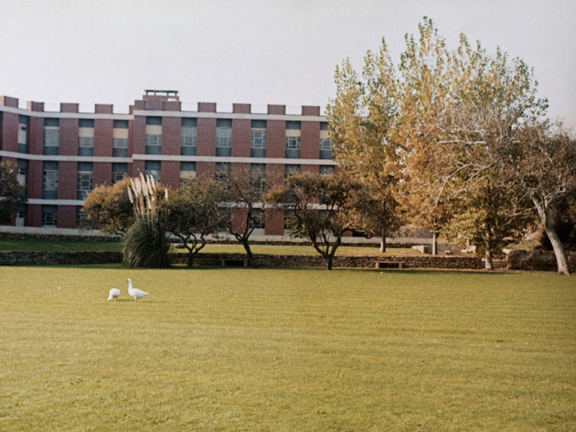
At Nevarte’s request, Nubar visited Orley Farm School, an English preparatory school intended for pupils destined for Harrow School. His impressions, shared with the family, confirmed the suitability of the institution.
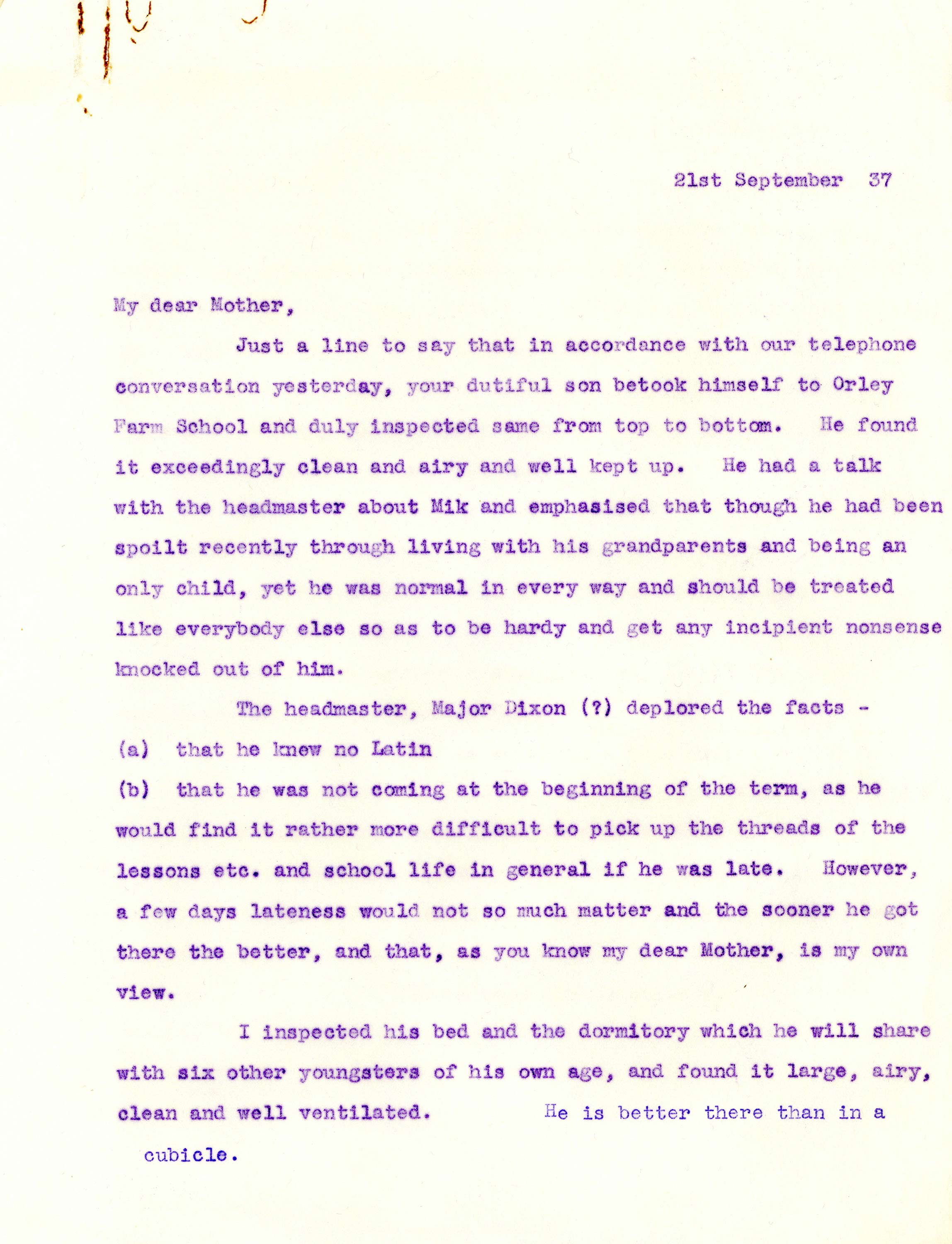
In September 1937, Nevarte entrusted Miss Rae with accompanying Mikaël to the new school, believing that a maternal presence – something Rita could not then provide – would offer greater comfort than that of father or uncle.
A room was rented in Harrow-on-the-Hill so that Miss Rae could remain nearby and provide the boy with a warm, familiar refuge on Sundays. On occasion, Mikaël received visits from his father and his uncle.
By late 1938, the relationship between Rita and Kevork appeared to have stabilised, and both spent Christmas with Nubar in London. Yet Mikaël remained under the guardianship of his grandmother, his education entrusted to the Orley Farm school. There, he distinguished himself as an excellent pupil, remaining until the following year, prior to his transfer to Harrow.
The year 1939, however, brought new tribulations. Nubar, embittered by his lack of financial autonomy and after repeated clashes with his father, initiated legal proceedings in London courts. The rupture in trust between father and son was severe – an episode that likely intensified Calouste’s attentiveness toward his grandson’s education.
More grave still was the onset of war: in September that year, Britain declared war on Germany, and Europe was again engulfed in global conflict.
The Gulbenkian family found themselves dispersed – scattered between London, Paris, Vichy, and eventually Lisbon. Rita and Kevork remained in Paris, defending family interests. Nubar settled in London, while Mikaël continued his studies at Harrow School.
Calouste, by then a member of the Persian diplomatic delegation, was compelled to accompany the French government to Vichy, accompanied by Nevarte. Only when Persia severed its diplomatic relations with France did the Iranian diplomats leave Vichy. Calouste subsequently travelled to Lisbon, where he arrived in April 1942, establishing himself at the Hotel Aviz.
Mikaël, during these years, was almost entirely under the emotional guidance of his grandmother, under the vigilant gaze of Miss Rae, the irregular interventions of uncle Nubar, and the supervision of Harrow School. Though physically distant, the family maintained a keen interest in his upbringing, offering scattered opinions – often uncoordinated – regarding his conduct, studies, and leisure pursuits.
It was from Lisbon that Calouste, ever observant, began to chart the course of his grandson’s education. He wrote to him frequently, demanding updates and reflections. In his letters, Calouste displayed both warmth and gravity, dwelling at length upon the values and principles he deemed essential to the boy’s character.
To dispel any ambiguity, he communicated to all parties – following a formal family council – that he would assume exclusive responsibility for Mikaël’s education.
The framework of control that Calouste erected was formidable. At its center stood Mikaël, already corresponding regularly with his grandfather, despite wartime disruptions. The command network established by Gulbenkian was impenetrable. His first point of contact was, naturally, Mikaël, with whom he had already established a fluid channel of correspondence, despite the constraints of wartime communications.
In this tight network of control, in addition to Calouste himself, several characters accompany the young boy and are themselves controlled by others. They all report to Calouste, who verifies the information received by the various participants in order to obtain different interpretations of the same situations or assessments. It is based on these reports that he directs and refines his guidance to his grandson, often punctuating it with observations on behaviors and attitudes that he considered deviant in the formation of his character.
The person physically closest to Mikaël was Miss Mends, a former employee of the Gulbenkian Offices and a capable former housekeeper of Nubar’s home in London. She had replaced Miss Rae and was now Mikaël’s chief caretaker.
Miss Mends was directed, foremost, by Calouste to whom she reported regularly. She also reported to Mr. Drysdale, the accountant in London to whom she submitted detailed reports of Mikaël’s expenses and recounted episodes from their lives in Harrow. Mr. Hacobian, head of Gulbenkian offices in London and his representative in that city was also in touch with Miss Mends, as was Nubar, despite his subsequent withdrawal from his nephew’s education. From time to time, she corresponded with Nevarte and Kevork. Miss Mends also maintained contact with Mikaël’s housemaster at Harrow School, Mr. Bowlby.
Mr. Hacobian who reported to Calouste had his boss’s complete trust, both in business matters and on a personal level. He managed Nubar’s behaviors and excesses, mediating the relationship between father and son, and intervened in situations that required more authority with Miss Mends, Mikaël, and also with Harrow School. Throughout this entire correspondence, he is the only person from whom Calouste seeks advice – advice that he actually takes into account.
Only the rector of Harrow, R. W. Moore, was ever able to temper Calouste’s tone, particularly in his letters to Mikaël, where paternal advice occasionally bordered on reprimand. Moore reminded Calouste that the boy required encouragement, rather than just correction.
Rita re-entered the scene in 1944, once war conditions allowed her to travel to England and reunite with her son. She at last assumed an active role in his education and served as a gentle mediator between his wishes and those of his grandparents.
As far as possible, Calouste gives her precedence when it comes to Mikaël’s education. He deeply valued her letters – rich with maternal sentiment – and confessed to Mikaël, “Your mother’s counsel shall be precious to you”, and mentions the shared views he holds with his mother regarding the direction of his studies.
In 1945, Calouste wrote to Mikaël, “I would very much like her [Rita] to extend her stay [in London], so that she might remain close to you as you embark on this new life”. Even after restoring Rita’s role, Calouste never ceased writing to Mikaël, nor did he cease guiding him.
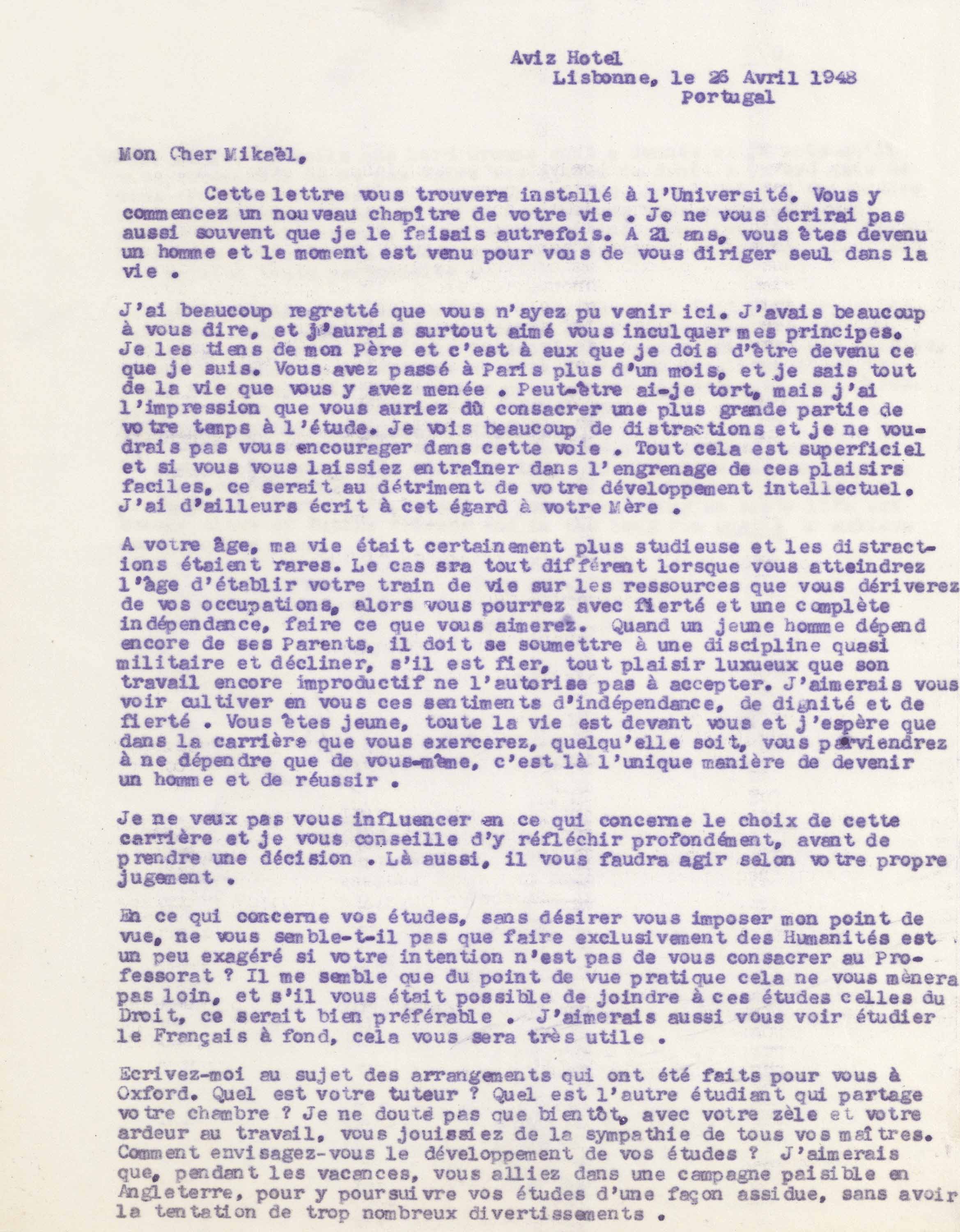
In 1948, Mikaël, already 21 years old, enters University of Oxford. His grandfather continues to write to him and marks this new stage of his life. He acknowledges his emancipation but cannot resist expressing how much he still has to say to him. Once again, he emphasises how deeply he wishes to instill in him the principles he inherited from his own father, to whom he says he owes “being who he is”. He goes on in the letter to encourage him to lead a life of hard work – sober, independent, and dignified, as a counterpoint to futility and emptiness.
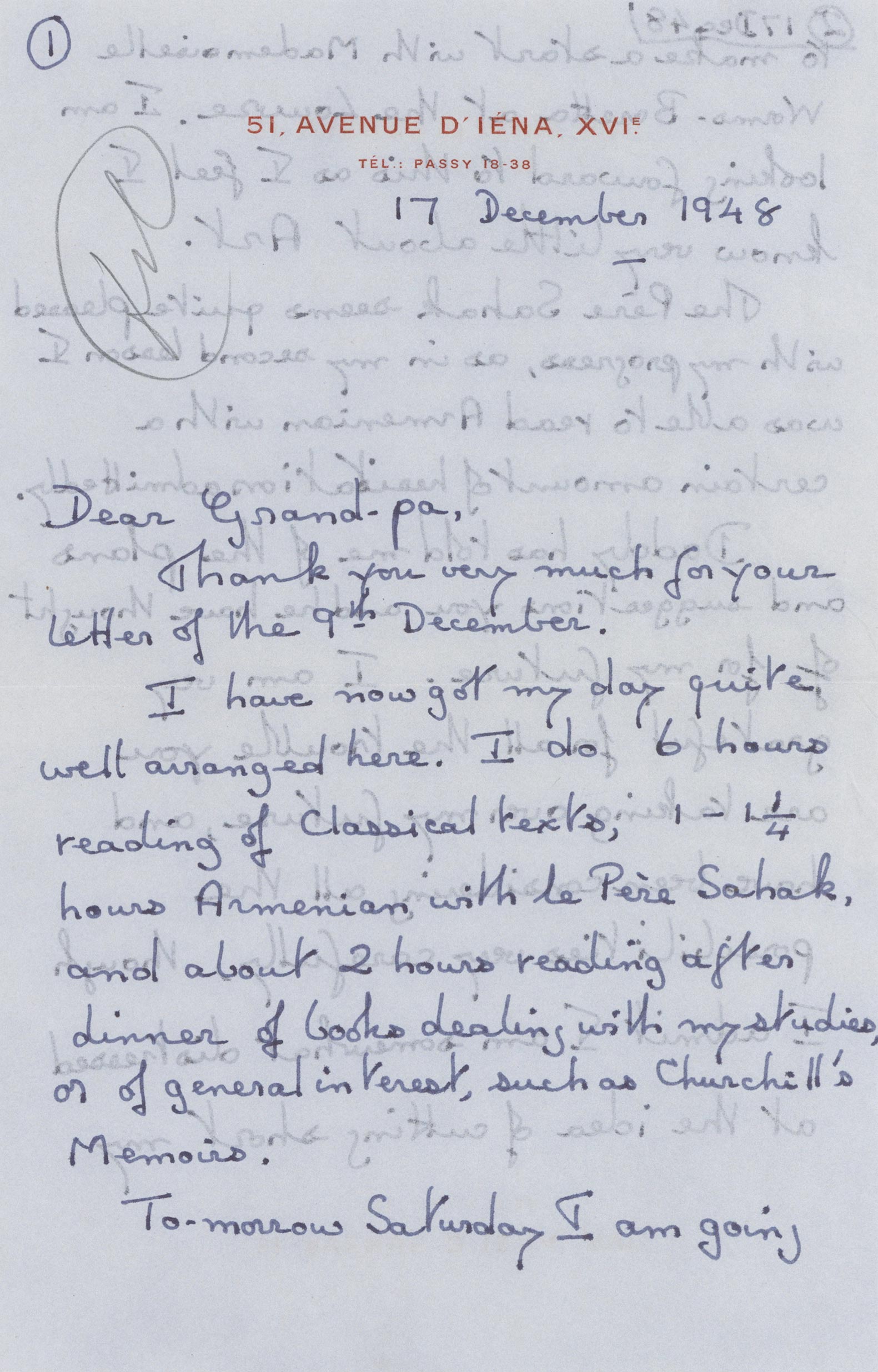
Mikaël became a solicitor, a path Calouste approved, though he never quite abandoned his longing for a more scientific education.
Their correspondence never faltered. From afar, Calouste continued to watch, advise, and care. The letters, later compiled in the book The Education of the Dauphin. Calouste Gulbenkian’s letters to his grandson (2019) remain a testament to that enduring legacy.
From the Archives
Explore the series


No results were found for your criteria.
You may also like

No results were found for your criteria.