
Choosing the Place
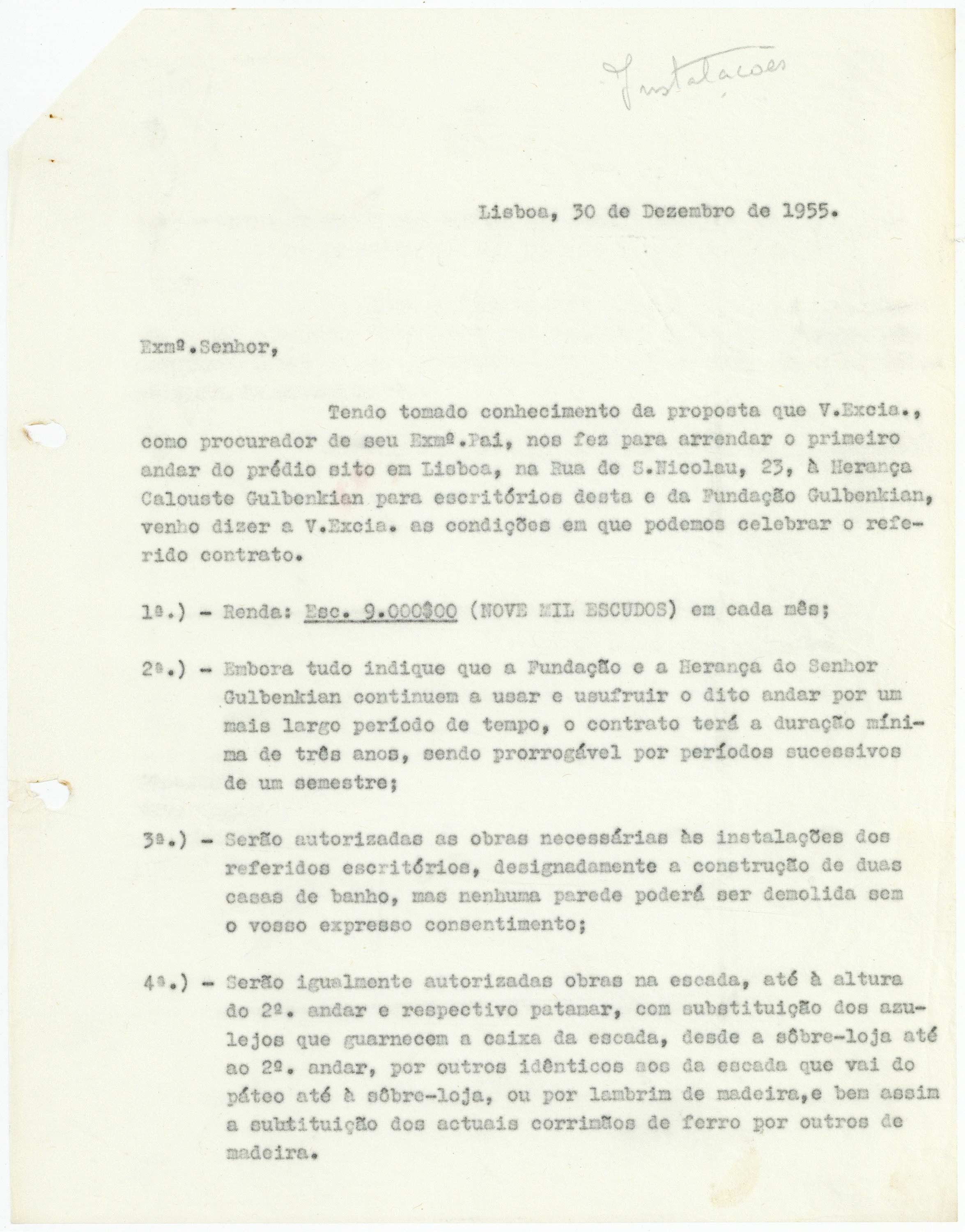
Following the death of Calouste Gulbenkian on 20 July 1955, the many tasks arising from the execution of his will, the need to continue the responsibilities assumed by him in business and philanthropy, and the studies required for planning the future institution made it necessary to rent temporary premises for the operation of the still embryonic Calouste Gulbenkian Foundation.
The first floor of Nr. 23 Rua de São Nicolau – the very same building in which Azeredo Perdigão had his office – thus became its first address.
News of the establishment of the Foundation in Lisbon, based on Gulbenkian’s legacy and estate, made a profound impression both in Portugal and abroad.
Foreseeing the impact that the new institution would have on the life of the city and the country, several property owners and their representatives submitted proposals to Azeredo Perdigão offering houses and plots for sale.
One such proposal, for example, sent in early 1956 by Ezequiel dos Santos Lima on behalf of a friend, offered “a fine residence, with beautiful reception rooms, good exposure, excellent garages, a large garden and a very central location (…), near Avenida da Liberdade, with direct access thereto”. In declining the proposal, Azeredo Perdigão stated that he was instead considering “a large plot of land on which we might build an entirely new structure”.
Other offers followed and were likewise rejected. In June 1956, the trustees secured for three months an option to lease the Palmela Palace in Lumiar, owned by the Marchioness of Tancos, although this arrangement ultimately did not materialise.
On 18 July of that year, the statutes were finally approved and the Calouste Gulbenkian Foundation formally established by Decree-Law Nr. 40690. As Perdigão would later recall in the first Chairman’s Report – “To achieve this, we were compelled to move into action during the very first phase of the institution’s existence, when its structure was only just beginning to take shape”.
Aware of the importance and urgency of selecting a suitable site for the newly created institution, Perdigão wrote to the trustees on 1 October 1956 stressing the need to prepare a preliminary study for the Foundation’s future headquarters. This study would serve not only to guide the presentation of proposals for the sale of sites to the Foundation, but also to support the preparatory work leading to the awarding of the final commission, as well as its supervision and execution.
He emphasised the urgency of establishing a small planning office specifically entrusted with this task and noted that he had already invited the engineer Luís Nolasco de Guimarães Lobato to prepare a memorandum setting out the basis for the construction of the Foundation’s headquarters, which he submitted to the trustees so that they might assess the competence of its author.
At the time, Guimarães Lobato was the chief engineer of the Lisbon City Council’s Planning Office, responsible for the city’s future development plans, then nearing completion; prior to this, he had overseen the recently completed Lisbon underground project.
He was therefore available to accept Perdigão’s invitation. He was accordingly appointed to lead the study office – the embryo of the future Projects and Works Department (1956-11-01 to 1992-07-28) – which would define the criteria for selecting the site for the Foundation. The intention was to secure a sufficiently large site to accommodate a new building with a public vocation and capable of becoming a dynamic new centre for the city.
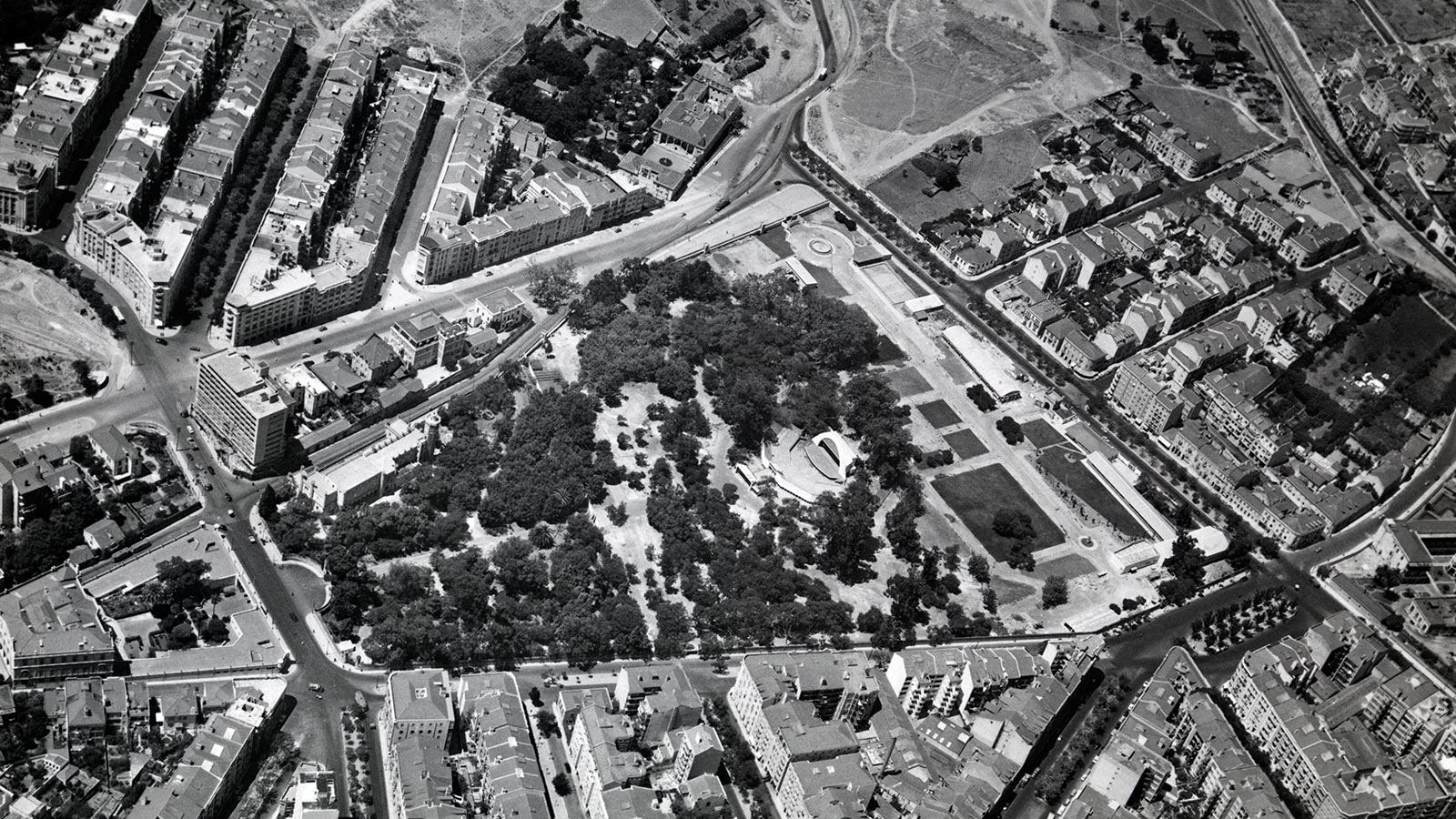
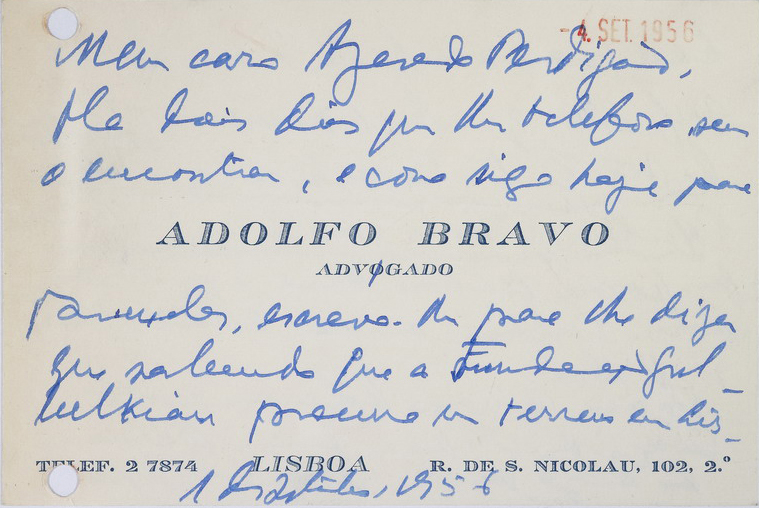
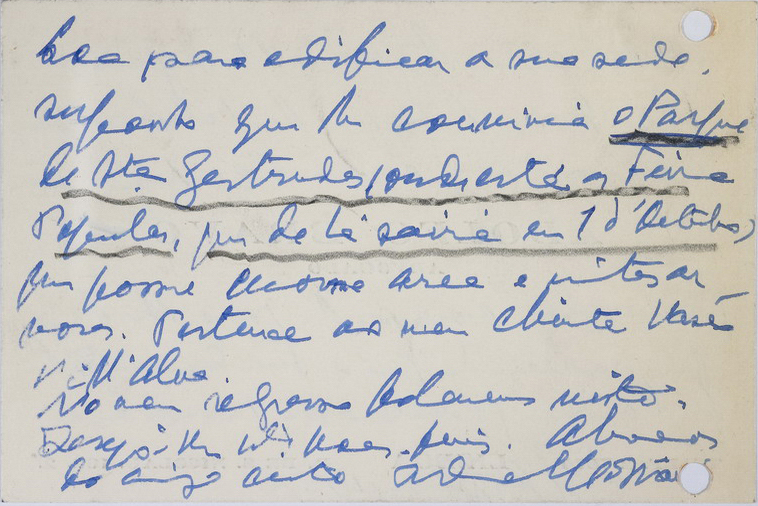
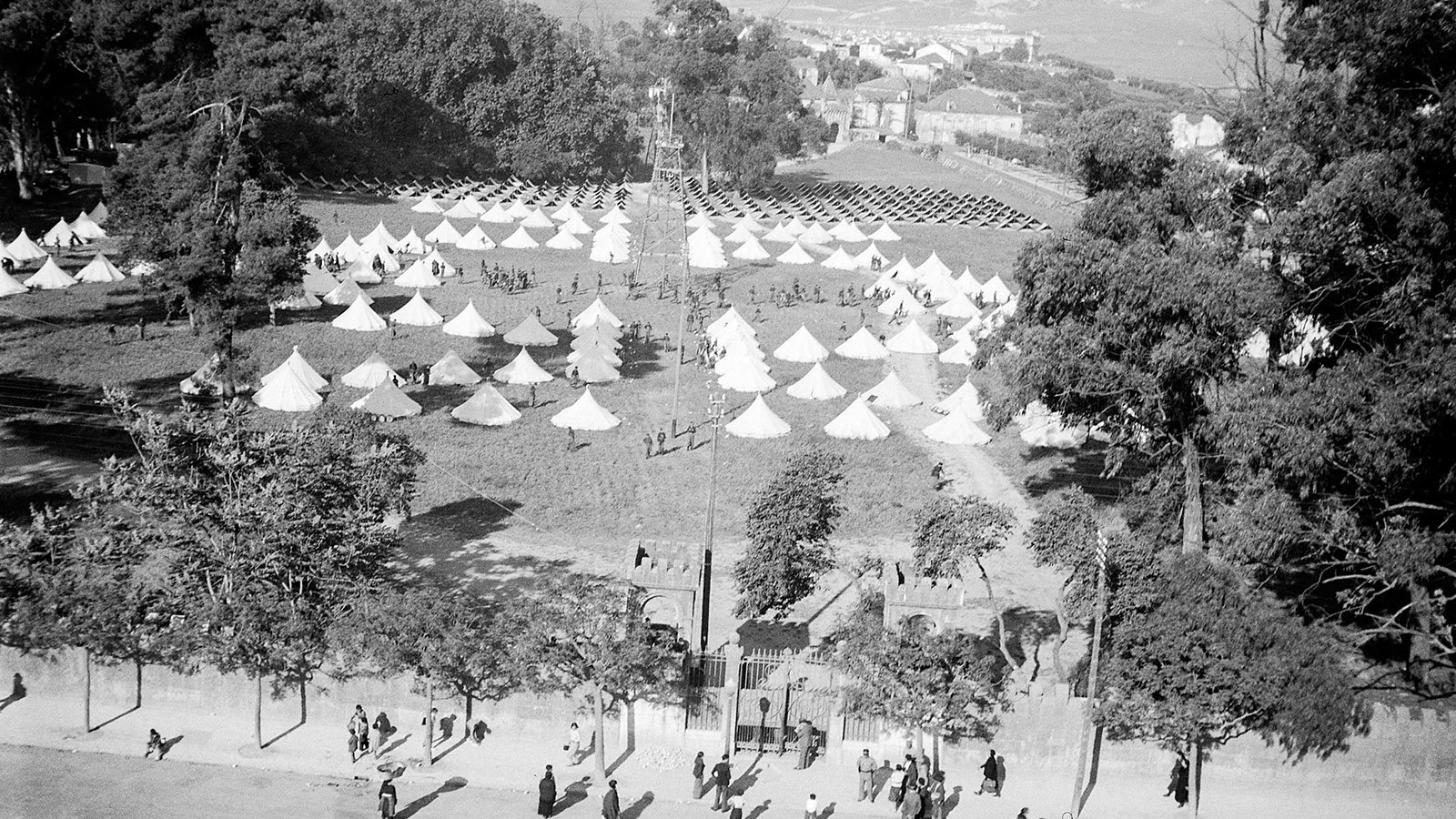
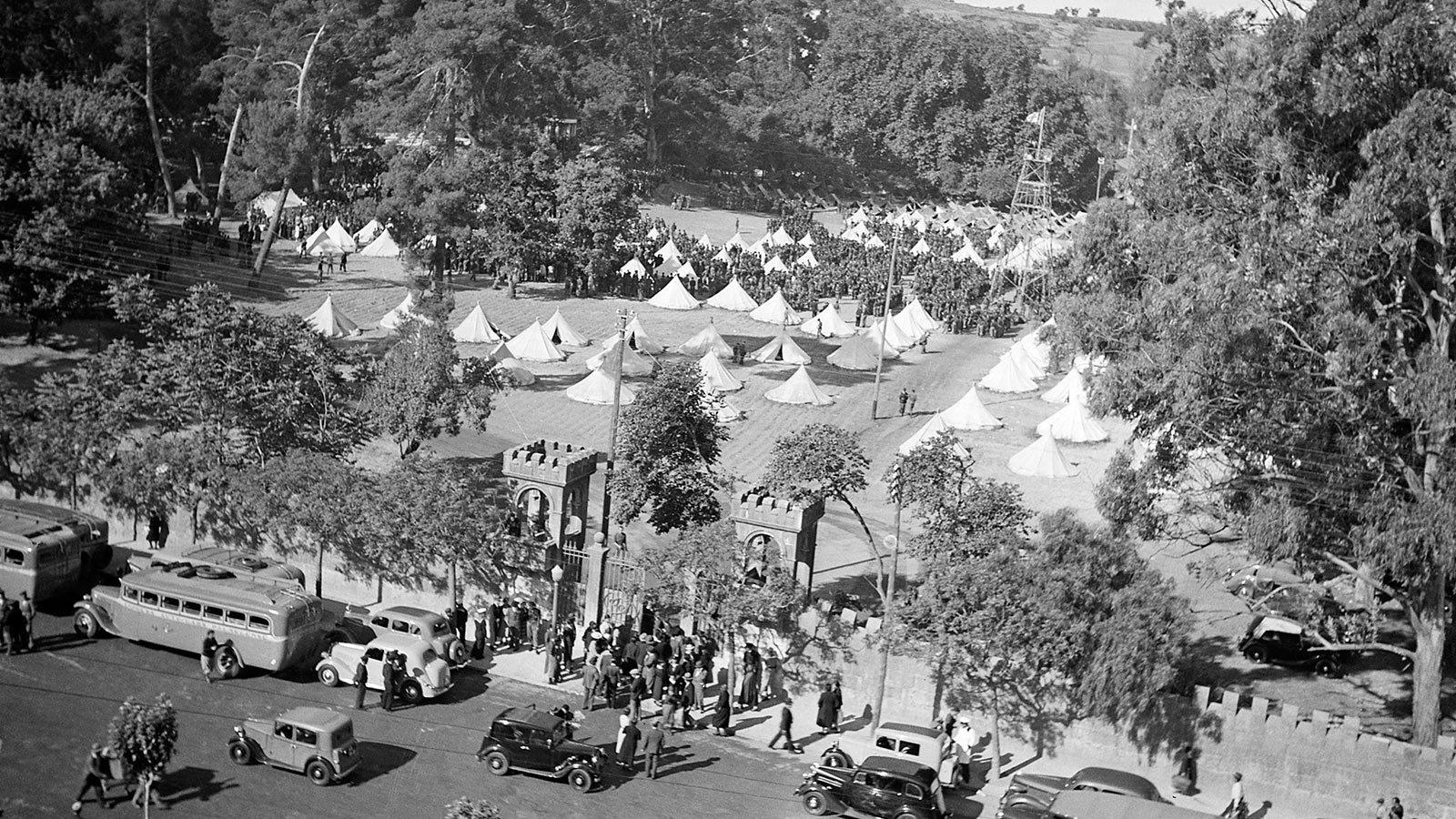
On 1 September 1956, the lawyer Adolfo Bravo, representing the Count of Vilalva, wrote to Azeredo Perdigão: “(…) knowing that the Gulbenkian Foundation is seeking land in Lisbon on which to build its headquarters, I believe that the Santa Gertrudes Park (where the funfair currently stands and which will leave on 1 October) would be suitable, as it possesses a vast area and many trees (…)”.
This property, also known as Vilalva Park, joined four other sites under consideration for the Foundation: two plots at the former slaughterhouse and two military sites. After two of these options were excluded owing to administrative difficulties and the promised occupation of the land by public bodies, a final shortlist was drawn up: the former slaughterhouse site near Fontes Pereira de Melo, Vilalva Park at Palhavã, and the former Artillery Regiment Nr. 1 barracks near Amoreiras.
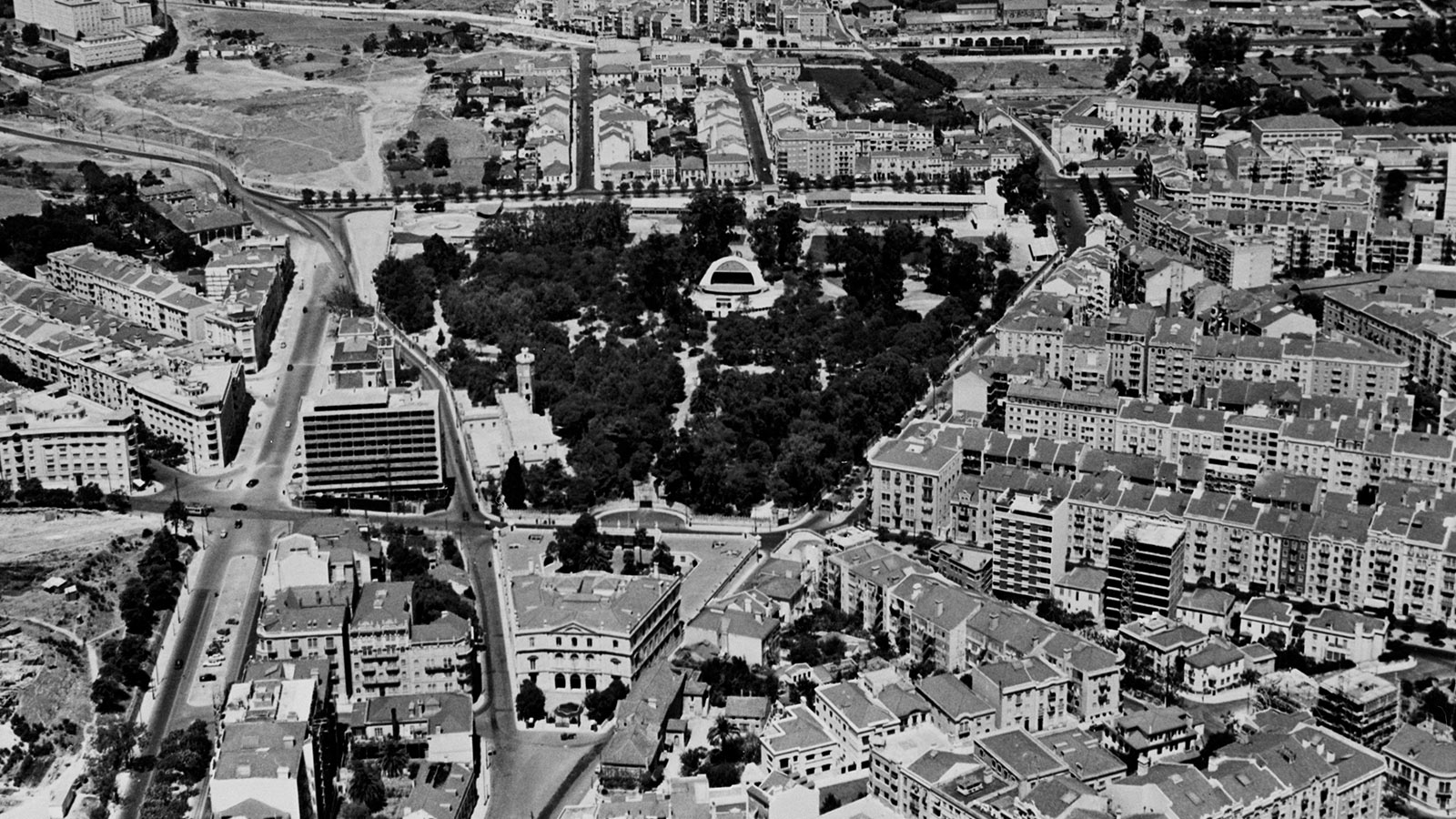
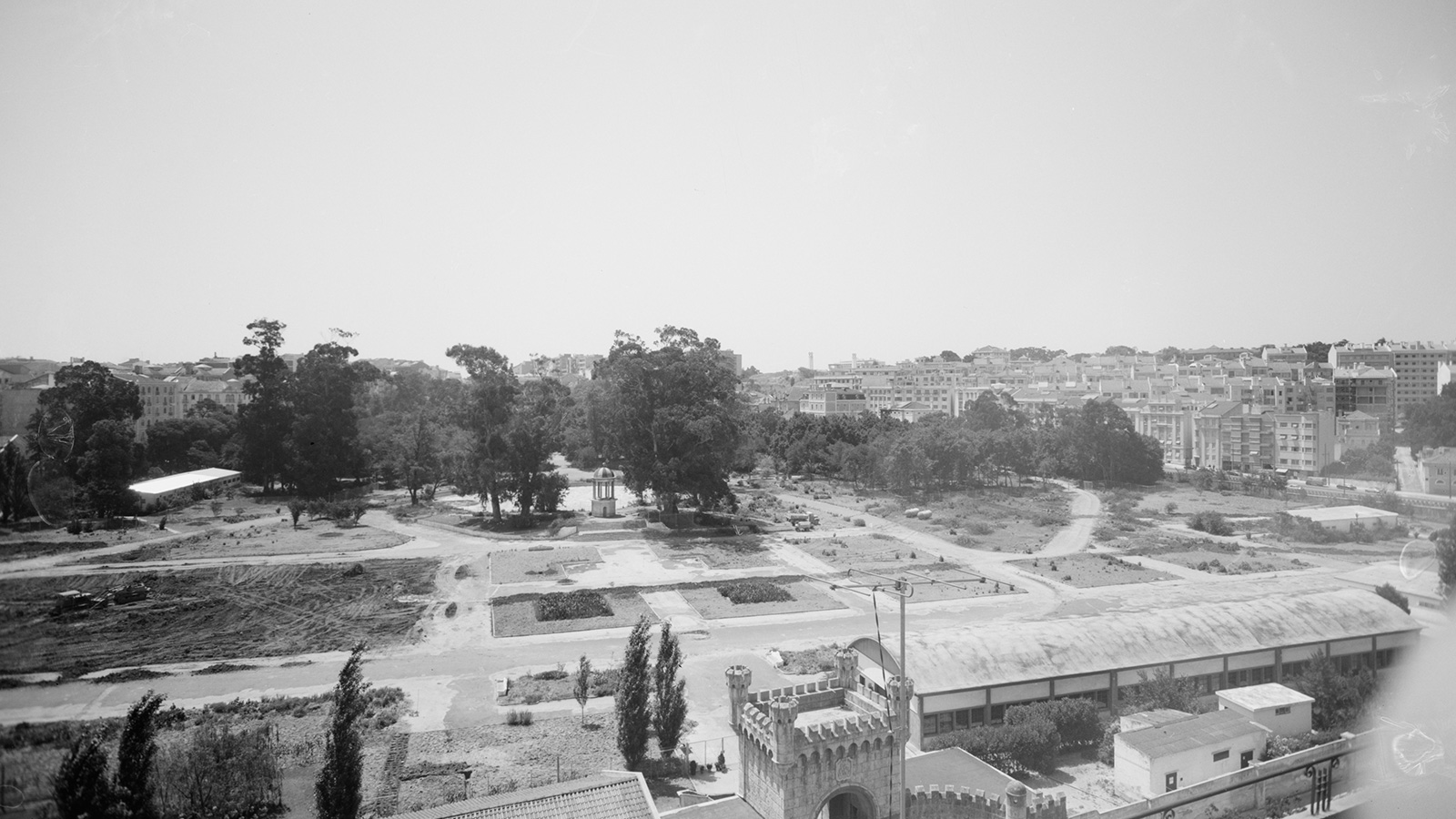
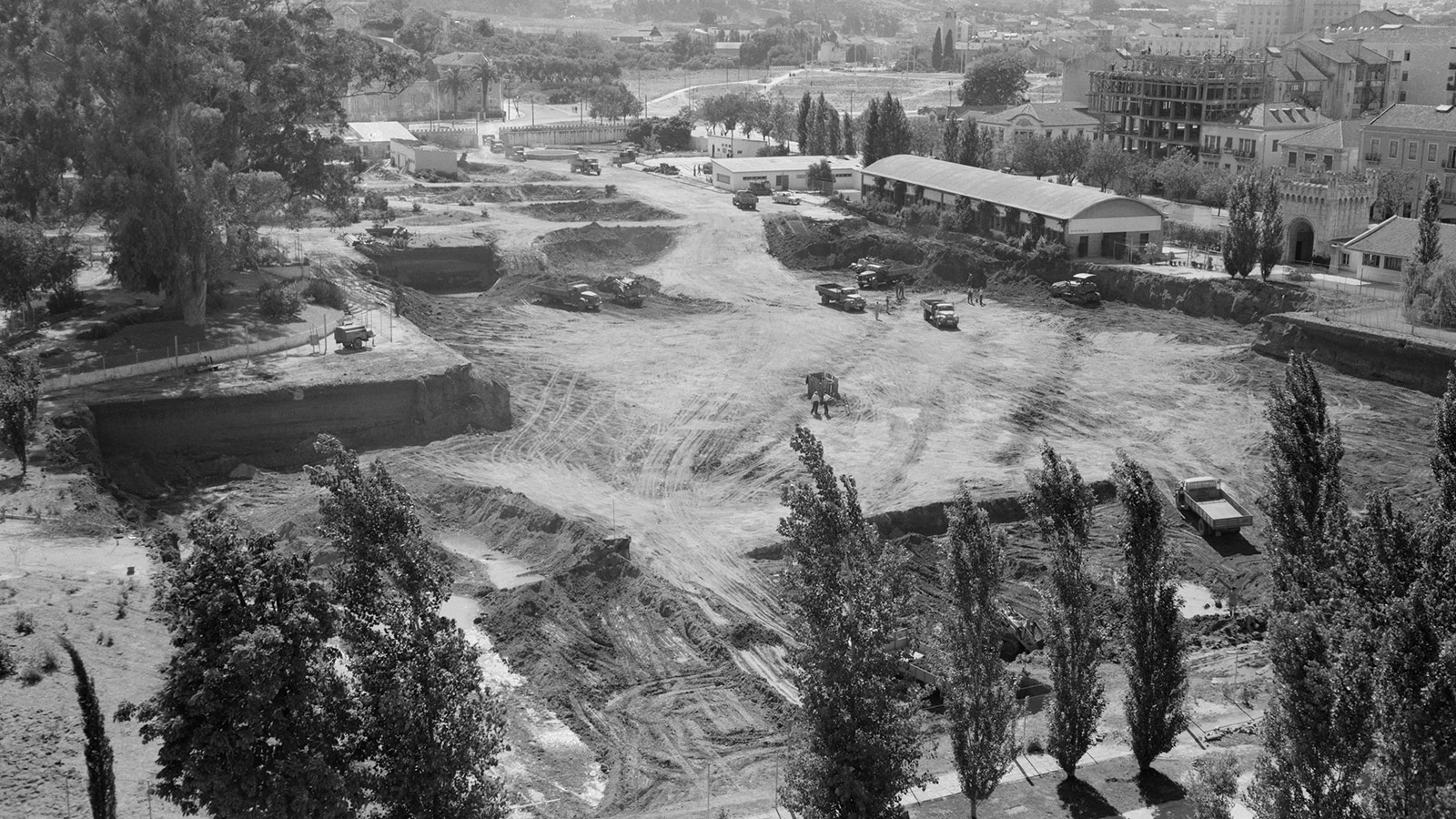
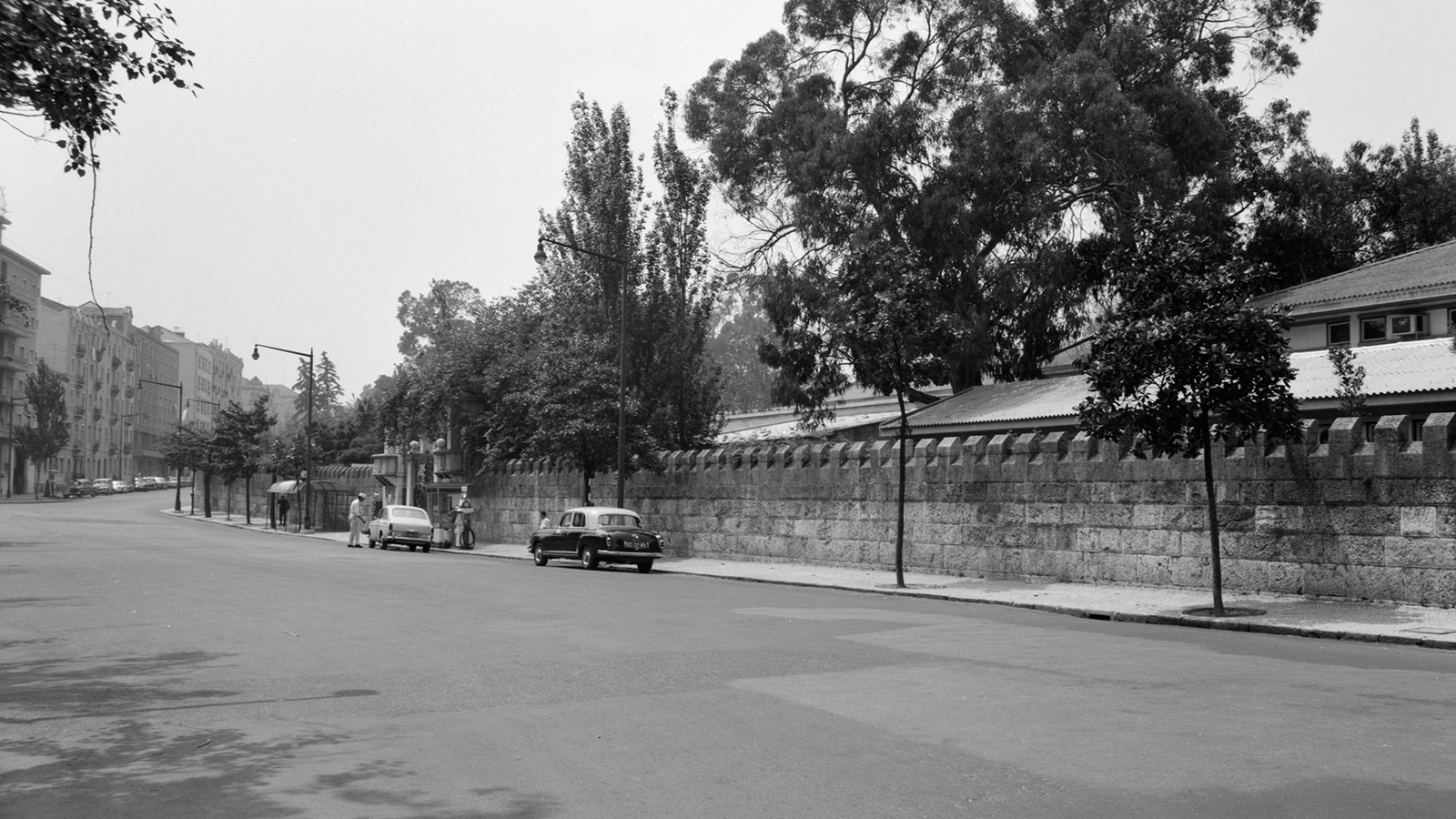
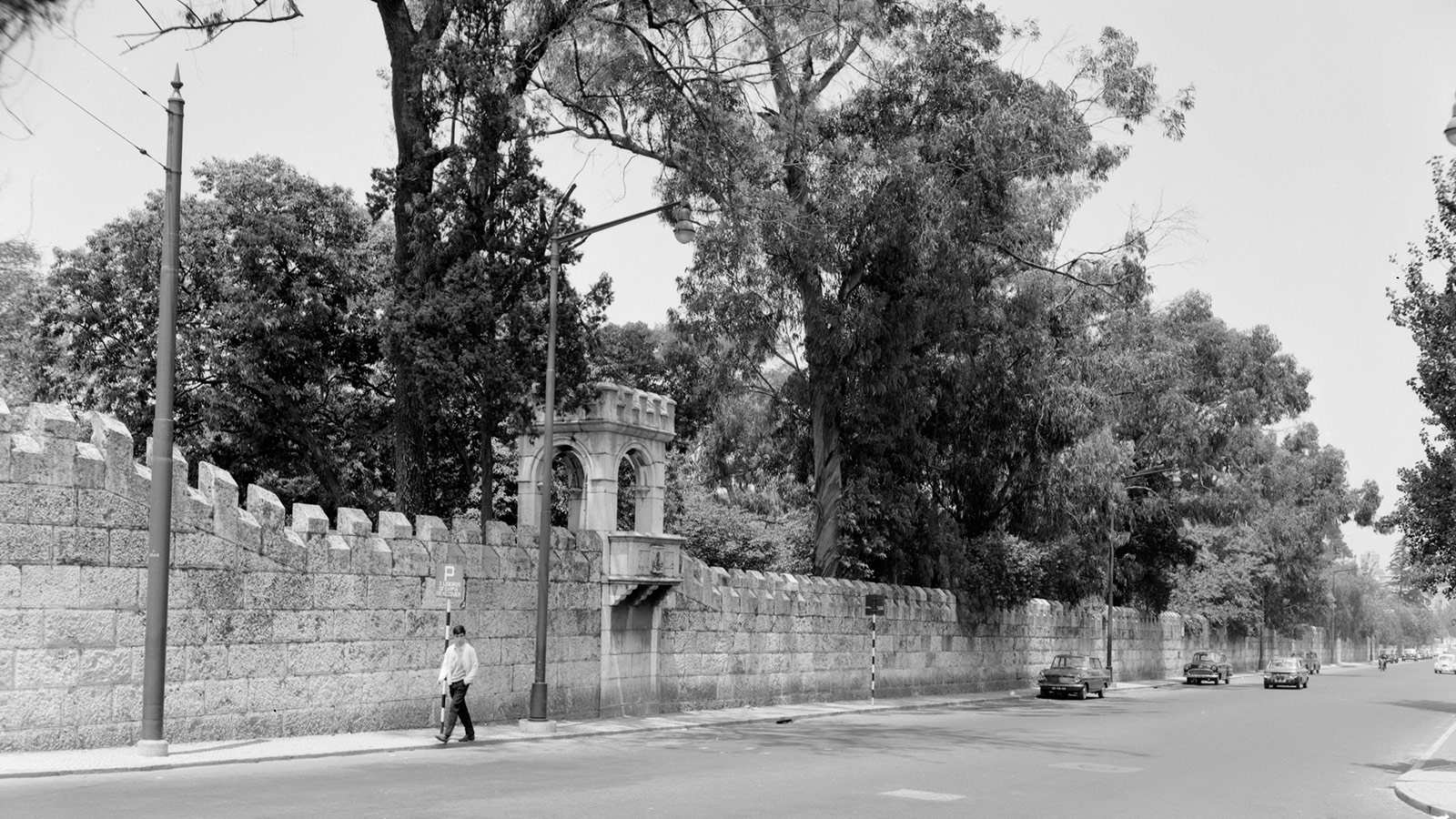
Asked to give his opinion on the matter, Guimarães Lobato drafted a detailed memorandum on the location of the Foundation’s headquarters and museum facilities, which he submitted on 13 January 1957 together with aerial photographs and sketches of the three sites. In it he concluded: “All technical conditions, from both an urban planning and a museological point of view, favour the location of the Museum and headquarters of the Calouste Gulbenkian Foundation on the Vilalva Park site.” Contributing to this opinion was the proximity of the University City and transport links, including the planned Palhavã underground station, which would open in 1959.
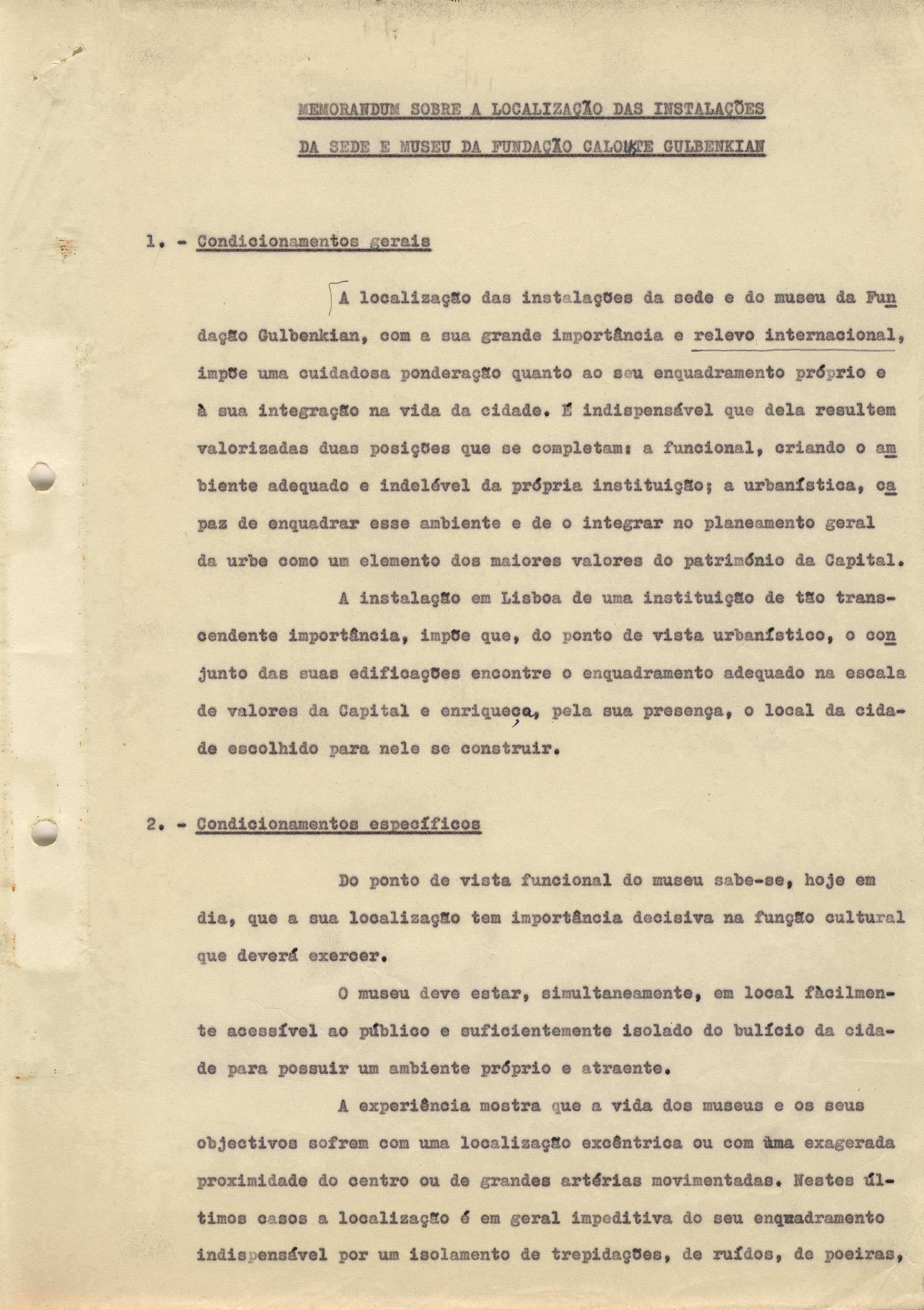
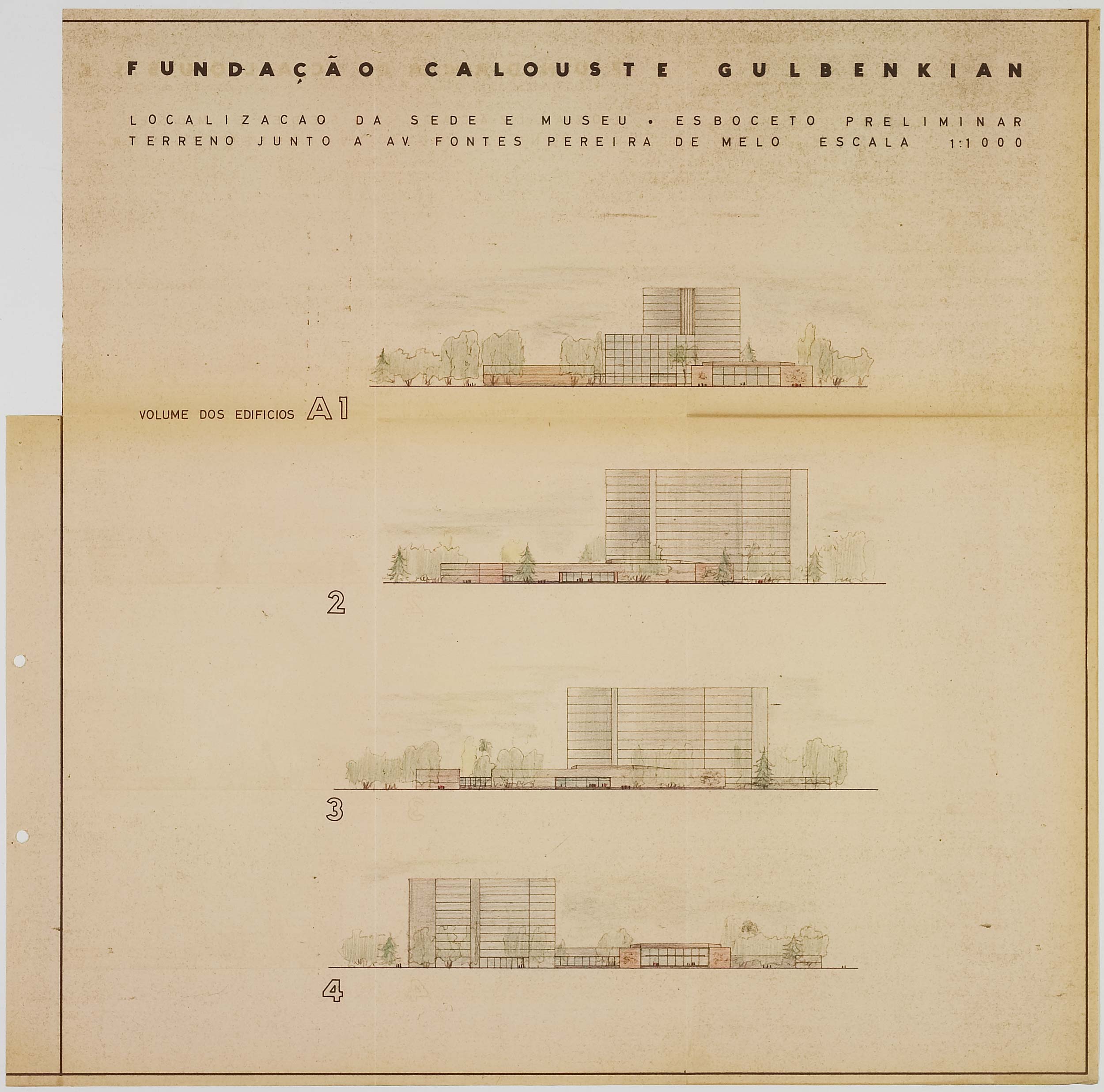
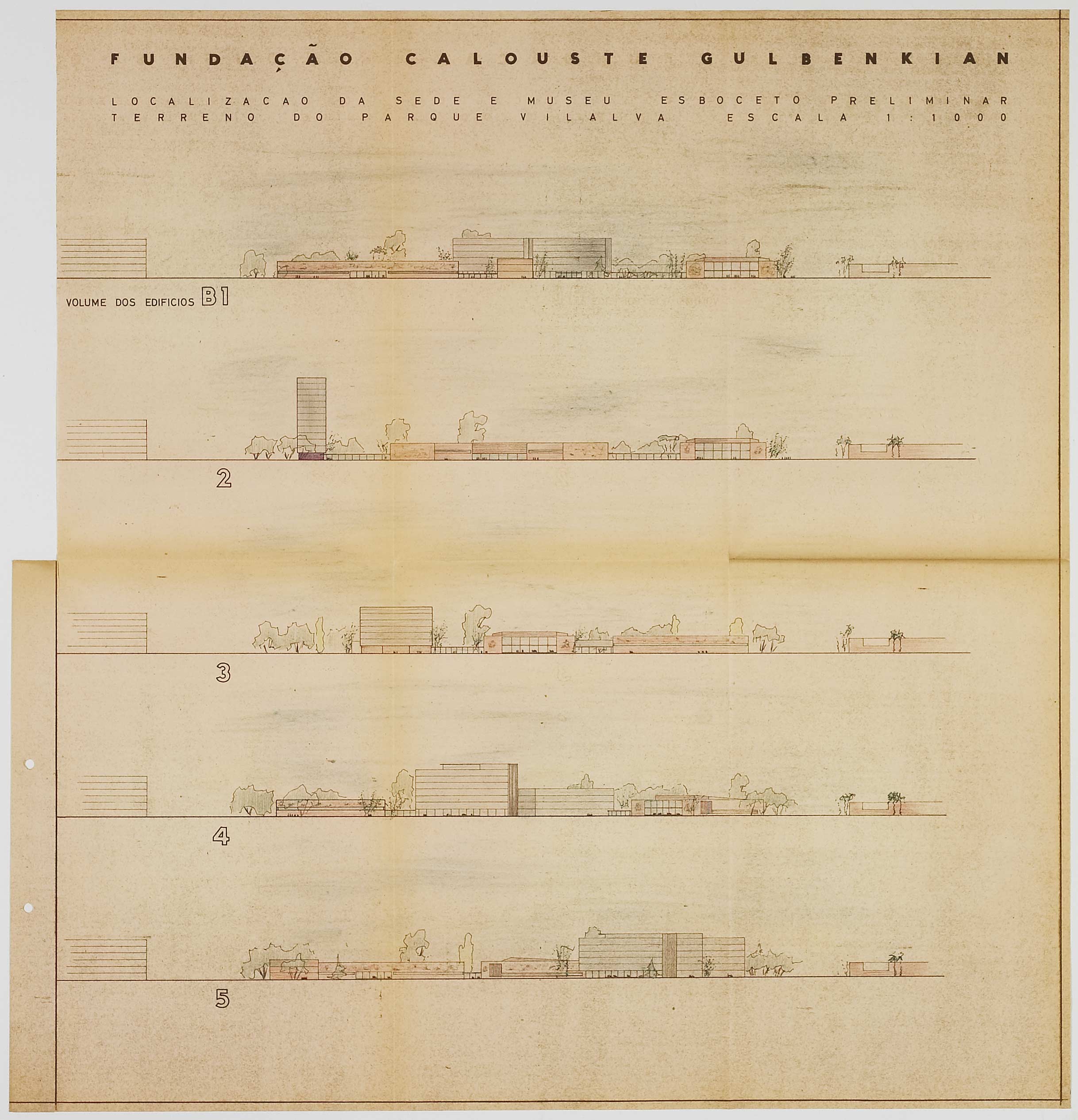
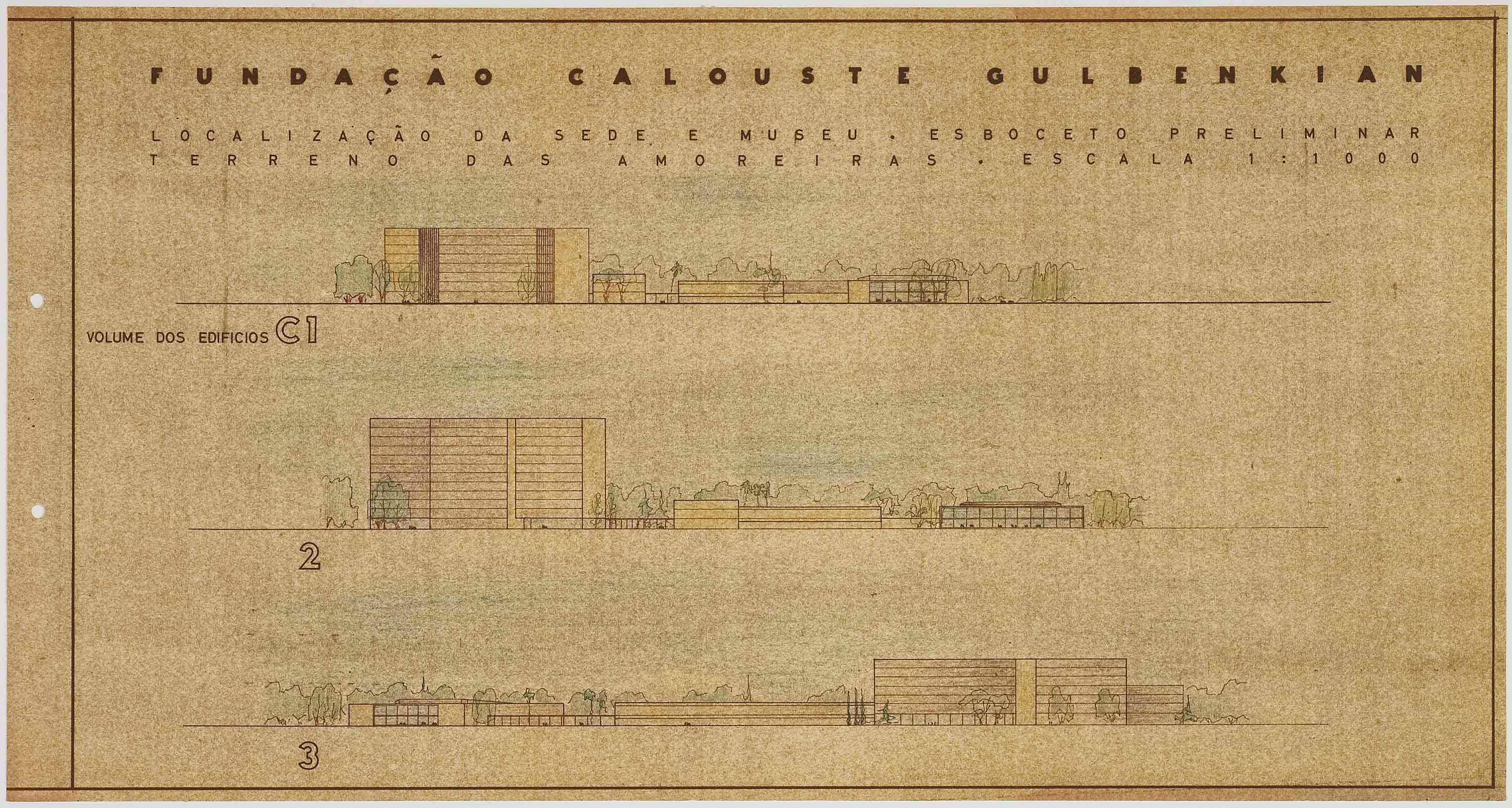
By March 1957, negotiations were already under way between the Foundation, Lisbon City Council and the lawyer representing the Vilalva family. It was agreed that one part of Santa Gertrudes Park would be allocated to the Foundation, while the remainder would stay in the possession of the seller. The asking price was 28,000 contos for 70,000 square metres of land.
Azeredo Perdigão succeeded in negotiating the amount downwards. On 16 April he informed Pedro Teotónio Pereira: “I have the great news that I have just agreed with the Count of Vilalva on the purchase of the entire available part of Palhavã Park (…) with an (…) area of 70,000 square metres, for the sum of 20,000 contos.”
On 30 April 1957, the public deed of sale for the land at Santa Gertrudes Park was signed at Lisbon City Hall between the Count and Countess of Vilalva and, on behalf of the Foundation, the three trustees: Azeredo Perdigão, Kevork Essayan and Domingos de Sousa e Holstein Beck. Also present at the act was the Mayor of Lisbon, Lieutenant-Colonel Salvação Barreto, owing to the municipal authority’s pre-emption rights over the land and as a sign of the high national and municipal importance attributed to the work pursued by the Calouste Gulbenkian Foundation.
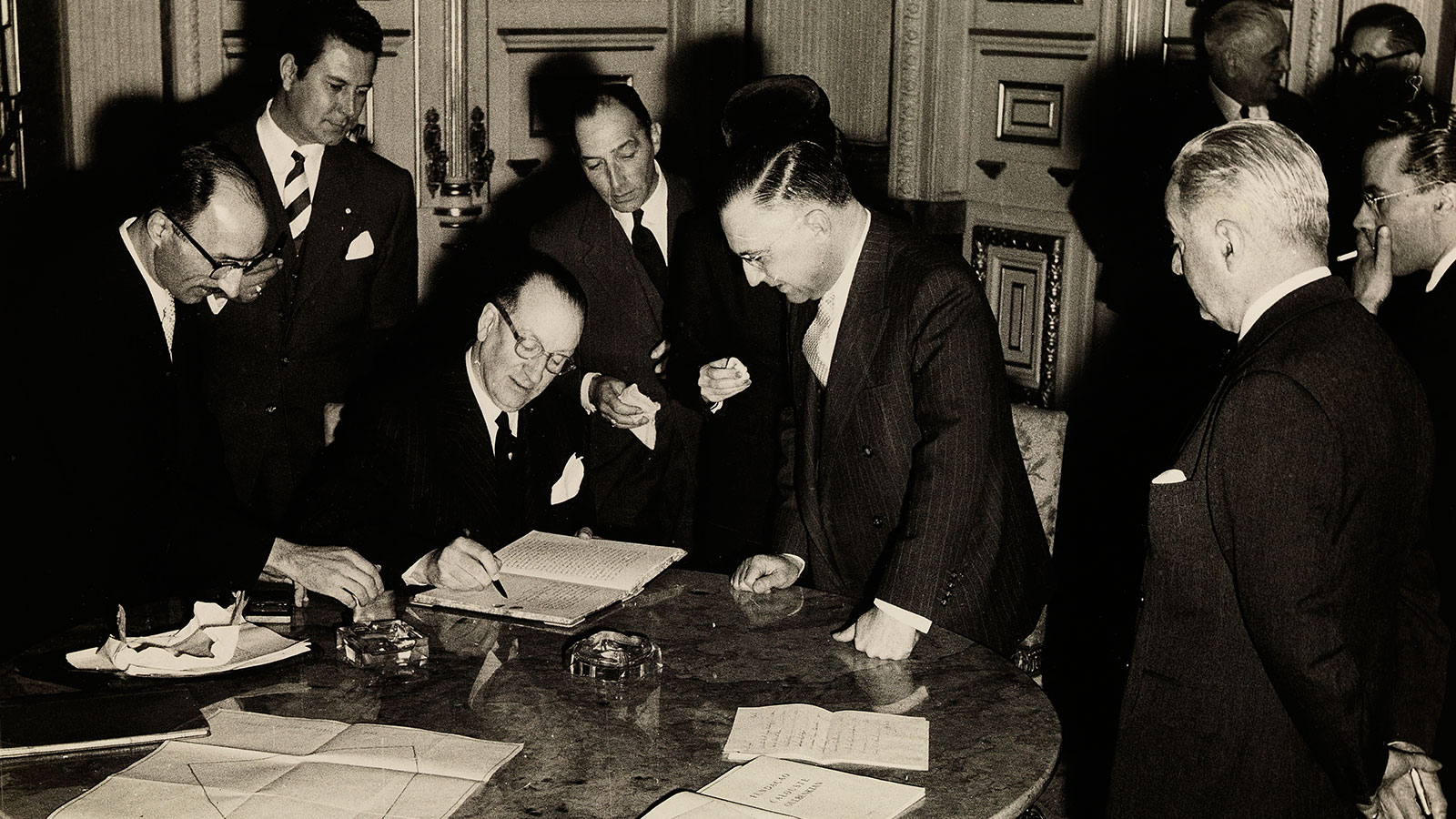
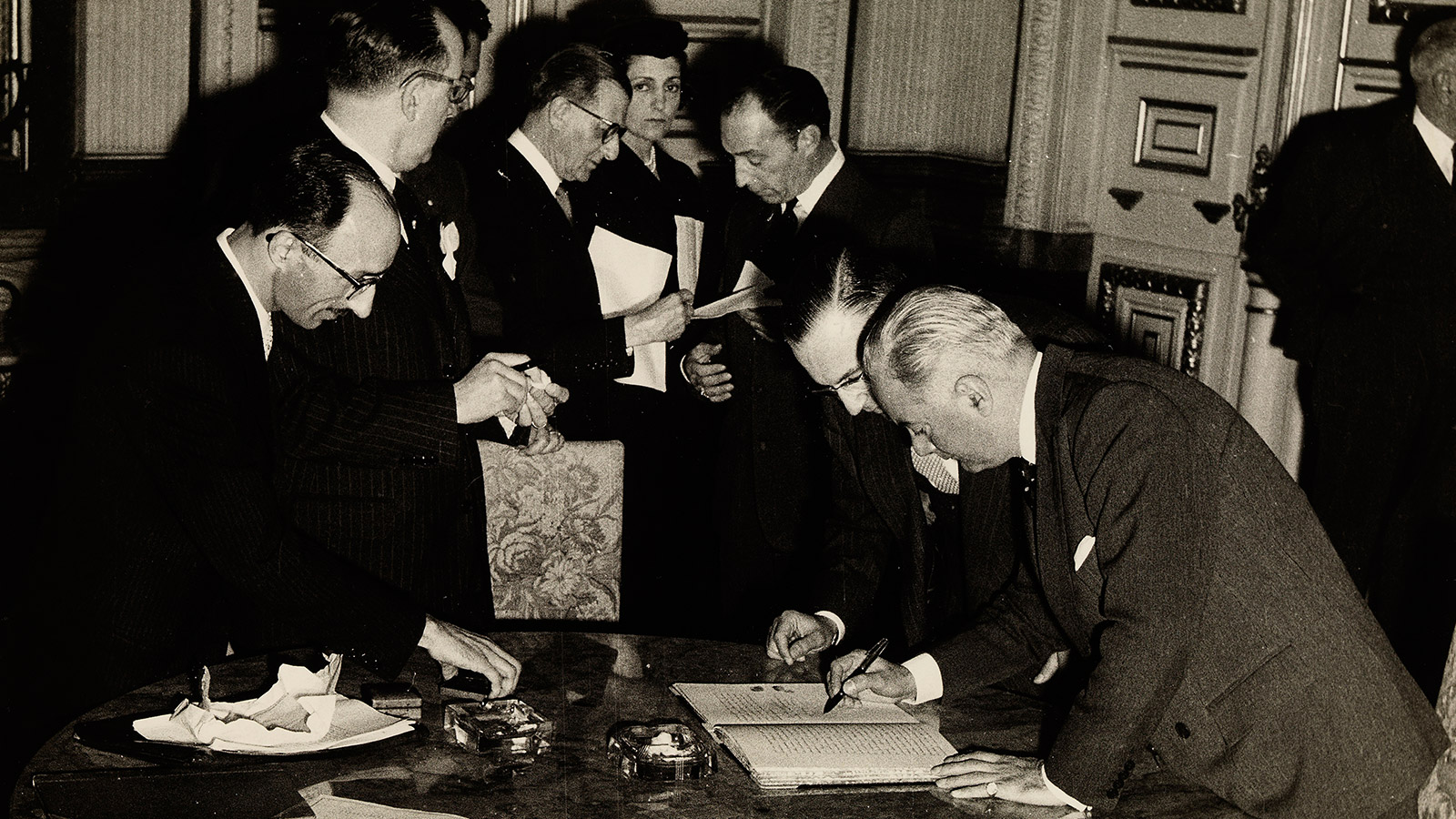
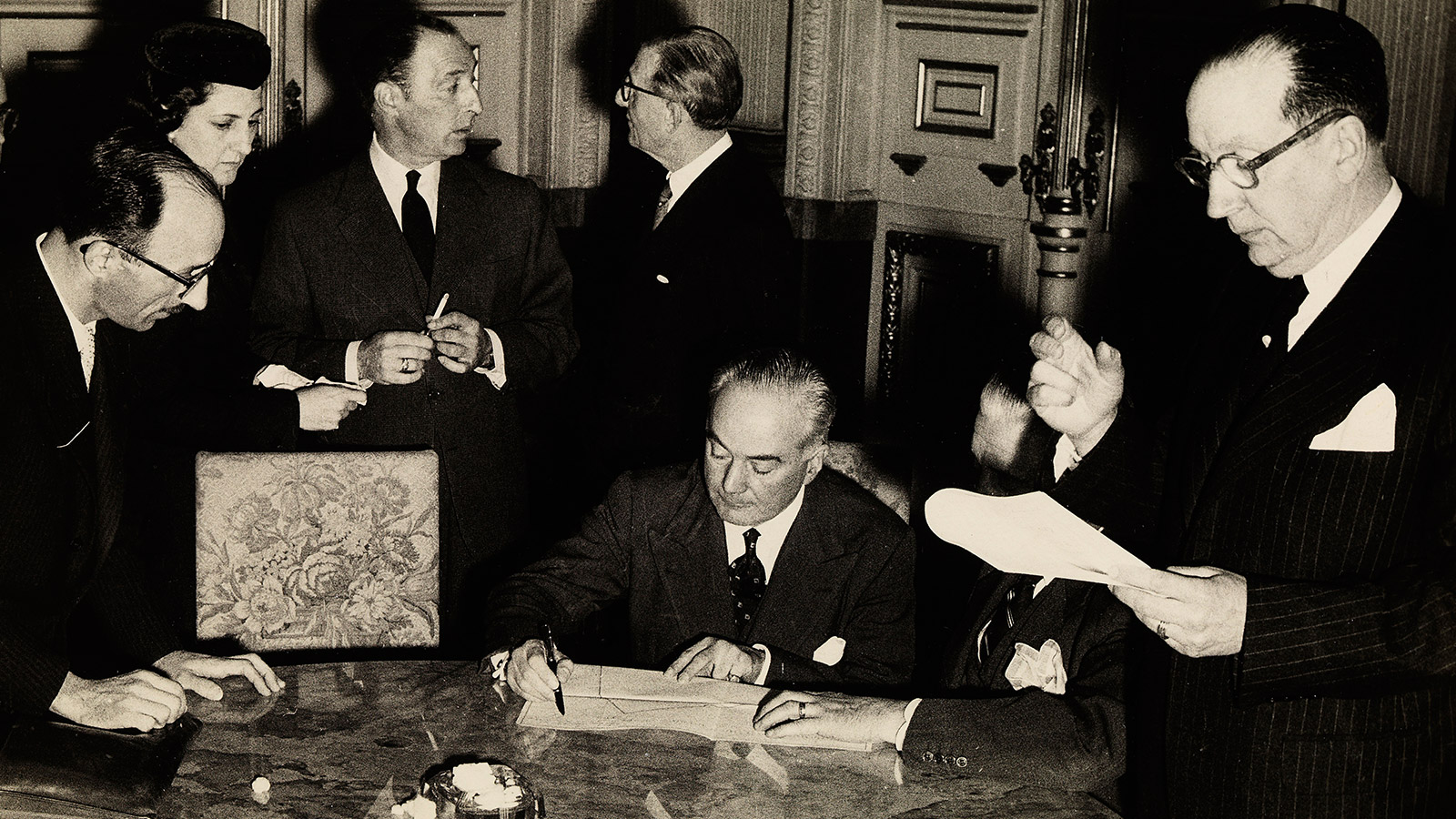
The acquired land was subsequently enlarged through the purchase of a further 4,883 square metres in 1967 and two additional plots of 64 square metres and 875,50 square metres in 1980. On 14 October 2005, the Calouste Gulbenkian Foundation acquired from the widow of the Count of Vilalva the remaining part of Santa Gertrudes Park still in her possession, undertaking, among other considerations, to grant the owner usufruct rights over the property and to establish the Vasco Maria Eugénio de Almeida Prize, awarded for the best initiative in the restoration of Portugal’s national heritage.
In July 2017, following the death of the Countess of Vilalva, Maria Teresa Eugénio de Almeida, the Calouste Gulbenkian Foundation took possession of the section of Santa Gertrudes Park acquired in 2005 and, on that occasion, also renamed the prestigious heritage award previously established as the “Gulbenkian Heritage Prize – Maria Tereza and Vasco Vilalva”.
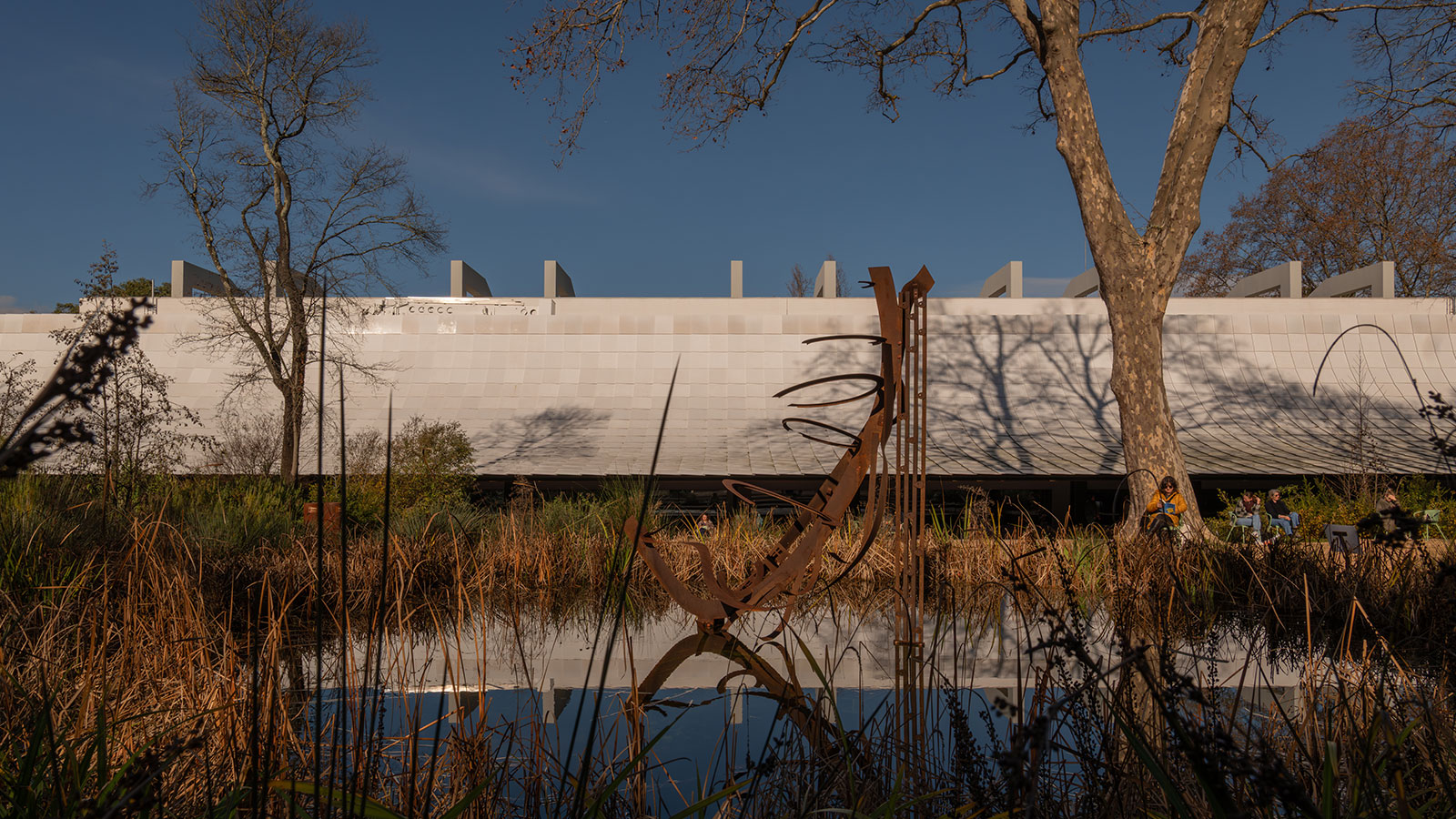
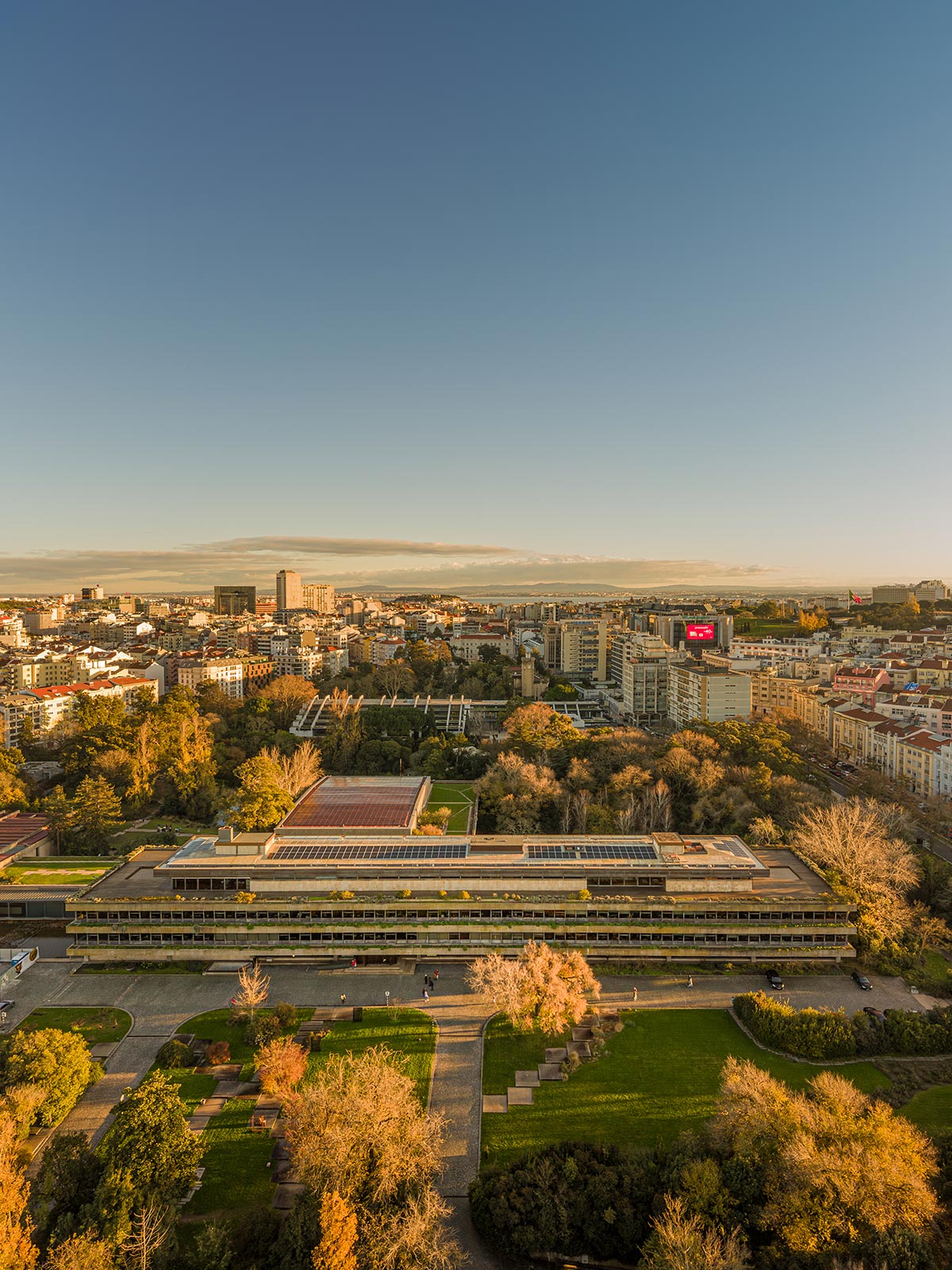
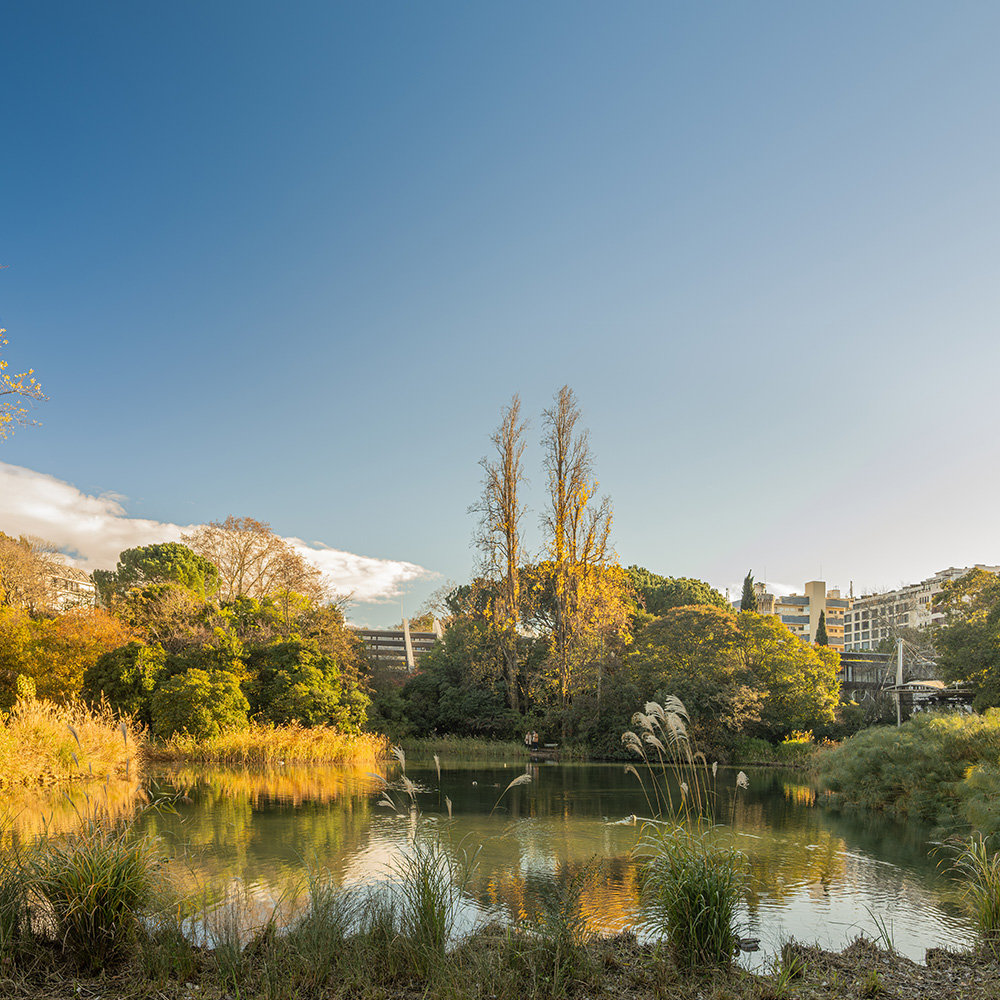
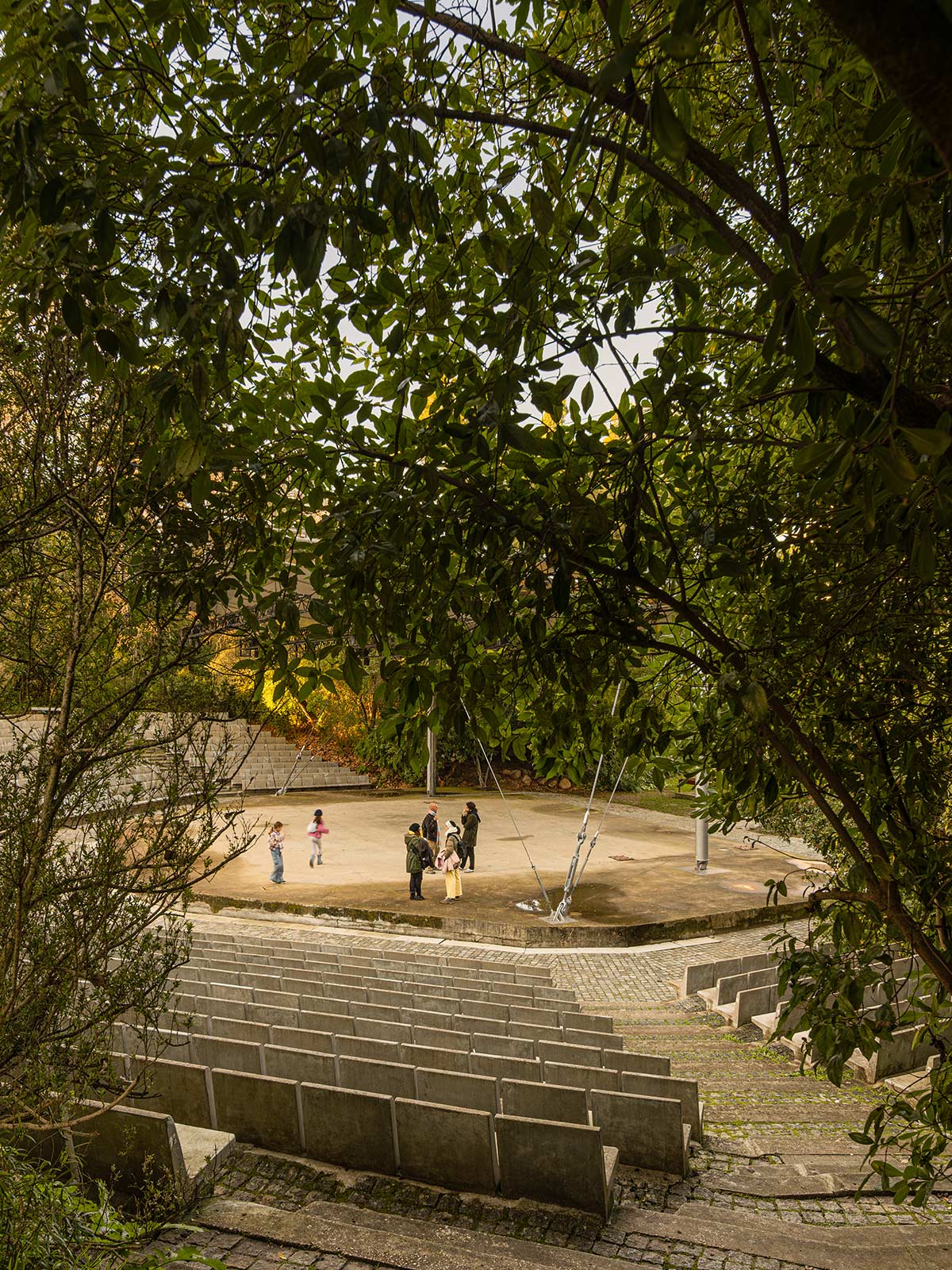
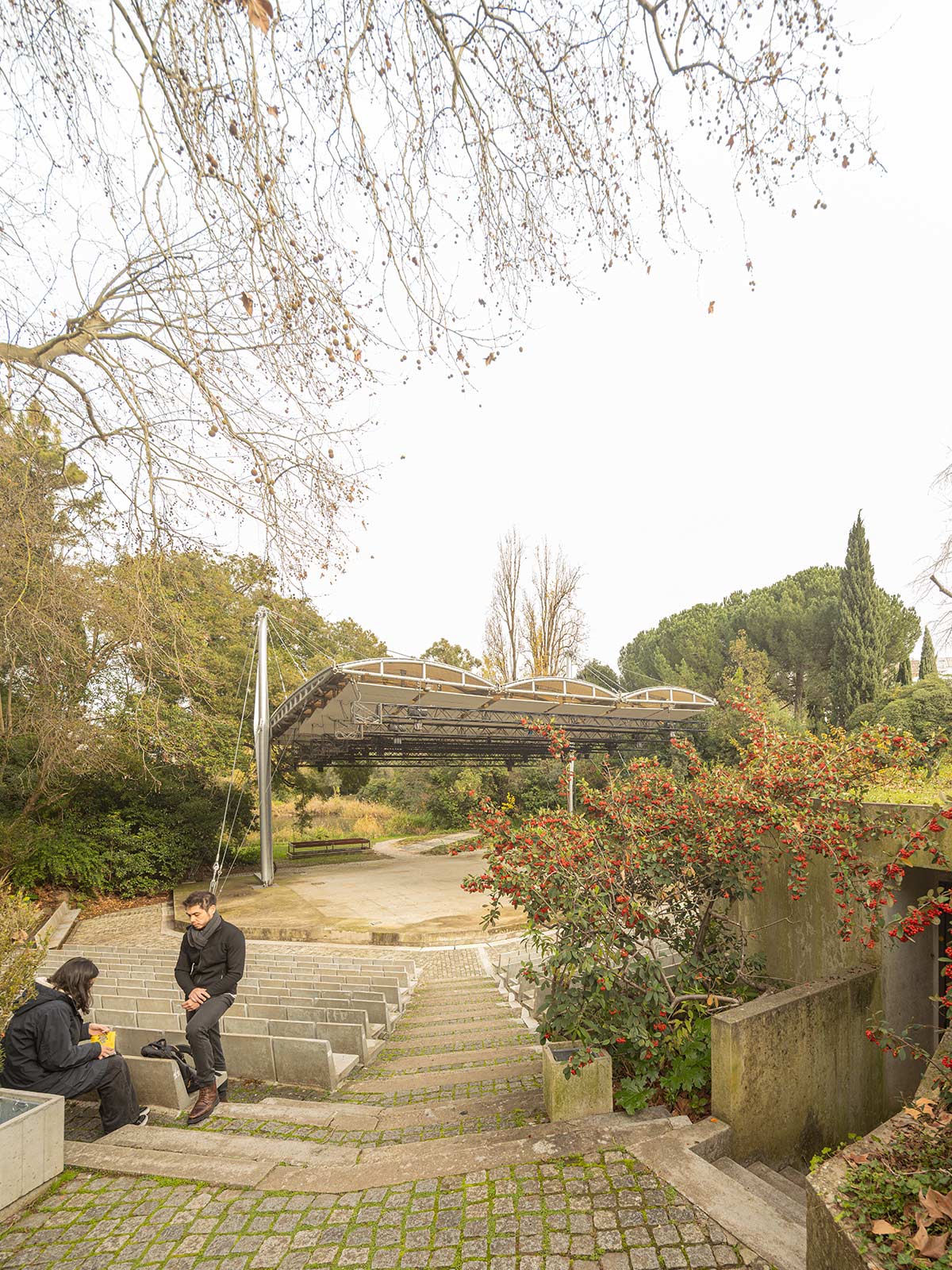
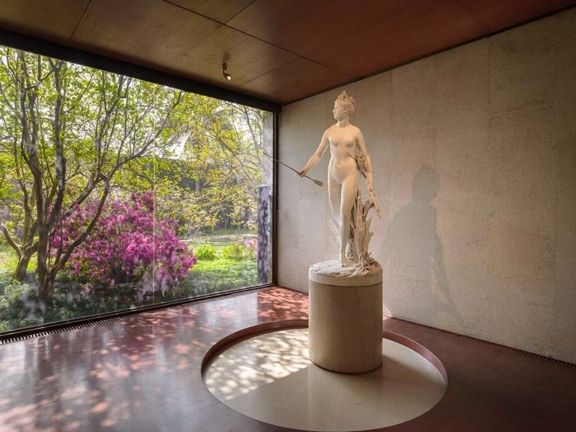
The new grounds, covering approximately two hectares, are now home to a garden redesigned by landscape architect Vladimir Djurovic and the CAM (Centro de Arte Moderna) building, redesigned by architect Kengo Kuma. Both spaces were inaugurated in September 2024. Today, the Foundation’s site extends over approximately 7,5 hectares.
From the Archives
Explore the series



No results were found for your criteria.
You may also like

No results were found for your criteria.