
I Exhibition of Plastic Arts
The genesis of a collection
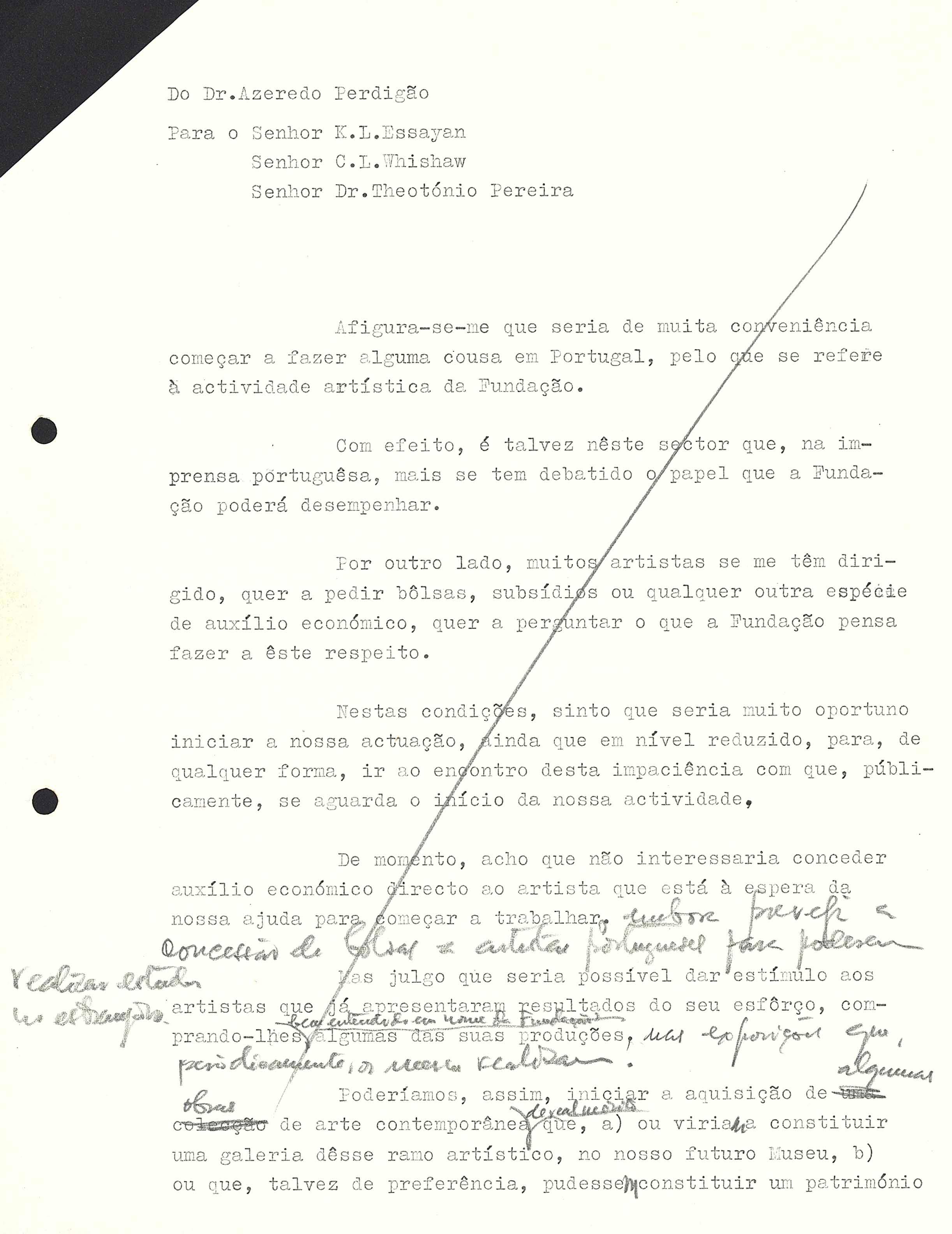
Although there was already a more or less steady stream of art exhibitions in Portugal, José de Azeredo Perdigão, who chaired the Foundation and headed its arts policy, believed that initiatives of this type were fundamental for the “country’s moral betterment and raising its cultural standards”, and argued that the Foundation should aspire to “innovate and aim higher”.
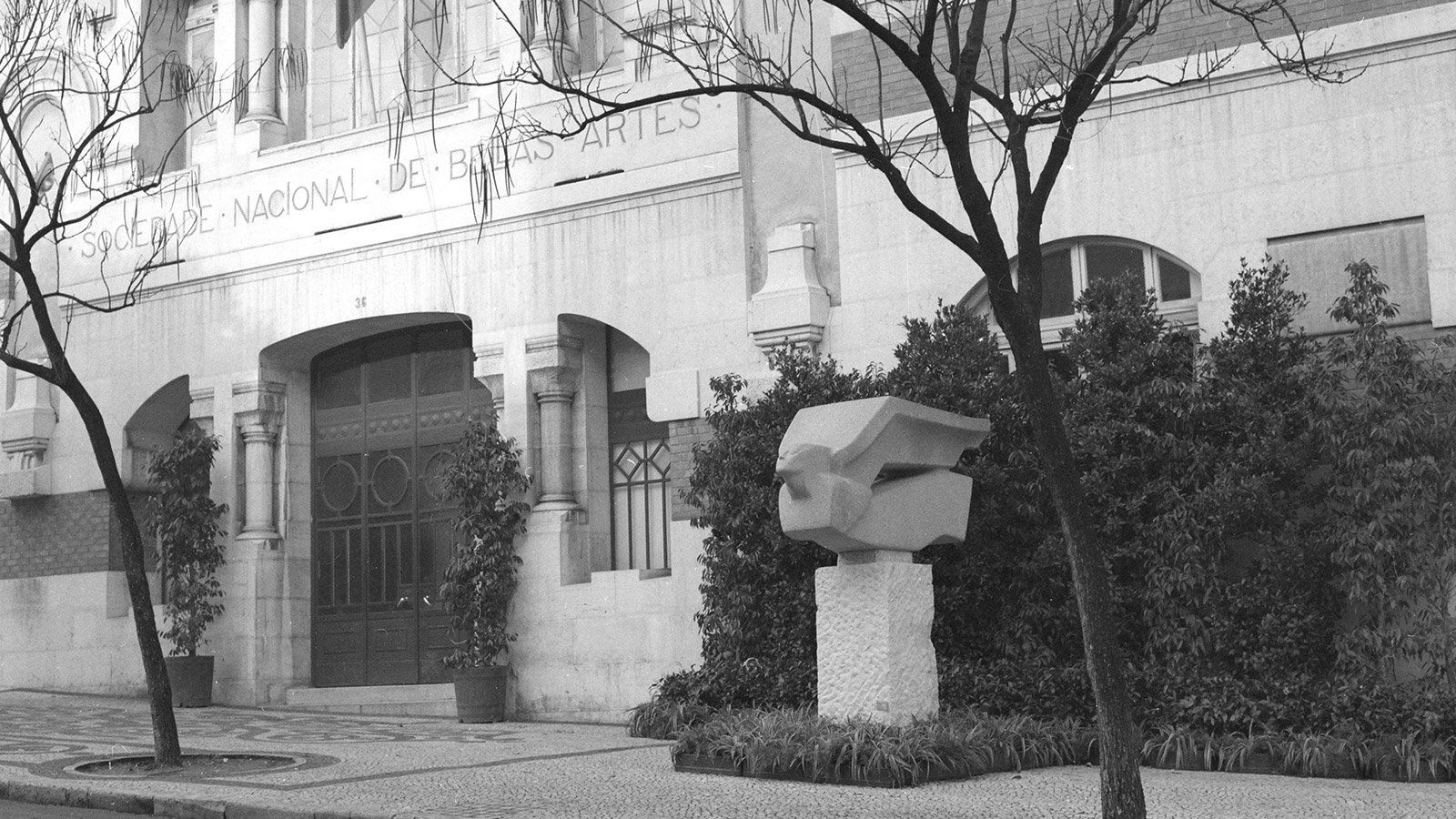
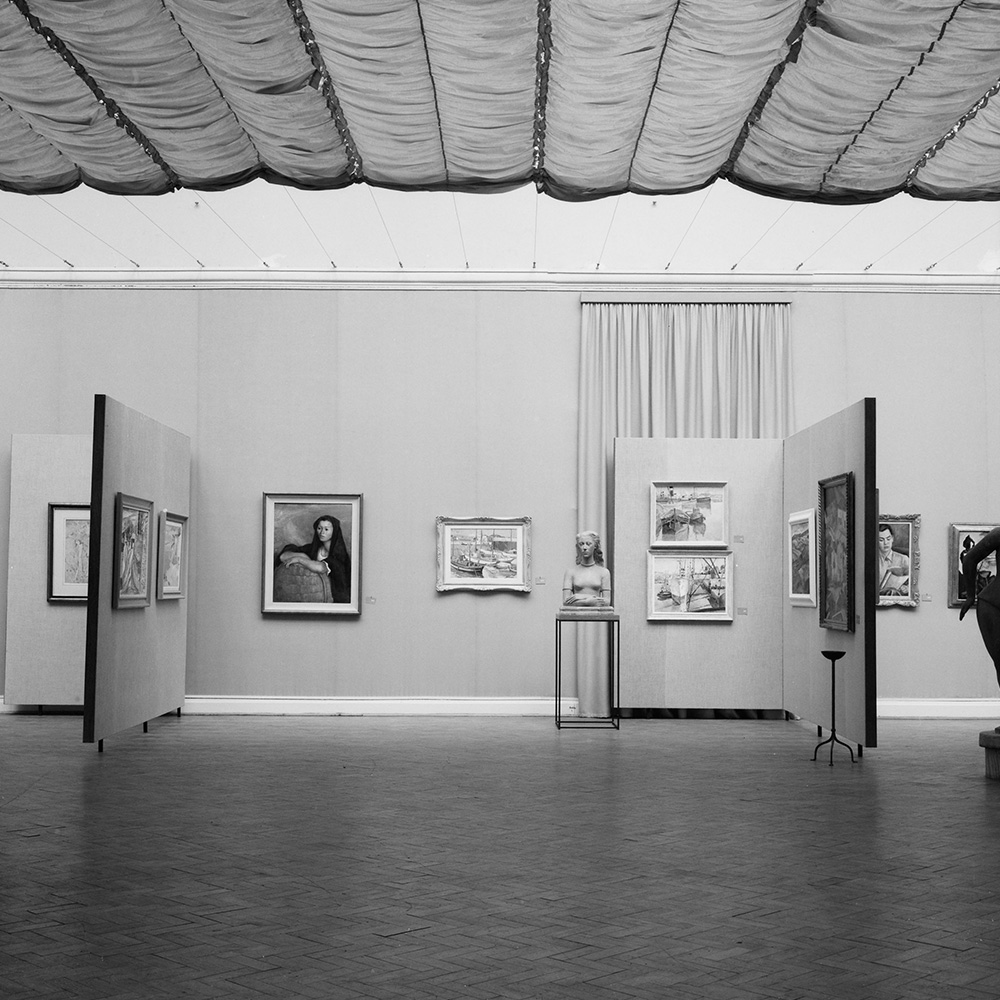
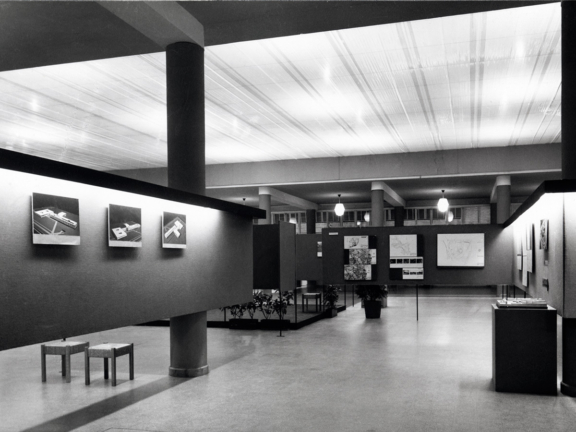
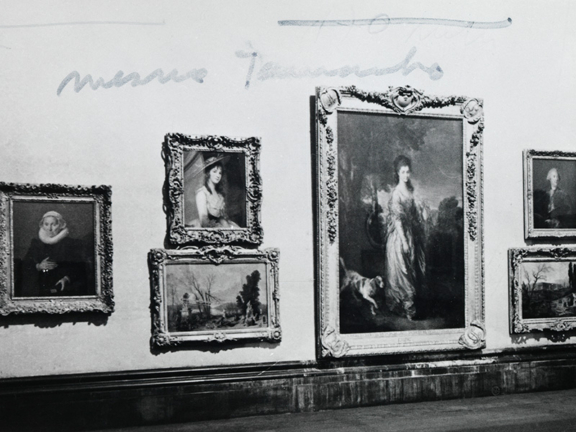
Approved by the Board of Trustees on 1 March 1957, the I Exhibition of Plastic Arts was to take place in the building of the Sociedade Nacional de Belas Artes, as the Foundation still lacked its own premises. In order to adapt the galleries to modern standards and provide a venue worthy of the event, the Sociedade Nacional de Belas Artes Exhibition Hall was renovated, under the supervision of Maria José Mendonça, then in charge of the Fine Arts and Museum Service.
No results were found for your criteria.
In addition to the exhibition proper, other initiatives were planned: prizes and study grants would be awarded, and three lectures would be organised, along with guided tours for younger visitors, and the acquisition of artists’ work.
In the visual arts, the exhibition planned to show painting, drawing, sculpture and engraving, and the criteria for admitting work were that pieces must be both contemporary and of sufficient quality. In selecting the exhibits, the divisions between different schools presented a challenge.
On this matter, Azeredo Perdigão stated: “Our greatest difficulty is the artists’ mindset and the rivalries between different camps”. In order to overcome this, an admission panel was set up, comprising respected experts, so that the Foundation itself was not drawn into the selection process.
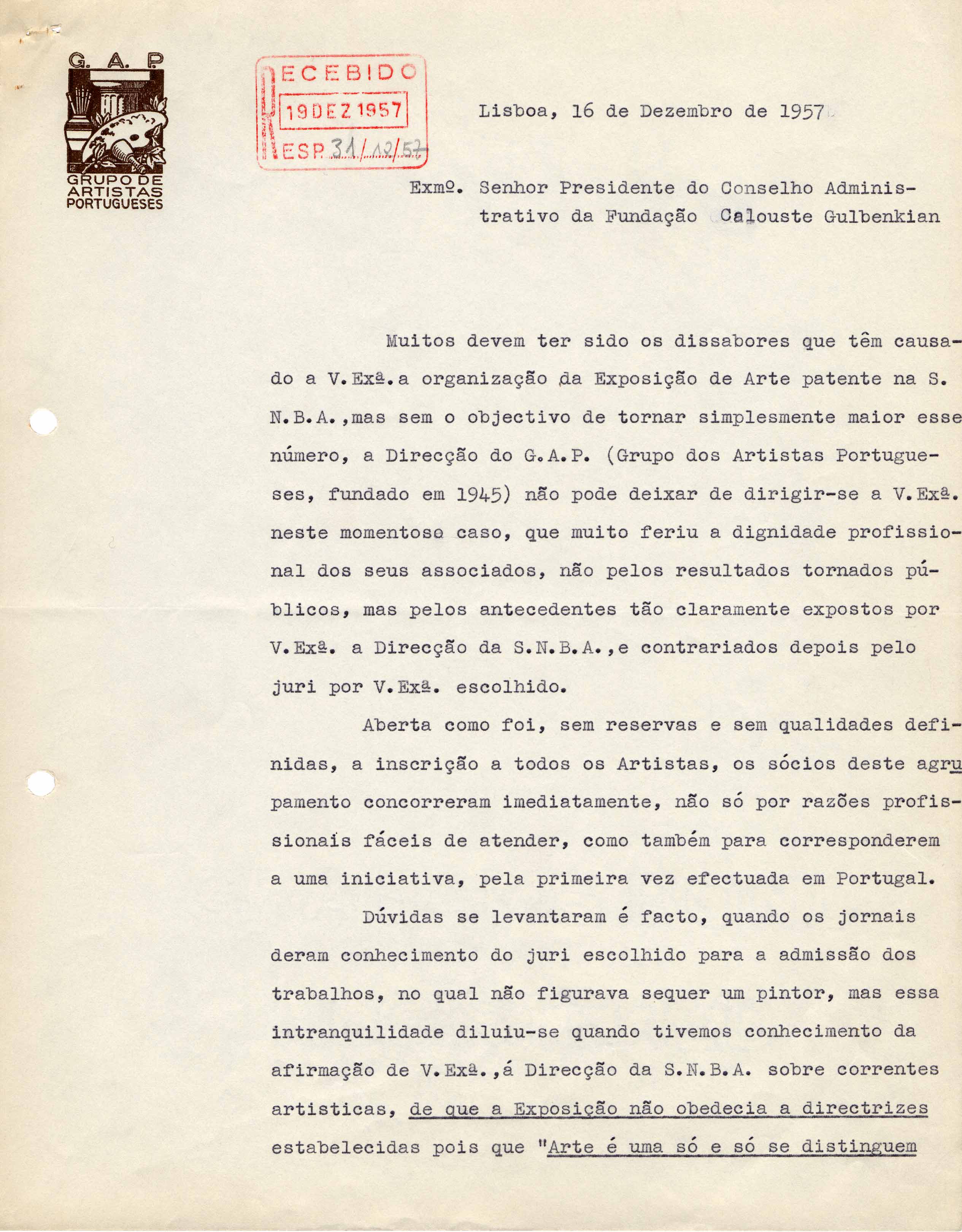
Advertisements in the press invited artists to submit pieces, generating a huge response: 684 artists submitted a total of 2,342 works. Approximately 255 pieces were selected, most of them abstract. The artists excluded went on to contest the decision and, by way of protest, to organise an alternative event, entitled Works Rejected at the Calouste Gulbenkian Foundation’s Exhibition of Plastic Arts, which was also held at the Sociedade Nacional de Belas Artes, the following month, from 21 to 30 January 1958.
Holders of some of the highest offices of state were present at the official opening of the exhibition on 7 December.
The prizes were designed to help artists take their careers further. A panel of judges was set up, chaired by Reynaldo dos Santos, chairman of the Academia Nacional de Belas-Artes, and comprising experts who enjoyed respect and an established reputation in the field. A budget of 350 thousand escudos was allocated for this purpose. Because the judges decided not to award one of the first prizes for sculpture, only 315 thousand escudos of this was actually disbursed.
The prize winners, most of them well established in their careers, were: Eduardo Viana (Grand Prix, painting); Barata Feyo (Grand Prix, sculpture); Dórdio Gomes (1st Prize, painting); Abel Manta (1st Prize, painting); António Duarte (1st Prize, sculpture); Bernardo Marques (Watercolours Prize); Júlio Resende (2st Prize, painting); Guilherme Camarinha (2st Prize, painting); Joaquim Correia (2st Prize, sculpture); Jorge Vieira (2st Prize, sculpture); Bernardo Marques (Drawing Prize); Santiago Areal (Drawing Prize); Júlio Pomar (Engraving Prize); Teresa Sousa (Engraving Prize). Almada Negreiros was awarded the hors concours or lifetime achievement prize, and Azeredo Perdigão commented in connection with this that “the work exhibited did not merit a prize, but Almada Negreiros is, without doubt, one of the representative figures in art in Portugal”.
As part of the programme, artists were also invited to apply for study grants. The Foundation had no wish to supplant the State’s role in supporting artists. Instead, its purpose was to assure their independence and freedom. Perdigão argued that “in the first place, artists need teaching; later, in order to build on their natural abilities and the techniques studied, and also to enrich their sources of inspiration, they need contact with more advanced artistic and cultural milieux, and, if possible, with established masters”.
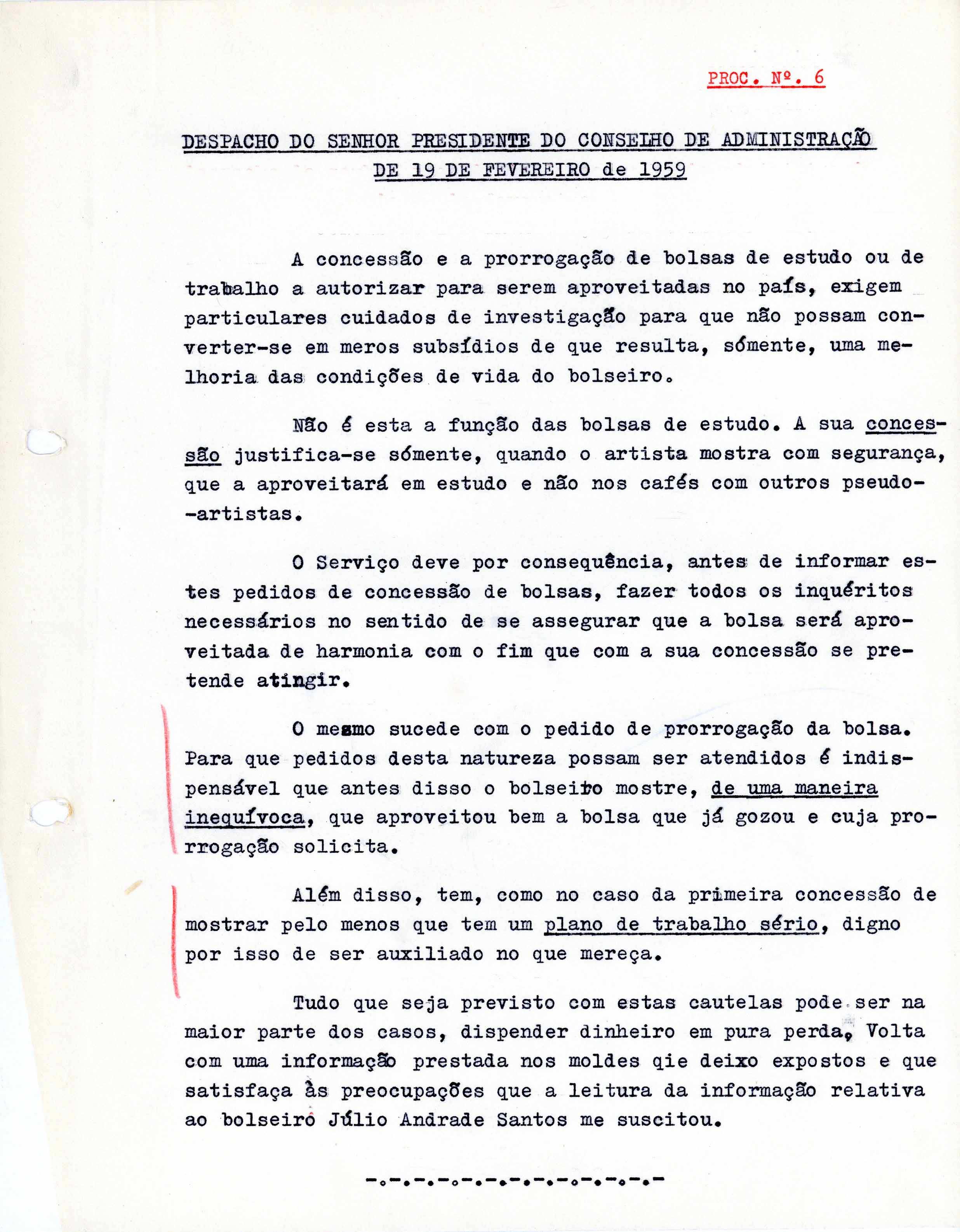
In actual fact, the Foundation had been providing study grants since the first months of its existence, in response to approaches made to it. However, it had not yet established the criteria to be applied in awarding them. On the occasion of the Exhibition, an advisory panel was set up, comprising leading figures from the art world, and its members were invited to give their opinion on the criteria to be adopted in awarding study grants.
Priority was assigned to young artists with economic difficulties, so as to enable them to attend higher education and complete their studies, and to enable others to experience art schools abroad and to make contact with established artists. The main destinations were France, Italy and England, but there are also records of a grant for pursuing further studies in sculpture in Egypt. Curiously, some of the panel members were also awarded prizes or honours. An apparent conflict that reflects the small size of the Portuguese art world at the time.
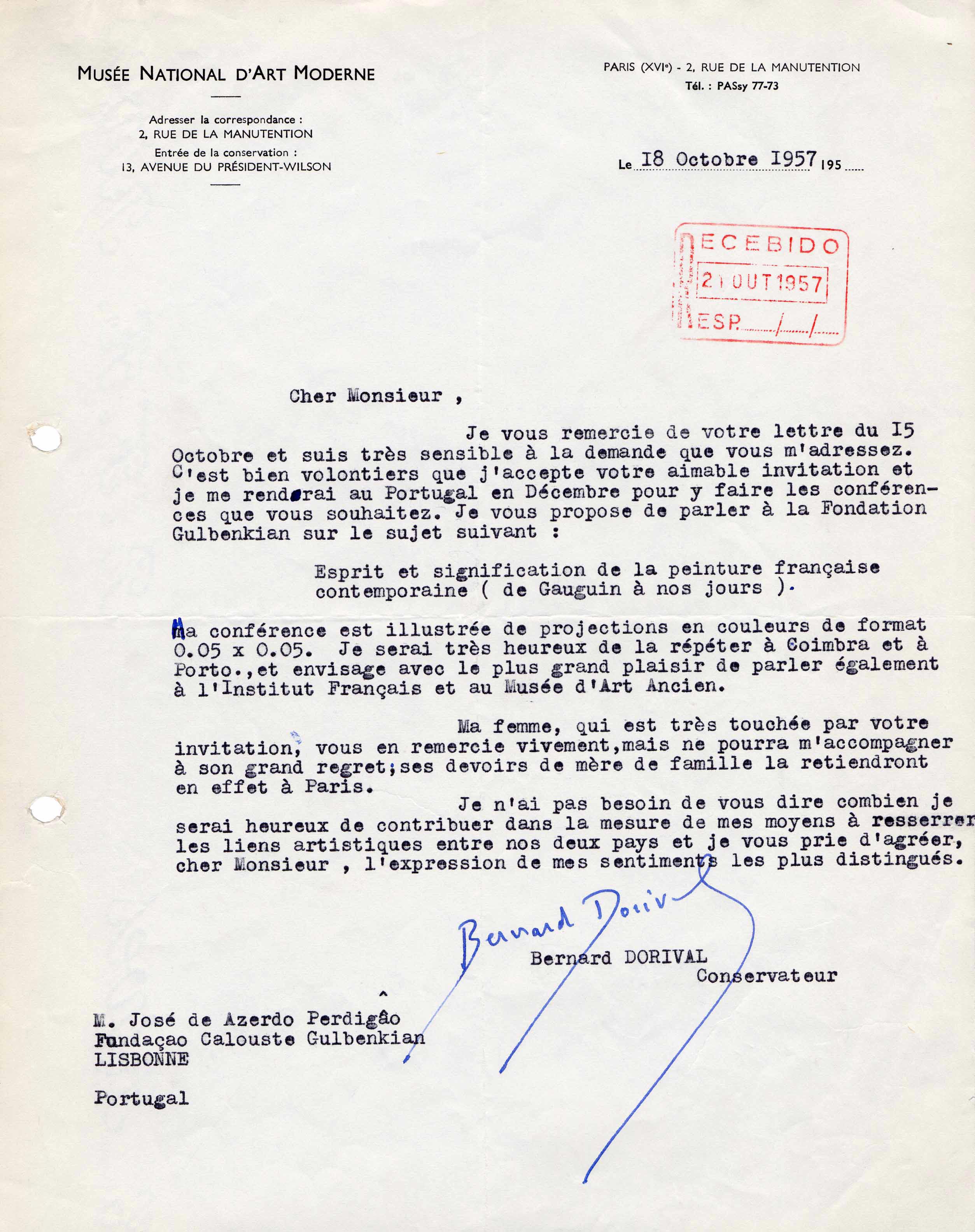
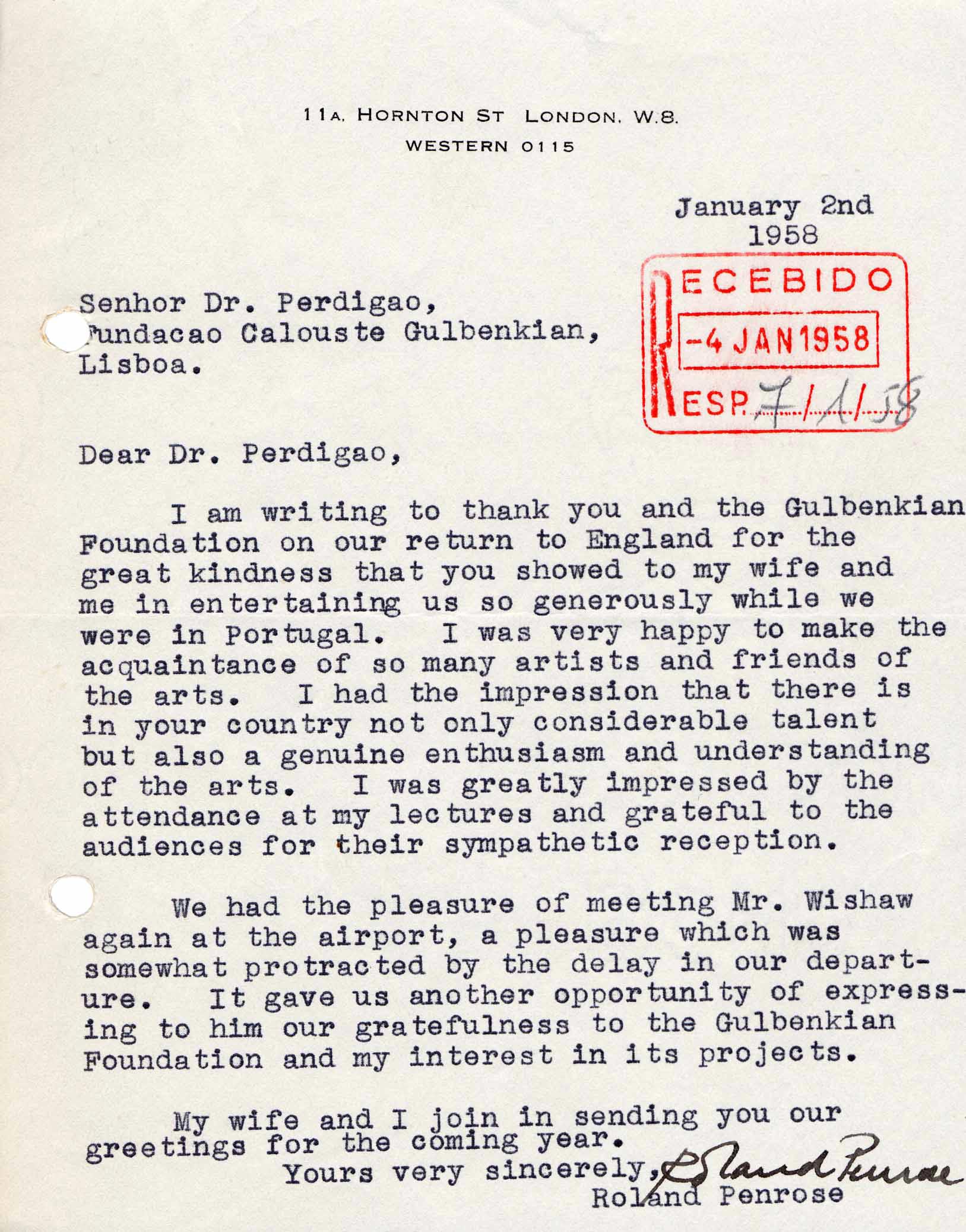
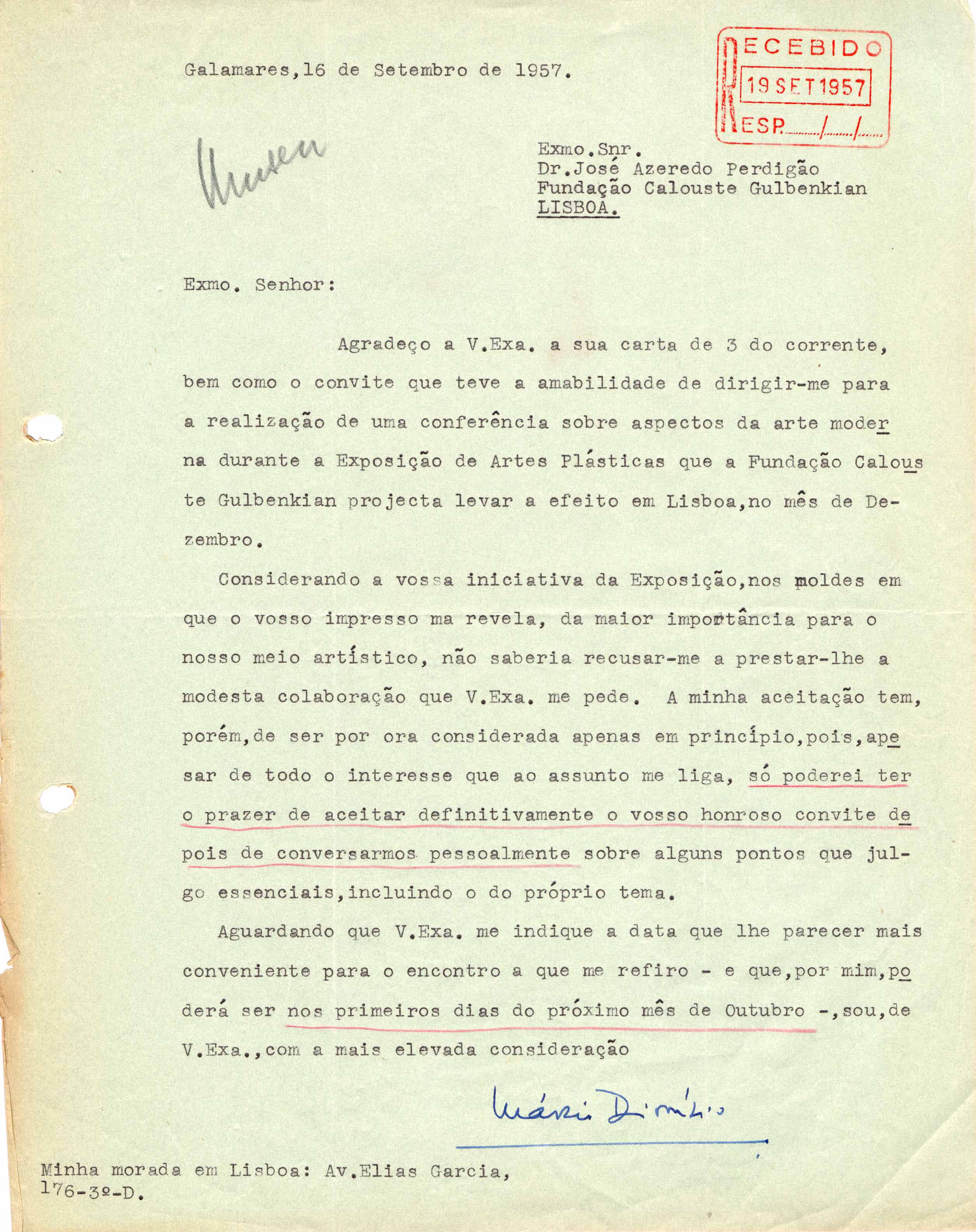
In addition to these activities, the event also featured a series of three lectures. Bernard Dorival, curator of the Musée National d’Art Moderne (Paris), gave a lecture entitled “Espirit et signification de la peinture française contemporaine”; Roland Penrose, chairman of the Institute of Contemporary Arts (London), spoke on the subject of “Tendences actuelles dans l’art britanique” e Mário Dionísio, Portuguese artist and critic, gave a talk on “Conflict and Unity in Contemporary Art”.
Lastly, the exhibition activities also included the acquisition of works of art. Speaking to the Foundation’s trustees, in October 1956, Azeredo Perdigão had already argued with the border in favour of such acquisitions. But his proposal had met with doubts and resistance, as the underlying reasoning was unclear, and it was also not obvious what would be done with the works. The Chairman argued that it would give encouragement to artists, while the works could be included in a contemporary art gallery or section in the planned museum. They could also be loaned to national museums, outside the major cities, as a boost to their collections. He also proposed that pieces be acquired at other exhibitions that took place.
However, the board decided against this and the acquisition of works of art plans were put on hold. Later, Perdigão again argued that the initiative could provide valuable encouragement to artists, even when the works were not exceptional, and stressed that it would be useful to loan the acquisition to national museums, for educational purposes. He felt this was the best way of pursuing the founding purpose established by Calouste Gulbenkian – Art. The board eventually recognised the merits of the chairman’s arguments and voted in favour of the acquisitions, which were to be made in connection with the I Exhibition of Plastic Arts.
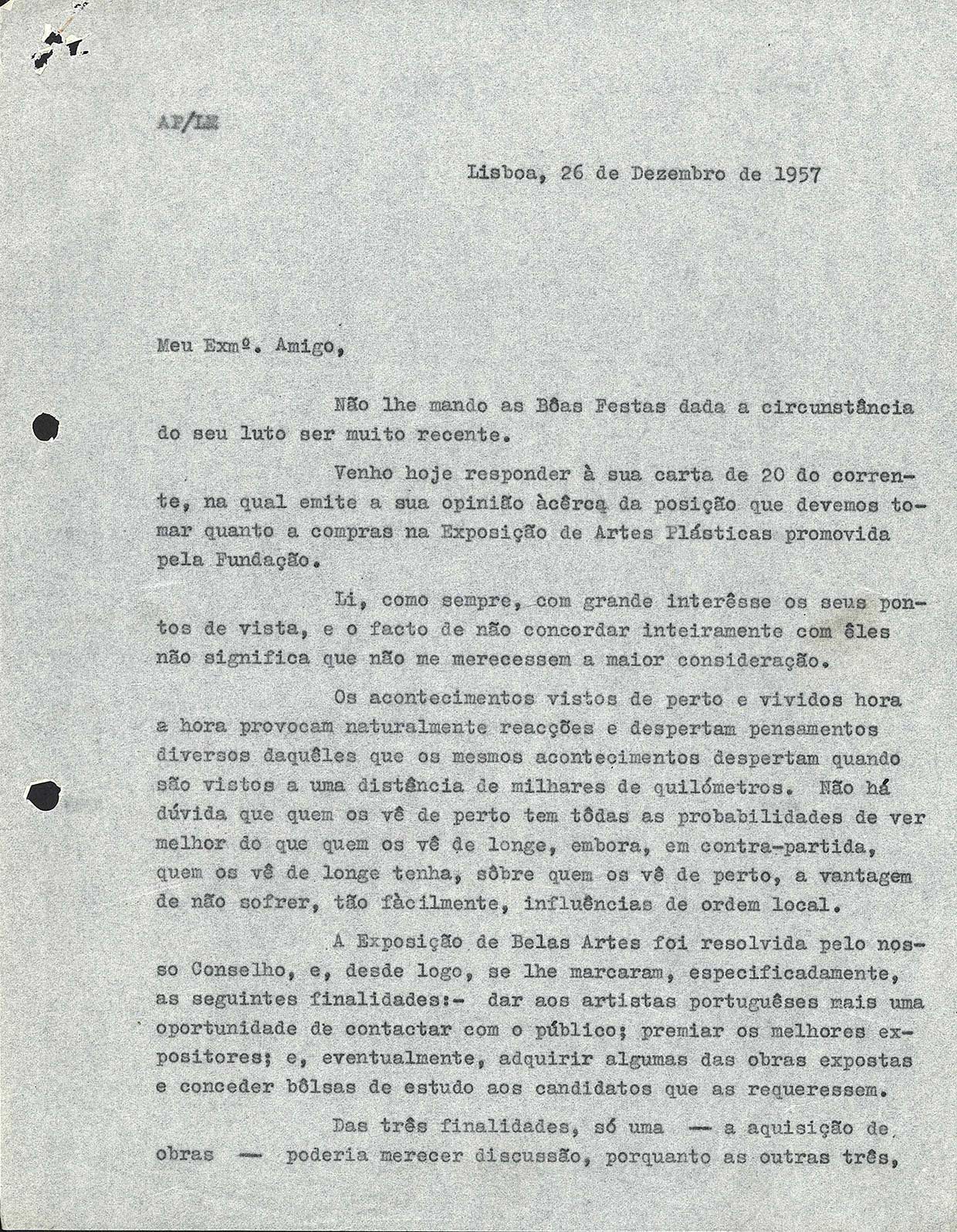
It was then established that, in the acquisition process, private buyers or museums would have the first option to purchase, and only thereafter would the Foundation select works for itself. To help in this selection process, a panel of experts was appointed, with a solely advisory function. The members were: João Couto, director of the Museu Nacional de Arte Antiga, Diogo Macedo, sculptor and director of the Museu de Arte Contemporânea, Luís Dourdil, representing the Sociedade Nacional de Belas Artes, and Nuno Teotónio Pereira, a distinguished architect. On the basis of its recommendations and the notes made by members of the Board of Directors – Kevork Essayan, Pedro Teotónio Pereira, Azeredo Perdigão and the Duke of Palmela – the final selection was made.
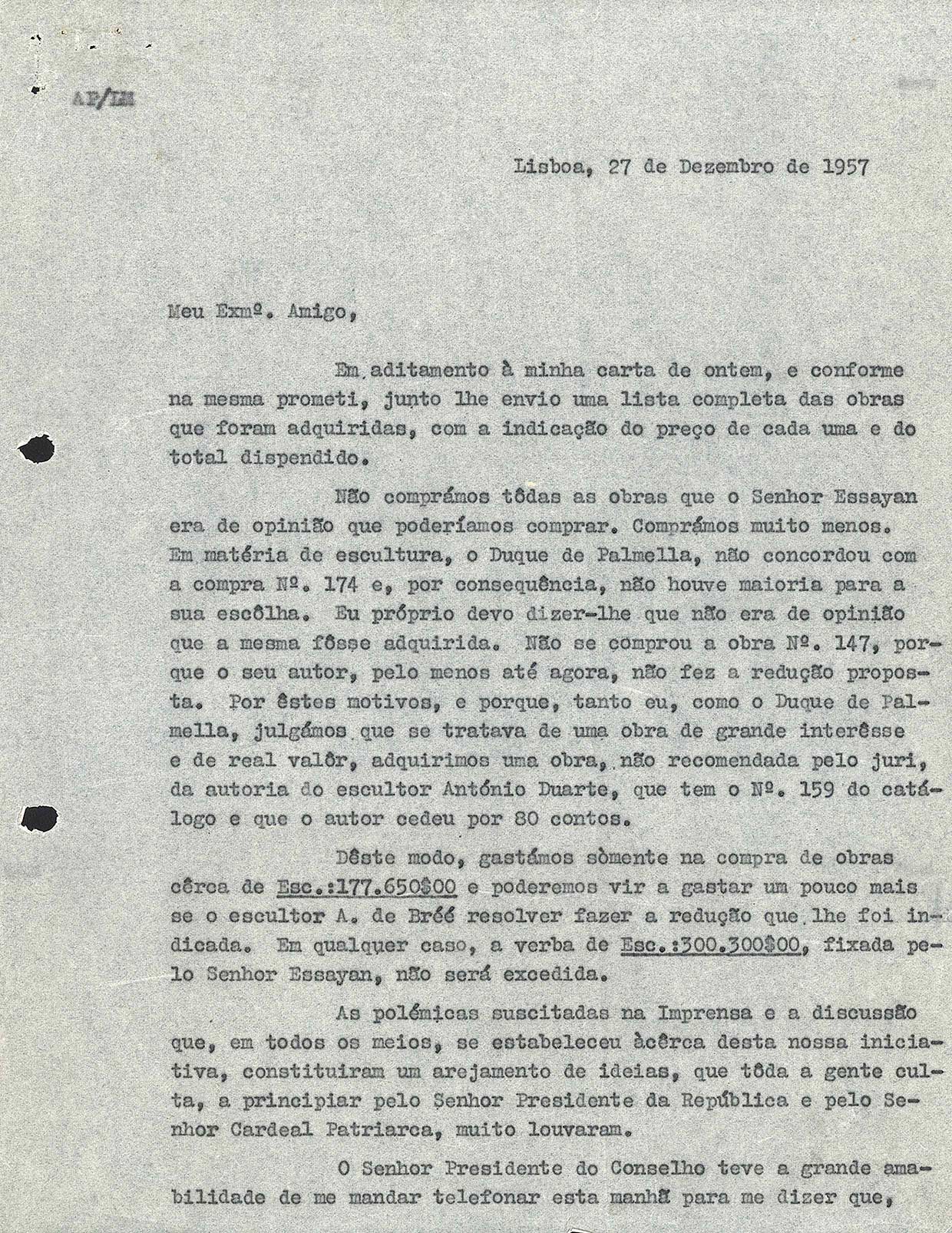
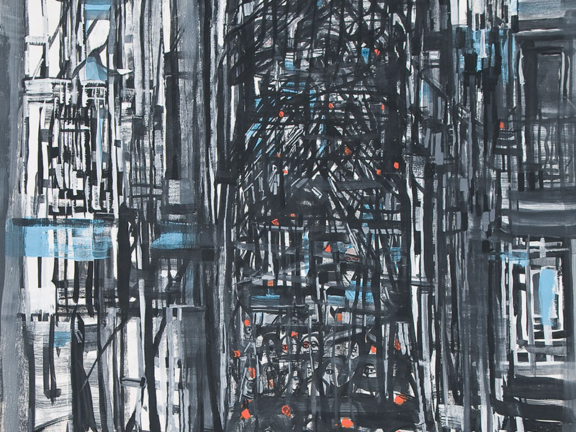
The Foundation acquired paintings from Marcelino Vespeira, Nuno de Siqueira, Maria Eugénia Fernandes Noronha, Manuel Bentes, Emmerico Nunes, Rui Filipe, Hansi Staël and Mário de Oliveira and drawings by Jorge Barradas, Santiago Areal e Milly Possoz. Engravings were bought from Gastão Seixas, José Júlio and Bartolomeu dos Santos. Lastly, in sculpture, the works chosen were by Fernando Fernandes, Lagoa Henriques and António Duarte. The piece by this last artist was not included in the panel’s recommendations, but Azeredo Perdigão and the Duke of Palmela decided on the purchase. A sculpture by Álvaro de Brée was later added to the list, after the artist agreed to a lower price for his piece “Menina dos olhos tristes”.
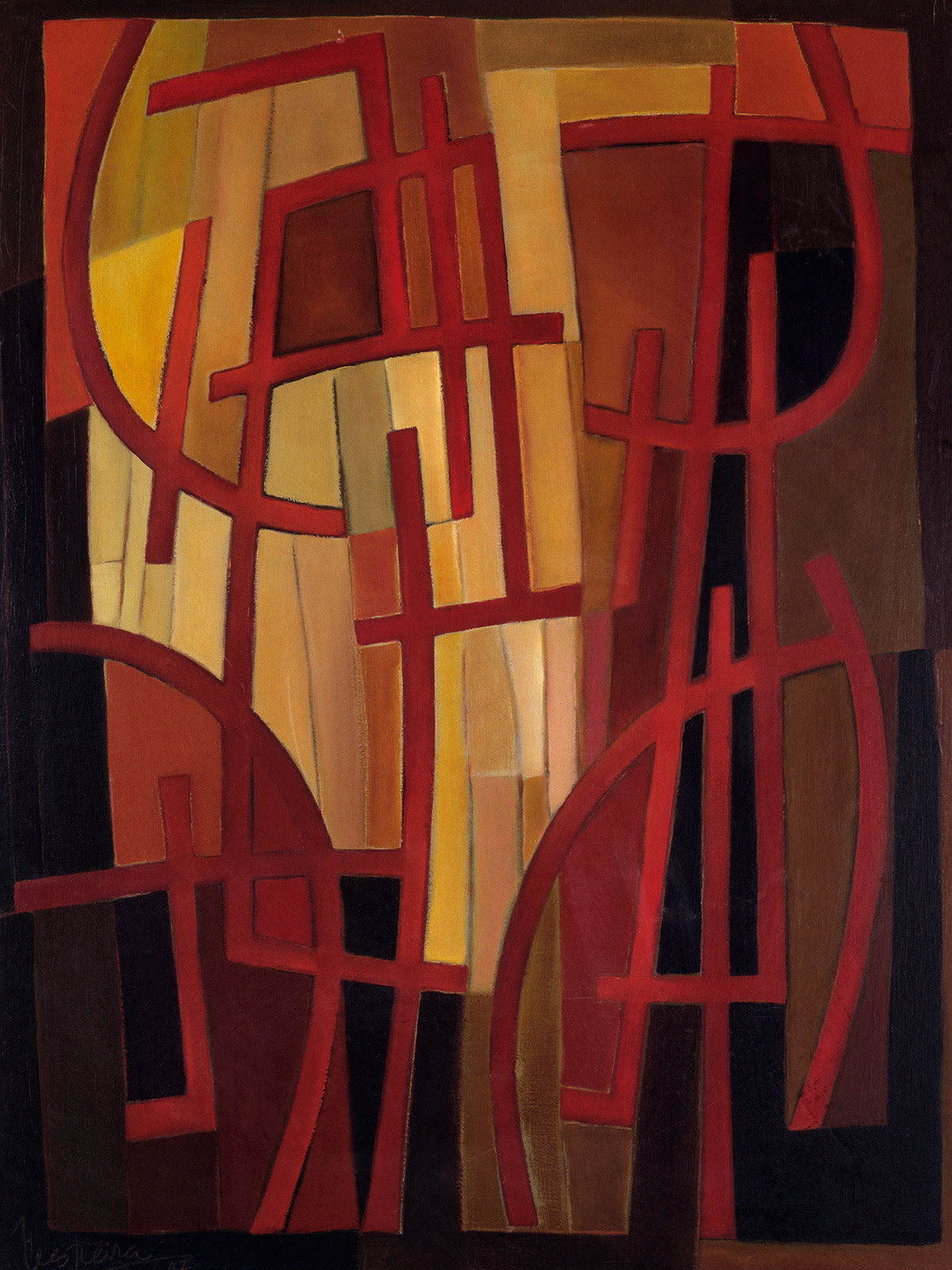
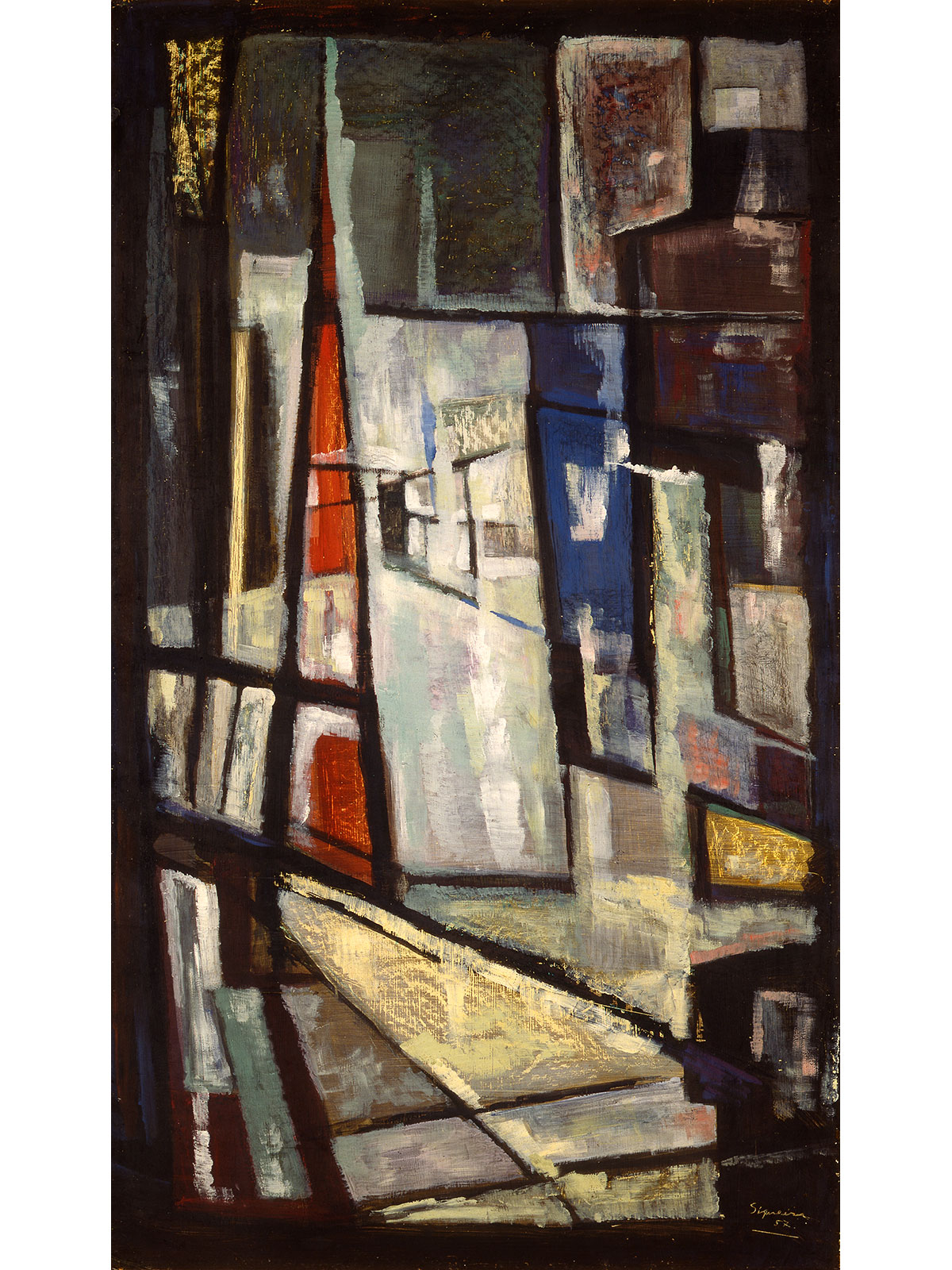
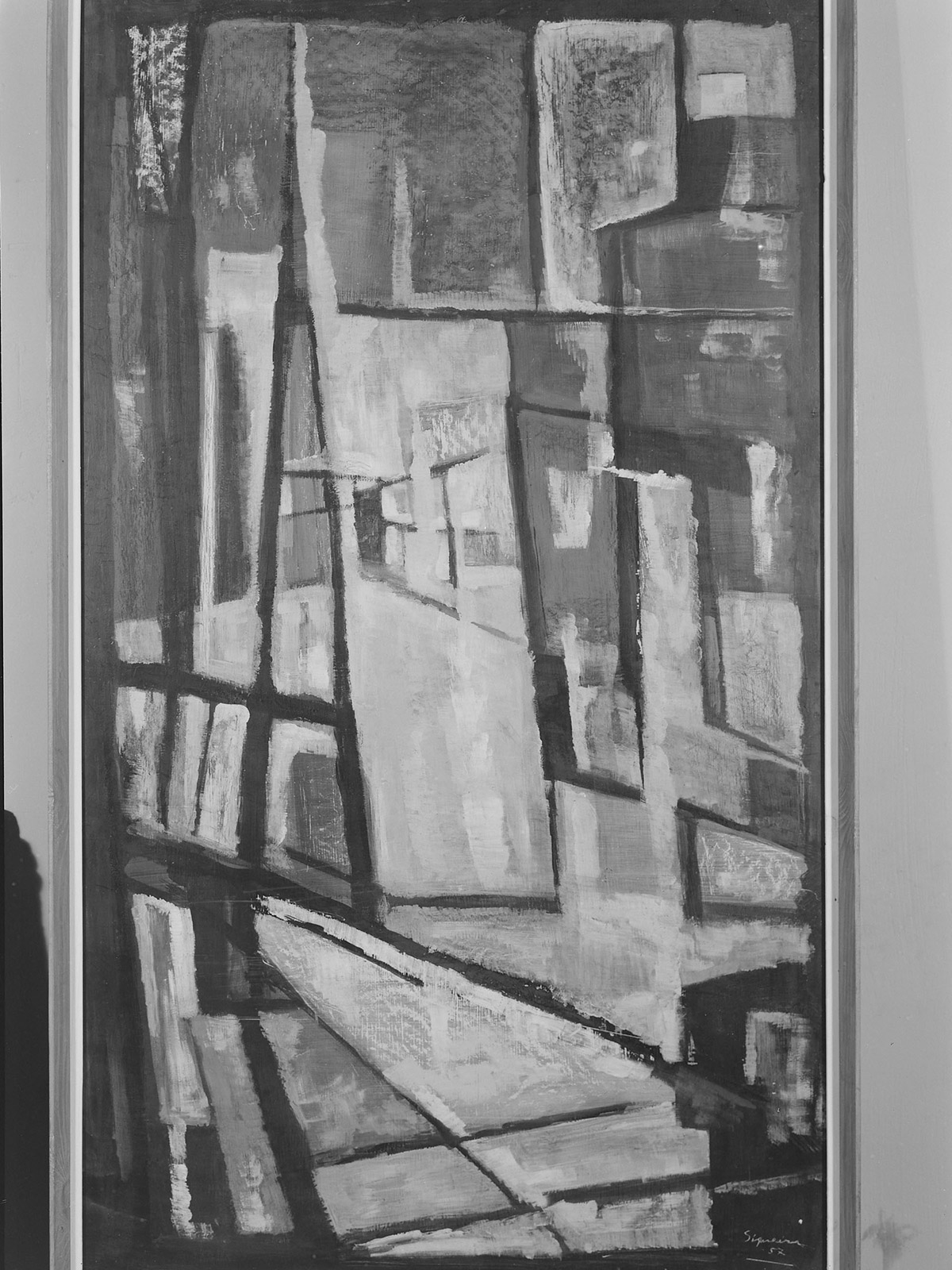
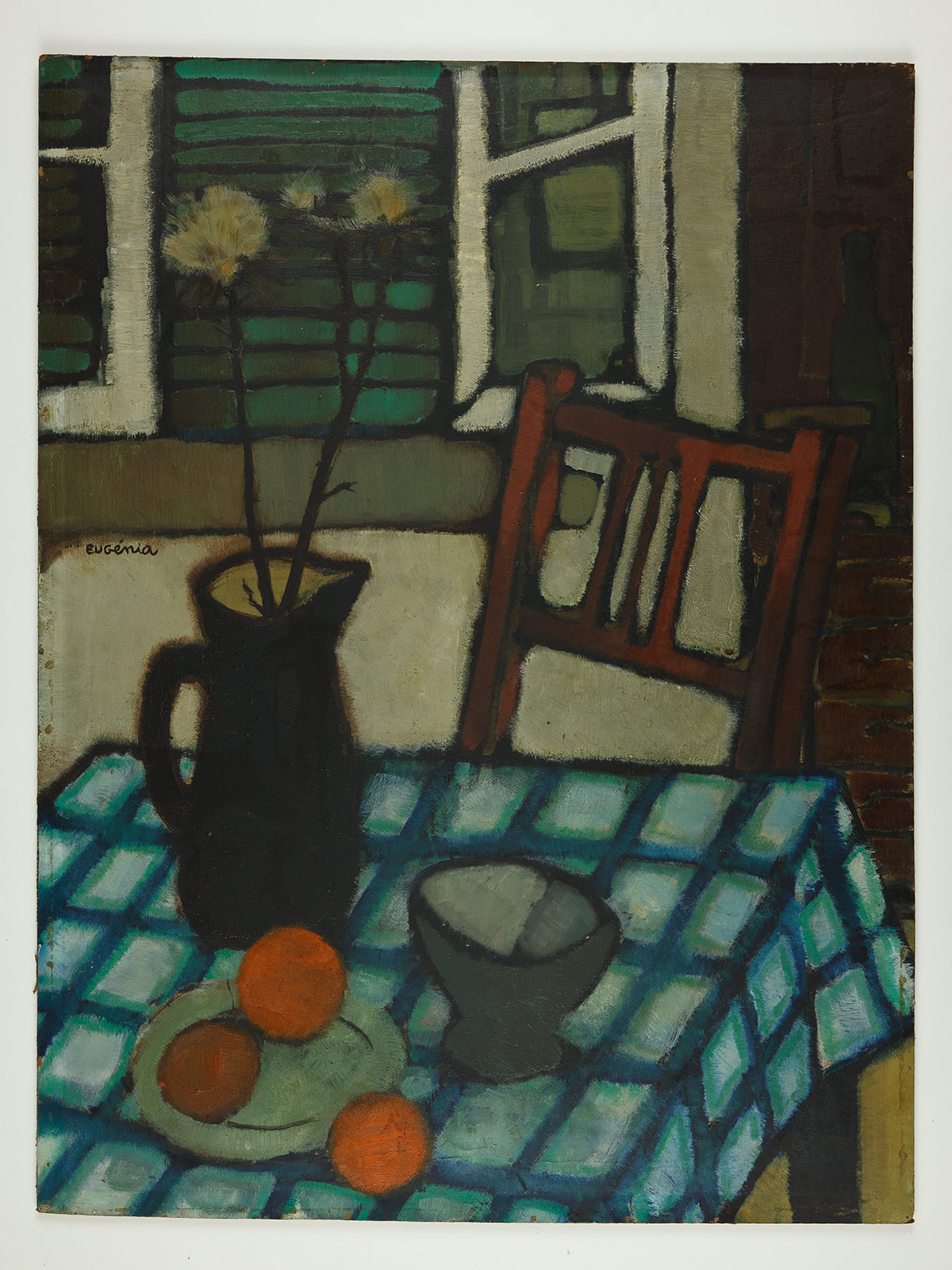
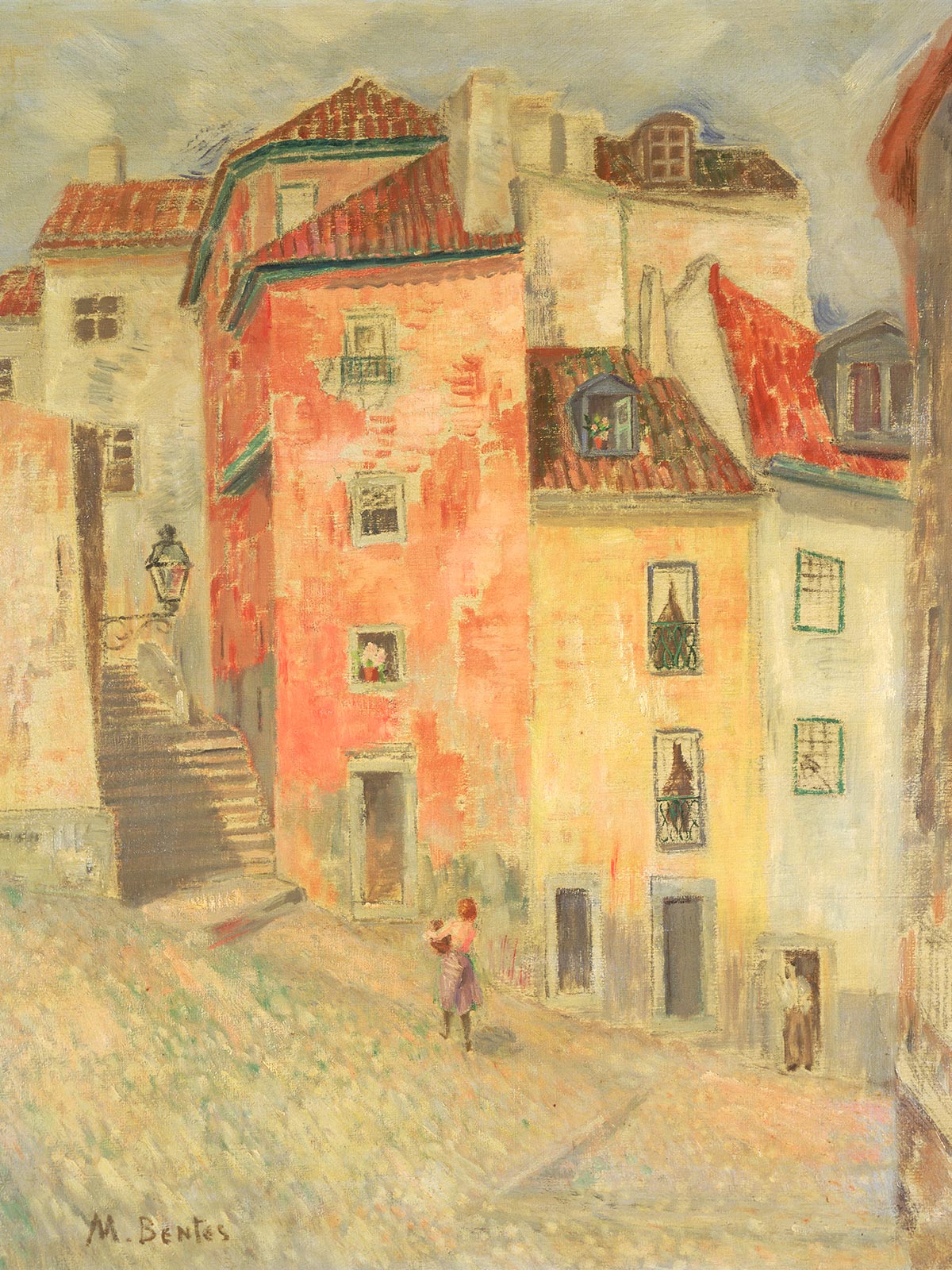
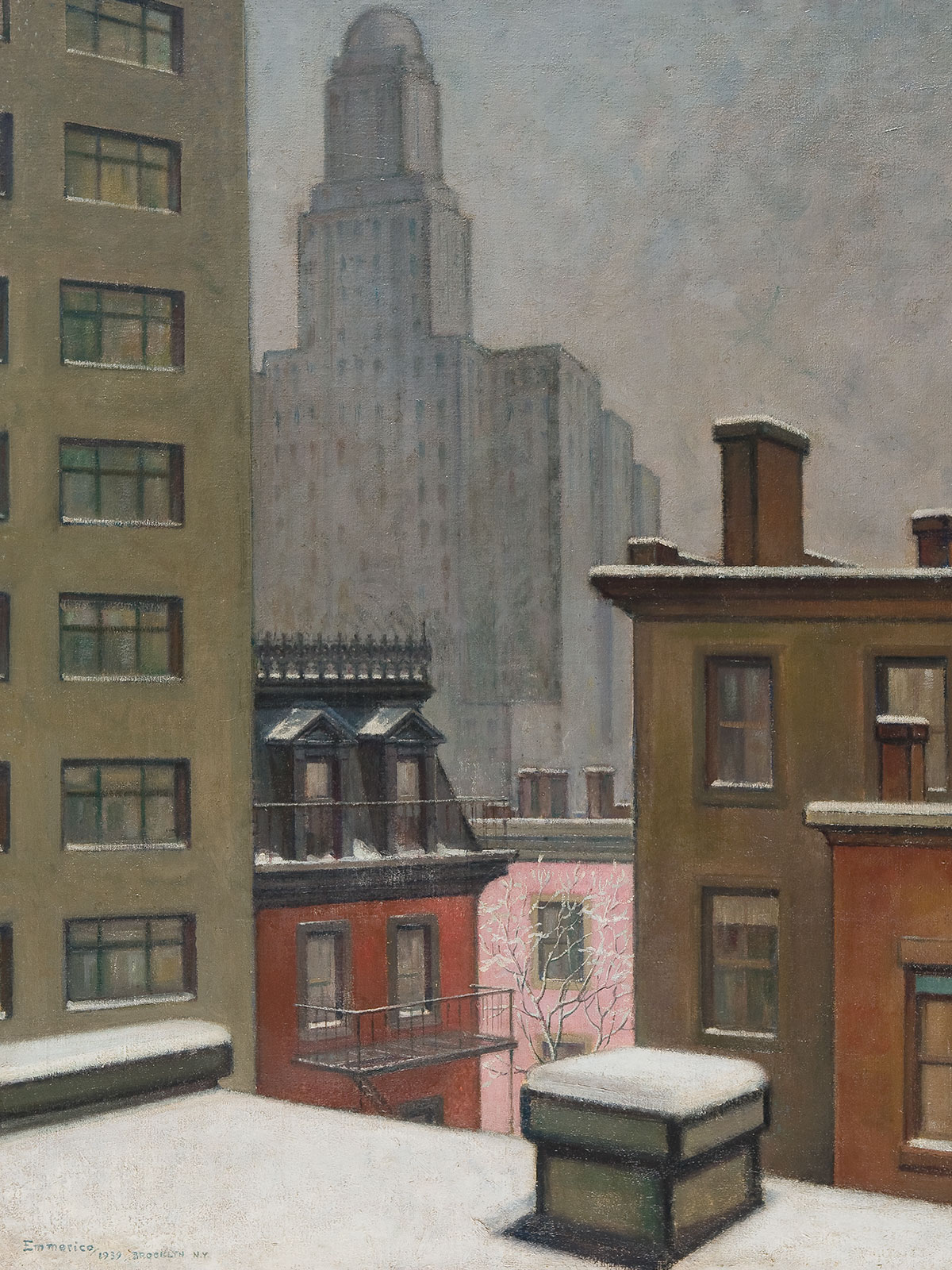
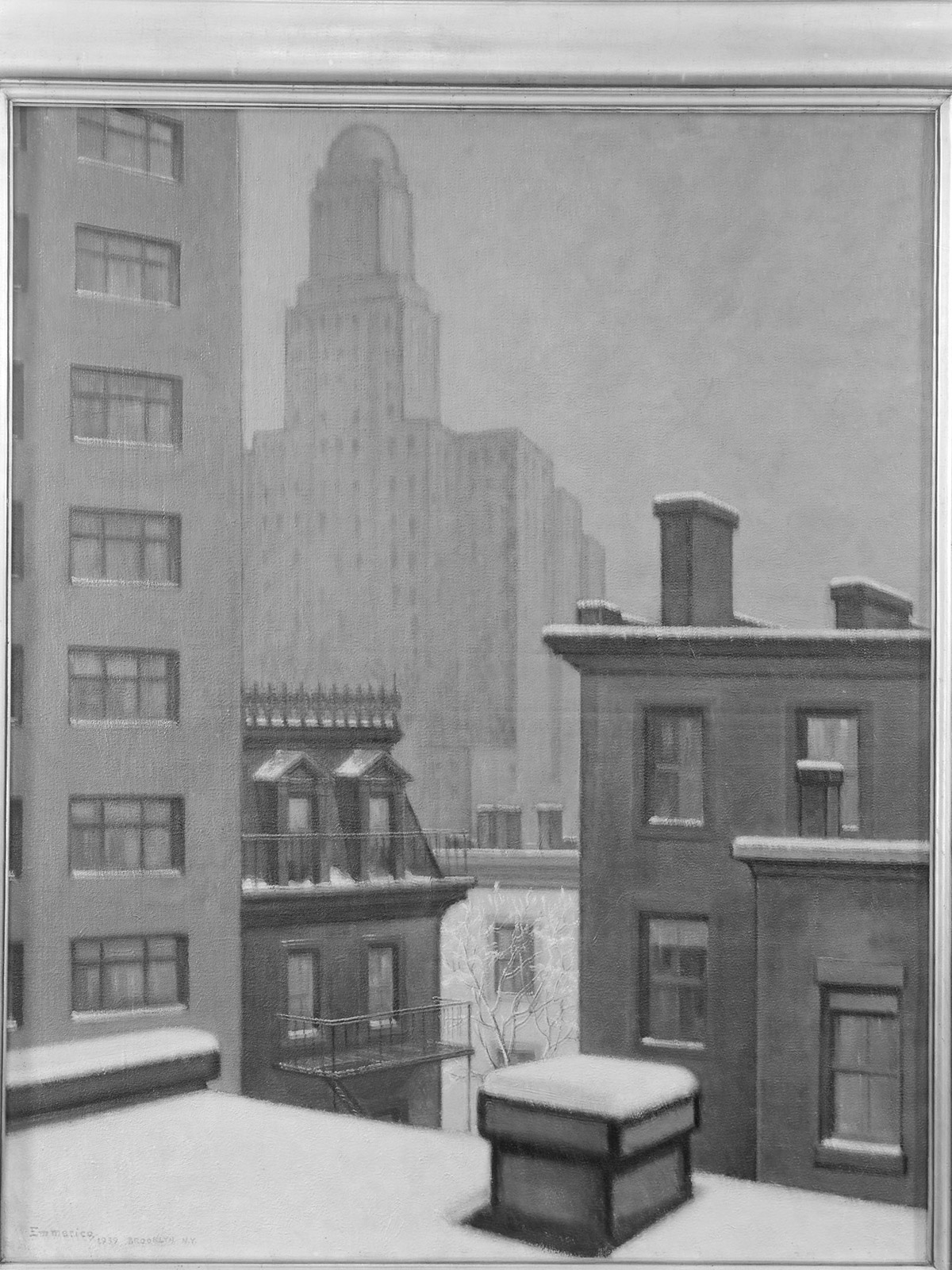
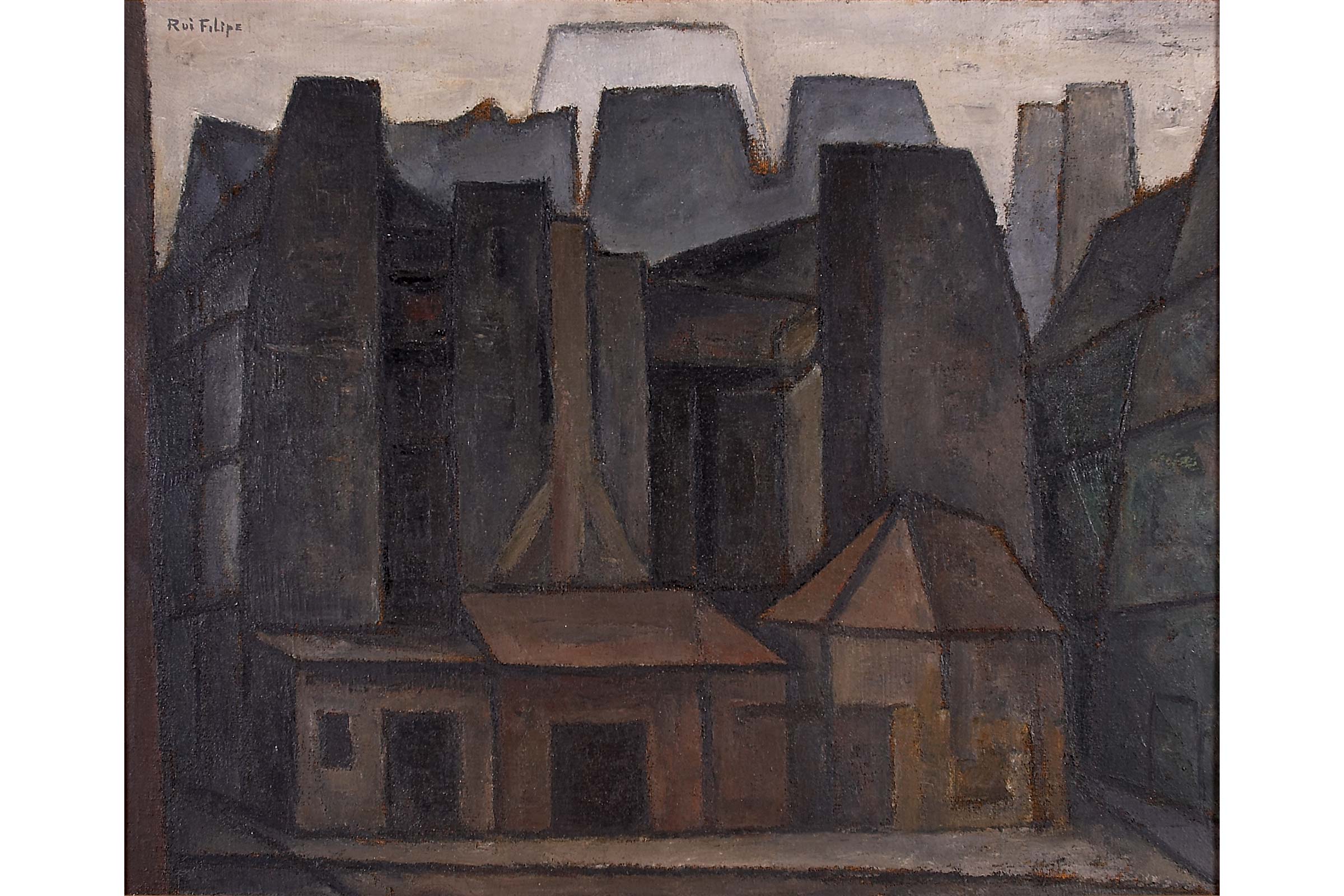
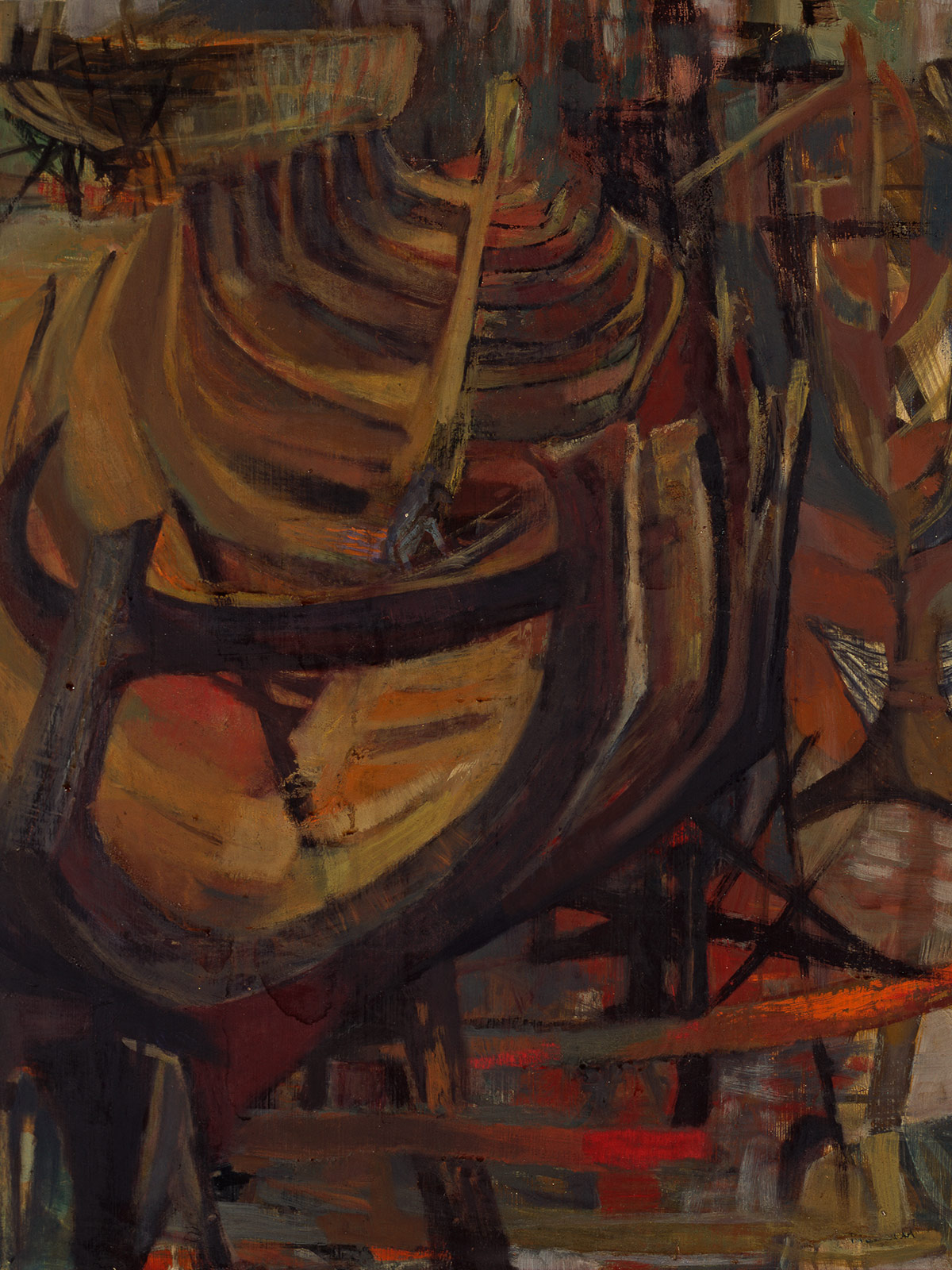
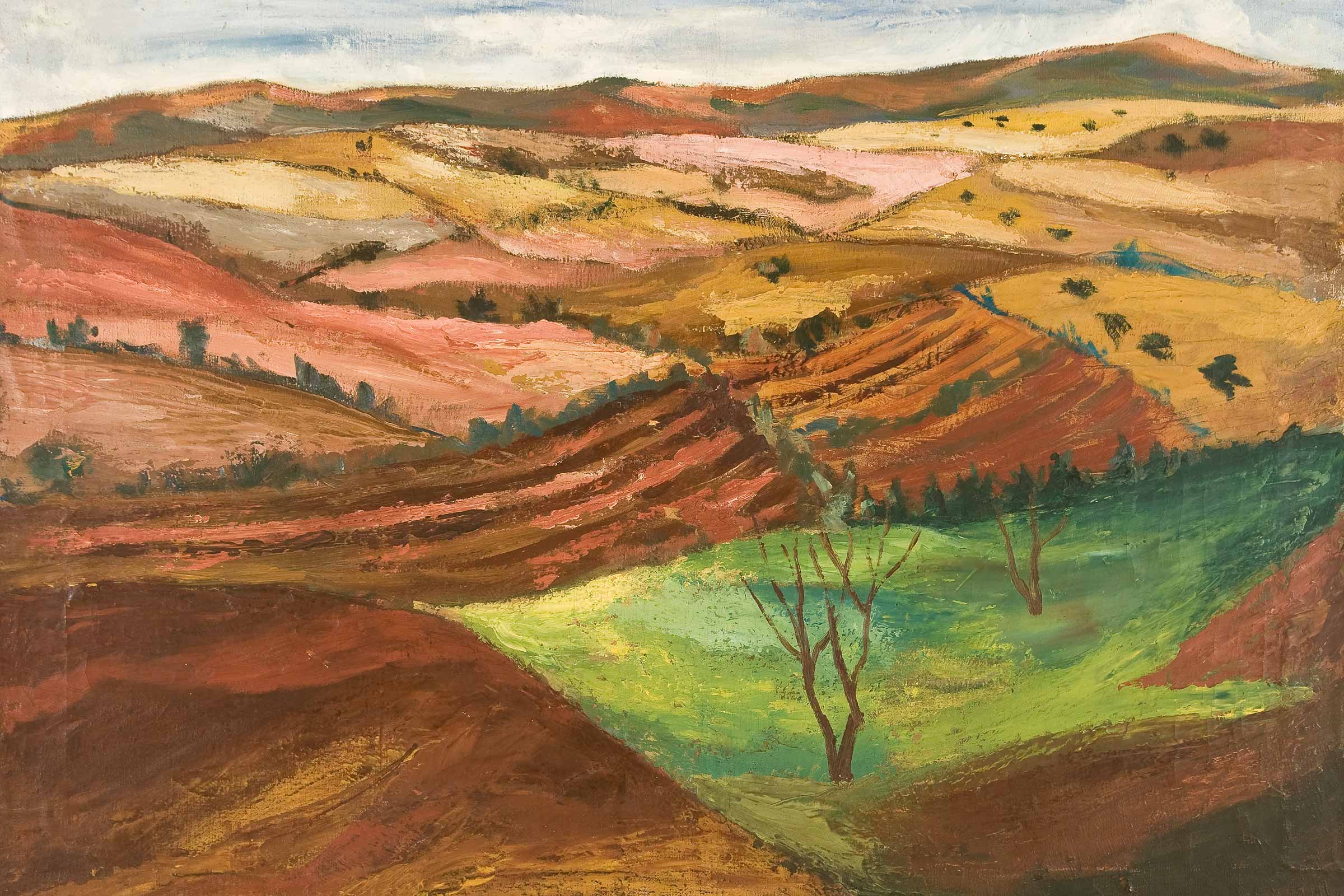
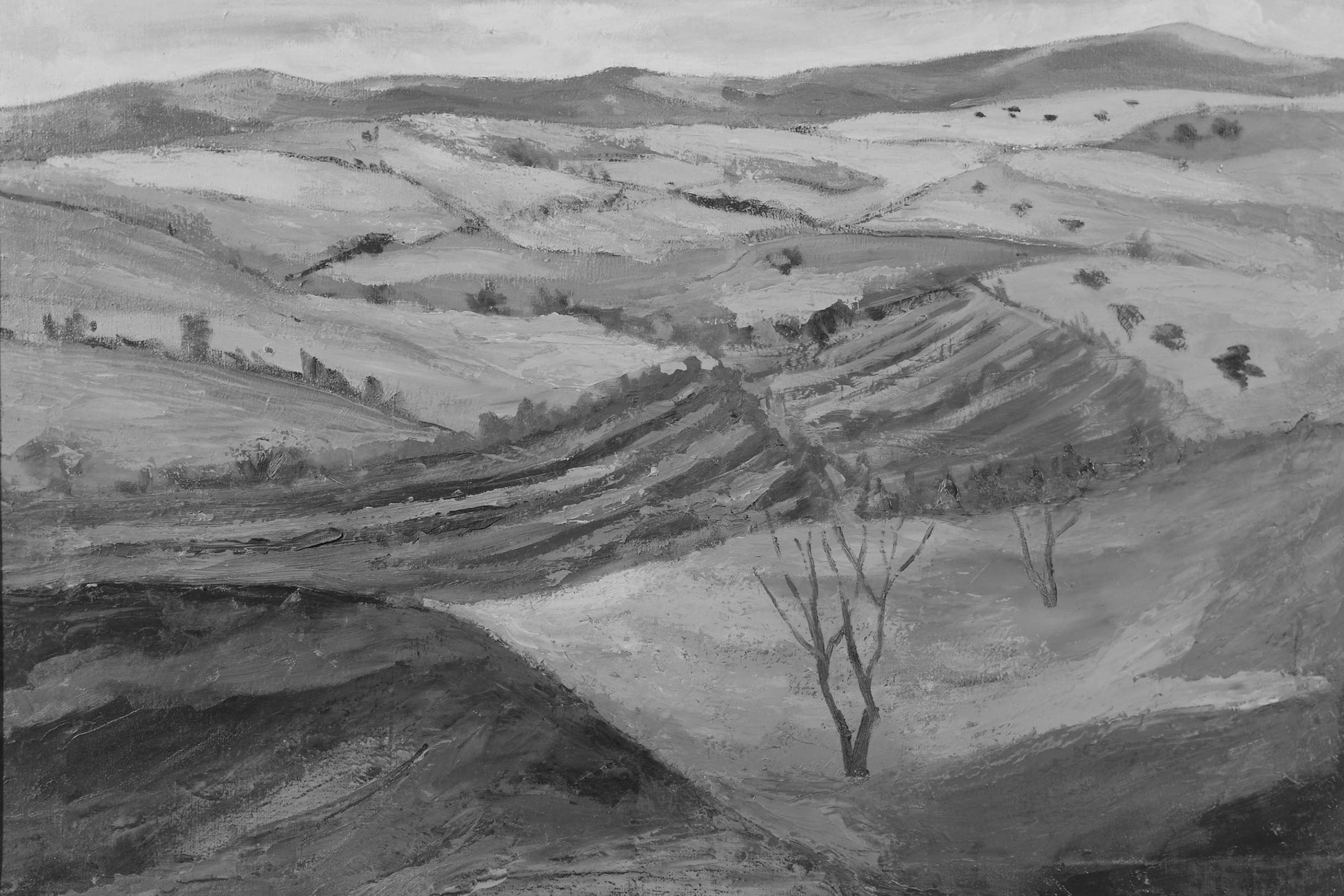
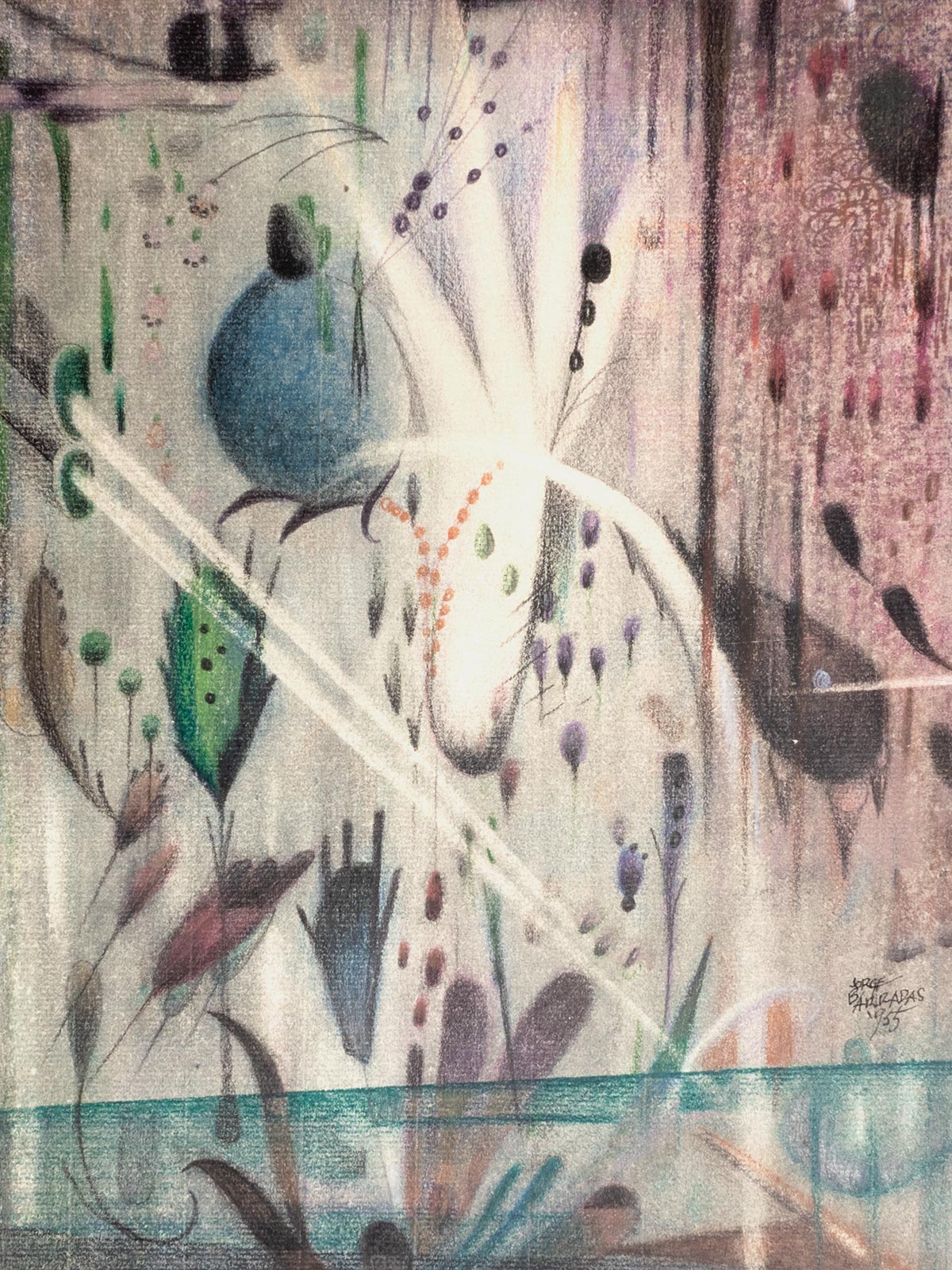
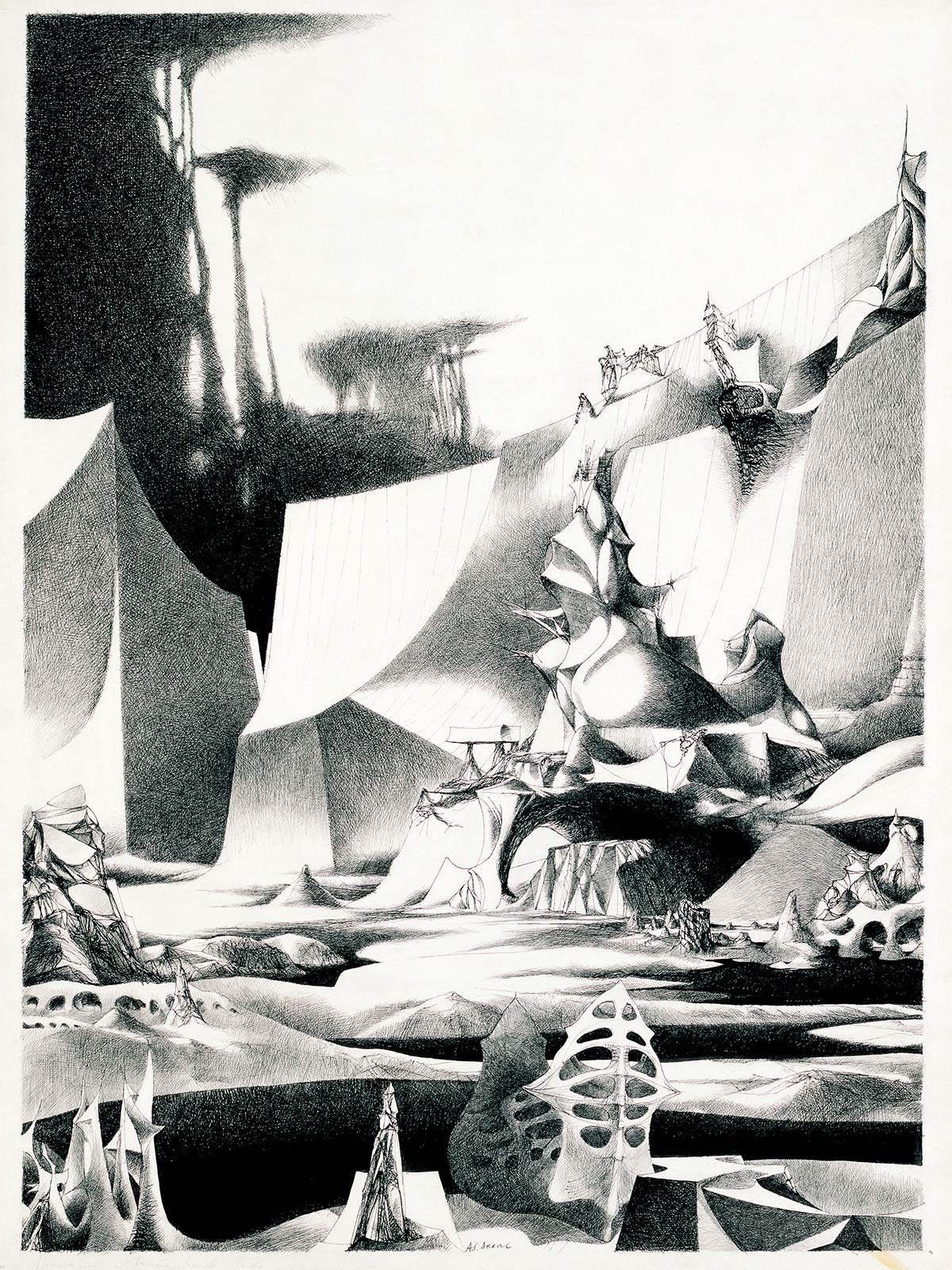
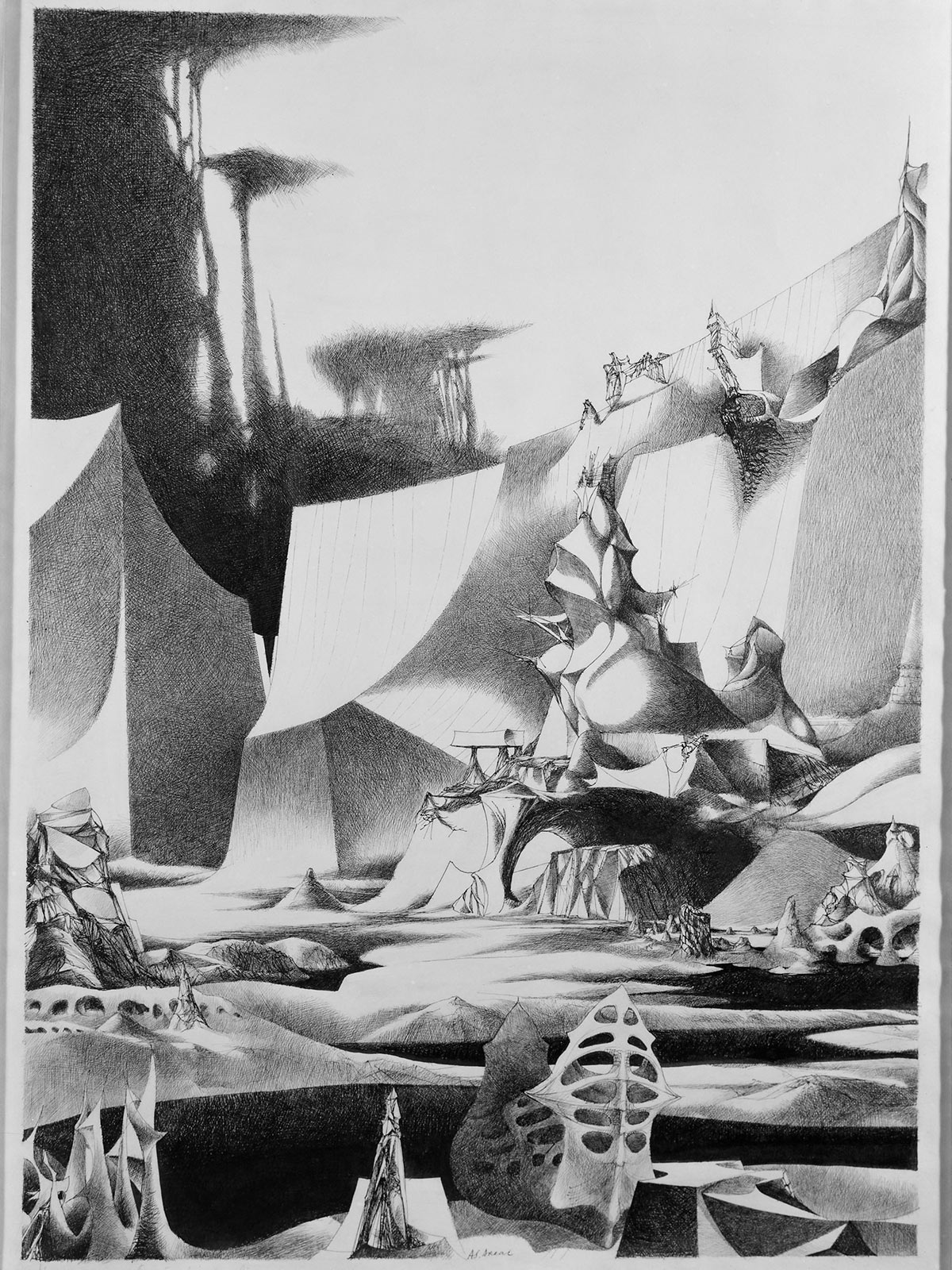
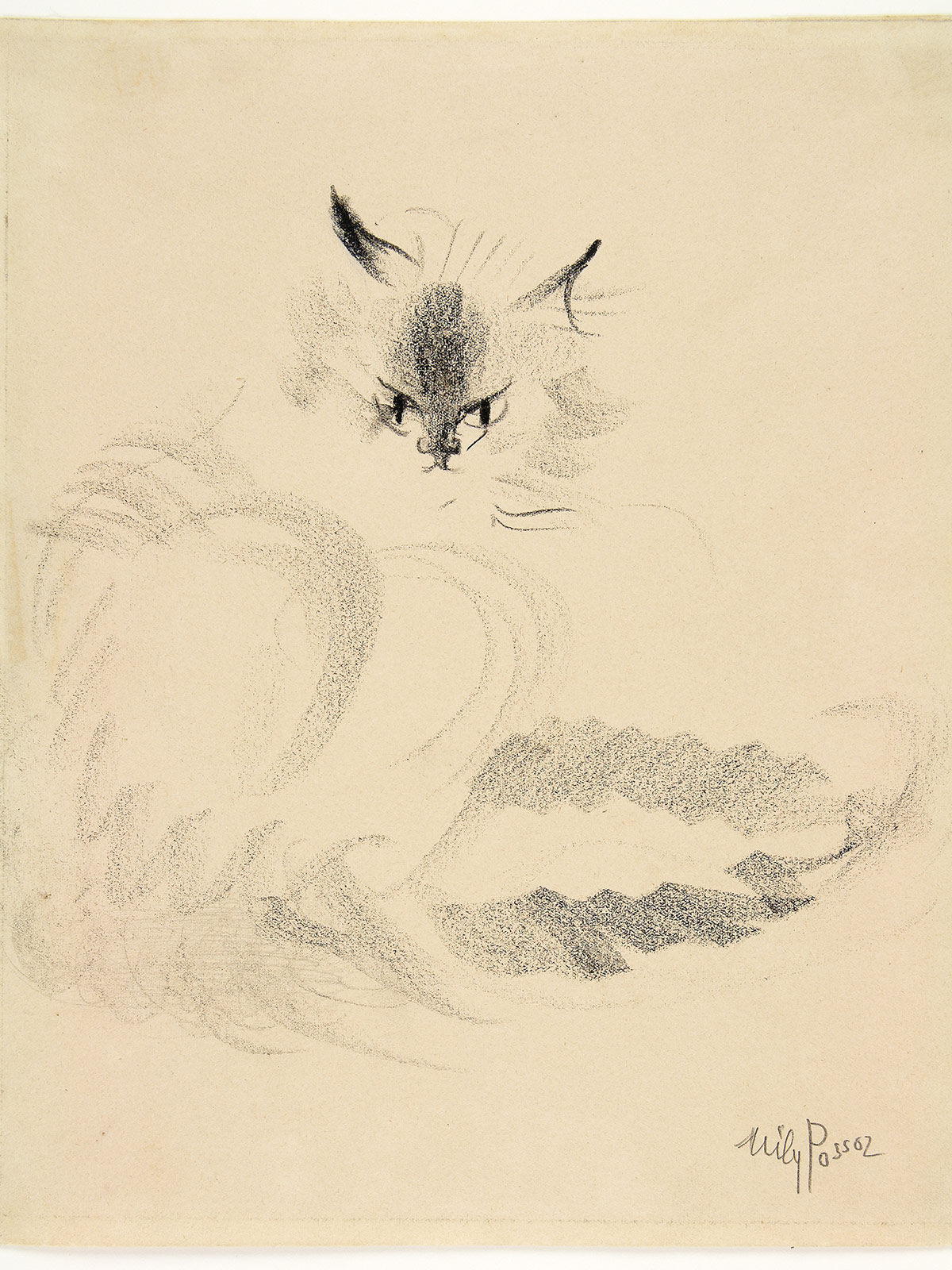
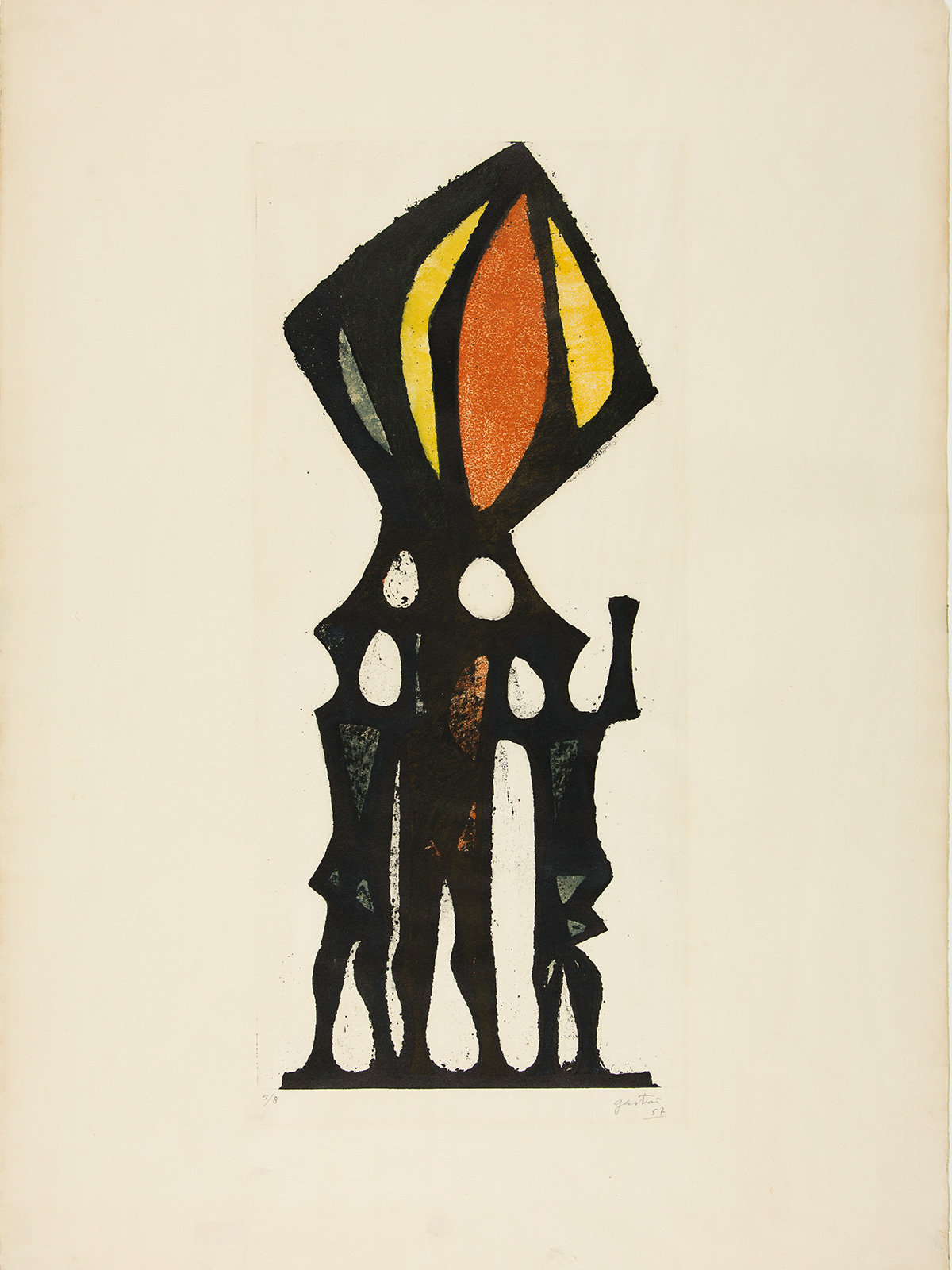
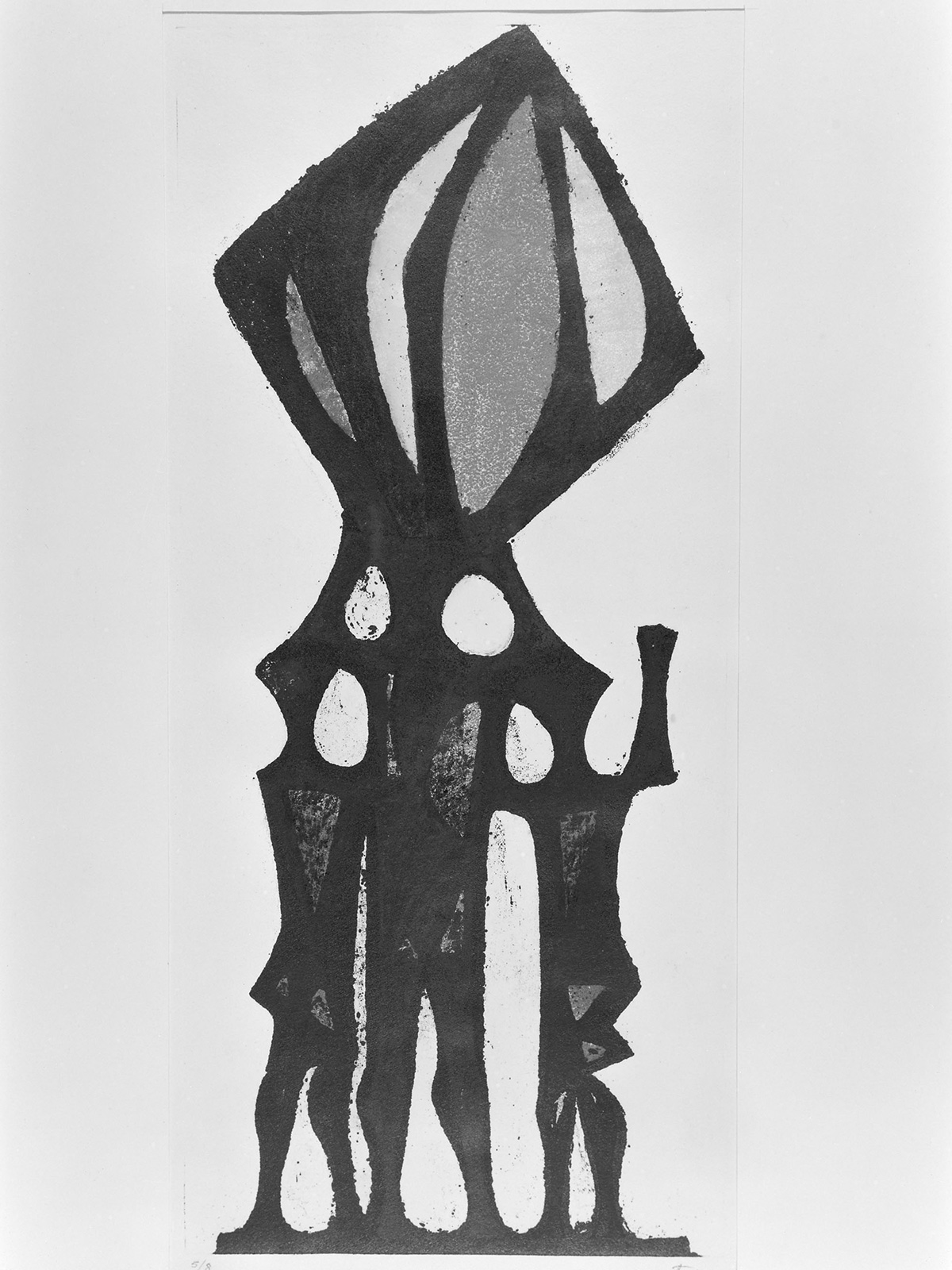
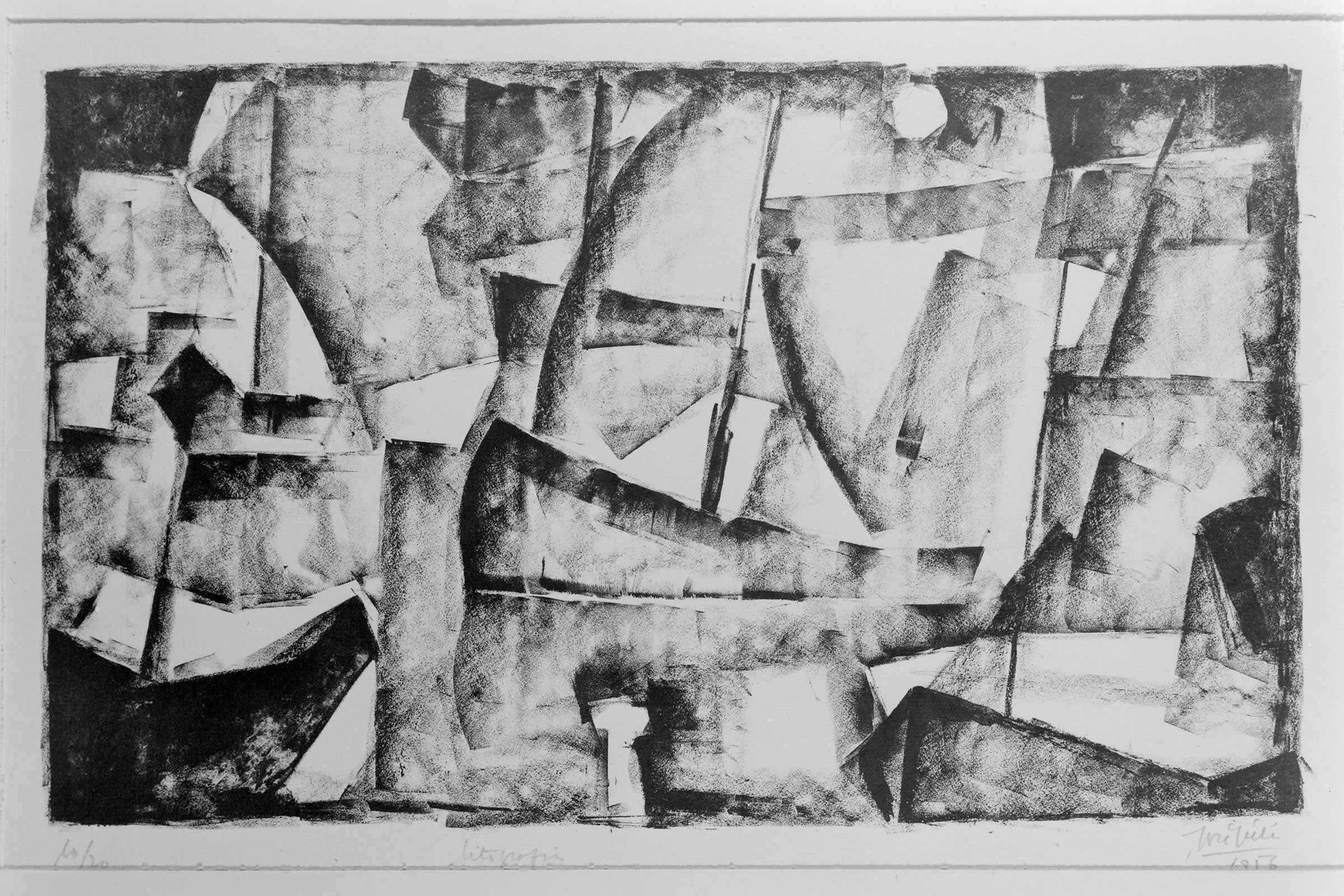
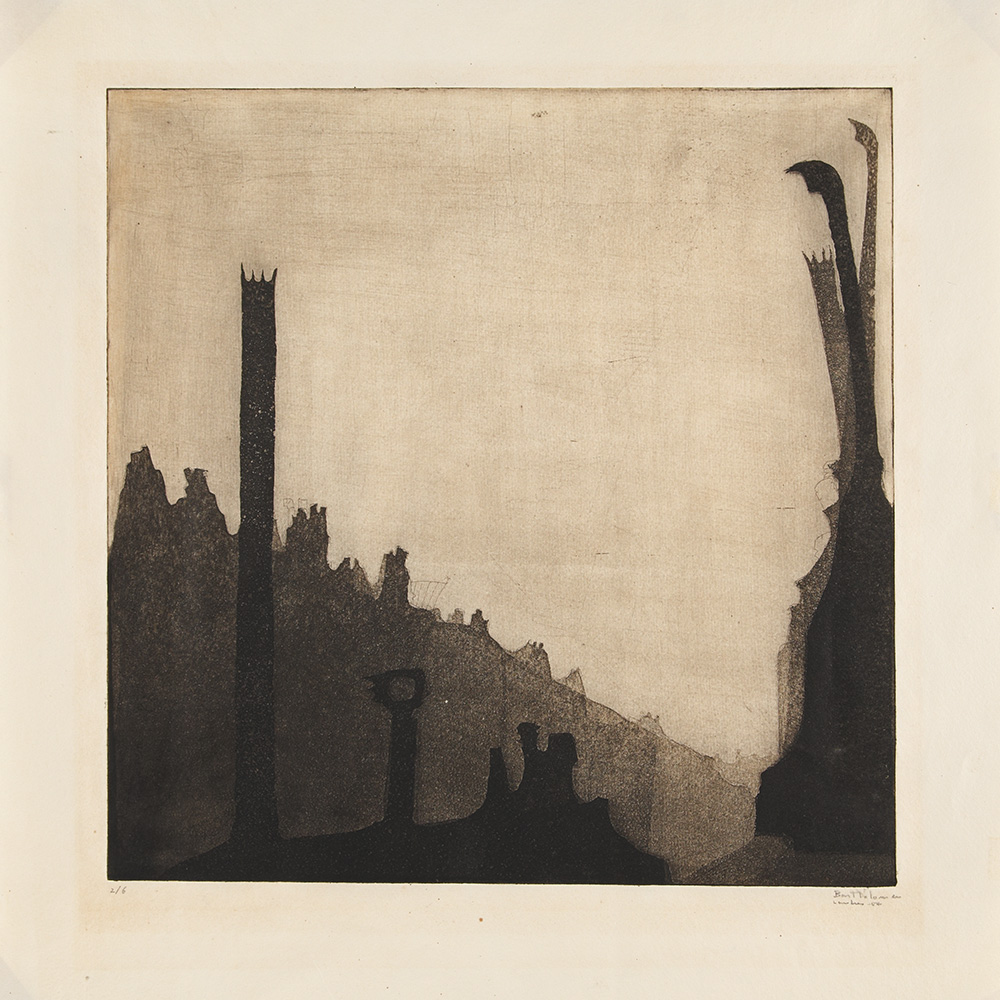
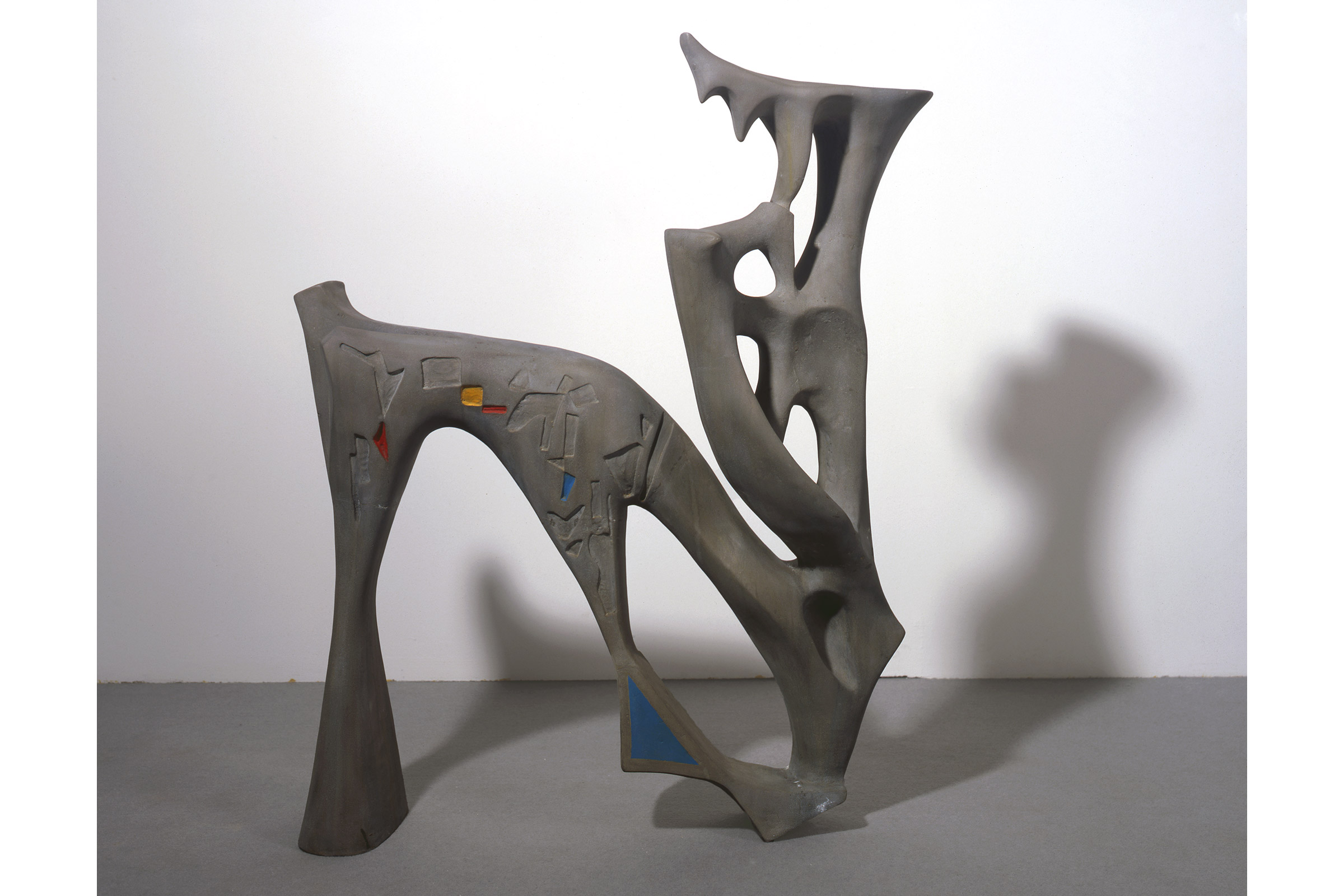
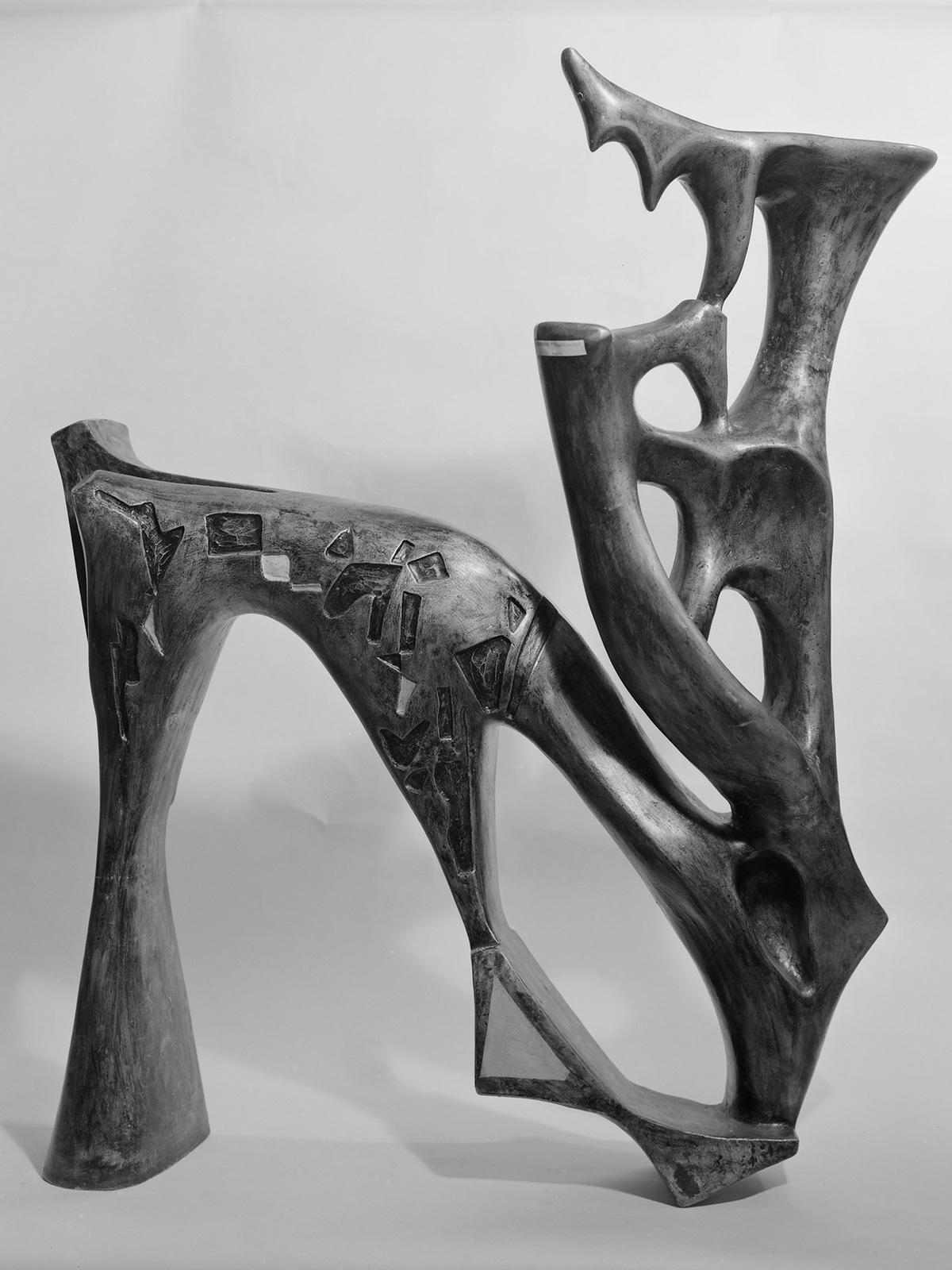
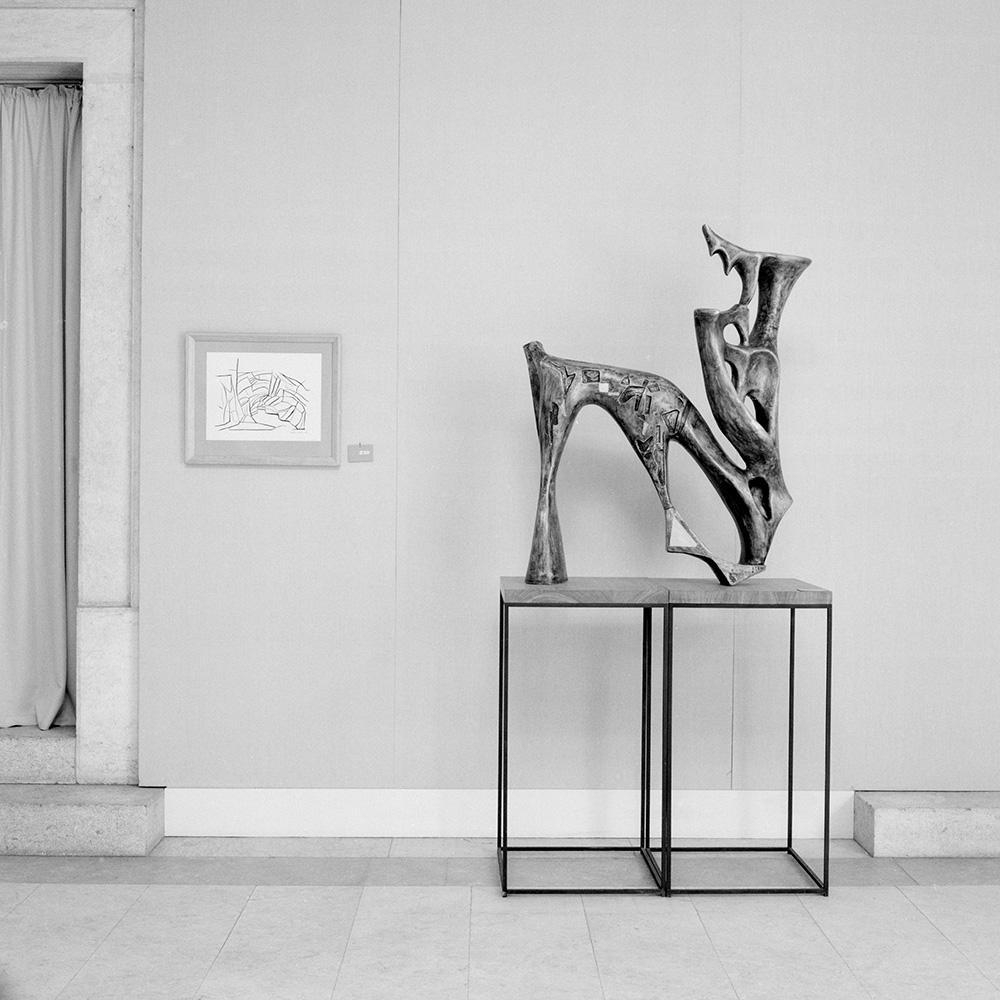
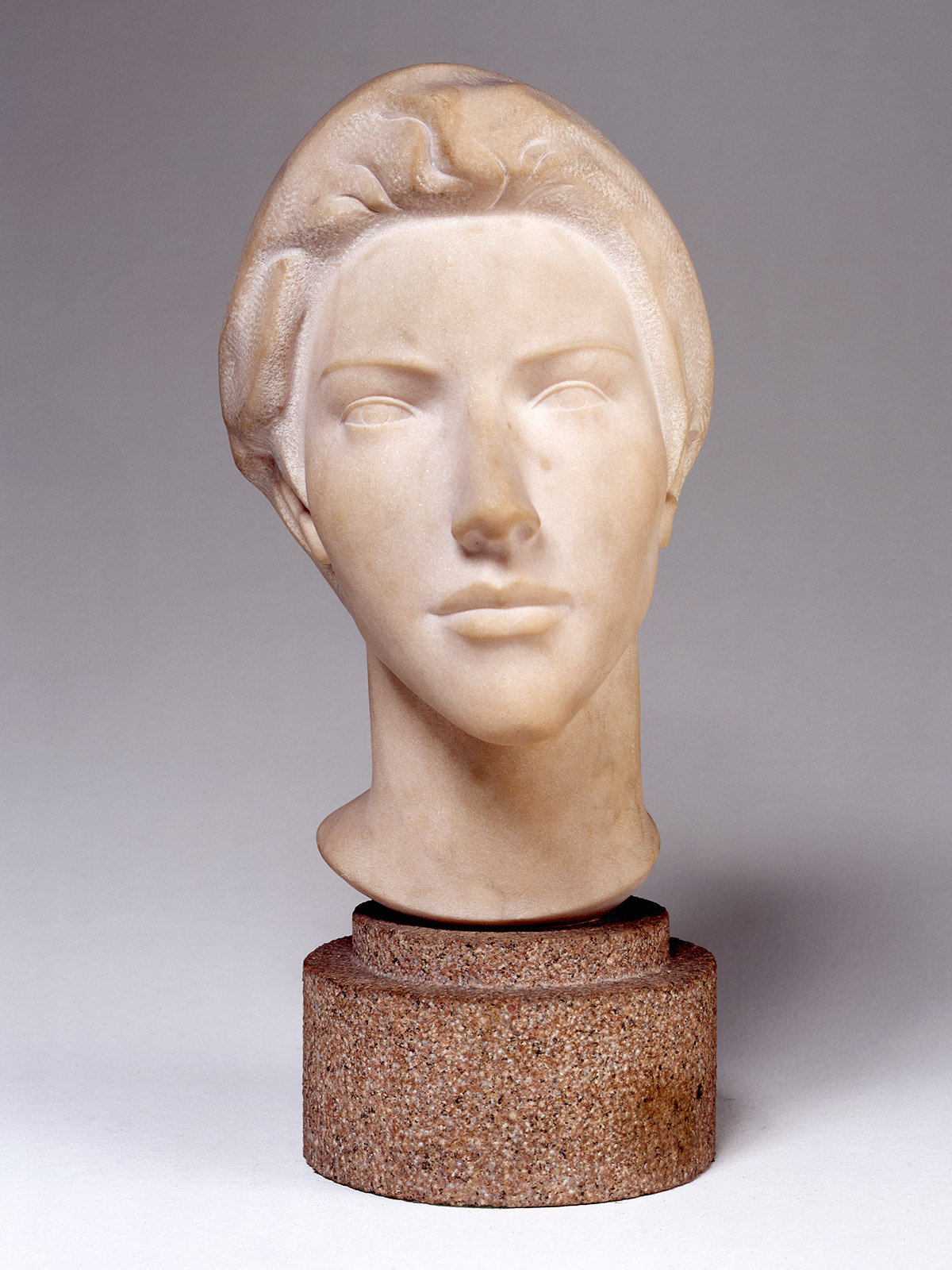
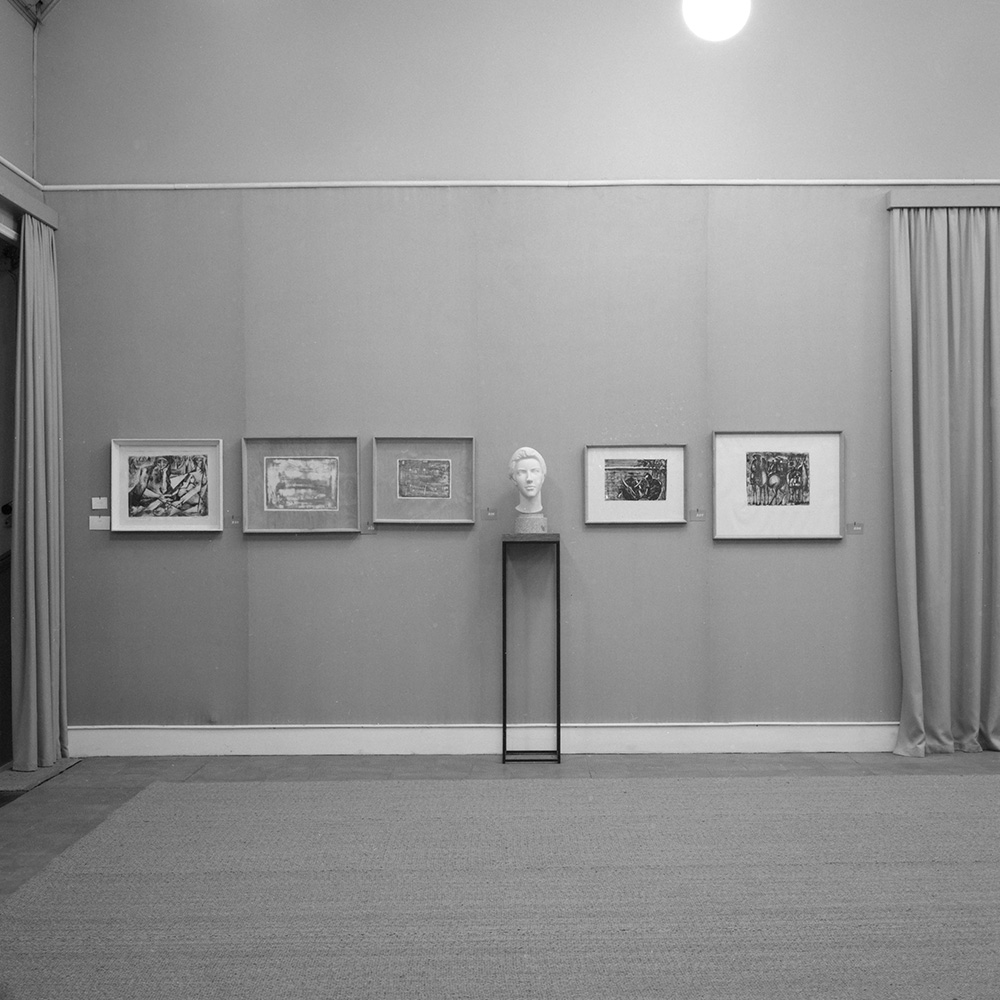
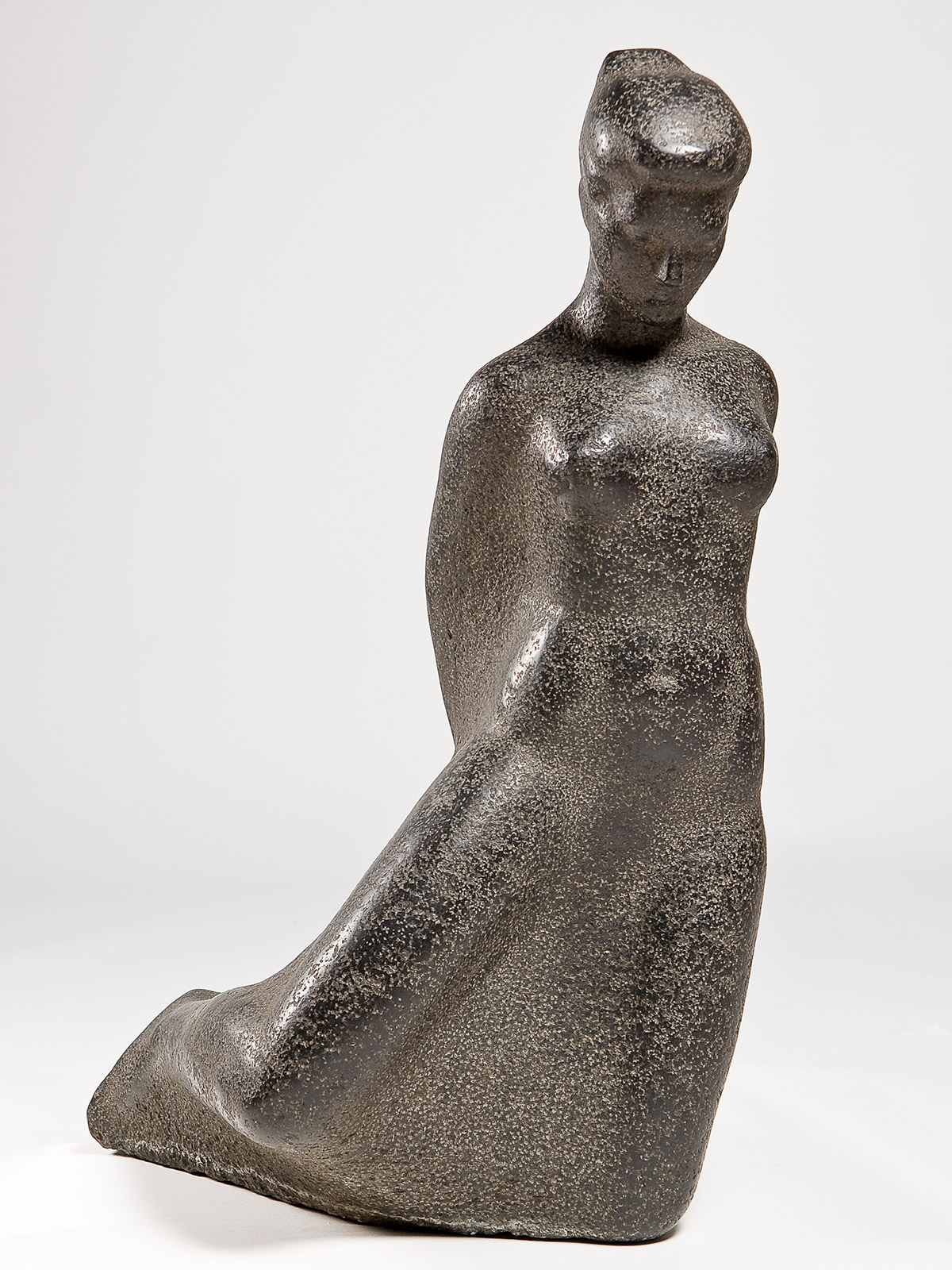
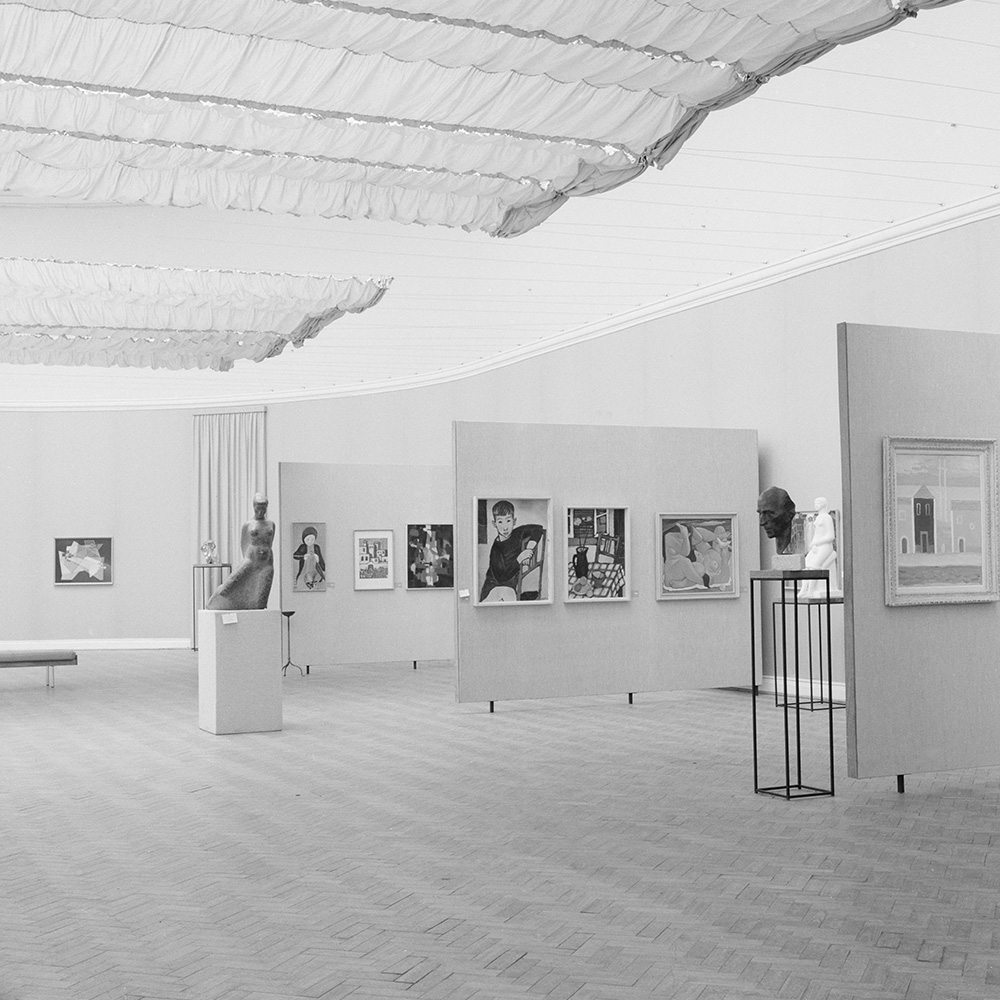
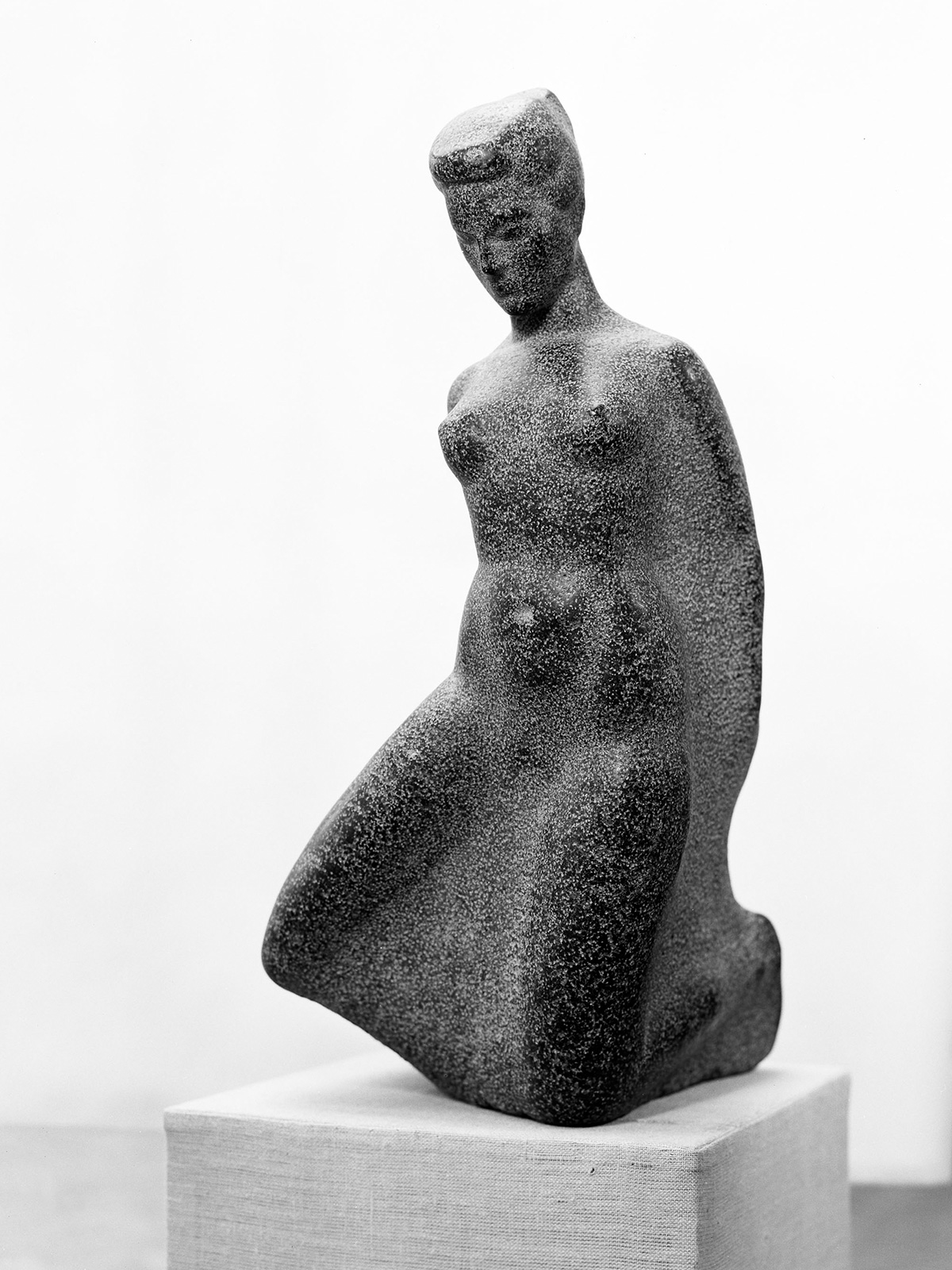
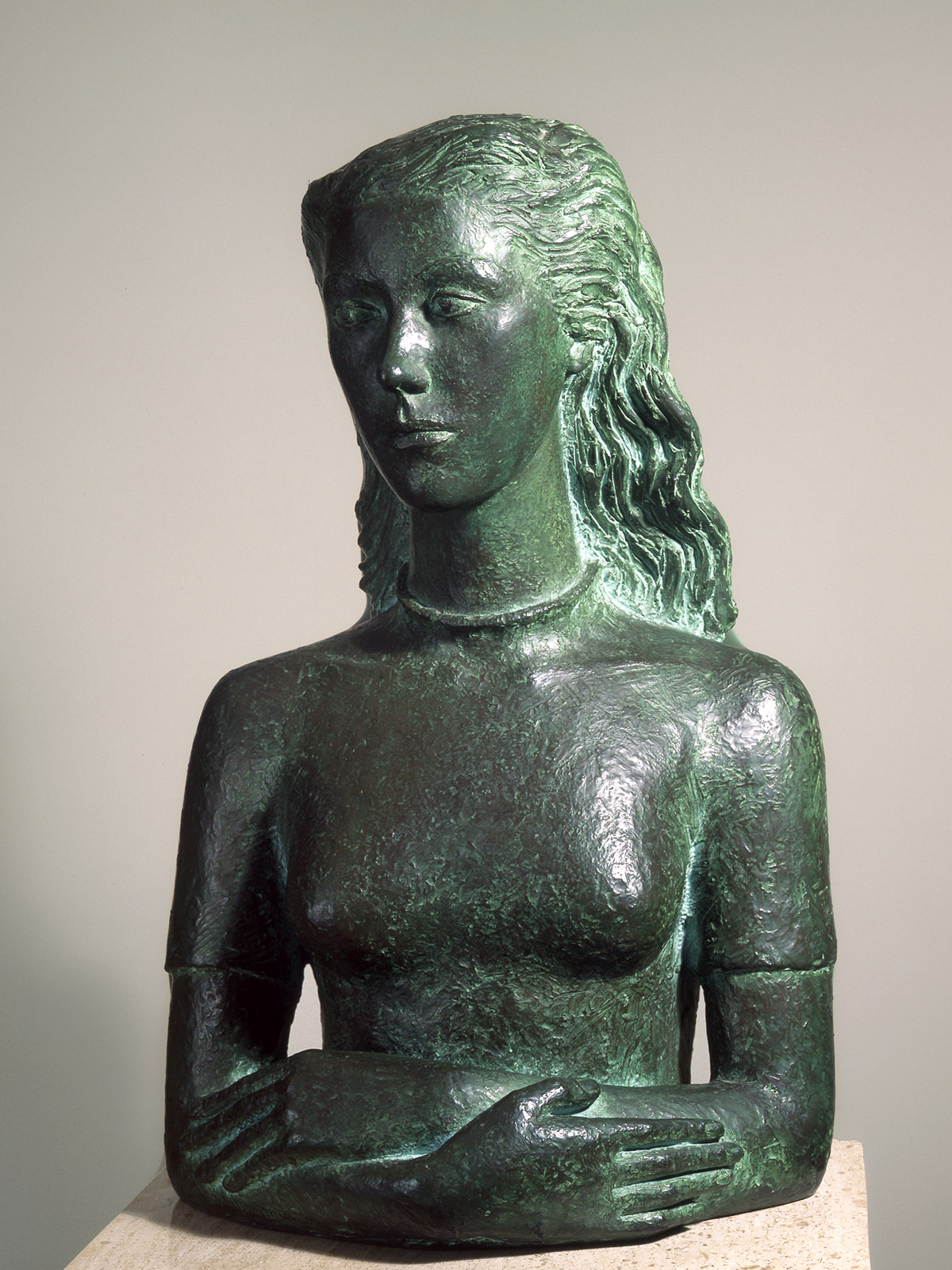
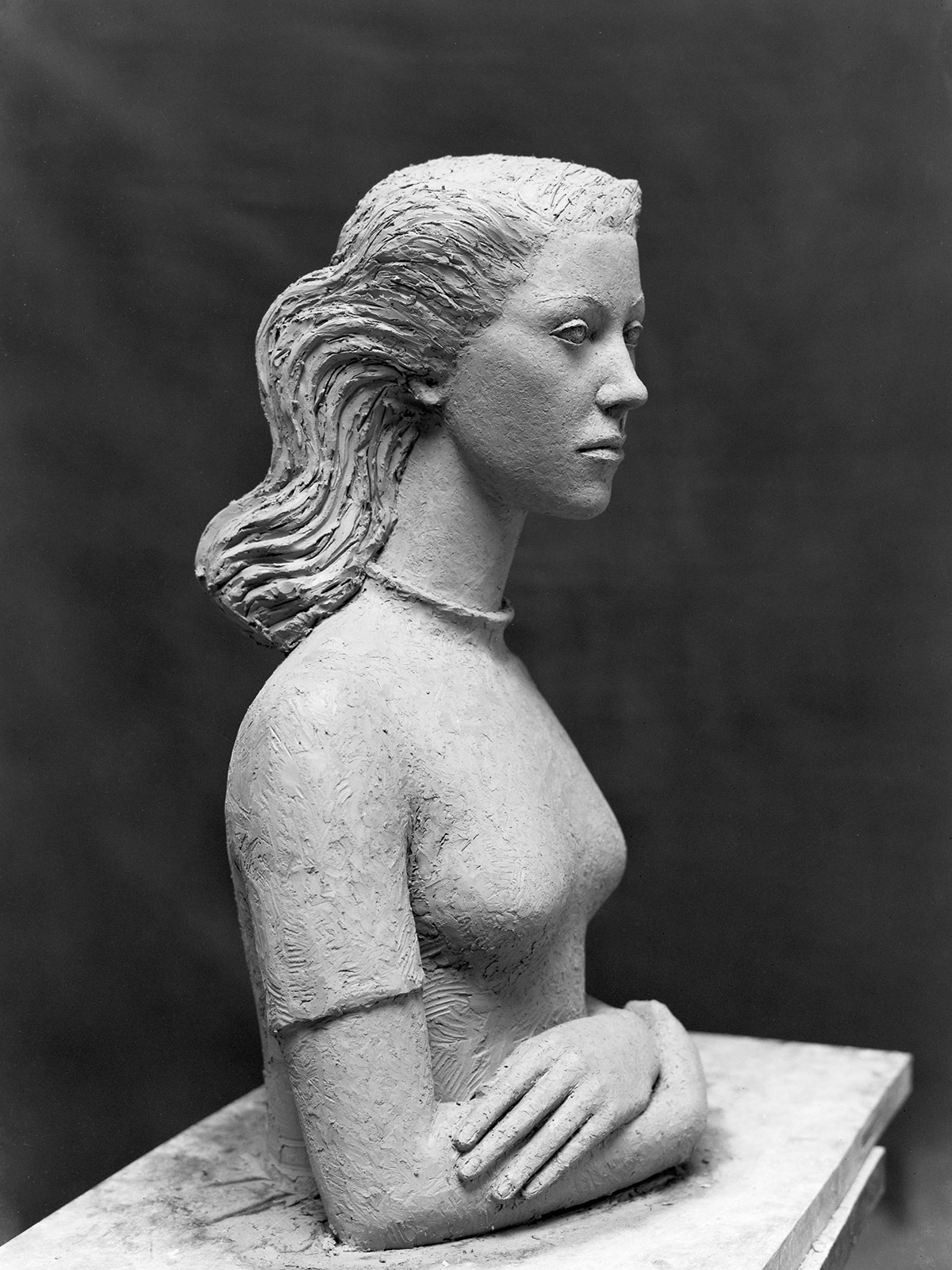
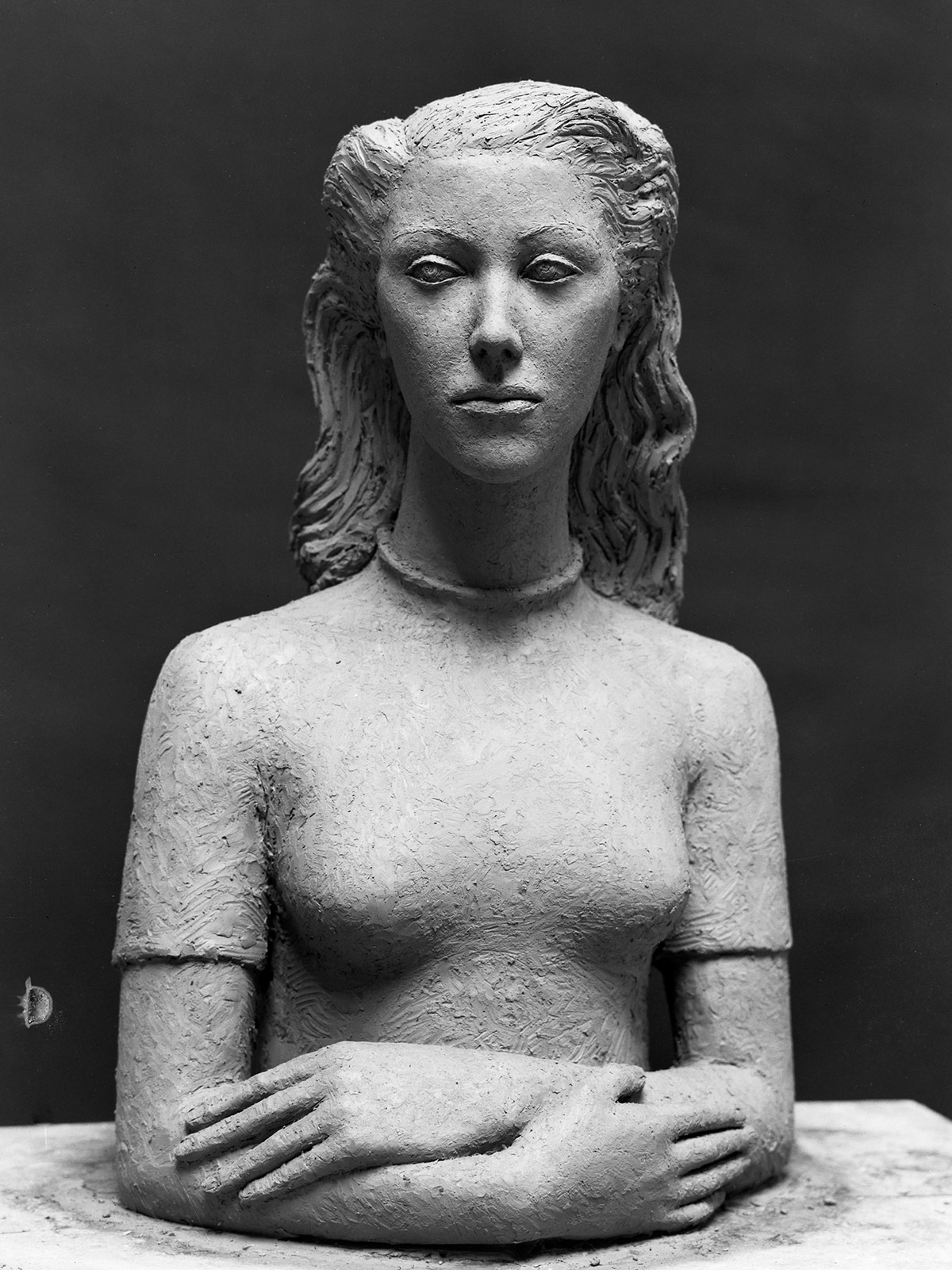
This set of eighteen works formed the start of what was later to become the collection of the Centro de Arte Moderna and the acquisition of works from exhibitions was in subsequent years to be the Foundation’s preferred method for expanding its collection.
In addition to the stated aim of providing direct support to artists, affording them the means to work independently, the acquisition of works from exhibitions achieved another aim: that of fostering the art market which at that time was practically non-existent in Portugal, where the State and local authorities were essentially the only buyers, significantly limiting the creative process. Public patronage made for a kind of official art, and consequently stood in the way of new currents developing in contemporary art.
In addition to some of the acquisitions being loaned to museums, permanently or temporarily, as envisaged by Azeredo Perdigão, some of the works were used to create itinerant exhibitions that toured the country. The aim of these was to reach new audiences, including younger generations, furthering artistic education throughout Portugal.
It might be said that the board’s initial resistance to acquisitions of artworks proved beneficial, because it encouraged reflection on the subject, which culminated in criteria and guidelines being set for the Foundation to follow in future.
In the preface to the exhibition catalogue, Azeredo Perdigão explains the rationale for the initiative: “The foundation […] has sought to contribute to development of the arts in Portugal […] without distinction as to schools, factions or currents, and without especially promoting one or more of these, to the detriment of others”. And he goes on: “foundations have an important role to play in all the endeavours leading to human progress, and to make progress, in all ages, is fundamentally to create through renewal”.
In a letter to Teotónio Pereira on 26 December, he refers to the reach of the initiative: “It was necessary to do something new, that established us in the fine arts world, offered a lesson and held out hope for true artists. We got down to work with the greatest enthusiasm and enormous dedication; and we can today say, without being conceited, but with full satisfaction, that it has been a complete triumph. The Exhibition was a total success, and it is fair to say that nothing of the kind has ever been done in Portugal before”.
From the Archives
Explore the series

No results were found for your criteria.
You may also like

No results were found for your criteria.