
“The Exhibition Next Door”
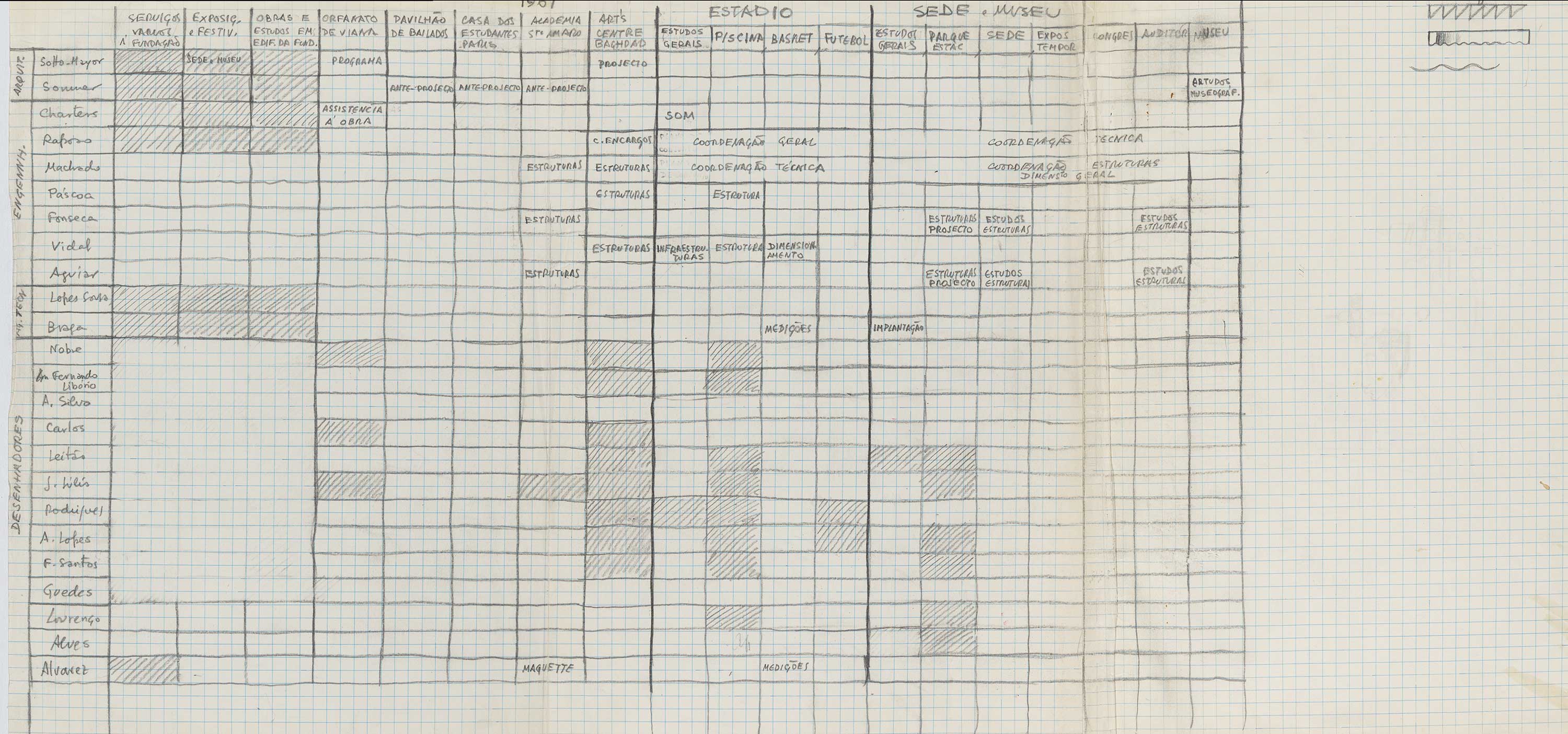
Exhibition of Works for the Headquarters and Museum Project
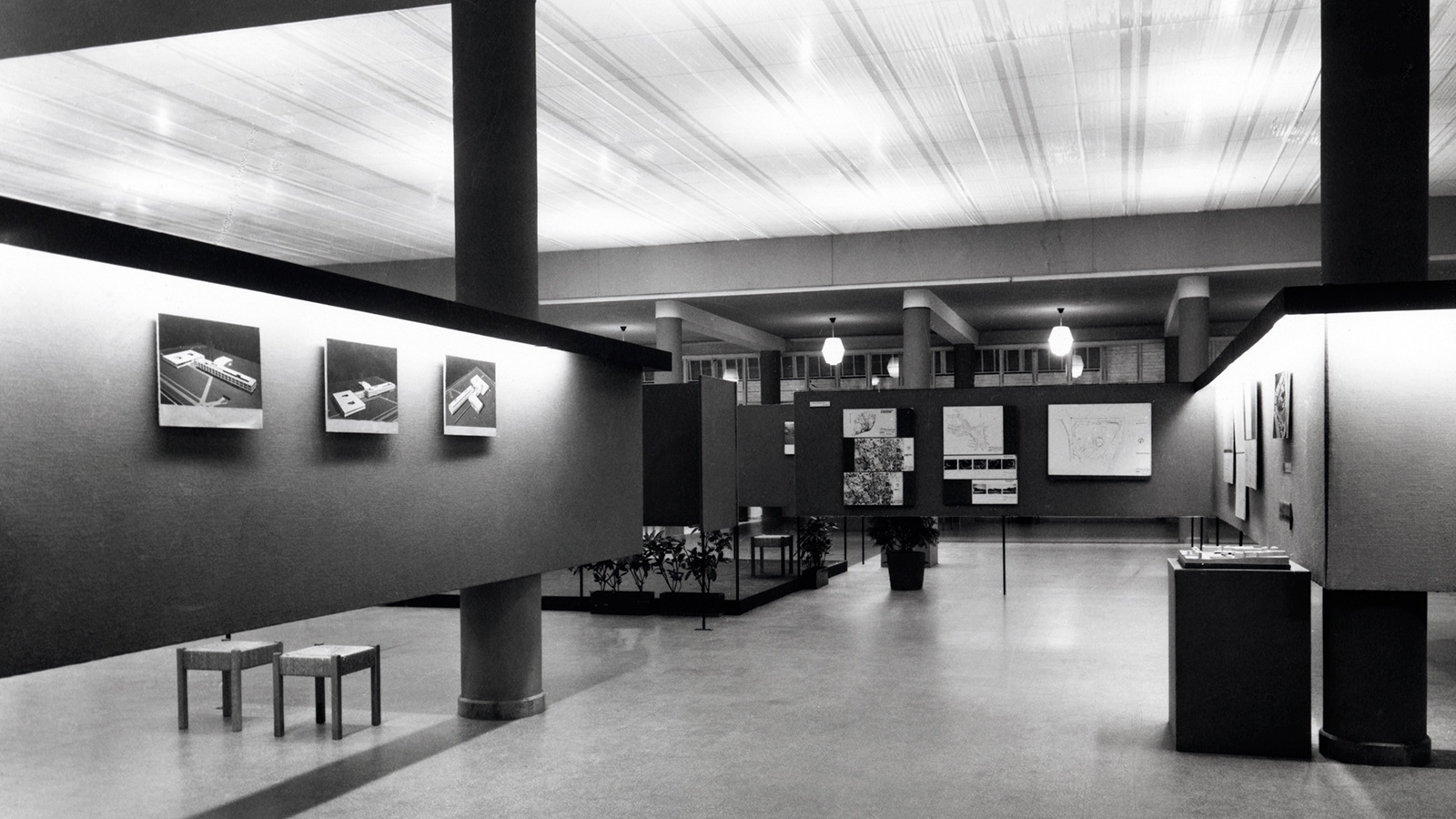
The Exhibition of Works from the Headquarters and Museum Project marked the first public presentation of the future Gulbenkian Foundation building through models, drawings, photographs and preliminary studies relating to the project’s development.
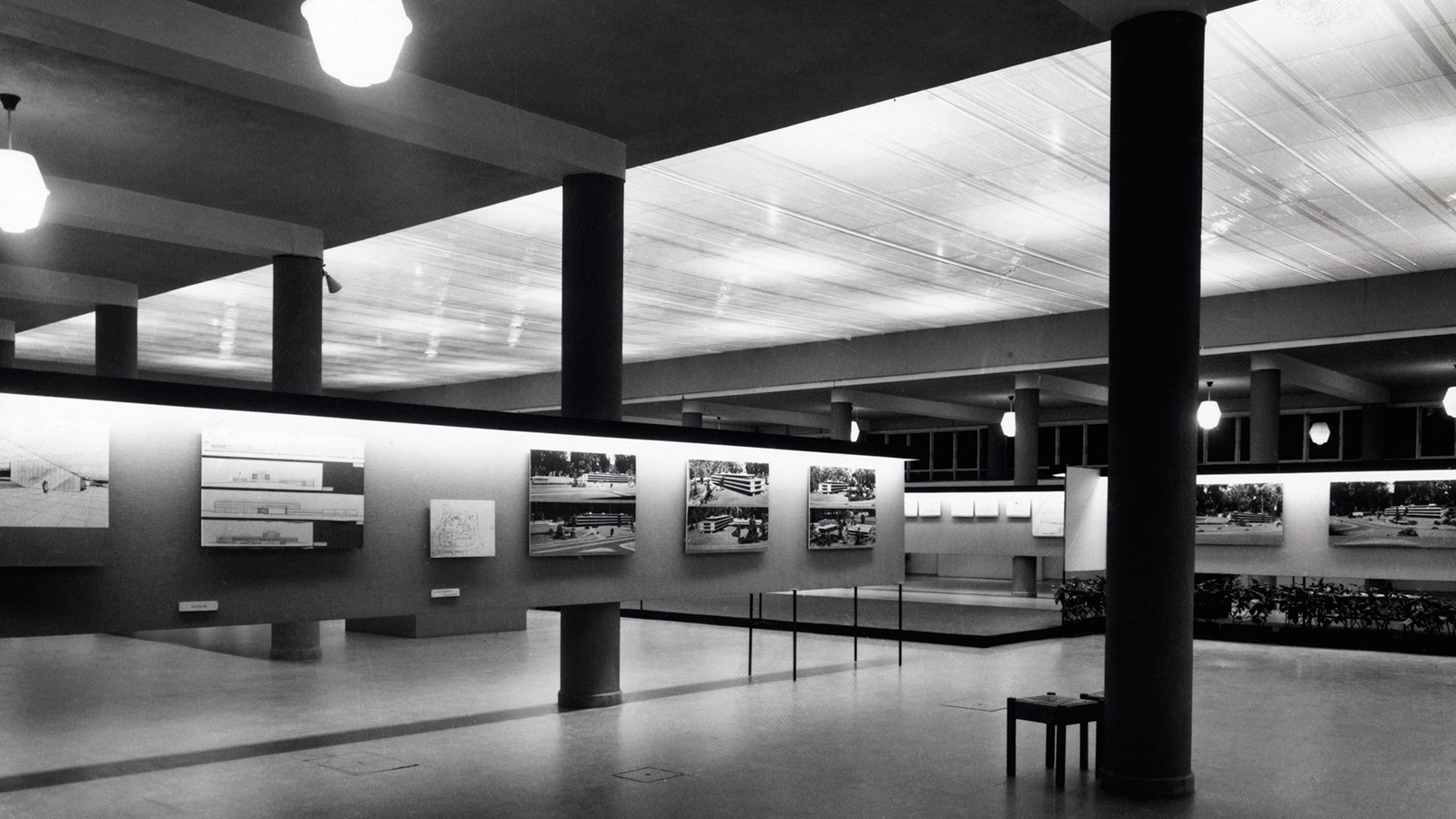
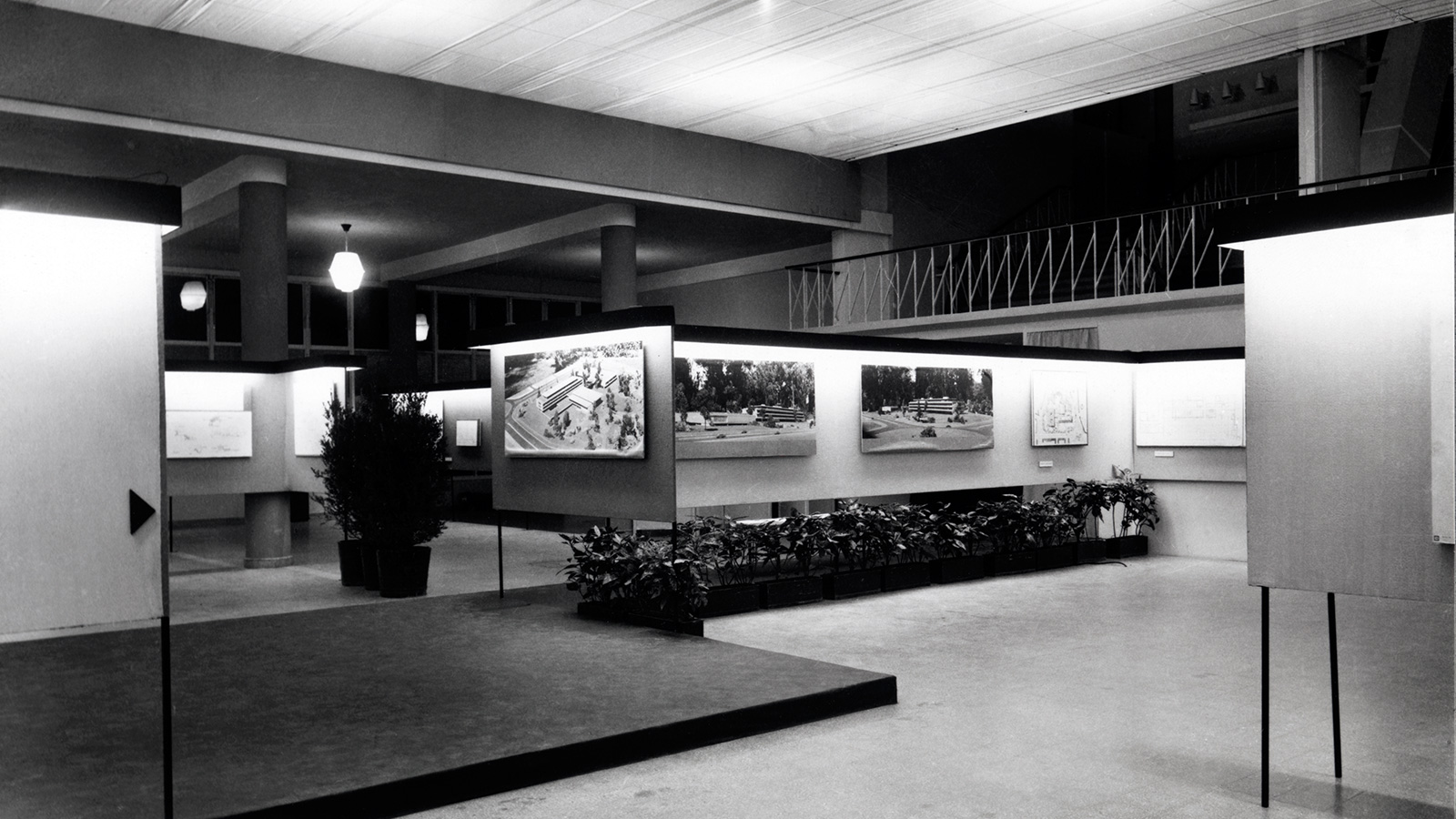
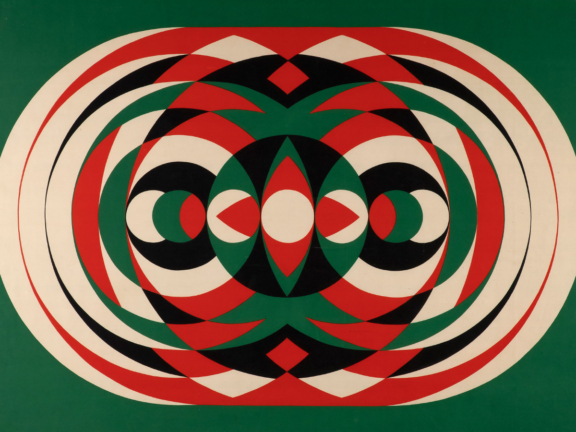
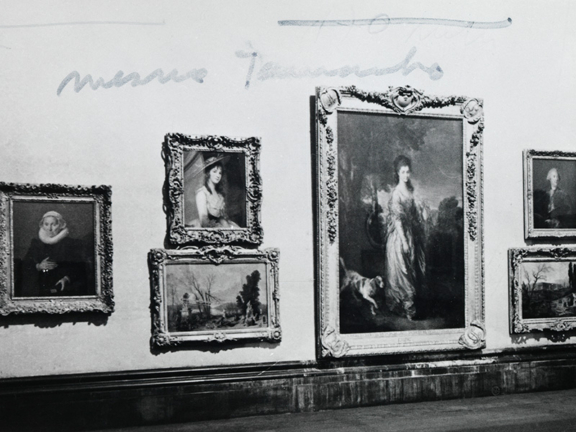
The exhibition was organised in parallel with the II Exhibition of Plastic Arts, and both opened on 18 December 1961 at the Lisbon International Fair, a building designed some years earlier by the architects Francisco Keil do Amaral (1910-1975) and Alberto Cruz (1920-1990) and inaugurated in 1956. While the II Exhibition of Plastic Arts occupied the main hall, the exhibition devoted to the future Headquarters and Museum project took place in the adjoining side hall.
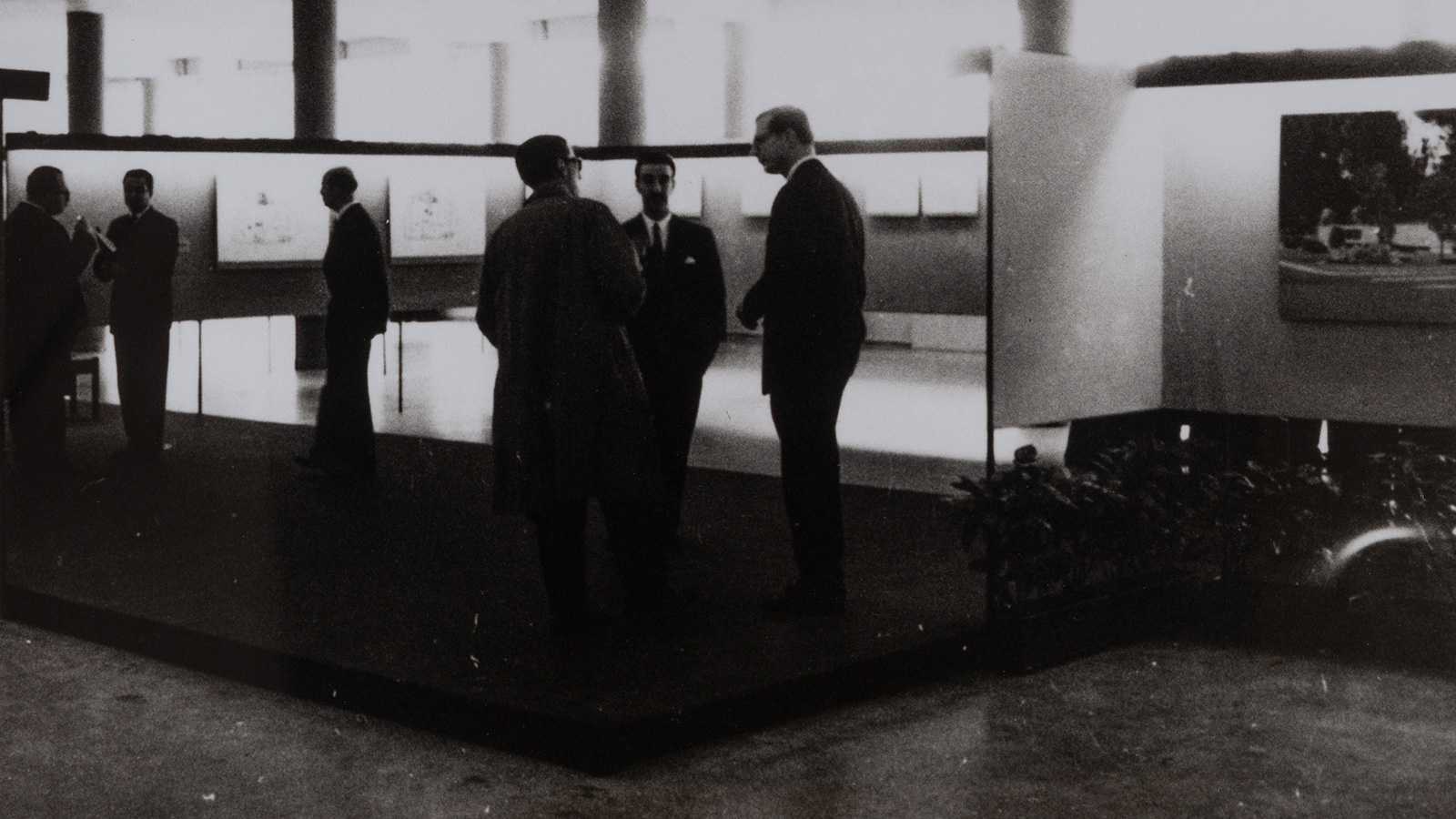
Set within the context of that landmark art exhibition, the architectural display contributed, alongside it, to strengthening the institutional image of the young Foundation in the eyes of the public. On the one hand, the II Exhibition of Plastic Arts affirmed the Foundation’s role as a supporter of contemporary Portuguese art; on the other, the architectural display presented the future modernist building that would come to represent it, projecting onto the institution itself an image of modernity and openness to the future.
The exhibition was organised jointly by the Fine Arts Service and the Projects and Works Service. Logistics and budgets were handled by the Fine Arts Service, which included it as an additional section within the overall organisation of the II Exhibition of Plastic Arts, while the Projects and Works Service oversaw the installation of both exhibitions and coordinated the Headquarters and Museum exhibition under the direction of the architect Jorge Sotto Mayor de Almeida (1924-1996).
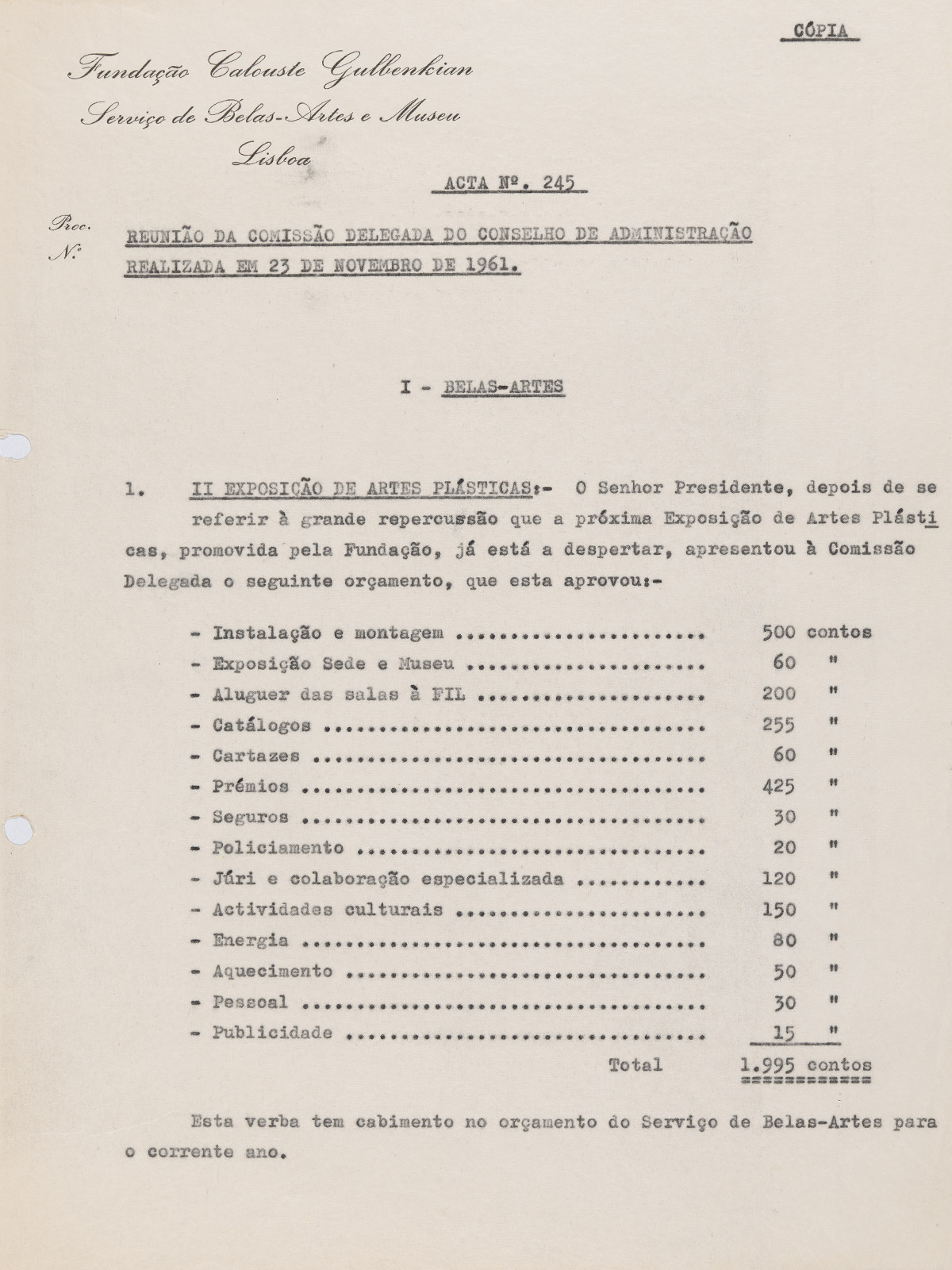
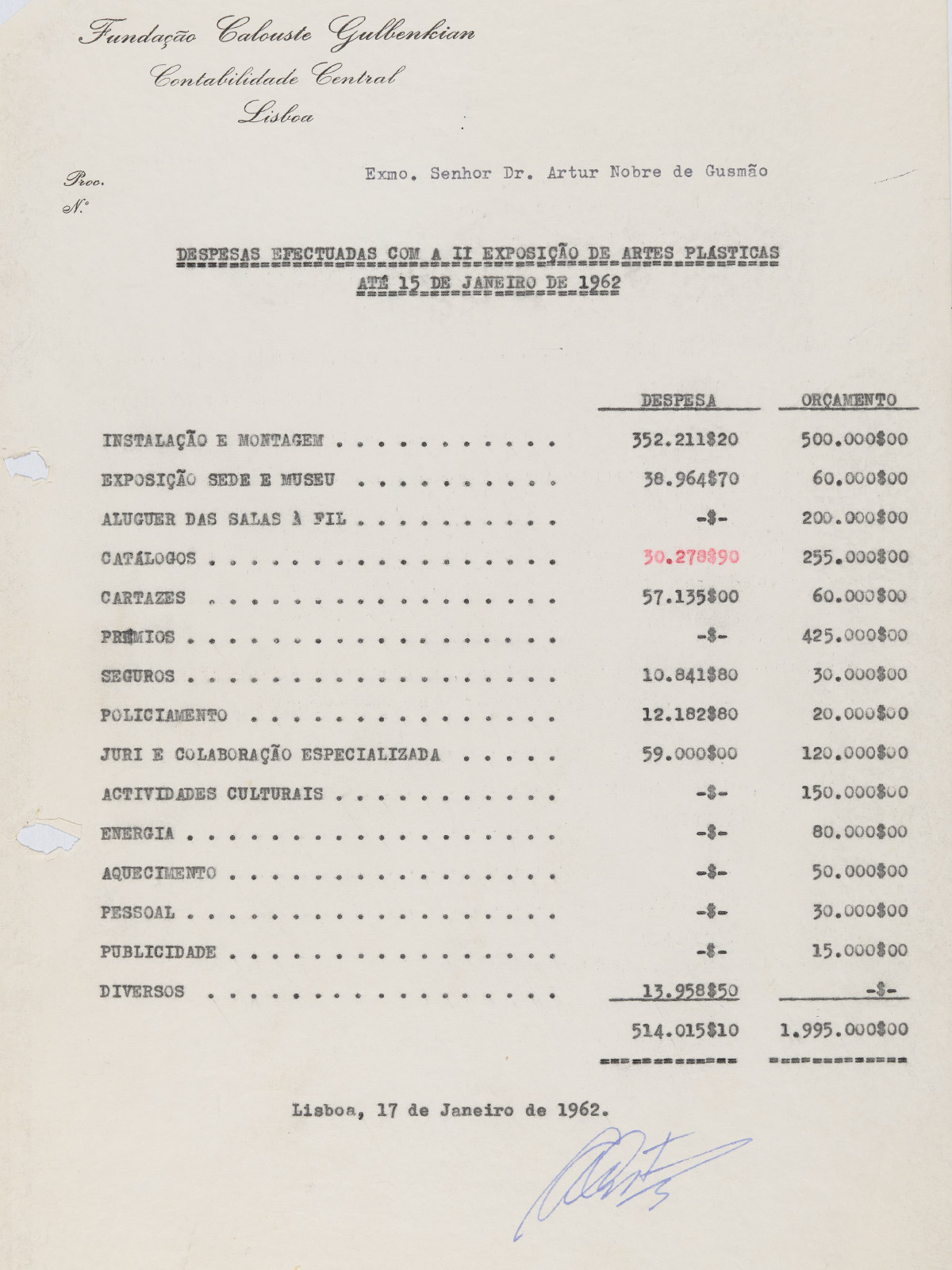
The drawings, studies and models on display reflected the state of the project while still taking shape. Among the materials shown were the first interior perspectives of the scheme and photographs of the Headquarters and Museum model taken in Santa Gertrudes Park, making use of natural light and the scale of the surrounding vegetation.
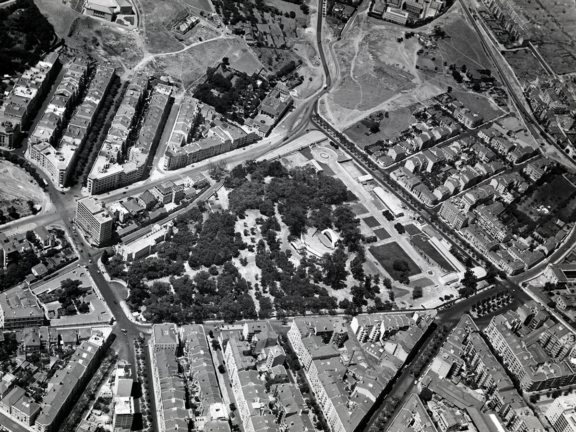
At that stage, the design team – Alberto Pessoa (1919-1985), Pedro Cid (1925-1983) e Rui Atouguia (1917-2006) – was already working in the temporary facilities at Santa Gertrudes Park, together with Projects and Works Service technicians, the foreign consulting architects Leslie Martin (1908-2000), Franco Albini (1905-1977), Georges Henri Rivière (1897-1985) and William Allen (1914-1998), as well as the Portuguese consultants Francisco Keil do Amaral and Carlos Ramos (1897-1969).
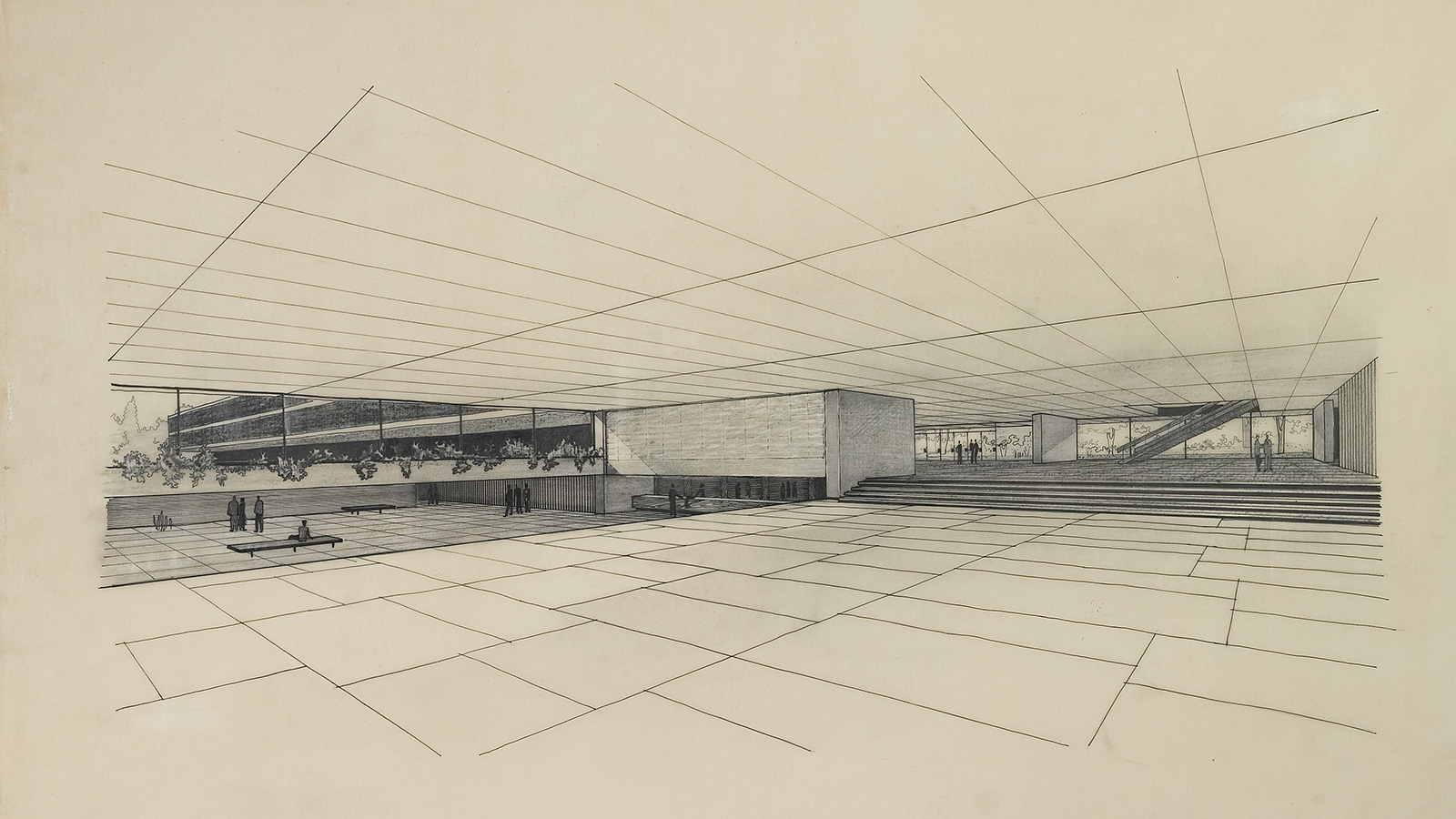
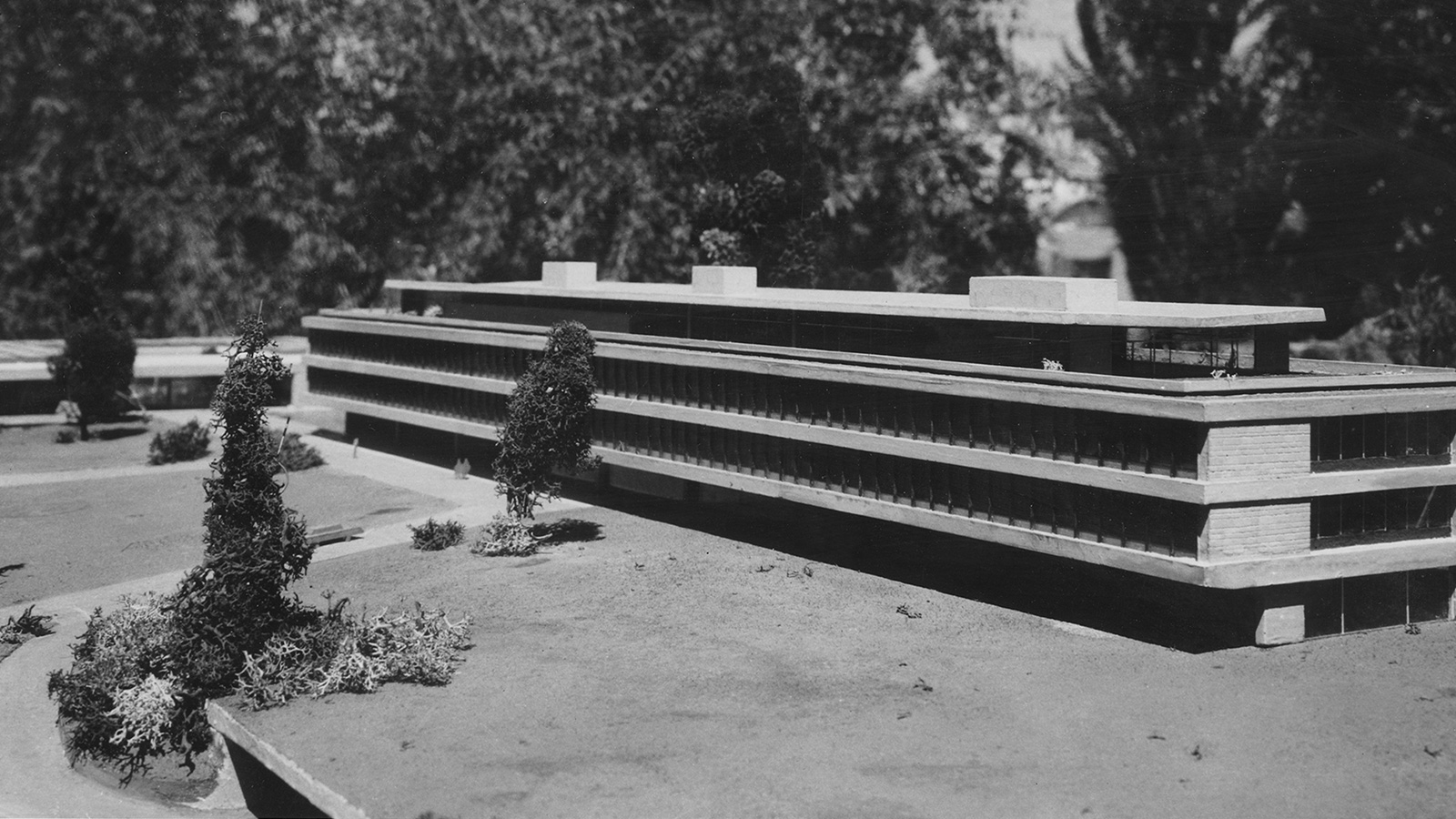
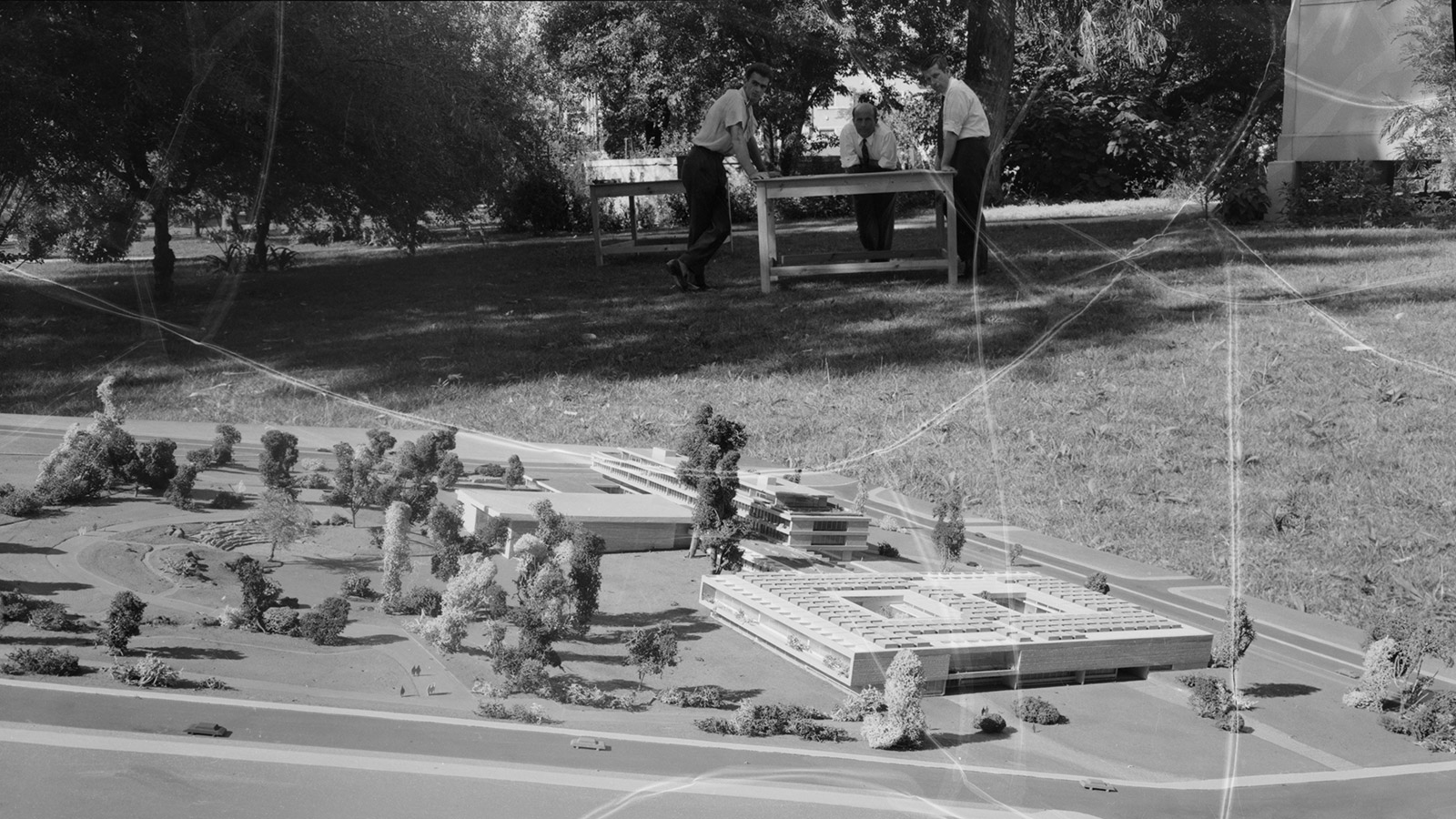
The very use of the word “Works” gave the exhibition a distinctive character: rather than presenting a completed building, it opened to public view a process still underway, something normally confined to internal working practices.
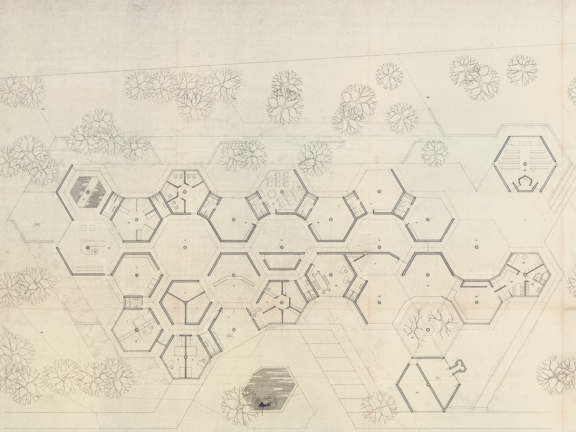
The exhibition presented not only the project that would eventually be built, but also the models and drawings submitted by the other two invited teams: one made up of Arménio Losa (1908-1988), Luís Pádua Ramos (1931-2005) and Sebastião Formosinho Sanches (1922-2004), and the other formed by Arnaldo Araújo (1925-1982), Manuel Maria Laginha (1919-1985) and Frederico George (1915-1994).
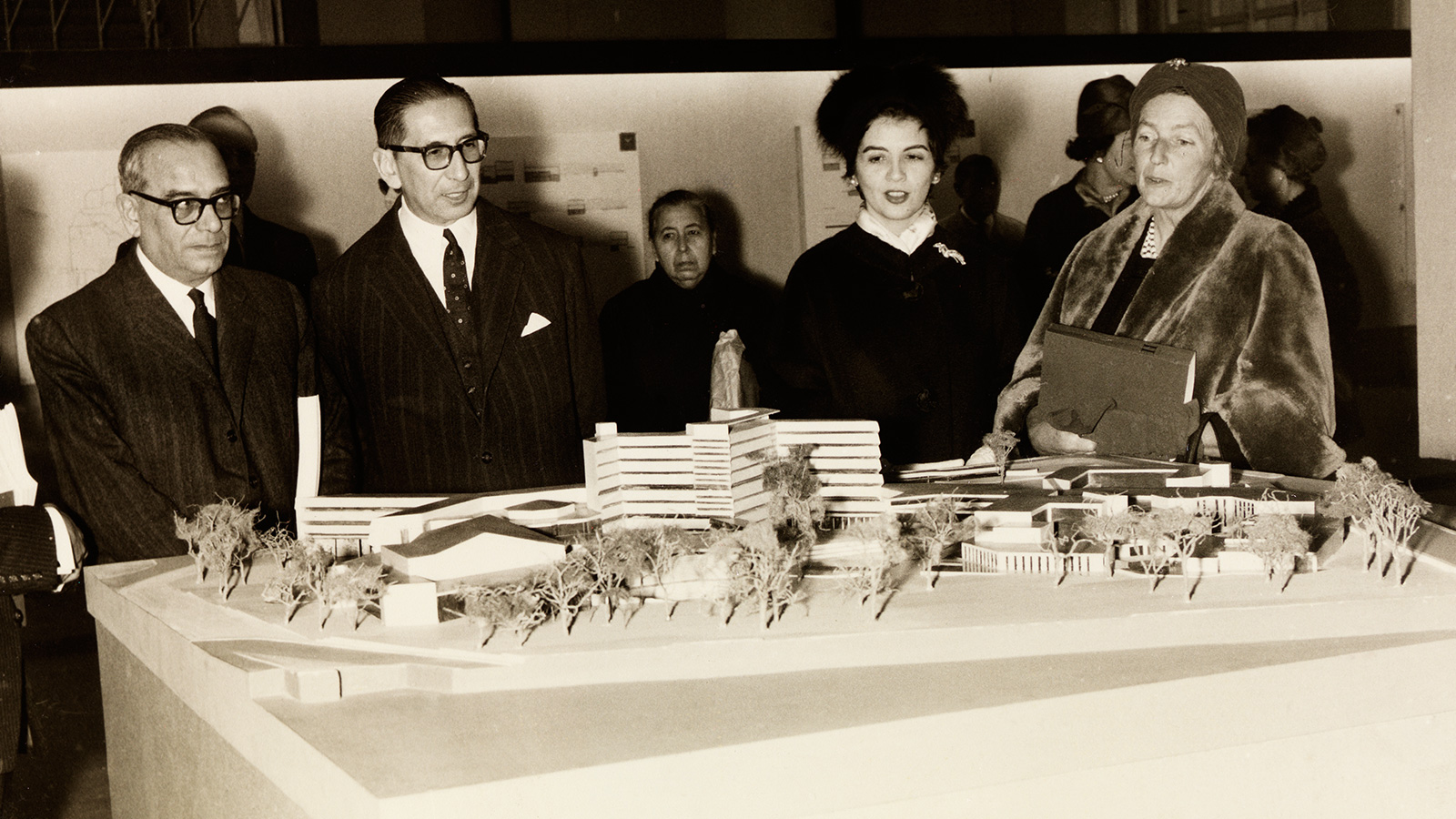
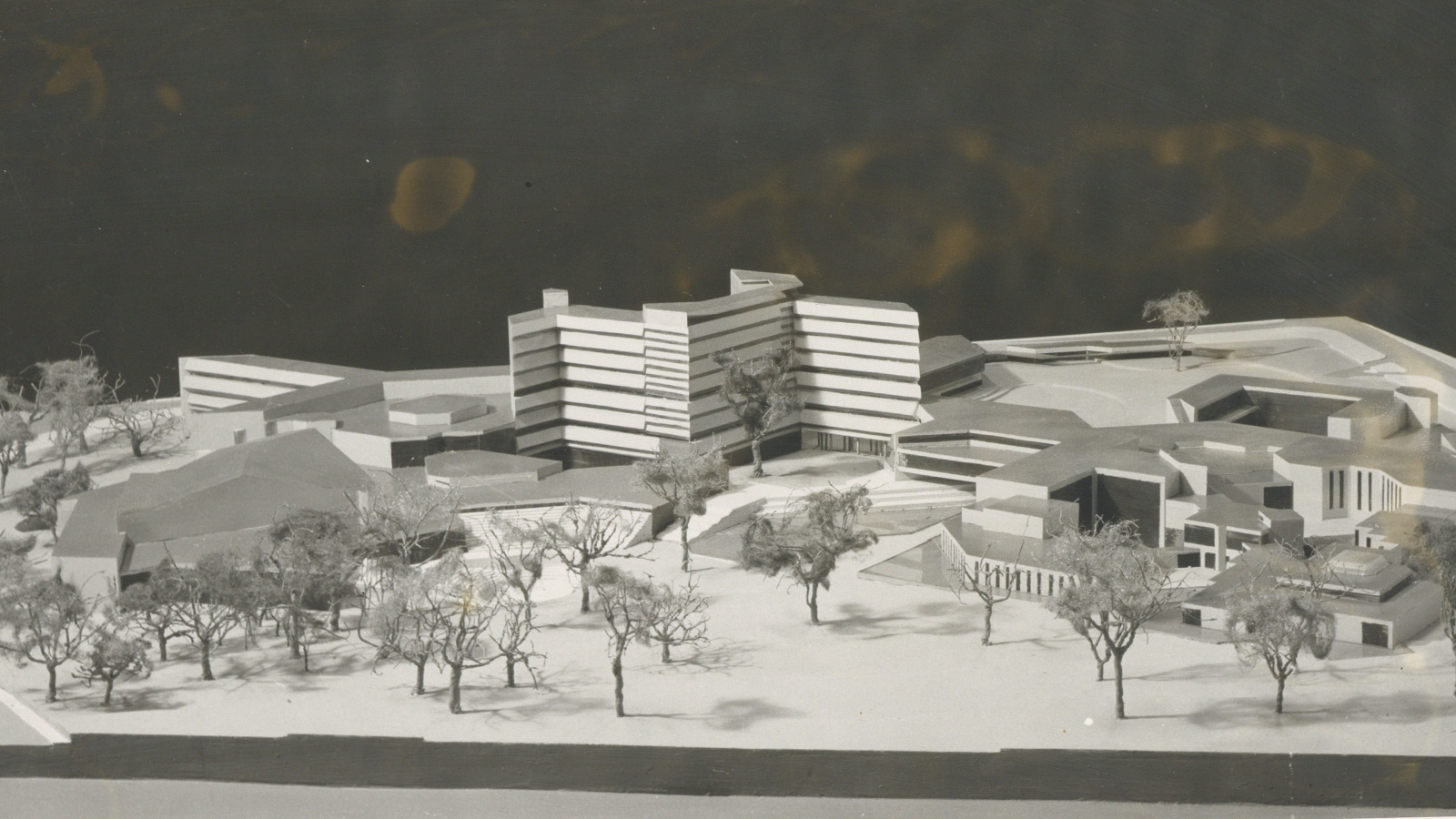
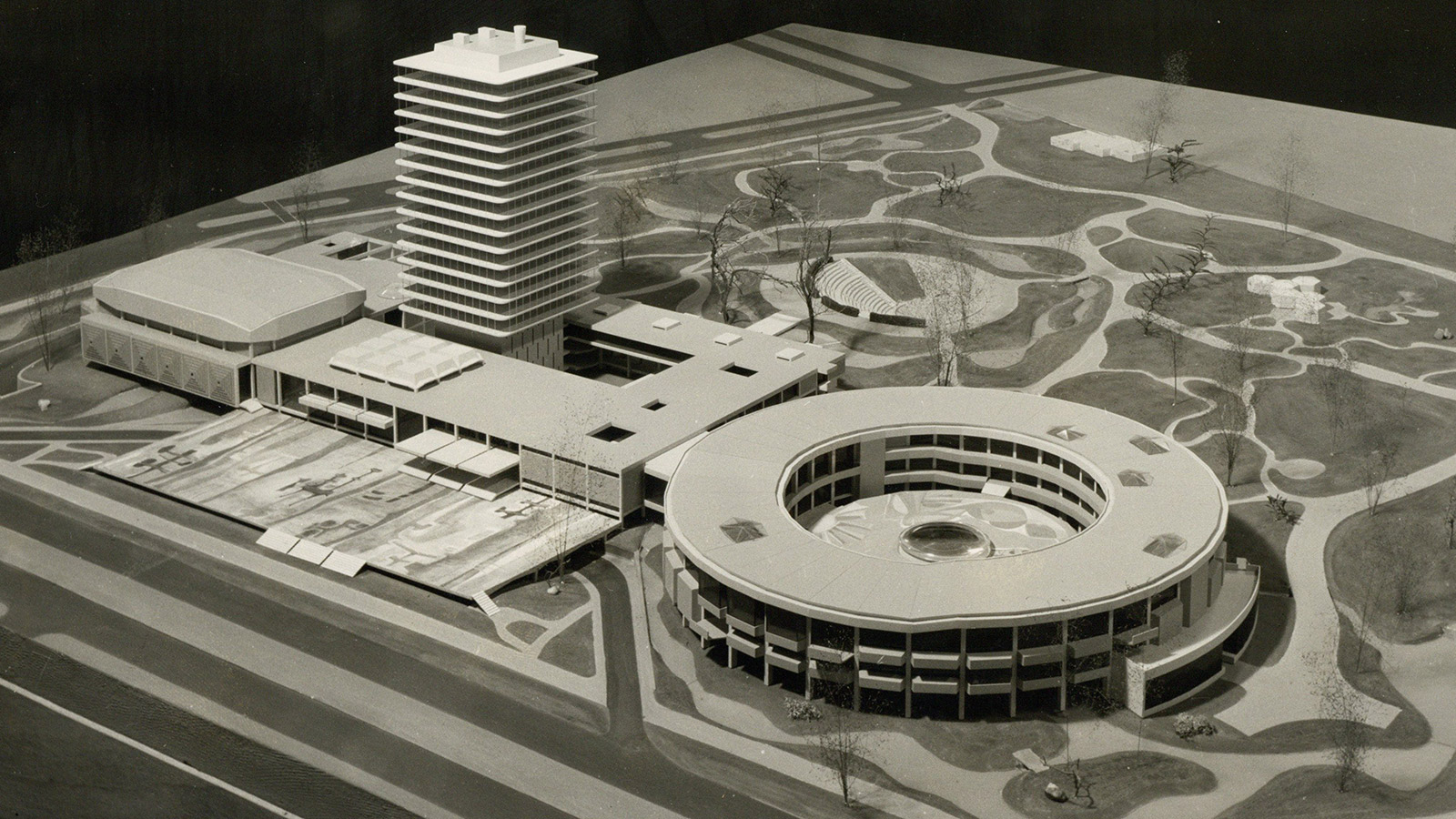
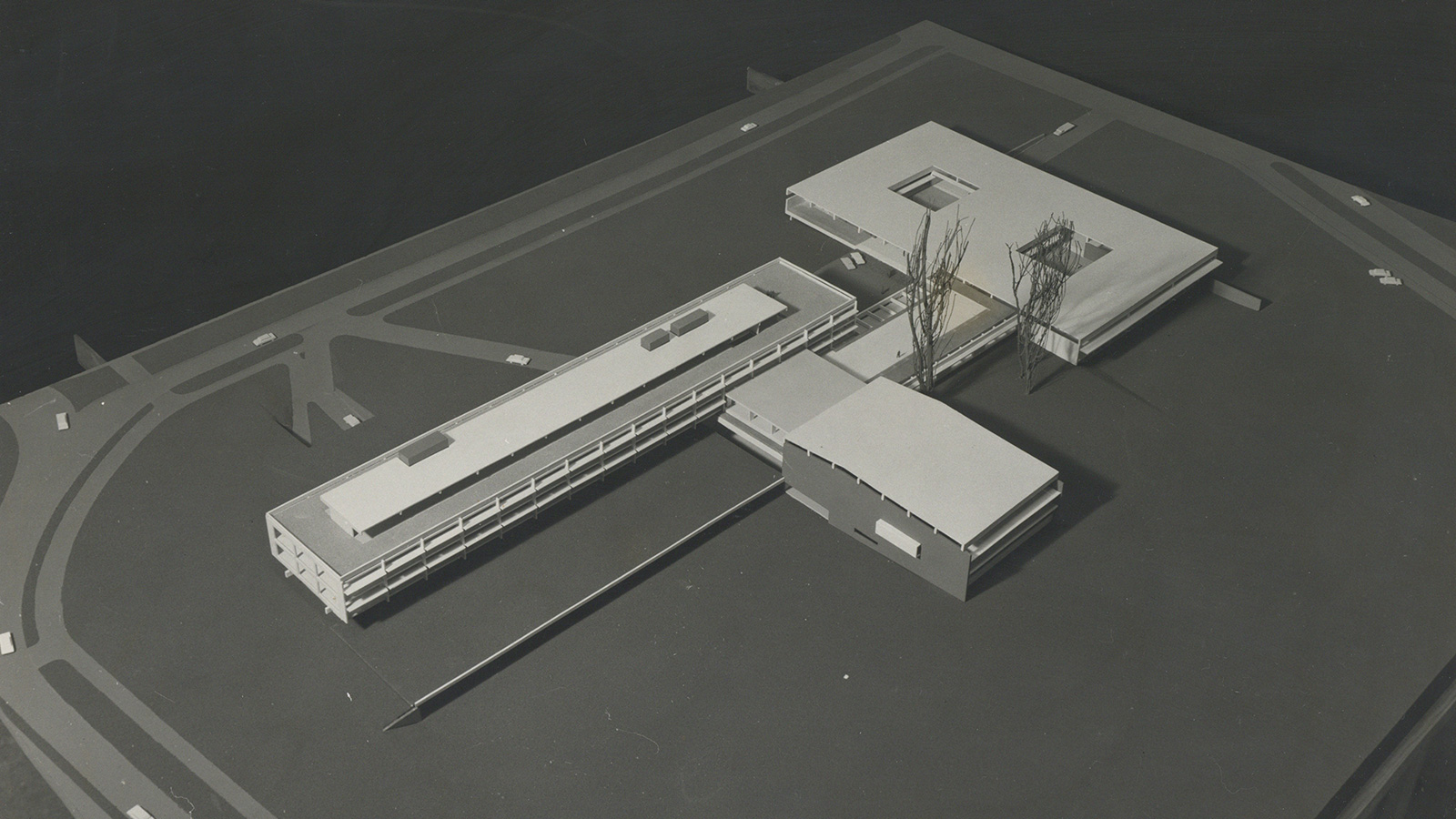
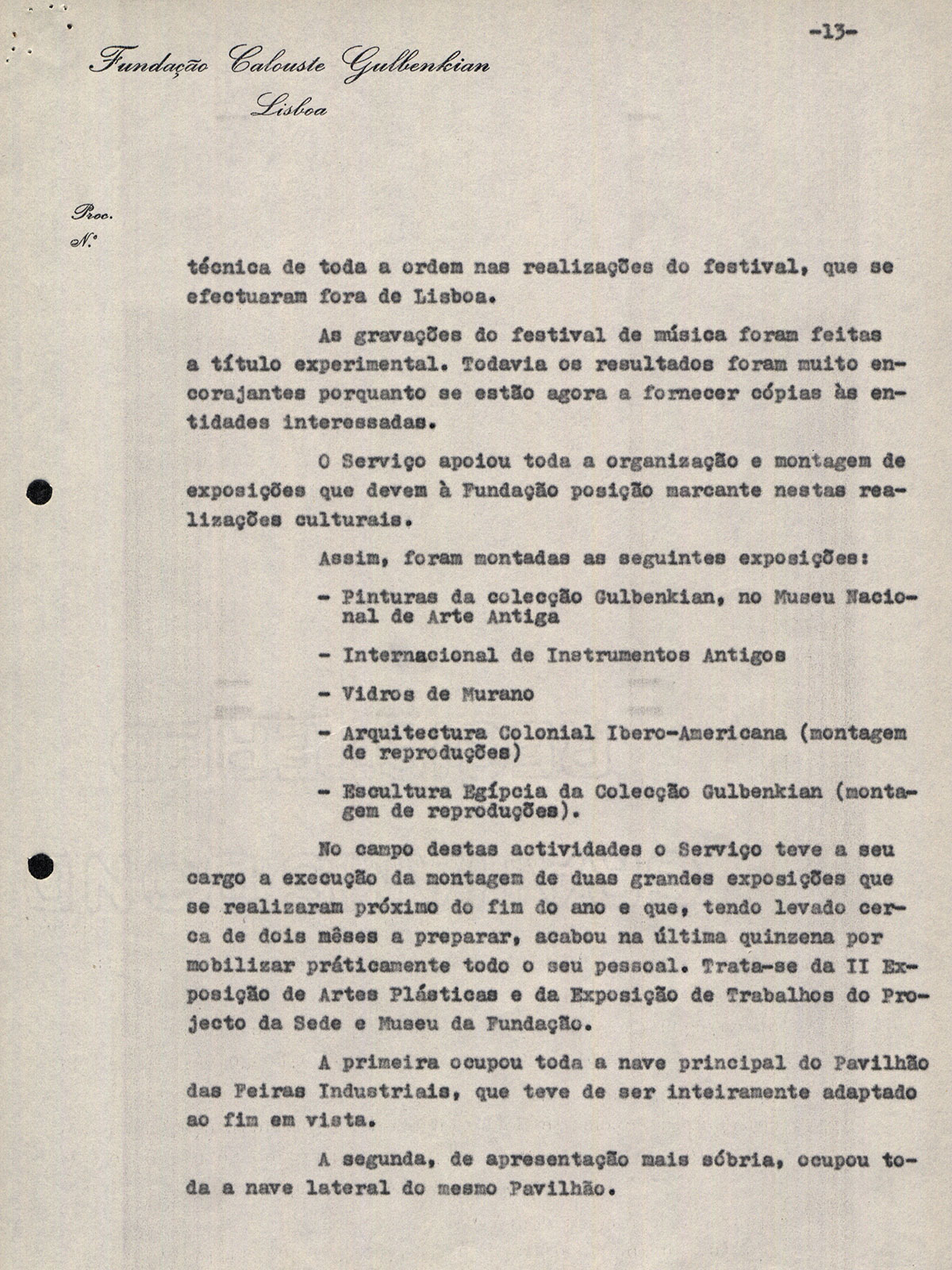
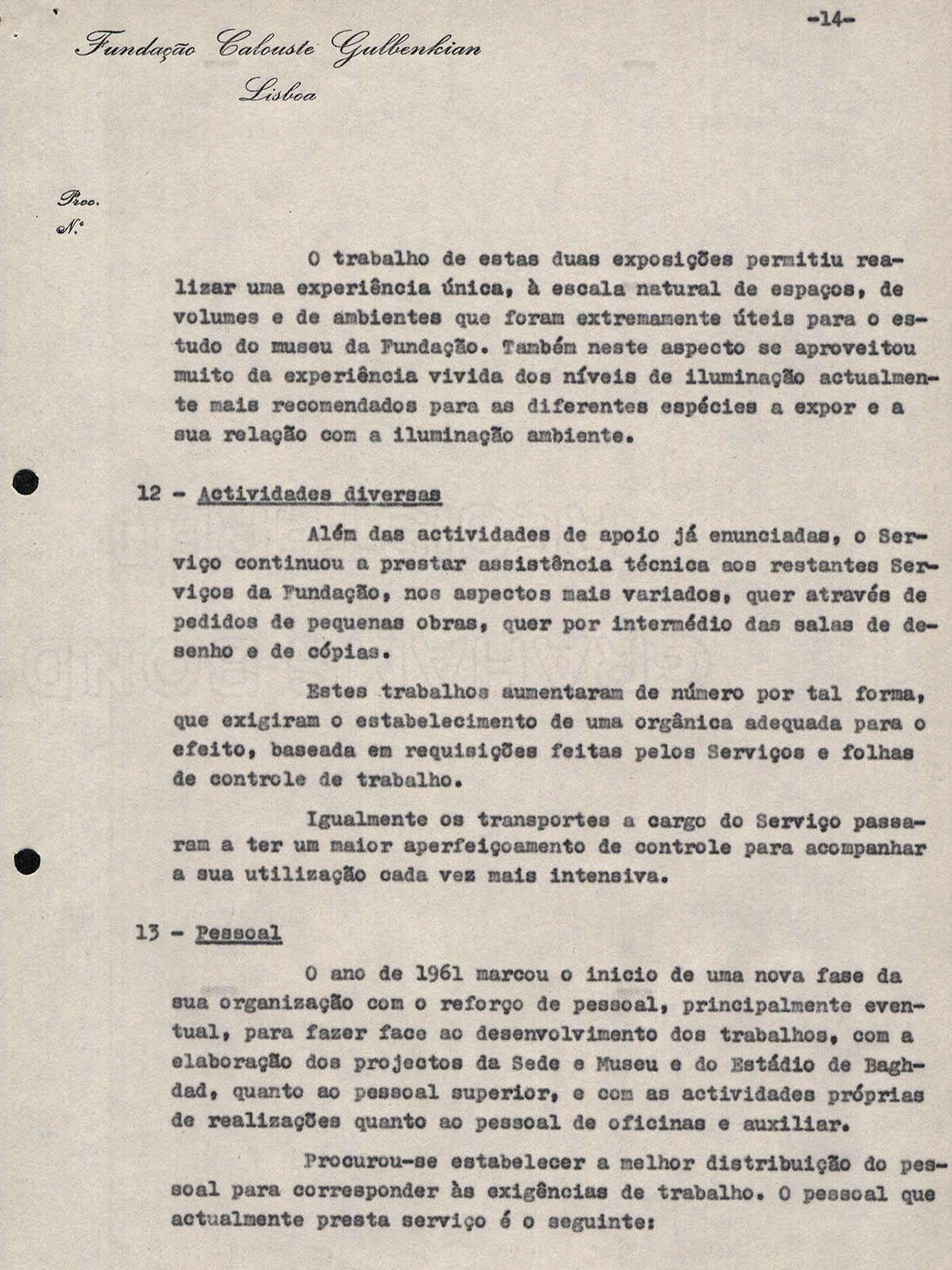
According to the 1961 activity report of the Projects and Works Service, the exhibition was marked by a “more sober presentation”, in keeping with its institutional and informative purpose.
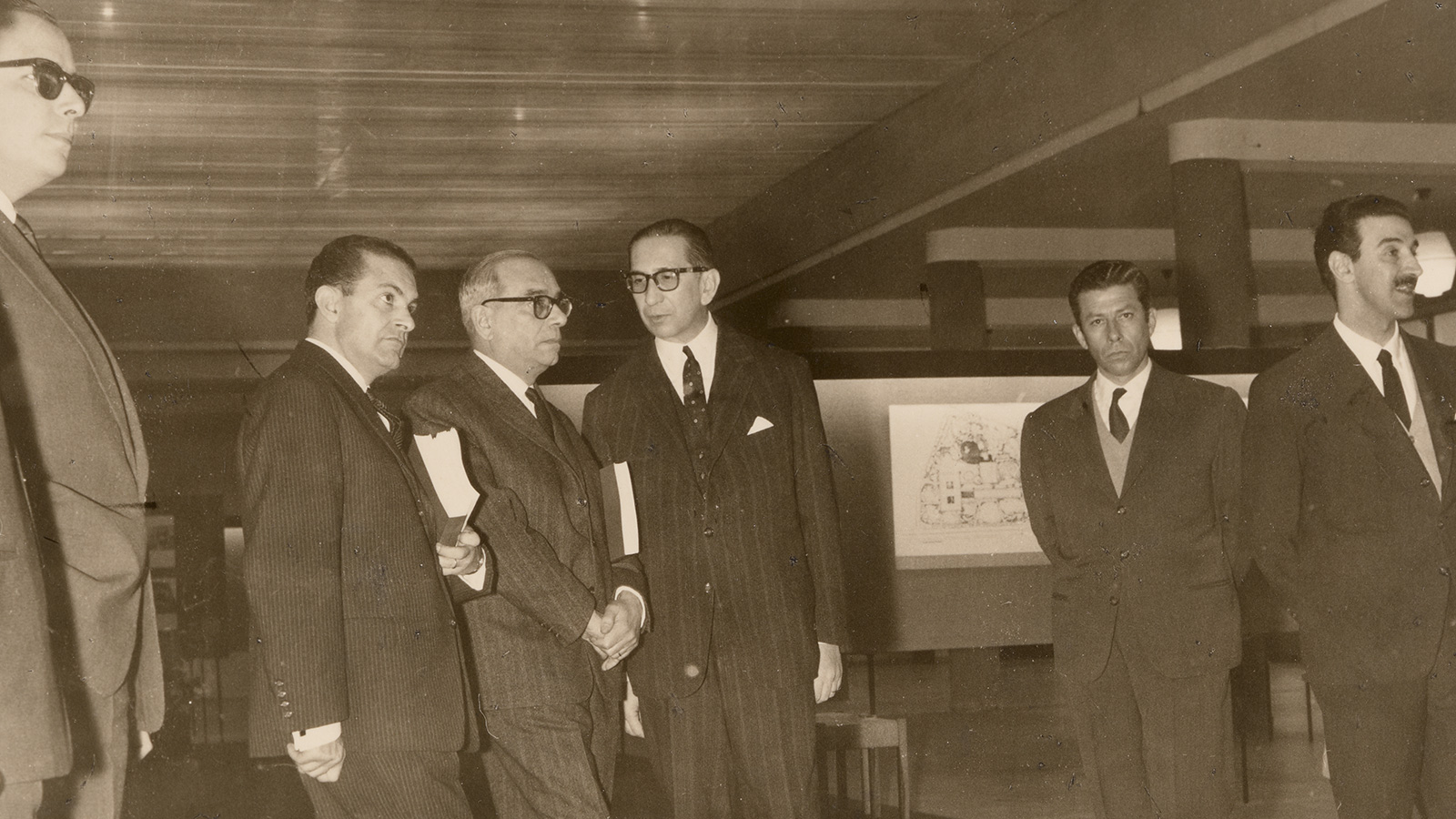
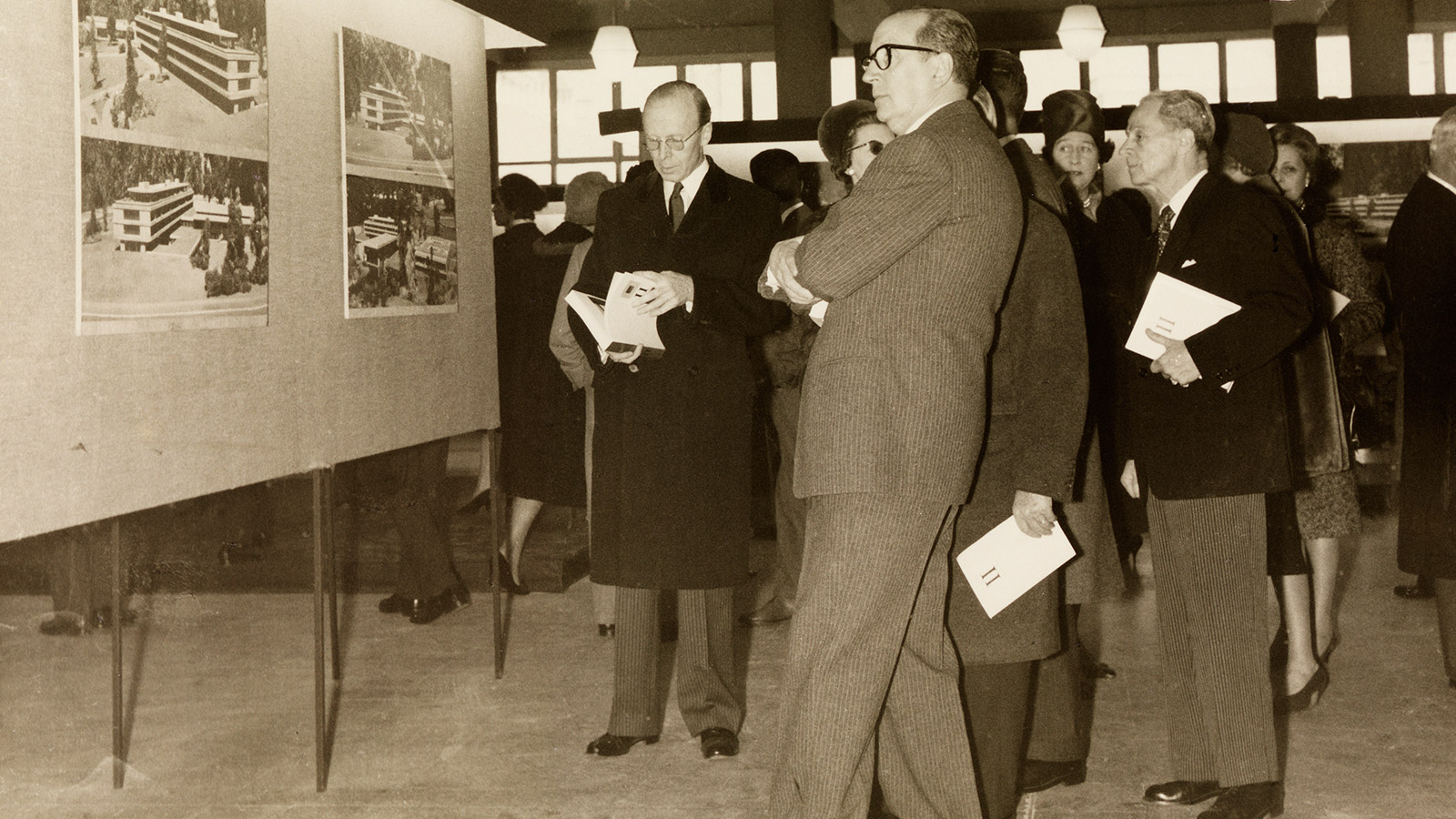
It adopted a restrained visual language shaped by white panels with extremely slender structures, creating a sense of openness and continuity. The exhibition design itself included plant elements that reinforced one of the central ideas behind the architectural project: the integration of the building into the natural landscape.
The installation of the exhibition, together with that of the II Exhibition of Plastic Arts, also served as a testing ground for display and lighting solutions later applied to studies for the future Calouste Gulbenkian Museum.
However, as a “satellite exhibition” intended to publicise and promote the Foundation’s own architectural project, the Exhibition of Works for the Headquarters and Museum Project was ultimately overshadowed by the importance and impact of the II Exhibition of Plastic Arts, to the point of leaving very little documentary trace.
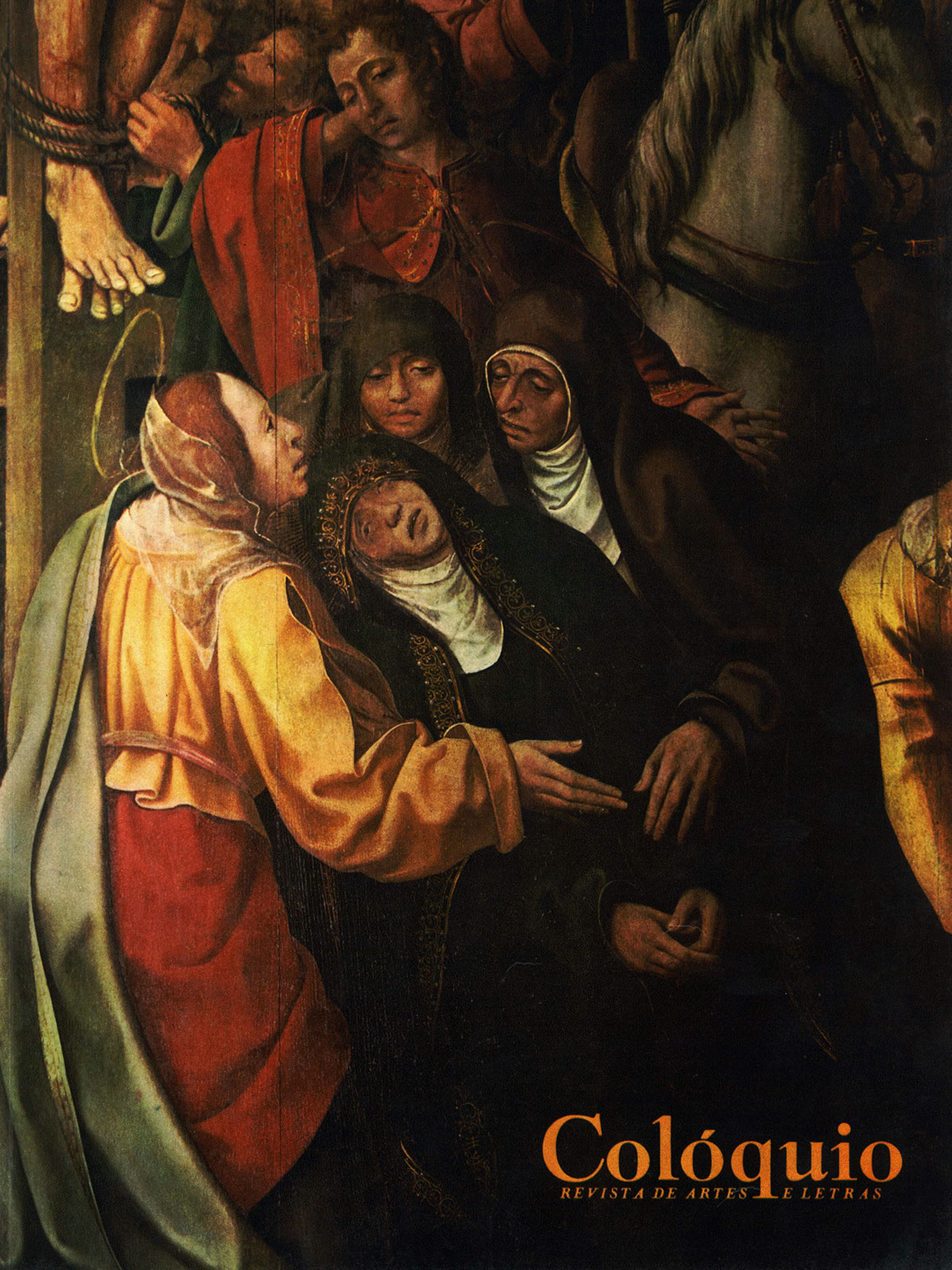
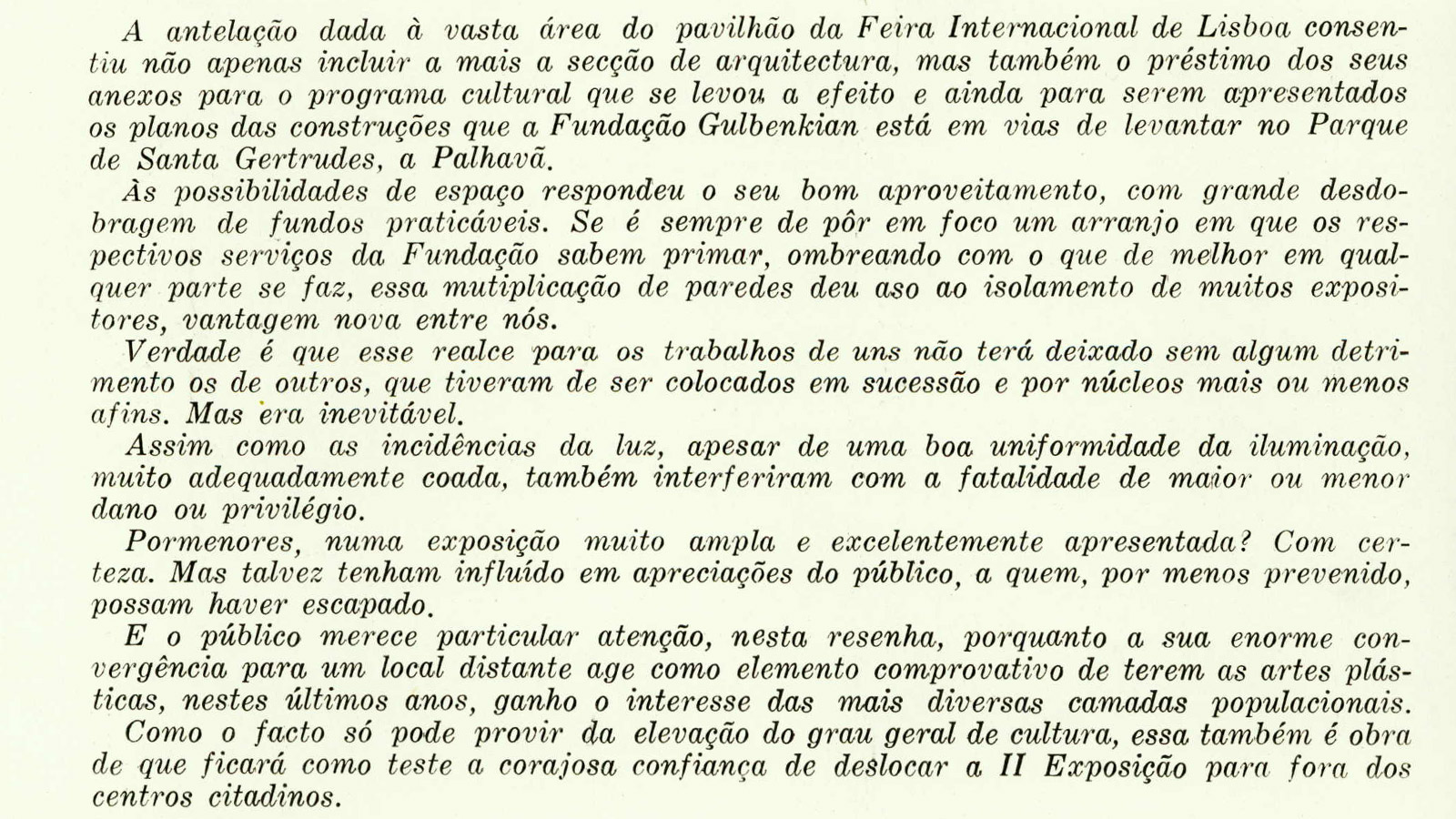
This perhaps explains the limited attention it received in the press at the time, whose critical focus remained centred mainly on the II Exhibition of Plastic Arts. The only noteworthy reference appeared in issue nr. 17 of Colóquio. Revista de Artes e Letras, which described the Lisbon International Fair as a venue capable not only of accommodating the architectural section and its associated cultural programme, but also of presenting “the plans for the buildings that the Gulbenkian Foundation is preparing to erect in Santa Gertrudes Park, in Palhavã”.
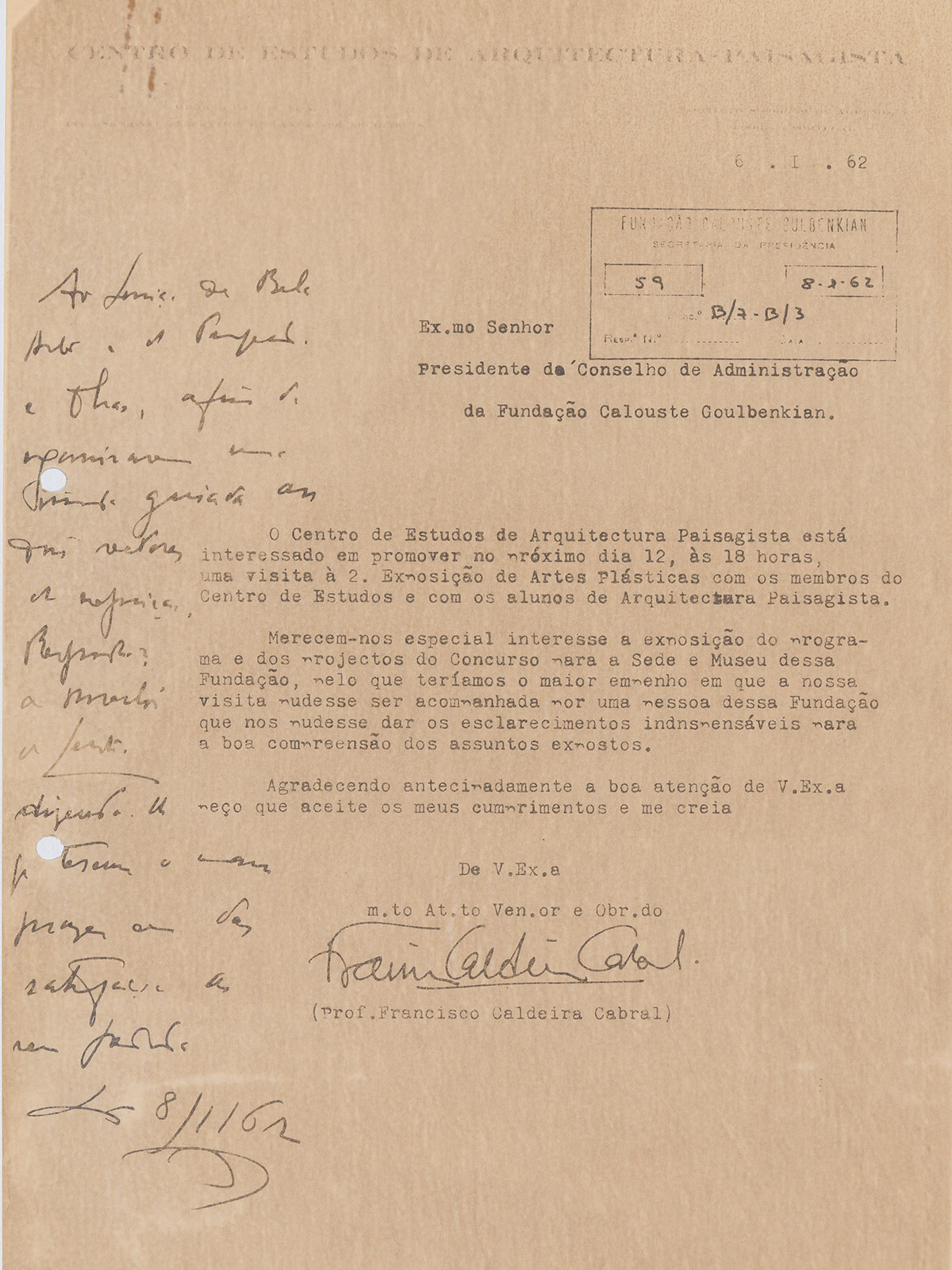
Despite its limited public impact, the exhibition nevertheless attracted interest within architectural and landscape architecture circles. Francisco Caldeira Cabral (1908-1992), for example, writing on behalf of the Centre for Landscape Architecture Studies at the Instituto Superior de Agronomia, expressed the wish to visit the exhibition, stressing that “the exhibition of the programme and competition projects for the Headquarters and Museum of your Foundation is of particular interest to us, and we would therefore greatly appreciate it if our visit could be accompanied by a representative of the Foundation”.
Although the documentation preserved in the archives is sparse and scattered, it has nevertheless been possible to identify the existence of this exhibition – which until now had largely escaped the attention of historiography – and to bring to light a significant episode in the history of the conception and construction of the Headquarters and Museum of the Calouste Gulbenkian Foundation.
From the Archives
Explore the series


No results were found for your criteria.
You may also like

No results were found for your criteria.