
Being a journalist and migrant in Portugal
-
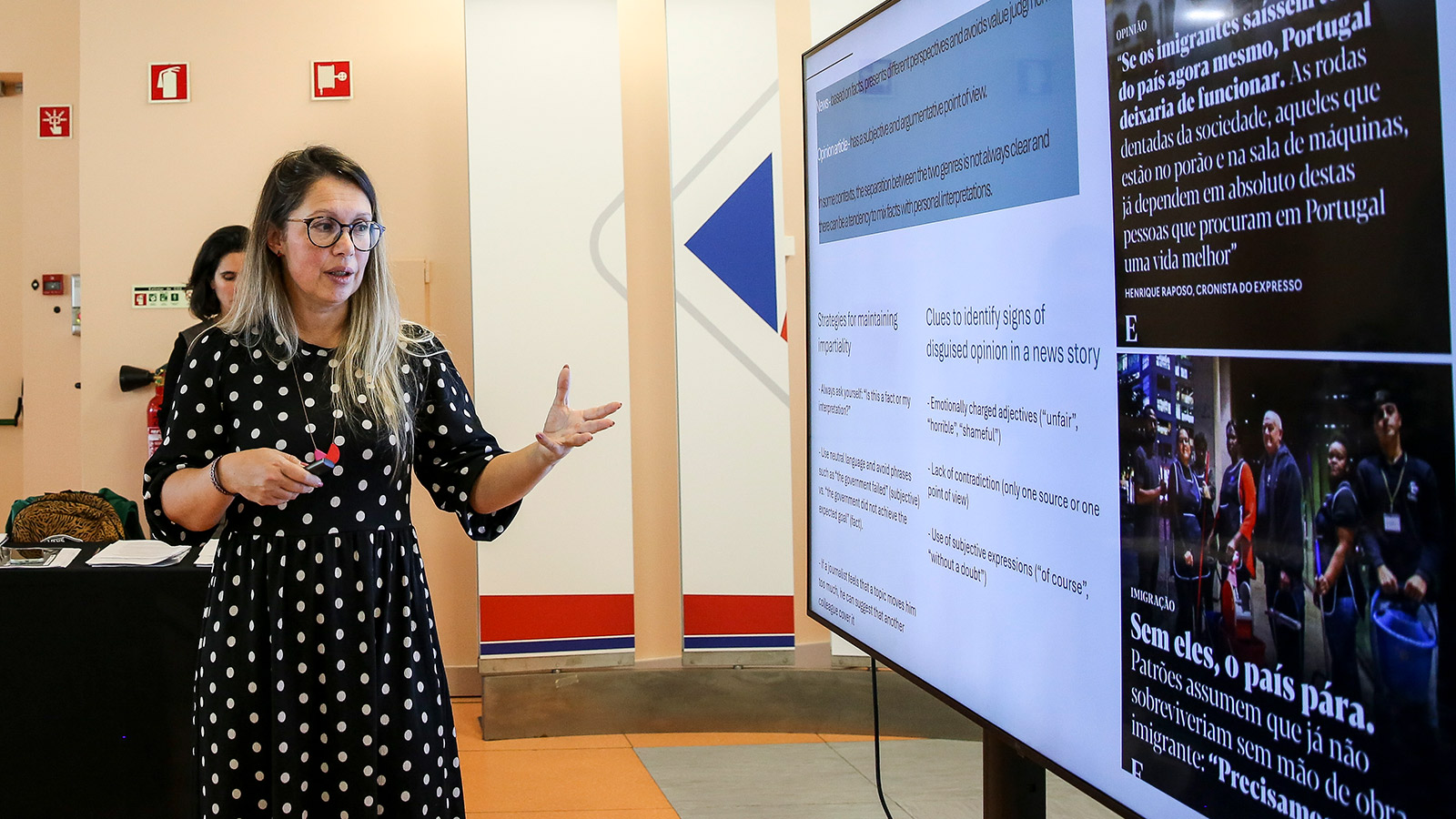
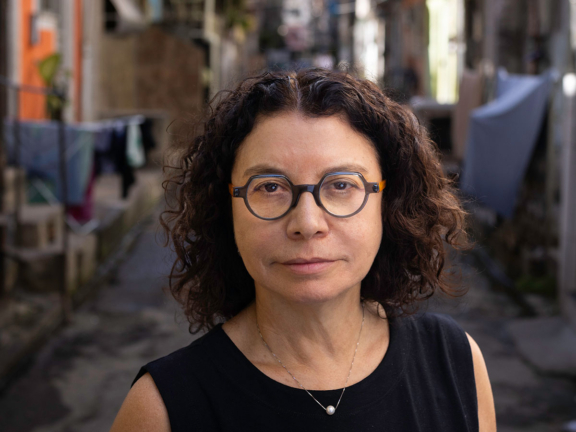
Raquel Moleiro, an Expresso journalist and one of the two trainers on the project.
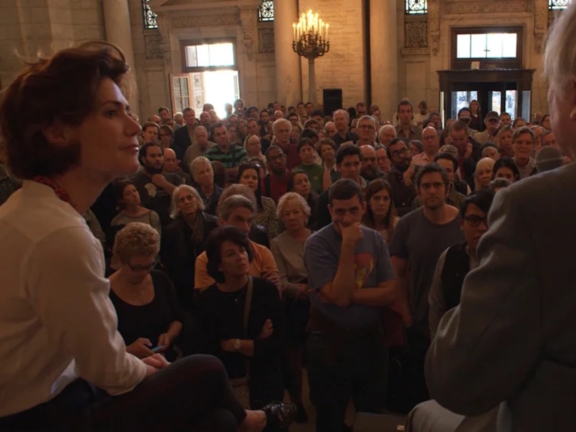
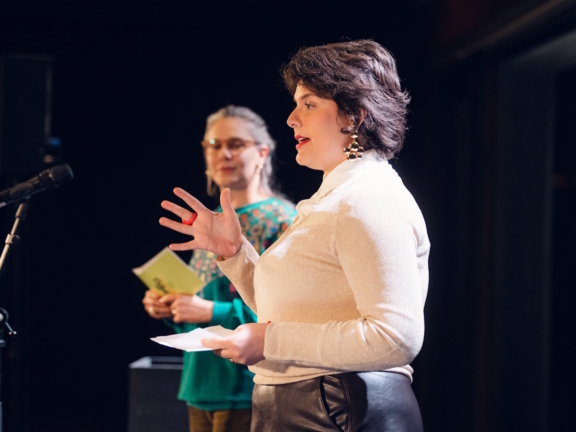
The workshop was running smoothly, in a bright room in the building that houses Expresso newspaper. Journalists Joana Pereira Bastos and Raquel Moleiro were going over the basic “ethical principles” to follow as a journalist in Portugal to help integrate a group of foreign journalists into the national labour market.
“The theme of the session was writing skills, but it didn’t really make sense since we are all journalists,” Joana Pereira Bastos began. The different nationalities and backgrounds would justify the change of theme for the second of four training sessions on journalism organised by the Migrant Media Project, promoted by the Pão a Pão Association and supported by the Calouste Gulbenkian Foundation, under its Democracy and Civil Society Programme.
Included on the agenda were topics such as Journalism vs Activism, News vs Opinion, Conflict, Reporting and Investigation. The talk was going well until Joana and Raquel discussed impartiality, the need for journalists to put aside their own opinions or beliefs when writing about a subject. The golden rule that, when writing about something, journalists should stick to the facts and only the facts, and always listen to all parties involved.
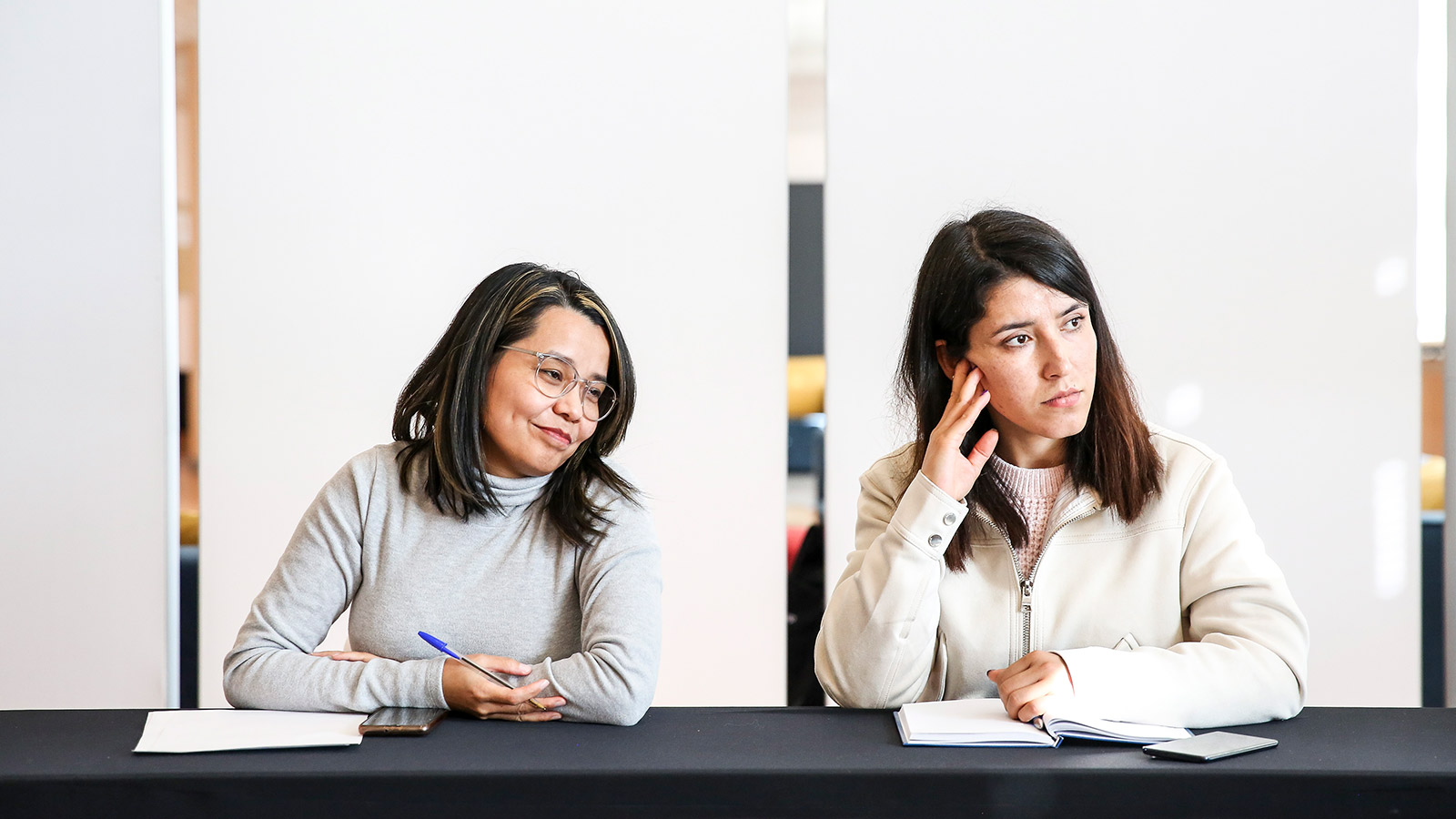
Maryam Barbari, an Afghan woman of unknown age and with a sweet smile, journalist and women’s rights activist, timidly asks to speak. “How can one write in such a way in a country with different ethnic groups, when a village is attacked by another ethnic group and massacred, when genocide is being committed? How do we remain impartial? If we say that ‘a minority’ was attacked, the minority doesn’t like it. If we write that it’s not a minority, the others don’t like it…”. This sparked a debate. Several participants insisted that both sides must be heard, even if we believe in and side with one side. “We’re not here to please our audience. We are reporting what is happening,” said Joana Pereira Bastos. “We relay the facts, we report them, whether the reader likes them or not. We should report, without bias or passing judgement,” argued Raquel Moleiro. “We can’t please everyone. We should write based on facts, not ‘truths’. The reader must decide for themselves,” stated Yero S. Bah, a journalist from Gambia who has been living in Portugal for a year. Using other sources, such as academics or independent organisations, is also important, others said. Like the UN, for instance, which has been a good source of information on the Israeli-Palestinian conflict.
Maryam’s reality is not Portuguese or European reality. In Afghanistan, she replied, there are no credible sources, no statistics to fall back on. Without uttering the word, another argument was introduced: fear, fear for one’s life. It was explained to her that Portugal is a free country, with freedom of expression and of the press, and that it is safe to write freely, even if it displeases some people. That if she followed the ethical principles that were being discussed, everything would be okay.
Maryam left Afghanistan in September 2021, a month after the Taliban took control of Kabul. She was forbidden from going into the newsroom, of continuing her work as a journalist and women’s rights activist. She managed to escape, together with her sister and a friend, thanks to the support of Euronews, for which she had been collaborating. By the end of 2021, she was in Portugal, where she settled. Maryam has written for European and Canadian media outlets. Working with Portuguese media has been more difficult…
A win-win project
Francisca Gorjão Henriques, journalist and president of the Pão a Pão Association, met Maryam and immediately sympathised with her situation. The Afghan woman didn’t want to work as a cleaner, as had been suggested. She wanted to do what she knew and loved: journalism. She just didn’t know how to go about it in a strange country, without speaking the language.
We were nearing the first anniversary of the Taliban regime and Francisca proposed an article to Expresso written by Maryam about her experience in her country. The story The day we buried our hope was published on 16 September 2022. “Expresso paid Maryam for the article like any other contributor. She was able to do her job and be recognised for it, and the newspaper’s readers were able to read a story that would have otherwise gone untold,” said Francisca. This win-win experience, where all parties benefited, saw Pão a Pão wanting to repeat the experience with other journalists in the same situation.
Thus the Migrant Media Project was born. Several migrant journalists have been identified and the association is in the process of setting up a virtual newsroom, which will (initially) be linked to Expresso and then to the rest of the world. That is the hope, at least. Media outlets in Europe are already interested in the model. But for now, the project is still in the pilot phase, albeit growing more successfully than initially anticipated.
Unable to find work, she embarked on a PhD
The five journalists initially set to participate in the project were joined by seven others. All five will have at least two articles published in Expresso; one about their country and one about the integration of migrant communities in Portugal. The other seven will take part in training and benefit from what is created. Everyone will also have a mentor. The goal is to give them the tools they need to pursue their profession in Portugal.
Maryam is not part of the group of five, but Stefani Costa is. Brazilian, living in Portugal for the past seven years, she writes for various media outlets in Brazil. Getting into Portuguese media is hard, “it is difficult for us Brazilians to break into Portuguese circles mainly because we speak Brazilian Portuguese. I gave up.” Language is indeed a barrier. Take Colombian Laura Ramirez, for instance. Bilingual in Spanish and English (having lived in Australia for many years), Laura has been here for two years and already speaks “Portunhol”, a mixture of Portuguese and Spanish, but not (yet) Portuguese. Since arriving in Portugal, and until she can get back to being a journalist, she has been working as a housekeeper in a five-star hotel.
Vladimir Prata has no problem with language. Born in Angola, a journalist for 25 years (large part of which for Jornal de Angola, from which he resigned), he is still connected to some Angolan media, but being an UBER driver is what pays the bills.
The group attending the workshop includes journalists from Gambia, Brazil, Iran, Afghanistan, Colombia, Angola and Bangladesh.
Everyone loves living in Portugal. Maryam, who came from a distant land, sees the Portuguese as “very friendly people, although perhaps sometimes a little conservative towards migrants”. What does she like least about our country? The “difficulty in finding work”. Her sister, who was a university lecturer in Kabul, couldn’t find a job. She ended up enrolling in, and starting, a doctoral degree course.
The Calouste Gulbenkian Foundation is supporting the Migrant Media Project to help migrants find their footing and facilitate their integration, but also, in a broader sense, to help build a fairer, more supportive, active and democratic civil society. This type of support seeks to experiment with new methodologies and to support NGOs with a good track record in working with the Gulbenkian Foundation. This is just one of the nineteen projects supported between EEA Grants funding cycles.
More infoYou may also like

No results were found for your criteria.