

Short film session
Mediated by Guilherme Wisnik and Milena Britto
Event Slider
Date
- 18:30 / Cancelled 18:30 / Sold out Friday, 18:30
Location
Auditorium 3 Calouste Gulbenkian FoundationPricing
10% – Cartão Gulbenkian and Cartão Gulbenkian Mais
Moderated by Guilherme Wisnik and Milena Britto, assistant curators of the complexo brasil exhibition, this session features six short films made by Brazilian artists.
The selected short films extend and deepen some of the themes present in the exhibition, such as the ritualistic dimensions of art, in proximity to Amerindian worldviews, the political struggle for land, the growth of Pentecostal religions and their aesthetics, and the political extremism that led to the attacks on the palaces of Brasília.
The session features films by Bárbara Wagner and Benjamin de Burca, Giselle Beiguelman and Lucas Bambozzi, Glicélia Tupinambá and Nuno.
This event is part of the complementary programme for the exhibition complexo brasil, curated by José Miguel Wisnik, Guilherme Wisnik and Milena Britto.
Biographies
-
Bárbara Wagner and Benjamin de Burca
Duo of artists who work mainly with cinema, video installation and photography. They develop their work in dialogue with other artists and collectives, designing the production, script, costumes and soundtracks in collaboration with the protagonists of each project. Their films can be seen as an essay on the popular urban identity of a country that is given voice and visibility in the streets, on stage, at the altar and in schools. Authors of several solo exhibitions, their works are part of important international public collections.
-
Giselle Beiguelman
Artist and professor at FAU-USP. She is a researcher of collections and methods of preservation of born-digital archives, art and activism in the networked city, and the aesthetics of memory in the 21st century. She is the coordinator of the Projeto Temático Fapesp Acervos Digitais e Pesquisa: Arte, Arquitetura e Design and author of Políticas da imagem: vigilância e resistência na dadosfera (UBU Editora, 2021) and Memória da amnésia: políticas do esquecimento (Edições Sesc, 2019), among others. Her works are part of the collections of several museum. In her most recent projects, she investigates the construction of the colonialist imaginary of the arts and sciences using Artificial Intelligence resources.
-
Glicélia Tupinambá
Teacher, anthropologist, activist, researcher, filmmaker, and village leader in Serra do Padeiro, in the Tupinambá indigenous land of Olivença, in southern Bahia, Brazil. She completed her Intercultural Indigenous Degree at the Federal Institute of Education, Science, and Technology of Bahia, and her master’s and doctorate in Social Anthropology at the National Museum in Rio de Janeiro. She directed, with Cristiane Julião, of the Pankararu people, the documentary Voz das Mulheres Indígenas (Voice of Indigenous Women) (2015). She has participated in several exhibitions as an artist and curator and was a guest artist at the Hãhãwpuá Pavilion at the 60th Venice Biennale in Italy.
-
Guilherme Wisnik
Associate professor at the Faculty of Architecture and Urbanism of the University of São Paulo. He is curator of MuBE (Brazilian Museum of Sculpture and Ecology) and author of books such as Lucio Costa (2001), Estado crítico: à deriva nas cidades (2009), Dentro do nevoeiro: arte, arquitetura e tecnologia contemporâneas (2018) and Lançar mundos no mundo: Caetano Veloso e o Brasil (2022). He received the ‘Destaque 2018’ award from the Brazilian Association of Art Critics (ABCA). He was the general curator of the 10th São Paulo Architecture Biennial (2013).
-
Lucas Bambozzi
Artist who works with video, installation, site-specific works, audiovisual performances, and interactive projects. He holds a MA from the University of Plymouth, a PhD in Science from FAU-USP, and is a professor at FAAP in São Paulo. He has curated projects such as Life Goes Mobile (2004-2005), ON_OFF (Itaú Cultural, 2012-2017), Multitude (Sesc Pompeia, 2014), and Visualismo (public spaces in Rio de Janeiro, 2015). He is one of the creators of the arte.mov Festival (2006-2012), Labmovel (2012-2016), Prenúncios + Catástrofes (Sesc Pompeia, 2018), AVXLab and MOLA. Among his most recent projects are the film Lavra (awarded in 2023) and the solo exhibition Solastalgia at MAC-USP.
-
Milena Britto
Professor at the Federal University of Bahia, PhD in Brazilian literature and culture. She was a visiting professor at the Universidad Andina Simon Bolívar (Ecuador) and the University of California Berkeley (USA). She was a consultant for UNESCO/MinC/FUNARTE and literature manager at the Cultural Foundation of the State of Bahia (2011-2015). She was a literary critic and curator of literary events, such as Flip (2022, 2023). She was editorial coordinator of Paralelo 13S. She studied the novel O Mameluco, by Amélia Rodrigues, selected by Rumos Itaú Cultural.
-
Nuno Ramos
Artist whose work encompasses painting, drawing, sculpture and installation, as well as performance, theatre and song. He graduated in Philosophy from the University of São Paulo and began painting in 1983. He has written 12 books of poetry, prose and essays. He exhibits regularly in Brazil and abroad. He represented Brazil at the Venice Biennale in 1995 and participated in the São Paulo Biennials in 1985, 1989, 1994 and 2010. In 2006, he received the Grant Award from the Barnett and Annalee Newman Foundation for his body of work. As a writer, he has twice received the Portugal-Telecom Award (now Oceanos).
Programme
Taubilhas (2024), 6'36''
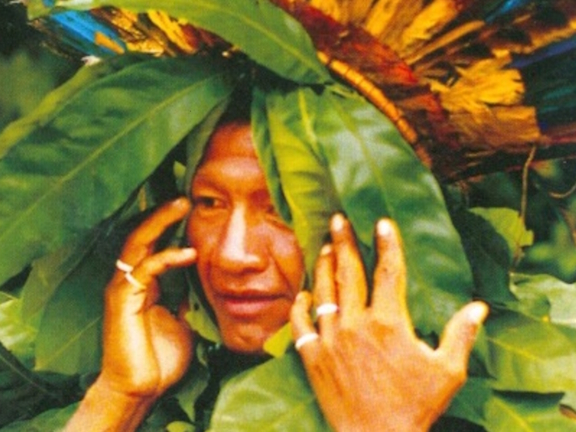
Around 1558, Tamandaré, an indigenous member of the Tupinambá people, founded Brazil's first indigenous church, called 'Tejupá', with a roof made of wooden shingles, where ceremonies of 'debaptism' were performed, involving smoke and leaves. Like that roof, the film is a jigsaw puzzle of raw pieces, fragmented records of a historical and familiar immersion for the production of the installation Desbatismo Tejupá [Tejupá Debaptism], by the same artist.
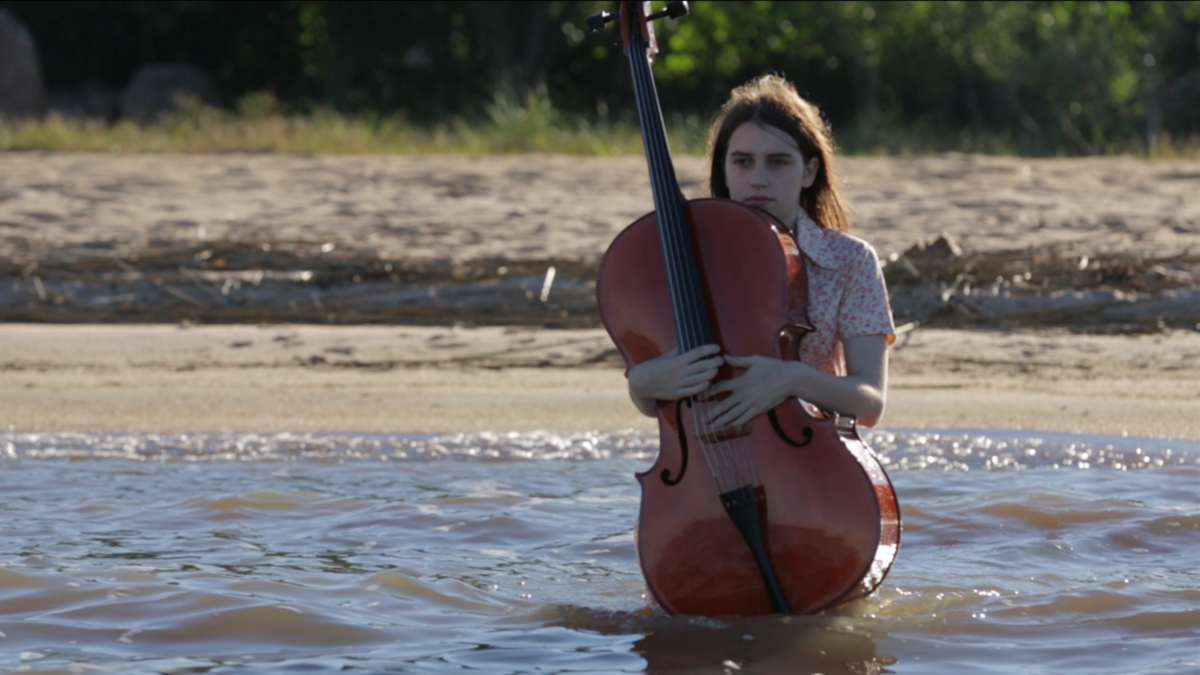
Dádiva 1 – Copo d’água por violoncelo (2014), 9'10''
Film from the series Ensaio sobre a dádiva, in homage to Marcel Mauss's famous text (1925). It involves exchanges that are not governed by monetary values, presenting themselves more as sacred ‘gifts,’ which are, to a certain extent, incomprehensible. It refers to ritual practices that predate our capitalist economic formations, where, before anything was negotiated, an intention of mutual friendship was affirmed through gift-giving. Here, the cello and the glass of water are interchangeable.
Dádiva 2 – Cavalo por Pierrô (2014), 9'26''
Film from the series Ensaio sobre a dádiva, in homage to Marcel Mauss's famous text (1925). It involves exchanges that are not governed by monetary values, presenting themselves more as sacred ‘gifts,’ which are, to a certain extent, incomprehensible. It refers to ritual practices that predate our capitalist economic formations, where, before anything was negotiated, an intention of mutual friendship was affirmed through gift-giving. Here, horse and Pierrot are interchangeable.
Domingo no Golpe (2024), 23'
Ready-made documentary about the attempted coup d'état that took place on 8 January 2023 in Brasilia. Entirely produced with images from the security cameras of the Planalto Palace, made available to the press by the GSI (Institutional Security Office), by order of the Federal Supreme Court (STF). The narration was created from excerpts from the final report of the CPMI on the Acts of 8 January, read by Senator Eliziane Gama (rapporteur).
Terremoto Santo (2017), 19'
I work in partnership with a gospel music publisher in the city of Palmares, Pernambuco, documenting the social and aesthetic aspects of Pentecostal practice. The liturgy of evangelical services is particularly musical in this region of the Zona da Mata, marked by the history of sugar cane and inhabited by young people who seek a way of working in songs of praise.
Fala da Terra (2022), 17'26''
This documentary portrays the work of Coletivo Banzeiros, a theatre group composed of members of the Landless Rural Workers Movement (MST), who live and work between the rural and urban areas of Marabá and Parauapebas, in south-eastern Pará, developing forms of education and political activism.
Credits
Taubilhas
Direction
Malassombro e Assojaba Tupinambá
Director
Glicélia Tupinambá
Screenplay
Glicélia Tupinambá
Executive production
Augusto Santos
Editing
Augusto Santos (Method_av)
Post-production
Augusto Santos (Method_av)
Camera
Gliélia Tupinambá e Jéssica Tupinambá
Production
Jéssica Tupinambá
Narration
Augusto Santos
Soundtrack
Nahraujo
Drawings
Glicélia Tupinambá
Illustrations
Quinho QNH
Design
Augusto Santos (Method_av)
Dádivas
Directors
Nuno Ramos e Eduardo Climachauska
Cast Dádiva 1 – Copo d’água por violoncelo
Maria SóMaria e Áurea Baptista
Cast Dádiva 2 – Cavalo por Pierrô
Eduardo Climachausk
Cinematography
Glauco Firpo
Assistant director
Richard Tavares
Executive production
Paola Wink
Production management
Larissa Bermudez
Art director
Manuela Falcão
Editing
Lia Kulakauskas
Post-production
Bruno Carboni
Sound design
Guile Martins
Sound interventions
Thiago França
Sound studio
Fine Tuning
Direction
Tokyo Filmes
Domingo no Golpe
Directors
Giselle Beiguelman, Lucas Bambozzi
Sound created from bases by
Gabriel Lemos, Muep Etmo
Narrations
Senator Eliziane Gama, reading the final report of the CPI dos Atos Golpistas (Parliamentary Commission of Inquiry into Coup Attempts), released on 17 October 2023; architect Lúcio Costa in an interview with Ana Rosa de Oliveira, Vitruvius magazine, July 2005; historian and sociologist Darcy Ribeiro; former President Jair Bolsonaro in an interview with Oeste magazine in February 2024; General Hamilton Mourão in a speech to the Senate in February 2024.
Additional research
Acervos Digitais
Support
Fapesp
Terremoto Santo
Directors
Bárbara Wagner & Benjamin de Burca
Executive production
Cecília da Fonte
Cinematography
Pedro Sotero
Art directors
Benjamin de Burca, Dani Vilela
Editing
Eduardo Serrano
Music
Carlos Sá, Naaliel Nascimento
Sound
Guga Rocha, Nicolau Domingues
Fala da Terra
Directors
Bárbara Wagner & Benjamin de Burca
Cinematography
Pedro Sotero
Editing
Daniela de Lamare
Music
Carlos Sá
Sound
Nicolau Domingues
Image
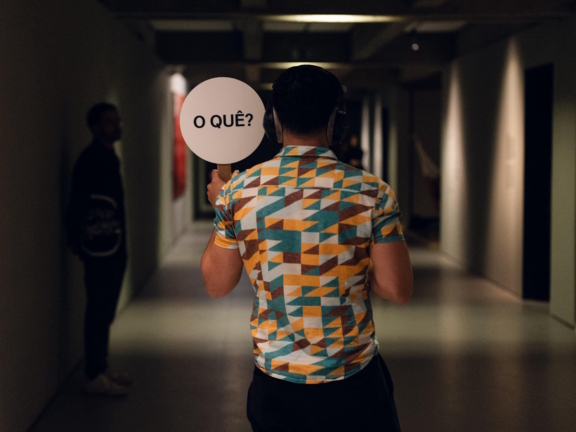
Nuno Ramos, Still from the film Dádiva 1 – Copo d’água por violoncelo, 2014
The Calouste Gulbenkian Foundation reserves the right to collect and keep records of images, sounds and voice for the diffusion and preservation of the memory of its cultural and artistic activity. For further information, please contact us through the Information Request form.
Related
No results were found for your criteria.