
Mozart's Violin Concerto No. 4
Gulbenkian Orchestra and Choir
Event Slider
Date
- 20:00 / Cancelled 20:00 / Sold out Thursday, 20:00
- 19:00 / Cancelled 19:00 / Sold out Friday, 19:00
Location
Grand Auditorium Calouste Gulbenkian FoundationPricing
25% – Under 30
10% – Over 65
Cartão Gulbenkian:
50% – Under 30
20% – Over 65
10% – 30 to 65
- Conductor
- Violin
- Diogo Infante Reciter
-
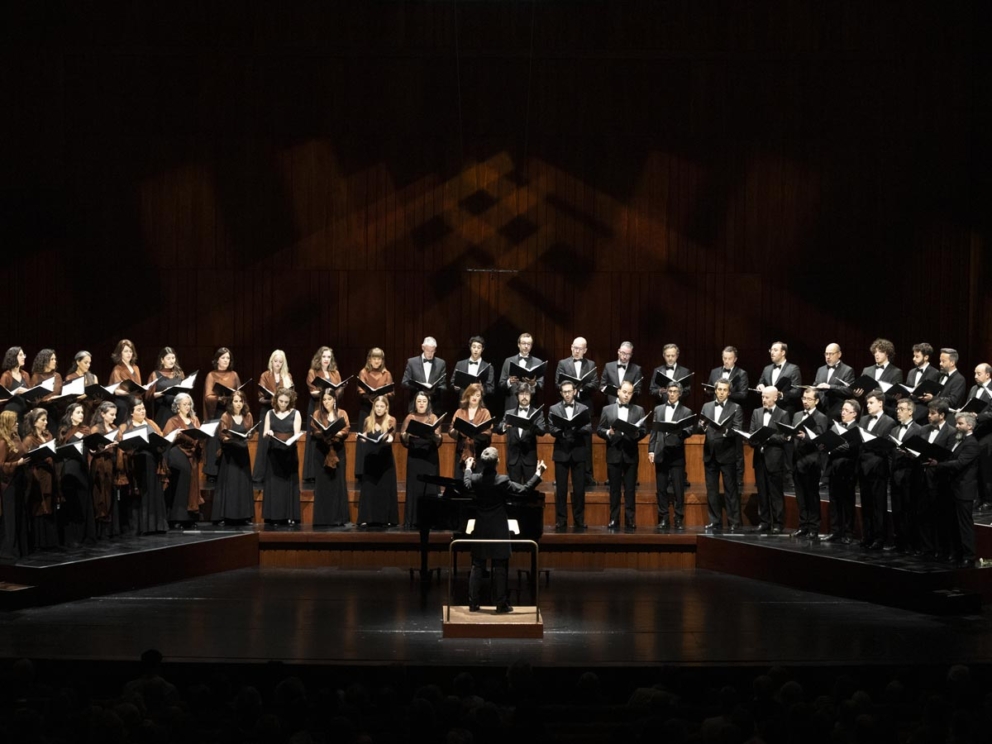
Gulbenkian Choir
Coro Gulbenkian was founded in 1964 by the Calouste Gulbenkian Foundation as a full symphonic body of around 100 singers. The choir joins the Orquestra Gulbenkian and other orchestras to perform Classical, Romantic and Contemporary choral-symphonic repertoire, but can also perform a cappella. It has performed – and often premiered – many 20th century works by Portuguese and international composers.
Coro Gulbenkian has been invited to collaborate with major international orchestras, under the direction of conductors such as Claudio Abbado, Colin Davis, John Nelson, Emmanuel Krivine, Esa-Pekka Salonen, Frans Brüggen, Franz Welser-Möst, Gerd Albrecht, Michael Gielen, Michael Tilson Thomas, Rafael Frübeck de Burgos, René Jacobs and Leonard Slatkin, among others.
Besides its regular season of concerts in Lisbon and frequent national tours, Coro Gulbenkian has repeatedly toured Argentina, Belgium, Brazil, Canada, Denmark, France, Germany, Hungary, India, Iraq, Israel, Italy, Japan, Macao, Malta, Monaco, Netherlands, Spain, the United Kingdom, the United States of America and Uruguay.
Coro Gulbenkian has recorded extensively for Philips, Deutsche Grammophon, Erato, Cascavelle, Musifrance, as well as FNAC-Music, performing a wide range of repertoire, from Early-Renaissance polyphony to Xenakis. Several of these albums received international awards.
Michel Corboz was the Principal Conductor between 1969 and 2019. Jorge Matta and Inês Tavares Lopes are currently the Associate and Assistant conductors, respectively.
-
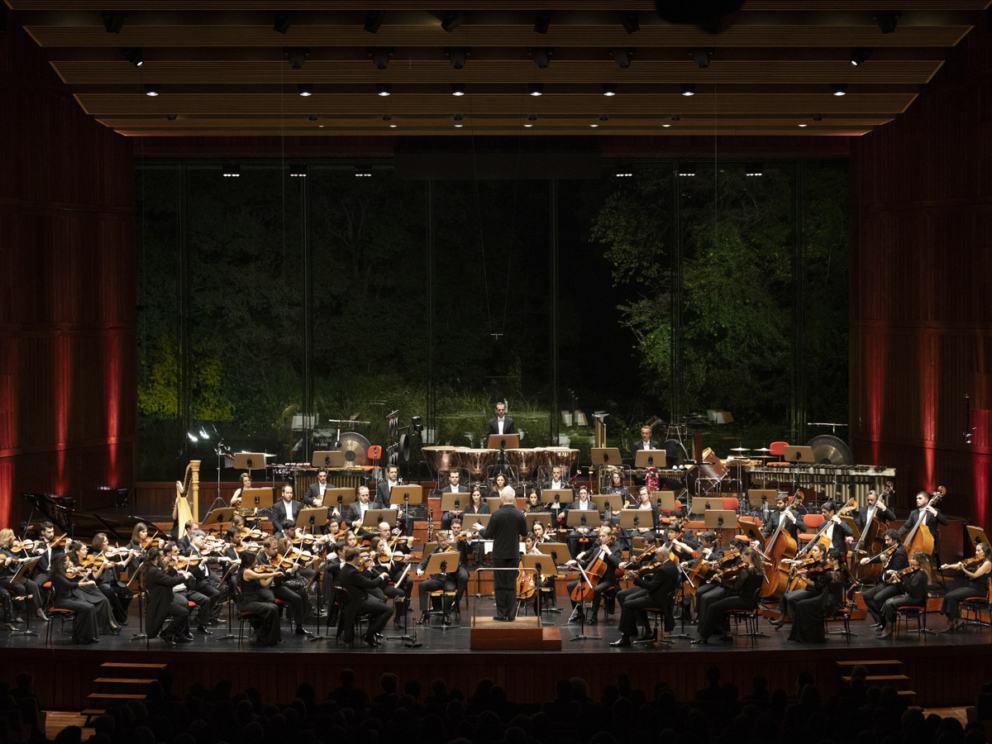
Gulbenkian Orchestra
In 1962, the Calouste Gulbenkian Foundation decided to establish a permanent orchestral ensemble. Originally with only twelve musicians (strings and continuo) it was named “Orquestra de Câmara Gulbenkian”. This collective was successively enlarged and today the “Orquestra Gulbenkian” (the name it has adopted since 1971) has a permanent body of sixty instrumentalists, a number that can be expanded depending on the repertoire.
This structure allows the Gulbenkian Orchestra to interpret works from the Baroque and Classical periods, a significant part of 19th century orchestral literature and much of the music of the 20th century, including works belonging to the current repertoire of the traditional symphonic orchestras. In each season, the orchestra performs on a regular series of concerts at the Gulbenkian Grand Auditorium in Lisbon, where it has had the opportunity of working together with some of leading names of the world of music (conductors and soloists). It has also performed on numerous locations all over Portugal, in an effort to decentralize music and culture.
The orchestra has been constantly expanding its activities in the international level, performing in Europe, Asia Africa, and the Americas. In the recording field, Orquestra Gulbenkian is associated to labels as Philips, Deutsche Grammophon, Hyperion, Teldec, Erato, Adès, Nimbus, Lyrinx, Naïve and Pentatone, among others, and this activity was recognized with several international prizes.
-
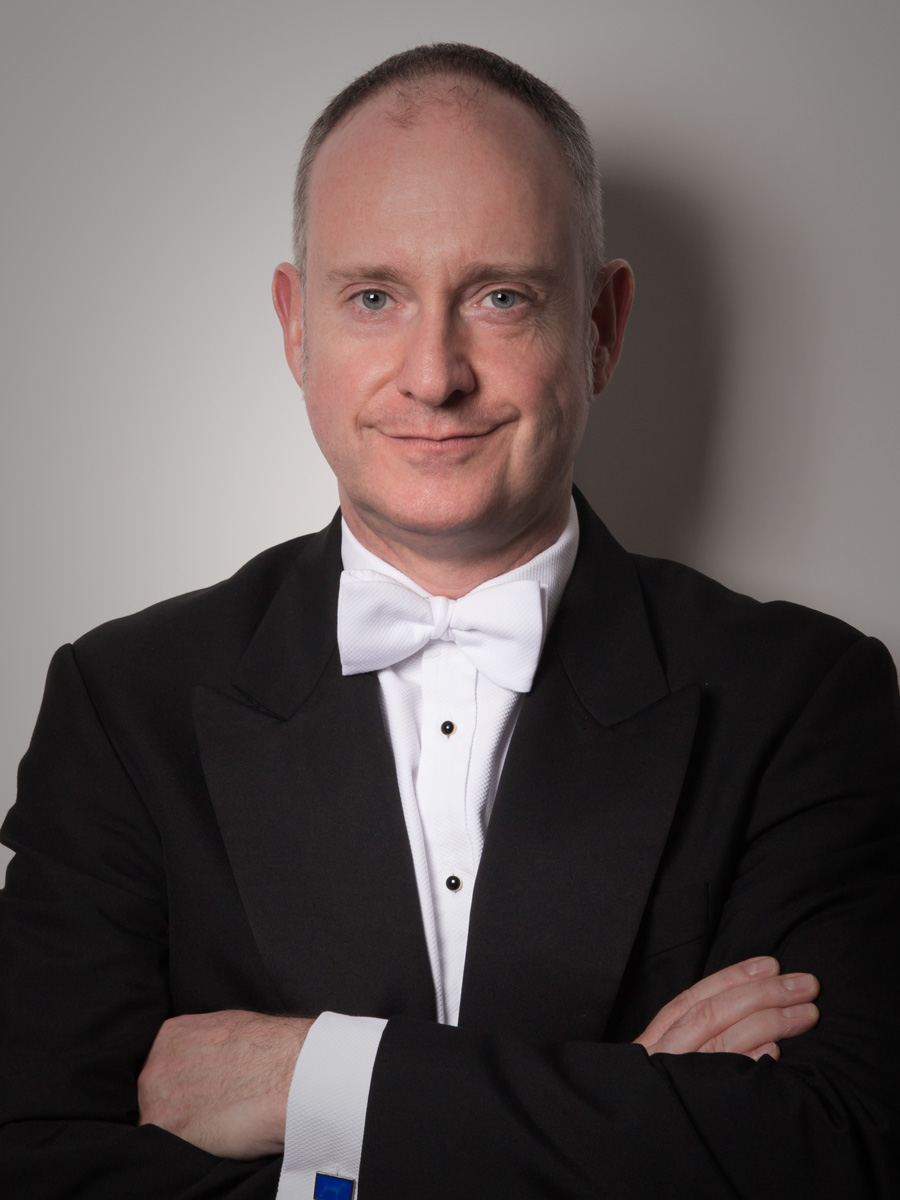
Neil Thomson
Conductor
Neil Thomson, was born in London in 1966, studied violin and viola at the Royal Academy of Music (1984-87) and conducting with Norman Del Mar at the Royal College of Music (1987-89). He was a member of the conducting class at Tanglewood Summer School in 1989 where his teachers included Gustav Meier, Seiji Ozawa, Kurt Sanderling and Leonard Bernstein.
In the UK he has conducted the London Symphony Orchestra, the London Philharmonic Orchestra, the Philharmonia, the Royal Philharmonic Orchestra, the Royal Liverpool Philharmonic, the Royal Scottish National Orchestra, the Hallé, the BBC Symphony Orchestra, the Ulster Orchestra and the Orchestra of Welsh National Opera.
Since March 2014 he has been the Principal Conductor and Artistic Director of the Goiás Philharmonic Orchestra in Brazil. The orchestra quickly developed a reputation for its dynamic performances, its broad repertoire (with special emphasis on Brazilian and contemporary music). In December 2018 the orchestra performed the South American premiere of Messiaen's monumental "Des Canyons aux Étoiles". This was a highlight in the development of the orchestra and an extremely important moment in the history of Brazilian orchestral music. The Goiás Philharmonic was awarded the Order of Rio Branco (the Brazilian equivalent of the Légion d'Honneur) by the Minister of Foreign Affairs in recognition of its enormous contribution to Brazilian music.
Recordings include some discs the Royal Liverpool Philharmonic Orchestra and London Symphony Orchestra. He is currently engaged on a project to record all 14 symphonies of Claudio Santoro as well as music by José Siqueira, Edino Krieger and César Guerra-Peixe with the OFG, Almeida Prado and Francisco Mignone with the São Paulo Symphony Orchestra, Santoro with the Gulbenkian Orchestra and Romantic Brazilian music for chamber orchestra with the English Chamber Orchestra, all for the Naxos series ‘Brazil in Concert’. He also recorded Nigel Clarke’s ‘The Prophecies of Merlin’ with the ORF Vienna Radio Symphony Orchestra for Naxos. His recordings for Naxos Records received widespread critical acclaim.
Orchestras conducted in recent years include the Vienna Radio Symphony Orchestra, English Chamber Orchestra, Seattle Symphony Orchestra, Klassische Philharmonie Bonn, Yomiuri Nippon Symphony Orchestra, Tokyo Philharmonic, Century Orchestra Osaka, Kansai Philharmonic, Sapporo Symphony Orchestra, Kyushu Symphony Orchestra, Lahti Sinfonia, Romanian National Orchestra, Britten Sinfonia, Ulster Orchestra, RTE Concert Orchestra, Orchestra of Gothenburg Opera, Aarhus Symphony Orchestra, Orchestra of Opera North, Sao Paulo Symphony Orchestra, Brazilian Symphony Orchestra, Minas Gerais Philharmonic Orchestra, Buenos Aires Philharmonic Orchestra, National Symphony Orchestra of Chile, Sanremo Symphony Orchestra, Sicilian Symphony Orchestra, Jalisco Philharmonic Orchestra, Orchestra Sinfonica di Bari and Jerusalem Symphony Orchestra.
He has performed with many distinguished soloists including, Nobuyuki Tsujii, Sir James Galway, Dame Moura Lympany, Sir Thomas Allen, Dame Felicity Lott, Philip Langridge, Antonio Meneses, Sarah Chang, Steven Isserlis, Julian Lloyd Webber, Nelson Freire, David Geringas, Natalie Clein, Gyorgy Pauk, Brett Dean, Jean-Philippe Collard, Stephen Hough, Peter Jablonski, Jean-Louis Steuerman, Dame Evelyn Glennie and Sir Richard Rodney Bennett.
In addition to his symphonic work Thomson also works on film projects. In 2013, he premiered the reconstructed score of “Singin' in the Rain” at the Royal Albert Hall in London. Other live-movie performances include “Psycho,” “Vertigo,” “Casablanca,” “The Wizard of Oz,” “Fantasia,” “Amadeus” and “Titanic.” He recently conducted the show “Gene Kelly: A Life in Music” with the Royal Scottish National Orchestra and the Seattle Symphony Orchestra, a project developed by Gene Kelly’s widow to preserve the artist's musical heritage.
From 1992 until 2006 he served as Head of Conducting at the Royal College of Music. The youngest-ever incumbent of this post (first held by Sir Adrian Boult in 1919 and later by Norman Del Mar), he was made an Honorary Member of the RCM in 1994 for his services to the institution and has established an admirable reputation as an orchestral trainer.
His skills as a natural communicator have enhanced an already growing reputation as a teacher throughout Europe. He has been a Guest Professor at the Mozarteum in Salzburg, the Krakow Academy of Music, the Conservatoire "Arrigo Boito" in Parma, the Lithuanian Academy of Music, the Campos do Jordão Festival and the London Conducting Workshop. In 2002 he was invited by Lorin Maazel to be on the jury for the European rounds of the Maazel Conducting Competition and in 2007 was on the jury, alongside Gunther Schuller, of the Eduardo Mata International Conducting Competition in Mexico City. Thomson is now Professor at the Los Angeles Conducting Workshop, Dresden Dirigierakademie and the Neil Thomson Conducting Academy.
-
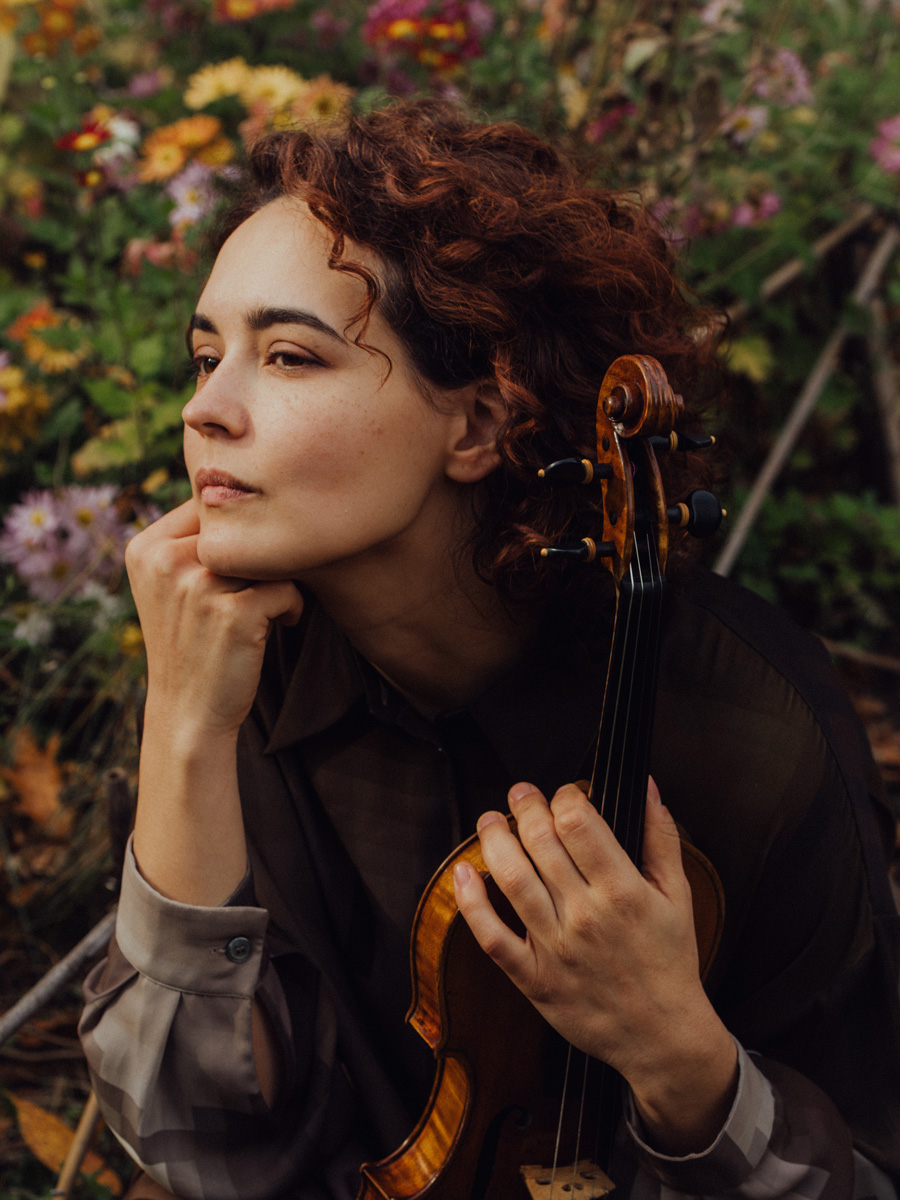
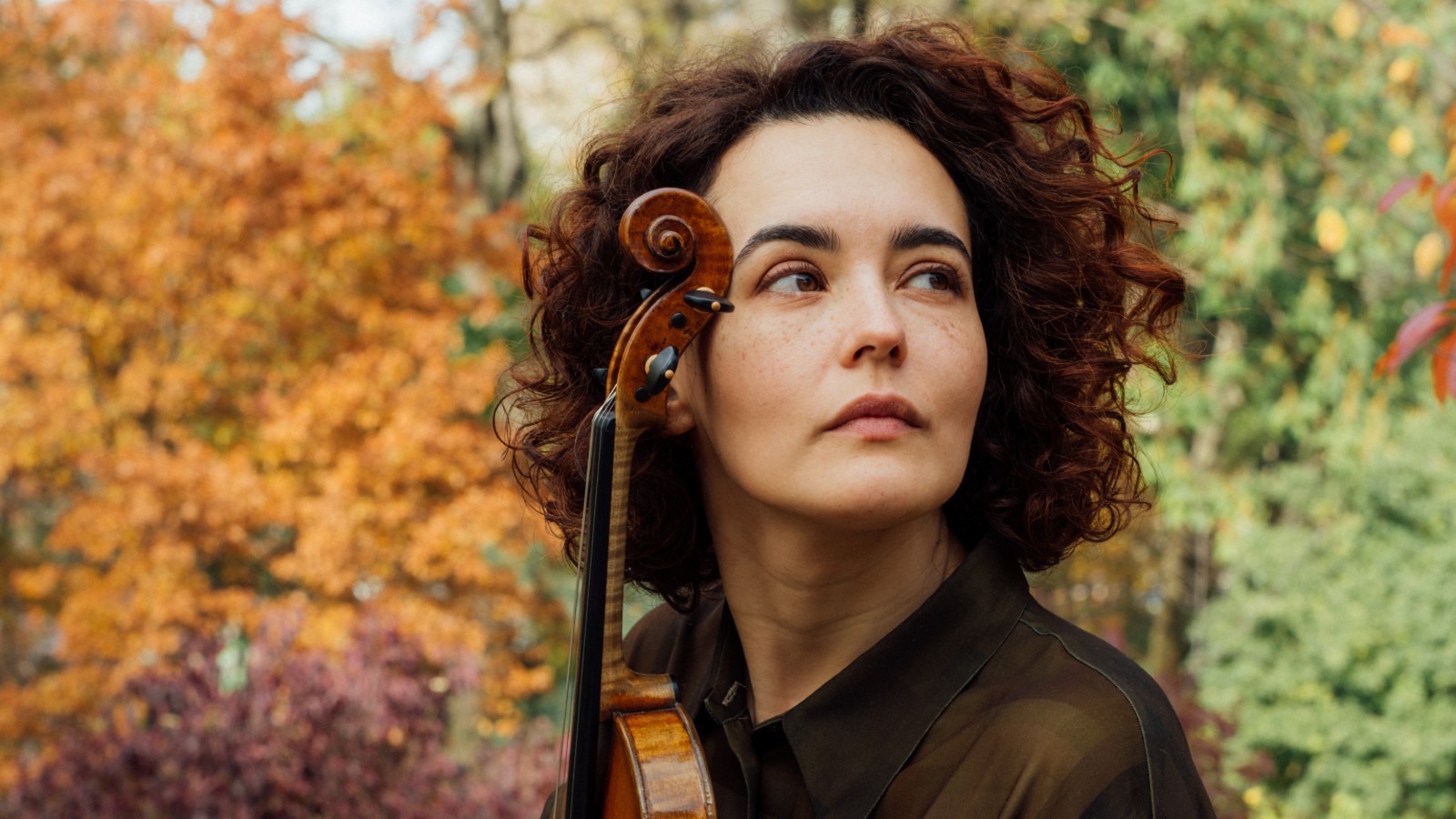
Alena Baeva
Violin
Described as “a magnetic presence” (New York Classical Review), violinist Alena Baeva is considered one of the most versatile and captivating soloists active on the world stage today. Possessing a passionate musical curiosity, Baeva holds a vast active repertoire: she is a champion of lesser-known works alongside the more mainstream violin literature, including such composers as Bacewicz, Karaev, Karłowicz and Silvestrov.
As an international soloist, Baeva has performed with orchestras including New York Philharmonic Orchestra, London Philharmonic Orchestra, NHK Symphony and Tokyo Metropolitan Symphony orchestras, Hong Kong and Seoul philharmonic orchestras, Tonhalle-Orchester Zürich and Gürzenich-Orchester Köln, to name a few. Highlights of this season include The Royal Concertgebouw Orchestra, Philharmonia Orchestra, Die Deutsche Kammerphilharmonie Bremen, Orquestra Simfònica de Barcelona i Nacional de Catalunya, Ensemble Resonanz, Il Giardino Armonico, Antwerp Symphony Orchestra and Orchestre Philharmonique Royal de Liège. She has worked with leading conductors including Paavo Järvi, Vladimir Jurowski, Cornelius Meister, Riccardo Minasi, Tomáš Netopil, Kazushi Ono, Petr Popelka, Dinis Sousa and Kazuki Yamada.
Chamber music holds a particularly special place in Baeva’s musical life, and she enjoys collaborations with such artists as Yuri Bashmet, Daishin Kashimoto, Misha Maisky, Jean-Guihen Queyras, and the Belcea Quartet. Her regular duo partner is Ukrainian pianist Vadym Kholodenko, and this season will perform at Wigmore Hall, Athens’s Megaron and Amici della Musica in Florence.
Baeva records for the Alpha Classics label: her upcoming album is Vol.1 of the integral cycle of Beethoven violin sonatas, recorded with Vadym Kholodenko. Her previous release Fantasy (Alpha, 2024) was praised by Gramophone as “an intriguing sequence where each work benefits from illumination by its programme neighbours” and features works by Schubert, Stravinsky, Schumann and Messiaen, recorded with Vadym Kholodenko. Baeva’s discography also includes Wieniawski Violin Concerto No.2 on gut strings with Orchestra of the XVIII Century (2021); Karłowicz Violin Concerto with Royal Philharmonic Orchestra (2018); Schumann Violin Concerto and original 1844 version of Mendelssohn Violin Concerto for Melodiya Records (2020).
Born in Kyrgyzstan with Slavic-Tatar ancestry, Baeva took her first violin lessons at the age of five under renowned pedagogue Olga Danilova in Kazakhstan before studying with Professor Eduard Grach in Russia. She also took lessons with Mstislav Rostropovich, Boris Garlitsky, and Shlomo Mintz, and took part in the Seiji Ozawa International Academy Switzerland, focused on string quartet repertoire. Naturalised Luxembourgish, Alena Baeva has resided in Luxembourg since 2010.
Alena Baeva plays on the “ex-William Kroll” Guarneri del Gesù of 1738 – on a generous loan from an anonymous patron, with the kind assistance of J&A Beares.
Wolfgang Amadeus Mozart
Cláudio Santoro
Heitor Villa-Lobos
A concert focusing on relations between Portugal and Brazil, with a programme featuring works by two Brazilian composers – Heitor Villa-Lobos and Cláudio Santoro – along with Mozart’s Violin Concerto No. 4, performed by Alena Baeva. The Gulbenkian Choir and Orchestra join forces to perform Santoro’s Elegiac Cantata, commissioned by the Gulbenkian Foundation in 1972. At the time of the premiere, the composer explained in an interview with RTP that this was how he was realising his “long-held plan to honour” the words of Camões, whom he considered “one of the world’s greatest poets”.
This event is part of the complementary programme for the exhibition complexo brasil, curated by José Miguel Wisnik, Guilherme Wisnik and Milena Britto.
Sponsor Gulbenkian Music

The Calouste Gulbenkian Foundation reserves the right to collect and keep records of images, sounds and voice for the diffusion and preservation of the memory of its cultural and artistic activity. For further information, please contact us through the Information Request form.