
Zineb Sedira: ‘I believe that engaging with the past is essential for understanding the present and moving intentionally toward the future.’
Rita Fabiana: The title of the exhibition ‘Standing Here Wondering Which Way to Go’ is borrowed from a song performed by Marion Williams at the first Pan-African Festival in Algiers in 1969, an original song from 1956 by the American gospel singer Mahalia Jackson, an American civil rights activist close to Martin Luther King. This title carries with it both the marks of oppression and the hope and euphoria (of fire[1]) experienced in those decades of the 1960s and 1970s, both in the African liberation struggles and in the American civil rights struggles.
In this project, as in others, you immerse yourself in these moments of historical change. But the title also refers to a turning point, a look to the future: what will remain of all these struggles, all these utopias, this hope for a change in the world? There is no question mark, but the question is there: ‘wondering which way to go’. What other ‘fires’ does this title hold?
Can you tell us more about this relationship with time (past, present and future) in your work, and in this project in particular? As an artist, you look to the past, these archives, these images, these songs, but your artistic practice is anchored in the present, for the present, and perhaps for the future?
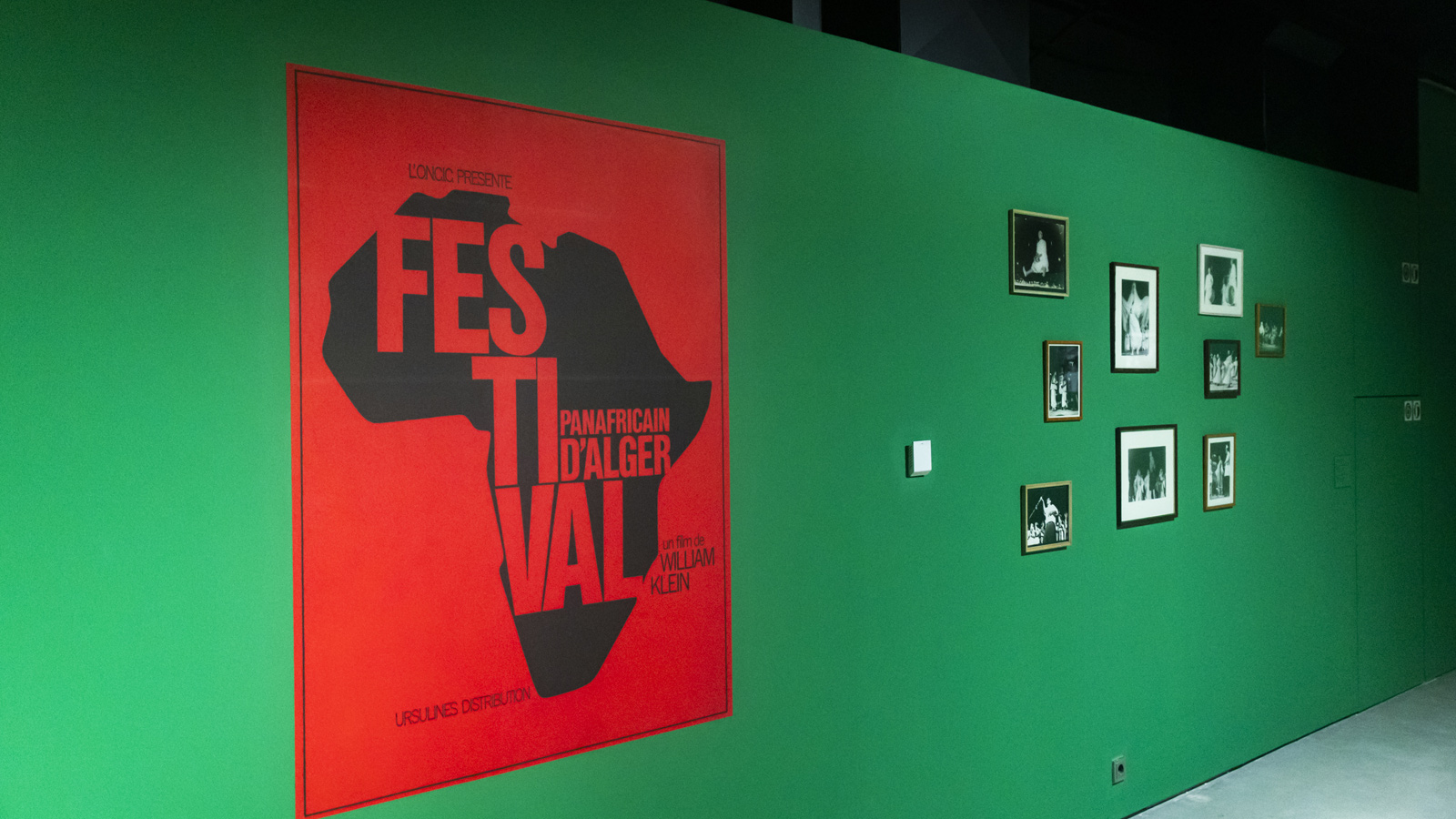
Zineb Sedira: Marion Williams performed at the 1969 Pan-African Festival of Algiers (also known as PANAF) alongside iconic artists such as Nina Simone, Archie Shepp, Miriam Makeba, and others – musicians invited precisely because they embodied anti-imperialist and anti-capitalist ideals. Algiers then welcomed Afro-American activists including members of the Black Panthers, offering solidarity in their fight against US segregation, a struggle that deeply resonated with Algeria’s own revolutionary history.
Both Mahalia Jackson’s and Marion Williams’s songs, and my 2019 installation ‘Standing Here Wondering Which Way to Go’, are at once a question and a stance. They express a moment of collective uncertainty, but also a search for alternative models of governance, culture and identity. In the phrase itself, there is hesitation, reflection and urgency – a resonance that speaks powerfully to today’s political context.
Let’s not forget, the PANAF was not merely a cultural event – it was a geopolitical statement, a platform where marginalised voices came together to redefine the meaning of global solidarity.
I believe that engaging with the past is essential for understanding the present and moving intentionally toward the future. Acts of remembrance are powerful: they reveal how today’s struggles against inequality and injustice are echoes of earlier battles, even if they now take new forms.
The fight continues – and so must our collective memory. And perhaps it is time to revisit this past moment – not with nostalgia, but with clarity – to learn from its failures and successes, and to consider how they might inform the present and the future.
RF: What led you to the 1969 Pan-African Festival in Algiers? would you like to say a few words about your interest in pan-africanism and how it manifests in your work, and in particular in this project?
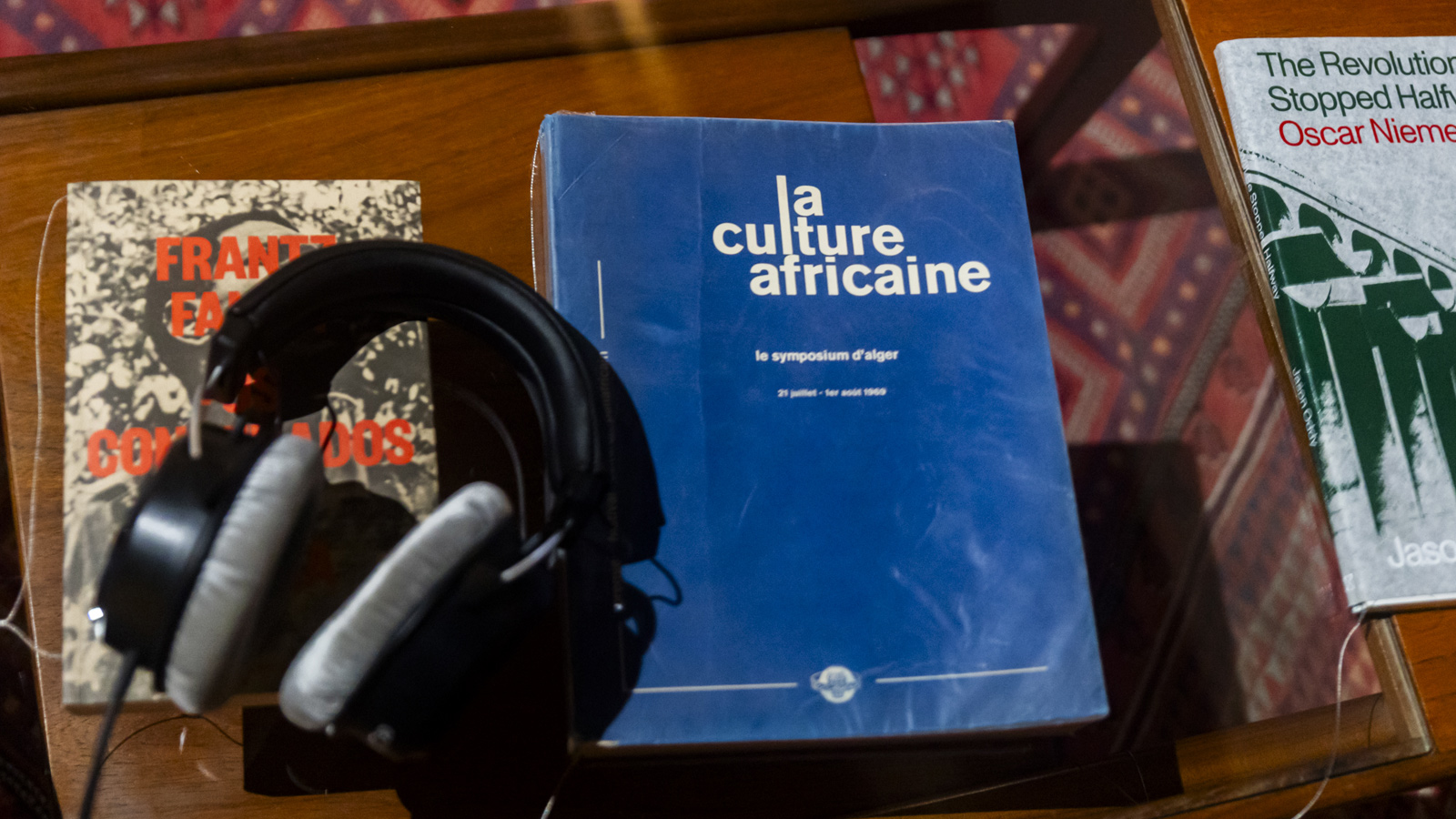
ZS: Participating in Algiers’ 2009 reenactment of PANAF was a turning point for me; it revealed the profound significance of the original 1969 event. So I began researching this pivotal moment and uncovered, of course, William Klein’s iconic film ‘The Pan-African Festival of Algiers’ (1969), commissioned by the Algerian state, which remains the only complete record of the festival. At the time, written accounts were scarce, and archival material in Algiers was difficult to access. In a way, this absence of records became the project itself – a recovery mission to piece together fragments of a history I felt were too vital to be forgotten.
As I immersed myself in the archives of the 1969 edition, Algiers was once again alive with protests and political debate – this time through the Algerian Hirak, a powerful uprising against the government. What moved me most was the profound sense of solidarity and determination that swept across the country. To witness this unfold felt almost surreal, as it echoed the spirit of the 1969 Pan- African Festival, when Algiers had also served as a stage for collective hope, resistance, and political imagination.
My interest in Pan-Africanism stems from the fact that African culture holds a vast diversity of stories and identities, yet tensions persist – particularly among African cultural specialists – between the North and the South, often rooted in debates around authenticity, identity and representation. As an Algerian African artist, I have personally experienced these forms of exclusion – because of my Arab, Berber and Mediterranean heritage, and at times even due to my skin colour.
My project at CAM engages directly with these dynamics, challenging the narrow, essentialist view of Africa that overlooks the continent’s shared histories of colonisation, resistance, migration and longstanding cultural exchange. These divisions are, in part, a colonial legacy that continues to shape perceptions today. I reject this logic and seek instead to affirm unity in diversity, much like the 1969 Pan-African Festival in Algiers, which stood as a powerful space for expressing the continent’s plural identities and interconnected histories.
RF: There’s a comment about Algiers by Amílcar Cabral, founder and secretary-general of the PAIGC (African Party for the Independence of Guinea and Cape Verde) and a Pan-Africanist, made at a press conference in Algiers in 1968 – ‘Christians go to the Vatican, Muslims to Mecca, and revolutionaries to Algiers’. Since 1962, the year of its independence, Algiers has been a model of anti-colonial ‘revolution.’ Does this revolutionary dimension and this reference to Algiers as a revolutionary place for all the struggles of the 1960s and 1970s, where cinema occupied a very important place, play a crucial role in your interest in the city?
ZS: As a cinephile, I was naturally drawn to PANAF’s film program. Hosted at the ‘Cinémathèque of Algiers’ (founded in 1965), the screenings were a revelation. The ‘African film’ selection was rich with films tackling revolution, racism, colonisation, anti-capitalism and anti-war themes. Of course, they were stories that resonated deeply with the era’s political fervour.
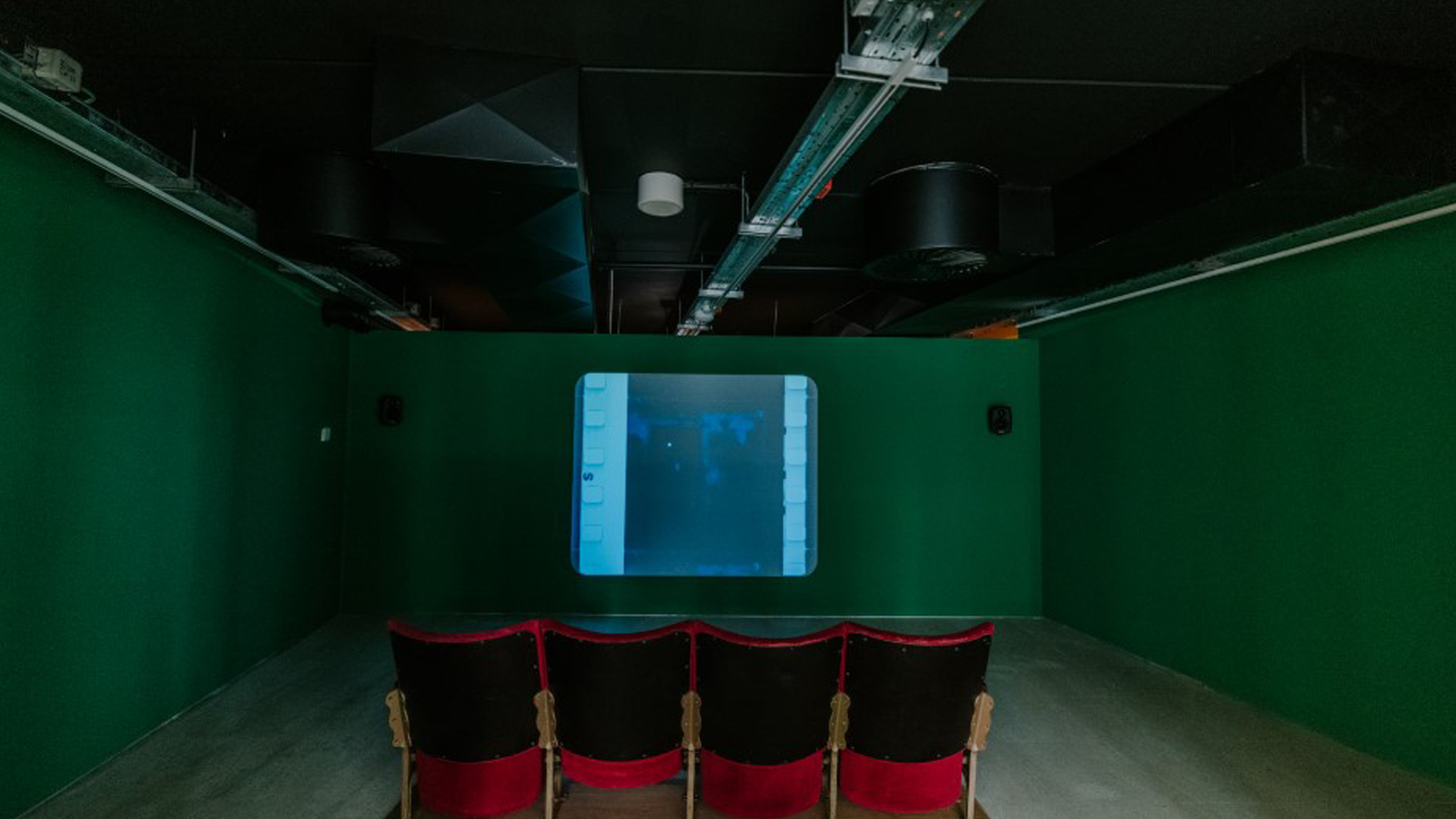
At a time when the Global North largely ignored African cinema, the Pan-African Festival in Algiers offered filmmakers a vital platform to screen their work and engage in dialogue – creating a moment of true Pan-African solidarity, whether artistic, intellectual or political. The Cinémathèque became more than just a venue; it was a lasting hub of cultural awakening and political consciousness that endured for several decades. As Amílcar Cabral rightly observed, in the 60s and 70s Algeria was a country that welcomed revolutionaries and, during the Festival, that revolutionary spirit extended onto the screen.
And of course, William Klein’s film found its place in this revolutionary cinematic landscape. Like the African films screened at PANAF, Klein’s work became part of the very archive of resistance that the Cinémathèque sought to amplify.
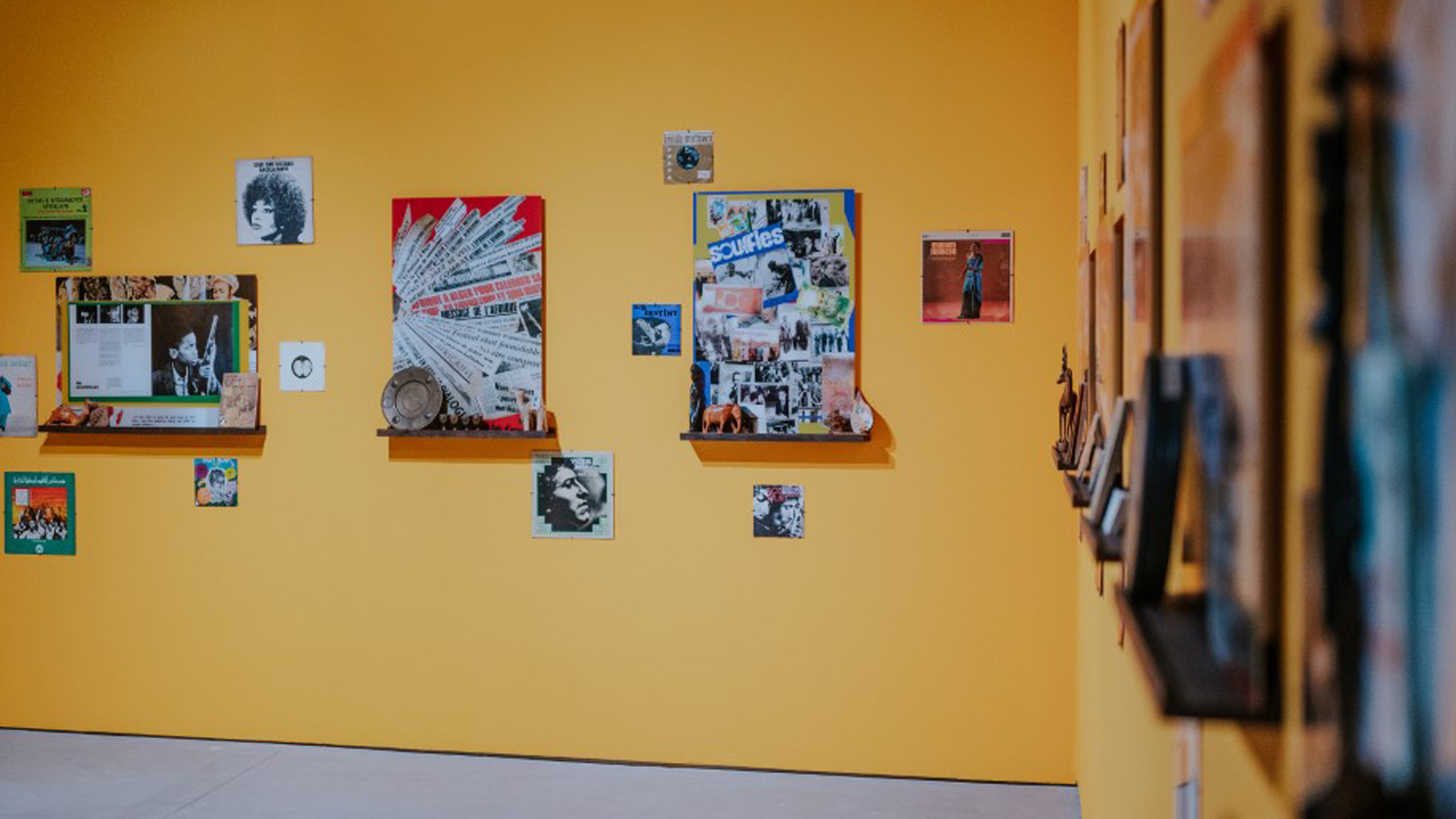
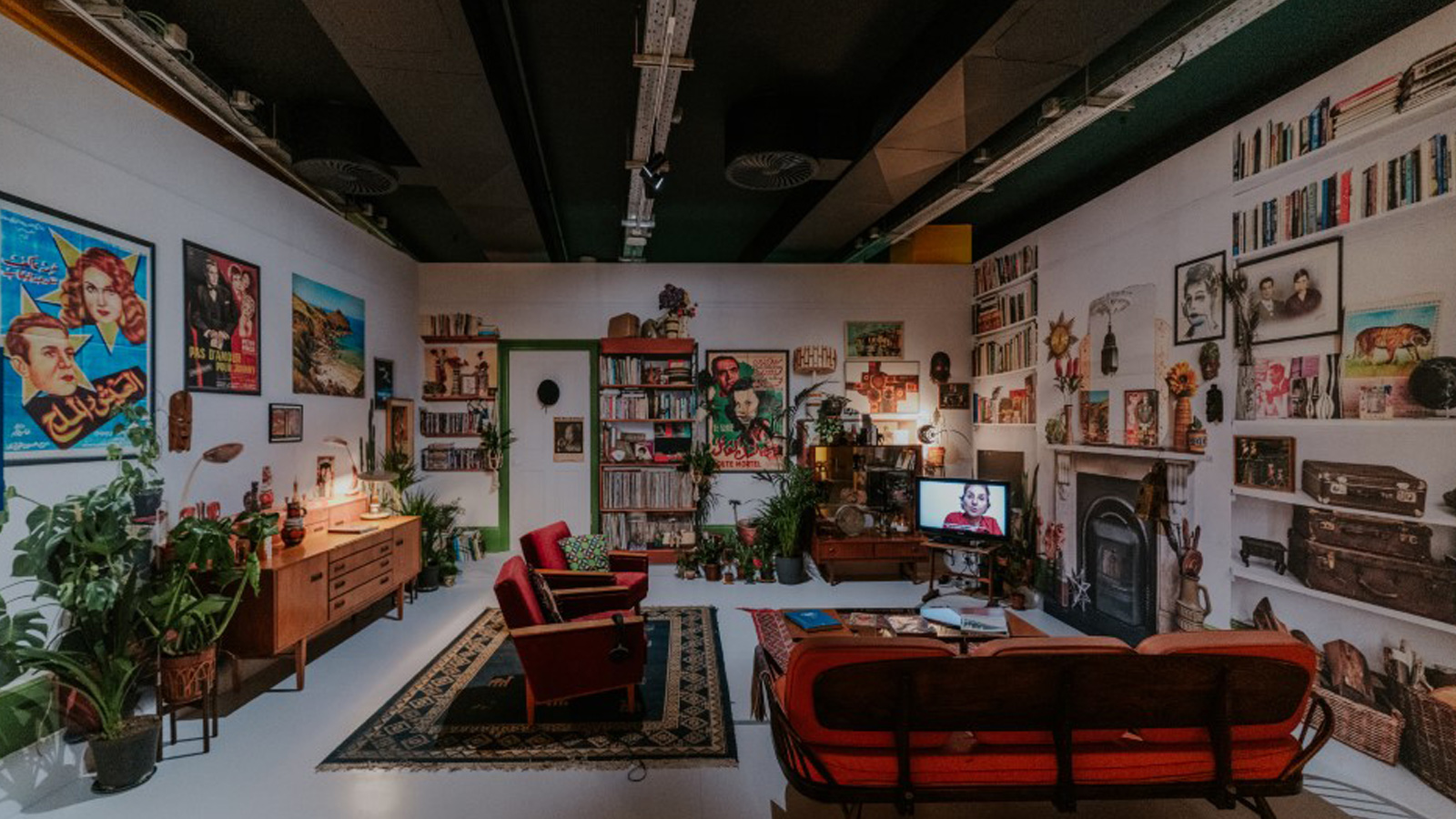
RF: History, and the history of Algeria in particular – the war against French colonial oppression, the struggles for independence, the building of the country, the displacement of populations, travel and immigration – all emerge in your work as a collective and personal history. Is your work at the crossroads of these narratives? In ‘Standing Here Wondering Which Way to Go’, in ‘Scene 3: Way of Life’, you reinstall, reconstitute and stage your London living room, a place of life, which you re-presented in the Venice Biennale project in 2022. This work seems to be particularly successful in this relationship with the personal and the autobiographical, which negotiates and participates in the construction of a collective narrative.
ZS: As you know, I am French of Algerian heritage, born in the 1960s to parents who immigrated to the Parisian suburbs after living under French colonial rule in Algeria. And I moved to the UK in 1986. Our family embodies the tangled legacy of colonisation and its so-called ‘decolonisation’, though liberation is never so simple.
I was born in a France steeped in discrimination and resentment, driven by the loss of the Algerian war and the collapse of its imperial identity. So it feels deeply relevant that my work on ‘decolonisation’ begins with my family’s own story. Our experiences – of immigration, discrimination, colonial violence, and resilience – are not merely personal; they reflect a broader collective reality that extends beyond the Algerian context. I believe art can be a powerful force – against oblivion, erasure and imposed narratives.
To recreate my living room in Brixton, London, as a diorama-artwork was, admittedly, quite autobiographical. But it felt important especially as my living room became a metaphor, a microcosm of the Festival itself.
Just like PANAF, it was a space where I hosted friends, danced, watched films, sang, shared meals and held long, passionate debates. It embodied the spirit of gathering, exchange and celebration that the Festival represented on a larger scale. Conveniently, my living room is also furnished and styled with design elements from the 1960s. It holds a large bookshelf filled with books on postcolonial studies, alongside a collection of DVDs, vinyl records – blues, rhythm and blues, calypso, rocksteady. I realised at the time that these objects – collected over many decades – embodied the very themes of protest, resistance and cultural expression I was researching. The room became both an archive and a stage: a lived-in space of memory, politics, film and music that echoed the spirit of PANAF.
And yes, it was nerve-racking to reveal such an intimate space, but it felt necessary – to bring the personal into dialogue with the political. By opening up my living room, I invited viewers into a space where everyday life and radical thought coexist. It was a way to collapse the distance between home and history, to show how the political is also always personal. But it was also an invitation for the audience to step into my story, and by extension, into a larger collective narrative: a point of entry where private experience could resonate with broader political and cultural struggles.
The full interview is available in the exhibition newspaper ‘Zineb Sedira. Standing Here Wondering Which Way to Go’.
[1] Reference to Scene 2 of the installation, entitled ‘For a Brief Moment the World was on Fire’
You may also like
No results were found for your criteria.