
Mirna Bamieh: ‘Theme ephemeral traces recipes, songs, or the scent of a lemon, are the breath of history, not its footnotes.’
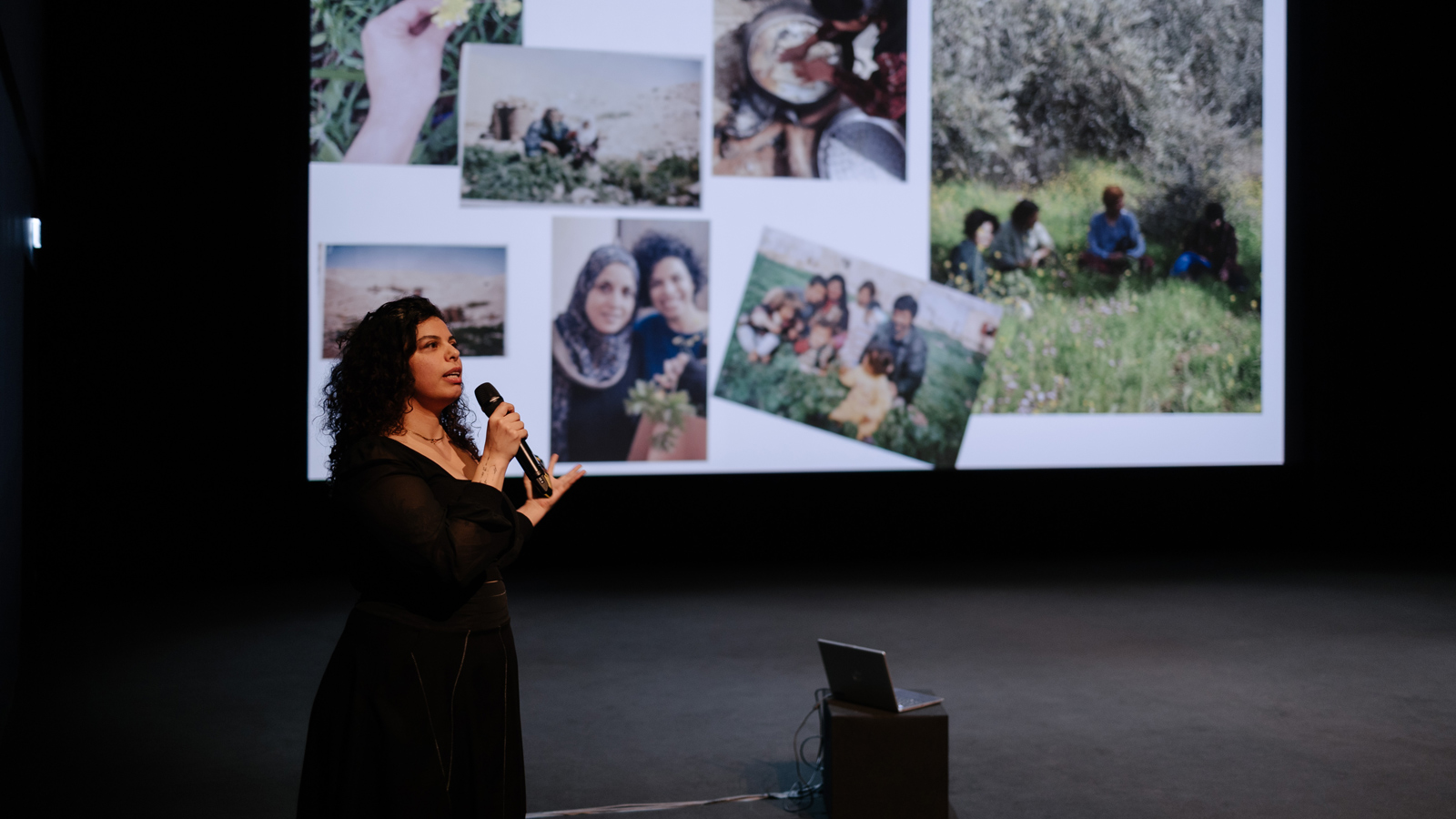
‘Institution(ing)s‘ is the result of a collaboration between CAM, Universidade Católica Portuguesa (UCP) and seven other organisations, including institutions, residencies and universities. Coordinated by curator Luísa Santos of UCP, this platform aims to bring academic institutions closer to the artistic context, by promoting more active and direct participation in the programming of the platform’s members. ‘Institution(ing)s’ proposes a reflection on restructuring of the institutional system, advocating greater accessibility and inclusion, as well as a more sustainable social, economic and environmental long-term outlook.
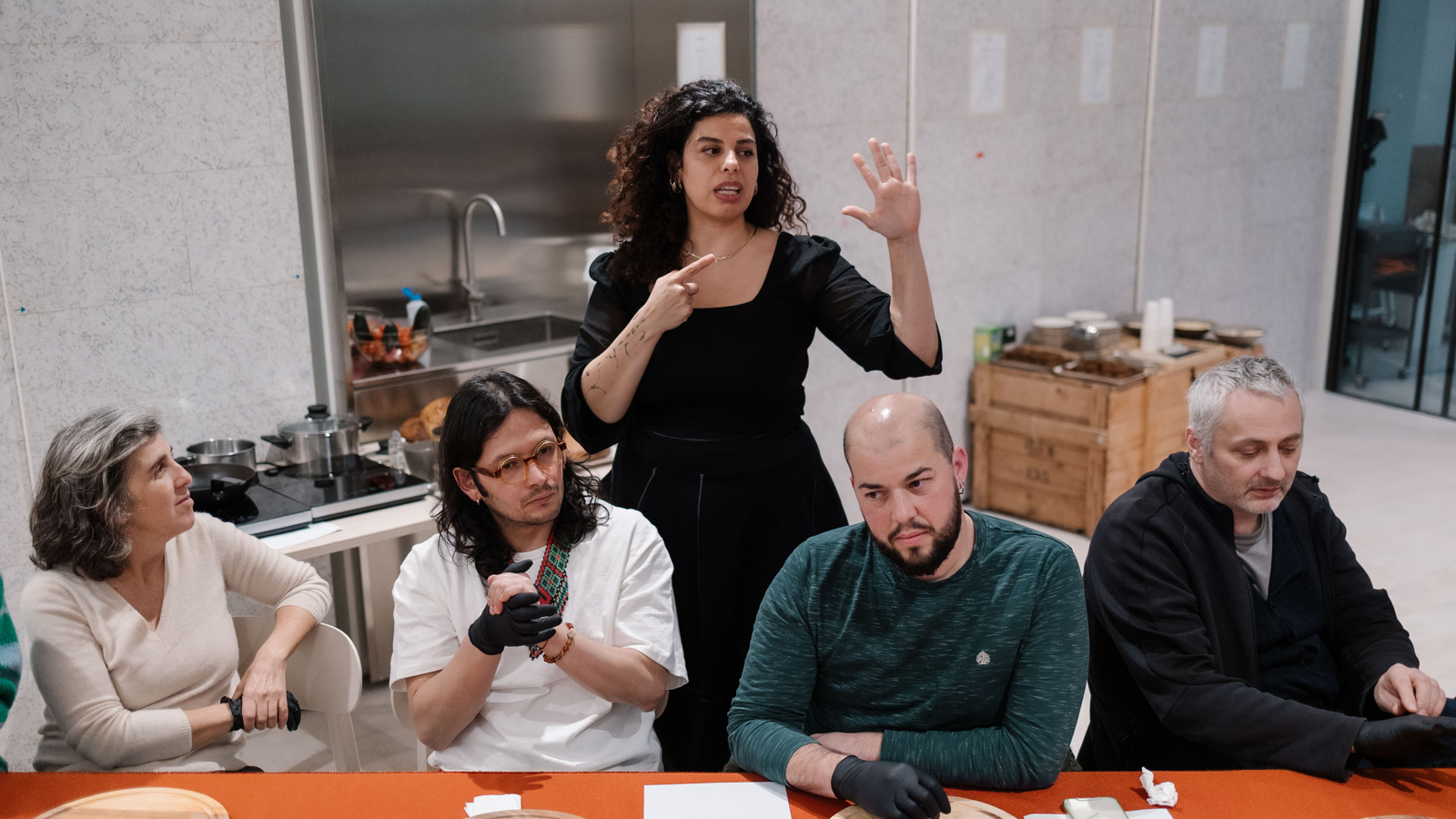
It was in this context that Palestinian artist Mirna Bamieh was invited to present some of her most recent projects, in an intervention she called ‘From the Gut: Food, Power and Places of Resistance‘ and to lead the workshop ‘Sour Things – The Workshop’.
‘As an artist, I see socially engaged, participatory projects as central to the impact of my work. They allow it to resonate more deeply. My aim is always to create small shifts, sparking reflection on overlooked issues, or reframing familiar ones through a new lens.’
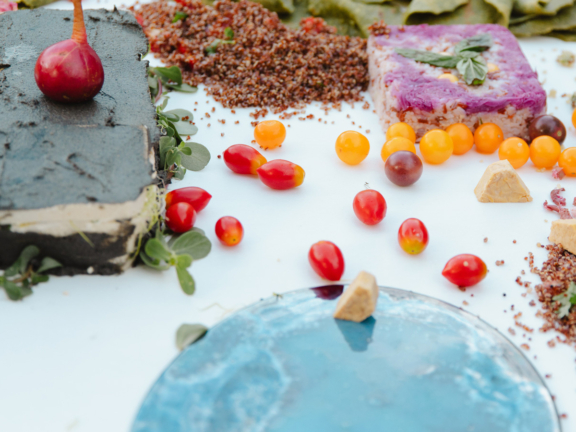
Bamieh’s artistic practice focuses on the conception of models of community research, that aim to explore contemporary political and social dynamics. Her work is based on the creation of participatory spaces and performances, in which she combines various multidisciplinary techniques. She currently focuses primarily on installations that integrate ceramics, video, sound and sculpture, creating scenographies that evoke a distinct universe, simulating domestic environments – such as the dining table, the kitchen or the pantry.
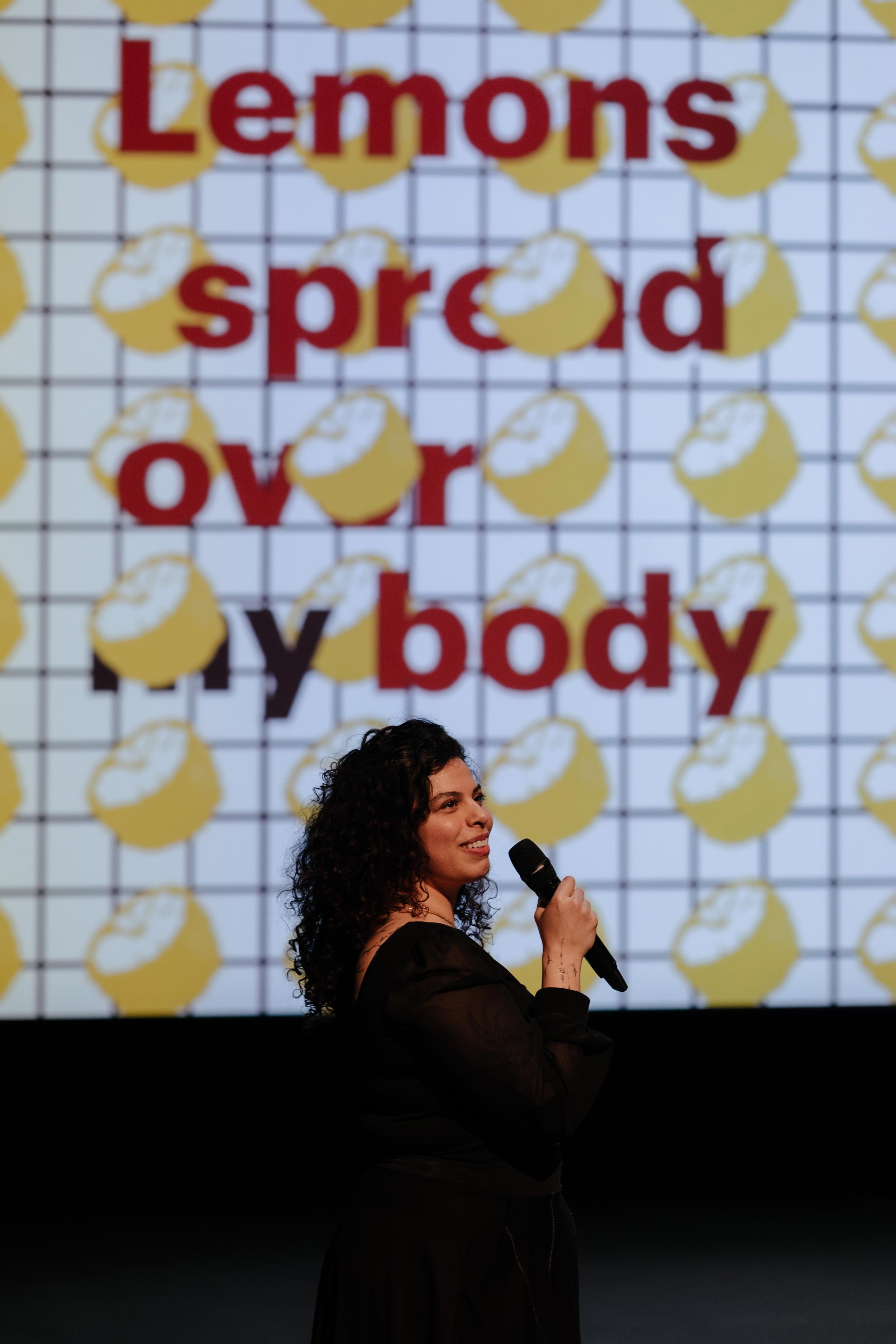
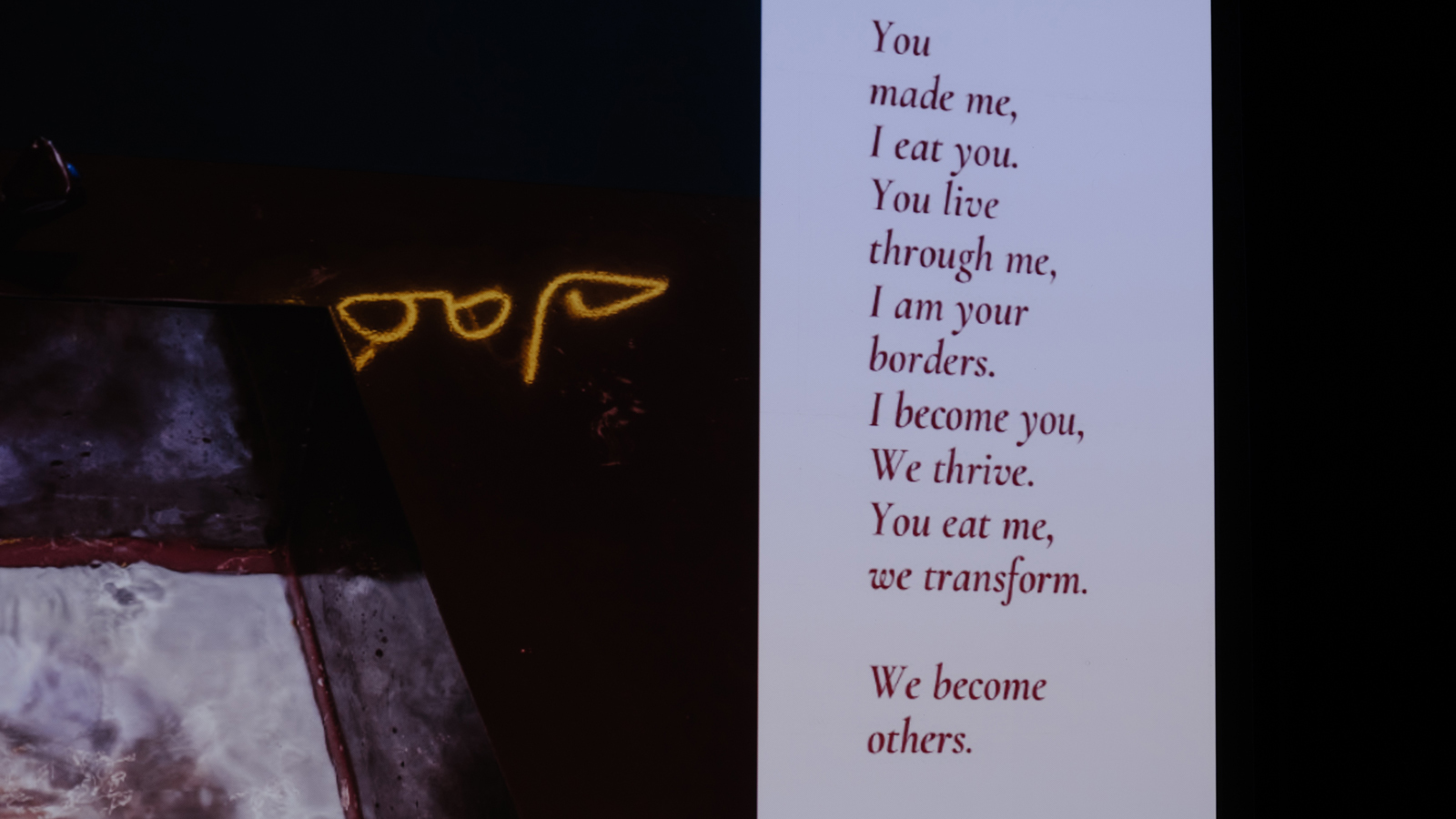
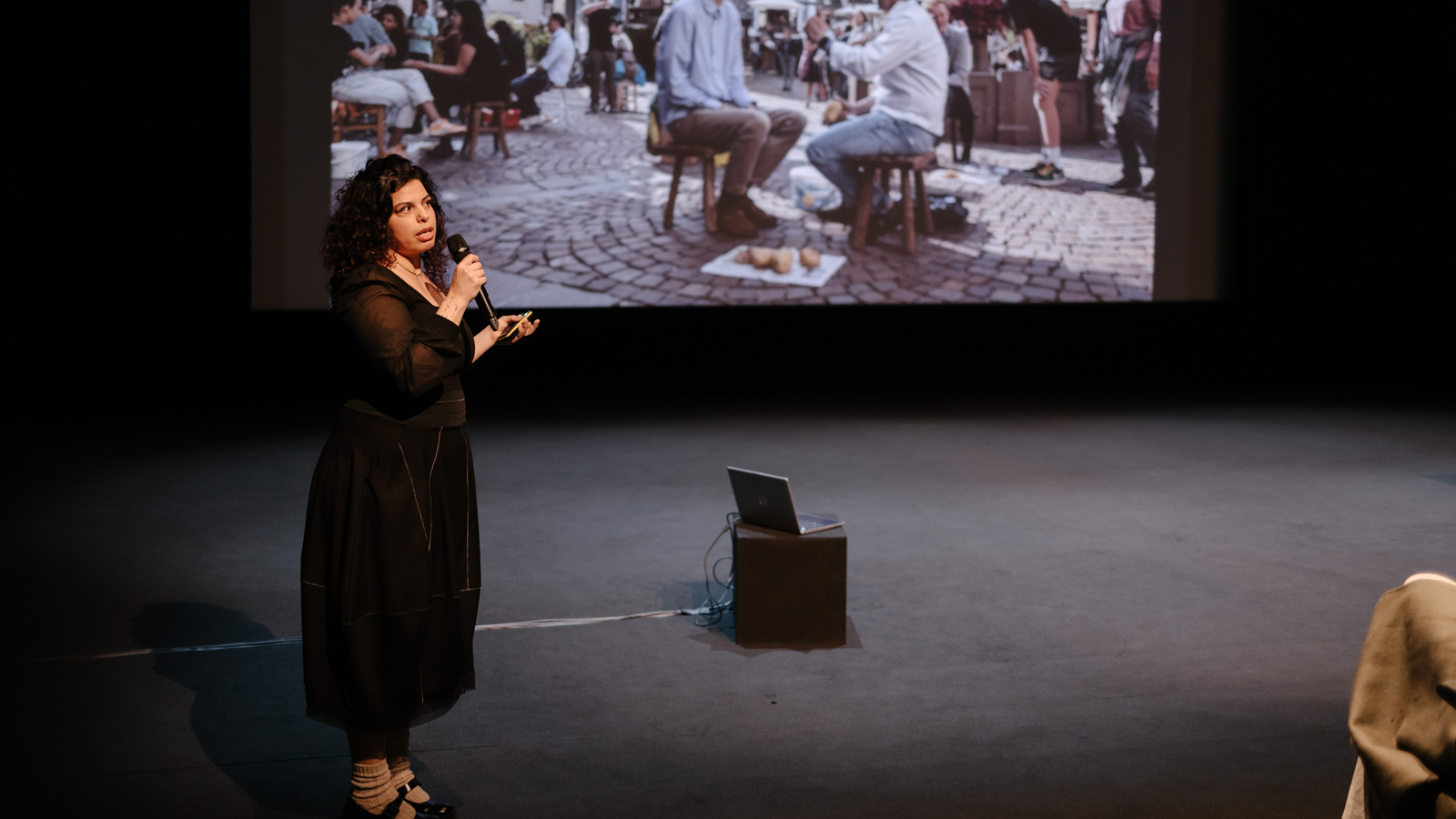
The immersive dimension of her works challenges the audience. To grasp the essence of these narratives, participants have to move around and thereby discover the multiple meanings of the objects, words and even the ingredients of her works. ‘The way people move through my installations is intentionally choreographed. I’m trying to communicate something specific, but through a language that invites emotional escape. I offer multiple vocabularies (visual, spatial, sensory) so each visitor can interpret them through their own experience. The abundance of elements is deliberate: each one opens a different psychological space within the installation.’
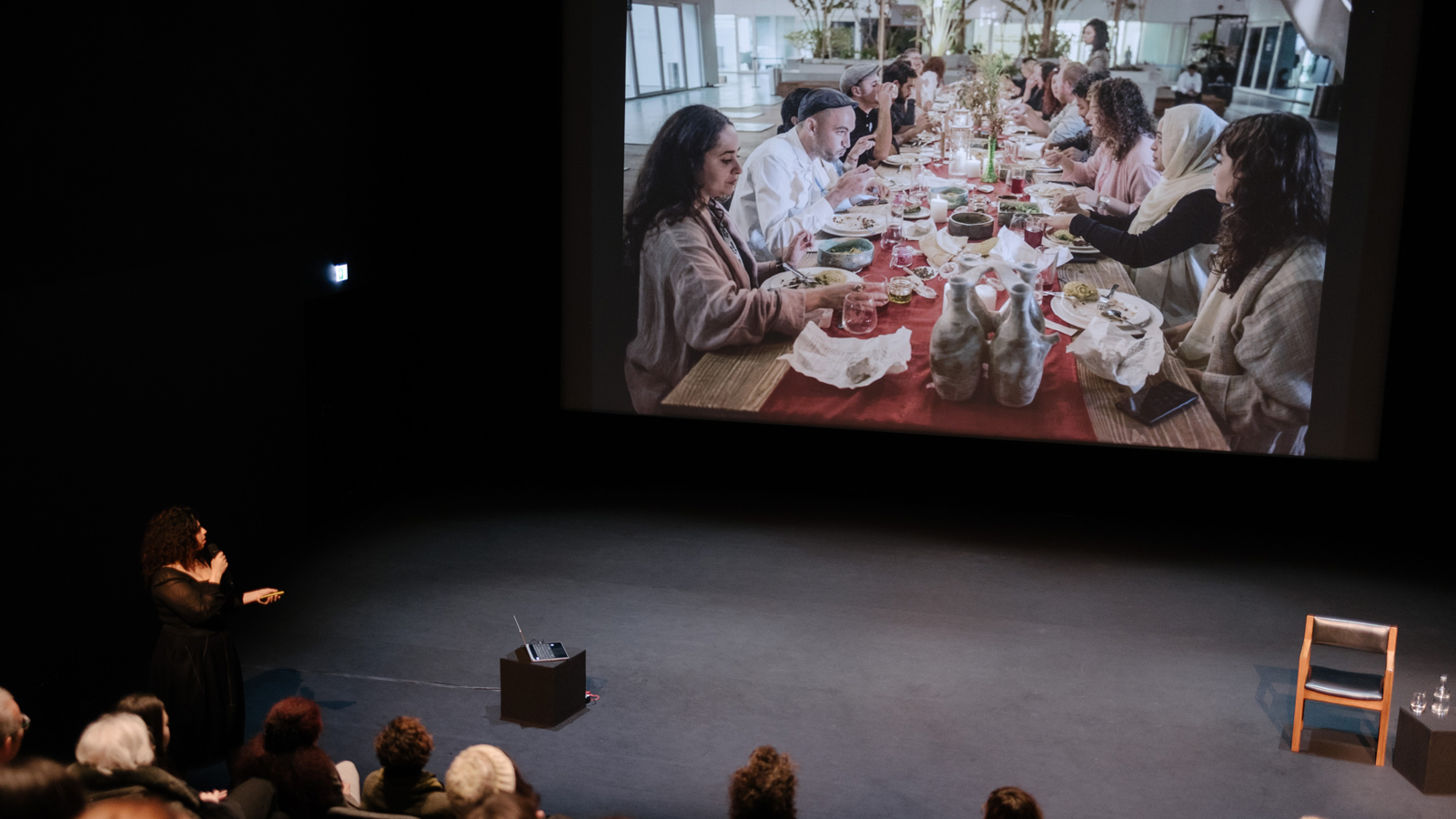
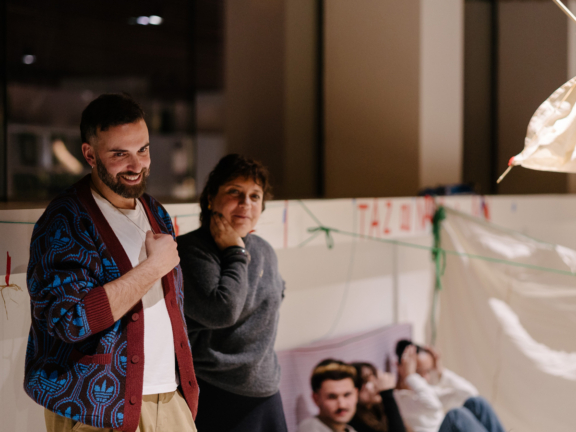
During both sessions I had the chance to come into direct contact with the artist’s work, as she presented her portfolio, recent projects and residency experiences. She explained her community engagement initiatives in detail, such as the ‘Potato Talks’ – meetings in public spaces that stimulated a conversation on a specific topic – and the immersive dinners she organizes through her platform, the Palestine Hosting Society. The workshop, that followed, brought together around 25 people and aimed to prepare a condiment of fermented lemon, which forms part of a series of participatory installations and performances. ‘In Sour Things the processes and themes that are often sour, not sweet. I open up that sourness, and try to discern wisdom and lessons therein, and then share them.’
The group assembled in CAM’s Education Service room where the necessary ingredients and utensils were placed on a long table. ‘I really like this recipe because it occupies space’, Bamieh explained, adding that the aromas and textures create an immersive atmosphere. ‘We have the smells of lemon, spices, and while we work with them, we discuss more personal issues, that are guided through a set of questions during the workshop. It’s a simple process, yet rooted in deep listening.’ It only requires a few simple steps – cutting the lemons, peeling the turmeric and garlic, chopping the chilli and mixing the olive oil and spices – the recipe takes up space, the workshop area takes on the atmosphere of a family kitchen and thereby generating an unexpected informality.
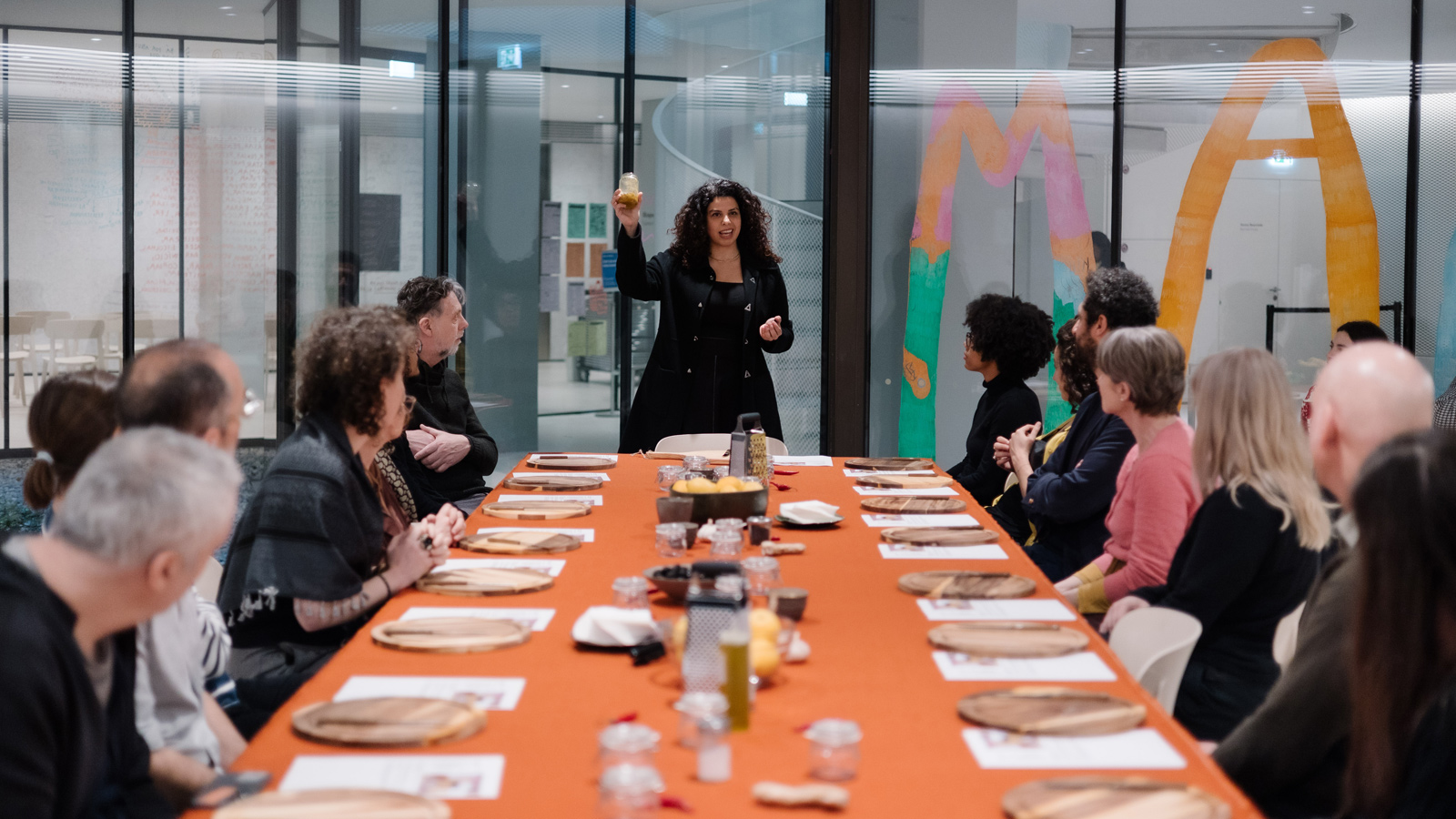
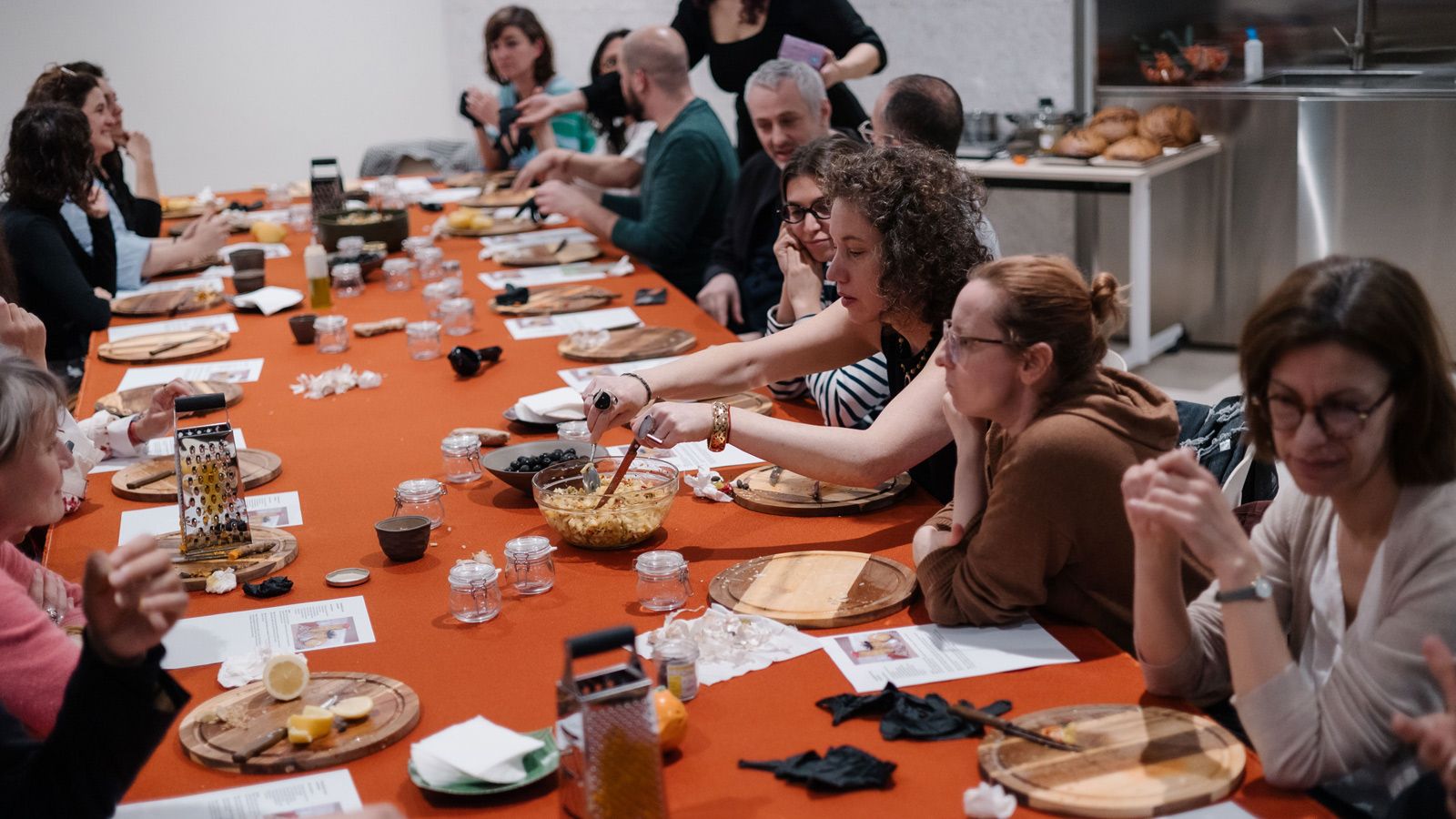
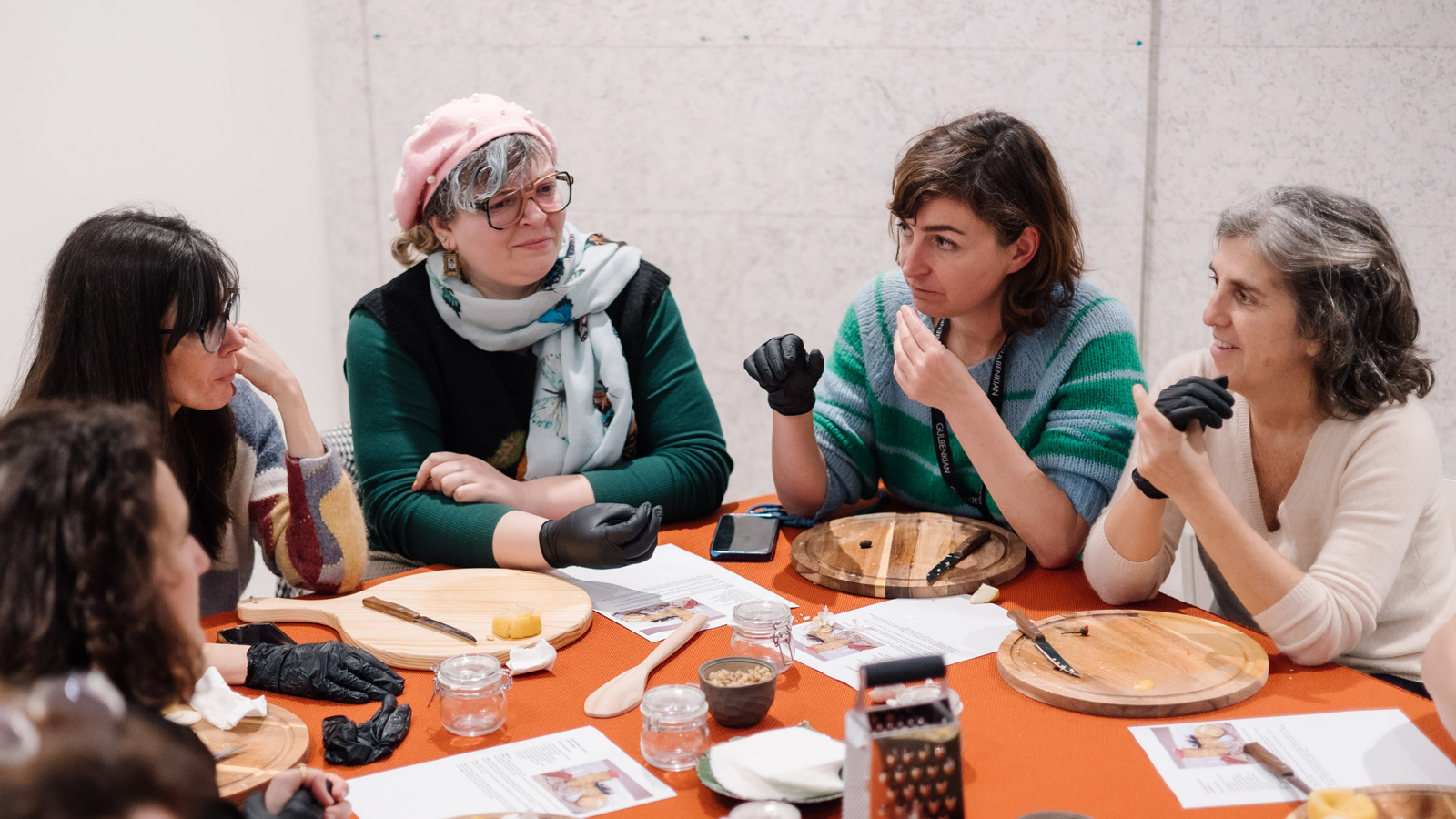
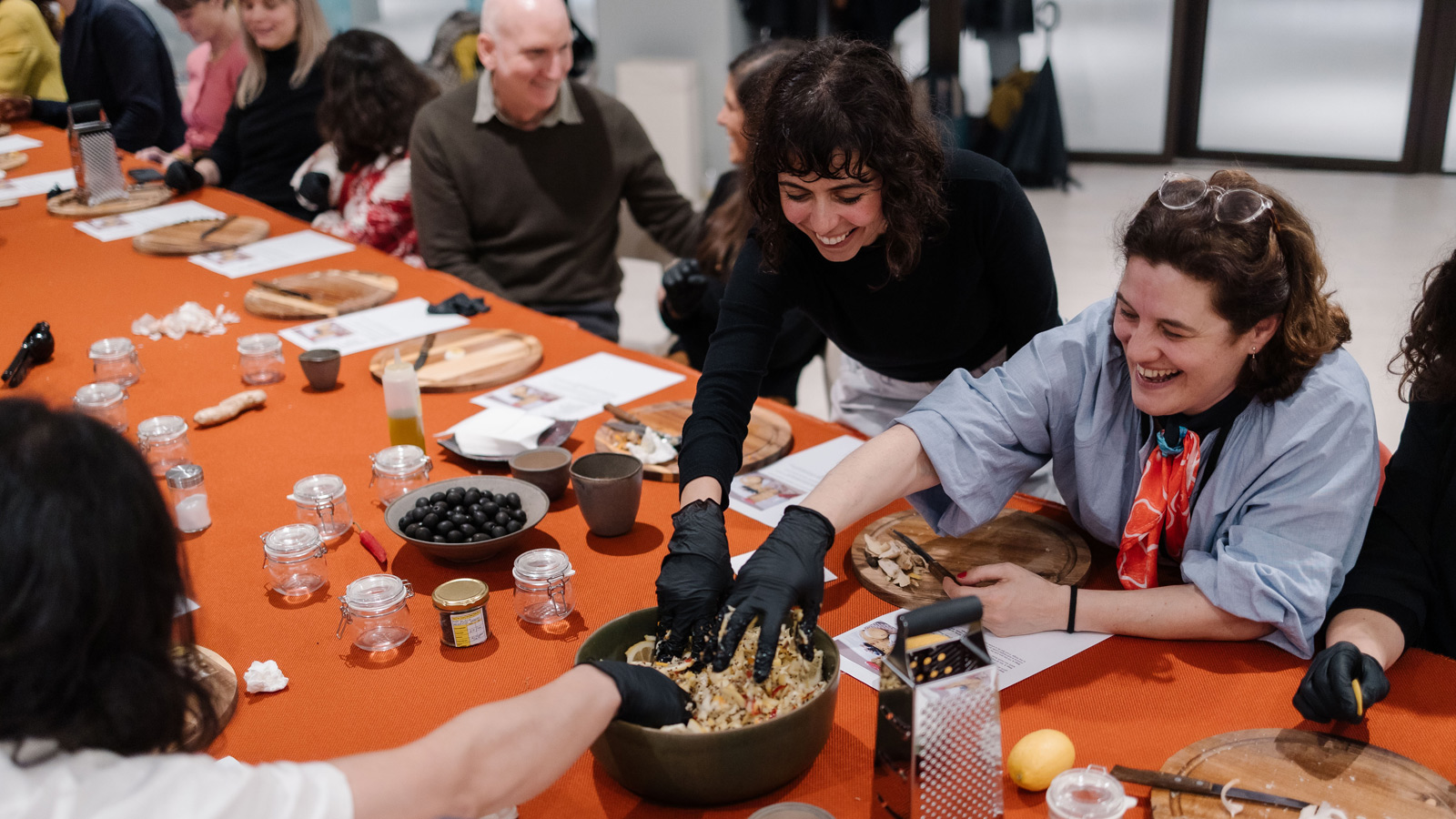
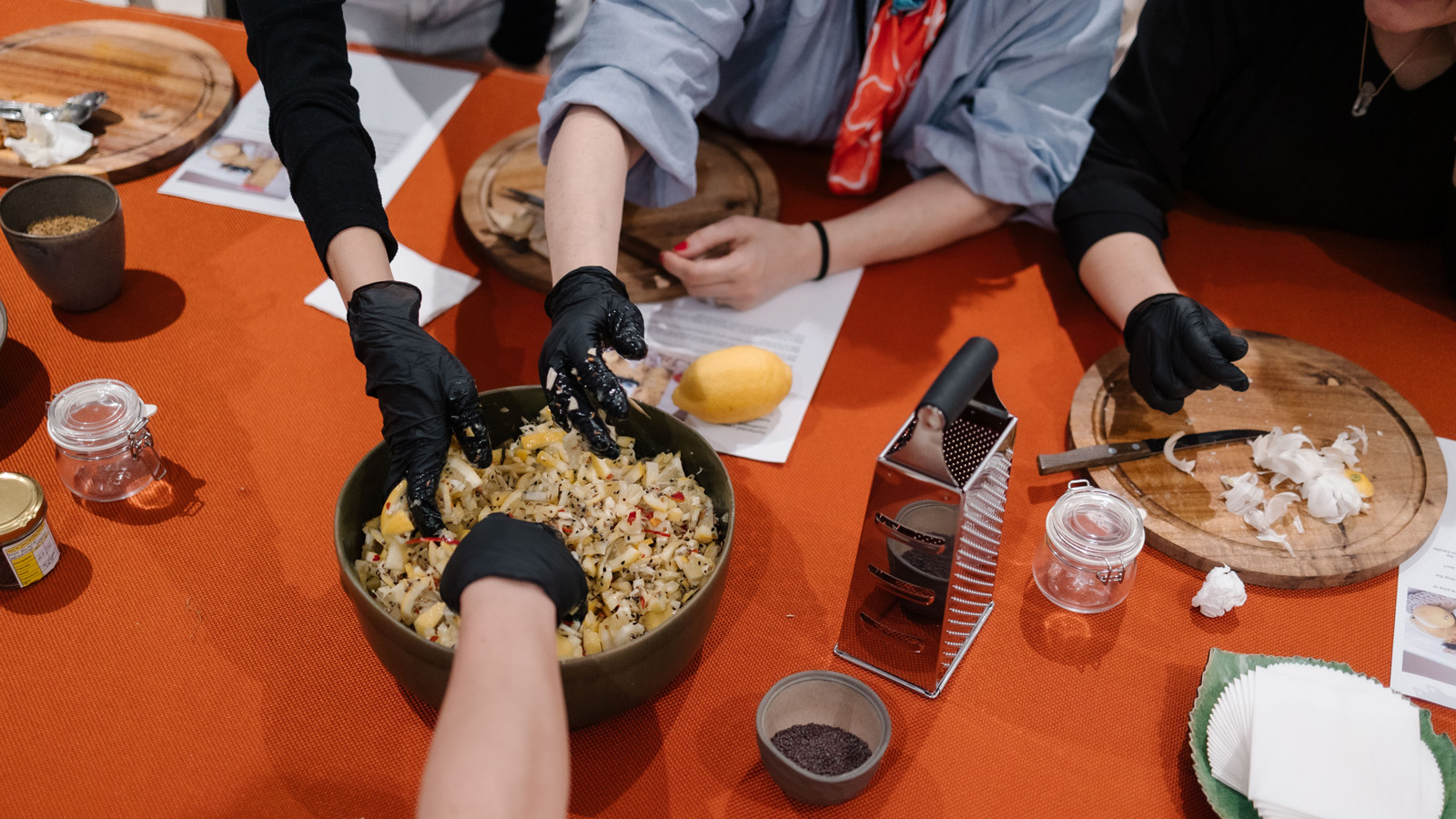
This dynamic also simulated the fermentation process itself, a metaphor for change and adaptation that the artist views as a tool for analysis. ‘When I work with fermentation, I’m interested in how the present moment is being registered. Through fermentation, I try to access the present in order to transform it – to clear out the claustrophobic feelings that can make it feel unlivable. Fermentation, with all its bacteria and slow processes, becomes a source of hope. It’s a way to counteract that suffocating sense of being stuck in a time where it feels like there’s no air, no movement, no future to imagine.’ The artist ends with a poetic phrase: ‘We are always fermenting, as people, as cultures. Everything is in flux. Everything is changing, transforming, evolving.’
We wind up our conversation and I’m touched by Mirna’s careful use of certain words. At one point I ask her whether she considers these practices, and her interest in unofficial documents or testimonies, to be a way of recording history. The artist corrects me: ‘It’s not just about recording history, it’s about processing it. Events happen, but the way we interpret, digest, and remember them rarely gets historicized. That’s why I believe recipes, songs, and oral practices matter, they hold the memory that official histories often overlook. Theme ephemeral traces recipes, songs, the scent of a lemon, or the oils from heating spices, are the breath of history, not its footnotes. They are how we remember with our hands, our tongues and our tears In carrying them forward, we do not just preserve the past, we ferment it into something new. Each act of remembering becomes an act of imagining, a quiet succession that refuses reassure, insisting that what was, continues to live through what we make, share, and pass on.’
You may also like
No results were found for your criteria.