
Rosana Antolí: ‘I’d like [the public] to allow themselves the time they usually don’t, to be in the garden, with no phones or anything, just listening…’
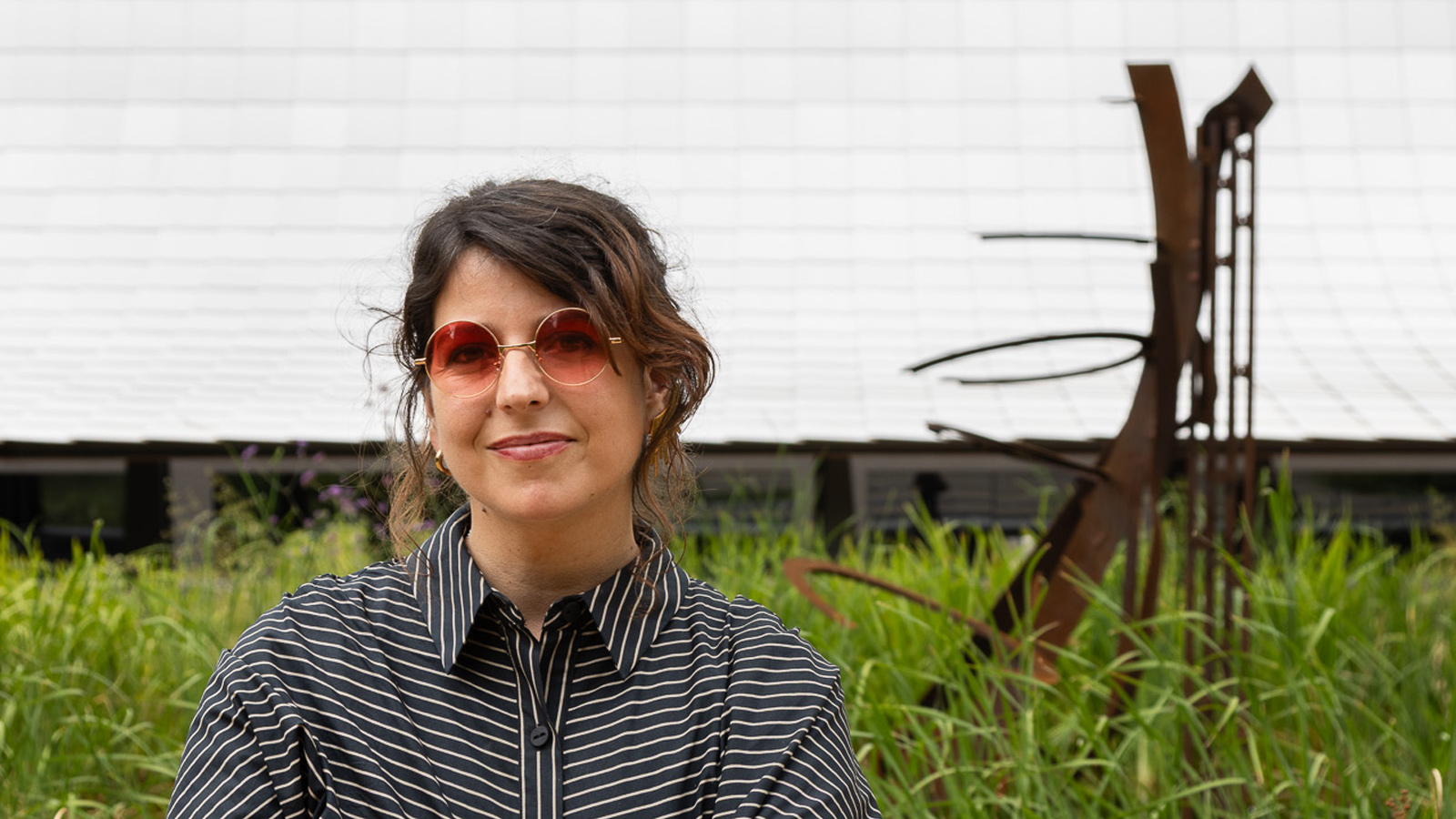
‘An Aria for the Mallard’ is a project that involved various departments of the Calouste Gulbenkian Foundation. How would you describe the final outcome? Is it music, sculpture, science or an installation?
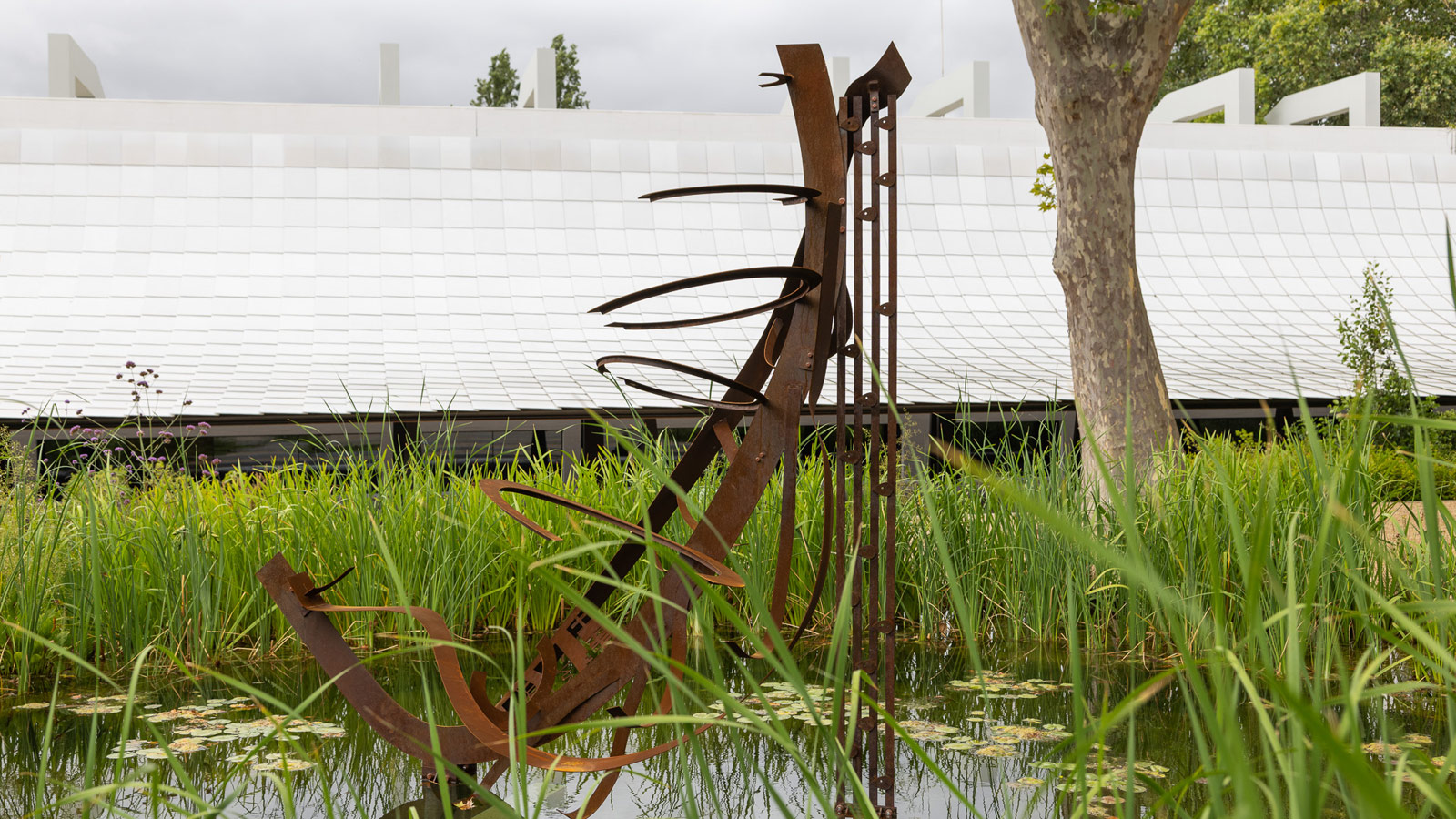
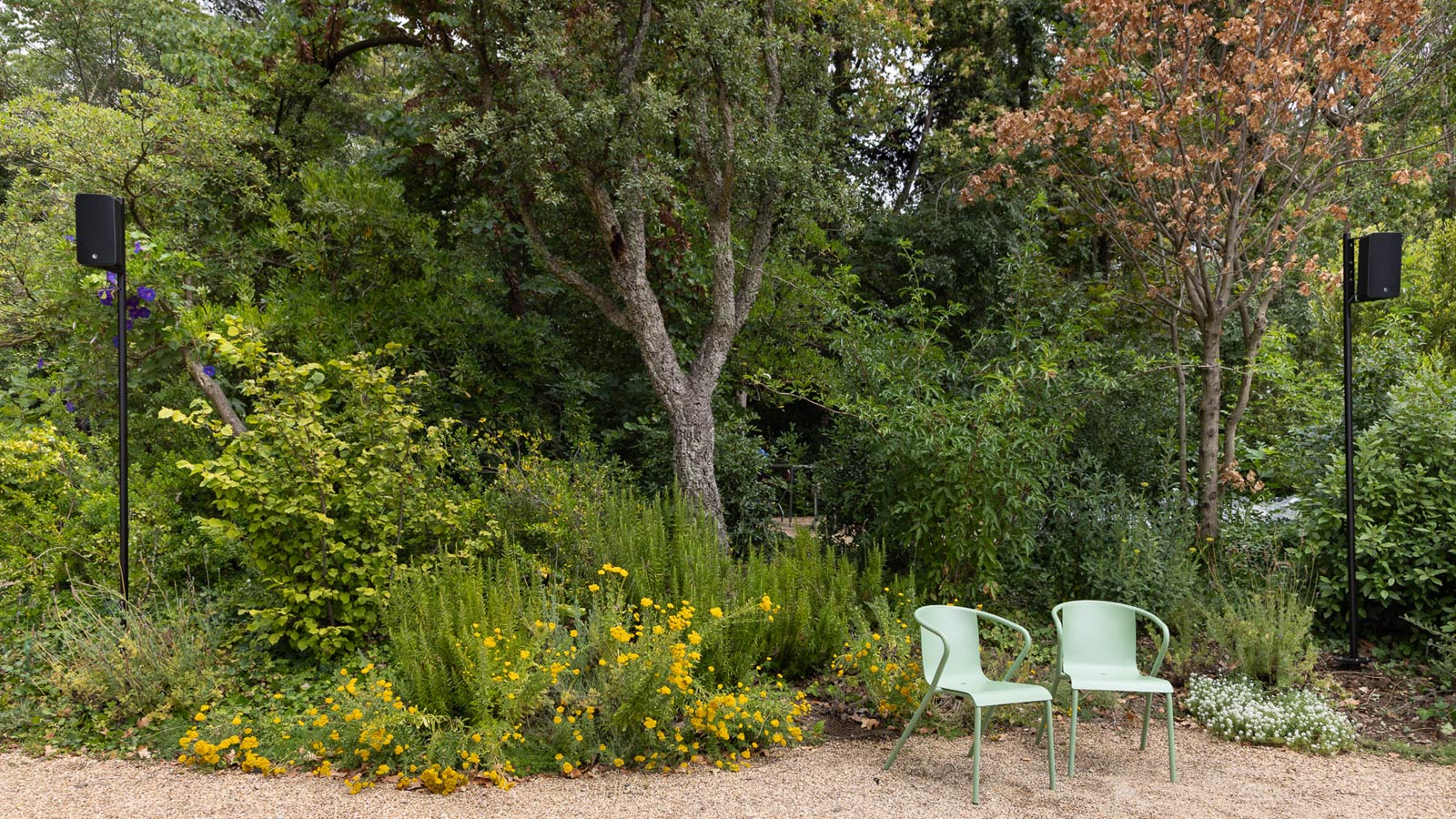
This project is very much based on collaboration, with the involvement of CAM, the music department, the scientists from what used to be the science department, and the landscape architect who coordinates the Education Programme for the Gulbenkian Garden, as well as InovLabs and a bird expert. The final outcome consists of a sculpture, placed in the centre of the lake in the CAM garden, and a sound composition, which will play three times a day and incorporates all the choreographies, breathing and voices of the Gulbenkian Garden. The only human voice will be that of the soprano Claire Rocha Santos, which is heard only the third time the composition plays.
How important was it to have such a multidisciplinary team working on this project?
My work, by nature, even when it’s a painting or a sculpture, is always collaborative. Even so, I think what we have here is unique. I’ve worked with many institutions, but none with science, art, music and a very specialised garden team, like the Gulbenkian has. Although it is not very common for science, art and music departments to work together, they accepted my challenge and suddenly we could feel an excitement in the air, we were working like a community, spending time not just with each other, but also with animals, in the garden, recording them, trying to understand how they behave.
How were those recordings incorporated in the work you presented?
As I mentioned, the work is part of a sound composition that will play three times during the day, slightly modified each time. In the morning, it is purely electronic, with no other voice. Then, at around lunchtime, it has the same electronic base, but with the addition of recordings of the voices of the garden, that is, the birds, the ducks, even the plants, whose noise is created by their movement during photosynthesis and the moment they release scent particles into the air. We recorded these noises over two months by placing sensors on the leaves. And, finally, in the afternoon, the electronic sound and the voices of the garden are joined by the voice of the soprano.
How did you come up with the idea of combining, in a single aria, the voices of animals, people and plants?
Another seven European artists and I were selected by ENOA – European Network of Opera Academies to learn about traditional opera and to incorporate it in our artistic practice. In my research, I realised that, in opera, there is usually always someone on stage, a human, obviously, with their dilemma. However, for many years my work has been related to ‘more than humans,’ which led me to reflect on how we live and coexist with other species. But we don’t hear those species, we don’t know what they have to say, we never think about placing them directly on a stage. As if the only voice that mattered was ours, when, in truth, there are so many others, that only need a microphone for us to be able to hear what they have to say. I think we should leave behind our anthropocentric view of the world and realise that we aren’t isolated beings, that we’re living in cooperation and collaboration with so many other beings, those we see everyday as well as those whose existence we aren’t even aware of.
Do you feel that the sound composition reflects this way of seeing the world?
This is pioneering research into the logic of co-creation with Nature. It took two years of conversations between me and the scientists to understand the behaviour of the animals in question, after which we didn’t just limit ourselves to recording their sounds, mixing them and playing them back. We used a technique called feedback looping, which involves a real conversation between humans and birds. We recorded their song and then altered it slightly and played the altered recording back to them, recording their response, which, in turn, was altered again and presented to the animals, so that we could record their second response, and so on, successively. It was a process involving a great deal of scientific, artistic and musical research, so that we could make a true co-creation in which we did not just make a work about ‘more than humans,’ but rather a collaboration with those ‘more than humans.’
And what is the role of the music composer in a work made largely of non-human voices?
For this project, we needed a very specific composer. Someone who, rather than writing music, was able to transform birdsong, as well as the frequencies and data gathered from the plants, into music. Jorge Ramos, who is an electro-acoustic composer, has this perspective on how to create, how to compose, using all those multiple voices.
Will there be a libretto with a story here, as there is in opera?
Yes. The work is called ‘An Aria for the Mallard’, because mallards are the oldest animal in the Garden. They’ve always been here and, contrary to what you might expect from their species, those that live at the Gulbenkian have stopped migrating. They stay here year-round, because there is food and an amazing environment, and they like people. The libretto tells the story of how they are usually migratory, but suddenly decide to rebel against nature, choosing to interrupt their vital rhythm in order to seek some time off. There is thus a dilemma, in that they have to fly, because it’s in their genes, but, like any human being would, they simply chose a place of pleasure.
We’ve spoken a lot about the sound composition, but, at the very start of our conversation, you mentioned that the work also includes a sculpture. Why did you feel the need to create that element?
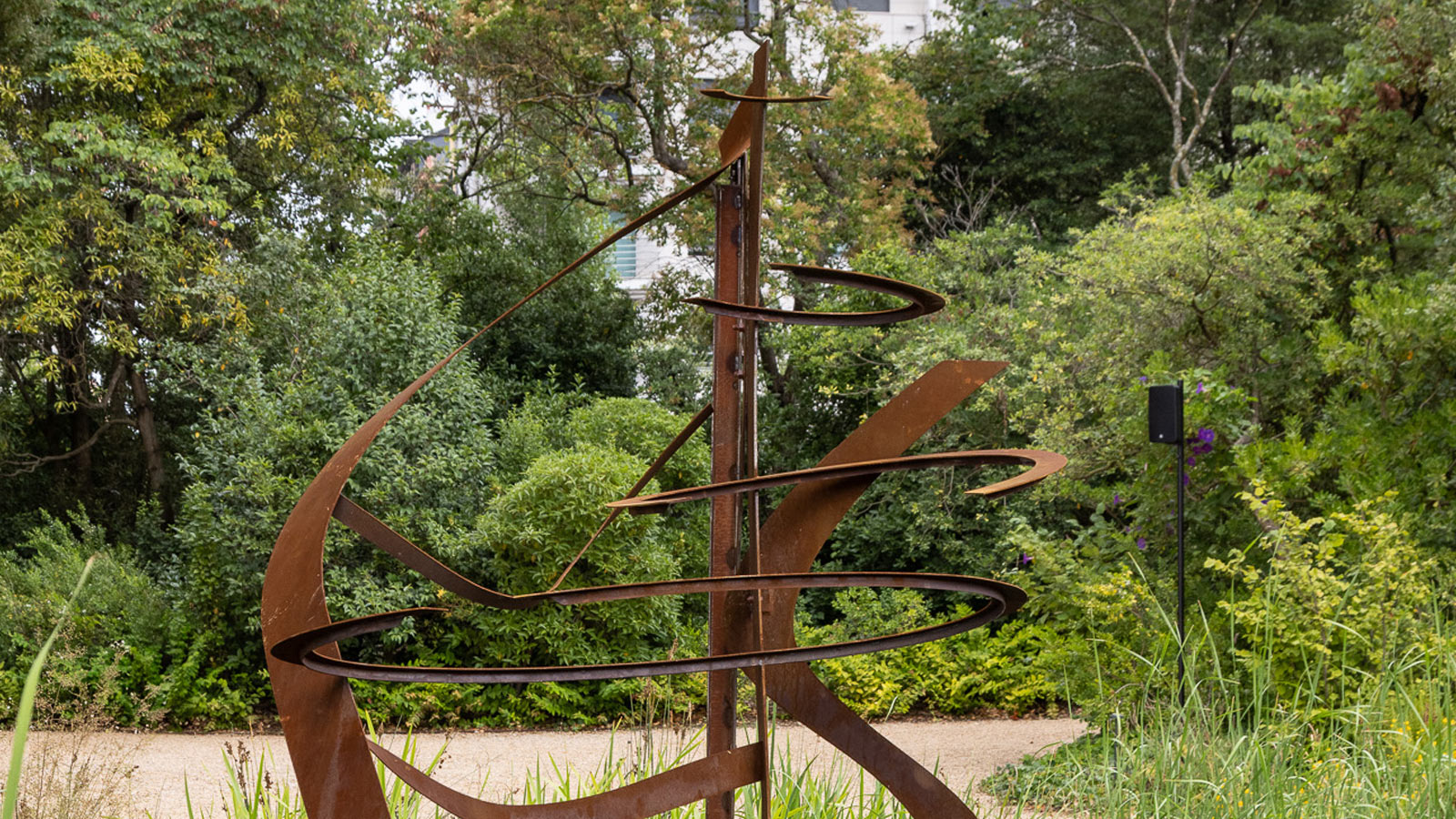
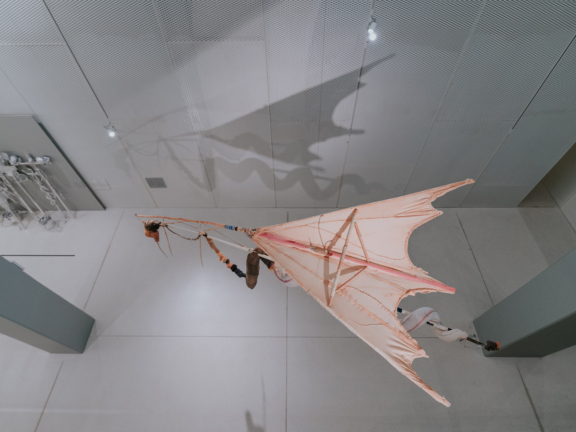
The sculpture is a summary of the whole project. All the elements that can be heard in the sound composition are conveyed in it, as though they were an authentic score. It comprises a shape resembling a feather or a leaf, where the opening and closing movements of plant leaves are recorded, and some vertical lines. Along those lines, the upper area of which corresponds to the sunrise and the lower part to the night, we find dots in the shape of birds’ heads, like notes on a stave,
indicating the times of day when the sound of birds is at its highest frequency. In addition, because the sound only plays three times a day, out of respect for the garden’s ecosystem, the sculpture offers a constant presence for visitors who arrive at a time when it is silent.
Bearing in mind the visibly co-creative nature of the project, would you say that this work is aimed at the enjoyment of both humans and ‘more than humans’?
At the end of the day, the work is for human beings. Of course I’d like the birds to rest in it and not to feel threatened by the sound, but it was designed so that we humans could be aware of the hundreds of voices that surround us. And not from a perspective of any environmental ‘doctrine,’ but just to listen and to open up that empathy within us, that offers us another perspective on the beings with which we coexist in the world and encourages us to take better care of them, because we can hear their voices.
How would you like people to interact with the work?
I’d like them to allow themselves the time they normally don’t, to be in the garden, with no phones or anything, just listening and noticing even the tiniest gestures that are part of the natural performance composed by the leaves, the wind, the birds resting in the lake, the water. Suddenly, they’ll have a new perspective on the garden and the environment around them. For my part, it would be wonderful if the public were open to having this kind of connection and empathy with what surrounds them.
You may also like


No results were found for your criteria.