
Maja Escher: ‘I was interested in approaching the idea of remaining in a place of play and imagination’
‘Lugar Semente’ is the third edition of the participative ‘Lugar’ project. How did it begin and what does this ‘bigger place’ consist of?
Andreia Dias (AD) – ‘Lugar’ was born three years ago from the desire to find common ground between the school and the museum, to bring art not just into children’s lives, but also into that of the teachers. In each iteration, over the course of nine months, we work on a different theme, in a process of true co-creation between the ideas of the CAM team and the invited artist, who this year is Maja Escher, and not forgetting everything that the pupils and teachers bring to the table.
What themes did you want to explore in this third edition?
AD – We were working on interconnectivity between species and questioning extractivism and the Anthropocene, in which human existence has dominated that of other beings in recent centuries. We tried to understand how we can imagine new possibilities for coexistence or embrace the idea that, more than simply being in nature or with nature, we too are nature, all of us a single body, a single breath. This was the theme and it led us to many different places, which we worked on over the year.
Could you give me an example?
Andreia Coutinho (AC) – The question of rallying. It seems unrelated, but it is very much a part of it. In a forest, a tree is a body that is part of another, much larger body, therefore, by being nature, we somehow strengthen a collective voice that is public. From my standpoint, from my critical thinking, I can, with other people, achieve a change. The children from the two 4th-year classes I supervised spoke constantly about this idea of rallying, of protest, of being able to speak and demand, not as potential citizens, but as fully-fledged citizens.
And how much of Maja Escher’s work relates to these questions?
AD – I would say all of it. Not just her work but her personal profile as well. We always research the artists beforehand and, once we got to know Maja’s work, I realised that everything she was working on, her way of thinking, of expressing herself and of creating, was related to what we wanted to work on this year. It felt very natural.
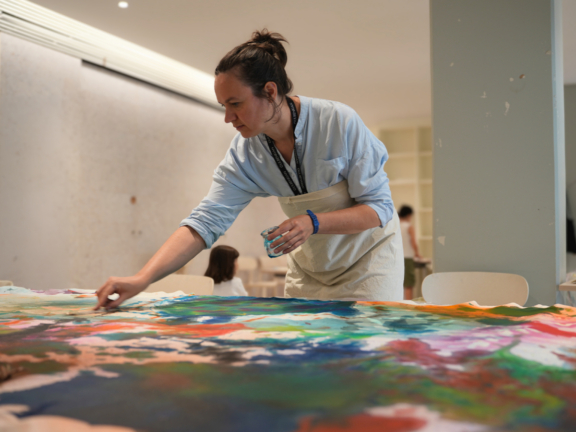
Maja Escher (ME) – For my part, in addition to interconnectivity and ecology, I was interested in approaching the idea of remaining in a place of play and imagination, without necessarily having to make something grown up. Before even introducing whatever the theme was, I wanted us to feel the ground and the earth, starting with modelling, with the relationship with the body and matter. The most interesting thing was that, from there, the project changed a lot thanks to the contributions of the children. Interestingly, for example, despite it being very present in my work, the notion of rallying and protest was something we hadn’t anticipated at the start, it wasn’t even planned. It emerged from meeting with the pupils, from the interest they showed during the session in which I shared my working process and spoke about ‘Marcha pela Água’ [March for Water], which I organised in 2021 to help protect the river Mira.
It seems as though the children took an interest in responses that reflect a certain hope in the power of the collective as a driving force for change. How did you make the most of this reaction and encourage them?
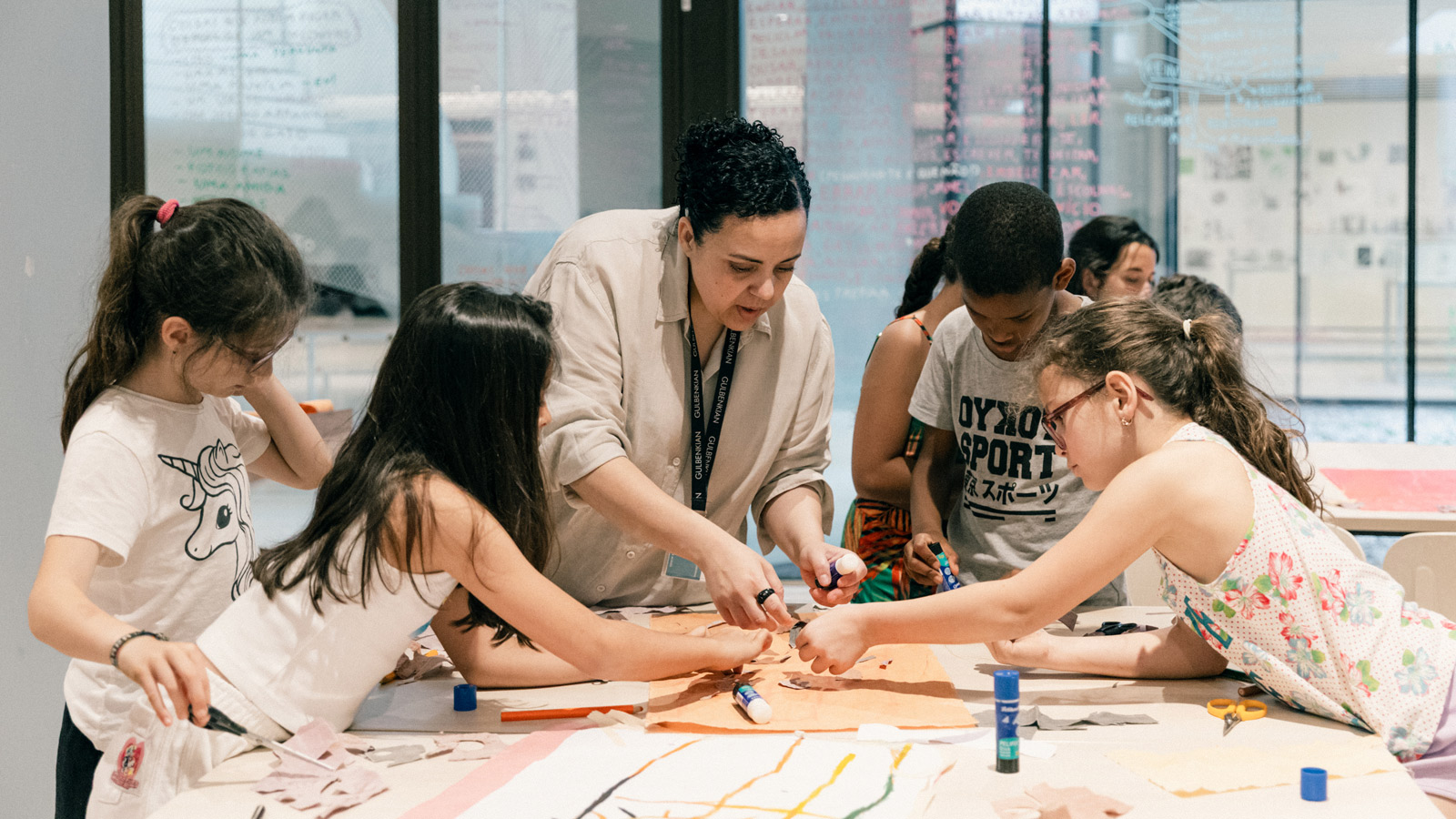
Denise Xavier (DX) – One of the things I liked most about this edition was precisely that idea of encouraging the children to imagine possible futures, creating expectations in line with what they want for the world, instead of focussing on catastrophe or the idea of a bleak future. As Maja repeated several times, it’s much more important to work with that capacity they still have to create and imagine positive horizons, rather than emphasising ideas of blame, fear and dystopia.
Which is something that perhaps still happens a lot in school contexts…
AD and ME – This year, for the first time, the project involves just one school, which means we have pupils aged from 5 to 10. For that reason, we were able to notice that, while those in the first two year groups still feel they are part of nature, as though they are one, for some in the third and many in the fourth-year group, there is already that separation, which is something the system itself is inculcating in them. For example, in schools, the questions of climate, ecology, sustainability, relationship and repair are still very much associated with the issues of litter and recycling and not so much with the need for a change of mindset.
How did this project promote that change of mindset?
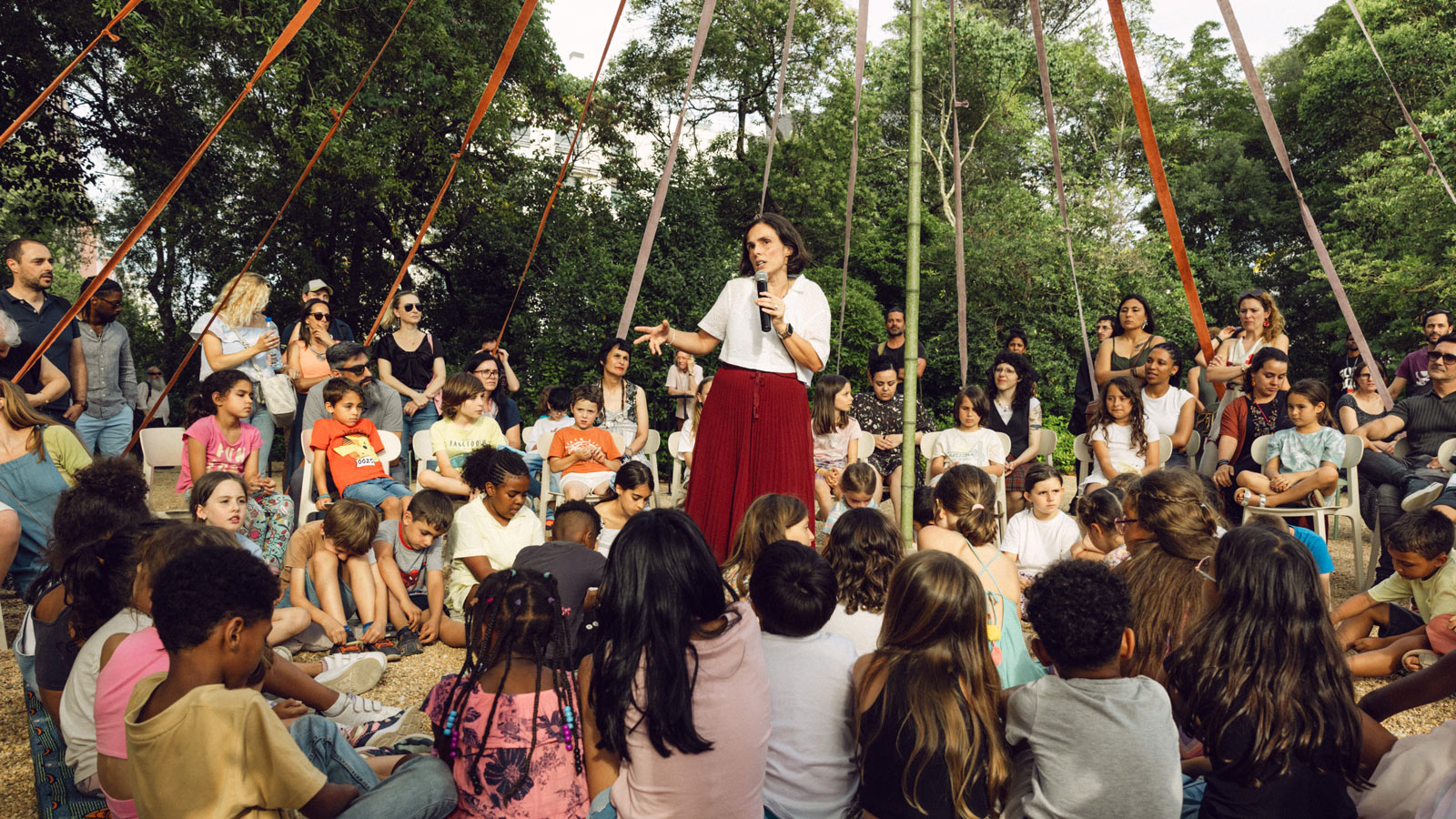
AD and DX – In the initial session, the pupils were challenged to imagine what would grow from them if they were seeds of dreams and, in another, what dreams they would like to plant, if they were the roots of dreams. Later, that was a common thread that stitched together the pieces; they brought along many ideas and we built around them. For example, there was a girl who dreamt of hugging her mother, who is in Guinea, and later, the class used the gesture of an embrace in one of the creations, because of her. One of the things the pupils mentioned in the project evaluation is that they learned to look at others, to be calmer and more patient and to work as a group.
What material record of this process will remain on display in the CAM garden for the next 20 days?
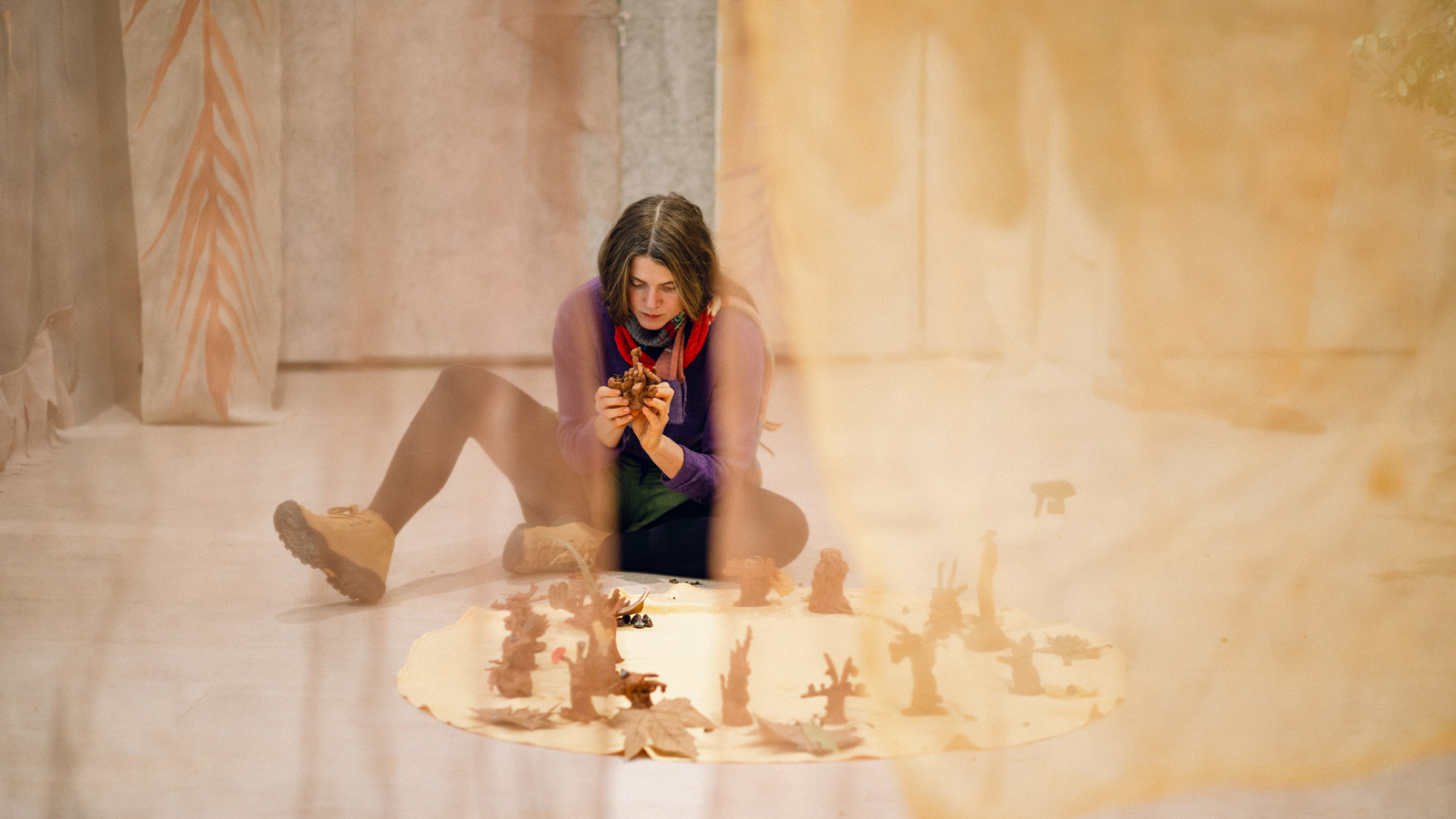
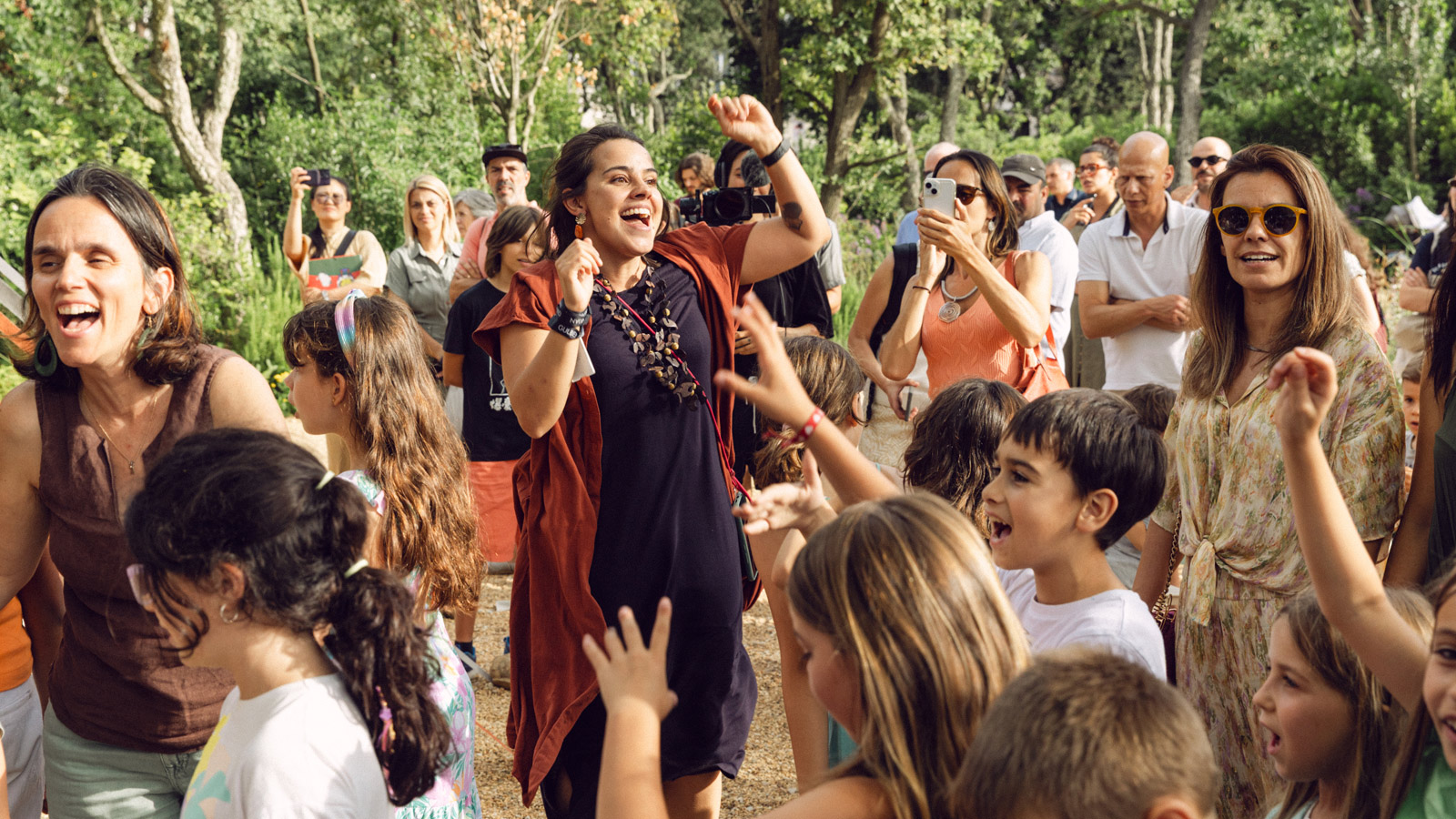
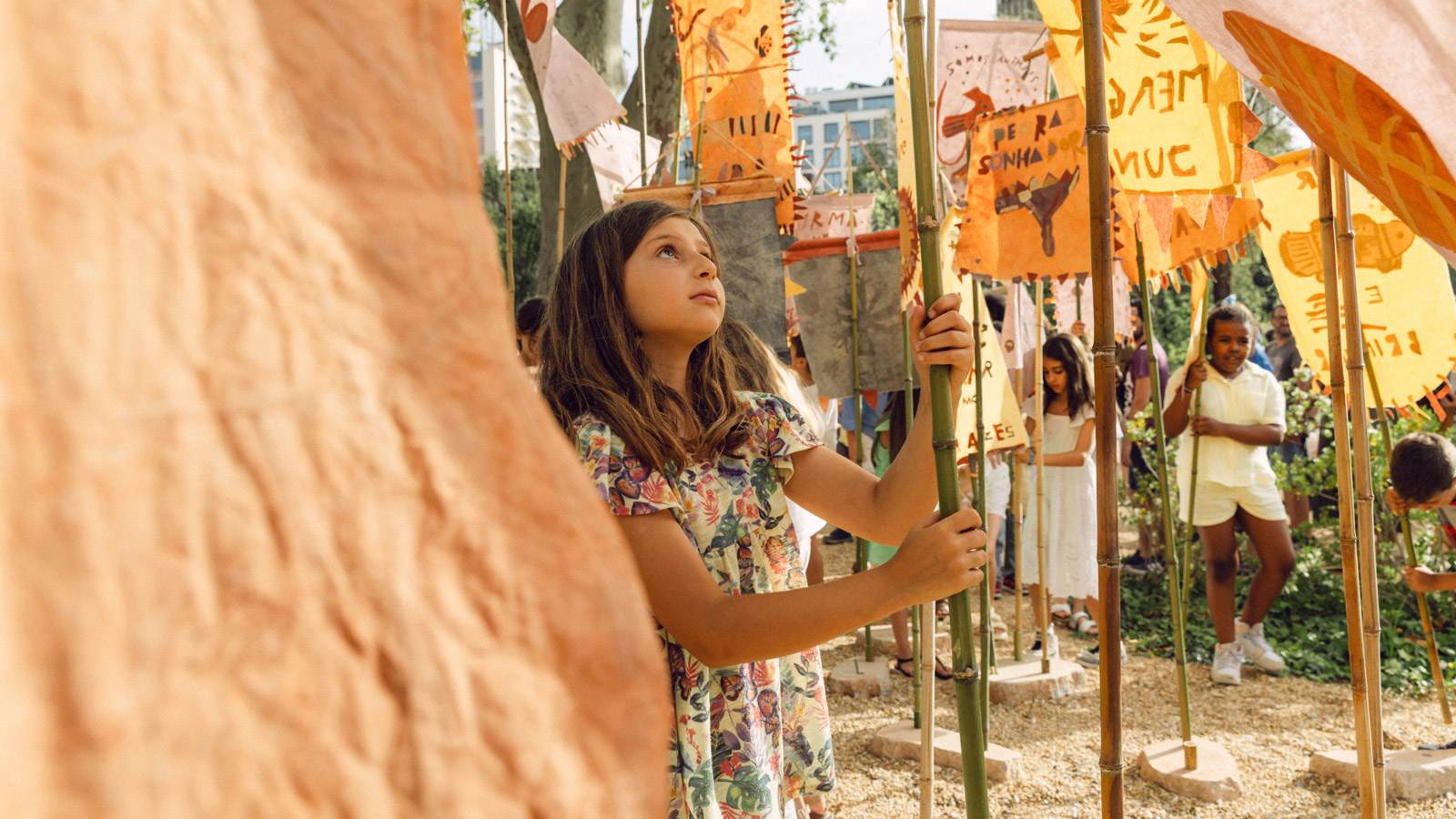
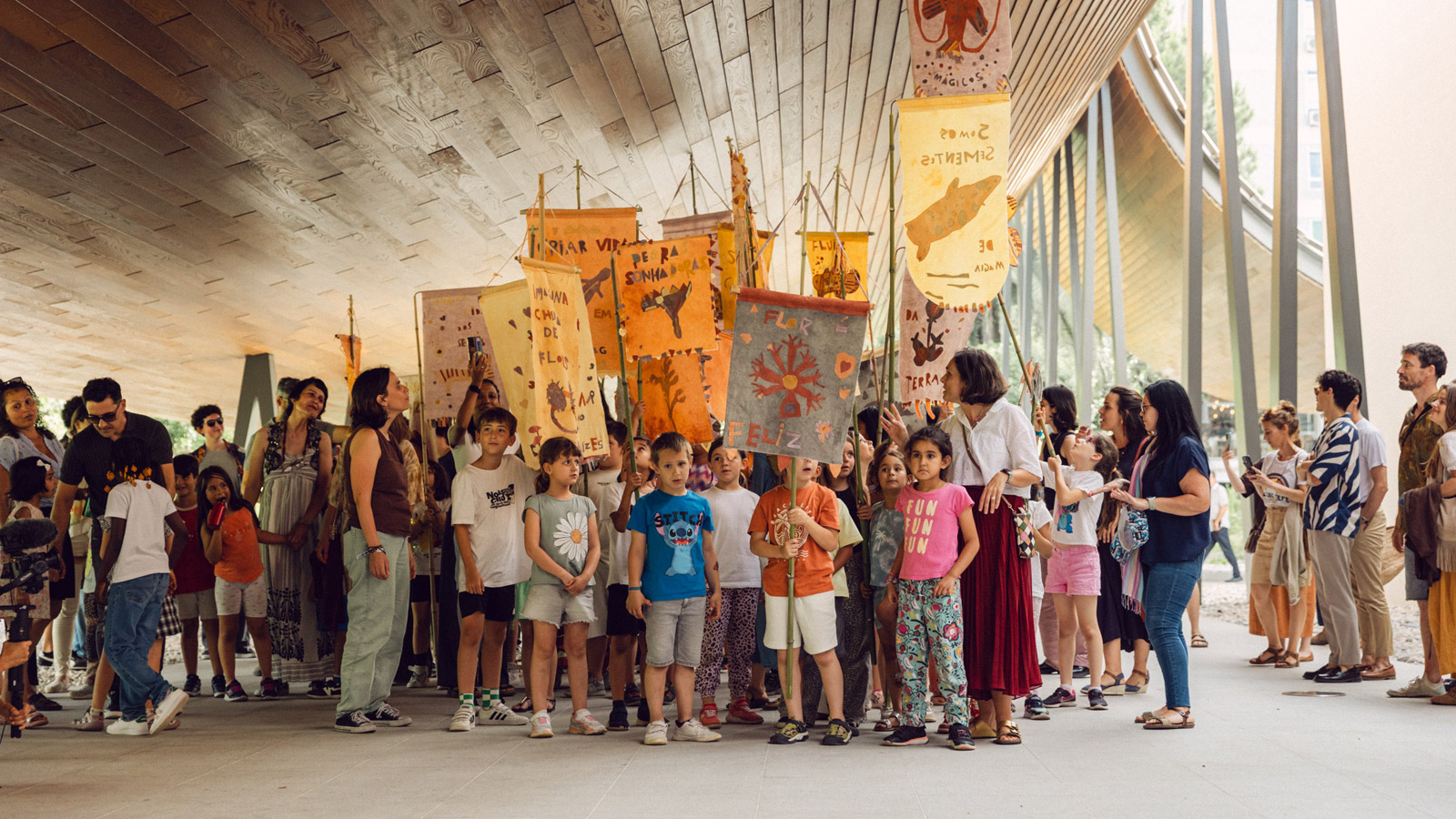
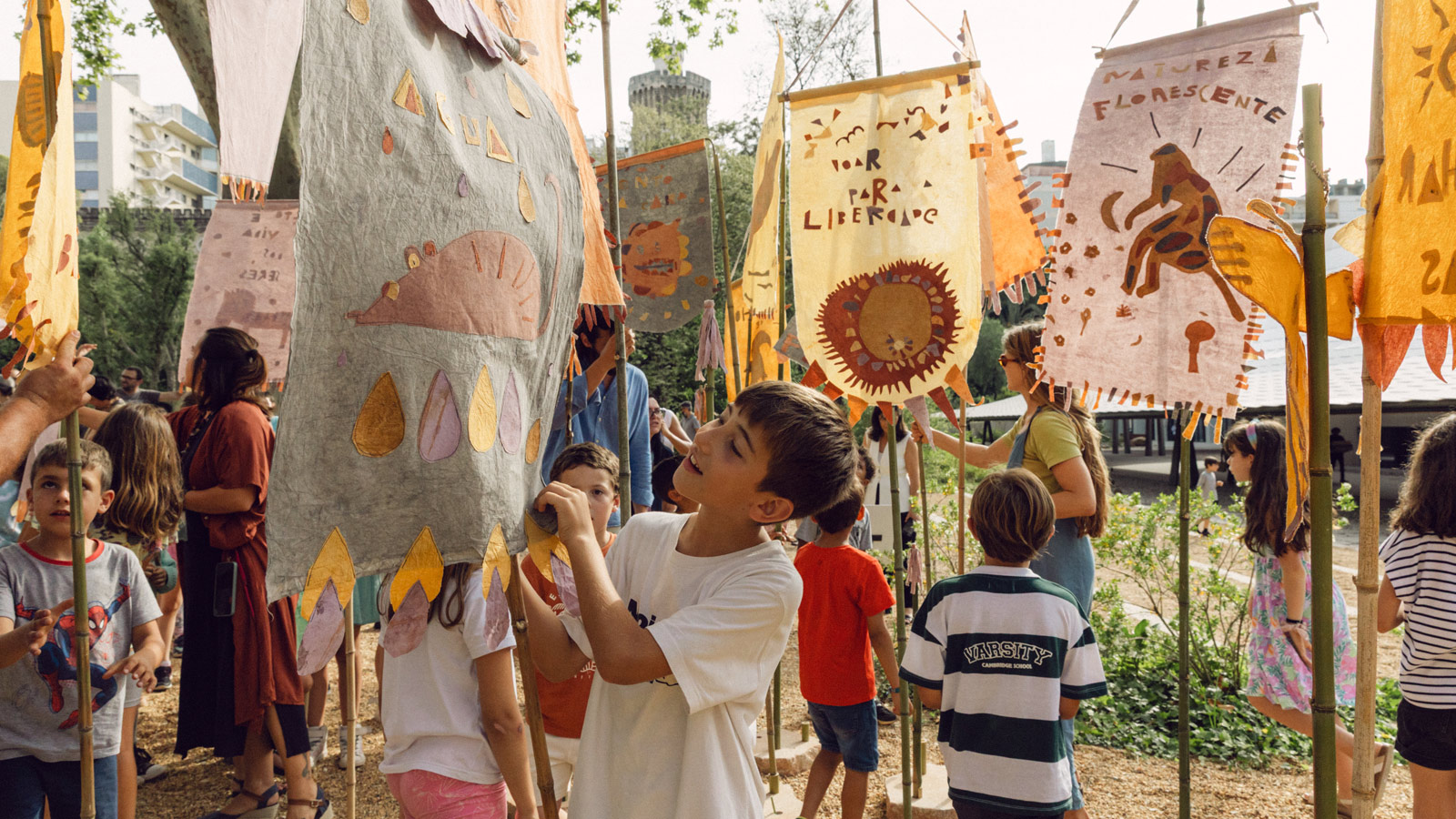
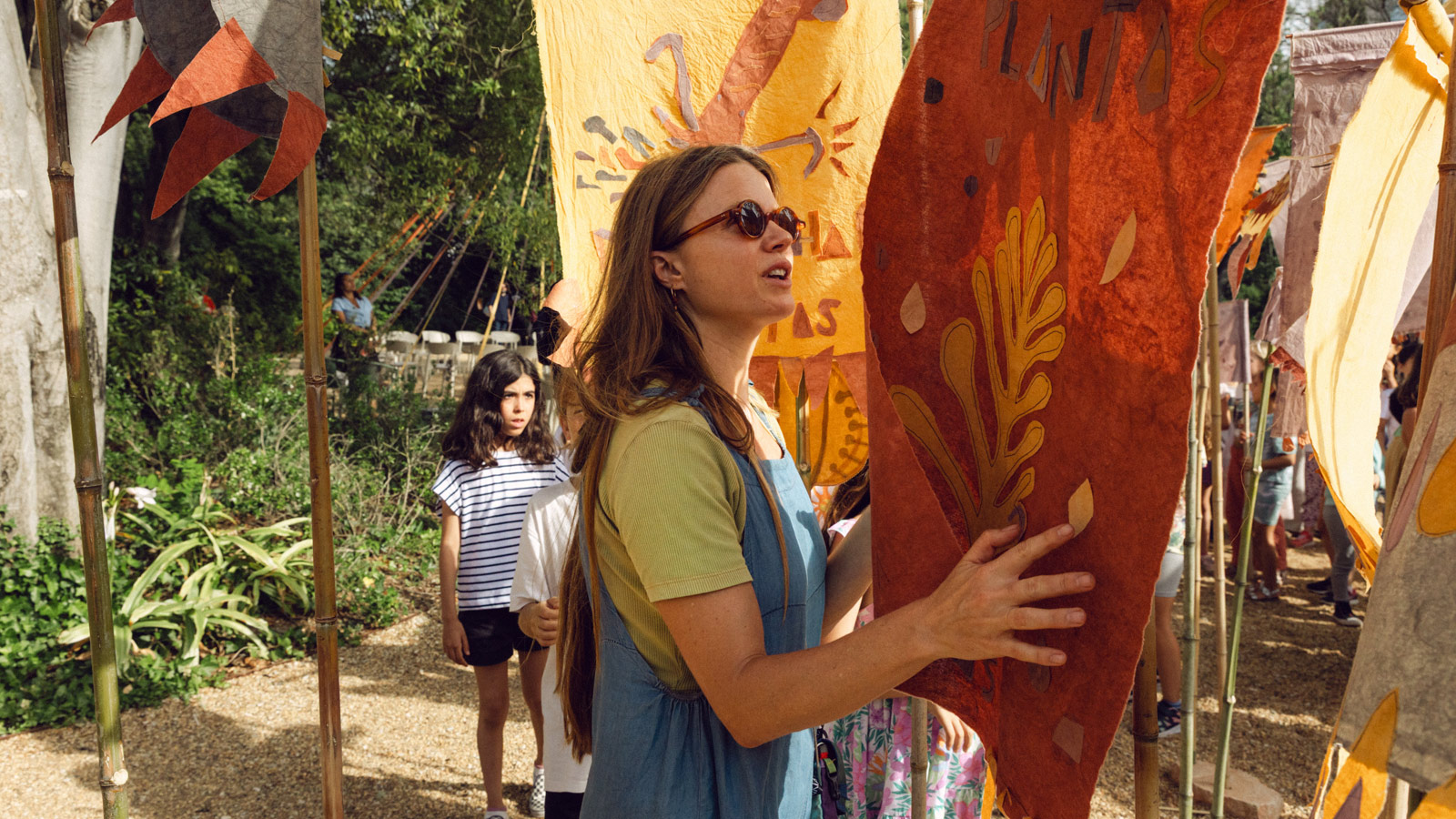
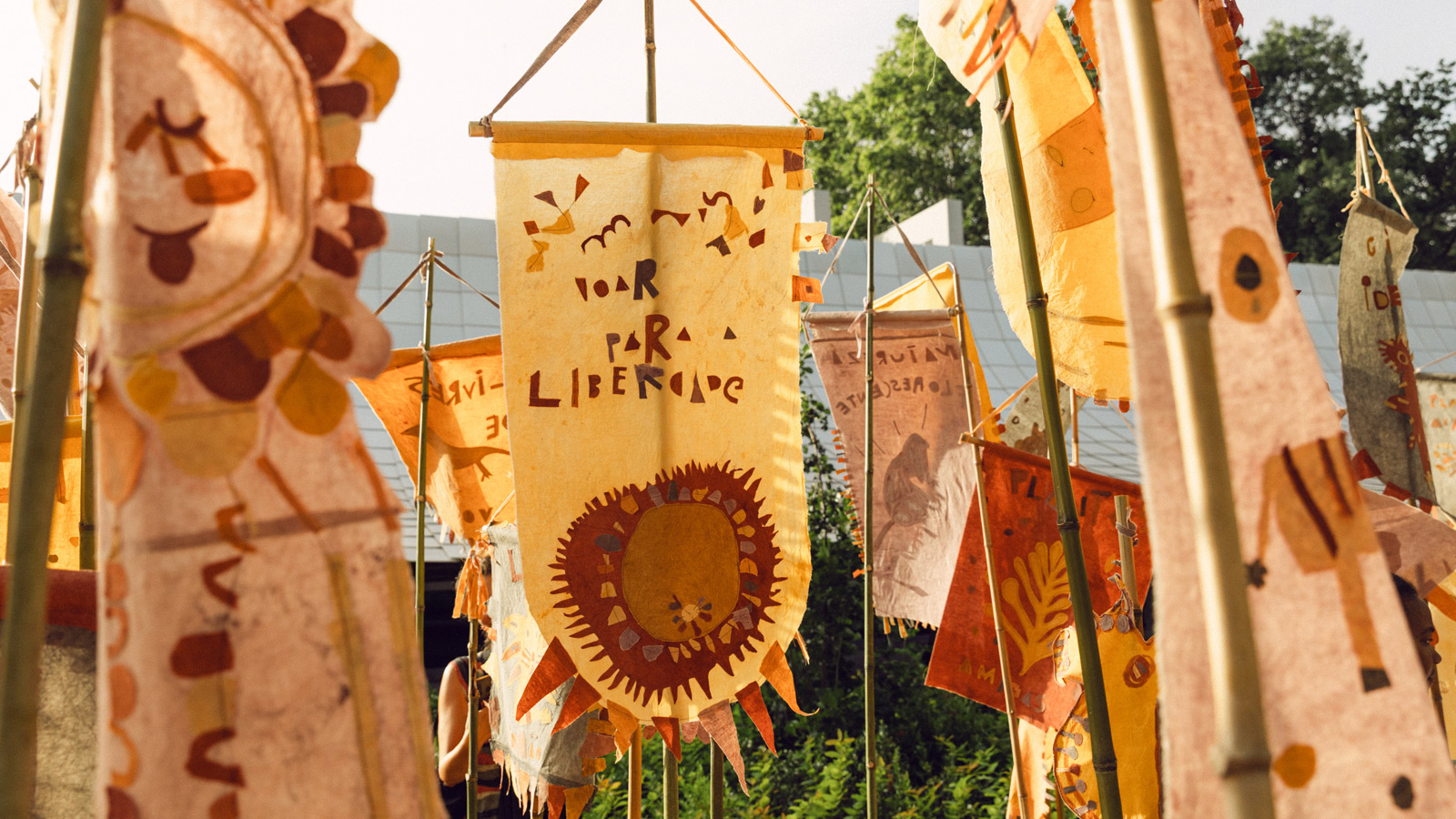
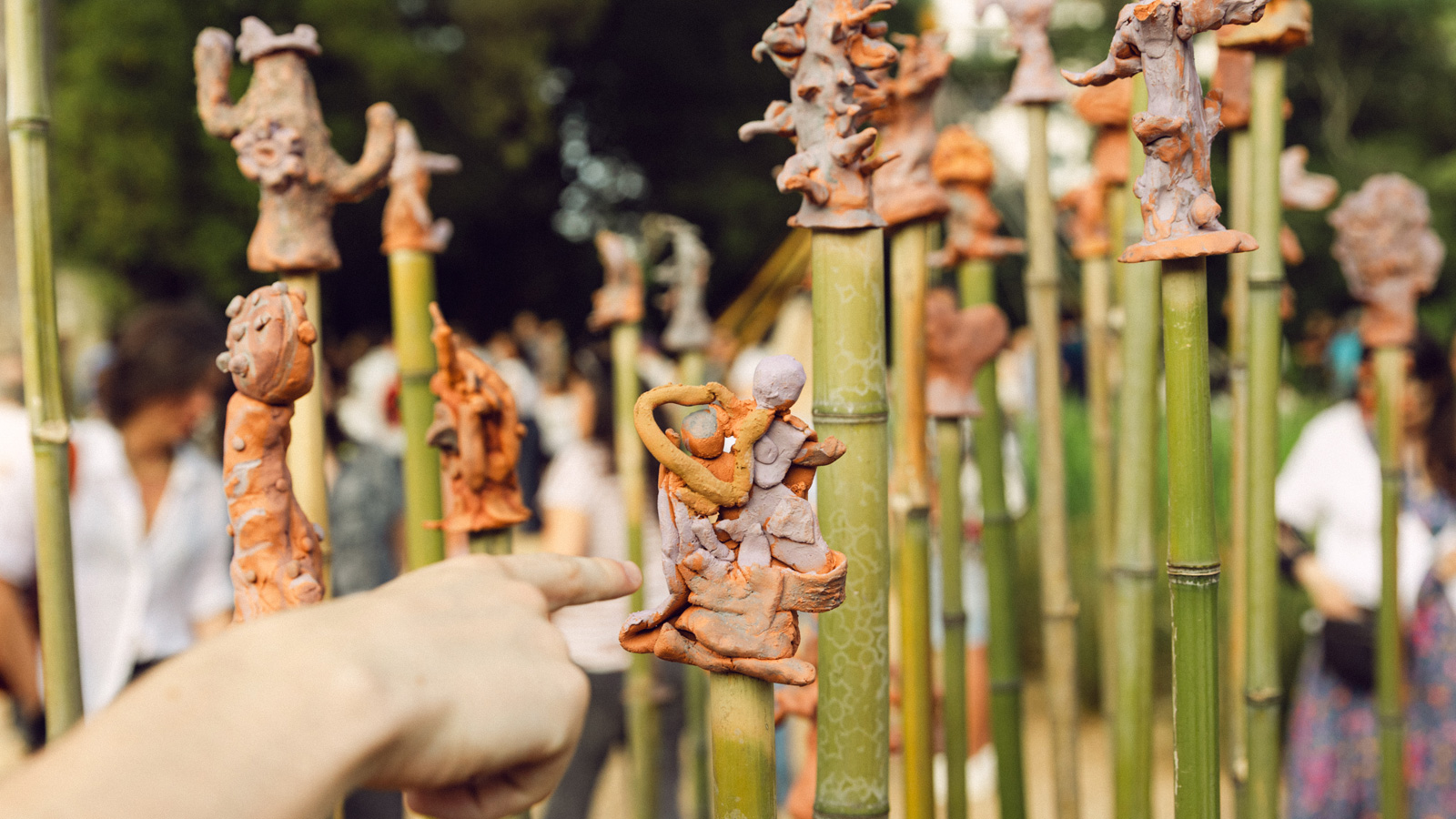
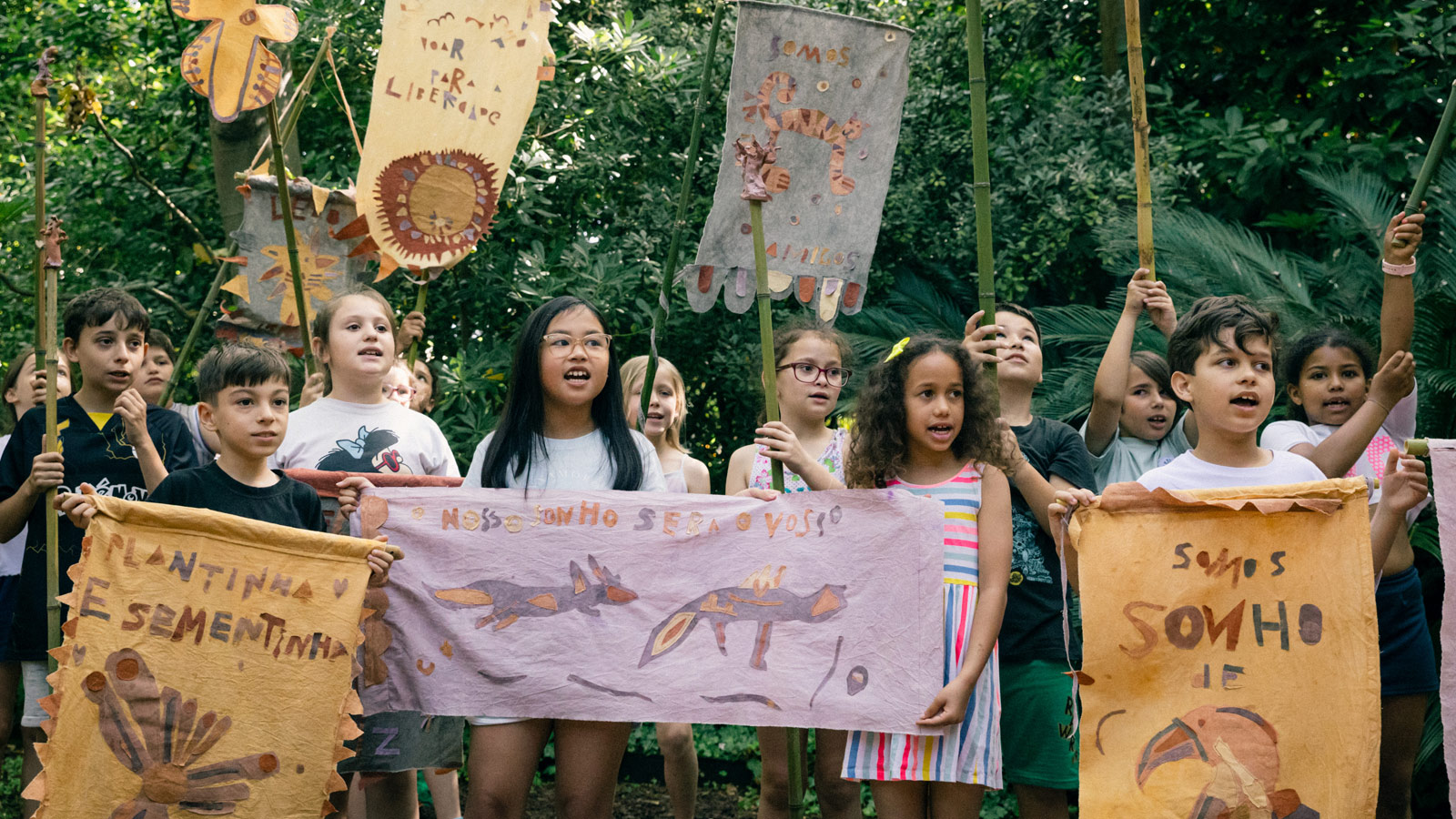
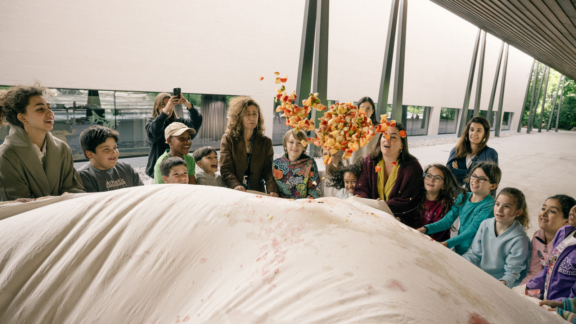
ME and AC – Each class did a march for all living beings, during which they sang songs they learned during the project and carried flags they created themselves, and those flags will be ‘planted’ in the garden. In addition, as a reflection of the outdoor sessions, in which they collected seeds and analysed shapes and textures, and of the exploration of the idea that a seed is a minuscule body with the potential to transform into something much bigger, there will be a forest of 227 trees, one for each pupil, modelled by them in clay. It is also a way of showing that each of them started the year as a tree in the ‘class’ forest and increasingly, throughout the project, started to feel that they were also part of the ‘school’ forest.
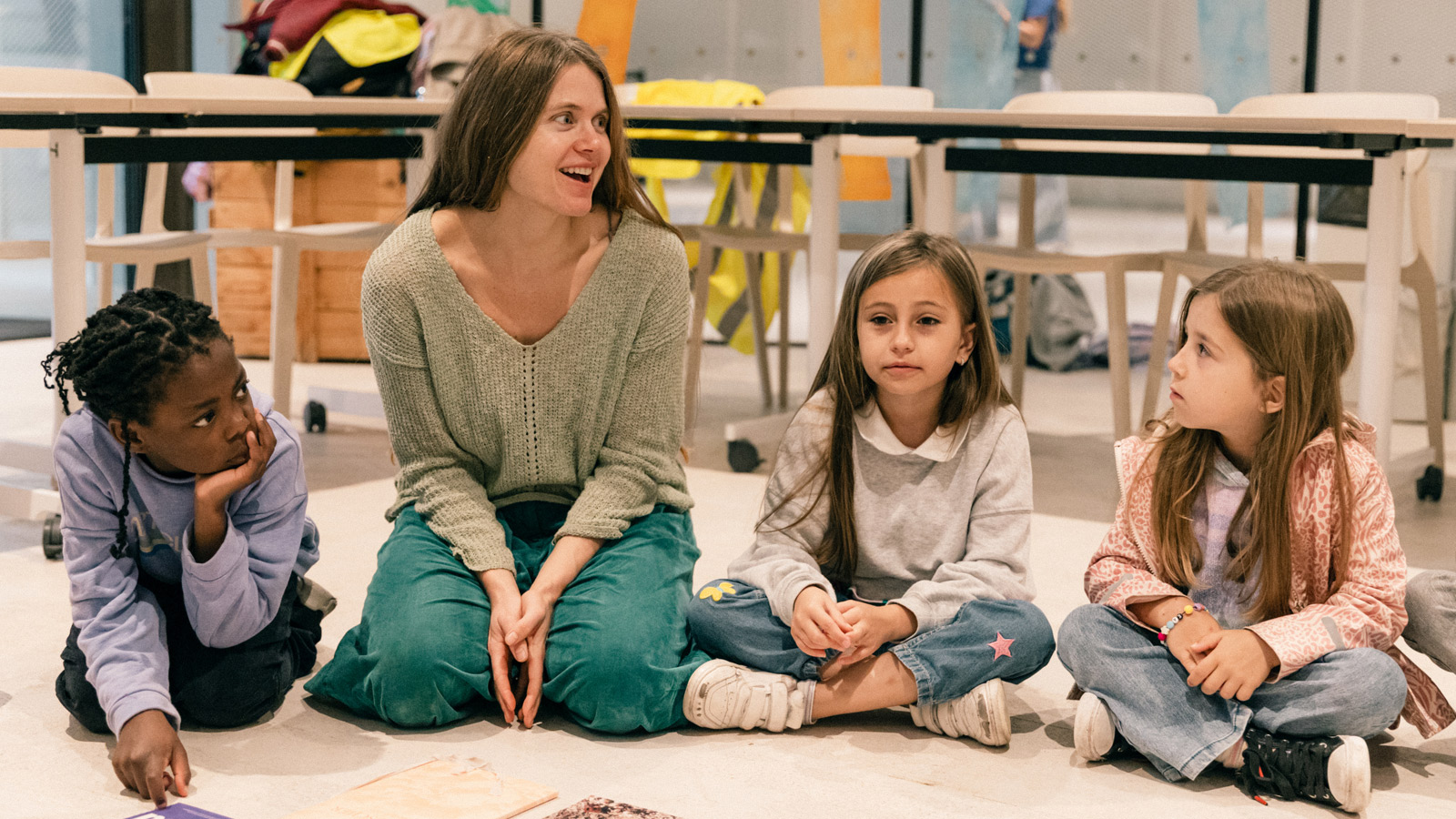
What is the importance of cultural mediation and projects like ‘Lugar Semente’ in educating the younger citizens in our community?
Sandra Varela (SV) – The teaching of artistic thought, a form of critical, divergent thinking that makes space for listening and debate, is very significantly lacking in most schools. In that sense, projects like this are fundamental for creating an environment in which it is possible to coexist, to learn in a different way.
Rolaisa Embaló (RE) – Projects like this, rather than ‘places,’ involve the construction of a path. Adults and children start as seeds and, along the path, send out roots in the daily contact they have with one another; they grow together. Very often, I felt that I was taking home more lessons than I was passing on to the children.
Mariana Faria (MF) – As a team, we always provide active, critical and poetic mediation, based on structural axes such as participation, citizenship and human rights. Together, we planted those seed-places based on works of art, the artistic act and the diversity of voices and thoughts brought by each child. To dream of new worlds that can flourish, we need to be more attentive and careful in our relationship with all beings and with our ecosystem.
CREDITS
Andreia Dias – Project coordinator
Andreia Coutinho – Cultural mediator
Maja Escher – Invited artist
Denise Xavier – Cultural mediator
Sandra Varela – Cultural mediator
Rolaisa Embaló – Cultural mediator
Mariana Faria – Cultural mediator
You may also like
No results were found for your criteria.